What Is Beolcho? Experiencing Korea’s Ancestral Grave-Cleaning Tradition
Last Updated on October 9, 2026
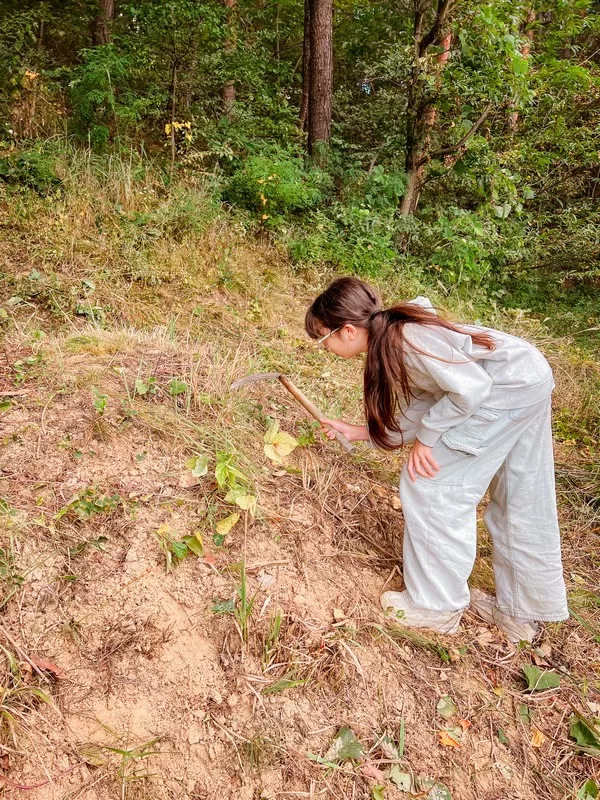
This year, I joined my husband, father-in-law, and daughter to visit our family’s ancestral graves, and I finally got to see what beolcho (벌초) is all about. Living in Jeju and enjoying a daily walk, I see graves all over. You can find these little plots with mounds between farms, up on hillsides, they’re everywhere, but always out of the way. The ones I’d noticed were always visible from the road, so I had always imagined that we’d drive somewhere, walk up to a family gravesite, clean around a few burial mounds, and pay our respects.
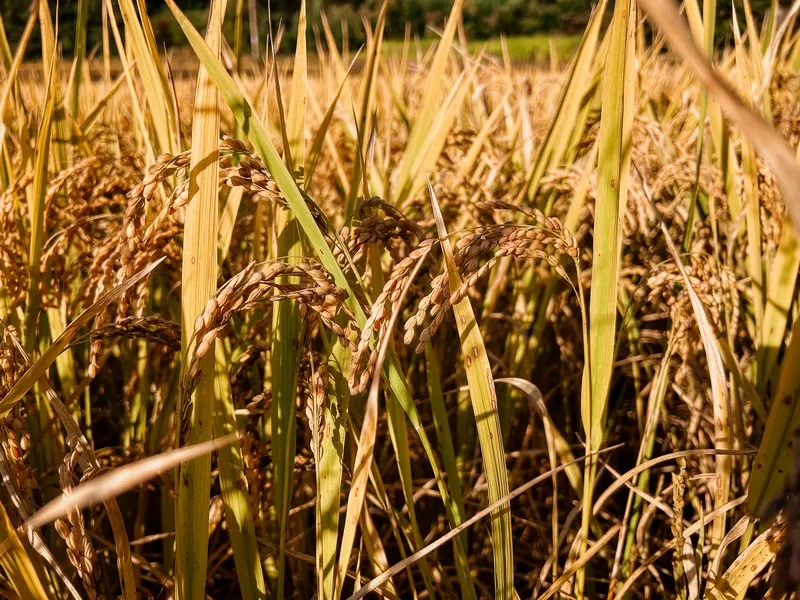
Our family’s graves aren’t on Jeju, though. My husband’s family is from Anui-myeon in Hamyang-gun, a mountainous county in South Gyeongsang Province with beautiful yellow rice paddies in the autumn. My in-laws are getting older, and it was important to my father-in-law that we go back to his village and see where the graves are.
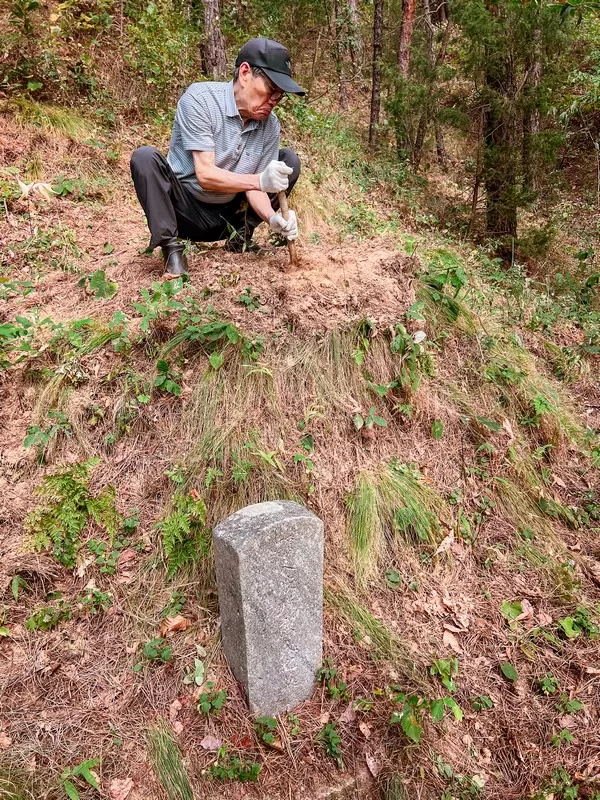
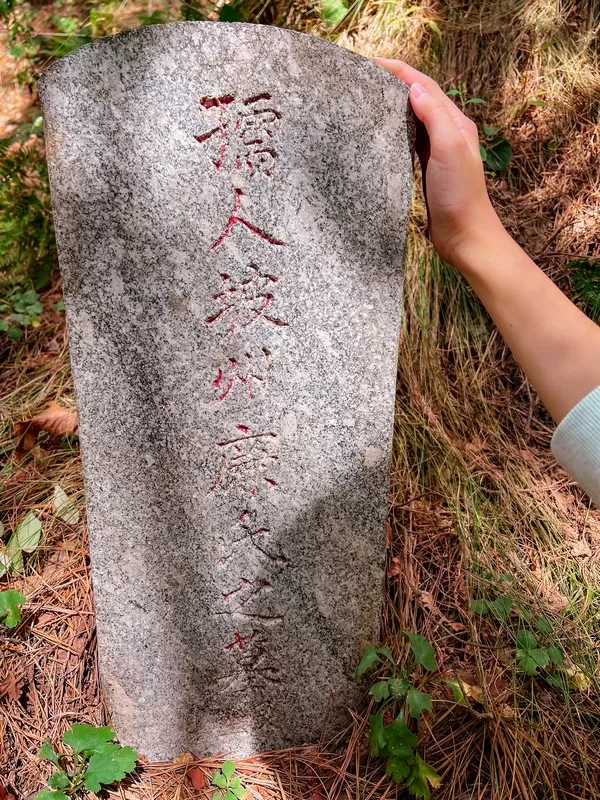
What I hadn’t expected was to visit three completely different locations, including one that required about 25 minutes of bushwhacking up a mountainside with no discernible trail. When we finally reached my husband’s great-grandparents’ graves, I couldn’t even see them! There were moments where we stopped as my father-in-law took in the surroundings and was clearly just letting his body lead him the proper way as he’d gone for years and years. It wasn’t until the overgrown vegetation had been cleared that I realized there was a gravestone hiding among the greenery.
It was an eye-opening experience, not just because of the work involved, but because it helped me better understand the relationship Korean families maintain with their ancestors, even generations after they’ve passed away. If you’ve ever noticed the rounded burial mounds scattered across Korean hillsides and wondered who maintains them, or you’ve heard Koreans talking about beolcho before Chuseok, here’s what you should know about this important Korean tradition.
Beolcho is an important tradition in Korean culture entailing visiting the graves of ancestors and weeding and cleaning. Here’s what to know:
- What Is Beolcho (벌초)?
- When Do Koreans Perform Beolcho?
- What Do Traditional Korean Graves Look Like?
- My First Experience with Beolcho in Korea
- Who Takes Care of Ancestral Graves in Korea Today?
- Can You Hire Someone to Perform Beolcho?
- What Is Myoje (묘제)? Paying Respects at the Gravesite
- Why Are So Many Korean Graves Located on Mountainsides?
- Beolcho on Jeju: Sobun, Sandam, and the Graves I Run Past
- How Beolcho Is Changing in Modern Korea
- Beolcho Can Be Harder Work Than You Think
- FAQ
(This post contains affiliate links, which means I receive a certain percentage of a sale if you purchase after clicking at no cost to you. Thank you for your support.)
What Is Beolcho (벌초)?
Beolcho (벌초, 伐草) is the Korean tradition of cutting grass, removing weeds, and maintaining ancestral gravesites. Beol (伐) means to cut and cho (草) means grass, but in Korean the word specifically refers to clearing ancestral graves, not mowing your lawn. Some regions call it geumcho (금초), and on Jeju it’s called sobun (소분), which I’ll get to below.
It’s most commonly performed in the weeks leading up to Chuseok (추석), Korea’s autumn harvest holiday. While it might sound like ordinary landscaping, beolcho carries much deeper cultural significance. In traditional Korean society, caring for one’s ancestors didn’t end with their deaths. Families were expected to maintain their burial sites, visit them regularly, and perform ancestral rites to demonstrate continued respect. This responsibility is closely connected to hyo (효), the Korean concept of filial piety, which emphasizes respect and responsibility toward parents and ancestors.
An overgrown or neglected grave could traditionally be interpreted as a sign that a family wasn’t fulfilling its responsibilities to previous generations. Since graves were usually near the family’s village, this meant that neighbors could see the neglect as well so it wasn’t just a personal shame not to do upkeep, but everyone would know if you didn’t.
There’s an old saying in Korean: If you don’t do beolcho before Chuseok, your ancestors will come to the holiday meal wearing brambles (추석 전에 벌초를 하지 않으면 조상이 덤불 쓰고 명절 먹으러 온다). During Chuseok, families traditionally hold charye (차례). You can read about what a full jesa (제사), or ancestral memorial ceremony, entails in this guide: How To Perform a Korean Jesa Ceremony: A Step-by-Step Guide
When Do Koreans Perform Beolcho?
Beolcho doesn’t have an exact date. It’s generally done sometime before Chuseok, and each family picks a day that works for them, usually a weekend when relatives can gather.
During Korea’s hot, humid summer, vegetation grows quickly. By late summer, grass, vines, shrubs, and even small trees may have overtaken burial mounds that haven’t been maintained for months. While I jog past mounds in Jeju, I’ve watched as mounds become so overgrown during the summer, you could easily forget they are there. Families traditionally clear these areas before returning to pay their respects during the holiday.
The traditional window starts after Baekjung (백중), the 15th day of the 7th lunar month, and runs until Chuseok on the 15th day of the 8th lunar month. By late August, around the seasonal marker Cheoseo (처서), grass slows down and stops growing, so a cut made then stays tidy through the holiday. Korea actually has 24 solar terms, instead of the standard four seasons and that’s what these names are from. You can learn more about the 24 solar terms of Korea according to the Jeolgi calendar to get a better understanding of timing.
Some families also visit and tend graves around Hansik (한식), a spring observance historically associated with ancestral grave visits. Since there isn’t much grass to cut in early spring, Hansik visits tend to focus on paying respects and repairing turf that was damaged over the winter. The exact timing and frequency depend on the family, the region, and how accessible the graves are.
Hansik (한식), or Cold Food Day, falls 105 days after the winter solstice (usually April 5 or 6). It’s a day for holding ancestral rites at the graves and, traditionally, eating only cold food. The name comes from an old custom recorded in Joseon-era almanacs such as the Dongguk Sesigi, in which the old household fires were put out and a newly kindled fire was distributed from the palace down to the people. Until the new fire arrived, nobody could cook, so everyone ate cold rice.
What Do Traditional Korean Graves Look Like?
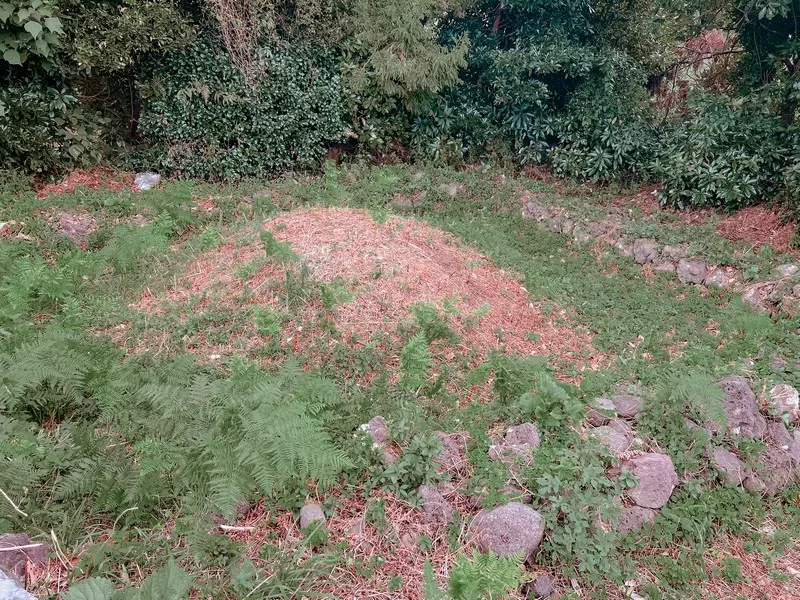
If you’ve spent time traveling through the Korean countryside, you’ve probably noticed rounded grassy mounds on hillsides, sometimes surrounded by stone markers or positioned in small clearings. These are traditional Korean burial mounds called bongbun (봉분). Of course, the graves, or rather tombs, most foreigners recognize from Korea are the very large royal tombs in places like Gyeongju or Gimhae. For regular people though, the mounds are much smaller and can be easily hidden in shrubbery and forests so you may have passed by some without realizing it.
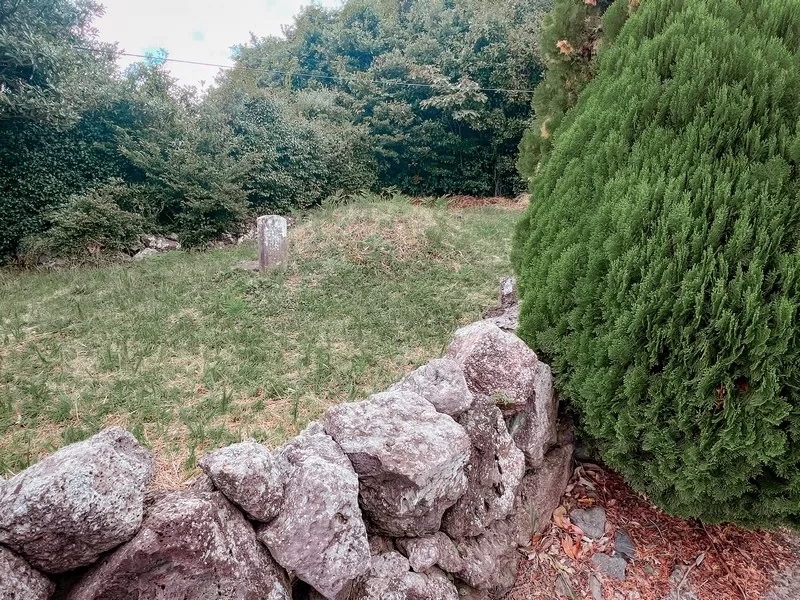
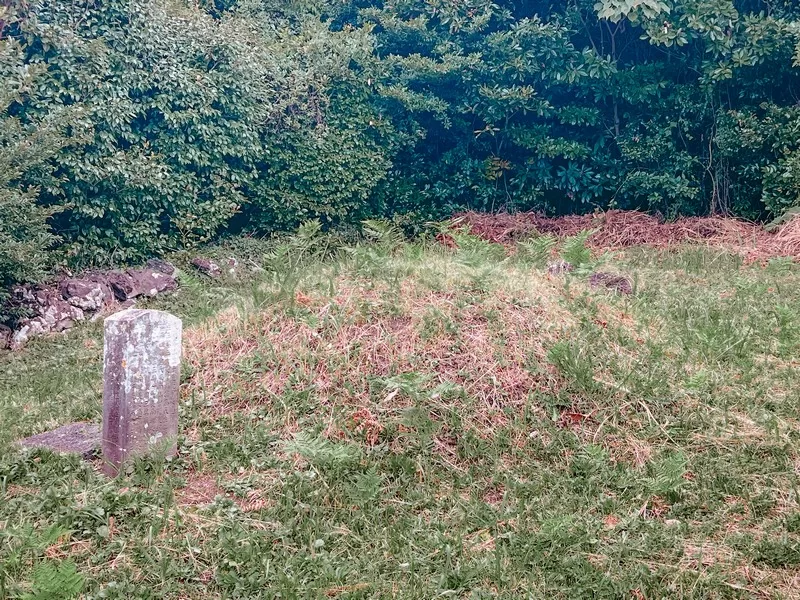
Some mounds are more elaborate, with stone platforms, protective stonework, and monuments. Others are very simple, consisting of a modest mound and a single gravestone. The oldest ones from my husband’s family are like this, barely even a mound after the weather over so many generations.
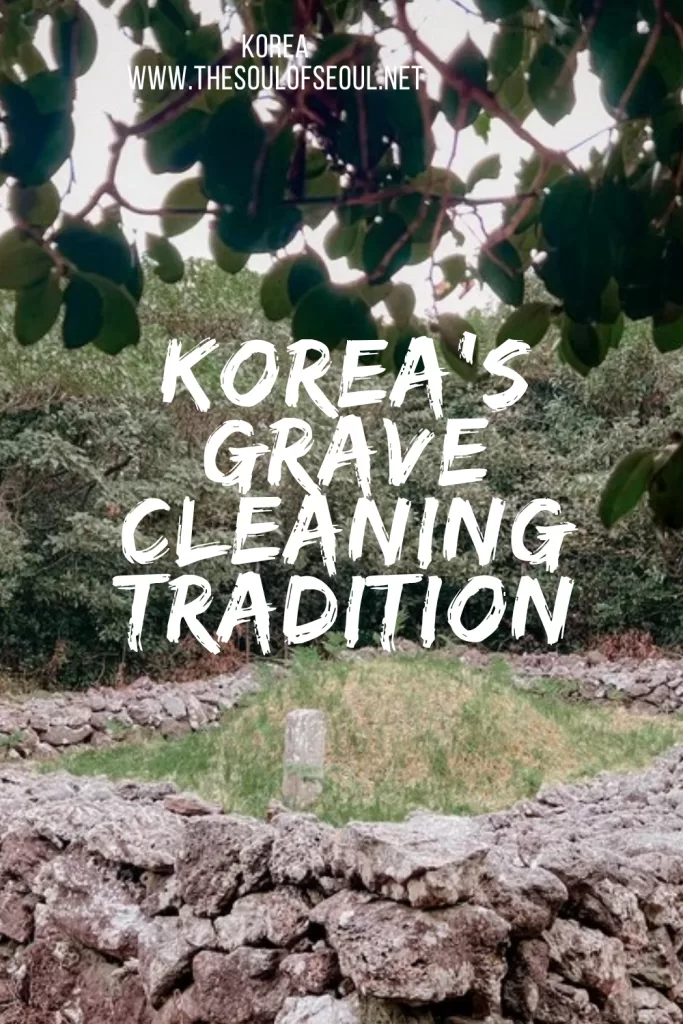
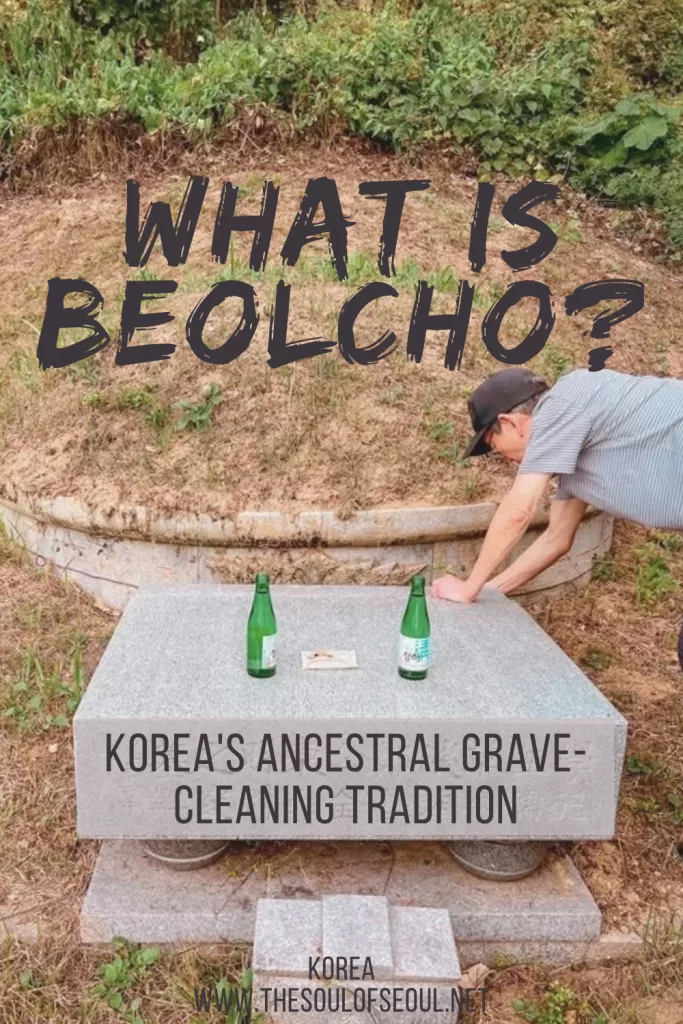
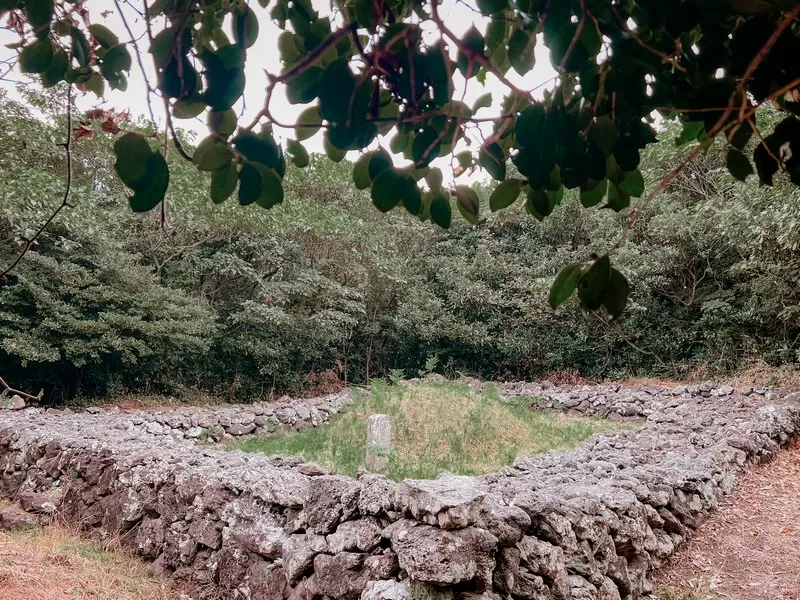
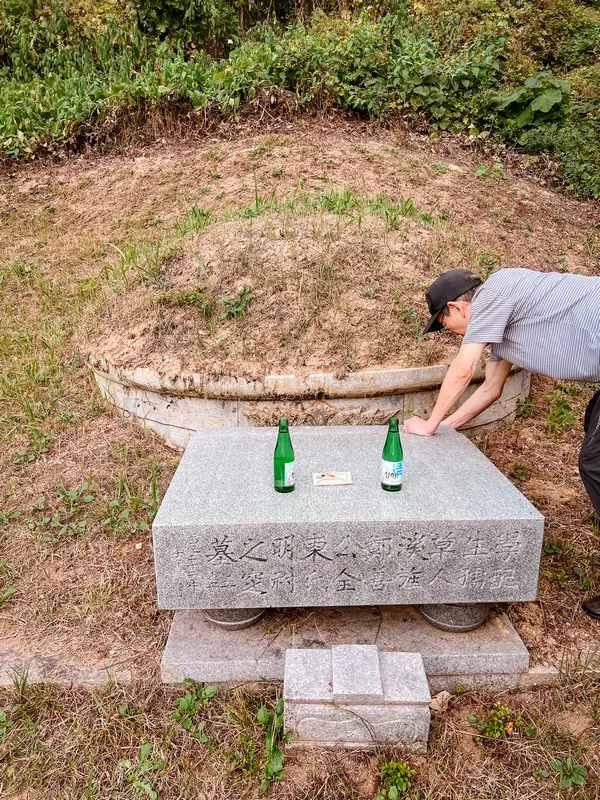
A more formal grave usually has a few parts. There’s the mound itself (bongbun), a gravestone (bise, 비석) carved with the ancestor’s name, and often a flat stone table (sangseok, 상석) in front where offerings are placed. Larger family graves may also have a pair of stone pillars (mangjuseok, 망주석) and a low curved earthen bank behind the mound. My husband’s grandparents had more of these parts. On Jeju, many graves are also enclosed by a stone wall called a sandam, which I’ll explain below.
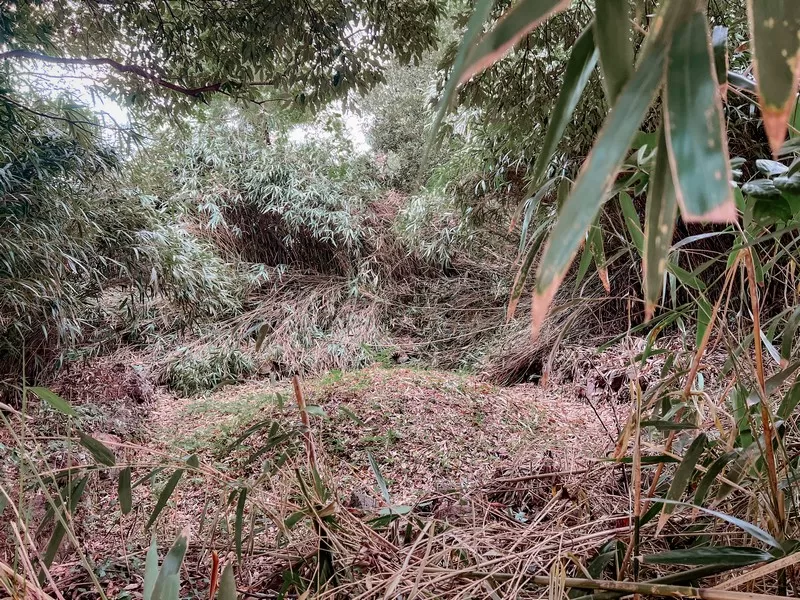
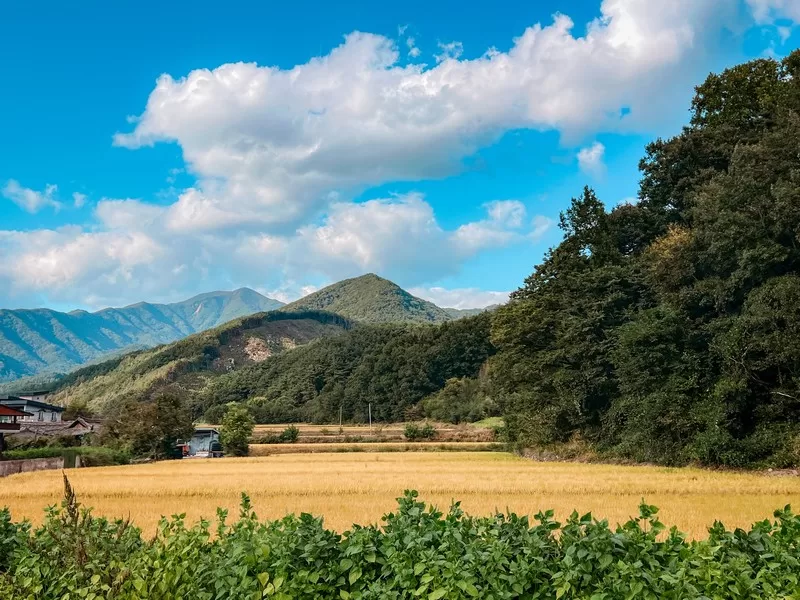
Historically, burial locations were selected according to pungsu (풍수), the Korean tradition of geomancy, which considers the relationship between the landscape, mountains, water, and the placement of a grave. Not every gravesite follows the same principles, however, and the appearance and location of graves vary considerably across Korea. I found the first site we visited to be very on brand with pungsu. Set on the side of the mountain, the view was outward over the farming landscape. It seemed quite auspicious near very large boulders. Though I also quite appreciated the intimacy of the graves that were inside of a bamboo forest, hidden from view, only known to those of relation.
My First Experience with Beolcho in Korea
I had heard about beolcho for years, but up until now, my father-in-law would go out and do it on his own prior to Chuseok. As our family has either resided in Seoul or Jeju, it was just generally understood that we’d visit for Chuseok so he’d take care of the preparation. As he’s getting older though, he wanted to ensure that we know where the graves are ourselves.
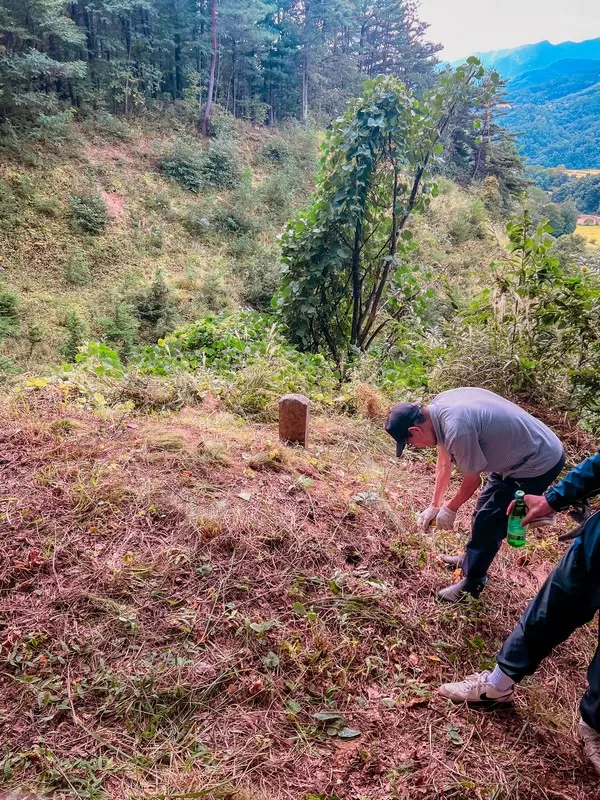
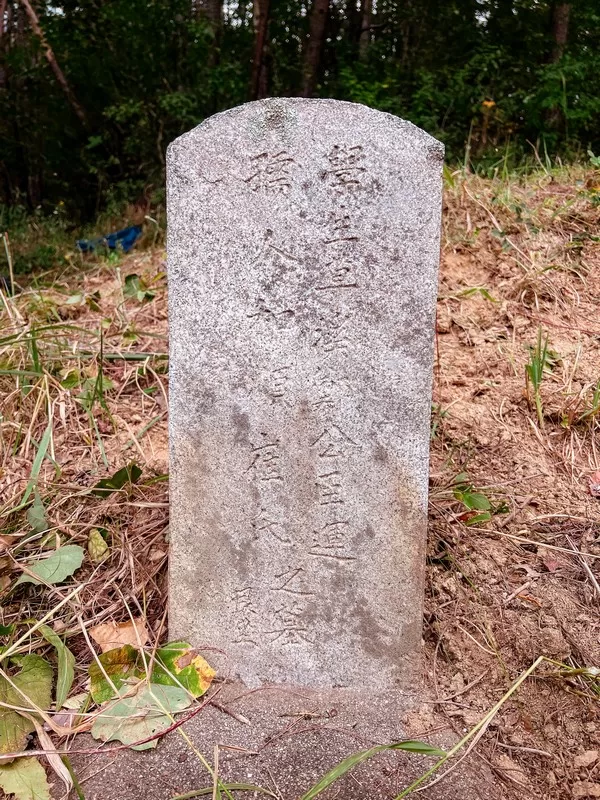
Stop One: Finding My Husband’s Great-Grandparents’ Graves on a Mountainside
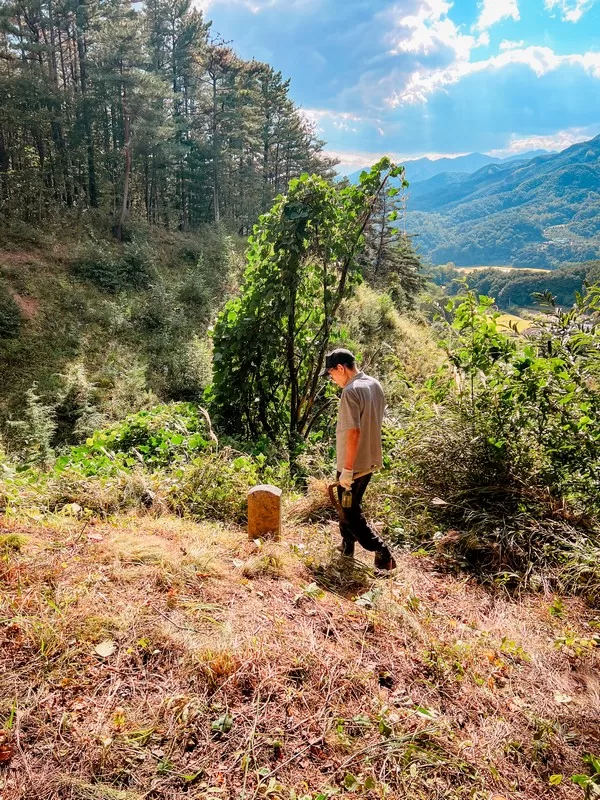
Our most challenging stop was the gravesite of my husband’s great-grandparents. Getting there was an adventure in itself. There was no maintained trail leading to the graves. We had to make our way through the vegetation on the mountainside, pushing through the undergrowth for approximately 25 minutes before reaching the burial area. This is one reason you’ll have parents tell you to wear long sleeves and pants if you’re going to do beolcho. Listen to them!
25 minutes is nothing compared to some families according to articles I’ve read. On Jeju, the founding ancestor of one clan is buried at around 1,600 meters on Hallasan, just below the summit, and descendants still make the seven-to-eight-hour round trip every year to tend it.
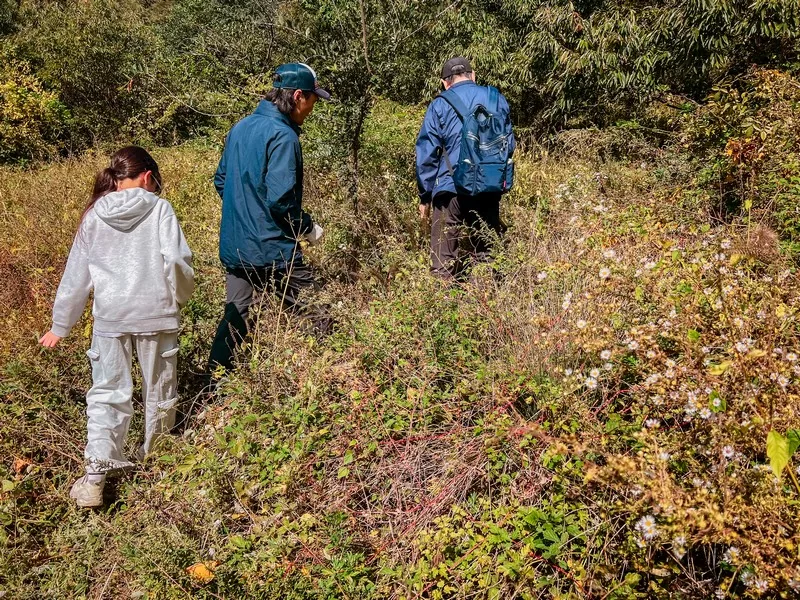
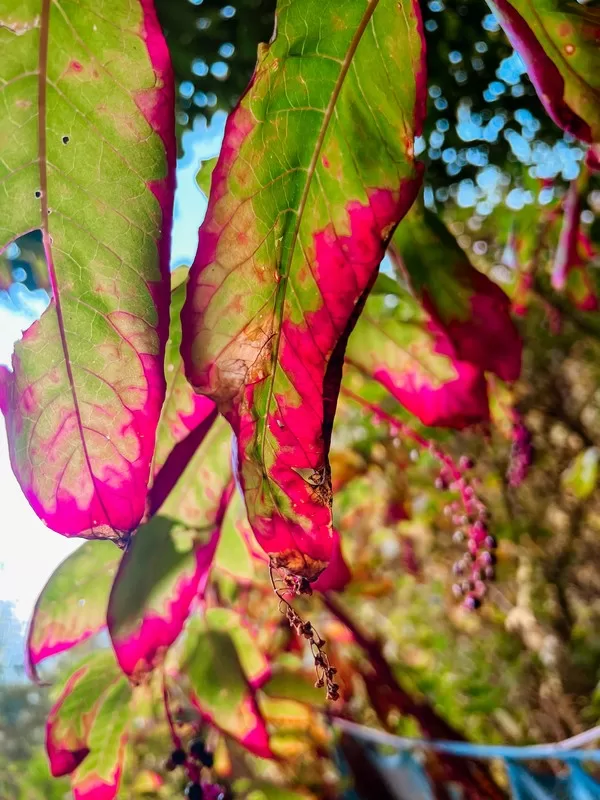
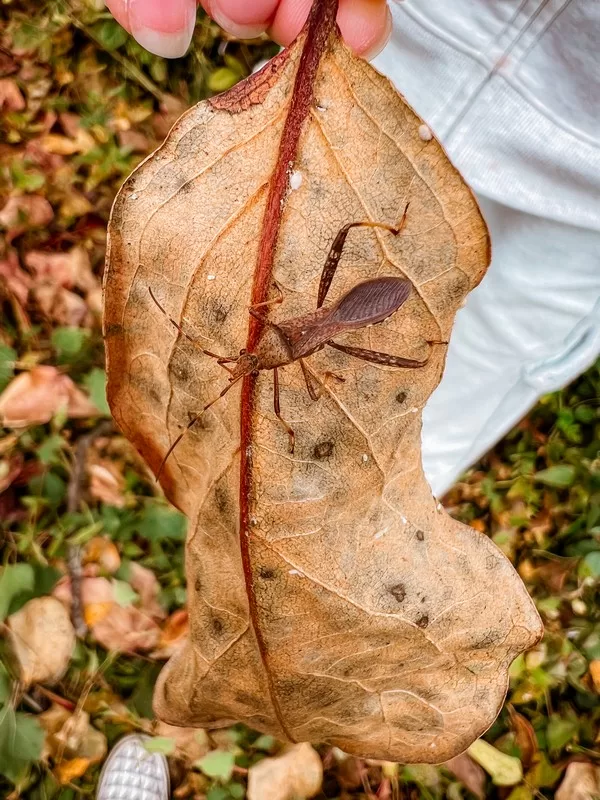
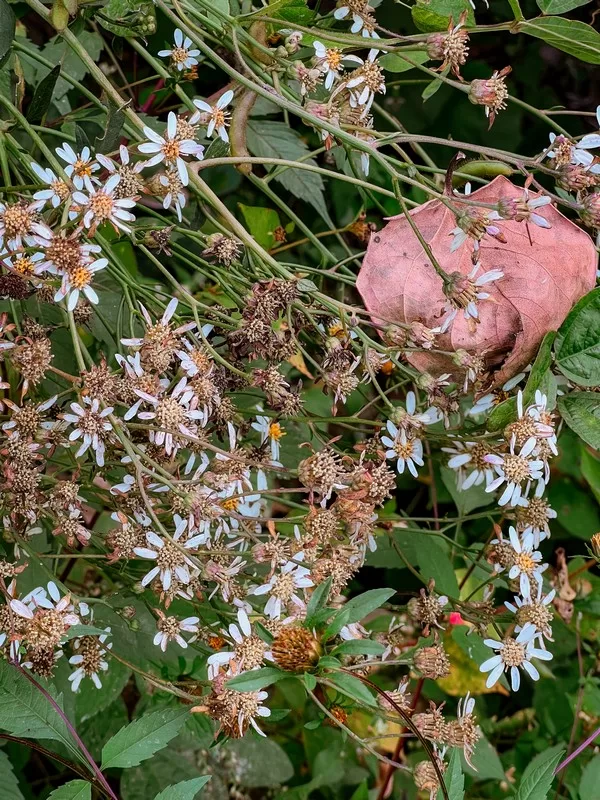
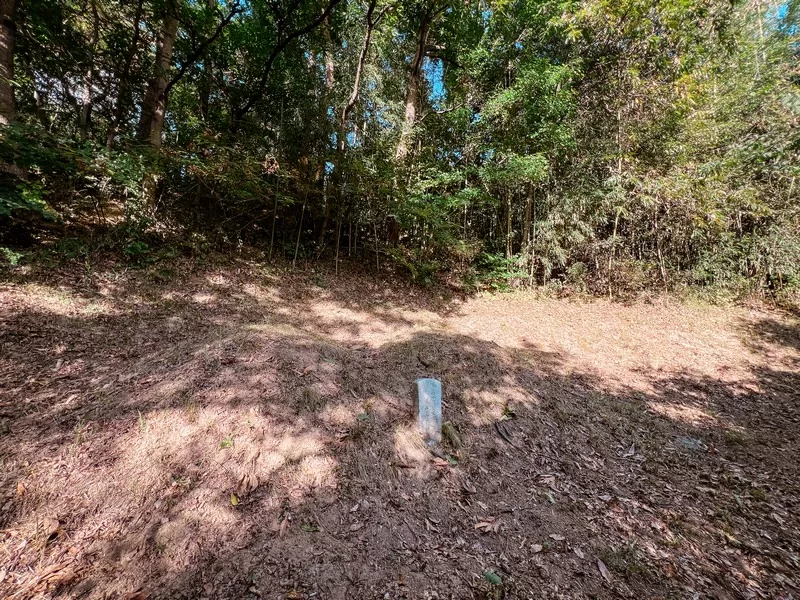
I had imagined that the graves would be relatively obvious once we arrived, but they weren’t. The great-grandfather’s grave was in a sunnier location, while the great-grandmother’s was farther into the forest cover. Both were surrounded by thick vegetation. The setting was beautiful, but the burial mounds were so overgrown that I initially struggled to recognize them as graves at all.
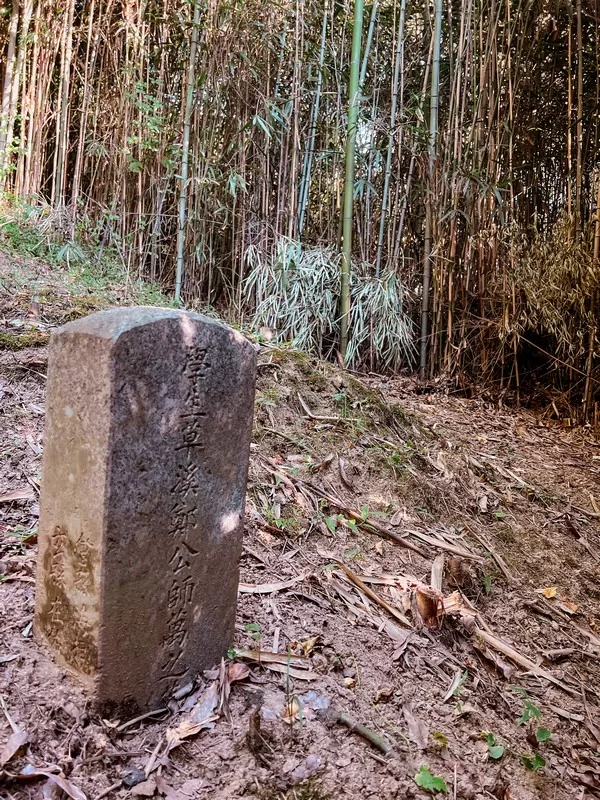
As the grass and weeds were cleared, the graves slowly became visible again. At one point, I realized that even a gravestone had been hidden beneath the growth. Without someone returning to maintain these places, the forest could gradually reclaim them.
I’ve celebrated Chuseok many times during my years in Korea. I’ve prepared food, participated in family gatherings, and observed ancestral ceremonies. But this was my first opportunity to experience the work that can happen before those holiday traditions. I think what surprised me most was how easy it would be for these graves to disappear from view and how important it was to my father-in-law that they don’t.
Stop Two: A More Elaborate Family Gravesite Near the Fields
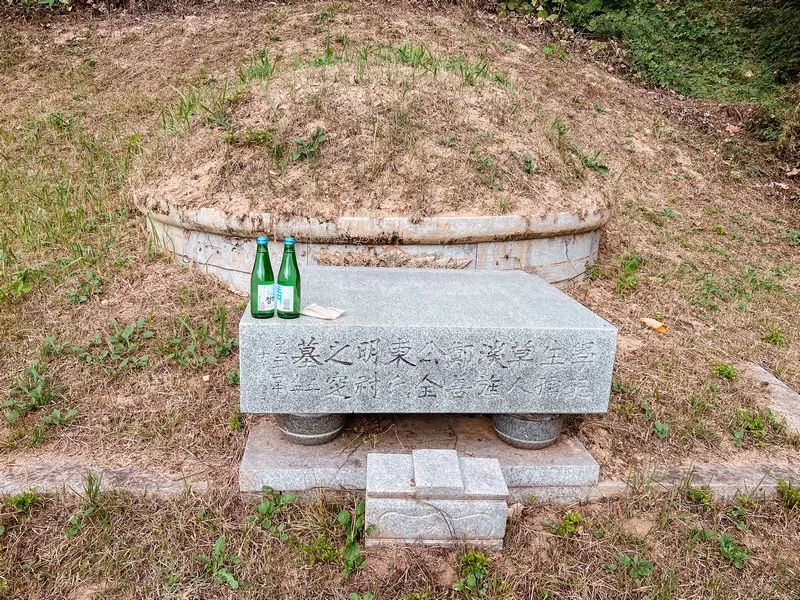
Our second stop was much easier to reach. A narrow road, just wide enough for one car, led toward a burial site in the midst of nearby farming fields. It was also up the mountainside, but accessible via car. Here, my husband’s grandparents were buried in a more formal-looking grave, with a clearly defined grassy mound, and a stone altar positioned in front. Unlike the great-grandparents’ graves, this site had already been maintained by my father-in-law’s cousins, so there was only a little weeding left to do.
The contrast in the gravesites was quite striking really. Perhaps due to different generations, but the older one required a lot more effort, while the second was quite a bit more accessible. This accessibility is probably why it was better maintained. My father-in-law’s cousins are elderly now and I’m sure it can be difficult for them to get out onto the mountain.
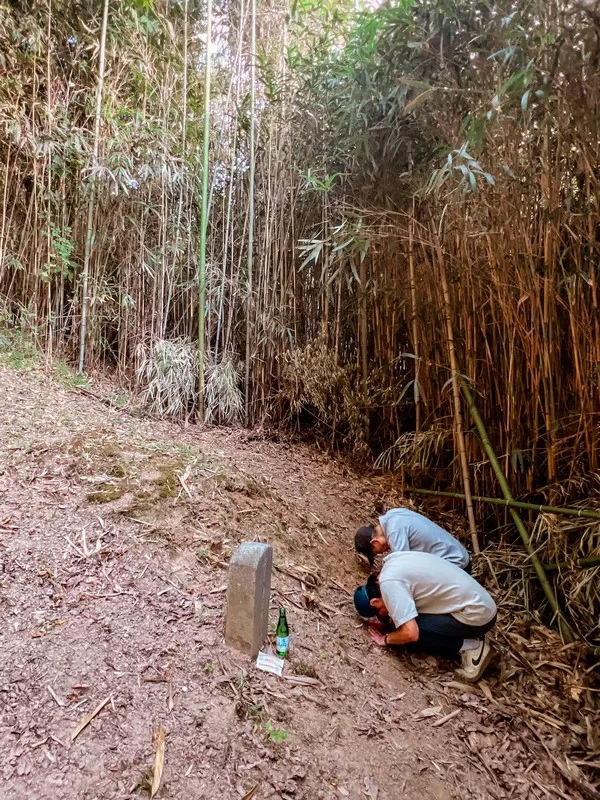
Stop Three: Graves Hidden in a Bamboo Forest
Our third stop was another completely different setting. Two graves were tucked into a bamboo forest down right next to the rice paddies. Like the graves on the mountainside, these were simple earthen mounds marked by gravestones. Without those stones, someone unfamiliar with Korean burial traditions might not even realize that they were standing near graves.
Who Takes Care of Ancestral Graves in Korea Today?
One thing I learned from our experience is that maintaining ancestral graves doesn’t necessarily mean that family members travel to every site and do all the work themselves each year. My father-in-law has cousins who still live in the area where the family graves are located. Actually, I found out that this village is home to many distant relatives from the Jeong line. My father-in-law sends them money to help maintain the graves as needed. Before beginning our visits, we stopped at their house to pick up a sickle and shovel to use for the work. This arrangement makes a lot of sense when you consider how many Korean families no longer live near their ancestral hometowns.
What Happens to Graves Nobody Maintains?
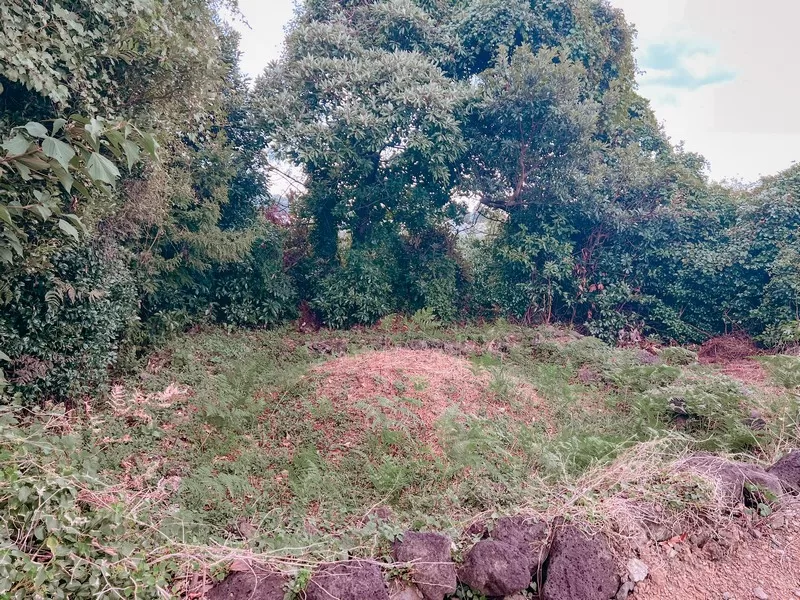
They simply become overgrown. I’ve seen plenty of them as I trek and walk around Korea, mounds that have slowly sunk back into the grass and trees with no one coming back to cut them. On Jeju, a neglected grave even has its own name, golchong (골총), and it has traditionally been seen as a sign that a family line has died out or declined.
Can You Hire Someone to Perform Beolcho?
In modern Korea, families who live far from their ancestral graves or are unable to maintain them personally can pay someone else to perform beolcho. These services may be provided by local residents, forestry or agricultural cooperatives, or private grave-maintenance businesses. Depending on the service, workers may cut grass, remove weeds, clear access paths, and provide photographs showing the completed work.
While beolcho has traditionally been a family responsibility, hiring help doesn’t necessarily mean that the cultural significance has disappeared. It’s one way families adapt an older tradition to modern times, though of course doing it in person definitely felt different than just hearing it was completed each year prior for me personally.
How Much Does a Beolcho Service Cost?
Expect roughly ₩80,000 to ₩200,000 per grave. Local NH Nonghyup (농협) branches and regional forestry cooperatives (산림조합) are the most common options. Around ₩100,000 is what I found for a standard-size grave when searching, with extra charges for larger plots, steep slopes, long drives, or a long walk from the road. Private companies advertise similar starting prices of about ₩110,000 for a single grave, with discounts for multiple graves in the same area. Most services send before-and-after photos so families far away can see the finished work.
What Is Myoje (묘제)? Paying Respects at the Gravesite
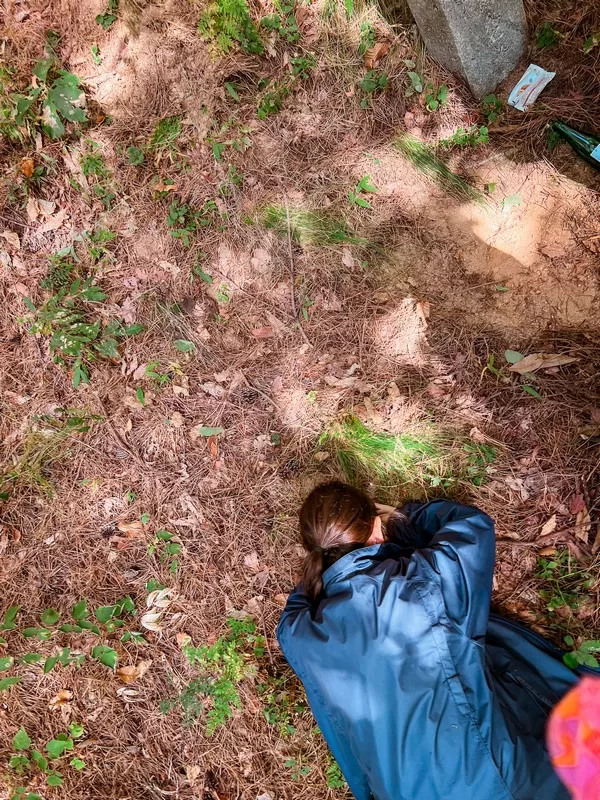
After the grave-cleaning work, my daughter and I joined my husband and father-in-law for myoje (묘제), an ancestral memorial rite performed at a gravesite. Myoje is related to other Korean ancestral ceremonies, including jesa (제사) and charye (차례), but it takes place at the burial site rather than at a family altar or inside the home.
Historically, myoje could involve elaborate offerings, prescribed bows, ceremonial procedures, and prayers or written invocations. The specific customs varied by family, region, and period. Our family is quite traditional and has a full altar table for charye at Chuseok and Seollal held in our homes, but the graveside ceremony here was much simpler in comparison. You can learn more about how to perform a Korean jesa ceremony in this guide.
Myoje is an umbrella term. The formal version many clans still hold, often called sije (시제) or sihyang (시향), is an annual rite usually held in the 10th lunar month for ancestors five or more generations back, sometimes with dozens of relatives, full offering tables, and a separate small rite for the mountain spirit who watches over the graves. A short graveside rite on a holiday visit for closer ancestors, like ours, is the much more common everyday form.
How Our Family Performed Myoje
If you’ve ever seen the elaborate tables of food prepared for Chuseok or Seollal charye, you might imagine something similar at an ancestral gravesite. That’s not what we did. We brought a simple mixture of nuts and some cheongju (청주), a clear refined rice wine, which we placed near the gravestones as offerings. We then bowed twice for each ancestor buried at the sites.
Afterward, the nuts were scattered around the graves, and the cheongju was poured onto the burial mounds. I had asked the week prior what we needed to prepare, expecting something more elaborate, but my father-in-law said a quick stop at the market the day before would suffice. It was simple, quiet, and respectful.
For me, participating alongside my daughter, husband, and father-in-law made the experience especially meaningful. We were visiting family members from generations before us, and my daughter was participating in a tradition that connects her to that family history. She isn’t new to this of course. From holding charye every year, twice a year, my daughter understands the importance of these rites, and every year she learns more.
This year, my husband took over the role of jeju (제주, 祭主) for charye on Seollal and Chuseok. That’s the person who leads the rite, not to be confused with the island we live on. With her father leading, my daughter is taking on more of a role as well. Traditionally this would pass down through the male side of the family, however, my side is very female dominant and I think it’s something she can certainly carry on.
Is Myoje the Same as Jesa or Charye?
These Korean ancestral traditions are related, but they aren’t exactly the same.
| Tradition | What It Means | When |
|---|---|---|
| Beolcho (벌초) | Clearing grass and maintaining ancestral graves | Late summer, usually before Chuseok |
| Sobun (소분) | The Jeju word for beolcho | Around the 1st day of the 8th lunar month |
| Seongmyo (성묘) | Visiting ancestral graves to pay respects | Chuseok, Seollal, Hansik, and other visits |
| Myoje (묘제) | Performing an ancestral memorial rite at a gravesite | Varies; often on holiday grave visits |
| Sije / Sihyang (시제 / 시향) | A formal clan graveside rite for ancestors five or more generations back | Usually once a year, around the 10th lunar month |
| Jesa (제사) | A general term for ancestral memorial rites, often referring to death-anniversary ceremonies | Usually on the eve of the death anniversary |
| Charye (차례) | An ancestral memorial ceremony commonly associated with Seollal and Chuseok | Holiday mornings, at home |
There is some overlap between these terms, particularly because families have developed different practices over generations. Not every Korean family performs all of these rituals, and the level of formality can vary significantly.
Why Are So Many Korean Graves Located on Mountainsides?
One of the most distinctive features of traditional Korean burial culture is the location of graves. For the mainland especially, you’ll see stories of people trekking up mountains to find the mounds they need to clean. Rather than being concentrated exclusively in large cemeteries (though you will find those in some places if mounds needed to be moved due to the expansion of cities or construction), ancestral burial mounds can be found on hillsides, near forests, and in rural agricultural landscapes.
Historically, many burial sites were selected with consideration for pungsu, the Korean interpretation of geomancy. Mountains and surrounding landforms were believed to influence the suitability of a burial site, and families sometimes sought locations considered auspicious for both the deceased and their descendants. I found the location of the first graves to be quite auspicious on the mountainside, also surrounded by large boulders.
Beolcho on Jeju: Sobun, Sandam, and the Graves I Run Past
Before I ever did beolcho myself, the graves I knew best were the ones on Jeju. Though we lived in Seoul for the vast majority of my time in Korea, I never happened upon burial mounds like I do in Jeju. I run past them all the time in Pyoseon-myeon, and see them consistently as I’m trekking on the Olle-gil.
On Jeju, beolcho is called sobun (소분, 掃墳), and there’s a local proverb that says: “식게 안 헌 건 놈이 몰라도 소분 안 헌 건 놈이 안다”. In Jeju dialect, that means nobody else knows if you skipped an ancestral rite, but everybody knows if you skipped sobun. Jesa happens inside your house, but an overgrown grave is out there for the whole village to see.
Jeju families traditionally do two rounds. First comes gajok beolcho (가족벌초), when close relatives clear the graves of their direct ancestors, back to the great-great-grandparents. Then comes modum beolcho (모둠벌초), when the wider clan, the gwendang (괸당) in Jeju dialect, gathers to tend dozens of older ancestral graves together, sometimes all the way back to the ancestor who first settled on the island. It traditionally happens around the first day of the 8th lunar month, two weeks before Chuseok.
It was such a big deal that Jeju schools used to give students a “beolcho vacation” (벌초방학) of a day or so, a custom that lasted until the early 2000s and faded once most clan beolcho moved to weekends. Flights to Jeju around that date used to sell out even though it’s the off-season, as Jeju natives living on the mainland, and even in Japan, came home to tend their family graves.
Why Do Jeju Graves Have Stone Walls?
The low black stone walls you see around so many Jeju graves are called sandam (산담). They were traditionally there to keep grazing horses and cattle from trampling the burial mounds. Some are square and some are rounded, and many have a small gap or opening on one side for entrance.
Jeju’s sandam are part of the island’s wider stone-wall culture, and the Jeju Stone Park office began a dedicated research project in 2026 covering sandam and field walls as part of a push to get Jeju stone-wall building recognized by UNESCO.
Seeing Korean Graves as a Traveler: If you hike on Jeju or anywhere in rural Korea, you’ll pass graves constantly, including well-kept family plots and long-forgotten ones disappearing into the brush. Don’t sit on or climb the mounds or the sandam walls, don’t picnic on a gravesite, and if a family is there tending or bowing at a grave, give them space and skip the photos.
How Beolcho Is Changing in Modern Korea
Beolcho is still a very familiar tradition in Korea, but it’s definitely changing as families age and especially as people move far away from their rural hometowns. Ancestral graves are now commonly hours away from where descendants live, and for the elderly descendants that may still be nearby, it’s more and more dangerous each year for them to ascend the mountains for the rites. This has contributed to the growth of professional grave-maintenance services.
At the same time, cremation, columbariums, memorial parks, and other burial arrangements have become alternatives to traditional earthen mounds. My husband’s grandparents mound has ample space nearby which my father-in-law owns for more mounds, but when I asked him if he’d like to have a mound there, he said he and his wife are going to get cremated. At one time, I’m sure he assumed they’d have a mound here next to his parents.
Interestingly, around 1993, fewer than 1 in 5 Koreans were cremated. Cremation overtook burial for the first time in 2005 though, and by the end of 2024 about 94% of Koreans were cremated, according to the Ministry of Health and Welfare. Jeju has historically had one of the lowest cremation rates in the country, which is part of why you still see so many mounds here. In recent years there have been articles that read “Beolcho Ends With My Generation” (벌초는 내 세대까지) due to this shift. Graves that already exist still need tending, though, and for families like ours, that means someone still has to climb the mountain.
Beolcho Can Be Harder Work Than You Think
After seeing the condition of the mountain graves, I have a much greater appreciation for the effort involved. Beolcho isn’t always a matter of spending a few minutes trimming grass around a gravestone. It can involve climbing steep slopes, clearing dense undergrowth, removing stubborn weeds, and working in hot, humid conditions.
There are also safety concerns, including hornets, ticks, snakes, uneven terrain, and injuries from cutting tools. According to the National Fire Agency, 1,445 people were taken to the hospital by ambulance for bee and hornet stings over the Chuseok holidays between 2019 and 2023. Korea Consumer Agency data shows about 60% of reported grass-cutter injuries happen in August and September, right in beolcho season.
Jeju sees its share too. In 2019, Jeju’s fire department had logged 25 beolcho accidents by early September, with one death and 22 injuries, mostly from brush cutters and sickles. One of them was right here in Namwon-eup. In September 2026, a man in his 50s in Jeongseon, Gangwon Province, died after being stung by hornets while doing beolcho.
Ticks are the other big concern. Korea’s disease control agency warns about severe fever with thrombocytopenia syndrome (SFTS), a tick-borne illness with no vaccine or specific treatment, which has killed hundreds of people in Korea since 2013, mostly older adults doing outdoor and farm work. We definitely did a tick check after we finished. Korean authorities regularly issue seasonal safety guidance around the period when families head into the mountains for beolcho. Scrub typhus, also spread by mites in the grass, peaks in autumn too.
What to Wear and Bring for Beolcho
Long sleeves and long pants are the big one. Add work gloves, sturdy shoes or boots, a hat, and insect or tick repellent. We had bug spray with us, and I was glad for it. Avoid black clothing and wear light colors instead, since hornets tend to target dark colors.
Before anyone starts cutting, look around the grave for hornet nests, especially in the ground and in low shrubs. If you find one, back away and let the local fire department deal with it. Bring plenty of water. Afterward, shower, change your clothes, and do a tick check. If you get a fever, vomiting, or diarrhea within two weeks of being in the grass, see a doctor and mention that you were outdoors.
Beolcho was not only interesting to partake in, but quite inspiring. At the first site, we walked through the forest without a proper trail to reach burial mounds that were almost completely obscured by vegetation. At another, the graves were beautifully maintained, with a stone altar and carefully arranged surroundings. And at the last, two simple mounds sat quietly among bamboo near the rice paddies. Each place was different, but all were connected by the same family responsibility to remember and care for those who came before us.
For my daughter, it was also an opportunity to participate in a tradition shared by her father and grandfather, and to see the places where earlier generations of her family are buried. That’s something I find especially interesting about Korean ancestral traditions. They aren’t only about remembering the past. They’re also about the responsibilities and connections that continue between generations. And sometimes, those connections involve picking up a sickle, climbing a mountainside, and uncovering a gravestone that has been hidden by another summer of growth.
FAQ
What does beolcho mean in Korean?
Beolcho (벌초, 伐草) refers to the practice of cutting grass and clearing vegetation around ancestral graves. It is particularly associated with preparations for Chuseok.
When is beolcho performed?
Most commonly in the weeks before Chuseok, although families may also tend graves at other times of the year, including around Hansik in spring. There’s no fixed date. The traditional window runs from Baekjung (the 15th day of the 7th lunar month) to Chuseok, and each family chooses its own day. Our family went a week after Chuseok.
Do all Korean families perform beolcho?
No. Families with traditional burial mounds may perform beolcho themselves or arrange for someone else to maintain the graves. Families who use cremation facilities, columbariums, or managed burial grounds may not need to perform it.
Is beolcho a religious ceremony?
Beolcho itself is primarily grave maintenance, although it is closely connected to Korean ancestral customs influenced by Confucian values. Families may also perform memorial rites at the gravesite, but practices vary according to family traditions and beliefs.
What’s the difference between beolcho and seongmyo?
Beolcho refers specifically to cleaning and maintaining the grave, while seongmyo refers to visiting an ancestral grave to pay respects. Families often perform beolcho before Chuseok so the burial site is ready for a holiday visit.
What is sobun?
Sobun (소분) is the Jeju word for beolcho. On Jeju, it’s traditionally done around the first day of the 8th lunar month, often in two rounds: gajok beolcho for close family graves and modum beolcho, when the wider clan gathers to tend older ancestral graves.
How much does it cost to hire someone for beolcho?
Roughly ₩80,000 to ₩200,000 per grave, depending on the size of the plot, the slope, and how far it is from the road. Local NH Nonghyup branches, forestry cooperatives, and private companies all offer the service, and most send before-and-after photos.
What should I wear to beolcho?
Long sleeves, long pants, gloves, sturdy shoes, and a hat, plus insect and tick repellent. Avoid perfume and black clothing, which can attract hornets, and do a tick check afterward.
What tools do you need for beolcho?
It depends on the grave. We used a sickle and a shovel, plus some weed killer and bug spray. Many families also use a gas-powered brush cutter (예초기), which is faster but is also responsible for a lot of beolcho injuries.
Do women and children participate in beolcho?
Traditionally, ancestral rites have been led by men, much like charye. Times are changing, though. My daughter and I helped with the work, bowed, and assisted where we could. It depends on the family.
What happens to graves that nobody maintains?
They become overgrown and gradually disappear into the grass and forest. You’ll see plenty of them if you hike in Korea. On Jeju, a neglected grave is called a golchong (골총).
Can you do beolcho after Chuseok?
Yes. Before Chuseok is traditional, but families fit it in when they can. We did ours a week after Chuseok.
Can foreigners participate in beolcho or myoje?
Foreigners who are invited by Korean family members may participate, but they should follow the family’s guidance about appropriate behavior, offerings, and bows. Customs vary, so it’s best not to assume that every household follows the same procedures.
Is beolcho dying out?
It’s changing. About 94% of Koreans are now cremated, so fewer families have earthen graves to tend in the future. But existing family graves still need care, and many families either keep doing beolcho themselves or hire a local service.
Did you like this post? Pin iT!