Hongeo: Korea’s Fermented Skate Fish and Why Koreans Love It
Last Updated on October 13, 2026
Whenever I think of hongeo (홍어회), I wonder about the first person that ever ate it. The first person that caught a whiff of the ammonia-odor that emanates from the delicacy and thought, “Yeah, let’s put that in my mouth and see what happens.” To be honest, there are a few Korean foods that I ponder upon with that same question.
Made from skate, a type of cartilaginous fish, that has been fermented, this Korean delicacy is not the first dish or even the tenth dish I would introduce someone to when we’re talking about Korean food. But at some point, when the approachable Korean dishes have been exhausted, I might test the boundaries of our friendship by taking someone out for hongoe, one of the strangest foods in Korea.

If you’re looking to test just how adventuresome you are when it comes to food, hongeo is what you need to eat in Korea:
- What Is Hongeo?
- How Is Hongeo Made?
- How To Eat Hongeo
- What Does Hongeo Taste Like?
- Where To Eat Hongeo in Seoul
- FAQ
(This post contains affiliate links, which means I receive a certain percentage of a sale if you purchase after clicking at no cost to you. Thank you for your support.)
What Is Hongeo?
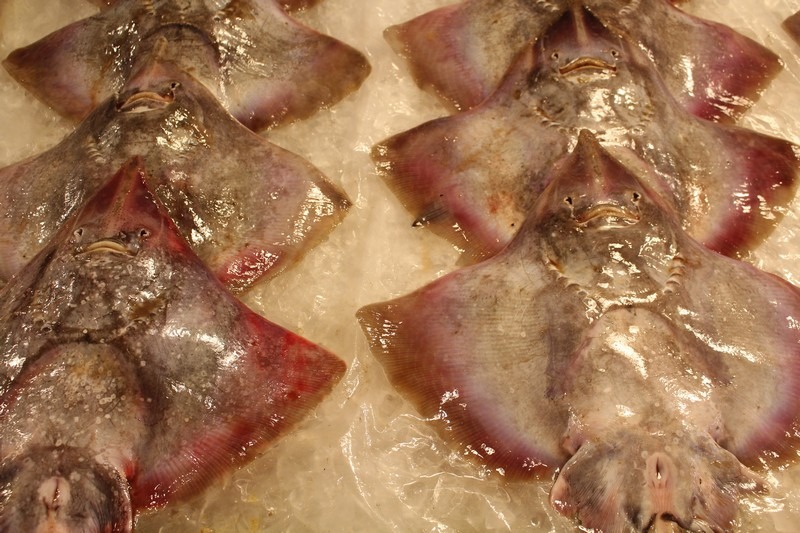
Hongeo is fermented Korean skate, caught off the southern coast of Korea. The fermentation process is what makes it genuinely unusual: because skate has no bladder or kidneys, it excretes uric acid, essentially urine, through its skin, and the fish ferments in that. Yes. That is what is happening.
This may be enough information for most people to stop reading. And yet in South Korea, approximately 11,000 tons of hongeo is eaten every year. It is not an obscure outlier of Korean cuisine. It is a cultural institution, particularly in the Jeollanam-do region.
Fun Fact: Hongeo is originally from Mokpo in Korea’s Jeollo province. The fermentation process on skate meat was noted by Korean fishermen as early as the 14th century, during the Goryeo dynasty.
How Is Hongeo Made?
Fermentation can take weeks or months, and it’s done in a temperature-controlled environment, traditionally in a straw or wooden box, though today commercial producers often use plastic containers and fridges. Either way, the result is the same: a rubbery, slippery slice of flesh that smells like a janitor’s closet in an abandoned hospital. Appetizing right?
Fun fact: It is said that when the people of Heuksando were forced to move inland to Naju in the 14th century, a fishermen’s supply of skate was able to make the two week trip without going bad because it was fermenting. And thus a Korean delicacy was born.
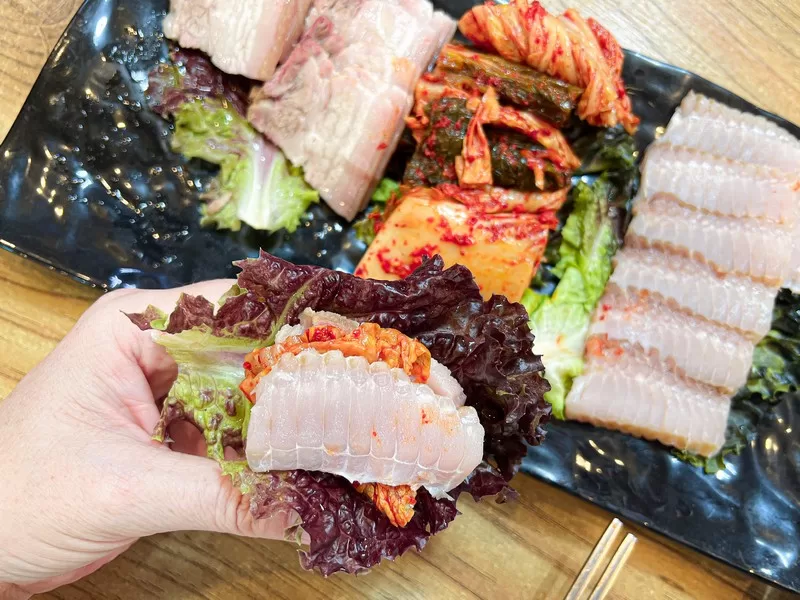
How To Eat Hongeo
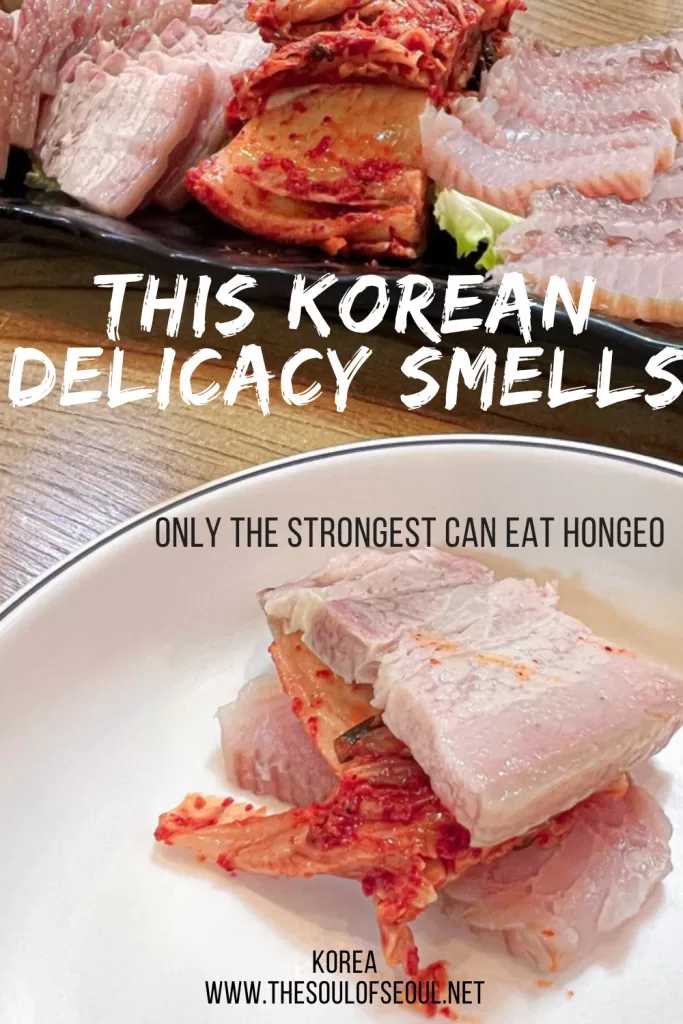
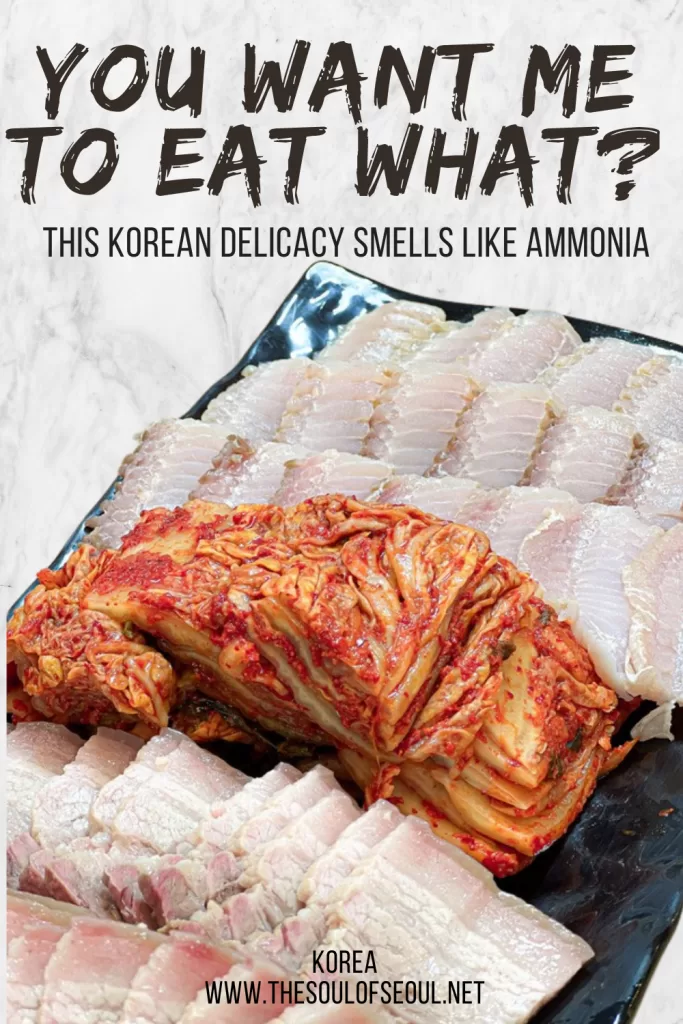
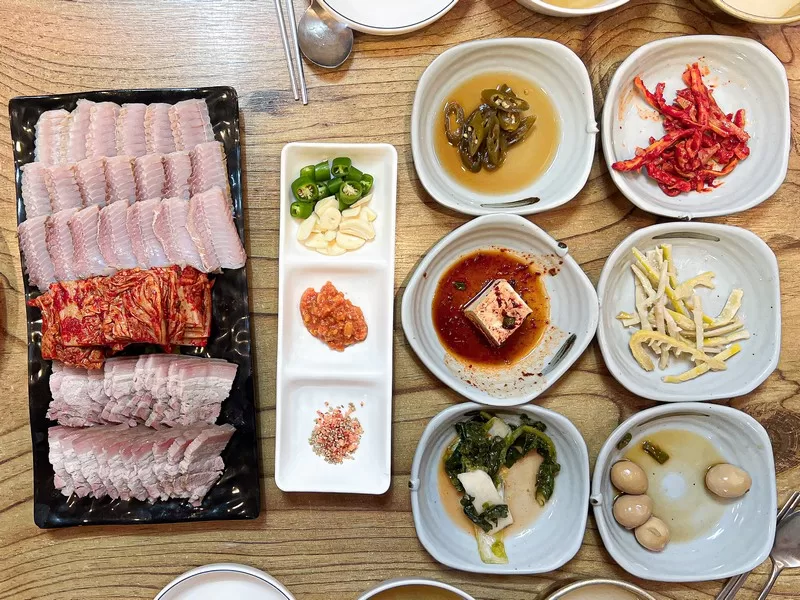
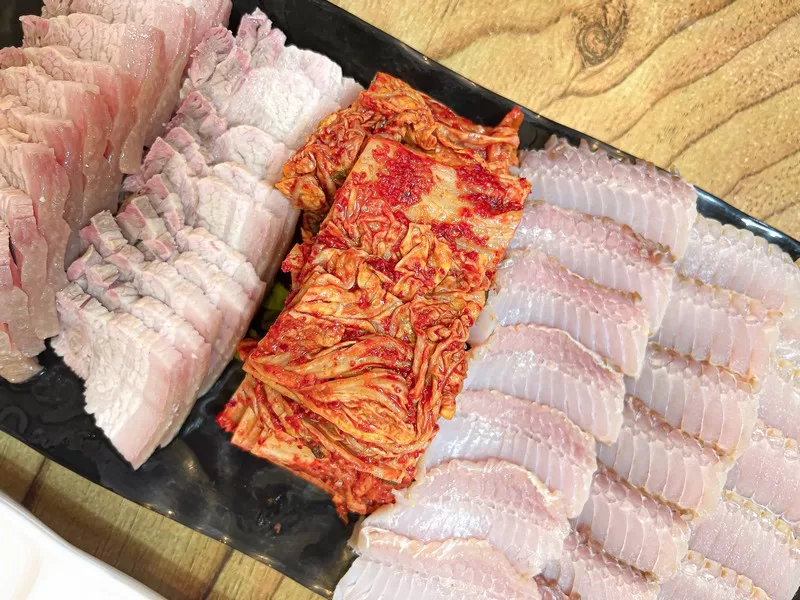
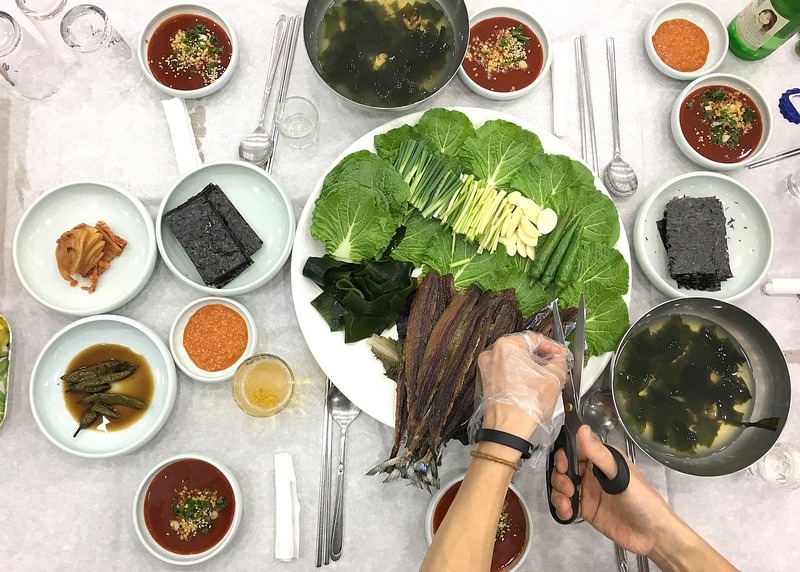
Hongeo is most commonly served as hongoe samhap (홍어삼합), which translates to “skate three-way”. What does three-way mean? You stack the fermented skate, boiled pork belly (bossam), and aged kimchi and eat it all in one go. Three layers of deliciousness.
The fatty pork and sour kimchi balance out the very aggressive sting of the fish that will still manage to invade your nostrils as you swallow it down. So, to say they balance might be an overstatement. It’s still very strong. But it’s a strong taste that even the royals of Korea enjoyed.
Because skate is a cartilaginous fish, you don’t have the option to swallow it quickly like you might have with some other foods you want to look brave eating and gulp down. You need to chew chew chew before you can really swallow giving the strong taste all the more time to really be savored.
Pro tip: Connoisseurs of hongeo will tell you that the fourth time is the charm. The first time, you may not like it at all, but the taste will certainly linger and you may want to come back for more.
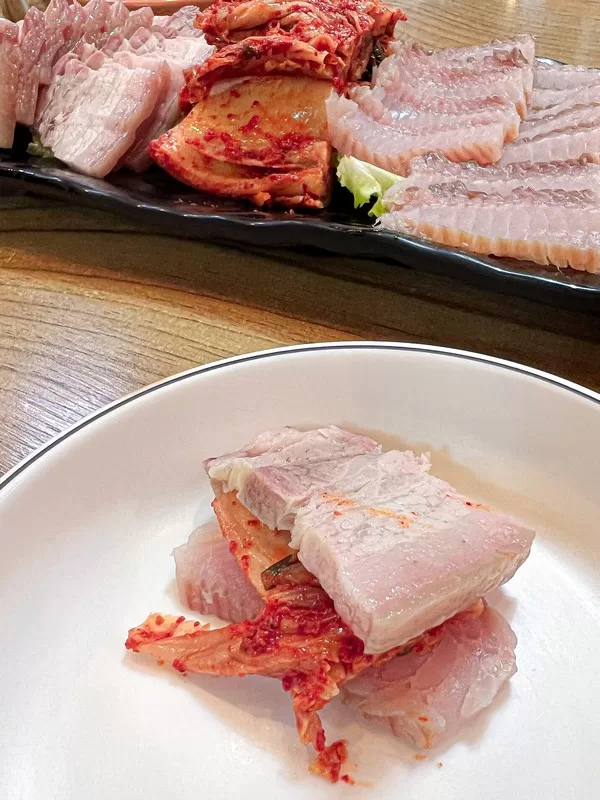
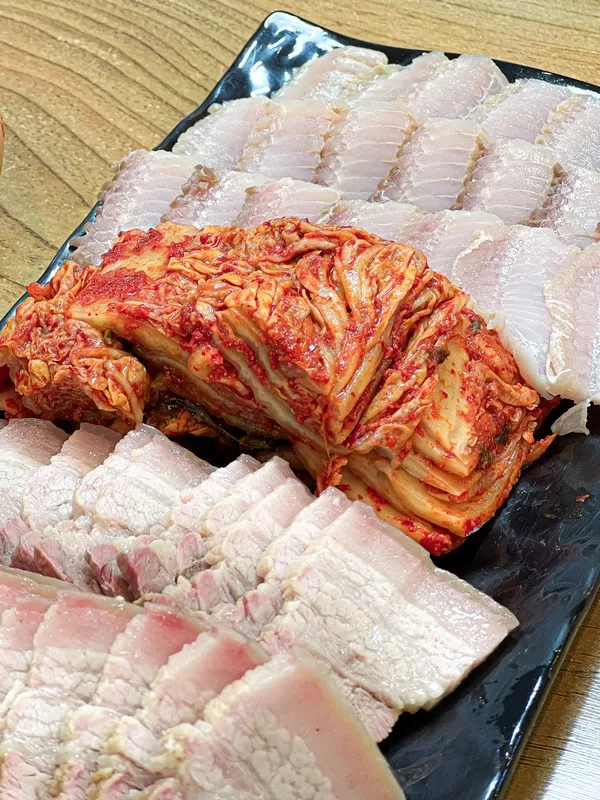
Skate can also be eaten on its own with a dab of chojang, a vinegary red chili paste, but I wouldn’t recommend that for beginners. I’m still not even there yet, though my husband will eat a few pieces that way over the course of the meal. And most definitely pair this with makgeolli or soju to give your taste buds a break.
Pro Tip: Do NOT wear clothes that you’ll want to wear soon after (much like when you go to a Korean bbq restaurant, though you leave those smelling of meat). Your shirts, pants, jackets, and everything else will smell of ammonia when you leave a hongeo establishment.
What Does Hongeo Taste Like?
The ammonia smell is absolutely overwhelming and the texture of the fish is a bit chewy. Once you’ve gotten past the shock of the pungency, which is actually kind of addictive, you’ll notice a sharp, intense flavor.
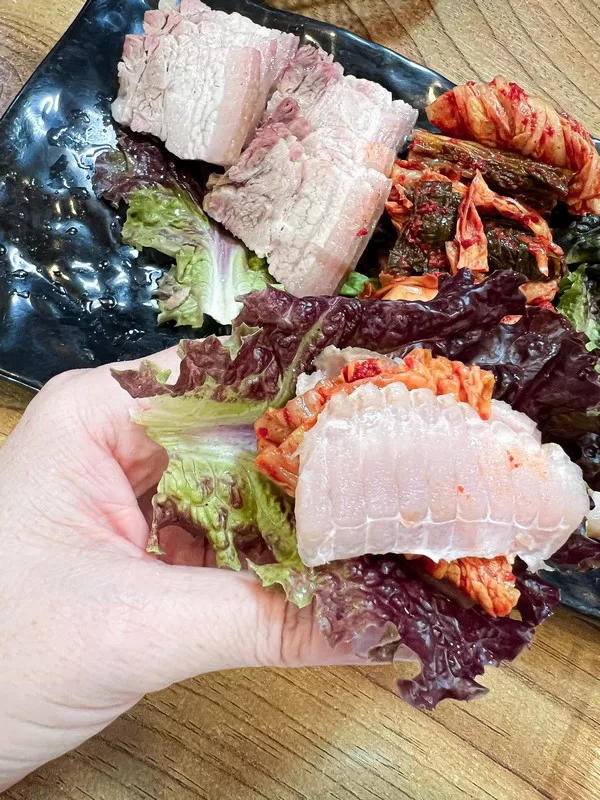
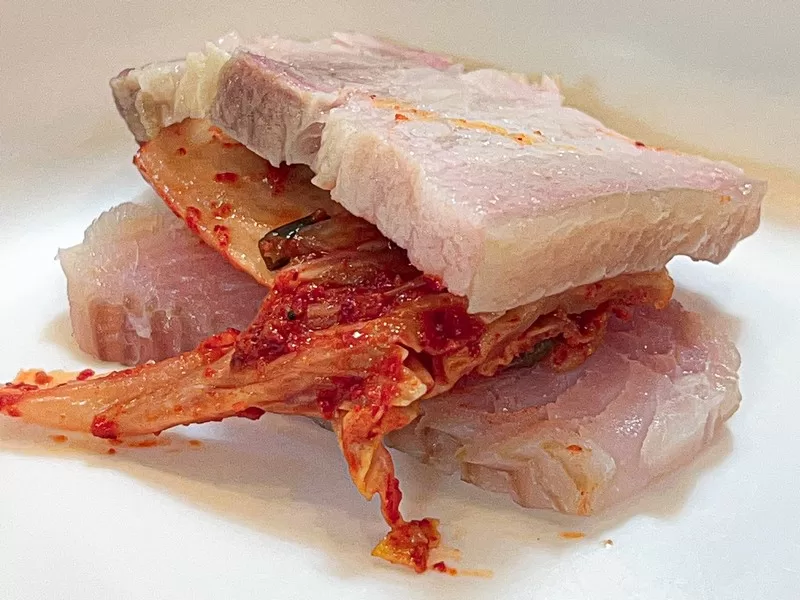
If you don’t breathe while you eat it, you may not really notice the ammonia. Unfortunately, you will indeed need to gulp down some air between bites. This is one of those foods though that I think is more about the experience than the flavor. A lot of Koreans I know haven’t even and won’t try it, so if you do, it’s a conversation starter to be sure.
Fun Fact: Hongeo is a rather polarizing dish in Korea. Some people love it and can’t imagine a feast without it whereas others avoid it like the plague. Considering you smell it before you even step into any restaurant that serves it, it’s easy to avoid too.
Where to eat hongeo in Seoul
While the southern reaches of Korea are definitely the place to eat hongeo, there are some places in Seoul that you can find hongoe.
Noryangjin Fish Market: One of the first spots that most people will likely think to head for such an interesting seafood delicacy, of course the local and largest seafood market in Seoul.
- Address: 674 Nodeul-ro, Dongjak-gu, Seoul (서울특별시 동작구 노들로 674 (노량진동))
Yeongdeungpo’s Hongeo Alley: As is often seen in Korea, when one restaurant opens up and gets popular, others serving the same dish move in and thus we have a full street of fermented skate restaurants in Seoul. The restaurants to look for include the following and yes, if you look them up, they all have the same address. Suffice to say, you’ll find them all right there.
- Grandma’s Hongeo House (할매홍어집)
- Address: 200-20 Singil-ro Yeongdeungpo-gu, Seoul (서울 영등포구 신길로 200-20)
- Skate, Don’t Cry (홍어야울지마라)
- Address: 200-22 Singil-ro Yeongdeungpo-gu, Seoul (서울 영등포구 신길로 200-22)
- No. 1 Skate Specialist (원조1번지홍어전문)
- Address: 200-20 Singil-ro Yeongdeungpo-gu, Seoul (서울 영등포구 신길로 200-20)
Other adventurous Korean foods to try
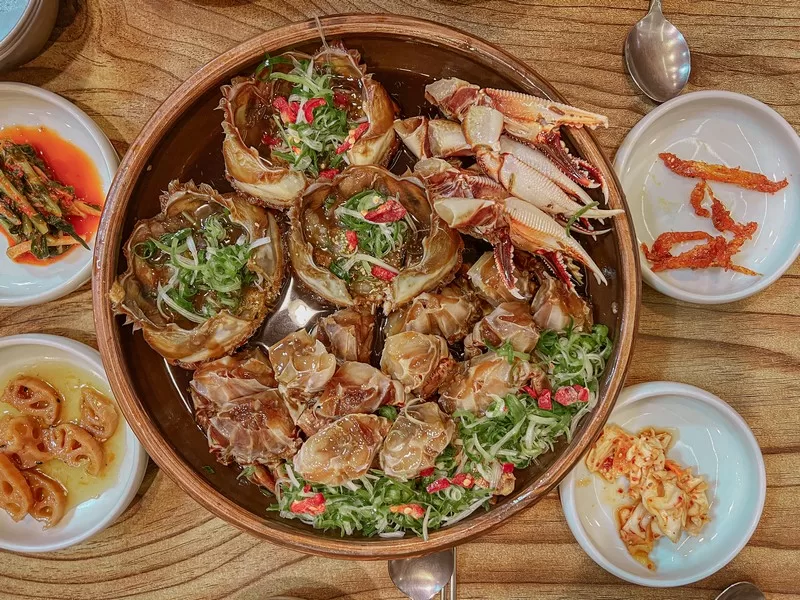
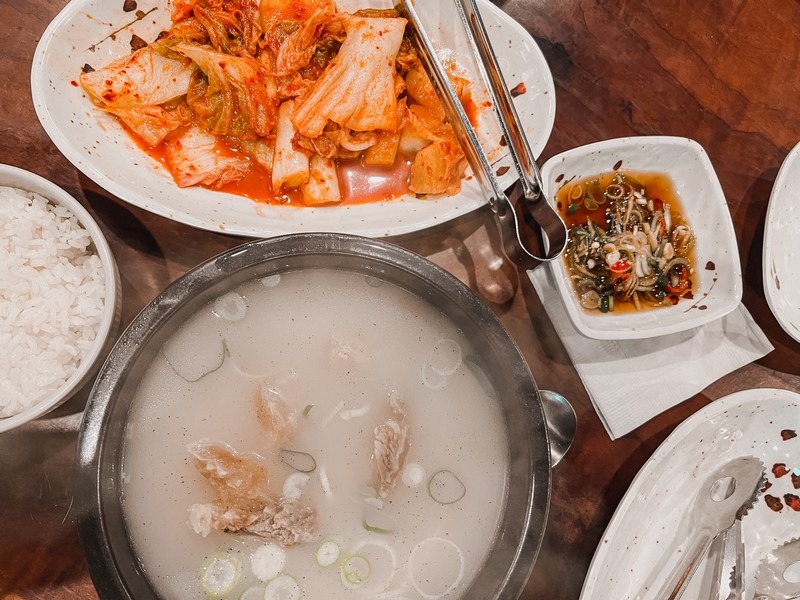
If you’re after a culinary adventure, Korea has plenty to choose from. Here are some of my favorites that aren’t for the newbie, but need to be tried.
FAQ
What is hongeo?
Hongeo (홍어) is Korean fermented skate fish from the southern coast of Korea, particularly associated with Mokpo in Jeollanam-do. The skate ferments in its own uric acid (essentially urine, excreted through its skin since skate have no bladder or kidneys), producing an intense ammonia smell and a sharp, complex flavor.
What does hongeo taste like?
Sharp, intense, and unlike most other foods. The ammonia smell is overwhelming before and during eating. The texture is chewy and requires sustained effort. Underneath the intensity there’s a distinct flavor that’s difficult to compare to anything else. Eaten as samhap, stacked with pork belly and aged kimchi, the experience becomes more manageable.
How is hongeo eaten?
Most commonly as hongeo samhap, a stack of fermented skate, boiled pork belly, and aged kimchi eaten in one bite. The pork and kimchi moderate the intensity of the fish. It can also be eaten alone with chojang (vinegary red chili paste). Always paired with makgeolli or soju.
Is hongeo safe to eat?
Yes, unless you have an allergy to skate or shellfish. The ammonia is a natural product of the fermentation process and does not indicate spoilage in the way it would with other fish. It has been eaten safely in Korea for centuries.
Where can I eat hongeo in Seoul?
Noryangjin Fish Market is the most accessible option. Yeongdeungpo’s Hongeo Alley (along Singil-ro) has several dedicated hongeo restaurants clustered together, including Grandma’s Hongeo House, Skate Don’t Cry, and No. 1 Skate Specialist.
Why does hongeo smell like ammonia?
Skate fish excrete uric acid through their skin because they have no bladder or kidneys. During fermentation, this uric acid breaks down and produces ammonia as a byproduct. The smell is inherent to the process and cannot be removed without ending the fermentation, it is both cause and feature of the dish.
This is a pretty unforgettable culinary experience in Korea. I don’t suggest trying it for the flavor necessarily, though it may grow on you as it has me, but more for the culinary gut check. If you can survive hongeo (it won’t make you sick unless you’re allergic though FYI), you can survive anything that Korea throws at you.
Did you like this post? Pin iT!