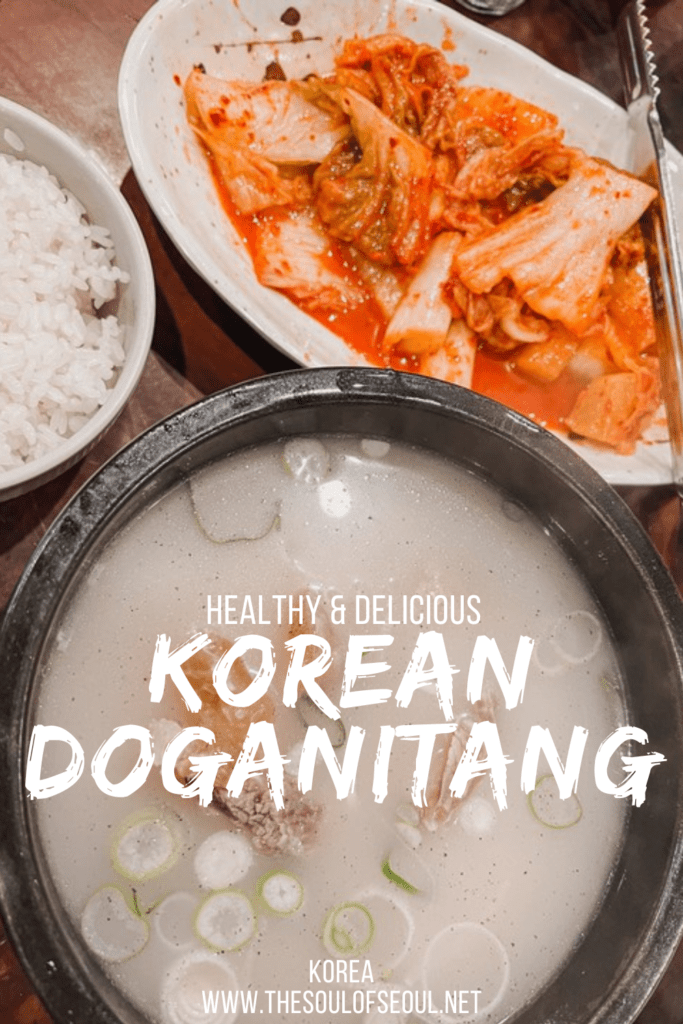
Doganitang: What Is Korean Ox Knee Soup and How To Eat It
Last Updated on October 12, 2026
The first time I had doganitang (도가니탕), or Korean ox knee soup, I had just finished an English lesson and my 70 year old student invited me to lunch. He was the kind of older Korean guy there was no declining, so I went along and was quite taken aback when the soup he’d ordered us was filled with some sort of gelatinous meat.
I wasn’t completely sold at first. But my old friend had good taste, and I knew to trust him and eat what was in front of us. Over the years, doganitang has become one of my favorite Korean soups. On a scale of basic to adventurous Korean foods, it leans more toward the adventurous end due to texture, but it should most definitely be tried at some point.
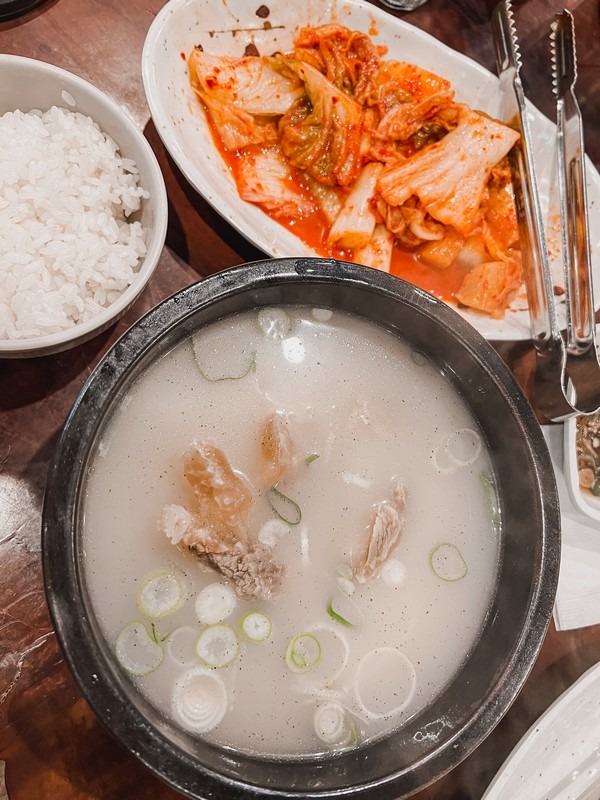
Here’s the ox knee soup you need to try in Korea:
(This post contains affiliate links, which means I receive a certain percentage of a sale if you purchase after clicking at no cost to you. Thank you for your support.)
What Is Doganitang?
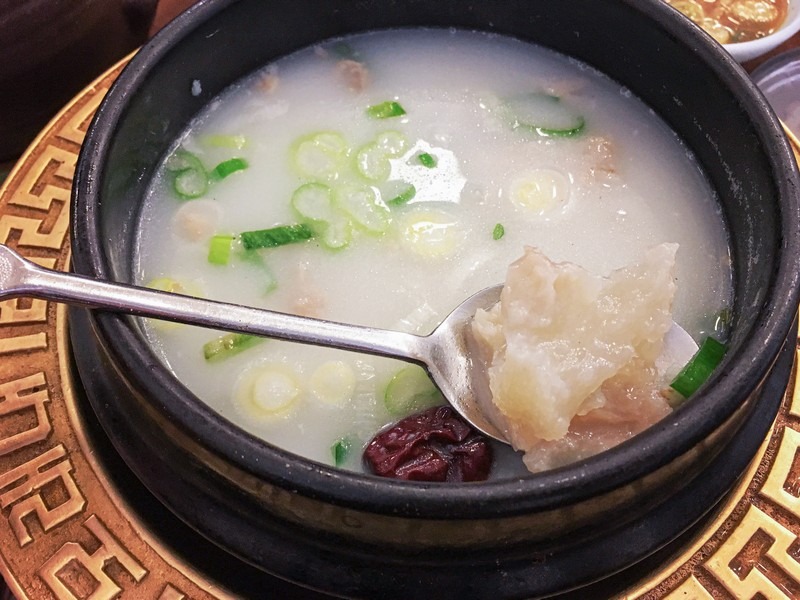
Doganitang is a traditional Korean soup that draws its deep, savory flavor from slowly simmered beef knee joints. The soup is somewhat reminiscent of seolleongtang, that milky, slow-cooked beef bone soup, but the flavor is richer, thanks to the beef gelatin released during the long cooking process.
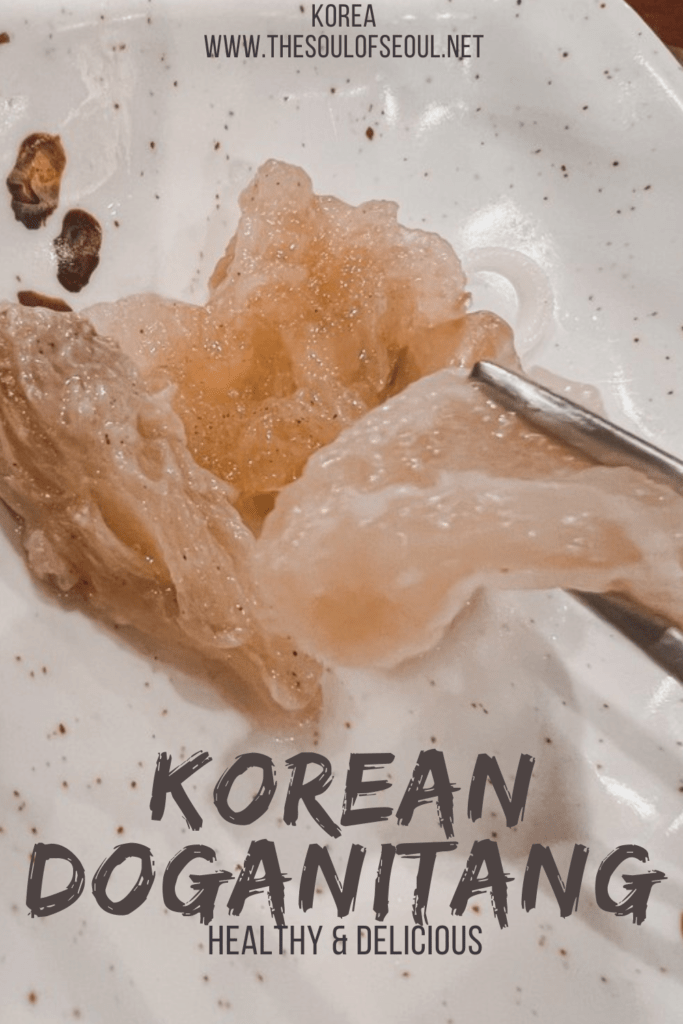
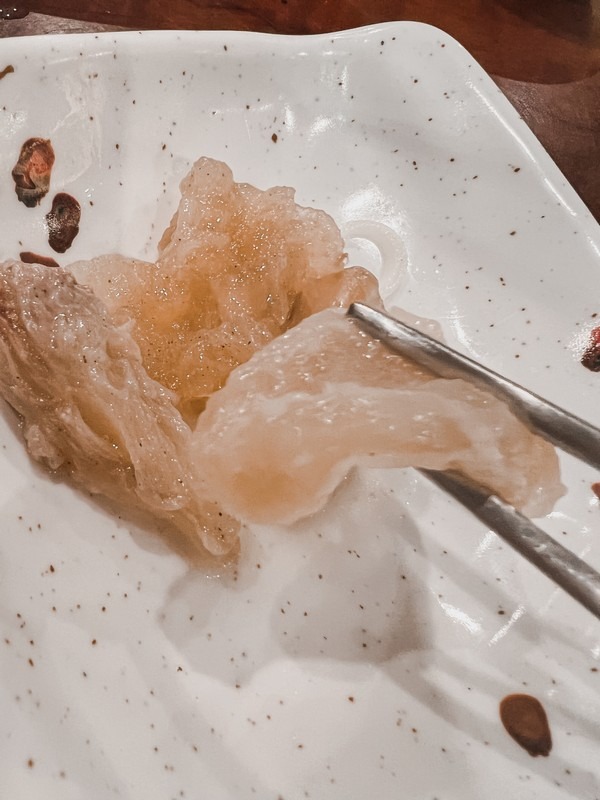
The key ingredients are ox knee joints, tendon, beef brisket, and shank, all cooked together until the collagen-rich connective tissue breaks down into the broth. The result is a soup with a distinctive body, not thin and watery, but silky and substantial. The gelatinous quality surprises most people the first time. After that, it’s usually the thing they come back for.
How To Eat Doganitang
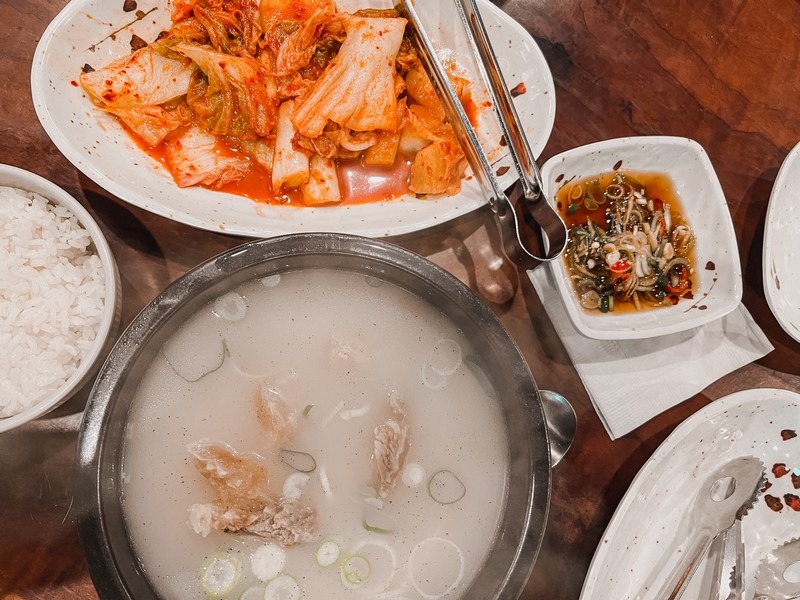
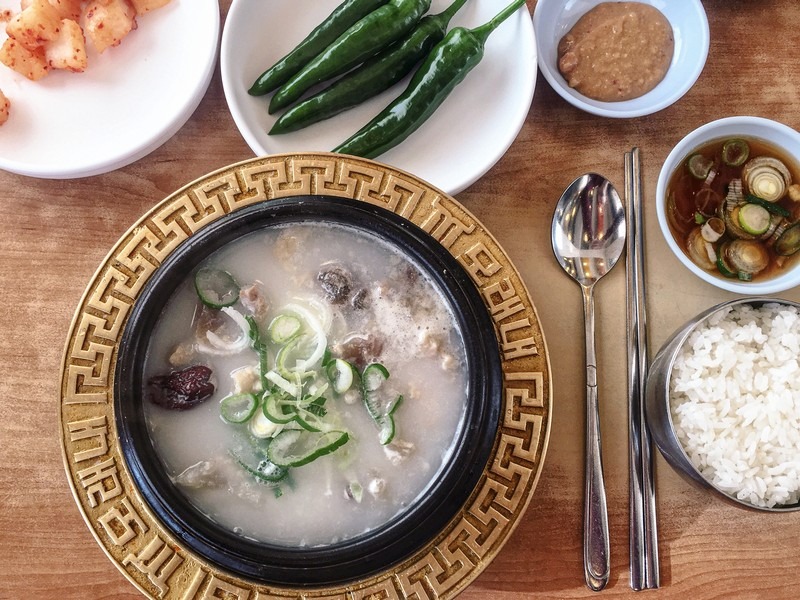
When the soup arrives, start with the broth on its own. Taste it before adding anything. You can adjust with salt or spicy red pepper flakes to your preference.
You’ll notice a smaller extra bowl alongside the main soup bowl. This is deliberate: take pieces of the cooked meat from the soup and place them in the smaller bowl to cool before eating. Hot soup beef, and particularly the cartilage sections, can be difficult to eat straight from the bowl.
Once the meat has cooled slightly, dip it in one of the sauces provided, either a spicy mustardy sauce or a soy sauce-based dipping sauce. The chewy texture of the knee cartilage paired with the concentrated dipping sauce is the combination that makes the dish work.
I enjoy doganitang most often as a main meal, but I’ve also seen it appear at Korean pubs as a hearty shared side dish, which makes sense given its richness and the way it works alongside drinks.
Where To Eat Doganitang In Seoul
Doganitang appears on the menus of many traditional Korean soup restaurants across Seoul. Some of the oldest soup restaurants in the city, the kinds covered in the complete guide to the oldest restaurants in Seoul, carry ox knee-based soups as signature dishes, particularly in the Namdaemun and Jongno areas.
If you’re in Seoul and specifically looking for doganitang, search 도가니탕 in Naver Maps or Kakao Maps to find the nearest dedicated restaurant. Traditional Korean soup restaurants (한식집 or 국밥집) in older neighborhoods north of the Han River are the most reliable source.
Health Benefits
This soup is packed with essential minerals and proteins and because of that, it is often given to young children, the elderly, and pregnant women.
The health benefits to know about:
- Rich in Calcium: The soup is loaded with calcium, crucial for bone health. It’s particularly beneficial for children, aiding in their growth and development, and for the elderly, helping to prevent osteoporosis.
- High in Protein: The inclusion of beef brisket and shank ensures that the soup is rich in protein, necessary for muscle repair and overall bodily functions.
- Boosts Joint Health: The gelatin from the beef knee joints is rich in collagen, which is excellent for maintaining healthy joints and skin. This makes doganitang a popular choice for those looking to improve their joint health.
- Energy-Boosting: The combination of nutrient-rich ingredients makes this soup an excellent energy booster. It’s often consumed to recharge and rejuvenate, especially during colder months.
- Supports Digestion: Ingredients like green onions, garlic, and black pepper not only add flavor but also support digestion and have anti-inflammatory properties.
FAQ
What is doganitang?
Doganitang (도가니탕) is Korean ox knee soup, a rich, slow-cooked soup made from beef knee joints, tendon, brisket, and shank. The long cooking time releases collagen from the connective tissue into the broth, giving it a silky, gelatinous quality. It is more collagen-rich and richer in flavor than seolleongtang.
What does doganitang taste like?
Deeply savory and rich, with a body that comes from the dissolved collagen rather than starch or flour. The broth is naturally thick and slightly sticky. The meat and cartilage sections are chewy. The flavor improves with a small amount of salt and a dipping sauce on the side pieces.
How is doganitang different from seolleongtang?
Both are slow-cooked beef soups. Seolleongtang uses ox leg bones and produces a milky white broth from the bone marrow; doganitang uses knee joints specifically and is richer in collagen and gelatin. Doganitang has a more pronounced body and slightly deeper flavor.
Is doganitang healthy?
It’s considered one of Korea’s more nutritionally substantial soups, high in calcium, protein, and collagen. It is specifically given to children for bone growth, to elderly people for bone density, and to pregnant women for its mineral and protein content. The collagen content is associated with joint and skin health.
Where can I eat doganitang in Seoul?
Traditional Korean soup restaurants across central Seoul serve it, particularly in the older neighborhoods north of the Han River (Gangbuk). Search 도가니탕 in Naver Maps or Kakao Maps for the nearest option. Some of the oldest restaurants in Seoul carry ox knee-based dishes.
Is doganitang adventurous?
Moderately. The gelatinous texture of the broth and the chewy cartilage sections are genuinely unusual for first-timers, which is where the “adventurous” label comes from. The flavor itself is savory and accessible. Most people who try it past the initial texture surprise find themselves ordering it again.
Doganitang might not be the first Korean soup you’re drawn to try, but once you have, you’ll definitely remember it.
Did you like this post? Pin IT!