Kinds of Kimchi: A Guide to 14 Korean Varieties and What Makes Each One Different
Last Updated on June 9, 2026
You might be surprised how often the small talk starter in Korea is, “Do you like kimchi?” I always say yes, I do in fact like kimchi. But over the years I’ve heard plenty of foreigners say no. When I ask why, the story is just about always the same: they tried it once, didn’t love it, and crossed kimchi off of the keep-eating-list. Wait once? Which means one kind of kimchi and done?
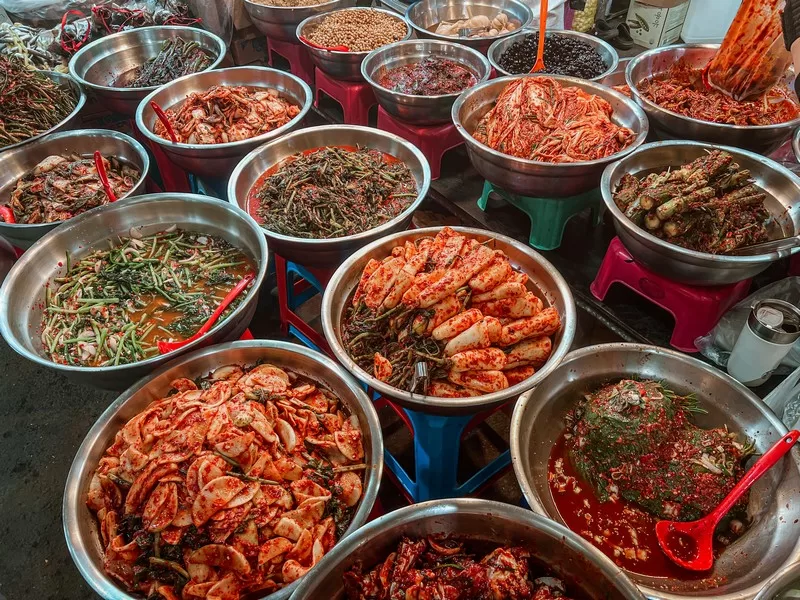
Kimchi is not a single dish. It’s more of a delicious dictionary of dishes. For folks outside of Korea, it is easy to assume the bright red, garlicky napa cabbage version is the whole story. It is the one that is always in the picture next to the word “kimchi” afterall. But there are hundreds of kinds made with different vegetables, in different seasons, and at different spice levels. Some skip chili entirely. All are fermented, full of character, and fantastically Korean.
Get ready to crunch and maybe even sip your way through Korea’s most iconic dish in all of its delicious disguises. This is kimchi:
- Kimchi Quick Reference
- What is Kimchi?
- How Kimchi Is Made
- Is Kimchi Healthy?
- A Note for Vegans and Vegetarians
- The Tradition of Kimjang (김장)
- The Different Kinds Of Kimchi
- FAQ
(This post contains affiliate links, which means I receive a certain percentage of a sale if you purchase after clicking at no cost to you. Thank you for your support.)
Kimchi Quick Reference
| Kimchi | Main Vegetable | Spice Level | Best Known For |
|---|---|---|---|
| Baechu Kimchi | Napa cabbage | Medium to high | The classic; served with nearly every meal |
| Pogi Kimchi | Whole napa cabbage | Medium to high | Traditional kimjang kimchi; deep fermented flavor |
| Geotjeori Kimchi | Fresh napa cabbage | Medium | Unfermented; bright and crisp; do not cook on BBQ grill |
| Baek Kimchi | Napa cabbage | None | White, mild, child-friendly; no chili |
| Kkakdugi | Korean radish | Medium to high | Big crunch; pairs with ox bone soup |
| Yeolmu Kimchi | Young radish greens | Mild | Light, grassy, summery; eaten with cold noodles |
| Nabak Kimchi | Radish and cabbage | Very mild | Watery, pink-tinged, almost drinkable brine |
| Buchu Kimchi | Garlic chives | High | Bold garlic punch; fast to ferment |
| Chonggak Kimchi | Small whole radish | Medium to high | Named for a bachelor’s topknot; crunchy roots and greens |
| Gat Kimchi | Mustard leaves | High | Peppery and bitter; Jeolla-do specialty |
| Pa Kimchi | Green onions | High | Bold and earthy; sometimes includes dried squid |
| Dongchimi | Small round radish | Very mild | Winter kimchi with fizzy, drinkable brine |
| Oi Sobagi | Cucumber | Medium | Stuffed and crisp; a summer favorite |
| Kkaennip Kimchi | Perilla leaves | Mild to medium | Savory and nutty; layered with soy or chili marinade |
What is Kimchi?
You can “kimchi” just about everything and this is the key that many people don’t understand. Traditionally, kimchi refers to vegetables that have been salted, seasoned, and fermented. The word itself comes from old Chinese characters meaning “salted vegetables,” but Koreans turned it into something far more soulful than what sounds so basic.
You can learn more about kimchi at Museum Kimchikan, the first kimchi museum in Korea, located easily in Insadong in Seoul.
Fun fact: Ask ten Koreans where the best kimchi comes from, and you’ll get at least eleven answers.
How Kimchi Is Made
The process of kimchi-making happens in four main stages: brining, seasoning, fermenting, and storing.
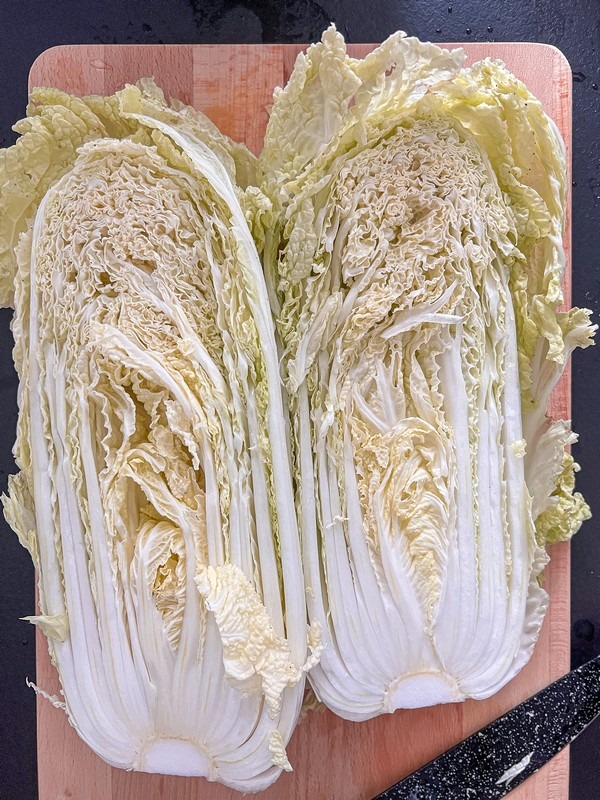
- Brining: Vegetables are salted to draw out moisture, creating an environment where good bacteria thrive while bad ones can’t.
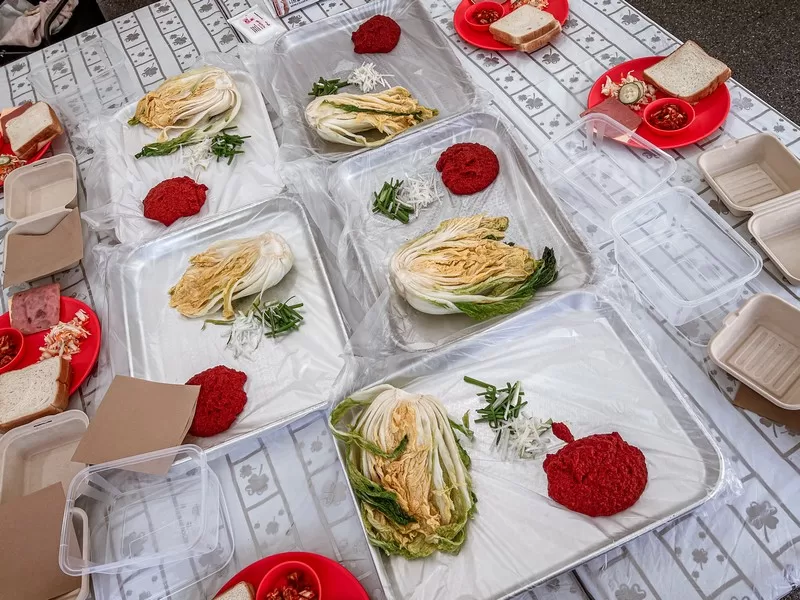
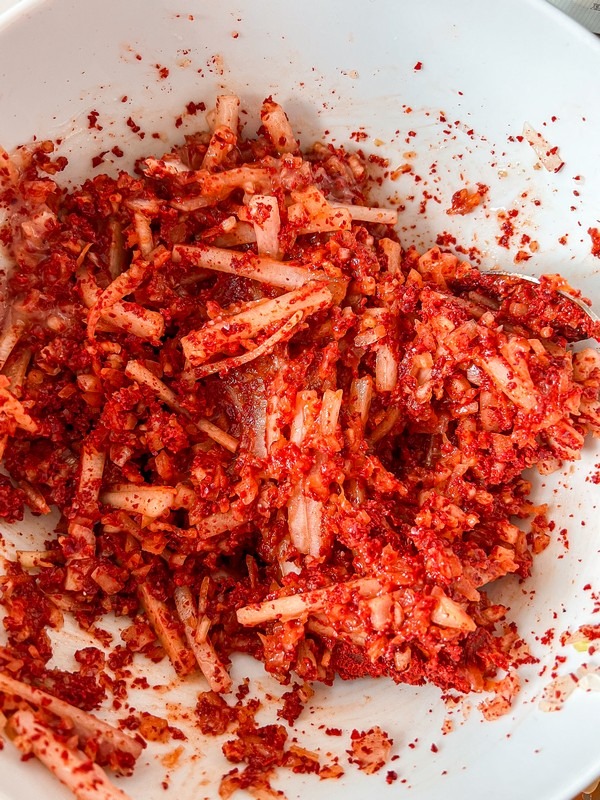
- Seasoning: The brined vegetables are coated in a rich paste made from red pepper flakes (gochugaru), garlic, ginger, and other ingredients like fish sauce, or salted shrimp.
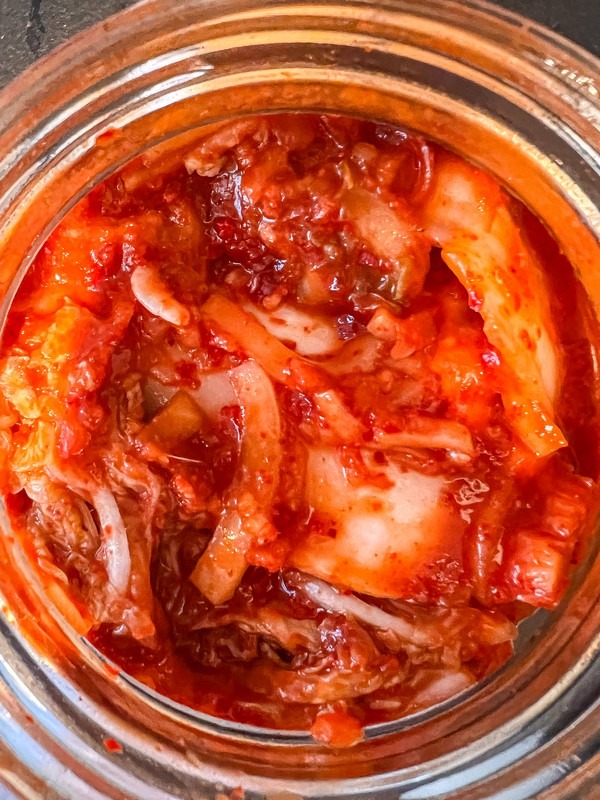
- Fermenting: The magic happens here. Lactic acid bacteria turn natural sugars into lactic acid, creating that signature tang and fizz.
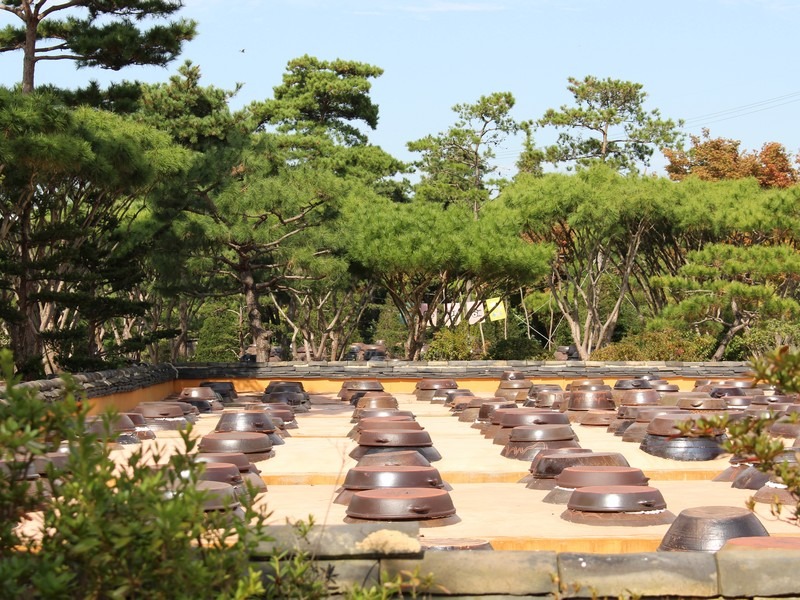
- Storing: Traditionally, kimchi was packed into clay pots called onggi and buried underground for steady temperatures. You can still see plenty of onggi around Korea, but today, most modern homes use special kimchi refrigerators designed to keep just the right chill and prevent your other groceries from smelling like garlic glory.
Fermentation can take anywhere from a day to several months. Like aging wine, you don’t want to open it too early… or too late. When buying kimchi, you’ll often hear the words “fresh kimchi”, which means it’s not as fermented and “old kimchi”, which means it’s been fermented for much longer.
Every region, every family, even every grandmother’s hand adds something different to the recipe.
Take a kimchi cooking class in Seoul
Korean Kimchi Class at Seoul Kimchi Academy
A great introductory course in making kimchi, this class is family-friendly and conveniently located in a cooking studio in the Bukchon Hanok Village at the Seoul Kimchi Academy.
Korean Kimchi Making Experience
Learn how to make four types of kimchi including two cabbage kimchis (배추김치), a raddish kimchi (깍두기김치), and a cucumber kimchi (오이소박) with a small group of students, four people maximum in a private cooking studio near the Mangwon traditional market.

Is Kimchi Healthy?
Kimchi isn’t just crunchy, cozy, and craveable, it’s a quiet overachiever for your body, too. Thanks to fermentation, fiber, and a garden’s worth of veggies, this humble side dish can support everything from your gut to your heart. Here’s a bite-size breakdown.
Kimchi has some backed-by-science benefits and has vitamins and minerals including B6, C, K, folate, iron, riboflavin, and niacin, it’s also know for:
- Gut Goodness & Digestion: Lacto-fermentation loads kimchi with Lactobacillus and probiotics that help maintain a balanced microbiome, support digestion, and may ease constipation.
- Helping You Feel Fuller Longer: High-fiber veggies slow digestion, helping curb quick hunger pangs without piling on the calories.
- Immune Support: Strains commonly found in kimchi have shown immune-modulating effects in early studies. Think of kimchi as flavorful backup for your body’s defense team.
- Decreasing Inflammation: Kimchi’s bioactive compounds like HDMPPA have demonstrated anti-inflammatory activity in lab and animal studies.
- Being Heart Smart: Kimchi consumption can lower total and LDL cholesterol and support healthier blood sugar, useful markers for long-term heart health.
Reasons To Be Cautious: While kimchi has plenty of health benefits, there are a few things to remember. Kimchi can be salty, if you’re watching you’re sodium intake, make sure to look for lower-sodium options. Fermented foods contain histamine, so if you have an intolerance, you could get headaches, hives, or the sniffles.
A Note for Vegans and Vegetarians
This is one of the most common questions about kimchi. Most traditional kimchi is not vegan. Fish sauce and salted shrimp (새우젓, saeujeot) are standard seasoning ingredients in the majority of varieties, including the classic baechu kimchi. White kimchi (baek kimchi) and dongchimi are more likely to be made without seafood but this is not guaranteed. You should always check.
Vegan kimchi does exist and is increasingly available in Korea, particularly in restaurants that cater to vegetarian and vegan diners. If this matters to you, asking specifically is always the right approach. The Korean phrase to use is “해산물 없이 만든 김치인가요?” aka “Is this kimchi made without seafood?”
The Tradition of Kimjang (김장)
Come late autumn, it’s kimjang season, the great communal kimchi-making event that has defined Korean life for centuries.
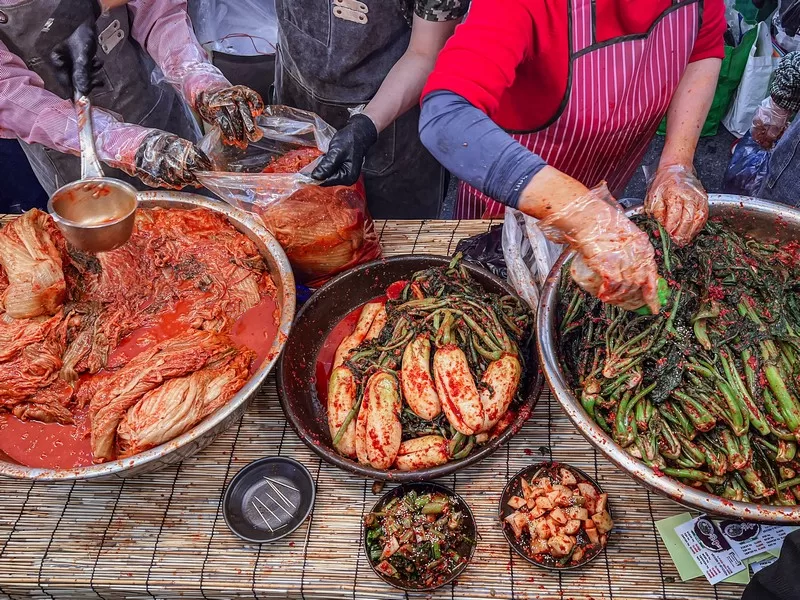
Before winter sets in, families and neighbors gather to make hundreds of heads of cabbage kimchi to last until spring. The process could take days of prep: one for brining, one for seasoning, one for packing and burying the pots.
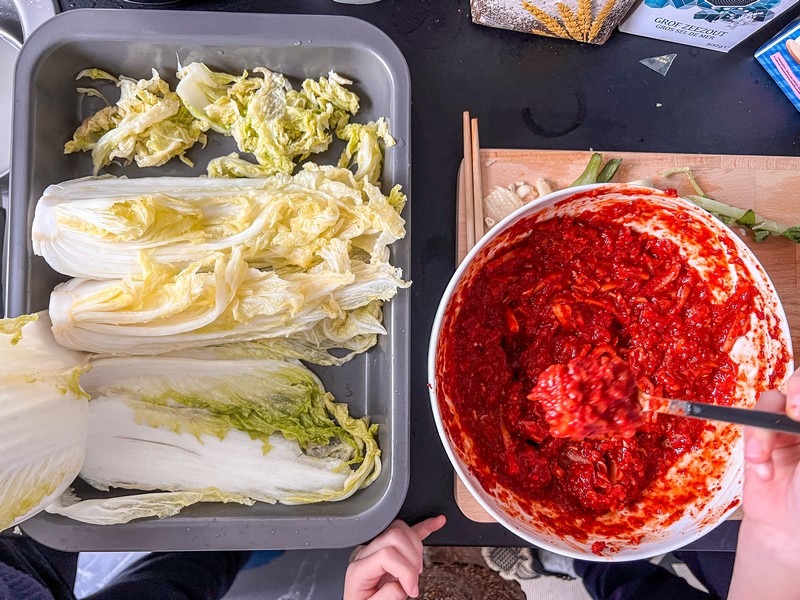
Kimjang isn’t just about the food, it’s about the community. People help one another, swap secret recipes, and share steaming plates of boiled pork belly with fresh kimchi on the side to celebrate the work. These days, families and civic groups actively keep the practice alive.
Fun Fact: UNESCO has added kimjang to its list of Intangible Cultural Heritage, recognizing it as a vital symbol for Korean identity.
The Different Kinds Of Kimchi
This kimchi lexicon is meant to show off the power of variety. Not only are there different varieties made with different vegetables, but on top of that Baechu (napa cabbage) kimchi in Seoul tastes different from the Jeollanam-do version, which tastes different from the Busan option.
Brines change, seasons shift, families tweak, flavors sing. All of this to say, you can’t try kimchi once and call it a day. You need to keep tasting and trying this tempting side dish.
Napa Cabbage Kimchi aka Baechu Kimchi (배추김치)
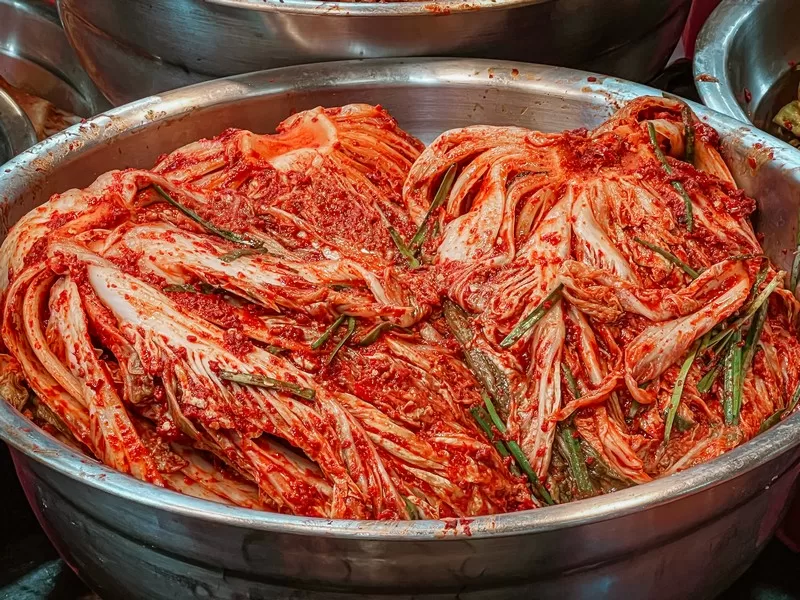
This is the kimchi. The superstar. The symbol. The crimson queen of Korean cuisine. When people say “kimchi”, this is usually what they are referring to, the red spicy, tangy cabbage that lands beside nearly every meal in Korea.
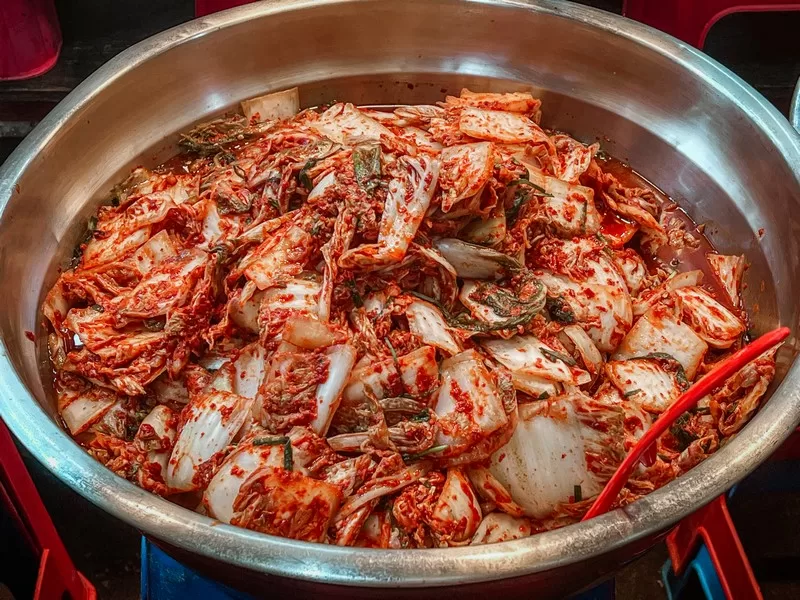
Baechu kimchi starts with napa cabbage that is salted and rinsed before being coated in a fiery mixture of red pepper flakes (gochugaru), garlic, ginger, scallions, and often a splash of fish sauce or tiny shrimp for umami depth. It ferments for anywhere from a few days to a few months, developing from bright and juicy to deep and sour.
Every household that makes it has its own balance, more spice here, more sweetness there, so it’s impossible to taste just one and think you know all of them. Really, they’re not even all spicy, so the color can fool you.
Eating with kids: If you come to Korea and wonder if Korean children are eating kimchi, the answer is yes. However, what you might catch sight of at the table is their parents “washing” the kimchi in water. Children are introduced to kimchi from a young age, but because it can be strong and flavorful and yes, sometimes spicy, parents will rinse off the kimchi in some water making a bit more palatable for children.
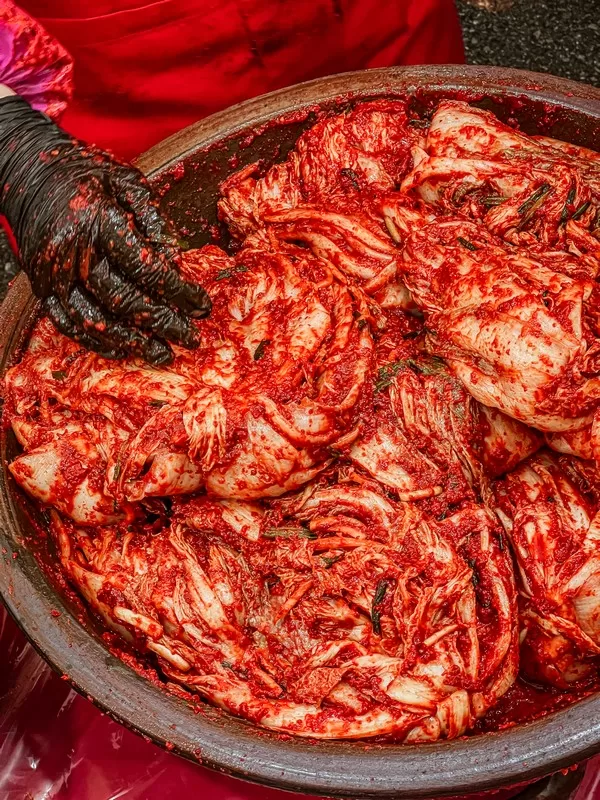
Whole-Head Kimchi aka Pogi Kimchi (포기김치)
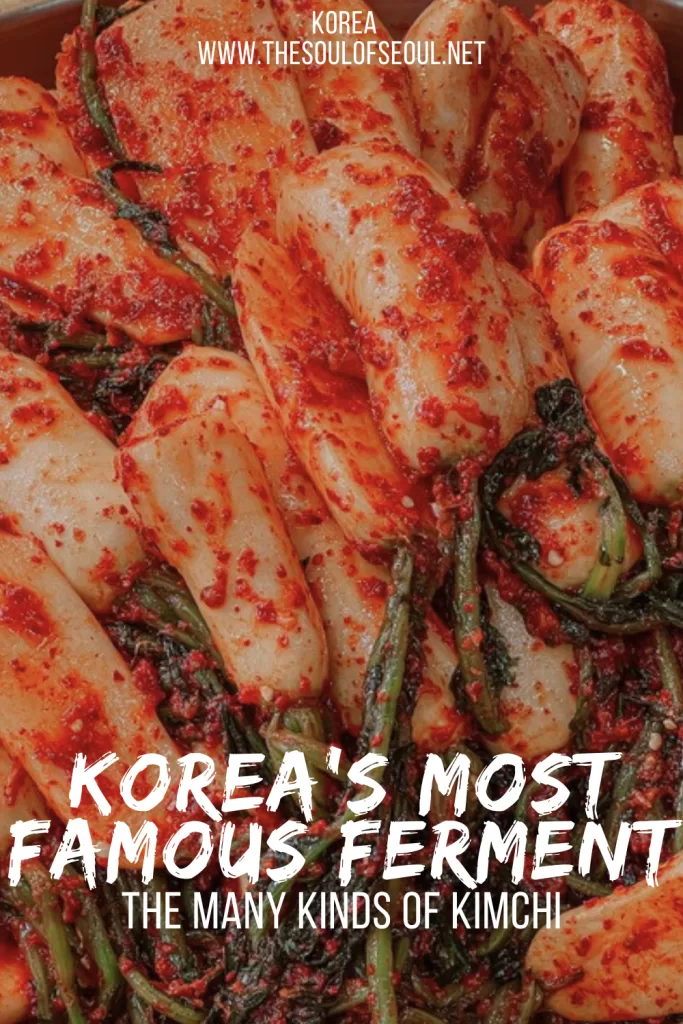
Essentially baechu kimchi in it’s most traditional form, pogi kimchi is the whole cabbage head, stuffed between each leaf with seasoning paste, folded like a gift, and left to ferment during kimjang. This version ferments slower and deeper, developing rich umami layers over time. The best part? Peeling open the leaves and finding that first perfectly marinated bite.
Fresh Napa Cabbage Kimchi aka Geotjeori Kimchi (겉절이김치)
If patience isn’t your friend, geotjeori is your gateway kimchi. It’s basically kimchi before the fermentation, a fresh, crisp salad version made with the same seasonings as baechu kimchi but eaten the same day. It’s bright, bold, and raw, served as a side to fatty grilled pork or tucked into lettuce wraps. Think of it as kimchi’s first chapter, bursting with flavor before the bubbles begin.
Pro Tip: When eating at a Korean BBQ restaurant, many people like to cook the kimchi a bit on the stove. However, you can’t cook the geotjeori kimchi. Your server will tell you to take it off. It’s the fermented kimchi that works best on the grill.
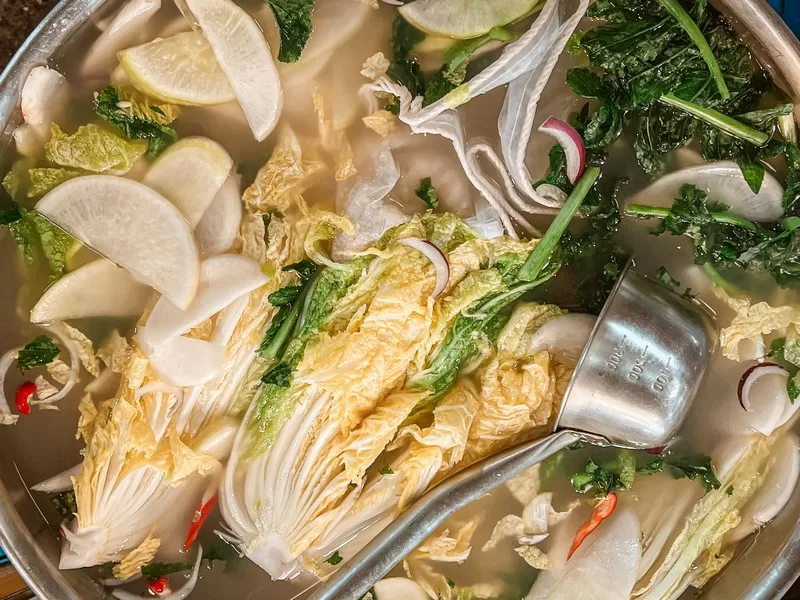
White Kimchi aka Baek Kimchi (백김치)
If baechu kimchi is the fiery rebel, baek kimchi is her mild-mannered cousin. Made with napa cabbage too, but without a single chili flake in sight, this “white kimchi” is clean, crisp, and full of subtle sweetness. Its flavor comes from garlic, ginger, radish, jujubes, chestnuts, and slices of pear bobbing in a lightly salted brine.
This kimchi is refreshing, family-friendly, and especially beloved by those who like their food flavorful but not fiery. If you have children, this is a good first introduction option to kimchi.
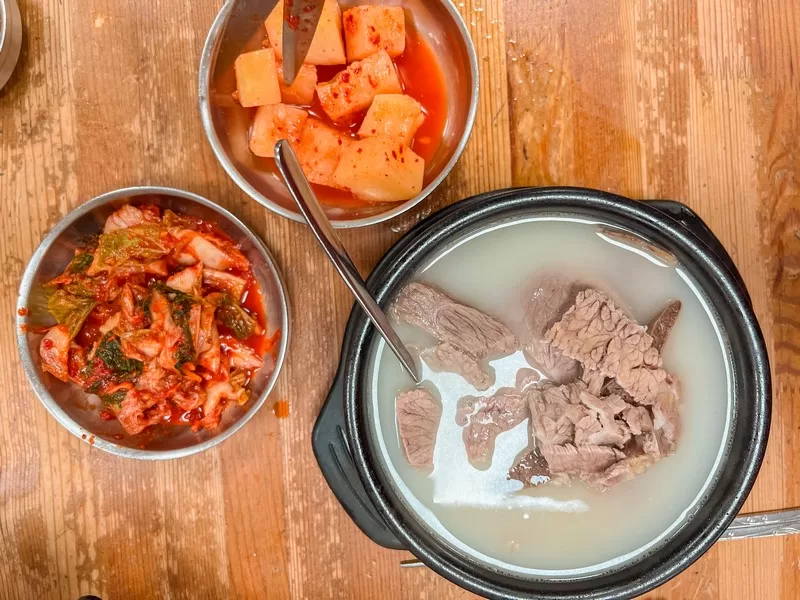
Radish Cube Kimchi aka Kkakddugi (깎두기)
Kkakdugi is all about crunch. Big cubes of Korean radish, or mu, are tossed in a spicy, salty mix and left to ferment until tangy. It’s the ideal partner for dishes like seolleongtang, Korea’s creamy ox bone soup, the cold crunch balancing the hot, milky broth like a duet of fire and ice.
Insider tip: Never swap Korean radish for Japanese daikon if you can help it. When abroad, we’ve definitely been tempted, but daikon’s softer, sweeter nature changes everything.
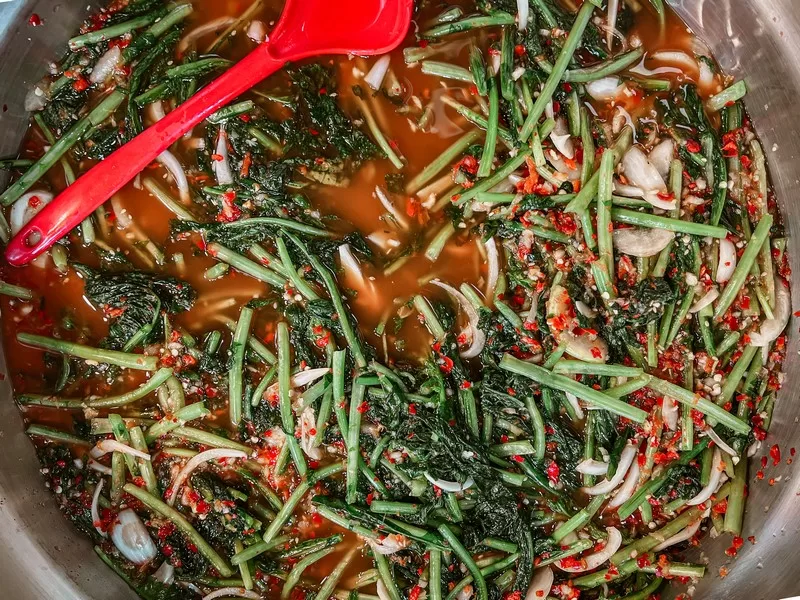
Young Radish Kimchi aka Yeolmu Kimchi (열무김치)
The taste of summer in a bowl. Made with tender young radish greens, yeolmu kimchi is light, grassy, and slightly tangy. It’s quick to ferment and often eaten chilled with icy noodles called yeolmu guksu in the hotter months. This one is a favorite among Koreans craving something fresh but still full of flavor.
Red Water Kimchi aka Nabak Kimchi (나박김치)
Pretty in pink. Nabak kimchi is a watery, mild variety made from sliced radish and cabbage floating in a rose-colored brine tinged with chili. The broth is lightly sweet from pear and just spicy enough to keep things interesting. Served chilled, it’s often eaten during Seollal, the Lunar New Year, alongside rice cake soup.
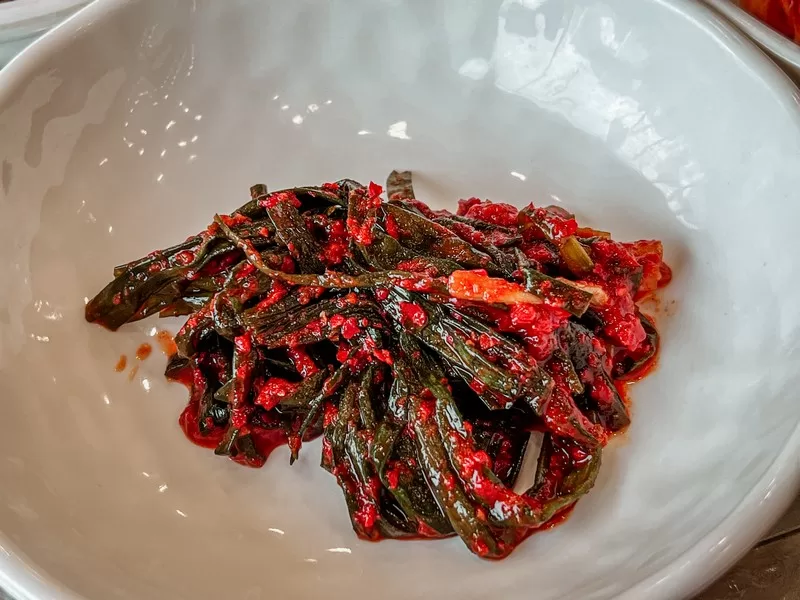
Chive Kimchi aka Buchu Kimchi (부추김치)
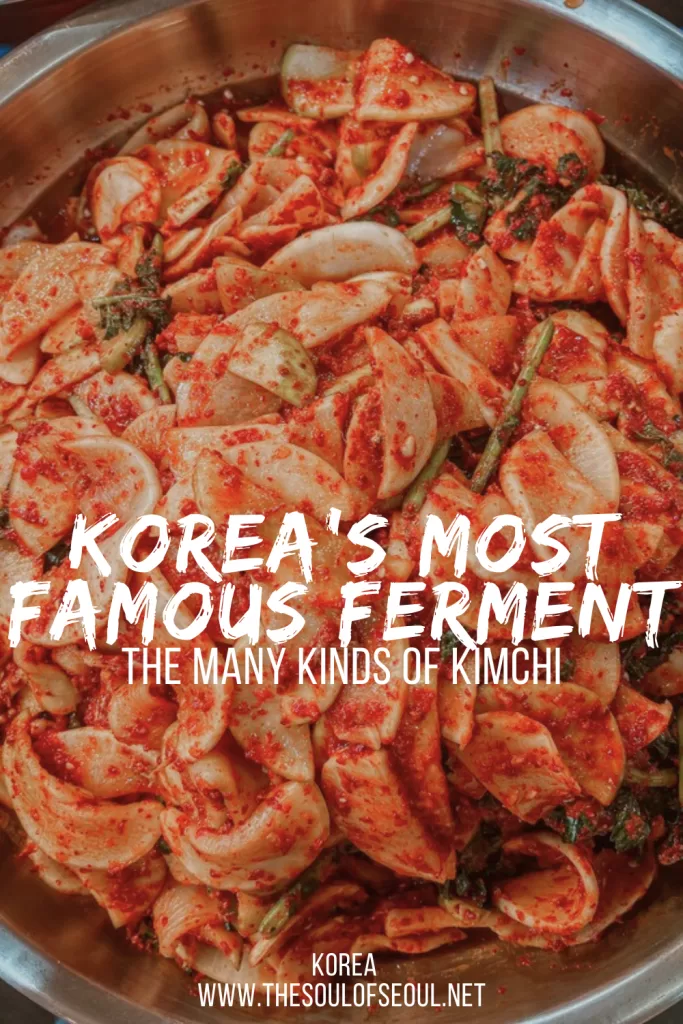
If you love garlic, meet your match. Buchu kimchi is made from fragrant garlic chives mixed with chili flakes, fish sauce, and sometimes fermented shrimp. It’s easy to make, ferments fast, and packs a punch. The chives wilt into tangy ribbons of umami, a quick, satisfying kimchi that’s as good with rice as it is tucked into barbecue lettuce wraps.
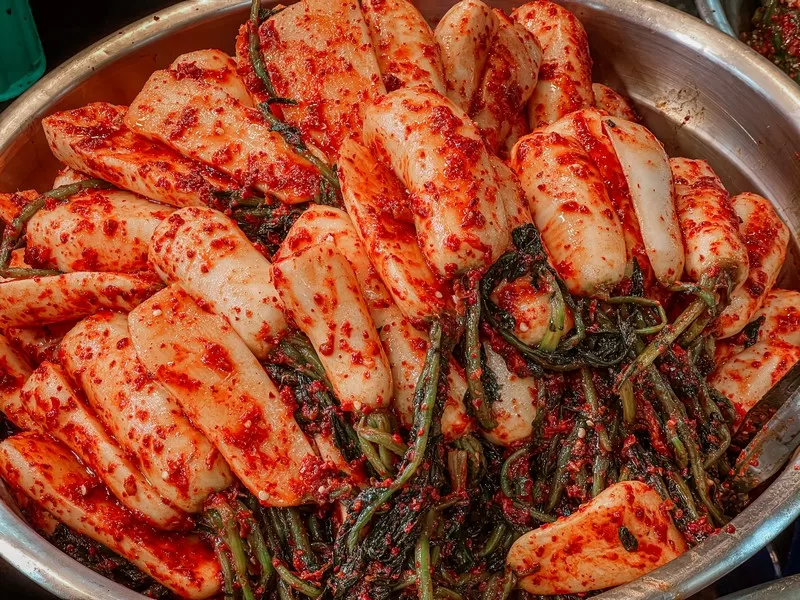
Ponytail Radish Kimchi aka Chonggak Kimchi (총각김치)
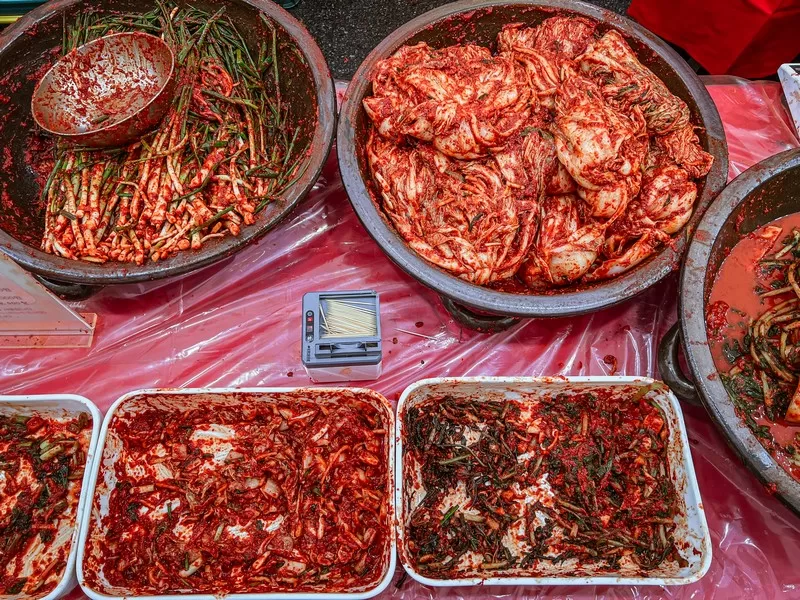
Named after the traditional topknot hairstyle of unmarried men, chonggak means “bachelor”, this kimchi uses small radishes with their green “ponytails” still attached. The result? A satisfying crunch and charming presentation.
Each radish is coated in chili paste and fermented whole, roots and greens together, creating layers of texture in every bite. It’s spicy, crisp, and wonderfully rustic, a classic you’ll find at every Korean table.
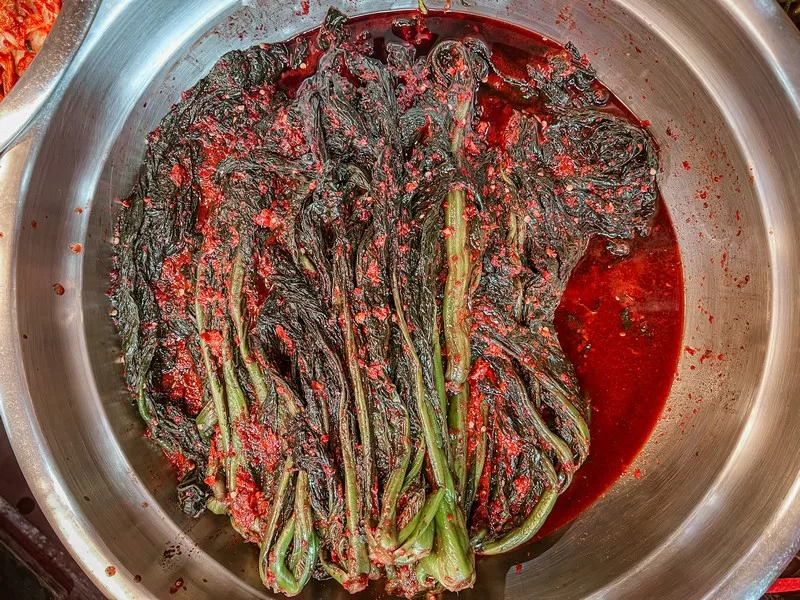
Mustard Leaf Gimchi aka Gat Kimchi (갓김치)
Here’s where things get bold. Gat kimchi, made from Korean mustard leaves, has a sharp, peppery bite that hits differently, think kale but with attitude. The leaves are brined, then slathered with chili paste, garlic, and fermented shrimp for a kimchi that’s both bitter and addictive.
This is a Jeolla-do specialty, perfect alongside rich stews or grilled pork belly to cut through the fat and flavor.
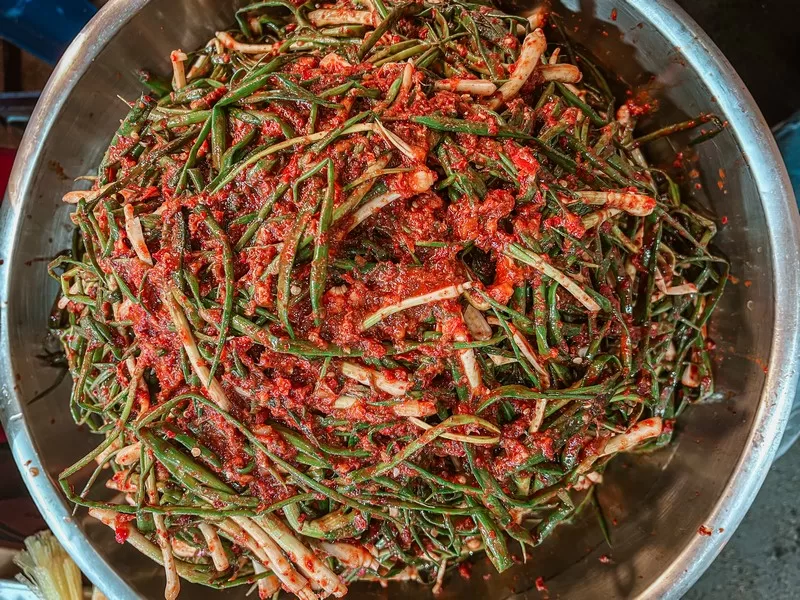
Green Onion Kimchi aka Pa Kimchi (파김치)
Say hello to spring in a bundle. Pa kimchi is made from thin Korean green onions called jjokpa, coated with chili flakes, garlic, ginger, and fish sauce. Sometimes dried squid sneaks in for extra chew and umami. It’s earthy, spicy, and wonderfully bold, the kind of kimchi that wakes up whatever is sitting next to it.
Eat it right away for a sharper freshness, or let it ferment for a deeper, funkier flavor that goes really well with grilled meat.
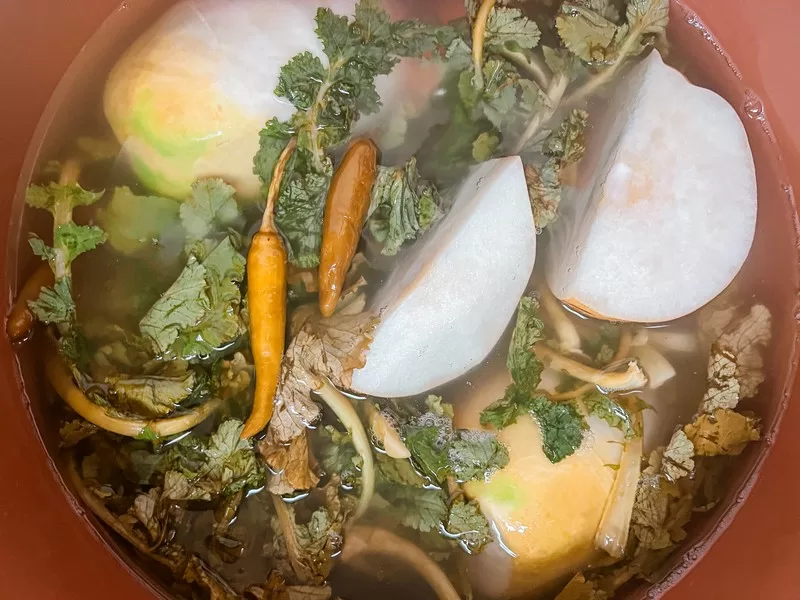
Radish Water Kimchi aka Dongchimi (동치미)
Kimchi you can drink? Dongchimi, meaning “winter kimchi,” is as cool as its name suggests. It’s made by submerging small round radishes in water along with garlic, ginger, peppers, and chunks of pear. Over time, the bring becomes lightly fizzy and tangy, a natural soda for your stomach.
It’s traditionally made in late autumn to enjoy through the snowy months and serves as a base for cold noodle dishes like dongchimi guksu.
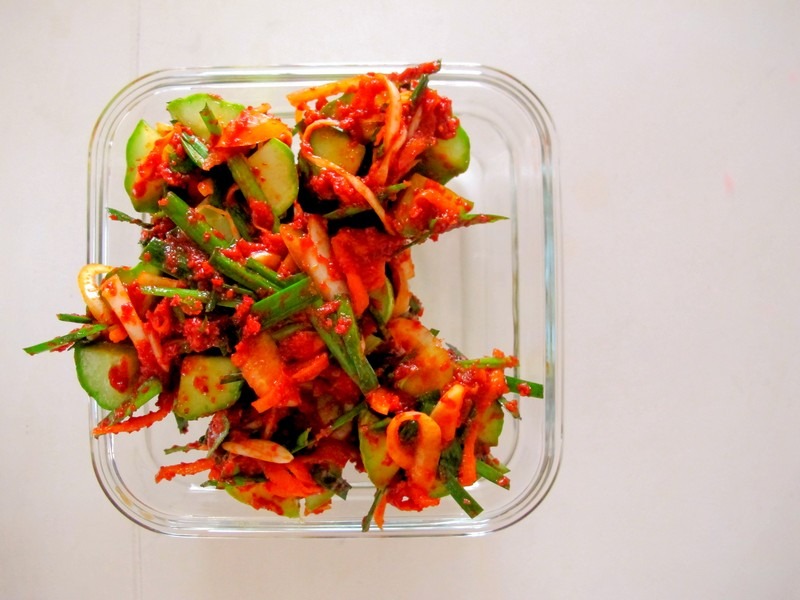
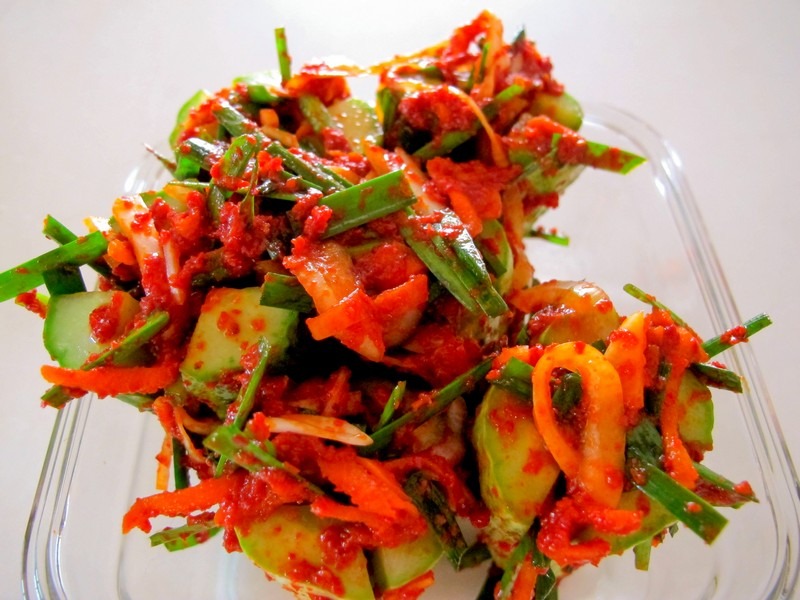
Cucumber Kimchi aka Oi Sobagi (오이소바기)
If summer had a sound, it would be the crunch of oi sobagi. These stuffed cucumbers are refreshing, crisp, and just spicy enough to keep things exciting. Each cucumber is sliced into quarters (but not all the way through!), stuffed with a mix of julienned carrots, chives, onions, and pepper flakes, and left to ferment for just a few days. This was the first kimchi I learned to make I enjoyed it so much. It’s served cold and bright.
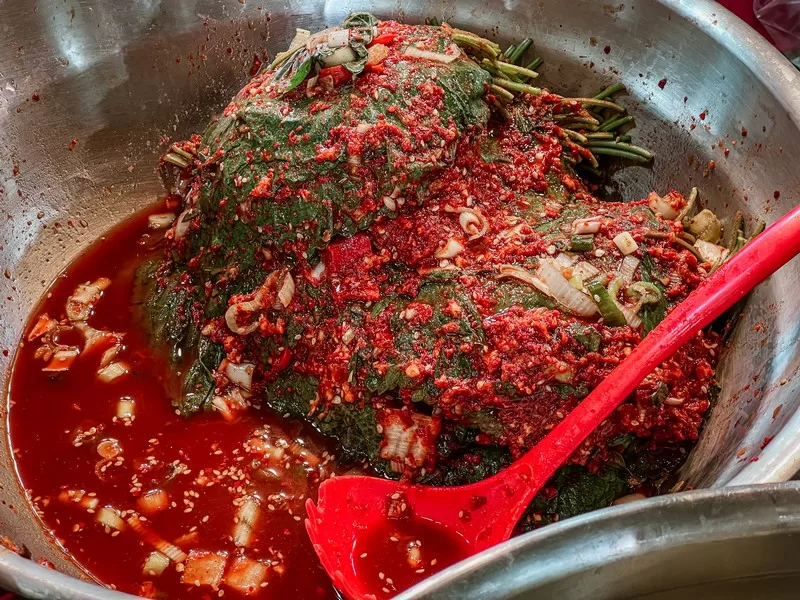
Perilla Leaf Kimchi aka Kkaennip Kimchi (깻잎김치)
Tiny, tender, and addicctive. Kkaennip kimchi is made from fragrant perilla leaves. The leaves are layered with a soy or chili-baesd sauce and left to marinate until they become savory, nutty flavor bombs. Traditionally, this was a preservation method for off-season enjoyment, but modern Koreans eat it year-round with rice. You’ll never stop at just one leaf.
FAQ
How many kinds of kimchi are there?
Estimates range from 200 to over 300 varieties, depending on how regional and seasonal variations are counted. The key point is that kimchi is not a single dish, it’s a method applied to dozens of different vegetables across all seasons.
Is kimchi always spicy?
No. White kimchi (baek kimchi), radish water kimchi (dongchimi), and red water kimchi (nabak kimchi) contain little or no chili. If you or someone in your group doesn’t eat spicy food, these are good starting points.
Is kimchi vegan?
Most traditional kimchi is not vegan, fish sauce and salted shrimp are standard ingredients in the majority of varieties. Vegan kimchi exists and is increasingly available, particularly in vegan-friendly restaurants. Always ask specifically. The phrase to use in Korean is 해산물 없이 만든 김치인가요? (“Is this kimchi made without seafood?”)
What is kimjang?
Kimjang (김장) is the traditional communal autumn practice of making large quantities of kimchi to store through winter. UNESCO has recognized it as an Intangible Cultural Heritage of Humanity. It remains an active practice in Korea today, both in families and community groups.
How do you eat kimchi?
Kimchi is typically eaten as a side dish (banchan) alongside rice and other dishes. It can also be cooked — most varieties can be added to stews (kimchi jjigae), fried rice (kimchi bokkeumbap), or briefly cooked on a Korean BBQ grill. The exception is geotjeori kimchi (fresh, unfermented) which should not be cooked.
What is kimchi made of?
At its core: vegetables, salt, chili flakes (gochugaru), garlic, and ginger. Most traditional recipes also include fish sauce or fermented shrimp for umami. The specific vegetables, ratios, and additional ingredients vary enormously between varieties, regions, and families.
Is kimchi good for you?
Yes. The fermentation process creates probiotics beneficial for gut health, and the vegetable base provides fiber, vitamins, and minerals. That said, kimchi is salty, so moderation applies for anyone monitoring sodium intake.
The next time someone asks if you like kimchi, the honest answer has a few more parts than it used to. Which kind? Fresh or fermented? From what region? Whose grandmother made it? That’s not a complicated answer, it’s just a more interesting one.
Did you like this post? Pin iT!