Noryangjin Fish Market: A Guide For What To See & What To Order
Last Updated on October 13, 2026
Noryangjin Fish Market (노량진수산물도매시장) is the largest fisheries market in Seoul and one of the more distinctive experiences the city offers. Centrally located, open from the early morning hours, and built around a system where you buy your seafood from vendors downstairs and have it cooked for you in restaurants upstairs, it’s unlike most dining experiences visitors have encountered before.
Make sure you know what you’re getting into before you go. The subway directions alone can go badly wrong, and if you’re planning to buy and haggle rather than just browse, some preparation makes a real difference.
There’s a lot to know about Noryangjin Market. Here’s what to know:
- How To Get To Noryangjin Fish Market
- What To Know
- Go With A Tour Guide
- The Recent History Worth Knowing
- What To Wear
- The Fish Market Experience
- Korean Vocabulary To Know At A Fish Market
- How To Get The Best Price
- What To Do Upstairs In The Restaurant
- FAQ
(This page contains affiliate links. That means if you click on them and purchase something, I will get a percentage of the transaction at no cost to you.)
How To Get To Noryangjin Fish Market
Address: 674 Nodeul-ro, Dongjak-gu, Seoul (서울특별시 동작구 노들로 674)
Subway: Take either Line 1 (Blue) or Line 9 to Noryangjin Station. Note that these stations are both called Noryangjin due to location but are separate. Take Exit 9 to the market entrance 150 meters ahead from Line 1, but from Line 9, you’ll take Exit 7, pass through an underground walkway and then find the market.
What To Know
Hours vary by section of the market:
- High Class Fish Market: 24 hours.
- General Fish Market: 1:30am to 10:00pm.
- Frozen Fish Market: 3:30am to 10:00pm.
- Shellfish Market: 1:00am to 10:00pm.
Etiquette: Vendors at Noryangjin are very used to tourists but they are running a business. Don’t handle or play with the seafood in tanks or on display unless you’re actually considering buying. If you’re standing close to a stall and looking carefully, vendors will engage with you, that’s their job. Be aware of that and don’t linger without intent unless you’re comfortable being approached.
Go With A Tour Guide
There are plenty of places around Seoul I believe tourists and visitors can go on their own, but to be frank, Noryangjin is not one of them unless you have a good handle on Korea and haggling in Korean. All of the major tour websites offer a tour to Noryangjin Fish Market so if you’re booking a variety of tours, add one of these.
- Get Your Guide Noryangjin Fish Market Tour
- Klook Noryangjin Fish Market Tour
- Viator Noryangjin Fish Market Tour
The Recent History Worth Knowing
A lot of information about Noryangjin online is based on the old market experience. This matters because it shapes what you’ll find when you search for it.
The original building was open-air and rougher, classic traditional market energy, yellow overhead lighting, the sound of haggling from every direction. Many longtime visitors loved it for exactly that chaos. In 2016, operations moved to a new building. The old building stood empty for several years before being demolished in 2022. If you look to the right as you approach the market, you’ll see a soccer field where the old building used to stand.
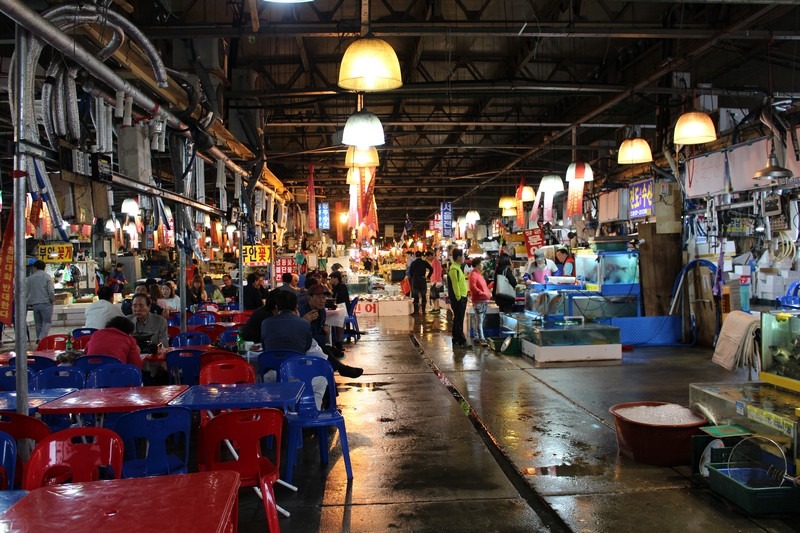
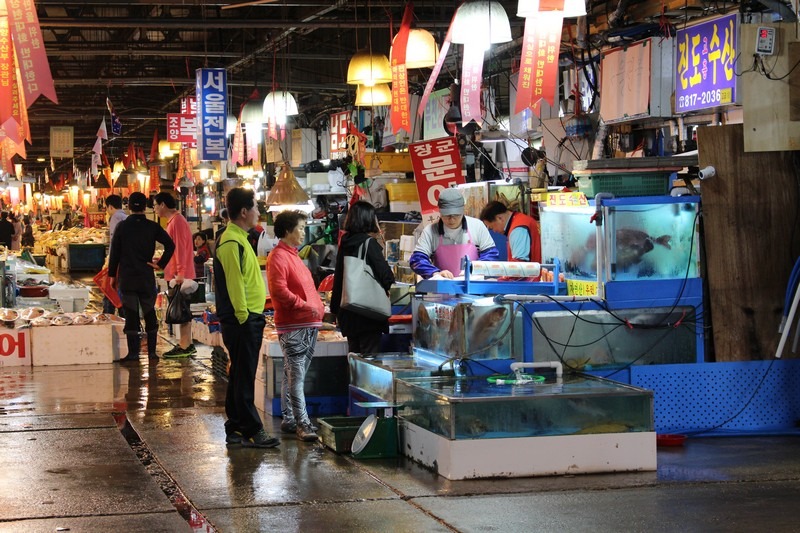
The new building has white lighting and white walls, which makes the seafood stand out more clearly. The restaurants on the second floor are cleaner and more organized. The seafood quality is the same. The ambiance is simply different, more shopping mall, less traditional market.
Further back: Noryangjin Fish Market first opened in 1927, originally located next to Seoul Station, and moved to its current location in 1971. Today it handles approximately 50% of metropolitan seafood volumes, between 250 and 300 tonnes of marine products traded daily.
What To Wear
This might seem like a weird title to have in this article, but I don’t want anyone being taken by surprise when they realize their nice dress shoes are ruined. Fish markets tend to be pretty wet and in Korean fish markets, the fish are kept living in tanks which means the water is constantly flowing into the tanks and then out through hoses on the ground. Great for the buyer because whether you visit at 7:00am or at 7:00pm, you’ll be getting fresh seafood. However, not so great for your nice shoes.
Also, if you don’t like the feeling of wet toes after walking through a market, you’ll probably want to wear something closed-toe. The newer market is more protected than other outdoor fish markets so luckily you don’t have to worry about the elements as much, but do prepared for water.
The Fish Market Experience
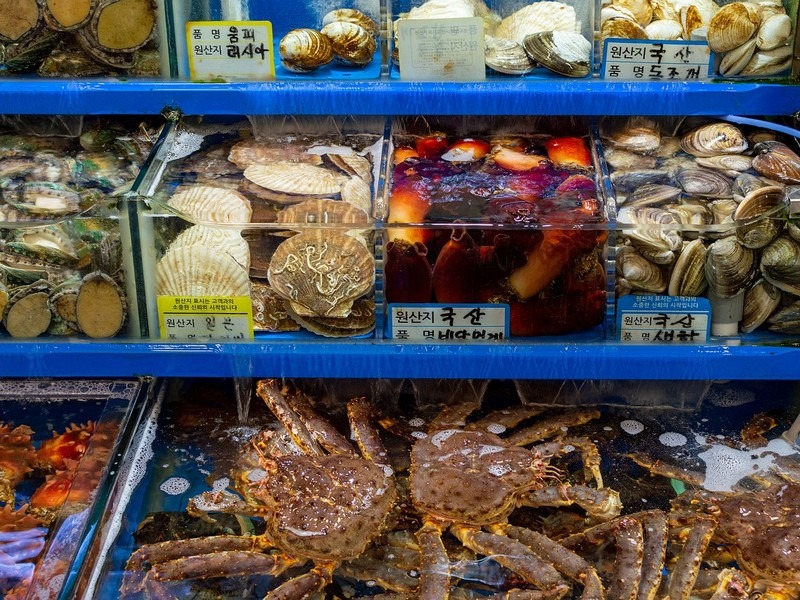
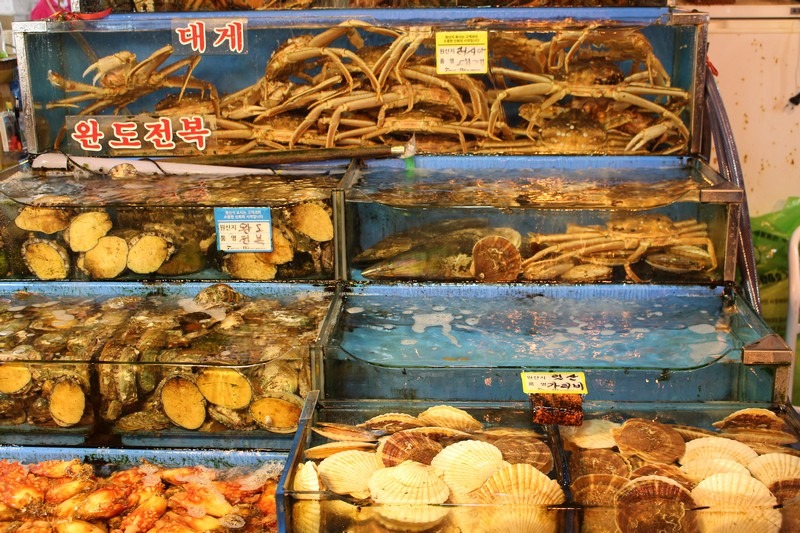
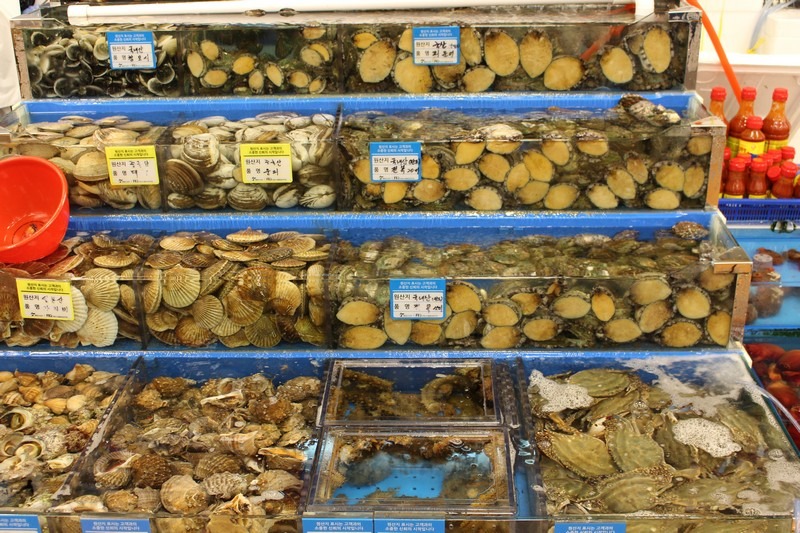
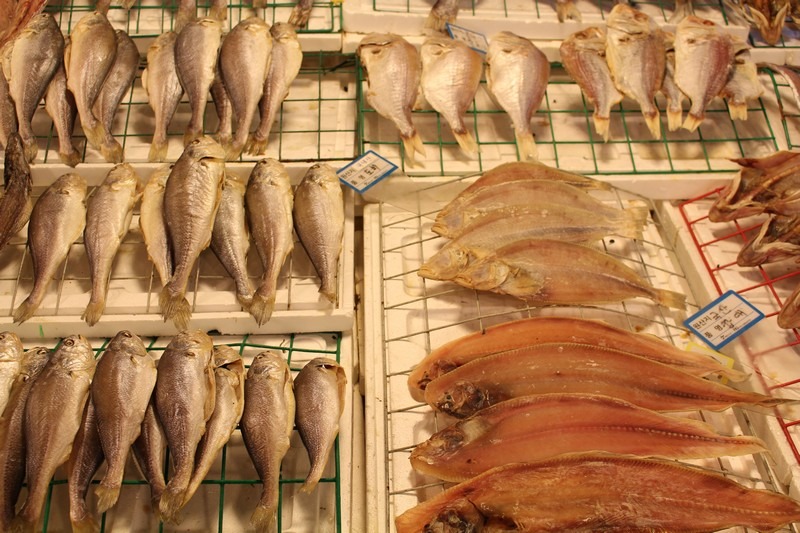
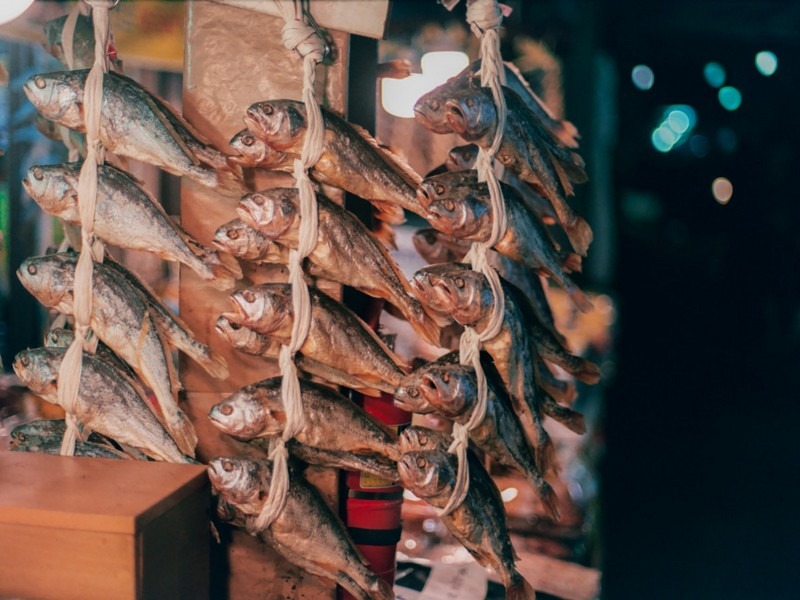
The narrow aisles wet down with water that washed away the blood and guts of fish chosen to be eaten lead visitors past the many stalls of fish, shellfish and other ocean edibles. Perched up on Styrofoam shelves or in tanks that seem to be overflowing constantly, the fish glisten and have a tendency to make those with less experience slightly weary of whence they came though I’ve learned often enough that traditional market vendors always have the best food and know what they’re doing.
The main market floor, organized into sections by seafood type. A useful color-coded map is available at the market: green sections have fresh but not-live seafood, lavender has frozen, blue has live fish, and orange is shellfish. The escalator near the center of the floor is the main landmark. Worth browsing the whole floor before buying anything, you’ll get a sense of what’s available and at what price before committing to a stall.
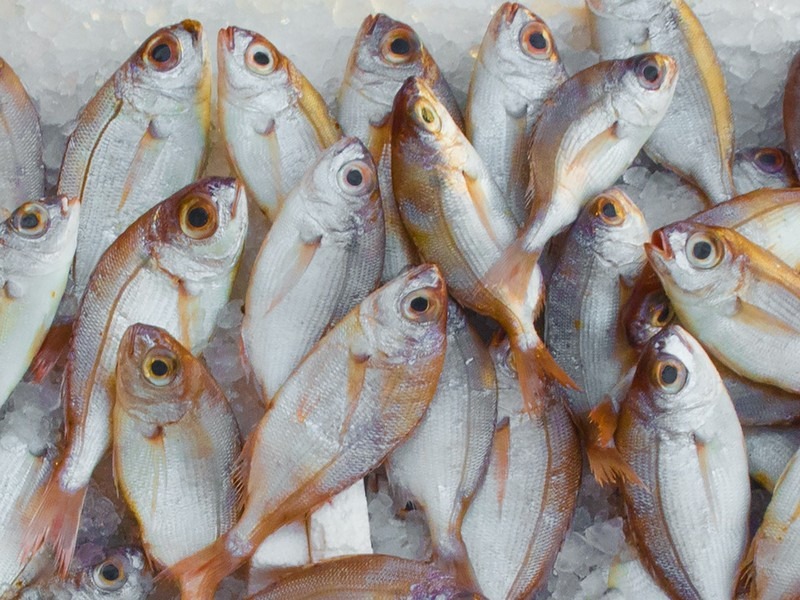
Being married to a guy from Busan, an oceanfront city that is a must see, means that my husband is pretty picky about his seafoody goods. We’re more prone to get fish shipped up to us from his parents than we are to buy it in Seoul and as a Midwesterner from Dayton, Ohio in the States who grew up on meat and only ate the fish her uncle sold from his family owned business (Foremost Seafood – Shoutout!), I don’t even know the first thing about picking out anything good.
Notable spots on the first floor include:
- The Salted Seafood Marketplace: Rows of fermented and salted seafood used for kimchi, banchan, and wraps. Toothpicks are out for sampling.
- The Live Octopus Corridor: Located in Section H is often where tourists like to head.
- The knife shops: In Section D (near the top of the escalator) are where to head to find quality sashimi knives that make good souvenirs. Just remember to pack them in checked luggage.
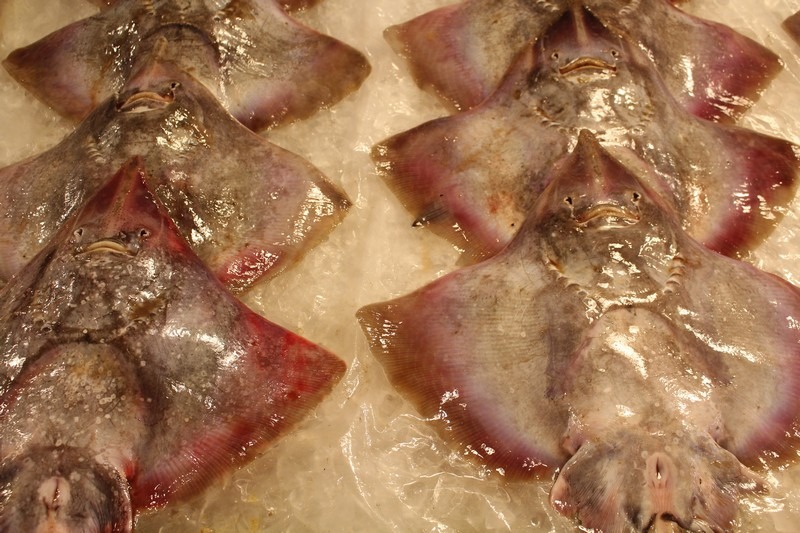
There will be fish and sea creatures that you do not recognize. Take this guy pictured above. Known as hongeo in Korean, it’s skate and if you smell the ammonia odors it emits, you would assume it is not at all edible and yet Koreans enjoy it. Honestly, I’ve tried it and I didn’t hate it but it’s certainly not something I’d ever venture to buy in a fish market on my own. It’s also not something I’d purchase for a first-timer to a Korean fish market.
The market can be hectic and once the vendors get a whiff of a possible sale, they’ll jump on you to make it because they’re basically all selling the same thing and it’s just up to you to decide which person you’ll purchase from. Of special note, if you don’t want to deal with the actual haggle and purchase, all of the vendors are connected to restaurants above so you can just go upstairs and let them know what you want and they’ll get it done for you. Half of the experience, though, is actually buying the fish.
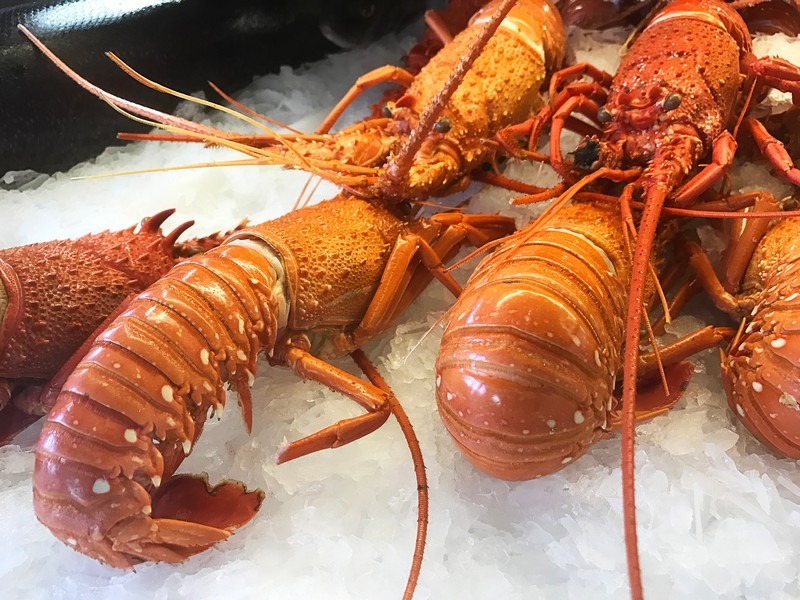
The great thing about purchasing downstairs is that it really is quite fun. Vendors are helpful and interested and highly motivated to help you get what you want whether it be abalone or lobster or something else.
Korean Vocabulary To Know At A Fish Market
So you’re looking to go to the market on your own and figure it out as you go. That’s cool, just make sure you know what you’re ordering. I still manage to get fish vocab confused and just let my husband handle the seafood ordering, but one of these days I’ll get it all to stick in my brain.
Here is the Korean vocabulary to help you when you visit a Korean fish market whether you’re in Seoul, Busan, or anywhere in between.
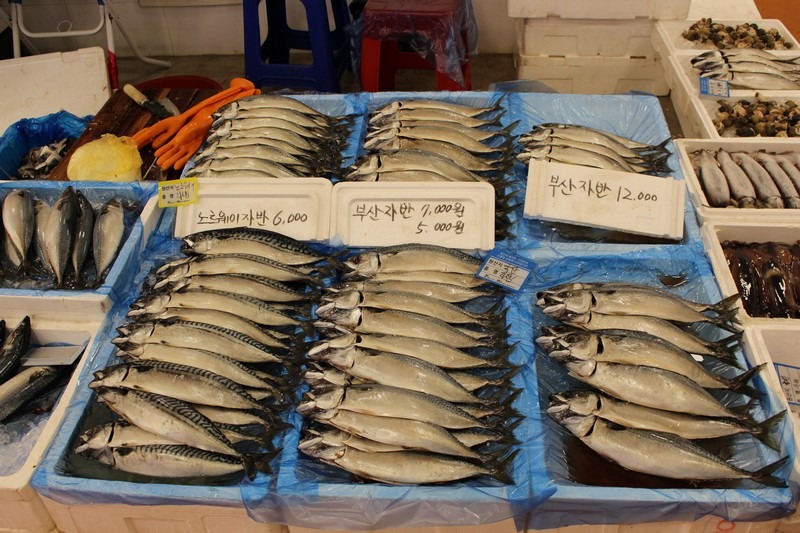
Fish Vocabulary
- Bass: 농어 (nong-uh)
- Flounder: 광어 (gwang-uh)
- Cod: 대구 ( dae-goo)
- Rockfish: 우럭 (ooh-luck)
- Salmon: 연어 (yeon-uh)
- Mackerel: 다랑어 (darang-oh)
- Tuna: 참치 (cham-chi)
- Trout: 송어 (song-uh)
- Carp: 잉어 (eeng-uh)
- Catfish: 메기 (mae-gee)
- Yellowtail: 방어 (bang-oh)
- Sharkfish: 상어 (sang-oh)
- Flatfish: 광어 (gwang-oh)
- Eel: 장어 (jang-uh)
Hweh, Hway, or Hoe (회): The term for thinly sliced raw fish. It is served fresh on a platter. Unlike sashimi, the Korean version is usually dipped in a red sauce called chojang (초장) and wrapped in different leaves either more salad like leaves, ssam (쌈), or sesame leaves, kketnip (깻잎). There will likely be some gim or laver on the table too. The most common fish for hweh options are salmon, tuna, rockfish, and flounder.
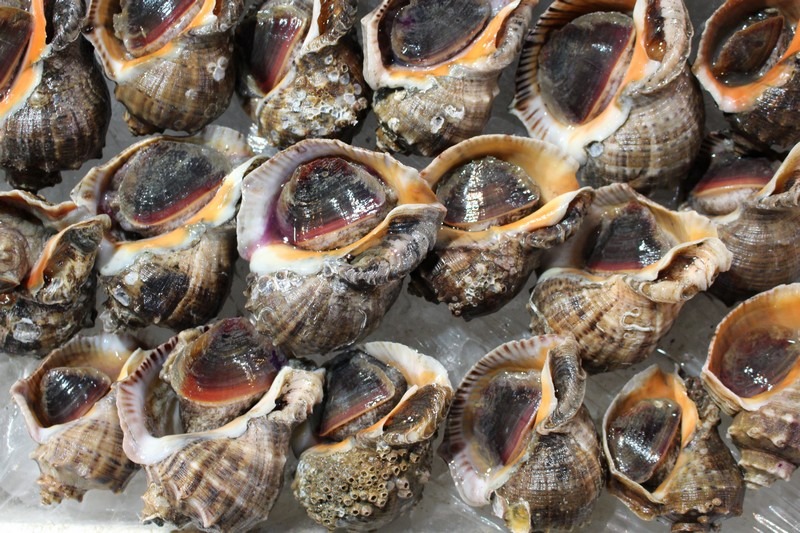
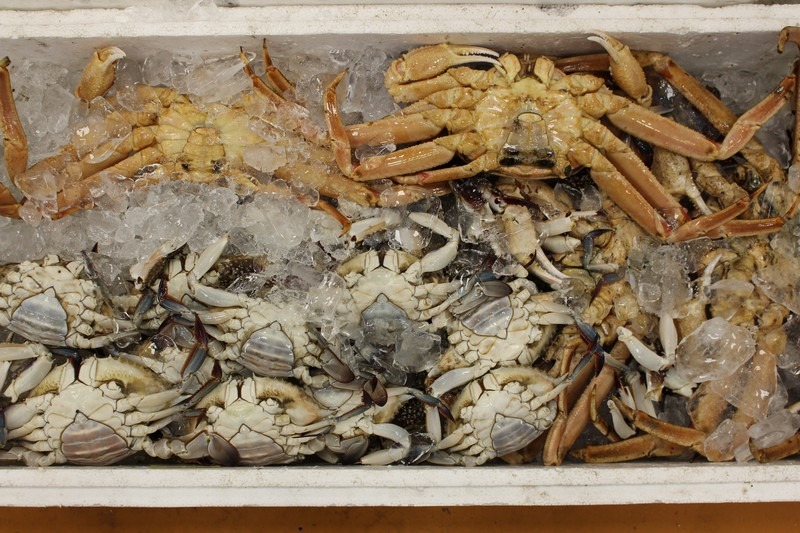
Shellfish & Other Common Finds Vocabulary
- Shrimp: 새우 (sae-ooh)
- Caviar/Roe: 알 (ahl)
- Flying Fish Roe: 나치알 (nal-chi ahl)
- Skate: 홍어 (hong-oh)
- Lobster: 바닷가재 (ba-dat-ga-jae)
- Crab: 게 (gae)
- Live Octopus: 산낙지 (san-nak-ji)
- The vendor will cut the tentacles, you won’t receive a whole live octopus unless you specifically request it, which very few people do and which carries real choking risk. The cut pieces will still be moving when served. You dip them in sesame oil and salt before eating. Chew thoroughly.
- Scallops: 가리비 (gah-ri-bi)
- Oysters: 굴 (gool)
- Clams: 조개 (jo-gae)
- Penish Fish/Sea Worms: 개불 (gae-bul)
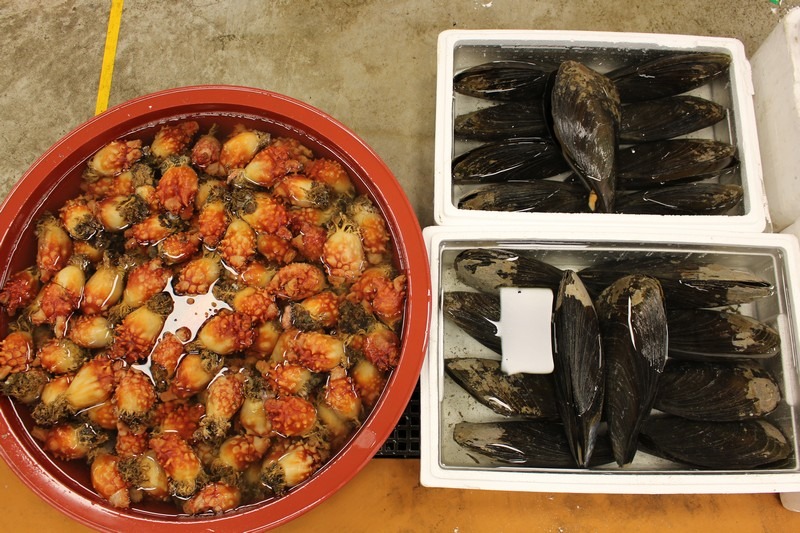
- This isn’t one that you’ll probably find in other countries, but Koreans LOVE this and I have to say it’s really grown on me. It’s got a bit of a salty taste and once you see it, you’ll known why it has gotten the moniker “penis fish”. While my uncle in the States says American fishermen just throw these back, Korean fishermen saw it and were like, yeah cool, edible. It’s eaten raw and you’ll dip it in some salty sesame oil and it’s rather delightful.
- Sea Cucumbers: 해삼 (hae-sam)
- Often served alongside gaebul. Much saltier than the sea worm, pair with chojang (the sweeter red sauce) rather than sesame oil.
- Abalone: 전복 (jeon-bok)

How To Get The Best Price
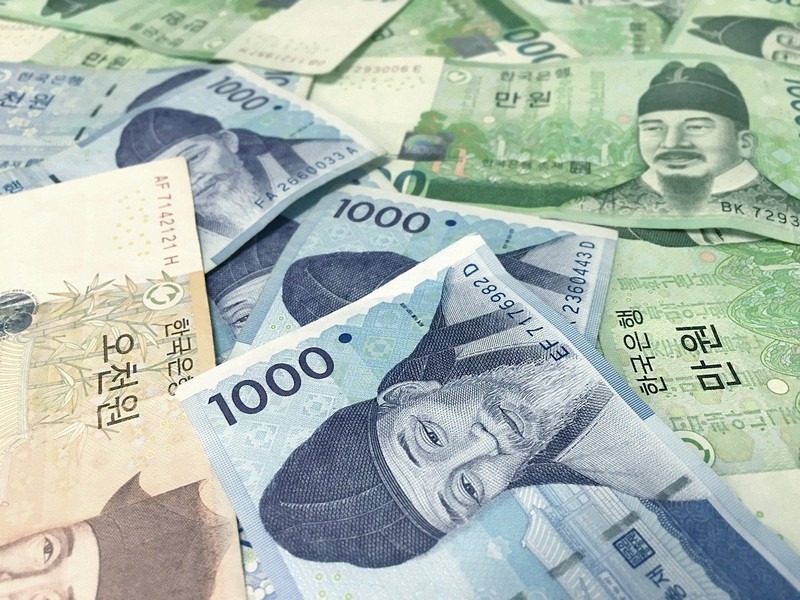
Small octopus: approximately ₩10,000. Salmon fillet: approximately ₩25,000. Live fish: approximately ₩30,000-₩50,000. Lobster: ₩50,000 to ₩80,000 depending on size. Large shrimp: approximately ₩10,000 for five.
King crab and lobster are imported and priced accordingly. Don’t expect local-catch prices for either. If you want to check baseline prices before you arrive, there are Korean-language Noryangjin apps that track current market pricing, useful if you have a Korean-speaking companion to navigate them.
When vendors think you don’t speak Korean, they’ll bring out a calculator. Use it. Numbers are universal. Don’t accept the first price, but don’t expect dramatic discounts either. Noryangjin tends to run slightly higher than markets that cater exclusively to local restaurants. Vendors are more likely to add extra shrimp or oysters as goodwill than to lower the stated price, that’s the standard Korean market negotiation pattern, and it’s a fair outcome.
If you say yes to the first price quoted, you establish that a certain type of customer exists at that level, and prices adjust accordingly. Know roughly what things should cost before you start buying.
What To Do Upstairs In The Restaurant
Once you’ve made your purchases and are seated upstairs, the process goes like this:
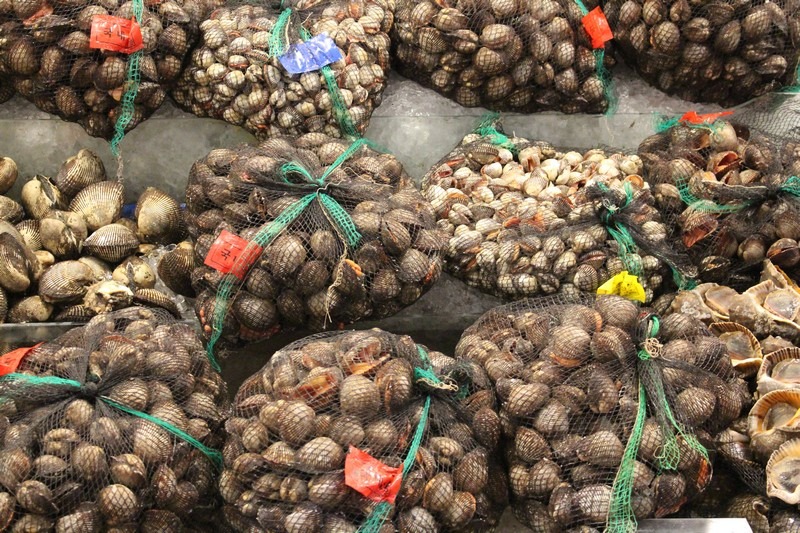
A representative from the downstairs stall will often lead you to their connected restaurant on the second floor. The waiter will ask what you bought and coordinate accordingly. For shellfish, choose your cooking method: steamed (jjim / 찜) or grilled (gwi / 구이).
Preparation fee: Approximately ₩5,000 per person for standard preparation, and up to ₩8,000 extra for something large like a whole lobster. There is also typically a small seating fee of around ₩2,000-₩4,000 per person, not much, and there’s no tipping in Korea, so factor it in and move on.
Specific preparations worth requesting:
- Salt grilled shrimp (새우소금구이): The salt grill method makes the shells brittle enough to eat whole, yes shell and all. Worth asking for specifically.
- Butter grilled scallops (버터구이): The scallops can also be steamed, but the butter grilled version is excellent if the restaurant offers it.
The sauces: You’ll have several set out at the table. Soy sauce with wasabi is the classic. Chojang (vinegary red chili paste) is the standard Korean dipping sauce, it pairs well with almost everything. Pohang sauce is a mix of fermented soybean paste (doenjang), chopped garlic, chopped green chilies, and sesame, it originates from the southeastern port city of Pohang and is excellent mixed together and used as a dip.
Closing the meal with maeuntang: Halfway through your meal, order maeuntang (매운탕). This is a spicy soup made from the bones and head of your fish, cooked with vegetables in a chili broth. It uses parts of your fish that would otherwise go to waste and is the traditional way to close a Korean hwe meal. Pair it with soju or beer (maekju), both are standard companions to a seafood meal here.
FAQ
How do I get to Noryangjin Fish Market?
Take Line 1 (Blue) or Line 9 to Noryangjin Station. From Line 1, take exit 9 to find the market entrance 150 meters ahead. From Line 9, take exit 7, walk through an underground walkway, and find the market entrance.
What are the hours at Noryangjin Fish Market?
The High Class Fish Market is open 24 hours. The General Fish Market runs 1:30am to 10:00pm, the Frozen Fish Market 3:30am to 10:00pm, and the Shellfish Market 1:00am to 10:00pm. Verify current hours at VisitKorea before visiting.
Do I need to speak Korean to visit?
It helps significantly. The vocabulary section in this article covers core seafood terms. For the full buying and negotiating experience, a guided tour or Korean-speaking companion is strongly recommended.
How does the buy-downstairs, cook-upstairs system work?
You select and purchase your seafood from vendors on the first floor. A representative from the stall often leads you to a connected restaurant on the second floor, or you make your way up independently. Tell the waiter what you bought, choose a cooking method (steamed or grilled for shellfish), and pay a preparation fee, around ₩5,000 per person plus a small seating charge.
How much does a meal at Noryangjin Fish Market cost?
It varies significantly by what you buy. A full seafood feast for four people, purchasing downstairs and eating upstairs, can run approximately ₩200,000-₩300,000 total across the market and restaurant. Individual items: small octopus around ₩10,000, salmon fillet ₩25,000, lobster ₩50,000-₩80,000. Verify current prices before visiting.
When is the best time to visit?
Weekdays are notably less busy and less pressured than weekends. For freshness, time of day matters less than at most fish markets because virtually everything is kept alive.
Is a tour guide necessary?
Not required, but strongly recommended for first-time visitors who don’t speak Korean.
Noryangjin is one of those places that rewards preparation. Know which subway line to take, know the vocabulary for what you want to eat, have a rough sense of what things should cost, and be ready for the energy of vendors who are very motivated to make a sale. Go hungry, go with friends if possible, and finish with maeuntang.
Did you like this post? Pin It!