Gaeseong Mandu Koong: Where To Eat North Korean Dumplings In Insadong
Last Updated on October 14, 2026
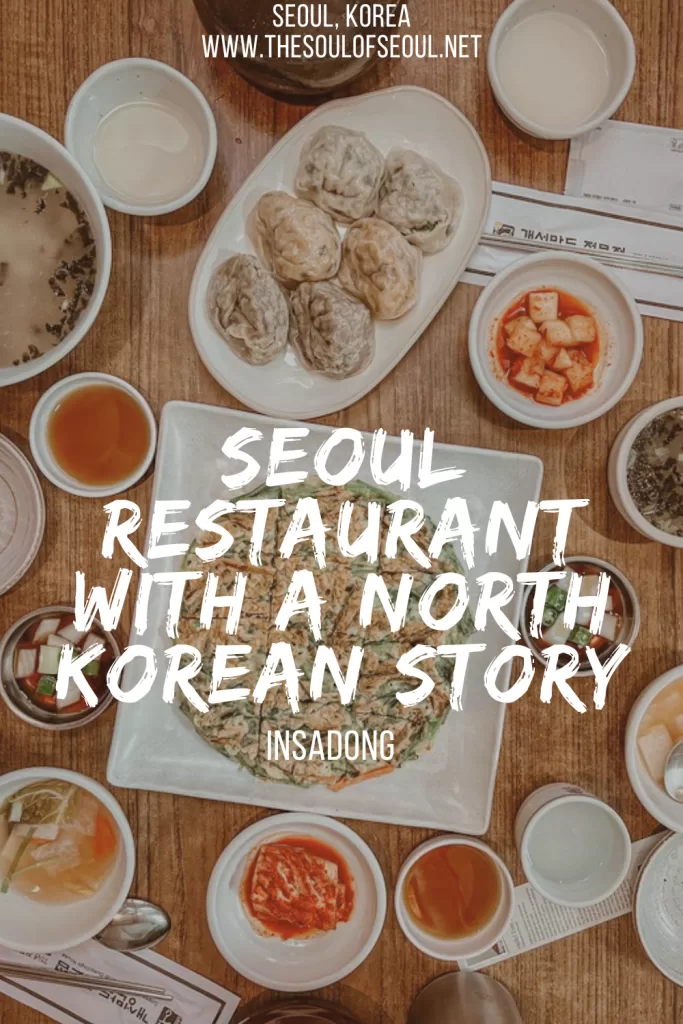
In the winding alleyways of Insadong, one of Seoul’s most touristy districts, it’s still possible to find cafes, restaurants, and shops tucked away around corners that have been there for decades. Gaeseong Mandu Koong (개성만두 궁) is one of those places and you have to know about it to find it. Visit this restaurant in Insadong and you’re not just eating dumplings, but you’re taking in the history of a family that stretches from North to South Korea.
Established in 1970 by a Gaeseong native, this restaurant is now in its third generation of family ownership. The large dumplings stuffed with pork, mushrooms, or kimchi are filling, the soup delicious. Sit and watch as women skillfully make the dumplings, folding and pinching, right in front of you as you sup.
Looking for where to eat in Insadong? This should be on your list:
(This post contains affiliate links, which means I receive a certain percentage of a sale if you purchase after clicking at no cost to you. Thank you for your support.)
The Seoul Itinerary Pack – 15 Seoul Itineraries
$25.00
Basic Info
Address: 11-3 Insadong 10-gil, Jongno-gu, Seoul (서울시 종로구 인사동10길 11-3)
Hours: Every day: 11:30am ~ 9:00pm
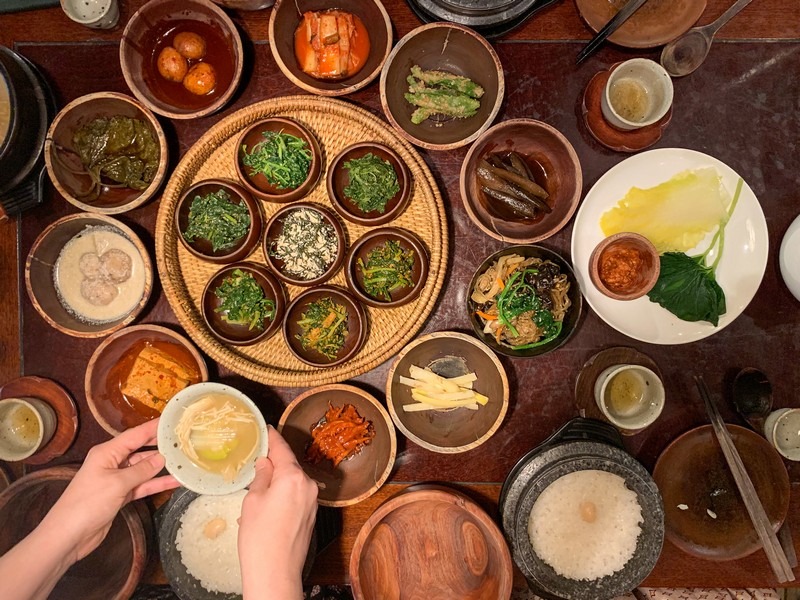
What to Eat at Gaeseong Mandu Koong
Gaeseong Mandu Koong isn’t flashy. There are no neon signs. However, you will see lines of patrons on the daily that are waiting for their honest food rooted in North Korean culinary traditions, preserved with intention and love.
Featured on the Michellin Bib Gourman list every year since 2017, Gaeseong Mandu Koong is a restaurant that began with love at first sight between a traveling merchant and a dumpling-maker. It nearly closed when the second-generation owner passed away in 2003, but survived thanks to the devotion of customers and a granddaughter who took up the mantle.
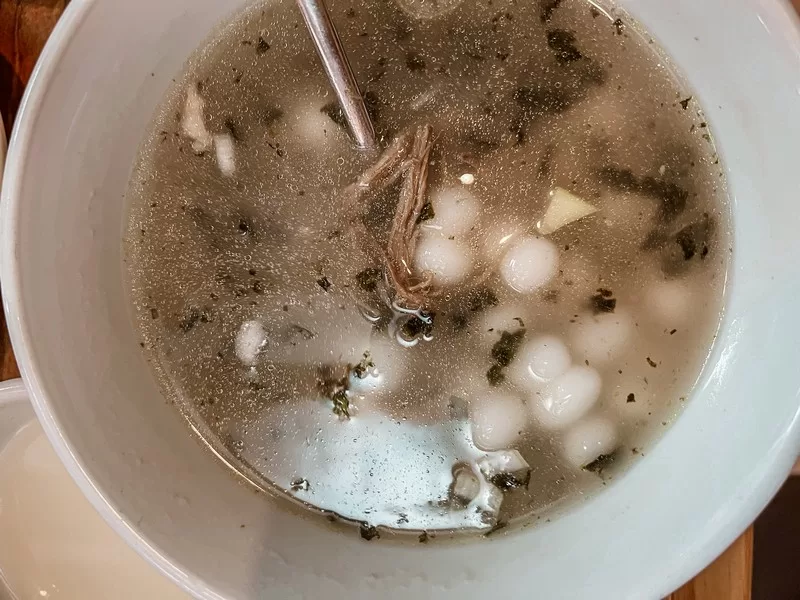
Joraengi Tteokguk (조랭이떡국)
While everyone heads here for their dumplings, or mandu (만두), I initially added it to my list for their joraengi tteok (조랭이떡). Tteokguk (떡국) is a Korean soup made with rice cakes and is traditionally eaten on the Lunar New Year to bring good luck in the coming year and grant one more year of age.
These days, when people think of tteokguk, they usually picture it with beef, but way back, the soup made with pheasant meat was considered the best. These days, the more standard bowl of tteokguk is made with beef broth, strips of yellow egg, seaweed, green onions, and of course the rice cakes. There are, however, some regional specialties and joraengi tteokguk is one of them.
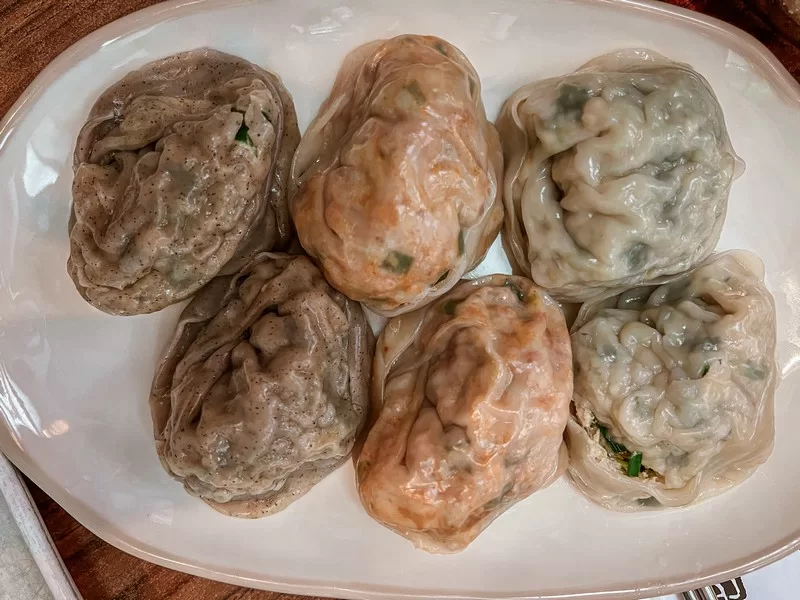
Mandu (만두)
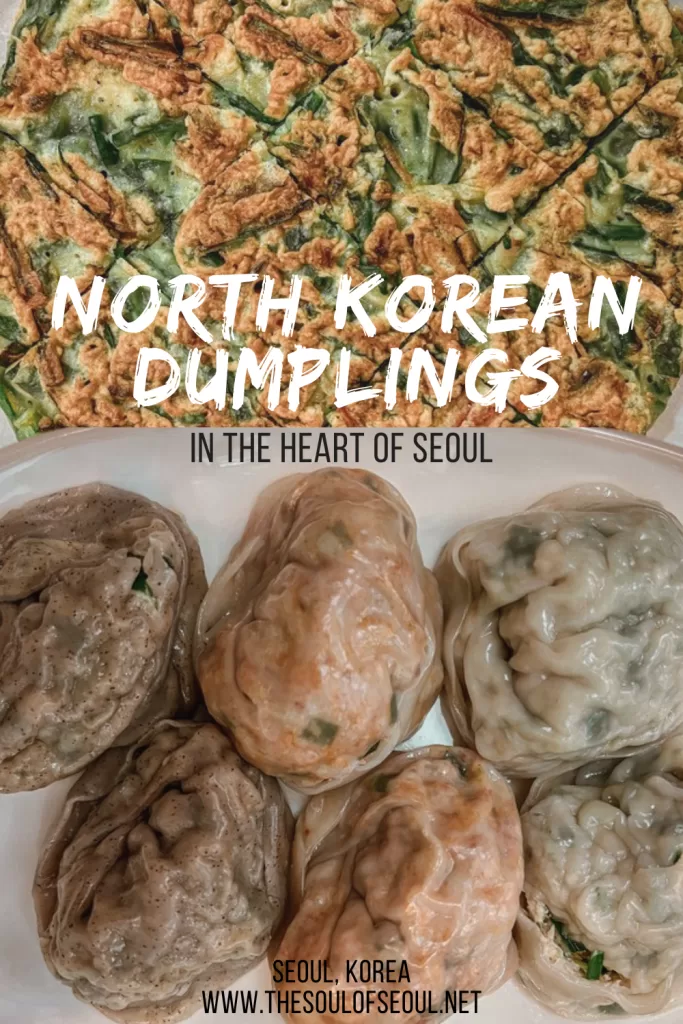
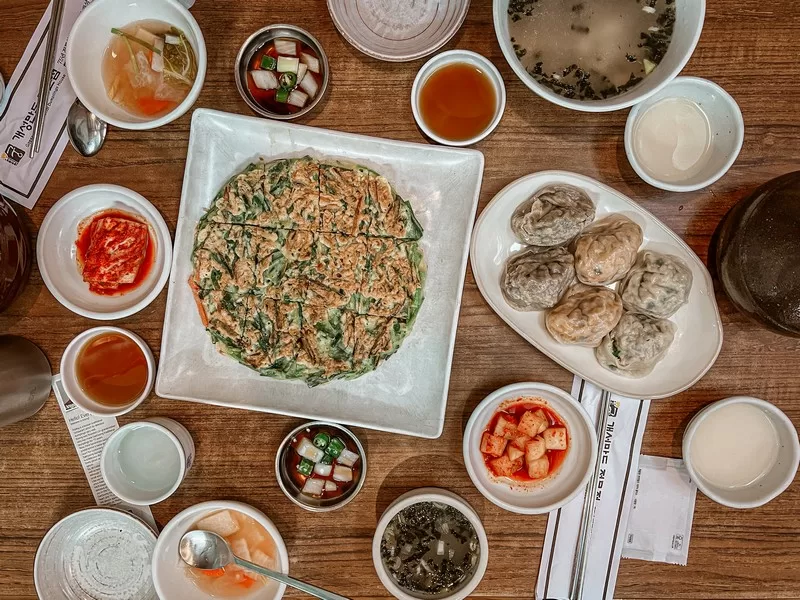
Most come for the mandu, and for good reason, they’re massive, flavorful, and handmade throughout the day in the shop. Because I was already ordering a soup, we went for the plate of mandu three ways which included pork mandu, kimchi mandu, and mushroom mandu. You can, of course, order any of these individually and get a whole plate of 6 rather than 2 of each.
If you’re not going for another soup on the menu, a lot of people order the mandu jeongol (만두전골), which is a hot pot filled with dumplings, mushrooms, beef, and rice cakes. This is a hearty dish that is ideal for sharing.
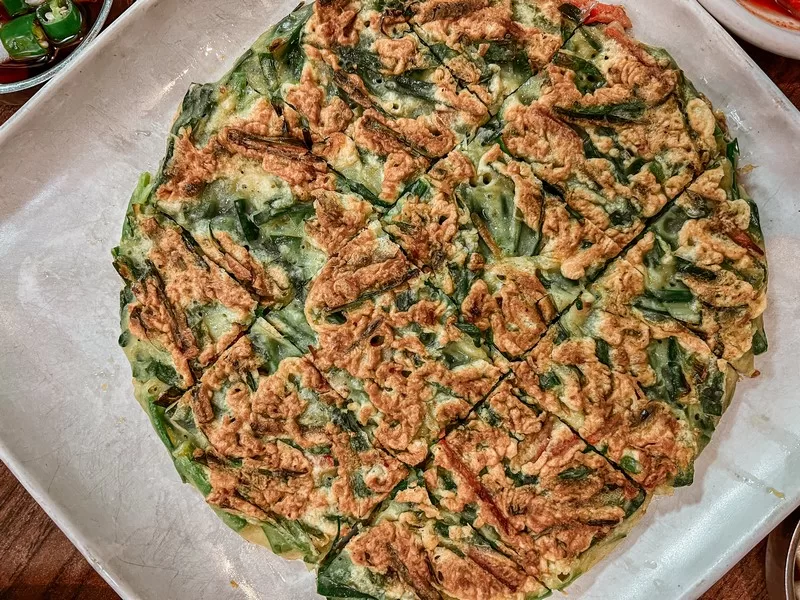
Jeon (전)
For a crispy addition to the table, we ordered a jeon, or kind of Korean pancake. Ours was made with scallions and squid, though they also have an inviting looking kimchi version. This pairs really well with their pungryuju (풍류주), house-brewed traditional alcohol. It’s their makgeolli, or rice wine.
Headed to Insadong in the heart of Seoul, Korea? Add this restaurant to your must-eats.
Did you like this post? Pin iT!