Tteokguk: The Korean New Year Soup That Makes You a Year Older
Last Updated on April 29, 2026
Happy Seollal, or Lunar New Year! 새해복 많이 받으세요. It is the Lunar New Year in Korea and people around the country will be eating tteokguk. If you’ve learned Korean or are learning Korean, this is a great time to learn a little saying that relates to tteokguk. Tteokguk is a rice cake soup that is a must eat this holiday in Korea and it also relates to your age… you’ll see.
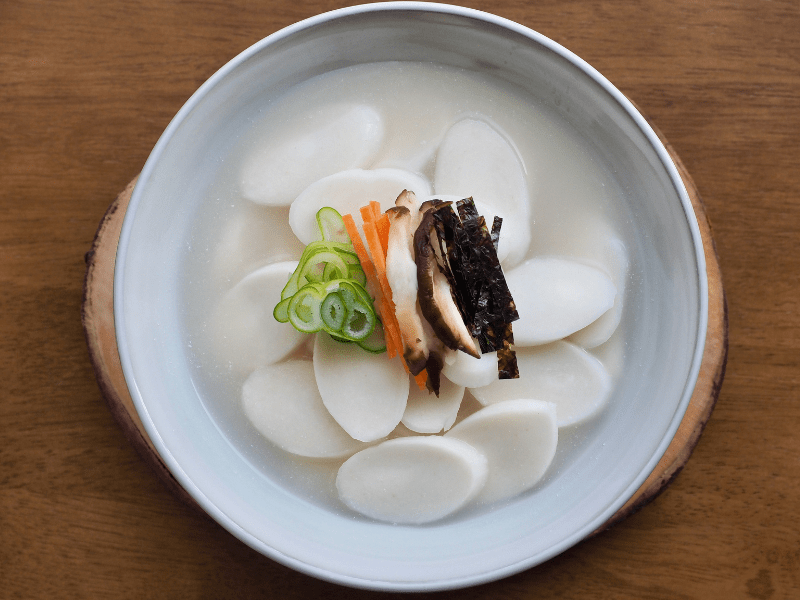
You probably didn’t know the tteokguk on the table meant more than just filling your belly:
- What Is Tteokguk?
- The Age Tradition and a Very Confusing Conversation
- The Korean Age System and the 2023 Change
- How Many Bowls Have You Eaten?
- FAQ
(This post contains affiliate links, which means I receive a certain percentage of a sale if you purchase after clicking. Thank you for your support.)
What Is Tteokguk?
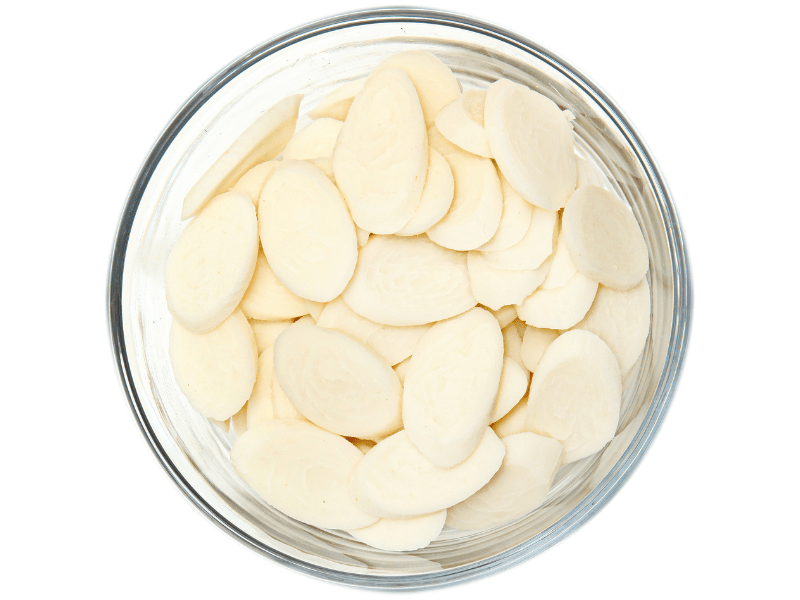
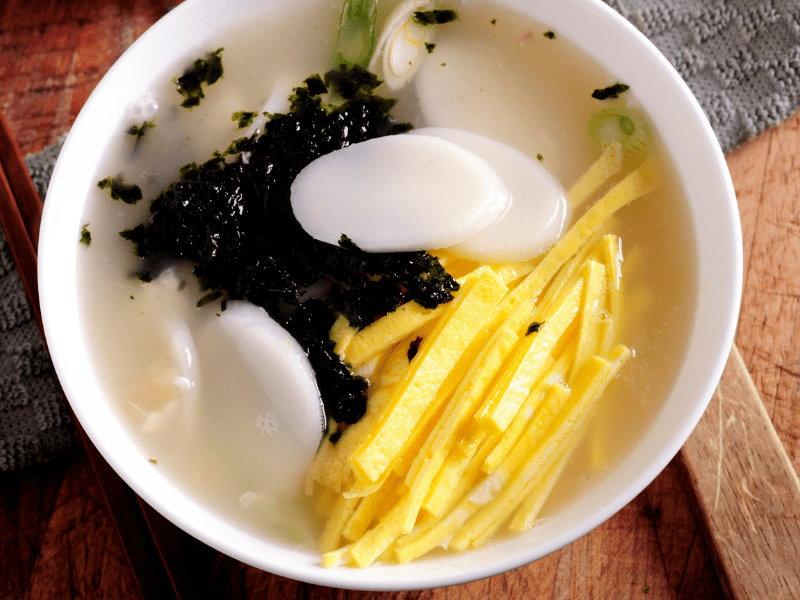
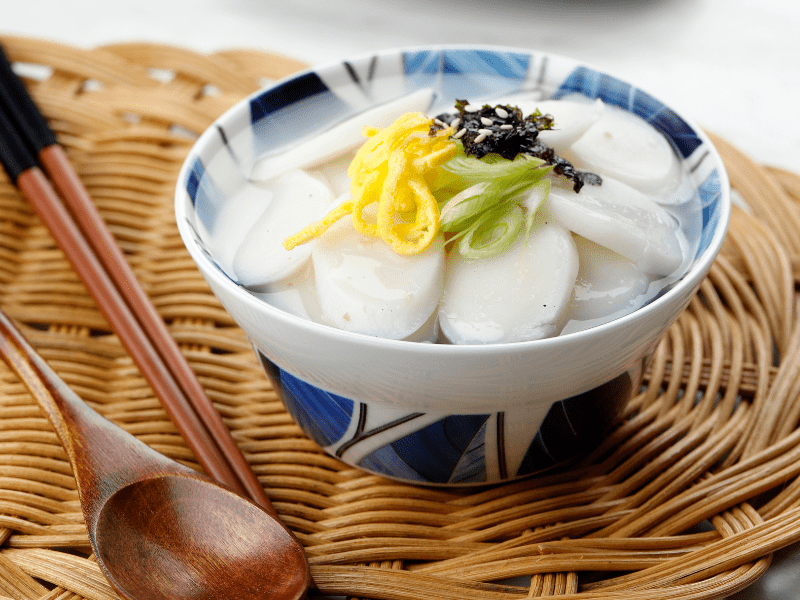
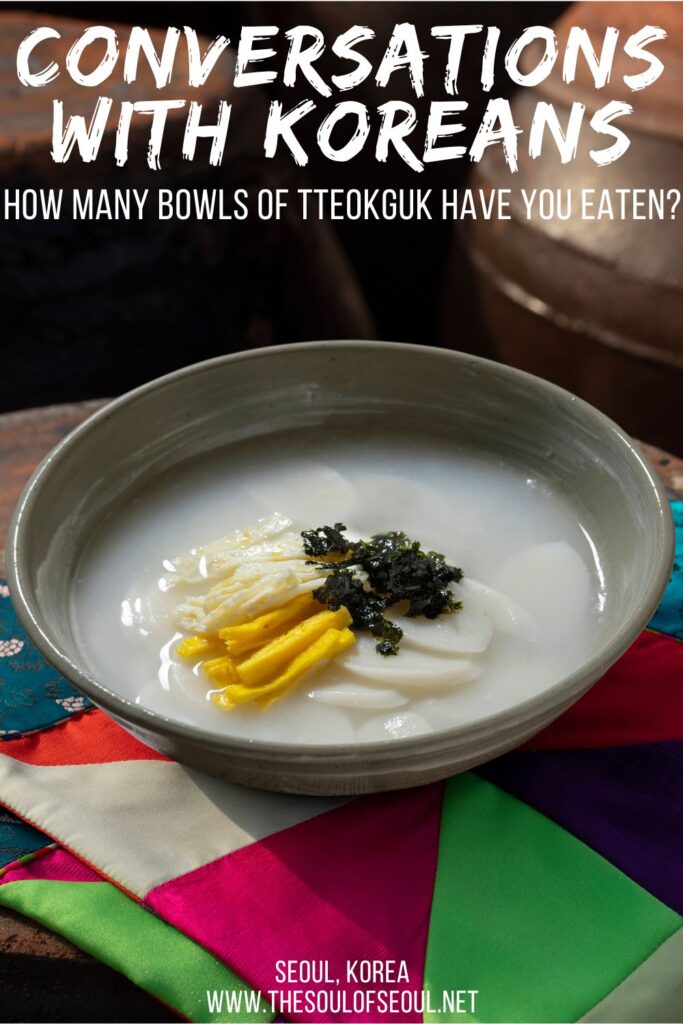
Tteokguk is a white broth soup with circular, coin-shaped slices of rice cake (tteok), topped with kim (dried seaweed) and julienned cooked egg. It is eaten on Seollal just as turkey is eaten on Thanksgiving. It’s the dish that defines the holiday. The symbolism is layered: the white broth represents purity; the round rice cake slices, resembling coins, signify wealth and prosperity in the year ahead.
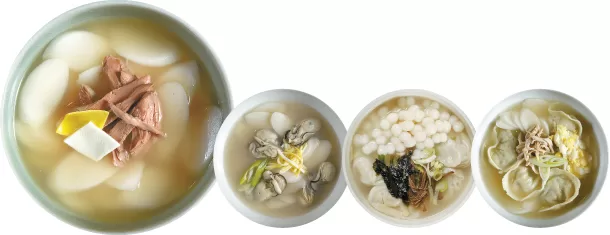
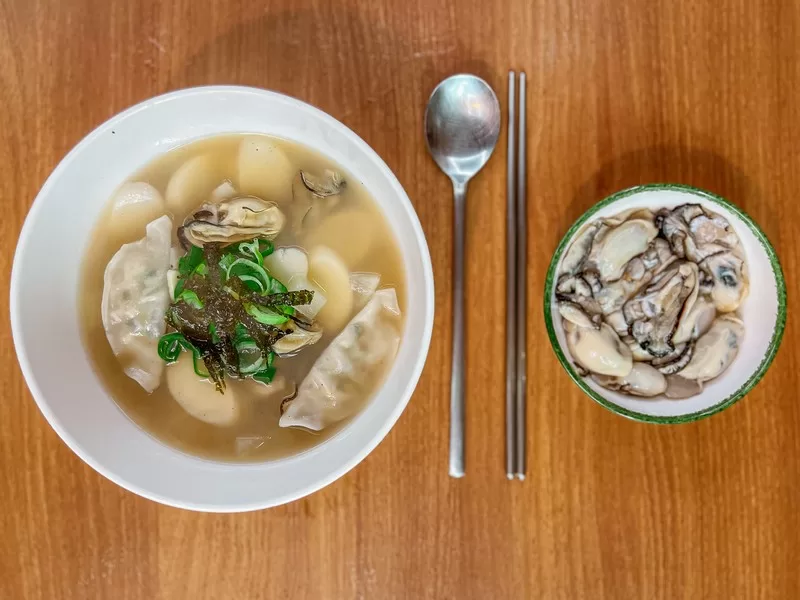
Tteokguk is not a single recipe across Korea. The more standard bowl uses beef broth, but northern and southern regions have their own traditions, and Jeju, coastal areas, and farming provinces each bring something distinct to the same essential dish. My southern mother-in-law makes hers with oyster, which I prefer now. I thought this was fairly standard until people messaged me saying they’d never tried an oyster version. For the full range of regional varieties, from hijiki seaweed tteokguk on Jeju to fresh rice cake versions from Chungcheong, read the complete guide to regional tteokguk varieties.
Once the bowl is eaten, it officially signifies the addition of one year to the diner’s Korean age. “In order to get one year older, you must eat your tteokguk”, so the saying goes.
The Age Tradition and a Very Confusing Conversation
Not only is Seollal the Lunar New Year, it is also the day that everyone across the country ages one year simultaneously. Or it was. More on the legal change below.
Under the traditional Korean age system, a child born in September would be considered 1 at birth, the time from conception to birth counts. Five months later, on Seollal in February, that child’s Korean age would become 2, even though their international age would be 5 months. A Western 5-month-old, by Korean reckoning, could be 2 years old.
Age in Korea matters for conversational and social etiquette, it determines how you address someone, what level of language you use, and whether someone can technically be your “friend” in the Korean sense. This makes it one of the first questions asked when meeting someone new. For foreigners, this creates situations like the following, which I have experienced more than once:
How old are you? I’m 29.
I’m 29 too! You were born in 1983 too? No, I was born in 1984.
Oh — then you’re 30. No, I’m 29. My birthday isn’t until April. I have a couple months still.
Hm? No, you’re 30 and today you’re turning 31. It’s Seollal. I’m definitely not 31. That’s for sure. I’m 29.
Okay… Okay, you go ahead and think I’m 30 or 31 and I’ll go ahead and think I’m 29. Okay?
Okay.
I personally teach my students to ask those that are not Korean, “What year were you born?” instead of, “How old are you?” because obviously how old I think I am is not how old my Korean friends think I am and so going with the year can cause much less confusion and awkward conversation.
What year were you born? 1984. You?
1983. Cool.
Yeah.
Significantly less exhausting.

The Korean Age System and the 2023 Change
A note for anyone who has heard that Korea “abolished” the traditional age system: in June 2023, South Korea did pass legislation standardizing legal documentation and administrative contexts to international (Western) age calculation. On paper, a person born in 1984 is legally 41 in 2025 rather than 42 by the old Korean reckoning.
In daily conversation, this has changed very little, and if you’re living in or visiting Korea, expect the traditional system to remain the default in social interactions for the foreseeable future.
Elder Koreans think instinctively in Korean age. If I say I’m 41 (Western), they will still process that as Korean age, automatically adjusting. My daughter, who is 12, already navigates both systems, Korean age in Korean conversation, Western age in English, because that’s simply what living between two cultures requires. Changing a law takes an afternoon. Changing how people think about something they’ve calculated instinctively their entire lives takes a generation.
So: the legal paperwork is simpler now. The age conversation at a Korean dinner table is exactly as it was.
How Many Bowls Have You Eaten?
There’s a saying, charming, possibly apocryphal, that on Seollal, you can ask someone’s age a different way:
“How many bowls of tteokguk have you eaten?” — 떡국 얼마나 먹었어요?
Since each bowl adds a year, the number of bowls you’ve eaten equals your Korean age. In theory.
I tested this on my husband. His response: “One. Why would I eat more than one?”
When I explained that I meant it as “how old are you?” he said that was silly. Whether Koreans actually ask this on Seollal or whether it’s more of a tale we tell children and curious foreigners, I’m genuinely not sure. My husband’s reaction suggests the latter.
The associated traditions have a similar warmth: Children supposedly try to eat extra bowls to grow older faster, while older women try not to eat any at all in order to stay the same age. Whether anyone actually does this or whether it’s a charming story told around the table is hard to know. Either way, it’s a better conversation than arguing about whether someone is 29 or 31.

If you’re learning Korean, check out 90 Day Korean. It’s a great online program that has tons of information with a no nonsense approach. Most people fail to learn Korean because the materials are not fun, aren’t useful in everyday life, lack clear explanations and their methods don’t stick.
90 Day Korean will let you progress at your own pace but their teachers and mentors will keep you pushing toward a target. Definitely a great program if you want to learn more sentences like the one I just talked about above.
FAQ
What is tteokguk?
Tteokguk (떡국) is a Korean rice cake soup eaten on Seollal (Lunar New Year). The round, coin-shaped rice cake slices represent wealth and prosperity; the white broth represents purity. Eating a bowl traditionally adds one year to a person’s Korean age. The broth base varies by region, beef in much of the country, oyster in parts of the south, seaweed-based versions in Jeju.
Why do Koreans eat tteokguk on Lunar New Year?
It is a Seollal tradition dating back to the Joseon Dynasty. The symbolism of the dish, white for purity, coin-shaped rice cakes for wealth, makes it a fitting new year food. The tradition that eating a bowl adds a year to your Korean age connects it to the communal marking of the new year.
What is the Korean age system?
Traditionally, Koreans considered a newborn to be 1 at birth and everyone gained a year on Seollal. In June 2023, South Korea legally standardized age calculation to the international system. In practice, elder Koreans and daily social conversation still operate largely on the traditional system. The legal change has simplified paperwork; cultural habits are changing more slowly.
What does 새해복 많이 받으세요 mean?
Saehae bok mani badeseyo (새해복 많이 받으세요) is the standard Korean Lunar New Year greeting, “May you receive many blessings in the new year.”
What does 떡국 얼마나 먹었어요 mean?
Literally “How many bowls of tteokguk have you eaten?”, used to mean “How old are you?” since each bowl traditionally adds a year of Korean age. Whether this is actually asked on Seollal or is more of a folk saying varies, my husband found the premise entirely baffling.
What holidays don’t have traditions woven around them, some serious, some charming, some somewhere in between? Tteokguk is all three: a beautiful, symbolism-laden dish eaten at the new year, tied to a complicated age system that has now been legally updated but culturally persists, and connected to a saying about bowl-counting that my husband still finds completely baffling.
새해복 많이 받으세요. Happy Seollal.
Did you like this post? Pin iT!


2 Comments
Shelley @Travel-Stained
None. Will it prevent me from getting older?? 😉 You around this weekend?
Hallie
We are around this weekend and yes you won’t age if you just don’t eat the tteokguk. Amazing, huh?