Seoul Lotus Lantern Festival 2026: Parade Route, Dates & Local Tips For Visitors
Last Updated on April 19, 2026
The Seoul Lotus Lantern Festival, also called Yeondeunghoe (연등회) in Korean, is one of the largest Buddhist festivals in Korea and celebrates Buddha’s birthday with massive lantern parades, cultural events, and temple decorations throughout the city. In celebration of Buddha’s birthday, this spring festival takes place over a few days with events around downtown Seoul from morning into the evening.
Colorful lanterns are strung up around the city in anticipation of the event and then over 100,000 more lanterns are lit and paraded down the main streets of the capital. The excitement, hope, and love is palpable at this event and all are welcome to attend whether Buddhist or not. This is one of the most beautiful events to see each spring in Korea.
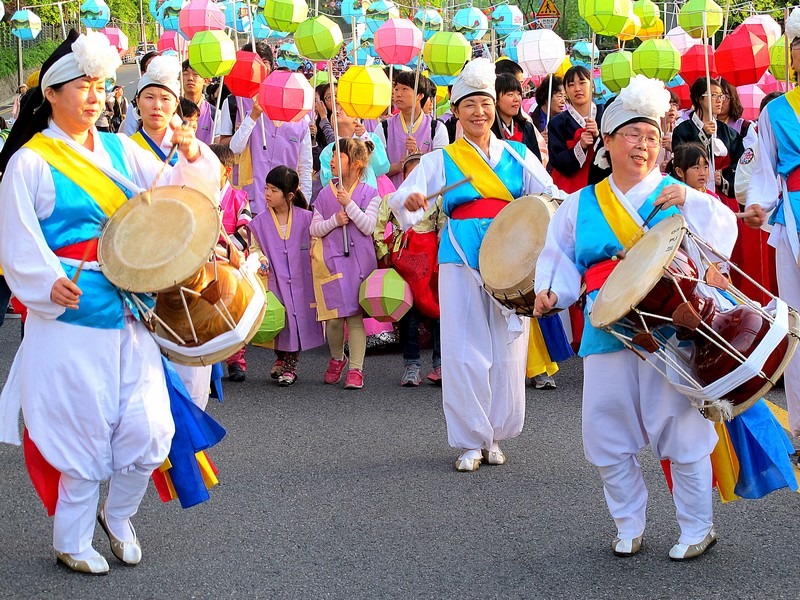
A note on the two Seoul lantern festivals: This guide covers the Lotus Lantern Festival (Yeondeunghoe) in spring, which celebrates Buddha’s birthday. There is a separate winter event called the Seoul Lantern Festival (서울빛초롱축제) held at the Cheonggyecheon Stream, usually in November or December. They are different festivals. If you’re looking for the winter event, read the Seoul Lantern Festival guide.
Check out my nifty guide to the 2026 Seoul Lotus Lantern Festival below to understand the full extent of this event and check out the family friendly tips should you have a little one in tow.
- Seoul Lotus Lantern Festival 2026 Quick Info
- How To Get To The Seoul Lotus Lantern Festival
- Lotus Lantern Festival Events
- Did you know you can be IN the parade?
- Why the Lotus Lantern Festival is a UNESCO Cultural Heritage Event
- A Brief History of Buddhism in Korea
- Temples To Visit Before Buddha’s Birthday
- FAQ
(This post contains affiliate links, which means I receive a certain percentage of a sale if you purchase after clicking at no cost to you. Thank you for your support.)
Seoul Lotus Lantern Festival 2026 Quick Info
| Dates | May 16 to 17, 2026 |
| Main Parade | May 16, 2026: 7:00pm to 9:30pm |
| Main Area | Dongdaemun to Jonggak, with events around Jogyesa Temple and Insadong |
| Best For | Families, photographers, spring festival lovers, cultural travelers |
| Cost | Free to attend |
| UNESCO Status | Yeondeunghoe is recognized as an Intangible Cultural Heritage of Humanity |
How To Get To The Seoul Lotus Lantern Festival
The festival takes place across central Seoul, mainly along Jongno Street and around Jogyesa Temple, so the subway is the easiest way to get there. Roads close for the parade, and buses can be delayed or rerouted during the main events.
Best subway stations for festival access:
- Dongdaemun Station
- Jongno 5-ga Station
- Jongno 3-ga Station
- Jonggak Station
- Anguk Station
- Dongguk University Station
Lotus Lantern Festival Events
The main parade is just one part of the whole event. Understand all of the separate events to see which one works best for your schedule and situation.
Eoulim Madang (어울림마당)
May 16, 2026; 4:30pm ~ 6:00pm
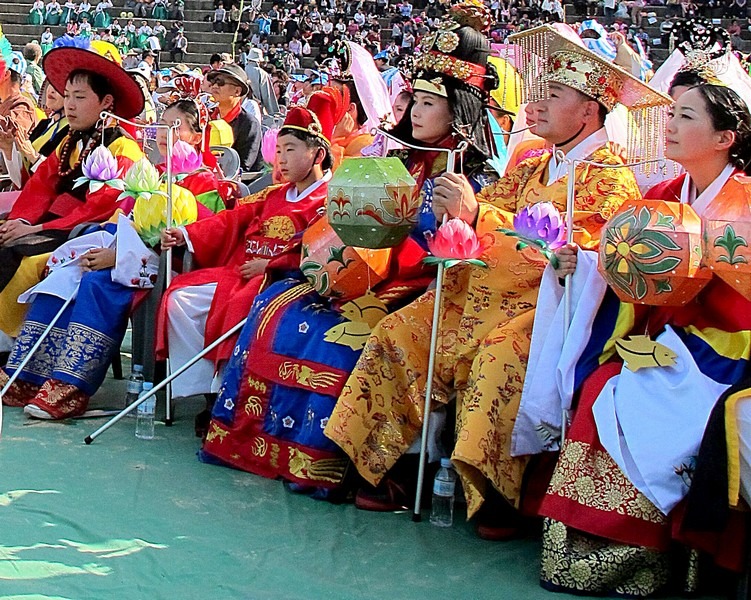
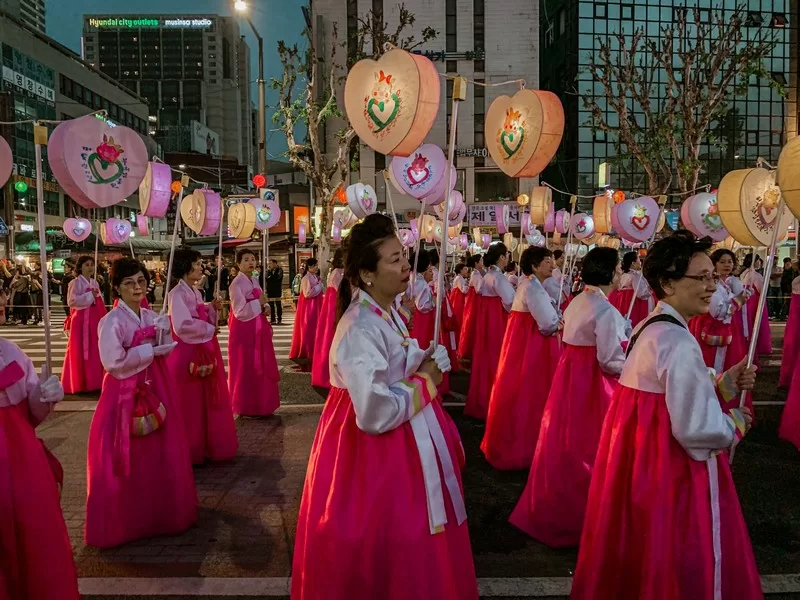
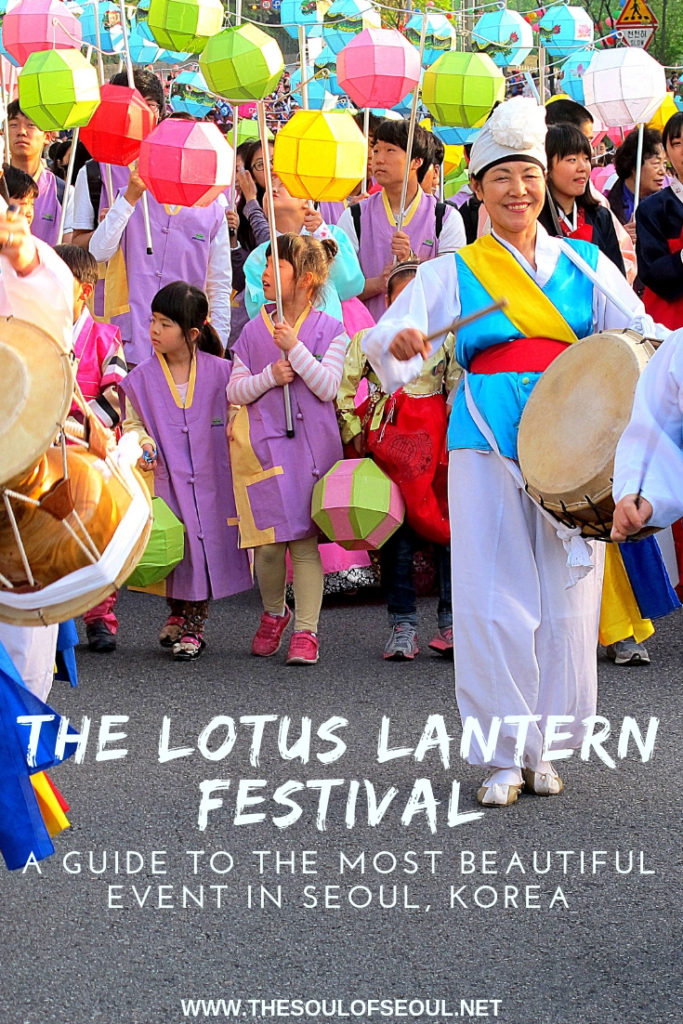
As the first event of the festivities, the Eoulim Madang, or Dharma Ceremony and Cheer Rally, is all about getting people movin’ and groovin’ and ready for a good time… and a long walk. All of the participants in the parade gather together at Dongguk University Stadium in their Hanboks and other traditional garb, gather their lanterns and dance, sing and pray to get into the spirit of celebrating Buddha’s birthday.
There is a ceremony bathing the baby Buddha, a Dharma Ceremony, which includes a chorus, Temple Bell, Three Refuge, Heart Sutra, Opening Announcements, Prayers, a Chanting Sutra and finally ending with the Declaration of the Lantern Parade.
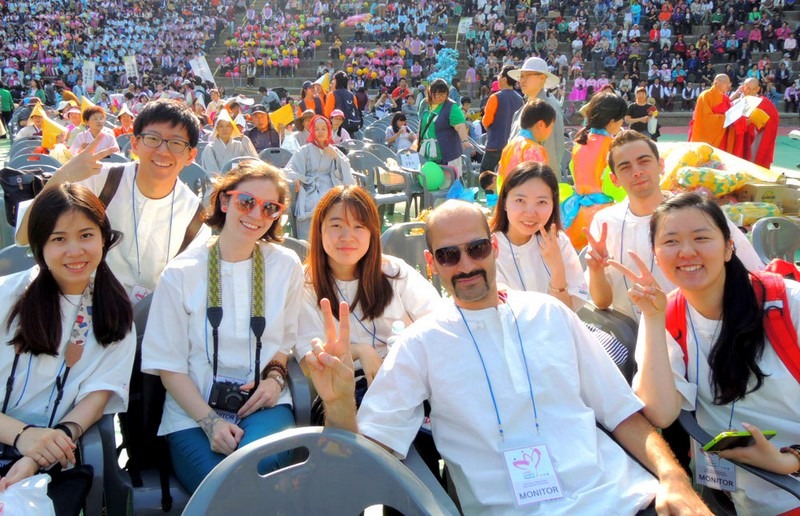
Spectators are welcome and may even pick up a free lantern, but if you want to get the best seats for the parade, you’ll want to make a mad dash from the stadium down to Jongno before the end of the stadium festivities. Seeing the Eoulim Madang is a fantastic way to really get into the spirit of the event with everyone though.
- Where: Dongguk University Stadium, (Dongguk University Station, Line 2, Exit 6)
- Address: 26 3-ga Pil-dong Jung-gu, Seoul, Korea (서울특별시 중구 필동3가 26)
Family Friendly Tip: This is a great event to attend if you have small ones that are still going to bed early. You’ll be able to see all of the parade attendees in their beautiful traditional clothing, Hanboks, and if you look around, you might also be able to get one of the free lanterns to take home.
Lantern Parade (연등회)
May 16, 2026; 7:00pm ~ 9:30pm
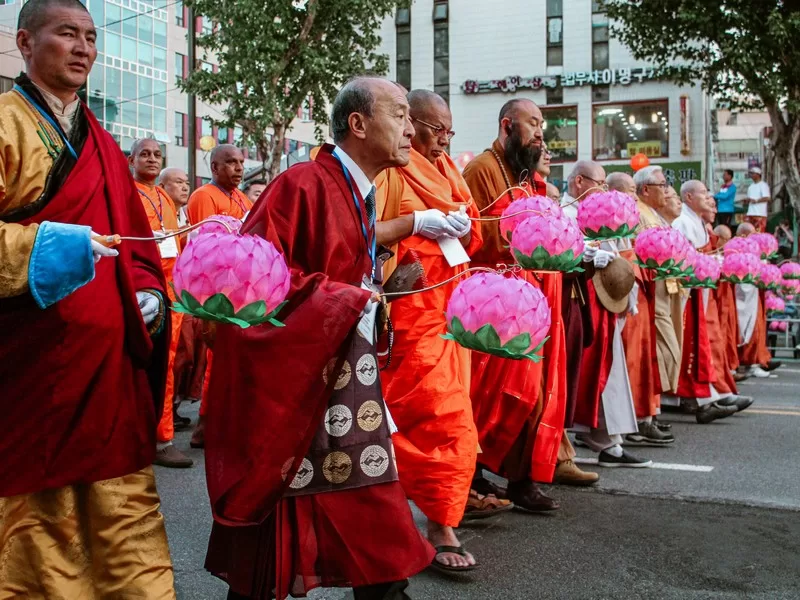
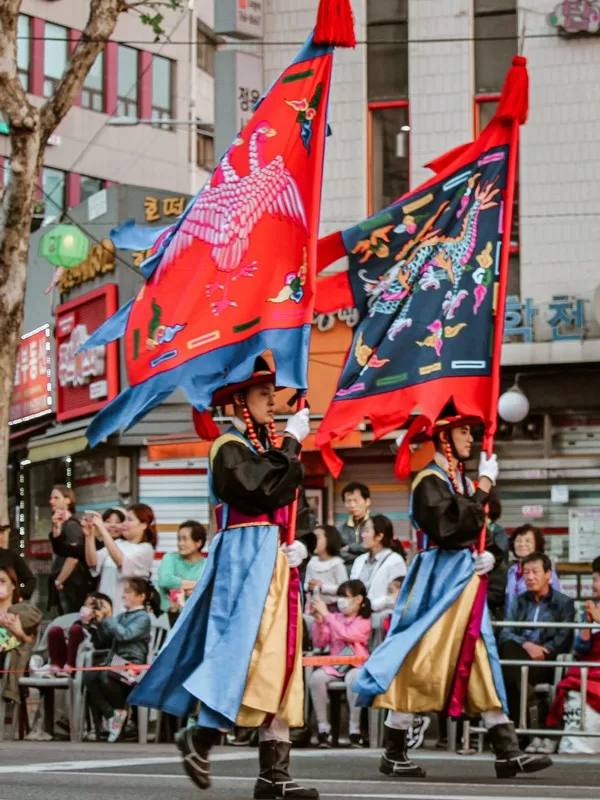
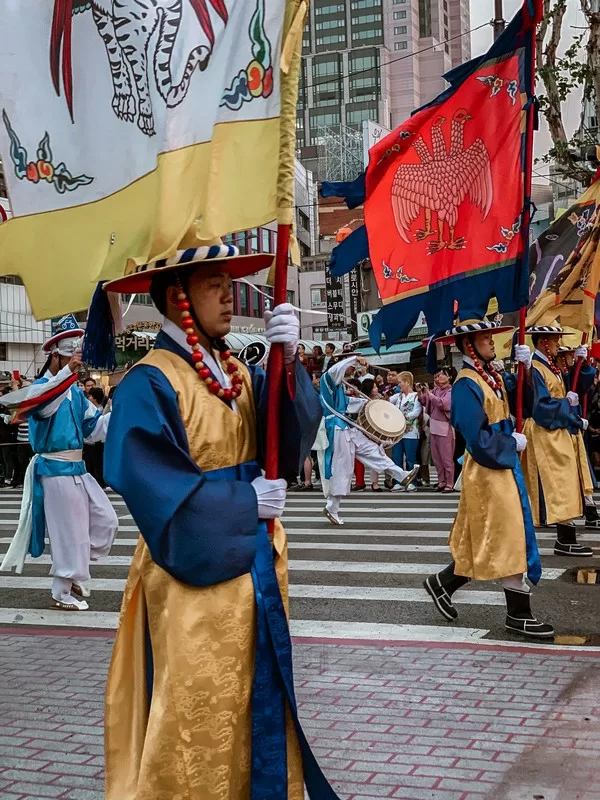
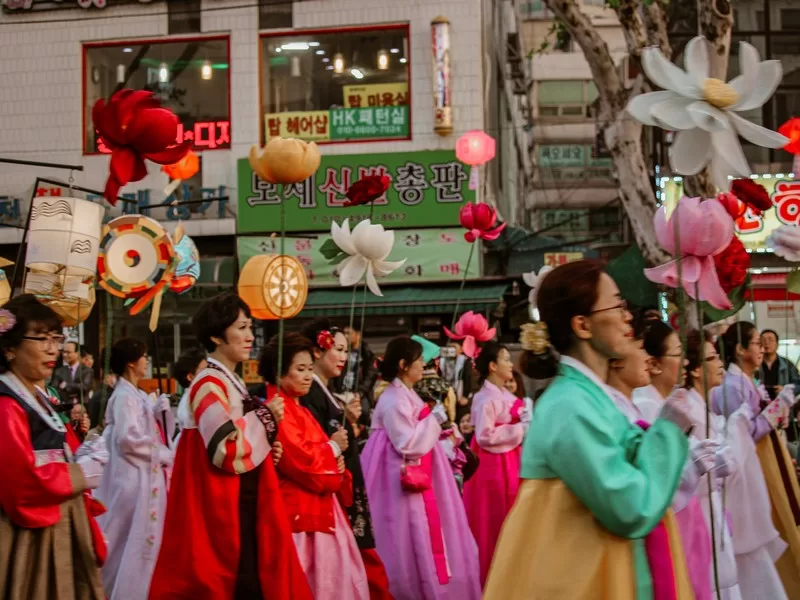
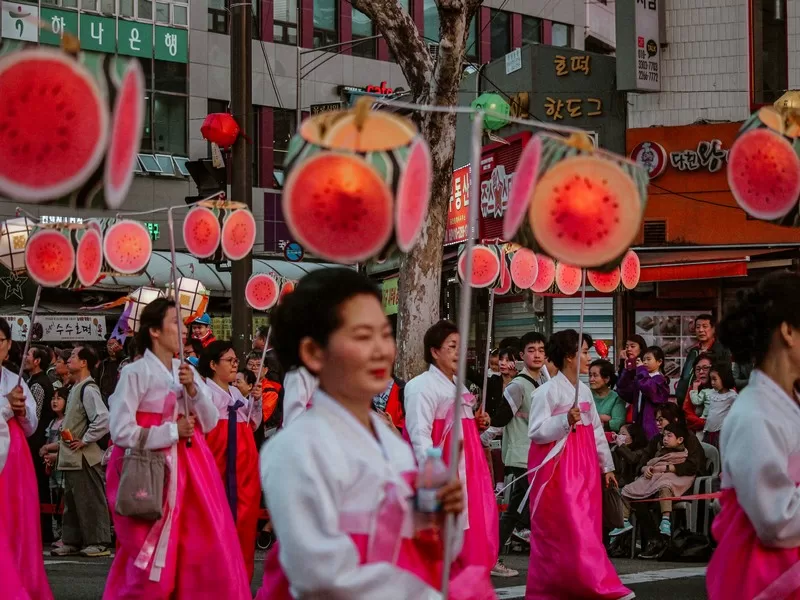
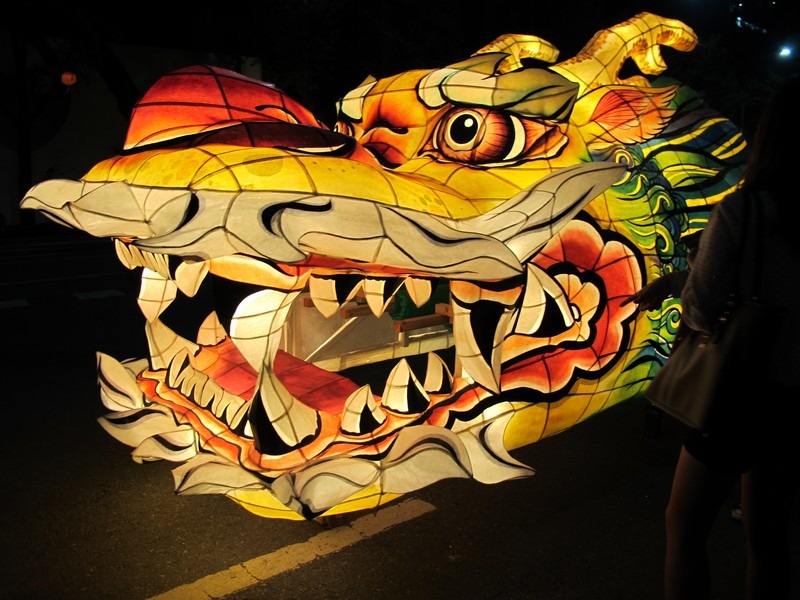
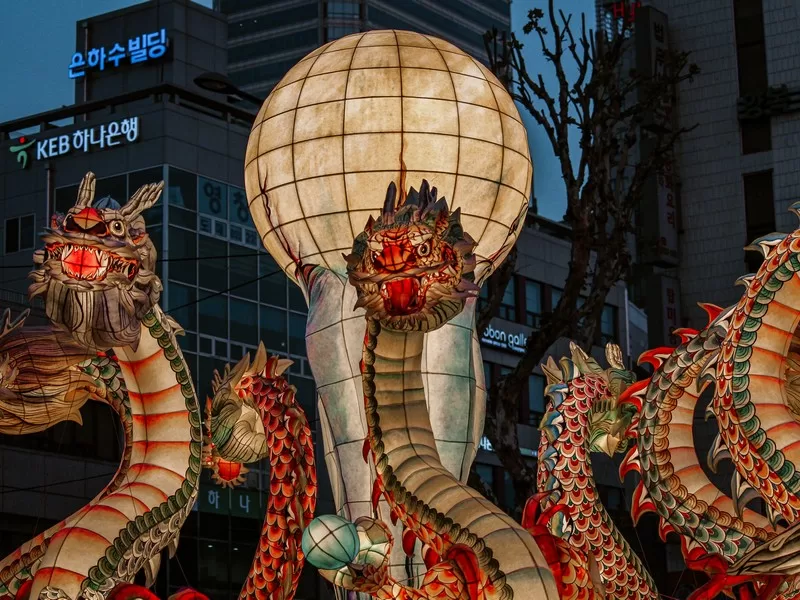
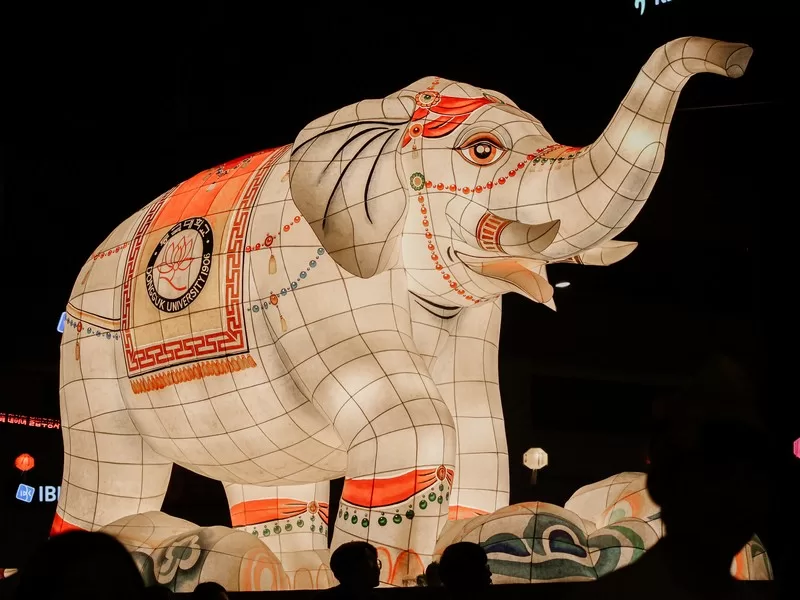
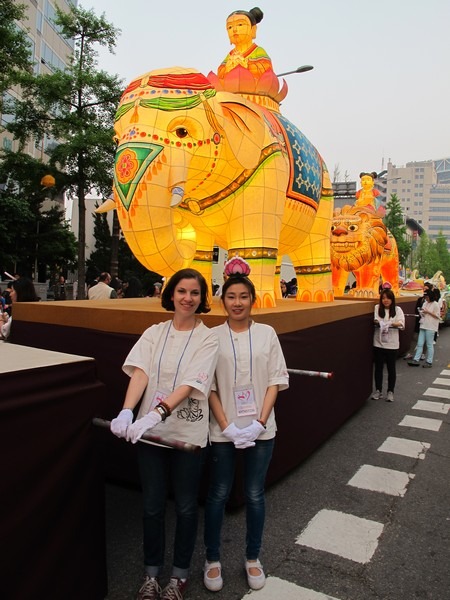
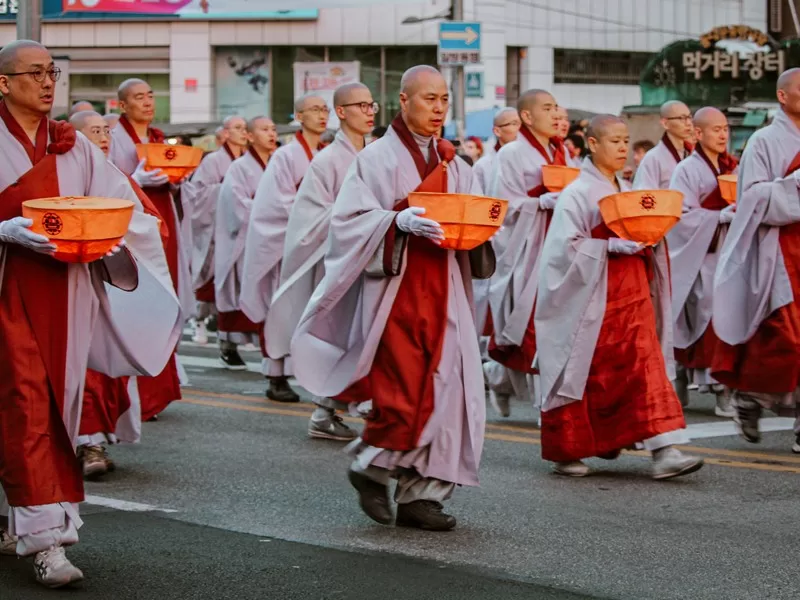
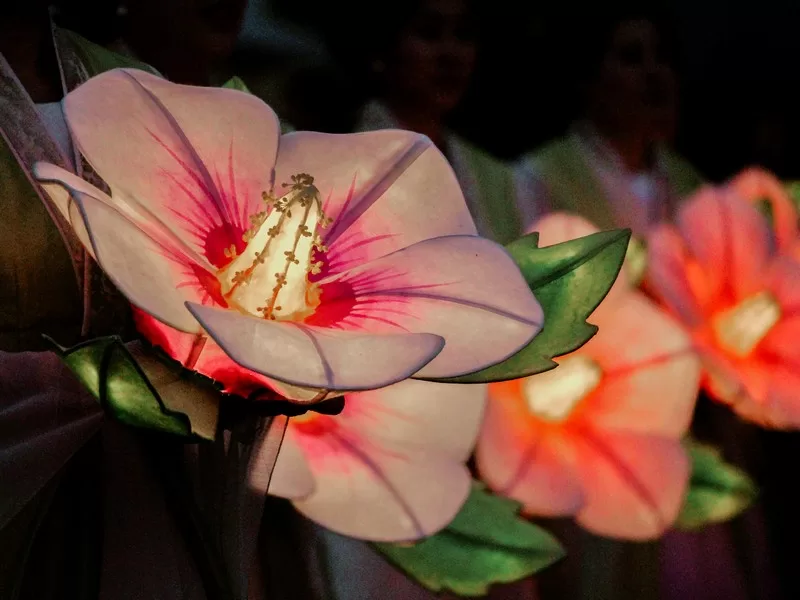
In the past, around 300,000 people have gathered together to witness the beauty that is the Lantern Parade. With over 100,000 lanterns to see in all shapes and sizes from the traditional lotus flowers to the long dragon and large elephants and fire breathing peacocks, there are some sights to enjoy, not to mention the beautiful and colorful Hanboks groups will be wearing.
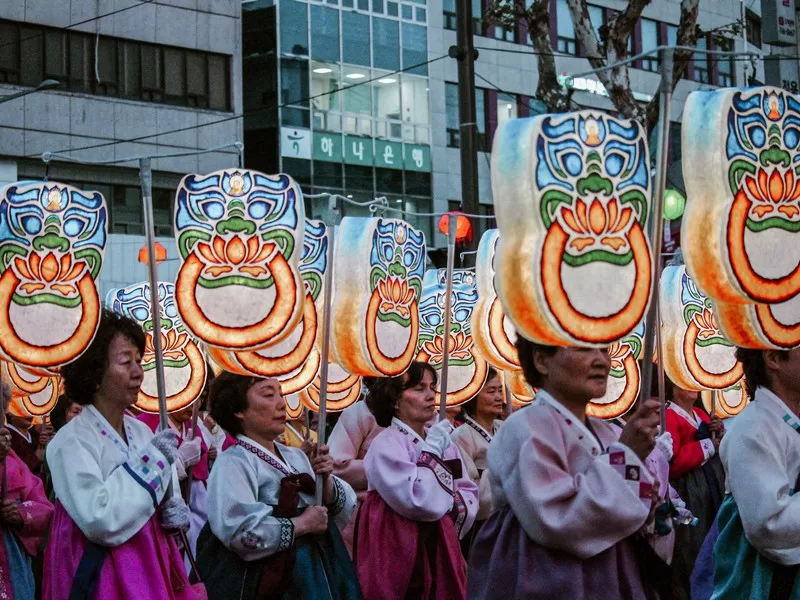
The parade starts near Dongdaemun and moves toward Jonggak. A few things to know:
Viewing near Jonggak (the end of the route): Free seats are placed along the route and people start filling these 30 to 60 minutes before they’re even set out. Near Jonggak, you’ll wait a long time before anything passes by: the parade doesn’t reach this end until 7:30 or 7:45pm at the earliest. The seats are competitive but the wait is long.
Viewing near Dongdaemun / Jongno 5-ga (the start): Seats here fill only about 30 minutes before the event and there’s generally more space. Crucially, you’ll see the lanterns and Hanboks while there is still daylight, from the very beginning when everything is fresh and before the crowd has walked kilometers. For families especially, this is the better choice.
Family Friendly Tip: The parade route is five blocks long and seats closer to Jonggak fill up quickly. These seats are difficult to get and with children, you’ll have to take into account that you would just be sitting without anything to look at for at least an hour and a half or more.
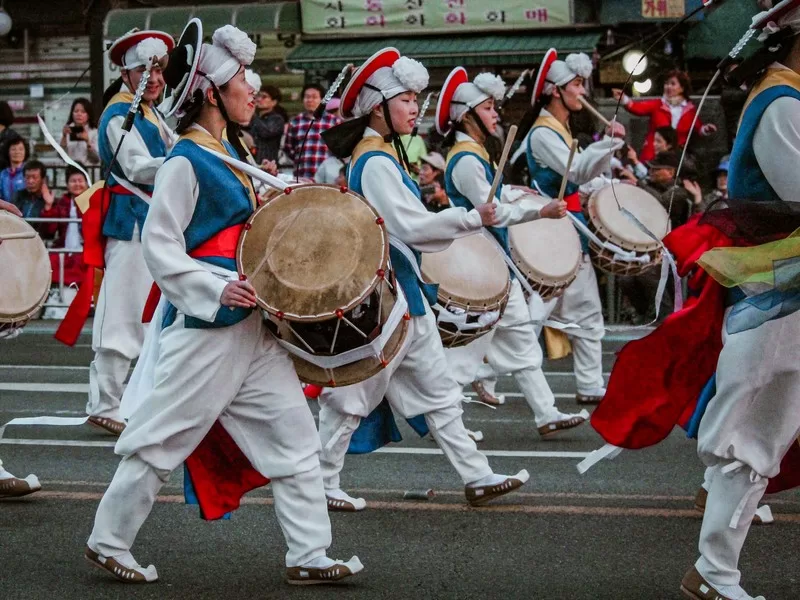
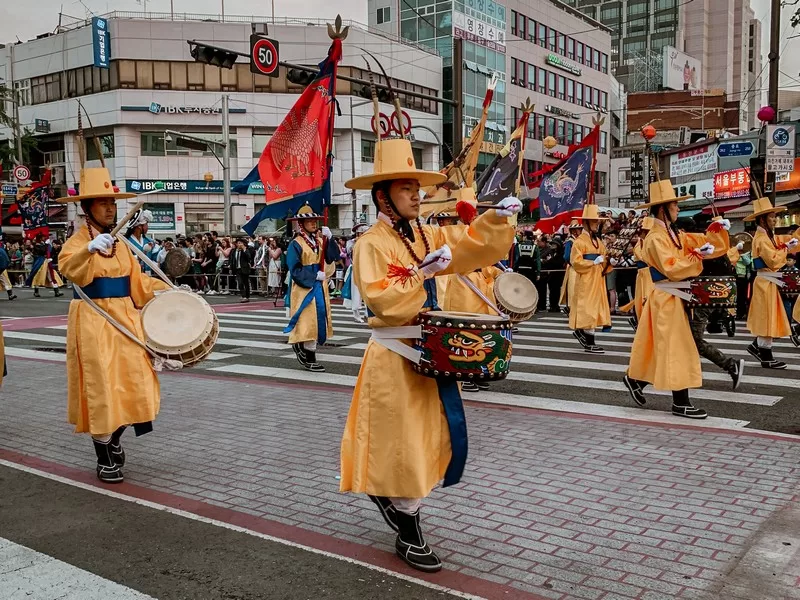
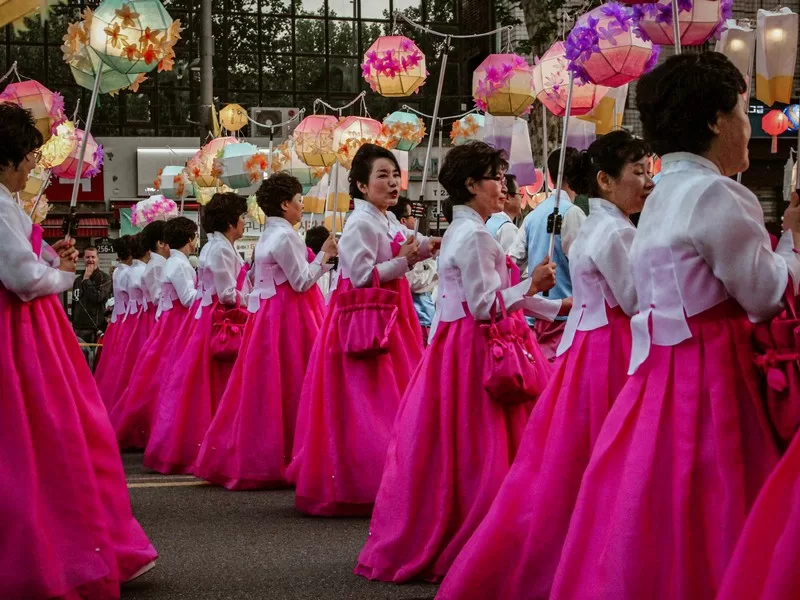
The large float tip: The largest floats cannot start from Dongguk University Stadium, instead, they line the road in front of Dongdaemun Design Plaza before the parade begins. If you want to see the enormous floats before the event starts, head to the DDP area.
At the end of the parade route, large floats are also parked in front of Jogyesa Temple, by that point it’s dark, so you can photograph them lit up and stationary, which is actually easier than photographing them moving. Read the complete DDP guide for more on the area.
Dinner recommendation: Head to Gwangjang Market for an early dinner before grabbing your parade seat. It’s just outside Jongno 5-ga Station exits 4 or 5, and it’s one of the best places to eat in Seoul. Read the complete Gwangjang Market guide for what to order.
- Where: From Dongdaemun down to Jonggak
- Transport: Dongdaemun Station (Line 1, Exit 9 & 10), Jongno 5-ga Station (Line 1, Exit 1, 4, 5 & 8), Jongno 3-ga Station (Line 1, 3 and 5, every exit), Jonggak Station (Line 1, every exit).
Hoehyang Hanmadang (회향한마당)
May 16, 2026; 9:30pm ~ 11:00pm
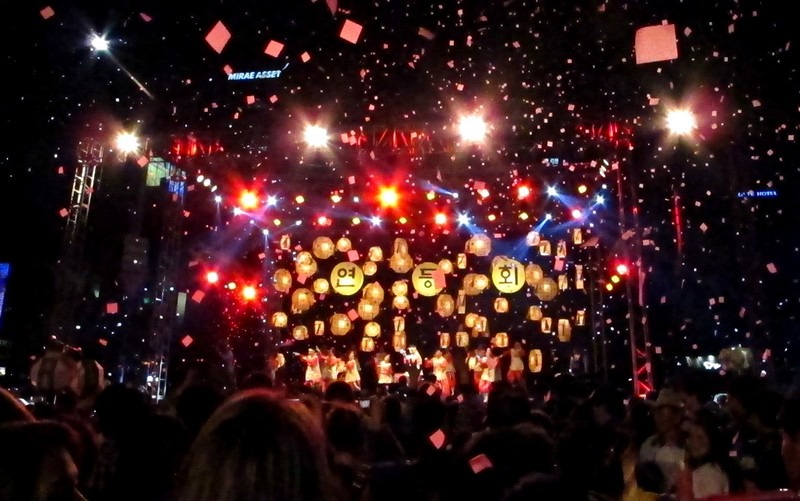
After the parade, though some people head home, the participants in the parade will gather together to fill Jonggak Sageori (the intersection just outside of Jonggak Subway Station), and dance for another couple of hours. Dancers on stage will show you the steps so you can jump on in too.
People link hands to shoulders and massive sna5es zig-zag through the crowds. There’s laughing, dancing and singing until an explosion of confetti falls overhead. This is a merry event to experience and there is NO way you will want to be there without jumping in and shaking your groove thang.
- Where: Jonggak Intersection near Jonggak Station (Line 1, ALL Exits)
Traditional Culture Experience Day
May 17, 2026; 12:00pm ~ 6:00pm
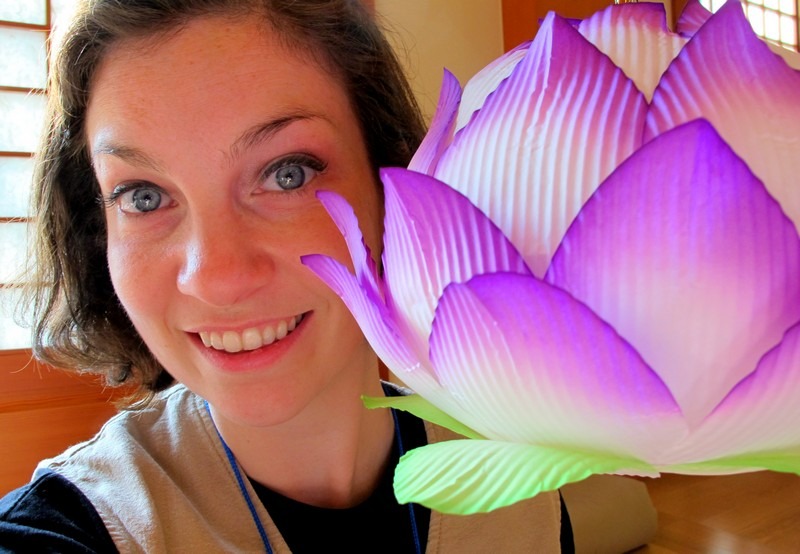
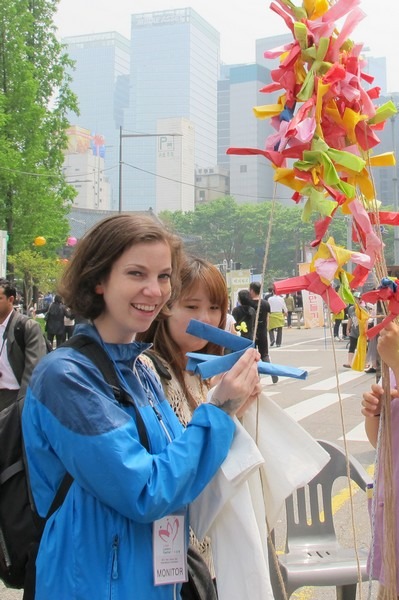
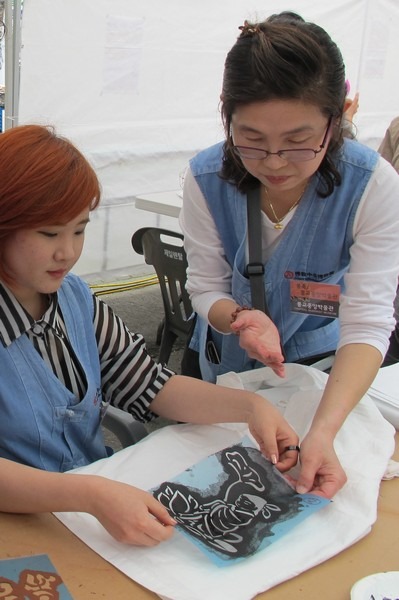
Tents line the street in front of Jogyesa temple near the popular Insadong district and visitors can paint, glue and stamp a variety of Korean Buddhist crafts either for free or a very minimal cost to cover the cost of materials.
You can make lotus lanterns, Buddhist prayer bead bracelets, traditional dolls, paint bowls and plates and stamp prints of Buddhist images. You can visit tents with Buddhists from not only Korea but visiting Buddhists from other countries that will answer questions and showcase their own specific and unique cultural Buddhist rites. There will also be performances and ceremonies on the street as well.
- Where: In front of Jogyesa Temple, Jonggak Station (Line 1, Exit 2) and Anguk Station (Line 3, Exit 6)
Family Friendly Tip: If your children like hands-on activities, this is the day to bring them. Stop into nearby Jogyesa Temple for the lantern views, head to the craft tents, and then walk to Insadong for food. Read the complete Insadong guide for what’s in the neighborhood. If you couldn’t attend the parade on Saturday, stay until the evening for the mini parade that closes the weekend.
Yeondeungnori (연등놀리)
May 17, 2026; 7:00pm ~ 9:00pm
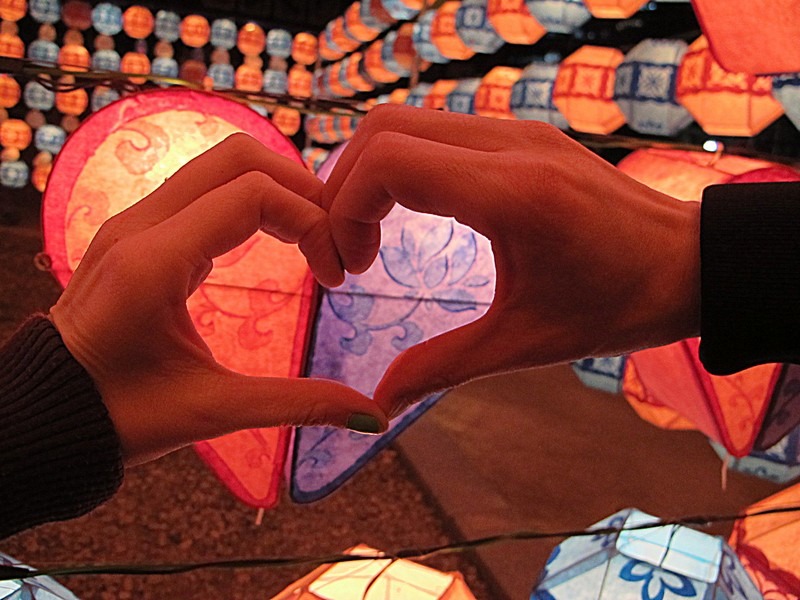
To finish off the entire event, a mini parade heads around the block from Jogyesa temple, down Insadong’s main drag and back to the temple to culminate in a final celebration with dancing and music. It’s a beautiful and more intimate event than the night previous and a great way to end the entire weekend celebrating the birth of Buddha.
If you only want to spend one day downtown, go Sunday to partake in some crafts and the street party AND you can still witness a nice, though smaller, lotus lantern parade and concert.
- Where: In front of Jogyesa Temple, Jonggak Station (Line 1, Exit 2) and Anguk Station (Line 3, Exit 6)
Family Friendly Tip: Get a seat in a restaurant or cafe with window seating along Insadong Street, the parade route winds down that road. If you want to see the final performance, stay on Jogyesa Street and look for the mats set out for the concert; grab a seat around the edge as early as you can.
Did you know you can be IN the parade?
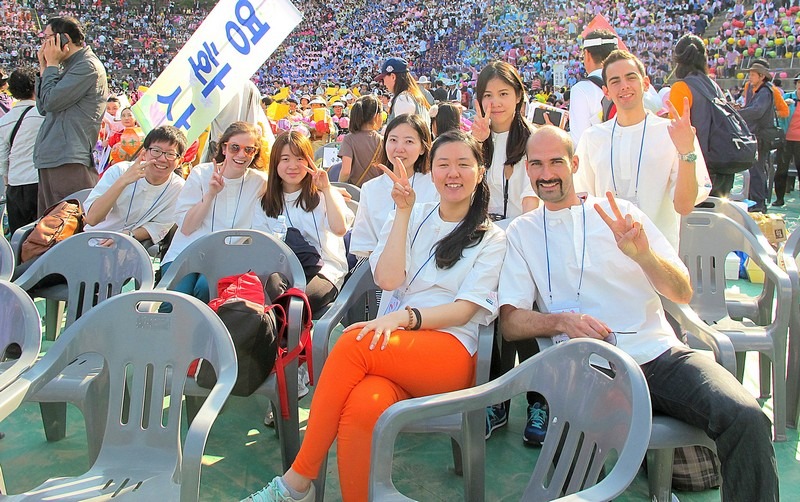
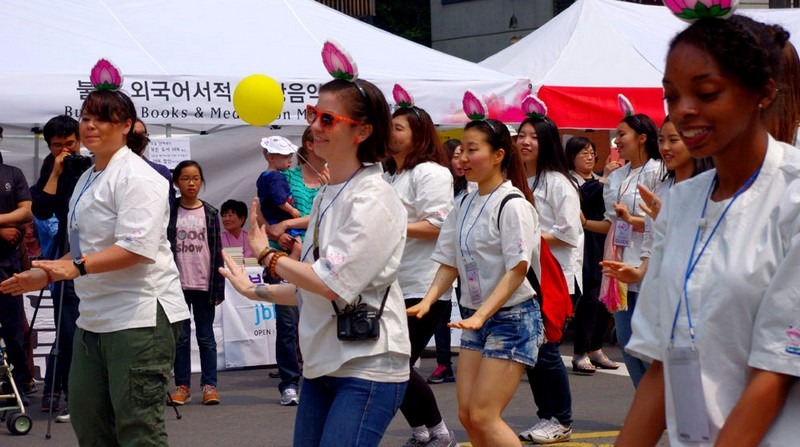
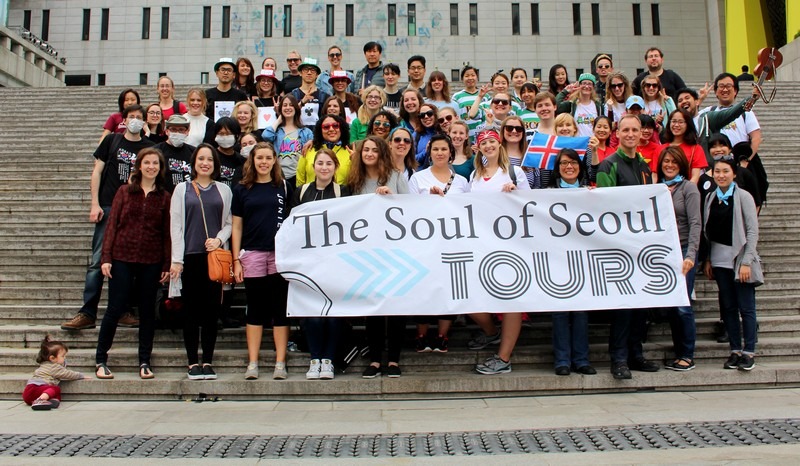
Every year a group of foreign volunteers and supporters participates in the Yeondeunghoe festivities. If you want to march in the parade yourself, carry a lantern, and experience the event from the inside rather than the pavement, apply. It’s a rewarding experience: you’ll learn about Korean Buddhism, meet people from around the world, and have a story to tell that most visitors don’t get. Check the official Yeondeunghoe website for volunteer application details and deadlines. You can read about my experience volunteering first.
Why the Lotus Lantern Festival is a UNESCO Cultural Heritage Event
The Yeondeunghoe was officially recognized by UNESCO as an Intangible Cultural Heritage of Humanity in 2020. The recognition reflects the festival’s representation of Korea’s long Buddhist tradition and its promotion of compassion, unity, and community through lantern lighting and cultural celebration.
A Brief History of Buddhism in Korea
Buddhism arrived in Korea in 372 AD, during a time when the main religion was Shamanism. Rather than replacing Shamanism, a distinctive Korean Buddhism emerged that incorporated the Shamanistic reverence for natural spirits alongside Buddhist teachings. Shrines to the Shamanistic spirits Sanshin (Mountain Spirit), Toksong (the Recluse), and Chilsong (Spirit of the Seven Stars) can still be found inside many Buddhist temples around the country today.
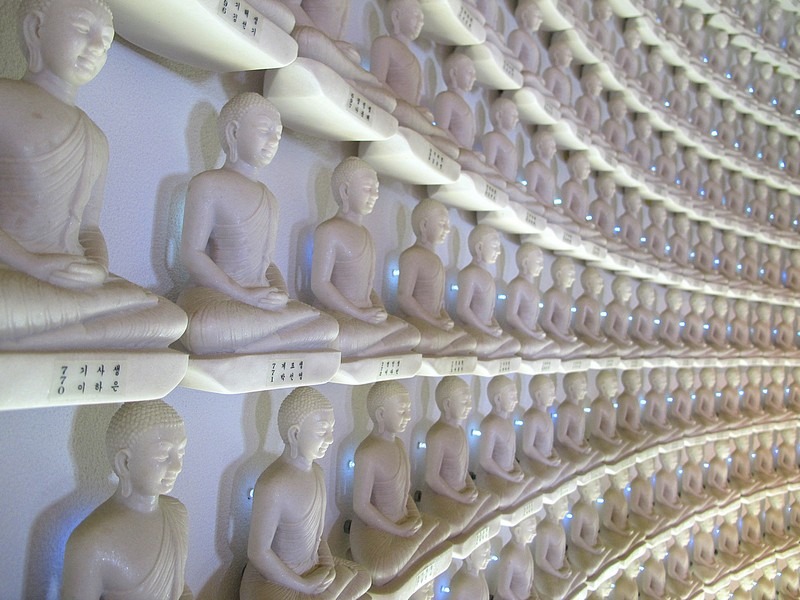
Korean Buddhism reached its height during the Goryeo Dynasty (918 to 1392), when it became the state religion and the royals were patrons of lotus lantern events. During the Joseon Dynasty that followed, Buddhism was repressed for roughly 500 years. Many city monks fled to the mountains for refuge, which is why so many Korean temples are found on mountainsides today.
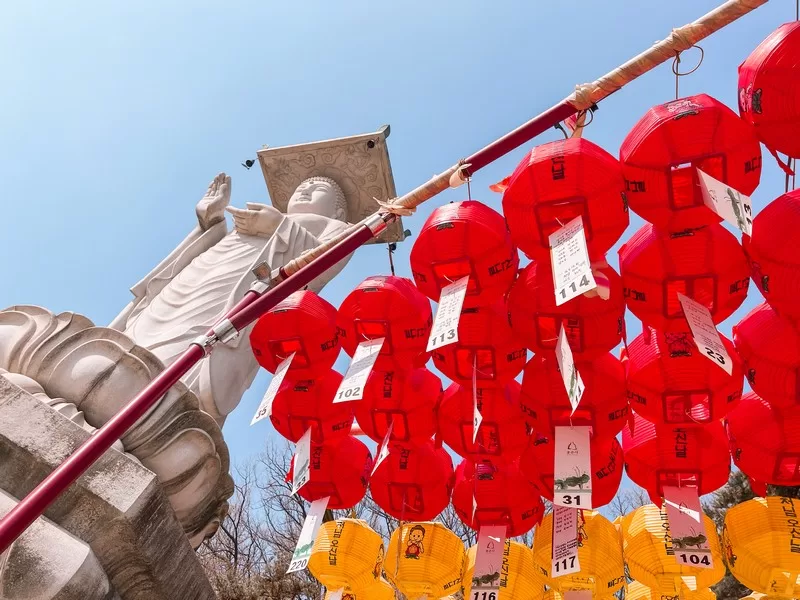
Even during Joseon, the lotus lantern tradition persisted. A royal decree in 1431 attempted to prohibit the event, but residents continued hanging lanterns outside their homes as a folk custom, with the number of lanterns equal to the number of children in the family. The tradition could not be extinguished.
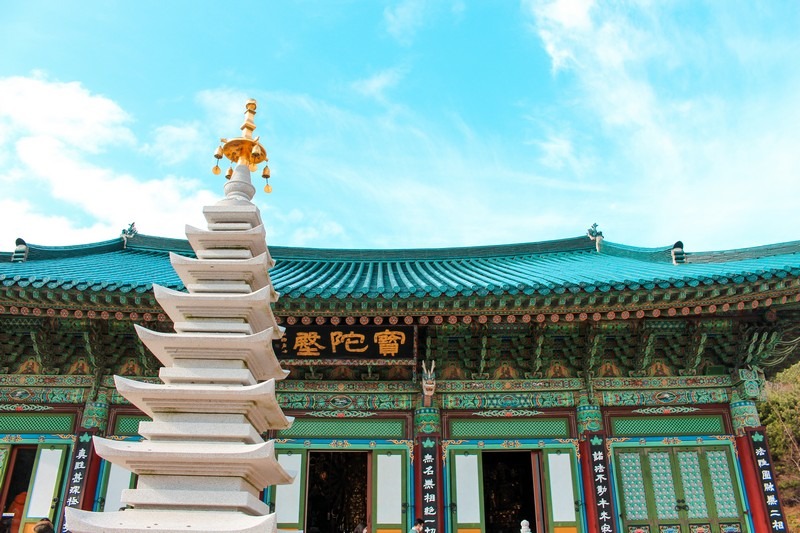
The lotus lantern itself goes back to the Three Kingdoms Period, when records describe royals visiting temples specifically to admire the lanterns. Today, roughly 25% of the Korean population practices Buddhism, and Yeondeunghoe is one of its most visible and welcoming public expressions.
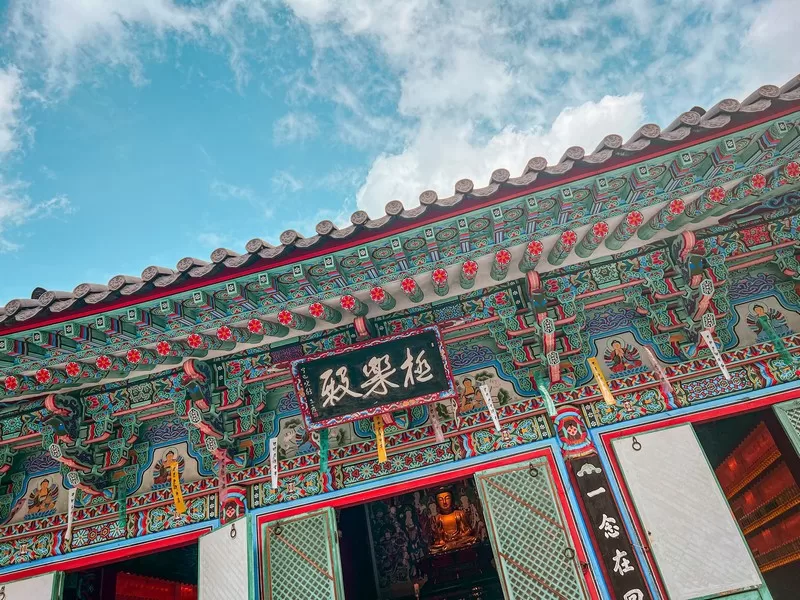
Temples To Visit Before Buddha’s Birthday
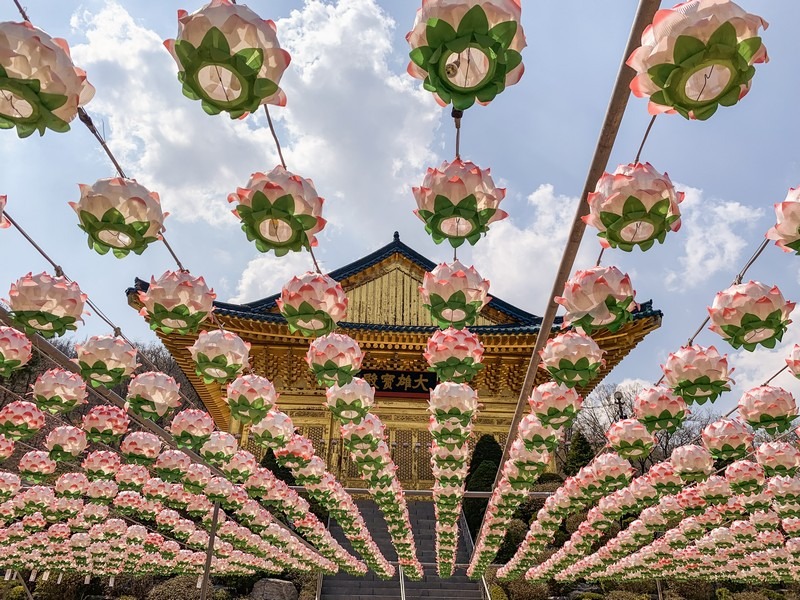
About a month prior to the massive event, beautifully colorful lotus lanterns are strung up around temples throughout the country and even hang lining the streets. The lanterns along the street often bear the name of the nearest temple and if you follow them, you’re bound to find the temple where you can bask in the beauty.
There are various lanterns to see; some are colorful and some are white, some are in the shape of lotus flowers and some are more octagonal. If you want to find a temple in Seoul, Korea where you can see some beautiful lanterns while taking in a temple, here are some that I highly recommend.
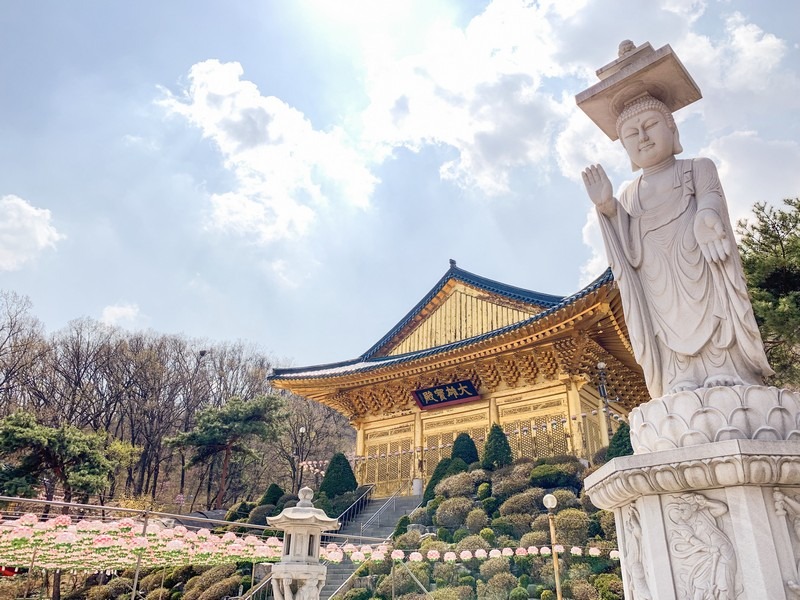
Suguksa Temple (수국사)
The only golden temple in Seoul and it’s really absolutely stunning especially in the spring when the lotus lanterns are hung. Suguksa Temple is extremely unique so go if you’re beginning to feel like if you’ve seen one temple, you’ve seen them all. Located in Eunpyeong-gu, it’s off the beaten path and that’s all I’ll say about this temple.
- Address: Eunpyeong-gu, Seooreung-ro 23-gil 8-5 (은평구 서오릉로23길 8-5 (구산동))
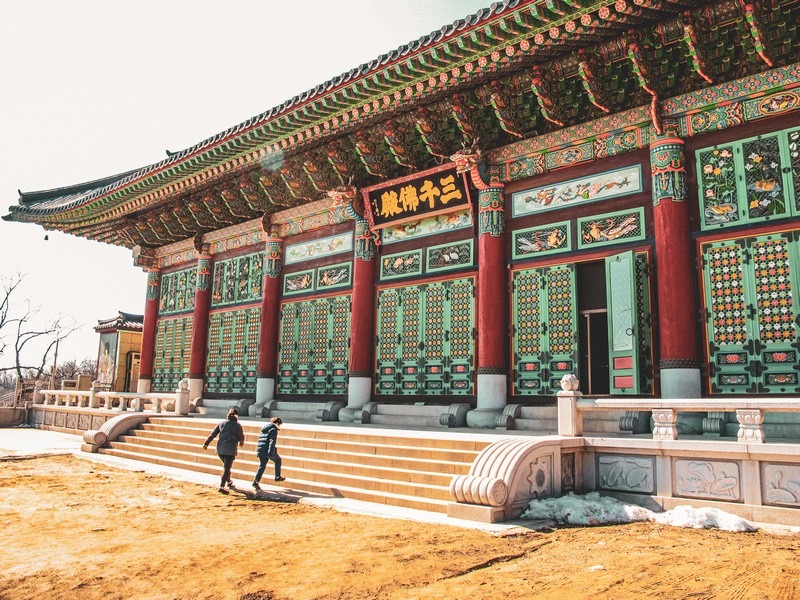
Bongwonsa Temple (봉원사)
This is one of my favorite temples in Seoul and it is often overlooked by tourists so if you have a visit, at least know you’ll probably enjoy most of the scenery by yourself. Not far from Yonsei University and the artsy district of Hongdae, Bongwonsa Temple was originally built in 889AD by Master Doseon.
The complex today has numerous buildings and chief among them is the 3000 Buddha’s Hall which is a three story tall structure built without even using one nail. It is the largest wooden building in Korea.
- Address: 1 San Bongwon-dong Seodaemun-gu, Seoul (서울특별시 서대문구 봉원동 산1)
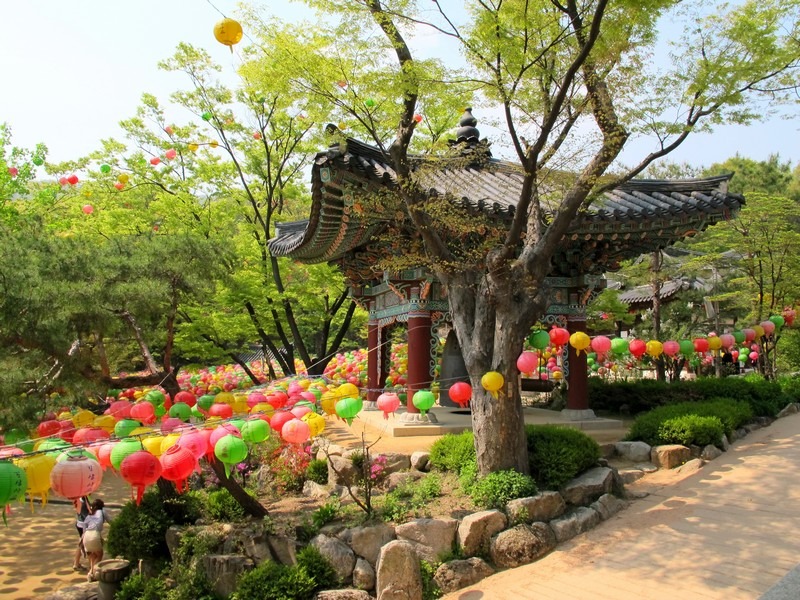
Gilsangsa Temple (길상사)
Located on the southern side of Mt. Samgaksan in northern Seoul, Gilsangsa Temple was only registered in 1995 but offers some great temple stay programs and a beautiful ceiling of colorful lanterns each spring.
The buildings on the complex were originally part of a restaurant called Daewongak but they were donated to Monk Beopjeong Sunim after the owner was moved by an essay written by the monk. It’s a beautiful temple and the walk into the forest is quite calming too.
- Address: 323 Seongbuk-dong Seongbuk-gu, Seoul (서울특별시 성북구 성북동 323)
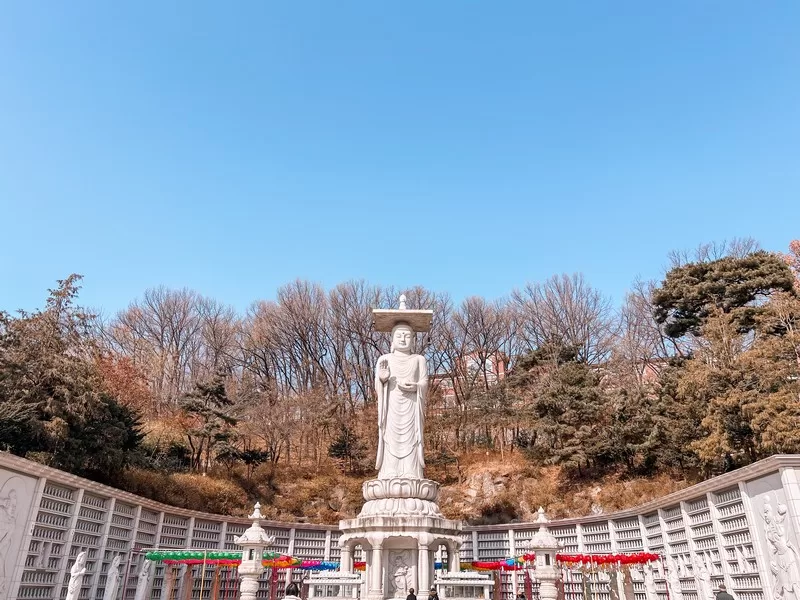
Bongeunsa Temple (봉은사)
Located on the eastern side of Seoul in the Gangnam-gu area, Bongeunsa Temple is easy to access just opposite COEX mall and is often added to itineraries for people staying in that area. The temple is always welcoming to visitors and in the spring is beautiful to behold with cherry blossom flowers and lotus lanterns strung up in celebration.
Believed to have been built in 794CE during the reign of King Wonseong. Struggles surrounded this temple and the monks that resided there.
- Address: 531 Bongeunsa-ro, Gangnam-gu, Seoul (서울특별시 강남구 봉은사로 531 (삼성동))
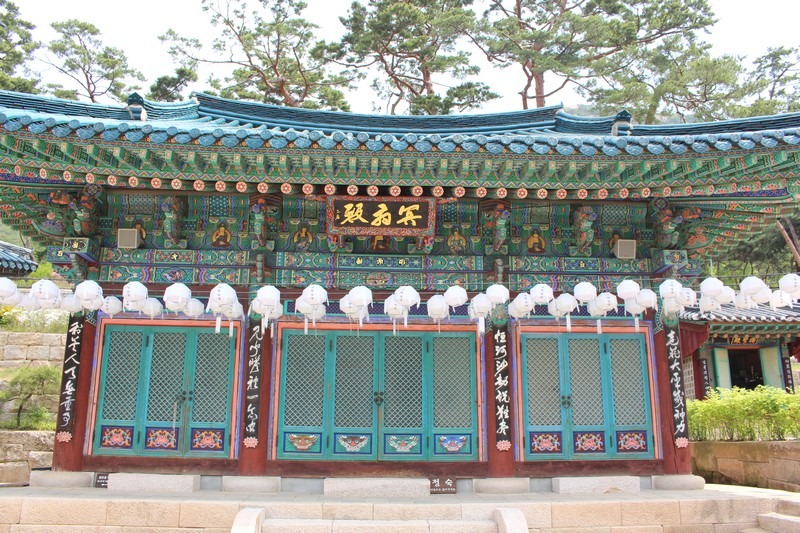
Jingwansa Temple (진관사)
One of the four major temples in Seoul, Jingwansa Temple is the only temple in Seoul to serve Suryukje, a Buddhist ceremony to provide food and the Buddhist teachings to spirits and starved demons that wander the land and sea. While you won’t be able to see the ceremony most likely as it is performed every leap year for 49 days, this is a beautiful temple to visit and you can visit the must see Hanok Village few people know about too!
- Address: 354 Jingwan-dong Eunpyeong-gu Seoul (서울특별시 은평구 진관동 354)
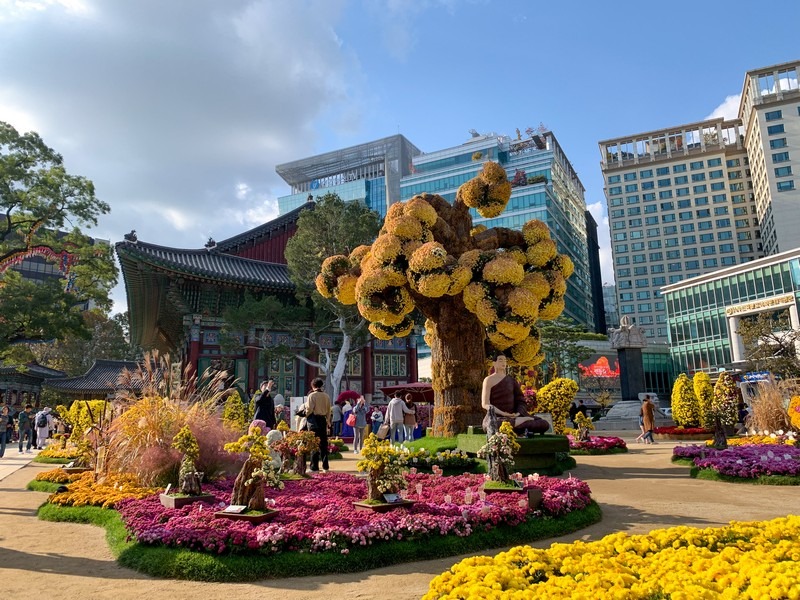
Jogyesa Temple (조계사)
Jogyesa Temple is always one of the most talked about temples during this season and it’s where the Lotus Lantern Parade ends so it’s no wonder. The thing is, since the entire event is really located around this temple, I wouldn’t suggest going BEFORE the event. You’ll definitely end up seeing this temple before or after the parade or during culture day, so visit another one prior to enjoy the views, but of course don’t miss this one on the event weekend.
This temple is the chief temple of the Jogye Order the largest order in the country, and is a great space to learn more about Korean Buddhism.
- Address: 55 Ujeongguk-ro Jongno-gu, Seoul (서울특별시 종로구 우정국로 55)
If you’re interested in Korean Buddhism and Buddhist temples around this beautiful country, check out this post with 24 MUST SEE Temples. There are some gorgeous ones that might require a little trip, but it will be well worth it.
FAQ
Is the Seoul Lotus Lantern Festival free?
Yes, all public events and parade viewing are completely free to attend.
When is the Seoul Lotus Lantern Festival in 2026?
The main festival weekend is May 16 to 17, 2026. The main parade is on May 16 from 7:00pm to 9:30pm.
Where does the Lotus Lantern Parade take place?
The parade runs along Jongno Street from the Dongdaemun area toward Jonggak, with festival activity centered around Jogyesa Temple and Insadong.
What is the best spot to watch the parade?
For families and first-timers: near Dongdaemun or Jongno 5-ga, early in the route. Seats fill only 30 minutes before the parade starts, and you’ll see everything while there’s still daylight. Near Jonggak (the end of the route) seats are very competitive and you’ll wait a long time before the parade arrives.
Is the festival family-friendly?
Very much so. The Eoulim Madang ceremony in the afternoon suits young children who can’t stay out late. The Traditional Culture Experience Day on Sunday with hands-on craft activities is particularly good for families. The closer-to-Dongdaemun parade viewing positions work better with children than the Jonggak end.
What is the difference between Yeondeunghoe and the Seoul Lotus Lantern Festival?
They are the same event. Yeondeunghoe is the Korean name.
Is the Seoul Lotus Lantern Festival the same as the Seoul Lantern Festival?
No, they are two different events. The Lotus Lantern Festival (Yeondeunghoe) is held in May to celebrate Buddha’s birthday, centered around Jogyesa Temple and Jongno Street. The Seoul Lantern Festival (서울빛초롱축제) is a winter event held at the Cheonggyecheon Stream, usually in November or December.
Can I participate in the parade?
Yes. A foreign volunteer and supporter program allows international participants to march in the parade each year. Check the official Yeondeunghoe website for application details and deadlines.
If you’re in Seoul in mid-May, the Yeondeunghoe is one of those events that doesn’t need much convincing to attend. Walk up to Jongno Street as the sun goes down on May 16, find a spot, and watch 100,000 lanterns come through. It’s one of the best things Seoul offers in spring, and it’s completely free.
Did you like this post? Pin It!
12 Comments
April
Is the sunday parade worth going? Or is it a lot less spetacular than saturdays parade?
Hallie Bradley
Saturday’s is the main parade. The one on Sunday is much smaller but if you can’t do two days in a row downtown and want to also do crafts, the Sunday parade through Insadong and back to Jogyesa is a good option, but not nearly as big.
Maddy and Sascha
Thank you so much for this super helpful insights into the Lotus Latern Festival! We will be there in 2025 and can’t wait to experience it. Your article was super helpful! Just wanted to let you know how great it was for our travel planning.
Hallie Bradley
Thank you! This festival is one of my absolute favorites. We don’t miss it. I’m so glad you’ll get the chance to see it and enjoy too. ^^
Russ Kennedy
Hi, Hallie
Ive been reading through your superb blog as my son and myself are visiting Seoul (Myeongdong) and Busan (Haeundae beach) at the end of April 2025. The information you’ve provided has proved invaluable.
Would you have any idea of the dates for the Lotus Lantern Festival for next year?
Based on Budha’s birthday i thought it might be around the 3/4 May but I found a website that quoted the week before.
Any help and guidance much appreciated.
Regards
Russ
Hallie Bradley
Hi Russ, That’s right, the festival is usually a week before Buddha’s Birthday and on the weekend.
Alice
Thanks for this post! I would love to watch Lantern Parade (연등회) on May 11, however I’ve read online that you need to reserve your seat in advice, but I didn’t find this information in your post. Does that mean that reservation is no needed and if I come abot 2 hours before the event and grab a seat I will be still able to watch it without reservation?
Hallie Bradley
That’s right. There is a section for reservations, but you don’t have to do that. You can also just show up and sit anywhere not in that one section. They put chairs out all along the route and you can just sit in any of them. The reserved section is clearly marked so you’ll know not to sit in those chairs.
tj
Your blogs are hands down the best guides for planning a Seoul trip. 🙂
Hallie Bradley
I really appreciate that and hope you get to enjoy the Lotus Lantern Festival this year. It’s one of our favorite events of the year in Seoul.
Esther
Thank you so much for the extencive information! I am going to visit this years event on the 18th and 19th of May. I guess the activities are the same?
Really looking forward to visiting!
Hallie Bradley
Yes, it’s the same every year for the most part.