Gwangjang Market: How To Get There & What To Eat
Last Updated on June 16, 2026
Gwangjang Market (광장시장) is one of the largest traditional markets in Korea and has been one of my top recommendations for any visitor to Seoul for as long as I’ve lived here. If you’re in the city for any amount of time and looking for one of the best places to eat, this is a must visit.
The market is well known for fabric and Hanboks, but food is what draws most people now, locals and tourists alike. Several stalls were featured on Netflix’s Street Food: Asia series, which pushed what was already a popular destination into a different category of visibility entirely. On a busy weekend it shows.
What I love most about Gwangjang is that it doesn’t feel performed. Vendors are cooking in front of you, the food is what it is, and the whole place has a speed and energy that makes eating here feel exciting rather than tourist-packaged. Don’t get me wrong though, it is tourist packed these days. If you want to visit more local markets, read the guide to the best traditional markets in Seoul for some other options.
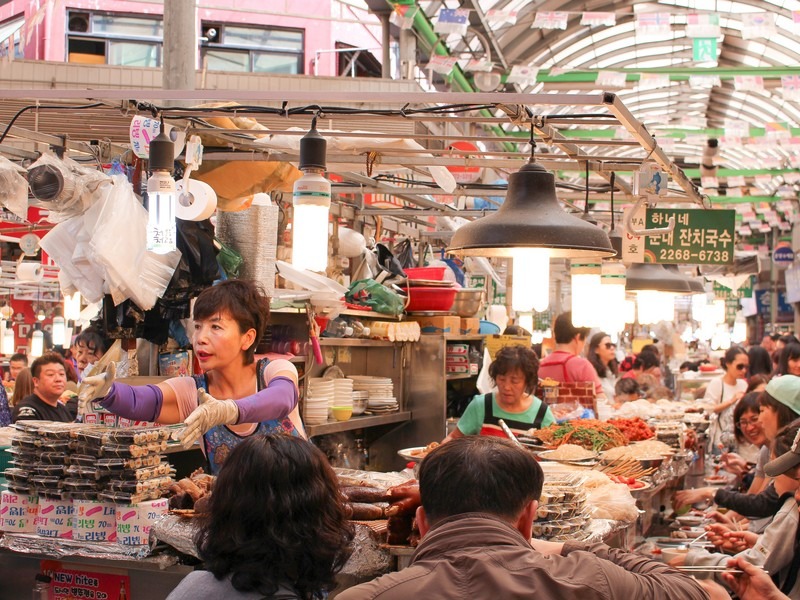
Gwangjang Market is a must visit whether you’re visiting or living in Seoul. Do NOT miss this traditional market in Seoul and the good eats there.
- How To Get There
- Basic Information
- The History
- What To Expect
- What To Eat at Gwangjang Market
- Side Dishes and Ceremonial Food
- FAQ
(This page contains affiliate links. That means if you click on them and purchase something, I will get a percentage of the transaction at no cost to you. Thanks for the support!)
How To Get There
Address: 88 Changgyeonggung-ro, Jongno-gu, Seoul (서울특별시 종로구 창경궁로 88 (예지동))
From Jongno 5-ga Station: Exit 7, walk straight, and an entrance will open on your right.
From Euljiro 4-ga Station: Exit 4, walk straight, cross the Cheonggyecheon Stream, and an entrance will open on your right.
The Cheonggyecheon Stream itself is worth adding to your visit. It runs directly beside the market and the walk along the riverside is pleasant. Read the complete Cheonggyecheon guide for what to see along the stream.
Basic Information
Hours: Stores: 8:30am ~ 6:00pm; Restaurants: 8:30am ~ 11:00pm
Days: Restaurants and vintage clothing section open every day; Fabric vendors/Hanbok vendors closed Sundays.
Amenities: Parking, restrooms
Website: www.kwangjangmarket.co.kr
The History
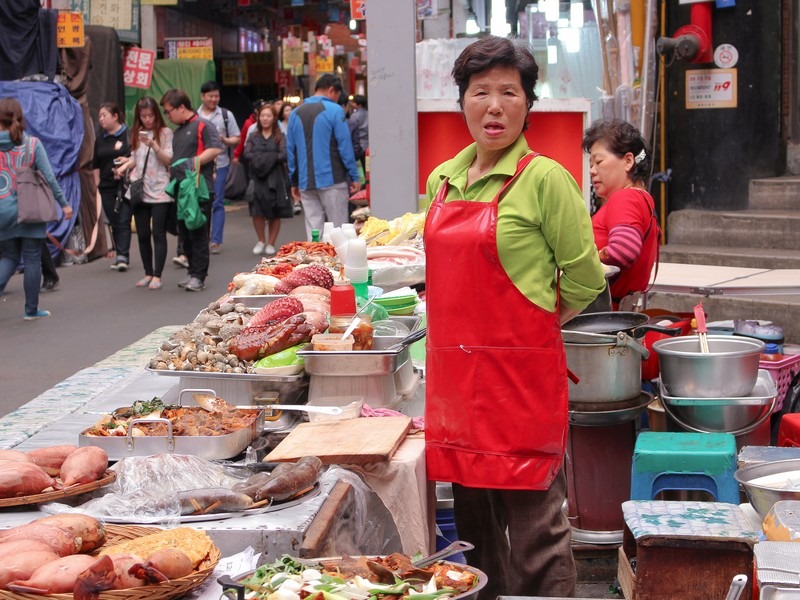
Gwangjang Market opened in 1905 and at the time, markets weren’t permanent but were temporary, opening for just a few days here and there. Gwangjang Market was the first to be permanently established and was open every day. The permanence was the innovation. Today it’s the oldest traditional market in Seoul.
The market built its original reputation on fabric. Fabric for suits, curtains, and bedding; thread and buttons and zippers; Hanboks made to order upstairs. (I purchased my first Hanbok here with my mother-in-law), bedding and linen, it’s all in Gwangjang Market.
The small alleyways are strewn with stores where one can be measured to have a suit made or head upstairs to get a Hanbok. The market is known for having quality goods at affordable prices. This is unsurprising considering it’s sitting in one of the most fashion driven areas in Seoul
If you’re looking for vintage clothing in Seoul, this is also a big reason to visit Gwangjang Market. While most of the upstairs is filled with Hanboks, there’s also a substantial vintage market upstairs drawing crowds of young people due to the cheap cost but great items available.
With so many workers and vendors in the market, it stands to reason they needed something to eat throughout the day so food vendors popped up and now they’re a big draw for the tourists and locals in the area.
What To Expect
The vendors welcome everyone loudly and enthusiastically. Most speak limited English but more Japanese and Mandarin, and in any case, language is rarely a barrier, the food is directly in front of you and pointing works perfectly well.
Most stalls have menus in multiple languages offering a basic understanding of the dishes. Beyond that, what you see is what you get. Walk through, look at what’s cooking on the griddles and in the pots, and order what looks good. This is exactly how it’s meant to work.
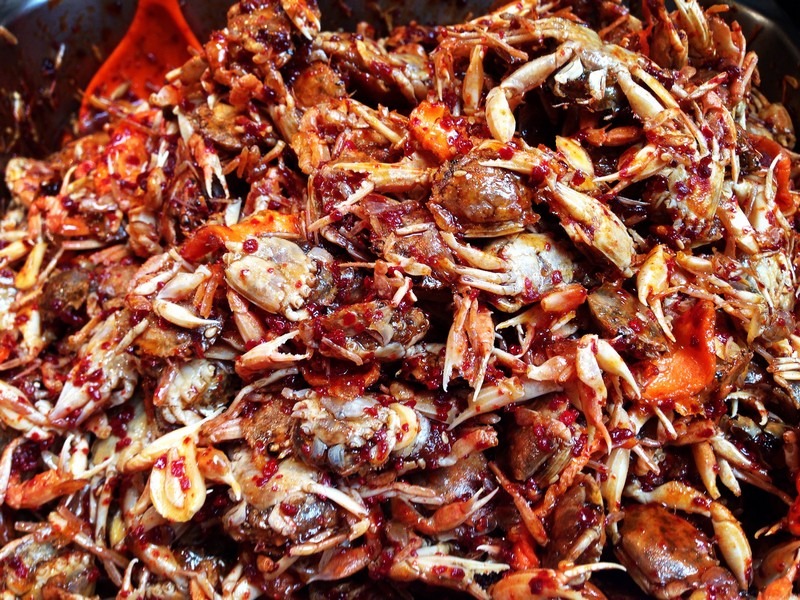
The vendors sell ready-to-eat dishes alongside fresh produce, seafood, and Korean side dishes to take home. At many side dish stalls, toothpicks are now provided so you can sample before buying. Try the stir-fried small crabs if you see them, put the whole thing in your mouth and chew. They’re a personal favorite.
What To Eat at Gwangjang Market
My suggested eating strategy: Start at the bindaetteok stall at the central hub of the food section. Order one to-go. Then take a seat at the kalguksu stall and order a bowl of noodle soup. Eat both together. This is how I eat every time I come here and it’s the best introduction to the market’s food.
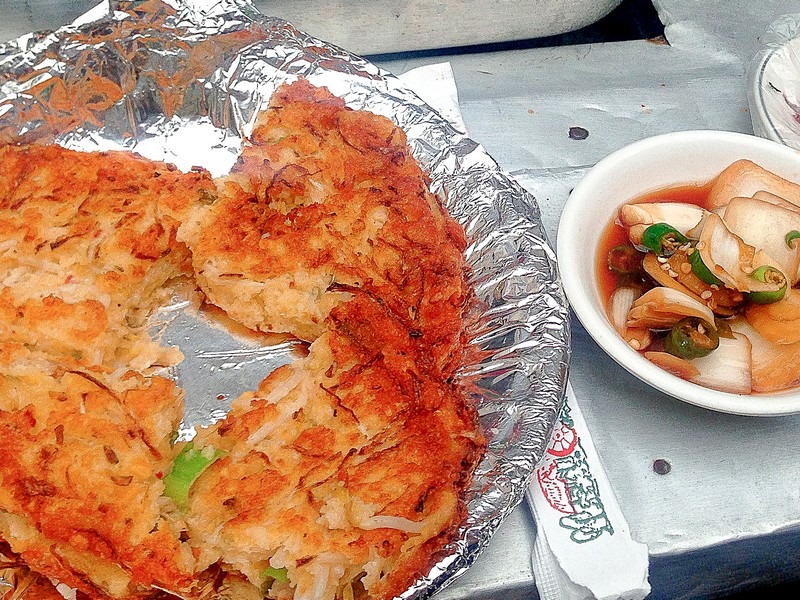
Bindaetteok (빈대떡)
Mung bean pancakes, cooked fresh on a griddle. They have a texture similar to potato pancakes, savory, slightly crispy on the outside, soft inside. These are one of the most approachable dishes in the market for anyone uncertain about traditional Korean food, and one of the most delicious for those who know exactly what they’re getting. Take them to-go in a bag and eat them alongside your noodle soup at a neighboring stall.
Note for vegetarians: Bindaetteok preparation varies by vendor, some versions are meat-free, others include a small amount of pork. Ask if this matters to you.
Kalguksu (갈국수)
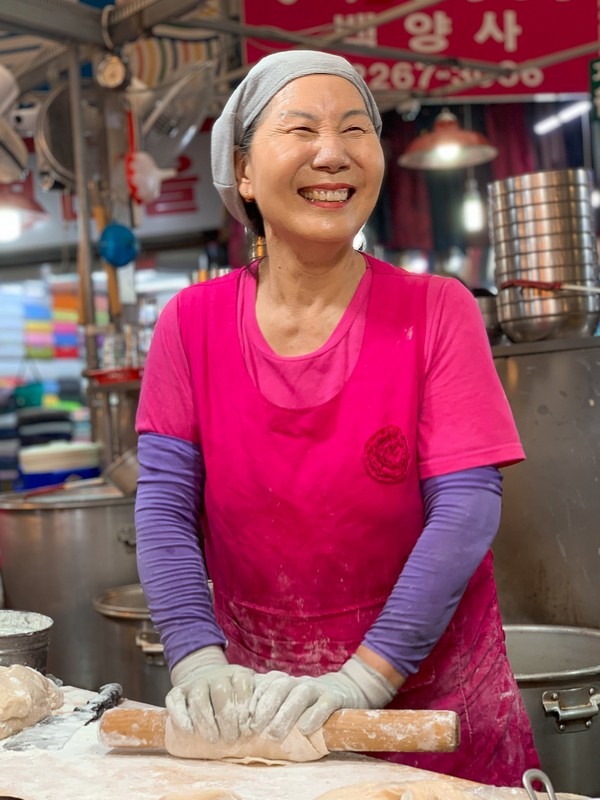
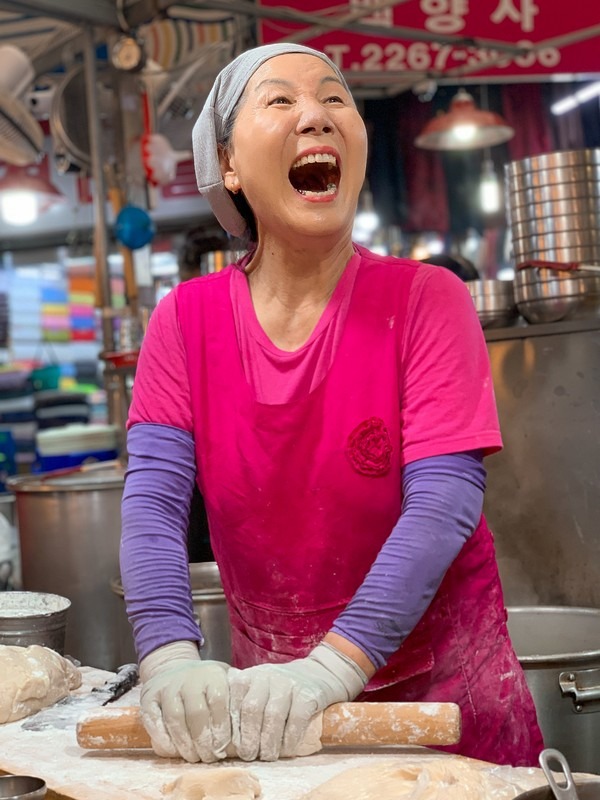
Knife-cut handmade noodles in a hot, clear broth. The kalguksu vendor at Gwangjang Market achieved international recognition when she was featured on Netflix’s Street Food: Asia, you’ll likely recognize her face and her stall as soon as you see them. Even if she isn’t there when you visit, the other ladies manning the booth with serve up a great dish.
The broth is vegetable-based, making this one of the vegetarian-friendly options in the market. It’s substantial enough that two people can easily share one bowl, especially if you’re planning to eat multiple things.
A line is normal at this stall and has been since before Netflix. It’s worth the wait.
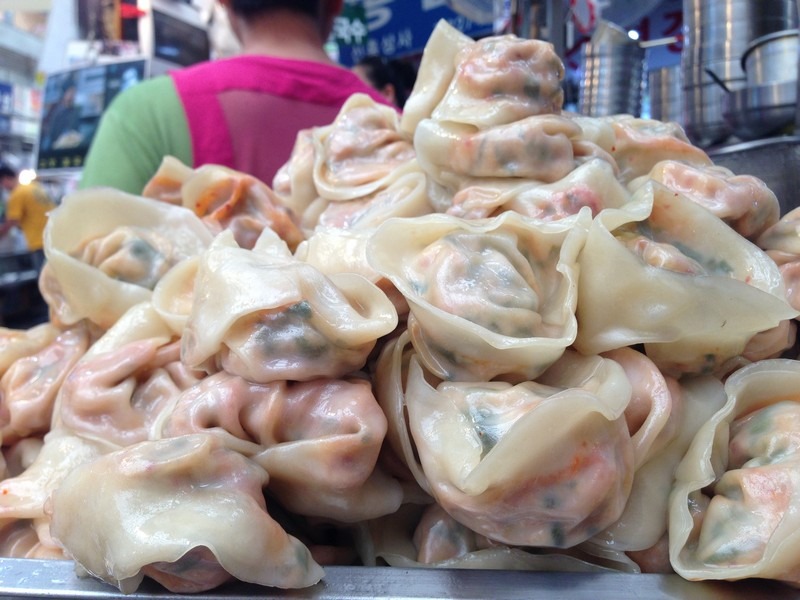
Mandu (만두)
From kimchi stuffed mandu that may be a bit spicy for some to tofu and pork stuffed mandu, these are usually a great addition to your dishes. We usually get mandu, or dumplings, with our kalguksu. She has delicious options but quite a few stalls nearby have some great dumplings too. The Netflix lady has some fantastic kimchi dumplings if I do say so though. There are also stalls that serve dumpling soup as well if you want it in a warmer and cozier version.
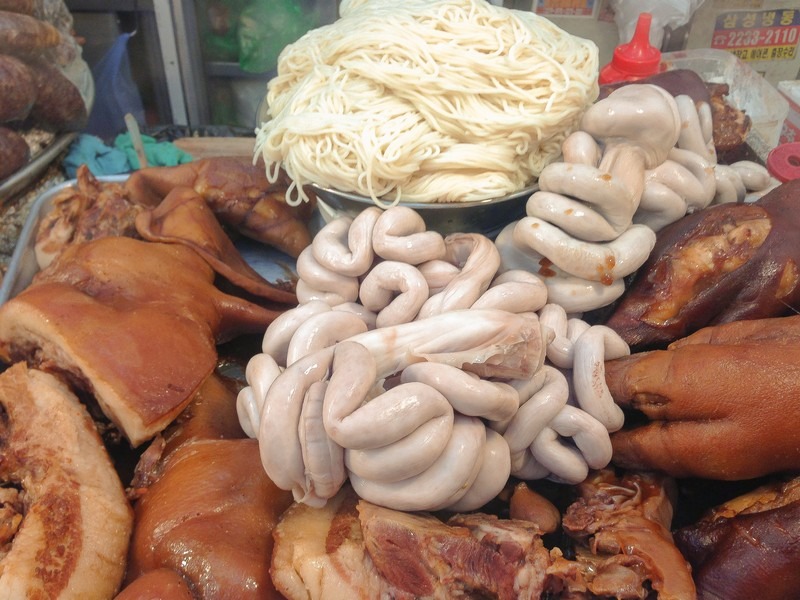
Sundae (순대)
Often translated as pig’s intestines, which makes them sound more difficult than they are. These are sausages stuffed primarily with glass noodles, there’s more noodle than anything else inside, and the intestine casing is mild. Dipped in a little salt, they’re savory and satisfying. Good for the curious eater who thinks they might be ready to be adventurous.
They pair particularly well with tteokbokki. Order both together if you want the classic combination.
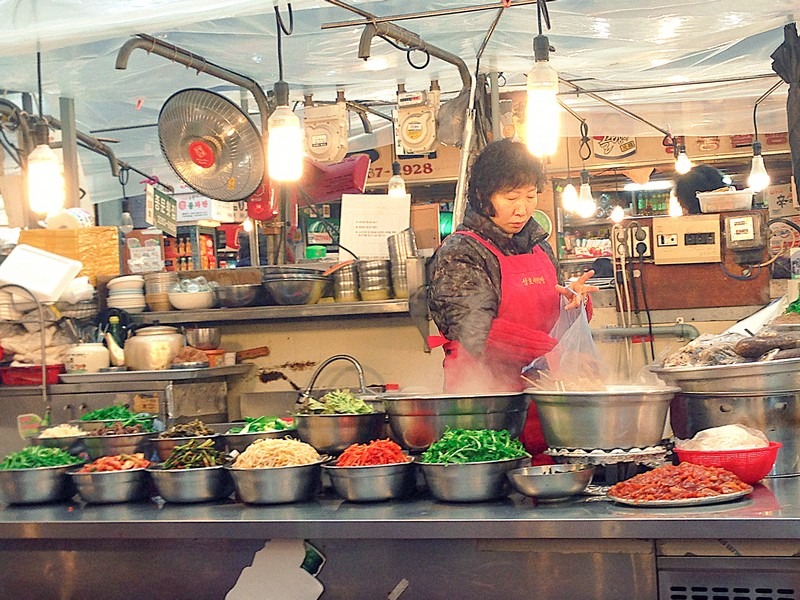
Bimbimbap (비빔밥)
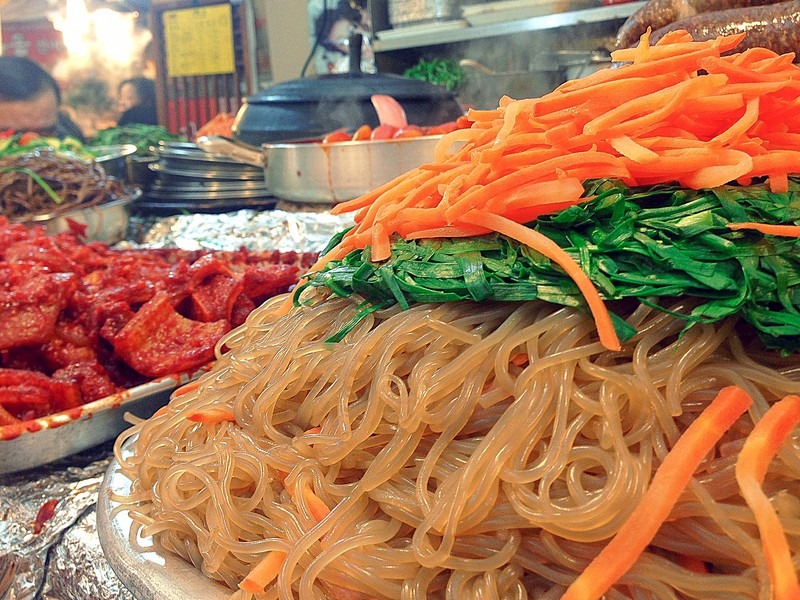
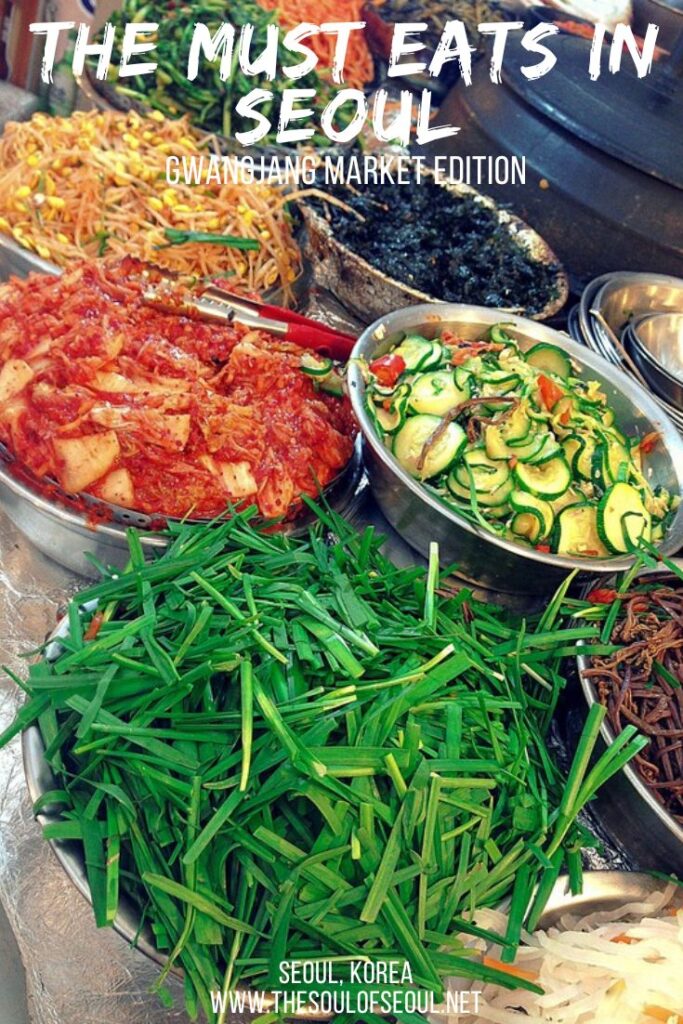
Bowls stacked high with fresh colorful vegetables catch the eye immediately at some stalls. This is where the bibimbap comes from, rice topped with an array of seasoned vegetables and red pepper sauce. Simple, substantial, and vegetarian. Better than the airplane version by a significant margin.
Bibimbap is also widely available outside the market at fast casual restaurants like Kimbap Cheonguk if you want it in a quick sit-down setting elsewhere in Seoul.
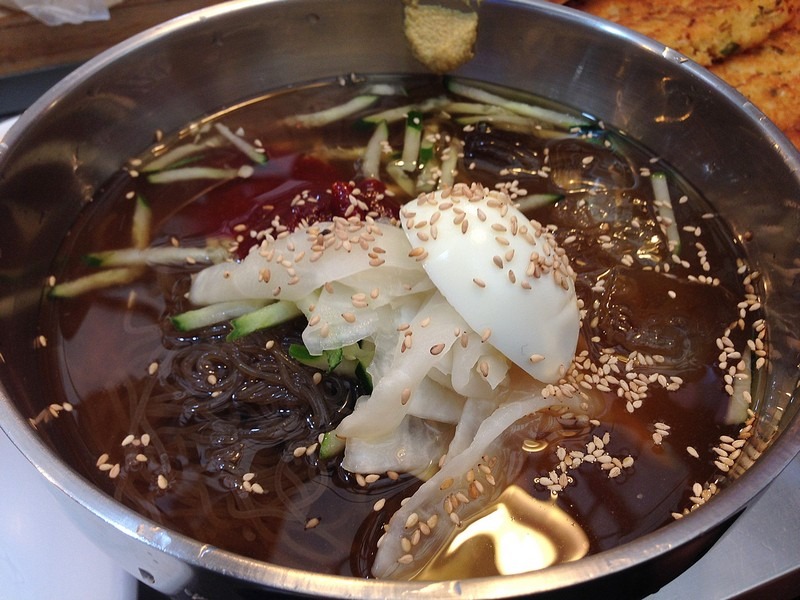
Mul-naengmyeon (물냉면)
If it’s the hottest point in summer and eating a boiling kalguksu noodle dish isn’t calling you, this is the best option for you. Mul-naengmyeon is a cold noodle broth soup. Yes, there’s actually ice cubes in the soup! The buckwheat noodles are topped with radish, cucumbers and a hard-boiled egg. There is some wasabi on the side as well as the red-pepper paste in the bowl.
When it arrives: put your chopsticks in the center of the noodles and work them around to mix everything thoroughly before you taste. Don’t be surprised if the vendor reaches for scissors to cut the noodles, buckwheat noodles are long and chewy, and cutting them into shorter pieces makes eating easier and prevents you from slurping up the entire tangle in one go. This isn’t just to help tourists, Koreans cut their noodles too.
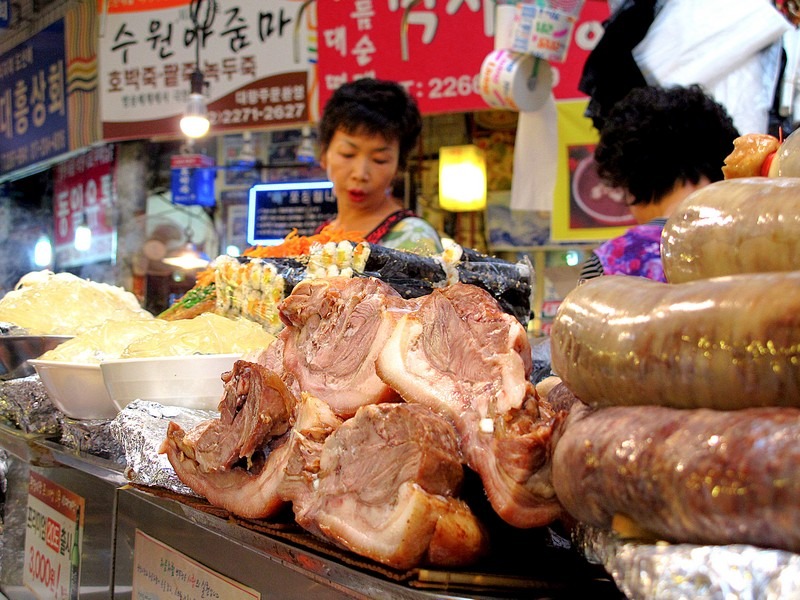
Jokbal (족발)
So you’re getting more adventurous and looking closer, you start to notice feet… jokbal is pigs trotters or pigs feet. These pigs feet are boiled for hours in a stock made of water, sugar, soy sauce, garlic, ginger, rice wine, and maybe a secret ingredient depending on where it’s from.
Most vendors keep them whole when you see them on the shelves, but once ordered, they will be sliced up and served. The meat is tender and is great if you’re looking for something meaty, fatty and extremely mouth watering.
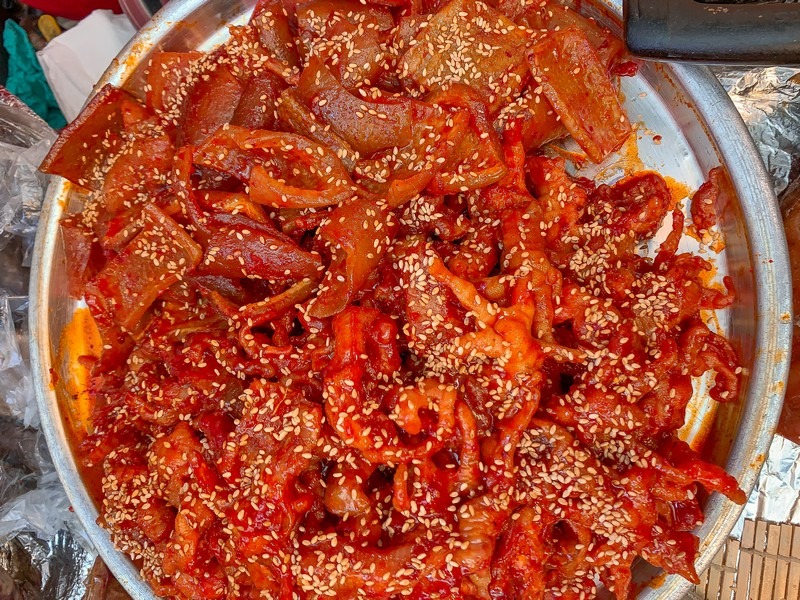
Dalkbal (닭발)
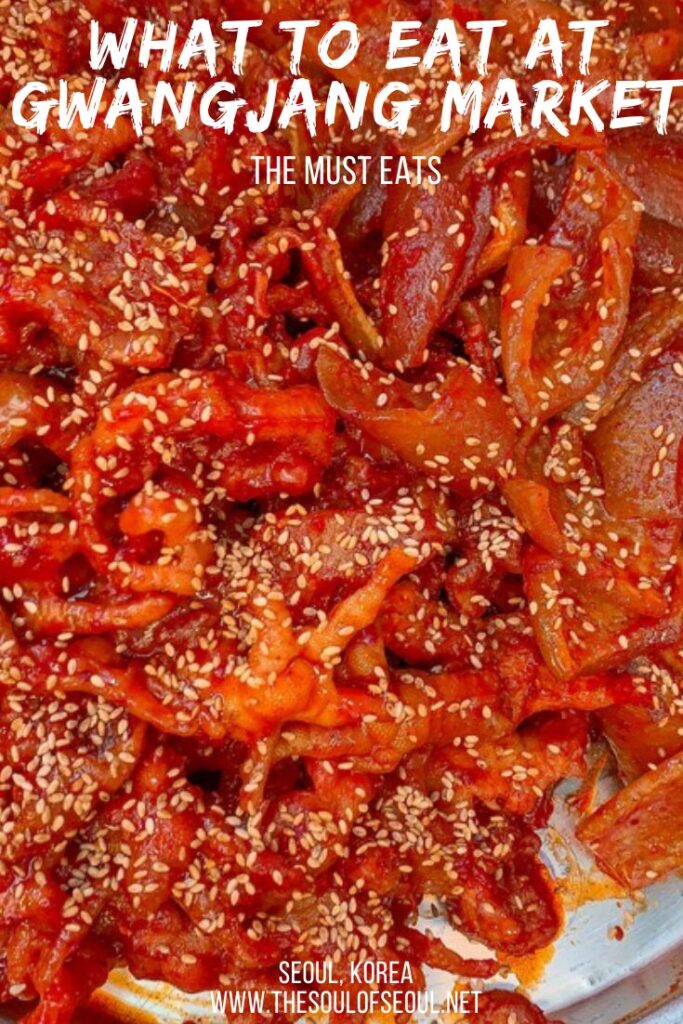
We’re not quite done with the feet options at Gwangjang Market. Dalkbal is chicken feet and is made with a spicy red pepper sauce and if you’re lucky they have already been de-boned. All of the places in Gwangjang Market serve them de-boned luckily. The skin and tendons that make up the feet make the bite a bit crunchy while at the same time squishy. If you don’t like strange consistencies in your mouth, this probably isn’t the dish for you.
Chicken feet wouldn’t be the main dish of a meal but would be a dish eaten while drinking alcohol, often makgeolli or rice wine. It’d be like eating spicy chicken wings in the States. The spicy sauce on the feet makes them perfect for that bite between drinks with friends.
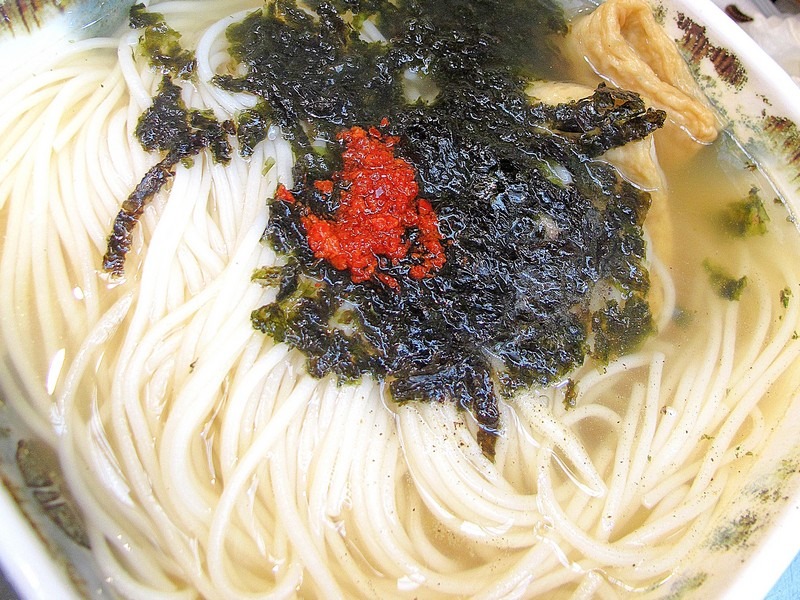
Janchiguksu (잔치국수)
If you’re looking to order something adventurous but one something simple on the side or maybe you don’t want a giant kalguksu meal, then there’s the delicious and comforting janchiguksu.
This soup is often eaten in Korean homes while also common at wedding buffets and other major events. It’s a warm and light soup that fills you up without weighing you down. It is one of my all time favorites that I could eat anytime. It’s a pretty straightforward noodle soup with fish broth and some vegetables to top it off. My daughter loves this. It’s great for kids.
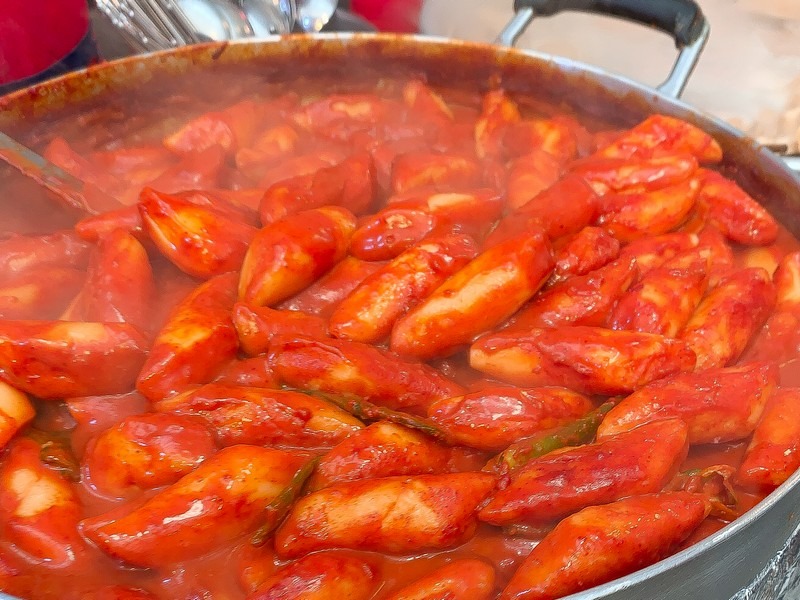
Tteokbokki (떡볶이)
Easily recognizable, this Korean street food called tteokbokki is all over. Sticky dense rice rolls are stewed in a thick red pepper sauce and they are spicy! They’ll be served hot from the simmering pan. Koreans call it a snack, I call it a meal. Usually, you’ll order a dish of tteokbokki along with a dish of sundae. They go together really well.
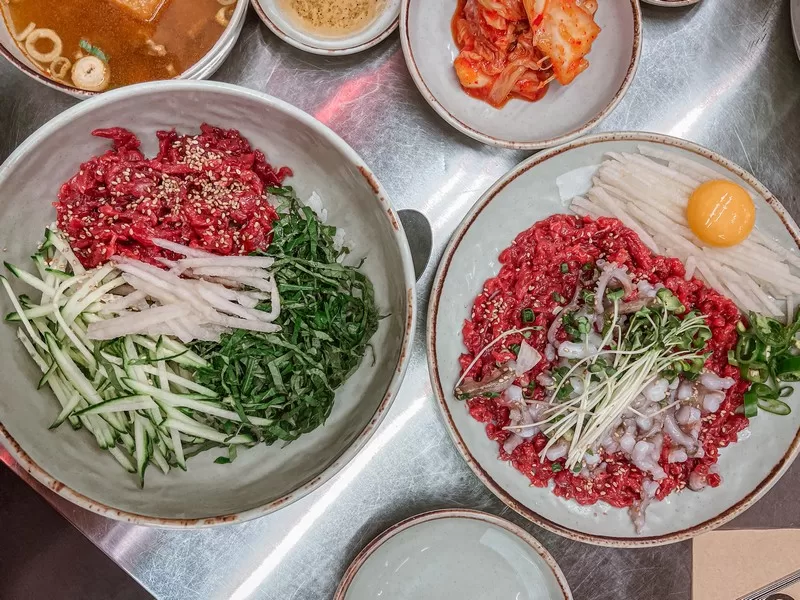
Yuk-hoe (육회)
The market can be a little bit difficult to navigate because there are a couple main thoroughfares but then every nook and cranny and tiny alley is also filled with restaurants and vendors too. Down one tiny walkway that branches off of the larger market pathway is a collection of restaurants serving up yuk-hoe (육회) or steak tartare.
Yuk means meat and hoe means sashimi. A tender cut of beef is thinly sliced and often mixed with a marinate of soy sauce, garlic, sugar, sesame oil, salt and pepper. It’s served on a platter with the raw egg on top and some thinly sliced Korean pear. Once on the table one person will mix this all together into a rather sloppy mess, it looks much more pleasant before it’s mixed together, and then diners dig in. Yuk-hoe is one of the most popular dishes at Gwangjang Market. It’s delicious!
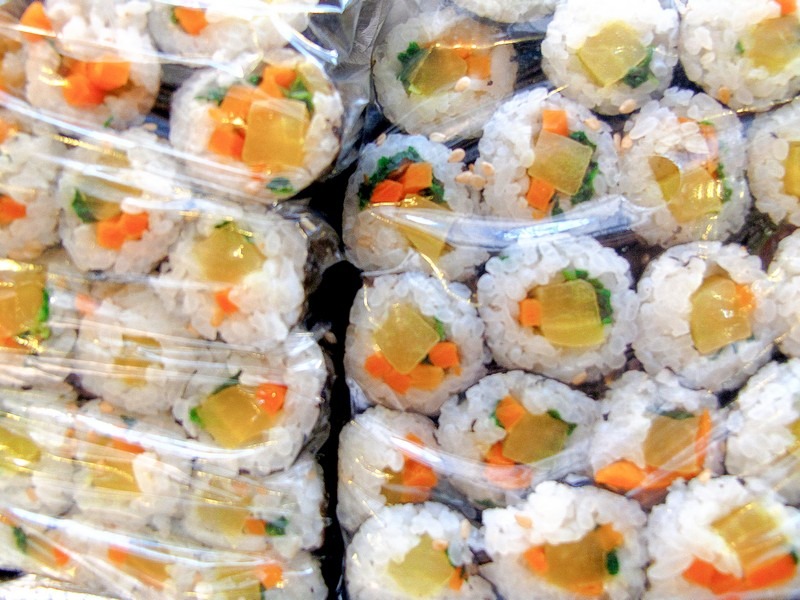
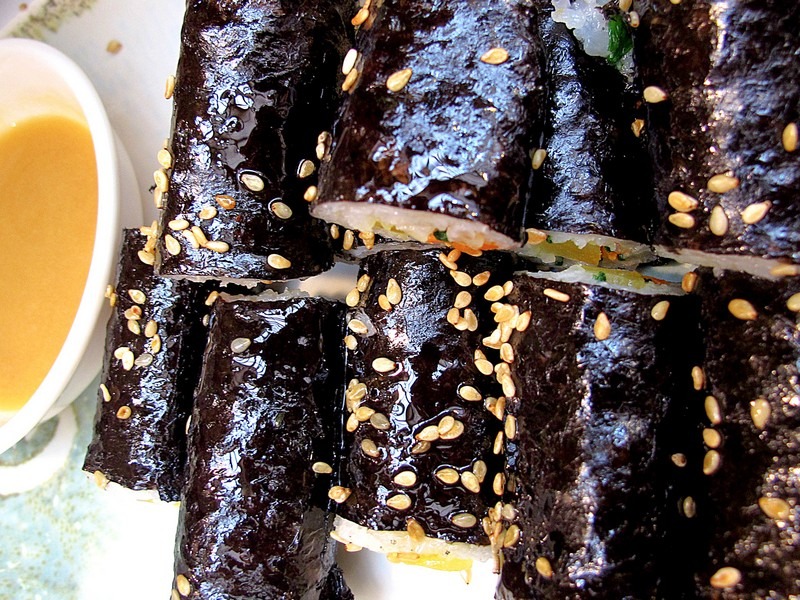
Gimbap (김밥)
One very popular dish at the market is the gimbap. It looks like sushi, but the Korean version doesn’t have raw fish. At Gwangjang Market, the most pouplar kimbab is served from Mayak Kimbap which is located in the central hub of the food stalls just on the corner. These gimbaps are smaller than the standard ones you see outside. I usually don’t eat them in the market, but take these to go.
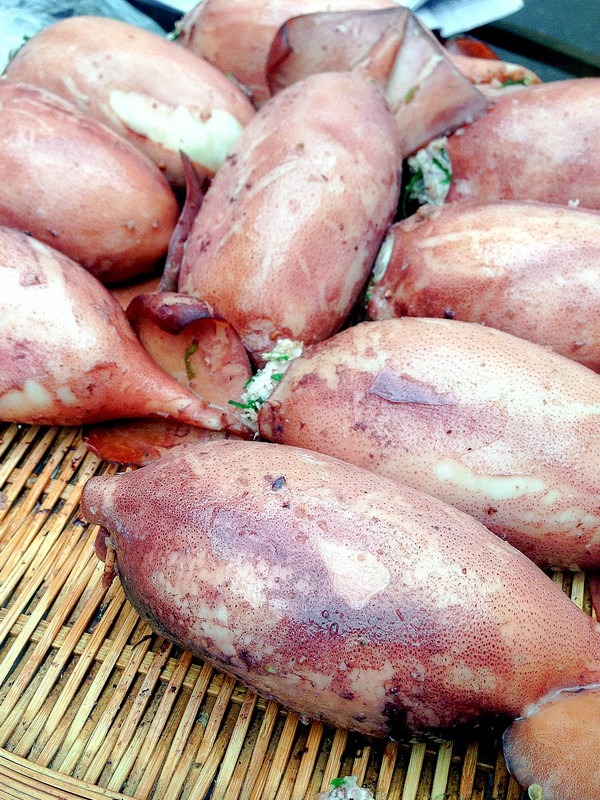
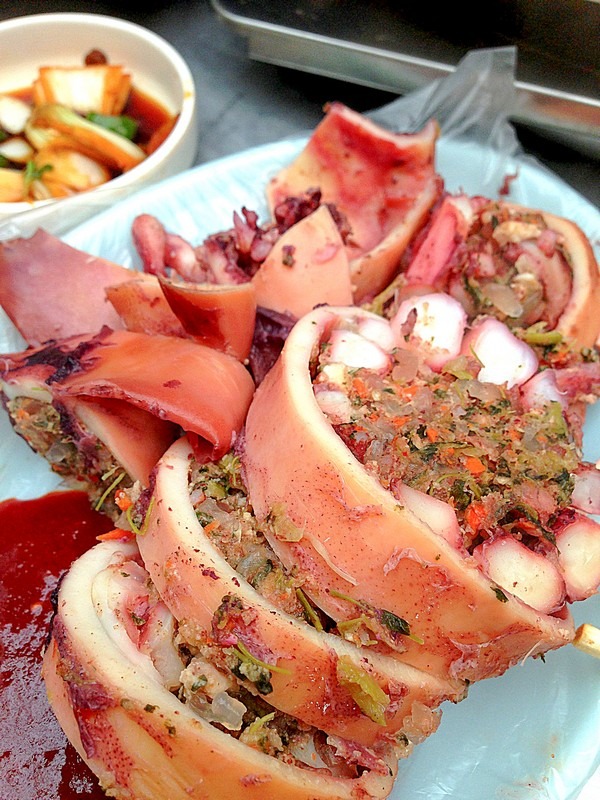
Ojingeo Sundae (오징어 순대)
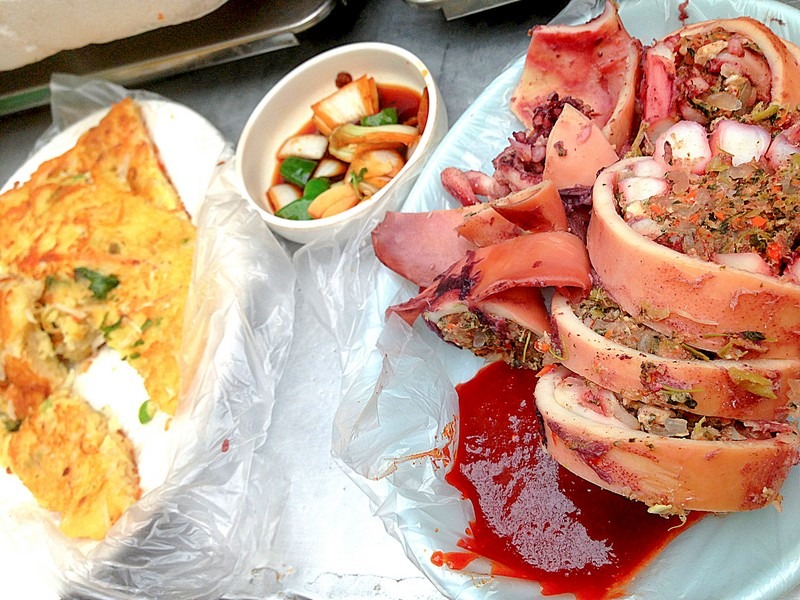
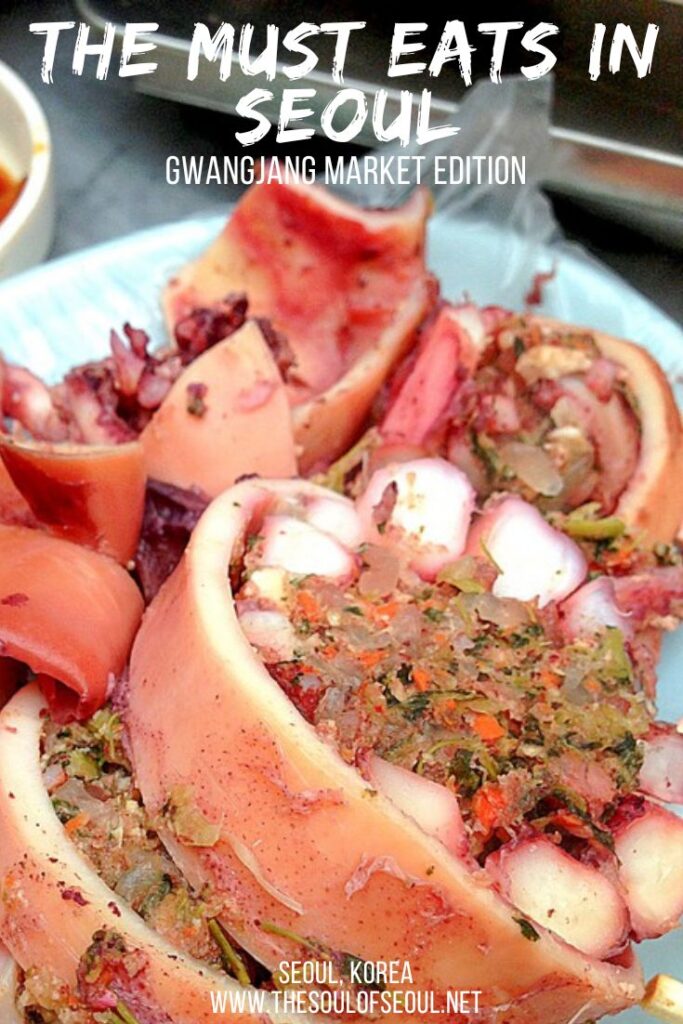
Stuffed squid, the squid filled with vegetables and glass noodles, served with a sweet and spicy red dipping sauce. The challenge is size: these are large, and the recommended approach is to take the whole piece at once, which requires commitment. The vendor selling these is located away from the main food hub, near the vintage clothing section. They set up primarily in the early evenings and on weekends, if you go on a weekday morning, you may not find them. Plan accordingly.
Sannakji (산낙지)
Live octopus, cut fresh and still moving when served, dipped in sesame oil and salt. I’ll be honest: I don’t recommend eating this at Gwangjang Market. It’s available here because tourists want to see it, but the fresh fish markets around Seoul, Noryangjin Fish Market in particular, are the proper setting for this dish and will offer a better quality and more authentic experience. Skip it here and seek it out elsewhere if you want it.
Side Dishes and Jesa Food Too!
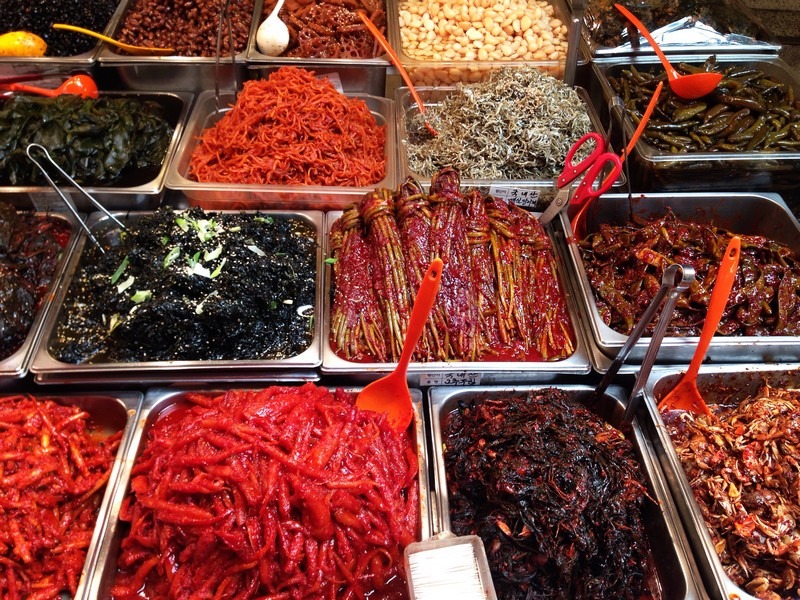
Gwangjang Market is also just a food market with aisles of vendors that have Korean side dishes, Korean teas, and sets to purchase for a Korean dol celebrations (first birthday) and other ceremonies like the Korean jesa (ancestral rites) which is done on major Korean holidays like Chuseok, the Korean thanksgiving, and Seollal, the Lunar New Year. If you’re prepping for those holidays, definitely visit Gwangjang Market.
FAQ
What is Gwangjang Market famous for?
Gwangjang Market is famous for two things: fabric and food. The fabric section, including custom Hanboks, suit materials, and bedding, has been the core of the market since it opened in 1905. The food section, particularly the mung bean pancakes (bindaetteok), kalguksu, and yuk-hoe, has become the primary draw for tourists and one of the most celebrated street food destinations in Seoul.
What’s the best thing to eat at Gwangjang Market?
Bindaetteok and kalguksu together is the classic combination. Order the bindaetteok to-go from the griddle stalls at the central hub, then take a seat at the kalguksu stall and eat both. Mayak kimbap and yuk-hoe are also must-tries if you want to explore further.
Is Gwangjang Market tourist-friendly?
Yes, with realistic expectations. Vendors speak limited English but are welcoming. Most stalls have multilingual menus. The food is directly visible, so pointing works. The market is busy and loud, and the vendor style is direct, seat you, take your order, move quickly.
Is Gwangjang Market open on Sundays?
The food stalls and vintage clothing section are open every day. The fabric and Hanbok vendors are closed on Sundays.
What are the vegetarian options at Gwangjang Market?
Kalguksu (vegetable broth, confirmed vegetarian), bibimbap (can be ordered without meat), and some preparations of bindaetteok. Ask vendors specifically as preparations vary and some dishes that appear vegetarian may contain fish broth or fish cake.
When is the best time to visit Gwangjang Market?
Midday on a weekday is manageable being busy but not overwhelming. Weekend afternoons are the busiest period, which also means more vendors are set up (including the ojingeo sundae stall). Evenings are good for the fuller selection and for the market’s more atmospheric quality. Avoid going very hungry before your first visit. Give yourself time to walk around before committing to a stall.
Gwangjang Market is one of those places you visit once and put on your permanent list. The noise, the smells, the speed of the stalls, the vendors calling you in, it’s everything a traditional market should be. Eat all the things.
Did you like this post? Pin IT!

12 Comments
Shahana Islam
Your blog is amazing and so informative! I’ve read soooo many of your articles/posts. For Gwangjang Market, what time would you recommend is best with a 3.5 year old? We will not have a stroller. Is 9am too early? Or would a weekday lunch be okay?
Hallie Bradley
The market opens that early, but I’m not sure if the food stalls would all be ready for service at that time. I’ve been there at 10:00am though and had early lunch and found enough. It’s bustling weekend and weekday, but personally, I find going around the 10:00am time to be ideal and with less crowds. Go at 9:00am and see what happens. Could be even better. If it’s a bit too early, just go to the southern side and walk along the Cheonggyecheon stream for a bit til more opens.
Shahana Islam
Thank you so much!
Nneka
Hello! Your blog is very informative especially for a first time traveller like me. I’ve been doing a lot of research to get ready for my trip, and your blogs has been very helpful. Gwangjang Market is one of the places I’m planning to visit, and I just want to ask, would you happen to know the operating hours for the Kalguksu Netflix lady’s stall?
Hallie Bradley
I’m not exactly sure about her stall, but she’s been open when I’ve visited as early as 10:00am and as late as 6:00pm on various days of the week. She’s quite popular, so I’m sure she’s there and open just about every day.
Tamar Lipszyc
Hi
first of all your site is Excellent! thanks for that. I wonder do they have any vegeterian/vegan food in this market?
Hallie Bradley
They do. If you don’t speak Korean, it’s good to get something written out to ask for the vegetarian options when you’re visiting. But, the stall I always go to has vegetarian noodle soups and dumplings. If you watched the Netflix show that stopped in Gwangjang Market, the woman I mention above in the article, she has veg options. I believe the bindaeddeok is vegetarian too being made out of bean sprouts, but you’d want to ask just to make sure.
Star Lengas
This looks absolutely yum-tastic! 1. I love food, 2. Jokbal is amazing, although seeing the pig feet freaks me out haha. I definitely need to explore Gwangjang market! Sounds like a perfect weekend activity.
Hallie
It is, though definitely go a bit earlier if you can because the weekend can be intense there. It’s fun to see it intense, but it’s NOT fun to find a place to sit… head in around 10:00/10:30 and you’ll be able to find a place to eat but also see as all the peeps come for lunch and start to fill it up. And make sure to go upstairs, there’s a massive Hanbok market which is beautiful but at the furthest northeast corner upstairs, there’s a vintage market which is awesome too. A lot of great finds up there.
Daphne from Girlswanderlust
Seems like a great place to visit. The pictures of the food look amazing and for some dishes it would be a challenge to eat haha. Would love to visit Gwangjang Market one day. Thanks for sharing info about this place!
Hallie
Yes, some can be a challenge. But it’s mind over anything ya know. When I take people there, I usually start with something a bit easier to stomach and work our way up. Great place to visit for authentic and delicious Korean foood. ^^
keenan winters
Hey,
Just dropping a note we are just visiting here in Korea for two weeks my wife Anna and our two children Keanna she’s 8 and Kezyun he just turned 5 this month having a great time. Just stumbled onto your site about the food .
We are heading for Gwangjang today can hardly wait now , your description and pictures makes the anticipation even stronger to get there.
We came to Korea because back home in Oklahoma we watch Korean movies and shows all the time and wanted to see the places we’ve seen on shows as well as the food. My wife is Taiwanese so we eat a lot of Asian foods but wanted this experience. We will travel to Busan Sunday to stay there for another week,then fly back to Taiwan,before heading back to US
Once again enjoyed your post and look forward to your newsletters.
Keenan Winters