Jokbal: What Is Korean Braised Pig’s Feet and How To Eat It
Last Updated on April 22, 2026
Want to have a picnic on the Han River the Korean way? The food on the blanket might surprise you. Alongside the fried chicken and the snacks, there’s a good chance you’ll find jokbal (족발), Korean braised pig’s trotters. Rich, savory, and built for eating alongside a drink, jokbal is one of those dishes that reveals something true about Korean food culture: the line between picnic food and drinking food is essentially non-existent.
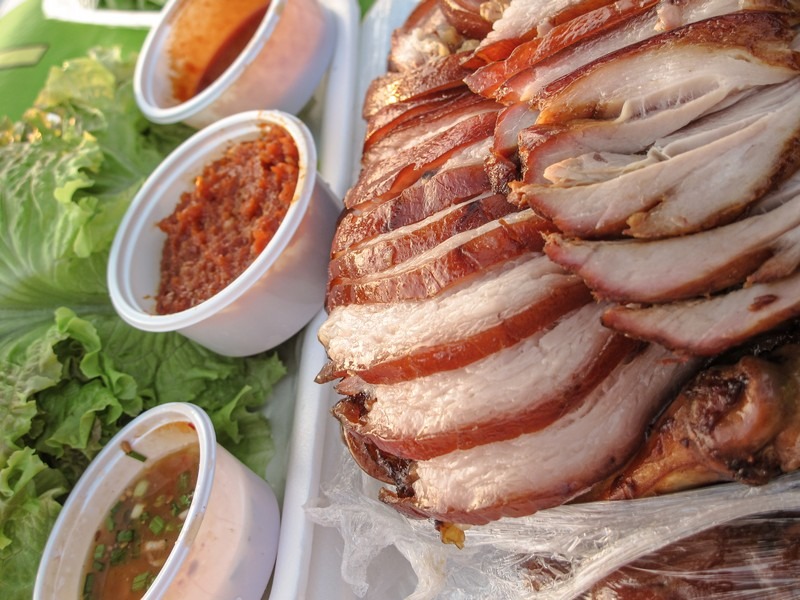
Get ready to eat pigs feet in Korea:
- When to Eat Jokbal in Korea
- Where to Eat Jokbal in Seoul
- How is Jokbal Made?
- How to Eat Korean Pig’s Trotters
- Jokbal and Bossam
- Is Jokbal Healthy?
(This post contains affiliate links, which means I receive a certain percentage of a sale if you purchase after clicking at no cost to you. Thank you for your support.)
When To Eat Jokbal in Korea
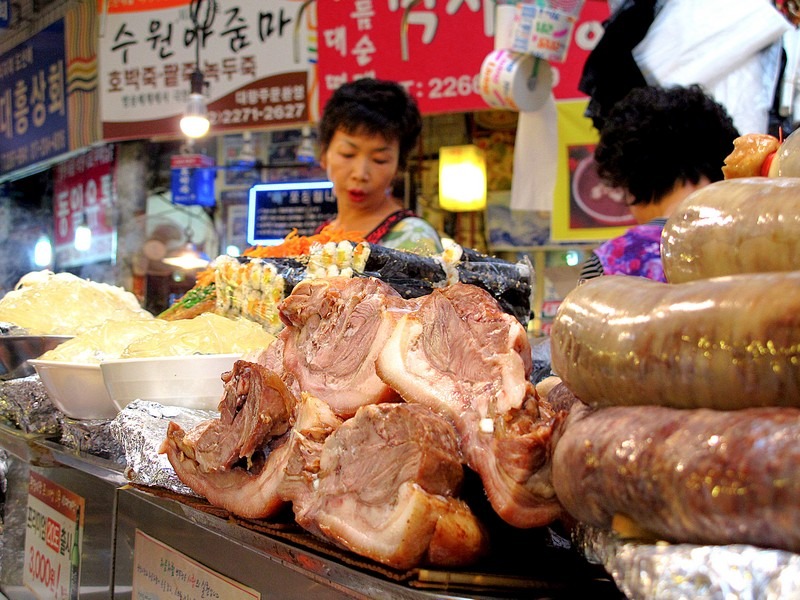
Koreans think of jokbal as drinking food, anju (안주), meaning food consumed alongside alcohol. That’s exactly what Korean Han River picnics often are: a spread of food and a variety of drinks, enjoyed by the water with friends. Jokbal’s portability and its compatibility with soju, beer, or makgeolli makes it a natural fit.
Beyond picnics, jokbal restaurants are a standard stop on a Korean night out, the second or third round venue where a group moves after the first restaurant. Some jokbal establishments stay open late for exactly this crowd. You can also find jokbal stalls in traditional markets throughout Seoul, Gwangjang Market has them, where you sit around the stall and eat together.
Where To Eat Jokbal In Seoul
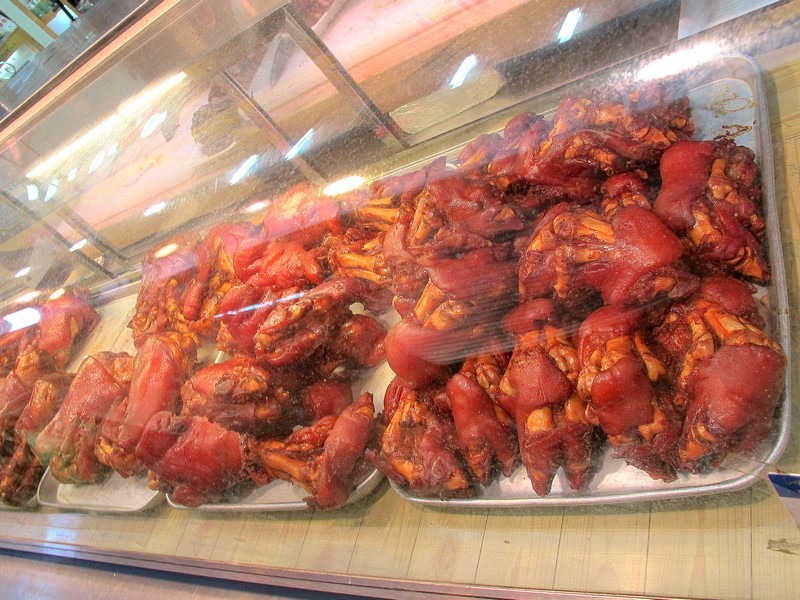
The origin story of jokbal in Seoul is specific: the dish was developed in Jangchung-dong in the 1960s, created by grandmothers who had relocated from Pyeongan-do and Hwanghae-do. Jangchung Gymnasium was nearby, a major professional wrestling venue, and jokbal became standard fare for the wrestling crowds in the 1960s and 1970s.
Today, Jokbal Street in Jangchung-dong near Dongguk University Station is the place to go for dedicated jokbal in Seoul. Multiple restaurants there claim the title of original jokbal restaurant, and while the truth of who made it first has been lost, many of the establishments have documented histories stretching back more than 50 years. Most have since opened franchises throughout Korea.
For a more casual option, look inside Gwangjang Market for jokbal stalls. For picnics specifically, the market stall inside Mangwon Farmers Market near Mangwon Han River Park has been there for the entirety of my time in Korea, more than a decade. That kind of longevity at a single location is the best possible endorsement in the Seoul food market landscape.
How Is Jokbal Made?
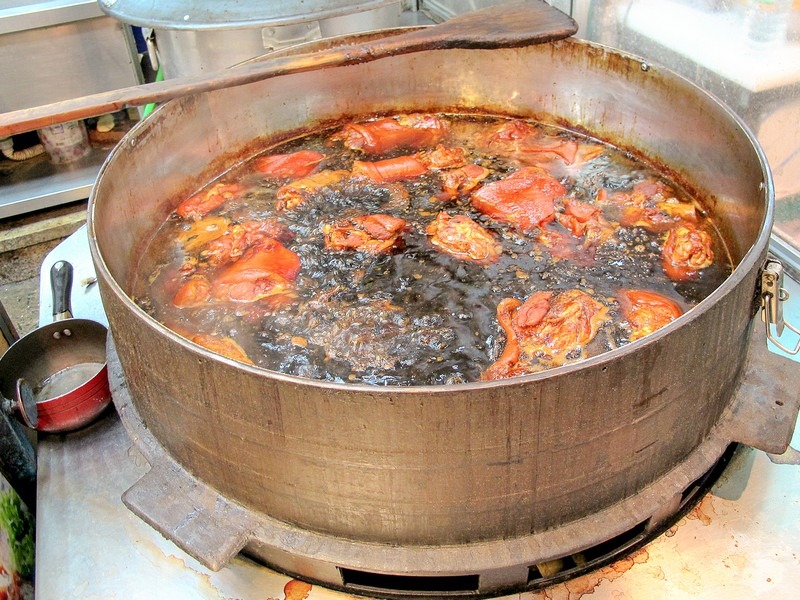
Pig’s trotters are braised for hours in a stock of water, soy sauce, sugar, garlic, ginger, and rice wine. The exact ratio and any additional ingredients vary by restaurant, many have a secret element they protect carefully. After the long braise, the trotters are sliced and served.
The extended cooking time gives jokbal its defining quality: the collagen in the skin and connective tissue breaks down into a rich gelatin, making the meat deeply savory, slightly sticky, and genuinely satisfying in a way that shorter-cooked dishes aren’t.
I had seen pig’s feet before coming to Korea, there was a jar of them floating in brine on a convenience store shelf on a road trip through the American South. I thought nothing of it at the time. The Korean version, in the style it’s prepared here, is a completely different category of dish. Better in every dimension I can think of.
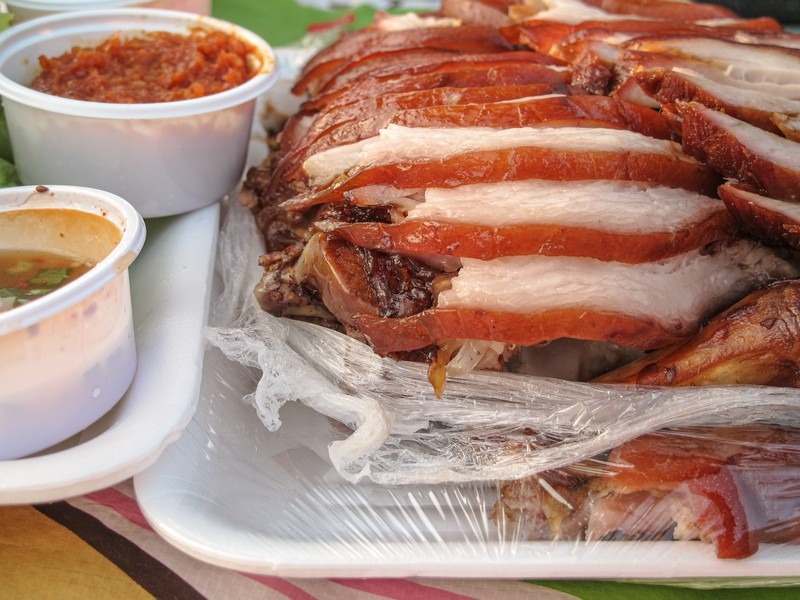
How To Eat Korean Pig’s Trotters
Jokbal is served with lettuce leaves for wrapping and three dipping sauces:
- Saeujeot (새우젓): The most important sauce. A salty, intensely flavored condiment made from tiny fermented shrimp. Saeu means shrimp; jeot refers to any salty fermented condiment used for pickling or seasoning. The shrimp are salted and fermented for 2 to 3 months before use. A small amount goes a long way, the fermentation concentrates the flavor significantly.
- Chojang (초장): A sweet and spicy red chili pepper sauce made by combining gochujang (red pepper paste) with vinegar and sugar. Lighter and more acidic than the other sauces.
- Ssamjang (쌈장): The standard Korean grilling sauce, gochujang and doenjang (fermented bean paste) combined with sesame oil, onion, garlic, and a little sugar. Present on most Korean tables where meat is being eaten.
The standard approach: Take a lettuce leaf, place a piece of jokbal inside, add a small amount of your preferred sauce, fold the leaf around it, and eat in one bite.
Jokbal and Bossam
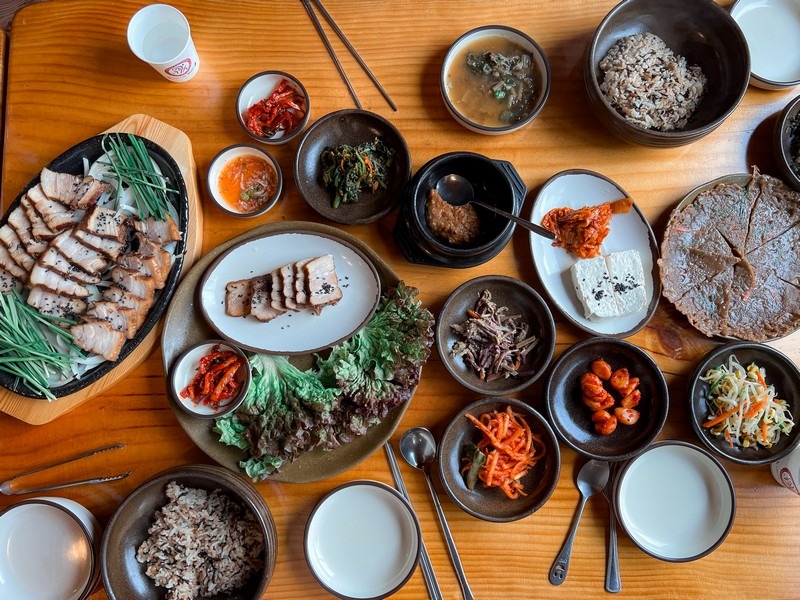
Jokbal is closely related to bossam, another Korean boiled pork dish. Both are pork, both are served with lettuce wraps and saeujeot, both function as anju. The key difference is the cut and preparation: bossam uses pork belly or shoulder, boiled plain without the soy-heavy marinade of jokbal. The flavors are quite different, but the two dishes are often served alongside each other or at the same type of restaurant, and saeujeot connects them both.
Is Jokbal Healthy?
More so than its reputation suggests. Koreans often pair jokbal with soju or beer, which sounds like it should cancel out any health benefit, but the dish itself has some genuine nutritional points worth knowing.
The gelatin content from the skin and connective tissue is associated with skin health and collagen support, the “prevents wrinkles” reputation in Korea has some biological grounding. The amino acid methionine found in pork may help the body process alcohol more efficiently, which is why jokbal is considered a reasonable food choice during or after drinking. Whether this constitutes a hangover cure in any clinical sense is debatable, but the combination of protein, fat, and glycine from the gelatin does provide more recovery support than drinking on an empty stomach.
Jokbal is one of those Korean dishes that rewards the willingness to try something unfamiliar. The Billie Holiday song “Gimme a Pigfoot and a Bottle of Beer”, written in the 1930s and recorded by both Bessie Smith and Billie Holiday, suggests this enthusiasm for pig’s feet and drinks isn’t culturally specific to Korea. It translates. Find a jokbal restaurant or a market stall, order accordingly, and see for yourself.
Did you like this post? Pin IT!

2 Comments
Diana D
The sticky juice of pigs feet is collagen, not oil. They are very healthy as well as delicious.
The Mouse
Awesome, thanks!