Jogyesa Temple Seoul: Headquarters of Korean Buddhism in Insadong
Last Updated on October 13, 2026
If you’re looking for the serenity of a Buddhist temple set high in the mountains, Jogyesa Temple (조계사) is not for you. Right in the center of Seoul, in the middle of the daily bustle that makes the city what it is, sits the headquarters of Korean Buddhism, a temple with more than a century of modern history and 1,700 years of tradition behind it.
The streets of Insadong don’t quiet down when you step onto the temple grounds. They’re still audible from the courtyard. But those who come here regularly have apparently become masters of meditation, because Jogyesa is an active place of practice, prayers happen here daily, monks chant in the Main Hall, and the great Dharma drum and temple bell fill the air at dawn and dusk with a sound that carries through the city streets in a way that briefly reorders your sense of where you are.
Plan your trip to Jogyesa Temple:
- Basic Info
- A Brief History of Jogyesa Temple
- What To See On The Grounds
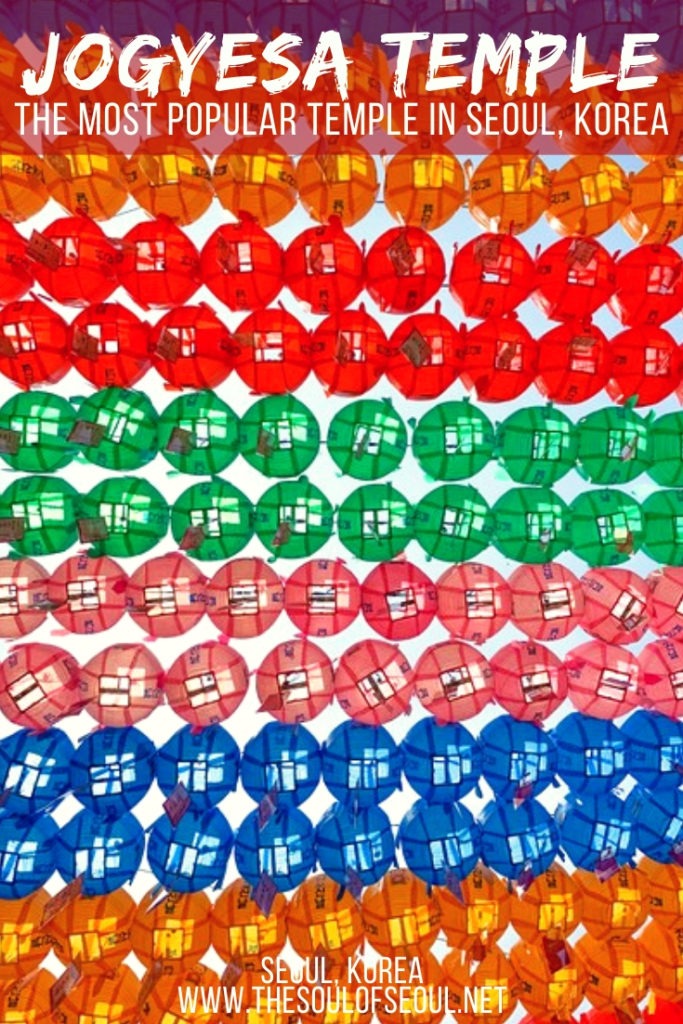
- Buddha’s Birthday and the Lotus Lantern Festival
- More Temples You Should See In Seoul
- Templestay Programs
- FAQ
(This post contains affiliate links, which means I receive a certain percentage of a sale if you purchase after clicking at no cost to you. Thank you for your support.)
Basic Info
Address: 55 Ujeongguk-ro Jongno-gu, Seoul (서울특별시 종로구 우정국로 55)
By Subway: Make sure that T-Money Card is bought and topped off and jump on the subway to head to Anguk Subway Station. Take exit 6 and walk straight to the first major street with traffic lights. Turn left a couple hundred meters down you’ll see Jogyesa Temple across the street.
Seoul City Sightseeing Bus: Insadong where Jogyesa Temple is located is a stop on this great option for tourists. Check out the Seoul City Sightseeing Bus route that hits all of the major stops you’ll want to see while you’re in Seoul.
Admission: Free
Website: www.jogyesa.kr
A Brief History of Jogyesa Temple
Originally founded in 1395, the temple was originally named Gakhwangsa Temple but was founded as Jogyesa Temple in 1910, the very year Korea was brought under Japanese colonial rule.
Buddhism in Korea had already endured 500 years of suppression under the Confucian-led Joseon Dynasty, during which monks were classified as the lowest social class and literally forbidden to enter Seoul. Gakhwangsa was the first Buddhist temple built in the capital in that era, its existence was a statement.
Under Japanese rule, the temple became both a site of compromise and resistance. Japan declared authority over all Korean temples in 1911, and some monks aligned with Japanese Buddhist policy in exchange for support. Others refused. Han Yong-un, celebrated today as both a Buddhist monk and a literary figure, led resistance from this temple. In 1919, during the March 1st Independence Movement, the Declaration of Independence was secretly printed at Boseongsa Temple, which was then located on these grounds. Monk Yongseong was one of 33 national representatives who signed it.
In 1937, the temple moved to its current location and was renamed Taegosa, inheriting the traditions of Taego Bo-U’s original 14th-century temple. After liberation in 1945, and through the 1954 purification movement to restore Korean Buddhism’s independence from Japanese influence, it became Jogyesa. The name was chosen to reflect the temple’s status as the chief temple of the Jogye Order, the largest denomination of Korean Buddhism.
Today the Jogye Order has over 10 million followers in Korea and 1,700 years of continuous tradition.
What To See on the Grounds
Daeungjeon: Main Buddha Hall
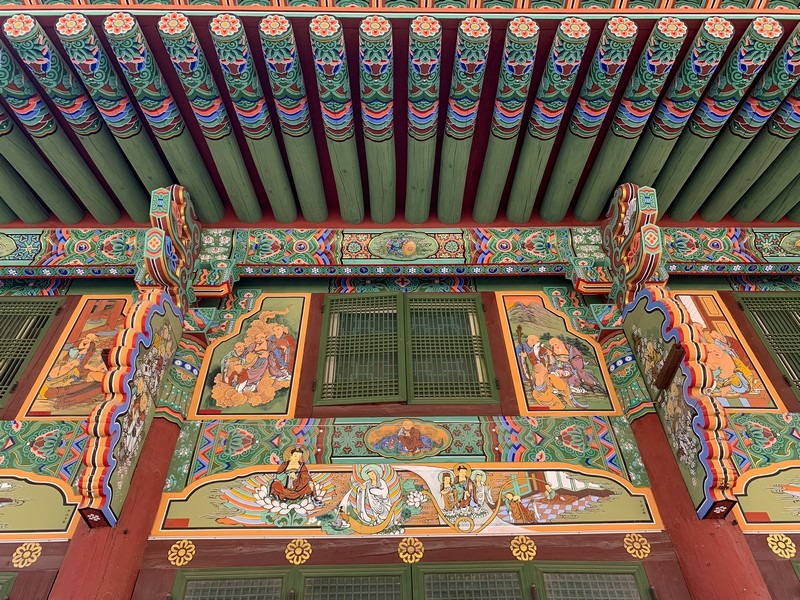
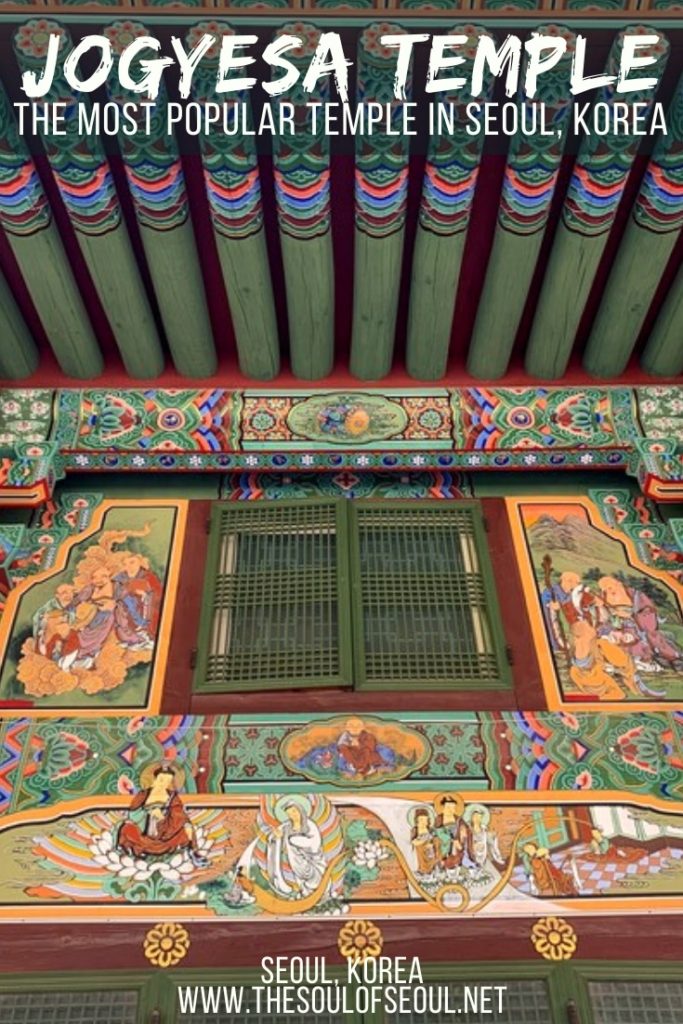
Built in 1938 from pine wood sourced from Baekdu Mountain in northern Korea, the Daeungjeon is the heart of the temple and is always filled with the sound of chanting. Inside stand three Buddha statues that match the scale of the enormous hall: Shakyamuni Buddha (the historical Buddha), Amitabha Buddha (the Buddha of the Western Paradise), and the Medicine Buddha. The hall is open 24 hours a day, visitors are welcome at any time, including during evening and early morning prayers.
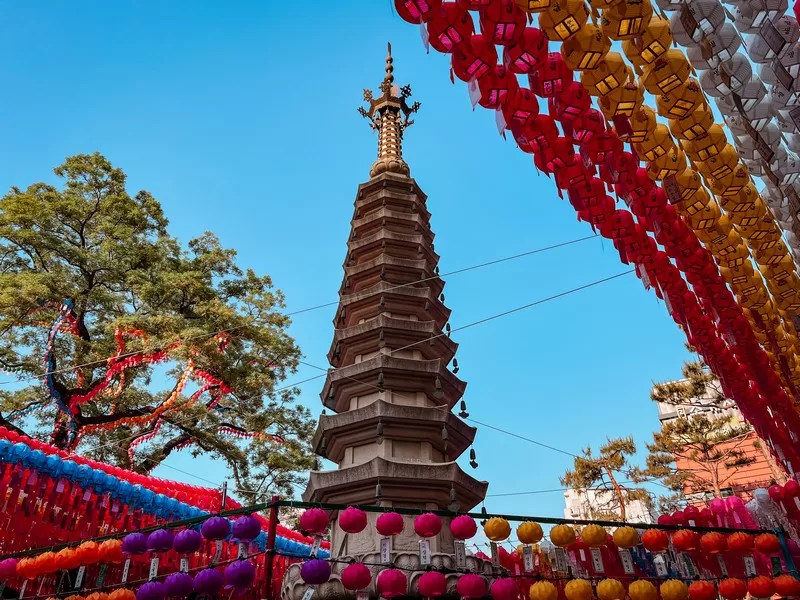
The Eight-Sided, Ten-Story Stone Stupa
Standing in front of the Daeungjeon, this stupa was built in 2009 to house sacred relics of Shakyamuni Buddha, presented to Korea in 1913 by Dharmavara, a Sri Lankan monk, during his worldwide pilgrimage. The eight sides represent the Noble Eightfold Path; the ten stories represent the ten wholesome actions of Buddhist practice. A giant metal plaque inscribed with the Heart Sutra stands beside it.
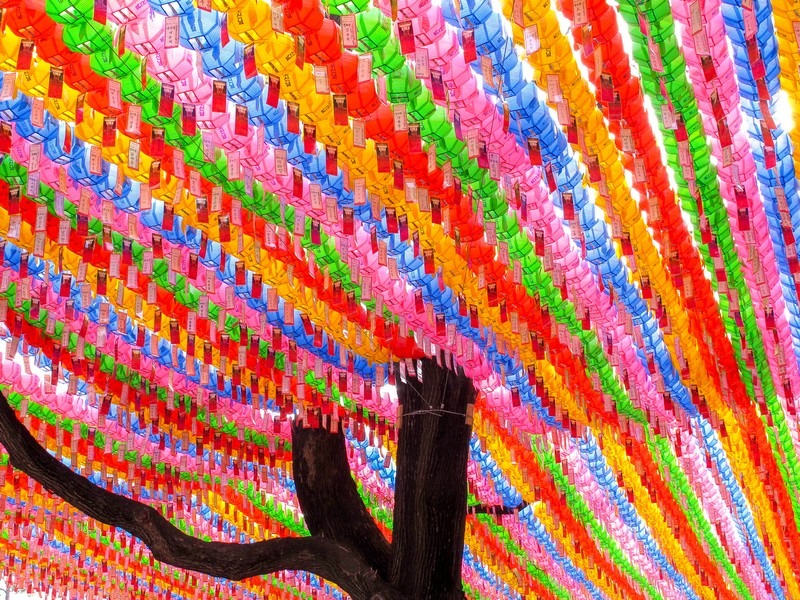
The Two 500-Year-Old Trees
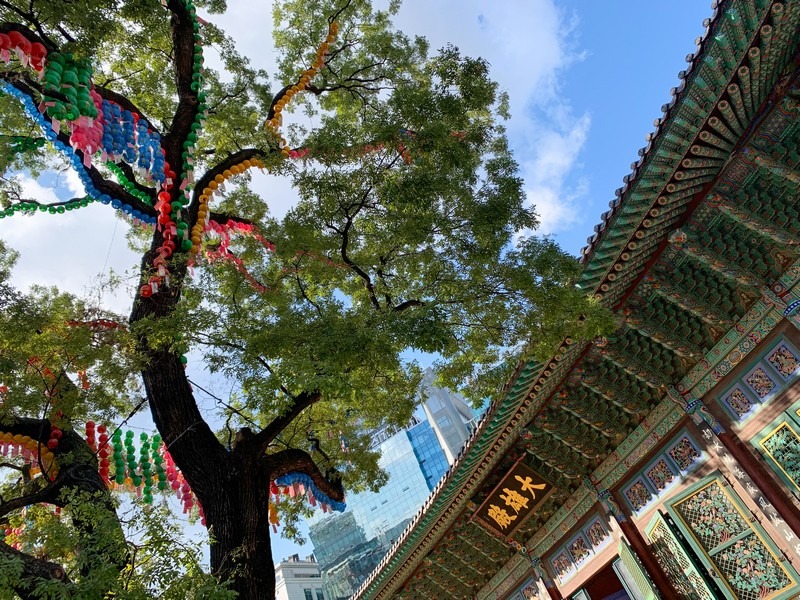
The temple courtyard is watched over by two trees that have stood here for five centuries. The White Pine (Natural Monument No. 9) stands about 10 meters tall, its presence gave the surrounding neighborhood the historical name Susong-dong (Song means pine in Korean). It was brought here by Chinese missionaries during the Joseon period. The Chinese Scholar Tree is considerably larger at 26 meters tall and 4 meters in circumference, a quiet, enormous presence in the courtyard.
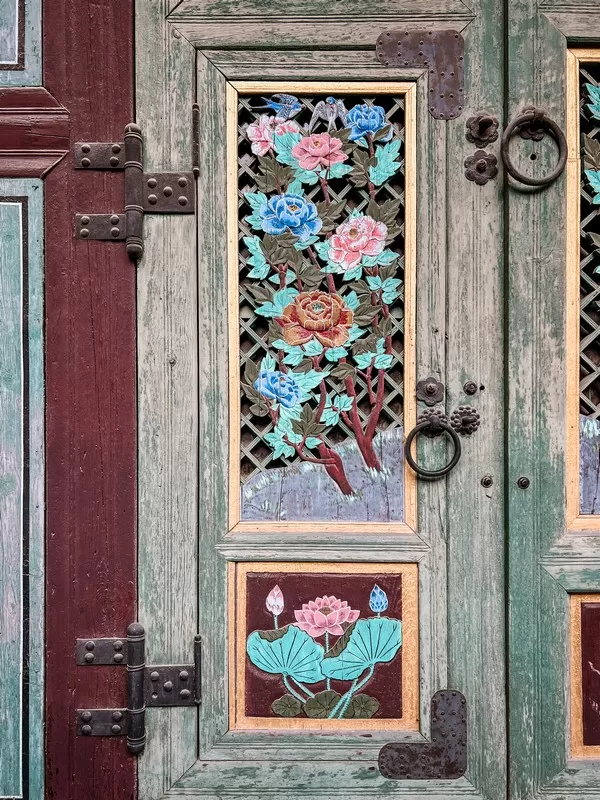
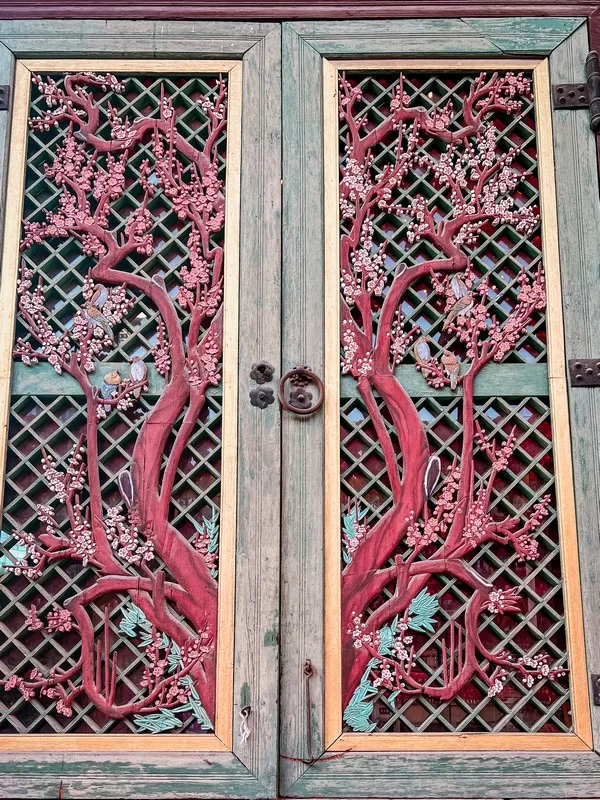
Korean Buddhist Culture and History Hall
Opened in 2005, this building on the temple grounds houses the administrative headquarters of the Jogye Order alongside a Buddhist museum, a performance hall, an international conference hall, and other cultural facilities. It’s an excellent place to understand Korean Buddhism in broader context.
The Dharma Drum and Bell
At dawn and dusk, the great Dharma drum and temple bell are played by monks. In the middle of a dense urban environment, this sound is unexpectedly arresting, one of the small moments at Jogyesa that makes it clear this is not simply a historical site but an active center of practice.
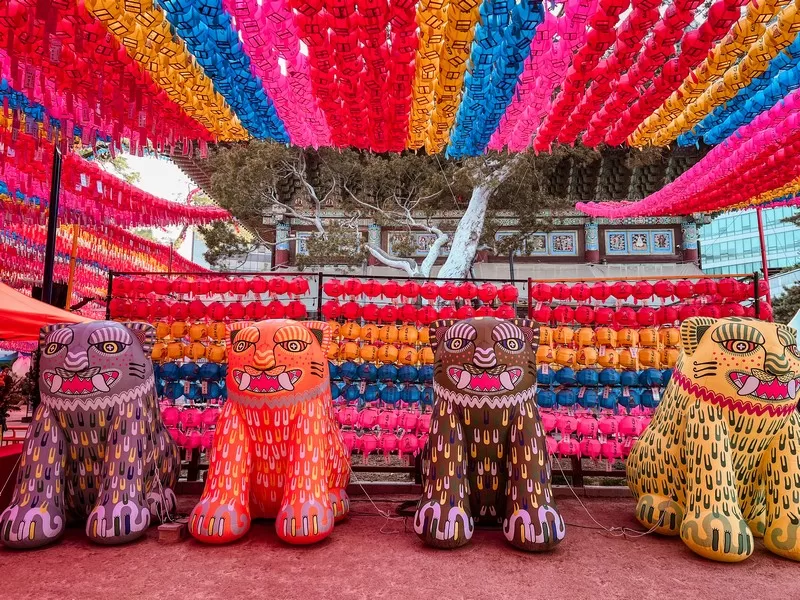
Buddha’s Birthday and the Lotus Lantern Festival
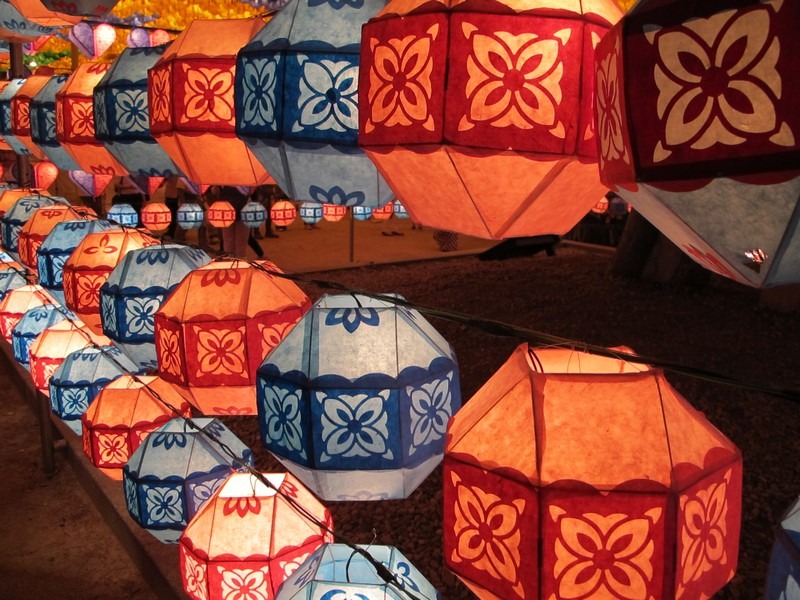
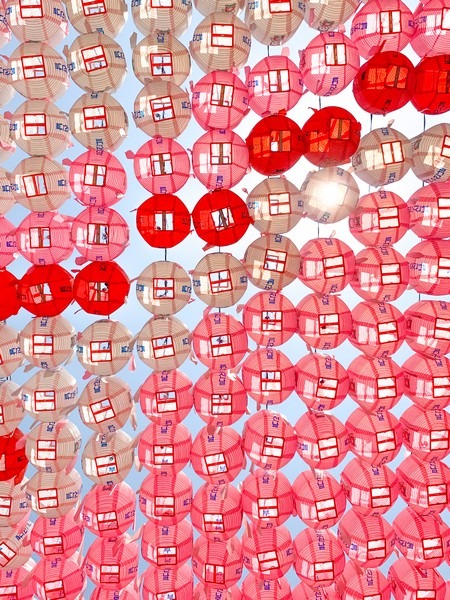
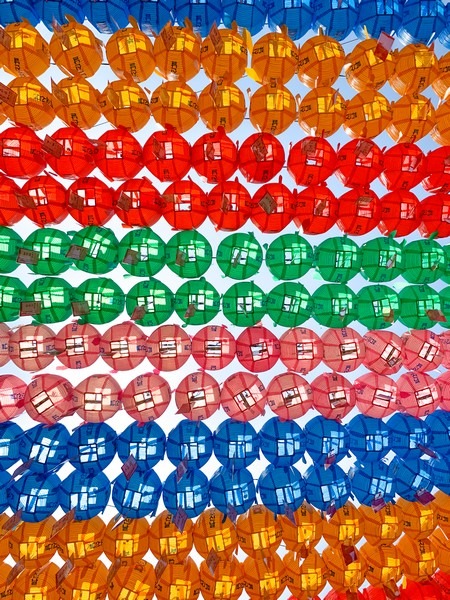
Jogyesa is the destination of the Lotus Lantern Festival parade, one of Korea’s most visually stunning annual events, designated Korea’s Important Intangible Cultural Property No. 122. The parade travels from Dongdaemun Gate along Jongno Street, thousands of participants each carrying a lantern, forming what organizers describe as a river of light through the heart of Seoul. It ends here, at Jogyesa.
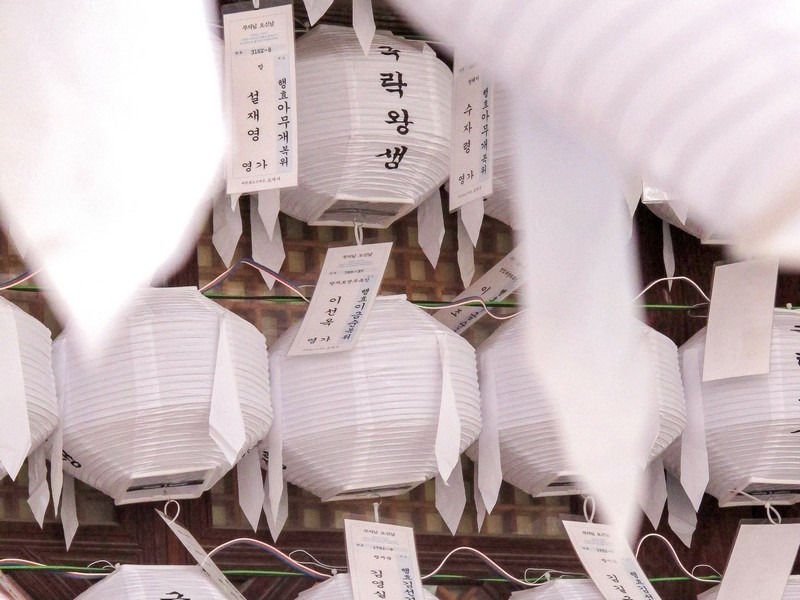
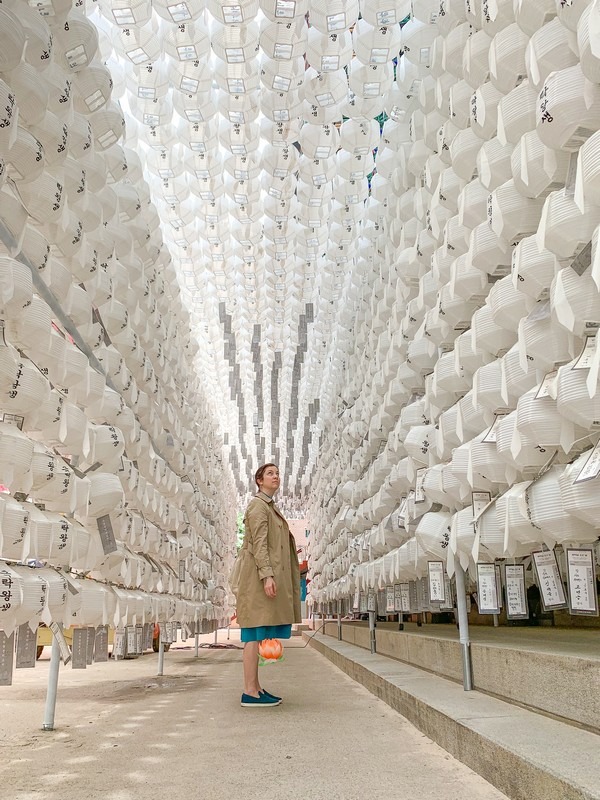
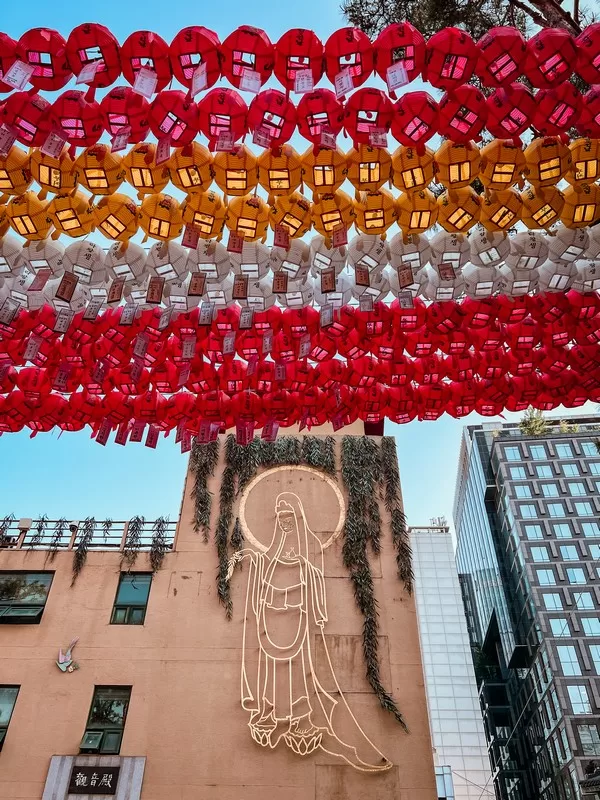
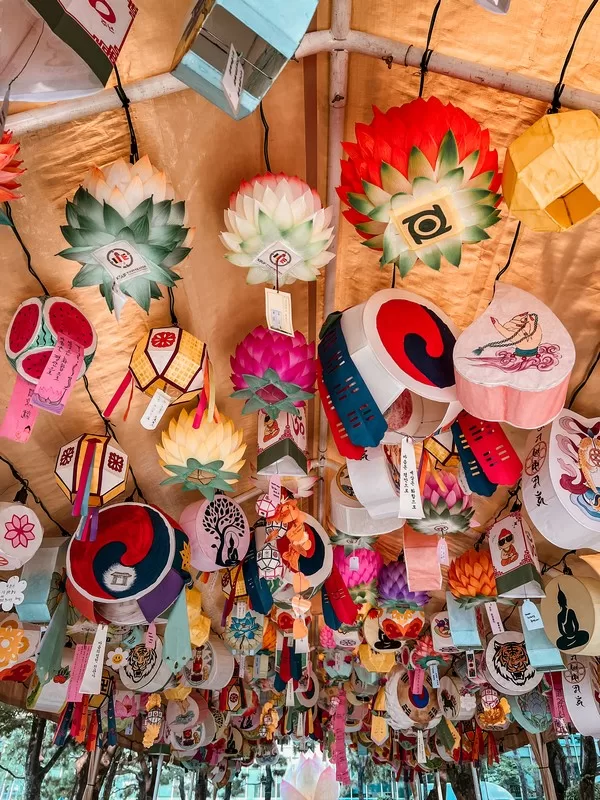
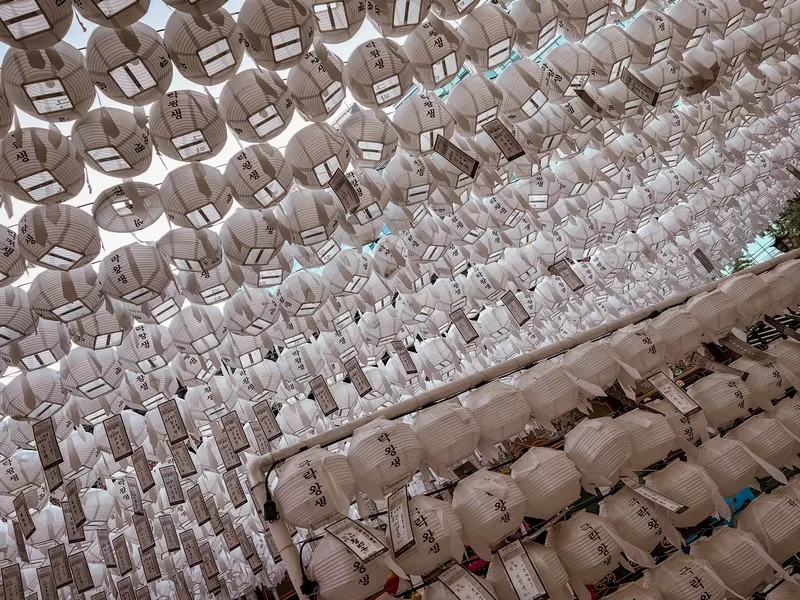
Buddha’s Birthday falls on the first full moon of the fourth lunar month, typically in May.
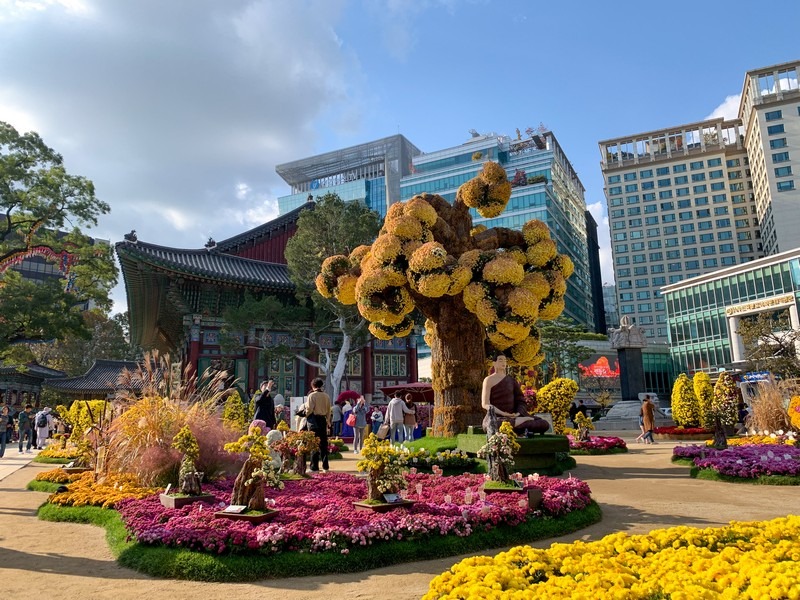
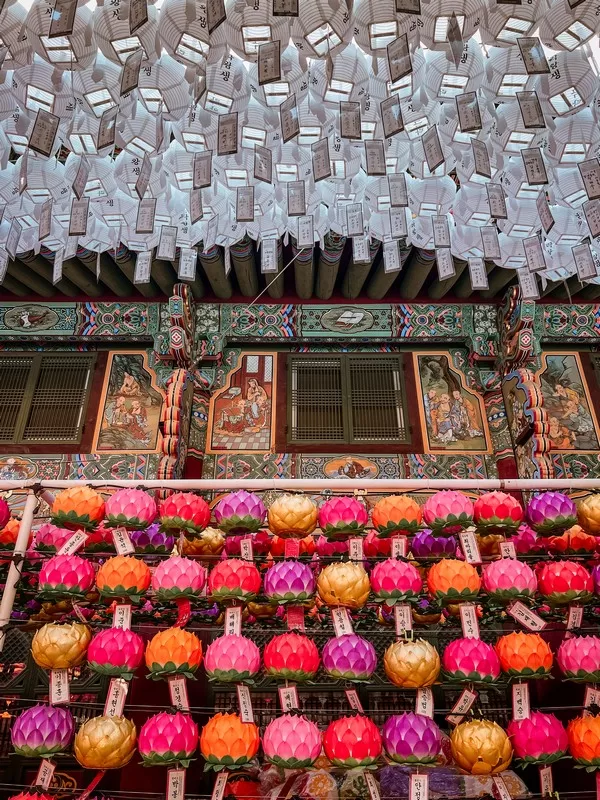
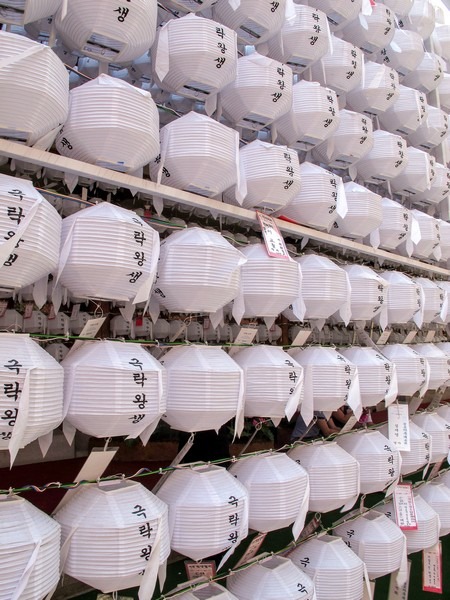
Year-round, the temple has changing seasonal installations, lotus lanterns in spring before Buddha’s Birthday, lotus plants in summer, and flowers and foliage through autumn. There is genuinely something to see at every time of year.
The Seoul Itinerary Pack – 15 Seoul Itineraries
$25.00
More Temples You Should See In Seoul
I love visiting temples in Korea. There are beautiful ones all around the country and some are on the main streets and others up in the mountains. Don’t miss some of the other gorgeous ones.
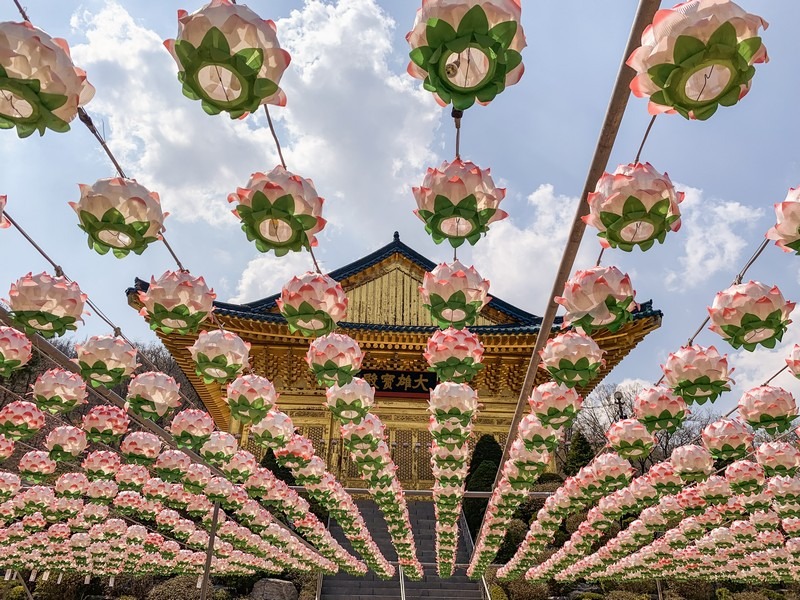
Suguksa Temple: If you want to find a more off the beaten path Buddhist temple in Seoul that is absolutely gorgeous, look into visiting Suguksa Temple which is the only golden temple in the city. Don’t even begin to think that all of the temples look alike here… they absolutely don’t. Find out more in the guide to Suguksa Temple.
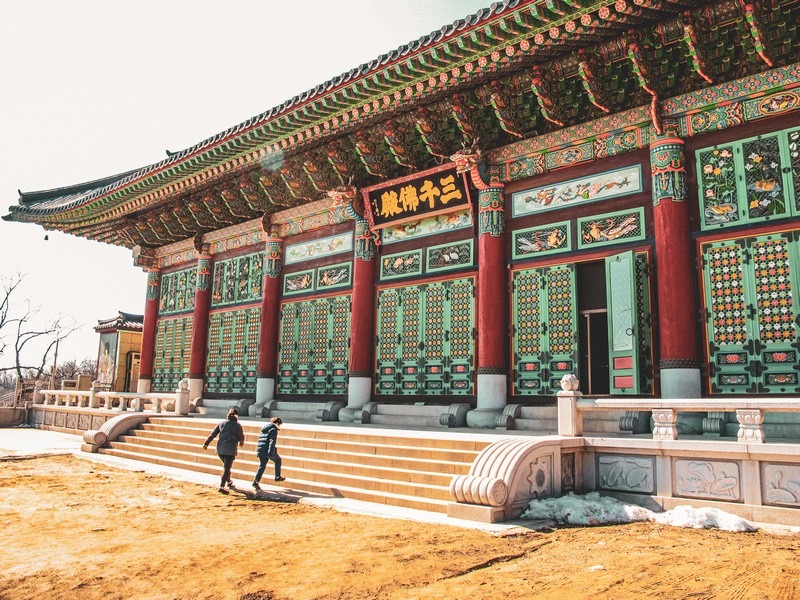
Bongwonsa Temple: One of my favorite temples in Seoul is Bongwonsa. It’s right downtown and yet just off the main roads enough that it’s often not busy at all. It’s at the foot of a mountain so you can also take an easy stroll into the nearby forests. Find out more in the guide to Bongwonsa Temple.
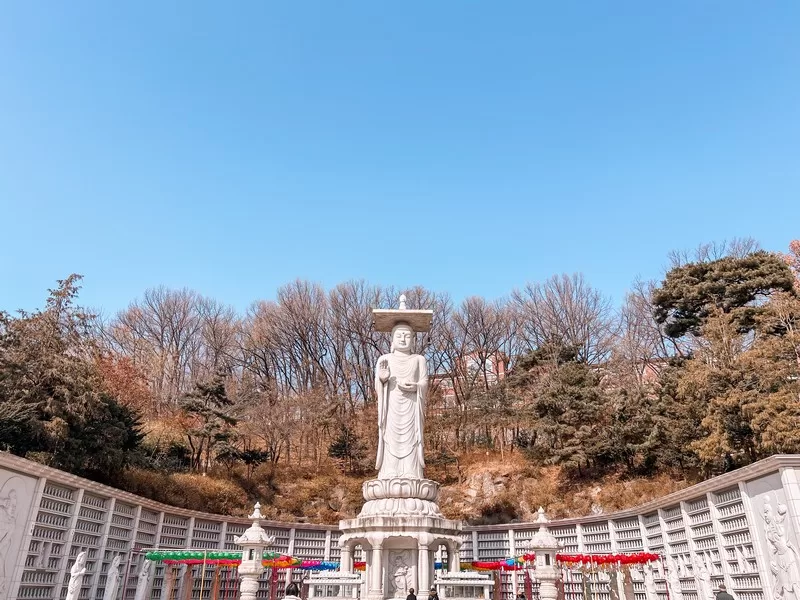
Bongeunsa Temple: Aside from Jogyesa, Bongeunsa is the next most popular Buddhist temple in Seoul. Just across the street from COEX Mall which features the very photographed Starfield Library, Bongeunsa Temple is an easy stop to add and a more sprawling temple complex to explore. Find out more in the guide to Bongeunsa Temple.
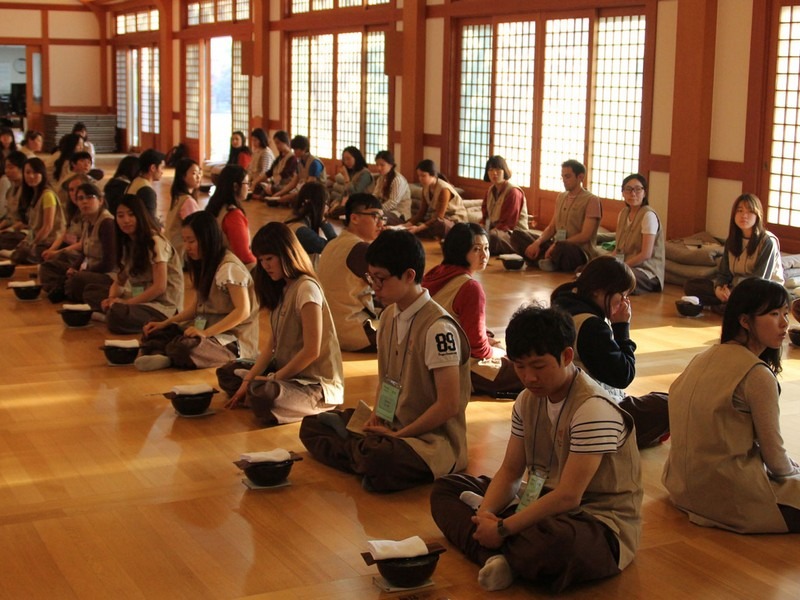
Templestay Programs
Jogyesa runs some of the most accessible Templestay programs in Seoul, including several that require no overnight commitment and are designed specifically for foreign visitors. You can find out more and book this on the official Templestsay website.
Always Templestay: A self-guided experience available 10:00am-4:00pm daily. Includes a temple tour and a lotus lantern making activity. Book in advance, then meet at the information center (left side of the main entrance). The most affordable entry point for experiencing temple culture.
“Be a True Hero” One-Day Templestay: A guided 2-hour program running 10:00am-12:20pm. Includes a temple tour, paper lotus lantern craft, and meditation and tea with a monk. Minimum 10 participants required, Jogyesa will contact you to cancel if the minimum isn’t met. Groups of 10+ can book directly by phone for a dedicated group space.
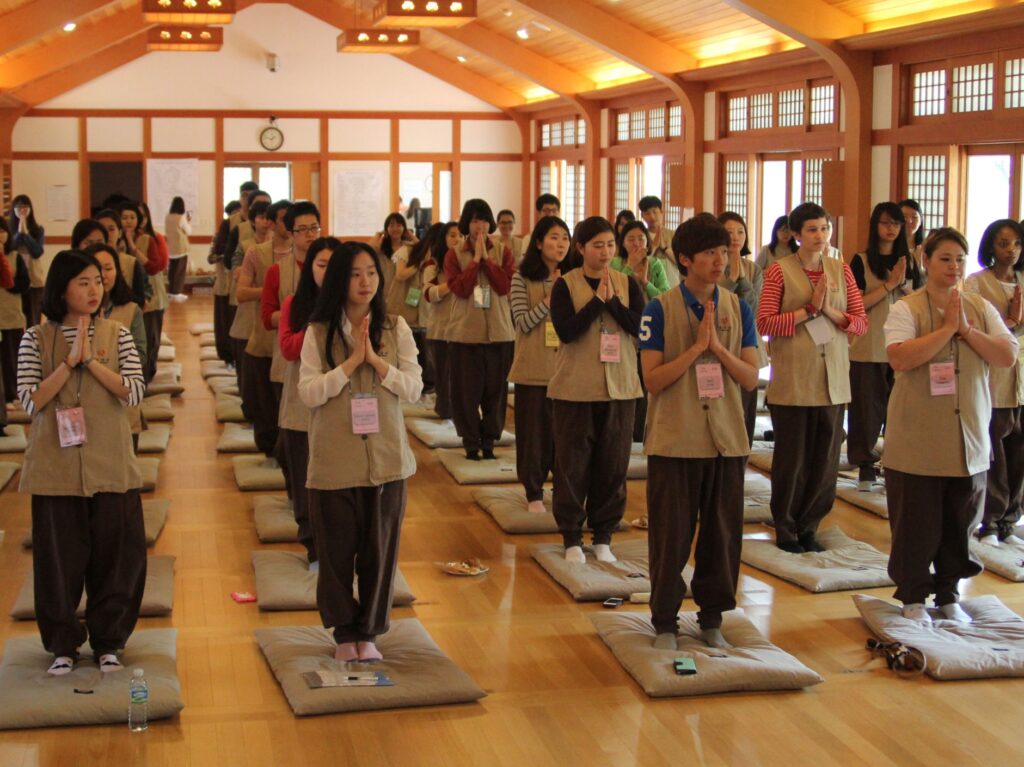
Regular Overnight Templestay: A full 1-night, 2-day program beginning at 1:30pm on Day 1 and ending at 10:00am on Day 2. Includes temple etiquette orientation, paper lotus lantern craft, a writing or tea session, temple tour, two monastic meals, optional evening ceremony, optional 108 prostrations, optional early morning ceremony (4:25am), and optional walking meditation. Bring simple toiletries, comfortable clothes, and socks, soap, towel, and hair dryer are provided, and uniforms are supplied.
Seon of Tea — Day Program: A tea ceremony focused program including tea ceremony experience and a temple tour. Available through June 2026. Reservations required.
Seon of Tea — Overnight Program: A 1-night, 2-day immersion in Korean tea culture and Buddhist practice, including paper lotus lantern craft, a full tea ceremony, temple tour, monastic meals, and optional evening ceremonies and early morning practice. Available through June 2026.
FAQ
What is Jogyesa Temple? Jogyesa (조계사) is the chief temple of the Jogye Order of Korean Buddhism, the headquarters of the largest Buddhist denomination in Korea, with over 10 million followers. Located in Insadong, central Seoul, it was founded in 1910 and plays a leading role in the current state of Korean Buddhism. The temple is a designated cultural monument and the endpoint of the annual Lotus Lantern Festival parade.
Is Jogyesa Temple free to visit? Yes, admission is free and the main hall is open 24 hours a day. Templestay programs have separate fees starting from ₩10,000.
What are the hours for Jogyesa Temple? The grounds and main hall are open 24 hours, all year. The information center for foreign visitors operates 10:00am-4:00pm.
When is the Lotus Lantern Festival at Jogyesa? The festival takes place in early May around Buddha’s Birthday (the first full moon of the fourth lunar month).
What are the trees in the Jogyesa courtyard? Two 500-year-old trees: a White Pine (Natural Monument No. 9, approximately 10 meters tall) and a Chinese Scholar Tree (26 meters tall, 4 meters in circumference). Both have stood on these grounds for five centuries.
What relics are housed at Jogyesa? Sacred relics of Shakyamuni Buddha are enshrined in the eight-sided, ten-story stone stupa in front of the main hall. They were presented to Korea in 1913 by Sri Lankan monk Dharmavara and are the reason the stupa was built in 2009, to properly enshrine them at a scale appropriate to the temple.
How does Jogyesa connect to Korean independence history? During the Japanese colonial period (1910-1945), the temple was a center of Buddhist resistance to Japanese rule. The Declaration of Independence was secretly printed at Boseongsa Temple, then located on these grounds. Monk Han Yong-un, one of Korea’s most celebrated poets and independence activists, was closely associated with this temple. Monk Yongseong was one of the 33 representatives who signed the 1919 Declaration of Independence.
Jogyesa isn’t what most visitors expect of a Buddhist temple in Korea. There’s no mountain path, no forest approach, no quiet village at the base. What it offers instead is something harder to find: a 1,700-year-old tradition of practice holding steady in the middle of one of Asia’s great cities, trees older than the nation, and a sound at dawn that cuts through the noise if you’re there to hear it.
Did you like this post? Pin It!


One Comment
Thea Nicola Abad
Hello! What a great blog about Jogyesa Temple. Would like to know if the white lanterns are there all year around. Thank you!