Bongeunsa Temple: Seoul’s Most Popular Temple in the Heart of Gangnam
Last Updated on October 12, 2026
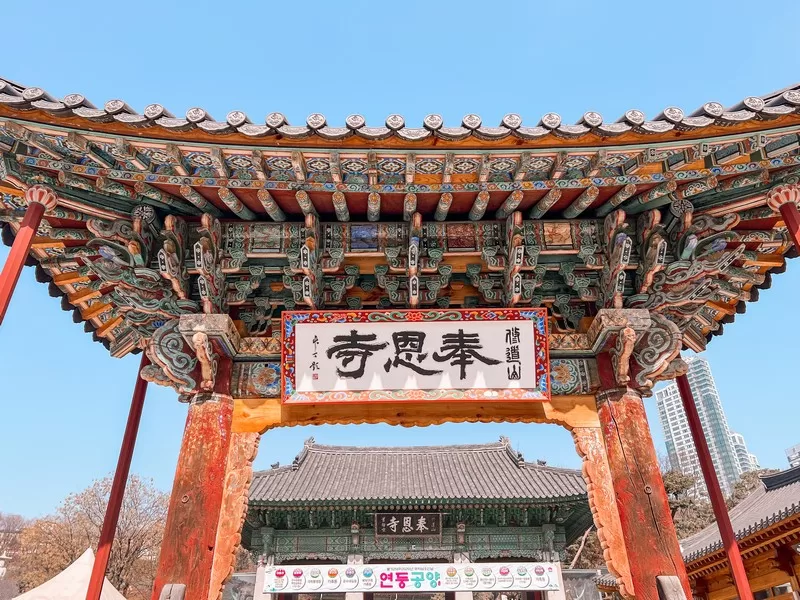
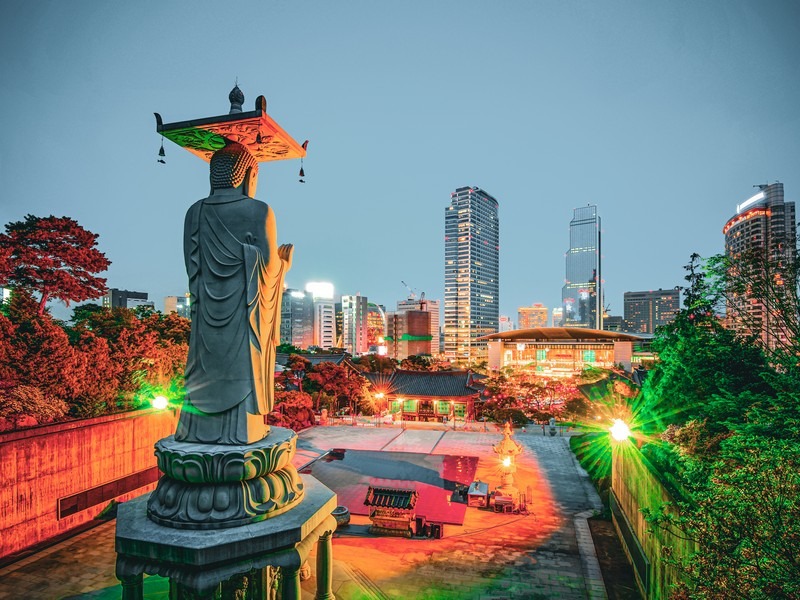
Bongeunsa Temple (봉은사) is one of the most popular Buddhist temples in Seoul, and one of the most surprising. While most of Korea’s great temples are set in mountain forests requiring at least a short hike into the quiet, Bongeunsa sits in the middle of Gangnam, steps from the COEX Mall and surrounded by some of the city’s most expensive real estate. It wasn’t planned this way, the city grew around it, but the contrast between the temple grounds and the urban sprawl visible beyond its walls is part of what makes visiting so striking.
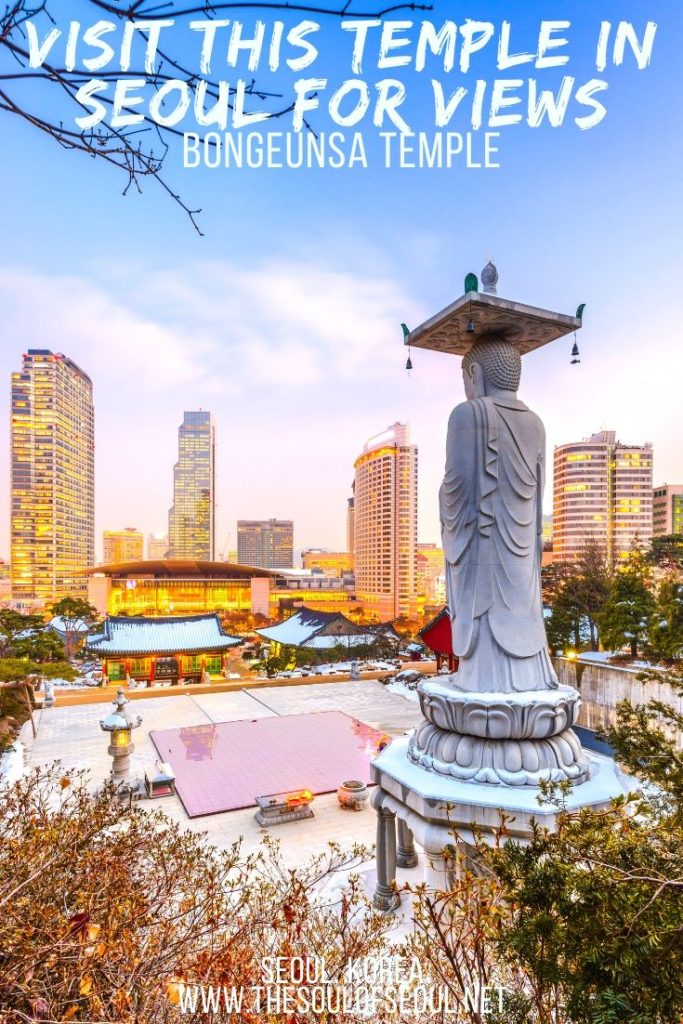
With over 1,200 years of history as a center of Korean Seon (Zen) Buddhism, a 23-meter Maitreya statue, and a full range of daily programs open to visitors, Bongeunsa deserves more than a quick walk-through. And if you’ve already visited during the day and thought you’d seen what it had to offer, come back at dusk. I love the night view of this temple even more than the day, if I’m honest.
Want to learn more about Bongeunsa Temple? You’ve come to the right spot:
- How To Get There
- Basic Info
- History Of The Temple
- What To See
- Visiting At Night
- Programs and Templestay
- FAQ
(This post contains affiliate links, which means I receive a certain percentage of a sale if you purchase after clicking at no cost to you. Thank you for your support.)
How To Get There
Address: 531 Bongeunsa-ro, Gangnam-gu, Seoul (서울특별시 강남구 봉은사로 531 (삼성동))
By Subway: Bongeunsa Station on Line 9, Exit 1. Walk straight from the exit and the temple entrance will appear on your right.
Hop On/ Hop Off Bus: If you’ll be traveling via the Seoul City Hop On/Hop Off Bus, know that it also stops here. You can buy the ticket for this bus here. And to get more information about the bus, here is a guide to the Hop On/ Hop Off Bus In Seoul.
Basic Info
Hours: 3:00am – 10:00pm
Days: Open all year round
Amenities: Temple Stay program, parking, English & Japanese interpretation services offered
Ceremonies: Jeongdaebulsa is held each September 9th on the lunar calendar. Monks march around carrying the scriptures and recite the Buddhist rites.
Templestay Program: Consider joining a templestay program at Bongeunsa Temple while you’re in Seoul, Korea.

History Of The Temple
Bongeunsa was founded in 794AD during the Silla Dynasty by State Preceptor Yeonhoe, the highest-ranking monk in Silla at the time. It was originally named Gyeonseongsa.
In 1498, the temple was rebuilt and enlarged at its current location by Queen Jeonghyeon, who patronized it in honor of King Seongjong. It was renamed Bongeunsa, meaning “the act of honoring the king.” During the Joseon Dynasty, Buddhism faced severe suppression under the Confucian-led government. Queen Munjeong revived it briefly in the mid-16th century, and with her support, Bongeunsa became the head temple of the Korean Seon sect from 1551 through 1936. The national examination for monks, which had been discontinued during the suppression, was reinstated here.
Monk Bowoo was appointed head of the temple in 1548 by Queen Munjeong, but was killed shortly afterward as anti-Buddhist factions regained influence. The temple’s position remained contested throughout the Joseon period.
In the 20th century, Bongeunsa became one of Korea’s 14 major temples in 1902 under the Korean Empire, and later served as the headquarters for 80 smaller Buddhist temples around Seoul during the Japanese colonial period. In 1922 and 1929, Head Monk Cheongho saved over 700 people from drowning in the Han River during floods, an act of service so remarkable that a monument was erected in recognition. A stone monument on the temple grounds commemorates this.
A fire in 1939 destroyed most of the buildings. Further damage came during the Korean War. Panjeon Hall and its woodblock carvings survived both, the most precious things the temple held, intact. Reconstruction has continued since, and Bongeunsa is now once again a large, active temple complex.
The Seoul Itinerary Pack – 15 Seoul Itineraries
$25.00
What To See
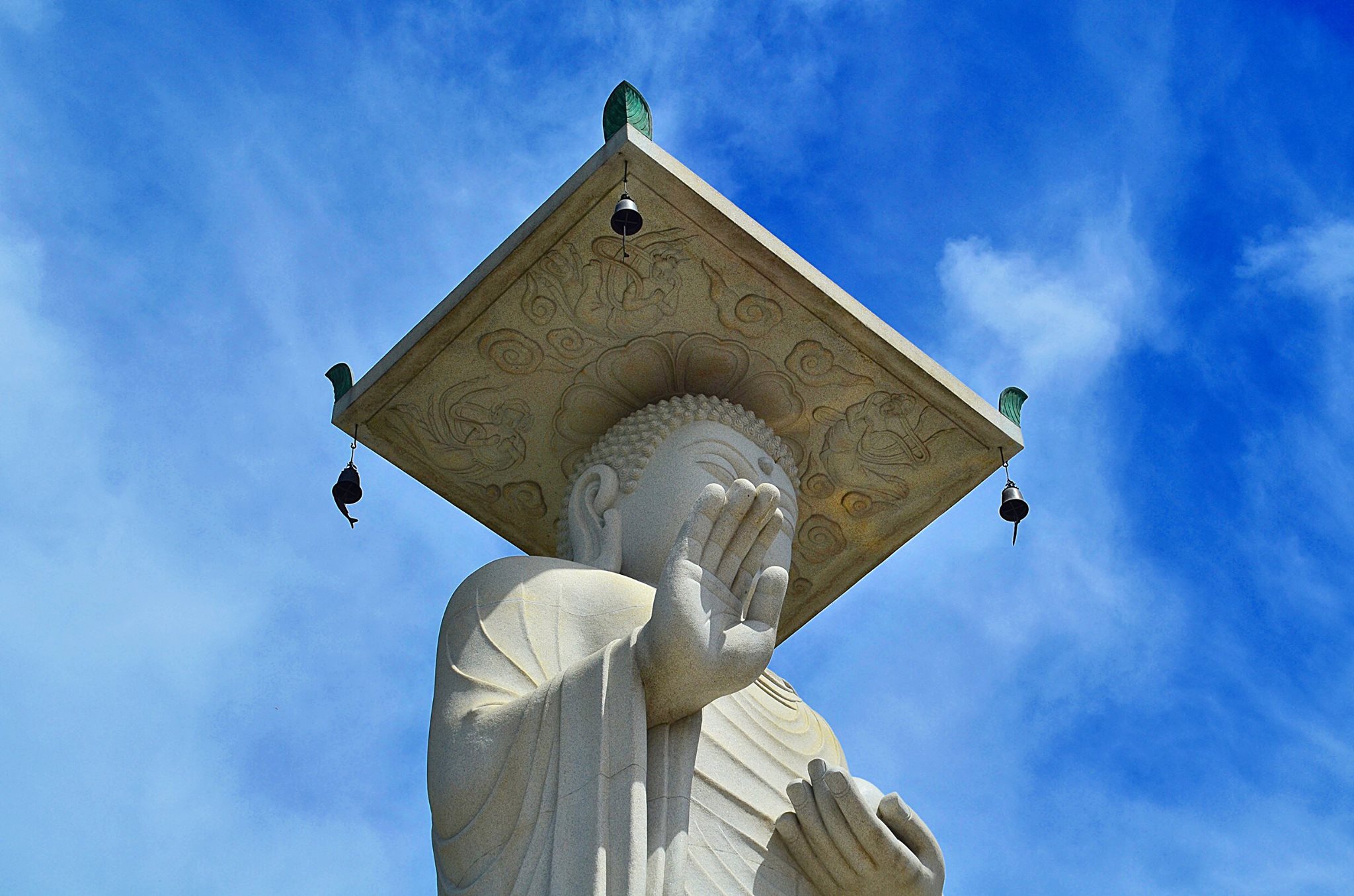
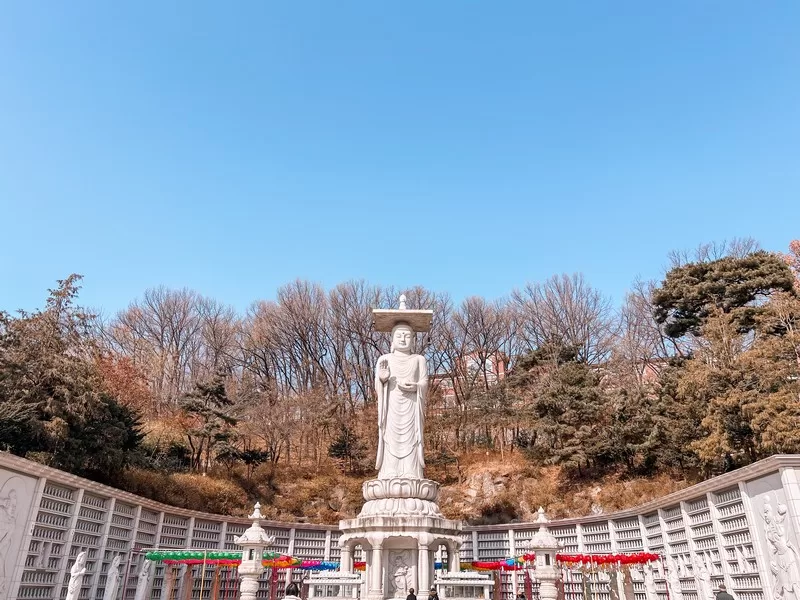
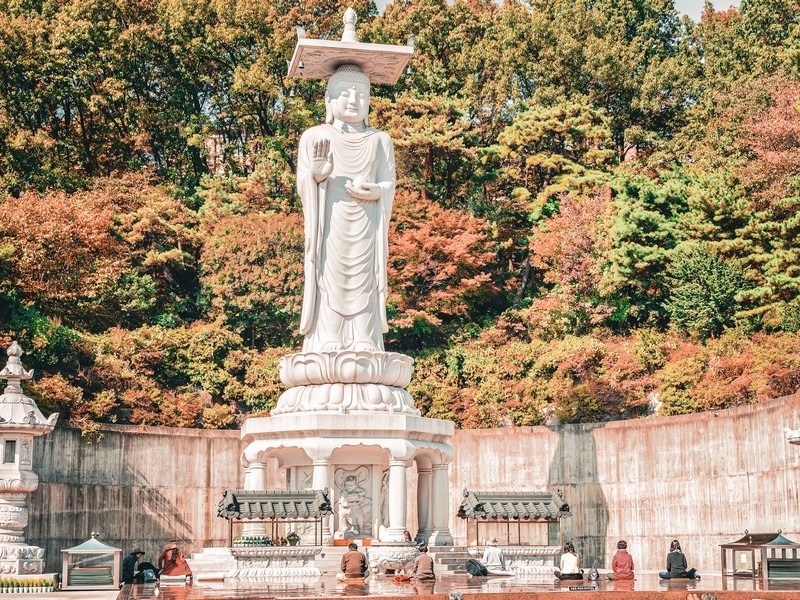
The Maitreya Buddha: The most immediately visible thing at Bongeunsa is the 23-meter stone statue of Maitreya, the Future Buddha, that dominates the temple grounds. Construction began in 1986 and was completed in 1996, making it relatively new by temple standards, but impressive enough in scale to understand why it draws so many visitors. Maitreya represents the Buddha yet to come, the one who will achieve complete enlightenment in a future age. The statue is visible from the street and lit from all angles at night.
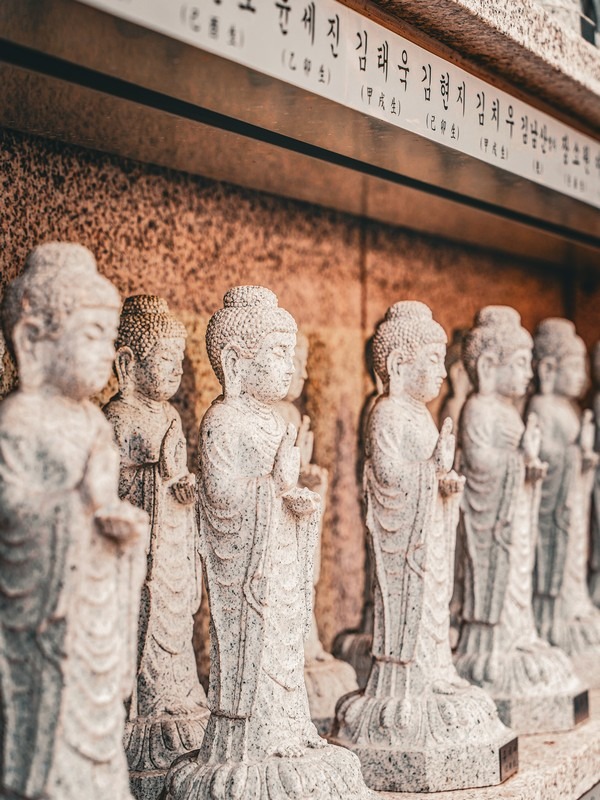
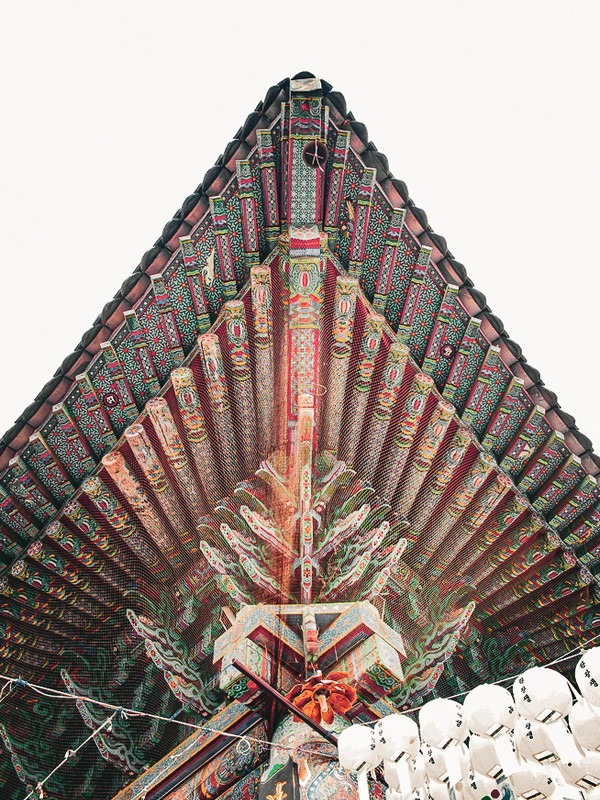
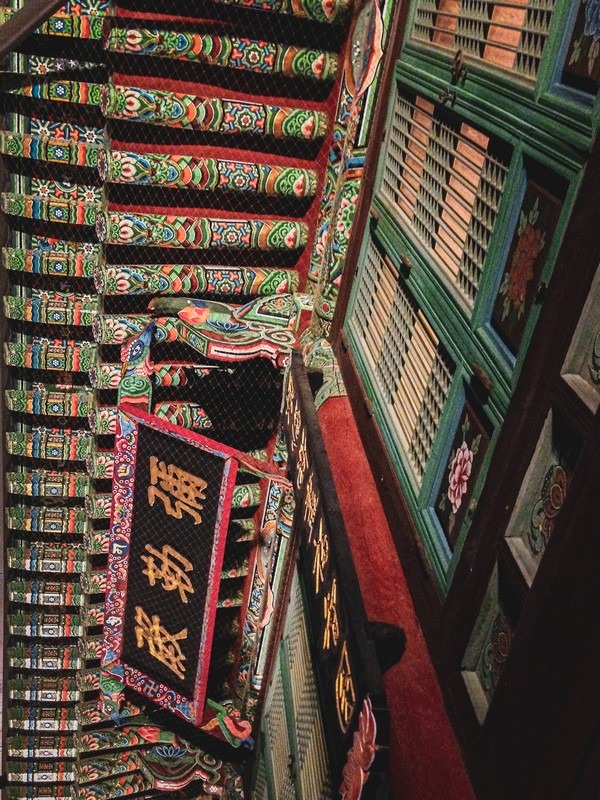
Panjeon Hall: This is the most historically significant structure in the temple and the one that survived both the 1939 fire and the Korean War. Inside are 81 volumes of woodblock carvings of the Avatamsaka Sutra (Flower Garland Sutra), created in 1855 by Monk Yeonggi. The calligraphy on the Panjeon signboard was written by Kim Jeonghee, one of the most celebrated scholars and calligraphers of the Joseon Dynasty. These woodblocks are an extraordinary piece of Korean Buddhist heritage.
The Main Hall and Temple Grounds: The complex includes multiple prayer halls, courtyards, and ceremonial spaces, far more to explore than a quick pass suggests. Allow at least an hour if you want to move through the grounds properly.
Visiting At Night
If you’ve been to a few Korean temples and feel like you’ve developed a sense of what to expect, visit Bongeunsa at dusk. It’s a completely different experience.
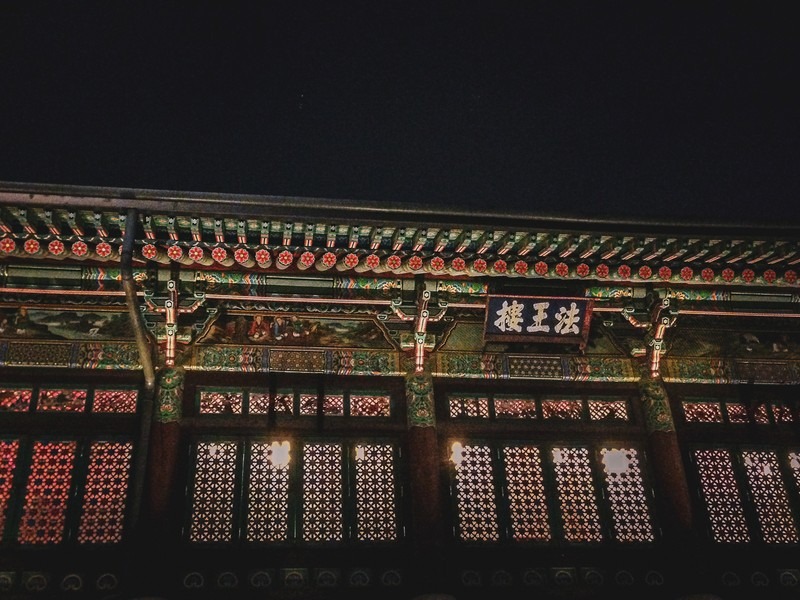
I arrived at 6:30pm on a Saturday and found the grounds nearly empty, a sharp contrast to the weekend crowds that fill the temple earlier in the day. The halls were lit from within, casting warm light across the stone paths. It felt almost eerie in the way that peaceful places sometimes do when they’re not performing for visitors.
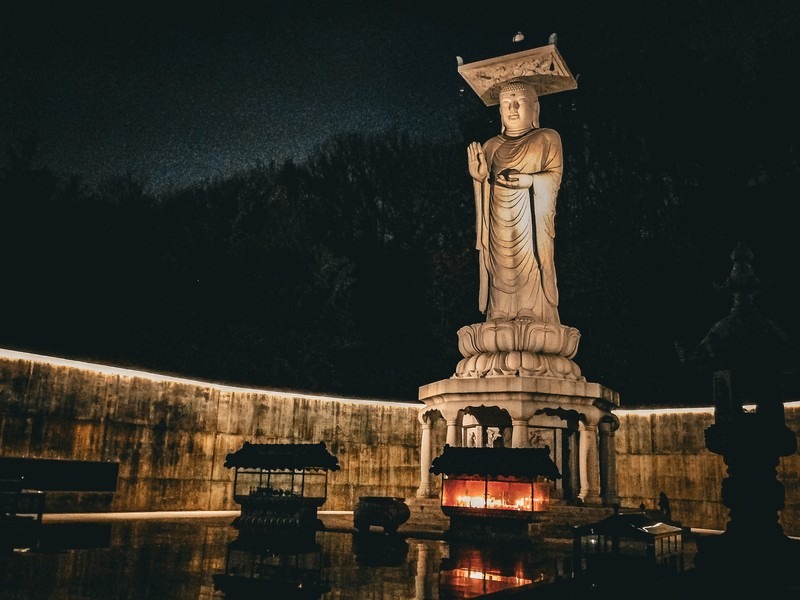
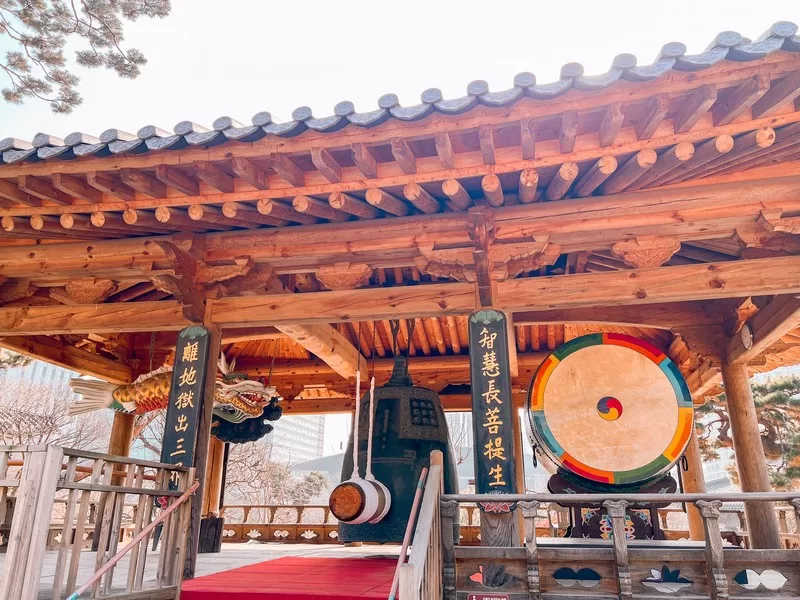
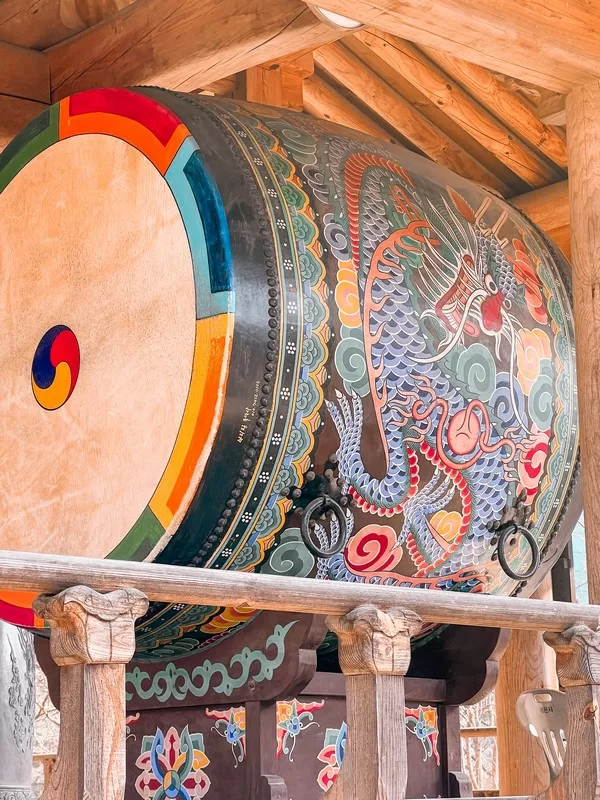
At 6:40pm, the monks began the evening prayers, accompanied by the deep resonance of drums and percussion that carries across the grounds. I stood still and listened for a long time.
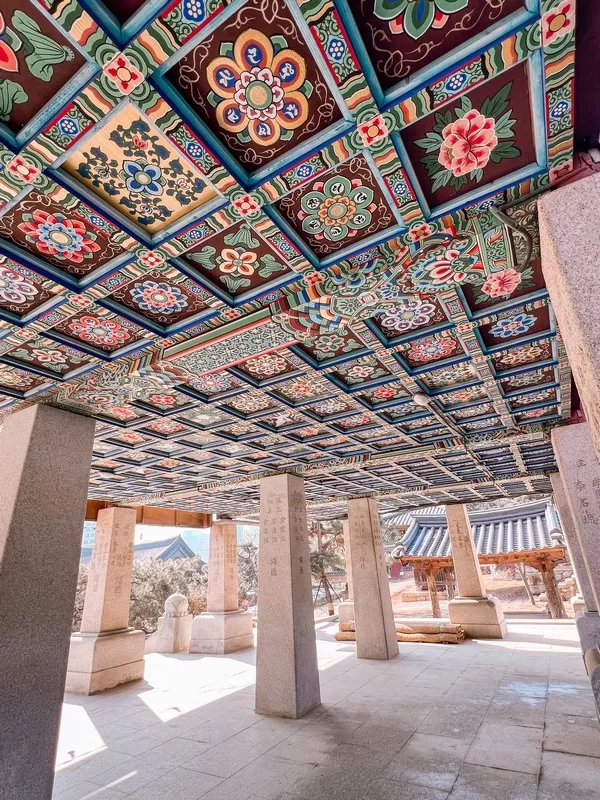
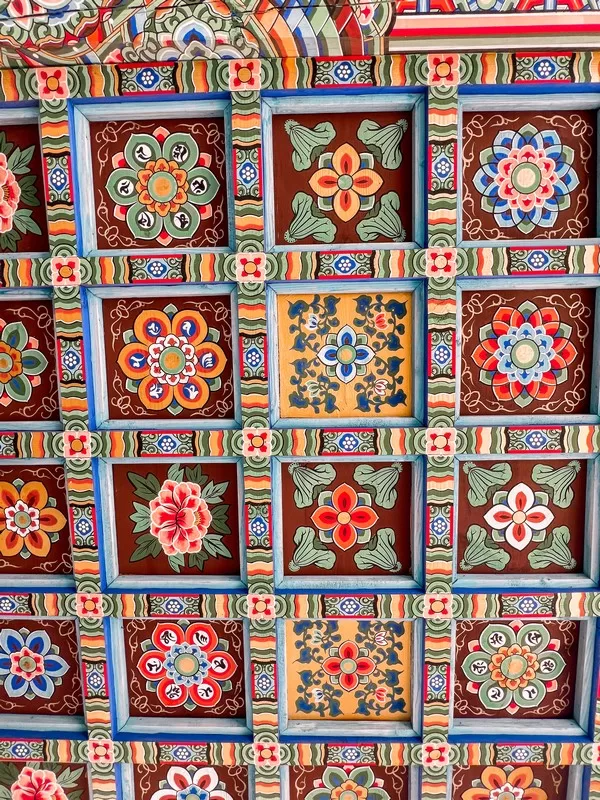
While I usually quite enjoy the colorful facades of temple buildings and the intricate paintings that take over the sides, there was something extremely appealing about seeing this temple by only the lights from within the buildings and the moonlight from above.
The quiet and depths of darkness make it feel isolated and calming as most Buddhist temples that are actually isolated tend to make me feel.
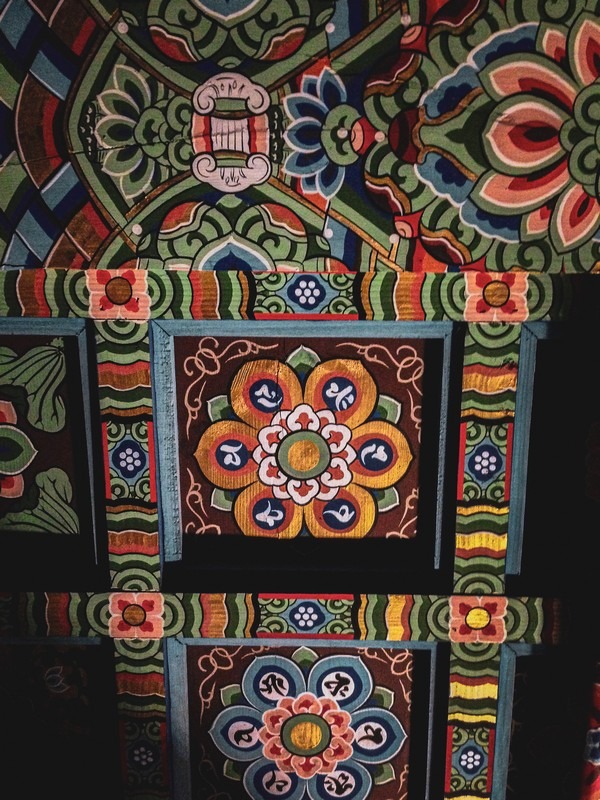
If you want the morning equivalent of this, prayers begin at 4:10am. The evening is more accessible for most visitors.
The Maitreya statue lit from every angle at night is worth seeing specifically. The colors and shadows of the dancheong (traditional decorative painting) on the temple buildings also read completely differently in artificial light than in daylight.
Programs and Templestay
Bongeunsa runs some of the most accessible temple programs in Seoul, specifically designed for foreign visitors. Visit the official TempleStay website to learn what programs are running when you’re here.
Bong-Pass (Tuesdays, and Saturdays from May) ₩5,000 per person. With one ticket you can join a traditional tea ceremony, go on a guided temple tour, do self-led meditation, and explore other cultural programs at your own pace. Tickets can be bought online in advance or by card at the temple gate. Bring socks, bare feet are not permitted when entering the hall.
Evening Bell and Buddhist Ceremony Experience ₩5,000 per person. A 2-hour evening program including a temple tour, the Four Dharma Instruments experience, and the evening Buddhist ceremony. Check current schedule for operating days.
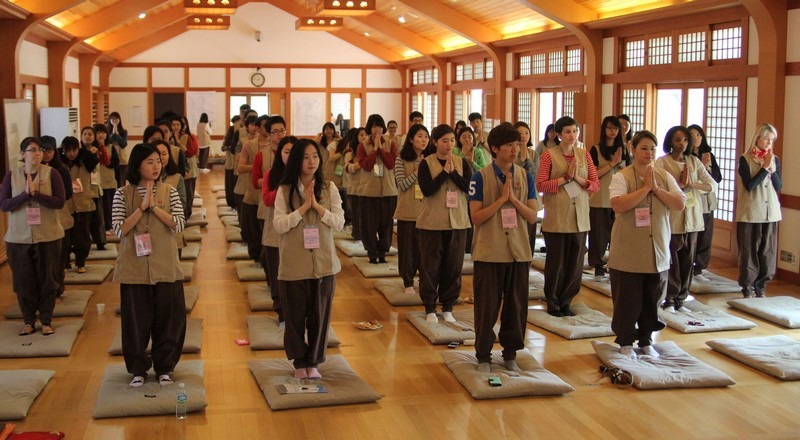
Regular Overnight Templestay (Saturdays and Sundays) ₩120,000 per person. A full overnight program from Saturday afternoon to Sunday mid-morning. Includes temple etiquette orientation, a guided tour, a tea ceremony, sutra copying in gold ink, a monastic meal, watching the Dharma instrument performance and evening ceremony, meditation (2.5 hours), early morning wake-up at 4:00am for the Buddhist ceremony, 108 bows, and a Sunday morning tea session with a monk. What to bring: socks, a tumbler, personal toiletries beyond what’s provided (soap, hair dryer, tissue), extra clothes, and any personal medication.
Thursday Foreigner Program Weekly two-hour programs specifically for foreign visitors for ₩10,000. Includes a temple tour, meditation, and tea ceremony with monks. No reservation required — arrive at 2:00pm on Thursdays. (Verify this is still running before visiting.)
Temple etiquette for all programs: Dress modestly, no heavy perfume or makeup. Greet others with palms together (hapjang) and a half-bow. Maintain silence near prayer halls. Walk calmly with hands folded in front (chasu). Alcohol and smoking are strictly prohibited throughout the grounds.
FAQ
What is Bongeunsa Temple?
Bongeunsa (봉은사) is a Buddhist temple in Gangnam, Seoul, founded in 794AD. It is one of the oldest and most historically significant temples in the Seoul area, the center of Korean Seon (Zen) Buddhism for nearly 400 years during the Joseon Dynasty. Today it is an active temple and a major visitor destination, with programs open to the public daily.
Where is Bongeunsa Temple?
Gangnam-gu, Seoul, directly across from COEX Mall. Bongeunsa Station on Line 9, Exit 1, walking distance. The temple is easy to combine with a visit to COEX, the surrounding Gangnam restaurant district, or the Park Hyatt area (which has a concentration of good vegetarian restaurants along the street leading to the temple).
What are Bongeunsa’s opening hours?
3:00am to 10:00pm, open every day of the year. Evening prayers begin at 6:40pm; morning prayers at 4:10am.
How much does Bongeunsa Templestay cost?
The overnight Saturday-Sunday Templestay is ₩120,000 per person. The May 2026 special program is ₩15,000. The Bong-Pass day program is ₩5,000. The evening bell experience is ₩5,000. The Thursday foreigner program is ₩10,000.
What is the Maitreya statue at Bongeunsa?
A 23-meter stone statue of Maitreya, the Future Buddha, completed in 1996. It is the tallest Maitreya statue in Korea. Maitreya represents the Buddha of the future age who will achieve perfect enlightenment. The statue is visible from the street and dramatically lit at night.
What survived the fires and the Korean War?
Panjeon Hall survived both the 1939 fire and the Korean War. Inside are the 81-volume woodblock carvings of the Avatamsaka Sutra from 1855, written by Monk Yeonggi, the most historically precious artifacts in the temple. The signboard calligraphy was written by Joseon-era scholar Kim Jeonghee.
Is Bongeunsa worth visiting if you’ve already seen Jogyesa?
Yes, they’re very different temples. Jogyesa is the headquarters of Korean Buddhism and the Lotus Lantern Festival, centrally located in the old city. Bongeunsa is historically the Seon meditation center, set in Gangnam, with a dramatically different atmosphere especially at night. They serve different moods and different parts of the city.
Bongeunsa doesn’t feel like what most people imagine when they picture a Korean temple, no mountain approach, no forest path, no quiet village outside the gate. What it has instead is a 1,200-year history holding its ground in the middle of one of Asia’s most modern urban districts, an evening prayer ritual that will stop you in place, and the tallest stone Maitreya in Korea watching over it all. It’s worth more than a quick walk-through.
Did you like this post? Pin It!