Jingwansa Temple: Seoul’s Mountain Temple in Bukhansan Park
Last Updated on May 6, 2026
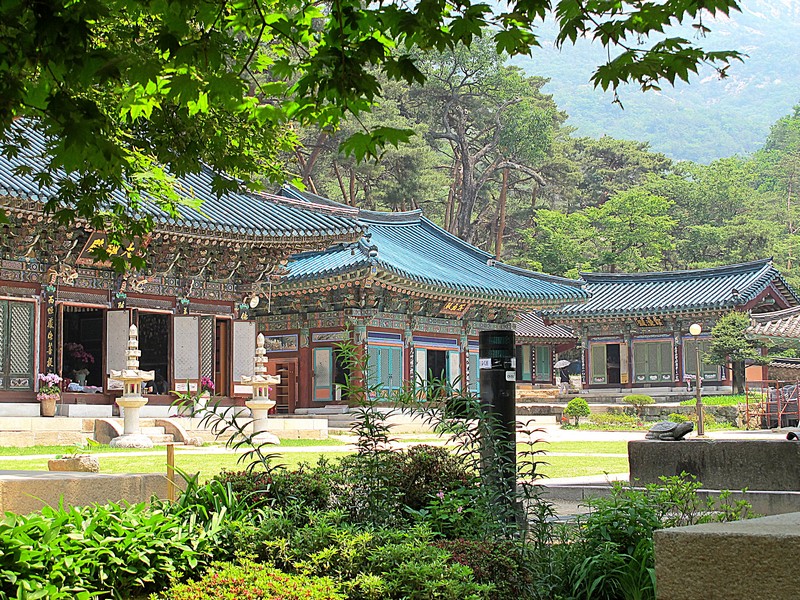
When it comes to visiting a Buddhist temple in Seoul, you have no shortage of options. But Jingwansa Temple (진관사) in Bukhansan National Park offers something that most Seoul temples can’t: the genuine quiet of the mountains, a history directly tied to Korean royalty, and a story of resistance that only came to light in 2009. It’s one of the four major temples in the suburbs of Seoul, the only temple in the city to perform the Suryukje ceremony, and the place where a Korean flag made from a Japanese flag was found hidden in a wall, along with anti-Japanese newspapers from 1919.
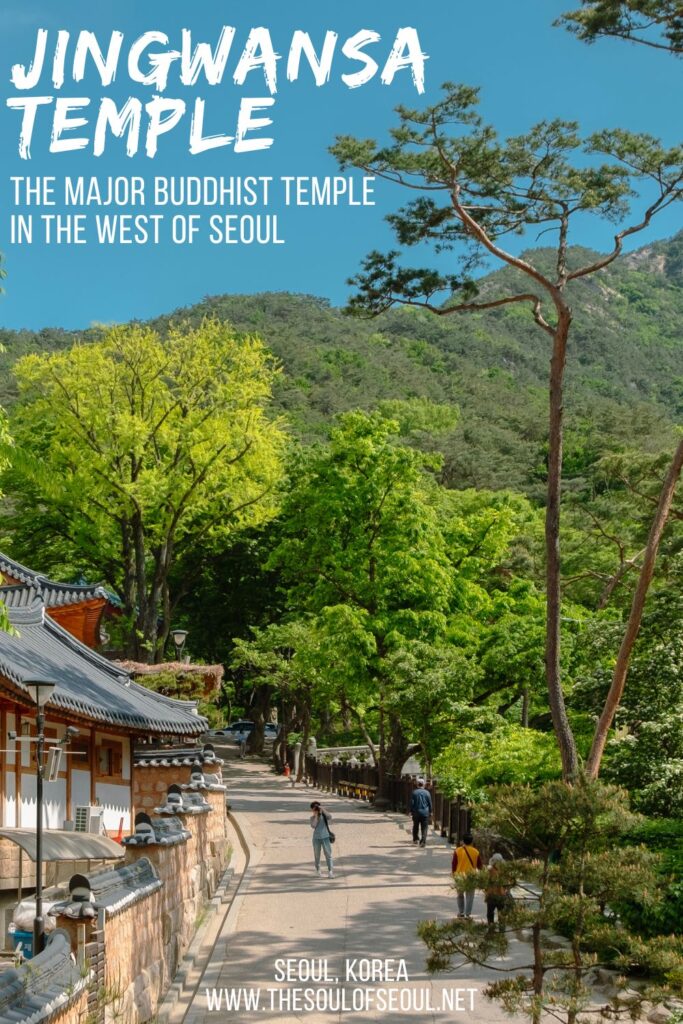
The temple sits just beyond Eunpyeong Hanok Village, which makes it easy to add to a trip that already includes the hanok village. If you follow the trail up from the village, it leads directly to Jingwansa, and from there you can continue into Bukhansan National Park.
Plan your trip to Jingwansa Temple in Seoul, Korea:
- How To Get There
- History: A King, a Monk, and a Debt of Gratitude
- What Happened Here During the Japanese Colonial Period
- What To See
- Temple Food
- Templestay Program
(This post contains affiliate links, which means I receive a certain percentage of a sale if you purchase after clicking at no cost to you. Thank you for your support.)
How To Get There
By subway: Yeonsinnae Station, Exit 3. Make a U-turn from the exit and turn right at the corner. One block down is the stop for the shuttle bus to Jingwansa.
By bus: Bus 7724 (green bus) from Exit 3 of Gupabal Station (Line 3) to Jingwansa Temple (final stop).
On foot from Eunpyeong Hanok Village: Follow the trail up from the hanok village, it leads directly to the temple. From there you can continue further up into Bukhansan National Park.
The temple is approximately four kilometers from Yeonsinnae Station. Shuttle buses run regularly.
History: A King, a Monk, and a Debt of Gratitude
Jingwansa was established in 1011 to honor a debt that could not otherwise be repaid.
When the future Hyeon-jong was twelve years old, he was expelled from the palace during a violent power struggle. Buddhist monk Jingwan took the boy in and sheltered him through the upheaval.
When Hyeon-jong later reclaimed his position and became the 8th king of the Goryeo Dynasty, he had a temple built in Jingwan’s name, Jingwansa, and placed it under special royal protection. The temple’s name carries this origin in its very meaning: Jin (津) means river port or crossing, and Kwan (寬) means forgiveness, a place of passage and grace.
The royal connection continued through the Joseon Dynasty. King Sejong, the fourth Joseon king, who reigned from 1418 to 1450, established a government library here called Sagadokseodang. Confucian scholars and members of the Jiphyeonjeon, the royal research institute, came to this temple to read, study, and develop the Korean writing system now known as Hangeul, meaning a Buddhist temple in the mountains became a birthplace of the Korean alphabet.
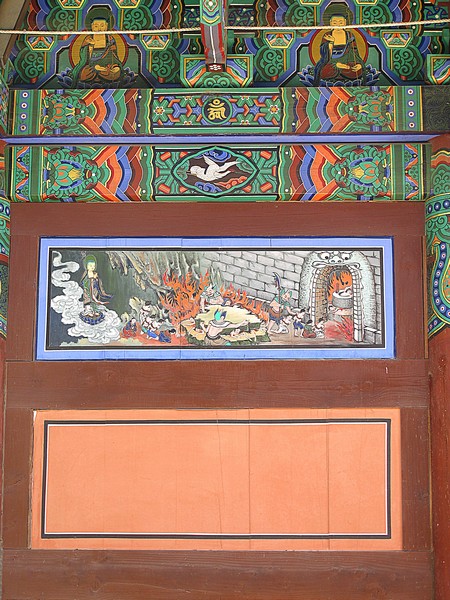
The temple was also the site of the Suryukje ceremony (수륙재), a Buddhist ritual to provide food and spiritual teachings to wandering spirits and hungry demons who move through the land and sea. This ceremony, designated National Intangible Cultural Property No. 126, is performed every leap year over 49 days, and Jingwansa is the only temple in Seoul authorized to hold it.
In recent years the ceremony has drawn international attention, contemporary artists and curators from around the world have been invited to observe, with participants describing the music, dance, and ritual at the main pavilion as genuinely unlike anything else they had encountered.
The temple was destroyed during the Korean War, with only a handful of buildings surviving. Beginning in 1963, a 30-year reconstruction effort restored most of the complex. Today Jingwansa also serves as a training center for biguni (female monks), one of the few temples in the Seoul area with this role.
What Happened Here During the Japanese Colonial Period
In 2009, during restoration work on Chilseonggak Hall, workers discovered a Taegeukgi, the Korean national flag, hidden inside a wall. The flag had been made from a Japanese flag. Along with it were approximately 20 items including an Independence Newspaper (Tongnip Sinmun) from 1919, the year of the March 1st Independence Movement, and other materials connected to the Buddhist monk Chowol Baek’s anti-Japanese resistance activities. The entire collection was designated as a national treasure in 2021.
This discovery transformed what was already a significant temple into something more: physical evidence that Jingwansa was an active center of resistance during the Japanese colonial period (1910-1945), not merely a passive survivor of it. The national flag sewn from a Japanese one is one of the more striking artifacts in Korean independence history.
What To See
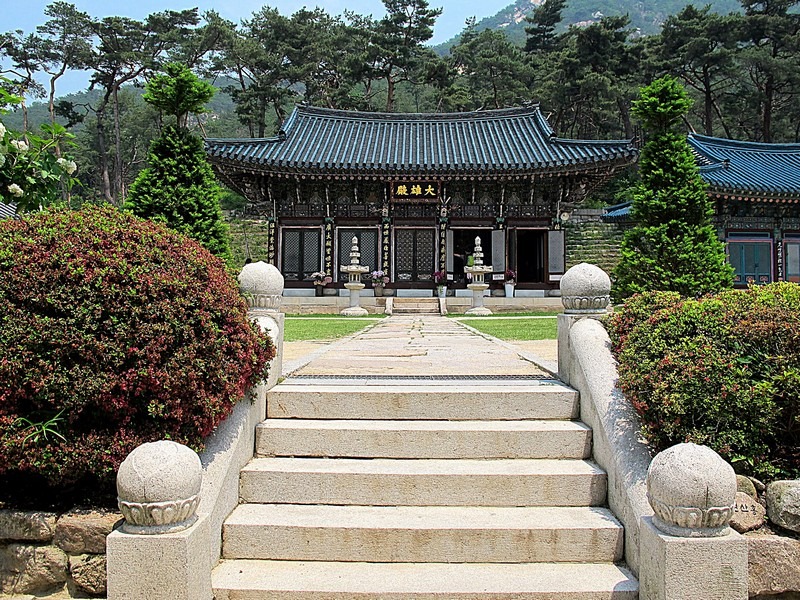
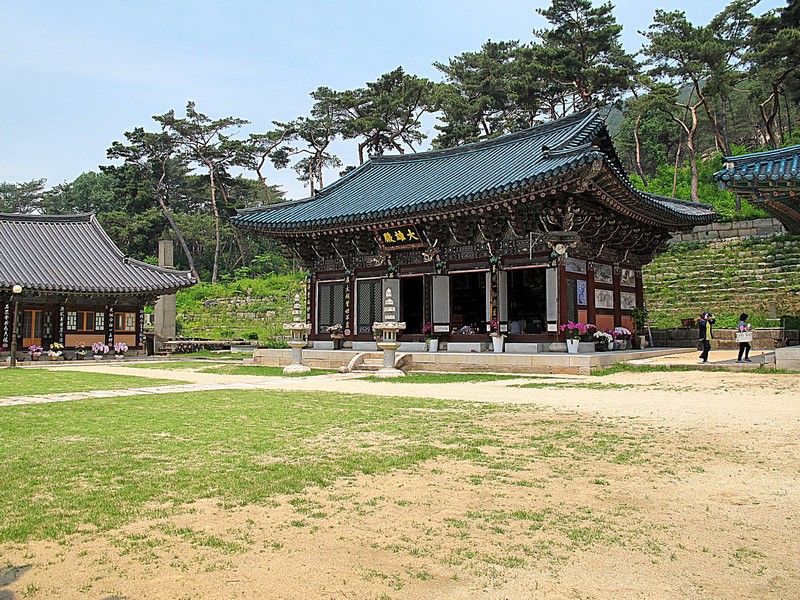
Daeungjeon — Main Hall
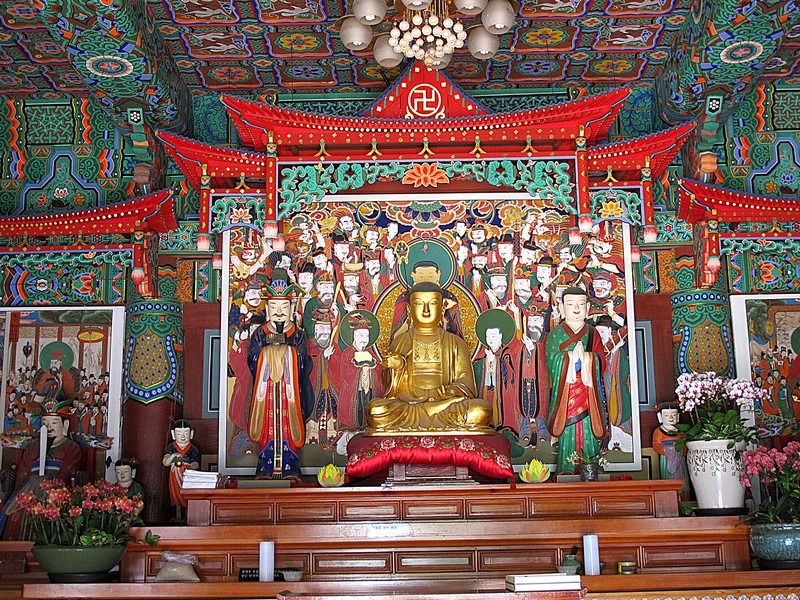
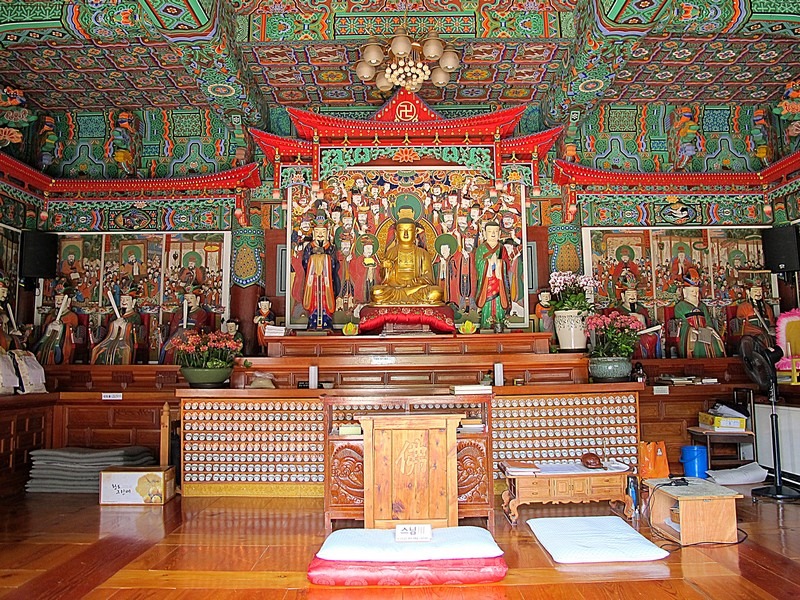
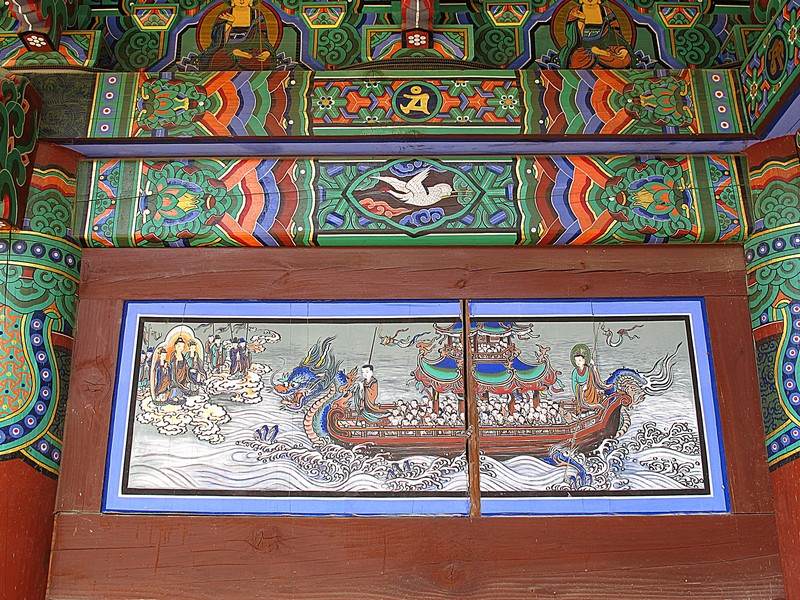
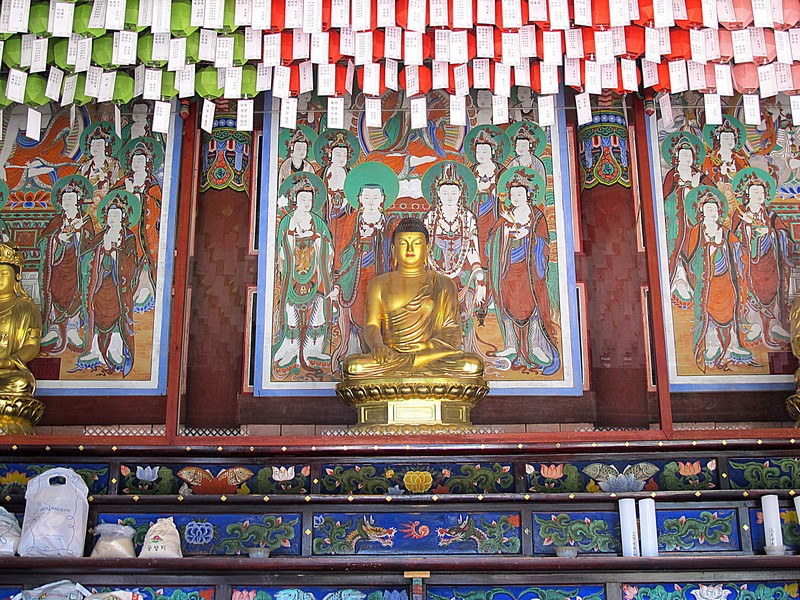
The main hall houses a statue of Sakyamuni Buddha flanked by Mireukbosa and Jehwagalhwabosal. During a spring visit years ago, I found the local women sitting beneath the statues polishing the candlesticks and ceremonial pieces, the ordinary maintenance of a living temple.
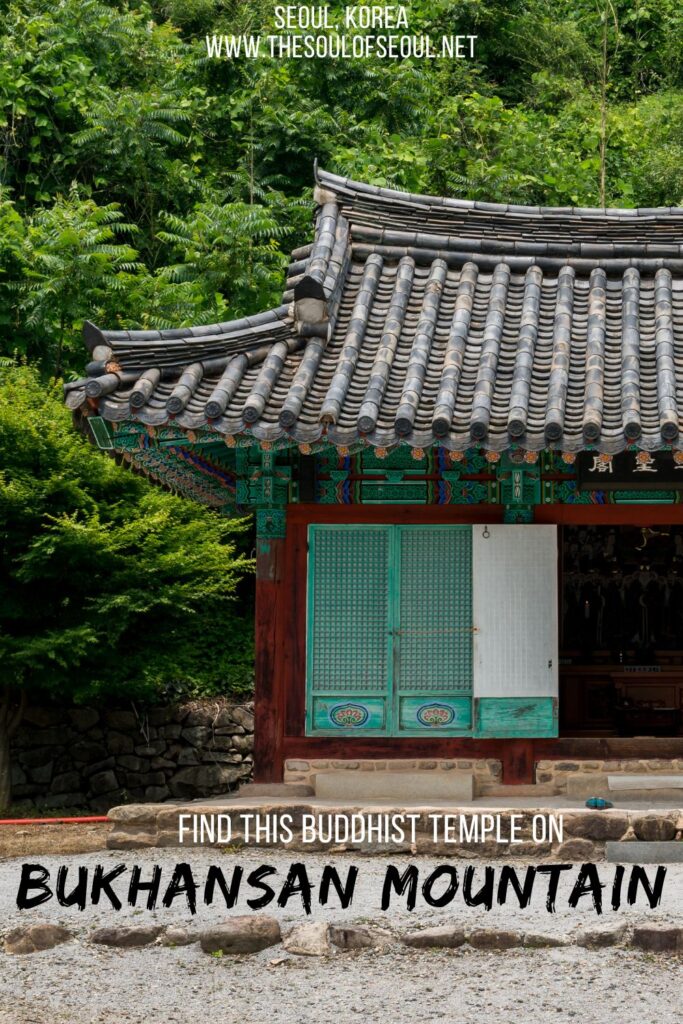
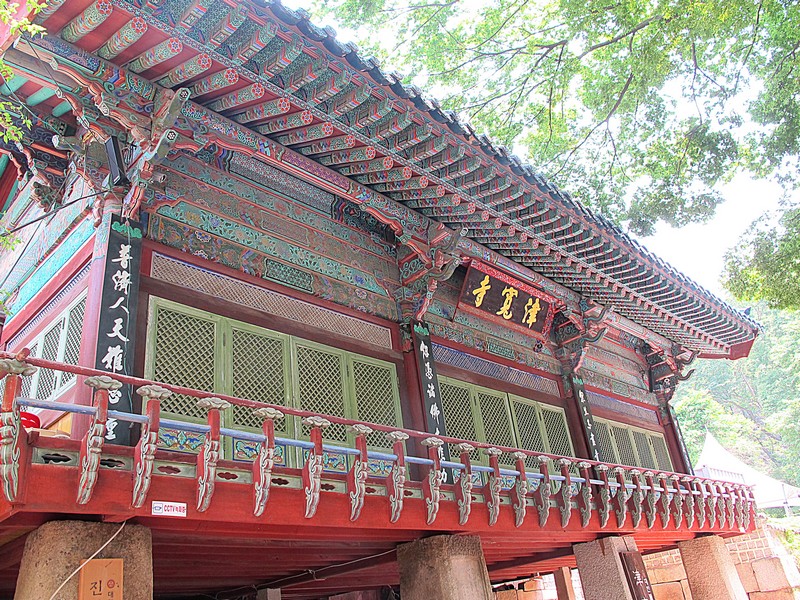
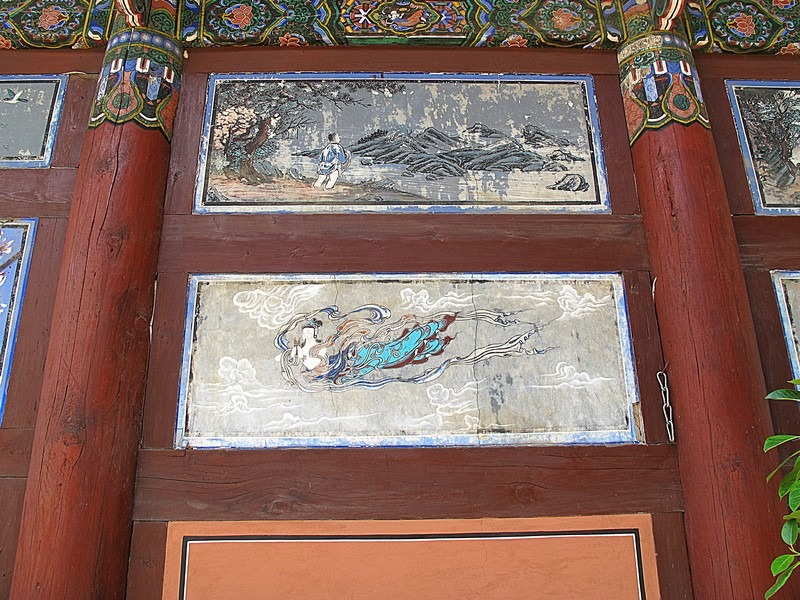
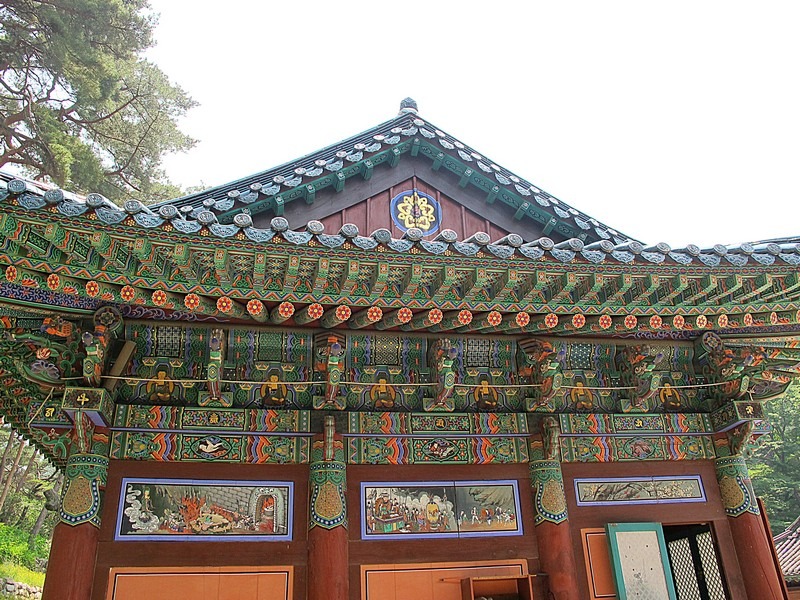
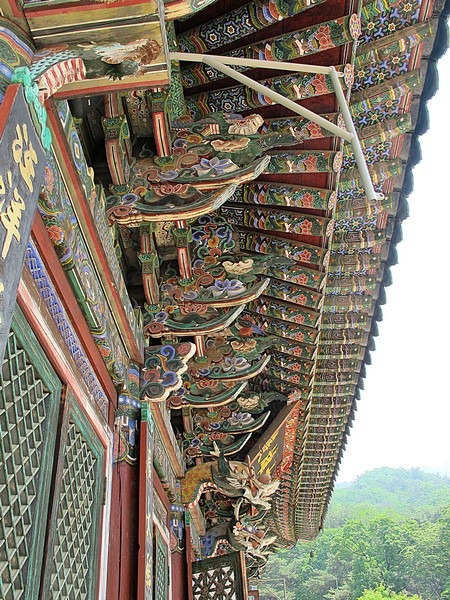
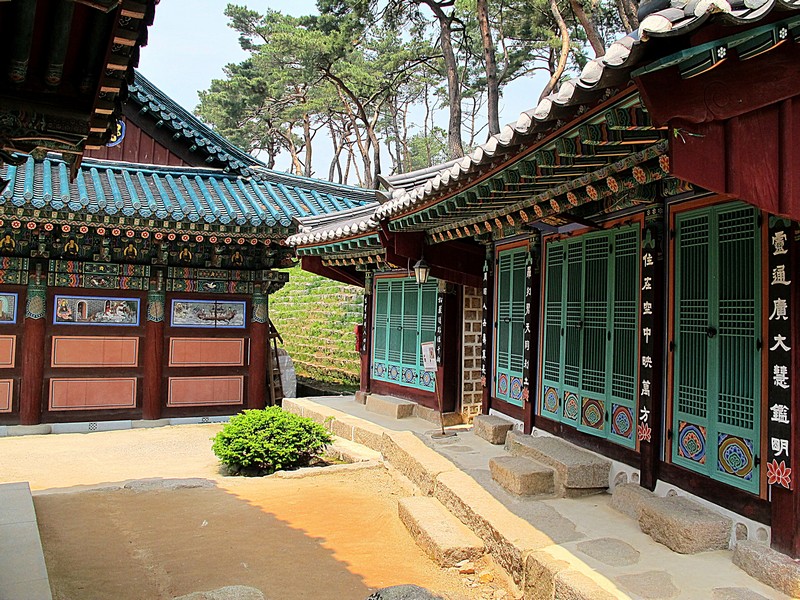
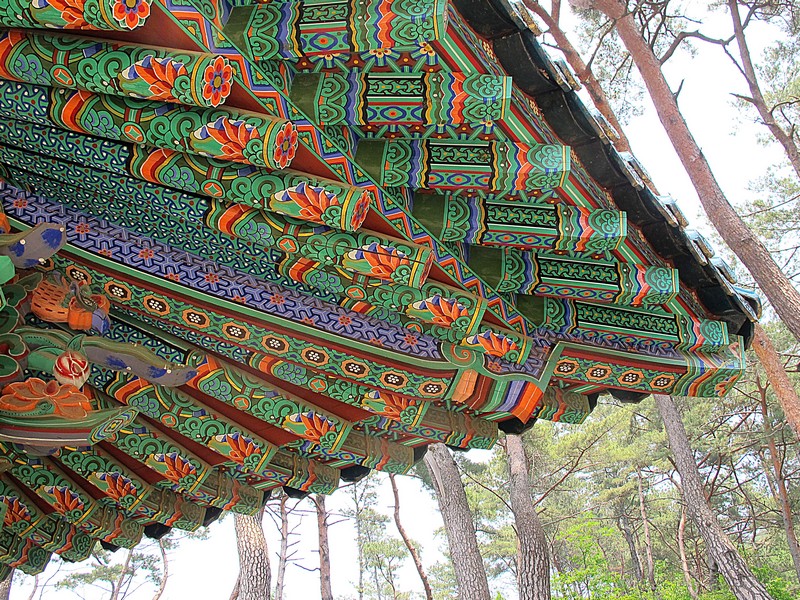
Notice the beautiful colors and decoration of the temples. If you want to learn what they mean, read the guide to dancheong before your visit.
Myeongbujeon — Hall of Judgment
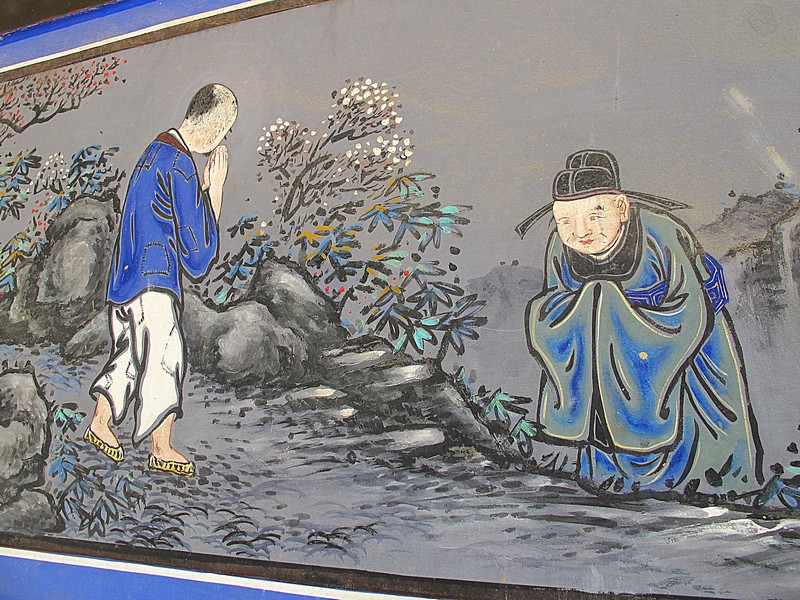
To the right of the main hall, this hall is dedicated to prayers for the dead, a place where families come to pray for the spirits of those who have passed to find their way into eternity.
Chilseonggak Hall
One of only three buildings to survive the Korean War, Chilseonggak was built in 1907 and enshrines Chilseongsin, the god of fortune and protector against calamity. Inside are a seated stone Buddha (Seoul Cultural Property Material No. 10) and a Buddhist painting of Vairocana Buddha and Chilseongsin (Seoul Tangible Cultural Property No. 147). This is the hall where the Korean independence materials were found in 2009.
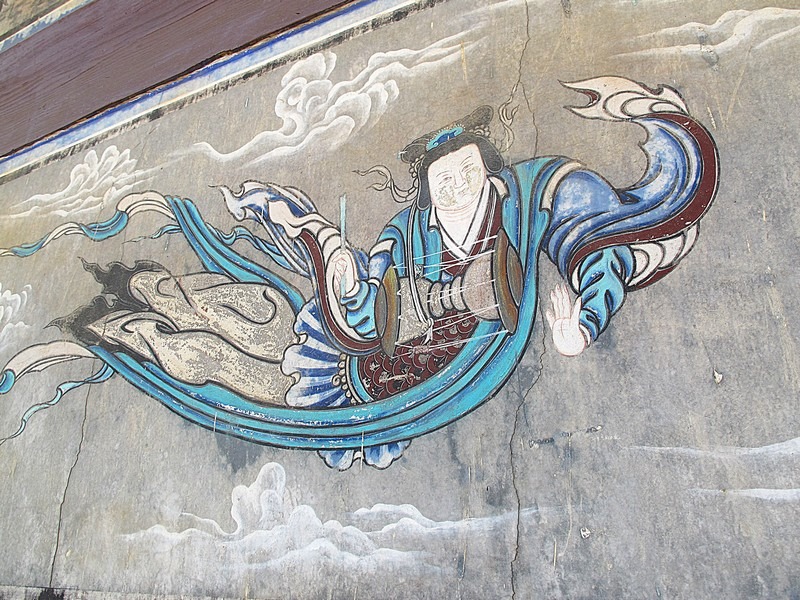
Dokseongjeon Hall
Also built in 1907 and one of the surviving Korean War structures, Dokseongjeon Hall houses Dokseong, an arhat who became a monk immediately after Sakyamuni’s entry into Nirvana, representing detachment and solitary practice. The Dokseong statue here (Seoul Cultural Property No. 11) is a small pottery figurine measuring only 37 centimeters. The hall also contains a Sansindo painting (Seoul Cultural Property No. 12) from 1907 depicting Naban Jonja and Dongja with Mount Tiantai in the background.
The Three Surviving Buildings
Together, the three buildings that survived the Korean War contain artifacts from the late 16th to early 20th centuries, designated as cultural assets of Seoul. As a group they represent the material continuity of the temple across its most destructive centuries.
Temple Food
Jingwansa has been renowned for its temple food for over a millennium. Temple food, prepared according to Buddhist dietary discipline, plant-based, and without the pungent vegetables (garlic, green onion, and others) used in regular Korean cooking, is a distinct culinary tradition with its own flavors and techniques.
The temple has hosted foreign diplomats’ spouses and international guests for traditional temple food experiences over many years. The Templestay program includes temple food lunch as part of its schedule, and the monks take the preparation seriously.
Templestay Program
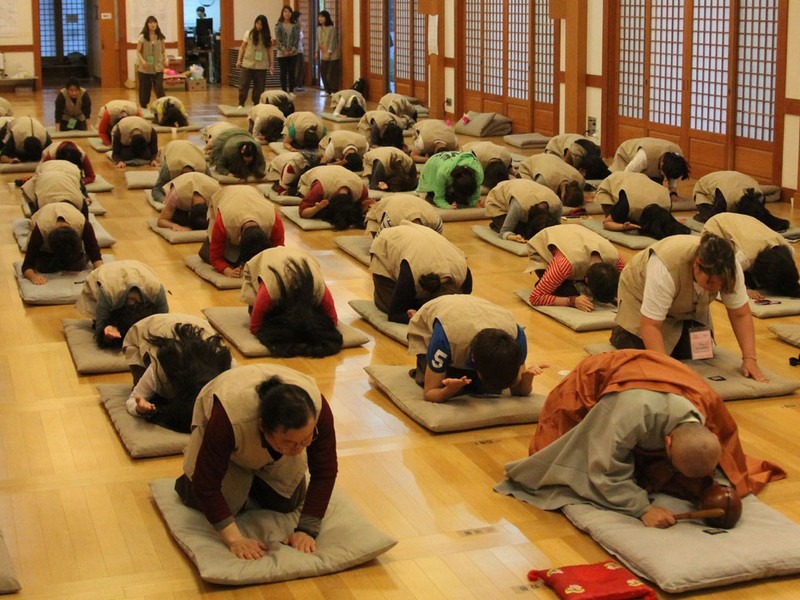
Templestay programs are a fantastic way to experience a Buddhist temple in South Korea. For updated information and to make reservations, visit the official Templestay website.
Relish the Nature: A half-day program that includes a guided temple tour, a Jingwansa orientation session, a traditional monastic lunch, and a tea ceremony. The program requires a minimum of 15 participants and may be canceled if the minimum isn’t met. Reservations close 3 days before the program date.
Temple etiquette during the program: greet monks with palms pressed together and a half-bow; maintain a quiet, reverent atmosphere; walk with hands in the Chasu posture (right palm lightly over left, held in front); take only what you can eat; no outside food or alcohol.
Jingwansa is a temple with a thousand years of layers. A king who owed a monk his life. Hangeul scholars studying in a Buddhist library. A hidden flag sewn from the flag of an occupying power. The only ceremony in Seoul feeding spirits who have nowhere else to go. Come for the mountain quiet, you’ll find considerably more than that.
Did you like this post? Pin It!