Paebaek Ceremony in Korea: From Chestnuts to Piggybacks
Last Updated on March 18, 2026
You might think the main wedding ceremony is the most meaningful part of a Korean wedding, but in many ways, the paebaek ceremony is where things become truly personal. This traditional Korean wedding ceremony is smaller, more intimate, and centered on family. It is the moment when the bride and groom bow to their elders, receive blessings and advice, and symbolically unite the two families. It is also the part of the wedding that many people remember most because it includes some of the most iconic traditions: the Hanbok, tossing the dates and chestnuts, and yes, the famous piggyback ride.
When I had my own Korean wedding ceremony, the paebaek was one of the most memorable parts of the day. It felt formal and symbolic, but also warm and surprisingly playful at times. If you’re planning a wedding in Korea, attending one, or just curious about Korean culture, this is one tradition worth understanding.
Learn about the traditional paebaek ceremony in a Korean wedding ceremony:
- What Is ThePaebaek Ceremony?
- The History Of The Paebaek Ceremony
- How To Prepare For A Paebaek Ceremony
- What To Wear For A Paebaek Ceremony
- The steps in a paebaek ceremony
- Common questions about a paebaek ceremony
(This post contains affiliate links, which means I receive a certain percentage of a sale if you purchase after clicking at no cost to you. These funds go to maintain the site. Thank you for your support.)
What Is The Paebaek Ceremony?
The paebaek ceremony is a traditional part of a Korean wedding that focuses on family unity. While the main wedding ceremony is often public and includes all of the guests, the paebaek is usually reserved for close family members.
Traditionally, the paebaek symbolized the bride being formally welcomed into the groom’s family. Today, it is more commonly seen as a ceremony that brings both families together and marks the beginning of the couple’s new life as one family.
It is one of the most meaningful parts of a Korean wedding because it is intimate, symbolic, and full of tradition.
The History Of The Paebaek Ceremony
The paebaek ceremony has roots in older Koran wedding customs when marriage was not only about the couple, but also about joining households and family lines.
In the past, the ceremony was mainly for the groom’s family. The bride would leave her own home and become part of her husband’s household, and the paebaek was the formal moment of acceptance and the beginning of the transition. It was part of a larger traditional wedding process called hurye, which included multiple steps over several days including parading the bride toward the groom’s home in a palanquin with porters. The whole hurye ceremony took place over three days.
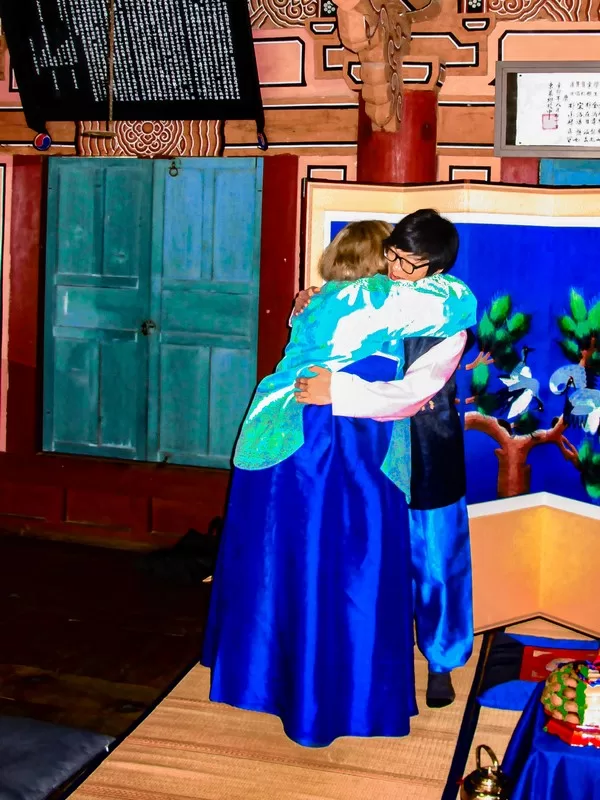
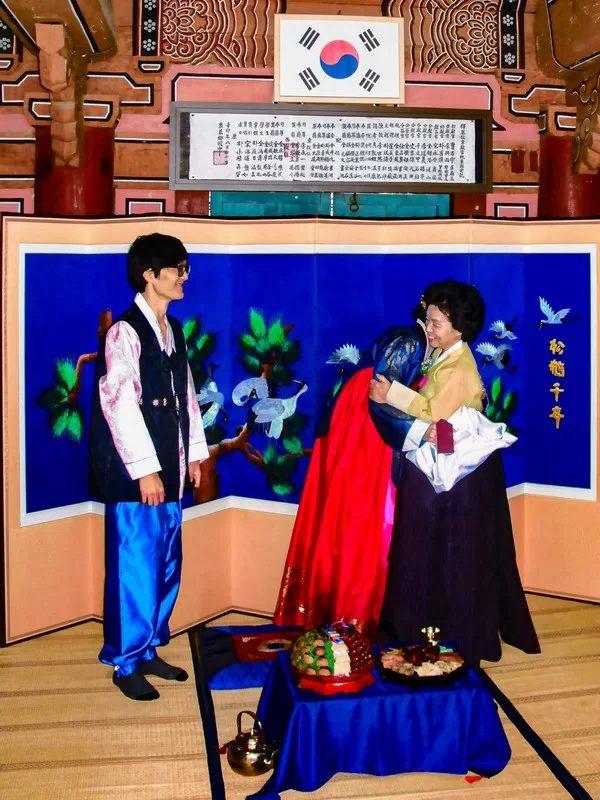
Today, the paebaek ceremony is much shorter and usually takes place just after the main ceremony. As the guests head to the reception, the immediate family members will gather, often in a separate room. Though the original meaning centered more on the groom’s family, modern paebaek ceremonies often include both sides of the family.
How To Prepare For A Paebaek Ceremony
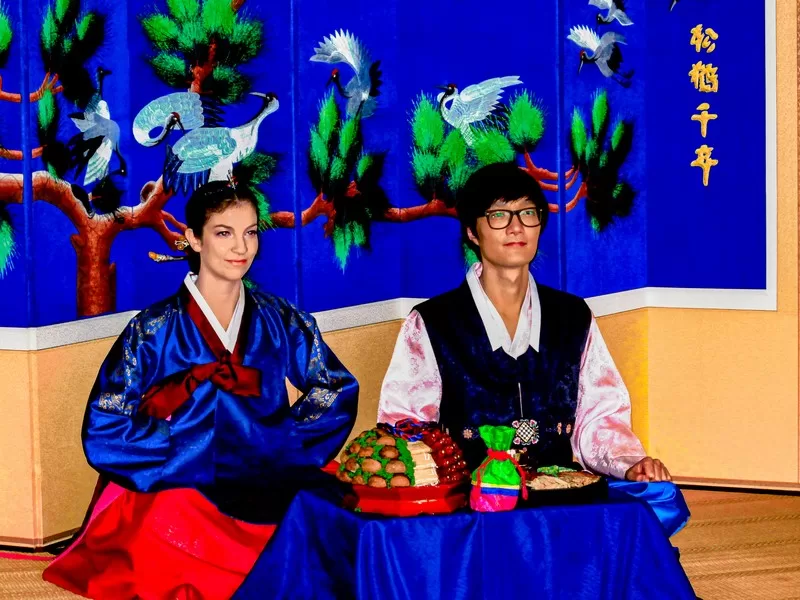
The setup for the paebaek ceremony is usually traditional and symbolic.
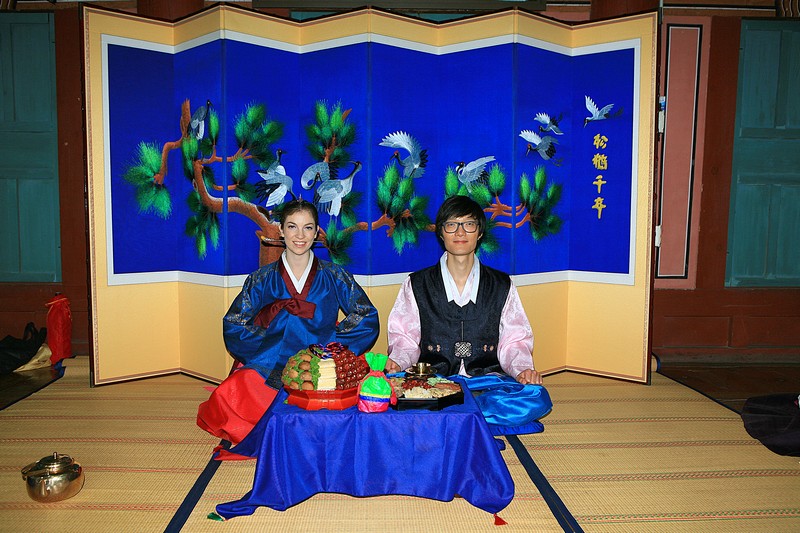
The ceremony space usually includes:
- A bamboo mat on the floor
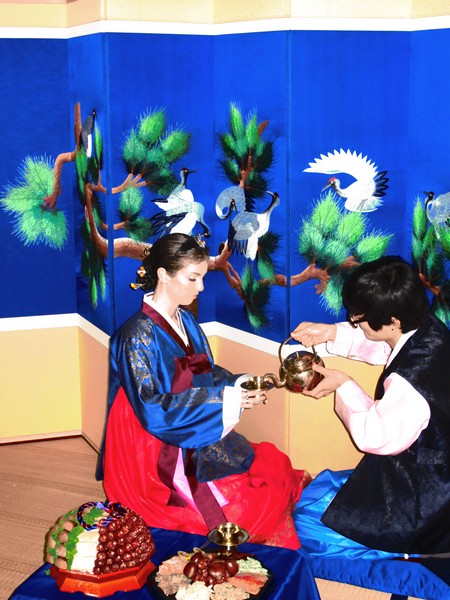
- A folding screen with some natural scenery on it if you can’t find a Korean one
- A low wooden table. Korean rosewood tables are used for many traditional ceremonies include the Jesa ceremony done on traditional Korean holidays.
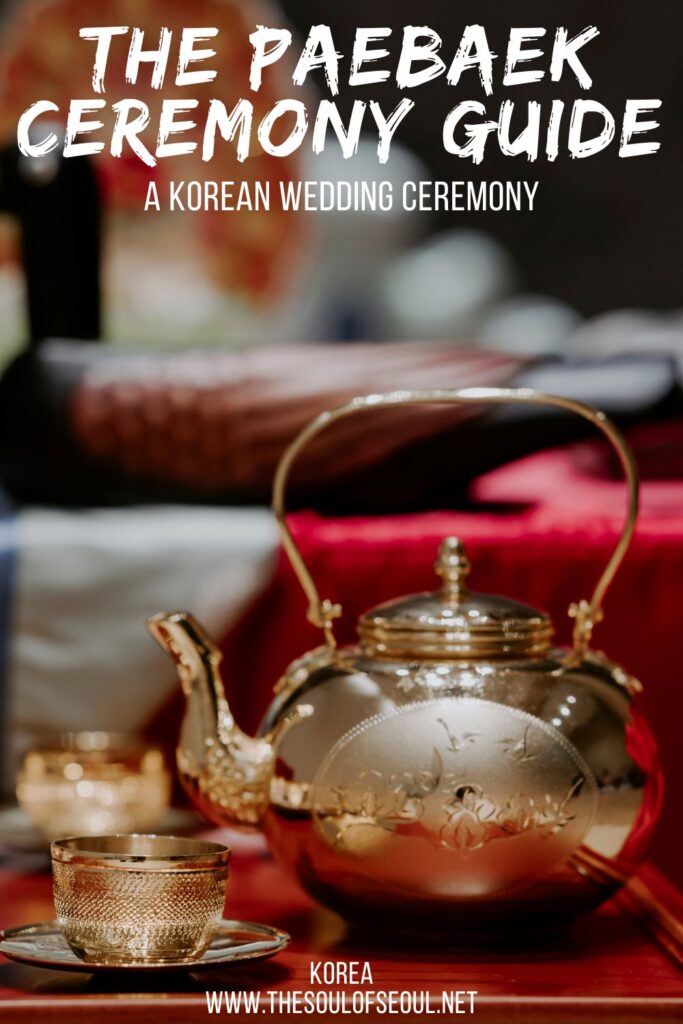
- A smaller tea or wine table nearby.
The main table is arranged with symbolic foods and offerings. There are usually nine offerings which commonly include:
- Dried fruits and nuts and wine.
- Dates set on the eastern side, for the couple to rise early and work hard
- Chestnuts on the western side, to ward off evil spirits
- Dried meats and sweets so that the new mother-in-law accepts the new daughter-in-law with kindness and generosity
- Gingko nuts to bring eternal faith to their son
- Wine or tea for ceremonial serving
In Korea, you can find platters already prepared in traditional markets like Gwangjang Market in downtown Seoul. The arrangement of the table matters, and many couples in Korea will use professional paebaek services or wedding halls that prepare this in advance.
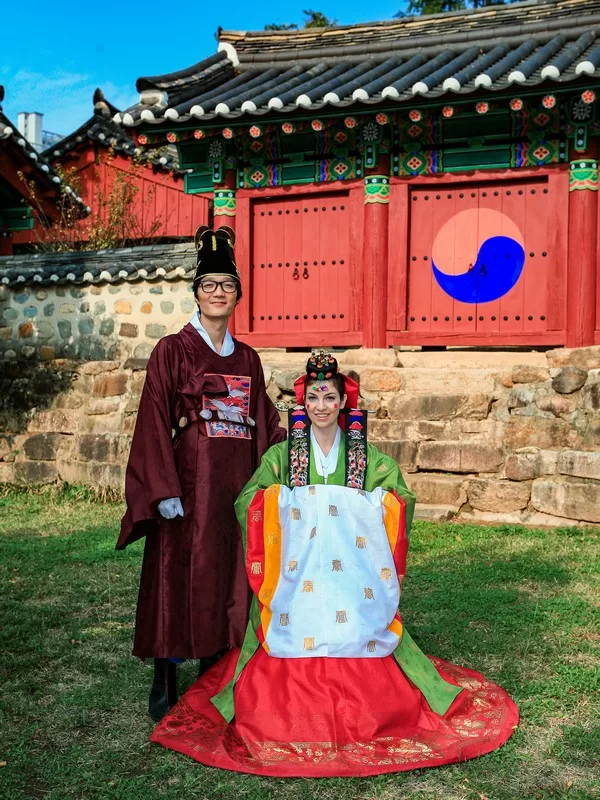
What To Wear For A Paebaek Ceremony
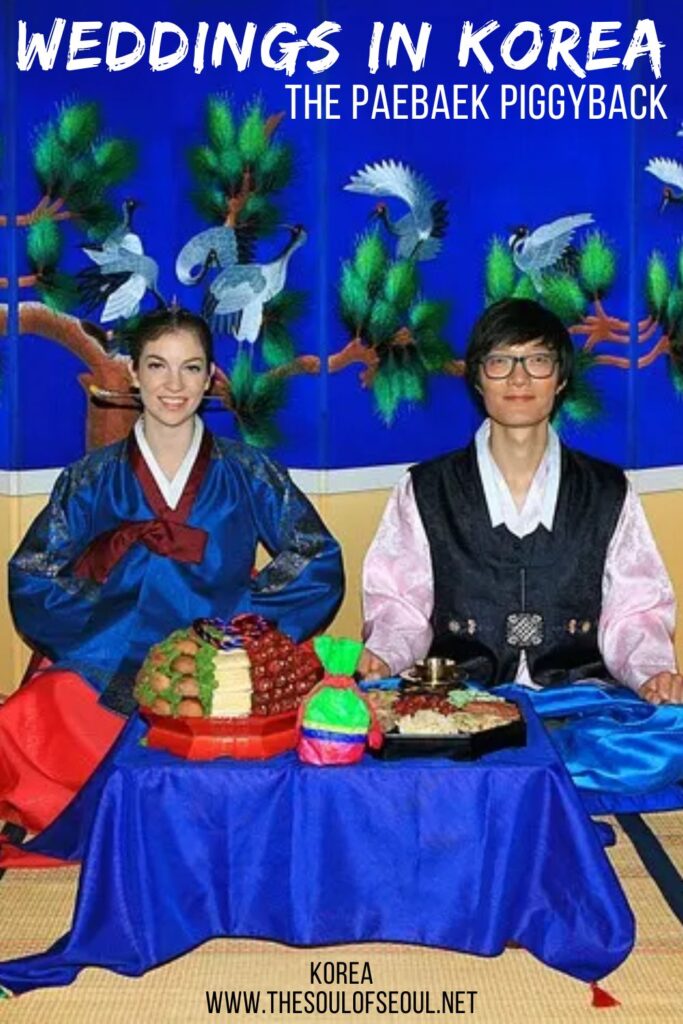
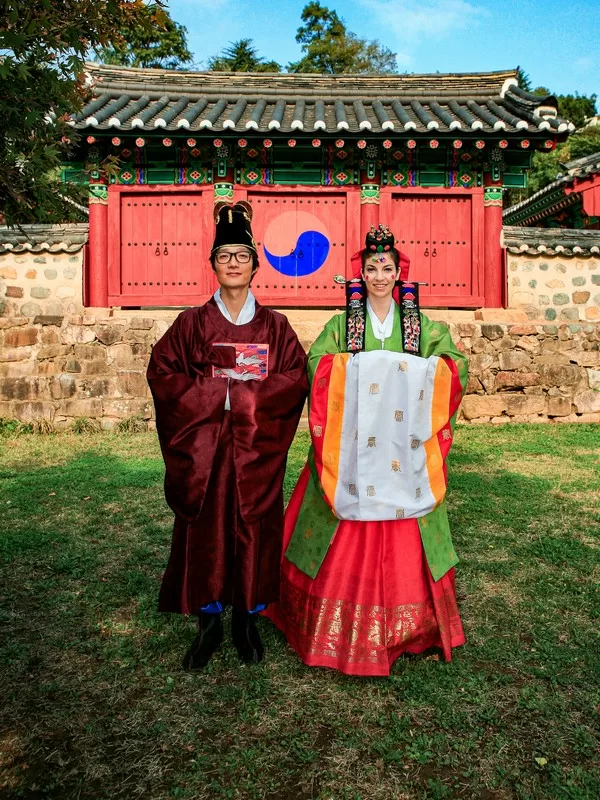
In most cases, the bride and groom wear traditional Hanbok for the paebaek ceremony, even if the main wedding was entirely modern.
For my wedding, after the larger ceremony, I changed again for the paebaek. The more elebarate layers of the traditional Korean wedding Hanbok were adjusted, the wonsam removed, some accessories came off as well, and I changed into a different less cumbersom top. It still felt formal, but it was more intimate and practical for all of the bows and movement involved.
The Steps In A Paebaek Ceremony
While every family and venue may do things a little differently, there are the traditional steps in a paebaek ceremony.
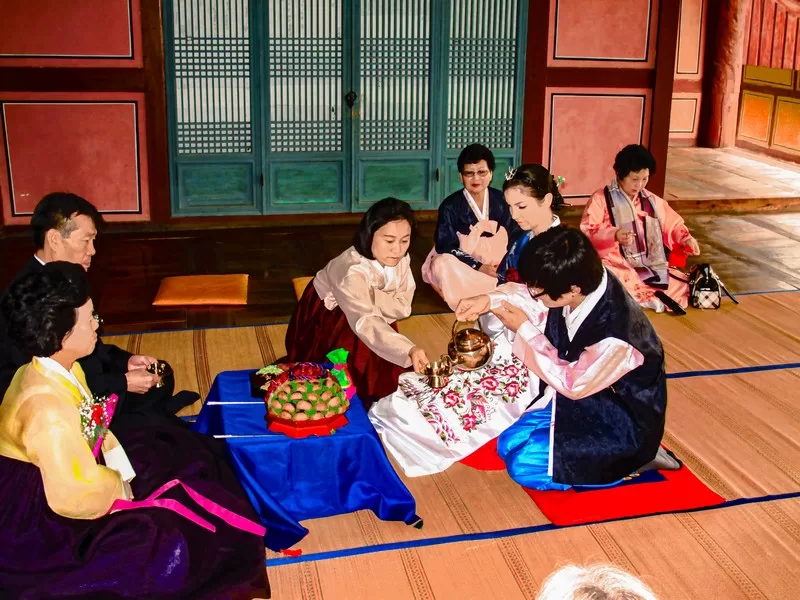
Exchanging Bows To Our Parents
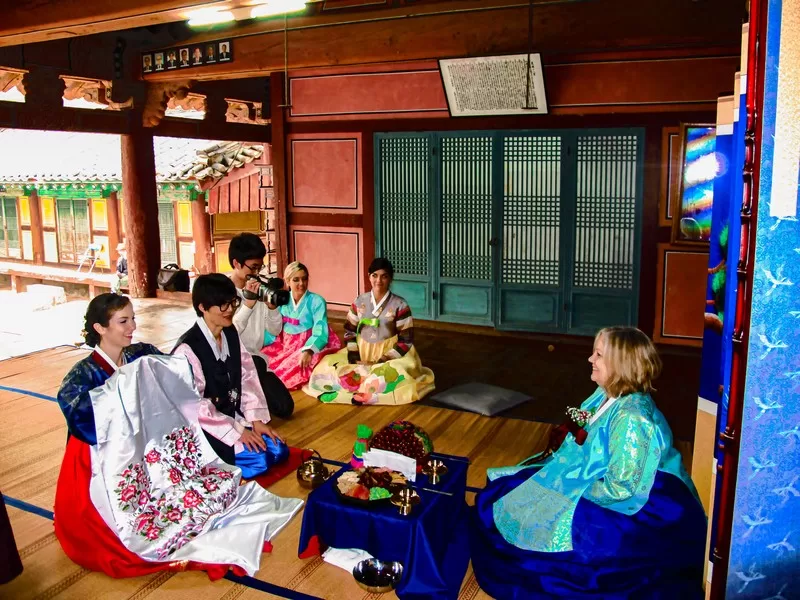
To begin, my husbands parents moved to sit behind the table in front of the folded screen. We positioned ourselves in front of the table and bowed to my husband’s parents. We bowed deeply to the floor twice and then poured them each a cup of wine.
Advice and Blessings are Bestowed
My new in-laws then offered up words of wisdom. His mother said be happy and don’t fight, which set the trend for those following who basically said the same thing. Solid marriage advice in any country really.
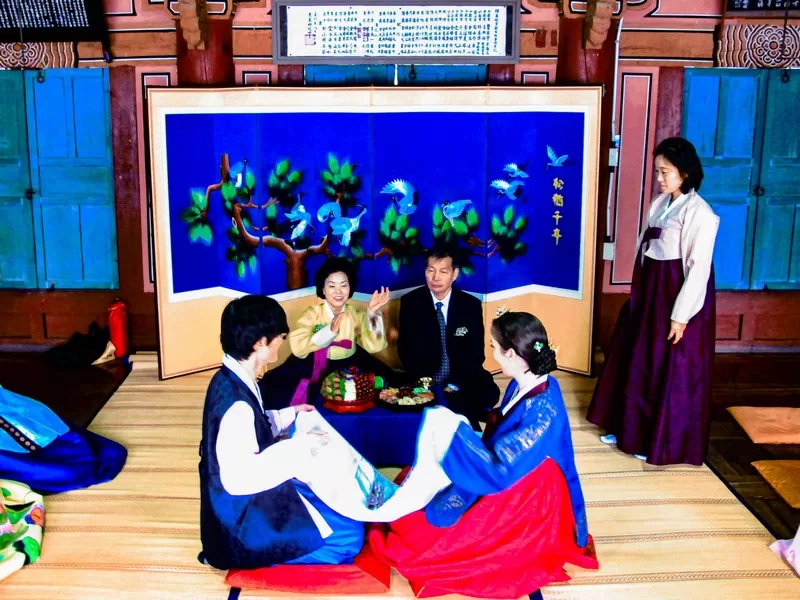
Dates and Chestnuts are Tossed
One of the more exciting parts of the ceremony is the tossing of the dates and chestnuts. The parents tossed dates and chestnuts toward us to try and catch.
According to legend the number that you catch signifies how many girls (dates) and boys (chestnuts) you will bear. We caught them all and she threw quite a lot to us so I don’t think that legend will hold strong with us. This part of the ceremony usually gets a lot of laughter.
The Ceremony Repeats with Other Family Members
As mentioned, traditionally, this ceremony was just for the groom’s family to welcome the new daughter-in-law, but now it’s for both families. So, next my mother was seated behind the table, followed by my husband’s extended family and then my sisters. My sisters are younger than me so we didn’t have to bow all the way to the floor to them, just half way. They also weren’t given the wine to drink.
A Full Family Bow
All of the family members then rose and we all bowed to each other after some formal introductions. We each hugged our new mother-in-law and that was that. Our family was now one.
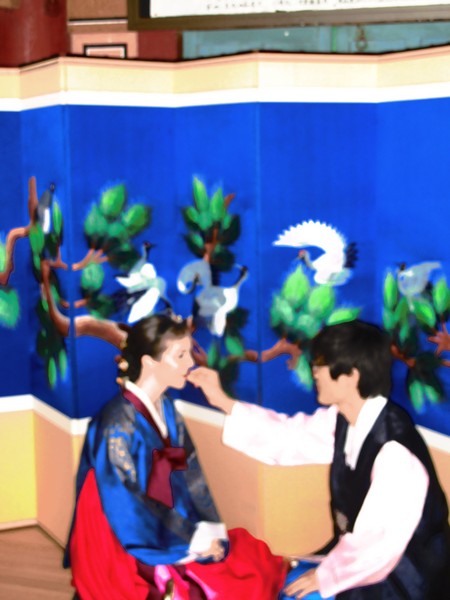
A Piggyback Ride
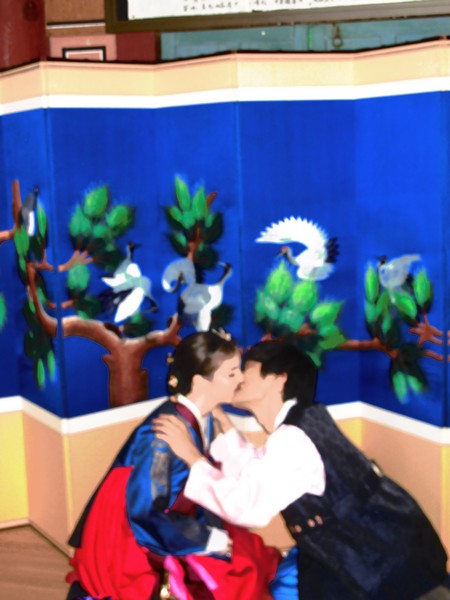
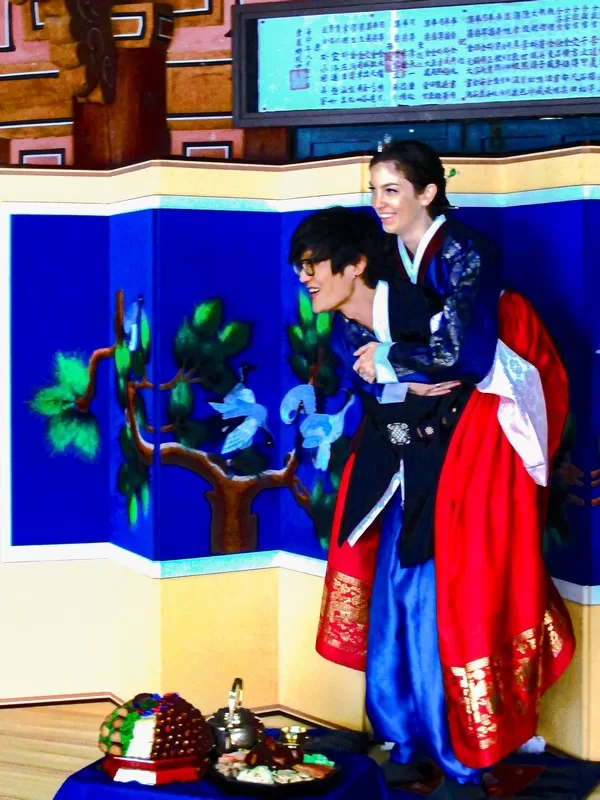
Then it was just me and Jae-oo seated behind the table. We poured each other a cup of wine, crossed arms and drank. He put a chestnut in my mouth and then had to come and get it. And then finally he lifted me on his back and was told he should take me around the table twice to show his strength. It was a great end to our ceremony. Who doesn’t like a piggyback ride?
Common questions about a paebaek ceremony
Can non-family members attend the paebaek ceremony?
Some couples like the paebaek to be more public and open to everyone in attendance. If the space allows it and it’s clear you’re welcome to attend, go for it. In our case, we were in a traditional Hanok building with one side open to our guests though it was somewhat hidden by a traditional folding wall. Only our immediate family members were on the floor of the Hanok with us, but it was still open if guests wanted to see.
Some people chose to watch and we were fine with that. At some weddings I’ve attended, the paebaek is in a totally separate room with doors closed and just for the family. It’s usually pretty clear if you can watch or not.
Are Hanboks required at the paebaek ceremony?
In my experience in Korea, even at more modernized wedding ceremonies, the couple will change into a traditional Hanbok for the paebaek ceremony. It’s absolutely not a requirement for everyone to be in Hanboks though. The ceremony is about unifying families and not about anyone’s style choices.
Is the paebaek ceremony still done at modern Korean weddings?
Yes. Many modern Korean weddings still include the paebaek, even if the main ceremony looks Western in style.
Did you like this post? Pin IT!