Traditional Korean Wedding Dress: What Is a Wedding Hanbok?
Last Updated on March 18, 2026
You might think a Korean wedding dress looks similar to a Hanbok you’d rent in Seoul for photos, but once you step into a real traditional wedding ceremony, you quickly realize, it’s a whole different level. When I began planning our wedding ceremonies (yes, we had two!), the American wedding ceremony being much more familiar was a breeze. The Korean ceremony? I had so many questions.
What does a Korean wedding dress look like? What do Korean women wear in a wedding? Is there a traditional Korean wedding dress? Or, do women wear more modern dresses these days? I wanted to be culturally appropriate and we decided to go traditional because we’d be doing a traditional American ceremony as well.
I wanted to do it properly, not just for photos, but out of respect for the culture I’ve come to love and was marrying into. So, we chose to have a traditional Korean wedding ceremony, and that’s when I experienced firsthand just how intricate and meaningful the traditional Korean wedding Hanbok really is.
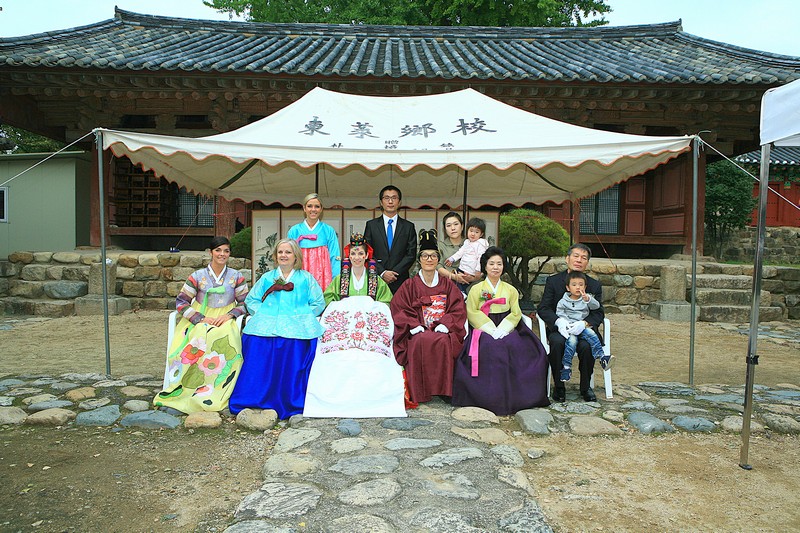
Get ready to see what a real Korean wedding dress looks like and how it all comes together:
- What Is a Traditional Korean Wedding Dress?
- The Parts of a Traditional Korean Wedding Hanbok
- Korean Wedding Hair & Accessories
- My Experience Wearing a Korean Wedding Hanbok
- Do Hanbok Colors Have Meaning?
- Wedding Hanbok vs Everyday Hanbok vs Modern Hanbok: What’s The Difference?
(This post contains affiliate links, which means I receive a certain percentage of a sale if you purchase after clicking at no cost to you. Thank you for your support.)
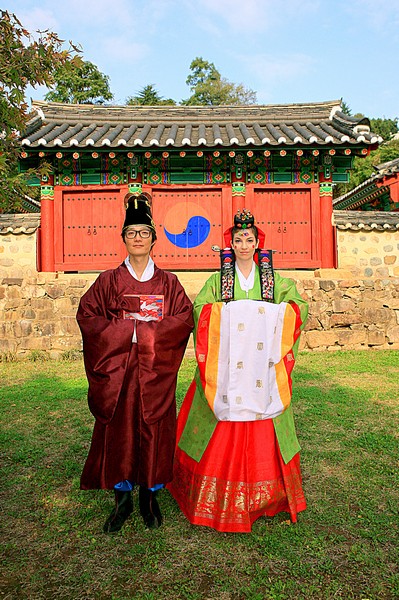
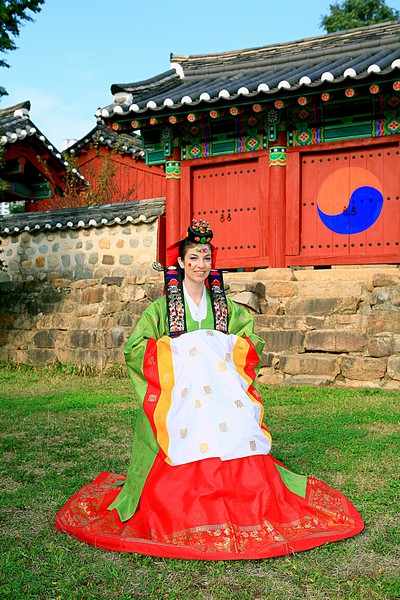
What Is a Traditional Korean Wedding Dress?
The wedding Hanbok is much more elaborate than the everyday or rental Hanboks. While modern Hanboks you see in Seoul are simplified and often styled for photos, wedding Hanboks are layered, symbolic, and rooted in royal court traditions from the Joseon Dynasty (1392-1910).
The Hanbok isn’t about being tight fitting or showing off curves, but the elegance and style when the wearer seemingly floats across the floor in the abundance of cloth draped around them.
The Parts of a Traditional Korean Wedding Hanbok
The traditional Korean wedding Hanbok has layers galore. A normal Hanbok has a couple layers as well, but this one had a couple beyond that, each with a different purpose. Finish the layers and then understand that in a traditional Korean wedding ceremony, I was expected to bow a dozen times.
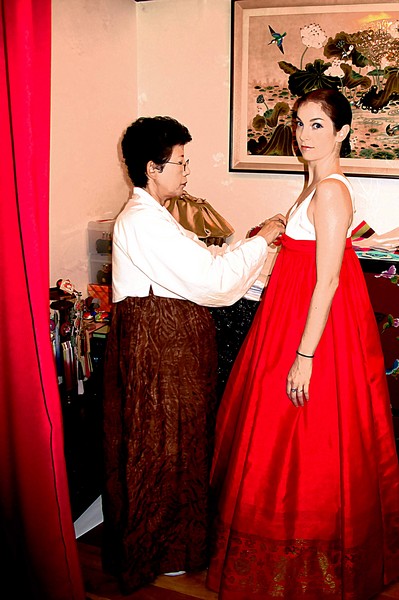
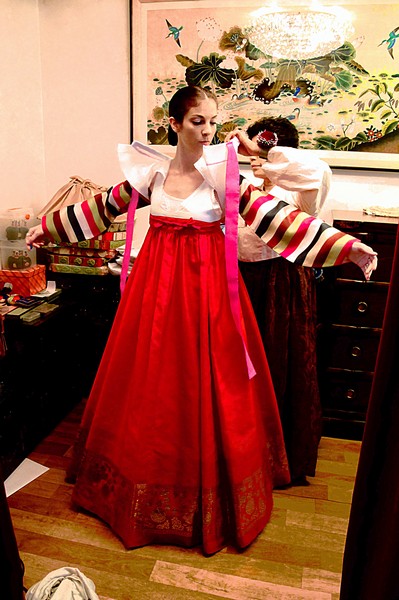
Sokchima (속치마)
The base layer. It’s structured like a corset with a skirt attached in order to create the full silhouette and a voluminous skirt. This part isn’t pictured as the Korean women helping me get dressed thought it indecent… though you really couldn’t see anything.
Chima (치마)
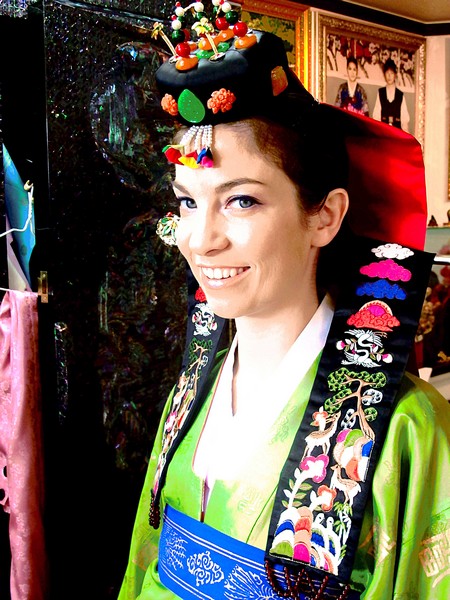
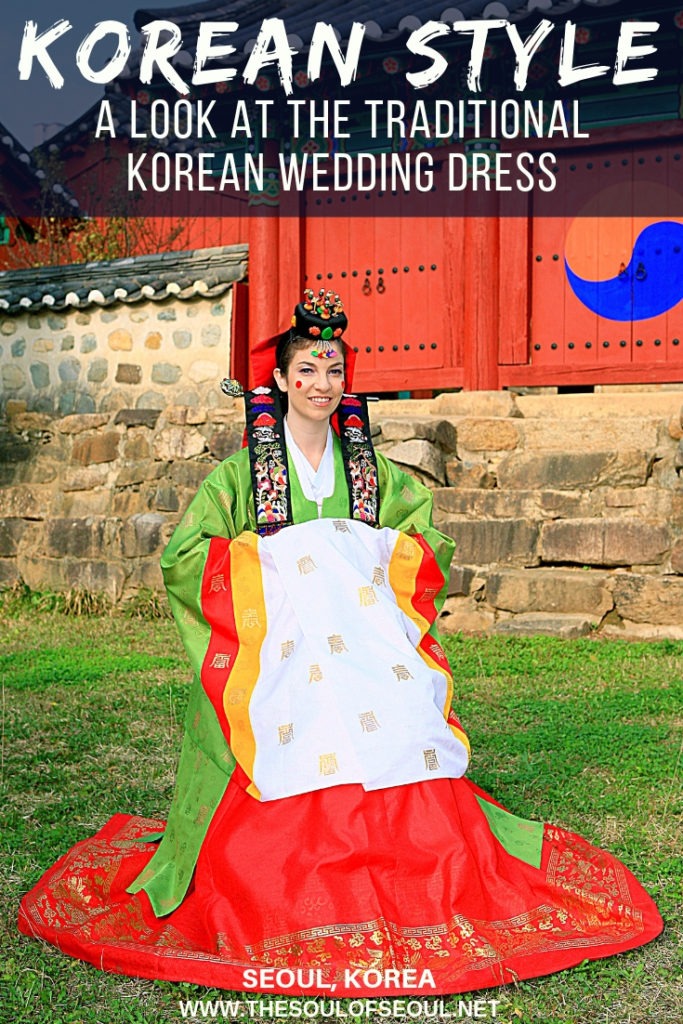
The main skirt, this is the colorful Hanbok dress. Red is the traditional color of the skirt as it represents harmony, vitality, and prosperity.
Jeogori (저고리)
The short jacket top. This is the last layer of the standard Hanbok, but with a wedding Hanbok, you might not even see this part due to the next layer.
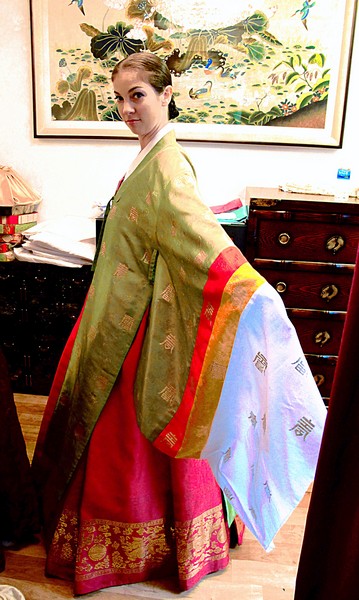
Wonsam (원삼) or Hwalot (활옷)
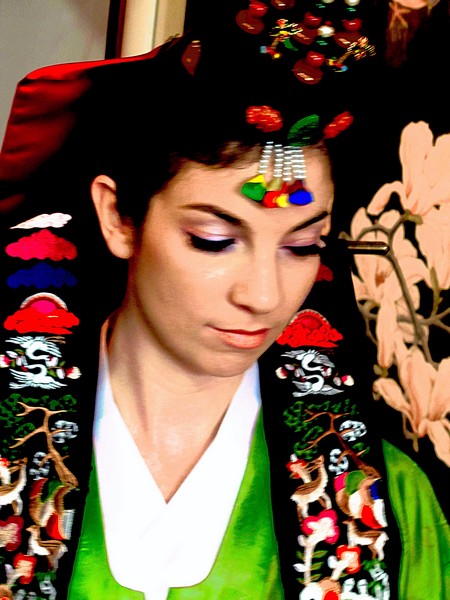
This is the showpiece, a ceremonial jacket worn by queens and upperclass women during the Joseon Dynasty. Elaborately colorful with rich embroidery and symbols of longevity, happiness, and nobility. Red was used for queens generally while green wonsams were used for princesses. Today, you can choose which you prefer.
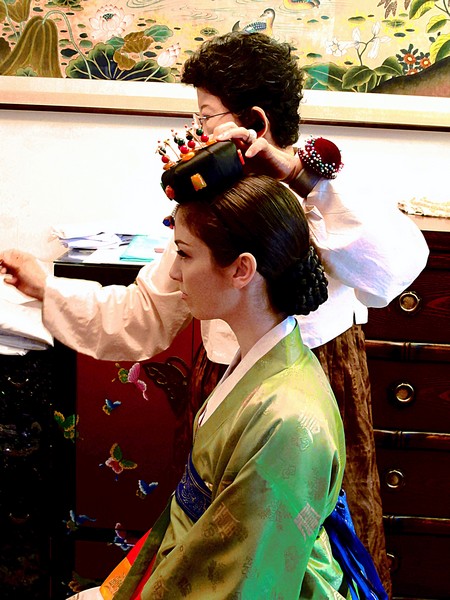
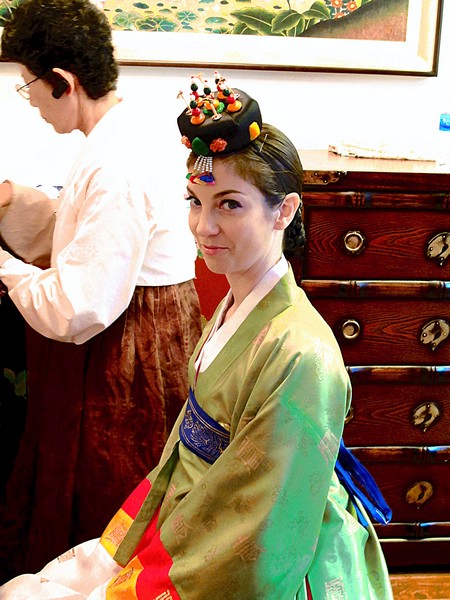
Daedae (대대)
A wide decorative belt that ties everything together and holds the layers in place.
Korean Wedding Hair & Accessories
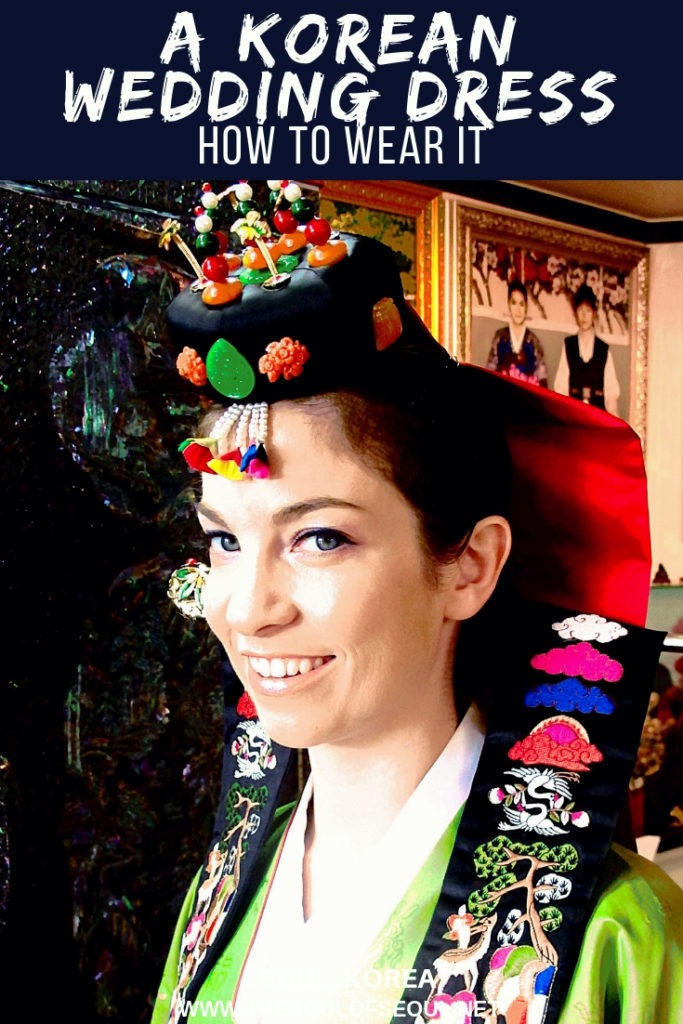
The clothing is only half the story. After the main outfit has been pieced together, then it’s time for hair and accessories. The hair is first pinned up in a bun and then a long length of fake braided hair is pinned in a sort of upside horse-shoe shape.
Jokduri (족두리)
A small ceremonial crown or headpiece, it was used by Mongolian women but became smaller and used an accessory by Korean women. Jokduri worn by royalty had different colors.
Binyoe (비녀)
A long decorative hairpin is placed in the loops of the fake breaded hair and fastened so as not to fall out. The ends of the binyeo stick out about 3 to 4 inches on each side of the head.
Daenggi (댕기)
Pieces of cloth are attached to either side of the binyeo and hang down in front of the chest. Another piece of cloth was then attached to hang down in the back.
The whole contraption made walking through doorways later interesting and when it was finally removed 2 hours later I was very thankful as it wasn’t too bad at the beginning, but became heavier and heavier over the course of the ceremony.
My Experience Wearing a Korean Wedding Hanbok
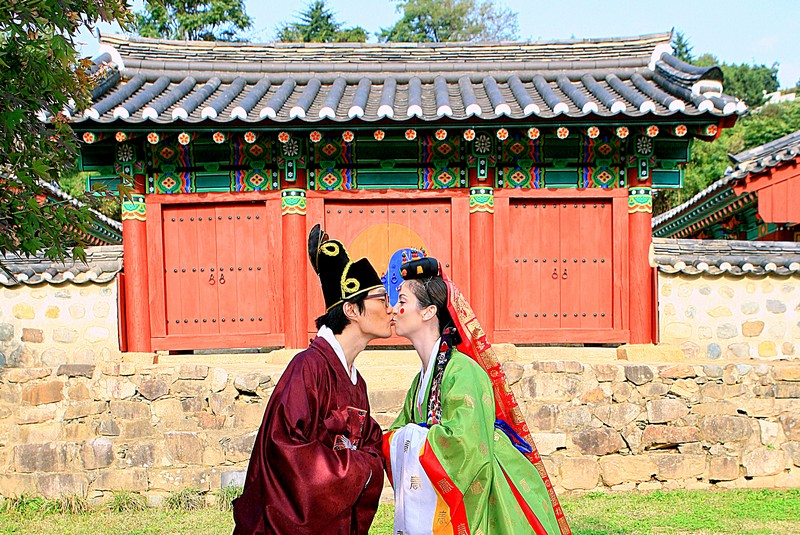
Three hours before the ceremony, I was in a makeup chair in Busan, completely out of my element. Makeup took over an hour. Meanwhile, my family sat behind me casually eating ramyeon while I waited, hungry, for my turn to eat.
Layer after layer, piece after piece. At some point, I stopped asking questions and just let the women guide me through it. There’s something about being dressed by people who know exactly what they’re doing that makes you trust the process. By the time everything was on, I felt completely transformed.
Elegant, heavy, slightly overwhelmed, but also incredibly honored. The whole creation made me stand a little taller as I left the building to go to the wedding site.
Ever wanted to dress up in a traditional Korean wedding Hanbok and get photos? You actually can. Klook has a traditional wedding ceremony experience and it looks just like you see here. Check it out if you want some of your own traditional pics.
Do Hanbok Colors Have Meaning?
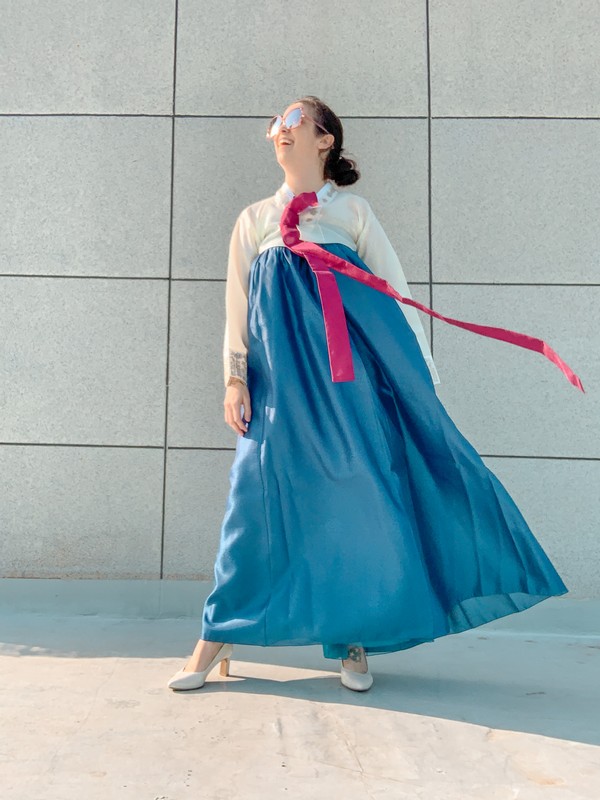
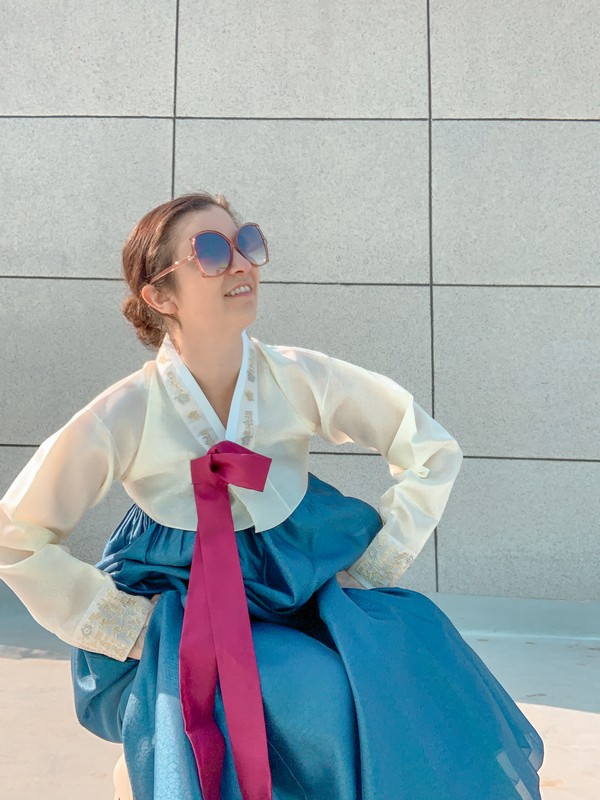
Yes… and no. Traditionally, the colors of the Hanboks had meaning but don’t be surprised if you’re asked what color you like or prefer today. While tradition still matters, modern weddings often blend meaning with personal preference.
- Red skirt or chima: Traditionally worn at wedding ceremonies, symbolizes wealth and good fortune.
- Yellow wonsam: Traditionally for empresseses
- Red wonsam: Traditionally for queens
- Magenta wonsam: Traditionally for concubines and princess consorts
- Green wonsam: Traditionally for princesses and women of the noble class
These days, while Korean women may opt for a more Western-style dress for their wedding ceremony, they will often change for a family-only ceremony called the paebaek which comes after the main event.
Wedding Hanbok vs Everyday Hanbok vs Modern Hanbok: What’s The Difference?
| Wedding Hanbok | Everyday Hanbok | Modern Hanbok |
|---|---|---|
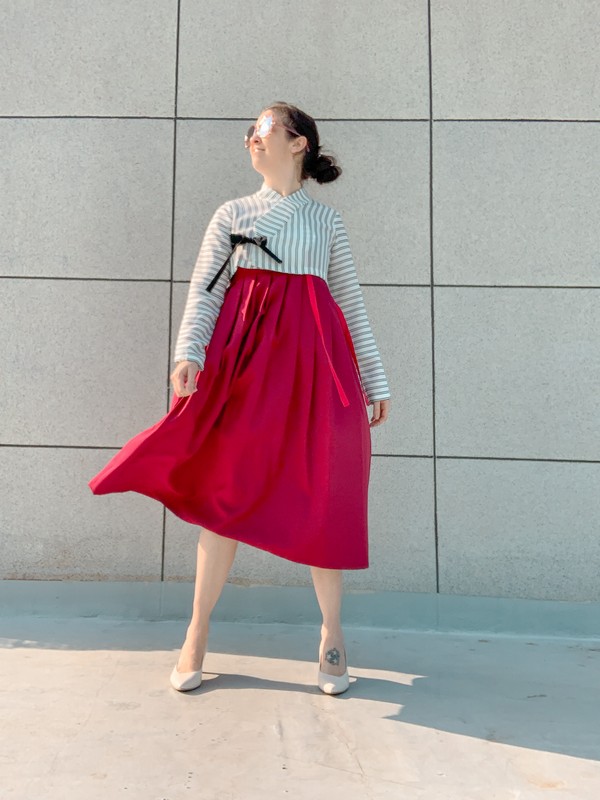
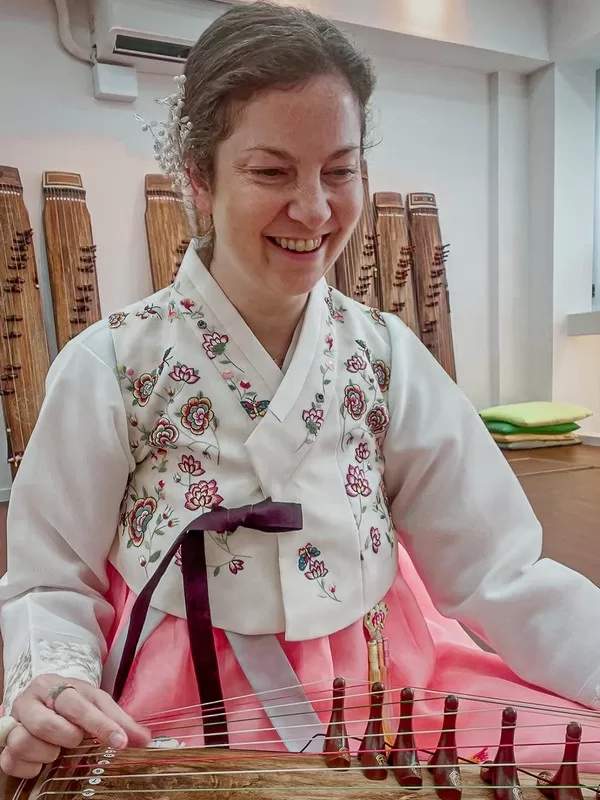
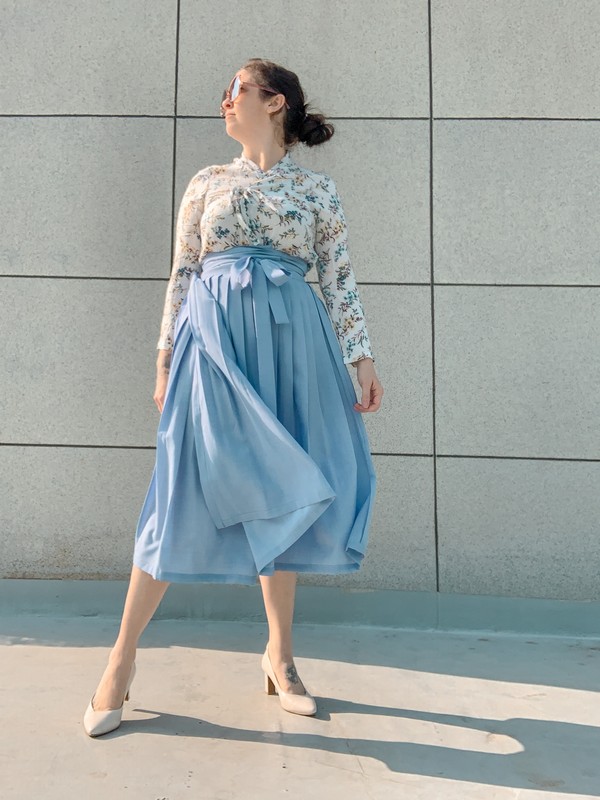
| Highly layered | Less layers | Simplified |
| Symbolic & ceremonial | Traditional style | Fashion-focused |
| Heavier | Mid-weight | Lightweight |
| Traditional colors & embroidery | More color options with embroidery | Trendy colors, designs & cuts |
Even though many Korean weddings today include Western-style dresses, the traditional Hanbok is still deeply important. It connects family traditions and cultural identity. For me, it wasn’t just about wearing something beautiful. It was about stepping into a tradition that’s been carried forward for centuries.
Did you like this post? Pin It!
One Comment
Fran drescher
My future daughter in law is going with the traditional hanbok I had to educate myself. Thank for information