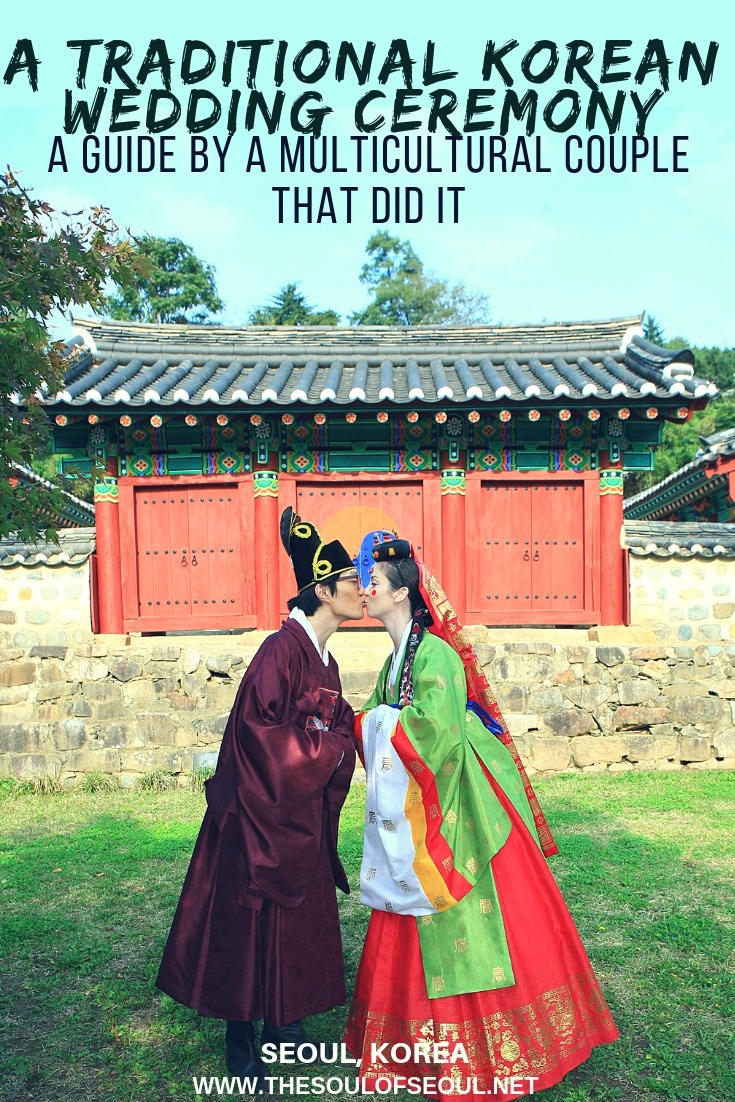
Traditional Korean Wedding Ceremony: A Step-By-Step Guide
Last Updated on October 13, 2026
Getting married in another country, or to a person from another culture, comes with a host of lessons. When we decided to get married, we agreed almost immediately that we wanted a traditional ceremony in each of our home countries. For our Korean ceremony, that meant figuring out the taerye, “the great ritual”, from the beginning.
Many Koreans today opt for a Western-style ceremony, but since we were doing that version in the United States, we wanted the Korean ceremony to be fully traditional. What followed involved a live goose, a split gourd, an asymmetrical number of bows, Hanbok sleeves two feet longer than my arms, and one of the most beautiful ceremonies I’ve ever witnessed.
This is a guide to the traditional Korean wedding ceremony, its eight steps, what to wear, what to give as a gift, and some honest asides from our own ceremony in Busan.
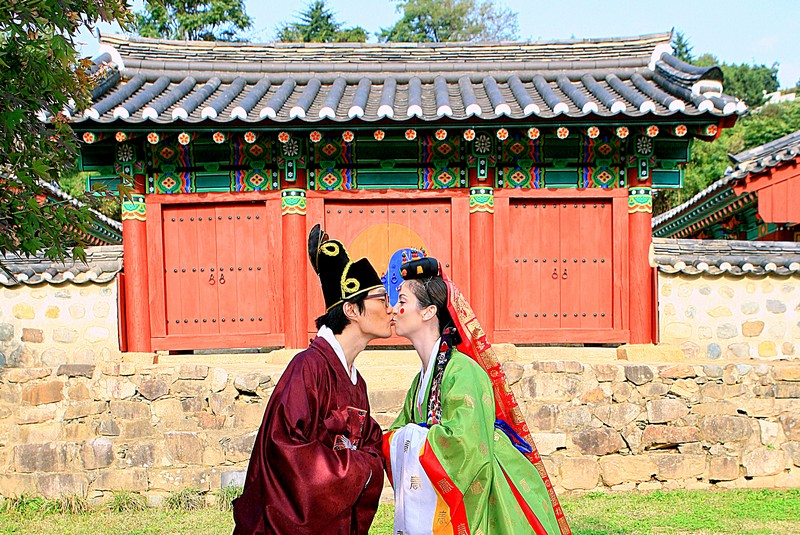
Here is a guide to a Korean wedding ceremony, with some cute asides about our wedding. Whether you’re a multicultural couple like us or a Korean couple abroad or over Korean heritage looking to add elements of the traditional Korean wedding ceremony into your big day, this guide will help you.
- The 8 Steps at a Glance
- What To Wear
- Location
- The Pre-wedding Performance
- The 8 Steps
- The Paebaek
- What Is An Appropriate Gift?
- FAQ
(This page contains affiliate links. That means if you click on them and purchase something, I will get a percentage at no cost to you. Thanks for the support!)
The 8 Steps at a Glance
| Step | Korean name | What happens |
|---|---|---|
| 1 | Jum-chok Rye | Mothers light candles to invoke heaven |
| 2 | Young-seo Rye | Groom enters with a goose |
| 3 | Jeon-an Rye | Groom presents the goose to bride’s family |
| 4 | Chin-young Rye | Bride walks in and takes her position |
| 5 | Kwan-sae Rye | Bride and groom wash hands to purify |
| 6 | Kyo-bae Rye | Bride bows 6 times, groom bows 2 times |
| 7 | Hap-geun Rye | Wine pledges to heaven, earth, and each other |
| 8 | Seong-hon Rye | Bow to family and guests — marriage declared |
What To Wear To A Traditional Korean Wedding Ceremony
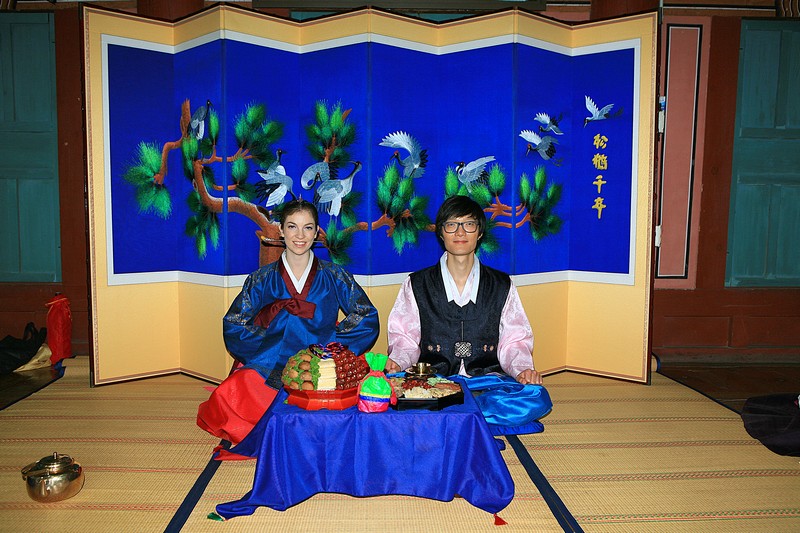
For a traditional Korean wedding ceremony, the bride and groom and the families as well as guests may/will opt to wear Hanboks, the traditional Korean dress. For a full explanation of the wedding hanbok and what each element represents, read the complete wedding Hanbok guide.
If you’re not in the wedding party though, it’s quite acceptable to wear a suit or nice dress.
Location
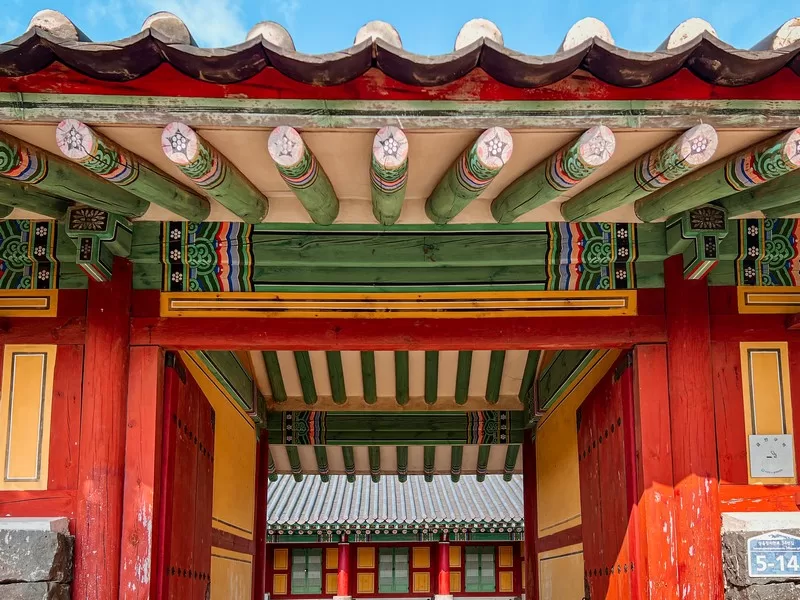
Traditionally the wedding ceremony would be held at the bride’s family home. There are vows and the bride and groom should seal their vows by sipping wine from a gourd that was grown by the bride’s mother. Today, most couples partake in the traditional wedding ceremony at various traditional sites around Korea. We got married down in Busan, my husband’s hometown in a beautiful site called Dongnae Hyanggyo (동례향고).
Did you know you can pretend to tie the knot in a traditional Korean ceremony here in Seoul? Check out this experience if you want to get dressed up in your own stunning Hanbok and walk through the ceremony.
The Pre-wedding Performance
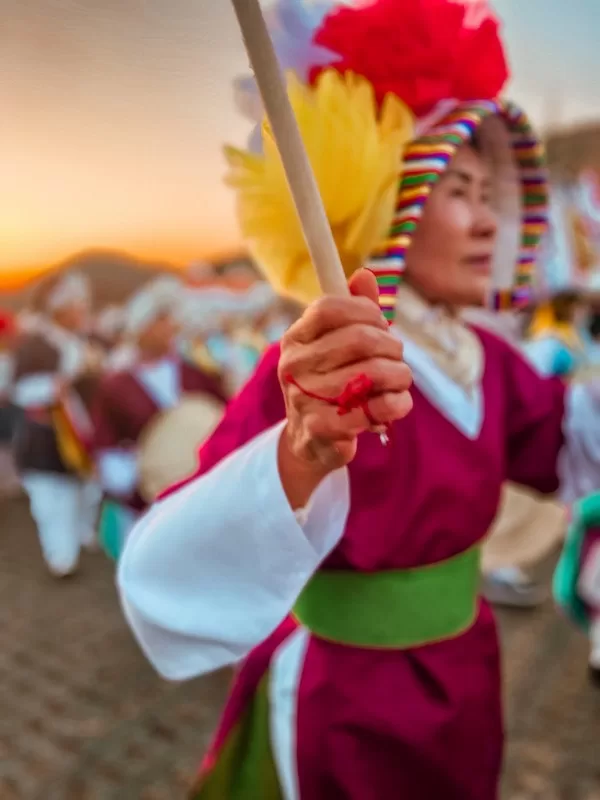
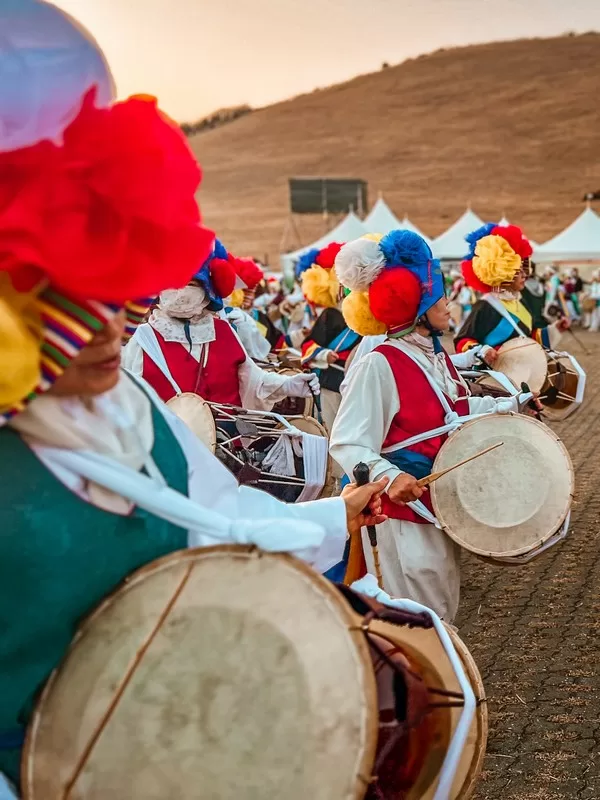
There will be a samulnori, or a traditional performance that includes a percussion quartet which includes the kkwaenggwari (a small gong) which represents “thunder”, the jing (a larger gong) which represents wind, the janggu (an hourglass shaped drum) which represents rain, and the buk (a barrel drum) which represents clouds. There is also a buchaechum, or a traditional fan dance performed.
Our ceremony started ten minutes earlier than we’d put on our invitations and even though I tried to feign misunderstanding and go for a wander so my friends could make it in time, the attendants got the mothers up to begin. I don’t really know what time everything got under way as I had no watch to look at, and even if I did the sleeves on my wedding Hanbok were two feet longer than my arms so I couldn’t check all that easily. But so it began and so did we…
If you want to see what the traditional dances and samulnori are like, check out one of the traditional performances around Seoul.
- The National Gugak Center hosts a Saturday performance each week to showcase the folk arts and culture. Buy tickets on Klook.
- Visit the Gugak Museum and see performances on site. Buy tickets on Klook.
The 8 Steps In A Traditional Korean Wedding Ceremony
In Korean, a wedding ceremony is called a taerye or “the great ritual” and there are numerous steps involved.
Step 1: The Jum-chok Rye
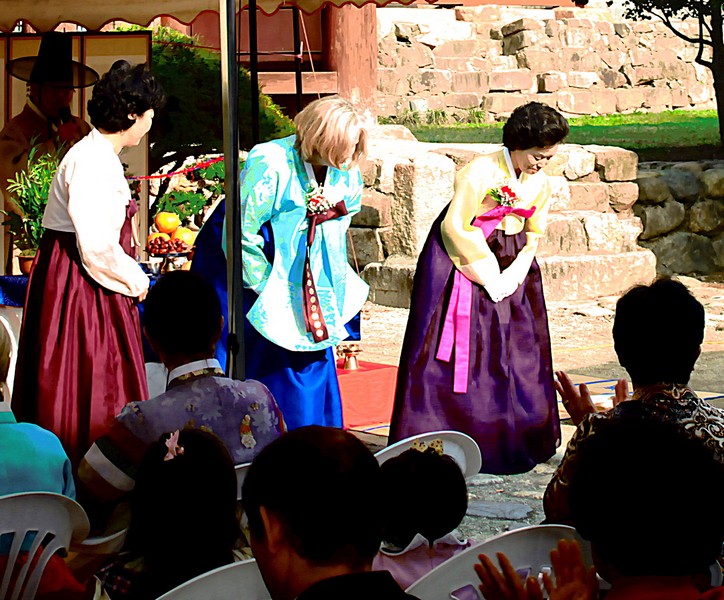
The mothers of the bride and groom open the ceremony by lighting candles to invoke the presence of the god of heaven. The groom’s mother lights a red candle; the bride’s mother lights a blue candle. They bow toward each other and then toward the guests. I briefed my mother beforehand on how low to bow and for how long, her strategy was to keep one eye on Jae-oo’s mother throughout and follow her lead. It worked.
Step 2: Young-seo Rye
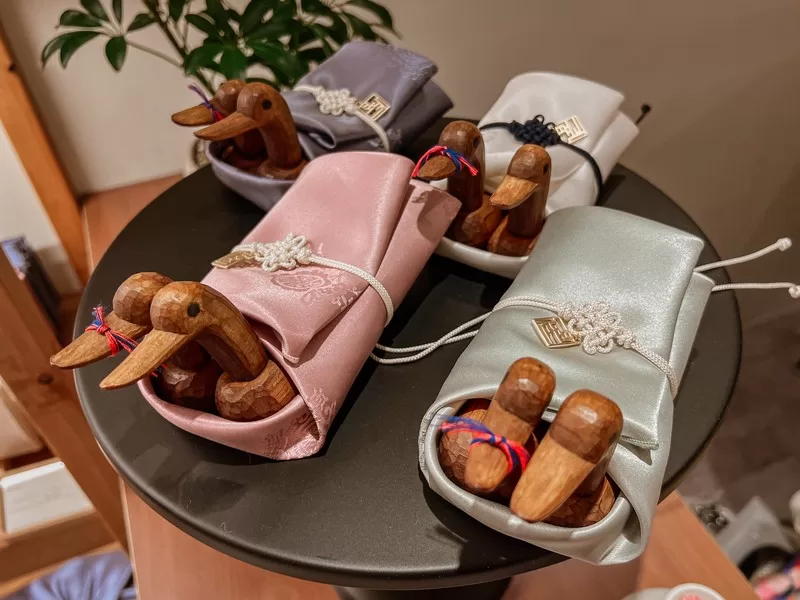
The groom enters, accompanied by his attendant (the girukabi), who carries a live goose. Traditionally, the bride’s father meets the groom at the front gate. As my own father had already passed, Jae-oo entered with his attendant and proceeded directly to the front. (These days the goose isn’t live, it’s wooden.)
Step 3: The Jeon-an Rye
The groom presents the goose to the bride’s family, traditionally, to the bride’s father. In our case, my mother accepted it.
The wild goose carries three symbolic virtues. First, faithfulness: if a wild goose loses its mate, it lives alone and never seeks another. Second, hierarchy and order: wild geese fly in V formation, and when the leader calls, the others respond. Third, intentionality: wild geese leave traces when they come. The goose at a Korean wedding is an embodiment of all three.
The presentation itself requires specific positioning: the goose’s head facing left, the mother standing to face west, the groom kneeling toward the north. After two floor bows from the groom, the mother carries the table with the goose back to where the family is seated.
Step 4: The Chin-young Rye
The bride walks in and takes her position on the west side of the table. The groom stands on the east.

Step 5: Kyo-bae Rye
The bride and groom wash their hands, a symbolic purification of mind and body before the sacred ritual. In the full hanbok, neither of us could manage much independently, so attendants were on hand to move things around and position us. Each of us had someone to help get down to and up from the mat.
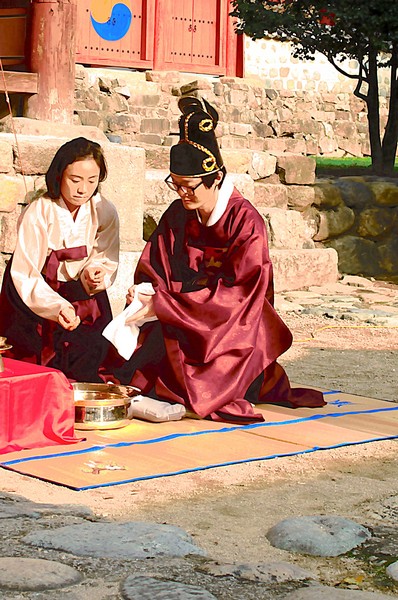
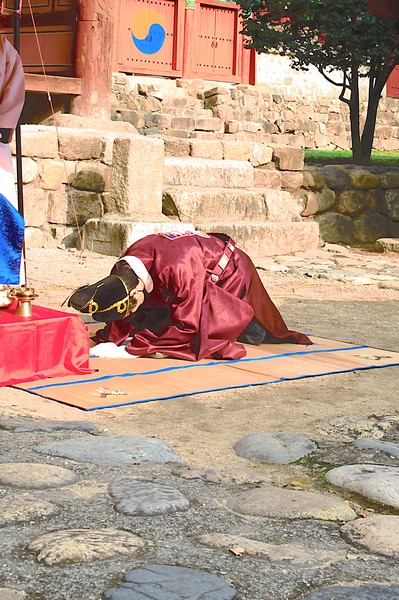
Step 6: Kwan-sae Rye
This is the bow exchange, and this is the one I’d been joking about for weeks. The bride bows six times to the floor; the groom bows twice. I had campaigned for splitting it evenly, four and four, we are equal partners, after all. Though according to the wild goose and its V formation, I’m probably below Jae-oo in the hierarchy, so six bows it was.
The sequence: I bowed twice, Jae-oo once, I bowed twice more, Jae-oo once more, and I finished with two final bows. The bows are an expression of mutual respect and a pledge to honor each other throughout life. With multiple layers of hanbok on, no one could see exactly how I was getting up and down. It appeared smooth. I received applause after the first set from guests apparently surprised by my technique.
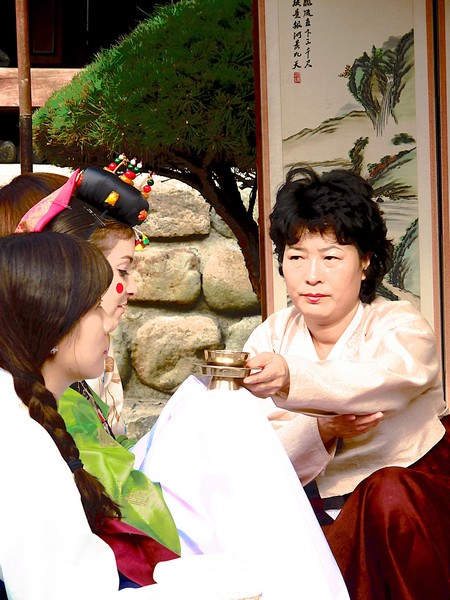
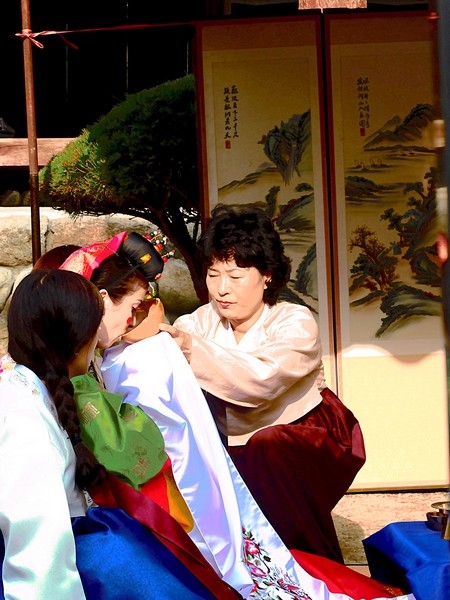
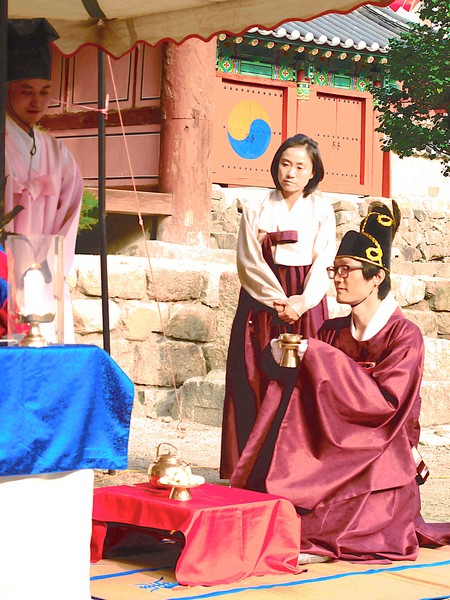
Step 7: Hap-geun Rye
This portion involves a series of wine pledges. In the Seo-cheon-ji Rye, we pledged to the gods of heaven and earth, raising cups to the sky, pouring the wine out, refilling, then pouring it on the ground, then offering food from the table. In the Seo-bae-woo Rye, we pledged directly to each other and drank from our cups.
Finally: the Keun-bae Rye. A single gourd grown by the bride’s mother had been split into two halves. Each half was filled with wine, we exchanged our halves, and drank from each other’s. This declared us as becoming one body and one mind. When a gourd is split in half, each half has only one matching other half in the world. These two halves unite to form the whole.
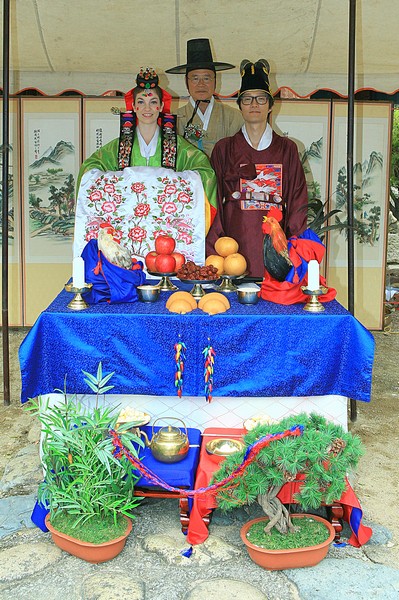
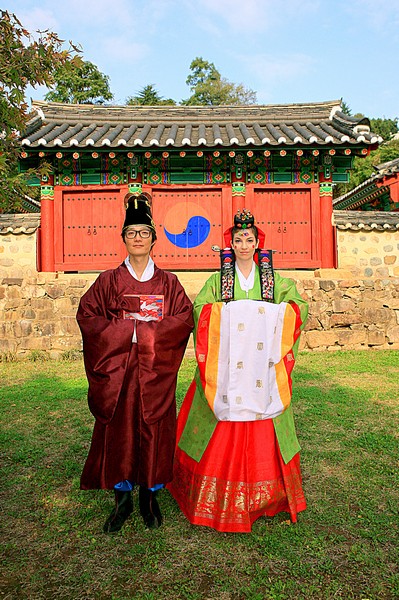
Step 8: Seong-hon Rye
We bowed to our families and guests to thank them for attending and to declare our marriage.
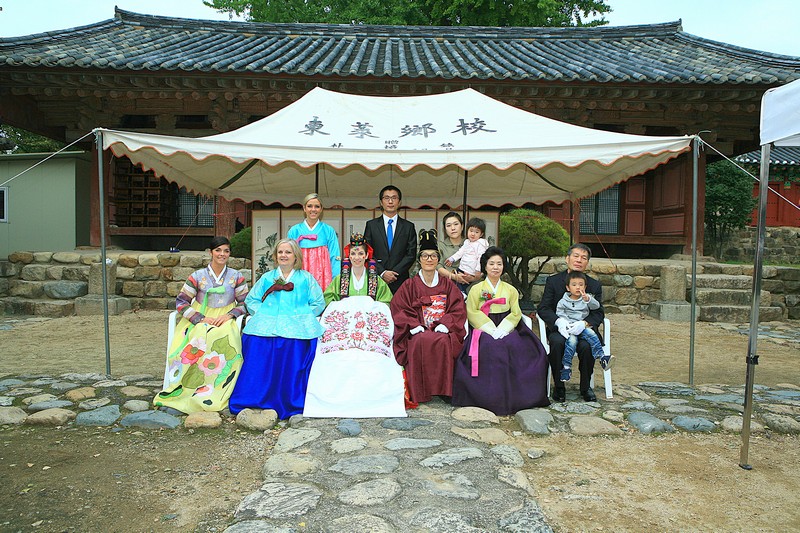
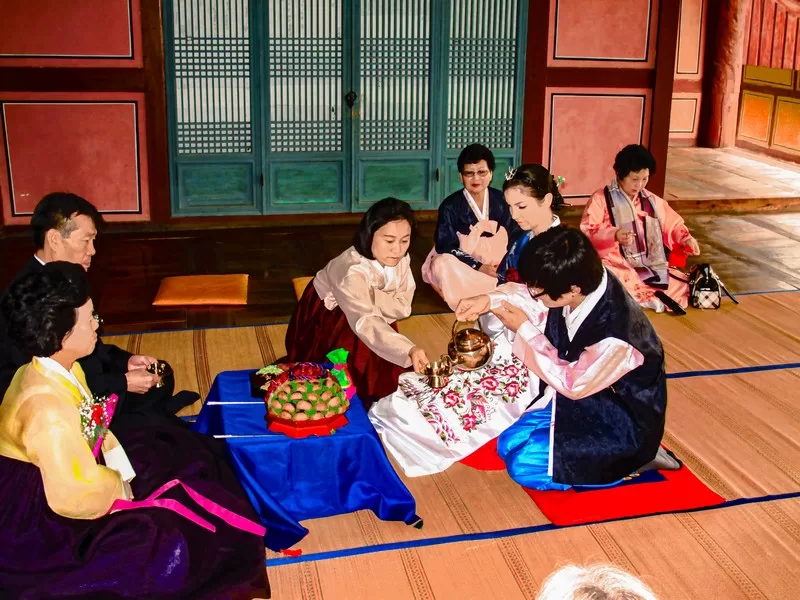
Post-Ceremony: The Paebaek
The taerye ends the wedding ceremony, but not the full day. What follows is the paebaek, a more intimate ceremony for family members only. There are more bows, a ceremonial sharing of food, and some games, including a piggyback ride. For the full paebaek details, read the complete paebaek guide.
And now that you’re getting married, it’s worth knowing about the other traditional Korean ceremonies that may follow, like the dol, your baby’s first birthday celebration in Korea.

What Is An Appropriate Gift For a Korean Wedding?
Koreans generally give money rather than gifts at weddings. At the entrance to most wedding ceremonies, traditional or modern, there are two tables: one for the bride’s family’s guests and one for the groom’s. Envelopes are collected, your name is recorded in the registry, and this is typically when you receive your seat assignment for the reception. The money collected at these tables generally goes to the parents to offset wedding costs.
Money is given in odd amounts. A general scale:
- Someone you barely know (an invited acquaintance): around ₩30,000 ($25-30)
- A coworker you interact with daily: around ₩50,000 ($40-50)
- A close friend: around ₩100,000 ($80-100)
If you are very close to the couple, give your gift directly to them, not at the registry table. All of the money collected at the registry goes to the parents; the couple may or may not see it.
This is something I learned the hard way. My Western friends brought cards, as one would. They handed them to the registry table. I never saw the cards, my in-laws removed the money and discarded the cards. I found out later from one of the friends. Lesson: if you want the couple to see your gift, give it to the couple directly.
FAQ
What is a traditional Korean wedding ceremony?
A traditional Korean wedding ceremony is called taerye (대례), meaning “the great ritual.” It consists of eight formal steps involving candle-lighting, the presentation of a live goose, bowing exchanges, purification rituals, wine pledges, and a final bow to guests declaring the marriage. It is rooted in Confucian values and centered on ritual, hierarchy, and symbolic commitment.
What is the goose at a Korean wedding?
The live goose is presented by the groom in the Jeon-an Rye (Step 3) and symbolizes three virtues: lifelong faithfulness (a wild goose never seeks another mate after losing one), hierarchical order (geese fly in V formation and follow their leader), and intentionality (geese leave traces when they come). The goose is traditionally given to the bride’s father or a family elder.
What do guests wear to a traditional Korean wedding?
Traditional weddings invite guests to wear hanbok, traditional Korean dress. This is not required for non-Korean guests, and a suit or nice dress is entirely appropriate. The bride, groom, and immediate family will typically be in full traditional wedding hanbok.
What is an appropriate money gift for a Korean wedding?
Around ₩30,000 for someone you barely know, ₩50,000 for a regular colleague, and ₩100,000 for a close friend, always in odd amounts. Give it in an envelope at the registry table at the entrance. If you are very close to the couple and want them specifically to receive your gift, give it to them directly rather than at the registry table.
What is the paebaek ceremony?
The paebaek is a post-wedding ceremony for family members only that follows the taerye. It involves additional bowing, ceremonial food sharing, and games. It is separate from the main wedding ceremony and more intimate in scale.
What is samulnori?
Samulnori is a traditional Korean percussion performance by a quartet: the kkwaenggwari (small gong, representing thunder), the jing (large gong, representing wind), the janggu (hourglass drum, representing rain), and the buk (barrel drum, representing clouds). It is performed before the taerye ceremony begins.
The traditional Korean wedding ceremony is, once you’re inside it, extraordinary. The symbolism is deep, the ritual is specific, and there are enough moments of quiet beauty alongside the logistical comedy of trying to bow six times in three layers of Hanbok to make it completely unforgettable. Whether you’re planning a ceremony, attending one, or just curious, this is what it looks like from the inside.
Did you like this post? Pin It!