Dwaejigukbap: Busan’s Famous Pork and Rice Soup and Where To Eat It
Last Updated on April 20, 2026
If you’re headed to Busan, dwaejigukbap (돼지국밥) needs to be on your food list. This pork and rice soup is one of the city’s most celebrated dishes. It’s hearty, deeply savory, served boiling hot, and eaten with a table full of condiments that you season to your own taste. You can find it in other parts of Korea, but Busan is where it originated and where it’s taken most seriously.
My husband is from Busan and this is near the top of his list of Korean dishes. It’s the kind of food that makes complete sense in context: in a port city, at the end of a long day, with cold air outside and the soup still bubbling when it hits the table. It grows on you when given a chance.
For more on what to eat and see across Busan, read the complete Busan travel guide.

Are you ready to try dwaejigukbap? Let’s see:
- What Is Dwaejigukbap
- How To Eat Dwaejigukbap
- The History of Dwaejigukbap
- Where To Eat The Best Dwaeji Gukbap In Busan
- Pyun Yook: What’s That Being Washed Outside?
- Seomyeon Gukbap Alley: The Local Shortcut
- FAQ
(This post contains affiliate links, which means I receive a certain percentage of a sale if you purchase after clicking. These funds go to maintain the site. Thank you for your support.)
What Is Dwaejigukbap
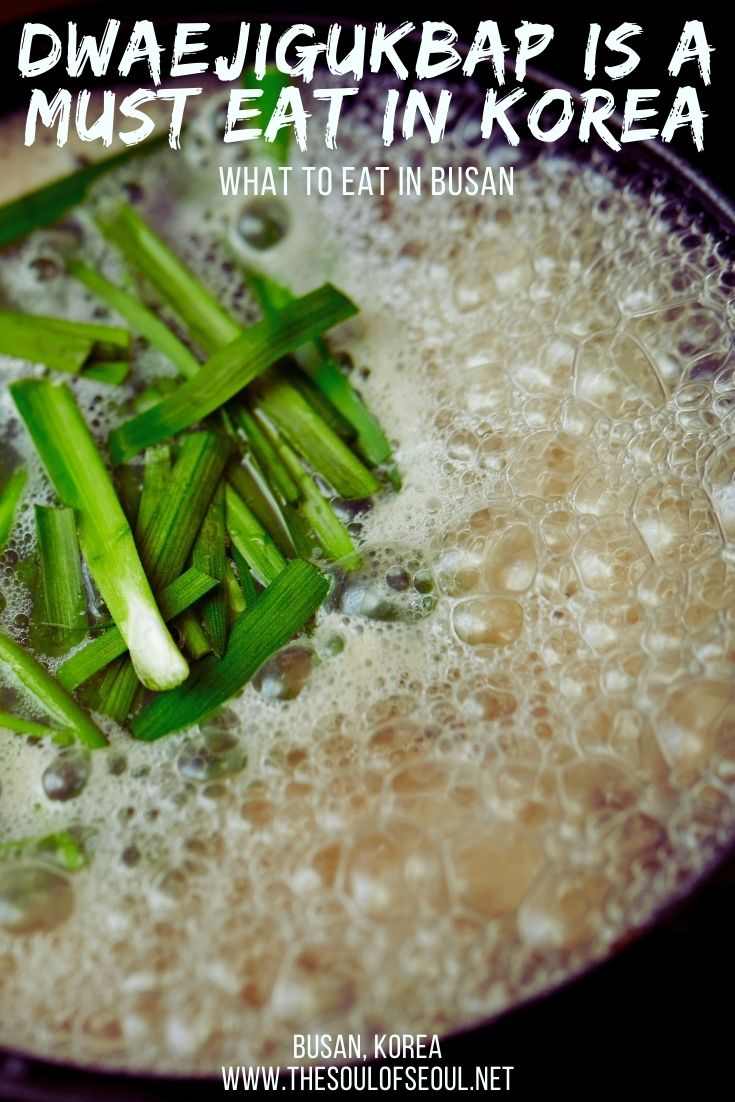
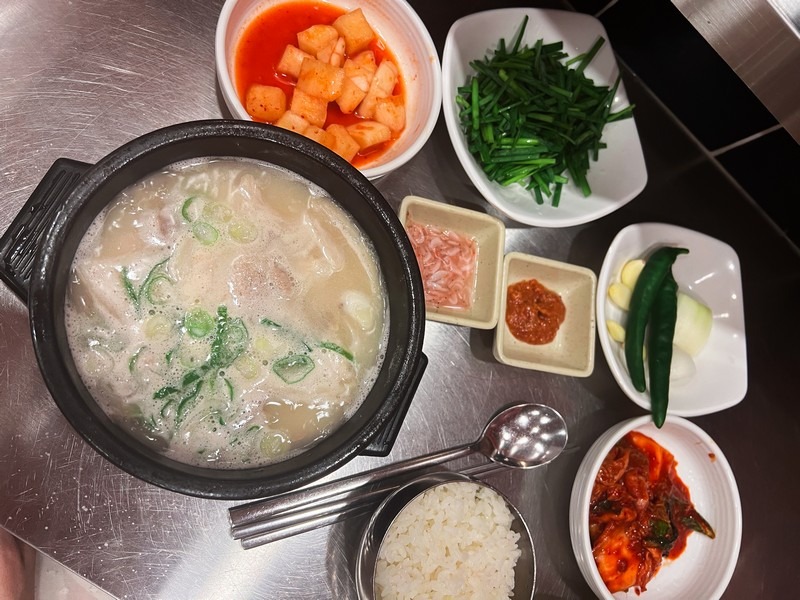
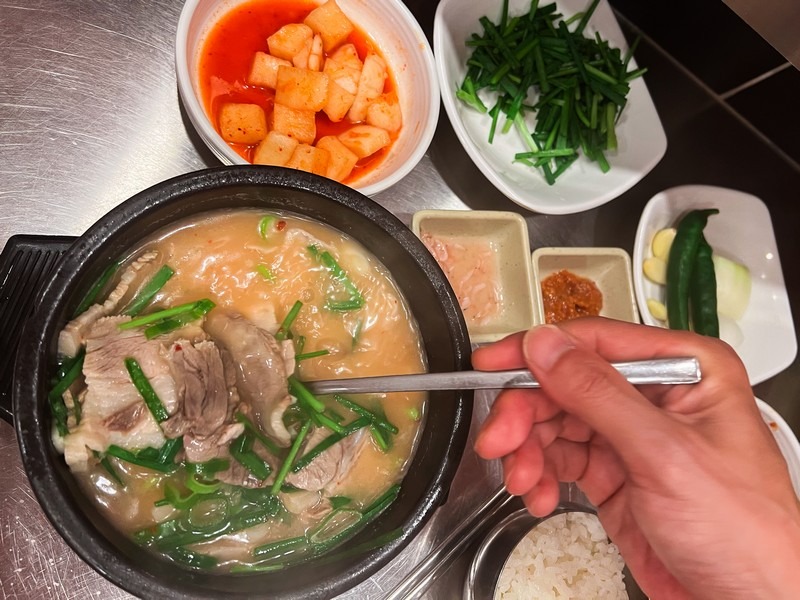
Dwaejigukbap is a Korean soup made with pork, bone broth, soy sauce, doenjang (fermented soybean paste), rice wine, and sesame oil. It arrives at the table in a stone bowl, still boiling, the pork sitting in a rich, white milky broth. Noodles may be served on the table for you to add yourself or already in the soup, and the rice comes either already in the bowl or served on the side too.
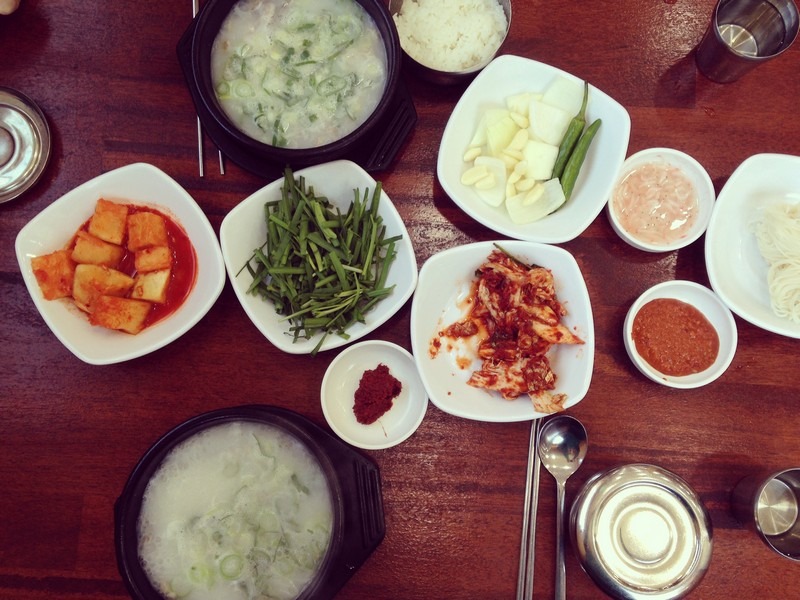
Alongside the main bowl, the table is set with the what appears to be banchan, or side dishes, but they aren’t. With dwaejigukbap, they are more like condiments and accompaniments that make dwaejigukbap what it is: fermented shrimp, chopped leeks, red pepper paste, salt and pepper, white onions, garlic, and various kinds of kimchi. These aren’t decorative. They’re an essential part of the meal, and the way you combine them determines the whole experience.
How To Eat Dwaejigukbap
First, decide about the rice. The soup can come with the rice already in it or served on the side and you can mix it in yourself. It’s up to you though. My husband and his friends will add the rice as well as noodles that are usually on the table, into the bowl of soup. But, I tend to want less rice so I get it on the side and then add just half.
Now that you have the base, it’s time to add some of the bits and bobs on the table for taste. This is where the magic happens. You can add as much or as little as you want, but here is a good guide to start with.
- Add half a spoonful of the fermented shrimp (새우젓) for saltiness. This is the foundation of the flavor.
- Add a little of the red pepper paste for heat. Start conservatively, you can always add more.
- Top with a handful of the chopped leeks. These add freshness and cut through the richness of the broth.
Taste as you go and adjust. Every table has everything you need, there is no wrong way to do this.
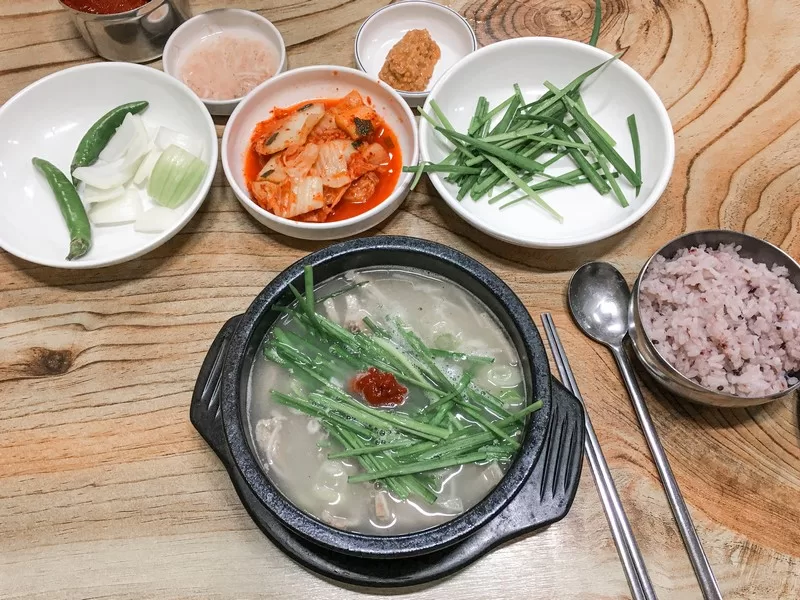
The hidden red pepper paste trick: At some restaurants, the red pepper paste won’t be on the table because the chef has already placed it in the bowl under the meat before pouring the broth over. When the soup arrives, it will look completely white. Stir the bowl and watch the broth turn a pink-tinged color as the paste releases and spreads. This is a sign of a specific preparation style, not a mistake. Once stirred, the soup has a gentle spice throughout rather than a concentrated hit in one area.
The History of Dwaeji Gukbap
The origins of dwaejigukbap trace back to the Korean War in the early 1950s. When North Korean refugees flooded into Busan, which became the last major holdout of the South Korean government during the war. They needed to eat, and they needed to eat cheaply. Refugees originally made the soup with beef bones, a technique carried from the north. As beef became scarcer and more expensive in the chaos of wartime Busan, pork, more readily available and less costly, gradually replaced it.
What began as survival food became comfort food, and then became identity food. The soup took root in Busan. The white milky broth from hours of boiling pork bones, the table full of condiments that each diner combines according to personal preference, the stone bowls still bubbling when they hit the table, all of it became distinctively Busan’s.
Dwaejigukbap today is eaten at every hour of the day and night, at restaurants that have been open for decades, by Busanites who grew up eating it and visitors who are trying it for the first time. It’s a dish that carries the city’s history in it.
Where To Eat The Best Dwaeji Gukbap In Busan
Twins Pork Soup (쌍둥이 돼지국밥)
In the Daeyeon-dong neighborhood, Twins Pork Soup is consistently packed during peak hours, which is itself a recommendation in a city where gukbap restaurants are everywhere. The soup is simple and savory, exactly what dwaejigukbap loyalists are looking for. There’s also a bonus: sliced pork in marinade served on the table alongside the soup, which is not standard at every restaurant and makes the meal feel more complete.
- Address: 35-1 UN Pyeonghwa-ro Nam-gu, Busan (부산 남구 유엔평화로 35-1)
- Hours: Every day: 9:00am ~ 12:00am
Wonjo Halmae Gukbap (원조할매국밥)
More than four decades in business, Wonjo Halmae is one of Busan’s most trusted gukbap institutions. It’s in Songjeong in Haeundae-gu, convenient if you’re combining with a visit to Haeundae Beach or the Haeundae Blueline Park. The 24-hour operation means it fits almost any schedule, including the late-night return from the Sky Capsule or a long day at Spa Land Centum City.
- Address: 38 Songjeongjoong-ro, Haeundae-gu, Busan (부산 해운대구 송정중앙로 38)
- Hours: Every day 24 hours a day
Songjeong 3 Generation Gukbap (송정 3대 국밥)
Located in Seomyeon’s Dwaeji Gukbap Alley, the stretch of street near Seomyeon Station that has become the informal capital of Busan gukbap, Songjeong Samdae stands out for an unexpected reason: their broth is made from beef leg bones rather than pork, in a nod to the original Korean War-era recipe. The chives added to the soup are also signature. If you want a connection to the dish’s origins alongside the modern Seomyeon gukbap experience, this is where to go.
- Address: 33 Seomyeon-ro 68 beon-gil, Busan (부산 부산진구 서면로68번길 33)
- Hours: Every day 24 hours a day
Sinchang Gukbap (신창 국밥)
Near Nampo-dong and Gukje Market in the Toseong-dong district, well positioned if you’re spending time in the Nampo area of Busan. Sinchang is known for a particularly thick, dense stew base, cooked with pork bones, meat, and seonji (congealed ox blood). The ox blood is not standard in most versions of dwaejigukbap. If adventurous eating is your approach to travel, this is the version to try.
- Address: 53 Bosudae-ro, Seo-gu, Busan (부산 서구 보수대로 53)
- Hours: Monday – Saturday: 10:00am ~ 9:00pm
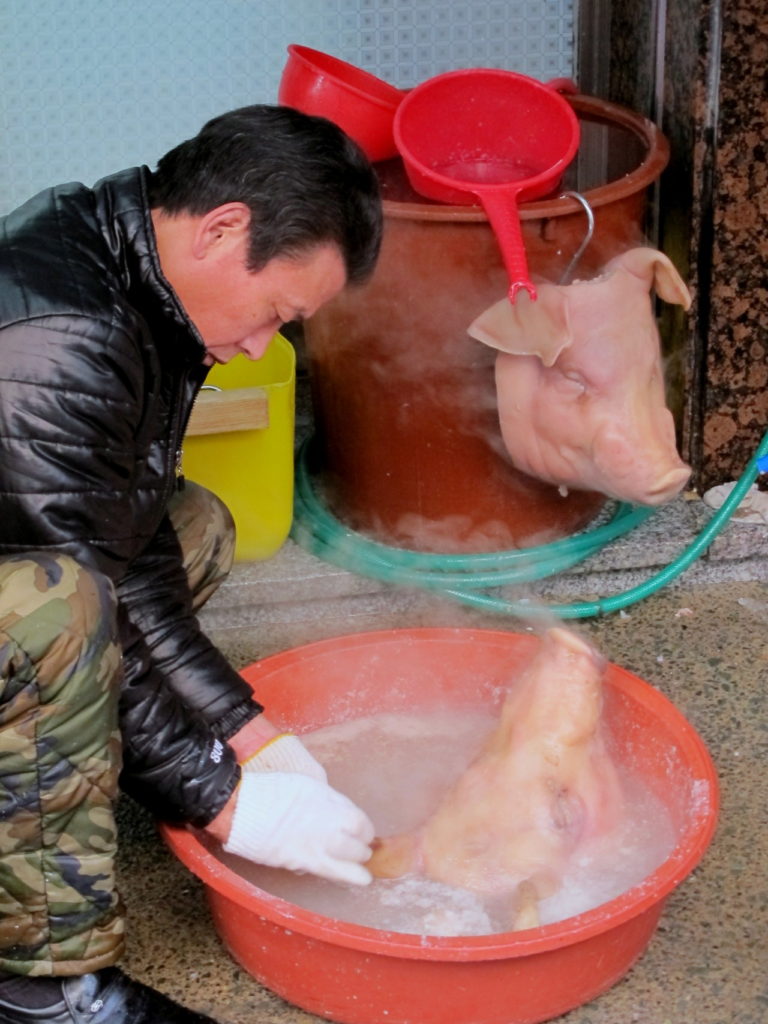
Pyun Yook: What’s Being Washed Outside?
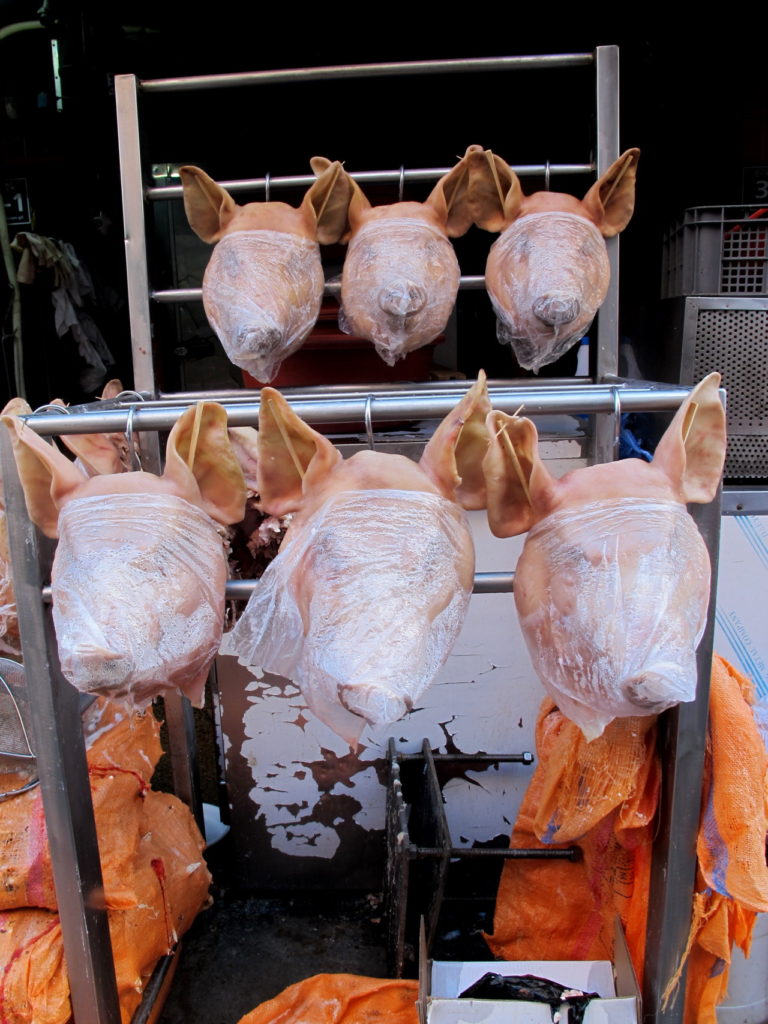
At one of the Busan restaurants we visited, I walked past the entrance and noticed pig heads being carefully washed and hung outside. I assumed it was some kind of preparation or cleaning I hadn’t seen before. My husband told me what it was actually for, pyun yook (편육).
Pyun yook is pressed, sliced pork, made from various cuts including the head, that is boiled, weighted, and sliced into cold, tender pieces. It’s served as a side dish, often with salted shrimp or a dipping sauce, and it appears alongside dwaejigukbap at many Busan restaurants as a natural companion. The mild flavor and silky texture contrast well with the intensity of the hot soup. If you see it on the table or menu, try it. It’s another dish that can definitely grow on you though the pig heads you might see can definitely be intimidating at first.
Seomyeon Gukbap Alley: The Local Shortcut
Seomyeon is the most concentrated area for dwaejigukbap in Busan. From Seomyeon Station, take Exit 1, turn right at the first opportunity, then left. You’ll find yourself on a street lined with restaurants serving the same dish in slight variationsm the informal Dwaeji Gukbap Alley. You cannot go wrong on this street.
If you’re uncertain which restaurant to choose, use the Korean heuristic: go to the one with the most people inside. This works across the country, but it works especially well on this street where the competition is direct and the locals know exactly which bowl is best that day.
FAQ
What is dwaejigukbap?
Dwaejigukbap (돼지국밥) is a Korean soup of pork and rice in milky pork bone broth. It originated in Busan during the Korean War and is now one of the city’s defining dishes. It’s served with a table of condiments including fermented shrimp, red pepper paste, and leeks that each diner uses to customize the flavor of their bowl.
How do you eat dwaejigukbap?
Add about half a spoonful of fermented shrimp, some red pepper paste to your spice preference, and a handful of leeks to the bowl. Mix, taste, and adjust. The rice can go in the bowl or stay on the side. If the soup looks white when it arrives, stir it, at some restaurants the red pepper paste is hidden beneath the meat and releases when stirred.
What does dwaejigukbap taste like?
Rich, savory, and warming from the long-boiled pork bones. The base broth is milky and relatively mild, the condiments you add at the table determine most of the spice and salt level.
Where is the best dwaejigukbap in Busan?
Seomyeon’s Dwaeji Gukbap Alley (near Seomyeon Station, Exit 1) is the most concentrated area. Specific restaurants worth seeking out: Twins Pork Soup in Daeyeon-dong, Wonjo Halmae Gukbap in Songjeong (open 24 hours), Songjeong 3 Generation Gukbap in Seomyeon (beef bone broth, unusual and worth trying), and Sinchang Gukbap near Nampo-dong for those who want to try the version with ox blood.
How much does dwaejigukbap cost?
Approximately ₩9,000-₩12,000 for a full bowl with rice and side dishes. Verify current pricing before visiting as Korean restaurant prices have increased in recent years.
Is dwaejigukbap only available in Busan?
No, you can find it in Seoul and other Korean cities. But Busan is where it originated and where it’s most deeply embedded in local food culture. If you’re visiting Busan, eating dwaejigukbap here rather than elsewhere is part of experiencing the dish correctly.
Busan has good fish, good meat, beaches, mountains, and one of the most underrated food scenes in Korea. If dwaejigukbap is the only Busan dish you specifically seek out, it’s a good one to start with. Take Exit 1 at Seomyeon Station, turn right, then left, and pick the restaurant with the most people. You won’t be disappointed.
Did you like this post? Pin It!