Giving Birth in Korea: What To Expect as a Foreign Woman
Last Updated on September 17, 2026
A few contractions later, we were in a taxi to our doctor’s office to get this show on the road. Having a baby abroad can be stressful. With emotions that are already running rampant because of pregnancy hormones, adding a new stressor isn’t ideal. There had been no Lamaze classes or lessons on what to expect prior to labor and there we were giving birth in Korea in a birthing center.
Five hours of contractions in a room with just my husband and me and some nurses that would come and go every thirty minutes or so was the set up. Here’s a general guideline of what to expect that might be different when going into labor, or childbirth, in Korea. Don’t worry, there won’t be any gory details.
Giving birth in Korea and want to know what it will be like while you’re in labor? Get ready:
- Get Ready for the Enema
- Where’s My English Speaking Doctor?
- Stalled At 6cm, Then The Epidural That Changed Everything
- Silence!
- Where Is My Baby Going?
- A Note On Birthing Plans in Korea
- FAQ
(This page contains affiliate links. That means if you click on them and purchase something, I will get a percentage of the transaction at no cost to you. Thanks for the support!)
Get Ready for the Enema
When I asked my doctor if there was anything I should be aware of heading into delivery day, the one thing she noted was that I should be aware there would be an enema. She had studied and worked in Chicago, USA for a time and said that though it is uncommon in the States to get an enema before labor now, in Korea it is still common practice.
Though studies have found that they do nothing to reduce infection, which was once thought, or to reduce discomfort, they are still used here. Having no idea what to expect, I was wary, but it’s not as bad as you think.
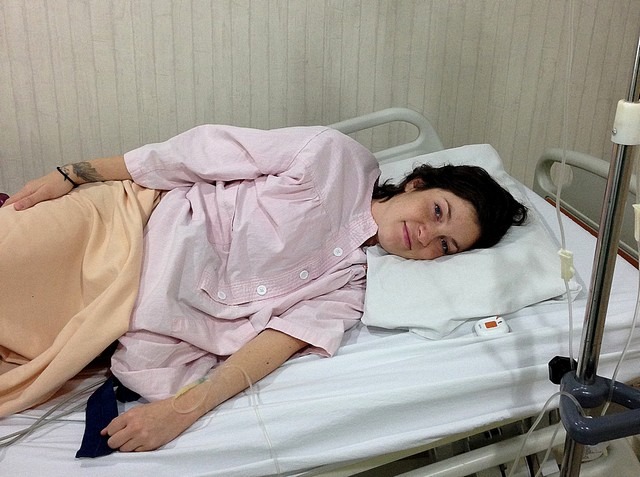
As soon as we arrived at the birthing center, the nurses told me to change into my gown and told my husband to wait outside. I was confused at first and wanted to make sure they understood that he would be in the room, but they said ‘no’. I realized later, it was because after I got on my gown, they immediately administered the enema and apparently thought it was unbecoming to have him in the room for that.
I couldn’t quite make out what they said as far as directions and had never had an enema before so sort of jumped from one foot to another as I waited the five minutes that I thought they’d told me to wait. Honestly, I couldn’t make it five minutes and ran to the bathroom. The enema indeed worked. Apparently they had said it could take UP TO five minutes to work, not wait five minutes. Anyway, the deed was done, and they let my husband in after that.

Where’s My English Speaking Doctor?
The day will come and you will rush to the hospital or the birthing center you’ve chosen here in Korea. The English speaking doctor you managed to find that you’ve been meeting over the past few months who has been answering your questions in English and explaining the ultrasounds to you won’t be there. Where will the doc be? Won’t arrive until the labor is in full swing.
Having a doctor that speaks English is completely necessary but for the hours of contractions before pushing begins, the only people to check on you will most likely be Korean speaking nurses.
I had asked my doctor if any of her staff spoke English and she said not to worry, we’d be able to communicate so I was somewhat prepared but when it came down to it, I could not speak Korean to save my life. I was in the midst of all kinds of feelings and trying to translate what I wanted was not happening. The staff generally knew what I was saying but thank goodness my husband was there to translate because I was not in the mood.
For a couple in which both members are foreign, be sure to request some helpful vocabulary to get you through from the doctor beforehand and really I suggest that the husband is the one learning it because ladies, you’ll have other things on your mind.

Stalled At 6cm, Then The Epidural That Changed Everything
Here’s the part I didn’t expect going in: I was dilating steadily, right up until I hit 6cm, and then I just stopped. The contractions kept getting closer together, but my body wouldn’t budge past that point for a few hours. Eventually a nurse suggested an epidural, and I said yes.
Within ten minutes of getting it, I went from 6cm to 10cm. It was time to push, and it happened so fast that my doctor wasn’t even in the room yet. It was just the nurses telling me to push, in Korean, with my husband relaying it to me in English, and me looking from face to face trying to figure out where my actual doctor was. I remember telling everyone no, I wanted to wait for her. It felt chaotic in the moment. She arrived just in time, and the baby was out almost immediately after.
Looking back, I think what happened was less about the epidural itself and more about what it did for my body in that specific moment. Up until then, it was just me and my husband in an unfamiliar place, I hadn’t seen my doctor yet, and I knew I couldn’t fully understand what the nurses around me were saying. I think my body was holding onto that stress. The second I got the epidural and physically relaxed, it let go and dilated the rest of the way almost immediately. My doctor told me afterward that it was the fastest she’d ever seen an epidural work.
Silence!
Movies and TV shows would have you believe that when you’re ready to push out that child, the work is difficult and grunt worthy. Screams, yells, squeals and groans will come forth from your mouth while the baby is coming forth from, well you know where babies come from. Whether or not that is true in the States, I can’t say, but what I can say is that in Korea, that’s not the case. How can you control whether or not you’re screaming, yelling, squealing or groaning? Some would say, you can’t. My doctor however said otherwise.
The moment was upon us, the doctor was ready and the signal to push was given. I immediately started concentrating, pushing and making whatever noises escaped from my mouth. It was at that point that the doctor scolded me saying, “No noises! Don’t make any noise!”
I was a bit shocked by her statement and wasn’t quite sure I understood her. I continued on and once again a noise escaped from my mouth though I was trying to hold it in and again she told me not to make a sound. With little time to think about it and no time to ask why she kept telling me to be quiet, I pushed on, pun intended.
Later, I asked my husband why she’d kept telling me to be quiet and what had she been saying in Korean? Apparently in Korean she had been telling him that I needed to be concentrating all of my energy on the birth and pushing and if I was making noise from my mouth that would mean that there was energy in my mouth and not down south where it needed to be.
This was one thing that would have been beneficial to learn beforehand because in the moment, it certainly wasn’t comforting being scolded in a room full of nurses and my husband.

Where Is My Baby Going?
After giving birth here, it is common to have the baby taken to the nursery for up to 4 hours. Our nurses said this was so that she could be monitored for any health issues in her as well as giving me time to recuperate.
As a first-time mother, I went with it, in retrospect, I would have preferred to have her in the room with me during that period. My husband went back and forth between my room and the nursery every hour to check on her and find out when we could bring her back to our room.
If this is something that matters to you, discuss it with your doctor before labor. Have a preference ready. Korean hospitals aren’t generally set up for detailed birthing plans, but most doctors are open to hearing concerns if you raise them.
A Note On Birthing Plans in Korea
Birthing plans aren’t common practice in Korean hospitals or clinics, and detailed planning isn’t generally encouraged. That said, my doctor was open to suggestion — I just wasn’t entirely sure what to suggest beforehand. If you have an ob-gyn you’re comfortable with, bring your questions, raise your concerns, and ask about anything in this article that worries you. A good doctor will work with you.
FAQ
What is giving birth in Korea like for foreigners?
Manageable with some preparation. The main differences from Western births: an enema is typically administered before labor; your English-speaking doctor may not be present during the early contraction hours; there is a cultural expectation of silence during pushing; and the baby is often taken to the nursery for several hours after birth for monitoring. Epidurals are available and normal to ask for. None of these is insurmountable, but all are easier to navigate if you know about them in advance.
Are epidurals available in Korea?
Yes, they’re a standard option, not something you need to specifically seek out or justify. Mine kicked in fast enough that I went from a stalled 6cm to fully dilated in about ten minutes, which my own doctor said was unusually quick, so results obviously vary, but there’s no reason to assume you’ll have to go without one.
Do Korean hospitals have English-speaking doctors?
Yes, but your English-speaking doctor typically arrives once active labor begins, not during the hours of early contractions. Pre-labor nurses at smaller clinics and birthing centers may not speak English. If possible, ask your doctor to clarify what support will be available during all stages of labor.
Are husbands or partners allowed in the delivery room in Korea?
Generally yes, at least once active labor and pushing are underway. In my case, my husband was asked to step out only briefly, for the enema specifically, and was let back in right after. Policies can vary by hospital or birthing center, so it’s worth confirming directly with your doctor beforehand rather than assuming.
Why are you told to be silent during pushing in Korea?
The cultural reasoning: making noise from the mouth during pushing means energy is in the mouth rather than directed toward delivery. Concentrating effort in silence is considered more effective. Knowing this ahead of time means you can prepare to work with it rather than being caught off guard mid-push.
How long after birth does the baby stay in the nursery?
Up to four hours is standard at many Korean birthing centers and hospitals, primarily for health monitoring. If you would prefer the baby in your room sooner, discuss this preference with your doctor before delivery day.
Is giving birth in Korea expensive?
Korea’s national health insurance (NHIS) covers the majority of standard delivery costs for residents. Out-of-pocket costs vary significantly depending on the facility; a small ob-gyn clinic will be considerably less expensive than a large hospital’s maternity ward. Discuss costs with your doctor and verify what your specific insurance coverage includes.
Where This Fits In The Bigger Story
Are you pregnant in Korea? Here are the rest of the posts that cover this journey start to finish:
- Having a Baby in Korea as a Foreigner: A Resident’s Guide to Benefits, Leave, and Paperwork
- Korean Pregnancy Traditions and Superstitions: What to Really Expect as a Foreign Mom
- How To Get The National Happiness Card For Pregnant Women In Korea
- After Giving Birth in Korea: Birth Certificates, Subsidies, and Vaccinations
- Korean Post-Natal Hotel: What Postpartum Care Is Like In Korea
- Korean First Birthday (Doljanchi): Complete Guide to Traditions, Doljabi and Hanbok
If anything in this article raises a concern, bring it to your doctor before labor starts. That’s genuinely the best advice I have.
Did you like this post? Pin It!


5 Comments
Yasmine
Perusing your blog has brought back so many memories of my family’s time in Korea, we loved our time there! The most vivid though was labor with our 2nd child. The pink and feminine labor room, eerily quiet delivery ward, the dr explaining through broken English and sign language that if I was screaming it meant I wasnt pushing! Its nice to read your similar experience and realize it was not unique to me but actually a cultural norm 🙂
Hallie Bradley
Yes! Though, I wish she’d told me that BEFORE I went into labor rather than scolding me as I was pushing and making noises. haha
Het Sushimeisje
Wow..to me this way of having babies sounds a bit old fashioned to me. With the enema and taking away the baby..
Here it is common to immediately put the baby on the mom’s body, then give it a check-up and clean it and then put it on her body again where it will stay for as much as possible. To enforce the attachment the baby will have with the mom.
Hallie
Yeah, my sister in Australia did that method. I can say that both of our babies are similarly attached to us so it doesn’t seem like it made a difference.
Het Sushimeisje
Nice to know 🙂
Btw, I am planning on visiting Korea in a few weeks and I see you’ve done a lot of hiking. Do you know of any hiking groups that I could join to go hike with? Or perhaps you know a place that’s nice to visit and I could easily visit myself? Distance doesn’t matter that much, just as long as there is a bus or two that go there then I will be fine, I have traveled a lot before 🙂