What Is Pungmul in Korea? A Guide to Korea’s Rhythmic Folk Performance Tradition
Last Updated on March 17, 2026
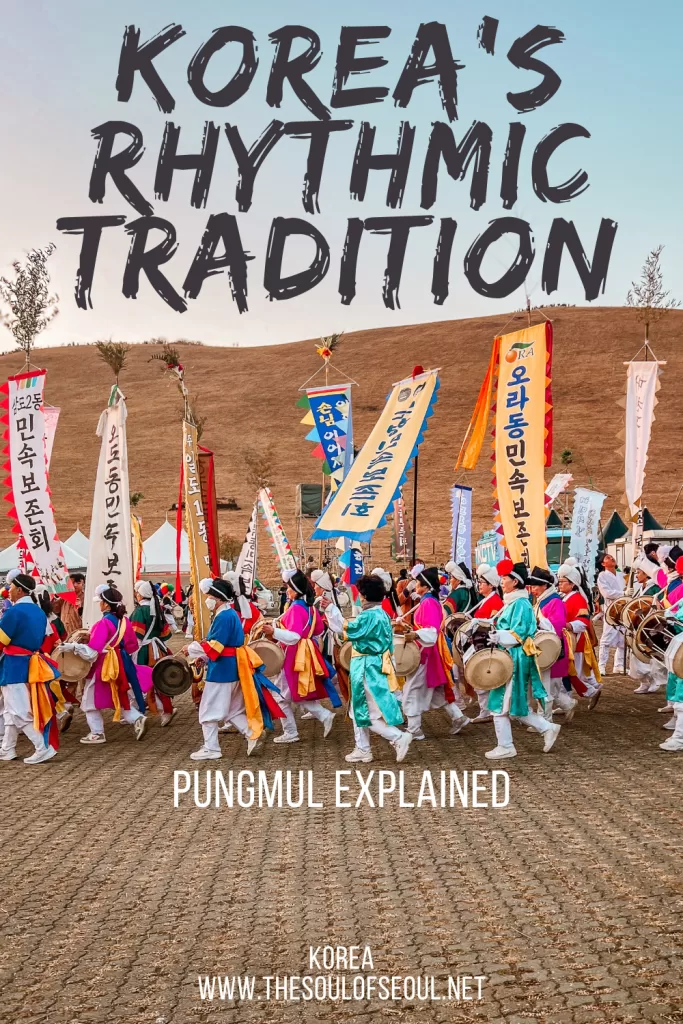
You might hear it before you see it. A sharp metallic clang cuts through the air, the deep barrel drum answers back, and then suddenly a whole swirl of color, ribbons, spinning hats, stomping feet, and smiling performers comes into view. That is often how pungmul (풍물) enters the scene in Korea. It’ll make you want to stop, stare, dance, strut, and join in the fun.
If you have spent any time at traditional festivals in Korea, there is a good chance you have already seen pungmul without knowing its name. I have watched these performances at the Lotus Lantern Festival in Seoul, at the Jeju Fire Festival, and at smaller local cultural events around Korea. The energy feels so immediate and joyful that you do not need a translation to feel what is happening. The sound is communal, lively, and completely magnetic.
For first-time visitors, pungmul can be loud, a loud mix of music, dance, and ritual all happening at once. That is because it kind of is. Pungmul is one of those Korea traditions that holds layers of history inside every beat. It is entertaining, yes, but is also comes from village life, farming communities, seasonal rituals, and the collective rhythm of people working and celebrating together.
Get ready for a deep dive into pungmul. Once you know a little more about pungmul, those performances become even more exciting to watch.
- Basic Info
- What is Pungmul?
- Why Pungmul Matters in Korean Culture
- A Brief History of Pungmul
- The Instruments You’ll Hear in Pungmul
- The Dance, Movement, and Costumes
- Where To See Pungmulnori Performances
- Pungmul and Samul Nori are Not The Same Thing
(This post contains affiliate links, which means I receive a certain percentage of a sale if you purchase after clicking at no cost to you. Thank you for your support.)
Basic Info
Korean name: 풍물 (Pungmul)
Also called: 농각 (Nongak), though many performers and scholars prefer pungmul today
What it is: A traditional Korean folk performance art that combines percussion, dance, movement, song, and theatrical elements
Where you’ll see it: Traditional festivals, heritage events, temple celebrations, folk village performances, seasonal cultural festivals, and parades across Korea
Good to know: Pungmul is usually performed outside and meant to be lively, participatory, and community-centered
What is Pungmul?
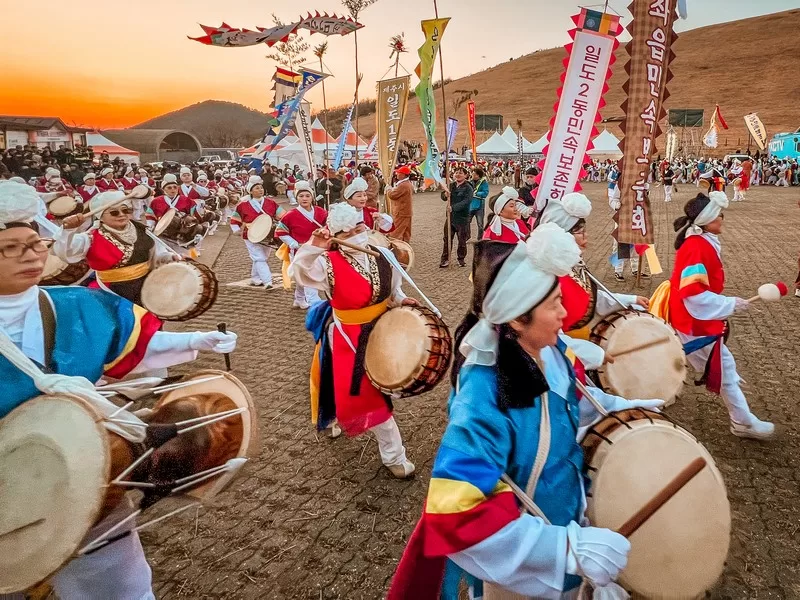
Pungmul (풍물) is a Korean folk music and performance tradition centered on rhythm, especially drumming, but it is much more than just music. It includes percussion, dance, singing, formations, costume, and theatrical interaction with the audience. Most pungmul performances happen outside, and the performers are usually in constant motion.
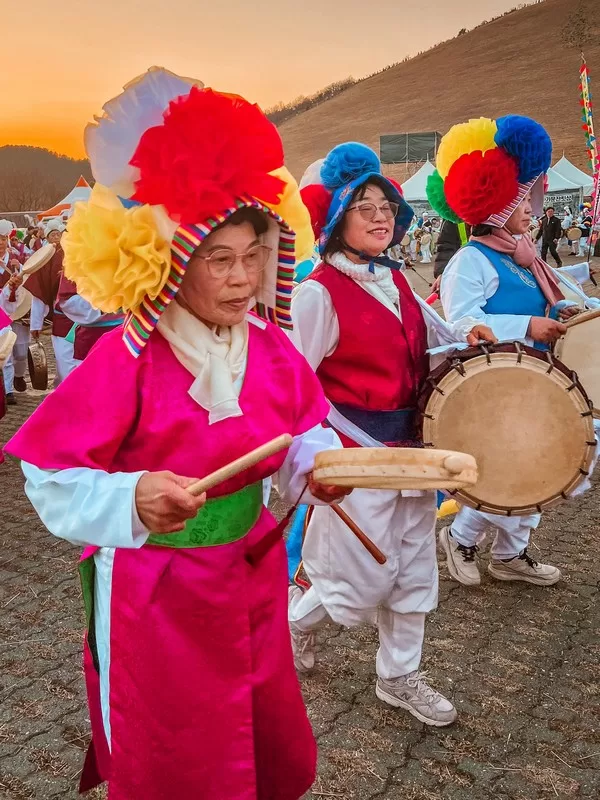
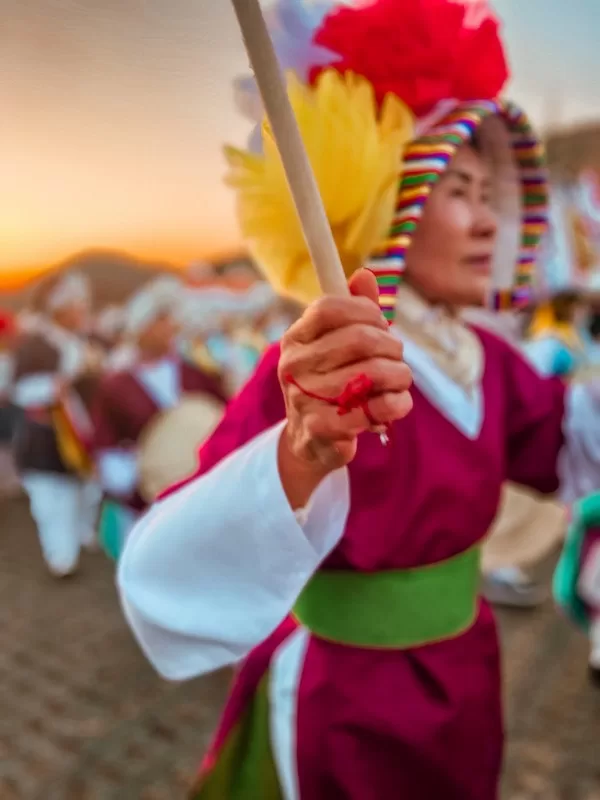
At its core, pungmul comes from Korea’s rural village culture. It was traditionally tied to dure, the communal labor system in farming communities, where people worked together in the fields and gathered for rituals, celebrations, and village events. Over time, pungmul became part of seasonal festivals, shamanistic rites, mask dance performances, and community gatherings meant to build solidarity.
Fun Fact: The Cultural Heritage Administration recognizes five regional styles of pungmul that are unique to their approach toward rhythms, costuming, instrumentation, and performance. These are from Jinju, Pyeongtaek, Iri, Gangneung, and Imsil.
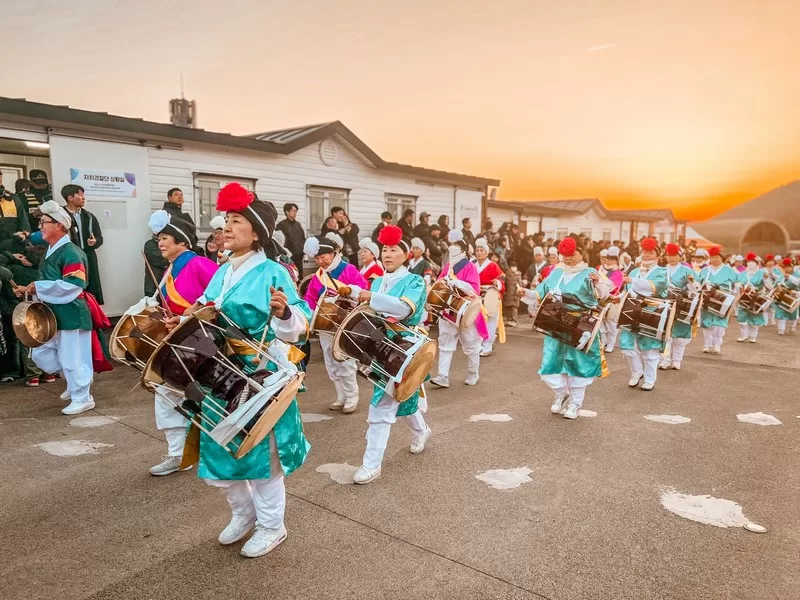
That communal feeling is probably the thing I notice most whenever I watch it. Even when you are a bystander, it pulls you in. You body sways, your feet start to stomp. It never feels like a performanc meant to stay far away on a stage. It feels like something shared.
Pungmul vs. Nongak: Why the Name Matters
You will often see pungmul referred to as nongak (농각), which literally means “farmers’ music.” That term has been used officially for decades, and South Korea’s cultural heritage administration still uses it in some heritage designations. But many scholars and performers prefer the word pungmul today.
The reason is important. During the Japanese colonial era (1910 – 1945), the broader meaning and social role of this tradition was narrowed, and the term nongak was used in ways that framed it as something limited to farmers. Later, performers and researchers pushed back against that label because pungmul is not only about farming. It is also about ritual, protest, performance, community, identity, and living tradition.
Why Pungmul Matters in Korean Culture
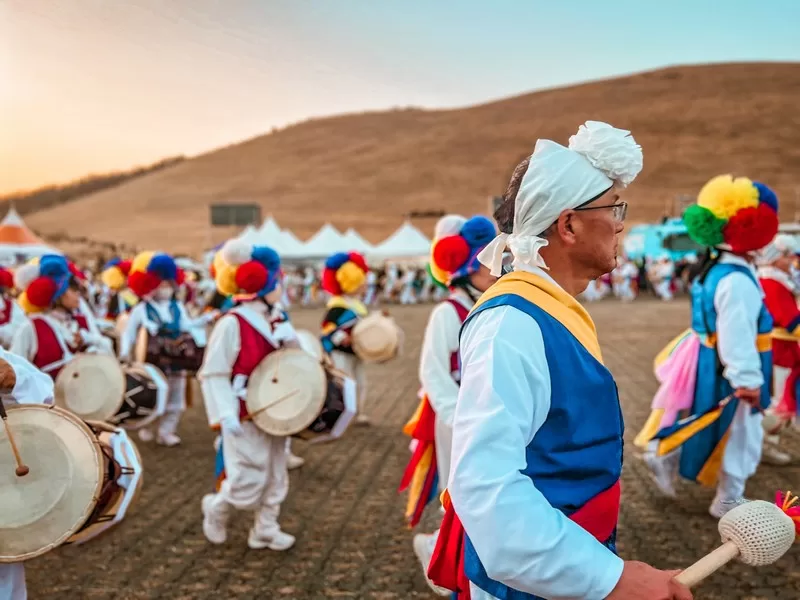
Pungmul is not just something pretty to watch at a festival, though the traditional clothing, especially the hats were what first caught my eye I admit. It reflects the rhythm of Korean communal life. The tradition grew out of shared labor, village rituals, and collective celebration. In that sense, it is deeply tied to the idea that music can bring people together, ease hardship, and strengthen community bonds.
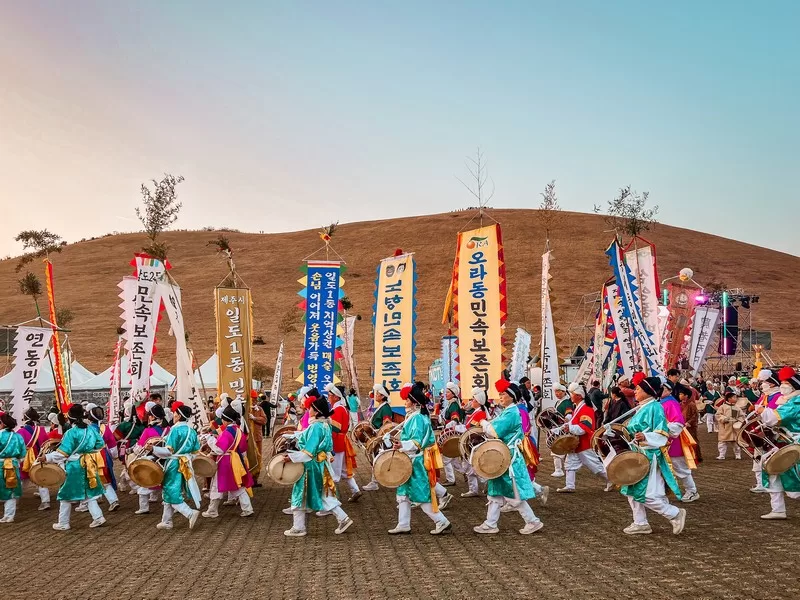
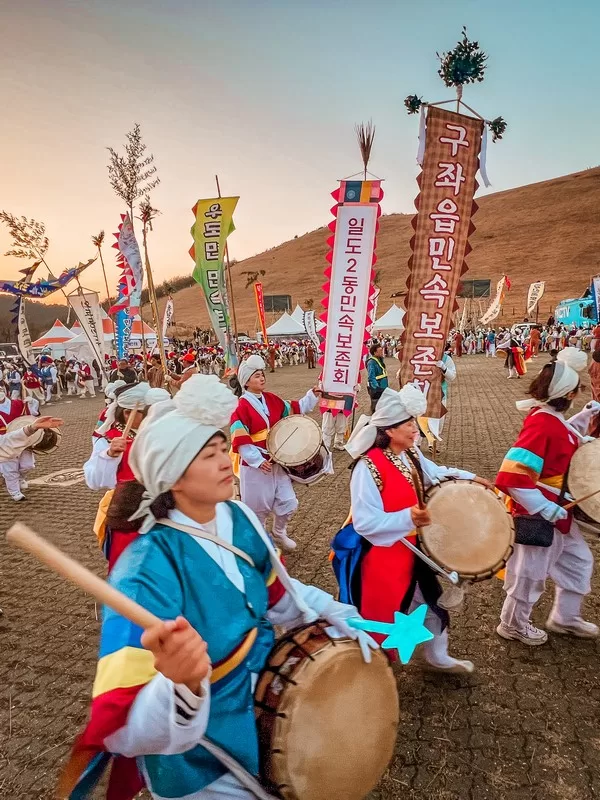
Take the Jeju Fire Festival for example, performing groups came from every district on the island including Udo Island to perform as one large group to celebrate the arrival of spring and pray for health and a bountiful harvest in the new year.
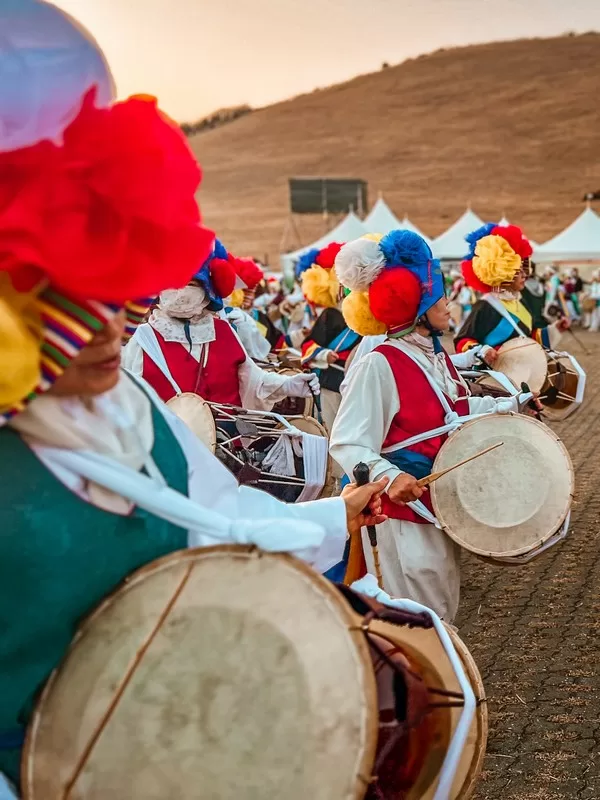
There is also a physicality to pungmul. The beats can feel like heartbeats. The repetitive rhythms build energy in waves. The players are not only making music, they are moving their whole bodies through it, and the audience often responds with clapping, singing, dancing, and cheering.
A Brief History of Pungmul
The exact origins of pungmul are difficult to pin down, but it is widely understood to have roots in ancient communal rituals, seasonal agricultural life, and village ceremonies. Historical records suggest links to collective celebrations connected to planting and harvest seasons, where singing, dancing, drumming, and ritual movement all played a role.
Over the centuries, pungmul became the primary musical expression of ordinary people rather than the elite court. It was used in farm work, village rites, shamanistic practices, and festive entertainment. Some traditions involved going from house to house to offer blessings, chase away bad luck, and encourage prosperity.
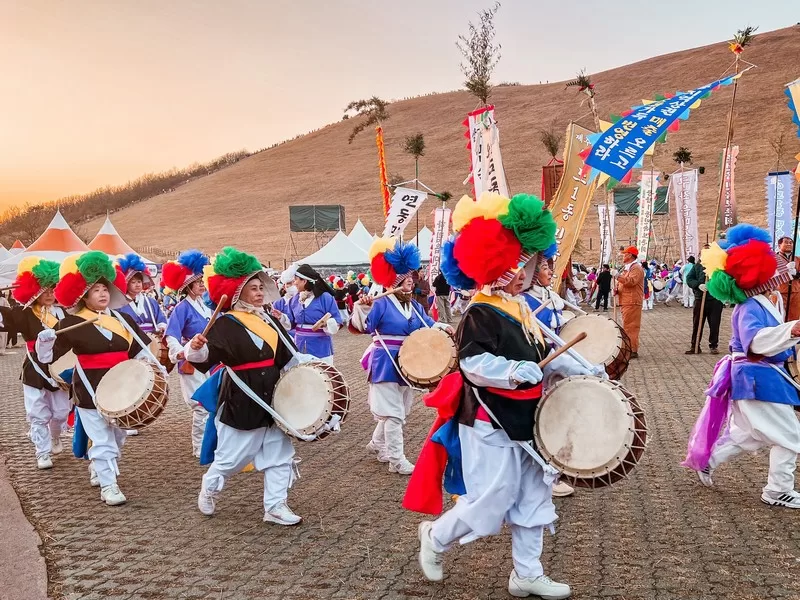
During the late 1960s and 1970s, pungmul also took on a modern political role. It was used in pro-democracy movements and labor protests, where its collective power and distinctly Korean identity made it a meaningful form of expression. That piece of its history is easy to miss when you only see the colorful festive version, but it is part of what gives pungmul such depth.
The Instruments You’ll Hear in Pungmul
Pungmul is built around percussion, and once you know the instruments, it becomes easier to follow the sound of a performance. There are generally five major instruments used in playing pungmul.
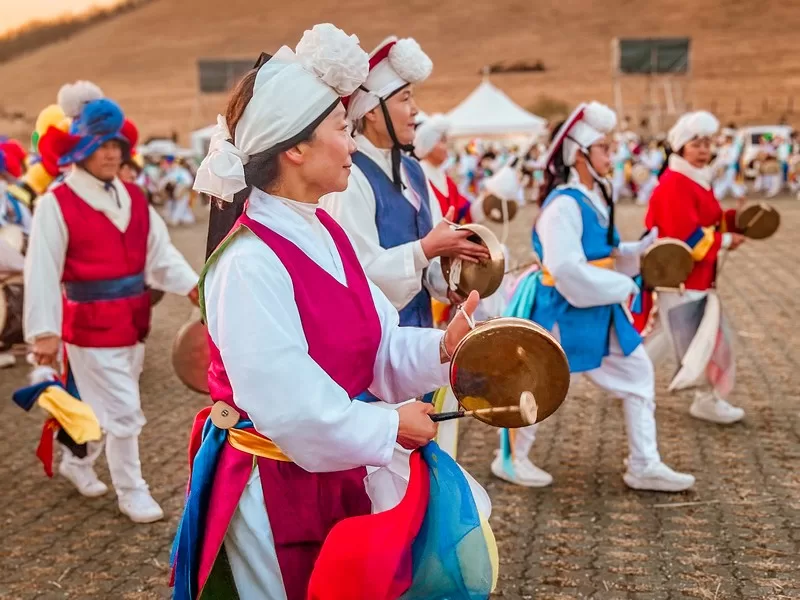
Kkwaenggwari (꽹과리)
This small handheld gong often leads the group. It has a bright, sharp, cutting sound that can slice right through the rest of the ensemble. The lead player signals changes, directs energy, and helps guide the performance forward. If pungmul had a musical ringleader, this would be it.
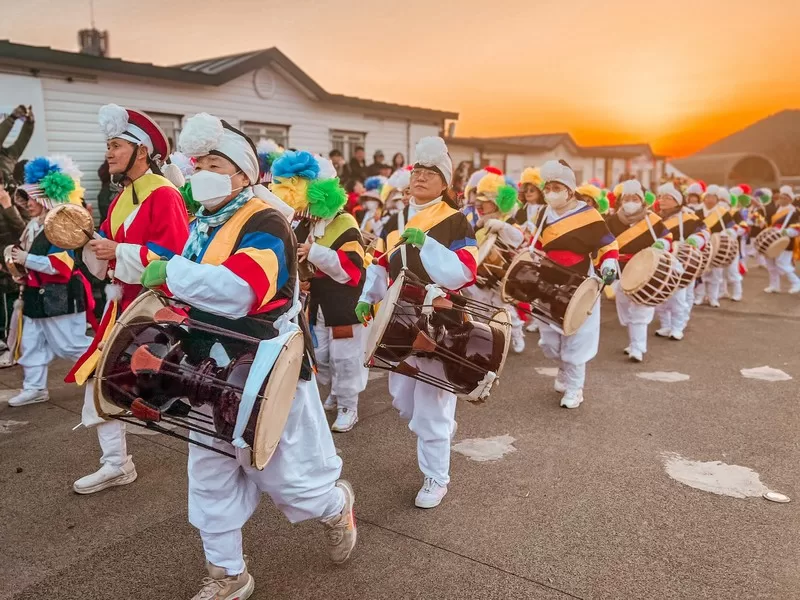
Janggu (장구)
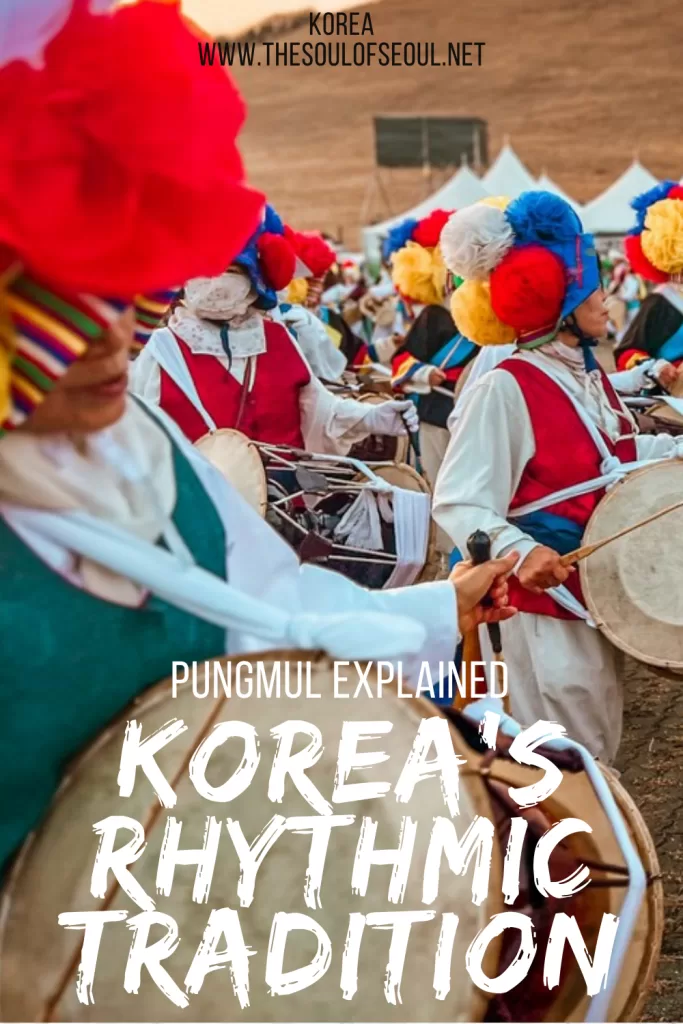
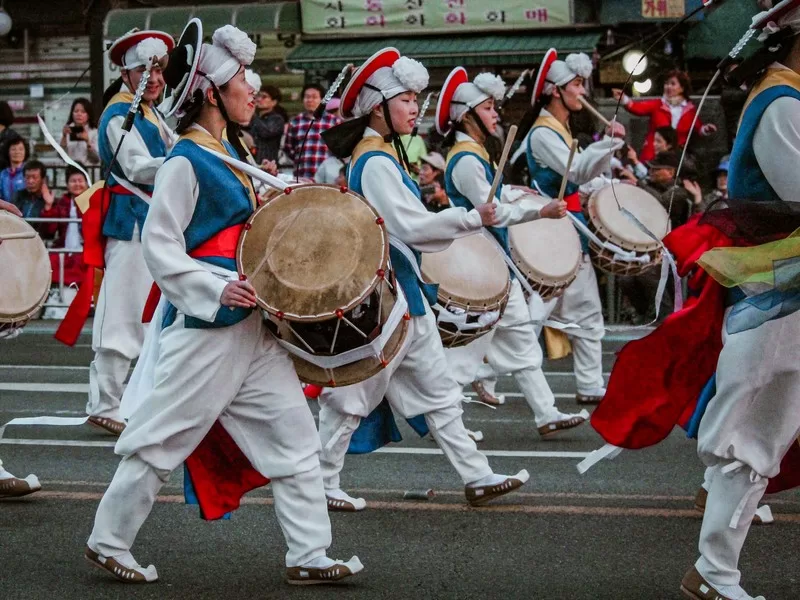
The janggu is the hourglass-shaped drum you will see strapped to the body. It has two sides with different tones, which gives it a dynamic, expressive sound. It is one of the most recognizable instruments in Korean traditional music, and in pungmul it adds both rhythmic complexity and visual drama because performers often dance while playing it.
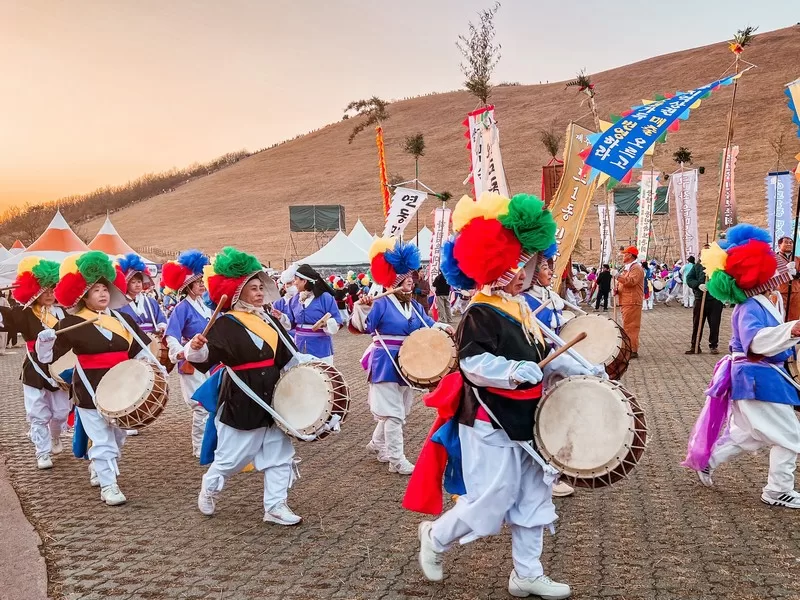
Buk (북)
The buk is a barrel drum with a fuller, deeper sound. It helps ground the ensemble and gives the rhythm weight. There is something wonderfully satisfying about the buk in a live pungmul performance because you feel it as much as you hear it.
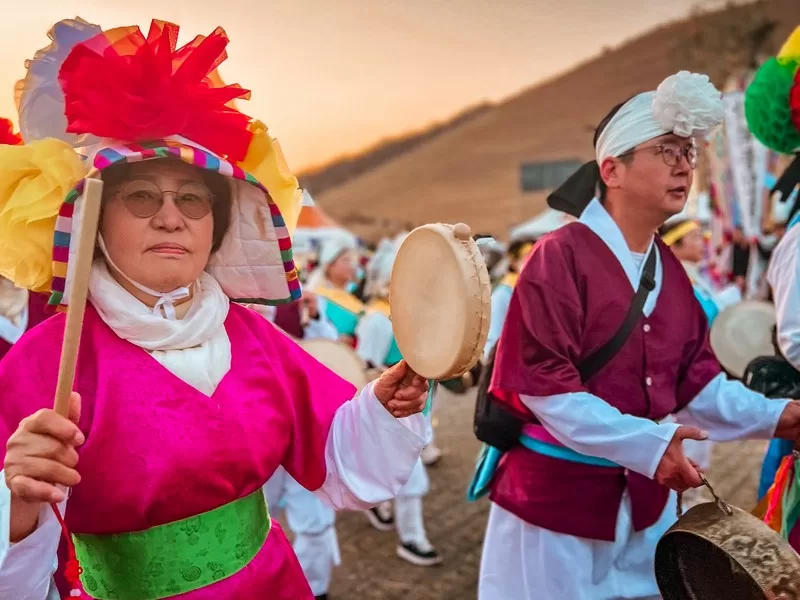
Jing (징)
The jing is the large handheld gong. It produces a resonant, lingering tone that helps tie the rhythm together. If the kkwaenggwari is the spark, the jing is more like the echoing wave that rolls through the performance.
Sogo (소고)
The sogo is a small hand drum that is often used more for dance and visual effect than for strong sound. You will often see dancers carrying one while performing footwork or ribbon-hat choreography. It is one of the reasons pungmul looks so layered and theatrical.
The Dance, Movement, and Costumes
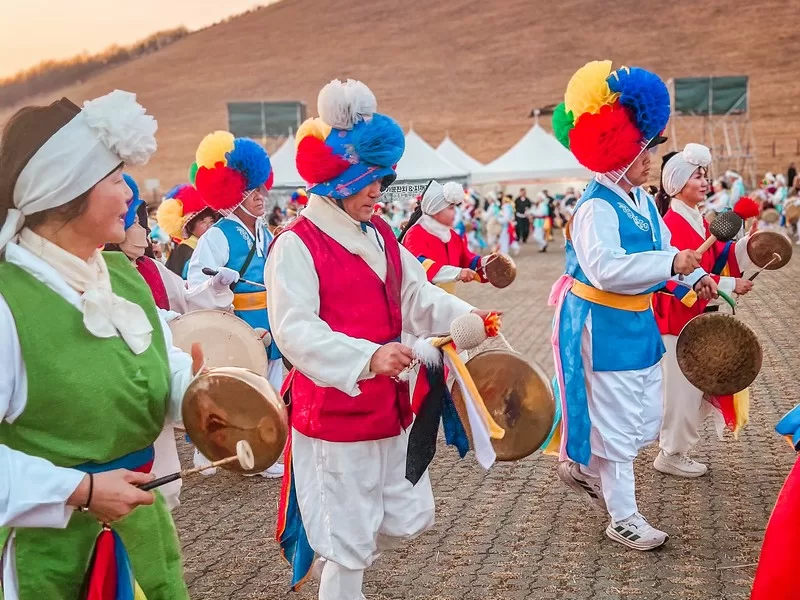
One of the reasons pungmul is so unforgettable is that it is never just stationary music. The dance and movement are essential to the form. There are group formations, solo showcases, footwork sequences, and moments where the whole performance expands into something almost theatrical.
You might notice performers weaving in patterns, breaking into solo flourishes, or spinning hats with long ribbons attached. Those ribbon hats are called sangmo, and watching skilled performers flick them into circles and figure-eights with only the movement of their heads is always mesmerizing. It is one of those things I have seen multiple times and still cannot quite believe people do it so effortlessly.
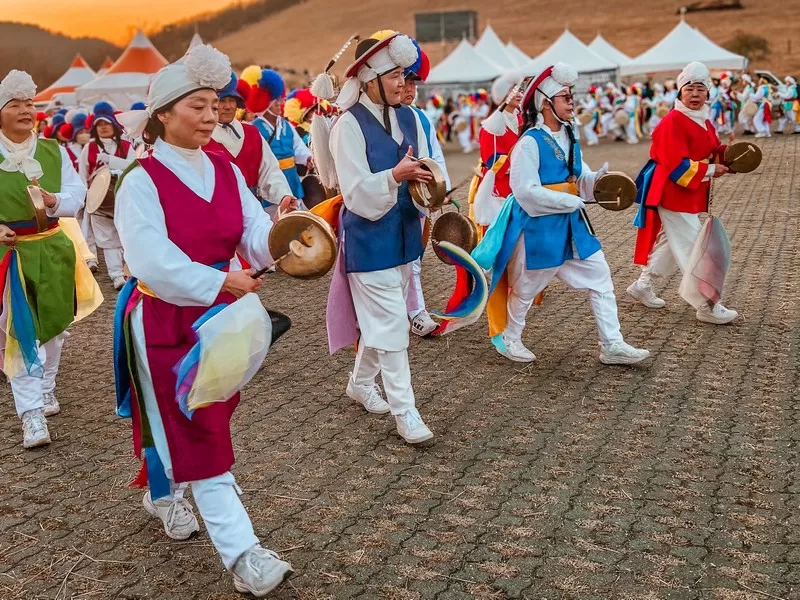
Costumes are bright and festive, often featuring white outfits, colorful sashes, and distinctive headwear. Some performers wear flowered hats called kkokkal, while others wear wide-brimmed hats with feathers or long streamers. In some regional styles, actors, dressed as exaggerated village characters join the troupe and interact with the audience, blurring the line between performer and spectator.
You can learn more about Korean folk traditions at the National Folk Museum of Korea located on the grounds of Gyeongbokgung Palace.
Where To See Pungmulnori Performances
There are a number of places and events to enjoy pungmul performances.
Seasonal Festivals: Check out programs for the words pungmul, nongak, or traditional percussion performance. Festivals centered on traditional culture like the Lotus Lantern Festival almost always have a performing troupe on the schedule. If you really want to go all out pungmul, find out when the Bupyeong Pungmul Festival (부평풍물대축제) is being held this year.
Korean Folk Village: If you want to appreciate and learn about traditional Korean culture, the Korean Folk Village is a fantastic site to visit. They also have daily pungmul performances on site.
- Address: 90 Minsokchon-ro, Giheung-gu, Yongin-si, Gyeonggi-do (경기도 용인시 기흥구 민속촌로 90 (보라동))
- Buy tickets: Buy your entrance tickets complete with a shuttle for a discount before you go on Klook.com.
Pungmul and Samul Nori are Not The Same Thing
This is one of the most useful distinctions for visitors. If you have seen a Korean percussion quartet seated on stage with four instruments, that is probably samul nori rather than pungmul. Samul nori developed in 1978 as a modern staged adaptation that distilled the musical essence of pungmul into a concert format. It uses the four core percussion instruments, but it is usually performed seated and is meant for indoor stage presentations.
Pungmul, on the other hand, is traditionall outside, mobile, communal, and visually expansive. It includes dances, costumes, formations, and audience interaction in ways that samul nori generally does not.
Both are worth seeing, but if you are at a street festival in Korea and a whole rhythmic procession comes dancing toward you, that is pungmul.
You do not need to know the rhythms or terminology to enjoy pungmul, but understanding and appreciating how pungmul has survived while holding on to that communal core will make seeing it all the more special. It’s loud, it’s colorful, physical, and rooted in everyday Korean culture and history. If you get to see it, take the time to pause and enjoy every moment.
Did you like this post? Pin iT!