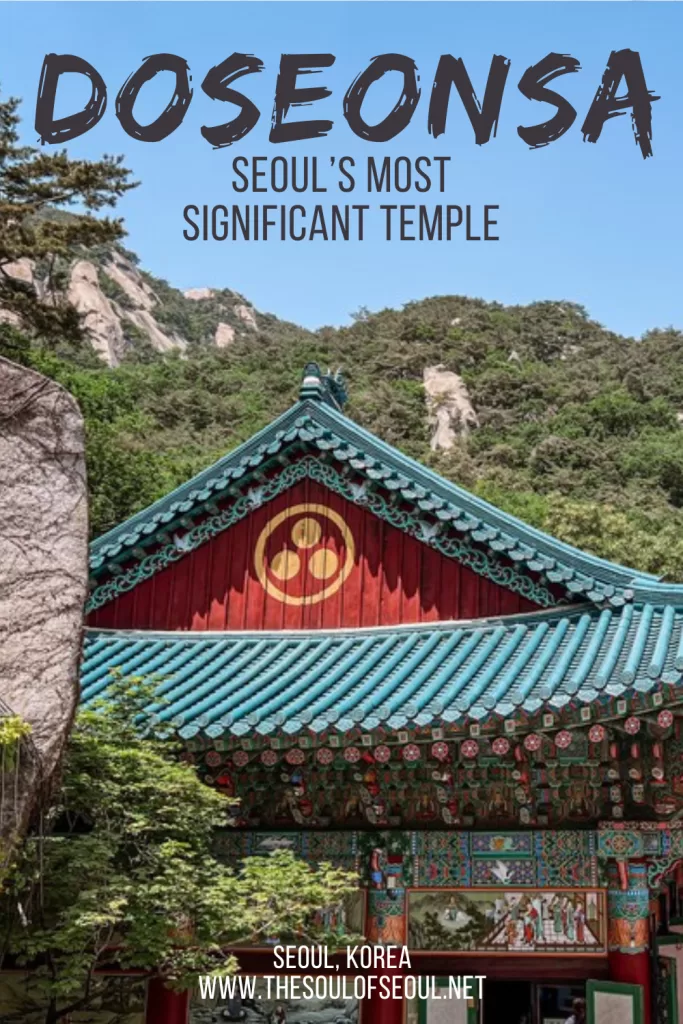
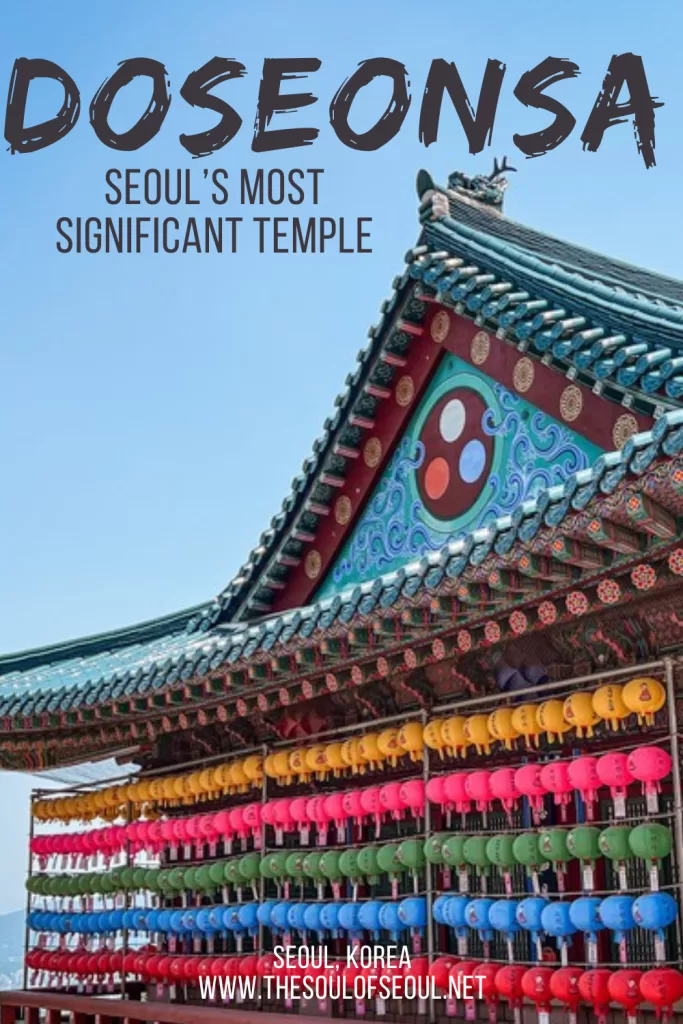
Doseonsa Temple: Seoul’s Most Sacred Mountain Retreat in Bukhansan
Last Updated on July 6, 2026
You might think you’ve seen Seoul’s best temples just by visiting the famous ones downtown. Jogyesa Temple and Bongeunsa Temple are certainly the easiest ones to get to, but tucked inside the folds of Bukhansan National Park, about an hour from the city center, is a temple with so many stories to tell.
Doseonsa Temple (도선사) is a Buddhist temple in Gangbuk-gu, Seoul, founded in 862 AD, it’s the largest and most historically significant temple complex on the mountain. I’ve visited a lot of temples across Korea, but this one I got to explore with Professor David Mason, an expert on Korean temple culture, so not only was it fulfilling, it was extra fascinating. He pointed out details I would have walked right past and shared stories that completely changed how I saw the place.
Whether you’re a history enthusiast, a curious traveler, or simply someone who wants to escape the city noise, Doseonsa offers all of it. It’s also a gateway to some of Bukhansan’s most rewarding hiking trails, including the famous Baegundae hike, so you can combine culture and adventure in a single trip. If you’re planning a day trip from Seoul, this is one that will definitely deliver. I’m sharing everything you need to plan a visit, including the stories behind the temple that most tourists never hear.
Here’s everything you need to know to explore Doseonsa Temple in Bukhansan.
- Basic Info
- A Temple Born From Prophecy
- Walking Through the Temple Grounds
- The Rock-Carved Buddha and the Legend of the Staff
- The Grand Master Who Rebuilt It All
- Hiking Connections: Bukhansan Awaits
- FAQ
(This post contains affiliate links, which means I receive a certain percentage of a sale if you purchase after clicking at no cost to you. Thank you for your support.)
Basic Info
Address: 278 Doseonsa-gil, Gangbuk-gu, Seoul (서울특별시 강북구 도선사길 278)
How To Get There:
- Take the Ui-Sinseol LRT Line to Bukhansan Ui Station, Exit 2. Walk uphill about 100 meters and look for the Ediya Coffee Shop on your left. The Doseonsa shuttle bus stop is in the parking lot in front of the building marked “Cheonghye Dowon,” across from the final stop for Bus No. 120.
- Alternatively, buses 151 and 109 stop at Uidong (bus 109 also passes Gyeongbokgung and Changdeokgung Palaces along its route). The shuttle departs from across the street from the Uidong bus terminal.
- Prefer to walk? It’s about 40 to 50 minutes on foot from Bukhansan Ui Station through the valley, past cafes, restaurants, and outdoor gear shops. It’s a pleasant walk, especially in spring and autumn.
Hours: Open daily (temple grounds are accessible during daylight hours)
Admission: Free
Website: doseonsa.or.kr
A Temple Born From Prophecy
Did you know that Doseonsa Temple was founded not just as a place of worship, but as a prophecy fulfilled? The story begins in 862 AD, when a remarkable Buddhist monk named National Preceptor Doseon arrived at the foot of Samgaksan, the Three Horn Mountain, during his travels through Korea’s sacred peaks.
Doseon was no ordinary monk. Born in South Jeolla Province in 826, he entered monastic life at age 15, received his full Buddhist precepts at 23, and went on to master not only Buddhist teaching but also the ancient Korean practice of geomancy, the art of reading the energetic patterns of mountains and rivers. He is, in fact, considered the founding father of Korean geomancy, a tradition that would go on to shape the entire spiritual and architectural landscape of the Goryeo and Joseon dynasties.
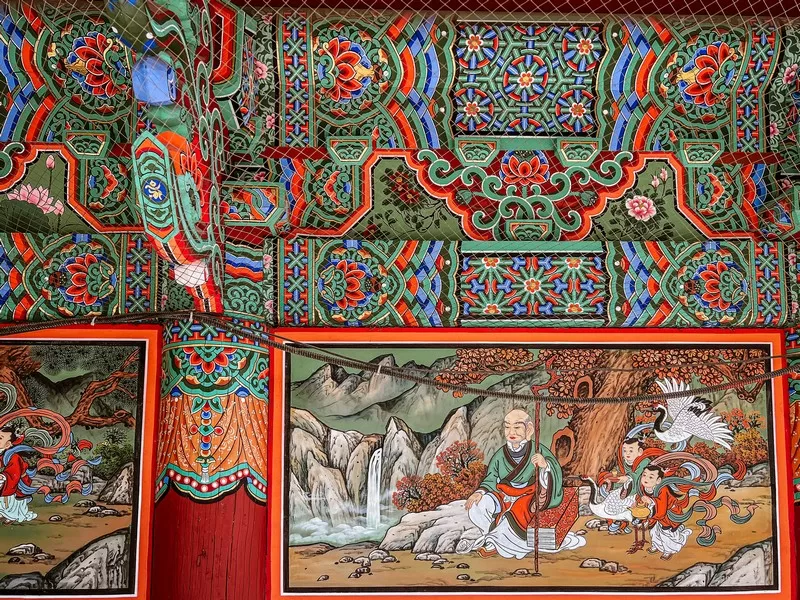
King Taejo Wang Geon, the founder of the Goryeo Dynasty, was so influenced by Doseon’s philosophy that he ordered no new temple be built except those Doseon had already sanctioned in his writings.
When Doseon arrived at Bukhansan, he made a sweeping declaration: this place, with its rare combination of mountain topography and spiritual energy, would be the site where Buddhism would be revived in Korea 1,000 years into the future. He founded the temple on the spot.
Spiritual significance: Doseonsa was officially designated as a National Prayer Site in 1904 and named the representative temple of Korea in the late Joseon period. It remains the largest and most historically significant temple complex in Bukhansan.
Walking Through the Temple Grounds
The temple entrance is near the shuttle parking lot, and the very first thing you’ll encounter is the Cheonwangmun Gate, guarded by four fearsome Heavenly Kings with expressions fierce enough to make you stop mid-step. That’s what they’re there for.
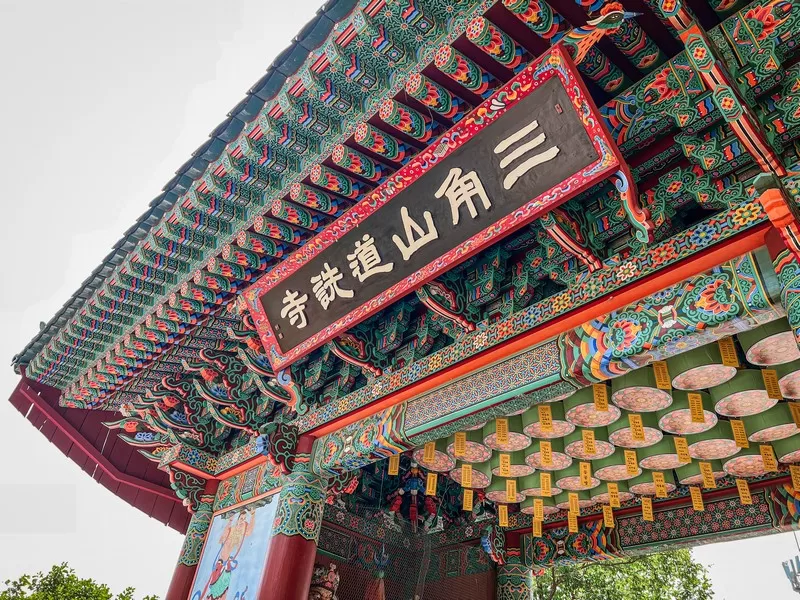
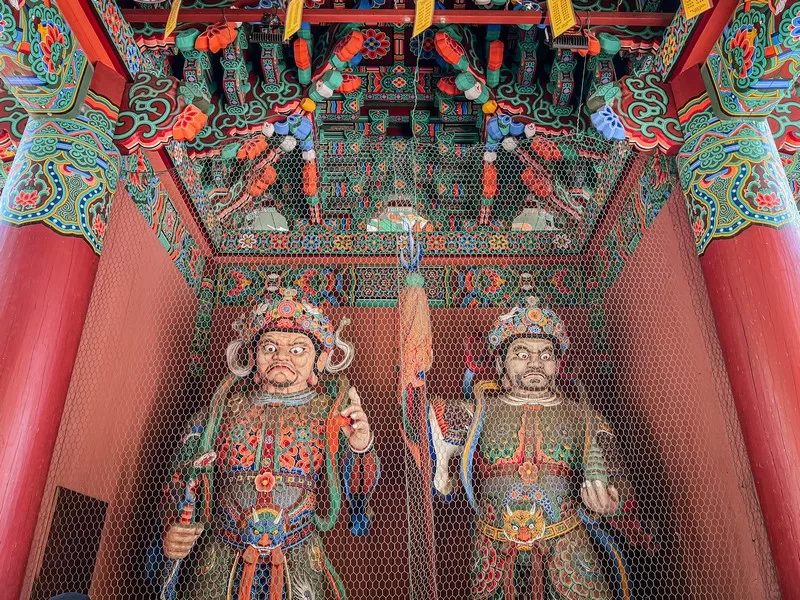
The Four Heavenly Kings (사천왕, Sacheonwang) in Korean Buddhism are divided into four directions:
- Jikguk-cheonwang (East): The King of the East protects the nation and brings peace to all beings. He maintains the world and aids good people while punishing the evil. He is typically depicted holding a pipa, or a traditional stringed instrument, symbolizing harmony and using the music’s vibration to enlighten sentient beings.
- Jeungjang-cheonwang (South): The King of the South represents the virtue of growth. He rules over the wind and increases the wisdom, virtue, and compassion of all beings. He is usually depicted holding a sword, which is used to sever delusions, ignorance, and worldly attachments.
- Gwangmok-cheonwang (West): The King of the West sees everything with his large, watchful eyes. He punishes the wicked and brings them to the path of enlightenment. He is depicted holding a snake or a dragon in one hand and a stupa or a pearl in the other.
- Damun-cheonwang (North): The King of the North is the guardian of hearing and learning. He listens to everything, constantly learns the teachings of the Buddha, and protects the northern realm. He is depicted holding an umbrella or a banner in one hand and a mongoose in the other.
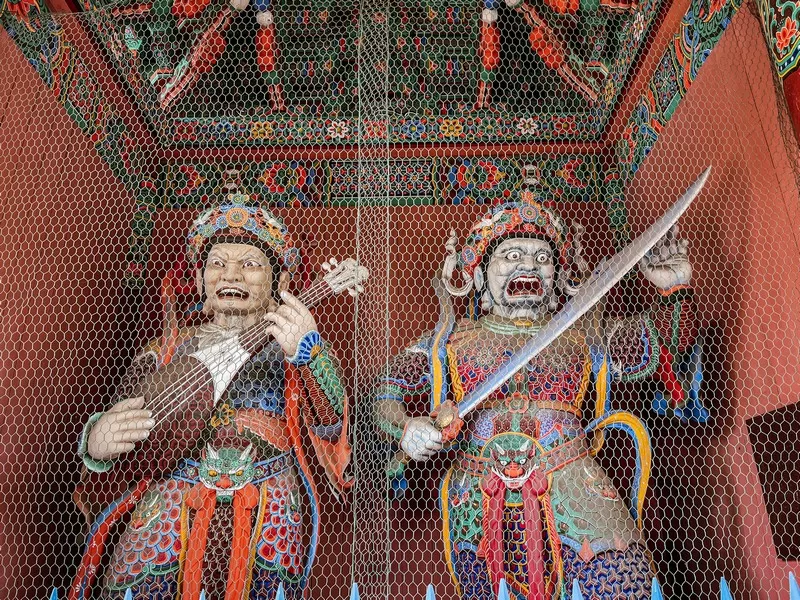
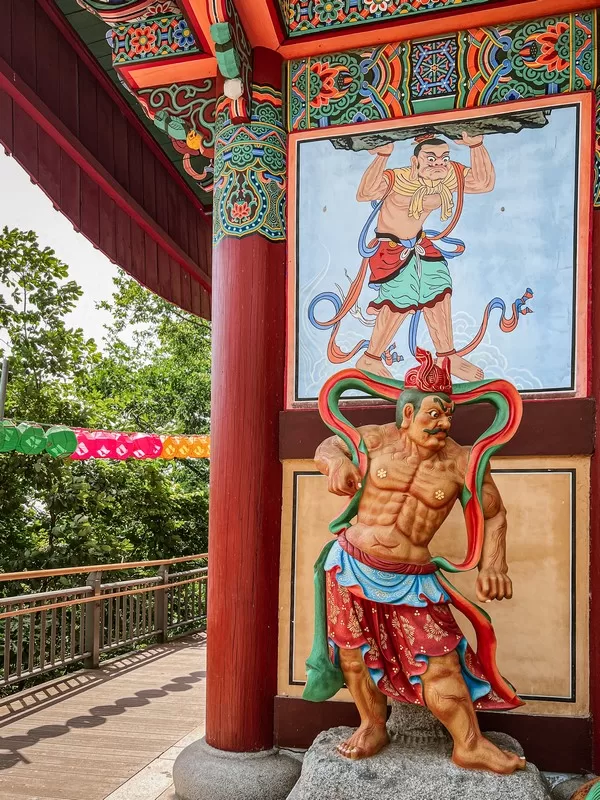
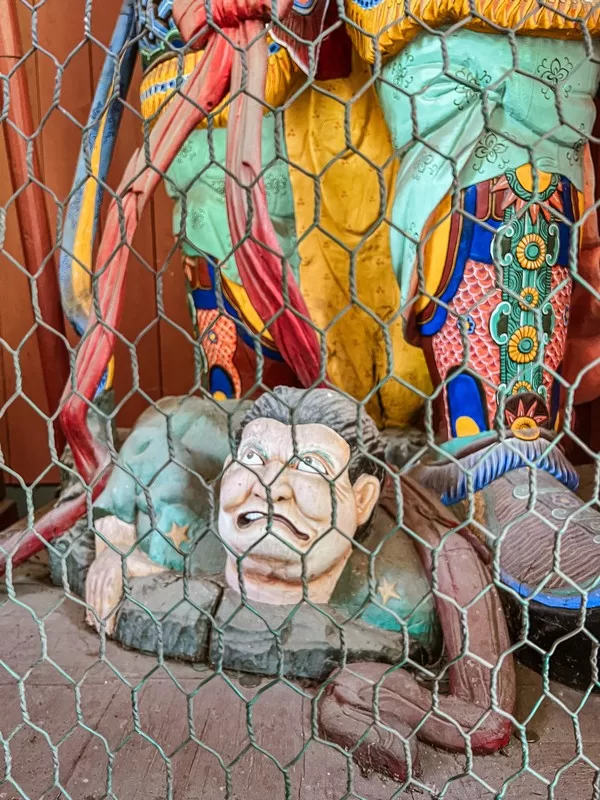
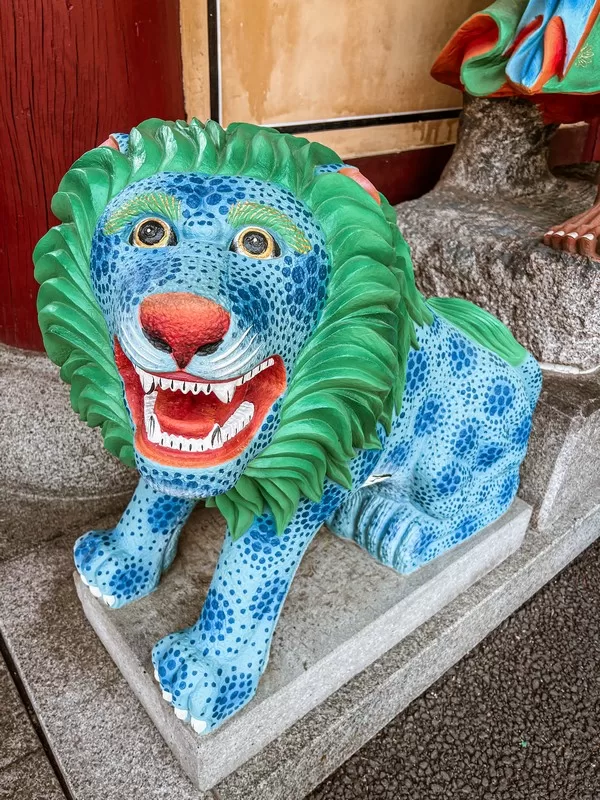
Viewing Tip: You’ll be drawn to look up into their intimidating faces, but take a moment to look down to notice that they’re trampling demons, unruly spirits, and arrogant government officials.
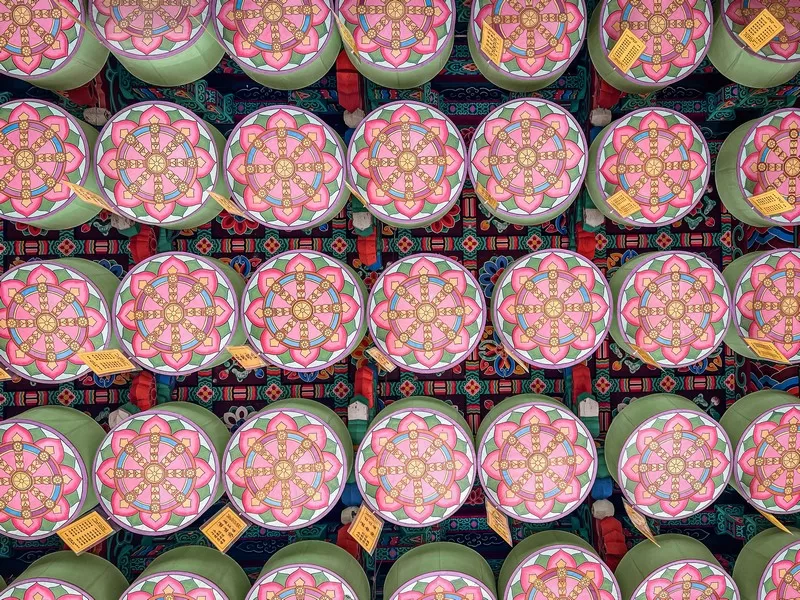
Past the gate, the path curves and opens up, and that’s when you get your first real view of the temple with the massive granite summit of Samgaksan looming beyond it. It’s not a long walk to the main temple grounds, but it is on a mountain. Take your time, look out over Seoul.
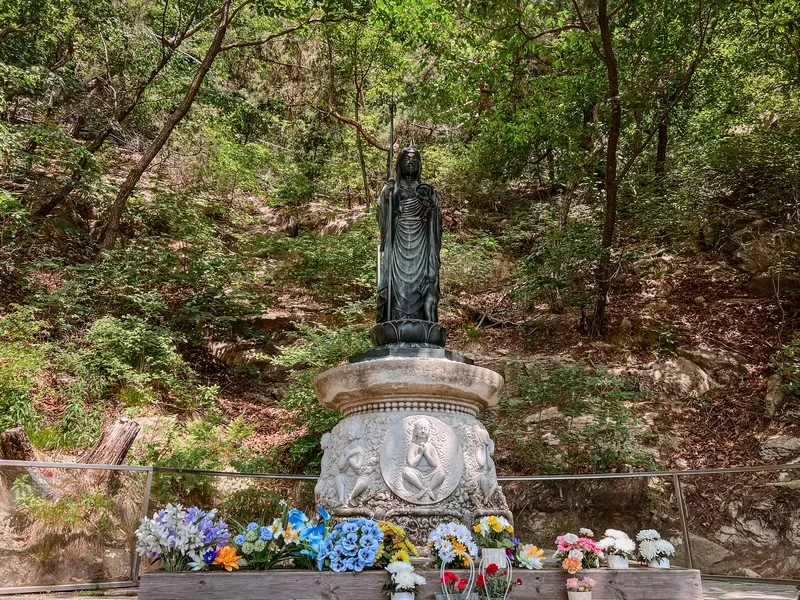
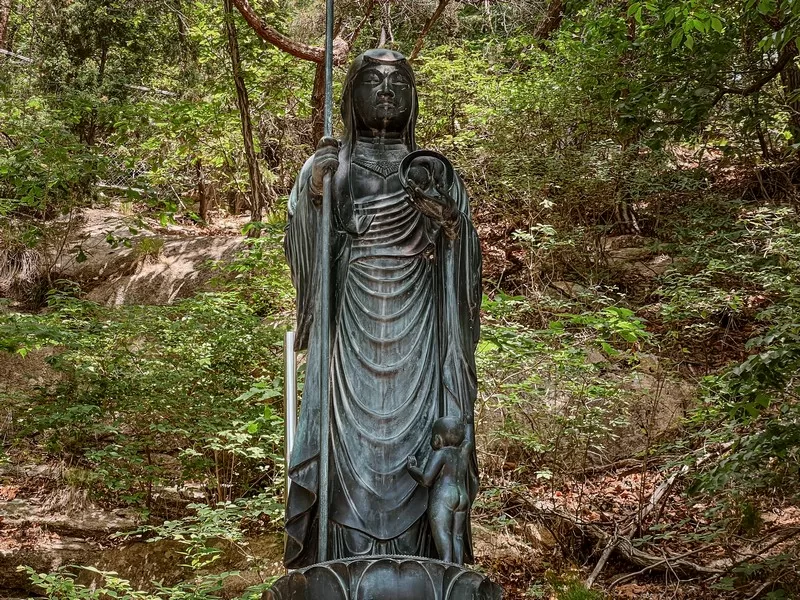
Before you reach the main courtyard, look out for a poignant statue of Jijang-bosal (Ksitigarbha Bodhisattva) standing on a stone pedestal. He is known as a guardian of the underworld, travelers, and children, and this particular statue holds a fetus in one raised hand, representing his role as protector of aborted and unborn spirits. Walk across the street to get a closer view and you’ll see all kinds of symbolism in this statue.
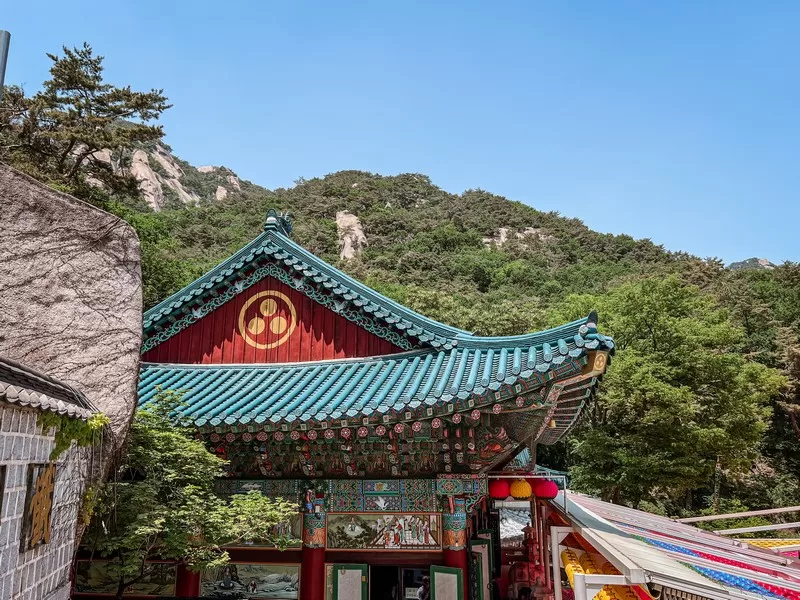
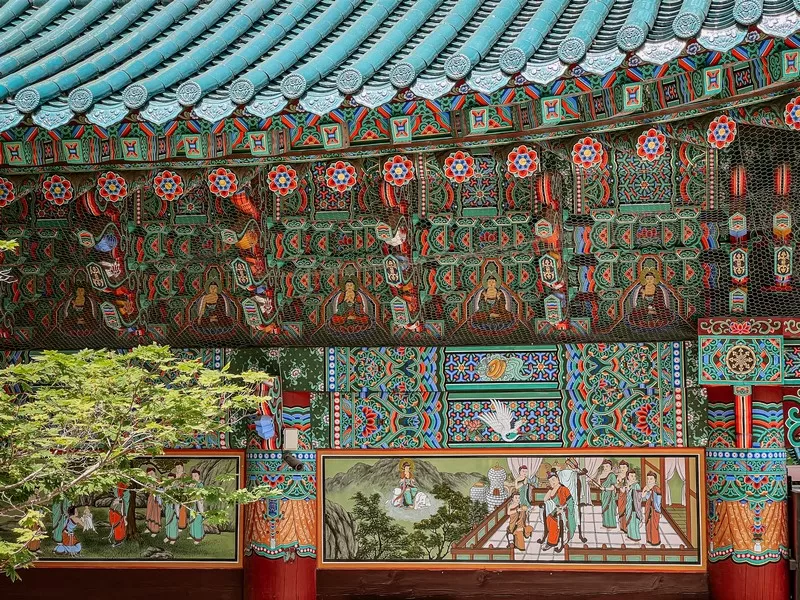
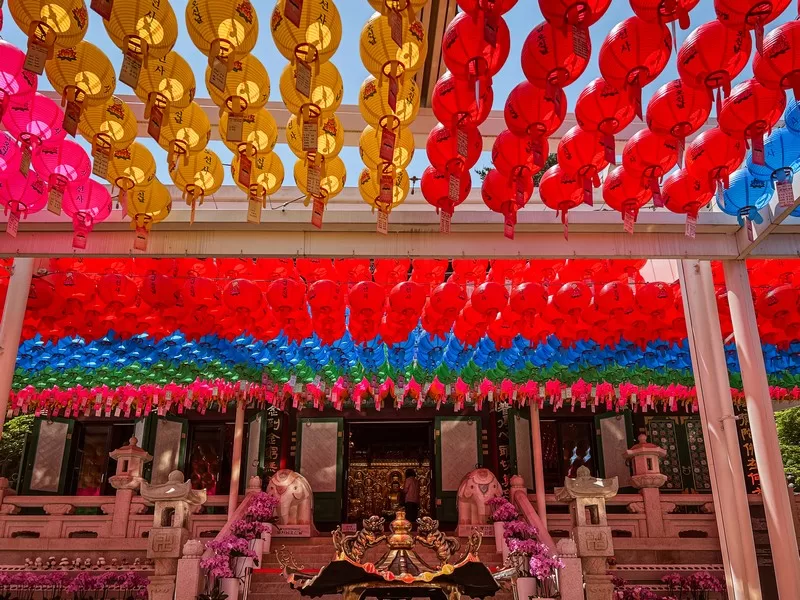
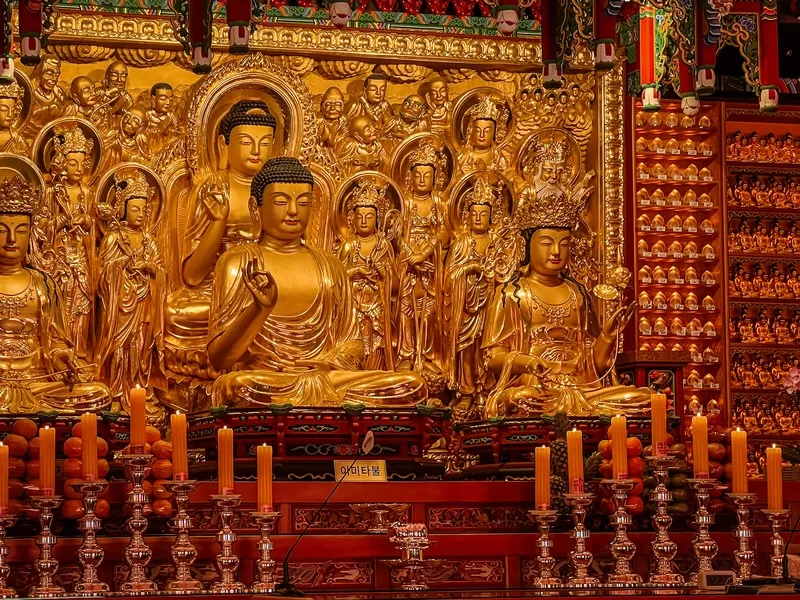
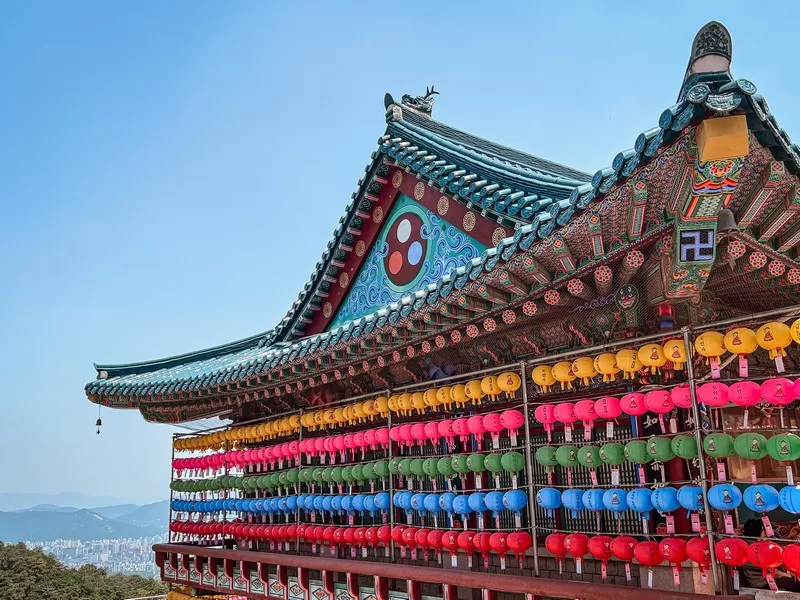
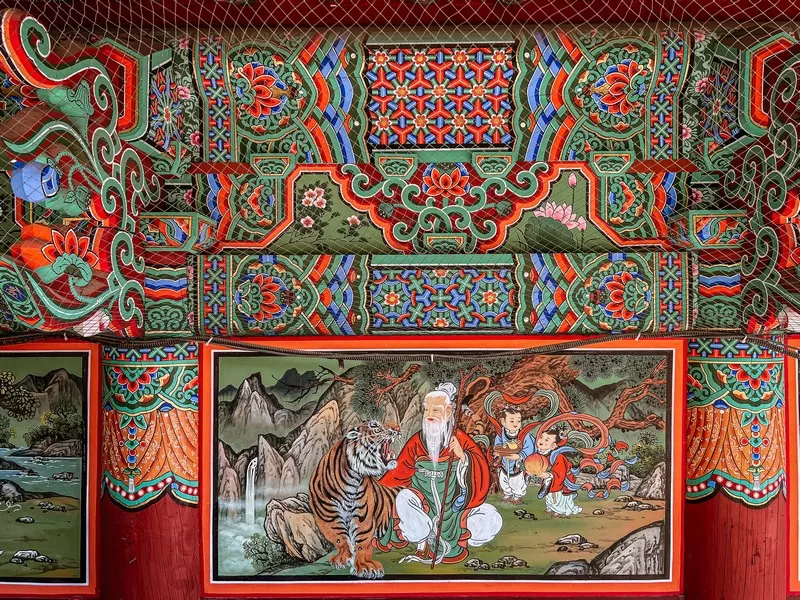
The main courtyard is centered around the Daeungjeon Hall (Dharma Hall), which houses the Amitabha Buddha Triad and interior wall paintings of Bodhidharma, Huineng, and the Grand Master Cheongdam. Visiting in the spring when the lanterns are hung in celebration of Buddha’s birthday meant we saw the spaces with a beautiful golden glow as the light bounced from lanterns to candles.
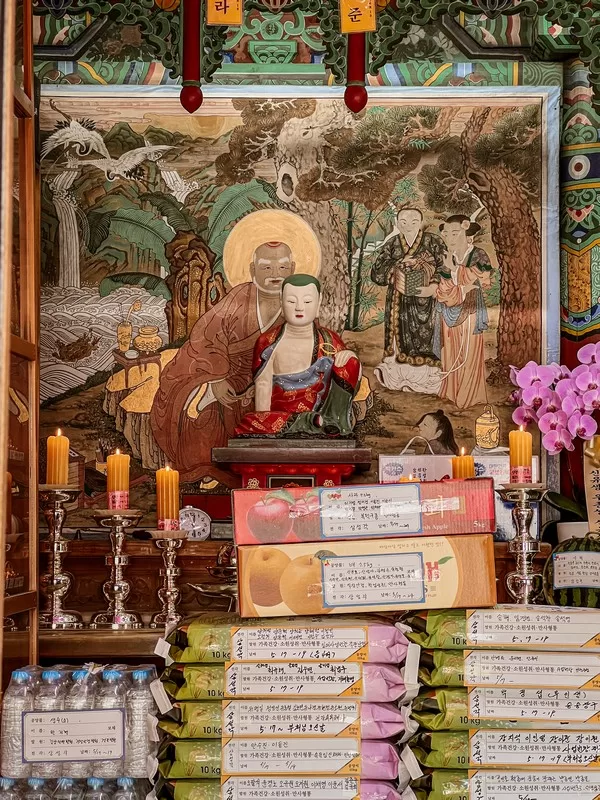
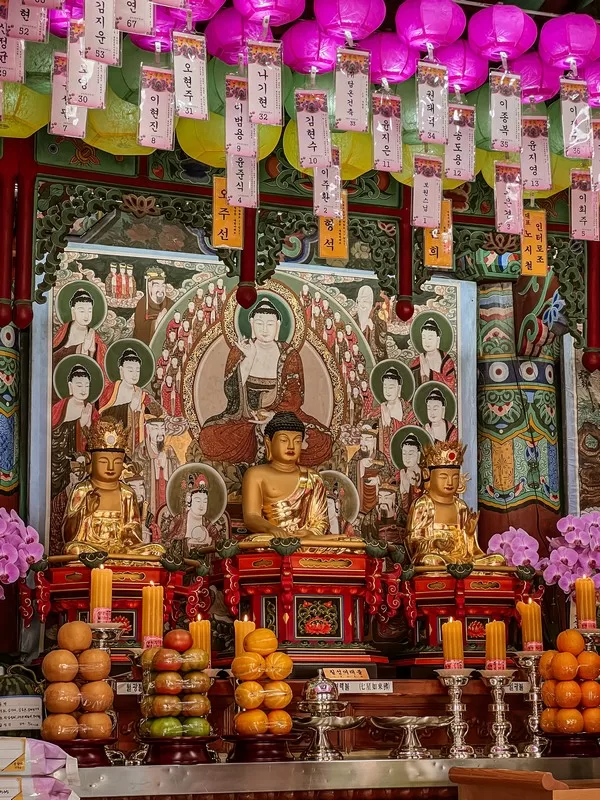
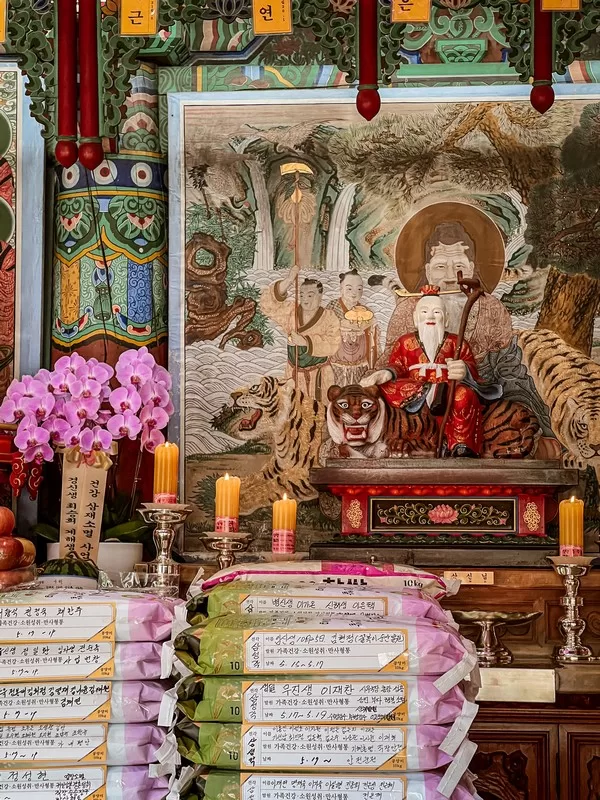
To the immediate left of the Daeungjeon is the Samseong-gak (Three Spirit Shrine). Outside this hall, look for three beautifully cast standing Bodhisattvas: Bohyeon-bosal, Gwanseeum-bosal, and Munsu-bosal. We visited at a very popular period meaning many of the shrines and spaces were stacked high with offerings to the deities.
Inside, the highlight is a rare stone-carved Dokseong statue, the Solitary Saint, which most scholars believe was originally one figure in a set of 16 Arhat statues. How it became separated from the rest is unknown, which gives it a lonely, mysterious quality that suits the name. In 1992, original text was found on the statue that confirmed it was previously painted in the 13th year of King Gojong’s reign (1876). The statue is now listed as Seoul Cultural Property No. 192.
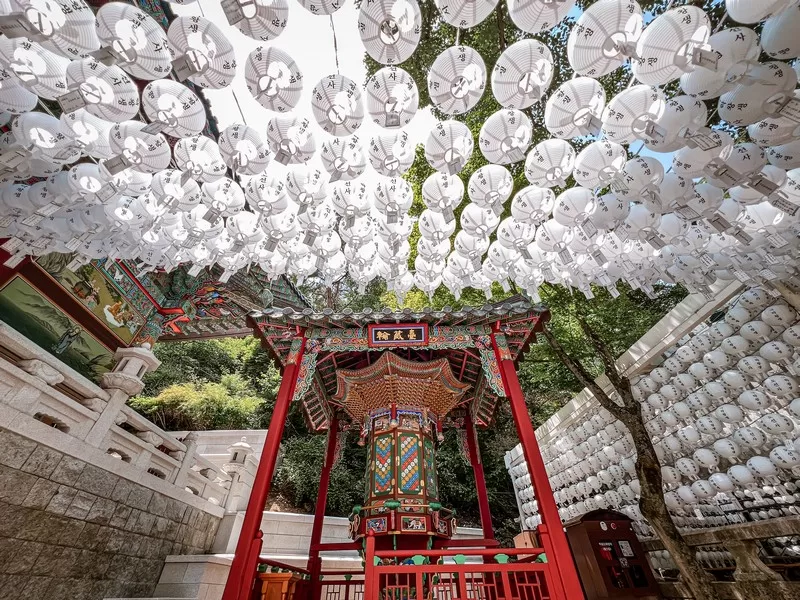
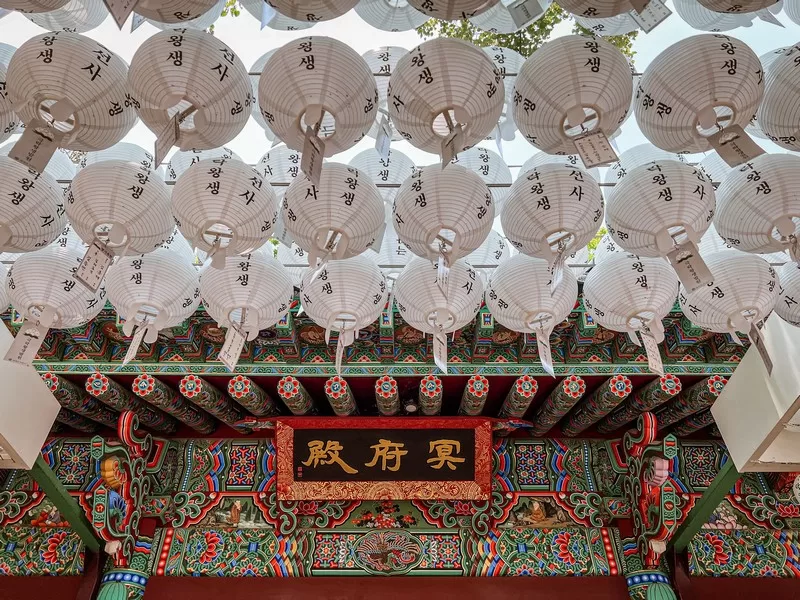
To the right of the main hall is Yunjangdae and Myeongbujeon. Myeongbujeon enshrines 33 statues, including Ksitigarbha Bodhisattva, who vows to save sentient beings from the suffering of hell, and the Ten Kings who examine human good and evil to administer rewards and punishments; these symbolically express the strictness of cause and effect, serving as a reminder of pure conduct.
Take the time to turn: You might see people turning the Yunjangdae, a rotating scripture wheel that houses Buddhist texts. It’s a relatively rare sight in Korean temples, designed to be turned as a symbol of spreading the Dharma and accumulating good deeds in all directions. You can step up and turn it yourself, just once.
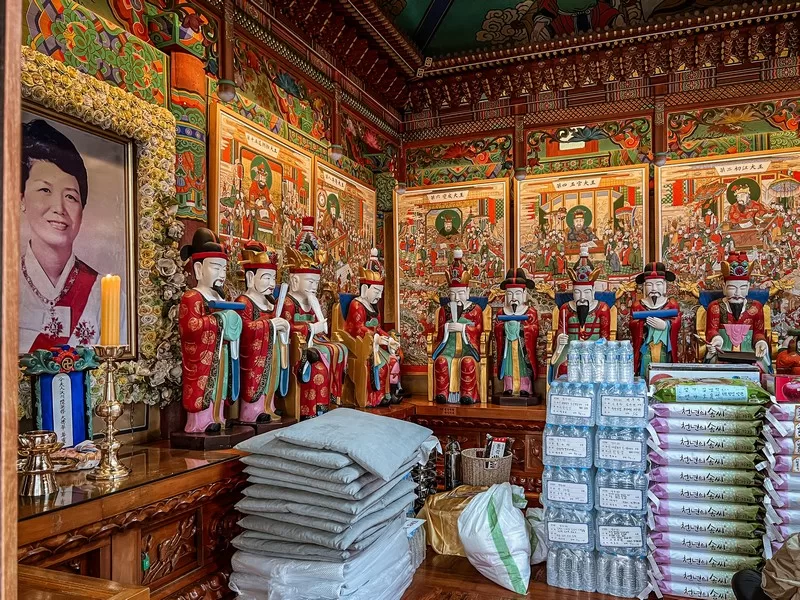
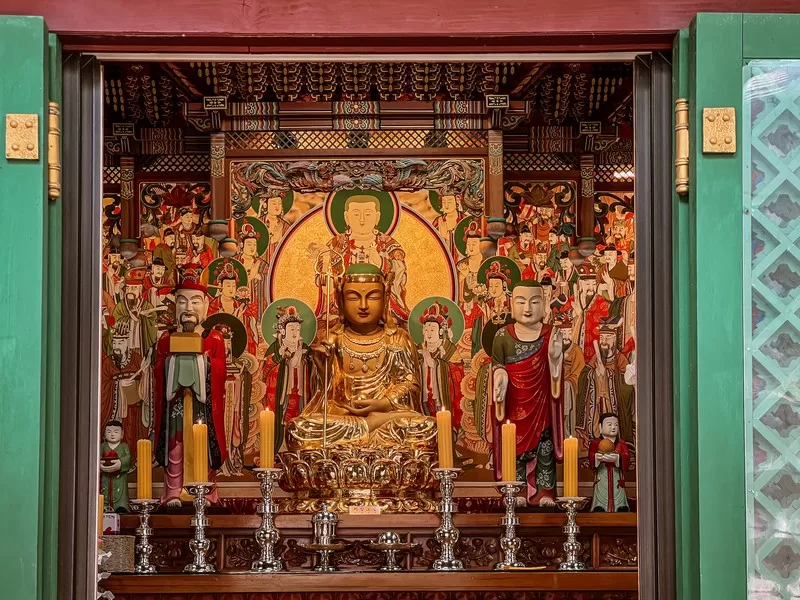
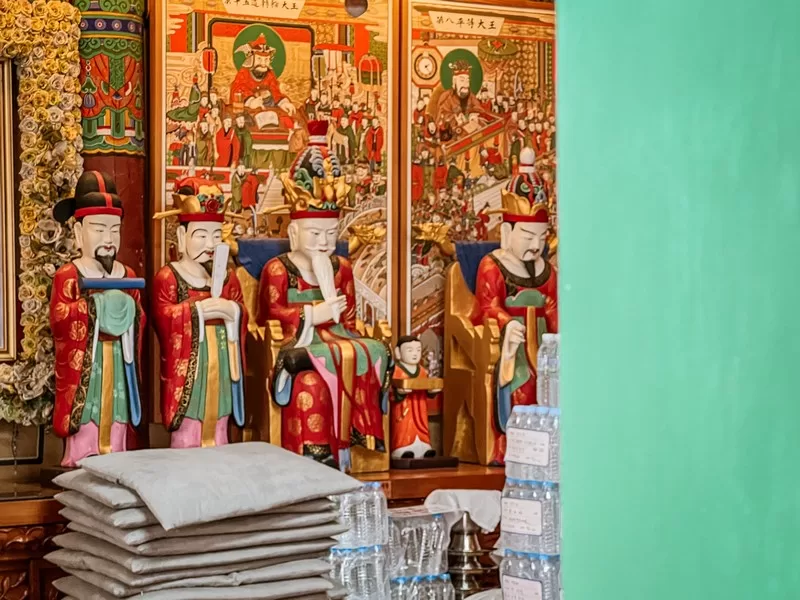
Look inside to find the portraits of former President Park Chung-hee and his wife Yuk Yeong-su enshrined here. Despite Park’s authoritarian rule, he, and more pointedly his wife, were known to be a devout Buddhists, and the presence of his portrait at one of Korea’s most revered temples reflects the complex, ongoing relationship Koreans have with his legacy.
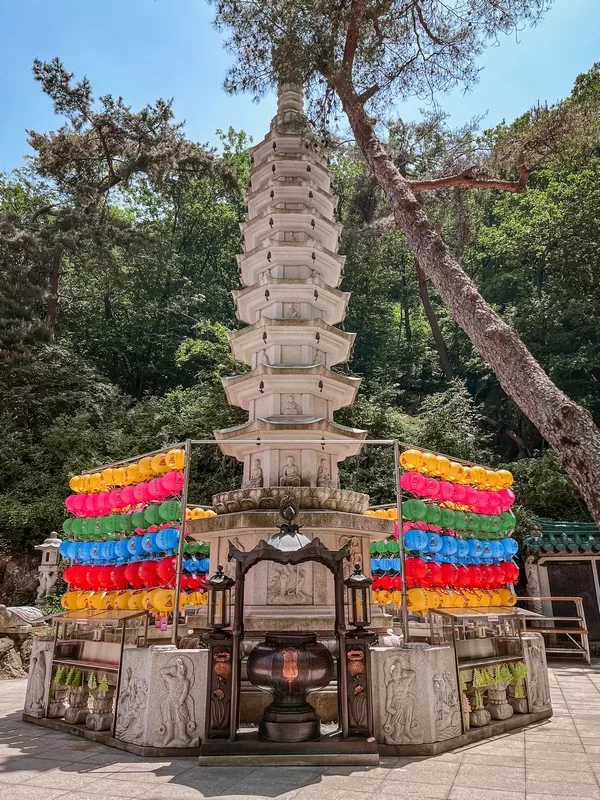
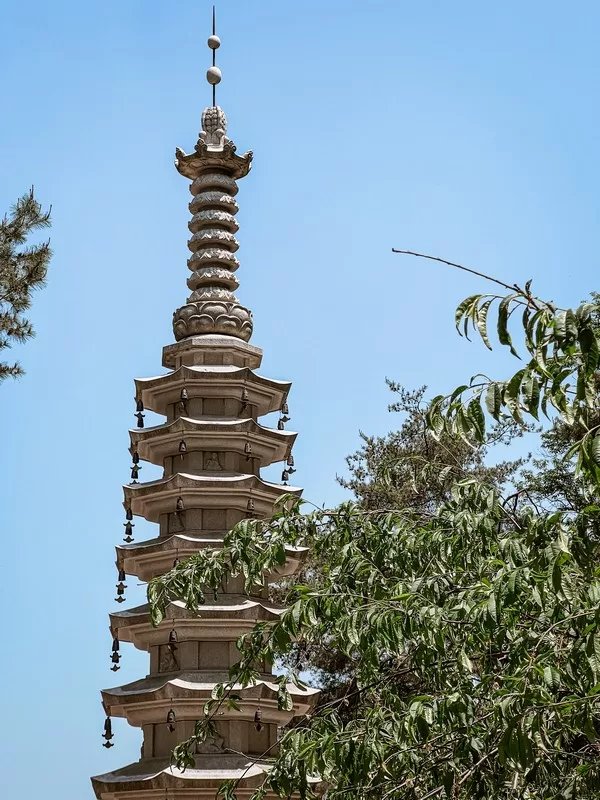
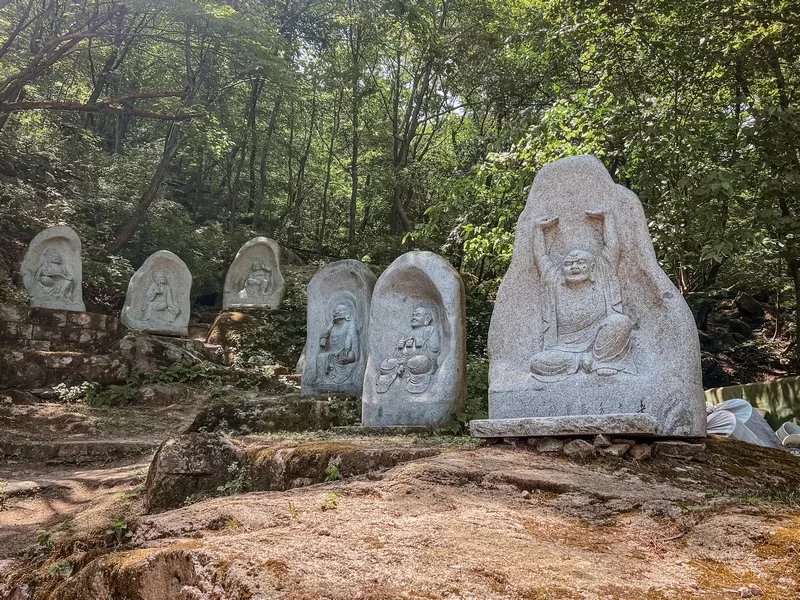
If you walk around to the left side, you’ll also find a beautiful and towering 10-story stone pagoda. Many people walk around looking for their animal and then bowing when they find it. From there you can step up into a small courtyard with 18 Arhat statues.
The Rock-Carved Buddha and the Legend of the Staff
After founding the temple, National Preceptor Doseon split a large boulder in two using nothing but his wooden walking staff, and carved a towering Avalokitesvara Bodhisattva (Gwanseeum-bosal) onto one face of the rock. The statue measures over 6 meters tall, and according to legend, there are no chisel marks anywhere on the surface.
The carving is now enshrined in a small, walled enclosure at the rear of the temple complex. I didn’t take a picture as there were a lot of people doing praying when we visited and I didn’t want to disturb anyone. It’s absolutely something you’ll want to find though. The carving is now classified as Seoul Metropolitan City Tangible Cultural Property No. 34.
Cultural Properties: Beyond the Buddha carving and Dokseong statue, Doseonsa also houses a Wooden Statue of Amitabha Buddha and Mahasthamaprapta Bodhisattva (Cultural Property No. 191), a Bronze Bell and Relics Set (No. 259), and late 19th-century sacred paintings including the Jizang Ten Kings Painting and Hanging Buddha Painting.
The Grand Master Who Rebuilt It All
No visit to Doseonsa is complete without understanding the figure of Venerable Cheongdam, the monk who essentially rebuilt and reimagined the temple in the 20th century.
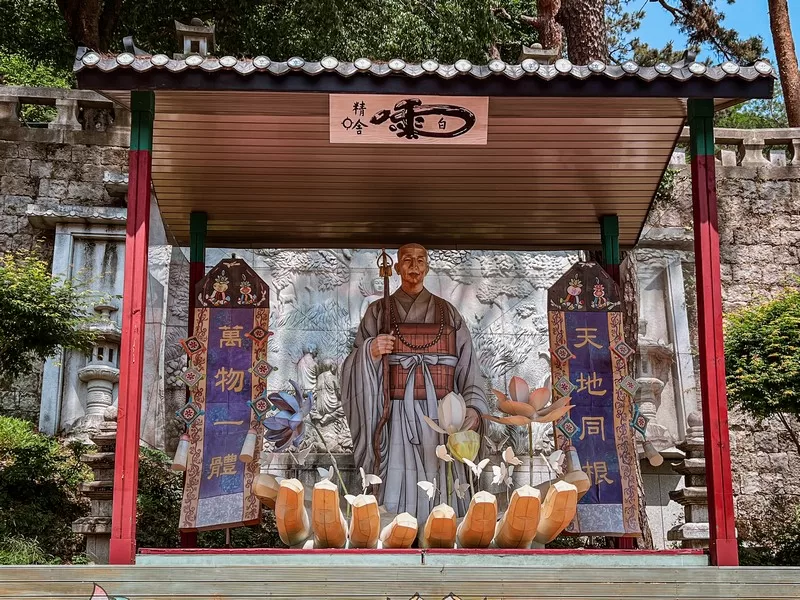
In 1961, Cheongdam became abbot of Doseonsa and launched what he called the movement of “Practical Buddhism” and “Living Buddhism.” His central philosophy, Patriotic Repentance Buddhism, argued that Korean Buddhism could only be revived through sincere daily practice, not ritual alone. He drew on the unifying spiritual ideals of Silla Buddhism, the patriotic spirit of Goryeo Buddhism, and the national salvation aspirations of the Joseon period to articulate a philosophy for modern Korean life.
The phrase he wrote in his own hand, “A Sanctuary for the Release of Living Beings, Invincible of Compassion,” still reflects the temple’s spirit today.
He renovated the temple grounds with donations from President Park Chung-hee and First Lady Yuk Young-soo, a fact that adds a layer of complexity to the temple’s history, given Korea’s divided feelings about that era.
Hiking Connections: Bukhansan Awaits
The majority of Buddhist temples in Korea are up in the mountains so it’s always a good idea to combine a walk or hike in the forested hillsides when you can. Just past the Yongammun Gate, a hiking trail connects the temple to Baegundae Cliff and Insubong Peak, two of Bukhansan’s most celebrated summits. The Baegundae hike from Doseonsa is one of the most popular routes in the national park, rewarding hikers with panoramic views over Seoul from the highest granite peak in the range.
If you’re feeling energetic, Doseonsa makes an ideal starting (or ending) point for a full mountain day. Pack layers, wear grippy shoes, and plan for at least 3 to 4 hours if you want to reach the ridgeline.
FAQ
Is Doseonsa Temple free to visit?
Yes. Admission to the temple grounds is free.
How do I get to Doseonsa Temple from Seoul?
Take the Ui-Sinseol LRT Line to Bukhansan Ui Station (Exit 2), then take the Doseonsa shuttle bus from the stop near the Ediya Coffee Shop, about 100 meters uphill from the exit. Alternatively, buses 151 and 109 stop at Uidong, with a shuttle available from across the street from the terminal.
How long does it take to visit Doseonsa Temple?
Allow 2 to 3 hours to explore the temple grounds at a comfortable pace. If you plan to hike Baegundae or Insubong Peak afterward, plan for a full half day.
Can I hike from Doseonsa Temple?
Yes. Just past the Yongammun Gate, a trail connects the temple to Baegundae Cliff and Insubong Peak, two of Bukhansan’s most iconic summits. The Baegundae hike from this starting point takes roughly 3 to 4 hours round trip.
Is Doseonsa Temple open every day?
Yes, the grounds are accessible daily during daylight hours.
What is Doseonsa Temple known for?
Doseonsa is best known for its 6-meter rock-carved Avalokitesvara Bodhisattva, which legend says was carved using only a monk’s wooden staff. It’s also known for its 1,100-year history, its connection to the Korean Buddhist revival movement of the 20th century under Venerable Cheongdam, and its position as the largest temple complex inside Bukhansan National Park.
What is the best season to visit Doseonsa Temple?
Spring (late April to May) for the Buddha’s Birthday lantern displays, and autumn (October to November) for fall foliage and crisp hiking conditions. Summer is lush but humid; winter is serene with occasional snow.
Doseonsa Temple isn’t the easiest place to reach from the center of Seoul, but that’s part of what makes it special. The combination of deep historical roots, extraordinary artifacts, a living Buddhist community, and one of Seoul’s finest mountain backdrops makes it unlike any other Buddhist temple in Seoul.
If you’re planning a trip to Korea and want to understand what makes Korean Buddhism so distinctive, this is the place to start. And if you’re already living in Seoul? It’s time to go. Doseonsa Temple in Bukhansan is the kind of place that stays with you, a thousand-year-old sanctuary that somehow still feels alive.
Did you like this post? PIN IT!