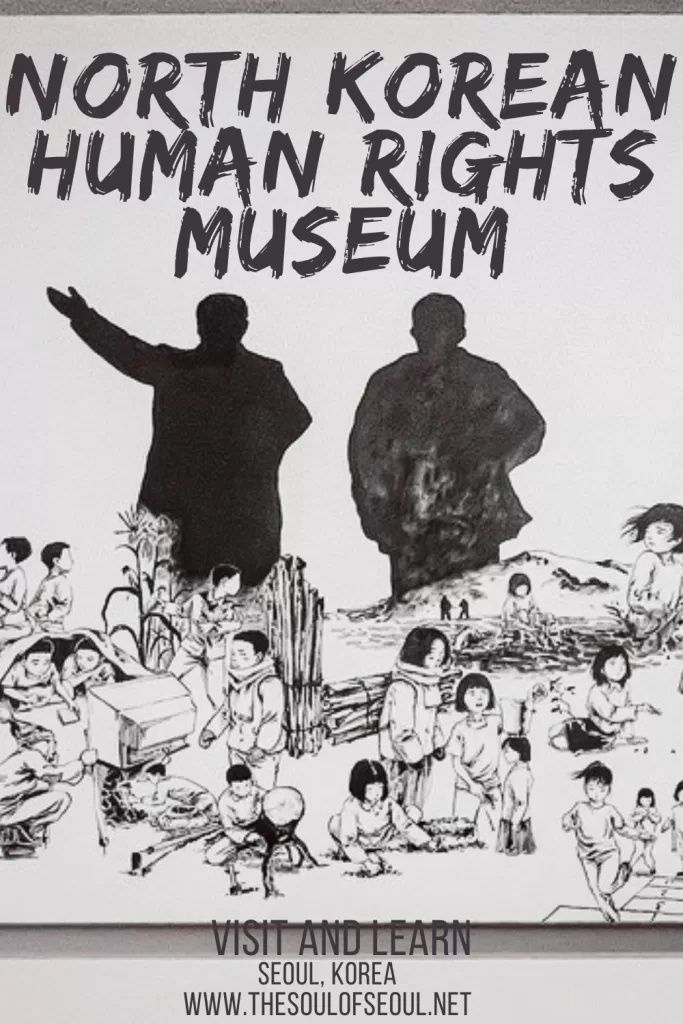
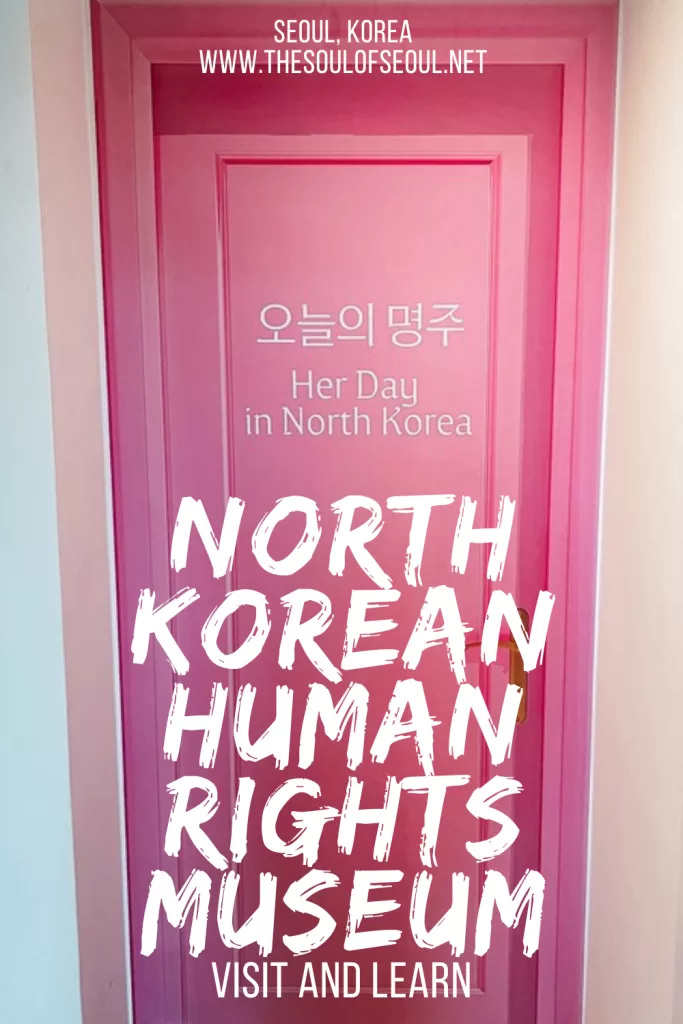
The North Korean Human Rights Museum in Seoul: Small But Impactful
Last Updated on June 27, 2026
In Jongno-gu, Seoul, the Database Center for North Korean Human Rights (북한인권정보센터) is the mind behind bringing to light the freedom of expression violations in North Korea through an educational space that is open and welcoming to all. What brought chills and a deep sense of authenticity to the museum for me were the real testimonies from North Korean defectors describing harsh imprisonment conditions, backed by decades of human rights research conducted since the early 2000s.
Reading and hearing these documented human rights violations left me feeling transported somewhere else entirely, speechless, and more than a little frustrated.
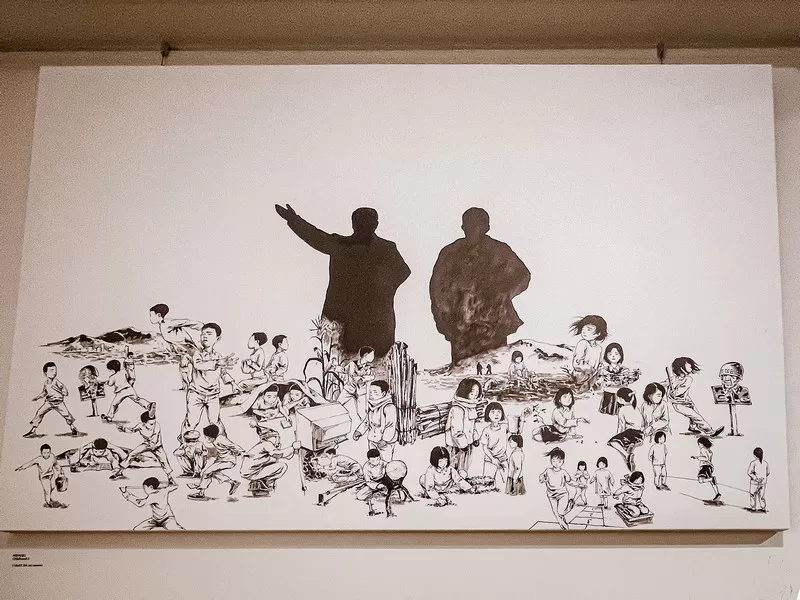
Get ready to explore the North Korean Human Rights Exhibition Hall in Jongno-gu, Seoul.
(This post contains affiliate links, which means I receive a certain percentage of a sale if you purchase after clicking at no cost to you. Thank you for your support.)
Basic Info
Address: 393 Samil-daero, Jongno-gu, Seoul (서울특별시 종로구 삼일대로 393 B1)
Hours: Monday – Friday, 10:00am ~ 6:00pm
Days: Closed on weekends and national holidays (weekend group visits available by reservation)
Admission: ₩1,000
Website: en.nkdb.org
Guided Tours: English and Korean guided tours are available by reservation. Contact NKDB in advance to arrange.
A History You Need To Know First
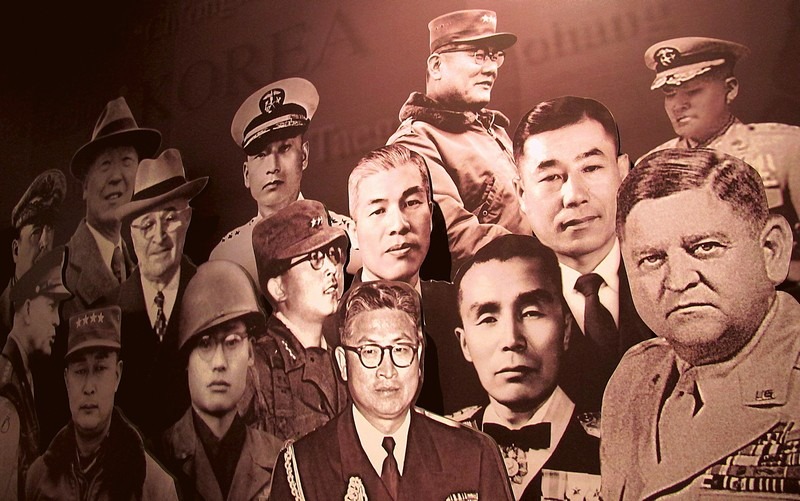
Frozen At War
A little context goes a long way here.
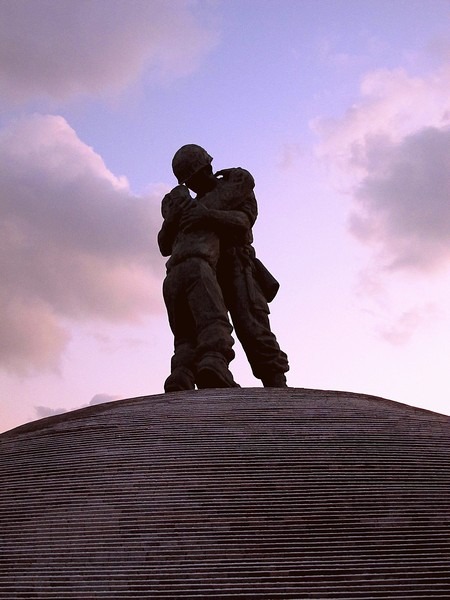
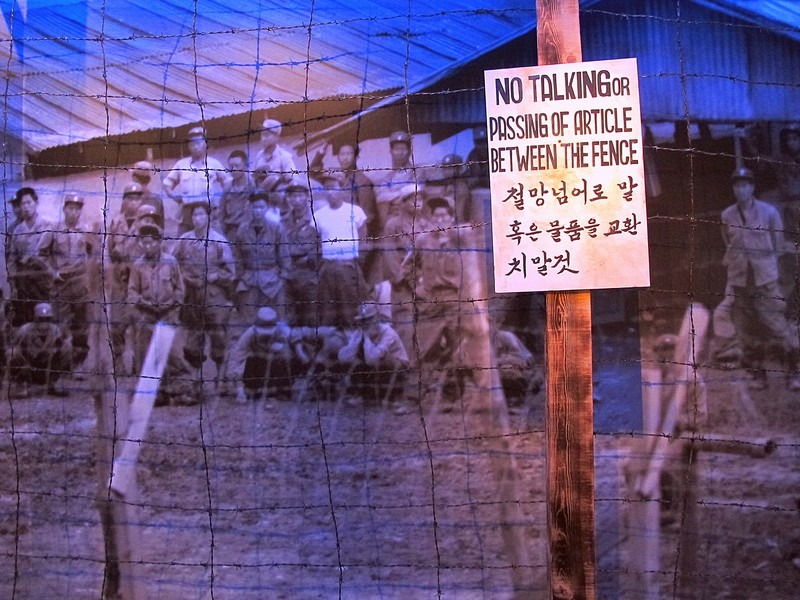
During World War II (1939–1945), a global conflict between the Allied Powers (Great Britain, the United States, the Soviet Union, and France) and the Axis Powers (Germany, Italy, and Japan) set the stage for a ripple effect that would reach the Korean Peninsula. At the war’s end, the Soviet Union and the United States divided Korea along the 38th parallel, the line that still separates North and South Korea today.
Korea was promised independence in 1945, but the Korean War broke out in 1950 when the North Korean People’s Army invaded the South along the 38th parallel. In 1953, an armistice (not a peace treaty) ended the active fighting and established the Demilitarized Zone (DMZ), the fortified border that remains to this day. The Korean Peninsula is technically still at war.
Military First
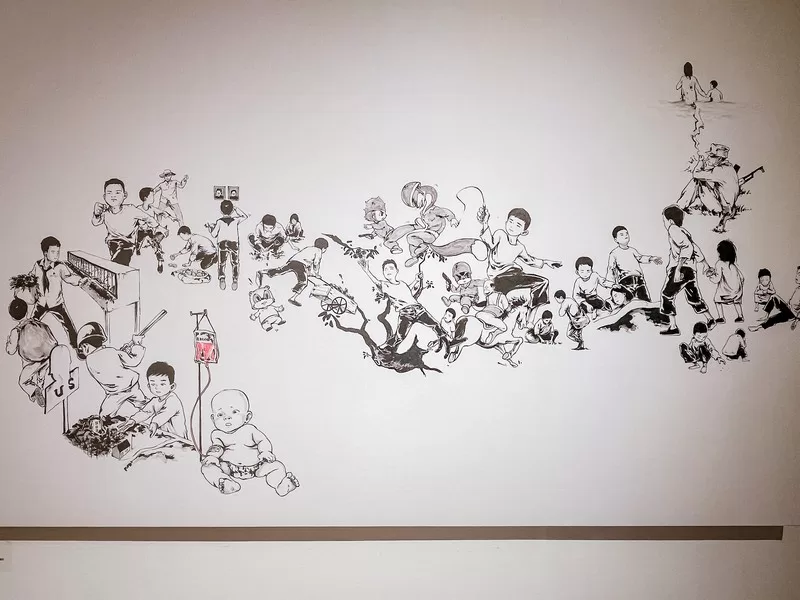
One of the words that stopped me in my tracks at the museum was Songun, a North Korean state ideology. To understand how North Korea functions, two ideas matter: Juche meaning self-reliance, developed by North Korean leader Kim Il-sung to establish the country as an independent state, and Songun meaning the military comes first above everything else.
What I noticed was how military leadership and social control became intertwined, with the expectation that society would conform, and how the strength of these ideologies was used to shape a unified and tightly controlled movement.
The Price of Loyalty
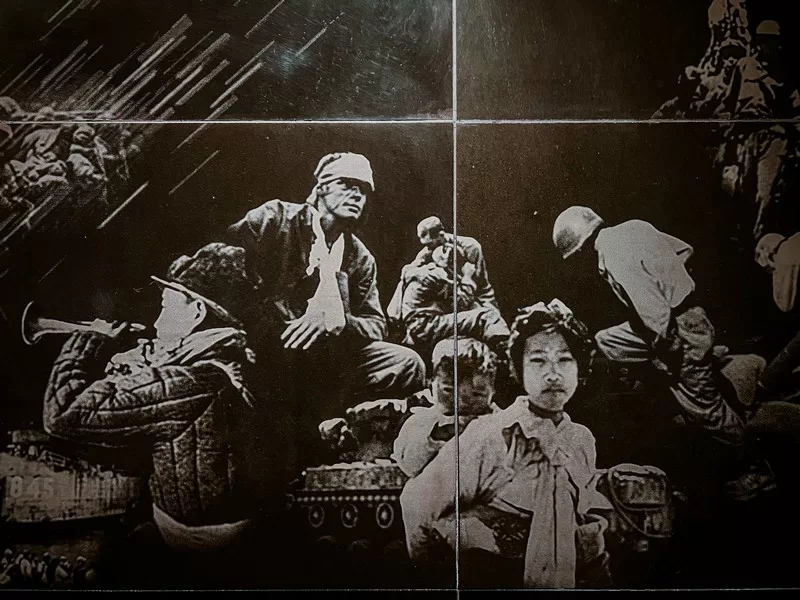
Understanding how these North Korean state ideologies work makes it easier to understand the decisions they demanded of ordinary civilians. For a time, North Korea relied heavily on aid from the Soviet Union. After the Soviet Union dissolved, that support disappeared, taking the country’s foreign alliances with it.
This led to the collapse of North Korea’s economy and pushed the military-first ideology even harder to the forefront. What followed was a devastating famine known as the Arduous March, leaving many civilians uncertain not only about their own futures, but about the basic survival of their families.
Rice Is Socialism (이밥에 고기국)
In attempts to stabilize food distribution, North Korea tried to grow enough crops to feed its population, but food coupons failed over time and sharing could only stretch so far. What followed was the widespread normalization of malnutrition, to the point that it was no longer treated as a medical condition.
A tightly controlled police state actively blocked interactions between relief workers and the people they were trying to help, closing off entire regions to international aid during a humanitarian crisis. The result was hunger, starvation, and mass famine, not from a lack of outside concern, but from a government that chose to prioritize regime security over feeding its own people.
Inside the Exhibition
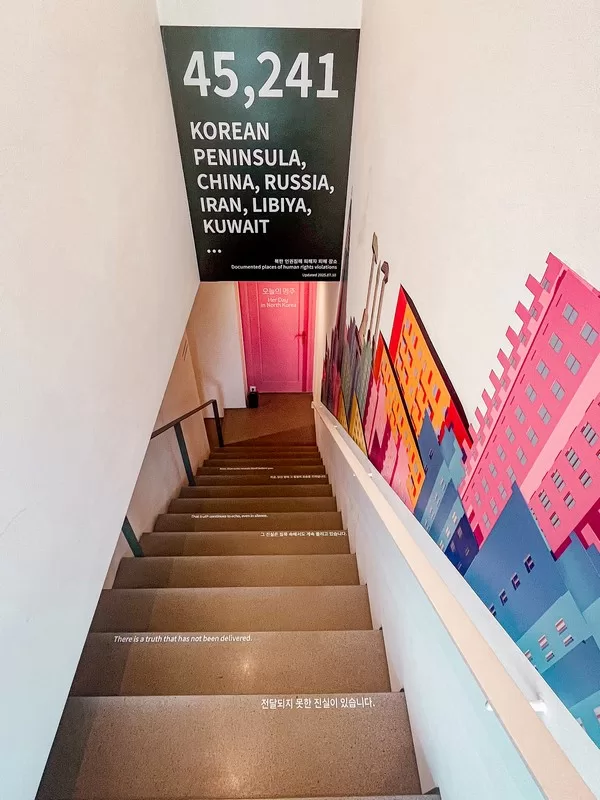
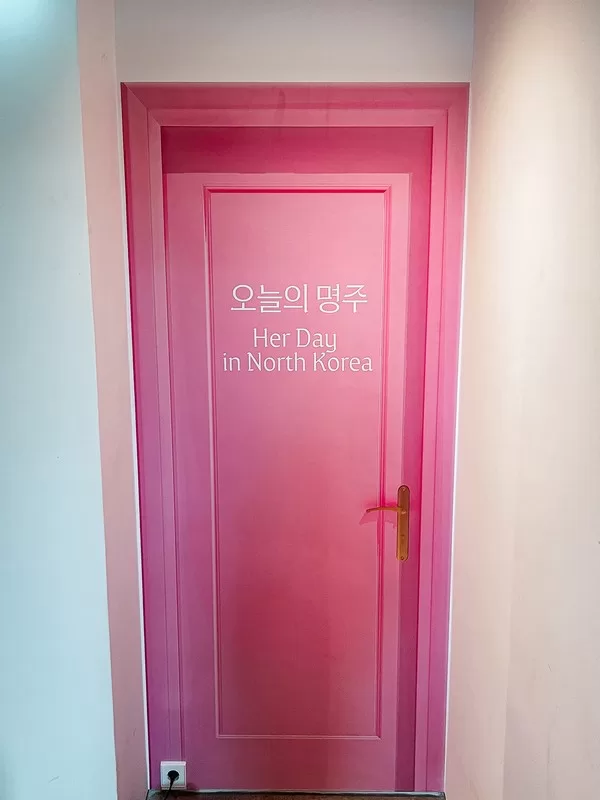
As you walk into the museum, it’s easy to get swept up in the pastel tones and reconstructed living spaces and momentarily forget what you came for.
I was expecting to find a reception desk waiting at the bottom of the stairs where I could pay the admission fee. That was not what I found. To save you the same confusion: as soon as you enter the museum, head down the stairs, turn left into the exhibition hall, and walk all the way to the back, past the translucent hanging fabric, toward a white desk with a large monitor. That’s where you pay.
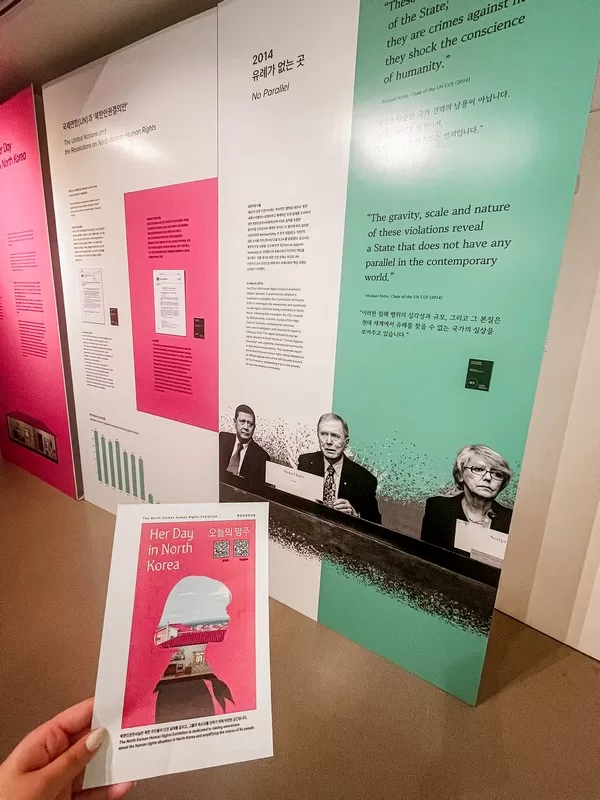
On your way, grab an exhibition hall guide near the stairs to help you follow the six sections of the museum.
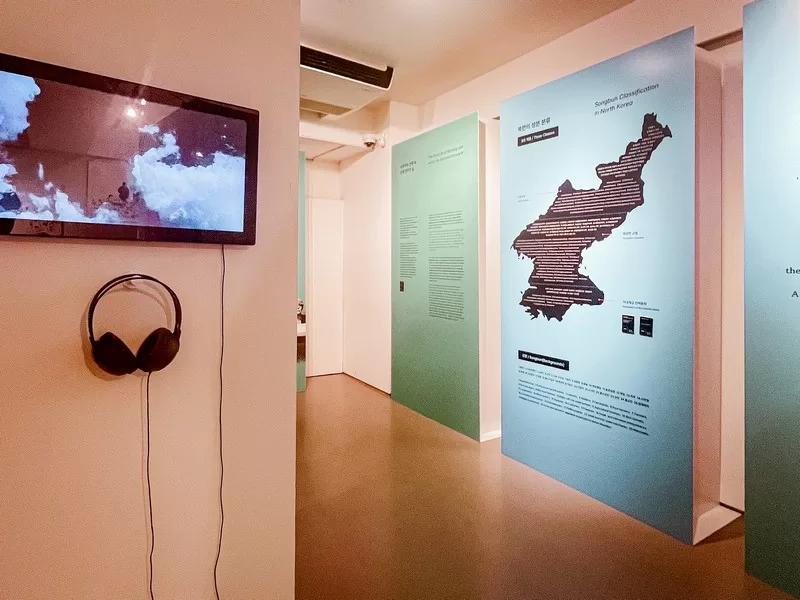
This is a space set up to raise awareness about human rights violations in North Korea, amplifying the voices of over 88,000 cases and records of 57,000 individuals. The physical recreation of a North Korean room anchors six sections of the museum, each filled with everyday objects that shaped and touched the lives of North Koreans.
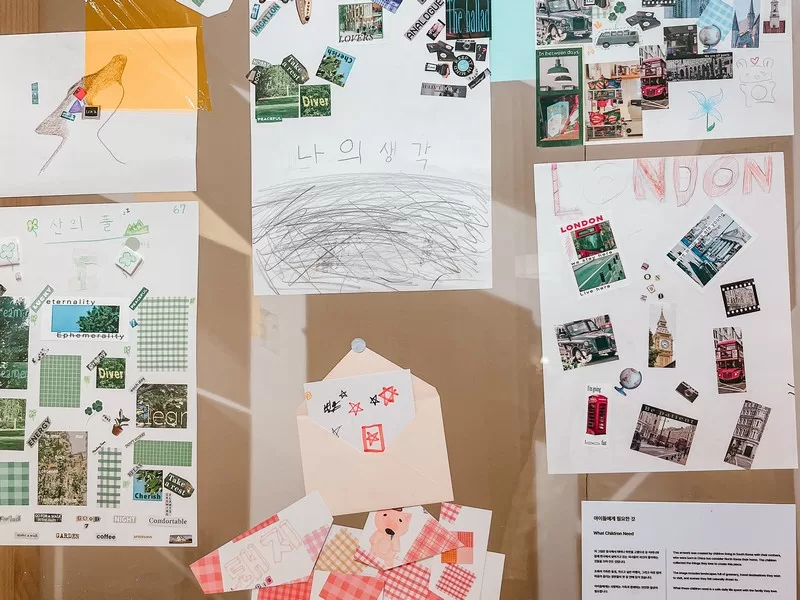
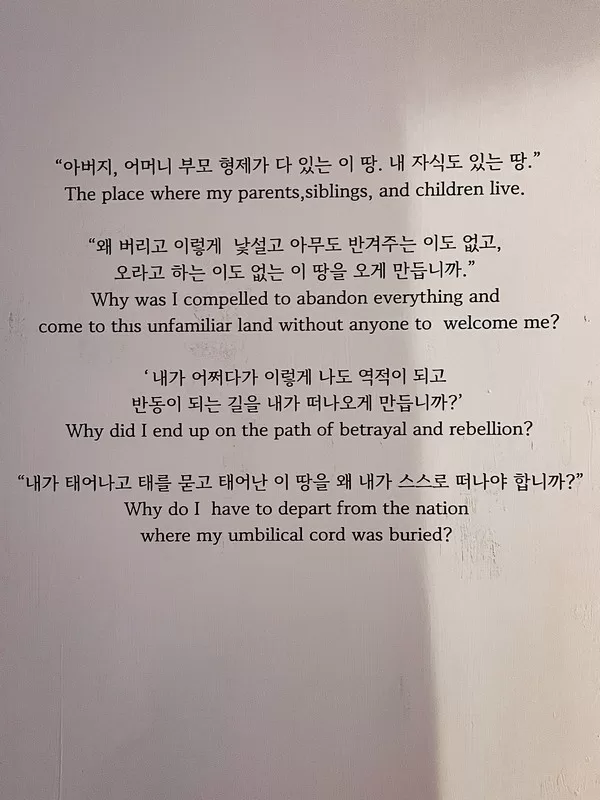
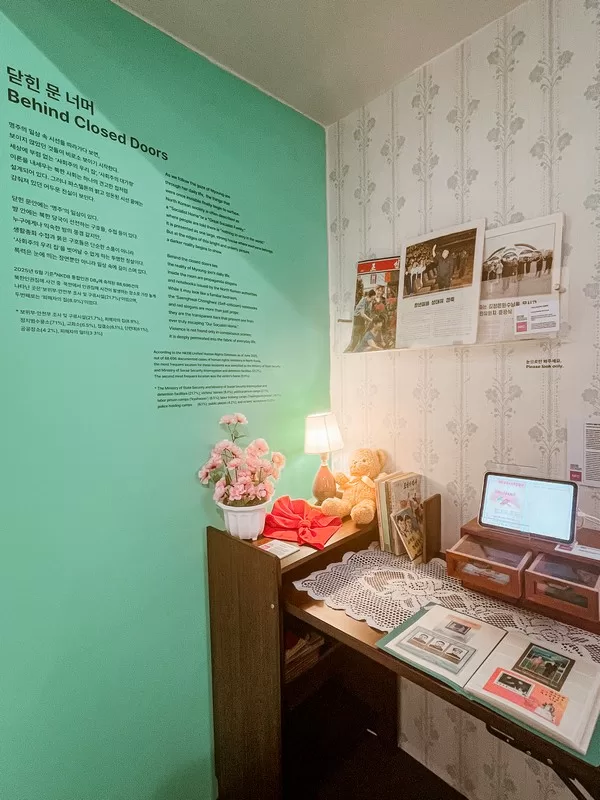
This educational museum demonstrates the hidden realities of North Korea through the voices of North Korean defectors sharing their personal struggles, art made by artists, diaries from escapees, and glimpses of everyday life that last well beyond the hour-long experience.
Many tourists come to Seoul and add a trip to the DMZ to see North Korea, this is a stop that will add layers and understanding to that experience.
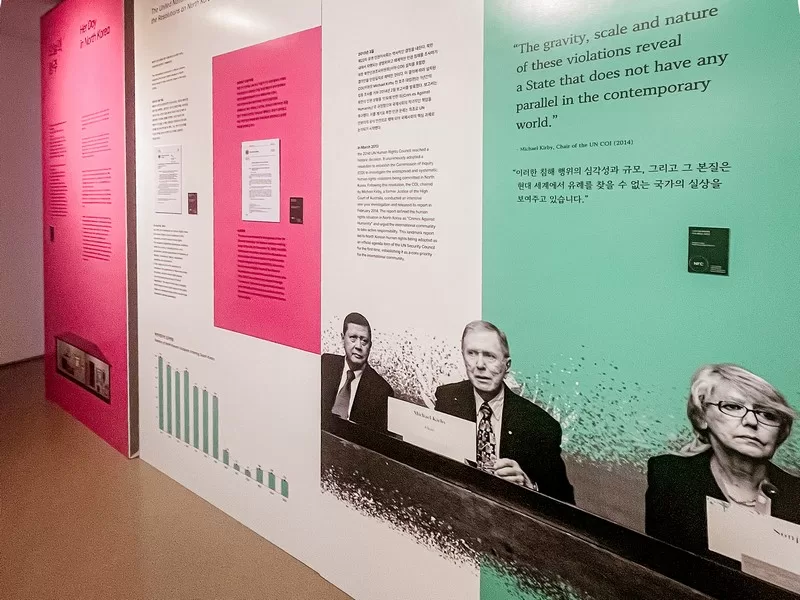
The Illusion
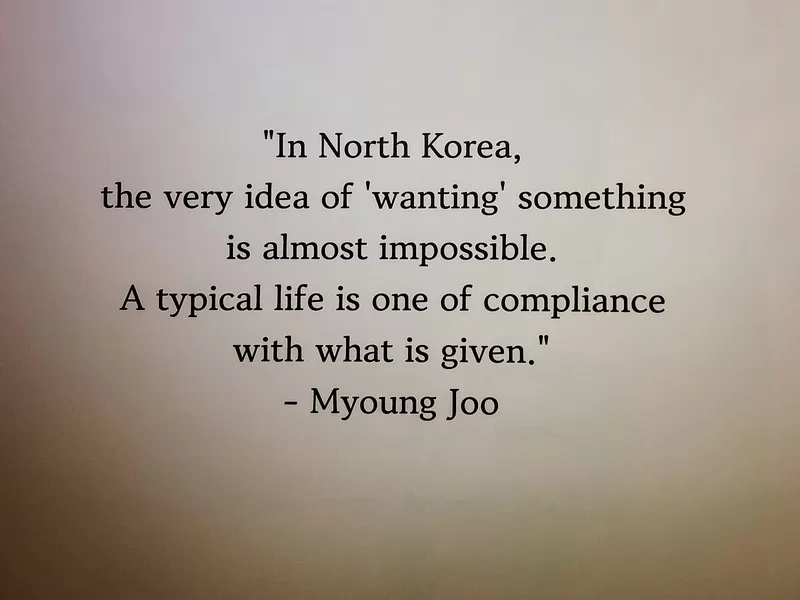
The six sections unfold through the eyes of Myoung Joo, a name chosen to represent the daily life of North Korean women. The walls of the museum showcase what a beautiful and civilized “socialist fairyland” is supposed to look like from the outside.
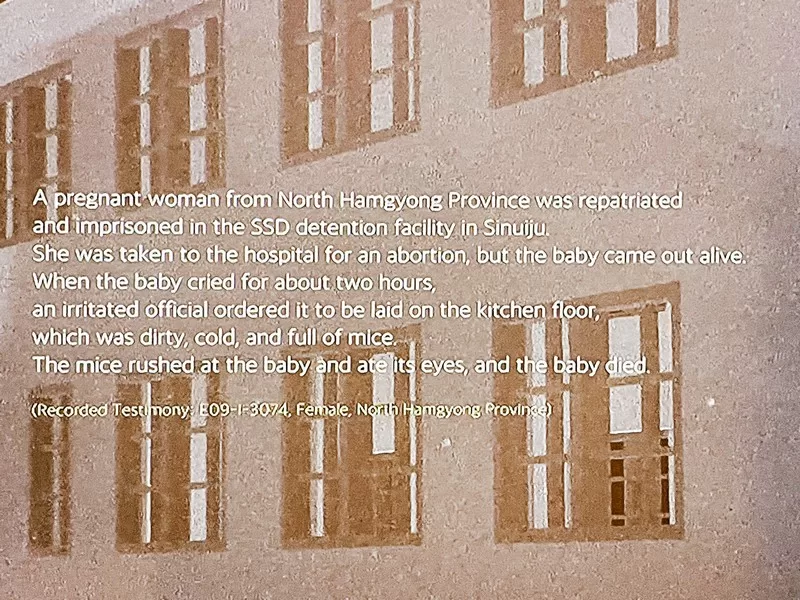
What those walls don’t show is how the state functions as the household and the authorities as the parents, conditioning people to look away from what those pastel-toned homes actually look like behind closed doors. The color is the point.
Away from the pastel walls, everyday objects, personal stories, and artifacts about the lived experiences of North Korean defectors left me in disbelief. How could obedience and conformity be enforced at the cost of basic human rights?
A North Korean Home
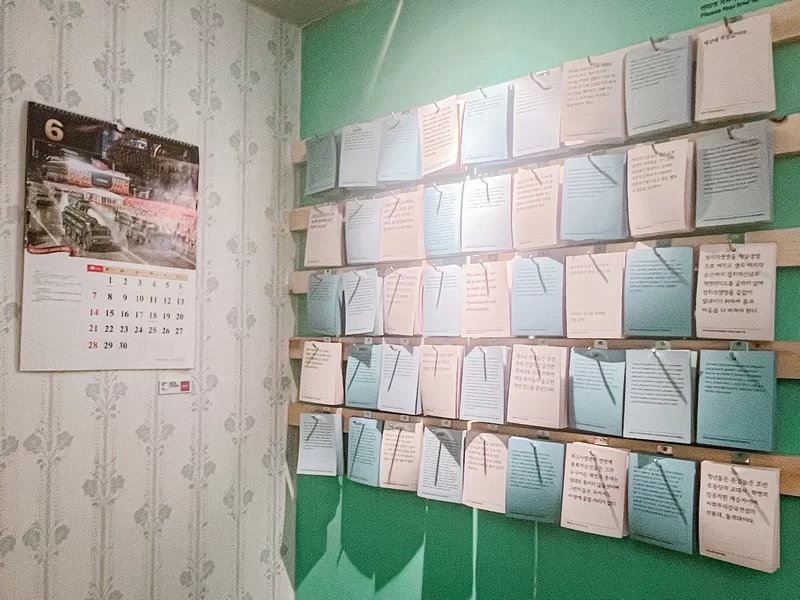
On your right, you can step into a replica of Myoung Joo’s room, and it is what makes this museum feel special. At a glance, it looks like a space where someone has tried to make themselves feel at home.
But look closely and you’ll find propaganda slogans and notebooks issued by the North Korean authorities sitting among the personal belongings. These everyday objects serve as a constant reminder that there was no space in this room, or in this life, that was truly beyond the reach of the state.
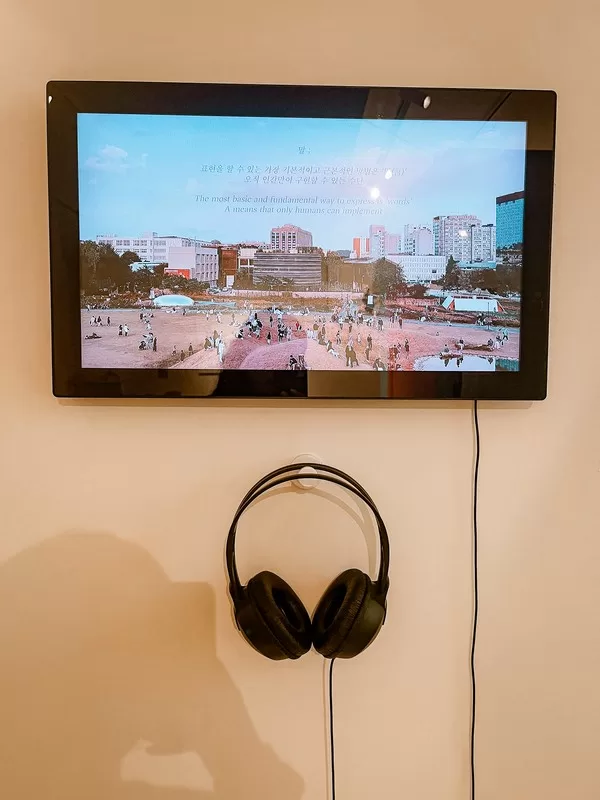
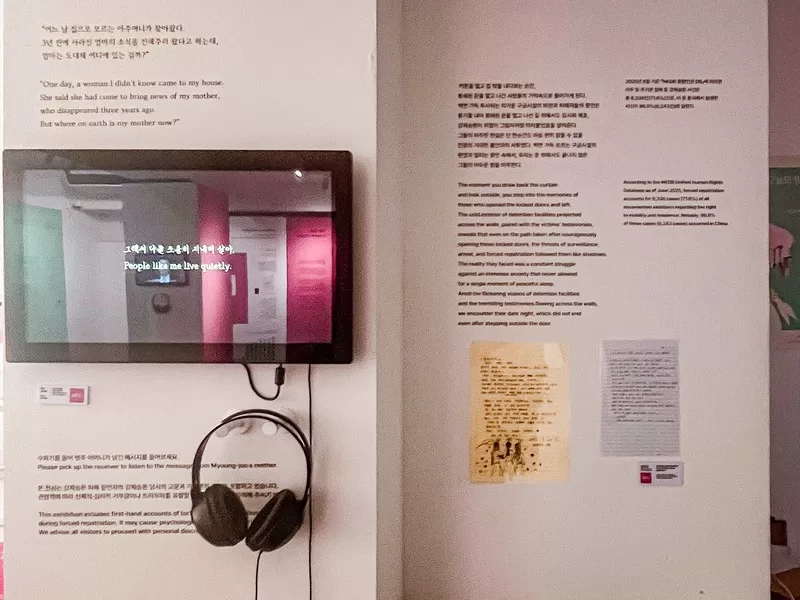
Put on the headphones nearby and listen to how one child’s moment of innocent curiosity changed the entire trajectory of their family’s life. Hearing specific sounds that were once part of someone’s daily existence, and putting real faces to some of the North Korean defectors whose testimonies you can listen to, makes it possible to process the world these people actually lived in. Violence can be invisible. It can be masked behind cheerful walls to reshape an entire environment.
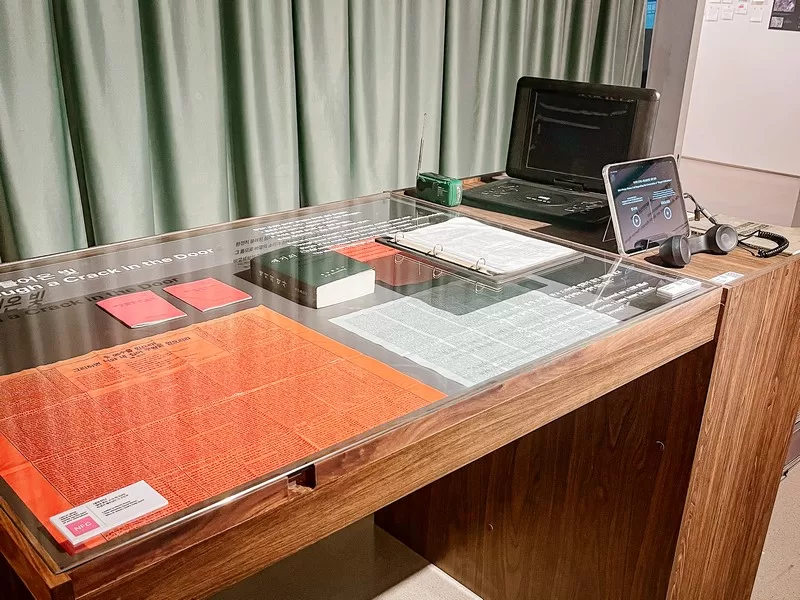
A Crack In The Door
In the center of the room, a powerful white light shines down onto a dark display case. Visible only through glass are smuggled items containing outside and illegal information. Looking at them from the outside, I couldn’t immediately grasp the weight of what I was seeing.
Then I understood: being caught with any of these objects meant severe punishment. The level of state control was designed to monitor and block anything that could be read as disloyalty, and the crackdowns on those who showed dissatisfaction were swift and brutal.
Testimonies From Defectors
How did the North Korean government execute those crackdowns? What choices did North Korean defectors actually have?
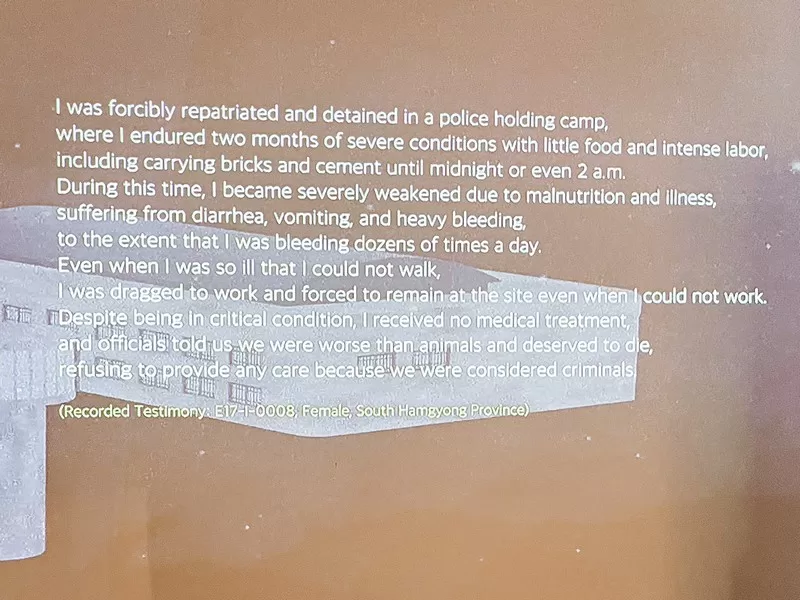
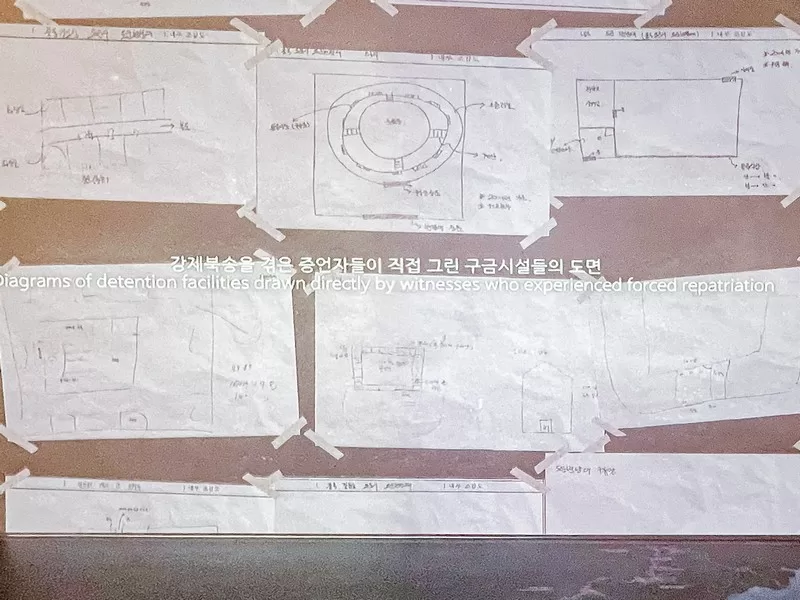
Past the main room, a large wall opens up that I almost missed entirely, it blends into the space, hidden behind the pink and blue of the surrounding walls, almost as if that was intentional. The room beyond it is filled with sound and projection. Diagrams of detention facilities, drawn by witnesses, cover the wall. Looking into the eyes of people giving real-life testimonies triggered something I wasn’t prepared for.
The magnitude of what continuous exposure to inhumane conditions does to a person is difficult to absorb all at once. Tucked into the corners of the space are accounts of severe punishments endured and physical barriers that seemed impossible to overcome, describing lives that were essentially stripped away piece by piece.
The Reality
What the museum ultimately confronts you with is a system, not just a series of tragedies. The monitoring of loyalty, the criminalization of dissent, the inhumane treatment of those who stepped out of line, these are not isolated incidents. They are the architecture of daily life for countless families across generations.
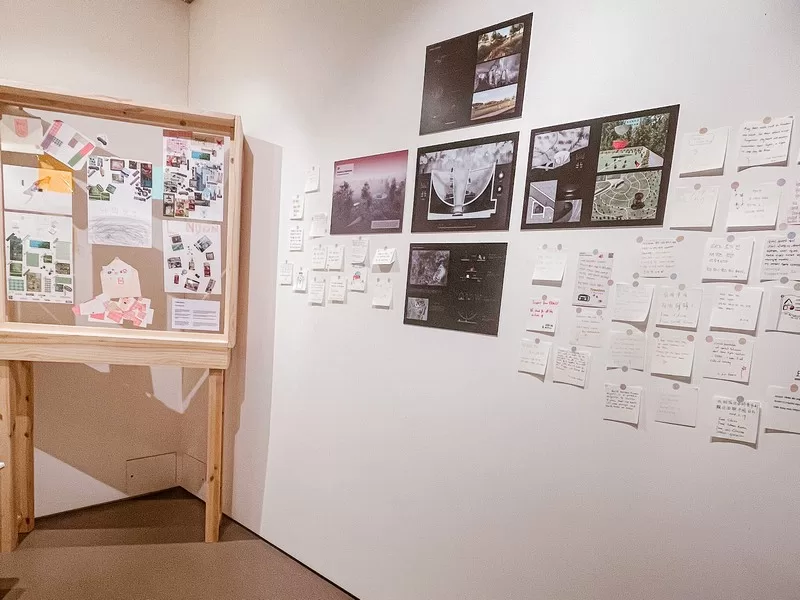
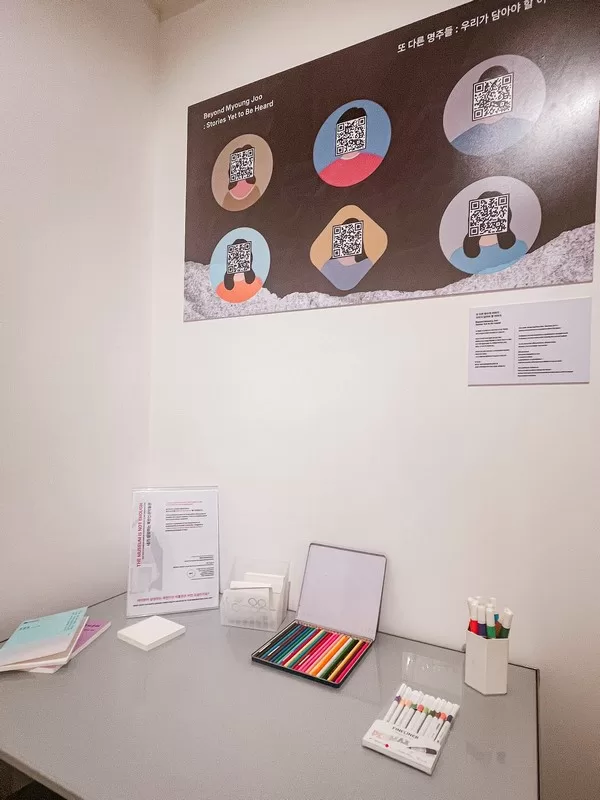
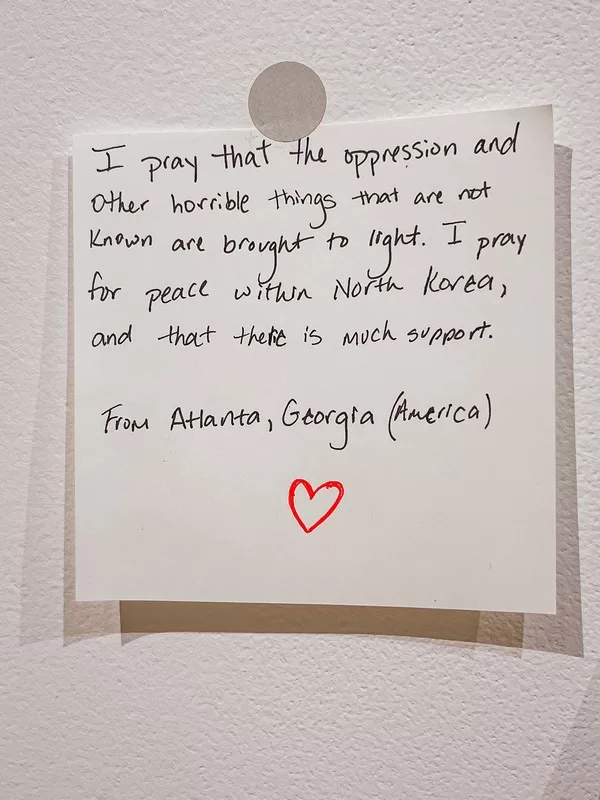
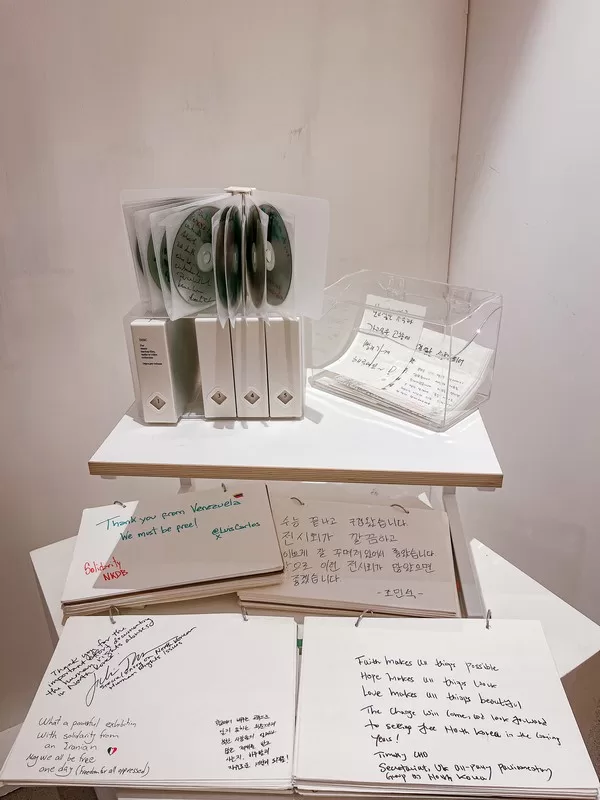
The museum gives you two ways to respond. One area sits near the projected testimonies. Another is tucked into the back left corner of the hall. In both spaces, visitors from around the world have left written words of encouragement, and you can add your own.
You can also view artwork created by North Korean defectors after fleeing, a reminder that expression, even when suppressed for decades, doesn’t disappear.
FAQ
What is the North Korean Human Rights Exhibition Hall in Seoul?
It is an exhibition space run by the Database Center for North Korean Human Rights (NKDB), designed to de-politicize North Korean human rights issues by providing public education and raising awareness through curated exhibitions. The current exhibition is Her Day in North Korea.
Who are North Korean defectors?
North Korean defectors are individuals who have fled the restrictive and isolated regime of North Korea, often for political, personal, or material reasons. Many are women. A significant number experience forced repatriation, meaning they are forcibly returned to North Korea (often from China), where they face severe punishment.
How does this museum show the suppression of freedom of expression?
Through authentic artifacts, personal diaries, smuggled objects, and recorded defector testimonies, the museum documents how thoroughly the state monitors loyalty and criminalizes dissent, down to the level of everyday objects in a person’s home.
How are defector testimonies verified?
NKDB uses a rigorous verification process that includes mandatory cross-referencing, digital and satellite imagery matching, government screenings, baseline profiling, international legal standardization, and institutional archiving to ensure consistency and accuracy.
Should I visit with children?
This is a judgment call for each family. The exhibition deals with serious themes including sexual violence, crimes against humanity, and human suffering. That said, there is a dedicated space in the far left corner with drawings and encouraging messages left by visitors of all ages, as well as a small open hallway where younger children can leave their own messages for future visitors.
Can I take a guided tour?
Yes. English and Korean guided tours are available by reservation. Contact NKDB at [email protected] or +82-2-723-6045 to arrange a visit.
This is a place built to preserve memories and amplify the voices of human beings who, although I have never met, have every right to freely express themselves and, most importantly, to be reunited with their families or to be part of spaces that help them rebuild their identity. Every pastel-toned wall that initially confused me, every piece of art, and every artifact in this museum speaks for itself. They exist to spread awareness for those who felt they had no voice.
Whether one survived or did not, what remains are countless stories still being told outside these walls, and countless more that are still unheard. Beyond the noise of the city of Seoul, this museum lets all the distractions fall away, and the quiet truth of what is still happening, right now, on the other side of a border less than three hours north of the capital, stays with you.
Did you like this post? PIN IT!