Bulguksa Temple: The Heart of Korean Buddhism in Gyeongju
Last Updated on October 14, 2026
Bulguksa Temple (불국사) in Gyeongju is the most famous Buddhist temple in Korea. I first visited Bulguksa in 2006, the year I arrived in Korea. I had no real context for what I was seeing then, just a sense that this place was extraordinary. I’ve been back twice since, and each visit has given me something new. The more you understand about Korean history and Buddhism, the richer every detail becomes.
Bulguksa Temple sits on the western slopes of Mt. Tohamsan in Gyeongju, the ancient capital of the Silla Kingdom. Along with the nearby Seokguram Grotto, it was designated a UNESCO World Heritage Site in 1995, one of the most deserving of any site to hold that title. It’s considered a masterpiece of Buddhist art and architecture from the golden age of the Silla Kingdom, and it’s home to seven national treasures. If you’re planning things to do in Gyeongju, this is an anchor experience.
Get ready to step back over a thousand years into the spiritual world of Korea’s greatest Buddhist temple:
- Basic Info
- The Story Behind Bulguksa
- The Boy Who Built A Temple Across Two Lifetimes
- The Four Heavenly Kings
- The Famous Bridges And Front Facade
- The Two Pagodas: A Study In Opposites
- Inside The Temple Grounds
- Templestay: Spend The Night In Korea’s Past
- FAQ
(This post contains affiliate links, which means I receive a certain percentage of a sale if you purchase after clicking at no cost to you. Thank you for your support.)
Basic Info
Address: 385 Bulguk-ro, Gyeongju-si, Gyeongsangbuk-do (경상북도 경주시 불국로 385)
Directions:
- From Gyeongju Intercity Bus Terminal, take Bus #10 or #11 directly to Bulguksa Temple. The ride takes around one hour. Buses are affordable and run regularly throughout the day, a great option if you’re not renting a car.
- If you’re coming from Seoul, the easiest route is to take the KTX express train to Singyeongju Station (about two hours), then a local bus or taxi to the temple. Taxis from the station take roughly 30 minutes.
Join a Tour: You can walk the grounds of Bulguksa Temple on your own, however, I highly recommend visiting with a guide who can point out the symbolism, the national treasures, and explain why this temple, of all temples in Korea is so important.
- Viator: Viator has a number of options whether you’re looking to travel from Busan for just one day in Gyeongju, need a guide with a car, or will be in Gyeongju for a few days.
- Klook: Klook also has some great options if you’re trying to fit in a Gyeongju day trip from Busan.
Hours: Every day: 9:00am ~ 6:00pm (exit the grounds by 7:00pm)
Admission: Free
Website: www.bulguksa.or.kr
Gyeongju, Korea: 2-day Itinerary & Guide
$9.00
The Story Behind Bulguksa
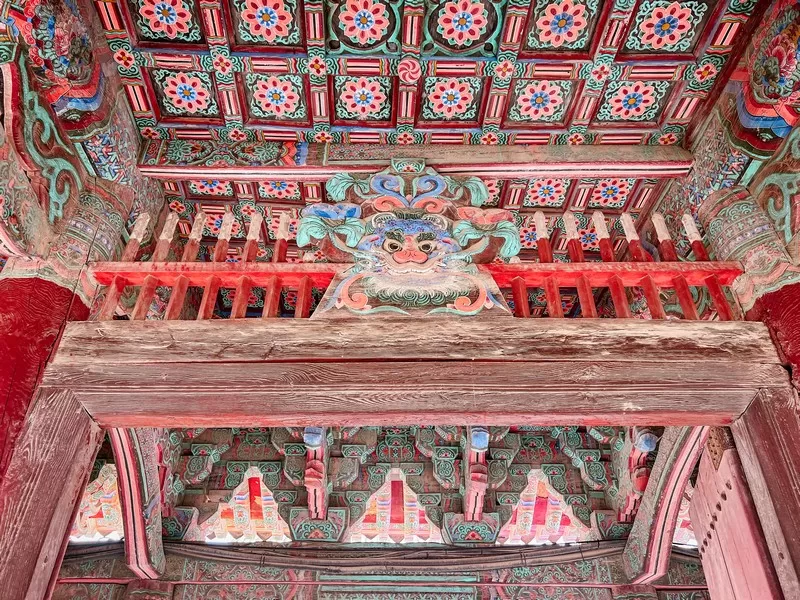
Bulguksa means “Temple of the Buddha Land” or “Buddha’s Kingdom”. It wasn’t built to be just a place of worship. It was designed to be an architectural representation of the Buddhist realm on earth, a physical manifestation of paradise. I learned all this with a guide to Bulguksa, which I highly recommend to truly understand the depths of this temple.
The temple was first established in 528 AD, the first year that Buddhism was officially accepted by the Silla Kingdom (57 BC ~ 935 AD), during the reign of King Beopheung, making it one of the oldest Buddhist sites in Korea. But the magnificent complex we see today was largely built in 751 AD, commissioned by Prime Minister Kim Daeseong.
According to the Samguk Yusa (Memorabilia of the Three Kingdoms), Kim Daeseong built Bulguksa in honor of his parents in his present life, and the nearby Seokguram Grotto in honor of his parents from a previous life. He died before either was completed, and the Silla royal court finished the work in 774 AD.
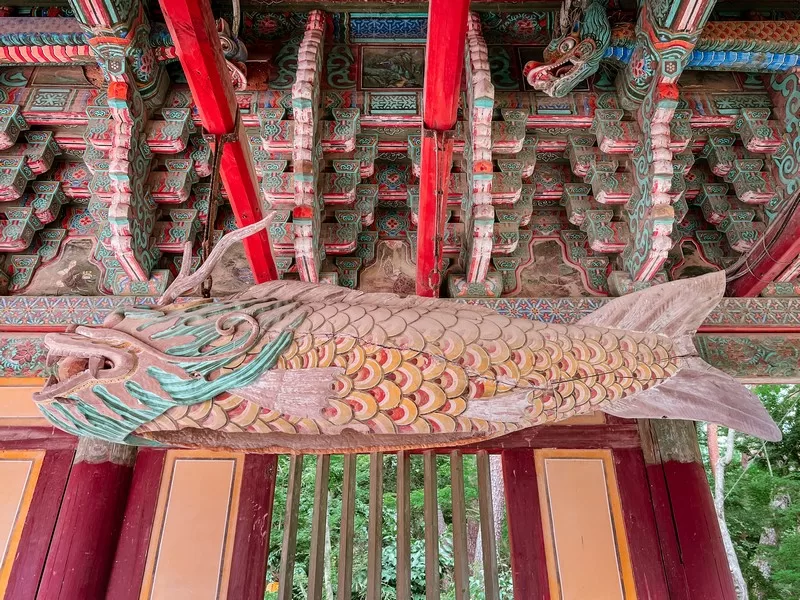
Over the centuries, Bulguksa suffered greatly, as did many historical sites in Korea. The Mongols invaded in the late 13th century. The Japanese burned all the wooden structures during the Imjin War (1592-1598). The temple was looted after falling into disrepair in the 1800s. And yet, it endured.
Major restoration work began in the 1920s and continued through to the 1970s under President Park Chung-hee. In total, about 24 buildings were renovated or rebuilt. Today, the stone structures you see are original Silla construction, over 1,200 years old.
Add more temples to your trip to Korea: All Buddhist temples in Korea are not the same. From seaside locations to mountain escapes, there are Buddhist temples of various shapes, sizes, and featuring different artwork and shrines. Read about these 24 Buddhist temples in Korea that you will want to see.
The Boy Who Built A Temple Across Two Lifetimes
Long before Kim Daeseong became the Prime Minister of Silla, he was a poor boy living in a village called Moryang-ri. One day, he overheard a monk from Heungnyunsa Temple asking a wealthy landowner for a donation. The landowner gave generously, 50 rolls of cotton cloth, and the monk blessed him warmly, promising that the Buddha would return his gift 10,000 times over and grant him a long, happy life.
Something stirred in the young Daeseong. He ran home and told his mother: “We are poor now, and if we give nothing to the temple, we will only grow poorer. Let us donate our rice field, our only rice field, so that we may be rewarded in the next life.” His mother, perhaps moved by the same faith, agreed. They gave everything they had.
A few months later, Daeseong died.
That same night, a voice rang out over the home of Kim Munryang, the chief minister of the kingdom. “Daeseong, the good boy of Moryang-ri, will be reborn in your family.” Kim Munryang was skeptical. He sent servants to Moryang-ri to confirm the boy had truly died. They returned with the news: yes, Daeseong was gone. And at that very same hour, Kim Munryang’s wife discovered she was with child.
When the baby was born, his left fist was clenched tight. For seven days, no one could open it. On the seventh day, the tiny hand finally opened, and there, written in gold on his palm, were the characters of his former name: Daeseong. The child was given his old name back, and the woman who had been his mother in his previous life was brought to help raise him.
He grew up to become Prime Minister. And when he had the power and the resources, he built Seokguram Grotto for the parents of his former life, and Bulguksa Temple for the parents of his present life. Two temples. Two sets of parents. One act of extraordinary filial devotion across the boundary of death itself.
He never saw either completed. Kim Daeseong died in 774 AD, and the Silla royal court finished both in his name.
The Four Heavenly Kings
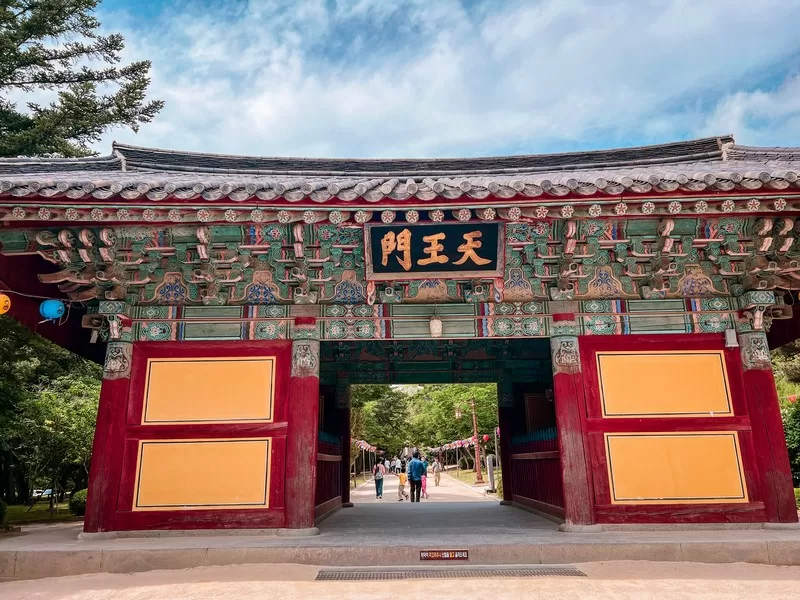
Entering the temple, you’ll walk through two gates, the first Iljumun Gate, and the second Cheonwangmun Gate which houses the Four Heavenly Kings. Looking fierce, these deities guard entrances to Buddhist temples in Korea serving as spiritual protectors warding off evil spirits. Take the time to stop and see the impressive guardians at Bulguksa.
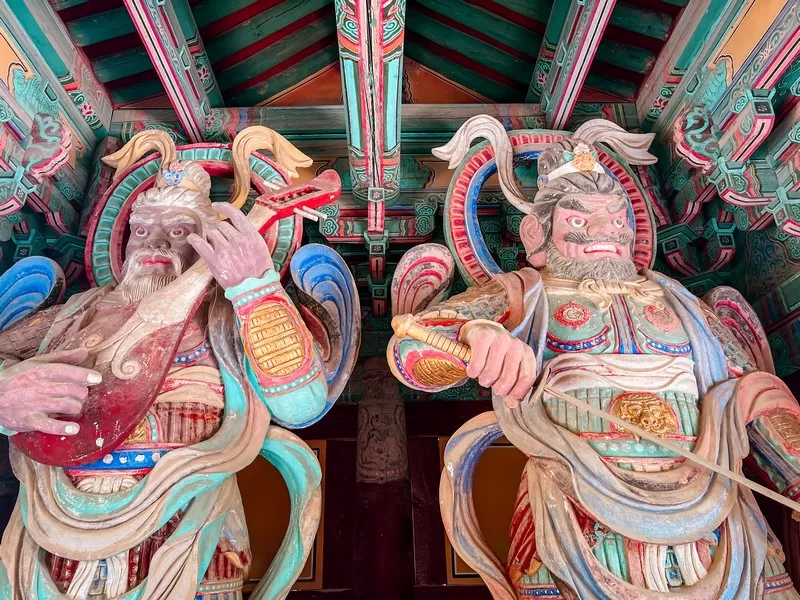
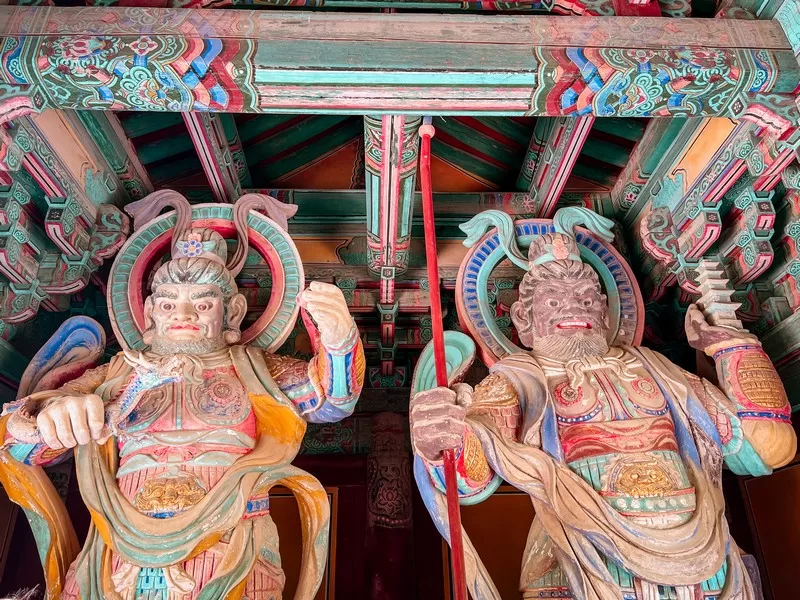
The Four Heavenly Kings (사천왕, Sacheonwang) in Korean Buddhism are divided into four directions:
- Jikguk-cheonwang (East): The King of the East protects the nation and brings peace to all beings. He maintains the world and aids good people while punishing the evil. He is typically depicted holding a pipa, or a traditional stringed instrument, symbolizing harmony and using the music’s vibration to enlighten sentient beings.
- Jeungjang-cheonwang (South): The King of the South represents the virtue of growth. He rules over the wind and increases the wisdom, virtue, and compassion of all beings. He is usually depicted holding a sword, which is used to sever delusions, ignorance, and worldly attachments.
- Gwangmok-cheonwang (West): The King of the West sees everything with his large, watchful eyes. He punishes the wicked and brings them to the path of enlightenment. He is depicted holding a snake or a dragon in one hand and a stupa or a pearl in the other.
- Damun-cheonwang (North): The King of the North is the guardian of hearing and learning. He listens to everything, constantly learns the teachings of the Buddha, and protects the northern realm. He is depicted holding an umbrella or a banner in one hand and a mongoose in the other.
Viewing Tip: You’ll be drawn to look up into their intimidating faces and the many details surrounding their facial expressions and hands, but take a moment to look down to notice that they’re trampling demons, unruly spirits, and arrogant government officials. This symbolizes the triumph of good over evil.
The Famous Bridges And Front Facade
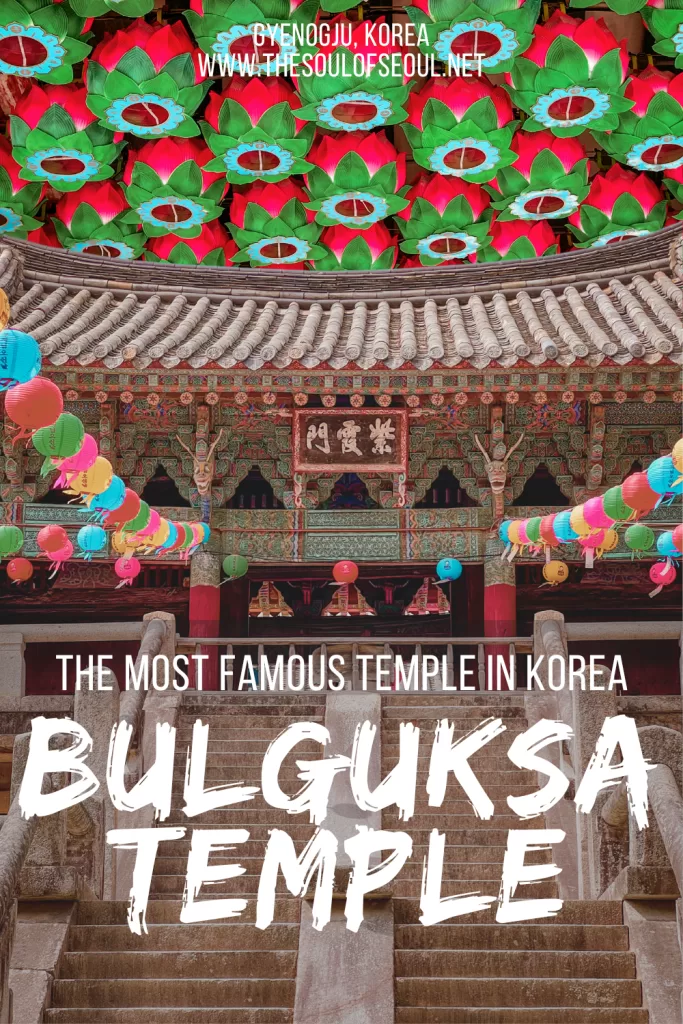
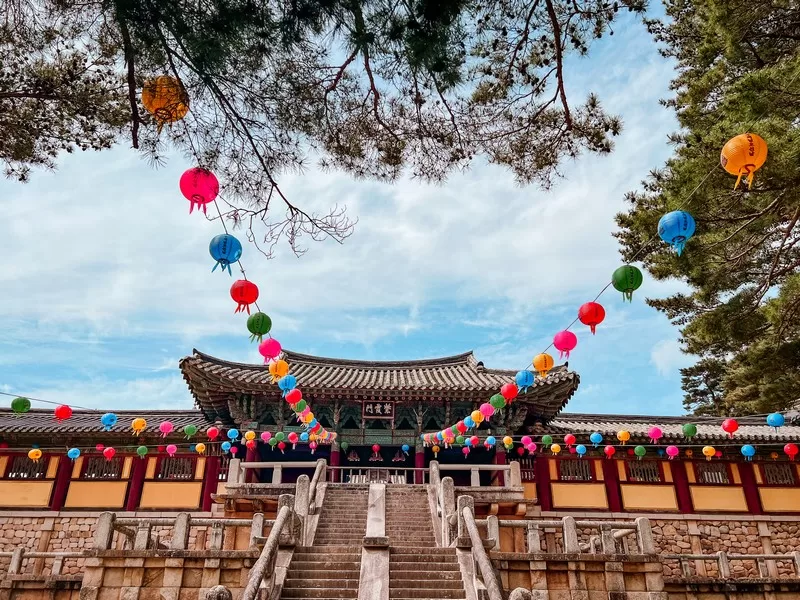
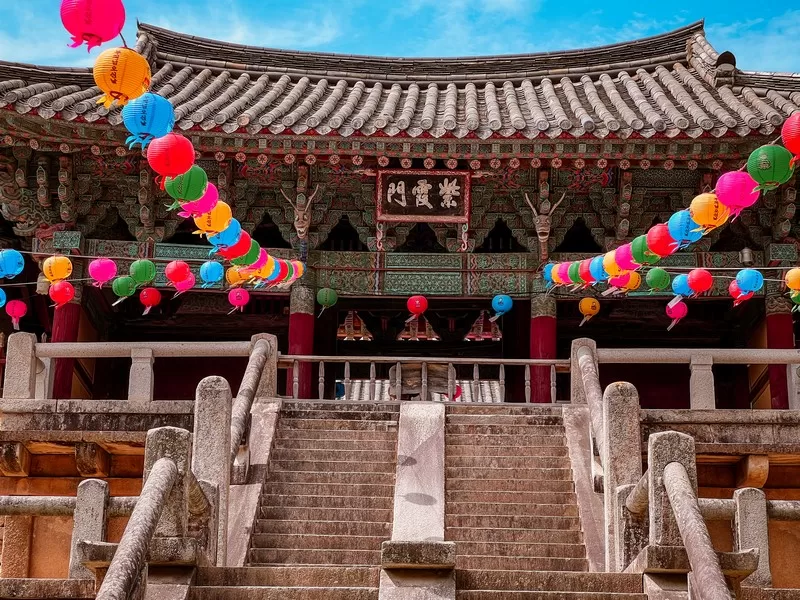
The first thing that will stop you in your tracks at Bulguksa is the front facade, and it’s a view that appears on postcards, textbooks, and travel guides across Korea, so you might even recognize it.
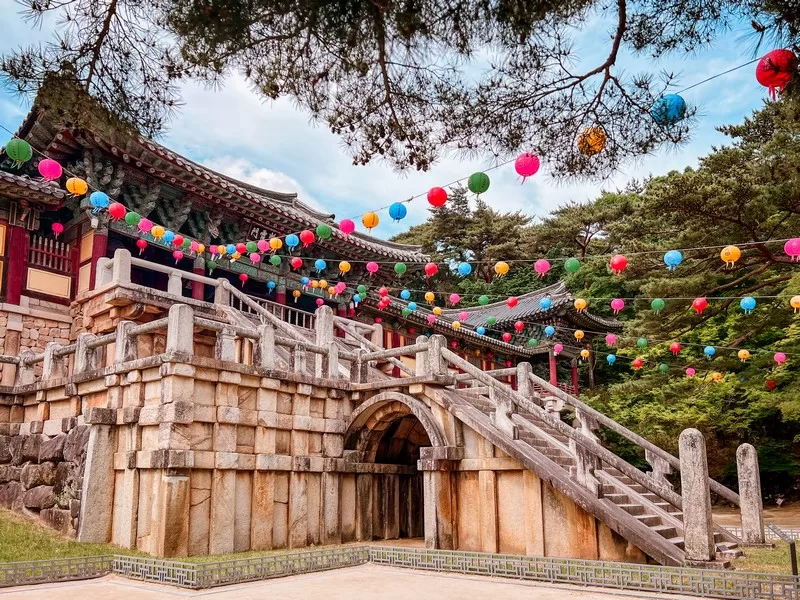
Two pairs of stone bridges rise up to the elevated courtyard, each one a national treasure. On the right, the Cheongungyo (Blue Cloud Bridge) and Baegungyo (White Cloud Bridge) lead through the Jahamun Gate toward the main Daeungjeon Hall. They were built around 751 AD and collectively designated National Treasure #23. The stairway has 34 steps in total, symbolizing the 34 steps to enlightenment in Buddhist teaching.
Bulguksa Temple was built to represent the Buddhist mandala integrating the worlds of the Buddhas and Bodhisattvas that inhabit them. The bridges, then, are meant to symbolically connect the world of people with the world of Buddha.
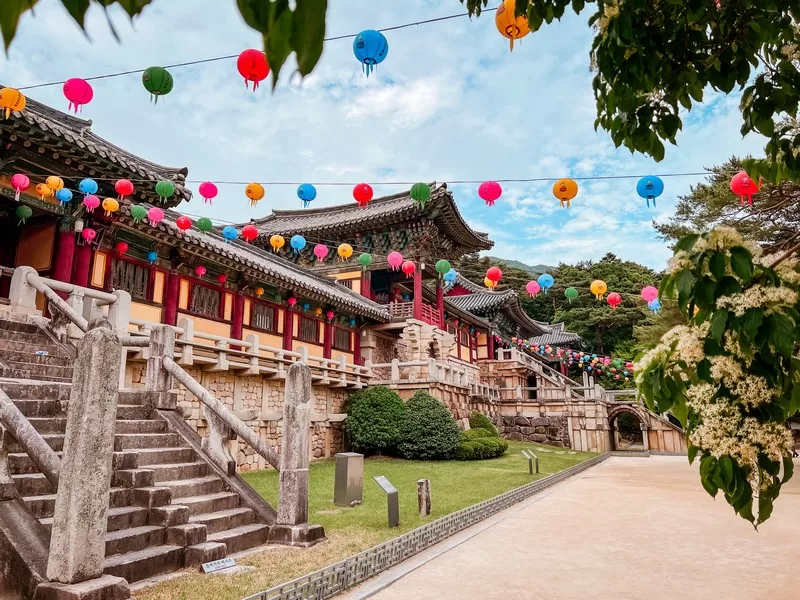
On the left, the Yeonhwagyo (Lotus Flower Bridge) and Chilbogyo (Seven Treasures Bridge) lead toward the Geungnakjeon Hall, which represents the Western Pure Land (paradise) in Buddhist cosmology. These are National Treasure #22. If you look closely at the Lotus Flower Bridge steps, you can still make out the faint carvings of lotus flowers worn smooth by centuries of pilgrims.
People that visit with guides will spend a lot of time at these outside staircases because they are packed with symbolism that is good to understand before even stepping in to see the main halls and pagodas.
Today, visitors can no longer walk across these bridges, they’re protected behind barriers. But you can walk along the forested path to the right to enter the main courtyard from an eastern entrance. Don’t be disappointed by the detour. Approaching from that angle and then turning to see the full facade from above is actually a wonderful perspective.
The Two Pagodas: A Study In Opposites
Step through into the main courtyard and you’ll be standing between two of the most famous pagodas in all of Korea: Dabo-tap (National Treasure #20) and Seokga-tap (National Treasure #21). They stand facing each other, and they couldn’t be more different.
Fun Fact: Bulguksa Temple is home to 7 National Treasures, the most of any Korean Buddhist temple, as well as 6 Korean Treasures. Not only is this a high number for one temple, but it’s unique to have more National Treasures than Korean Treasures as well.
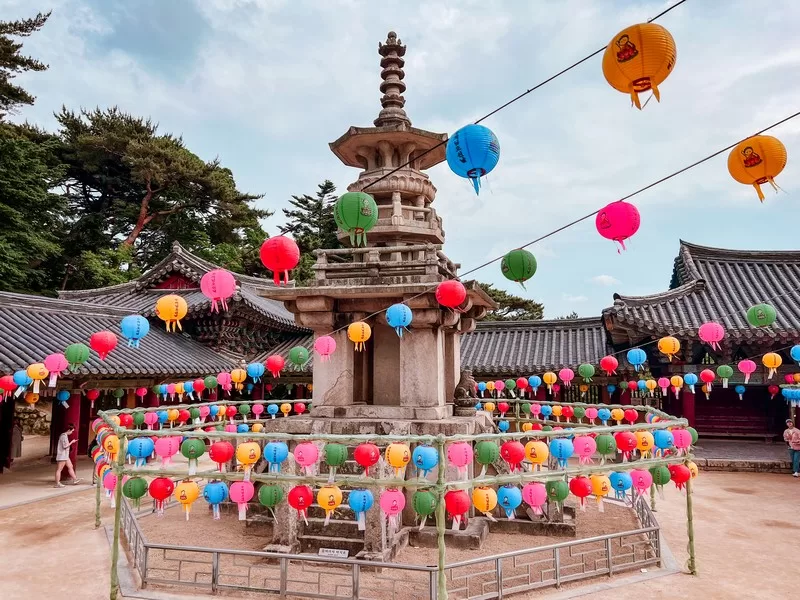
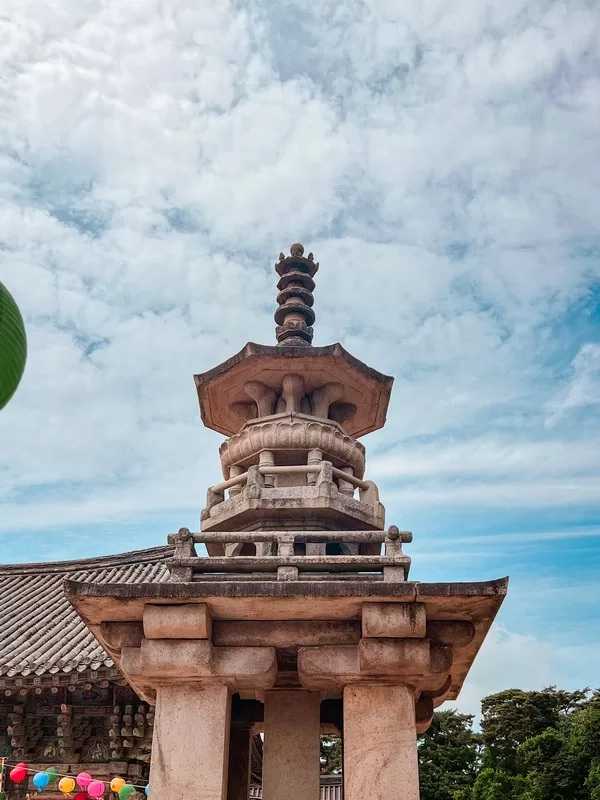
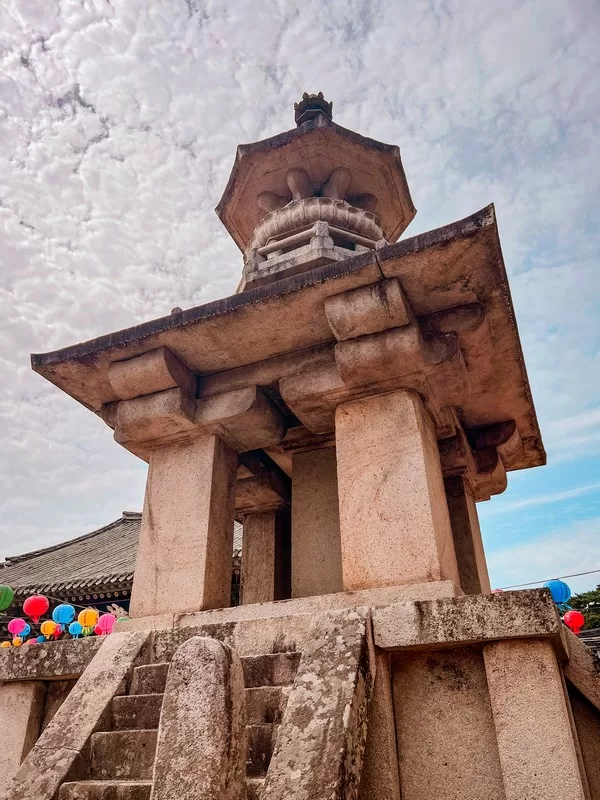
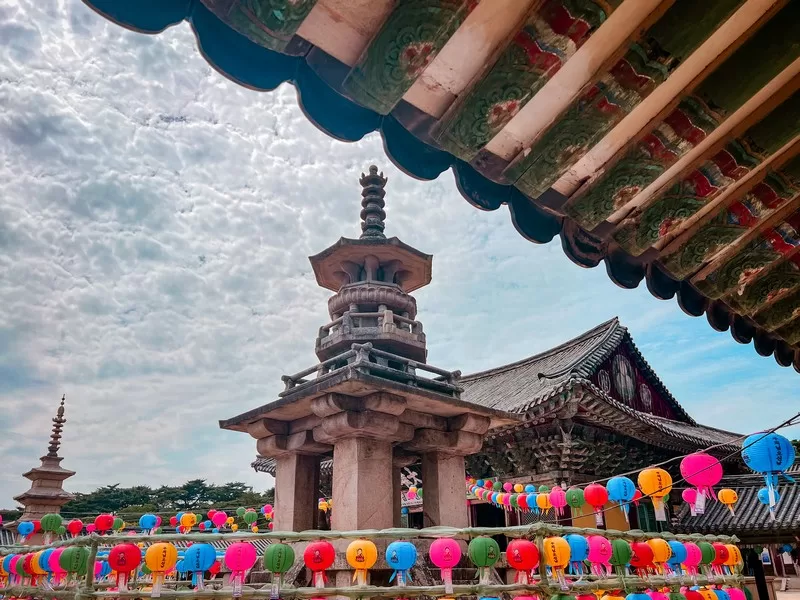
Dabo-tap: The “Pagoda of Many Treasures” is intricate, ornate, and beautifully detailed for a stone structure. Its layered tiers, delicate railings, and carved details make it look more like lacework than masonry. You’ll recognize it immediately if you’ve ever looked at a South Korean 10-won coin.
It stands about 10.4 meters tall and was built in 751 AD. Look closely at its base and you’ll notice only one lion remains where four once sat, the other three disappeared during Japanese Colonial restoration work in the 1920s, and their current location remains unknown.
Interested in the symbolism? At the square base of the pagoda there are four sets of stairs, each with 10 steps, representing the ten perfections, or “Bara-mil”. The four sets of stairs are the four cardinal directions, representing access to the Dharma from all directions. Up the steps on the next platform would have been four lions, though only one is left today. These lions represent the guardians of wisdom. Above the lions is an octagonal pagoda with 8 stone joint pillars representing the Noble Eightfold Path, and finally on top of that is a stone lotus flower platform.
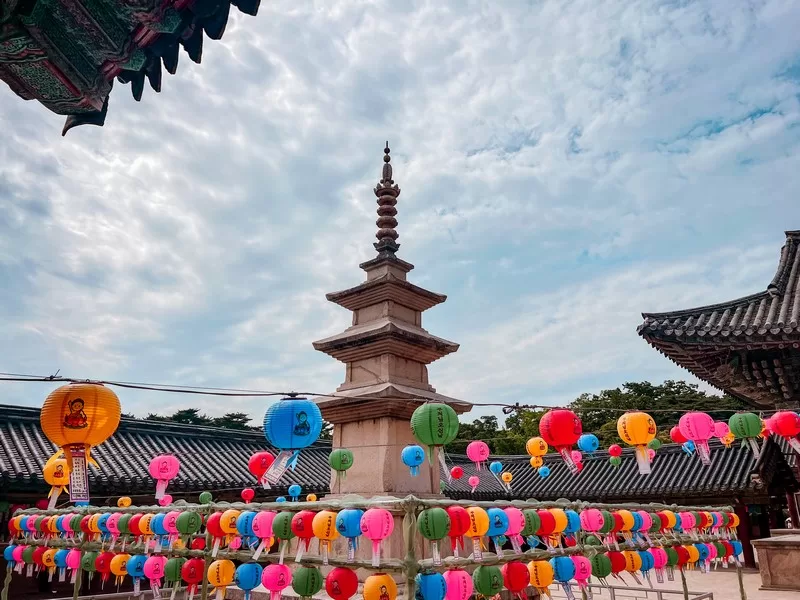
Seokga-tap: The “Seokgamoni-bul Pagoda” is the opposite: clean, austere, and perfectly proportioned. Its simple three-story lines represent the Three Treasures of Buddhism (the Buddha, the Dharma, and the Sangha). It stands about 8.2 meters tall, making it slightly shorter than Dabo-tap, but no less striking. During repair work in 1966, a remarkable discovery was made inside: the Pure Light Dharani Sutra, printed on a mulberry paper scroll and now considered one of the oldest surviving woodblock prints in the world.
What was found inside Seokga-tap? The Reliquaries from the Three-story Stone Pagoda of Bulguksa Temple were found and became National Treasure #126. Inside were found a sarira reliquary, a set of egg-shaped silver-plated sarira bowls, a gilt-bronze sarira bowl, and the Pure Light Dharani Sutra, along with several beads.
The pairing of these two pagodas in front of the main hall is a deliberate philosophical statement: complexity and simplicity, the difficulties of life beside the aspiration toward heaven. If you go with a guide, you’ll here a lot of about this balance here.
Inside The Temple Grounds
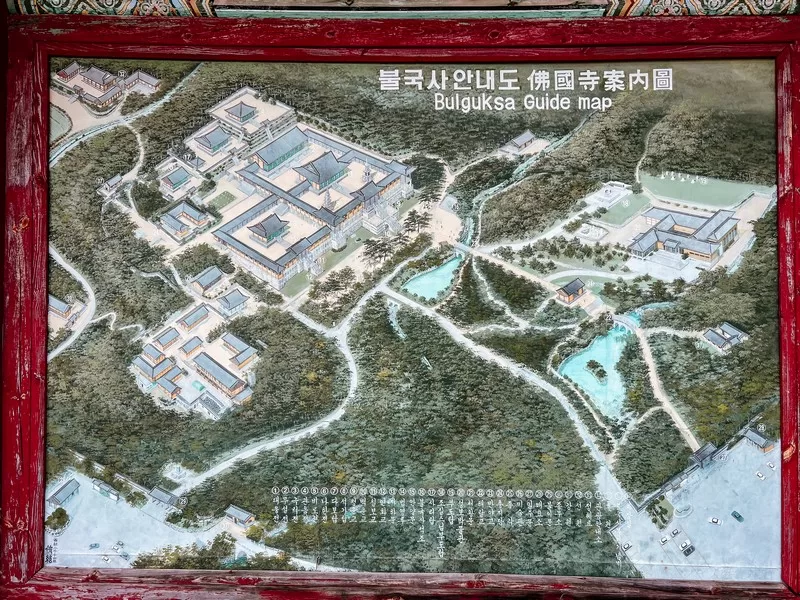
Bulguksa’s grounds are divided into several walled areas, each representing a different realm of the Buddhist universe. Take your time wandering between them.
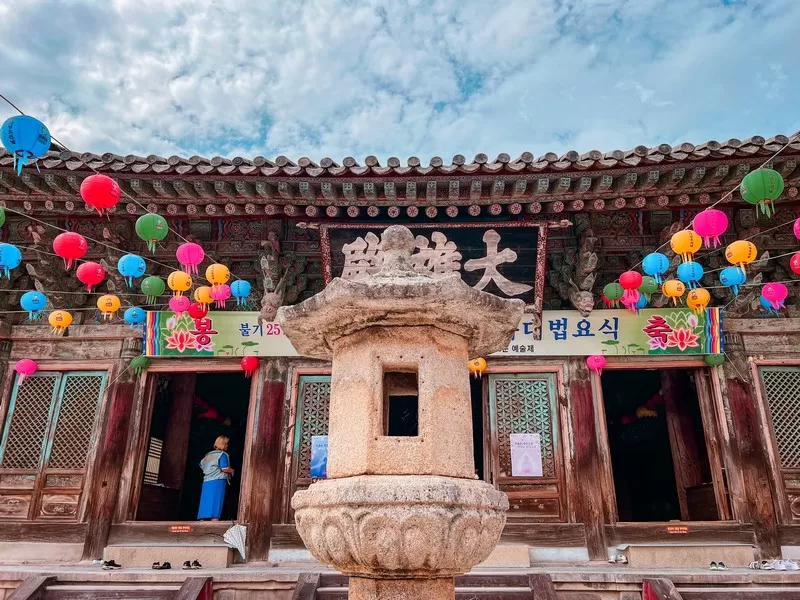
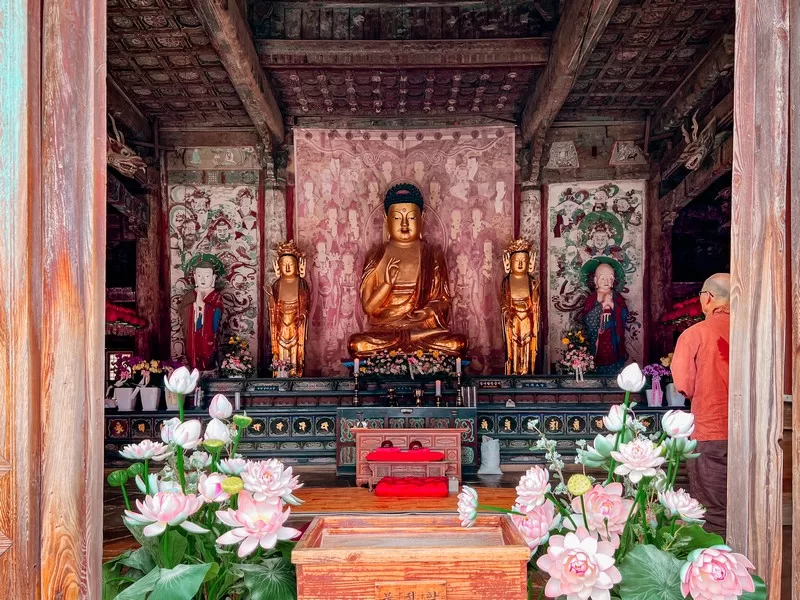
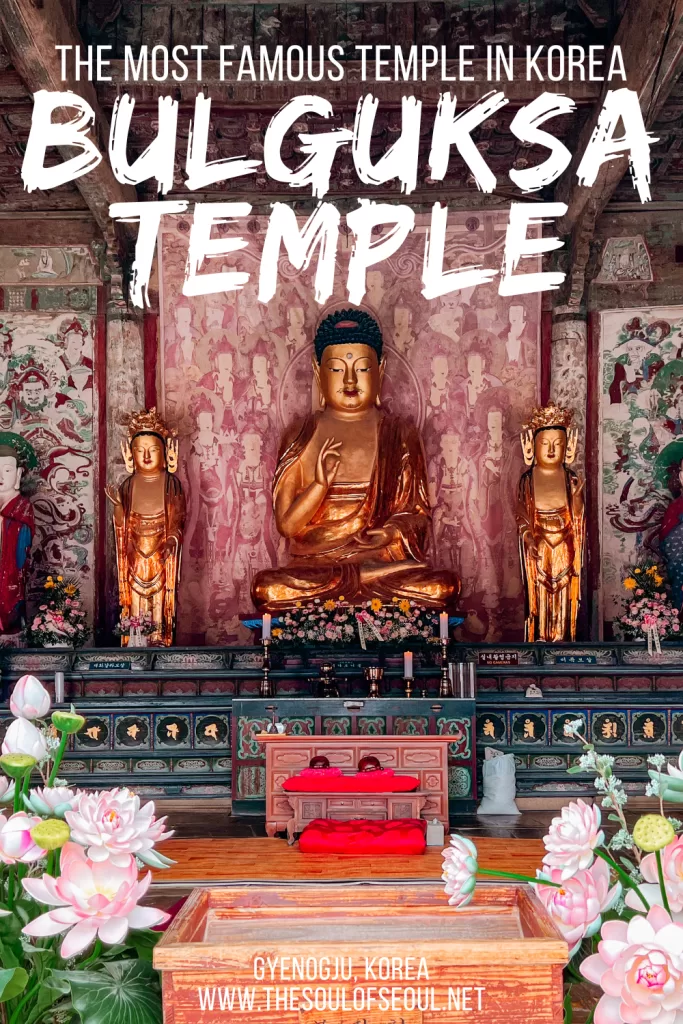
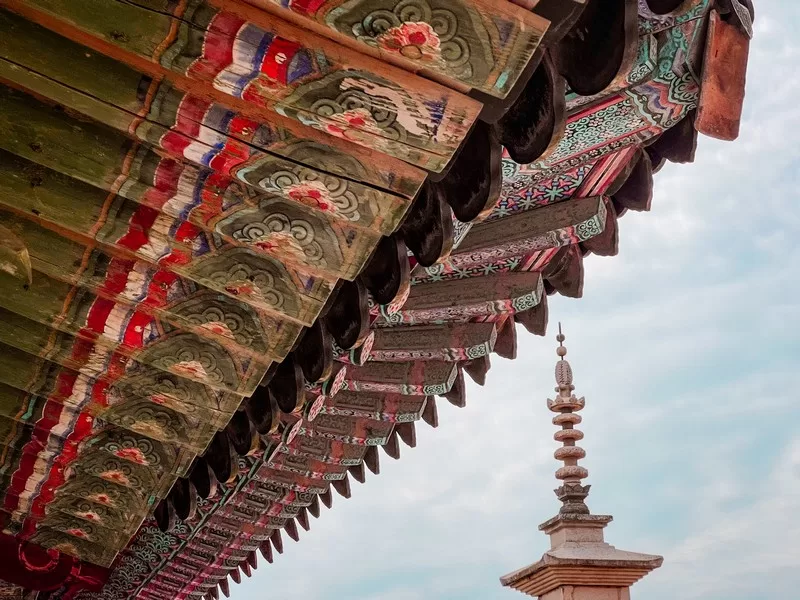
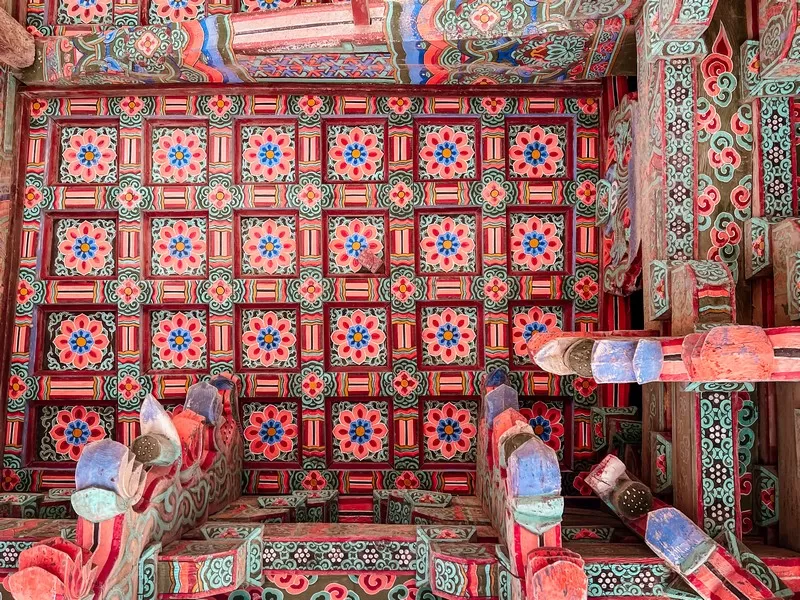
Daeungjeon Hall (The Main Hall) houses a statue of Seokgamoni-bul (the Historical Buddha) and is the heart of the temple. The hall itself (Korean Treasure #1744) has been rebuilt multiple times, most recently reconstructed in 1765 with the dancheong artwork completed in 1767. Learn more about the colors and designs in this guide to Korean dancheong.
Stepping Inside: Removing your shoes before entering shrine halls is standard etiquette at Korean Buddhist temples. Many main halls will have signs directing you to enter from the side rather than the front as well so pay attention.
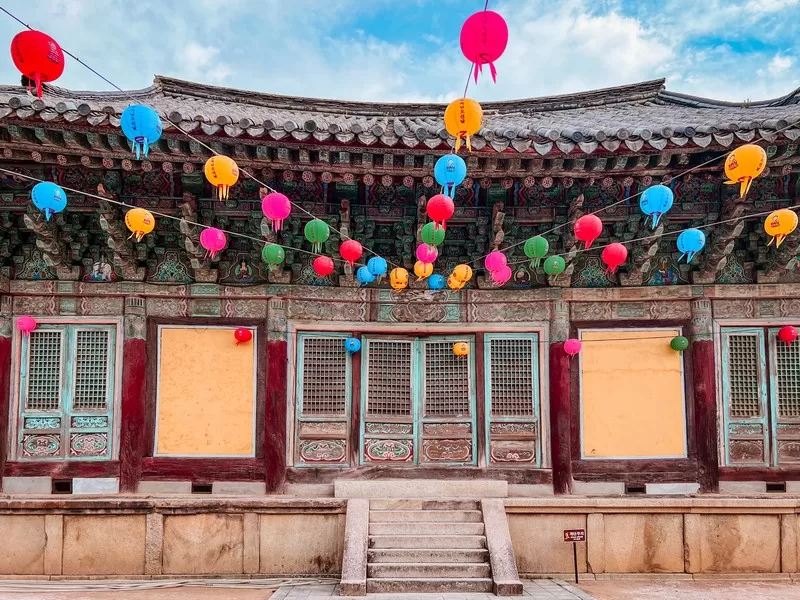
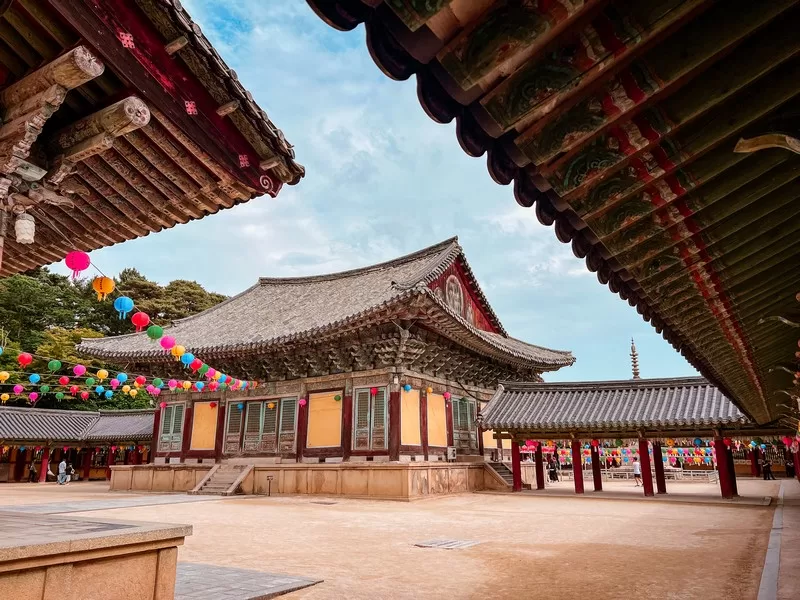
Museoljeon Hall is the Hall of Non-Speaking. If it’s the summer and you need to cool if, step inside here. This is a long lecture hall that houses a number of artifacts in glass cases that visitors can see. It’s not as historical as other halls on the grounds, but is a hall to know about if you need to take a seat for a bit inside.
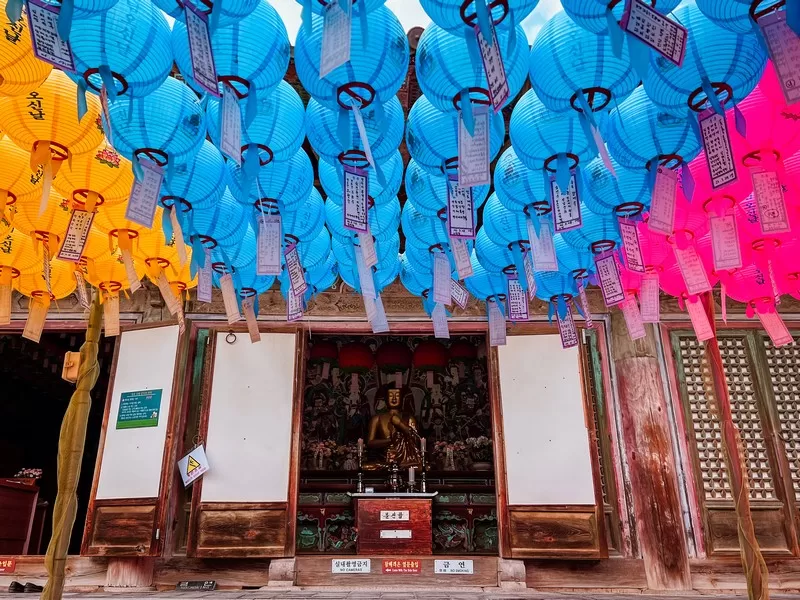
Birojeon Hall houses the Gilt-bronze Seated Vairocana Buddha (National Treasure #26), a remarkable 9th-century statue standing 1.77 meters tall in the Diamond Fist mudra. This is one of the finest examples of Silla metalwork still in existence. Take your time looking inside through the open doors.
Gwaneumjeon Hall sits at the highest point of the complex, symbolizing the mountain home of Gwanseeum-bosal, the Bodhisattva of Compassion. The view down over the main courtyard from here is beautiful, a rare chance to see the whole layout from above. Beware, the steps down are very steep though. Take your time going down from this side.
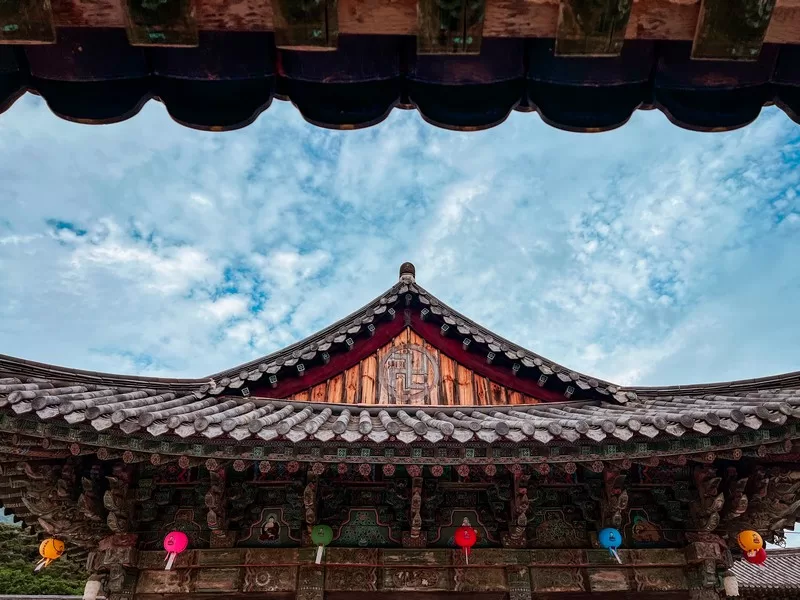
Geukrakjeon Hall is back down the steep steps from the higher elevated halls. A temple shrine that is parallel to the main Daeungjeon Hall you saw before. This is the hall that you would have come upon had you entered over the bridges to the left. Symbolically, this hall represents the Western Pure Land where Amita-bul, the Buddha of the Western Paradise, resides.
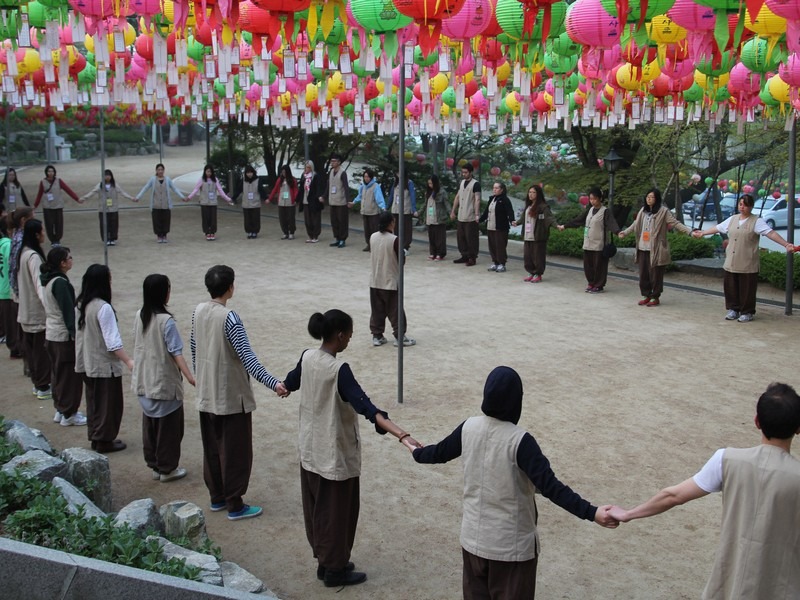
Templestay: Spend The Night In Korea’s Past
One of the most unique experiences you can have at Bulguksa is the Templestay program, an overnight immersion into the rhythms of Buddhist monastic life. When we were departing on our last visit, I saw the group of templestay attendees heading in.
Because Bulguksa is a UNESCO World Heritage Site, the accommodation itself is located about 5 minutes away by van. All programs are conducted inside the temple though.
Participants are provided a uniform (vest and pants). You’ll want to bring personal toiletries, a towel, easy on/off shoes, socks, and clothes with sleeves. The temple is on a mountain, so bring a layer regardless of the season.
There are two main programs:
- Journey into Mind (2 days, 1 night): 108 prostrations with prayer bead making, temple etiquette, temple tour, Buddhist ceremonies, evening meditation, spinning around the pagodas, and an optional visit to Seokguram Grotto.
- Cultural Experience (2 days, 1 night): A Buddhist dance performance replaces the prostration session, alongside the same meditation and ceremony activities.
Visit the official Templestay website to see when the next programs are running.
FAQ
Is Bulguksa Temple free to visit?
Yes, admission to Bulguksa Temple is completely free. There is no entry fee to walk the grounds and visit the shrine halls. Paid parking is available on site if you’re arriving by car.
How long does it take to visit Bulguksa Temple?
Plan for at least two to three hours if you want to explore the grounds properly and take in the details of the pagodas, bridges, and shrine halls. If you’re visiting with a guide or combining your visit with the Templestay program, allow more time.
Can you visit Bulguksa Temple and Seokguram Grotto in one day?
Yes, and I’d strongly recommend doing both together. Seokguram Grotto sits about 4 kilometers up the mountain from Bulguksa and the two sites are deeply connected, both were commissioned by Kim Daeseong and designated as a single UNESCO World Heritage Site. Having your own transport or taking a taxi makes the uphill journey to Seokguram much easier. Start at Bulguksa in the morning and head up to Seokguram after lunch.
What is Bulguksa Temple famous for?
Bulguksa is famous for being Korea’s most celebrated Buddhist temple and a UNESCO World Heritage Site. It holds seven national treasures, more than any other temple in Korea, including the iconic Dabotap and Seokgatap pagodas, the Blue Cloud and White Cloud Bridges, and two remarkable gilt-bronze Buddha statues. It’s also considered a masterpiece of Silla Dynasty architecture and Buddhist art.
Is Bulguksa Temple worth visiting?
Without question. Even if you have no background in Buddhism or Korean history, Bulguksa is the kind of place that stops you in your tracks. The stone structures are over 1,200 years old, the craftsmanship is extraordinary, and the setting on the slopes of Mt. Tohamsan is beautiful in every season. It consistently ranks as one of the top things to do in Gyeongju, and in all of Korea, for good reason.
Is Bulguksa Temple suitable for children?
Yes, it’s a great destination for families. The grounds are easy to walk, there’s plenty of space to wander, and the visual drama of the pagodas and gates tends to capture kids’ attention naturally. The legend of Kim Daeseong is also a wonderful story to share with children while you’re there. Note that the steps up to Gwaneumjeon Hall are quite steep, so keep a close eye on little ones in that section.
What is the best time of year to visit Bulguksa Temple?
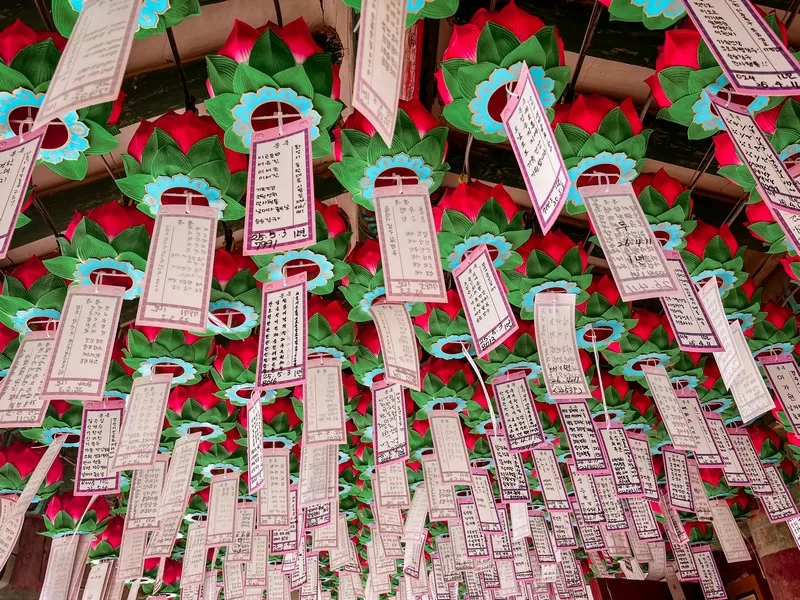
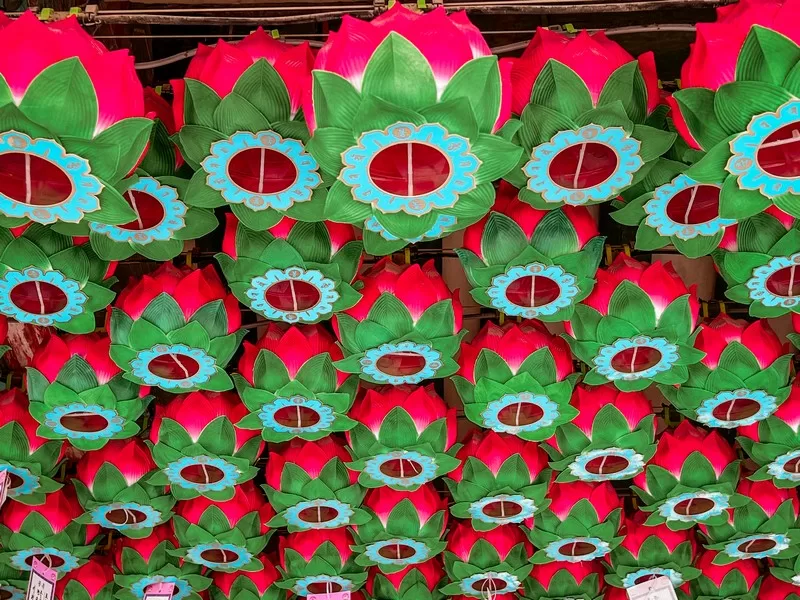
Autumn (October to November) is the most spectacular, when the surrounding forest turns red and gold. Spring (late March through May) is a close second, with cherry blossoms lining the path to the temple entrance and in later spring the lotus lanterns are hung in celebration of Buddha’s Birthday making for extra colorful scenery. Both seasons bring larger crowds on weekends, so aim for a weekday if you can.
Do I need a guide to visit Bulguksa Temple?
You don’t need one, but a guide adds a lot to the experience. The symbolism packed into the bridges, pagodas, and layout of the grounds is rich enough that without context, it’s easy to walk past details that took master craftsmen years to create. If it’s your first visit to Bulguksa, consider joining a guided tour from Gyeongju or Busan.
Bulguksa has a way of lingering in the mind long after you’ve left. The first time I stood in front of those stone bridges in 2006, I didn’t fully understand what I was looking at. Now, after years of living in Korea and learning its history, I understand why this place matters so deeply.
If you visit Gyeongju, don’t rush Bulguksa. Sit with it. Walk slowly. Let the pagodas tell you their story. And if you have the chance, stay for a Templestay, waking up to the sounds of the morning ceremony inside these walls is an experience you’ll carry with you for years.
Did you like this post? PIN IT!