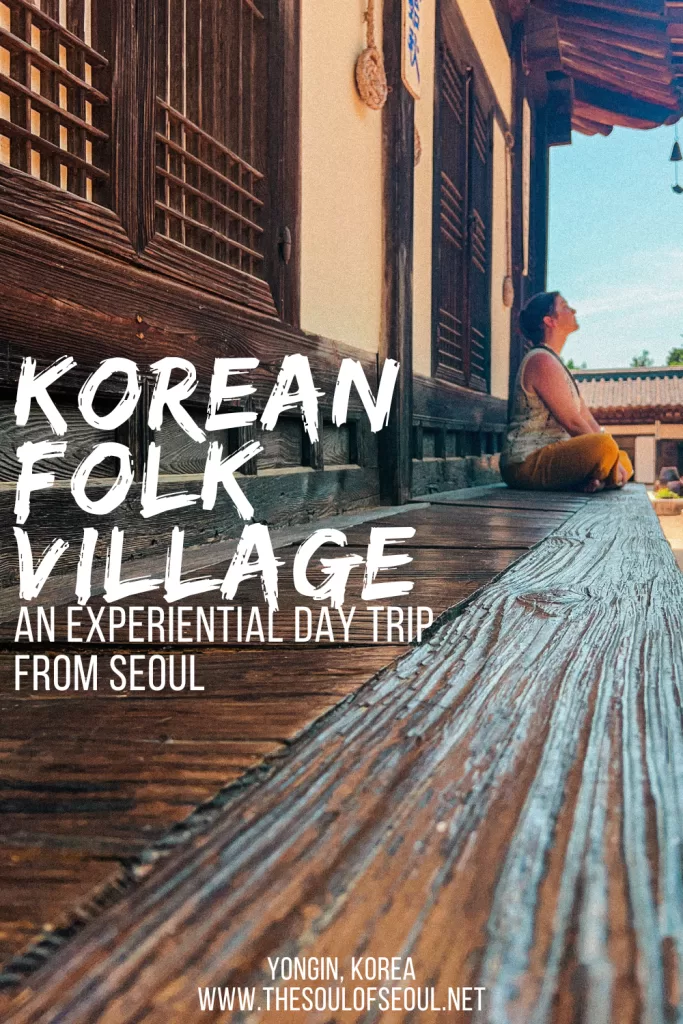
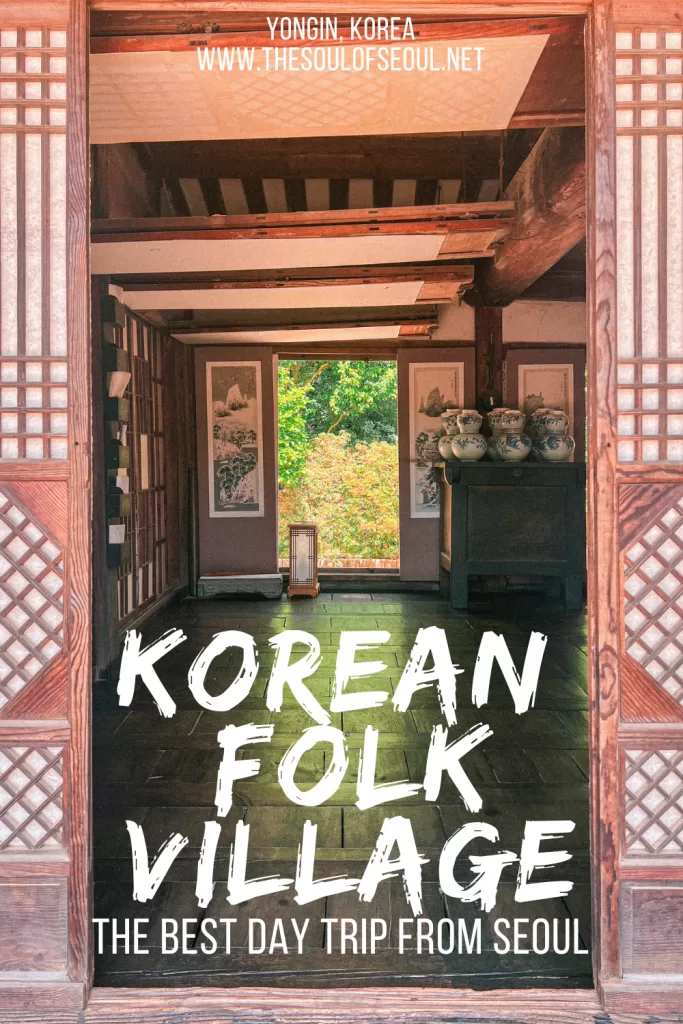
Korean Folk Village in Yongin: The Perfect Day Trip from Seoul into the Joseon Dynasty
Last Updated on June 9, 2026
There are two types of folk villages in Korea, authentic, lived-in villages where some residents still call the old homes their own, and recreated villages built specifically for visitors to learn, engage with, and experience Korean history and culture. One is not better than the other; they are just different and offer different things. I bring this up because one of the most well-known examples you’ll come across when searching is the Korean Folk Village (한국민속촌). Broadly and simply named, it is exactly what it says it is, but for history lovers, it might not quite be what they’re looking for.
The Korean Folk Village in Yongin is a recreation of the past through the restoration and reconstruction of traditional homes from the Joseon dynasty. There are performances, from folk dances to martial arts on horseback, a traditional wedding ceremony, hands-on craft workshops, and enough atmosphere to make you feel like you stepped out of the 21st century entirely. There are no residents here though, it is simply a space for you to get hands-on, to touch, to learn, and to see what life looked like centuries ago.
Is it worth visiting? Absolutely. It is family-friendly, great with kids, and offers classes and experiences you might love? For sure. Is it touristy? Yes, but not so much so that it feels overwhelming or hollow. The Korean Folk Village in Yongin makes for a fantastic day trip from Seoul, so don’t sleep on it.
If you’re curious how this compares to Korea’s living villages, where real residents still call ancient Hanok home, I’ve written about Seongeup on Jeju Island and Naganeupseong in Suncheon, which offer a very different but equally worthwhile experience.
Here’s what you need to know to plan a great visit to the Korean Folk Village in Yongin.
(This post contains affiliate links, which means I receive a certain percentage of a sale if you purchase after clicking at no cost to you. Thank you for your support.)
Basic Info
Address: 90 Minsokchon-ro, Giheung-gu, Yongin-si, Gyeonggi-do (경기도 용인시 기흥구 민속촌로 90)
Hours: Monday – Thursday: 10:00am ~ 6:00pm; Friday – Sunday: 10:00am ~ 10:00pm
Admission: Adults (14–64): ₩32,000; Children (36 months–13 years): ₩26,000; Seniors (65+) and disabled: ₩22,000; Under 36 months: Free;
- All tickets include access to the Amusement Village rides.
Evening Festival (달빛을 더하다): April through November on Fridays, Saturdays, Sundays, and public holidays. Includes LED performances, Joseon-era ghost encounters, photo zones, and more. Worth staying for if you are visiting on a weekend.
Website: koreanfolk.co.kr
Accessibility: The main paths are packed dirt and mostly manageable with strollers and wheelchairs, though some areas near the temple are stepped. Stroller and wheelchair rentals are available at the entrance. Nursing stations are located throughout the park, and restrooms include toddler-sized toilets, a small but thoughtful detail.
Lockers: Available on-site for a fee if you want to stow bags while exploring.
Language: Most signs have English translations. Performance MCs work mostly in Korean, but the physical storytelling crosses the language barrier well. Staff at the entrance and information areas generally speak basic English.
Tip: Arrive around 10:00 AM when the gates open. Performances start early and you will want a full day here. We spent five hours and still left wishing we had more time.
How To Get There
The Korean Folk Village is about an hour south of central Seoul in Yongin, Gyeonggi-do meaning plan it as a day trip from Seoul. Getting there without a car is straightforward with a few good options.
Join a Tour: If you want to maximize your time south of Seoul, join a tour. Many of them include stops at nearby tourist sites like the Suwon Hwaseong Fortress or Starfield Mall.
- Korean Folk Village and Suwon Hwaseong Fortress: Book on Creatrip, or on Klook
- Korean Folk Village, Starfield, and Everland Amusement Park: Book on Klook
By Bus from Seoul:
- From Myeongdong (in front of the Stanford Hotel, near Lotte Department Store): Take Bus 4101 directly to the Korean Folk Village. About 45 minutes.
- From Gangnam Station (Line 2/Sinbundang, Exit 5): Cross behind the station to the bus stop on the median and take Bus 5001-1. About 51 minutes.
- From Sinnonhyeon Station (Line 9/Sinbundang, Exit 7): Take Bus 5001-1. About the same.
- From Incheon International Airport: Bus A8877 goes directly to the village.
Free Shuttle from Suwon Station: The Korean Folk Village runs a free shuttle bus from Suwon Station (Exit 4) three times a day. Departure times are 10:30 AM, 12:30 PM, and 2:30 PM. The return shuttle leaves the village at 1:50 PM and 4:00 PM. It is first-come, first-served, so arrive a few minutes early. The ride is about 30 minutes.
By Car: Parking is available on-site. If you have a Hi-Pass card, there is a dedicated fast lane. Just remember to pay for parking before you leave. Weekends fill up, so arriving right at opening is wise.
Travel Tip: If you’re planning a trip to Jeju Island, the Jeju Folk Village offers a similar experience except with a focus on Jeju Hanok structures and local life centuries ago.
What You Will See and Do
With over 260 reconstructed buildings spread across a large, mostly flat site, the Korean Folk Village covers a lot of ground. Rather than trying to rush through it all, pick a few anchors and let yourself wander between them. Here is what not to miss.
The Traditional Village Itself
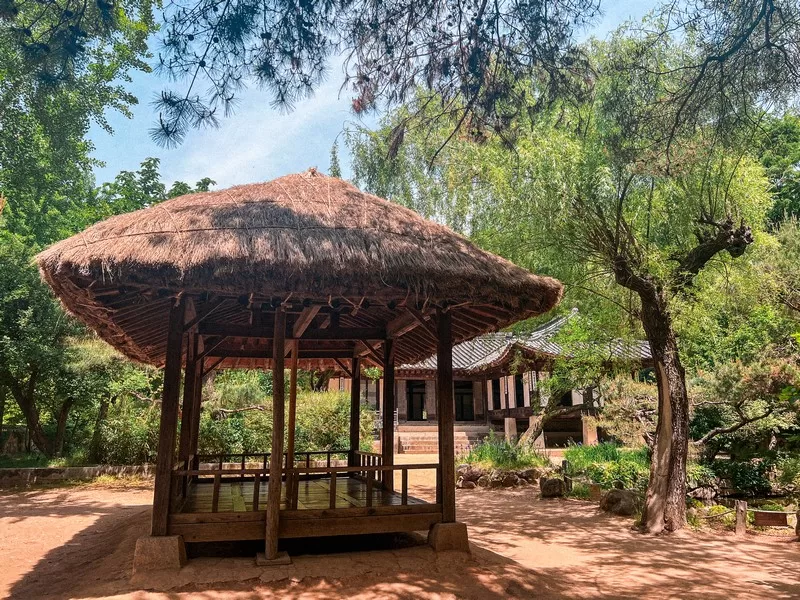
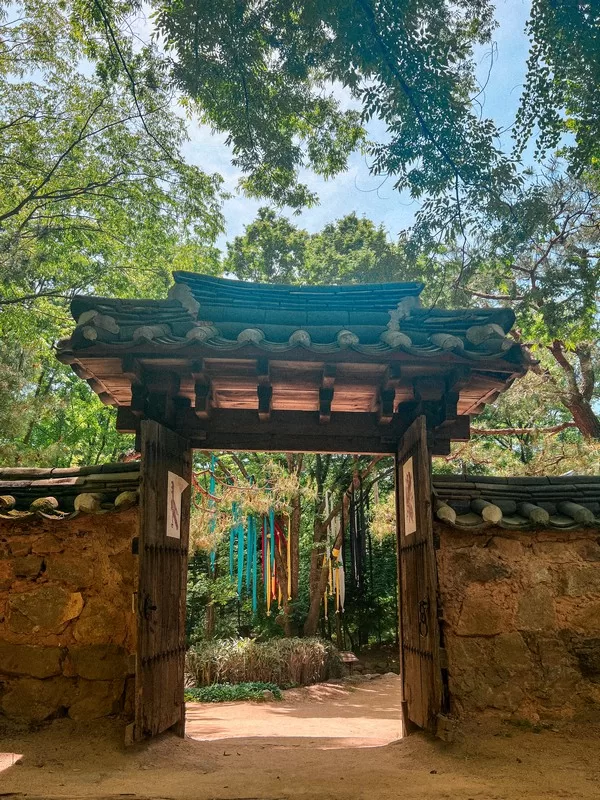
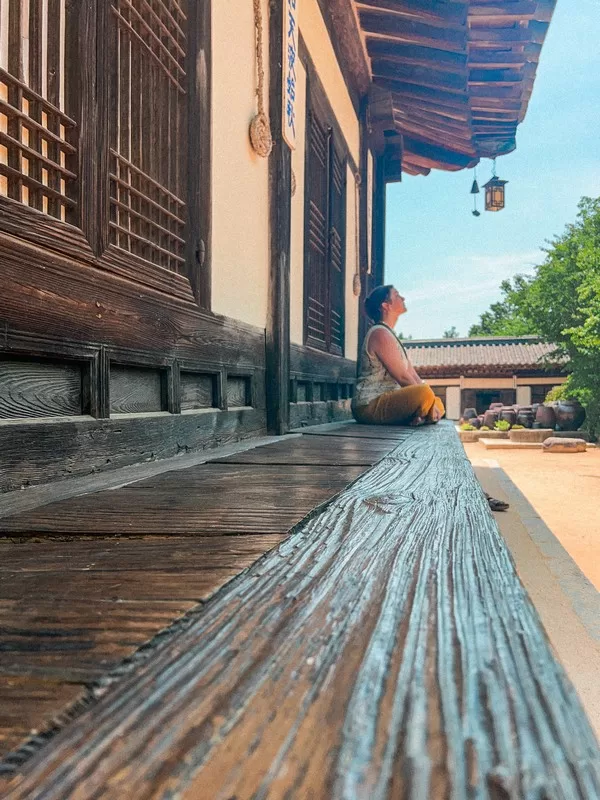
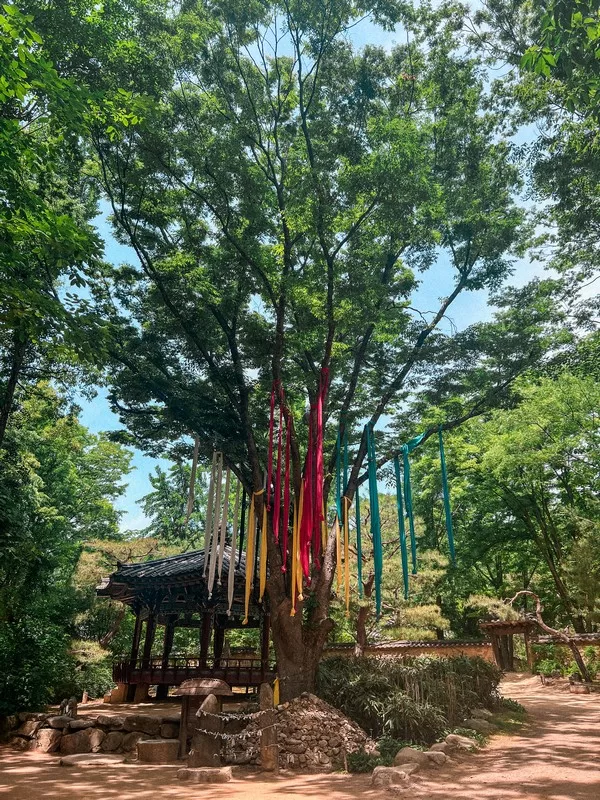
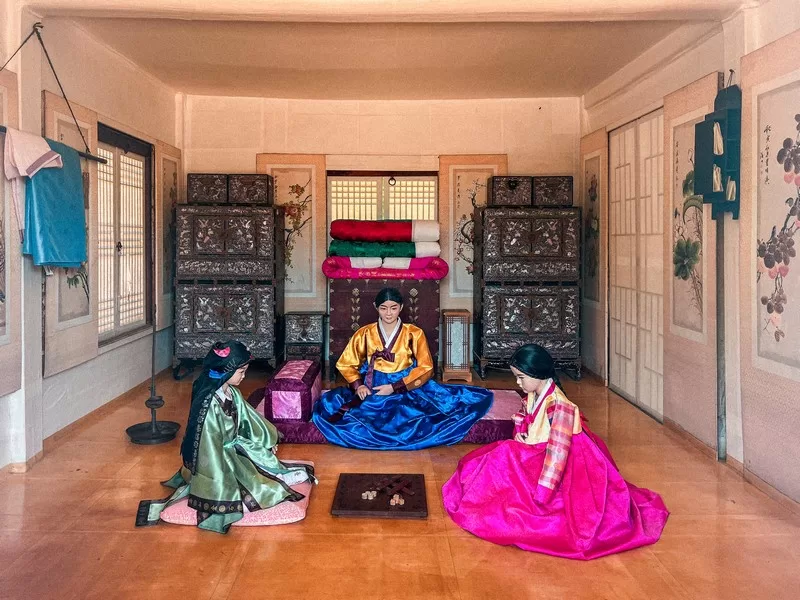
The heart of the experience is the village, the reason you’re likely coming here. Buildings are organized to reflect the social hierarchy of Joseon society, from the thatched-roof homes of farmers and commoners to the tile-roofed compounds of scholars and nobility. They’re also separated by region with homes from the northern regions of Korea, southern regions, and central regions. They also have homes from Jeju Island and Ulleungdo Island. See if you can spot the differences.
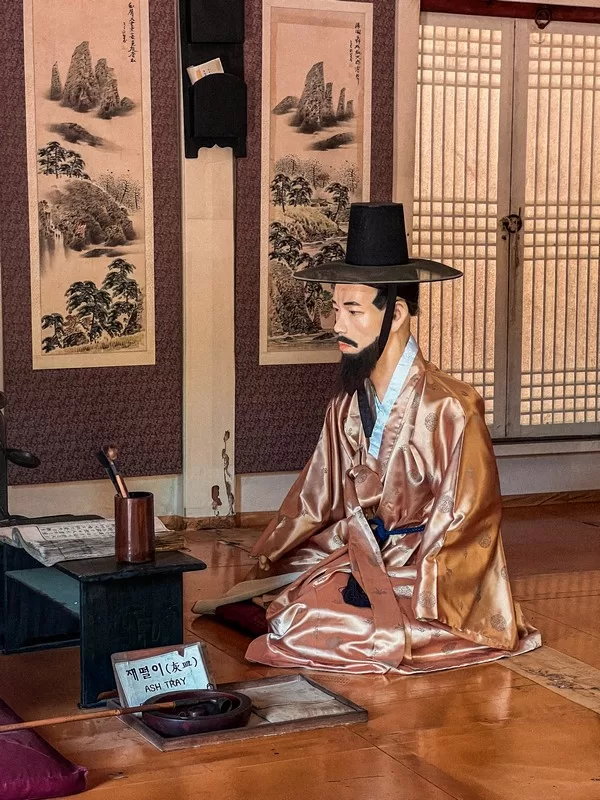
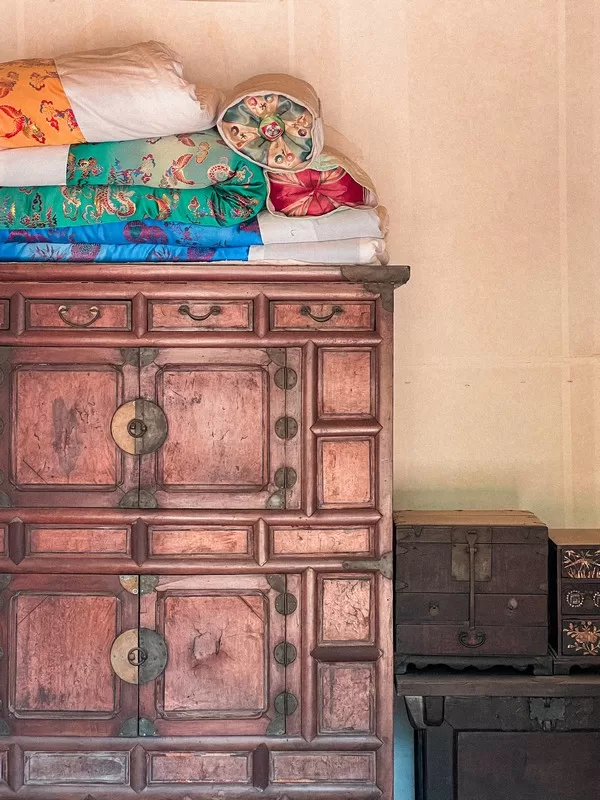
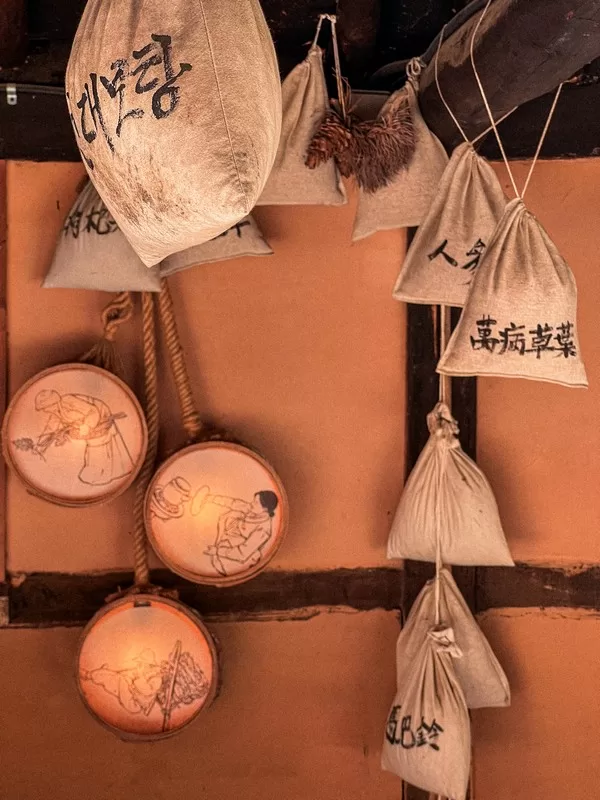
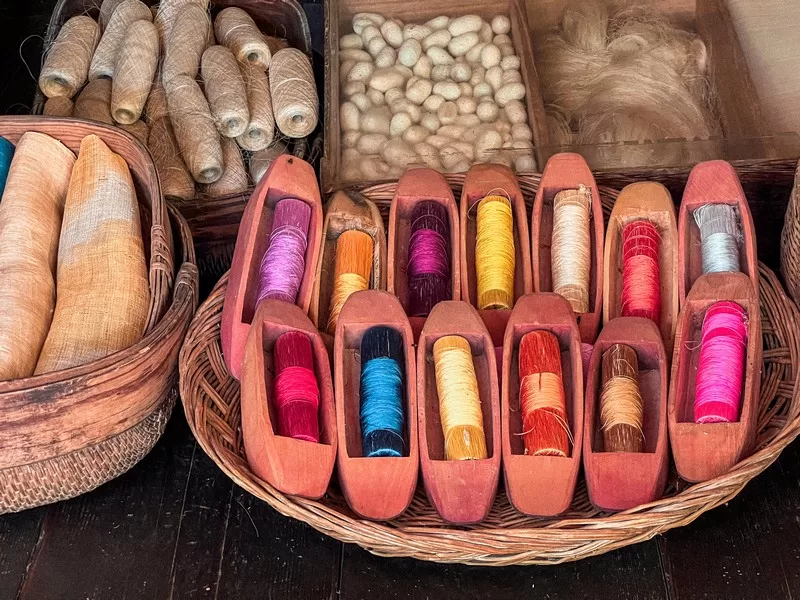
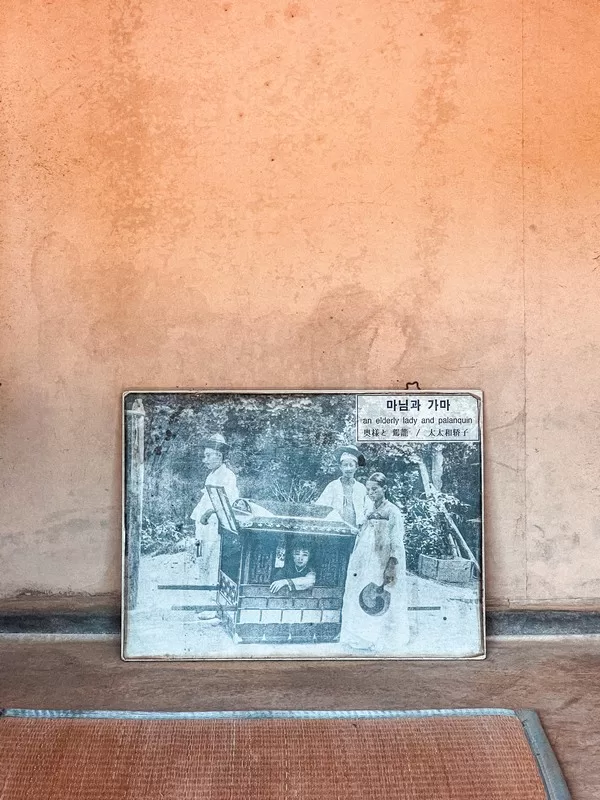
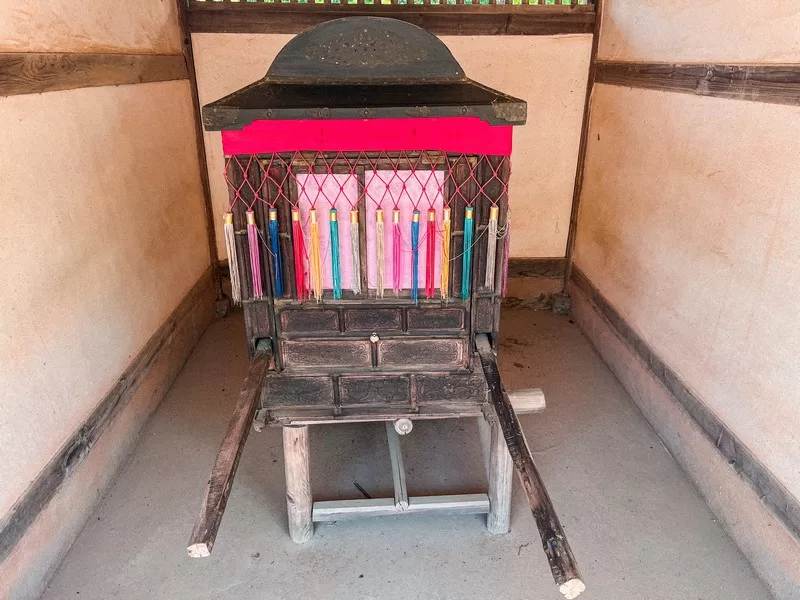
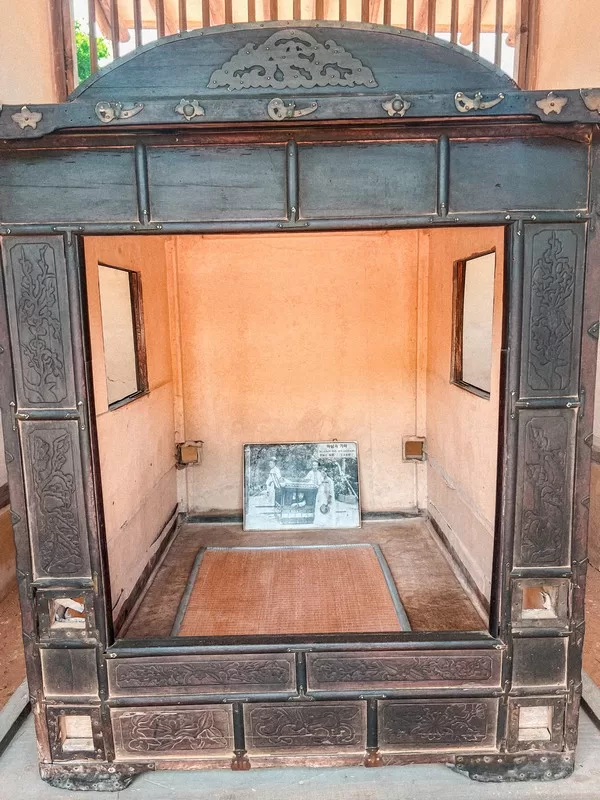
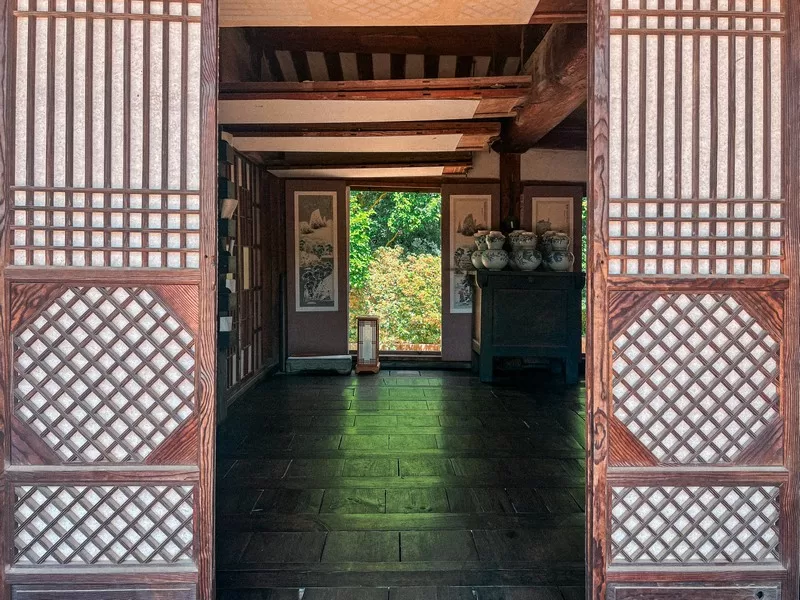
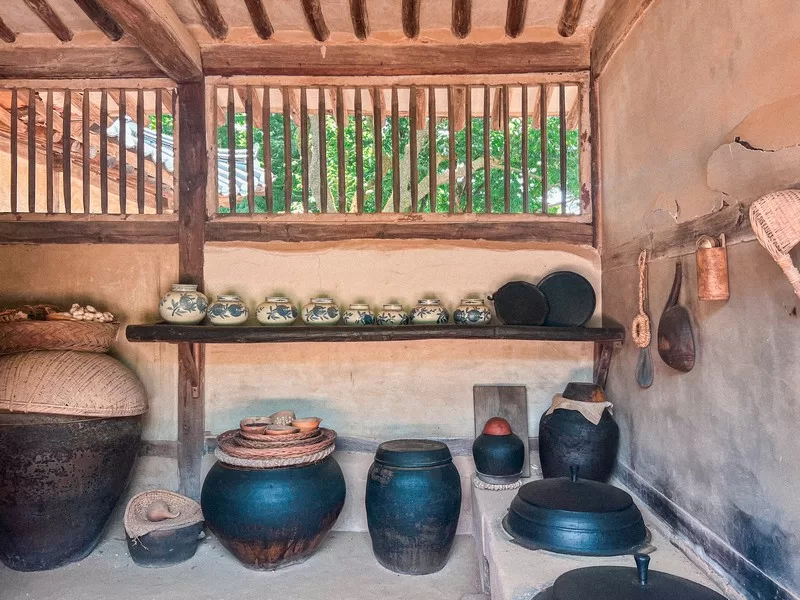
Walk through kitchens, sleeping quarters, and courtyards that look exactly as they would have centuries ago. Step up and make sure to look inside as each building houses various things showing how people lived. The level of detail is impressive, and the paths between buildings, while dirt and sometimes uneven, have their own charm.
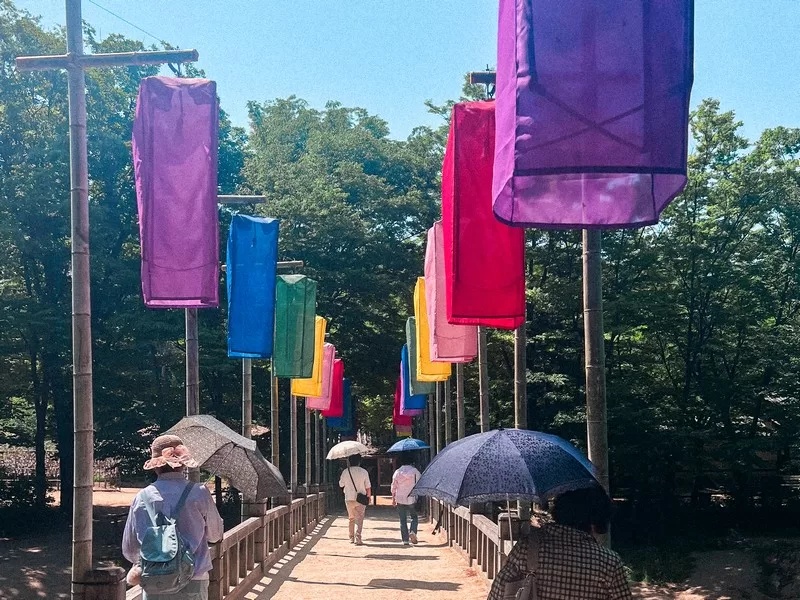
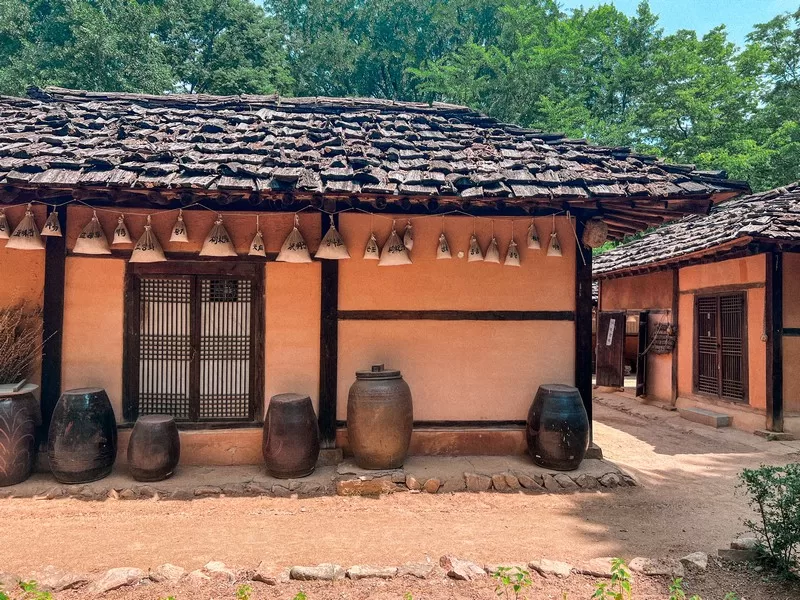
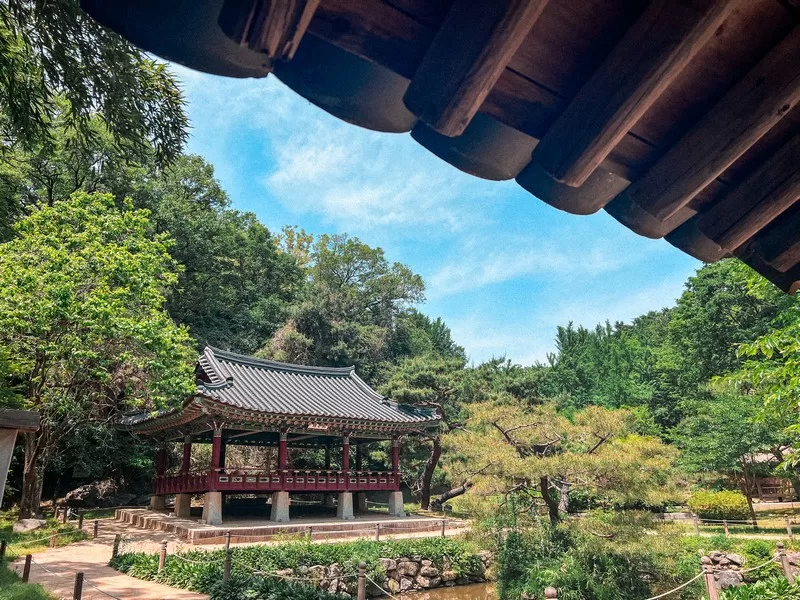
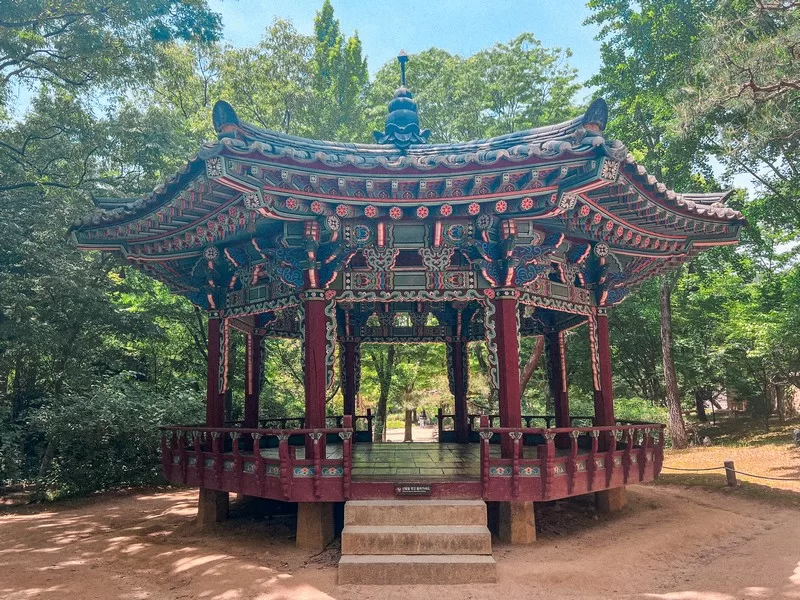
A river runs through part of the grounds, and the walk toward the Buddhist temple (Keum Ryeon Sa) is particularly beautiful, though note that the temple path involves stone steps and is not stroller-friendly. Need a rest, there are pavilions all over that beckon you to take a seat and just take in your surroundings. Enjoy those spaces.
Hanbok Rental: You can rent traditional Korean outfits at the entrance or within the village. It elevates photos significantly and makes the whole experience feel more immersive. Worth the extra step.
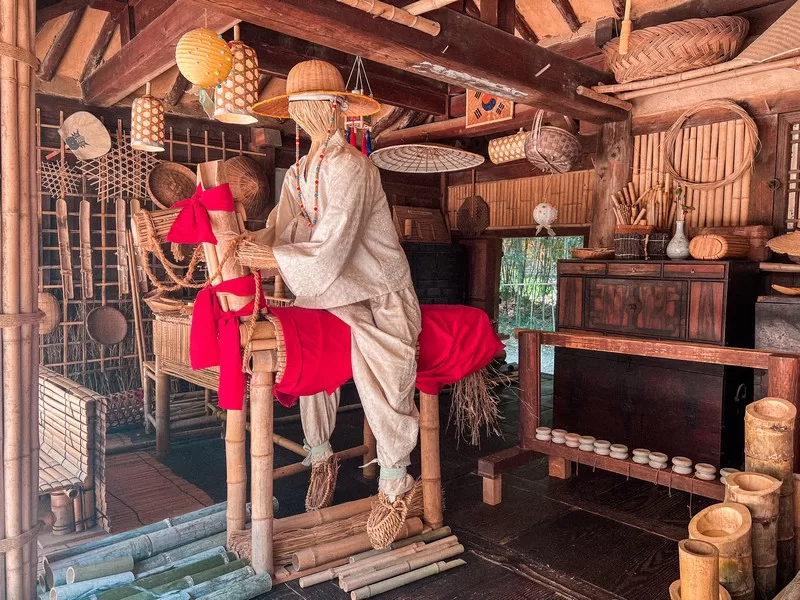
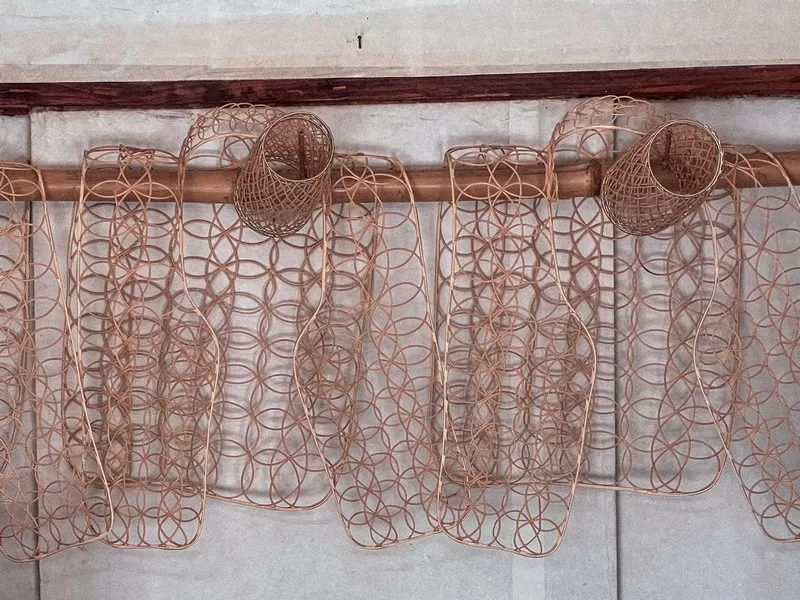
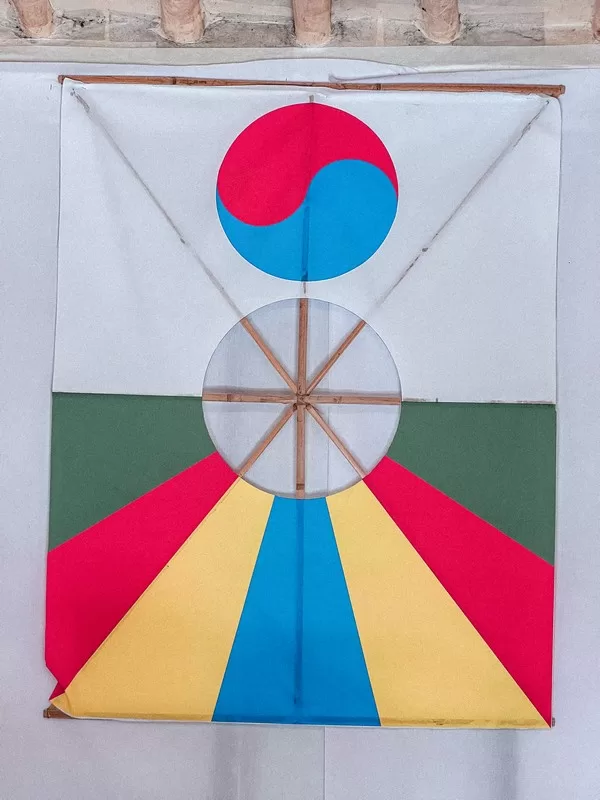
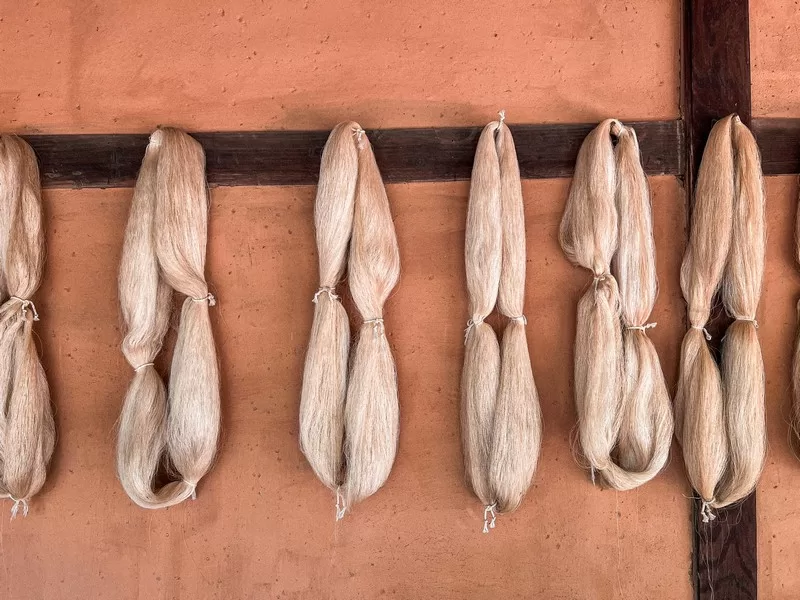
Have children? Let them see what children used to play with in Korea. There are musical instruments they can try here too. One thing that is great about this folk village is that kids can touch a lot of things. There are some buildings with signs that request visitors to just look and not touch, but there’s a lot they can explore here if you have the time.
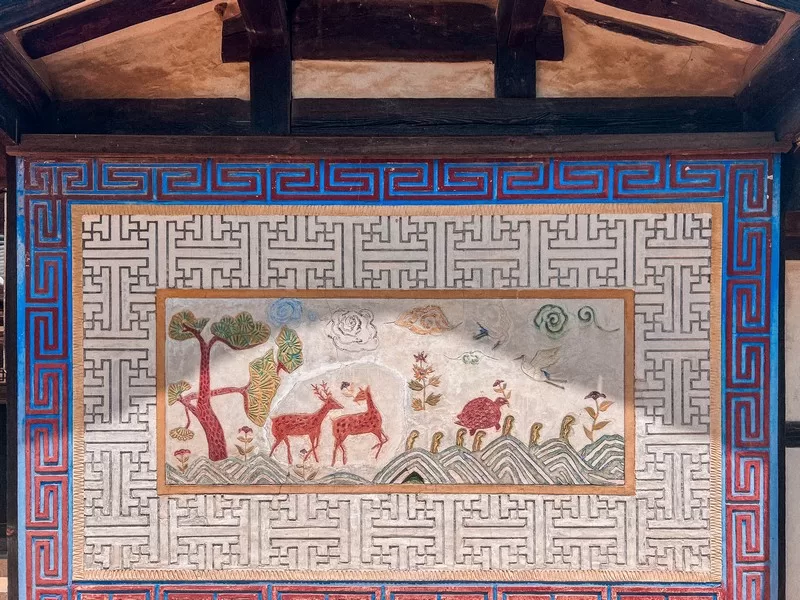
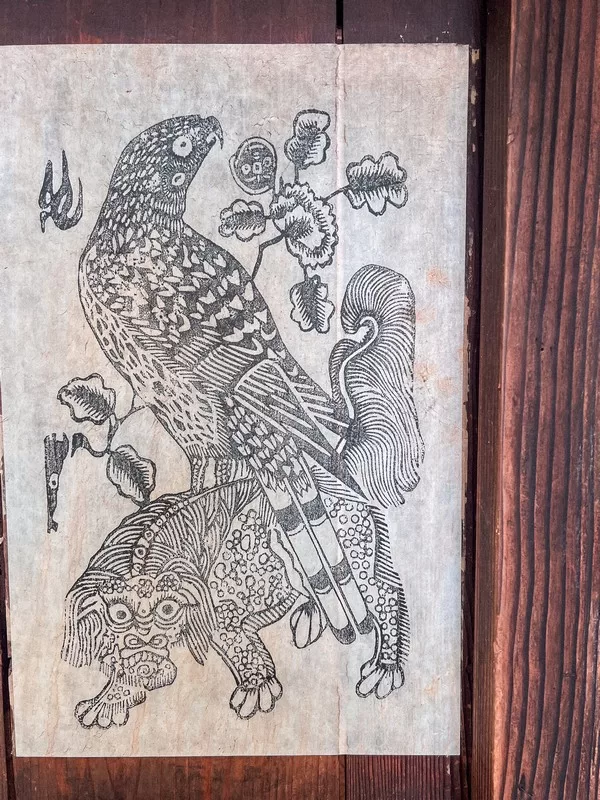
Folklore Homages
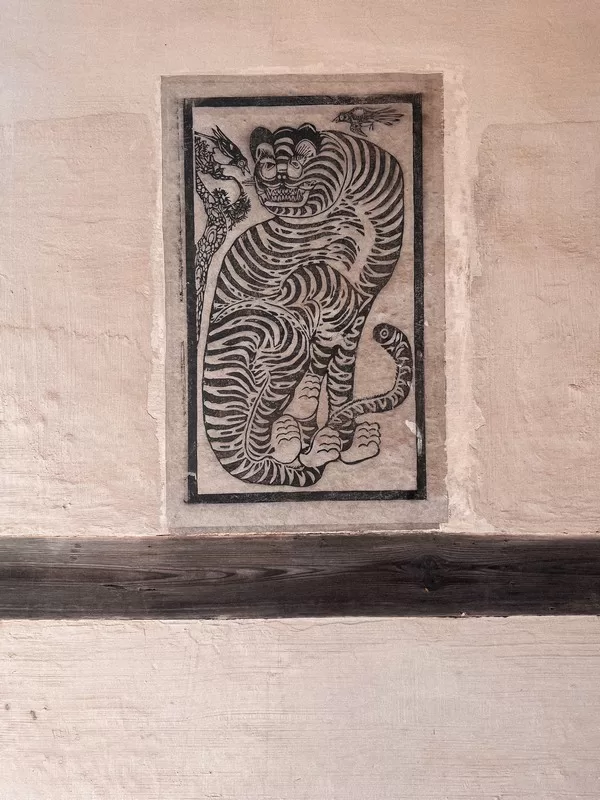
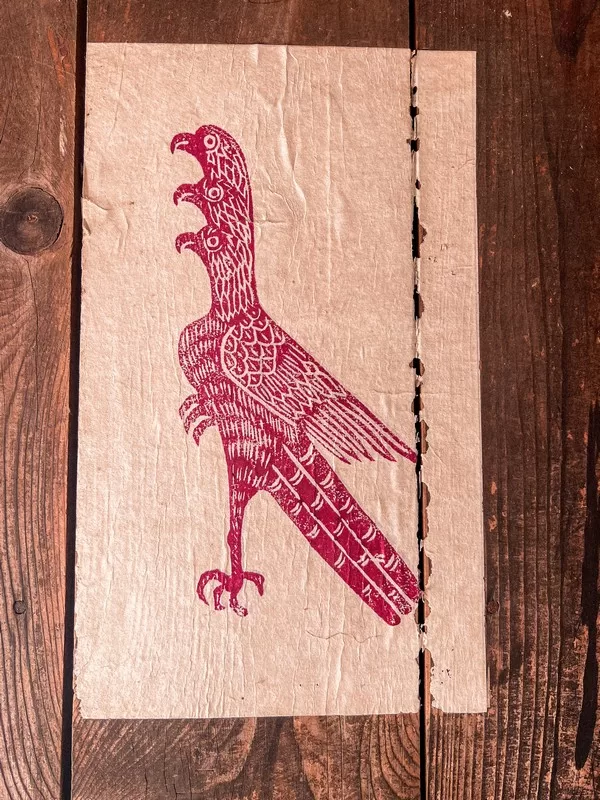
One thing I find fascinating about Korean culture, or any culture really, are the folk tales, and as you walk around the Korean Folk Village, you can spot pictures and relics that pay homage to these stories. Where have you seen these creatures before?
The Performances
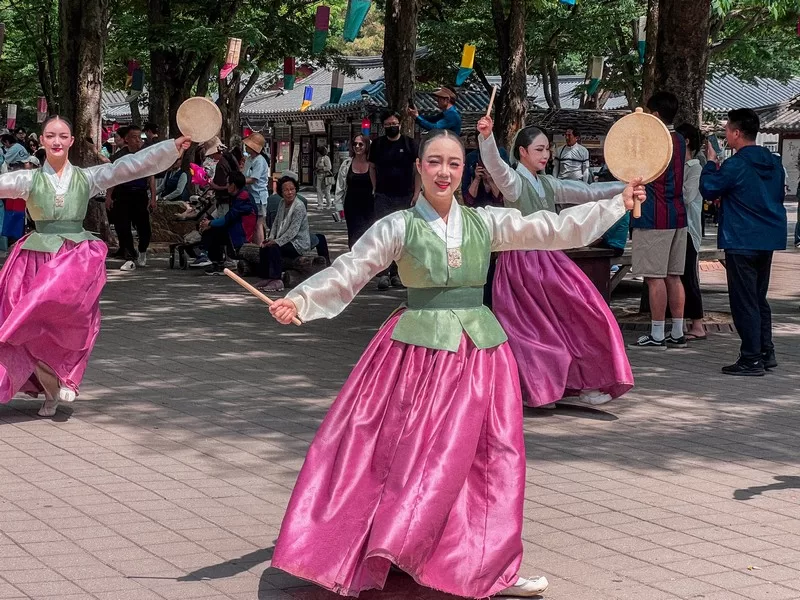
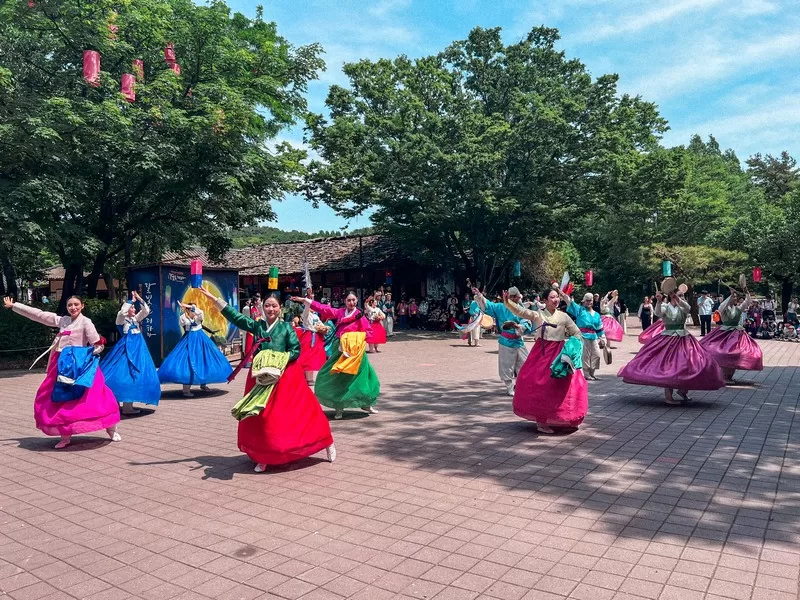
This is one of the best parts of the visit, and it is included in your admission. Performances rotate throughout the day at the main stage and at WanHyangRoo Pavilion. After you enter, check the schedules and make sure you know where to be and when and plan your walking route accordingly.
The big ones to plan around:
- Equestrian Martial Arts (마상무예): Horseback acrobatics that are jaw-dropping to watch. Riders perform stunts and tricks at a full gallop. Runs twice daily.
- Tightrope Walking (줄타기): A UNESCO-recognized art form. The performer is part acrobat, part comedian, and the crowd interaction, even mostly in Korean, is hilarious. Do not skip this one.
- Traditional Wedding Ceremony: A re-enactment of a Joseon-era wedding complete with colorful hanbok, ceremonial bows, and traditional music. Happens near the Nobleman’s mansion and runs twice daily except during winter.
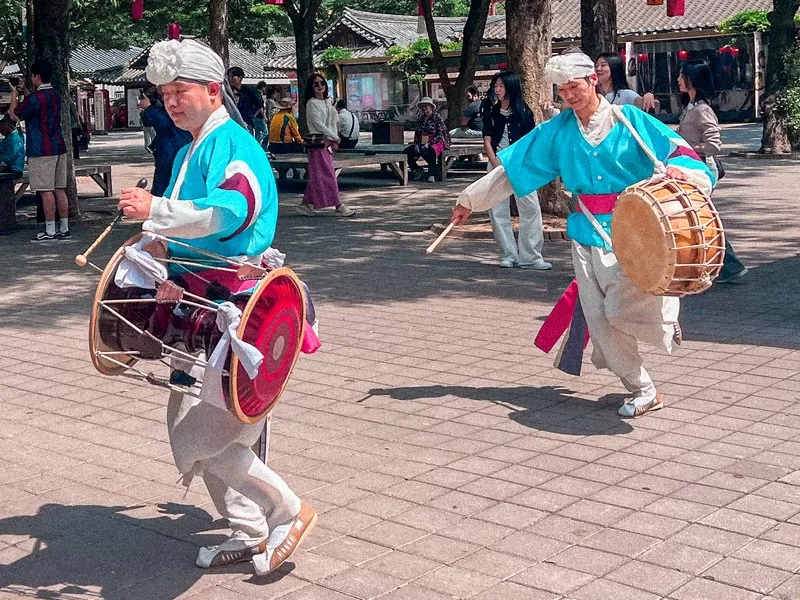
- Farmers’ Music and Dance (농악놀이): Drummers, dancers, and the famous sangmo ribbon-hat spin that has to be seen to be believed. Learn more about pungmul before you go so you know what you’re watching.
Pick up the English schedule at the gate and circle your priorities. Everything is close enough together that you can catch multiple shows in one visit.
Hands-On Workshops
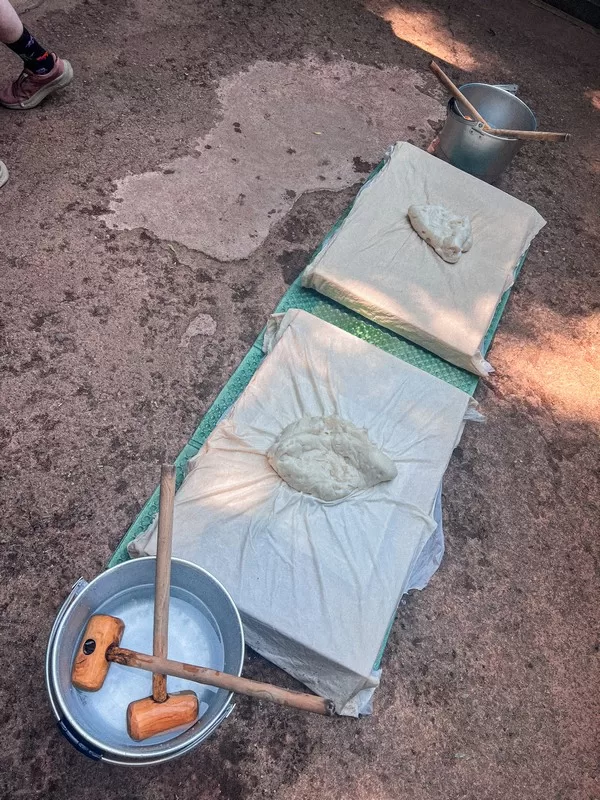
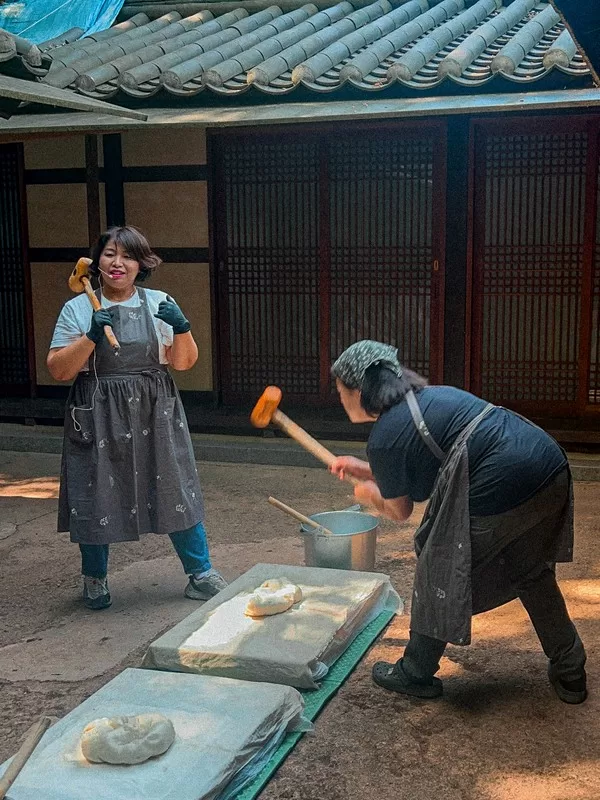
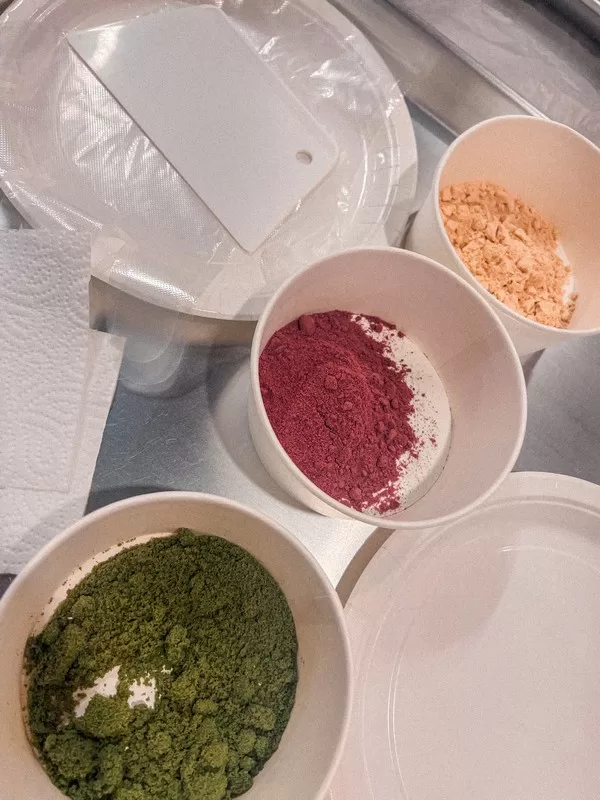
Scattered throughout the village are traditional craft workshops where you can watch and often participate. Depending on the day, you might try your hand at pottery, mask painting, traditional fan-making, straw shoe-making, silk-thread work, or bamboo flute carving. Small fees apply for most workshops, typically ₩3,000–₩10,000, and you keep what you make. These make for far more meaningful souvenirs than anything from a shop. We made tteok, rice cake, when we visited and it was a fantastic experience.
The Amusement Village
Yes, there is an amusement park. It is a fun bonus, especially if you are visiting with children. I have always spent most of my time, well all of my time in the Hanok village area, however, on this last visit there were some teenagers in our group who skedaddled to the amusement park for the last hour and had a blast.
There are around 15 rides including a Viking ship, merry-go-round, magic teacups, and others with height requirements for bigger thrills. There is also a haunted house themed around traditional Korean ghost stories, even if you do not understand the narrative, the atmosphere is creepy in the best way.
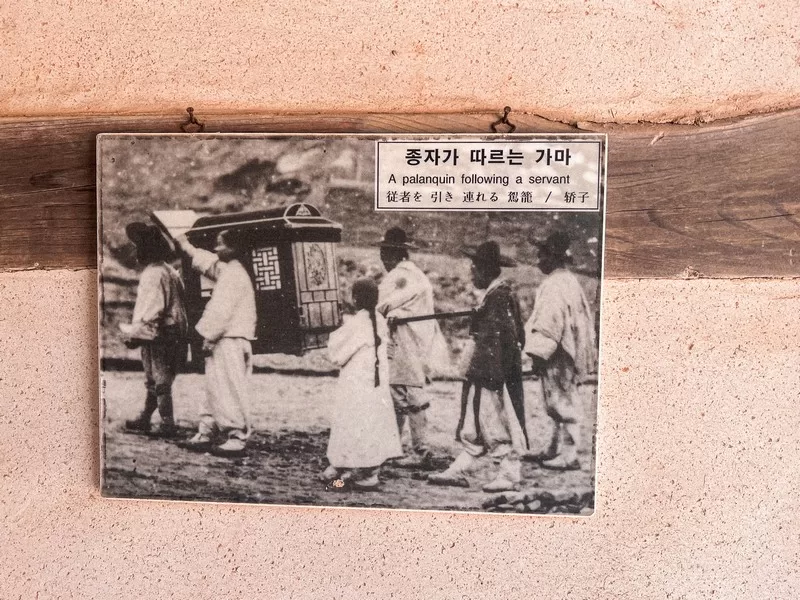
The Museums
The Folk Museum and World Folk Museum are included in admission and are worth a wander especially in the summer when you might need an indoor break from the heat. Exhibits lean Korean-language heavy, but there is plenty to look at even without reading everything.
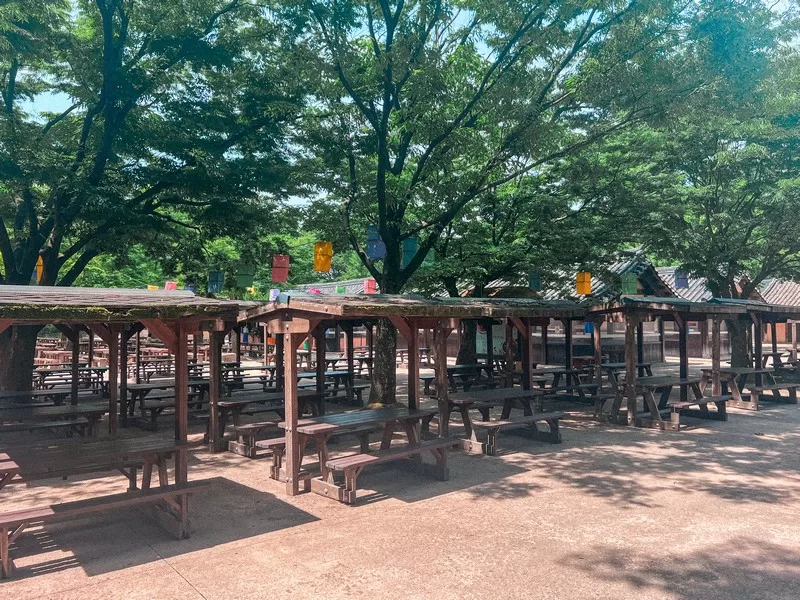
What To Eat
You will not leave hungry. Food options are spread across two main areas: the Market Village near the entrance, and the Marketplace at the far end of the grounds. If you arrive at 10:00am, I recommend heading toward the back, meandering through the Hanok buildings and taking them in, having lunch in the back, and then making your way back forward on the other side so you don’t miss anything.
To order, find the touchscreens, much like you’ll see at cafeterias, rest stops, and malls in Korea. Look for bibimbap, janchi guksu (light noodle broth), soups and stews, and grilled dishes. After ordering, look at your receipt to find the number and it’ll pop up at the booth where your food is available for pickup.
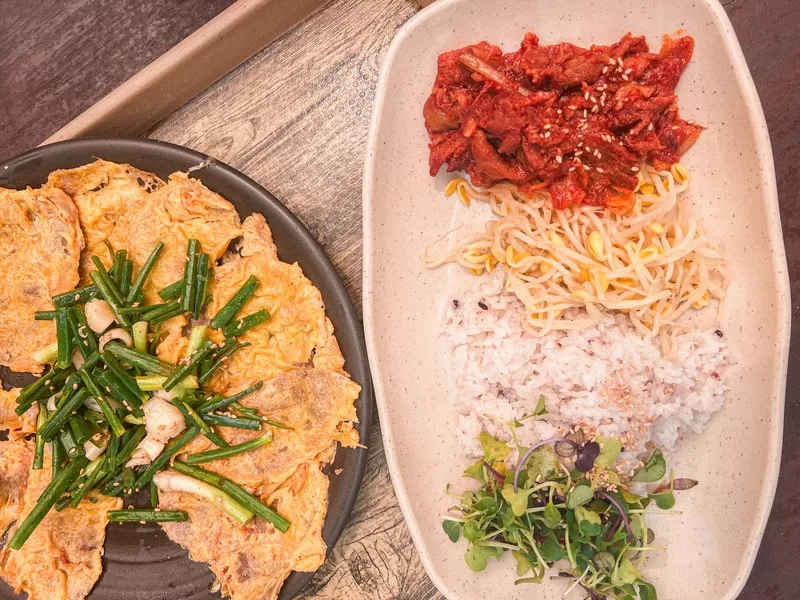
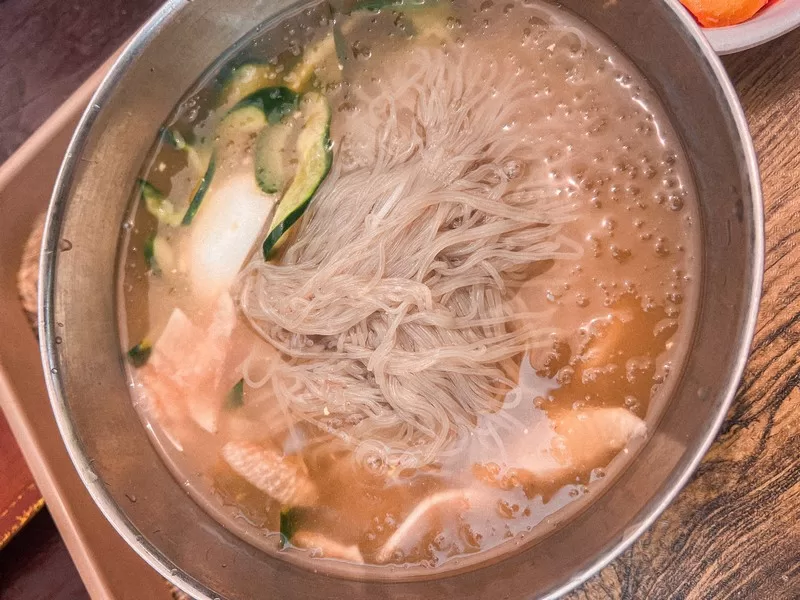
For snacks and street food, keep your eyes open as you walk. Hotteok (sweet syrup-filled pancakes), tteokbokki, pumpkin taffy (hobak yeot), and rice cakes on sticks are all easy to find at different shops throughout the grounds.
There is also a traditional teahouse called Darakbang in the Market Village if you want to sit down for a quieter moment with coffee or tea. And if you spot makgeolli (traditional Korean rice wine) being poured, try a bowl. It is the perfect village drink.
Best Time To Visit
The Korean Folk Village is open year-round, but the experience changes dramatically with the seasons. I’ve visited in the spring, summer, and autumn myself.
Autumn (September–early November) is the most popular and arguably the most beautiful time to visit thanks to the crimson maples, golden ginkgo trees, and persimmon fruits hanging on bare branches. The Chuseok festival period also brings extra performances.
Spring (April–May) brings blossoms and mild weather. Buddha’s Birthday often coincides with special events. This is the season that local schools do a lot of field trips so you’ll likely spot Korean children even on weekdays.
Summer (June–August) adds a seasonal pool and night market events on weekends, but it is hot and humid. A pocket fan and light clothing are essential. Take breaks in the cafes to cool off. The evening festival (running through November) is particularly nice on warm summer nights.
Winter (December–February) is the quietest season. Snow on thatched roofs is beautiful, and Seollal (Lunar New Year) brings rice-cake pounding demonstrations and special programming. Some outdoor stalls close, but the village itself remains open.
FAQ
Is the Korean Folk Village worth visiting?
Yes, it is one of the most complete cultural experiences you can have near Seoul, and the admission price reflects that. With over 260 traditional buildings, multiple daily performances, hands-on workshops, street food, and a full amusement park included in the ticket, you need at least a few hours to do it justice.
How long do you need at the Korean Folk Village?
Plan for a minimum of five hours, and ideally a full day. Between the village buildings, the performances (which are scheduled throughout the day), the workshops, and the food, there is more here than most people expect.
Is the Korean Folk Village family-friendly?
Very much so. Kids can touch and explore far more here than at a typical museum, there are traditional instruments to try, games to play, and an amusement park with rides for different ages and heights. Nursing stations are available throughout the grounds, restrooms have toddler-sized toilets, and stroller rentals are available at the entrance. The main paths are mostly flat and manageable, though the temple walk involves steps and is not stroller-friendly.
Do I need to speak Korean to enjoy the Korean Folk Village?
Not at all. Most signs have English translations, staff at the entrance and information areas generally speak basic English, and the performances, while the MCs speak Korean, are so visually engaging that the language barrier barely registers.
Can I visit the Korean Folk Village without a guided tour?
Yes, and many people do. The village is easy to navigate independently, especially with the English map and performance schedule available at the entrance. That said, if you want to combine it with nearby attractions like Suwon Hwaseong Fortress or Starfield Mall, a guided day tour is a very convenient option since transport and tickets are handled for you.
What is the best time of year to visit the Korean Folk Village?
Autumn, specifically late September through early November, is the most beautiful. The maples and ginkgo trees turn, persimmons hang on bare branches, and the whole village looks like something out of a historical drama. Spring is lovely for blossoms and mild weather. Summer is hot and humid but adds a seasonal pool and the weekend evening festival. Winter is the quietest season, but snow on thatched roofs has its own magic and Seollal brings special programming.
Is there an evening program at the Korean Folk Village?
Yes. From April through November, the village runs a night festival called 달빛을 더하다 on Fridays, Saturdays, Sundays, and public holidays. It includes LED performances, Joseon-era ghost encounters, and atmospheric photo zones. The village stays open until 10:00pm on weekends during this period, so if you are visiting on a Friday or Saturday, arriving in the afternoon and staying through the evening is a great way to experience both sides of the village.
Is the Korean Folk Village the same as other folk villages in Korea?
No, and this is worth understanding before you visit. The Korean Folk Village in Yongin is a cultural recreation village, built specifically for visitors, with no residents. It is designed for hands-on experiences, performances, and entertainment. Other folk villages in Korea, like Seongeup on Jeju Island and Naganeupseong in Suncheon, are living villages where residents still call ancient Hanok home. The atmosphere is quieter and more contemplative. Both types are worth visiting, they just offer completely different experiences. For a full breakdown, read the guide to the best folk villages in Korea.
You might expect the Korean Folk Village to feel like a theme park version of history, surface-level and performative. But there is something moving about walking through a 400-year-old house, watching a master craftsman work, or seeing a traditional wedding unfold just a few feet away. If you do want to see a living folk village in Korea though, read my guide to the best folk villages in Korea which covers both the living and cultural recreation villages around the country.
It is not the “real” Korea in the sense of lived, present-day life, but it is very much the real Korea in the sense of preserved, honored, and beautifully presented history. Plan for a full day, eat everything, catch as many performances as you can, and let yourself slow down. It is absolutely worth it.
Did you like this post? PIN IT!