Museum Kimchikan in Insadong: Learn About and Make Kimchi Like a Local
Last Updated on July 6, 2026
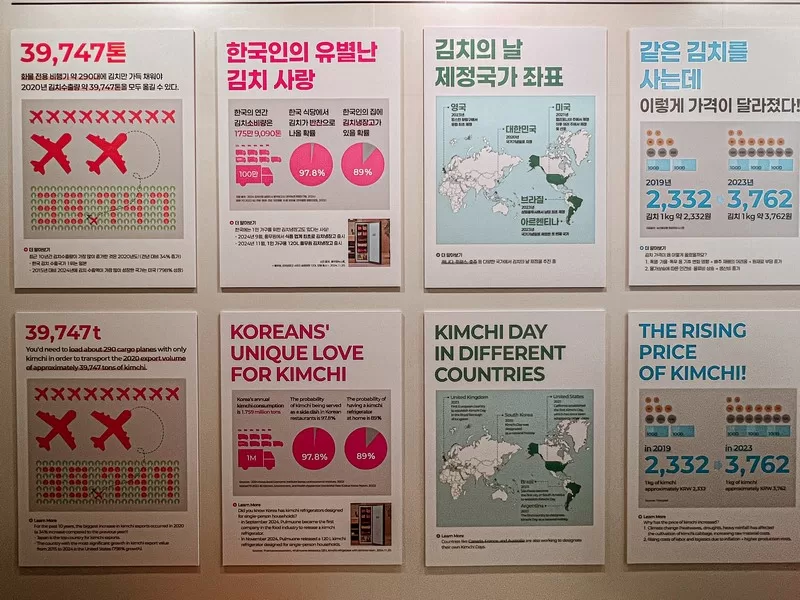
You might think kimchi is just a side dish, something that appears in a small bowl beside your rice without much ceremony. I’ve heard people say they tried kimchi once, didn’t like it, and that was that… little did they know how many kinds of kimchi there are and oh how much there is to try. Spend an hour inside Museum Kimchikan (뮤지엄 김치간) in Seoul’s Insadong neighborhood and you’ll walk out knowing what you really should know to appreciate this little side dish on the table that means so much more than people realize.
Kimchikan is Korea’s first kimchi museum, and it’s far more than a quiet gallery of glass cases. Not huge, a quick stop will do if you’re just looking, though a longer experience is ideal if you have the time to take a class, and I hope you do.
Peer through microscopes at the lactic acid bacteria that makes kimchi so good for your gut, walk through a chilled room lined with dozens of real kimchi varieties, and even discover that kimchi can be made from fruits, yes, really. It’s an interesting stop for foodies, fun for kids that like to get hands on, and interesting for anyone that wants to know why they hear “kimchi” brought up so often when they hear about Korea.
Get ready to learn about kimchi, make some, and see how many varieties there really are at this kimchi museum in Seoul:
- Basic Info
- The Name: What Is “Kimchikan”?
- A Brief History of the Museum
- What To See: Three Floors of Kimchi
- The Kimchi Making Class (And Why You Should Book One)
- Tips for Visiting With a Group
- What To Know About Korean Kimchi Culture
- FAQ
(This post contains affiliate links, which means I receive a certain percentage of a sale if you purchase after clicking at no cost to you. Thank you for your support.)
Basic Info
Address: 4th–6th Floor, Maru Art Center 35-4 Insadong-gil, Jongno-gu, Seoul (서울특별시 종로구 인사동길 35-4 인사동마루 본관 4~6층)
Directions: Take subway Line 3 to Anguk Station (안국역) and exit from Exit 6. From there, it’s about a 5-minute walk through Insadong-gil.
Hours: Tuesday – Sunday: 10:00am ~ 6:00pm
Closed: Mondays, January 1st, Lunar New Year, Chuseok, and Christmas Day
Admission:
- Adults (19+): W5,000 (4,000 won for groups of 20+)
- Youth (8–18): W3,000 (2,000 won for groups)
- Children (36 months–7 years): W2,000 (1,000 won for groups)
- Free: Infants under 36 months, ages 65+, visitors with disabilities (ID required)
Email: [email protected]
Website: kimchikan.com
The Name: What Is “Kimchikan”?
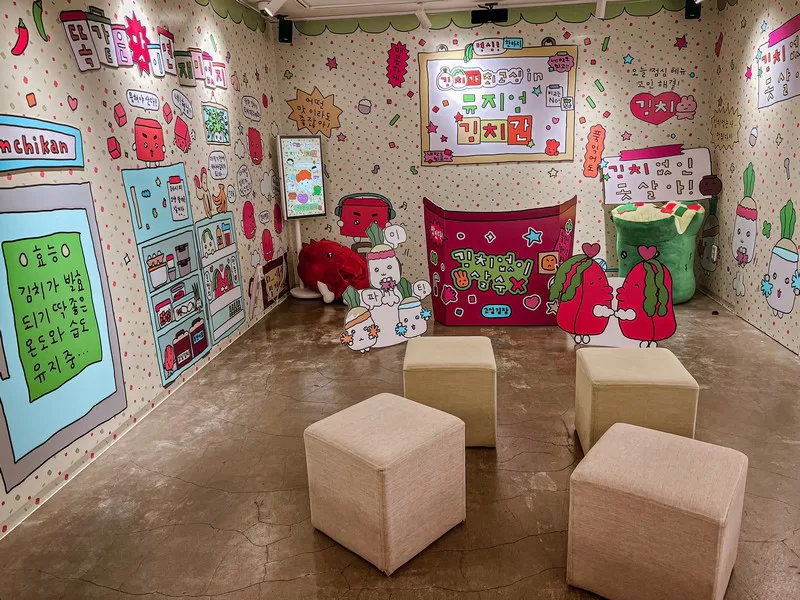
In traditional Korean society, specific words described specific places: “Chankan” was where side dishes were prepared, “Surakan” was the royal kitchen where the king’s meals were made, and “Gotkan” was the place for storing food. The museum borrowed the suffix “kan” from these words and created the name “Kimchikan”, a space where visitors can feel, experience, and enjoy kimchi in all its richness.
A Brief History of the Museum
Korea’s relationship with kimchi goes back thousands of years, but Museum Kimchikan’s own history is a fascinating story too. The museum first opened in 1986 in the Pil-dong neighborhood of Jung-gu, making it the first kimchi museum in Korea.
Pulmuone, one of Korea’s leading food companies, took over management in 1987, and by May 1988, it had moved to the Korea World Trade Center in Gangnam to welcome the flood of international visitors arriving for the Seoul Olympics, well before Psy made Gangnam famous for another reason.
Over the decades, the museum’s profile grew internationally. After the American magazine Health listed kimchi as one of the five healthiest foods in the world, outlets like BBC, CNN, and NHK were regularly featuring the museum in their coverage. In March 2015, CNN named it one of the world’s 11 best food museums. That same year, the museum relocated to its current home in Insadong and reopened under its present name, Museum Kimchikan, a fitting new identity for a museum with a very old story to tell.
What To See: Three Floors of Kimchi
The museum spans the 4th, 5th, and 6th floors of the Maru Art Center, and each level has its own personality. It’s not a large museum, easily doable in just an hour, but it’s full of information.
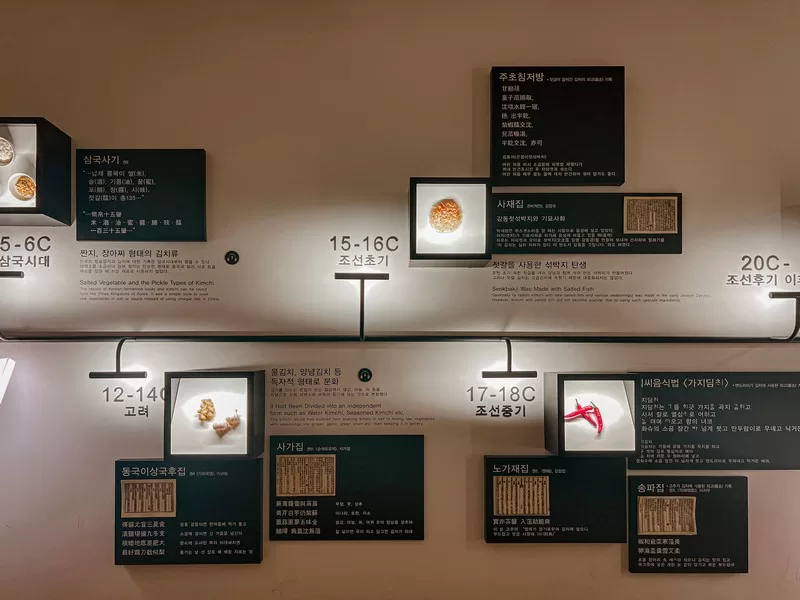
Fourth Floor: Culture and Science
This is where many visitors start to see kimchi differently. The “Scientist’s Laboratory” lets you actually look through microscopes at fermentation bacteria, the living organisms that give kimchi its signature tang and impressive health profile.
Kimchi’s fermentation creates probiotics that support gut health and digestion, alongside vitamins B6, C, and K, and research has linked regular consumption to benefits ranging from immune support to healthier cholesterol levels.
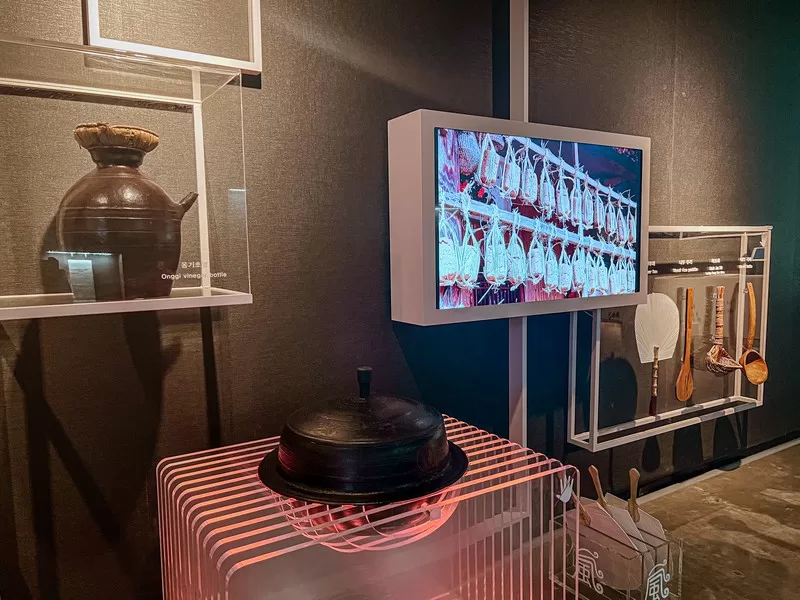
There’s also the Kimchi Madang, which features a main video reinterpreting kimchi culture, along with a digital bird’s-eye view of a traditional jangdokdae (the outdoor terrace where kimchi pots were kept).
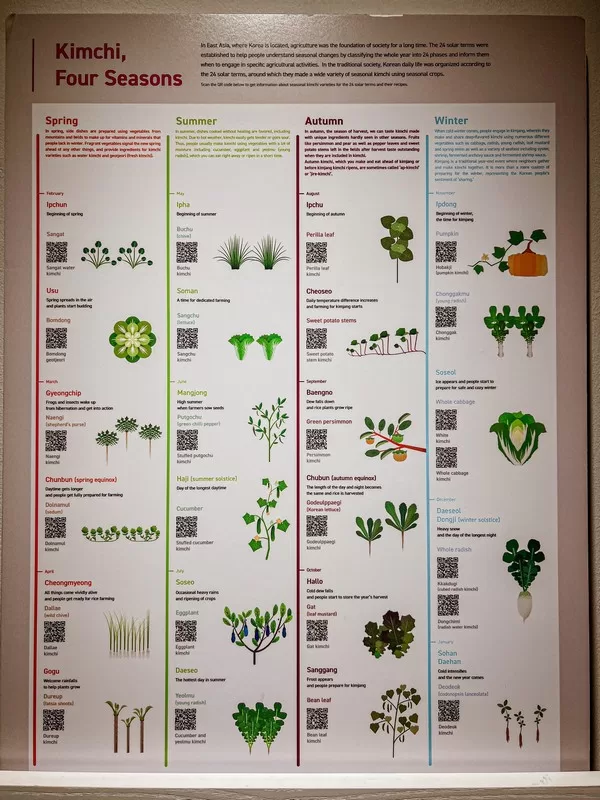
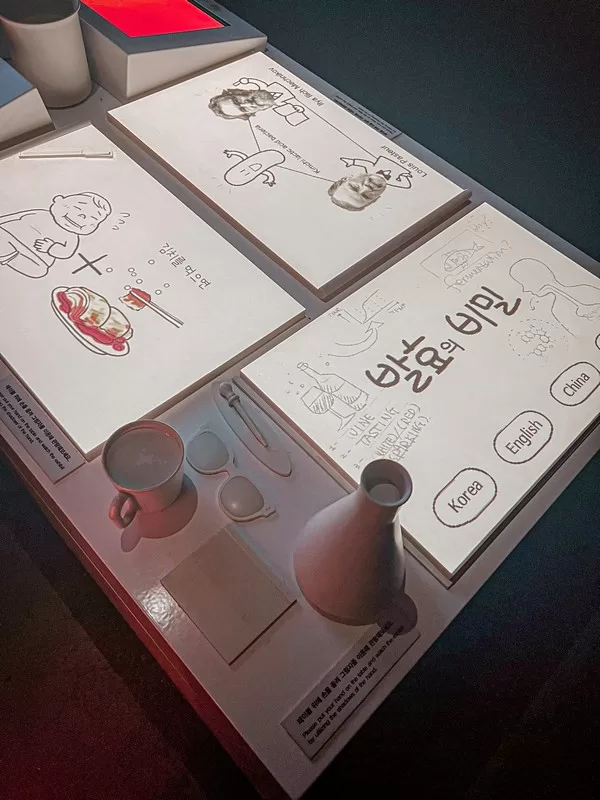
Fifth Floor: History and Seasons
The fifth floor goes deep into the origins and evolution of kimchi. The “Birth and Evolution of Kimchi” exhibit traces the dish across centuries, and the “Four Seasons of Kimchi” display shows how different kimchi varieties were traditionally made at different times of year. You might know the four main seasons of the year, but in Korea there are actually 24 seasons on the jeolgi calendar that creates a specific timeline for farming and therefore kimchi production.
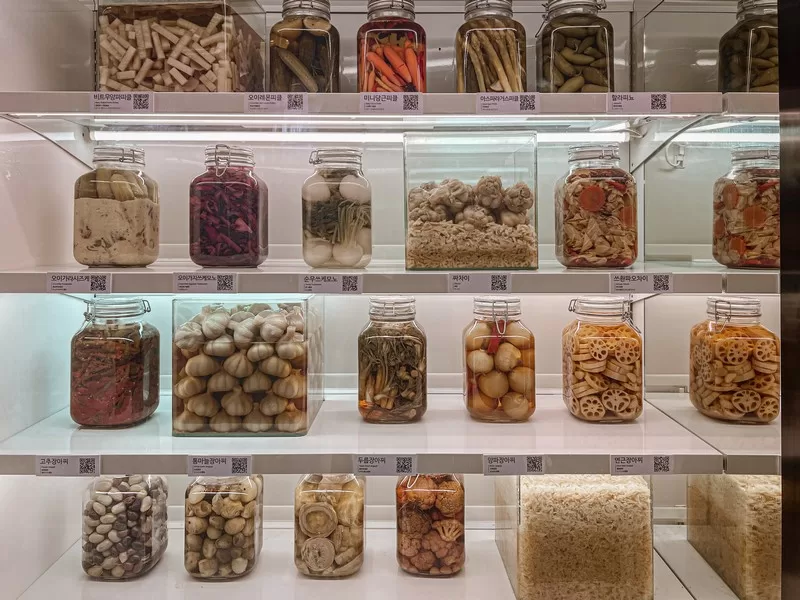
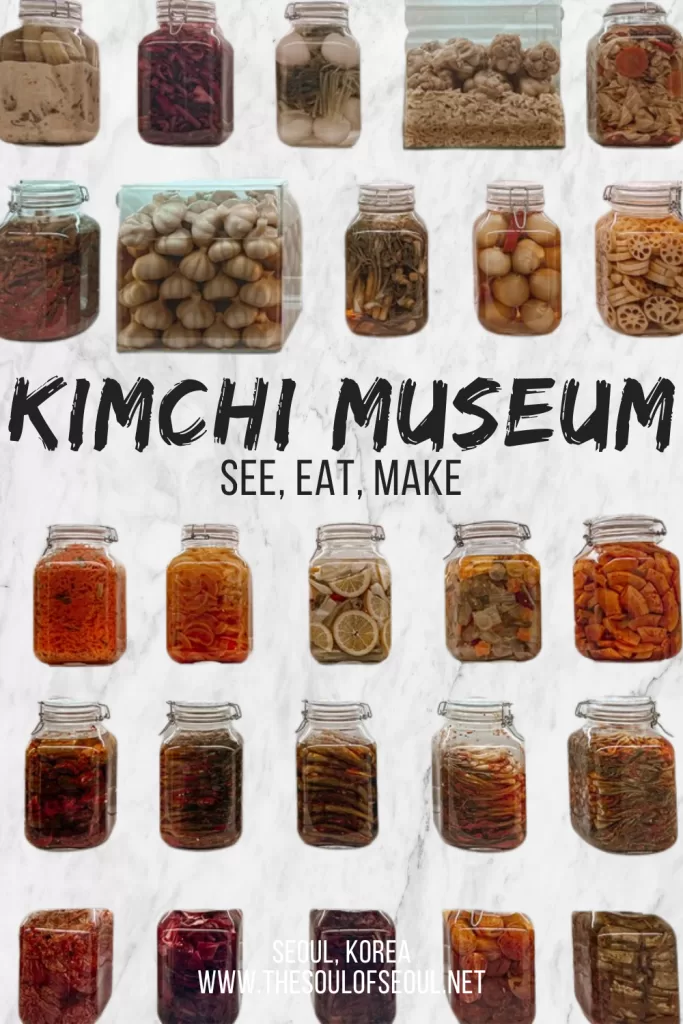
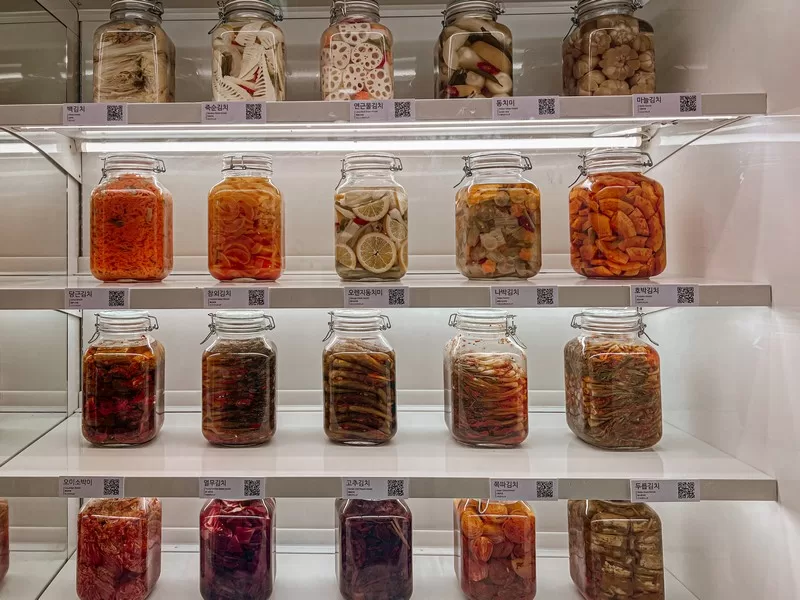
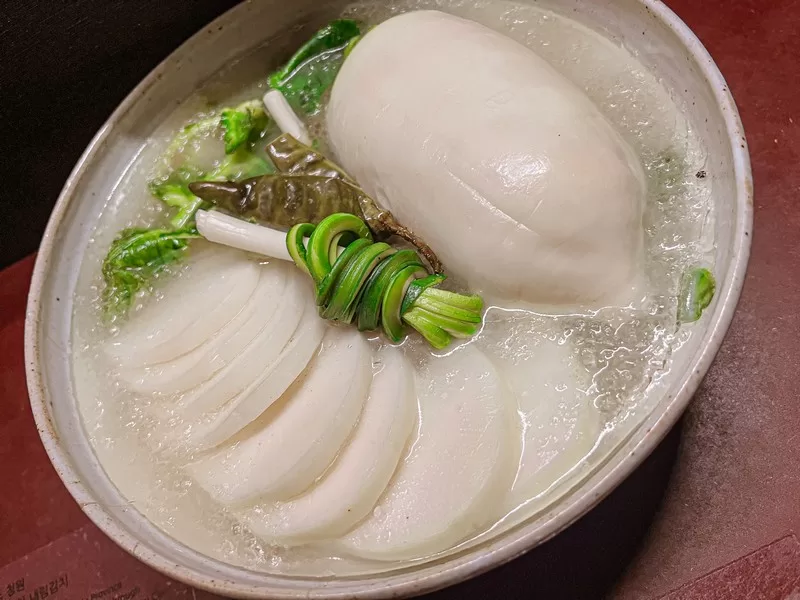
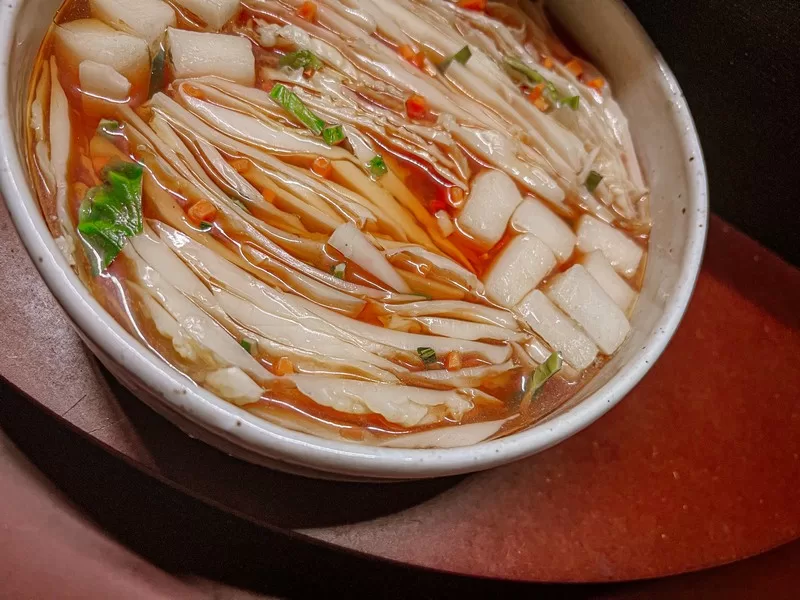
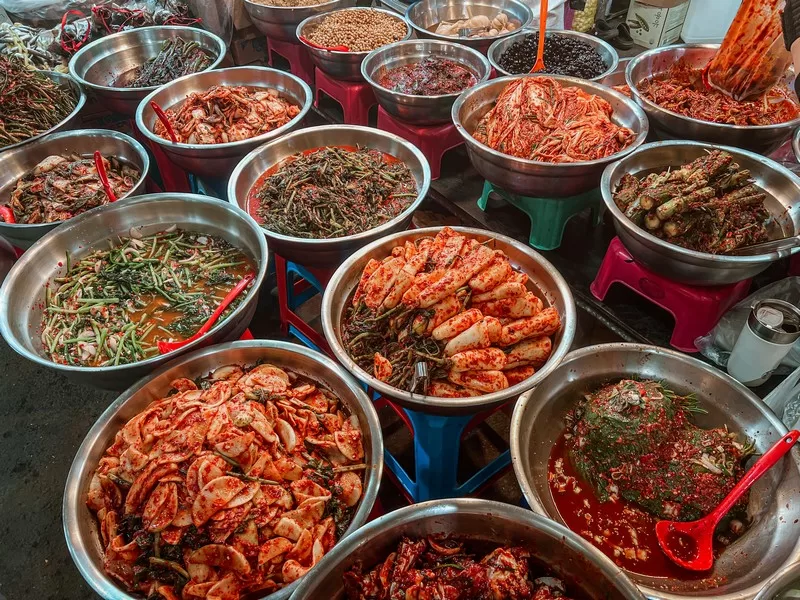
One of the most striking exhibits here is the walk-in cold room, a refrigerated space lined with rows of real, preserved kimchi varieties. Most of the tourists I meet come to Korea picturing kimchi as one thing, one spicy vibrantly red cabbage dish, but come here and you’ll really understand how many varieties of kimchi there are and how many you still need to try.
Fun fact: You can “kimchi” just about everything and this is the key that many people don’t understand. Traditionally, kimchi refers to vegetables that have been salted, seasoned, and fermented. The word itself comes from old Chinese characters meaning “salted vegetables,” but Koreans turned it into something far more soulful than what sounds so basic.
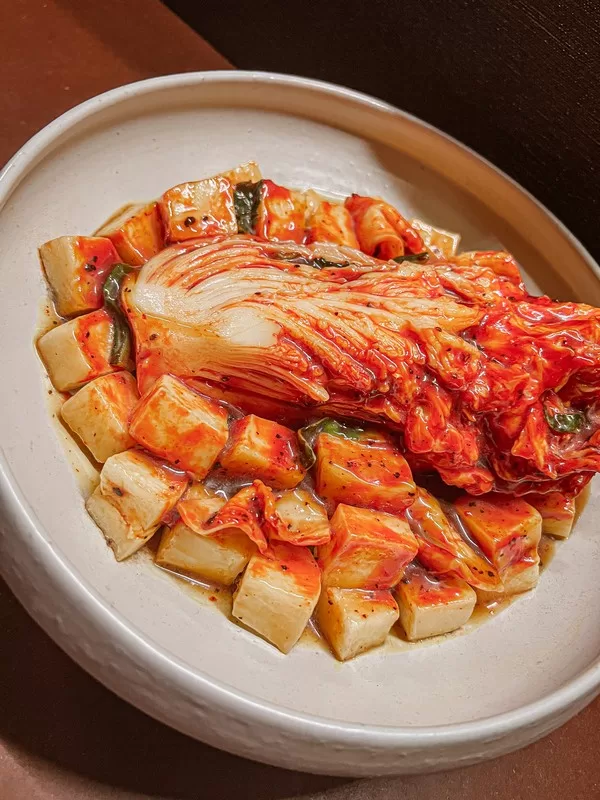
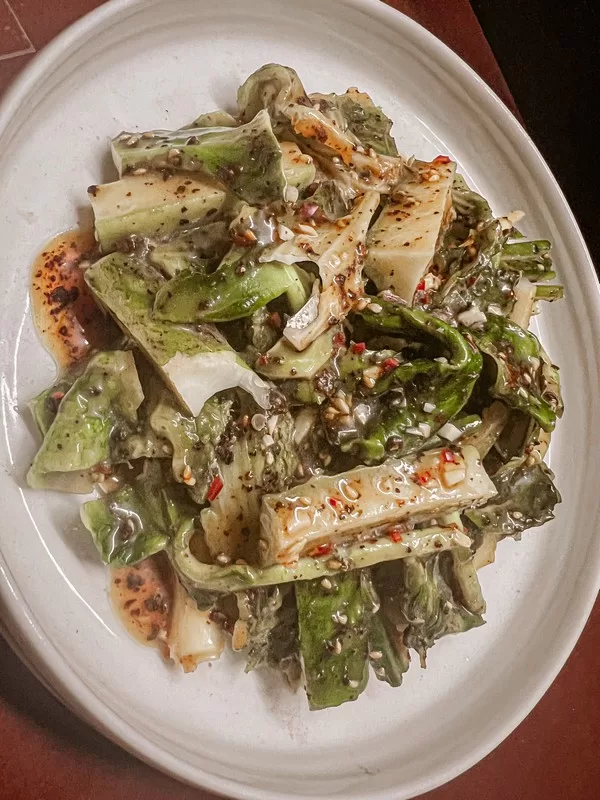
Crisp oi sobagi (stuffed cucumber kimchi), earthy pa kimchi made from green onions, mild and elegant baek kimchi with not a chili flake in sight, variety after variety, each with its own character and season. If you want to go deeper on the different kinds, I wrote a full guide to 14 kimchi varieties and what makes each one different.
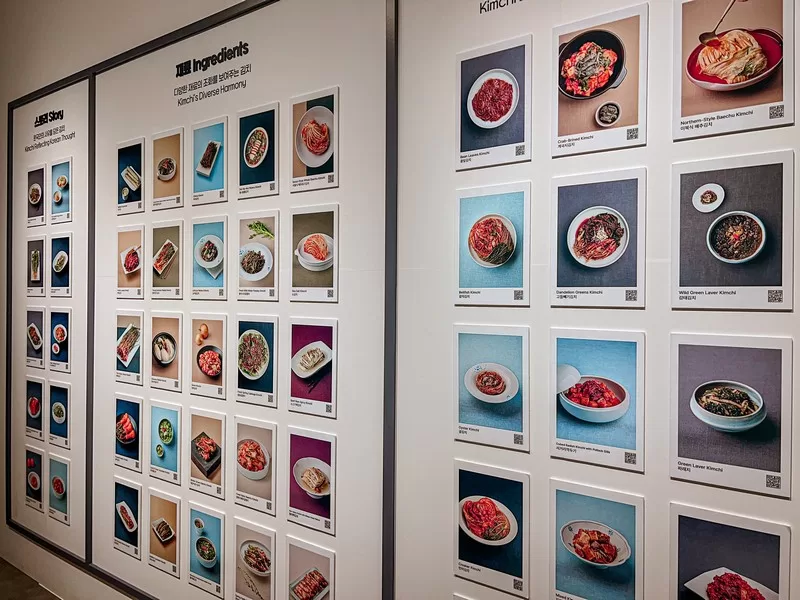
Sixth Floor: UNESCO Heritage and Hands-On Experiences
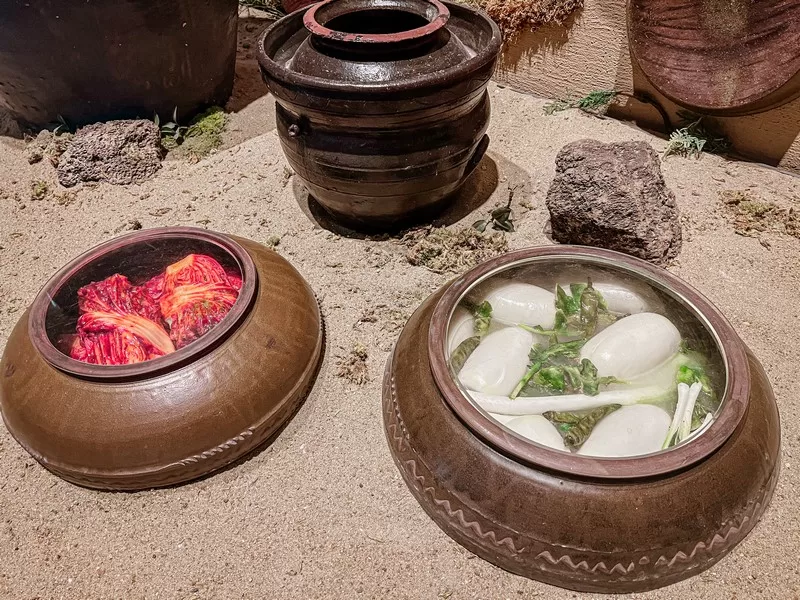
This is the heart of the museum’s experiential offerings. The sixth floor is dedicated to Kimjang, the traditional communal practice of making and sharing kimchi, which UNESCO designated as an Intangible Cultural Heritage in December 2013.
You’ll see reconstructed Kimjang scenes from the early modern period alongside the Kimchi Archive. And this is where the kimchi making class takes place, in the Kimjang Maru cooking class space, with a tasting room right nearby.
The Kimchi Making Class (And Why You Should Book One)
This was the highlight of our visit, and I’d say it’s worth planning your whole visit to Insadong around it. Museum Kimchikan offers several different programs for foreign visitors.
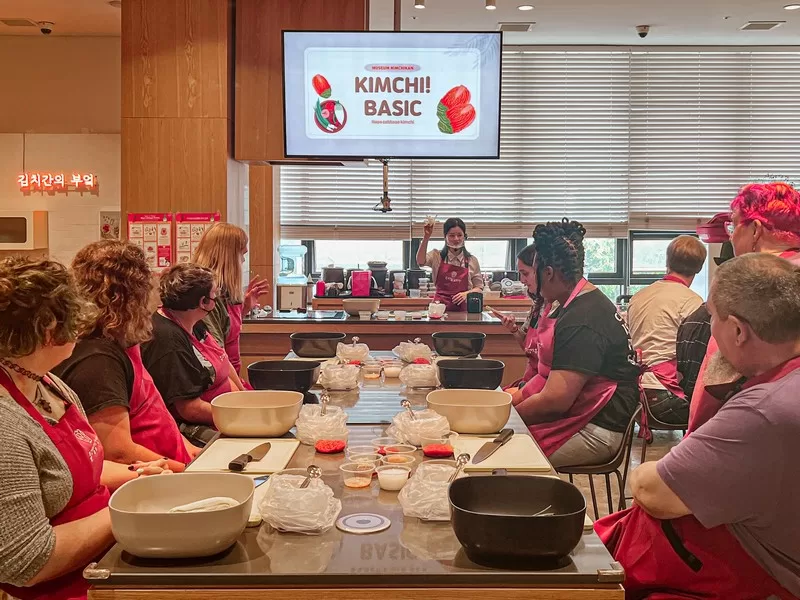
It’s Kimchi (A and B): Designed for groups of 15 to 24 people, this is the more streamlined experience. In It’s Kimchi A, an instructor demonstrates kimjang technique and you taste kimchi afterward. In It’s Kimchi B, you actually make one type yourself and take it home in a container. Sessions run Wednesday through Sunday at 10:10am, 10:50am, 2:10pm, and 2:50pm, each about 30 minutes.
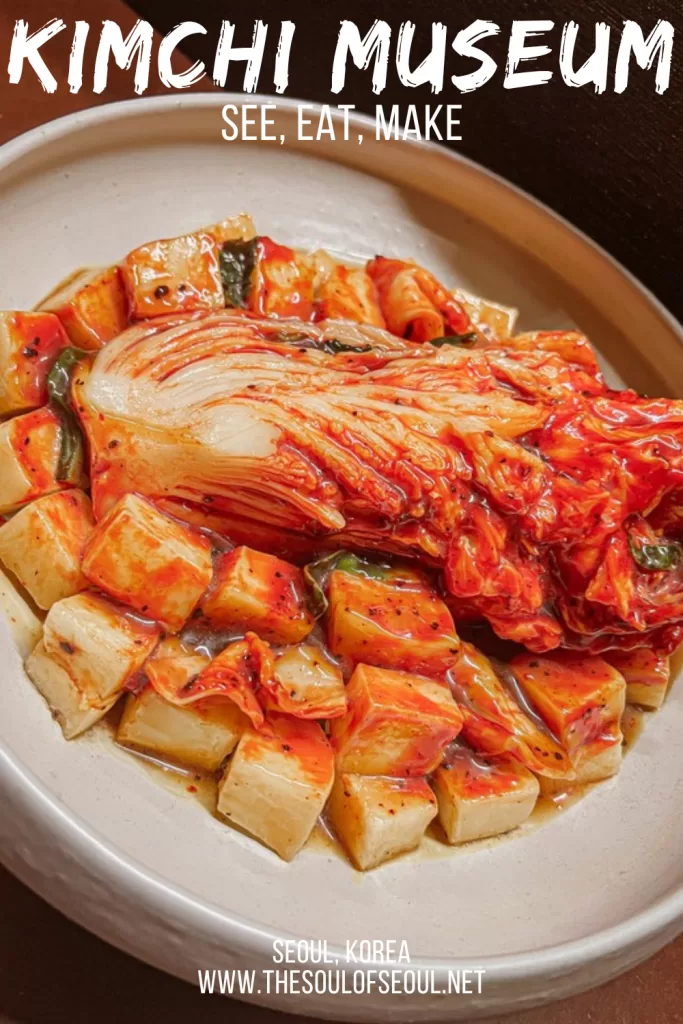
Kimchi! Basic and Kimchi! Master: These programs work for smaller groups (4 to 24 people) and go deeper. In Basic, you make cabbage kimchi (March–May and December) or kkakdugi (June–November), taste kimchi jeon (kimchi pancake), and receive a recipe card to take home.
In Master, you make two types of kimchi, taste kimchi dishes, and earn a program completion certificate alongside your recipe card. Basic runs for about 60 minutes; Master runs for about 90 minutes. Both operate Wednesday through Friday at 10:20am and 2:10pm.
A practical tip: Book in advance by emailing [email protected] or messaging via their KakaoTalk channel. Include your preferred program, date, time, and number of participants. Walk-in spots aren’t guaranteed for the classes, and they do fill up, especially on weekends.
When I brought a group for the class, the instructor was warm, patient, and passionate about sharing the process. Even people who claimed not to like kimchi were completely engaged. And there’s something quietly meaningful about making a food by hand that Koreans have been preparing for generations, it connects you to the culture in a way that no exhibit panel can.
Tips for Visiting With a Group
- Book the class ahead of time. This is the most important thing. The museum’s individual entry is easy, but the experience programs have limited spots.
- The audio guide is free: download the Qpicker app before you arrive and you’ll have English commentary for the exhibits.
- Insadong itself is worth exploring before or after your visit. Grab a cup of tea at one of the traditional tea houses nearby, or pick up a handmade souvenir from the craft shops lining the street.
- Note for vegetarians and vegans: Most traditional kimchi is made with fish sauce or salted shrimp, and the museum’s kimchi is traditional. If this is a concern for you or someone in your group, it’s always worth asking in advance.
What To Know About Korean Kimchi Culture
A few things worth knowing before you visit:
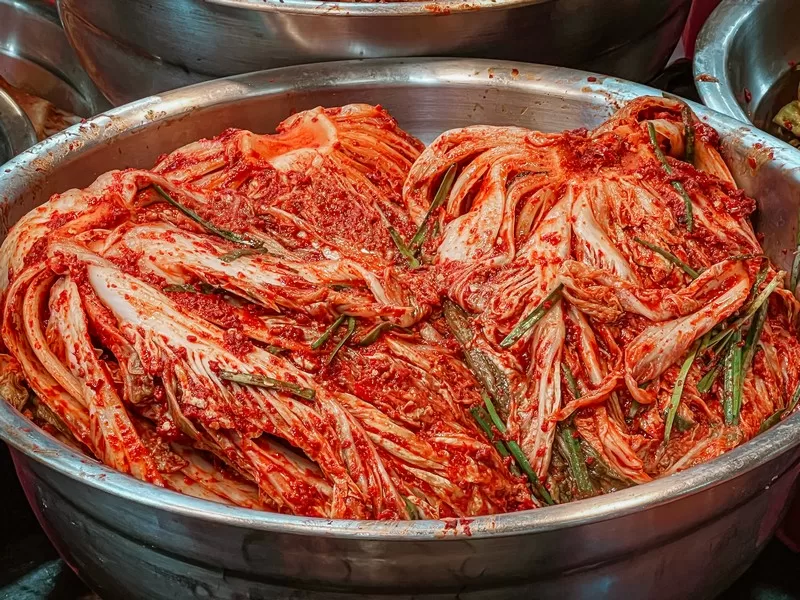
Kimjang is more than just cooking. The communal act of making kimchi together, neighbors gathering to prepare hundreds of heads of cabbage for the winter, is a tradition that has helped bind Korean communities for centuries. Families could spend days on the process: one day for brining, one for seasoning, one for packing.
UNESCO’s recognition of Kimjang in 2013 as an Intangible Cultural Heritage was a significant cultural moment, and the museum honors this beautifully on its sixth floor. If you ever get the chance to experience it more broadly, the Gwangju Kimchi Festival in autumn is one of the best places in the country to see this tradition celebrated at scale.
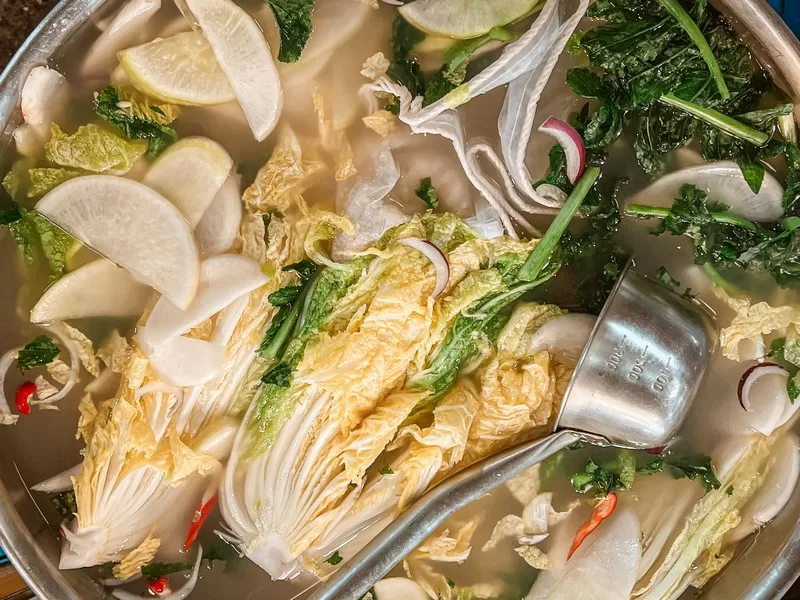
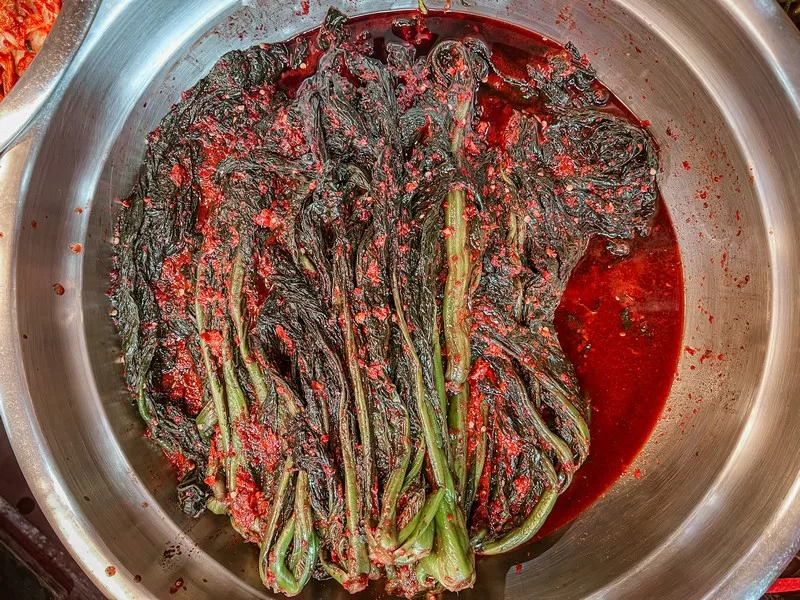
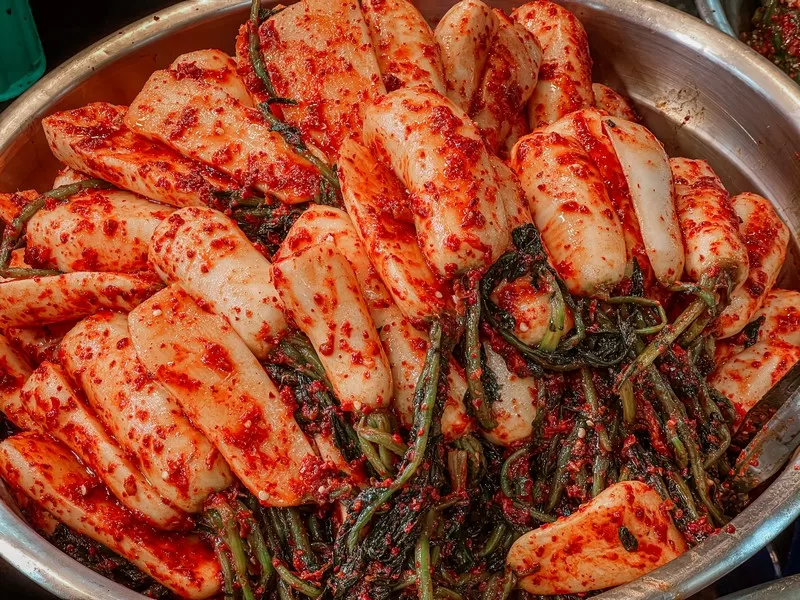
There are hundreds of types of kimchi. The red, spicy cabbage version is the one most people know, but kimchi is really a technique, vegetables (or fruit) fermented with a mix of seasonings. Ask ten Koreans where the best kimchi comes from and you’ll get at least eleven answers. Regional variations, seasonal ingredients, and family recipes mean that no two kimchi are quite the same. The museum’s walk-in cold room makes this point better than any words can.
Kimchi is a living food. The fermentation process is ongoing, which is why Korean households have specialized kimchi refrigerators to slow (but not stop) it. At the museum’s Scientist’s Laboratory, you can actually see the bacteria responsible, a surprisingly moving moment when you realize this small, humble jar of vegetables is genuinely alive.
FAQ
Do I need to book the kimchi making class in advance?
Yes, and this is the most important thing to plan ahead. The experience programs have limited spots and do fill up, particularly on weekends. Book by emailing [email protected] or messaging the Museum Kimchikan KakaoTalk channel with your preferred program, date, time, and number of participants.
How long should I spend at Museum Kimchikan?
If you’re just browsing the exhibits, an hour is enough to see everything comfortably. If you’re taking a class, plan for at least two hours, the Basic program runs about 60 minutes and the Master program runs about 90, and you’ll want time before and after to explore the exhibits and visit the souvenir shop.
Is Museum Kimchikan good for children?
Yes, genuinely. The hands-on exhibits, microscope stations, and kimchi making classes make it one of the more engaging museum experiences in Seoul for kids. Children under 36 months enter free, and the 36 months to 7 years admission is just W2,000. The kimchi making class is a particular hit, there’s something about making food with your hands that kids take to immediately.
Is there English support at Museum Kimchikan?
Yes. A free audio guide is available in English via the Qpicker app, which you can download before your visit. The kimchi experience programs for foreign visitors are also conducted with non-Korean speakers in mind, so language is not a barrier to enjoying the classes.
Can vegetarians or vegans join the kimchi making class?
Most traditional kimchi, including what is made in the classes, is prepared with fish sauce or salted shrimp as standard seasoning ingredients. If you or someone in your group has dietary restrictions, contact the museum directly before booking to ask about options.
Is Museum Kimchikan worth visiting without taking a class?
Absolutely. The exhibits across three floors cover the history, science, and culture of kimchi in a way that’s interesting rather than dry. The walk-in cold room displaying dozens of real kimchi varieties alone is worth the price of admission. That said, if your schedule allows, the class takes the experience from interesting to memorable, and you leave with kimchi you made yourself.
What is the best time of year to visit Museum Kimchikan?
The museum is open year-round, but the kimchi making class changes with the seasons. From March to May and in December you’ll make cabbage kimchi, while from June to November the focus shifts to kkakdugi (radish cube kimchi). If you have a preference, plan accordingly. Autumn is also a particularly good time to visit Seoul generally, and pairs well with a trip to the Gwangju Kimchi Festival if you want to go deep on kimchi culture.
Museum Kimchikan is interactive, it’s accessible to all ages, and it sits right in the middle of one of Seoul’s most charming neighborhoods. If you’re planning things to do in Seoul and you want something that’s educational without being dry, and hands-on without being gimmicky, this is it.
Did you like this post? PIN IT!