Korean Pregnancy Traditions and Superstitions: What to Really Expect
Last Updated on September 17, 2026
When I found out I was pregnant, excitement, joy, and a fair amount of nervousness all arrived at once. Being pregnant in Korea comes with real benefits, but being a foreigner navigating pregnancy abroad brings an entirely different set of questions on top of the usual ones. What are the benefits of giving birth in Korea? What pregnancy superstitions should I know about? Where do I even buy maternity clothes that fit? When I was pregnant, there wasn’t much English-language guidance available online, for any of it.
My expectations for pregnancy came from movies and growing up and hearing stories. The stories were more about my grandmother rushing to the hospital and getting pulled over by a police officer at 2 in the morning and other equally amusing things though and not at all about what giving birth or the preparation actually entailed. All of the stories were from people who had been in Dayton, Ohio though and getting pregnant in Korea or anywhere else for that matter can be quite different.
From Korean cultural norms to expectations and how one would prepare, so many things, we discovered, prompted a conversation rather than an easy “yes” or “no” response. Here are some things to expect, if you get pregnant and decide to have a baby in Korea.

Here’s what to expect if you find yourself pregnant and planning to give birth in Korea.
- Where To Find A Pregnancy Test In Korea
- A Quick Note About Benefits Of Giving Birth In Korea
- Samshin Halmeoni: The Goddess Behind It All
- Taegyo, Taemong, And Taemyeong: Three Words That Sound Alike But Aren’t
- “Pregnant Women First” Public Transportation Badge
- Where To Buy Maternity Clothes In Korea
- Should I Tell My Korean Employer I Am Pregnant?
- You Can Change Doctors many… many times.
- Enforcing English During Doctors Visits
- Korean Medical Terms & Jargon To Use When Pregnant
- Ultrasounds Galore
- People Won’t Rub My Belly
- No Lamaze Classes
- Korean Superstitions About Pregnancy
- Exercising While Pregnant
- FAQ
This piece is the traditions-and-culture half of the story. If you want the benefits, leave, and paperwork side in full, that lives over in Having a Baby in Korea as a Foreigner: A Resident’s Guide to Benefits, Leave, and Paperwork. Consider this article the “what will actually surprise me” companion to that one.
(This post contains affiliate links, which means I receive a certain percentage of a sale if you purchase after clicking at no cost to you. Thank you for your support.)
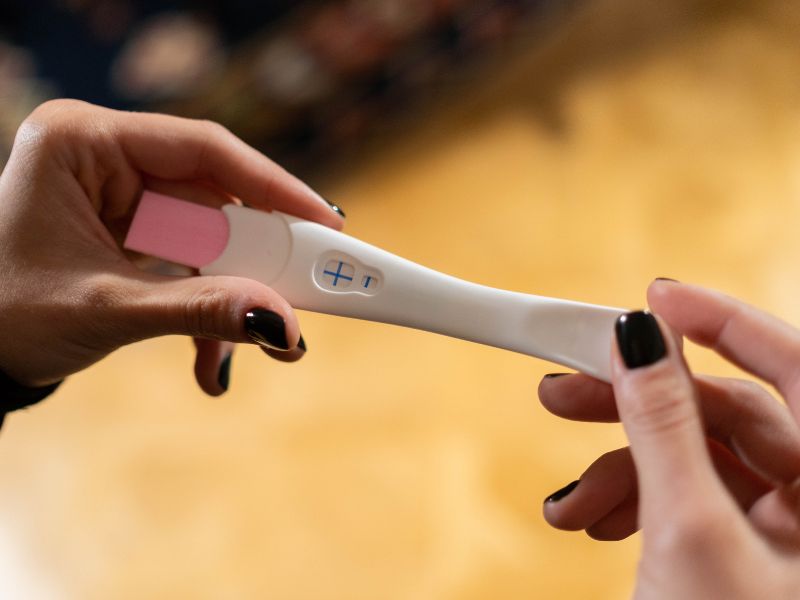
Where To Find A Pregnancy Test In Korea
Pregnancy tests can be found easily at any pharmacy in Korea. In my case, not really knowing what to ask for, I said “imsin test (임신 테스트) juseyo (주세요)” meaning “pregnancy test please” and got the test no problem. Just walk in and ask and you’ll be good to go.
Pharmacies can be found easily as well with at least one on every block from my experience. Don’t be nervous to ask. If you don’t ask, you’ll never know and it’s always better to know something rather than not know it.
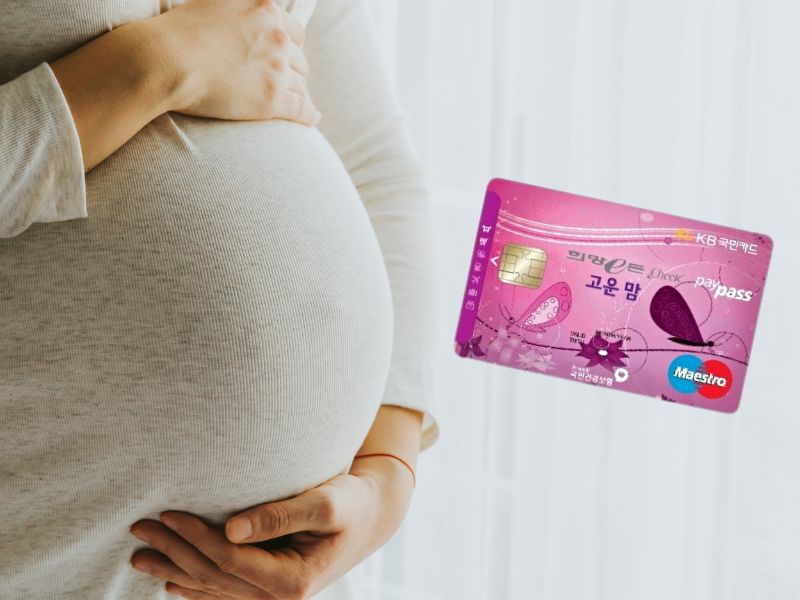
A Quick Note About Benefits Of Giving Birth In Korea
Because the birth rate is so low in Korea, the government works hard to make things easier for families however it can, and one piece of that is financial. The National Happiness Card (국민행복카드) is available to pregnant women enrolled in National Health Insurance, foreign and Korean alike, and is currently worth ₩1,000,000 for a single pregnancy and ₩1,400,000 for multiples (these figures do shift with government notices, so treat this as a starting point). Your local community health center (보건소) is also worth a visit early in pregnancy, every district has one, ours was the Mapo-gu Healthcare Center (마포구 보건소), and they offer free iron and vitamin supplements, blood tests, and classes on everything from nutrition to breastfeeding that you’d otherwise pay for at a regular doctor.
I’ve gone deep on both of these elsewhere so I won’t repeat myself here: the full application walkthrough for the card is in How To Get The National Happiness Card For Pregnant Women In Korea, and the complete rundown of maternity leave, vouchers, registration, and everything else logistical is in the family guide linked above. This article is about the parts nobody puts in a benefits spreadsheet.
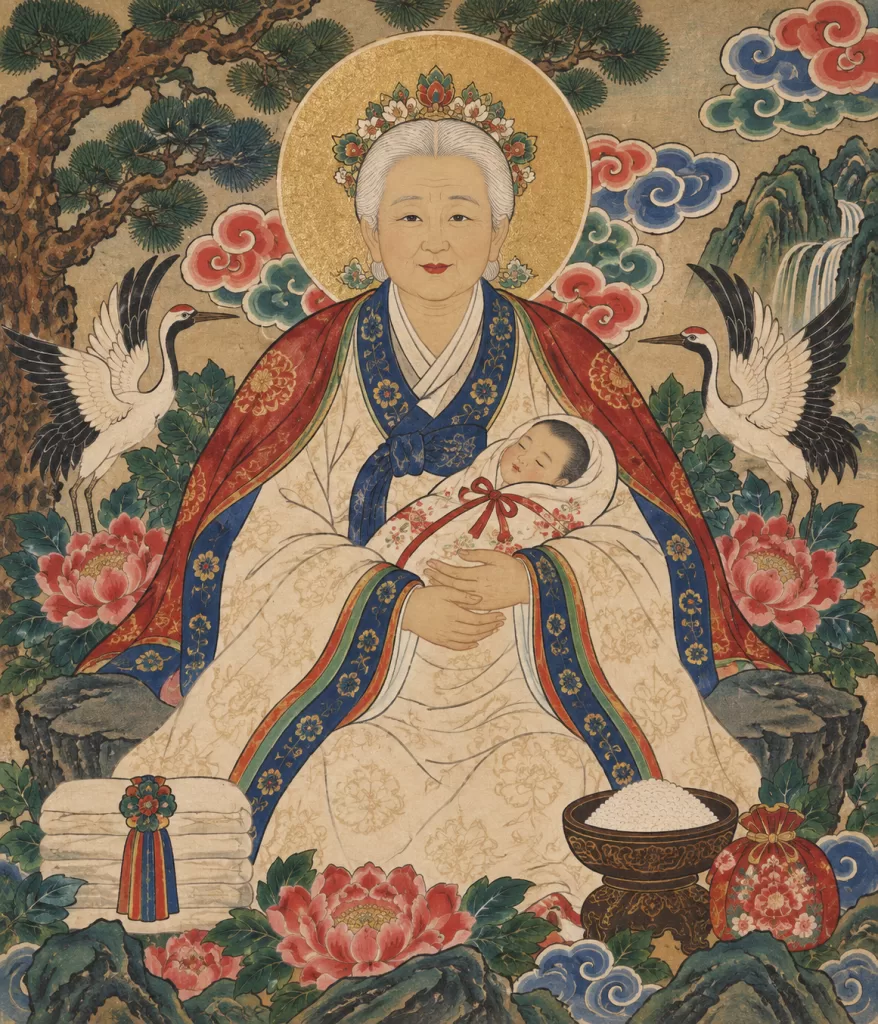
Samshin Halmeoni: The Goddess Behind It All
If you’re around Korean grandparents or older relatives for long enough during a pregnancy, you’ll eventually hear someone mention Samshin Halmoni (삼신할머니). She is the traditional guardian spirit of pregnancy, childbirth, and early childhood in Korean folk belief. Her name breaks down roughly to “grandmother of the three spirits”.
Why three? In Korean tradition, three carries deep symbolic weight, and here it’s generally read as standing for the three stages of a new life: conception, birth, and growth. Depending on the region, Samshin Halmoni is sometimes described as a single goddess handling all three, and sometimes as three sister-spirits, each responsible for one stage. She’s credited with far more than just “delivering” babies though. In the older belief system, she’s the one who grants a couple a child in the first place, watches over a safe delivery, and has a hand in the child’s health, luck, and even lifespan afterward.
Her origin stories vary by region, which is quite interesting to get into. On Jeju Island, she appears as Samseung Halmang, tied to a myth about a daughter of the Dragon King of the East Sea, and locked in an old rivalry with a rival spirit said to threaten children rather than protect them. In parts of the northeast, she’s described as three sister-goddesses splitting the duties of conception, birth, and upbringing between them. In the Seoul and Gyeonggi region, she’s more often a single household spirit, said to reside in a specific object in the home called a samsin-danji, a jar or pot kept as her physical presence, watching over the whole family rather than just the pregnancy.
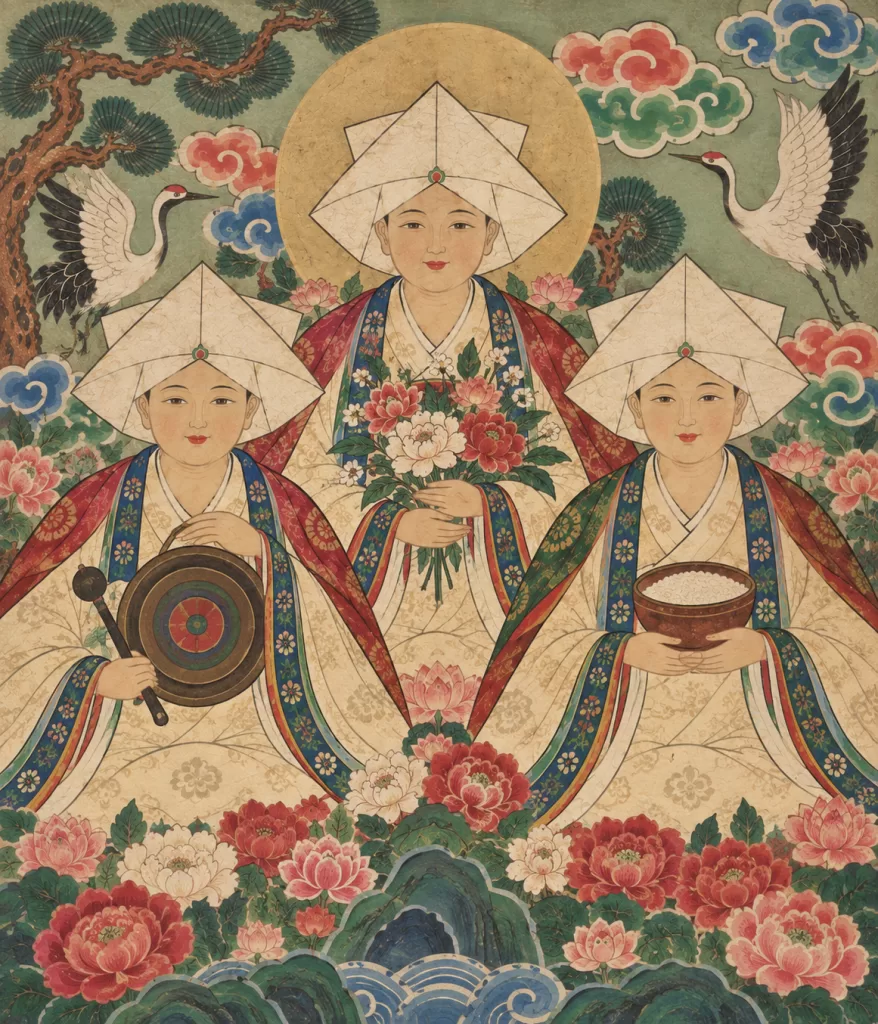
Older generations in Korea would traditionally thank Samshin Halmoni after a safe birth, and some folk practices around pregnancy and postpartum recovery, like the belief that a new mother’s room and belongings shouldn’t be disturbed too soon, trace back to the idea that she’s still present and looking after mother and baby in those first weeks.
In the traditional belief system, her watch over a child isn’t indefinite: she’s generally understood to protect a child from birth up through around age seven, at which point responsibility is said to pass to a different deity, the Seven Stars (Chilseong). You’ll find her mentioned less by younger Koreans today, more as a cultural memory than an active practice, but it’s a piece of context if you want to understand why certain older relatives treat pregnancy and early infancy with a level of ritual care that can otherwise seem to come out of nowhere.
One quick disambiguation detail because Korean has another similar-sounding spirit that has nothing to do with pregnancy: Sanshin (산신), the mountain spirit, is a completely different figure who shows up mainly around the first birthday celebration rather than pregnancy itself. I cover Sanshin’s role properly in Korean First Birthday (Doljanchi): Complete Guide to Traditions, Doljabi and Hanbok.
Taegyo, Taemong, And Taemyeong: Three Words That Sound Alike But Aren’t
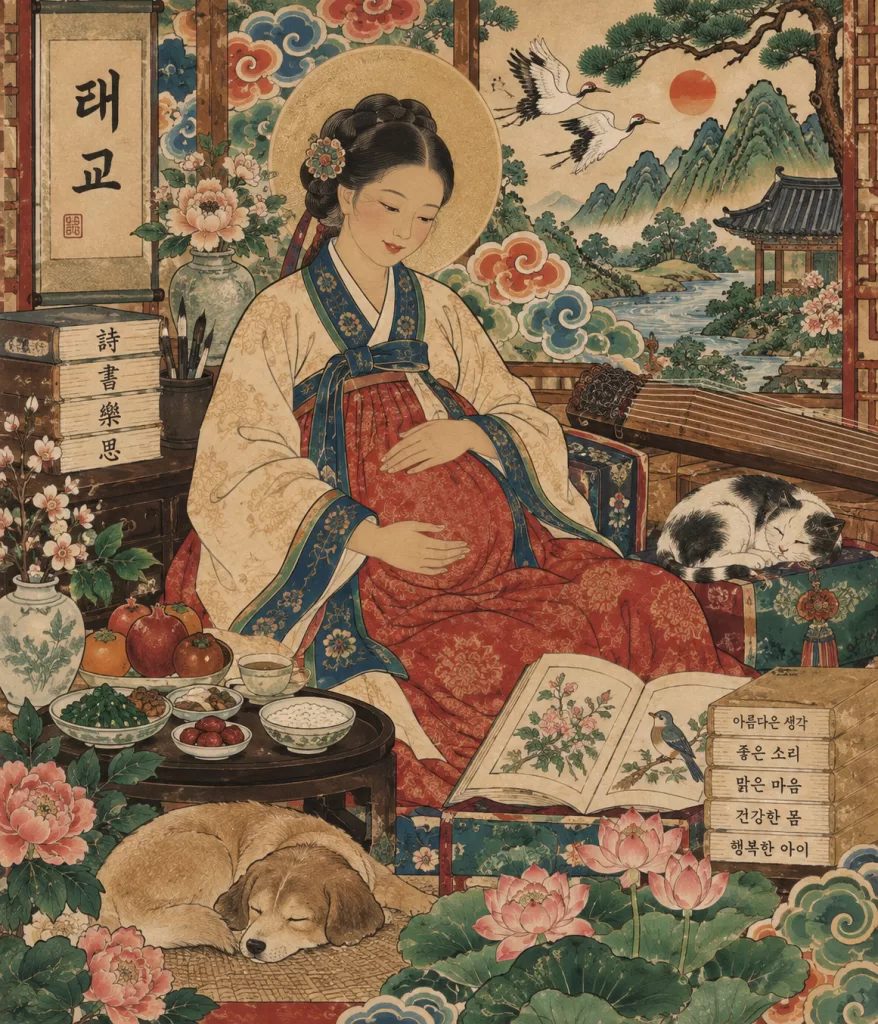
This is where I get the most confused questions from readers, understandably, because these three words are all built around the same root sound and all relate to pregnancy, but they mean genuinely different things.
| Term | Hangul | What it means | When you’ll hear it |
|---|---|---|---|
| Taegyo | 태교 | The broader practice of prenatal conduct and care | Throughout the whole pregnancy, in nearly every Korean pregnancy book |
| Taemong | 태몽 | A symbolic “conception dream” | Usually right around when a pregnancy is discovered or announced |
| Taemyeong | 태명 | A pet nickname for the baby before birth | As soon as you’re comfortable sharing the news |
Taegyo (태교)
Taegyo is the idea that what a pregnant woman does, sees, hears, eats, and even thinks during pregnancy shapes the baby she’s carrying, and that she, and often the people around her, should act accordingly. This isn’t a single ritual, but it’s more of an entire mindset during pregnancy. I was pregnant during the Sewol disaster in Korea when 250 children died due to greed. Last text messages, videos, and more began to spread online and after I began to sob my husband made sure everything was turned off for days because of his belief in taegyo.
The concept isn’t originally Korean. It traces back to classical Chinese texts, most notably an account in Liu Xiang’s Biographies of Exemplary Women, which describes a pregnant woman avoiding improper sitting positions, questionable food, and unsettling sights and sounds, and instead keeping calm, listening to good words, and behaving virtuously. In Korea,this belief took a more systematic form during the Joseon dynasty, when a scholar named Lady Sajudang wrote Taegyosingi, a handbook on the subject, arguing that the education a child receives for ten months in the womb matters more than the ten years of schooling that follow it. One of Korea’s most famous historical mothers, Shin Saimdang, mother of the influential scholar Yi Yi, is still cited today as someone who practiced taegyo with unusual discipline through seven pregnancies.
The old taegyo texts are very specific: Don’t eat oddly shaped or spoiled food, don’t sit crookedly or lie on your side, don’t look at ugly or violent things, don’t listen to gossip, arguing, or crude language, and instead surround yourself with beautiful objects, calm company, and good words.
In practice today, taegyo shows up in much gentler, more mainstream forms: Playing calm music for the baby, reading aloud, avoiding stressful situations where you reasonably can, and generally being told, kindly or not, to “think good thoughts” for the baby’s sake. If a Korean friend, coworker, or mother-in-law gently steers you away from something during pregnancy that seems to have nothing to do with medicine, there’s a decent chance taegyo is the reasoning underneath it.
Taemong (태몽)
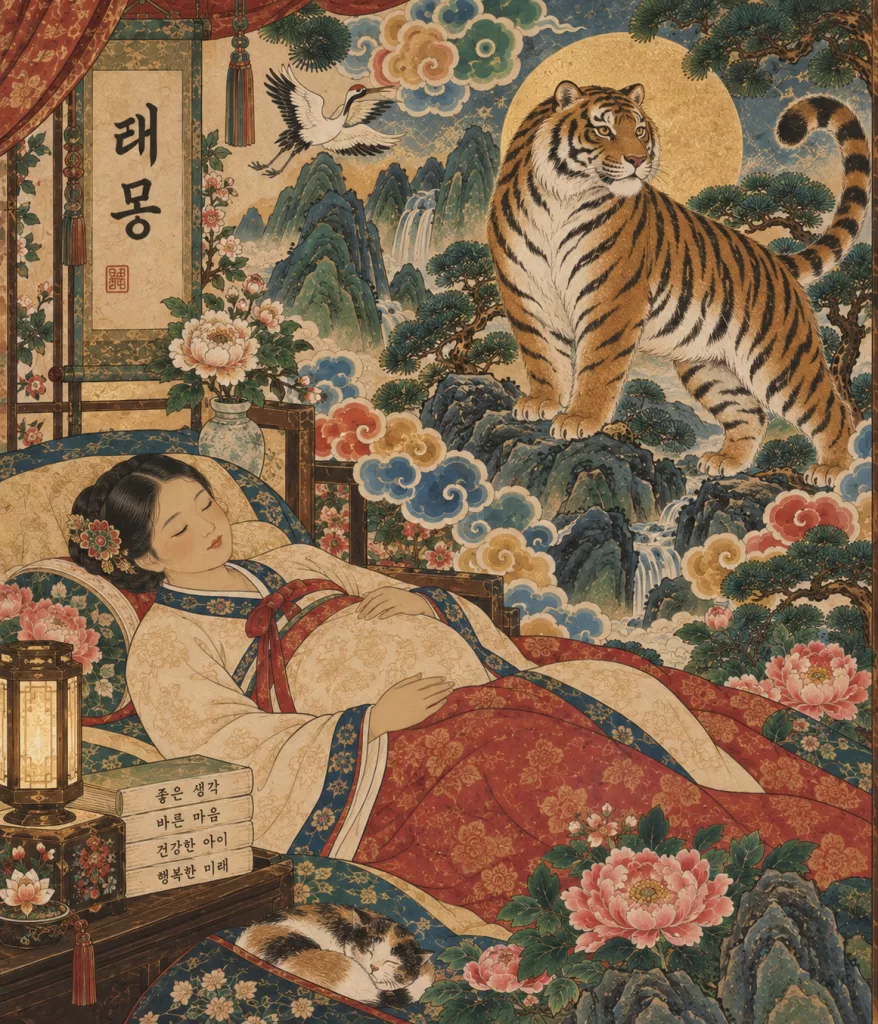
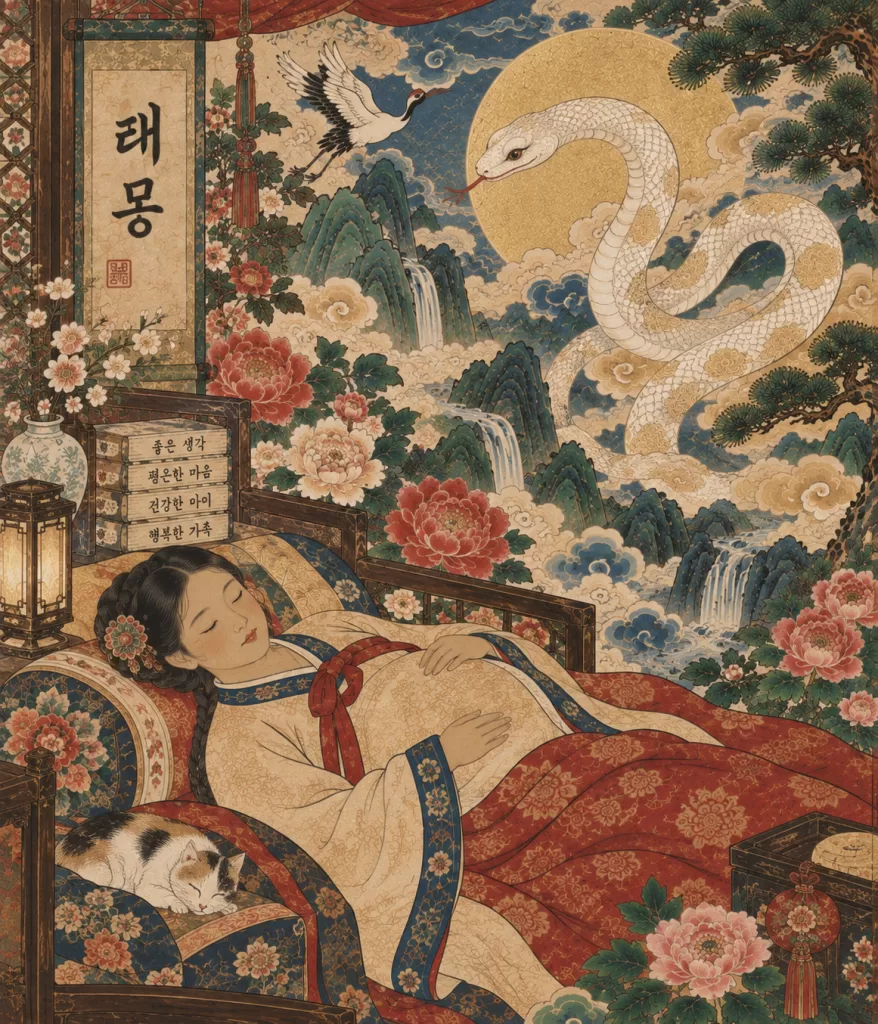
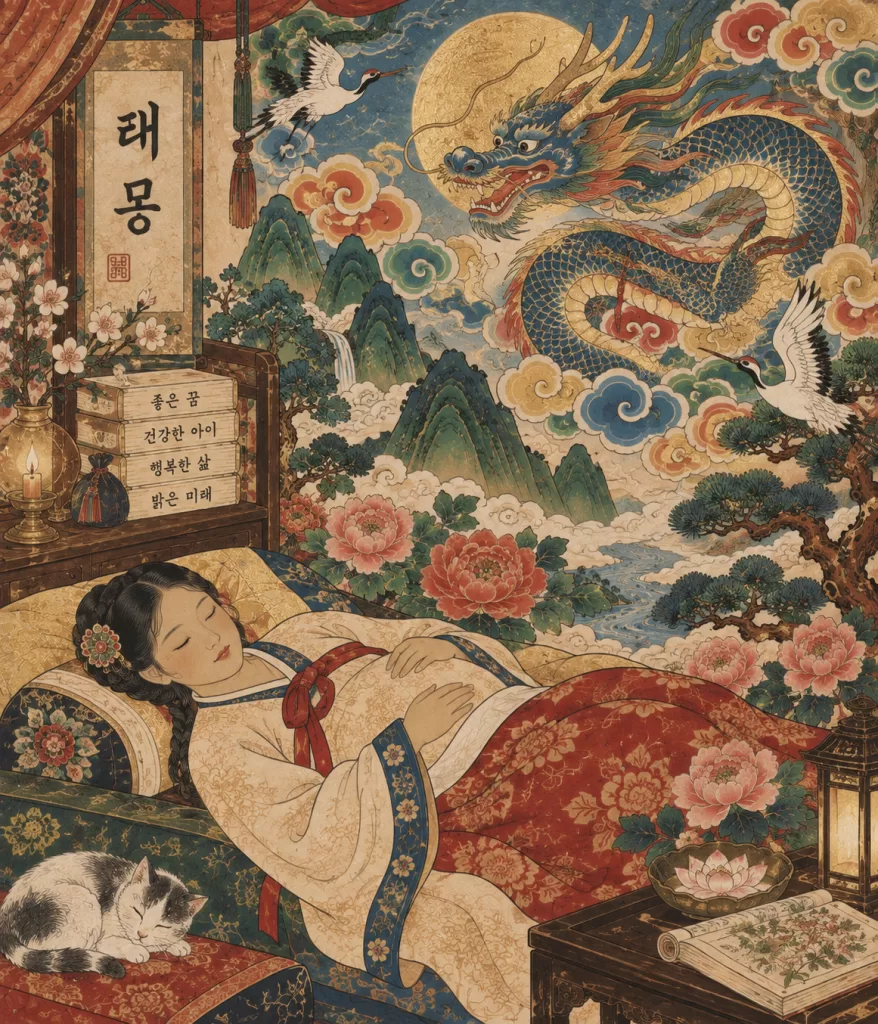
It’s pretty standard to wait until the 12 week mark in the west to let people know the news of a pregnancy and once the news was out, I got a lot of questions concerning my dreams or what I had dreamed that told me I was pregnant. In Korea, traditionally a woman, sister, mother or mother-in-law will have a dream that indicates that someone is pregnant and the symbolism in the dream will indicate the gender of the child to be. These conception dreams are known as taemong (태몽). Here are other Korean superstitions and beliefs if you’re interested.
My sister-in-law called before we knew we were pregnant and asked my husband if we were. She did not know that we had decided to try and he did not want to tell her that we were. The dream had told her that someone in our family was pregnant and she was sure of it. Just days later, we tested positive and lo and behold her dream had come true. She had the first dream concerning our pregnancy.
While I was pregnant, I had a very vivid dream of a gigantic elephant. Elephants are large, but this was even larger. My husband told my mother-in-law who straight away looked up the possible meanings. Turns out our daughter will achieve great success and abundance in her life. I do hope so.
Traditional Dream Symbols
- For a boy: there will be a dream with a tiger, dragon, a fruit with a seed in it or a strong muscular animal.
- For a girl: there will be a dream with a bird, snake, ring or a flower.
Taemyeong (태명)
A question that I found a bit weird was what my baby’s nickname was. We didn’t have one… so… fetus? Bun in the oven? Weird thing inside me that wakes me up at night? Koreans will give their bun in the oven a nickname or a taemyeong (태명). It’s a name that the Korean mums come up with to call their little thing while it’s inside. This is NOT the name they’ll ultimately give their child generally, though some families do become attached to it.
For us, we never chose one and while we got some blank looks in response when we said that at times, we were fine not having a nickname as we were considering what the ultimate name would be.
“Pregnant Women First” Public Transportation Badge
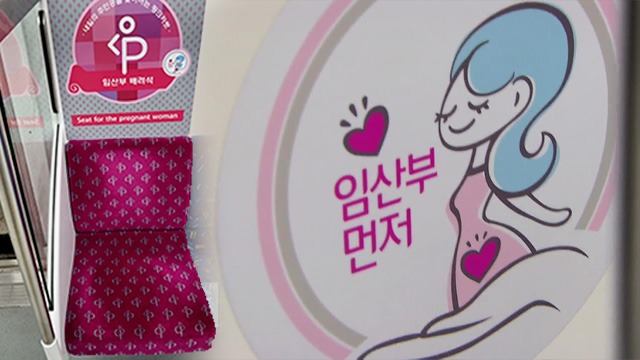
After it is confirmed you are indeed pregnant, the local district office will provide you with an Pregnant Women First (임산부먼저) badge. This is to help women who may not look pregnant but are going through the trials and tribulations of pregnancy to get seats easily on public transportation options without confrontation. If you are pregnant and take the subway or bus a lot, make sure to get this badge and display it proudly on your bag or jacket.
Where To Buy Maternity Clothes In Korea
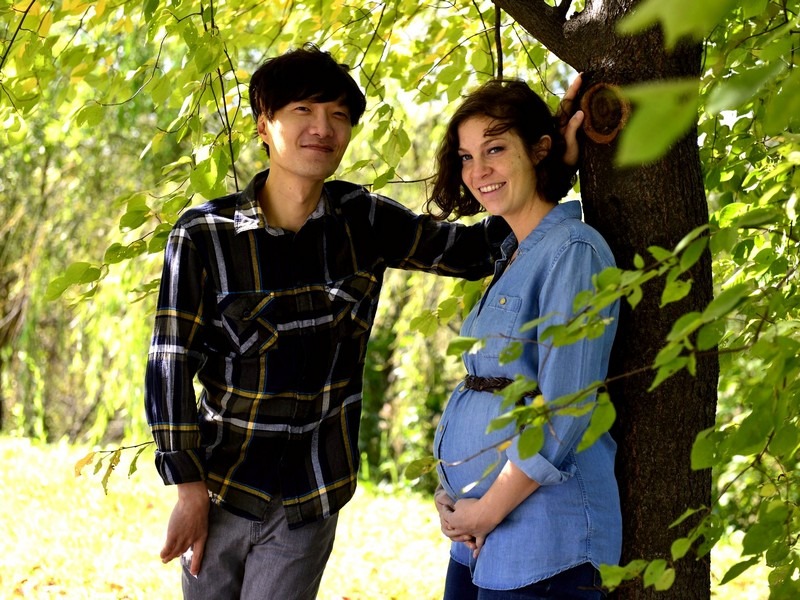
To be honest, I never did find the maternity pants here in Korea. I noticed that many Korean women just opted to wear large shapeless dresses and leggings. And that’s definitely one option, but I preferred to wear some pants when I was out and about and working. Ultimately, I got some great pants online and then got some other things while I was home.
For some ideas if you can’t find things in Korea like me, ASOS.com has a great and very stylish maternity wear section and ships to Korea. Another thing to look into, especially if you’ll be buying various products from multiple vendors back home, look into using a mail forwarding service.

Should I Tell My Korean Employer I Am Pregnant?
In general, Koreans seem to be under the impression that a pregnant woman cannot work. Coming from the west where women continue working and my entire life hearing the story of how my mother worked up until the day of my birth, I naturally found this insulting.
As a freelancer that takes odd jobs, I found it better not to mention that I was pregnant before I showed up for jobs. Once I got to the location and they saw my belly well of course management showed some hesitation but, I persisted and explained that westerners and Koreans have a different idea of what we can and can’t do during pregnancy and I wouldn’t have taken the job if I thought I couldn’t fulfill the expectations of my employers.

Of course maternity leave exists in the States but when I say that pregnant women don’t work in Korea, I mean from the start. Two of my pregnant Korean friends immediately took off from work as soon as they found out they were pregnant. This is not always the case, but it’s not uncommon either. My point, don’t be surprised when your Korean friends, family or co-workers express surprise or shock that you wish to continue working, if that is indeed what you wish to do.
Also on this note, though maternity leave exists under law here in Korea and you can get up to three months, you will most likely have to fight for it. Read up on your rights and know what they are going in to any meeting with your employer who will most likely not know what your rights are, due to women often quitting jobs when they become pregnant, or they will try to tell you you cannot get maternity leave, but you can. I would recommend knowing your rights concerning this and thinking about what you plan to do before you even bring up the topic of being pregnant at work. Be prepared. (For the full legal detail on leave length and pay, that’s in the family guide.)
You can change doctors many… many times.
There are hospitals and birthing centers all over this city, if you live in Seoul, and though they operate at generally the same level, though some will be more expensive than others, you need to find the right place for you. Don’t be worried about locking in a doctor early. You can switch as many times as you’d like and you can do it until quite late in the pregnancy.
We went from my gynecologist to a doctor in a big hospital and finally settled on a doctor in a smaller birthing center near our home with no issues switching. You may think that English services will be far better at the bigger hospitals and thus head towards those, but they will also be more expensive. Doctors at many of the birthing centers we visited spoke English just fine. They were shy at first, but who isn’t when speaking another language? Take the time to look around, compare places and find something and someone that is right for you.

Enforcing English During Doctors Visits
This goes mostly for the mixed couples in Korea. My husband, who is Korean, attended every appointment with me. The doctor we started with had been my gynecologist and spoke English and Korean and never missed a beat in switching between the two so that we were both in the loop. Ultimately we decided to go a different direction, and a closer one, later.
With the second two doctors that we had, I had to be quite strict about the doctor using English and Korean during appointments rather than relying on my husband to interpret. I didn’t want the doctors relying on him to tell me everything. I certainly wouldn’t be speaking Korean when I’m going through labor, I thought. I could already foresee that issue cropping up.
Doctor: (Korean) How have you been feeling? Any pain or anything you want to talk about first?
Me: (English) Do you speak English?
Doctor: (Korean) Yes, but only a little bit. Since your husband came, he can translate if you don’t understand, right?
Me: (English) I would prefer if you spoke English. My husband isn’t an interpreter, he is my husband. You can imagine the day that I’m giving birth, he isn’t going to want to be interpreting everything as well as taking in the birth.
Doctor: (Korean) Ah, yes. I’m not very good in English though so it may be better if I speak Korean and you can ask questions when you don’t understand something.
Me: (English) Let’s try everything in English and see how it goes.
Doctor: (English) Oh… okay.
Ultimately, she did a great job. I understood everything she said and she was happy that I had written down any questions I had as it was easier for her to read them and answer them for me. I had to use my strict teacher’s voice, but at the end I told her she did a great job and we’d love to keep her as our doctor. Don’t be scared to speak up and explain your needs. Of course Korean would be easier for the Korean doctors, but you will be going through months of a very new and different experience so find a doctor that is comfortable and willing to speak English. They exist.


Korean Medical Terms & Jargon To Use When Pregnant
While many doctors have studied abroad and can speak English, their bedside manner might be highly lacking. Where doctors in the States understand that the general public is scared by hospital jargon and big medical terms, doctors in Korea who have studied abroad are not so aware of this and may not know how to dumb down information. Statements may be made without explanations. As this was my first time becoming pregnant, I had a lot of questions and even more when I realized the doctors were going through their information with no regard for the audience, aka me, and my lack of knowledge.
If you have a question, ask away and remember, like my grandmother says, no question is a dumb question. After the first two visits, my doctor was so used to me coming in with a list of questions that instead of me butting in to get them out, she started asking me if I had questions or needed more information on something specific. Our meetings were longer than the other couples we saw go in and out, but she made time for me to ask my questions and I am thankful that she became aware of my needs.
Ultrasounds Galore
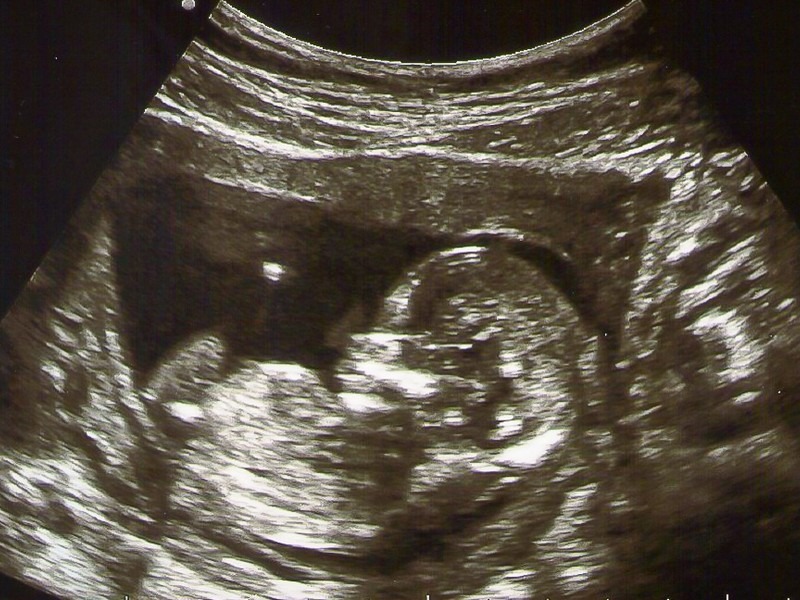
The scheduled check-ups and tests are pretty similar to that of the US. The one thing that stands out during visits in Korea is the abundance of ultrasounds you’re granted. While my sister who was pregnant at the same time had just two ultrasounds and didn’t have anymore after her 20th week, in Korea you will have an ultrasound at just about every visit. Don’t fret about the cost, it’s just part of the deal.
The doctors here convinced me it would do no harm and why wouldn’t you want to see how the baby is progressing? If you don’t want to have as many ultrasounds though, you can always opt out. They also have apps that you can download onto your phone and they will upload all of the ultrasound videos and photos there so you have everything at hand when you want to show off your growing baby to your friends and family. To know what app your hospital or clinic is using, just ask the nurses at the desk.

People Won’t Rub My Belly
Unlike the States where it’s almost a given that family, friends and even a random passerby will just rub your belly without invitation to do so, in Korea this will not happen. Coming from a place where people seem to be constantly rubbing a pregnant woman’s belly and all of the blogs written by pregnant women have at least one post complaining about this practice, not having anyone rubbing my belly felt strange.
My husband’s friends would stare and I would invite them to go ahead and touch my belly but each time they asked my husband first if it was really okay. He explained that where I come from, people do that so to me, it was fine. Were I in the States, I may have gotten tired of the constant touching. Living here though, I ended up looking for people to touch my belly. They definitely got a kick out of it, sometimes literally.

No Lamaze Classes
Some bigger hospitals or clinics that cater to a large foreign clientele may offer Lamaze classes or other preparation lessons, but in general and if you’re going the route that most Korean women go, there are no classes. As my second and third doctor put it, most here work under the assumption that as a woman, your body will know what to do to get you through the pregnancy and the birthing.
It’s after the baby is born that you might need some help, but before that, no classes necessary. I should say, there are no specific birthing classes. There are prenatal yoga classes offered at community centers and birthing centers commonly though.
This seemed contradictory to me as I am a planner and since I’ve never gone through a birth before, aside from when I was born, I wanted as much information as I could get.
“But, I don’t even know how far apart my contractions should be before I come to the hospital,” I went on.
“Oh, if you feel three or four contractions at a steady pace within an hour just come in and I’ll check to see how dilated you are. If it’s still early, I’ll send you home,” the doctor explained.
“And then when would I come back?”
“We would go over more information then, but you should just listen to your body and come in when you think you need assistance and we will be here. Call when you are on the way and we will be ready for you. Try not to worry so much about exact timing.”
“What position or positions should I be prepared for? Can I stand, squat or sit depending on what is most comfortable for me? Should we practice?”
“You can just do whatever is most comfortable for you at the time. Sometimes the nurses will ask you to get into a specific position so that they can monitor the fetus, but other than that, we will just be there to assist you in however you feel comfortable.”

And that’s pretty much how that conversation went. Information is provided when it needs to be. Also, assumptions are that after you give birth you will either have your mother or mother-in-law come stay with you or you will stay with her for a time to learn what you need to learn and to be taken care of. If you don’t do this, many women in Korea stay in a postnatal hotel (산후조리원) of sorts. They may stay there from 2 weeks to a month to recuperate and to take classes on how to take care of their new baby. I’ve written up my own stay in full detail, cost and all, in Korean Post-Natal Hotel: What Postpartum Care Is Like In Korea.

Korean Superstitions About Pregnancy
Why Koreans Wait To Celebrate A New Baby
Historically, Korean families didn’t celebrate a pregnancy or a newborn too early or too loudly, and the root of that caution traces comes from the high infant mortality in the past. Korea’s infant mortality rate today is a fraction of what it was even a couple of generations ago.
What’s left of that old caution now considered more of a tradition rather than fear though: quieter announcements regarding pregnancy, a rope hung over the front door afterward, and a bigger celebration saved for later once a baby has cleared its first hundred days.
Baby Showers
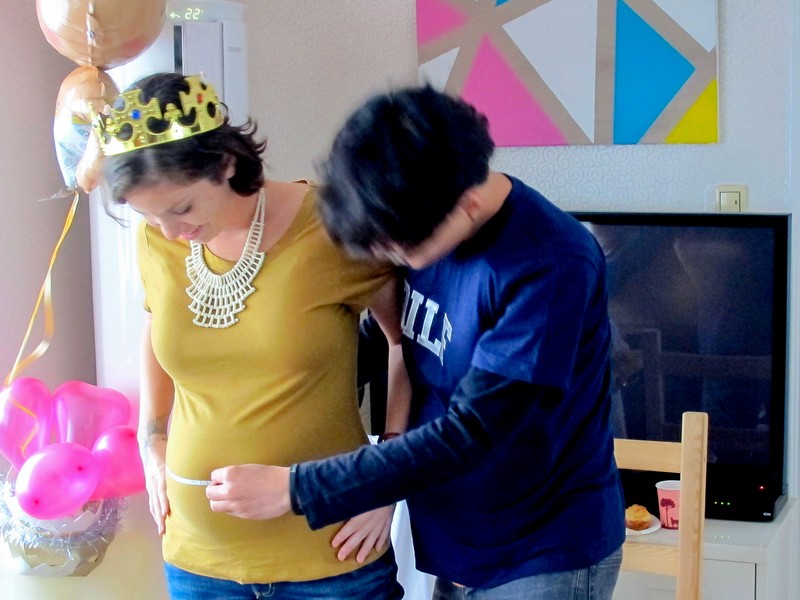
Baby showers aren’t common in Korea. I was told from some fellow pregnant friends who are Korean that traditionally there wasn’t much prep done for the baby because it could bring bad omens of sorts. Preparing was too forward.
That said, after we had a baby shower, those same friends said they wish Koreans did this because it was a fantastic way to prepare and bring friends together for the big event to come. I go into a lot more detail on how we planned ours, how my husband handled his first American baby shower, and the tradition of hanging a rope (geumjul, 금줄) over the front door to warn visitors off for the first three weeks, in My Korean Husband Attended Our Baby Shower.
Dol (돌잔치)
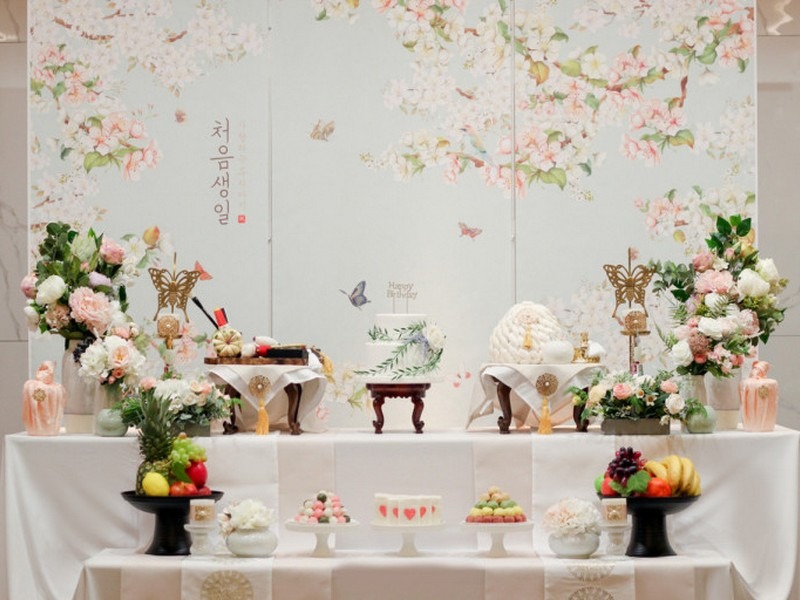
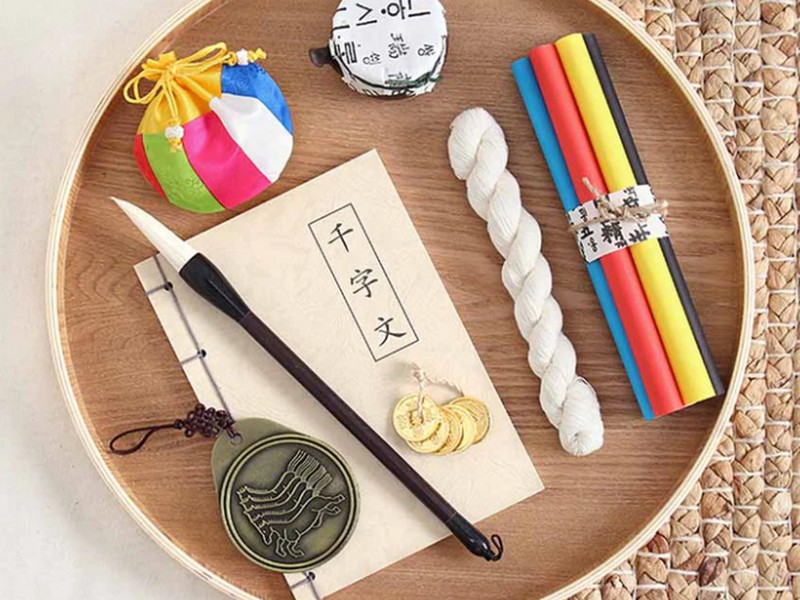
Usually Koreans won’t celebrate the child in a big way until that child turns 100 days old or 1 year old, and they do a dol ceremony (돌잔치). It’s a big deal still today, with its own set of traditions, including the first baby Hanbok, the symbolic dolsang table, and doljabi, the fortune-telling ritual where the baby “picks” an object that predicts their future. There’s a whole guide to this ceremony here: Korean First Birthday (Doljanchi): Complete Guide to Traditions, Doljabi and Hanbok.

Exercising While Pregnant
Another difference I found after becoming pregnant was that multiple people told me I should stop exercising. I’m not a vigorous exerciser but I enjoy jogging, yoga, biking, hiking and just generally being outside and being active. I listen to my body and from what I had read, maintaining some sort of exercise while pregnant is healthy. That’s a western attitude toward being pregnant, however.
Here, pre-natal yoga comes in the second trimester and walking in the third trimester, but before that you may hear people continuously tell you to sit down when all you want to do is get off your butt and take a walk. Even in my second trimester my doctor was telling me I should try to stop exercising and I insisted that I was fine. She was polite, but I know she would have preferred if I just wasn’t exercising at all. I didn’t look at it as exercising so much as the need for me to get some built up energy out of my system.
Are you pregnant in Korea? Here are some more posts you might be interested in:
- Having a Baby in Korea as a Foreigner: A Resident’s Guide to Benefits, Leave, and Paperwork
- How To Get The National Happiness Card For Pregnant Women In Korea
- What to Expect When You’re in Labor in Korea
- What to Expect After Giving Birth in Korea
- My Korean Husband Attended Our Baby Shower
- Korean First Birthday (Doljanchi): Complete Guide to Traditions, Doljabi and Hanbok
And if you plan on staying in a post-natal hotel, check out Secrets of the Korean Post-Natal Hotel: Postpartum Recovery In Korea.
FAQ
What financial benefits are available to pregnant women in Korea, including foreigners?
The National Happiness Card provides funds toward pregnancy-related medical costs for anyone enrolled in Korea’s National Health Insurance system, regardless of nationality. Community healthcare centers (bogunso) also offer free supplements, blood tests, and classes, varying by district and household circumstances.
Can foreigners get free pregnancy care in Korea?
Not entirely free, but National Health Insurance coverage combined with the National Happiness Card and community healthcare center services significantly reduces costs for anyone enrolled in the system, foreign residents included.
Who is Samshin Halmoni?
The traditional Korean guardian spirit of pregnancy, childbirth, and early childhood. She’s credited with granting children, protecting safe delivery, and watching over a child’s health and fortune afterward. Belief in her varies by region and generation, but she’s still commonly referenced by older Koreans.
What is taegyo?
Taegyo (태교) is the traditional Korean practice of prenatal conduct and care, the idea that a pregnant woman’s actions, environment, and state of mind during pregnancy shape her baby. It dates back to classical Chinese texts and was systematized in Korea during the Joseon dynasty.
What is a taemyeong?
A taemyeong (태명) is a nickname Korean parents commonly give their baby during pregnancy, used affectionately before the baby’s actual name is chosen or revealed. It’s distinct from the eventual given name, though it occasionally becomes the name that sticks.
What is a taemong?
A taemong (태몽) is a traditional Korean “conception dream,” believed to symbolically indicate a pregnancy and sometimes the baby’s gender, often experienced by the expecting mother or a close family member.
Do Korean hospitals offer birthing or Lamaze classes?
Generally not as a standard offering, though some larger hospitals or clinics with significant foreign patient populations may. Prenatal yoga is commonly available through community and birthing centers as an alternative.
Is maternity leave available in Korea?
Yes, legally available for up to three months, though enforcement and employer awareness vary. It’s worth understanding your specific rights before raising the topic with an employer.
What is a dol (doljanchi), and why do Koreans wait to celebrate a baby?
Traditionally, Korean families held off celebrating a baby too early, out of a superstitious concern about tempting bad luck (and, historically, genuinely high infant mortality), and instead marked the child’s first hundred days or first birthday with a dedicated ceremony called dol.
What is geumjul (금줄)?
A rope, traditionally twisted with charcoal and white paper tucked into it, hung above the front door after a baby is born to signal to neighbors that a newborn is inside and shouldn’t be disturbed. It’s traditionally left up for about three weeks.
What is samchilil (삼칠일)?
The traditional 21-day period after a birth during which visitors, beyond immediate family, generally aren’t welcome, so the new mother and baby can rest undisturbed.
Is Samshin Halmoni the same as Sanshin?
No, despite the similar names. Samshin (삼신) is the birth goddess this article covers. Sanshin (산신) is the mountain spirit, a separate figure who shows up mainly in first-birthday ceremony traditions rather than pregnancy.
Have you been pregnant in Korea? If your experience differed from mine on any of this, particularly anything that’s changed since I went through it, I’d genuinely like to hear about it.
Did you like this post? Pin It!

6 Comments
Tracy
I enjoyed your article so much as I am new and expecting my baby in Seoul. My hubby and I are from Hong Kong and expecting a baby in Seoul is very new to us. We need to search for many information, but sometimes fail to get what we want, especially we wanna find a doctor who can speak simple and basic English… LOL Thanks for sharing your information. We are living in Mapo-gu too. Would you mind sharing your birthing center and post-natal hotel for our reference? I am going to have a 2nd checking today in Seoul, hopefully the doctor can speak English!
Michelle
We are in the US but DH is from Korea. I had no idea about the dream thing till I found this article a few minutes ago. I dreamed of a child right before finding out I was pregnant. When we told DH’s mom we were having a baby she told us she had dreamed we were having a baby a couple weeks prior. When I was around 12 weeks pregnant I dreamed of a gold ring with an amethyst on it. Thought it meant I’d have HER in February instead of March. Evidently it had another meaning. So cool!
Monti
My main concern is vaccines! Are the same vaccines given in Korea that are given on America for mother and newborn?
Hallie
Almost all are the same. There were a couple that I had that I remember being surprised by and had to look up. Maybe the Japanese encephalitis was one I think. But these days, they’re definitely giving more vaccines than when I was growing up. They give a vaccine for chicken pox now… when I was a kid, we all just got it! Other than those, they were all pretty standard, MMR, etc.
Amandine
Hey there, I’m expecting in Korea too 🙂 But my due date will be in May so still quite a long way to go!
I really enjoyed reading your articles, especially since you started talking about your pregnancy just before I discovered that I was pregnant / a nice way to have insights on my future 😉
We struggled as well for hospitals, being really disappointed when discovering that famous and big hospitals (like Cha Hospital) offer very poor service in regards to english (which is already not my mother tongue). But finally we found our way, and I also decided to try to go ahead with a post-natal care center, that exists only in Korea as far as I know, as I want to be able to enjoy this great experience.
I hope you will have (or had) a wonderful experience in welcoming your new child.
Hallie
Congratulations! I just posted the Part 2 to this post on some other things I noticed which are a bit different about becoming pregnant here. I’m actually due this week and probably a bit after that I’ll post about my experience at the post-natal care center, so keep checking back for more information. I hope you find it helpful. ^^