The Underwater Tomb of King Munmu and the Yangnam Columnar Joints: A Gyeongju Add-On
Last Updated on July 6, 2026
Most people heading to Gyeongju are going for the tombs, the relics, the sites with history from 1,000 years ago, but there is a coastal stretch of Gyeongju that I like to add whenever there’s time and a part of it has history dating back millions of years! Worth the Gyeongju detour are: the underwater tomb of King Munmu (경주 문무대왕릉), a submerged royal burial site believed to hold the remains of Silla’s 30th king, and the columnar joints in Yangnam (양남주상절리군), a series of hexagonal volcanic rock formations formed millions of years ago as lava cooled and cracked. Neither site takes long to see, but a trip to the coast is a perfect way to start a day in Gyeongju. I like tacking this onto a morning before heading to Bulguksa temple, which is always a must see.
The tomb is one of the more unusual royal burial anywhere in Korea and a short drive up the coast, the columnar joints look almost too geometric to be natural with stacks of stone that fan out along the shore like something carved on purpose. Put the two together and you’ve got a lovely, quiet morning in Gyeongju.
Get ready to add two under-visited stops to your Gyeongju itinerary: a coastline shaped by ancient volcanoes, and a king’s tomb resting in the waves.
- Basic Info
- The Tomb of King Munmu: A King Who Chose the Sea
- The Columnar Joints: A Coastline Shaped by Fire
- A Few Tips Before You Go
- FAQ
(This post contains affiliate links, which means I receive a certain percentage of a sale if you purchase after clicking at no cost to you. Thank you for your support.)
Basic Info
Both sites sit along the coast in the eastern part of Gyeongju, roughly 30 to 40 minutes by car from central Gyeongju or Bulguksa, and they’re close enough to each other to visit back to back.
Tomb of King Munmu
- Address: 30-1 Bonggil-ri, Munmudaewang-myeon, Gyeongju-si, Gyeongsangbuk-do (경상북도 경주시 문무대왕면 봉길리 30-1)
- Getting there: By car, it’s roughly 30 to 40 minutes from central Gyeongju or Bulguksa. By bus, take Gyeongju Bus 150 from the Intercity Bus Terminal, about an hour’s ride.
- Hours: Always visible from the shore, no set hours
- Admission: Free
- Best viewed from: Bonggil Beach (also called Daewangam Beach), looking out about 200 meters offshore
Columnar Joints Observatory Deck
- Address: 498-13 Donghaean-ro, Yangnam-myeon, Gyeongju-si, Gyeongsangbuk-do (경상북도 경주시 양남면 동해안로 498-13)
- Getting there: A short 10 to 15 minute drive north from the Munmu tomb area along the coastal road.
- Hours: No fixed hours, open-air coastal path
- Admission: Free
- Observatory: Free to enter, it’s open Tuesday through Sunday from 9:00am ~ 6:00pm
- Trail: Padosori-gil (Sound of the Waves Trail), a 1.7 km coastal boardwalk between Eupcheon Harbor and Haseo Harbor
Gyeongju, Korea: 2-day Itinerary & Guide
$9.00
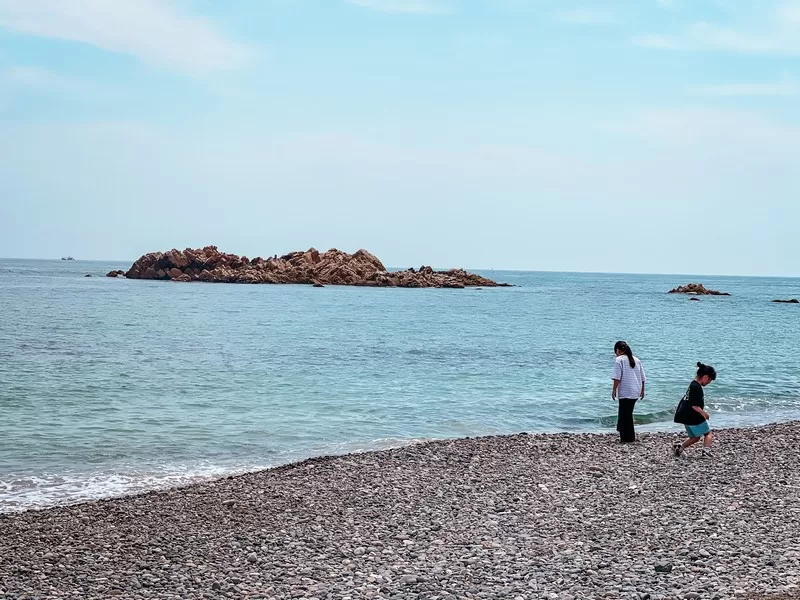
The Tomb of King Munmu: A King Who Chose the Sea
When you start diving into the stories and tales of the Silla dynasty, it’s just a matter of time before you come to the story of King Munmu, but most interestingly is his chosen burial site. You can find royal burial mounds from Seoul down to Busan, but this one is out at see. I’ve seen it twice.
An unassuming rock out in the water off of Bonggil Beach is the tomb of King Munmu, the 30th ruler of Silla, who reigned from 661 to 681. He is credited with finally unifying the Three Kingdoms of Korea after driving Tang Chinese forces off the peninsula.
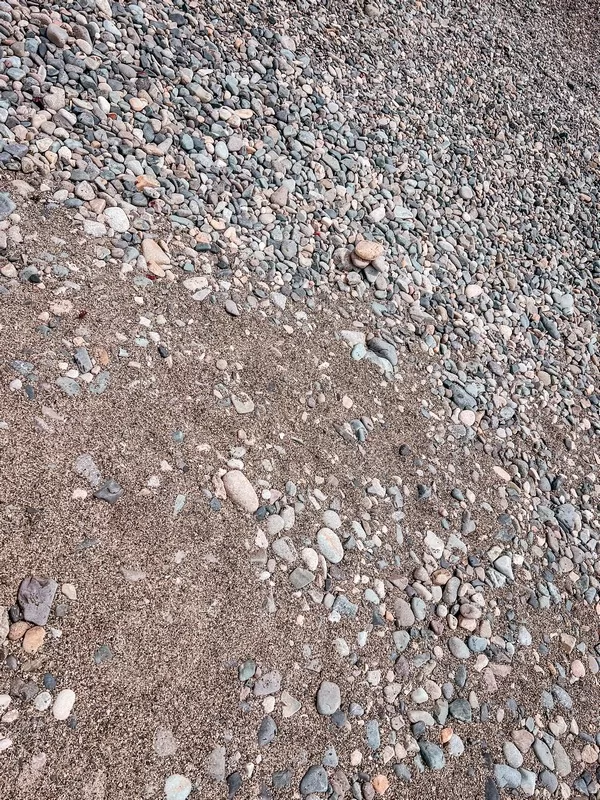
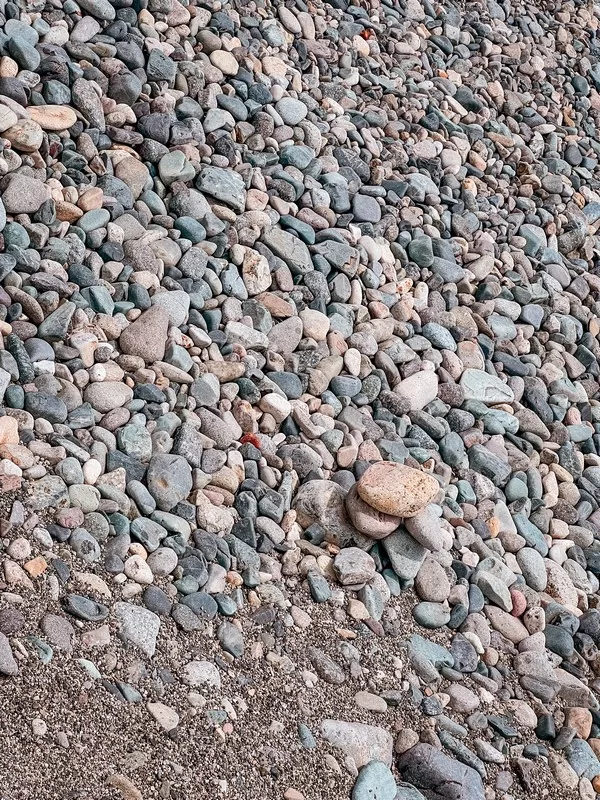
Silla kings before him were laid to rest in the massive earthen mounds you’ll see all over central Gyeongju, the kind you can walk right up to in the middle of a city park. Read the full guide to Gyeongju to learn about the famous sites to see in the city.
Munmu, unlike previous kings, asked to be cremated in the Buddhist tradition and returned to the East Sea, believing he would be reborn as a dragon and keep guarding Silla against invasion long after he was gone. If you dive into Korean folklore, you’ll learn that dragons are associated with water and clouds, they are symbols of wisdom and protection.
King Munmu’s son, King Sinmun, honored the wish and is said to have carved a water channel beneath nearby Gameunsa Temple, giving his dragon father a passage between the sea and the sacred grounds built in his memory.
Fun fact: Local haenyeo, female sea divers, considered the waters around the tomb sacred and avoided diving there out of respect.
Today, historians still argue whether the ashes were scattered into the water around the rock or whether they were placed in an urb beneath the large flat granite stone. No one has definitively settled the debate.
Standing on the beach looking out at it, I’ll be honest, it’s much less dramatic than the story sounds and unlike the large mounds you can find in Gyeongju proper, this is really just rocks out in the water. It’s a site that’s a bit more interesting via word than sight.
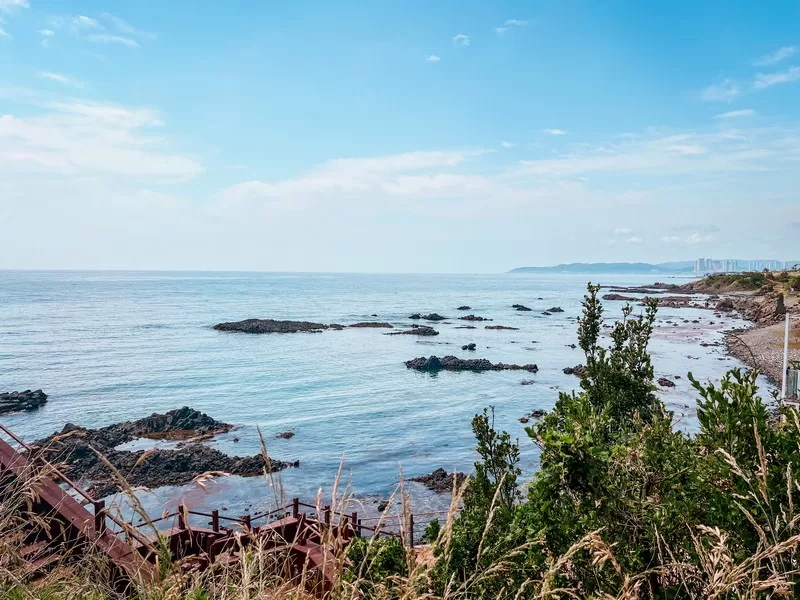
The Columnar Joints: A Coastline Shaped by Fire
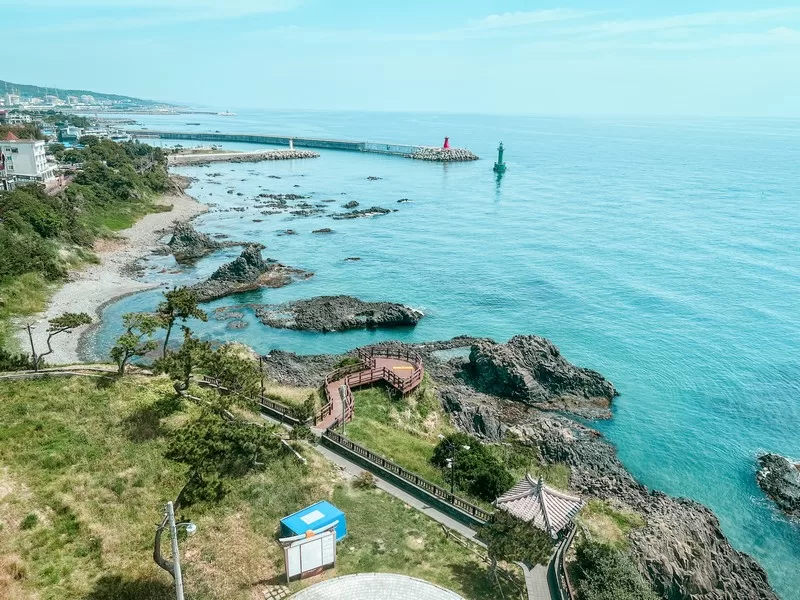
A short drive north from the tomb, the coastline shifts from myth to geology and rather than history from 1000 years ago, we find history from a million years ago. Millions of years ago, this part of Korea’s southeast coast sat over serious volcanic activity, and as the lava cooled slowly over time, it cracked into these tall, regular columns, the same basic process that creates columnar basalt anywhere in the world.
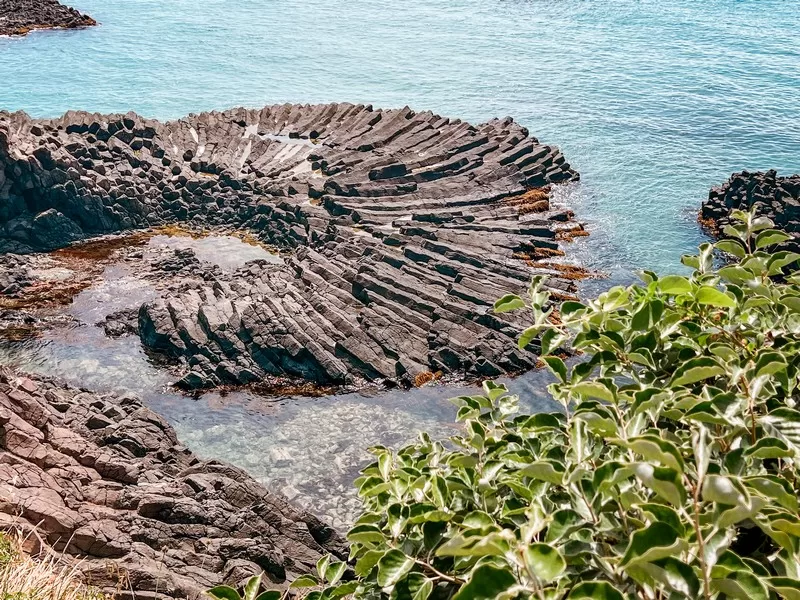
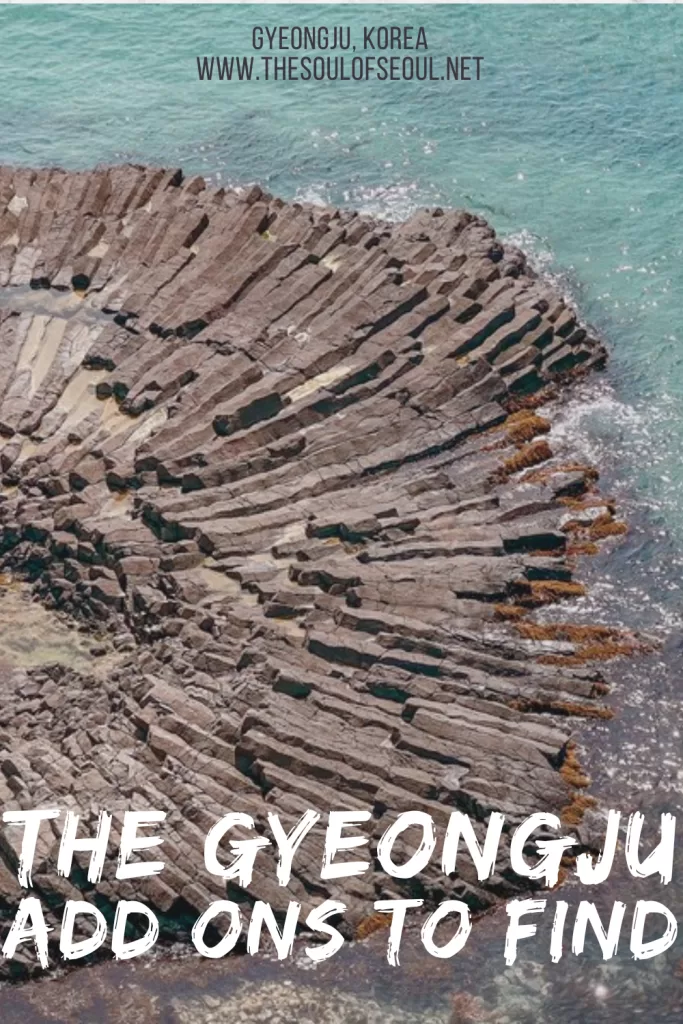
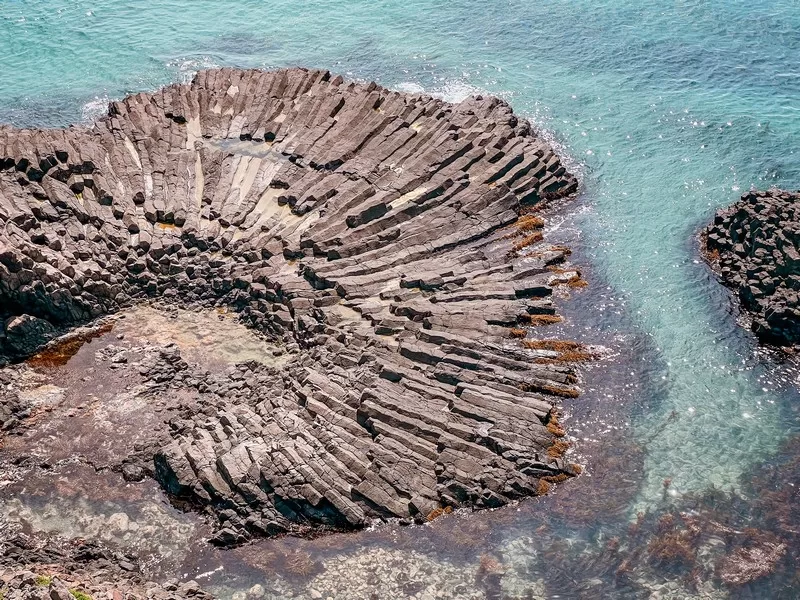
What makes Yangnam different is the range of shapes packed into one place. You’ll see columns standing straight up, others leaning at an angle, some lying flat, and if you’re lucky with timing and tide, the fan-shaped formation that curves out like a pleated skirt or an open hand fan.
Fun fact: That fan shape in particular is considered rare worldwide, which is part of why the whole area was named a National Monument in 2012.
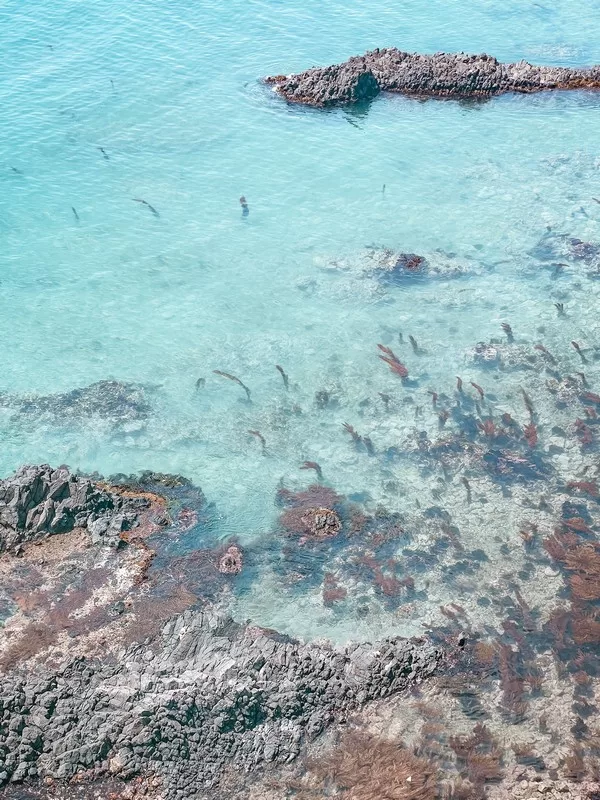
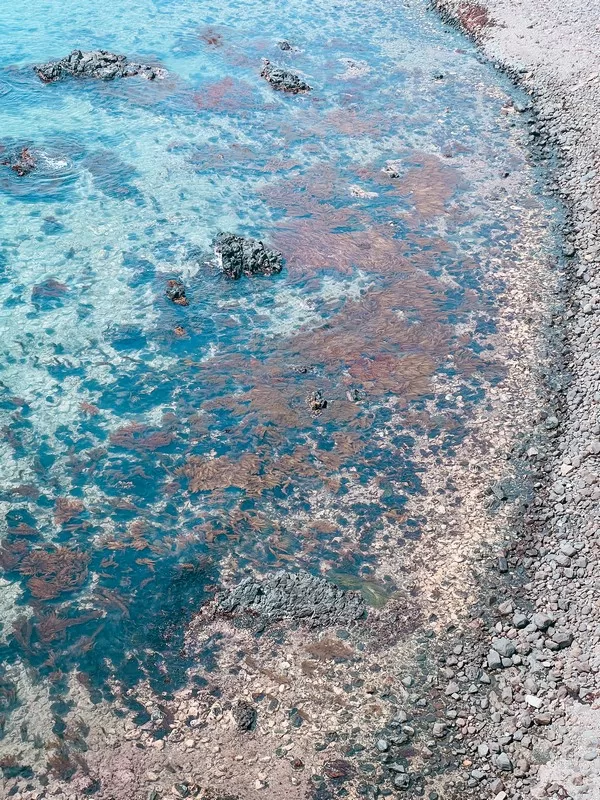
If you start at the Columnar Joints Observatory Deck, you can take in the curious shapes from above before walking the coast at sea level. Walk the Padosori Trail, the name means “sound of the waves”, and you’ll get up-close views of the columns right where the waves hit them. Even if you’re not interested in geology, it’s a beautiful area to walk along the sea appreciating the salty winds and lapping waves.
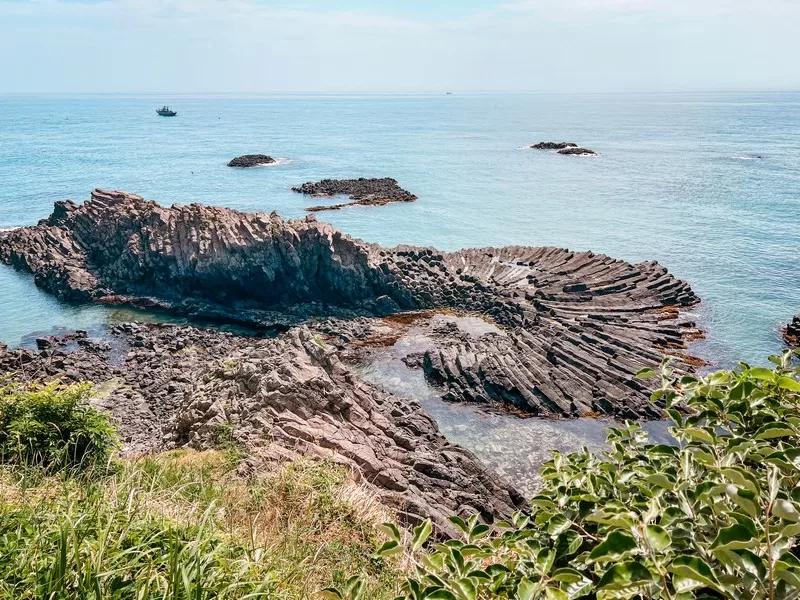
Fun fact: These formations were actually hidden from public view for decades because a military base sat right on top of them. Once the base moved out in 2012, the coastline reopened and the columns finally got the attention they deserved, the same year they earned National Monument status.
A Few Tips Before You Go
- Tide timing matters at the columnar joints since some of the lower formations disappear underwater at high tide. If you want the best view of the fan-shaped joint specifically, check tide times before you head out.
- At the tomb site, you’re viewing everything from the shore rather than getting close to the rock itself. There are no boat tours or platforms to walk out to the rocks.
- Pair this coastal loop with Bulguksa Temple and, if you’re up for a third stop, Gameunsa Temple’s twin pagodas. All three sit within a reasonable drive of each other on the eastern side of Gyeongju.
FAQ
How much time should I set aside for both stops?
An hour and a half to two hours total is plenty, including driving between them. The columnar joints walk itself can take anywhere from 20 minutes to an hour depending on how far along the trail you go.
Can I get close to the Tomb of King Munmu?
No, the tomb is viewed from the shore at Bonggil Beach. There’s no boat access or close-up visit, which is part of what keeps the site feeling undisturbed.
Is this a good add-on for families?
Yes. The columnar joints observatory is especially good for kids curious about how rock formations work, and the beach at Bonggil is an easy, low-key stop for everyone to stretch their legs.
Do I need a car to visit?
It’s strongly recommended. Buses do run to the area but not frequently, and a car makes it easy to combine both stops with Bulguksa or Gameunsa Temple in the same day.
Is there an entrance fee for either site?
No, both the columnar joints trail and observatory, as well as the tomb viewing area, are free to visit.
Gyeongju gets so much attention for its tombs, temples, and museum halls that it’s easy to miss the coastline entirely, but the coast of Gyeongju has plenty of reason to visit whether it’s the 1000 year old history or million year old history. These are some fascinating stops many people miss.
Did you like this post? PIN IT!