Gamcheon Culture Village: A Guide to Busan’s Rainbow Hillside
Last Updated on July 6, 2026
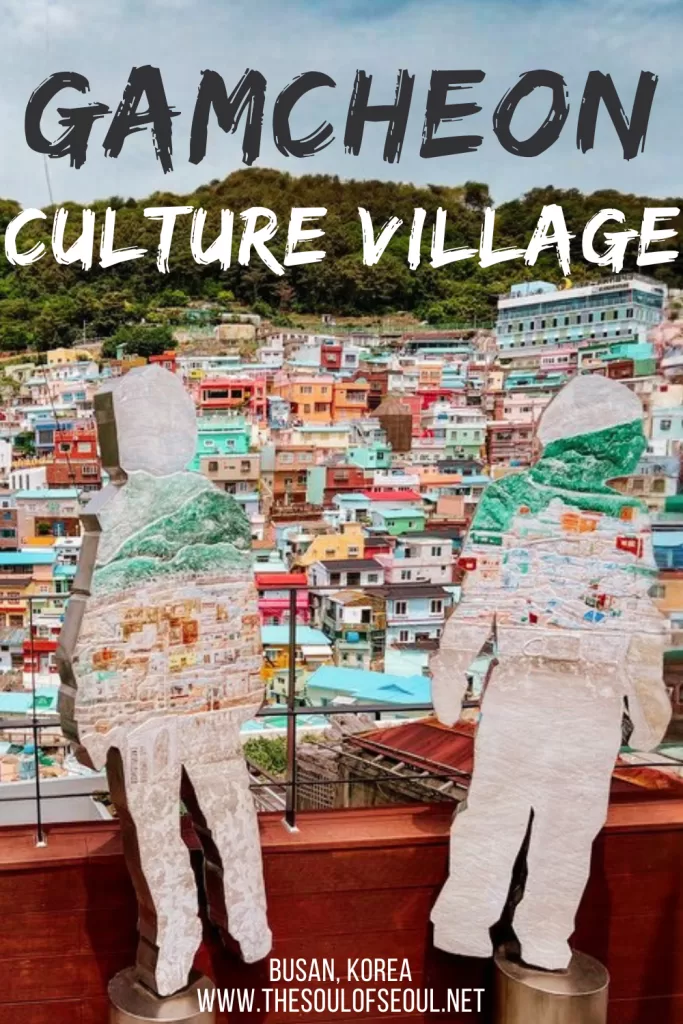
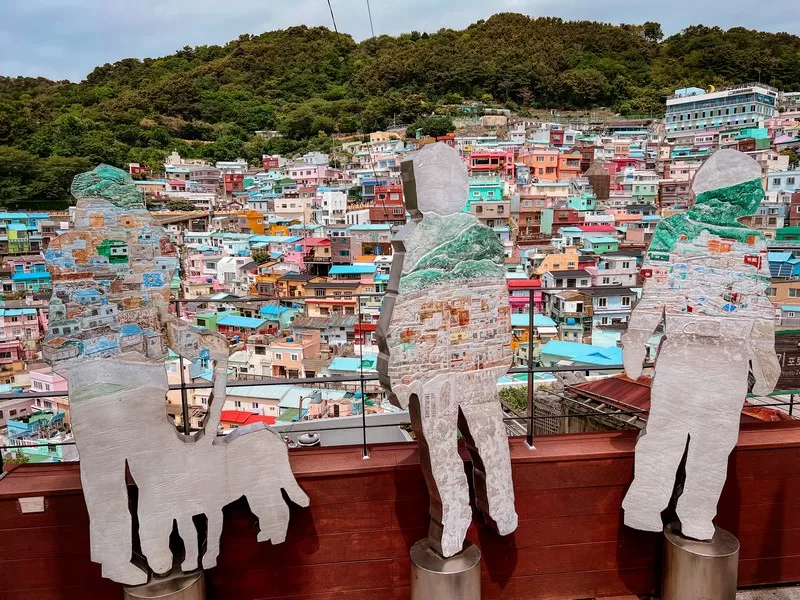
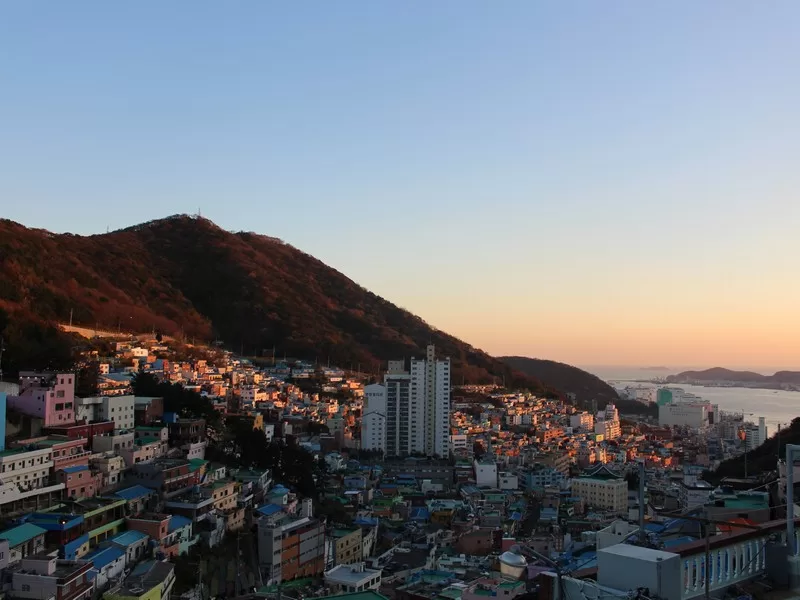
If you’ve ever searched for things to do in Busan, Korea, you’ve undoubtedly seen photos of a hillside of homes in pastel colors. Covered in murals, the Gamcheon Culture Village (감천문화마을) has blown up over the last decade into one of the most touristed places on the southern coast. Cute, quirky, colorful. It’s a stop that will make you smile as you wander thanks to the artistic flare that’s been added over the years, but it will also make you sweat, so be prepared.
Beyond the light blues, pinks, and yellows, what actually makes Gamcheon different from a lot of Korea’s “Instagram famous” spots is that it’s not a manufactured attraction. It started as one of the poorest neighborhoods in Busan, home to refugees who had nowhere else to go after the Korean War. The color and the art came later.
If you’re planning a trip to Busan or building out your Busan itinerary, the Gamcheon Culture Village is definitely a great spot to spend a few hours, just make sure you’re prepared. Want to know what else to see? Read the full guide to Busan with beaches, observatories, and markets.
Get ready to explore one of Busan’s most photographed neighborhoods:
- Basic Info
- The History That Makes It Interesting
- What To See and Do In The Village
- Tips for Visiting With Kids
- Best Time To Visit
- FAQ
(This post contains affiliate links, which means I receive a certain percentage of a sale if you purchase after clicking at no cost to you. Thank you for your support.)
Basic Info
Address: 203 Gamnae 2-ro, Saha-gu, Busan (부산 사하구 감내2로 203)
- This is the ideal address to start. It’s the entrance and where to find the information center to get a map, stamp book, and any info you might be interested in.
Hours: Every day: 9:00am ~ 6:00pm*
- Being a village means it doesn’t technically open or close, however, it is a residential area and like other residential areas in Korea, it’s expected that tourists will respect local residents and not arrive too early or stay too late into the evening.
Map/Stamp Book: W2,000 at the information center near the entrance, and worth it if you like a little scavenger hunt with your sightseeing like I do
How To Get There: Getting up to Gamcheon takes a little effort since there’s no subway station right at the village.
By subway and bus: Take Line 1 to Toseong Station and leave through Exit 6. You’ll spot a small bus stop nearby. From there, hop on one of the village buses heading up the hill, usually marked with a route like Saha 1, Saha 1-1, Seogu 2, or Seogu 2-2. The ride up takes around ten minutes, and if you tell the driver “Gamcheon Munhwa Maeul,” they’ll know exactly where you mean, though honestly, they’ll likely recognize you as a tourist and already know where you want to disembark.
Fair warning, the village bus is small, the road up is steep, and you’ll probably be standing the whole way.
By taxi: Honestly, this is my preferred method, especially if I’m traveling with anyone else. A taxi ride up will run you somewhere in the range of a few thousand won from nearby areas like Toseong or Jagalchi, and considerably more if you’re coming from further out like Haeundae. Just pull up the Korean address on your phone or use KakaoTaxi to order one, and you’ll skip the standing-room-only bus entirely.
The Busan Itinerary Pack – 6 Busan Itineraries
$14.00
The History That Makes It Interesting

Gamcheon’s story starts in the 1920s and 30s, when Busan’s government began relocating poorer residents to this hillside spot, close enough to the harbor for work but tucked out of the way of the rest of the city.
The neighborhood grew fast after the Korean War, when thousands of refugees poured into Busan, one of the only cities the North Korean army never took. 800 families, including members of a religious community called Taegeukdo, a branch of Jeungsanism, moved in. This religious group shaped how the village was actually built. Their belief system emphasized letting your neighbor “see the sun” too, which is why the houses are staggered up the hillside in tiers instead of blocking each other’s views.
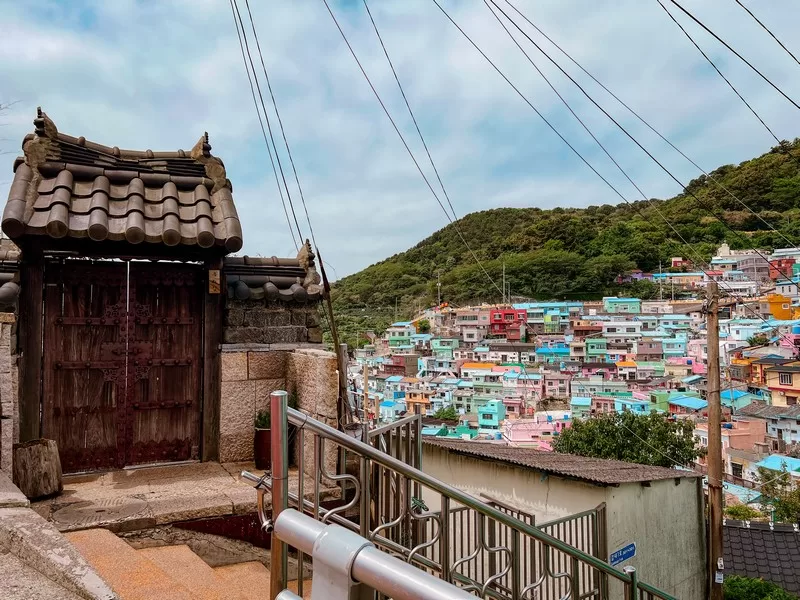
For most of the 20th century, though, Gamcheon was simply one of Busan’s poorer, more overlooked corners. That changed in 2009, when the Ministry of Culture, Sports, and Tourism sponsored a series of public art projects to breathe new life into the neighborhood.
Local art students and residents came together to paint murals, add sculptures, and turn abandoned homes into little galleries. This was happening all over Korea, which is why you can find mural villages like the Ihwa Mural Village in Seoul and the Haenggung-dong Mural Village in Suwon and similarly in nearby Huinnyeoul Culture Village in Busan.
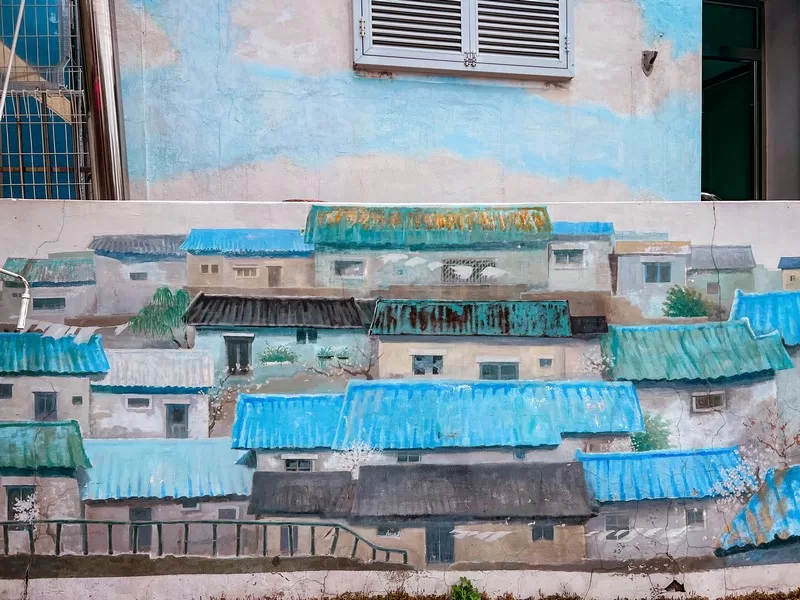
What you’re walking through today is the result of that revitalization. And unlike some of Korea’s other mural villages that have had friction between residents and tourist crowds, Gamcheon’s community benefits directly from the attention. Buying a coffee, grabbing a souvenir, or eating at a local restaurant puts money right back into the neighborhood. Just remember that real people live here, don’t leave trash behind, don’t walk into doors and homes that are closed or have signs requesting you to steer clear.
What To See and Do In The Village
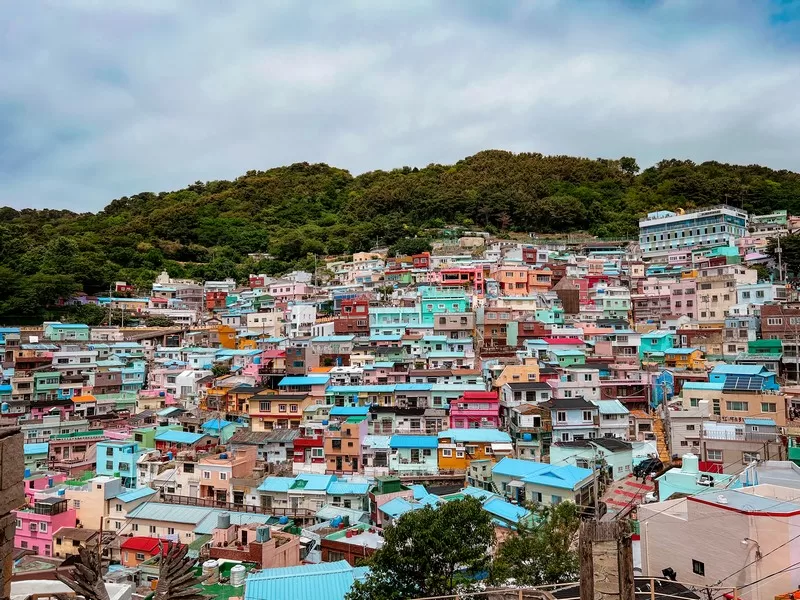
The Pre-Entrance Viewpoint
As you’re heading up on the bus, keep a lookout to your left and you’ll see one of the best places to get a picture of the village. The alley just before the main entrance point is where you really want to start to take it all in. After getting dropped off, walk just here to get the full view of the area and then head to the info center.
The Fish Wall and Main Entrance
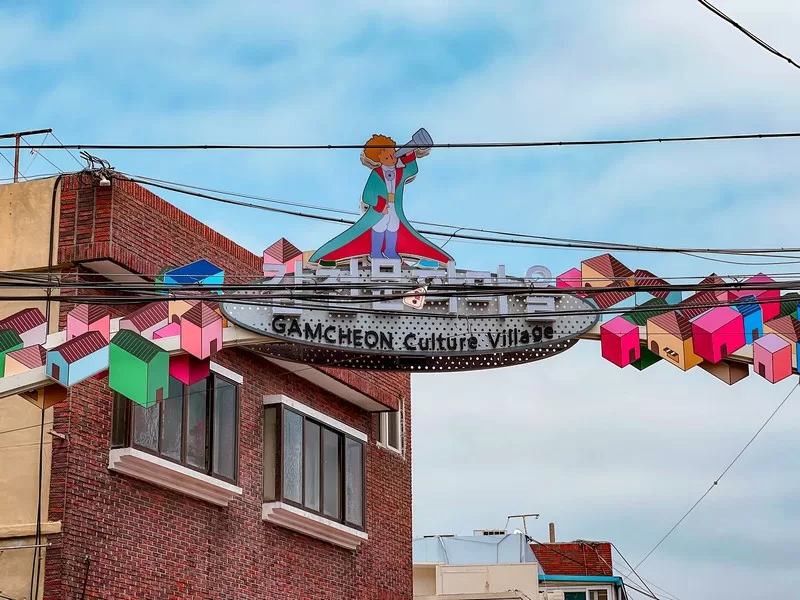
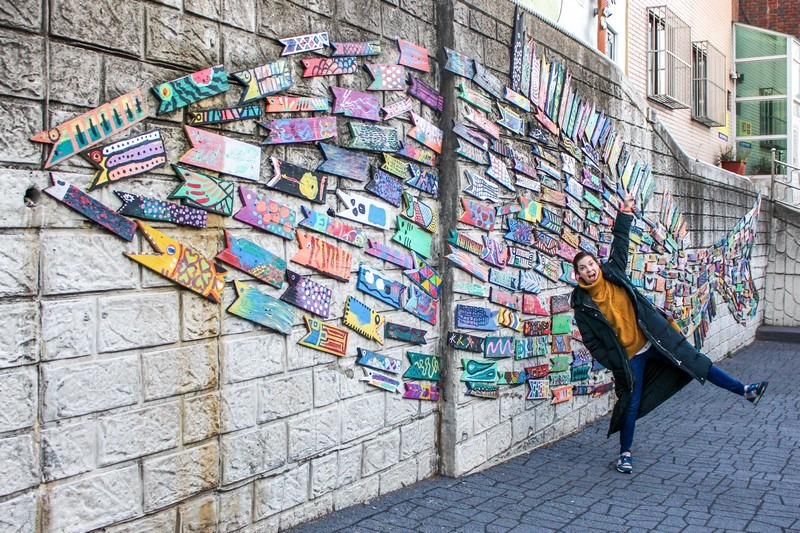
This is where you’ll find the information center, the map and stamp station, and the giant fish mural that marks the unofficial start of most walking routes through the village. The fish shapes actually double as directional arrows if you want to follow a set path, though I’ll admit I usually just wander.
The Little Prince Statue
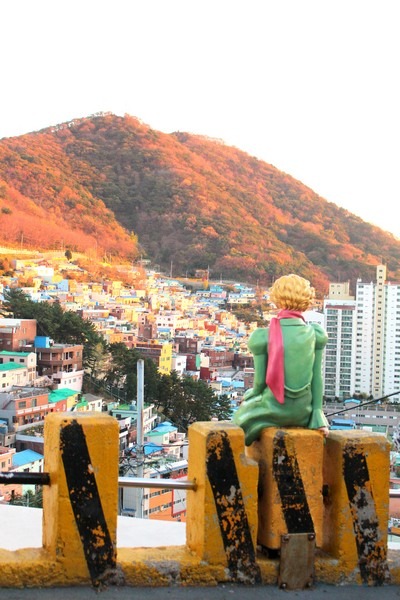
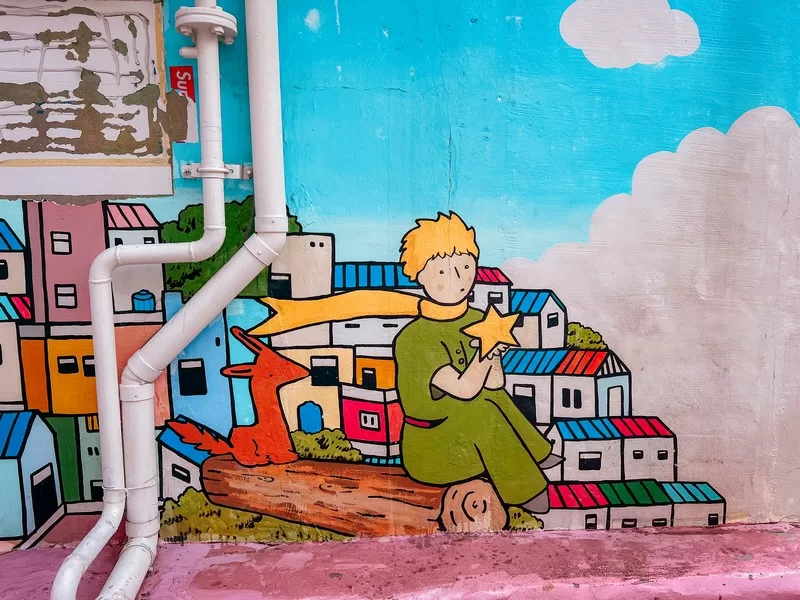
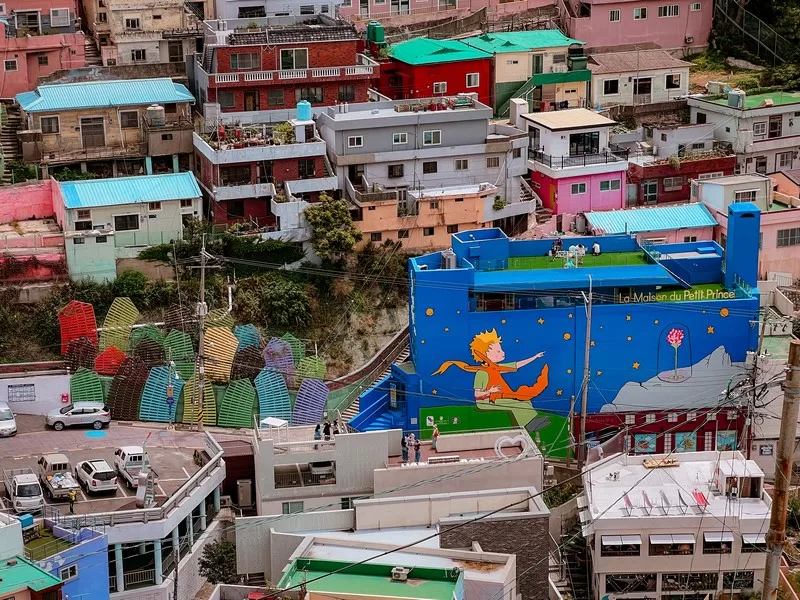
This is the single most popular photo spot in Gamcheon, and you will likely wait in line for it. A statue of the Little Prince sits perched on a wall overlooking the village, with a little fox nearby. It’s cute, but don’t feel bad if you skip the line. There’s plenty of village left to see and actually plenty more Little Princes left to find as well. You’ll see him all over the village if you look enough. One game I play when I’m there is to see how many I can find.
Cute and Unexpected Murals
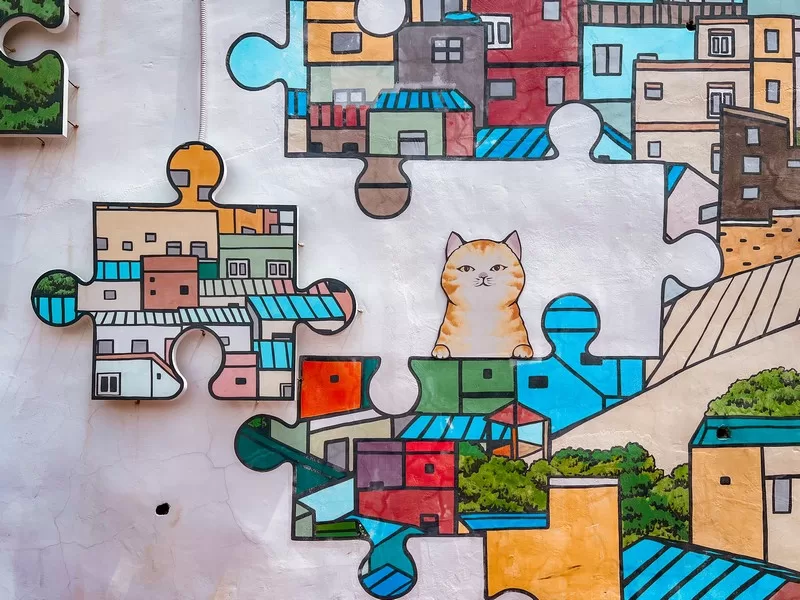
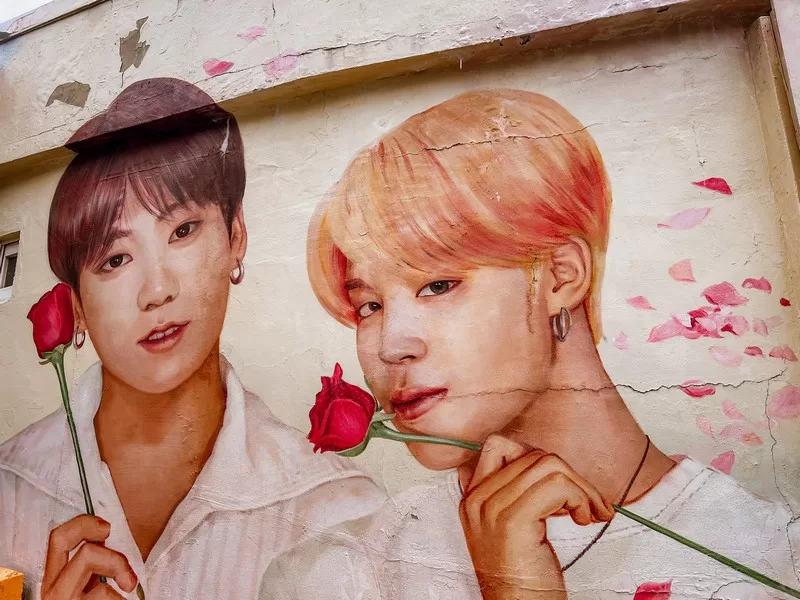
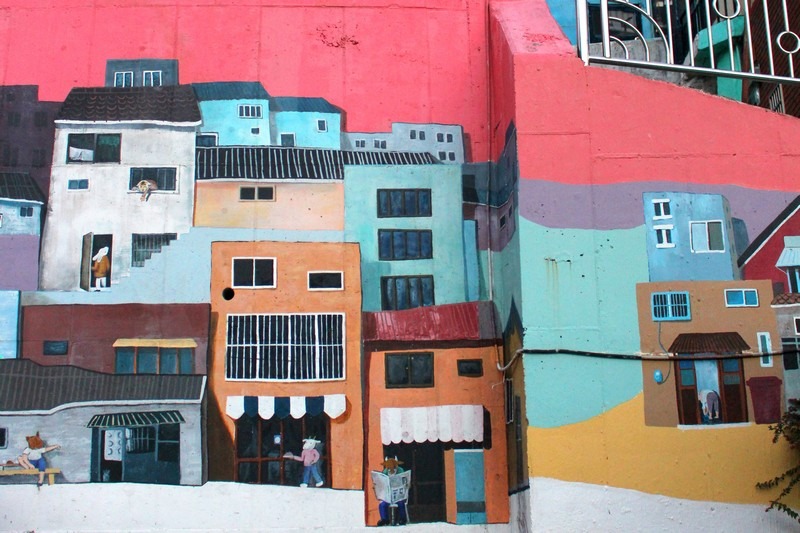
The thing with a mural village is that you don’t want to necessarily just follow a map around, you need to keep your eyes peeled for colors and paint strokes. Walk along and you’ll see alleys and staircases decorated in all kinds of ways. Petite Prince there, puzzle pieces and cats here, BTS portraits of course, and more. There are some super popular murals for sure, but the most fun is just letting your feet guide you and seeing what you can find.
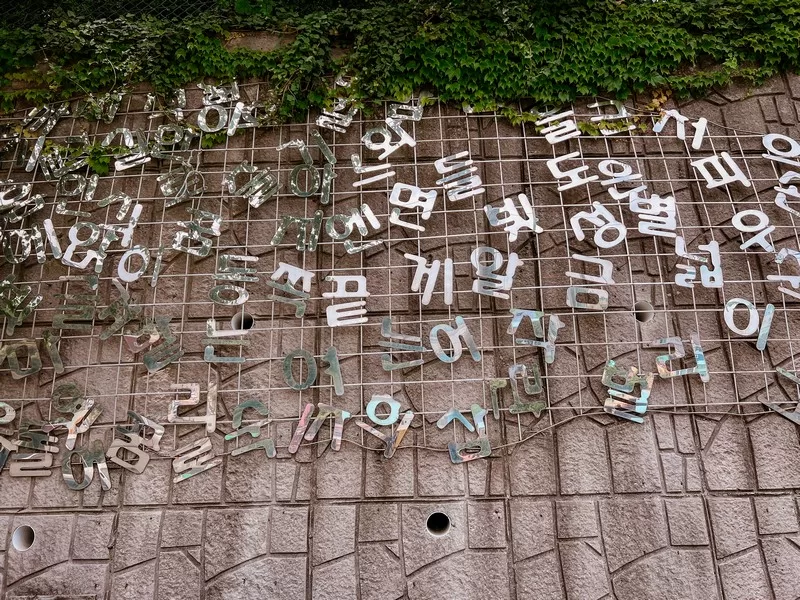
Artistic Installations
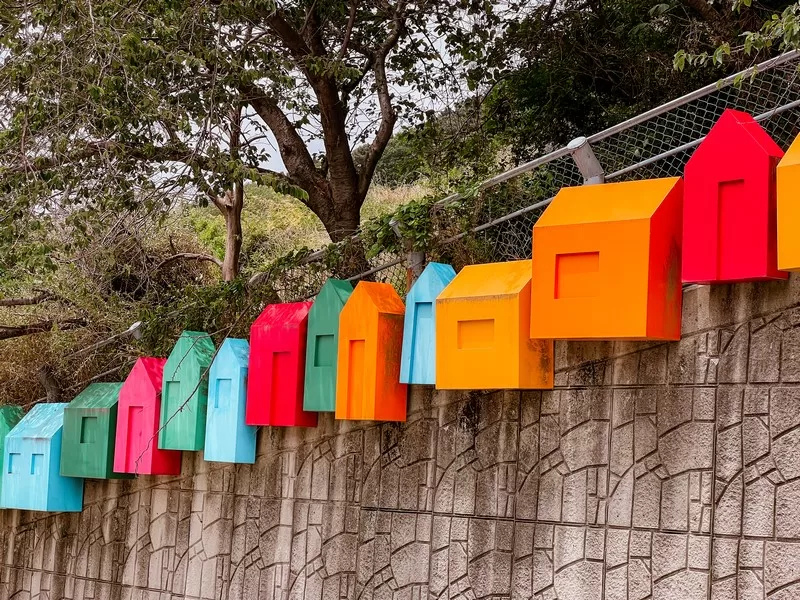
Not only murals though, the Gamcheon Culture Village is also home to a number of artistic installations that will likely catch your eye. The installations vary from small to large, ones attached to walls and others you can step into for a photo.
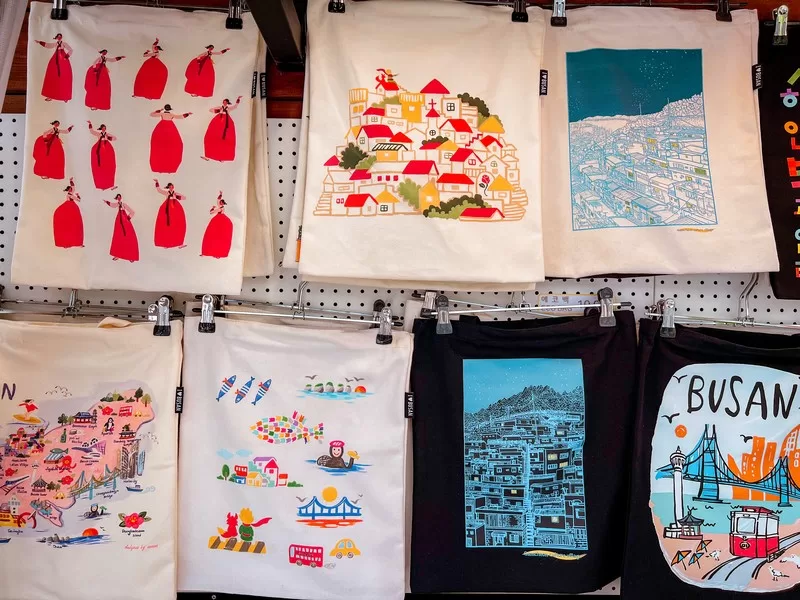
Great Souvenir Shops
I was prepared for pretty standard souvenirs for such a touristy spot, but there are some great shops here with local handmade items like house-shaped magnets, illustrated postcards, and small books about the village’s history, ceramics from local artists, bags made from old canvas posters, and so much more. Step into the various shops and see what they have. I dare you to walk away empty-handed.

Tips for Visiting With Kids
This is a crowded hilly area with a lot of steps, so first consider whether your children will be able to traverse the steps on their own or not. If they can’t, that’s okay, it just takes some consideration. Here are my suggestions for visiting the Gamcheon Culture Village with kids.
- Don’t take a stroller. There are steps here, there, and everywhere and a lot of small alleyways. Baby carriers are ideal if your little one needs to be carried.
- If you have a wobbler and toddler and can’t do the steep bits, think of the culture village a bit like rice terraces. You can absolutely stay on the top terrace from the entrance around to the other side without going up or down too much but still seeing a lot. Want to see a bit more? Just go up or down one terrace. Just don’t go all the way down to bottom… because you’ll have to walk all the way back up again.
- There are numerous public restrooms available, but no changing tables in them. Also take your own toilet paper in case there’s none in the restrooms.
- Make sure to pick up the stamp book from the welcome center to create a scavenger hunt-like game for older kids. They’ll have a lot of fun finding the various viewpoints and murals.
Best Time to Visit
The first time I visited was back in the winter of 2018. We went early in the morning and pretty much had the place to ourselves. I was on a tour, so it wasn’t my choice exactly, but it was quiet. More recently, I went in late May and got there around 10:30am and it was packed!
Mornings are definitely your best bet, both for softer light and for beating the crowds that build up by midday, especially on weekends. Spring and fall tend to be the most comfortable seasons for all the uphill walking, but actually the winter wasn’t that bad because going up and down the stairs kept me nice and warm. Summer humidity, on the other hand, can make those hills rough going. If you’re only option is to visit in the summer, make sure to have water and just take rests and eat ice cream when you need to cool off.
FAQ
Is Gamcheon Culture Village free to visit?
Yes, walking through the village doesn’t cost anything. The only optional expense is the map and stamp booklet, which runs about W2,000.
How long should I spend at Gamcheon Culture Village?
Plan for at least two to three hours if you want to see the main highlights, or closer to four if you’re doing the full stamp trail and stopping for food along the way.
Is Gamcheon Culture Village worth visiting if I have mobility issues?
It’s worth thinking through carefully. The village is built on a steep hillside with a lot of stairs and narrow paths, and some sections aren’t wheelchair accessible. If steep inclines are difficult for you, you may want to stick closer to the main entrance area, but you can still see a lot from there and find great cafes to enjoy with views.
Do people actually live in Gamcheon Culture Village?
Yes, it’s a real, active residential neighborhood, not just a tourist installation. Please be mindful of noise, avoid photographing private homes or residents without permission, and stay on public paths.
What’s the best way to get to Gamcheon Culture Village from downtown Busan?
Take Line 1 to Toseong Station, exit 6, then transfer to a local bus heading up to the village. If you’d rather skip the transfer, a taxi is a fast and inexpensive option from most central Busan neighborhoods.
Gamcheon isn’t just a pretty backdrop for photos, even though it’s easy to treat it that way at first glance. It’s a neighborhood that was built out of hardship and then transformed by the people who actually live there. Give yourself a few unhurried hours, get a little lost on purpose, and don’t forget to support the small cafes and shops that call this hillside home.
Did you like this post? PIN IT!