Jeju Green Tea Fields: A Local’s Complete Guide To OSULLOC and Beyond!
Last Updated on August 17, 2026
Jeju Island grows tea all over, a lot more places than most tourists visiting the island ever realize anyway. When I see everyone’s Jeju itinerary, I almost always spot a full day centered on the most popular Korean green tea brand OSULLOC (오설록). OSULLOC built the museum and the marketing that made Jeju green tea fields famous worldwide, and it has absolutely earned the reputation it has. But OSULLOC is only one option when you’re looking for Jeju green tea fields. Across the island there are tea fields with mazes for kids, one with a volcanic cave you can visit, and others that are maybe just a bit more pleasant because there are just fewer people.
This is a full guide to Jeju’s green tea fields, OSULLOC included, organized so you can find the one that actually fits into whatever part of the island you’re already exploring. Jeju is also larger than most people realize, so it’s good to have options.
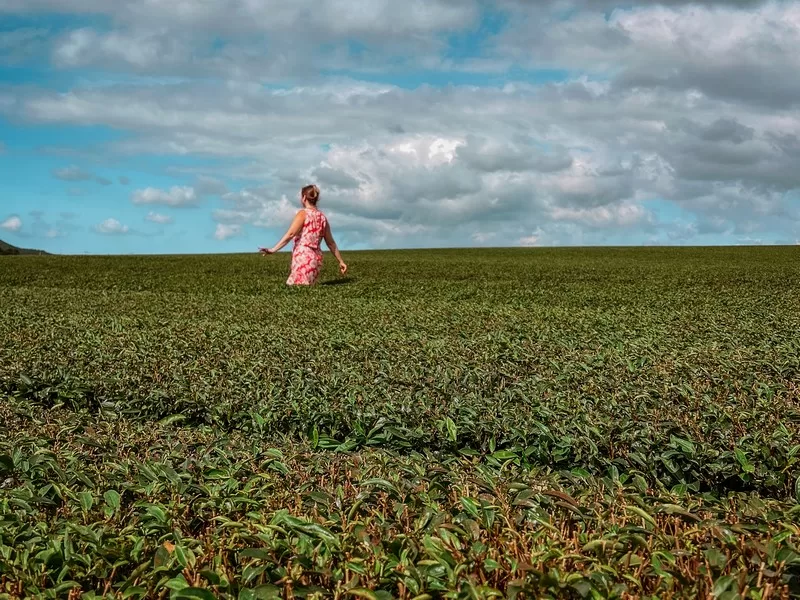
The OSULLOC green tea fields on Jeju Island are beautiful, but there are more fields to enjoy if you prefer something quieter, perhaps more family-friendly, or just something off the beaten path:
(This post contains affiliate links, which means I receive a certain percentage of a sale if you purchase after clicking at no cost to you. Thank you for your support.)
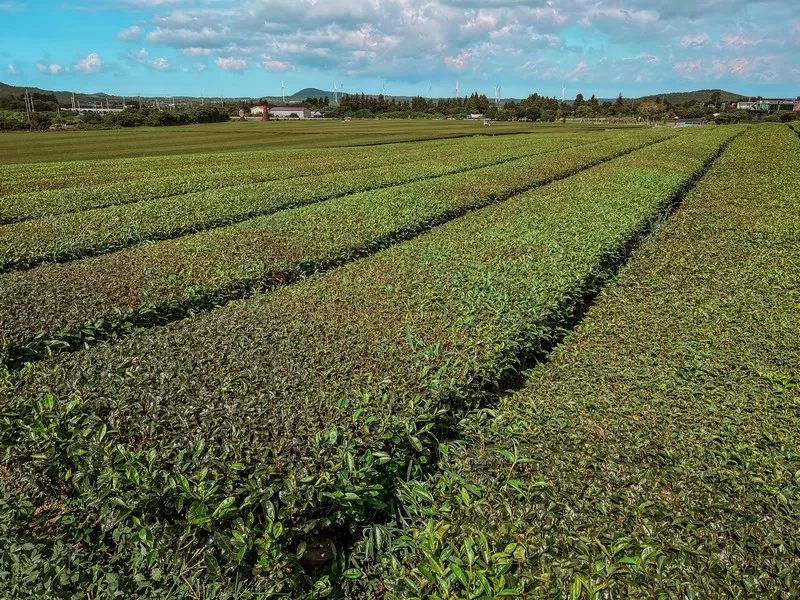
The easiest way to use this guide is to stop thinking of tea fields as a destination in themselves and start thinking of them as something you slot into whatever part of the island you’re already exploring that day. They are destinations, don’t get me wrong, but because they are here, there, and also over there, you’ll be able to fit one in just about wherever you’re going.
If you’re doing the west side loop with Hallasan 1100 Highland and the Jusangjeolli Cliffs, the original OSULLOC makes sense. If you’re based in or near Namwon or exploring the east side around Seongsan Ilchulbong, the OSULLOC Tea House Tea Factory and Sumang Dawon are both close enough to add without adding much drive time. Traveling with kids anywhere near Jungmun, build in an hour for the Green Tea Maze Park. Heading toward Pyoseon or the Seongeup Folk Village, the Green Tea Cave is a natural add on. And if you want an overnight built around slowing down, Chuidasun is worth planning your whole day around, not just fitting into it.
The Field by Field Breakdown
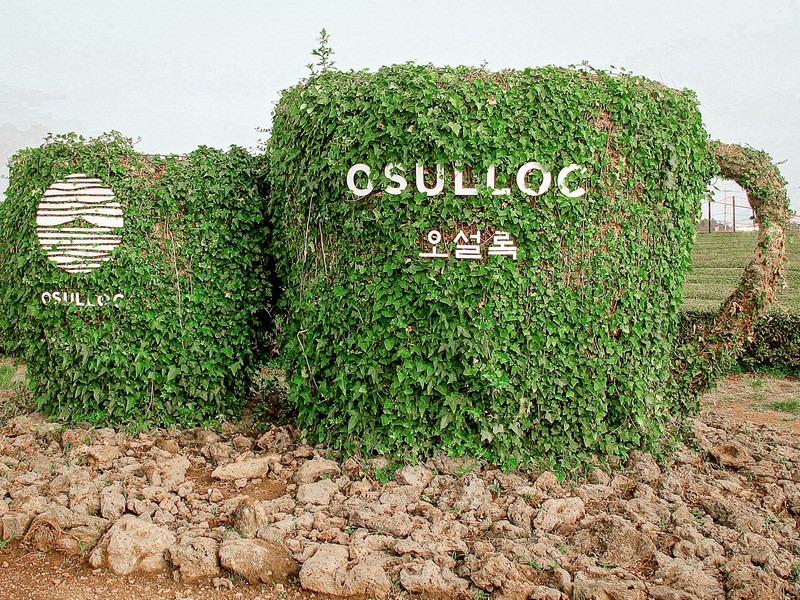
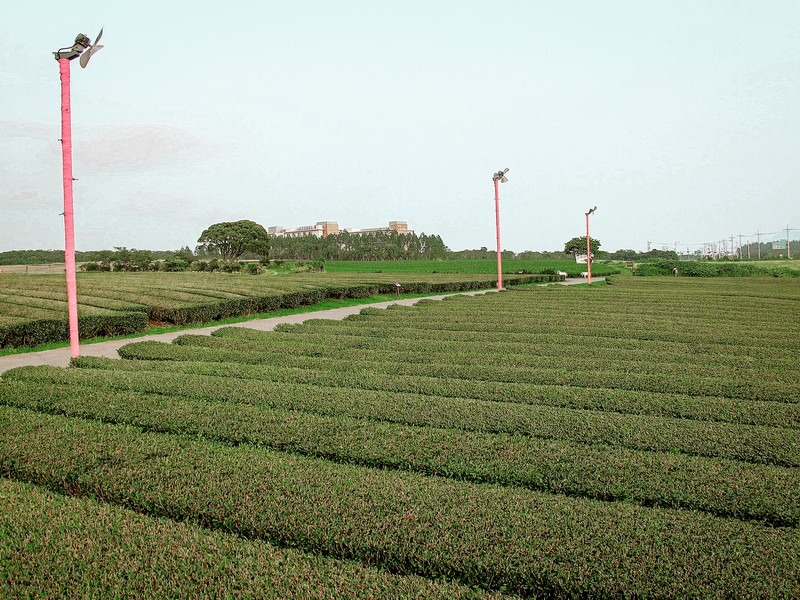
OSULLOC Tea Museum (오설록 티 뮤지엄)
Best for: First-timers and the classic Jeju tea field photo
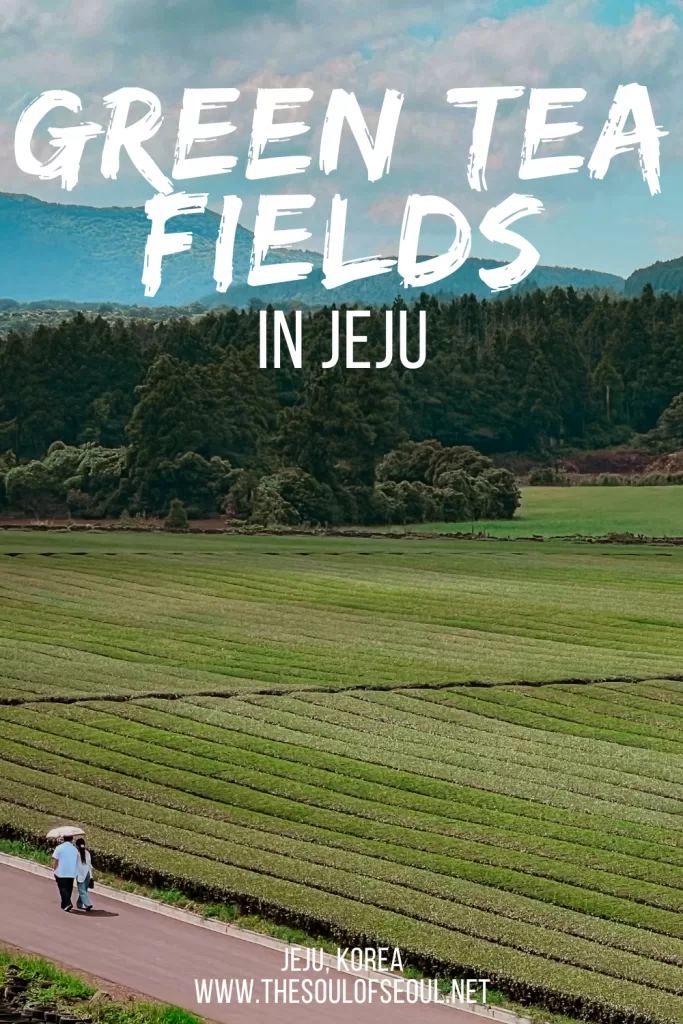
OSULLOC’s Tea Museum is the most popular of the green tea fields on the island. When most tourist mention seeing green tea fields, this is the spot they’re talking about. It’s built for the tourist experience. The original is in Seogwang, on the western side of the island. As Korea’s largest tea plantation, it has become a major landmark that many travelers center a day of travel on. You can walk for a while before the rows of tea start to feel like your own private field though.
The museum, the cafe, and the Innisfree shop next door make it easy to spend two or three hours there without getting bored, and the matcha ice cream is worth the wait. It’s a popular stop, so plan for company, but it’s popular for good reason.
- Address: 15 Sinhwayeoksa-ro, Andeok-myeon Seogwipo-si, Jeju, Korea (제주 서귀포시 안덕면 신화역사로 15)
- Hours: Summer: Every day: 9:00am ~ 7:00pm; Winter: Every day: 9:00am ~ 6:00pm
- What to do nearby: Hello Kitty Museum
Fun fact: There are three main areas of Korea that are well known for their tea production: Jeju Island, Boseong in Jeollanam-do, and Hadong in Gyeongsangnam-do.
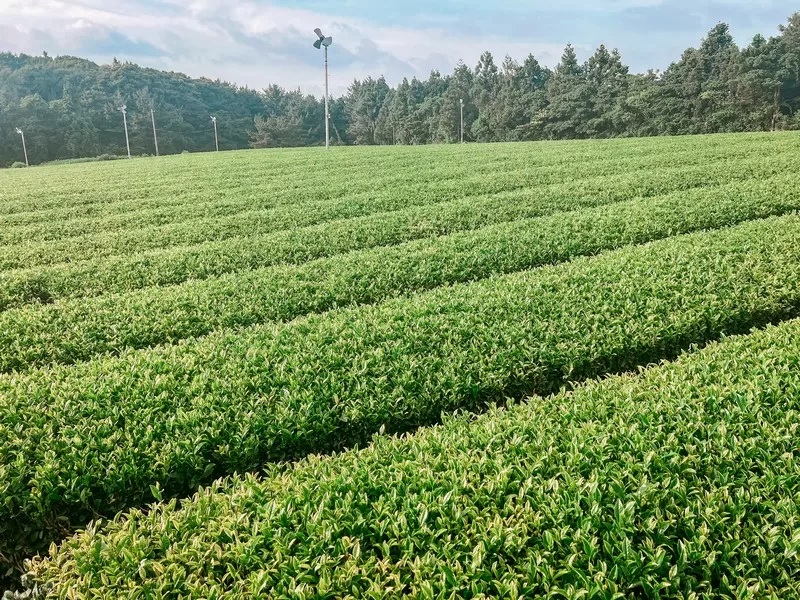
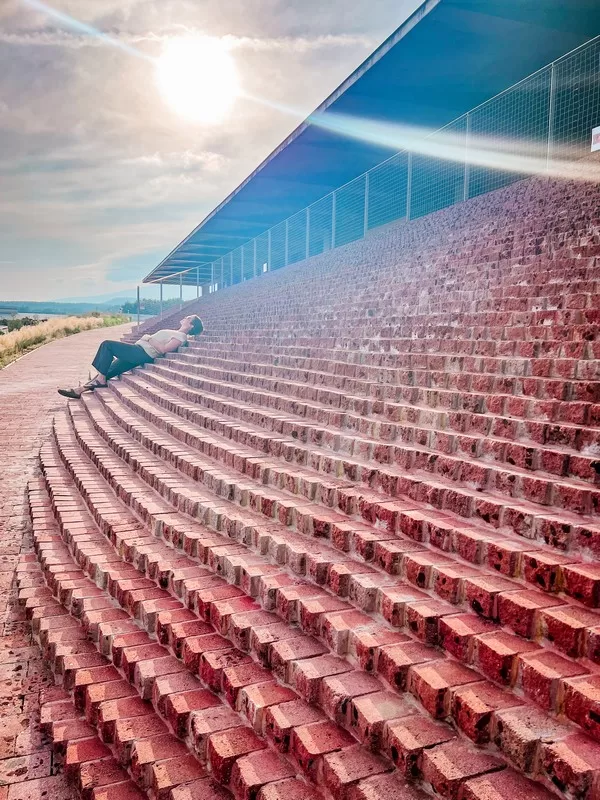
OSULLOC Tea House Tea Factory (오설록 티하우스 티팩토리점)
OSULLOC opened a second location in Namwon, on the east side, in June of this year (2026). It’s called the Tea House Tea Factory and it sits right beside the Hannam tea field, close enough to home for me that I’ve been more times than I can count already.
There are multiple buildings here. The first is a large cafe that welcomes you in and gives you the lay of the land. Head around and you’ll find a striking red brick structure that houses the Tea Library, where you can watch the actual production process, a different feeling from the museum experience out west. The east side of the island also features more forests than the west side of the island, and here, OSULLOC also has a forest trail path for visitors to follow. (I haven’t yet done this because it’s the hottest bit of the summer, but when it cools down a bit, I’ll check that out too.)
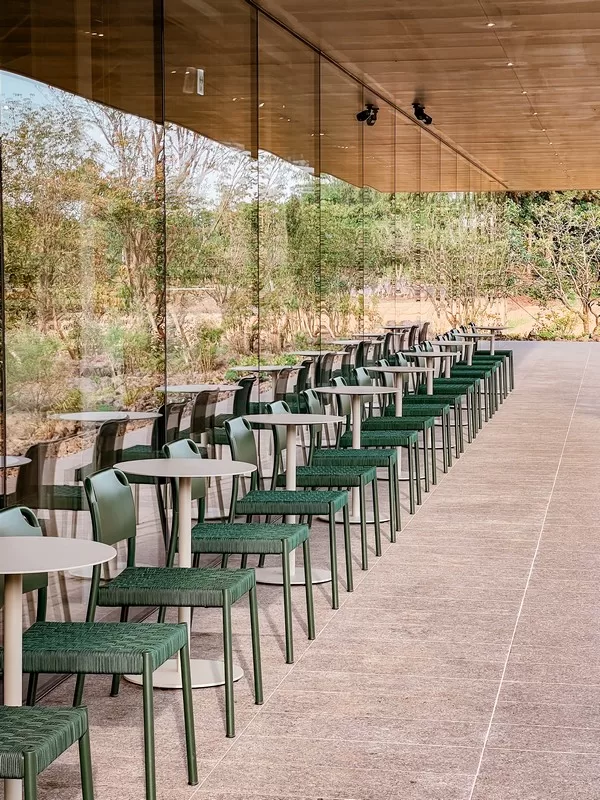
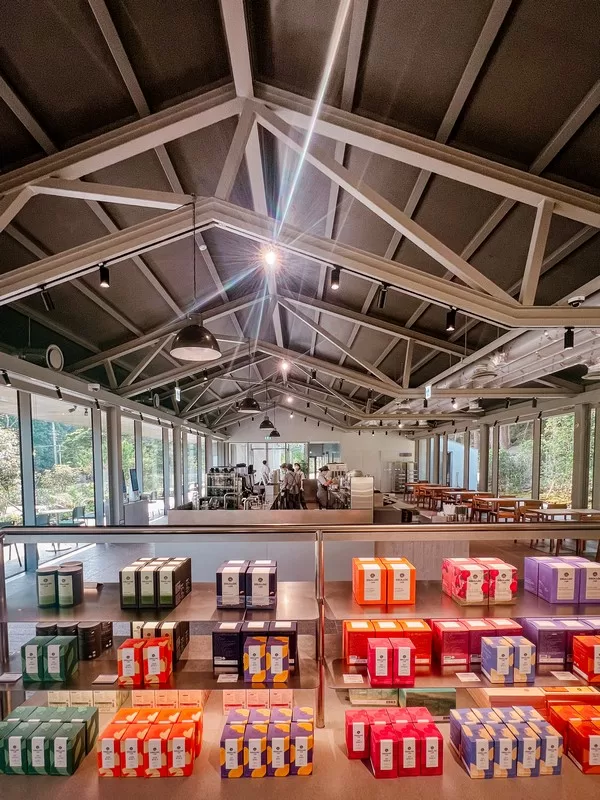
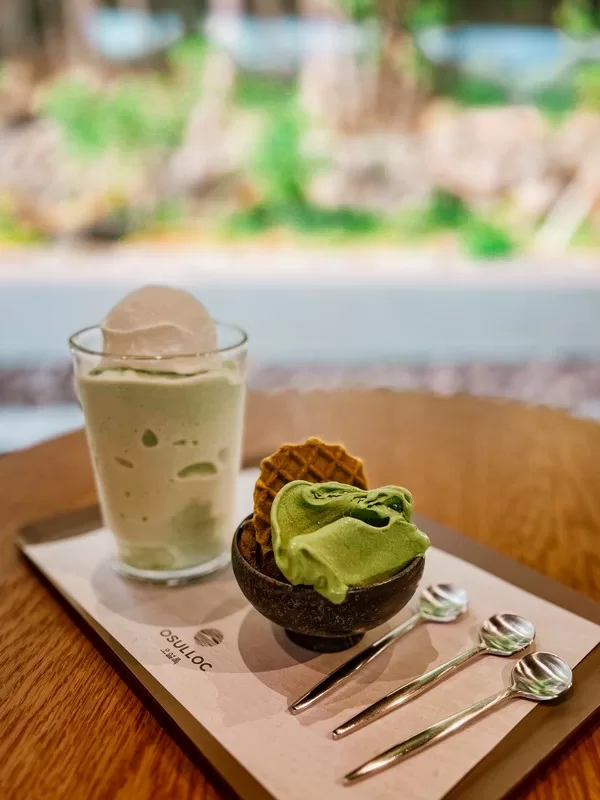
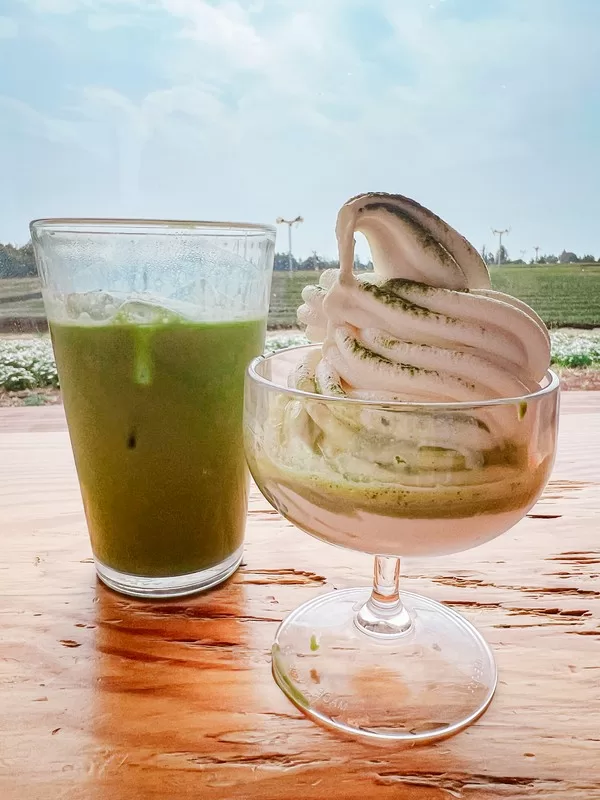
The menu leans into what makes this location special: Jeju-grown matcha and hojicha, a rotating lineup of tea gelato, and a matcha affogato I’ve already recommended to more friends than I can count. If your itinerary has you on the east side of the island, this is your OSULLOC stop, no backtracking required.
- Address: 191 Seoseong-ro 652beon-gil, Namwon-eup, Seogwipo-si, Jeju-do (제주 서귀포시 남원읍 서성로652번길 191)
- Hours: Every day: 10:00am ~ 6:00pm
- What to do nearby: Hueree Natural Park
Fun fact: OSULLOC is the largest producer of tea in Korea and three of their four tea field plantations are located on Jeju Island.
Jeju Dawon (제주다원) and the Green Tea Maze Park (녹차미로공원)
Best for: Families traveling with children
This one goes by a few names depending on where you look it up. The sign at the entrance just says Jeju Green Tea Field, good marketing on their part. On Kakao Map you’ll find it under Jeju Dawon Agricultural Cooperative Corporation, a mouthful. If that’s not confusing enough, most people who’ve been just call it the Green Tea Maze Park.
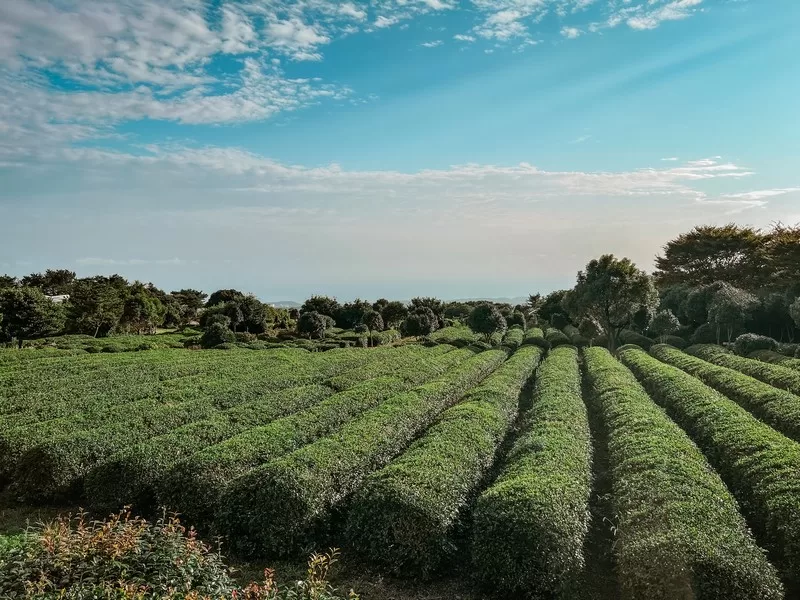
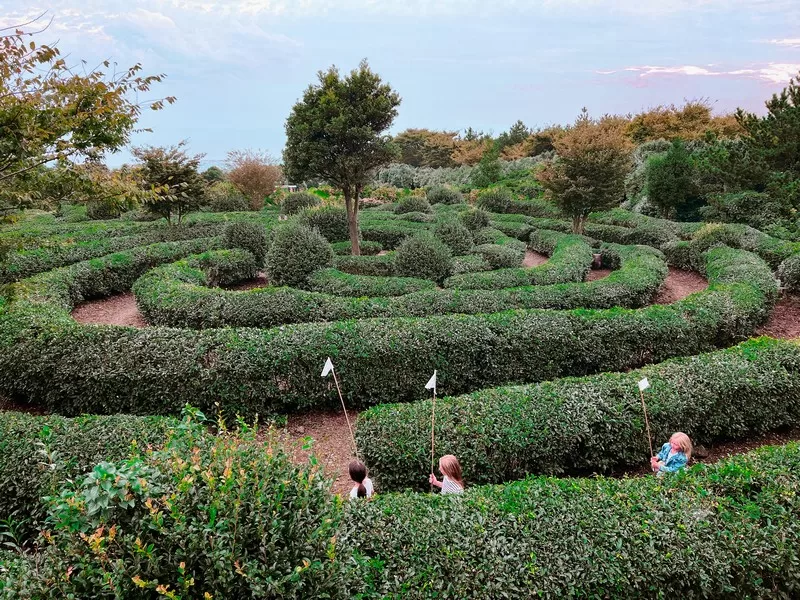
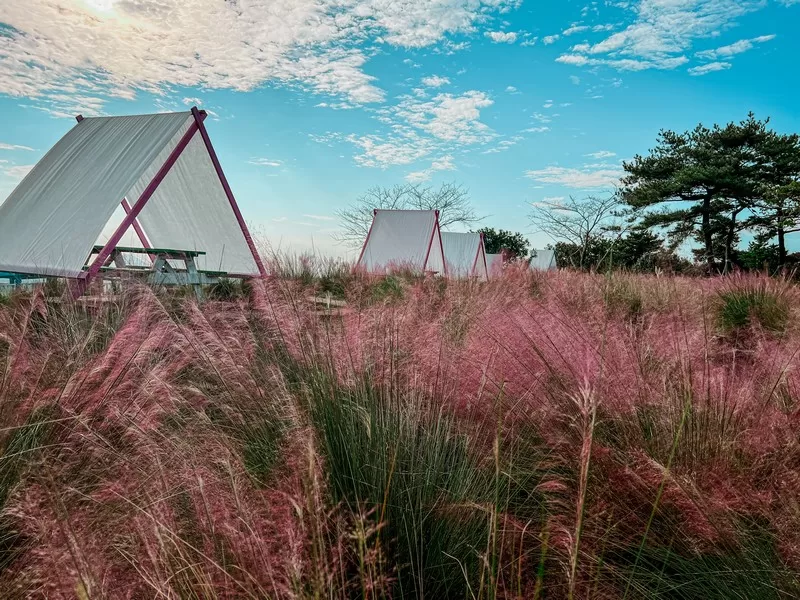
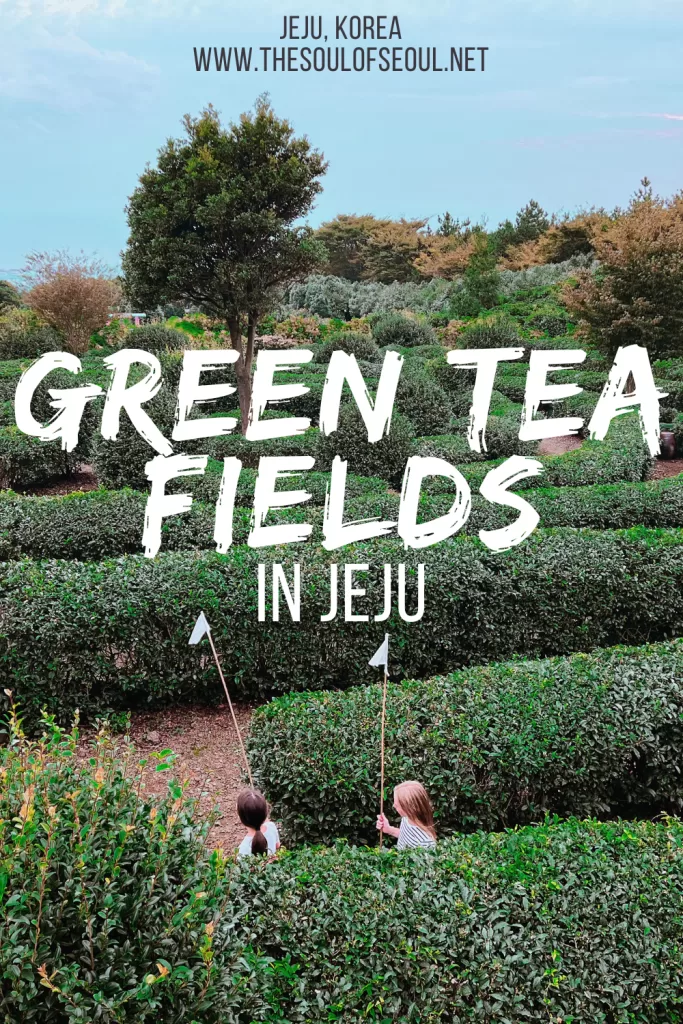
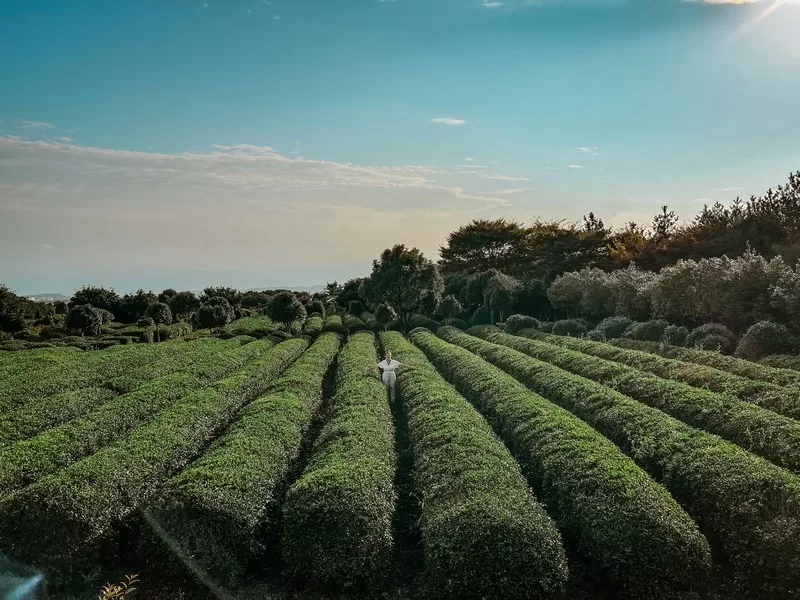
Whatever you call it, this is the spot for families. Whenever we have visitors of the family sort, this is where we take them. There are three separate maze trails cut into the tea bushes themselves, ranging from a quick thirty minute loop to a full ninety minute wander if your kids have the stamina for it. My favorite part isn’t even the mazes though. It’s the outdoor seating which has you perched with the best views out all the way to the ocean, looking out over Moonseom, Beomseom, Marado, Gapado, and the silhouette of Sanbangsan in the distance. You get the ocean and the tea fields in the same frame, which is rare.
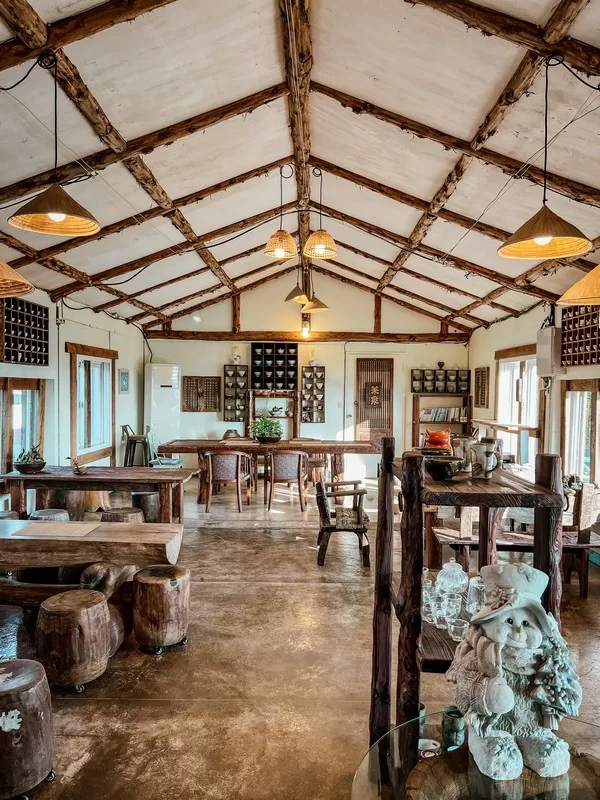
Admission includes a tea tasting. There’s a tea room on site but the best seats are outside in my opinion. Take your tea out to the tables with amazing views out to the ocean. No other green tea field on the island has views like this one.
- Address: 1246 Sanroknam-ro, Seogwipo-si, Jeju-do (제주 서귀포시 산록남로 1246)
- Hours: Every day: 10:00am ~ 6:00pm
- What to do nearby: Podo Museum
Fun fact: Green tea contains less caffeine than coffee but enough to produce a gentle, focused effect.
Sumang Dawon (수망다원)
Best for: A quiet, unhurried tea field experience
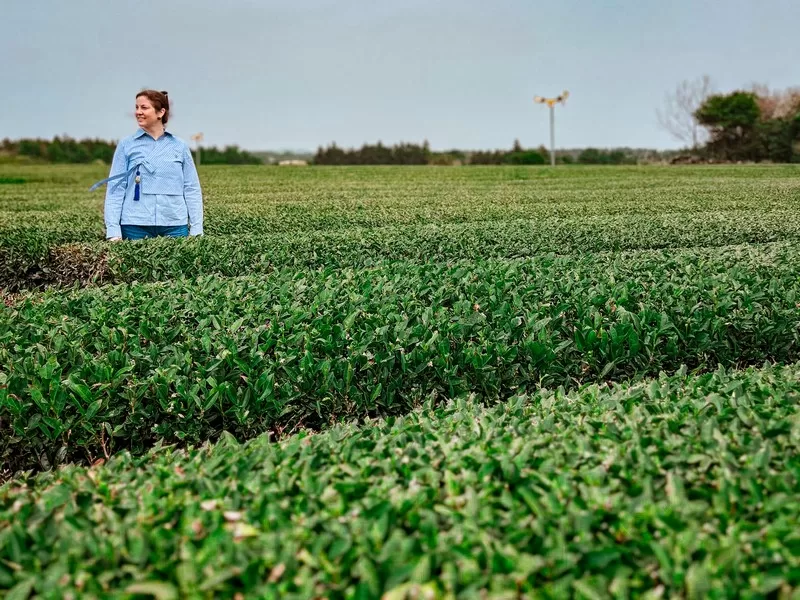
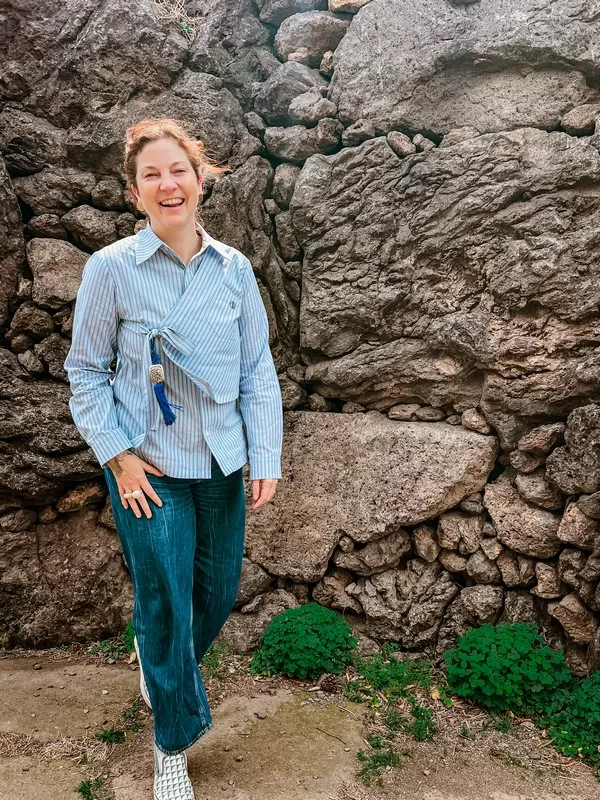
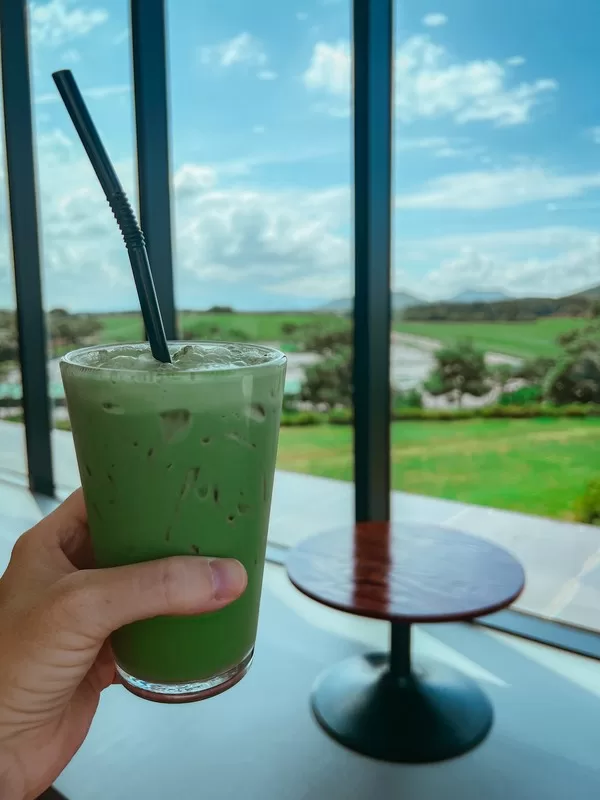
Sumang Dawon, operated by the local tea farming association, is one of the calmer green tea fields on the island. You enter by walking between two huge basalt stone walls. You’ll see the cafe before you see the fields themselves, a quiet space with windows that look straight out over the tea bushes. This is the most simplified and calming tea experience spots on Jeju.
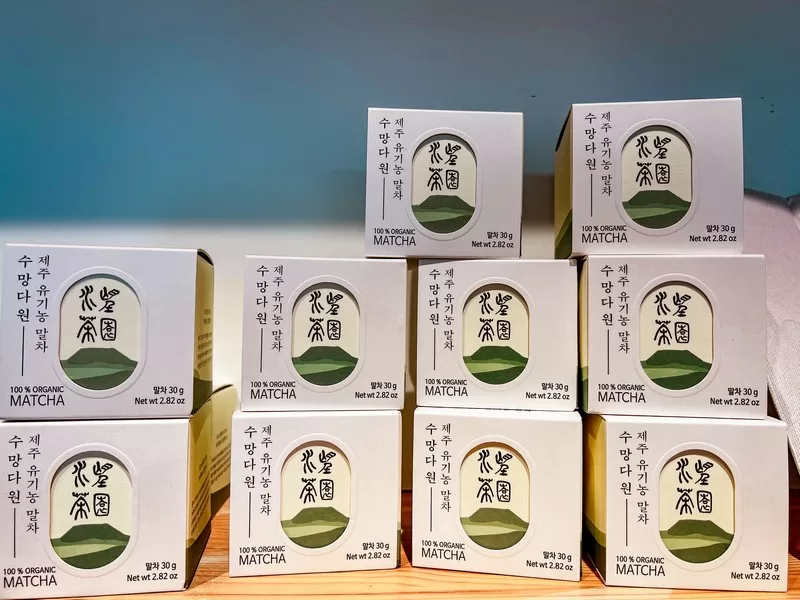
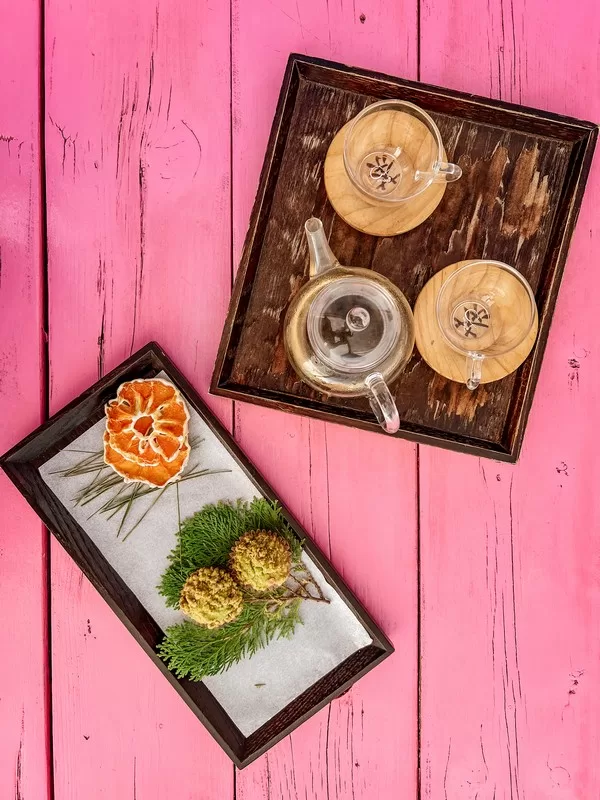
Order your favorite matcha concoctions, herbal teas, and biscuits and ice creams with green tea folded in. Enjoy your tea with the view, then head out to the fields once you’re done. It’s calming, sprawling, beautiful, and the staff have been kind every time I’ve gone. This is the kind of unhurried green tea experience I think more people should build into their Jeju trip. This is the least crowded of the green tea fields we’ve been to.
- Address: 84 Taesu-ro 608beon-gil, Namwon-eup, Seogwipo-si, Jeju-do (제주 서귀포시 남원읍 태수로608번길 84)
- Hours: Every day: 10:00am ~ 6:00pm
- What to do nearby: Seongeup Folk Village
Fun fact: Green tea is loaded with antioxidants that support brain function, aid fat loss, protect against certain cancers, and lower the risk of heart disease. Studies have even suggested that regular green tea drinkers may live longer than those who don’t drink it.
Seongeup Green Tea Village (성읍녹차동굴) and the Green Tea Cave
Best for: A tea field visit with a different kind of photo
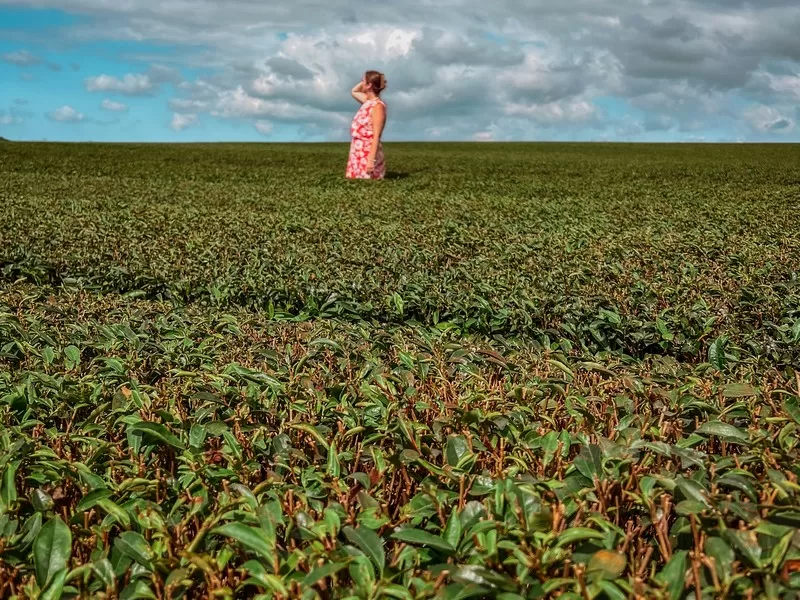
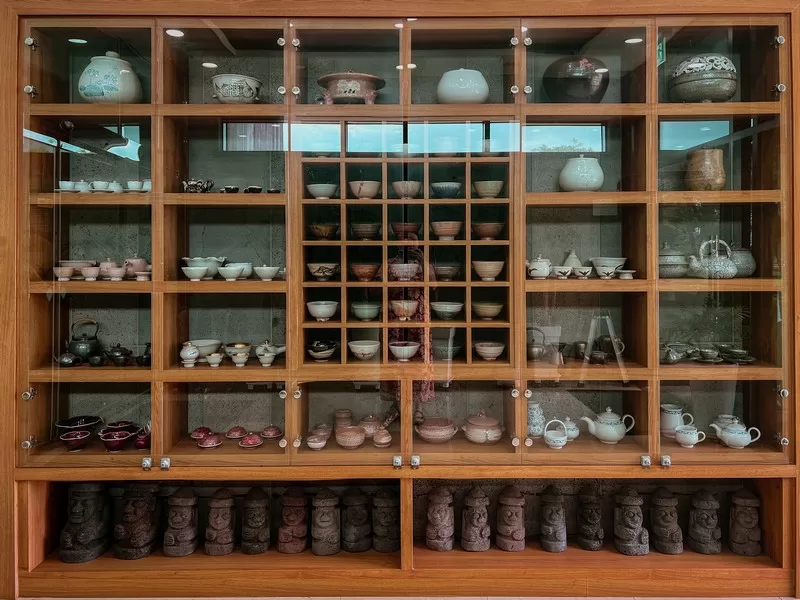
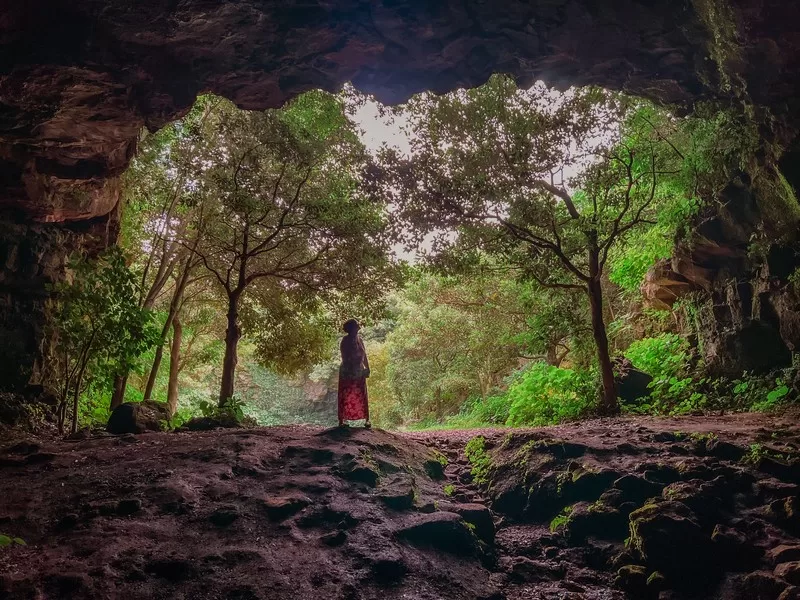
Tucked behind the tea fields at Seongeup is a forest path that leads to what everyone calls the Green Tea Cave, a natural volcanic formation that’s become one of Jeju’s more distinctive photo spots. This spot is really interesting and sort of has something for everyone. A beautiful tea field in it’s own right, but they amp up the tourist-friendly bits too for a full experience.
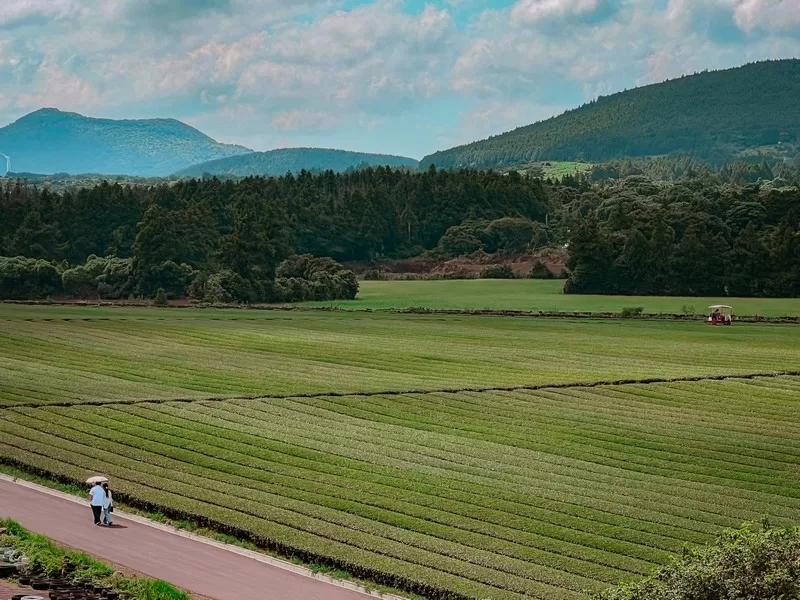
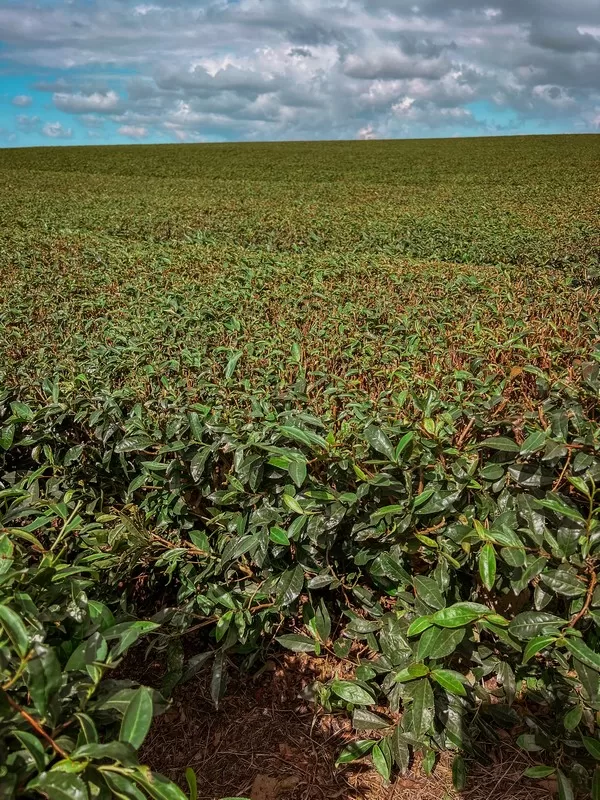
Beautiful green tea fields and angled just right, you can get pictures where it’s just green tea bushes and sky, but there’s a cave to find out in the midst of the fields, a real surprise, a small go-kart track, if you have kids that need some excitement, a cafe with seating upstairs and foot baths downstairs. It’s a great spot on the east side of the island for a full family-friendly experience, and yet calming at the same time.
- Address: 4778 Jungsangandong-ro, Pyoseon-myeon, Seogwipo-si, Jeju-do (제주 서귀포시 표선면 중산간동로 4778)
- Hours: Every day: 9:30am ~ 5:30pm
- What to do nearby: Seongeup Folk Village, Jeju Folk Village, Jeju Marine Animal Museum
Fun fact: Jeju is honeycombed with more than 160 known lava tube caves, more than anywhere else on Earth, formed when the outer edge of flowing lava cooled and hardened while the molten rock inside kept draining out. The island’s most famous cave, Manjanggul, is a UNESCO World Heritage Site built by that same volcanic history.
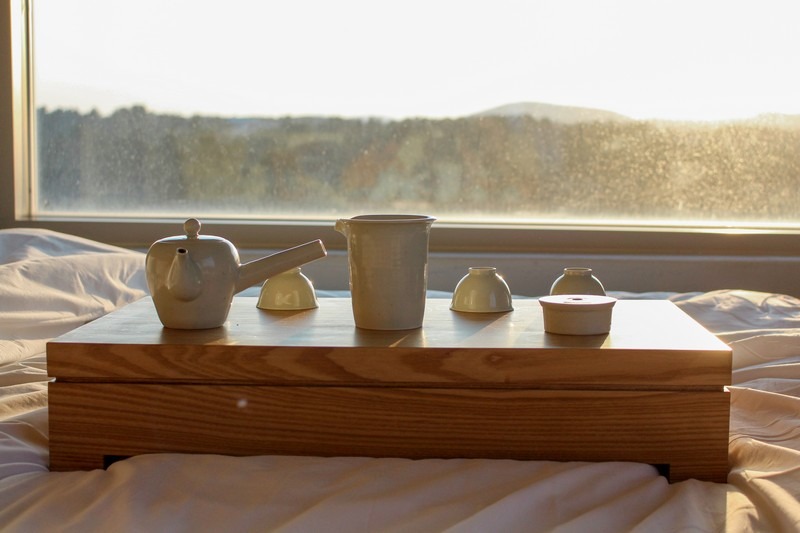
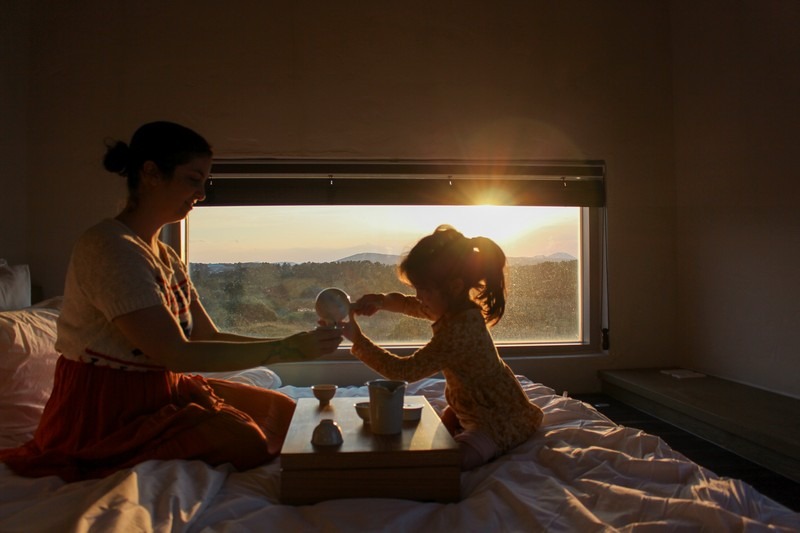
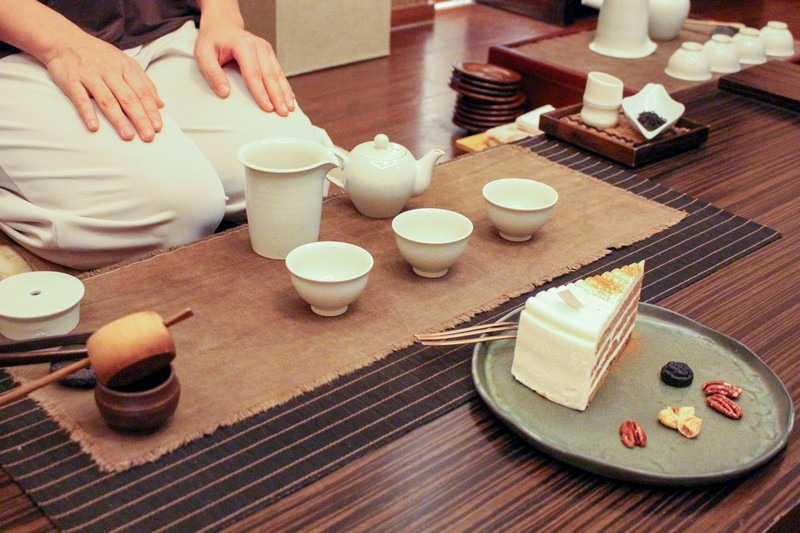
Bonus: Chuidasun Tea Resort
Best for: An overnight stay built entirely around tea
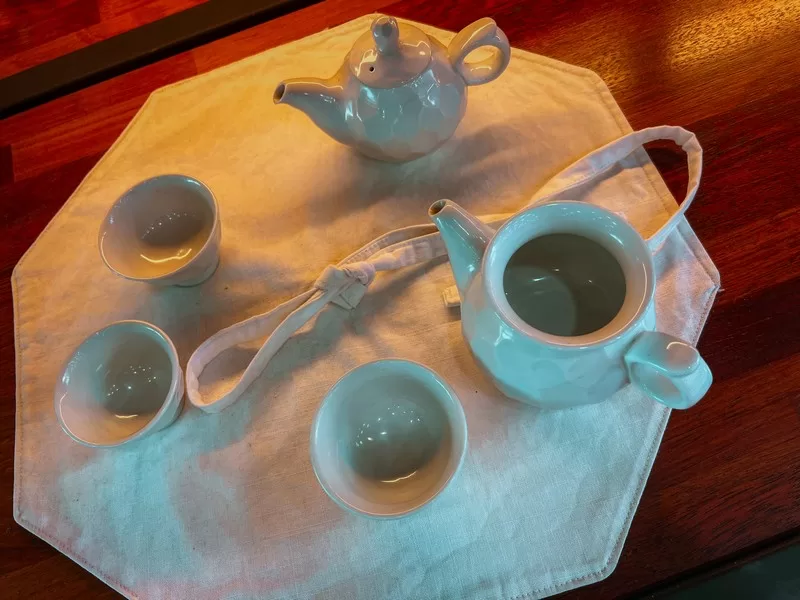
This is the only place on this list you can actually sleep at. No, there aren’t green tea fields here, but you can visit the fields above to get those. Instead, Chuidasun is a tea and meditation themed stay near Seongsan Ilchulbong, on the eastern side of the island. Every room comes with its own tea set, so you can brew a cup whenever you want rather than working around a cafe’s hours.
There are tea and meditation classes built into the guest experience, and even if you’re not staying overnight, you can book a private tea room session where someone walks you through making and serving tea properly, then leaves you alone with quiet meditative music the views. If your visit to Jeju Island is all about tea time, then this is the hotel in Jeju you’ll want to stay at.
- Address: 2688 Haemajihaean-ro, Seongsan-eup, Seogwipo-si, Jeju-do (제주 서귀포시 성산읍 해맞이해안로 2688)
- Book a stay: On Booking.com or on Agoda.com.
Fun fact: Korea’s tea ceremony tradition, darye (다례), traces back over a thousand years to Buddhist monks who used tea to sharpen focus during meditation, which is part of why tea and mindfulness are still so tied together in Korean culture today.
FAQ
What is the most famous green tea field on Jeju Island?
OSULLOC’s original plantation in Seogwang, on the western side of the island, is the most well-known. It’s Korea’s largest tea plantation and includes a museum, cafe, and the Innisfree flagship shop.
Are there OSULLOC green tea fields on the east side of Jeju?
Yes. OSULLOC opened a Tea House Tea Factory location in Namwon, on the east side, in June 2026, beside the Hannam tea field.
Which Jeju green tea field is best for kids?
Jeju Dawon’s Green Tea Maze Park, near Jungmun, has three maze trails cut into the tea bushes and an ocean-view seating area, making it the most family-friendly option on the island.
Can you stay overnight at a Jeju tea field?
Chuidasun Tea Resort, near Seongsan Ilchulbong, is a tea and meditation themed stay where every room includes its own tea set. It doesn’t have working tea fields on site but is built entirely around the tea experience.
Where is the Jeju Green Tea Cave?
The Green Tea Cave is at Seongeup Green Tea Village in Pyoseon-myeon, reached by a forest path behind the main tea fields.
Every one of these fields, OSULLOC included, offers something a little different: a maze cut into live tea bushes, a walk between basalt stone walls, a step out of a volcanic cave into a wall of green with the mountain behind you, or a night’s sleep surrounded by tea.
Did you like this article? Pin iT!