The OSULLOC Tea Factory In Jeju: A Quieter Green Tea Experience
Last Updated on October 14, 2026
When most people think of visiting OSULLOC in Jeju, they picture the famous Tea Museum on the island’s west side. It has become one of Jeju’s best-known attractions, with tour buses arriving throughout the day and visitors lining up for green tea ice cream and souvenirs. But there’s now another OSULLOC destination, one on the east side of the island. It’s new, it’s open, and most people don’t know it exists yet.
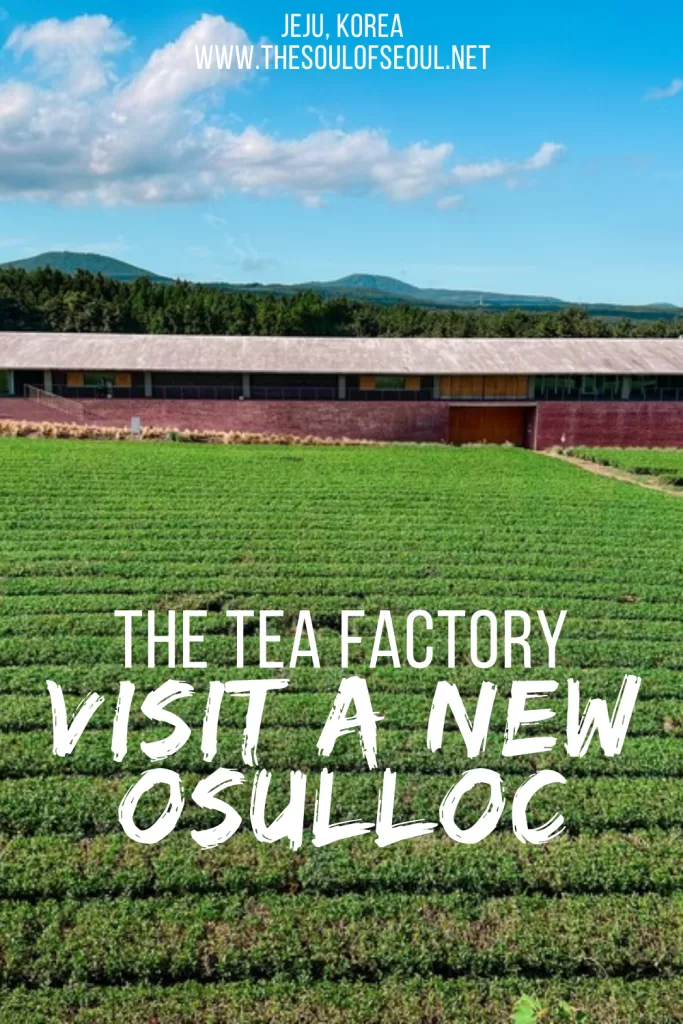
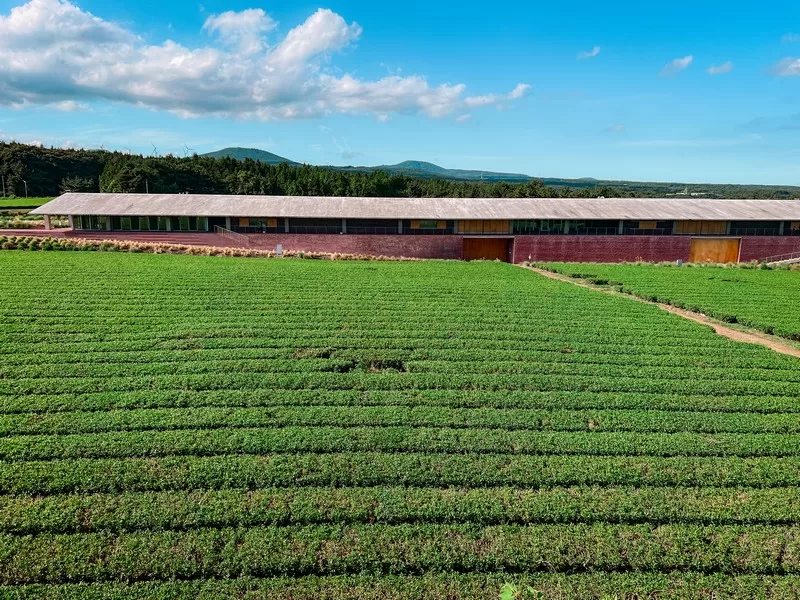
There are far more tea fields on Jeju Island than most visitors realize, so it’s no surprise that the Hannam area remains off the radar. The Hannam Tea Fields in southeastern Jeju are now home to the new OSULLOC Tea House Tea Factory (오설록 티하우스 티팩토리점), a new visitor experience that connects the tea fields, production facility, Tea Library, café, observatory, and even a quiet Gotjawal forest trail into one relaxing visit, a bonus of an eastern side adventure is there are more forests to explore.
If you’ve already visited the Tea Museum, this isn’t a repeat experience. In many ways, it feels like the next chapter of the OSULLOC story. And if you’re someone who prefers quieter places over tourist hotspots, this may end up being your favorite… until it’s well-known.
Here’s what you need to know to visit the OSULLOC Tea Factory:
- Basic Info
- A Different Side Of OSULLOC
- From Farm To Cup
- The Café
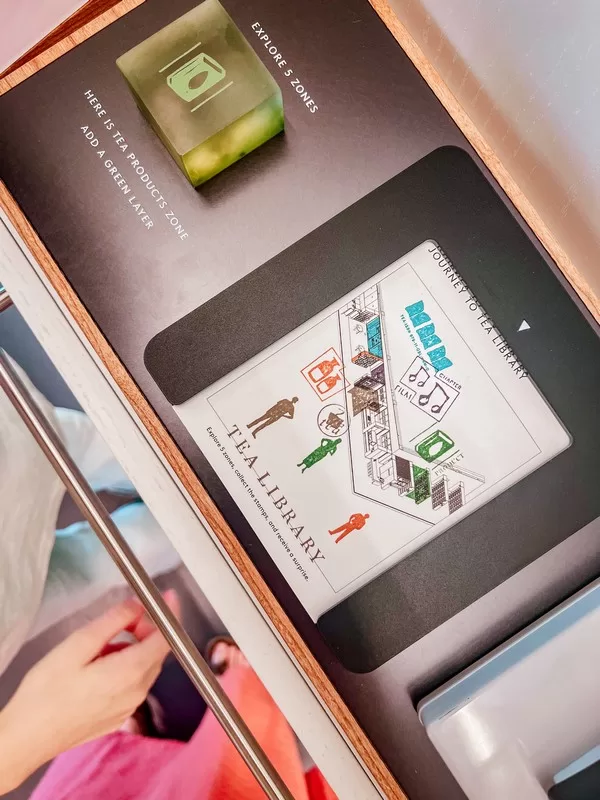
- The Tea Library
- Walking Through The Hannam Tea Fields
- Is It Better Than The Tea Museum?
- FAQ
(This post contains affiliate links, which means I receive a certain percentage of a sale if you purchase after clicking at no cost to you. Thank you for your support.)
Basic Info
Address: 191 Seoseong-ro 652beon-gil, Namwon-eub, Seogwipo-si, Jeju-do (제주 서귀포시 남원읍 서성로652번길 191)
How to get there: If you’re driving, the OSULLOC Tea House Tea Factory is about 15 minutes from Pyoseon Beach, 20 minutes from Seongeup Folk Village, and around 40 minutes from Jeju City. While it is possible to reach the Hannam Tea Fields by bus, having a rental car makes visiting much easier since this part of southeastern Jeju is fairly rural.
If you’re exploring eastern or southern Jeju, it’s an easy stop to combine with nearby attractions rather than making a special trip across the island. Read the guide to renting a car in Jeju so you know how to prepare for a visit to the island.
Hours: Every day: 10:00am ~ 6:00pm
A Different Side Of OSULLOC
The famous OSULLOC Tea Museum has become one of Jeju’s busiest attractions, particularly during spring and summer. Tour groups arrive by the busload and the café often has long lines. Of course, the fields themselves are sprawling so you can always get a picture of yourself with an open field in the background, but when it comes to the experiences of the visit, you certainly won’t be alone. Worth it? Yes. But not really the calming experience of other green tea field spots on the island.
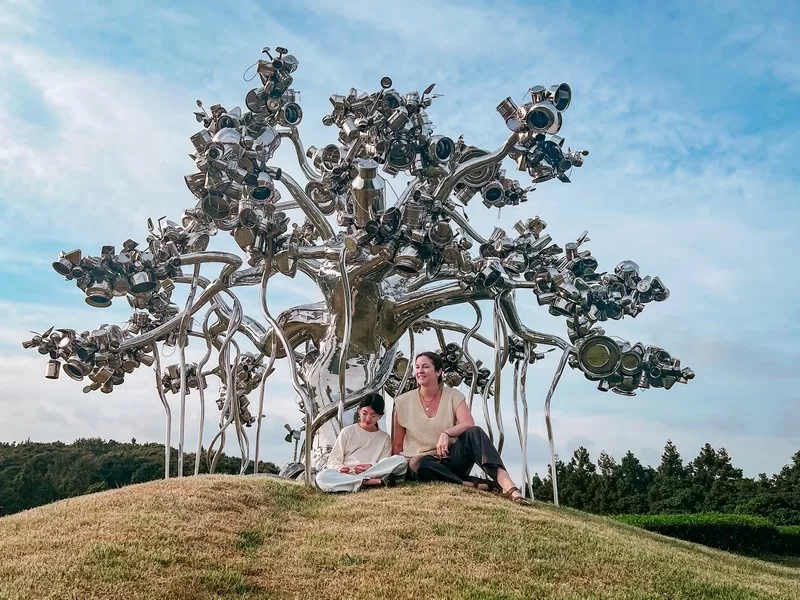
The Tea Factory couldn’t feel more different. Since it’s only about ten minutes from our house, I’ve found myself stopping in whenever I need a quiet afternoon. OSULLOC tea is famous for a reason, it’s delicious and premium so I’m not exactly stretched to come up with reasons to stop in.
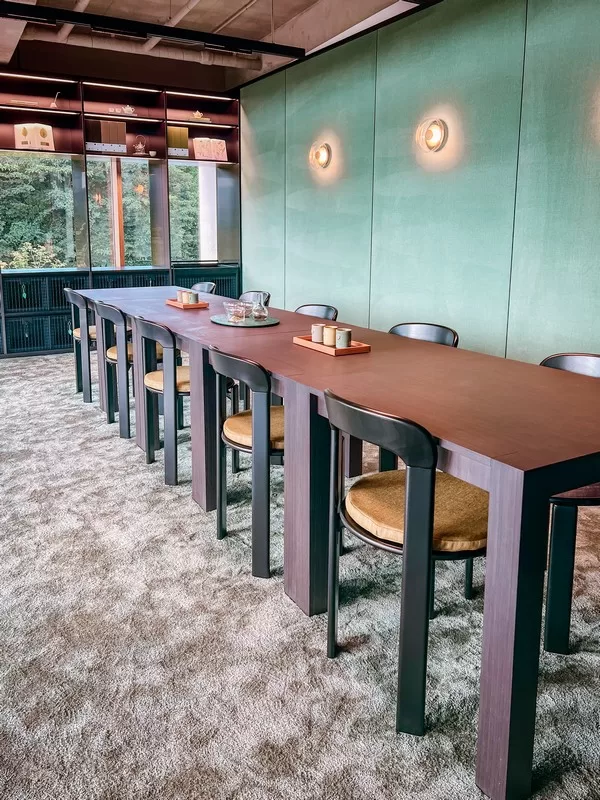
On top of that, in many ways the point of the experience is to be alone. Signs direct visitors out to the fields, to stop in the “library”, a name that instructs visitors to be quiet upon entrance, and then out to a forest nearby for a calming nature walk. It’s a calming field of experiences.
From Farm To Cup
One of the things I appreciated most is that this isn’t simply another café attached to a gift shop, though of course you’ll find all of your favorite OSULLOC tea options here for purchase. We’ve gotten our favorite OSULLOC matcha twice there, a household staple for us.
The entire concept, however, revolves around showing visitors how tea moves from the fields surrounding you into the cup you’re holding. Tea grown in the Hannam Tea Fields is brought directly into the adjacent factory where it is processed, blended, and packaged before being shipped around Korea and overseas.
As you walk through the site, you move naturally between the tea fields, the factory, the café, and the Tea Library, following the journey of tea from leaf to finished product. They have a little stamp tour to make sure you know where to go and don’t miss any corners and shelves.
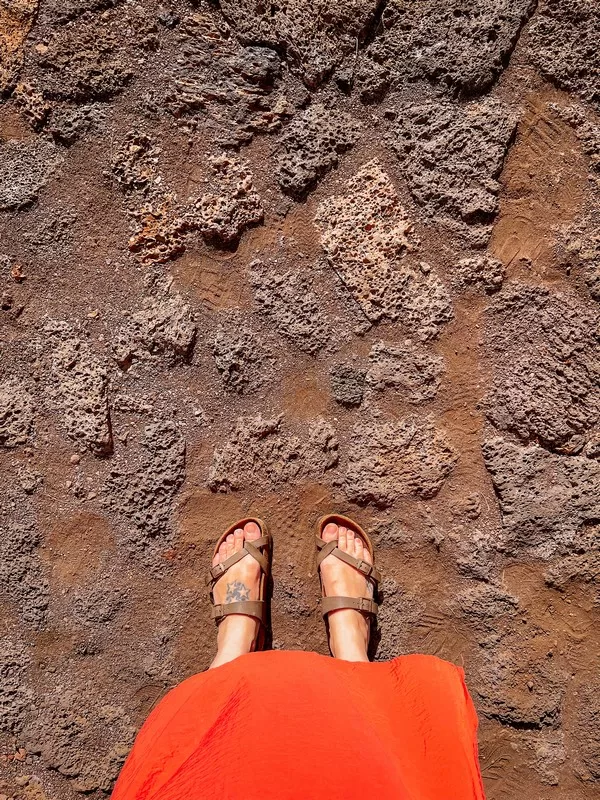
Fun fact: OSULLOC exists today because the late Suh Sung-hwan, founder of Amorepacific Group, believed Korea should have its own tea culture rooted in Jeju. When he first began planting tea here in the late 1970s, many considered it an impossible project. The volcanic landscape was rocky, windy, and far from ideal. Decades later, those early tea fields have grown into more than one million square meters of organic tea plantations, helping establish Jeju as Korea’s premier tea-growing region.
The Café
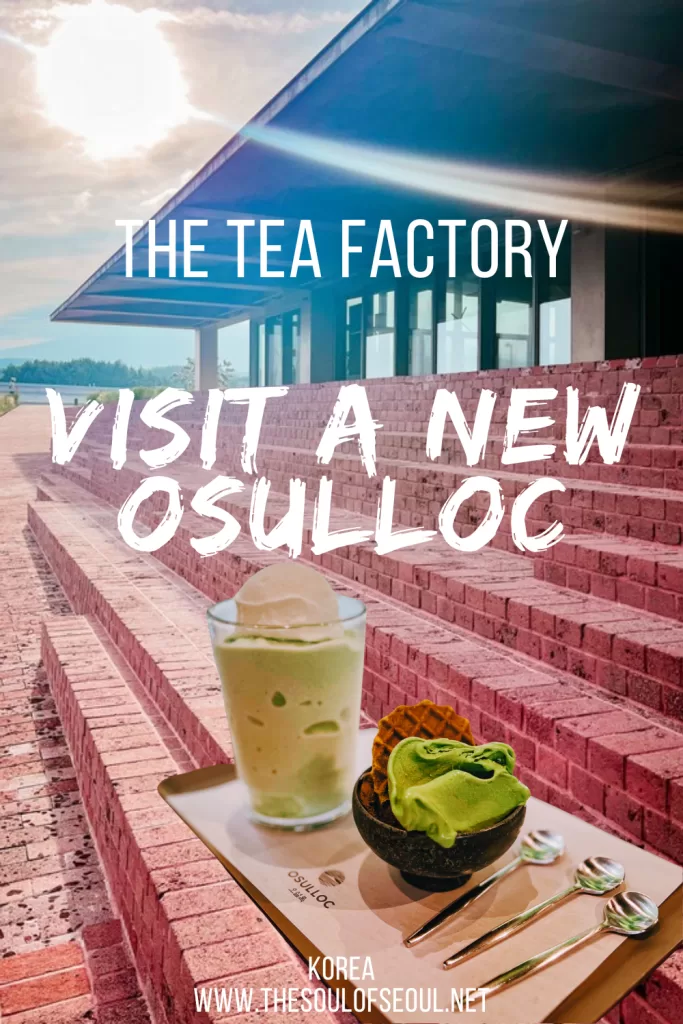
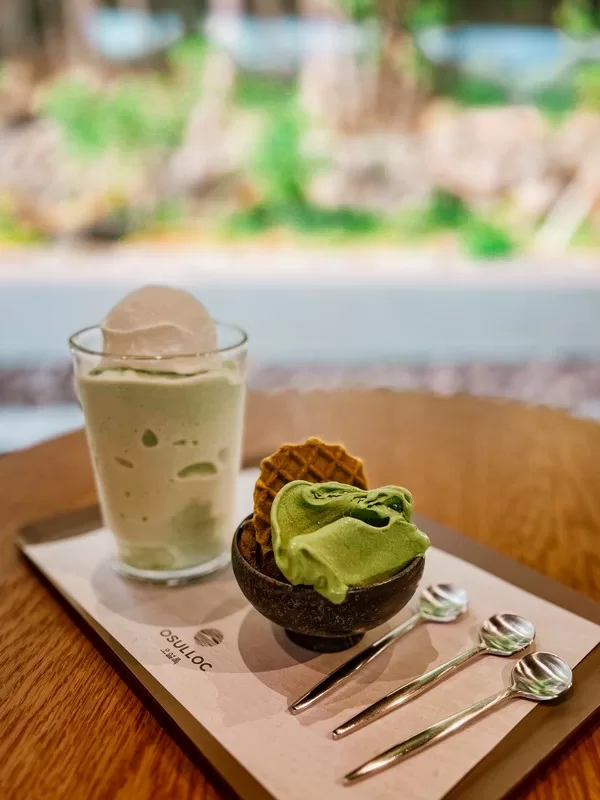
One thing OSULLOC has always done well is tea-inspired desserts. The Tea Factory café continues that tradition with an elevated menu featuring drinks and desserts made using Jeju-grown matcha and hojicha. One of the specialties here is the Matcha Affogato, which combines matcha gelato with a creamy matcha shake.
They also offer several tea gelato flavors that reinterpret green tea and roasted hojicha in ways that go beyond the classic green tea ice cream most visitors already know. You’ll want to get both so you can taste test and compare if you ask me, that’s what we did anyway.
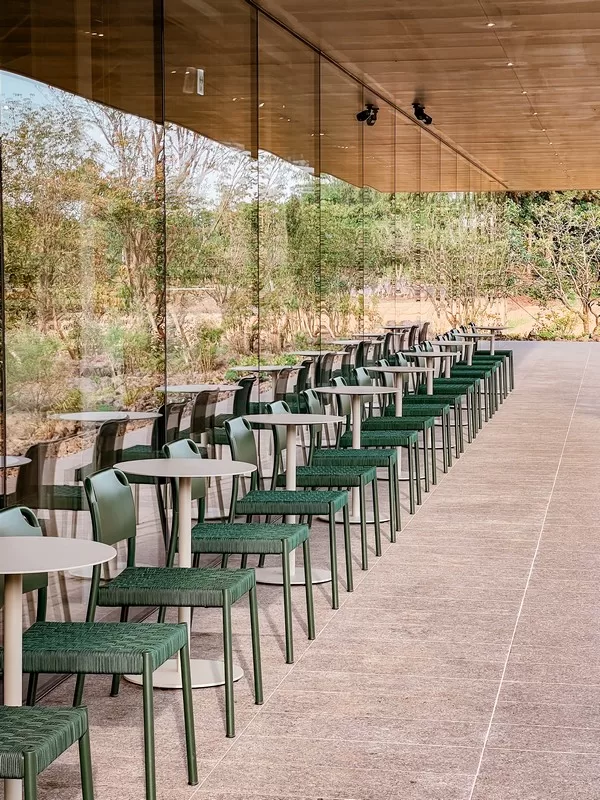
Interestingly, the cafe doesn’t overlook the sprawling green tea fields. It’s set up as more of a pass through, you’ll want to take a break here to enjoy a drink, but really, you know the experience is still to come. I recommend walking out and around to see the Tea Library, forest walk, and factory first and then coming back to the cafe at the end. You’ll appreciate that drink more at the completion of the visit.
If you’re looking to cafe hop around Jeju, you certainly can, this is just one of the best cafes on Jeju Island. Check out the guide to cafes in Jeju so you know where to go and can add some great stops to your Jeju itinerary.
The Tea Library
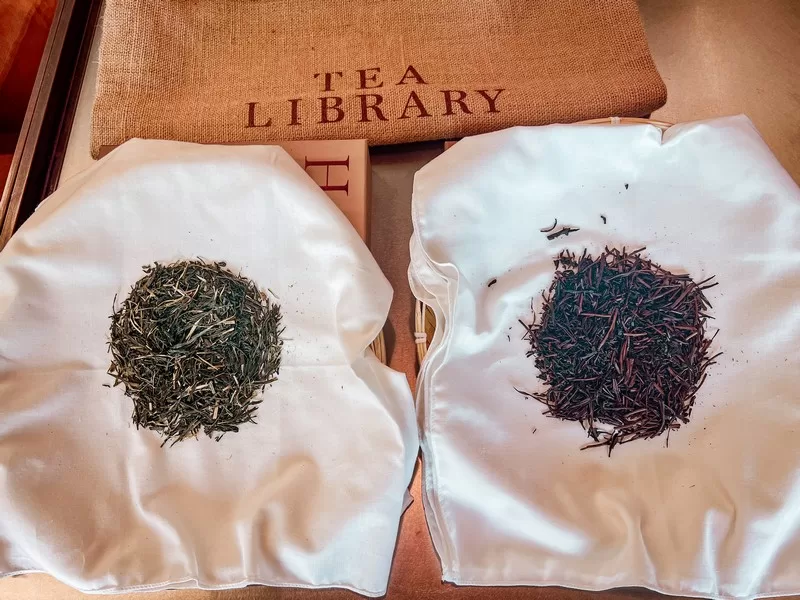
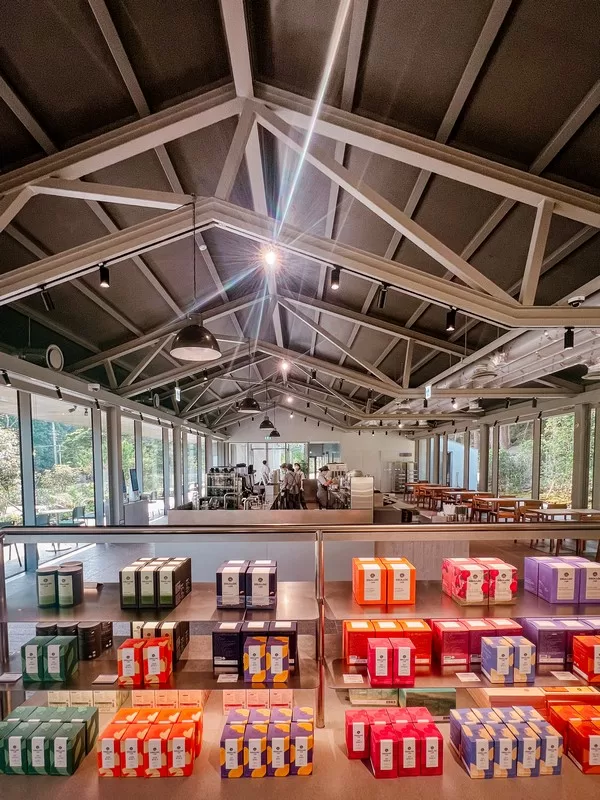
The Tea Library is part museum, part exhibition space, and part archive dedicated to OSULLOC’s history, as well as a shop that has all of the teas and OSULLOC collectibles you could want.
Rather than simply displaying products, it tells the story of how a rocky, windswept part of Jeju eventually became Korea’s leading tea-producing region, if you’re interested in tea, you’ll find it interesting. You’ll find exhibits explaining tea varieties, OSULLOC’s decades of research, displays of historic packaging, and the philosophy behind the brand’s approach to tea.
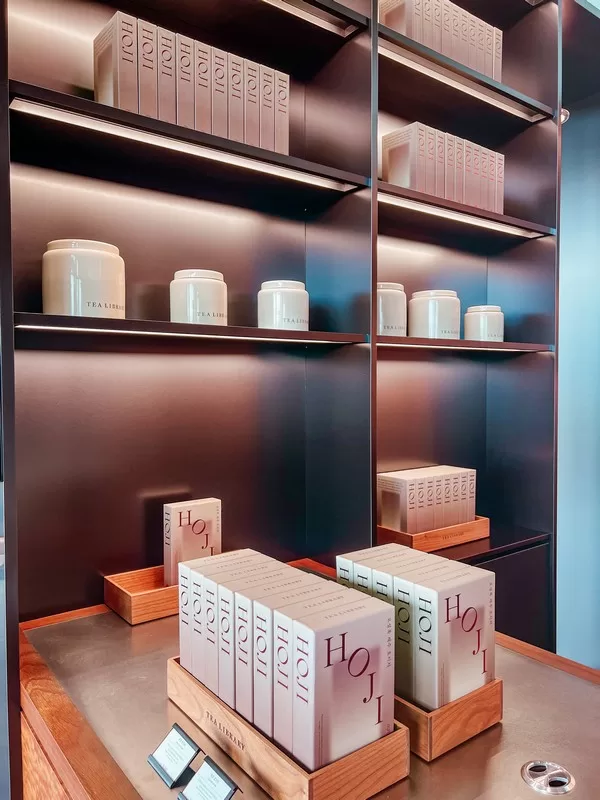
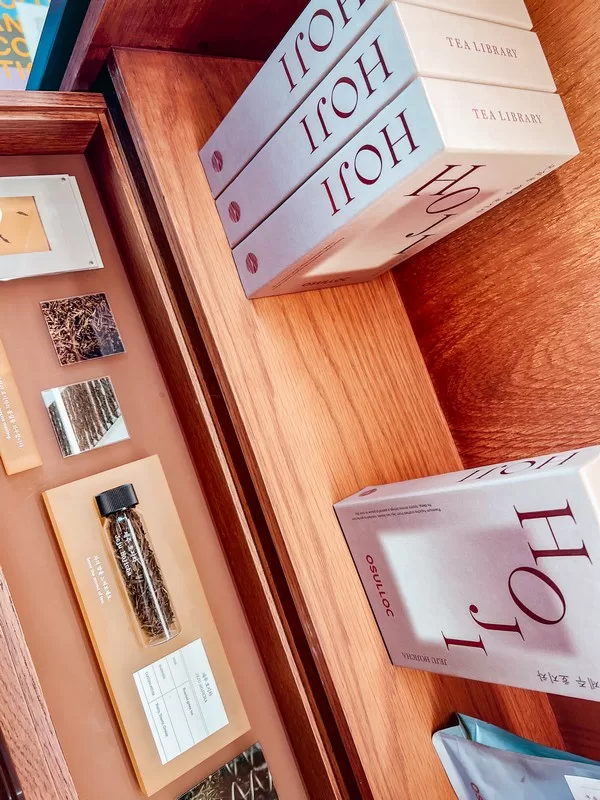
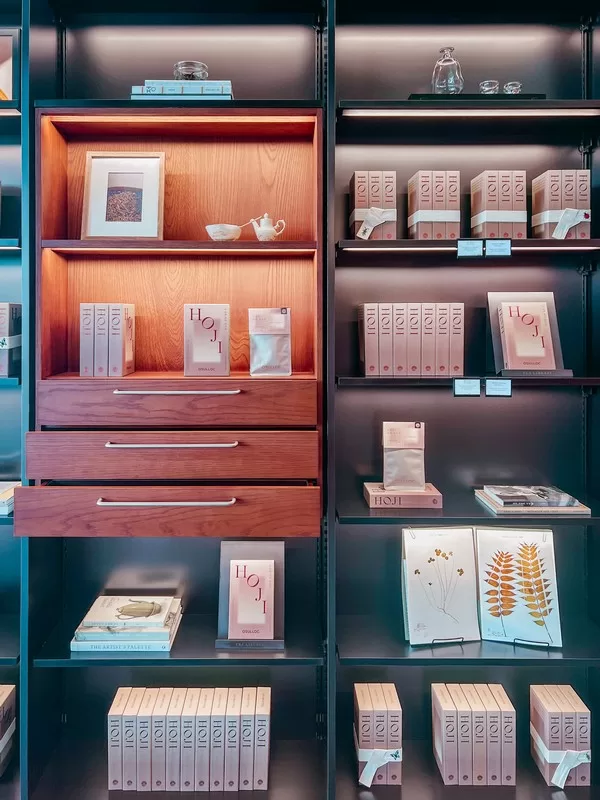
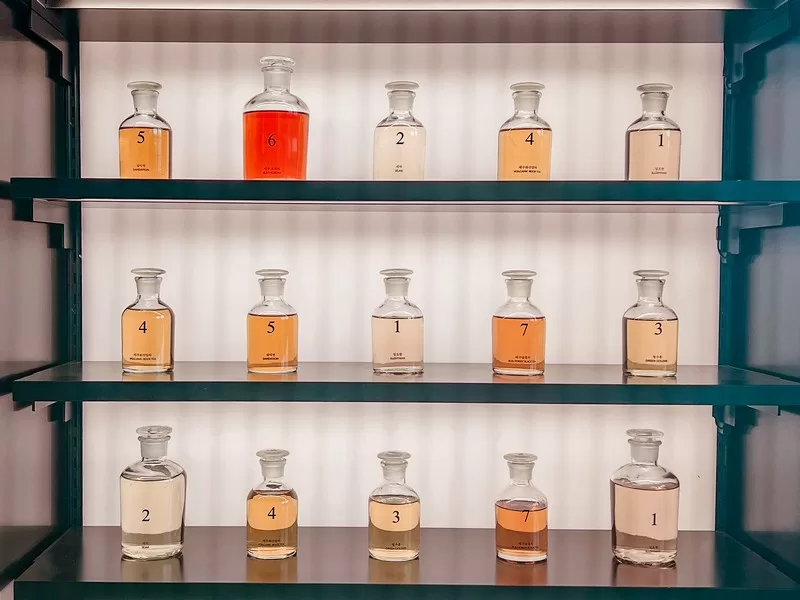
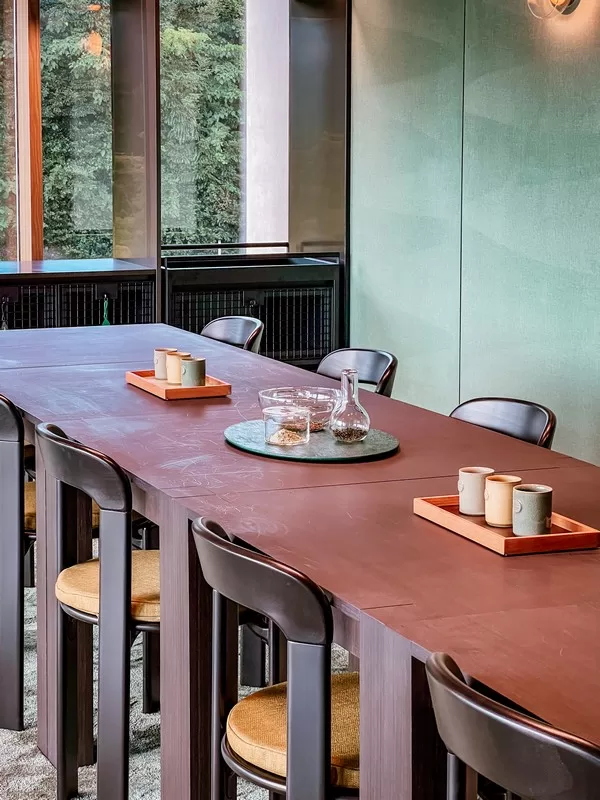
One section introduces the different types of tea produced in Jeju. Another focuses entirely on hojicha, where you can learn about the roasting process before sampling both hot and iced hojicha. There is also an immersive media wall that combines imagery of Jeju’s forests, volcanic landscape, and tea fields to tell the story of OSULLOC in a surprisingly calming way.

It isn’t huge, but it’s beautifully detailed. I expected to browse for just a few minutes and ended up spending much longer reading through the exhibits. Between the tea archive, tasting station, roasting displays, and immersive media wall, it does a wonderful job explaining why OSULLOC has become synonymous with Korean tea.
Walking Through The Hannam Tea Fields
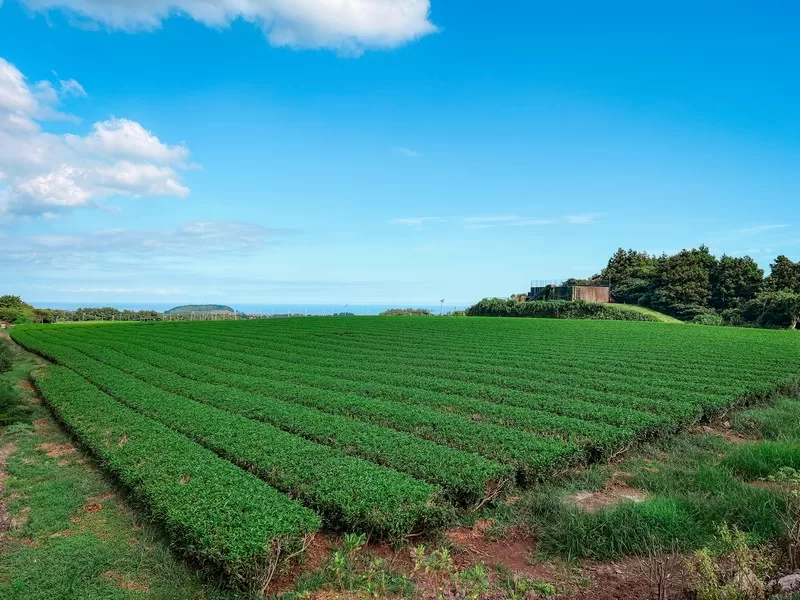
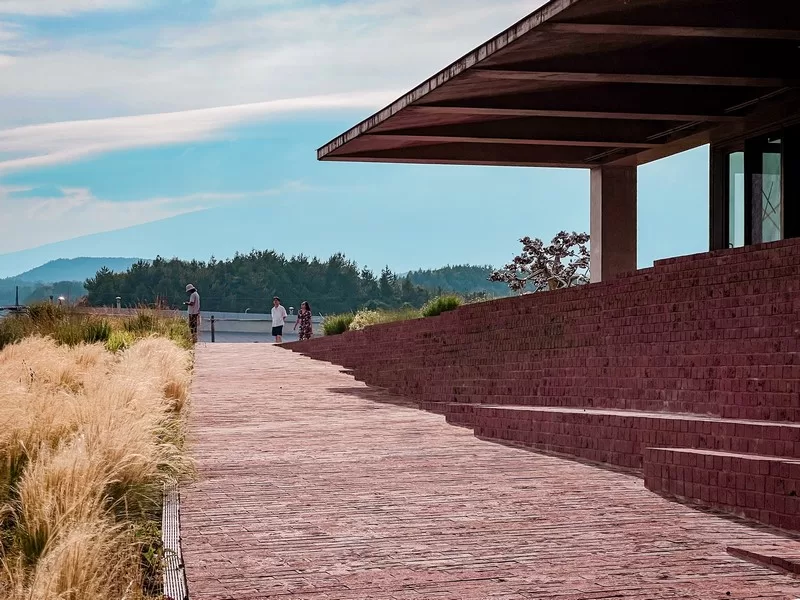
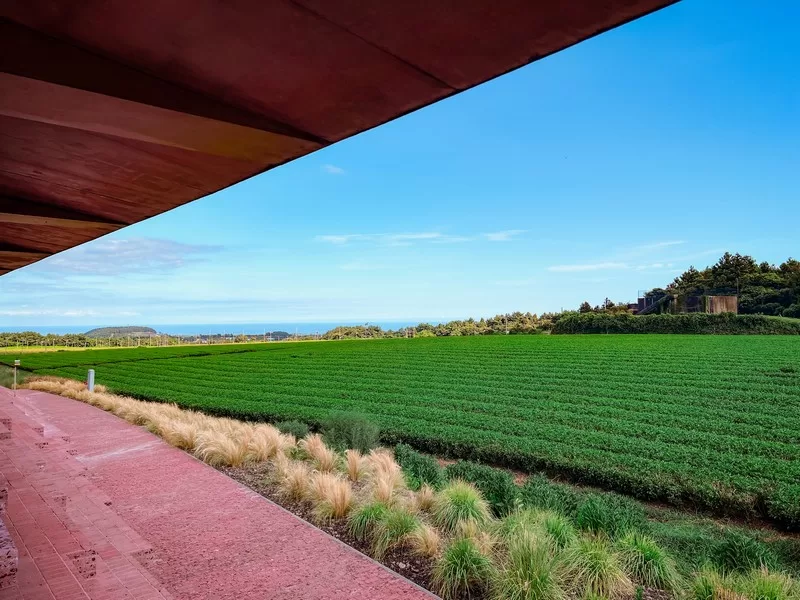
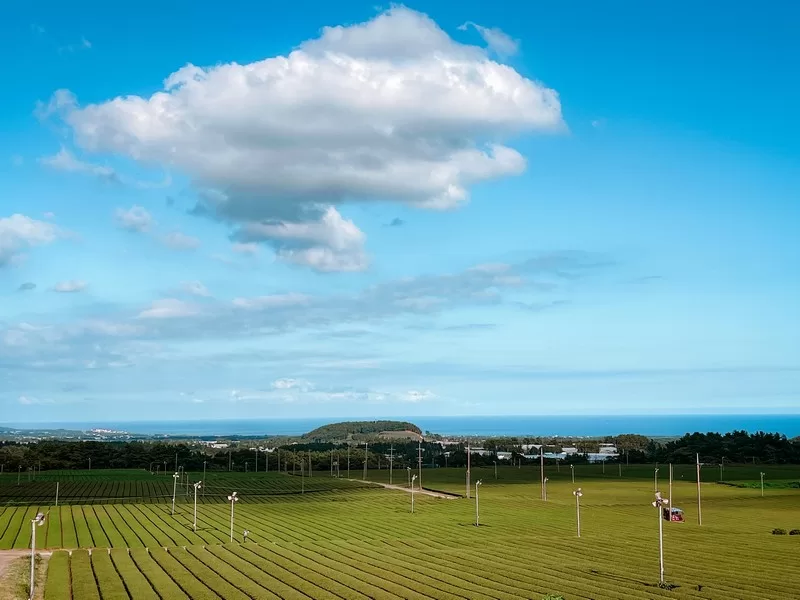
Outside is where the experience slows down. Unlike the more famous Seogwang Tea Fields, these fields still feel wonderfully uncrowded. The rows of vibrant green tea stretch toward Hallasan in one direction and out to the ocean in another direction.
Although the Tea Factory is open year-round, spring and early summer are especially beautiful when the tea bushes are at their brightest green. Autumn also offers wonderfully clear views toward Hallasan, while winter is perfect if you’re looking for an even quieter experience.
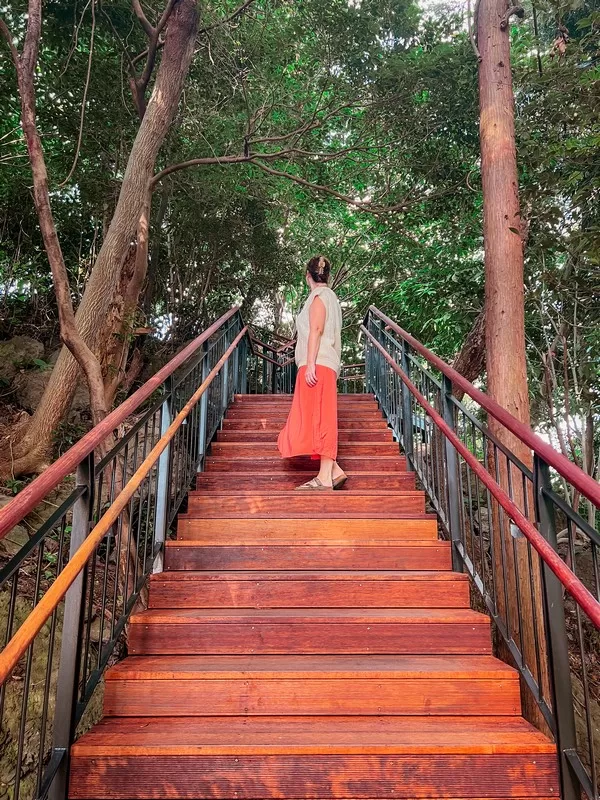
Don’t miss the observatory, which you can find across from the factory, but there’s also a staircase that can reach it just outside and behind the cafe as well. It’s one of those places where you naturally find yourself lingering longer than planned.
Is It Better Than The Tea Museum?
I don’t actually think they’re competitors. The Tea Museum is larger, iconic, and absolutely worth visiting if it’s your first trip to Jeju. The Tea Factory feels more intimate, especially since it’s newer so people just don’t know about it as much yet.
If the Tea Museum introduces you to OSULLOC, the Tea Factory helps you understand it. Personally, I enjoyed the quieter atmosphere here much more. It felt less like checking another attraction off my itinerary and more like spending a relaxing afternoon surrounded by one of Jeju’s most beautiful landscapes.
FAQ
Is the OSULLOC Tea Factory different from the Tea Museum?
Yes. While both are operated by OSULLOC, the Tea Museum focuses on introducing Korean tea culture, while the newer Tea Factory is designed around the journey from tea field to finished product. It also offers a much quieter experience.
Is the OSULLOC Tea Factory free?
Yes. Admission is free, though you’ll probably want to budget for tea, desserts, or shopping.
How long should I spend at the OSULLOC Tea Factory?
Most visitors will spend about 1.5 to 2 hours exploring the Tea Library, walking through the tea fields, enjoying the café, and taking in the views from the observatory.
Which OSULLOC location should I visit?
If it’s your first trip to Jeju, the Tea Museum is still worth experiencing. If you prefer quieter places, want to learn more about how tea is made, or simply enjoy relaxing with fewer crowds, I would recommend the Tea Factory.
The original Tea Museum deserves its reputation, but the Tea Factory offers something that feels increasingly rare in Jeju: space to slow down. Walking through the fields, learning about the history behind Korea’s best-known tea brand, and sitting with a cup of freshly brewed tea while looking over the plantation makes for a wonderfully peaceful afternoon.
If you’re planning a trip around Jeju and want to experience more than the island’s busiest tourist attractions, add the new OSULLOC Tea Factory to your itinerary. It offers a glimpse into the journey from farm to cup while reminding visitors that some of Jeju’s best experiences are still the quiet ones.
Did you like this post? PIN IT!