Bojagi: Korea’s Traditional Art of Cloth Wrapping
Last Updated on October 13, 2026
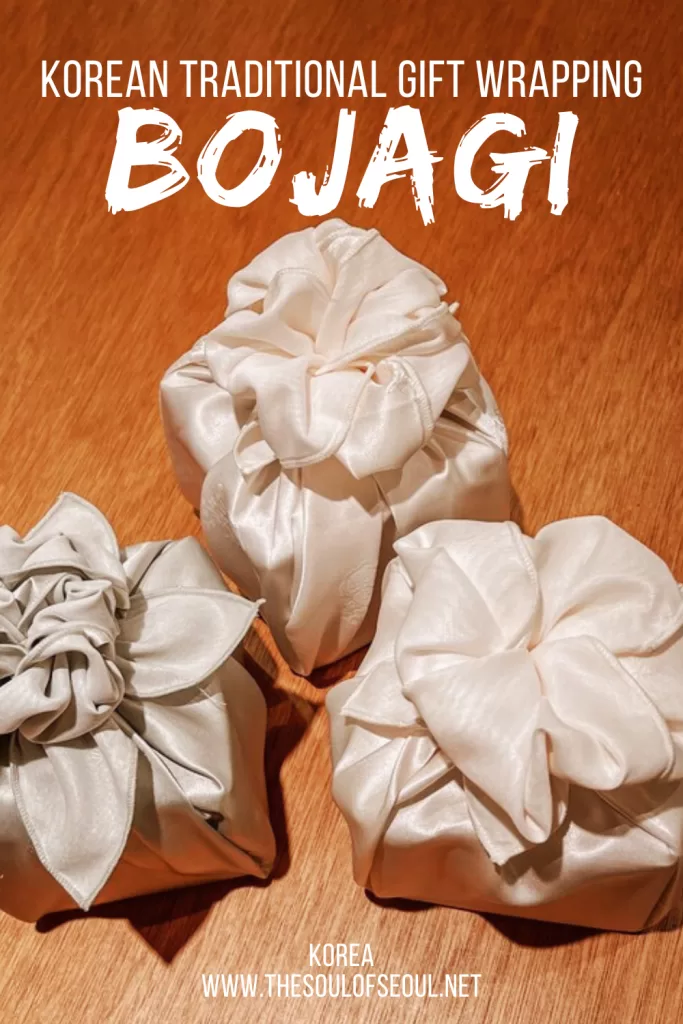
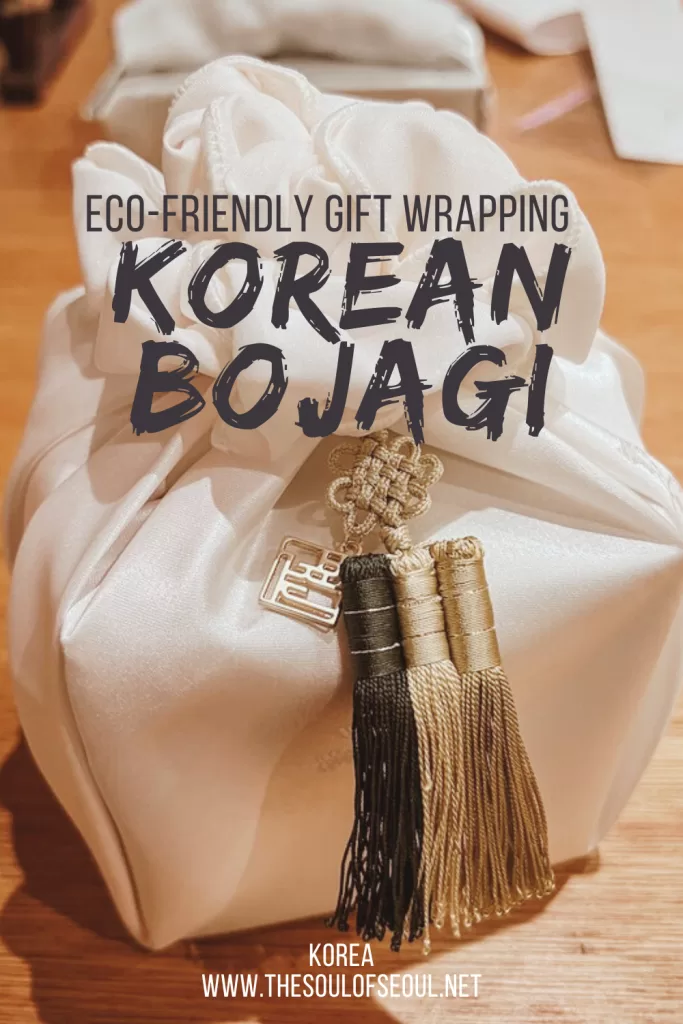
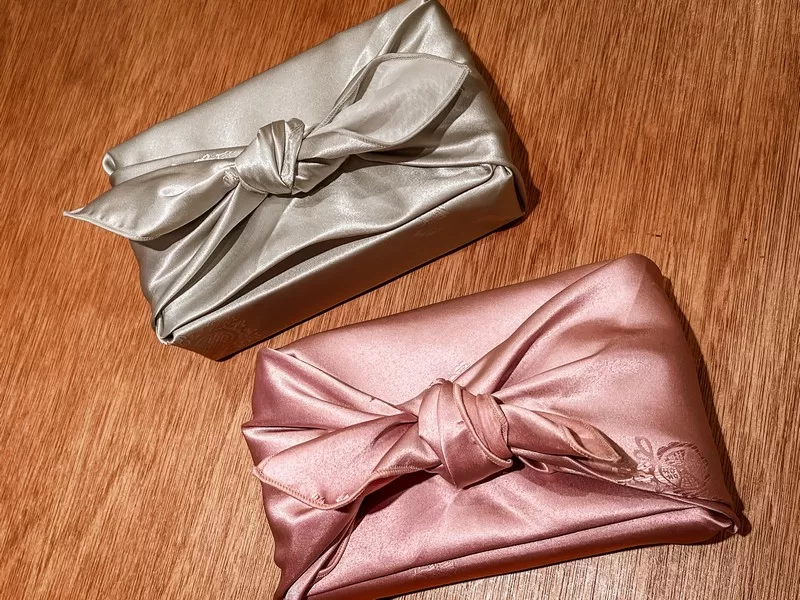
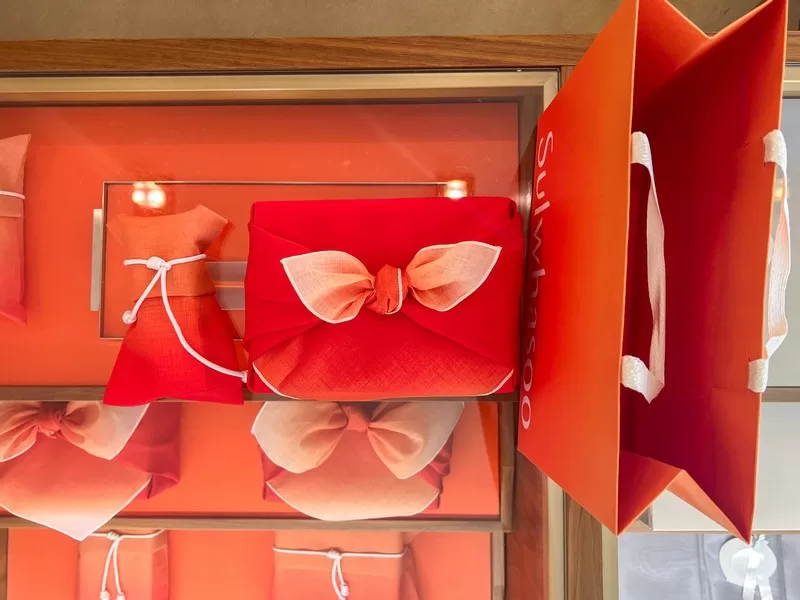
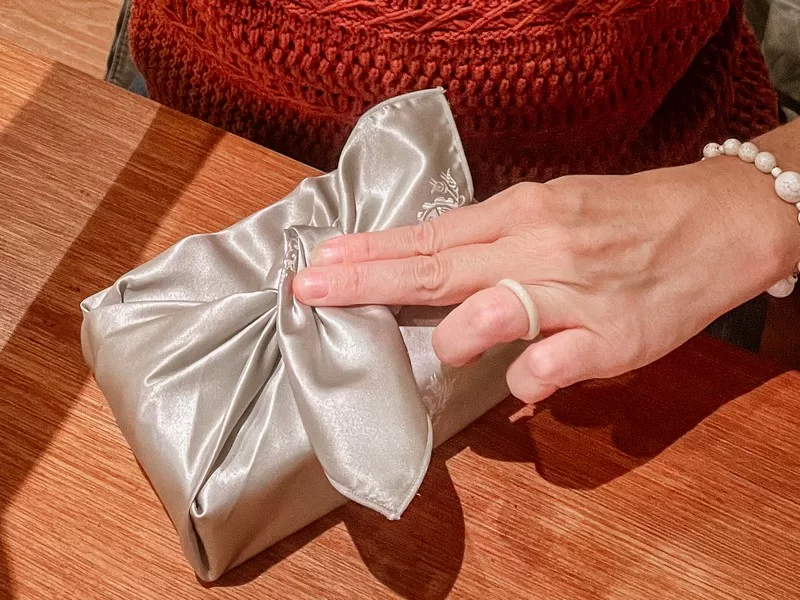
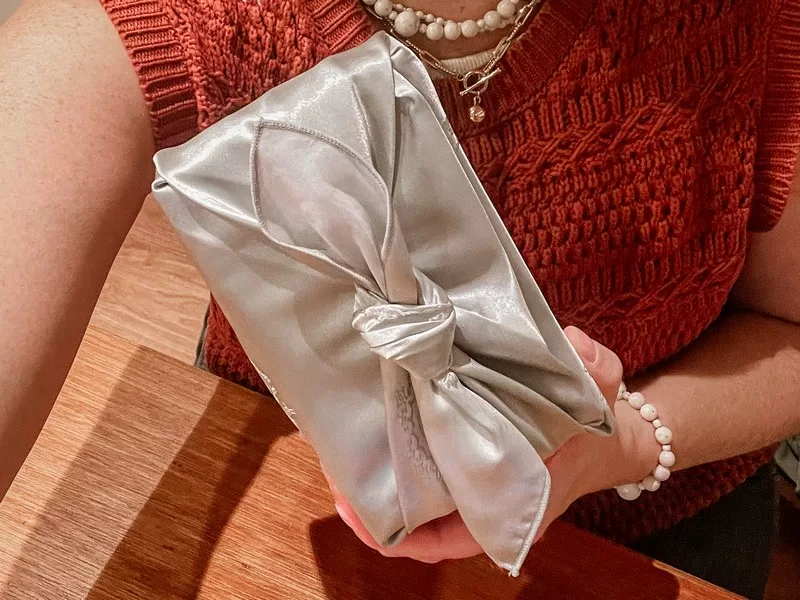
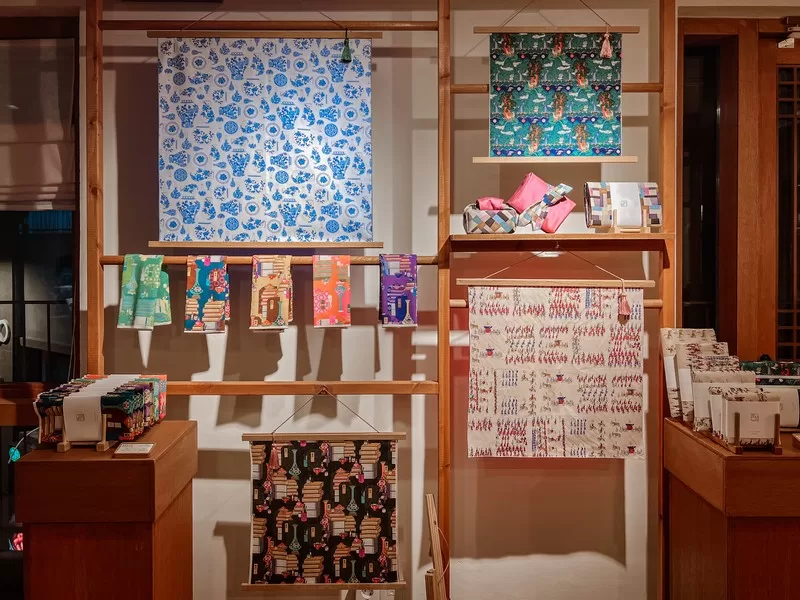
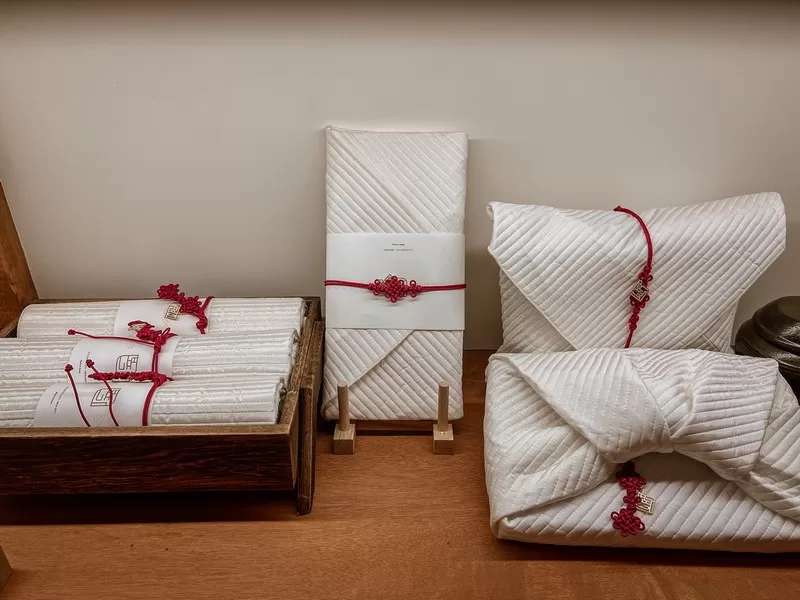
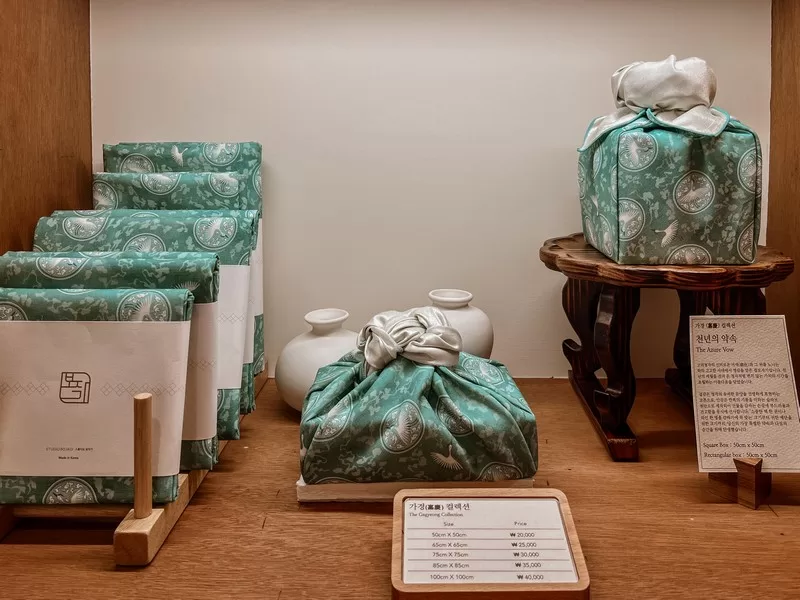
Spend some time in Korea and you’re bound to receive a gift that isn’t wrapped in plain old wrapping paper, but is lovingly decorated with cloth. Bojagi (보자기), Korea’s traditional cloth wrapping method, is one of my favorite cultural traditions, not only practical and sustainable, but just beautiful. Stop into places like Sulwhasoo’s Flagship Store in Bukchon or Geumokdang’s yanggaeng shop in Insadong and you can have your purchases wrapped in beautiful bojagi before you go.
For centuries, Koreans have used a simple square cloth to carry lunch boxes, protect precious belongings, wrap wedding gifts, and cover food in the kitchen. While it may look simple, bojagi carries history from royal palaces and Buddhist temples to everyday kitchens and wedding halls. Today, it’s having a revival as an eco-friendly alternative to disposable wrapping paper and a modern art form featured in museums.
Here’s everything you need to know about bojagi and how you can use it at home:
- What Is Bojagi?
- Royal vs Commoner Bojagi
- Bojagi Wrapping Classes in Seoul
- Where To See Bojagi In Seoul
(This post contains affiliate links, which means I receive a certain percentage of a sale if you purchase after clicking at no cost to you. Thank you for your support.)
The Seven Types of Bojagi
| Type | Korean | Description |
|---|---|---|
| Hot-bo | 홑보 | Single-layered silk or ramie; easy to knot into flower shapes; used for gifts and storage |
| Nubak bojagi | 누박보자기 | Quilted and layered for warmth; ideal for winter use |
| Jogakbo | 조각보 | Patchwork style; made from Hanbok fabric scraps; the iconic “windowpane” pattern |
| Gung-bo | 궁보 | Royal wrapping cloth; always a single piece of fabric, never patchwork; usually silk |
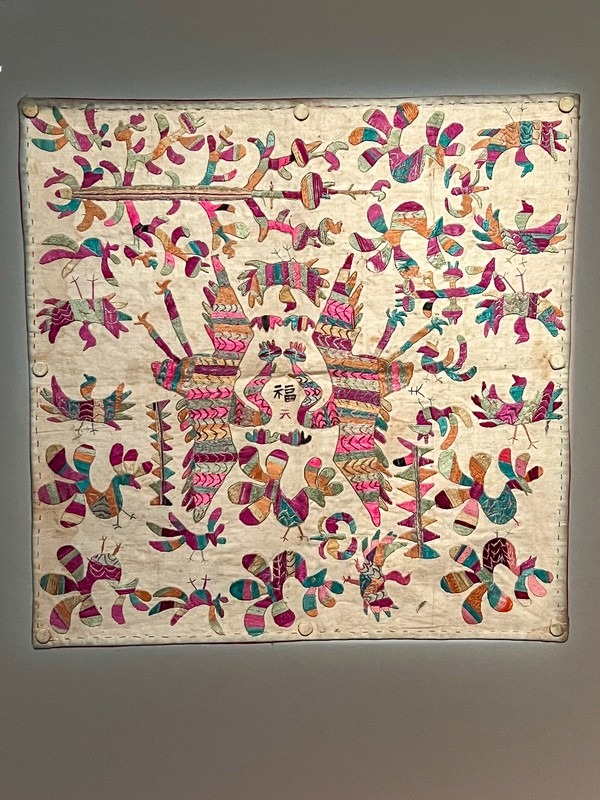
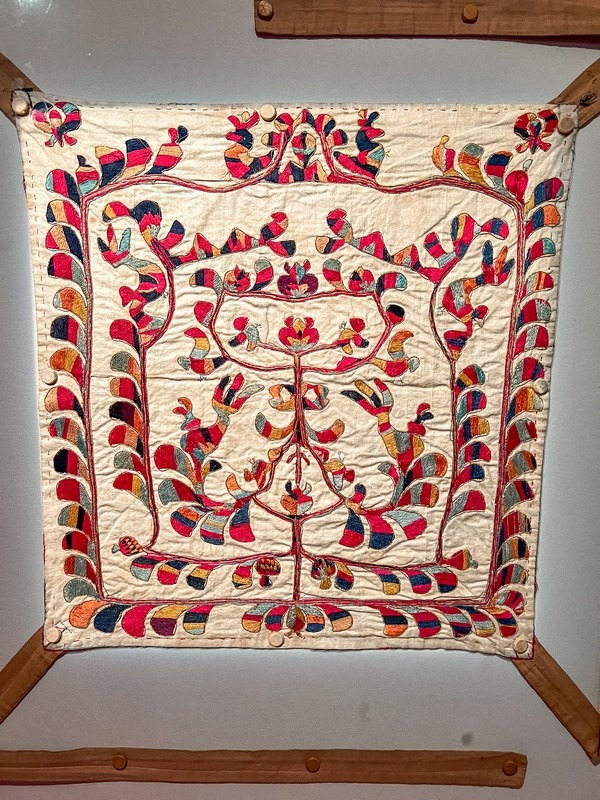
| Subo | 수보 | Embroidered bojagi; gifted at weddings; decorated with birds, butterflies, and lucky symbols |
| Yemulbo | 예물보 | Has two ribbons in one corner for knotting; used for holiday gifts at Seollal and Chuseok |
| Sangbo | 숭보 | Cotton cloth doubled with oiled paper; used to cover tables or food; ribbon in the center for lifting |
What Is Bojagi?
Bojagi is a square cloth made of silk, ramie, cotton, or hemp. It can be small enough to wrap a single apple or large enough to carry bedding. Dating back to the Three Kingdoms period (57BC-668CE) in Korea, the earliest surviving examples are from the early Joseon Dynasty (1392-1910). Traditionally it was a household essential, everyone owned several, each one used again and again.
How to pronounce bojagi: bo-ja-gi (boh-jah-gee)
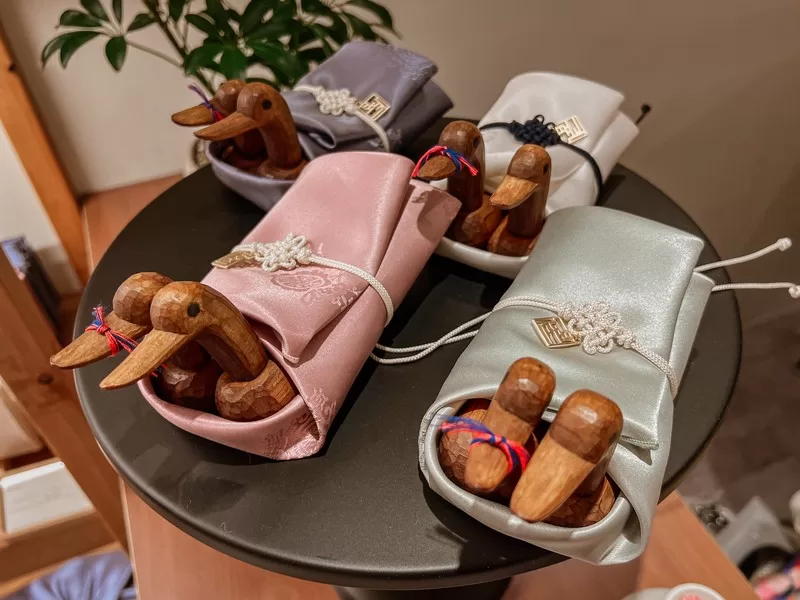
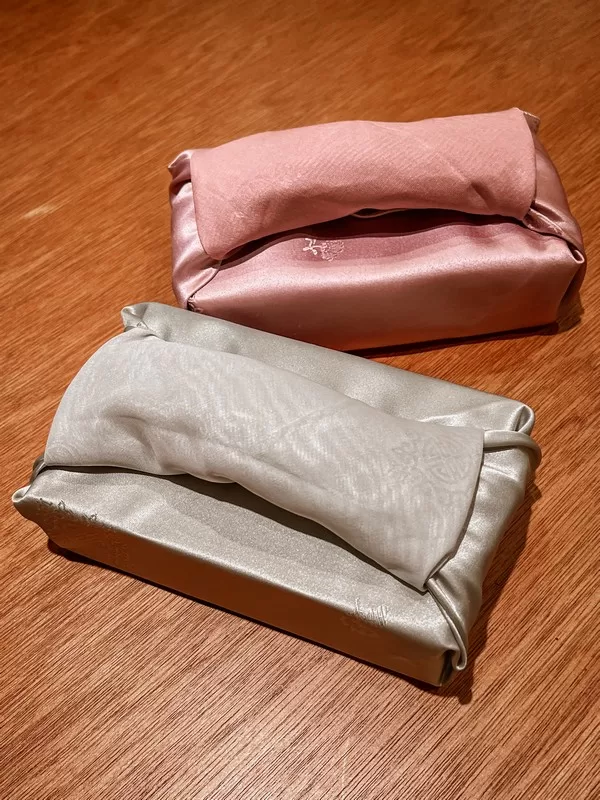
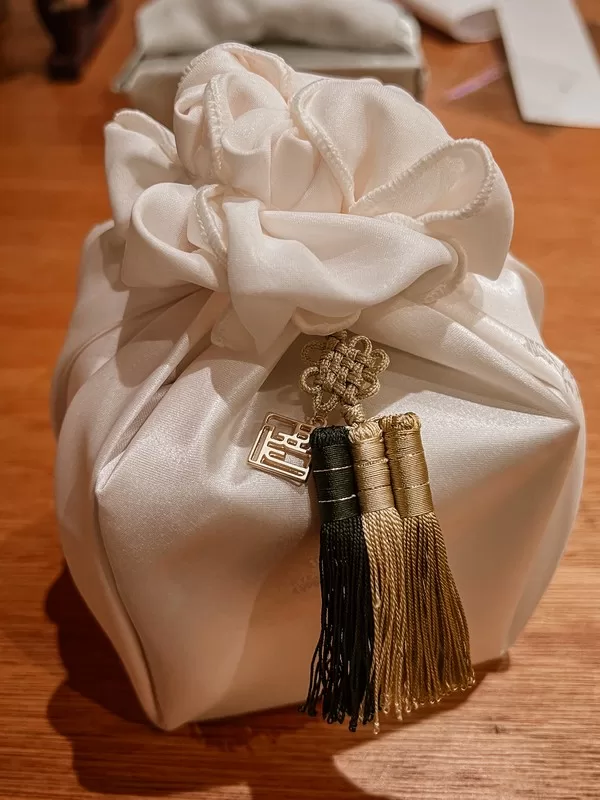
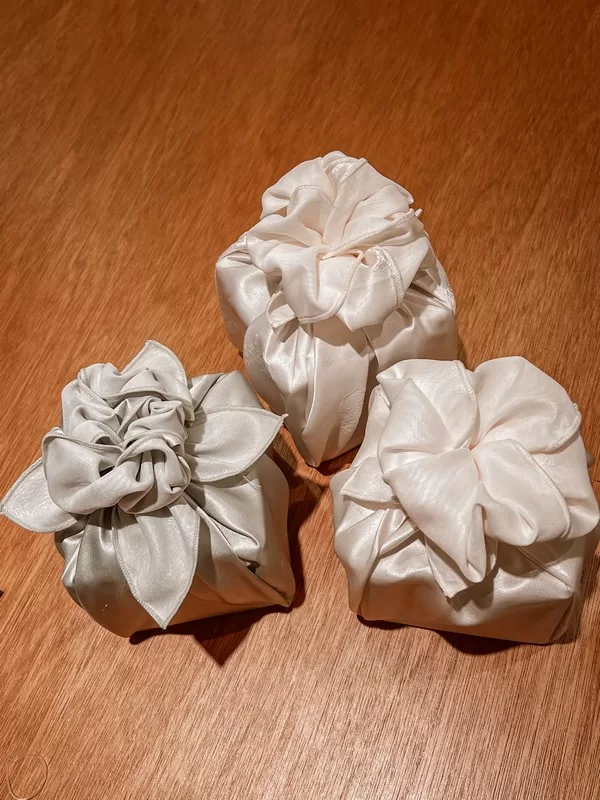
What makes bojagi special is how it holds, protects, and conceals without separating you from the object inside. In traditional folk belief, keeping something wrapped meant protecting it from harm, so bojagi became linked to luck and blessings.
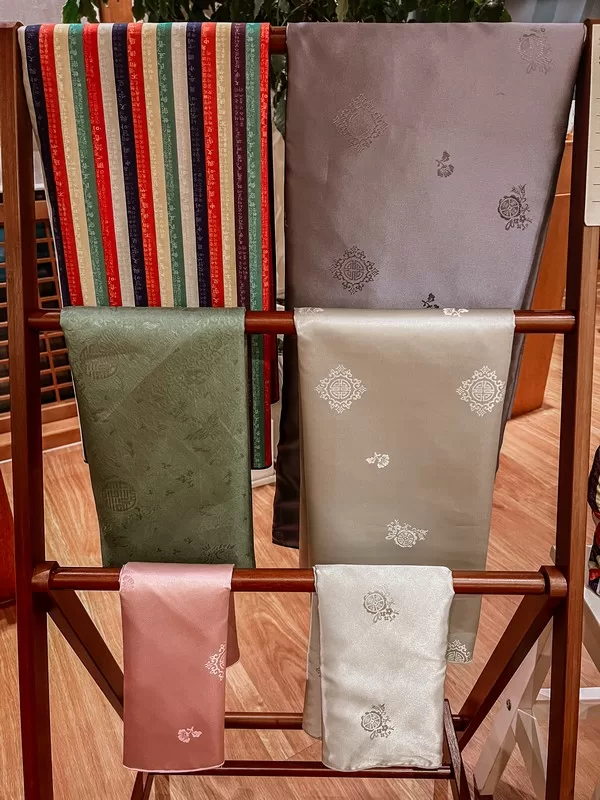
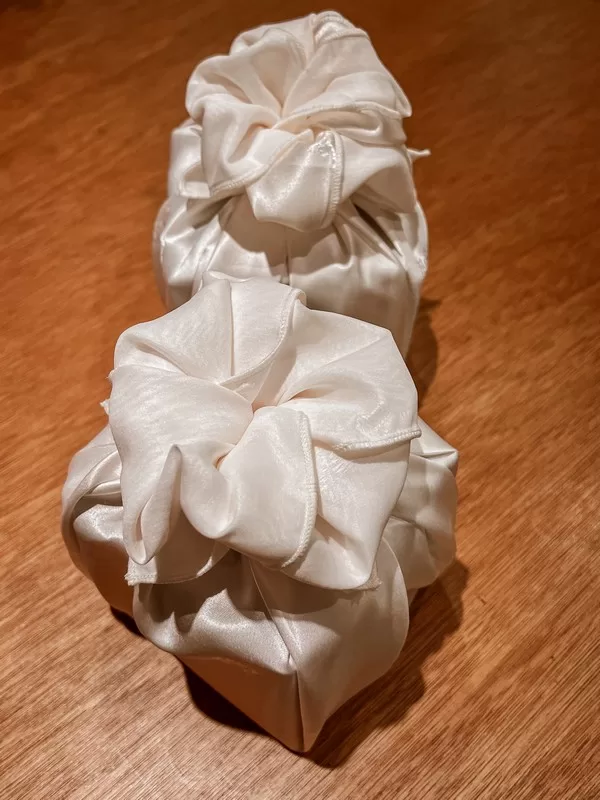
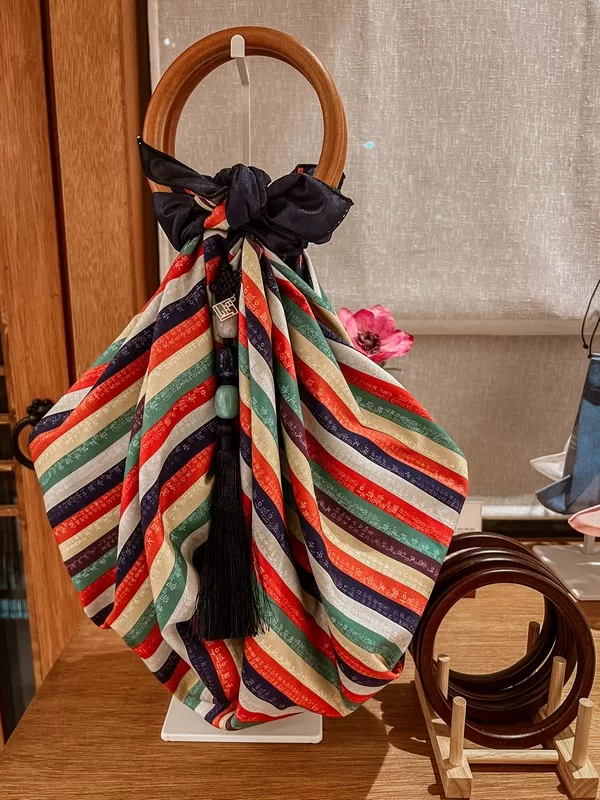
While the practice of bojagi declined in the 1950s, it saw a resurgence in the 1980s and 1990s thanks to exhibitions that celebrated the practice as an art form and today you can see it all over, if you know what to look for.
Fun fact: Today, you can find numerous luxury brands that utilize bojagi. Bojagi wrapping services are not only beautiful but elevate the brand experience. It’s why I will always buy my Sulwhasoo products in person at their Bukchon flagship store.
Royal vs Commoner Bojagi
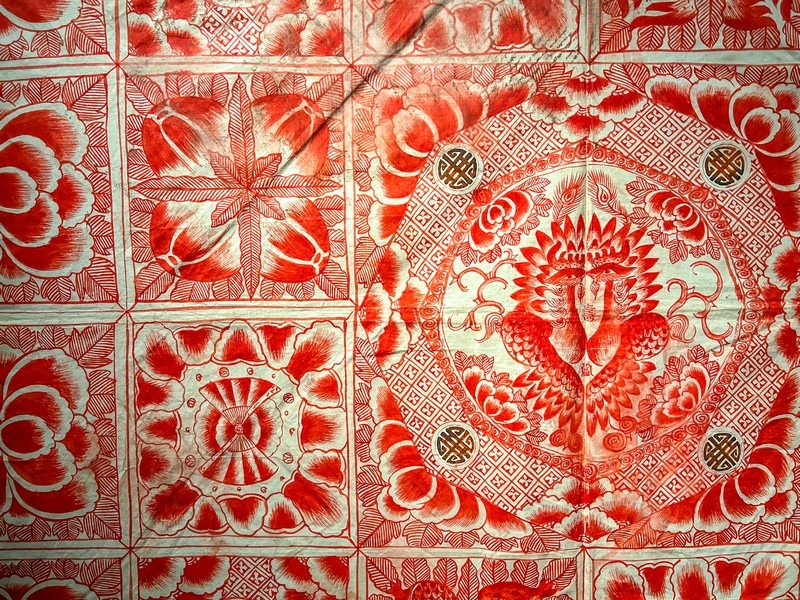
Royal Bojagi (Gung-bo / 궁보)
These were made from a single piece of cloth, never patchwork, and crafted by trained female artisans in the royal workshops. Royal court records list the names of the needleworkers, showing how valued their skill was.
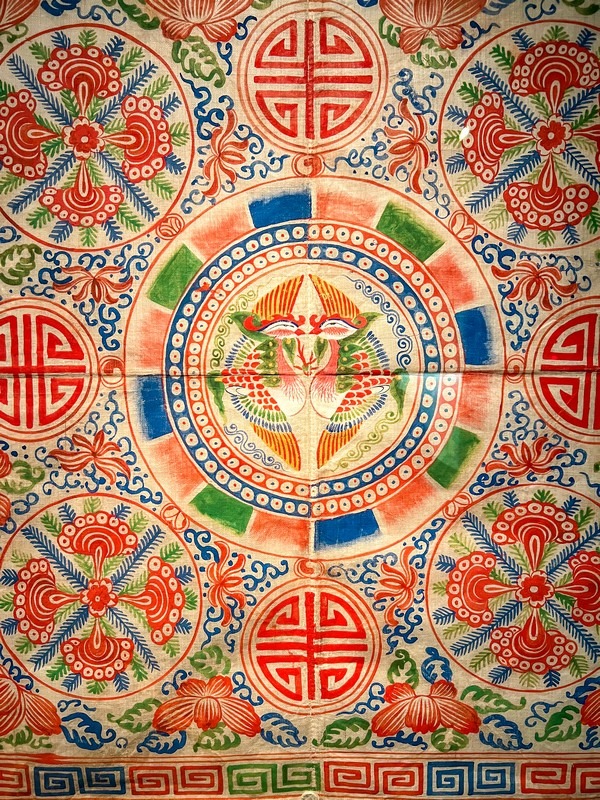
Silk was the material of choice for autocratic and ceremonial bojagi, prized for the delicate sheet and luxurious feel. Colors leaned toward pink, red, and purples, often decorated with painted dragons or auspicious symbols.
Fun fact: A royal event, such as a wedding, could require over a thousand bojagi to be made fresh.
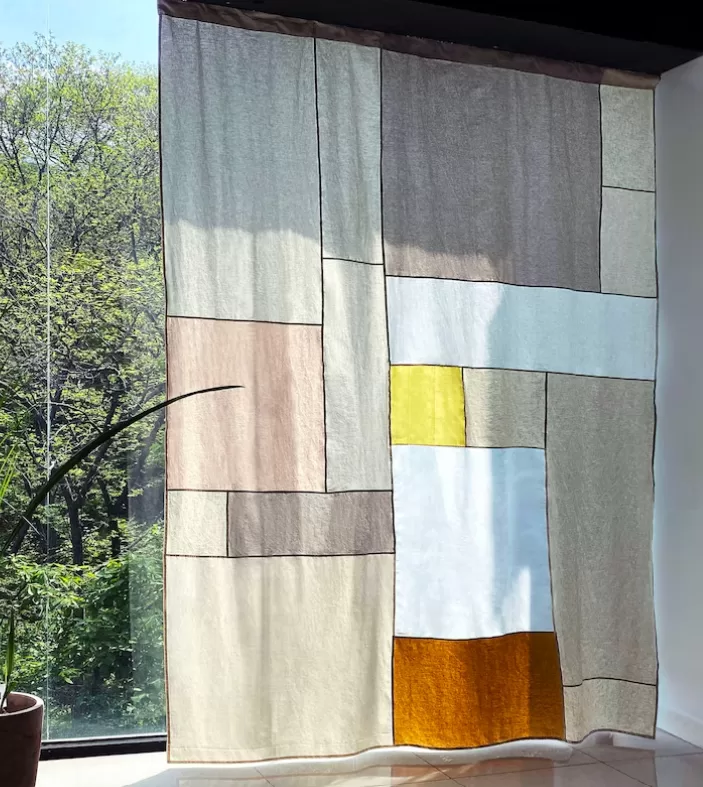
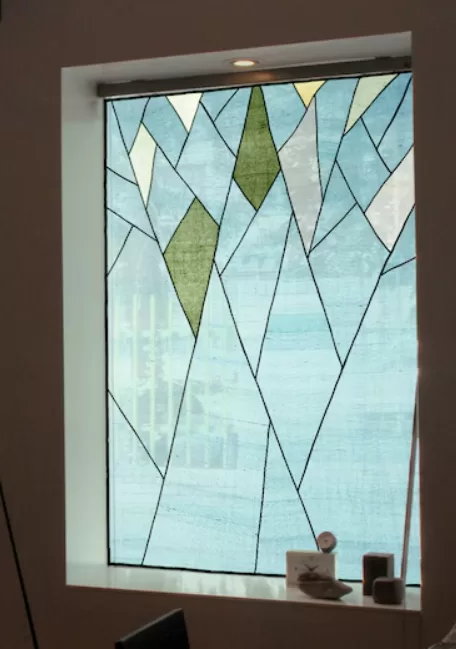
Commoner Bojagi (Jogakbo / 조각보)
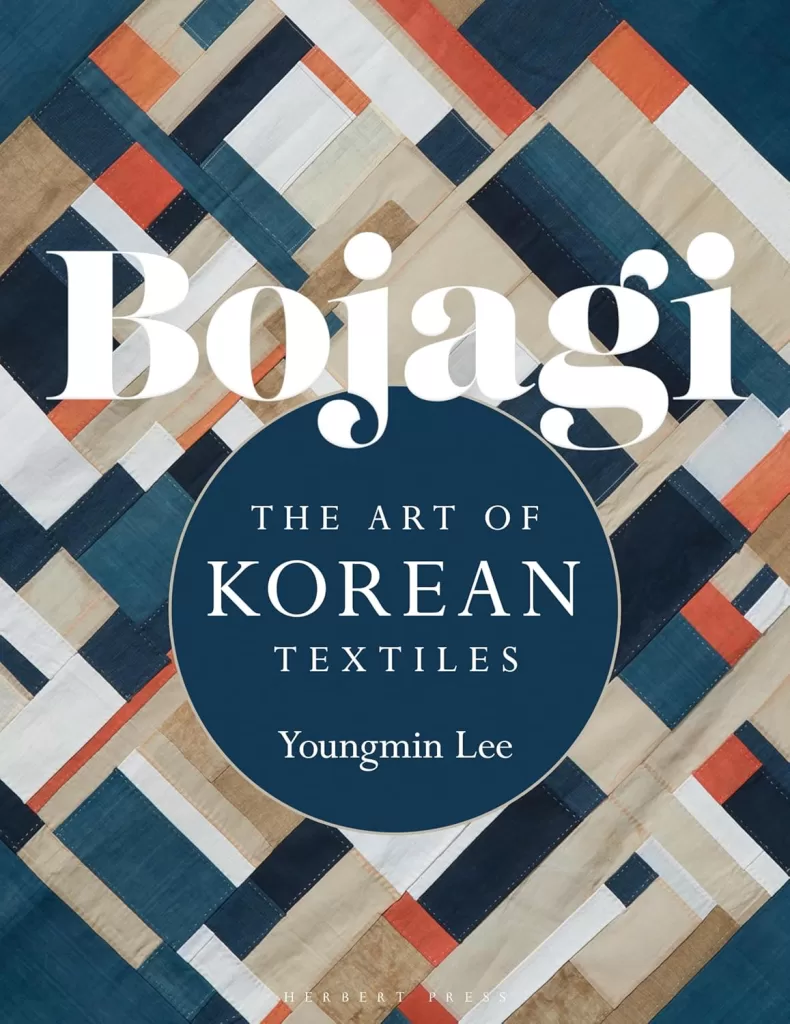
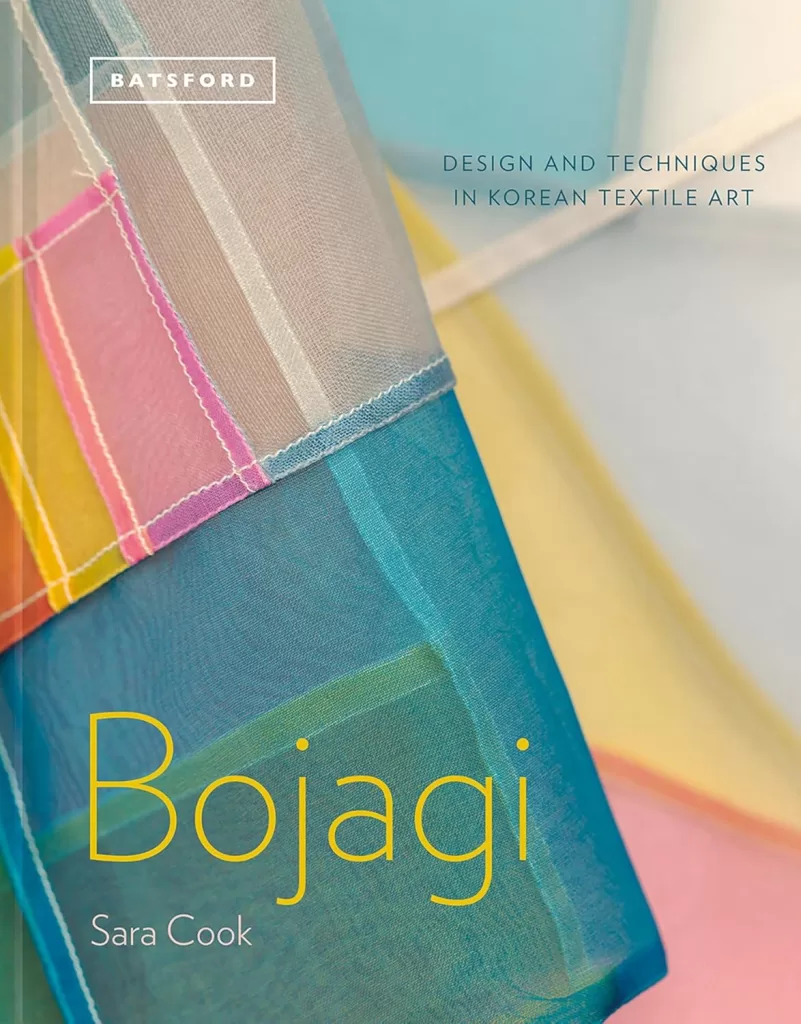
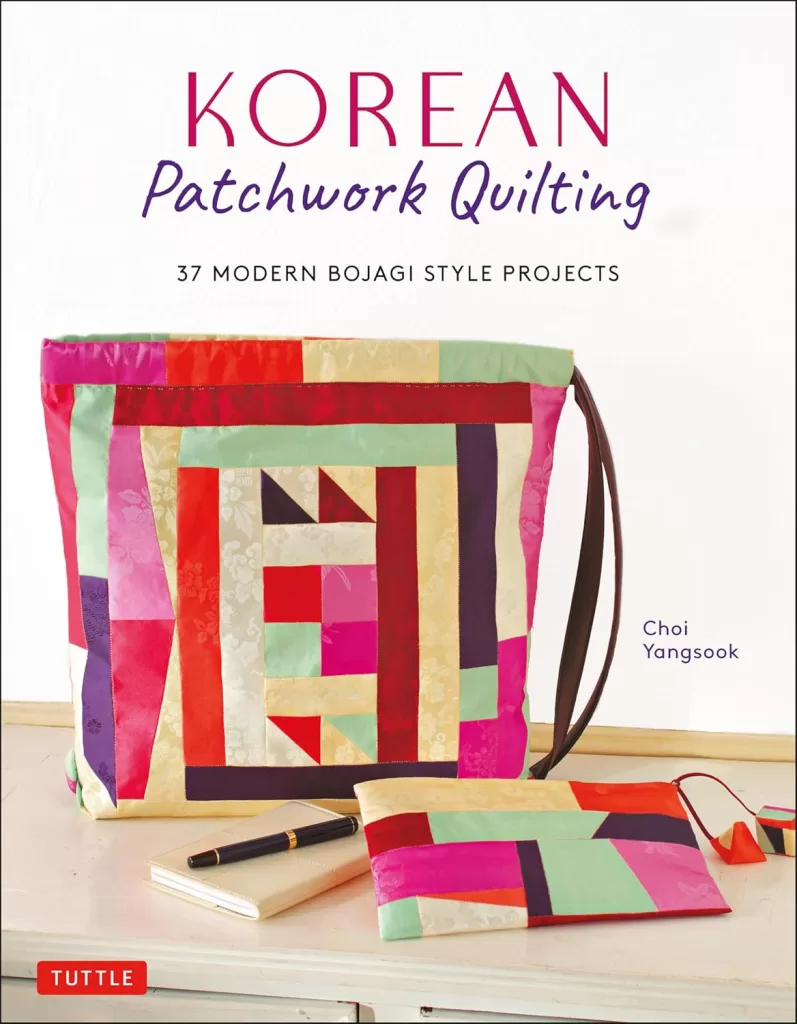
Jogakbo, the iconic patchwork style, was made from leftover scraps of fabric from sewing Hanbok. Ramie and hemp were widely used for their durability and ease of care. Later, when cotton was introduced to Korea, it became a popular material dur its affordability and ability to hold vibrant colors.
Korean women sorted scraps by color, size, and texture, and stitched them together piece by piece. Stitches were not hidden, instead, every line was visible and believed to gather luck, blessings, and protection.
Following the ideas of frugality and simplicity that were spread during the Joseon Dynasty, women would keep every piece of scrap fabric leftover from Hanbok and create beautiful handmade bojagi. At the time, all women, regardless of their social status made their own bojagi by hand.
Bojagi Wrapping Classes in Seoul
As the popularity of traditional Korean craft has grown with foreigners over the past decade, there are now, thankfully, more places dedicated to teaching and providing opportunities to experience things like bojagi and sort of a sister traditional craft, norigae, traditional knot tying.
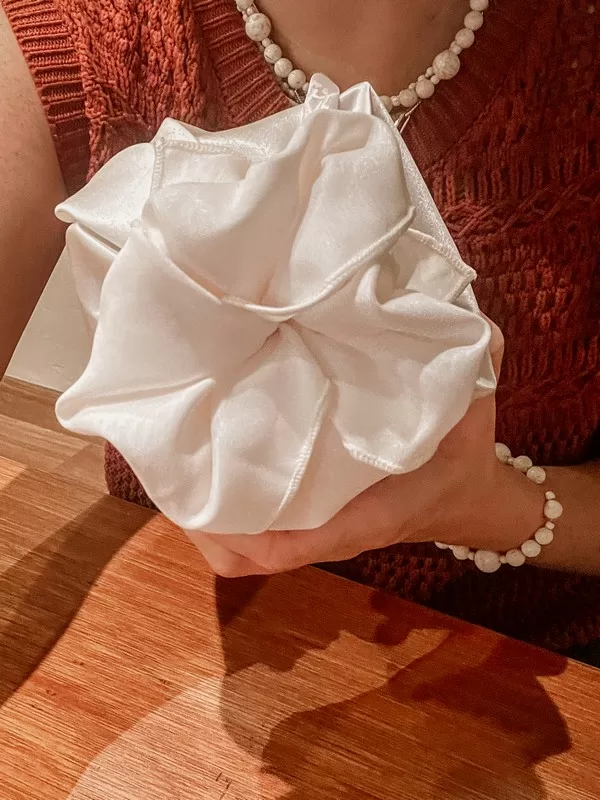
Studio Bojagi (스튜디오 보자기)
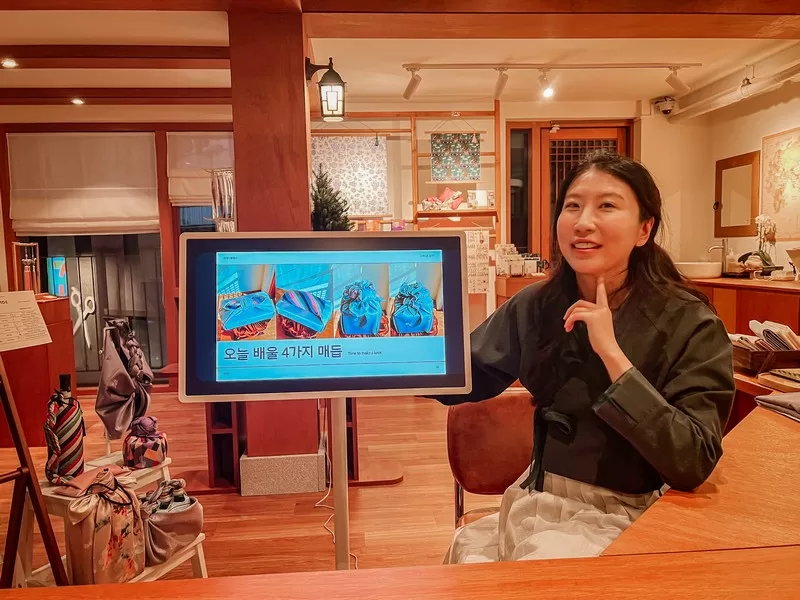
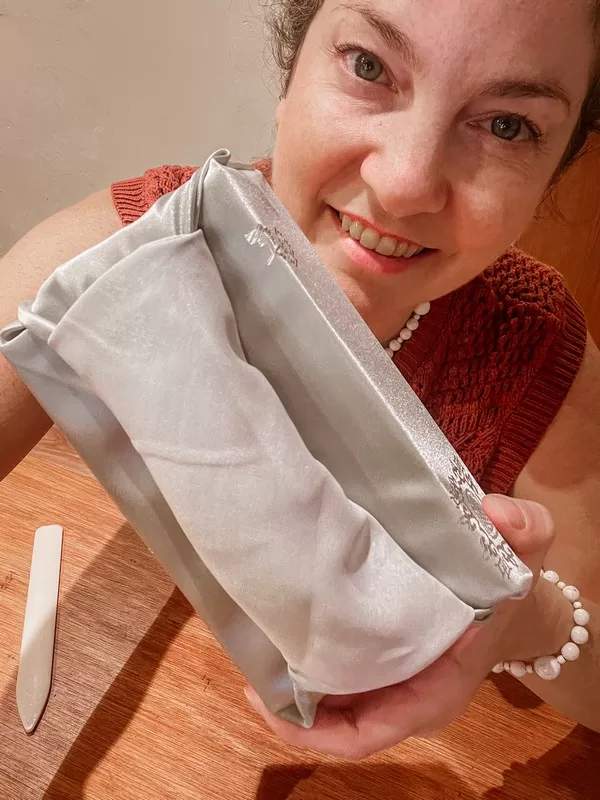
Stop into Studio Bojagi to learn four fundamental knotting techniques to create bojagi. After a brief introduction and overview of what you’ll create, you dive in to start with some simple wrapping before learning how to create gorgeous flowers atop your wrapped gifts. The class is easy to follow, kid-friendly (I took my 11 year old), and when you leave, you’ll have two cloths and norigae so that you can wrap your own gifts at home.
Even if you don’t have time for a class, stop in to see the beautiful bojagi gifts and cloths you can purchase to take home. Or have something wrapped for you! This is a lovely studio located near Hongdae in Seoul.
- Address: 3rd floor, 6 Donggyo-ro 30-gil, Mapo-gu, Seoul (서울특별시 마포구 동교로30길 6, 3층)
- Book a class: You can book a class with Studio Bojagi on Viator, or on Klook.
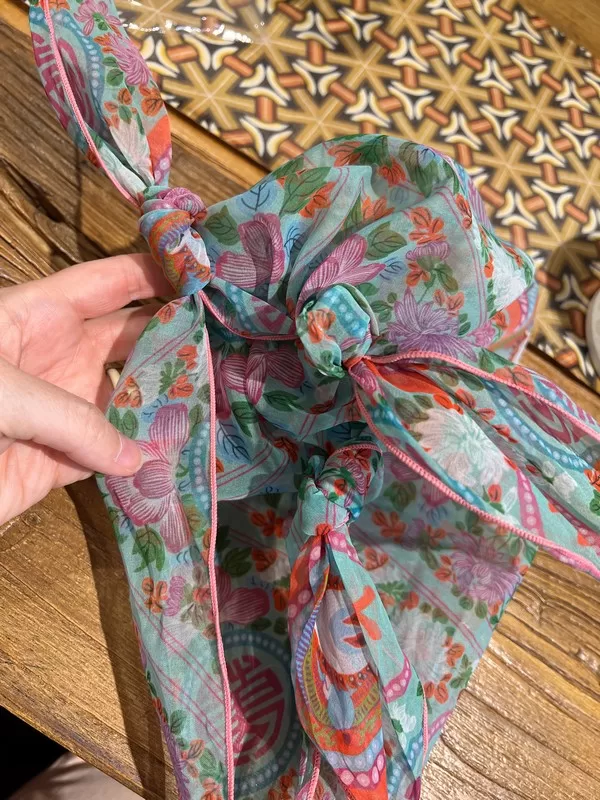
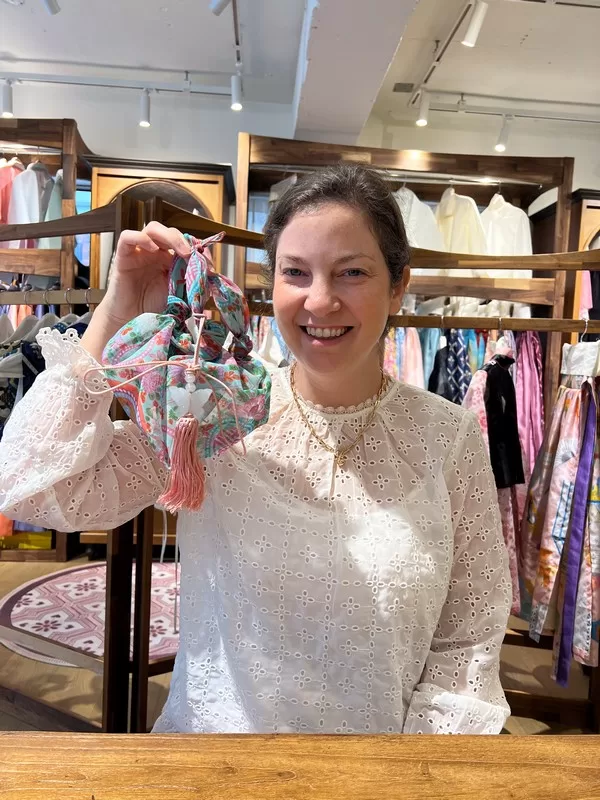
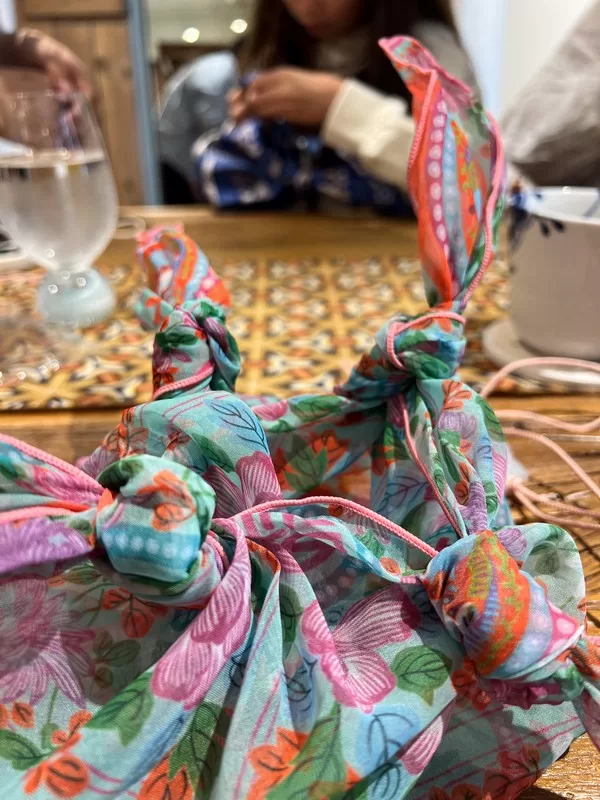
Danha Hanbok (단하한복)
Danha is a sustainable fashion brand based on Korean tradition. Launched in 2018 by Danha Kim, Danha makes beautiful Hanboks inspired by traditional patterns, fabrics, and styles. Not as focused on bojagi as Bojagi Studio above, Danha does offer a simplified bojagi experience to create a bojagi knotted bag with norigae. It’s quick and fun and good if you’re in the Bukchon area of Seoul.
- Address: 39-7 Palpan-gil, Jongno-gu, Seoul (서울시 종로구 팔판길 39-7)
- Hours: Saturdays and Sundays: 10:00am ~ 6:00pm*
- *The shop itself is open throughout the week, but this specific activity is only available on the weekends.
- Age restrictions: Available for for those 10 years old and above.
- How To Book: You can find the bojagi bag experience on Creatrip.
Where To See Bojagi In Seoul
If you want to understand the art of bojagi, there are some great places in Seoul you can visit.
Seoul Museum of Craft Art
This is the best place in Seoul to see bojagi as an art form. Located on the former Royal Craft Workshop site, Seoul Museum of Craft Art (서울공예박물관) houses over 1,500 bojagi and embroidery pieces, including the world-famous Huh Dong-hwa and Park Young-suk collection. The collection is beautiful and fascinating.
Jogakbo from the Joseon era sit beside contemporary reinterpretations, showing how the tradition continues to evolve. On my first visit to the museum, this and the najeonchilgi, or mother-of-pearl, areas were my absolute favorites.
- Address: 4 Yulgok-ro 3-gil, Jongno-gu, Seoul (서울시 종로구 율곡로 3길 4)
- Hours: Tuesdays – Sundays: 10:00am ~ 6:00pm
- Admission: Free
Bojagi is one of those Korean traditions that grows on you. Once you know what it is and what it means, you start noticing it everywhere, in shop windows, at market stalls, at holiday tables. Receiving or gifting something in bojagi feels different from unwrapping paper. More personal, more considered, more lasting. I hope you’ll give it a try.
Did you like this post? Pin iT!