Bongwonsa Temple In Seoul: Less Touristy, More Buddhas
Last Updated on May 10, 2026
When beginning to build an itinerary for Seoul, there are usually a few things that people want to make sure are included. A palace, a traditional market, and often a stop at a local Korean Buddhist Temple. The Buddhist temples here are beautiful and while most are located on the mountainsides outside of Seoul, there are a few in central Seoul that are easy to access.
Two temples have become the most popular on tourist itineraries, those being Jogyesa Temple and Bongeunsa Temple, but not too far away sits the beautiful Bongwonsa Temple. Generally quieter and without tourists, this Korean temple in Seoul
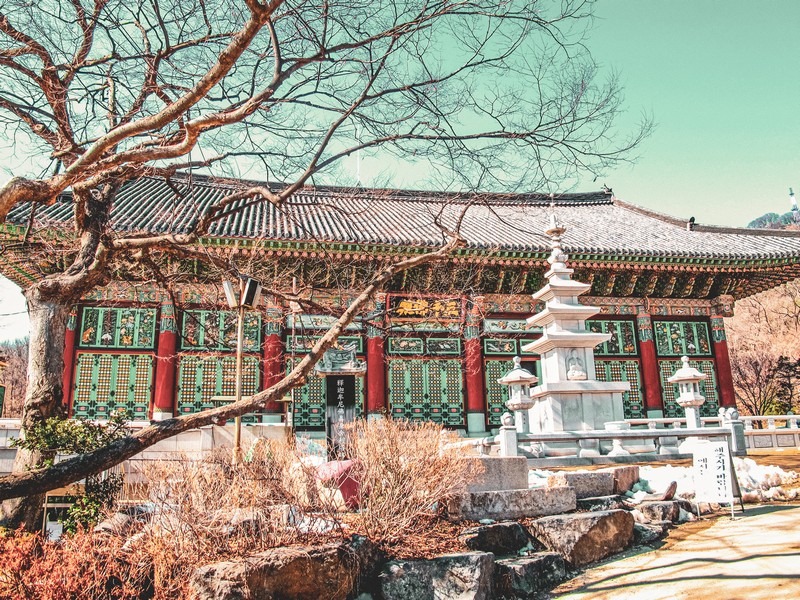
Visit this beautiful Buddhist temple in the heart of Seoul, Korea:
(This post contains affiliate links, which means I receive a certain percentage of a sale at no cost to you. These funds go to maintain the site. Thank you for your support.)
How To Get There
Address: 1 San Bongwon-dong Seodaemun-gu, Seoul (서울특별시 서대문구 봉원동 산1)
By subway and bus: Sinchon Station (Line 2, Exit 3). Take bus 7024 directly to Bongwonsa.
On foot from Ewha Womans University: Walk north alongside the main road from the back gate until you reach an intersection beneath the freeway. From there, go up the hill 500 meters. Signs will direct you to the temple.
About the Taego Order
Bongwonsa Temple (봉원사) belongs to the Taego Order of Buddhism, the second largest order in Korean Buddhism and a traditional Seon (Zen) school. The Taego Order is distinct from the more widely known Jogye Order in one significant way: it permits ordained priests to marry, though nuns must remain celibate. The order includes both traditional bhikkhu, monks who live in mountain temples separated from society, and married monks who function more like parish priests.
The current Taego Order emerged from a 1954 split. Before that year, the majority of Korean Buddhist monks, including within the Jogye Order, were descended from Master Taego Bowu. In 1954, President Lee Seoung Man and a group of celibate monks decided to separate Korean Buddhism into two distinct orders: one that permitted marriage and one that did not. The celibate majority subsequently forced the married monks out of the temples. The displaced monks formed what became the Taego Order.
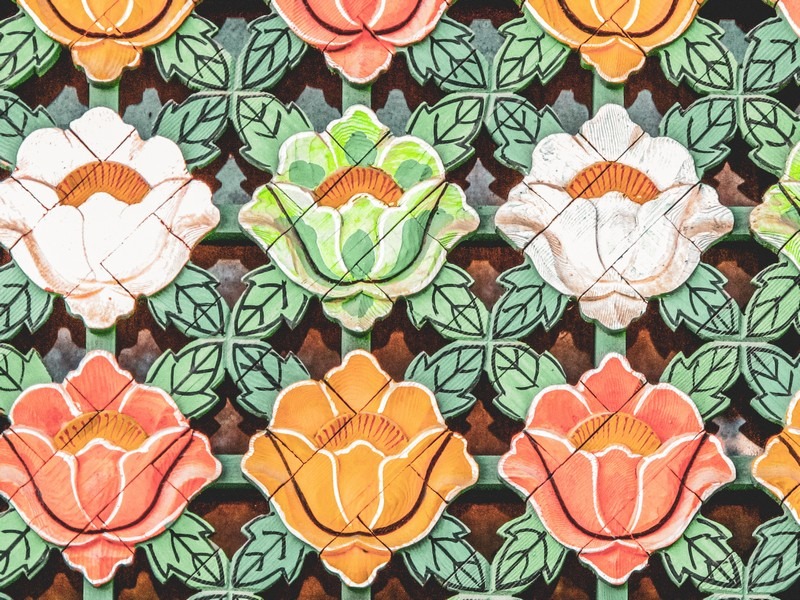
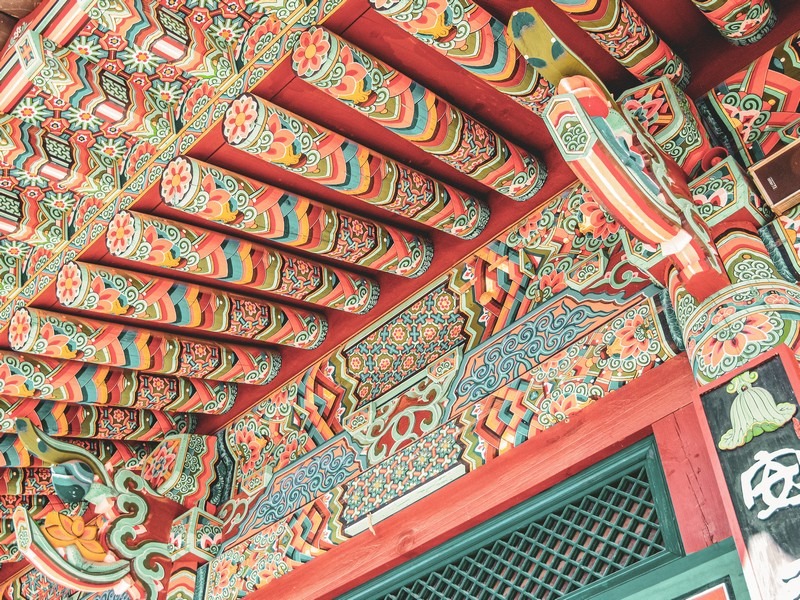
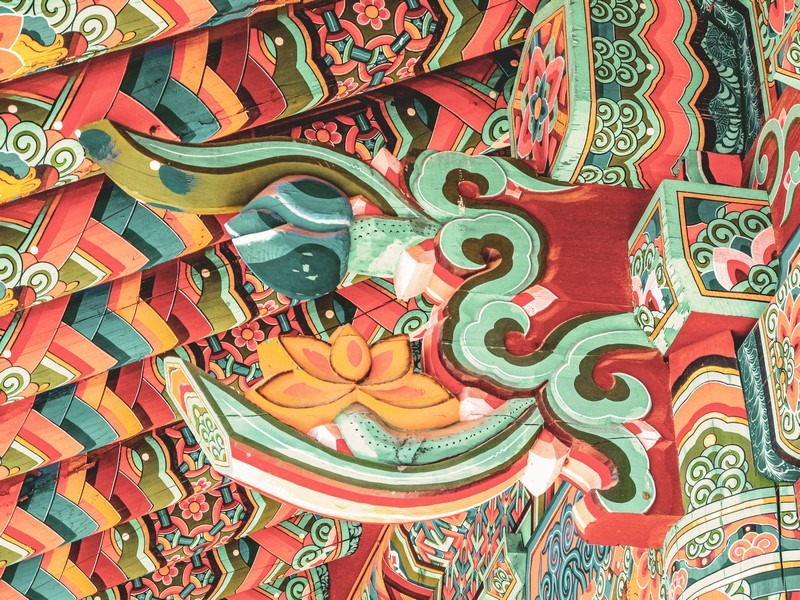
Reading through information about the training of both orders, one difference stood out: the Taego Order holds ritual and traditional arts, ritual dance, music, and ornamentation, in high regard as part of monastic practice. The Jogye Order has not maintained this tradition to the same degree. This distinction matters directly at Bongwonsa, and it’s why the Yeongsanjae ceremony happens here.
What To See
Bongwonsa was originally built in 889 AD by Master Doseon, on the site where Yonsei University now stands. It was relocated to its current position on Ansan Mountain in 1748 by Monk Chanjeub and Zen Master Jeungam. The complex holds around thirteen buildings.
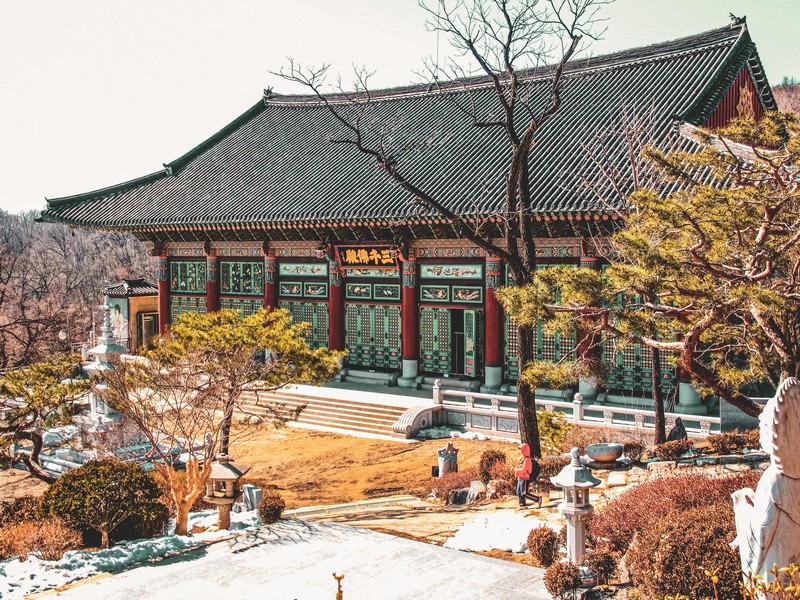
The 3000 Buddhas Hall
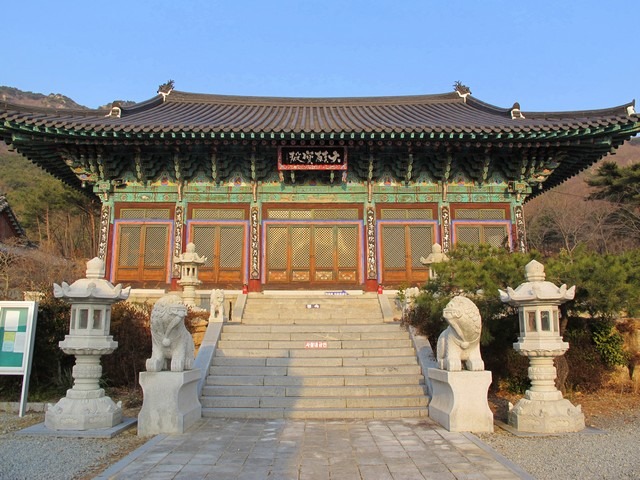
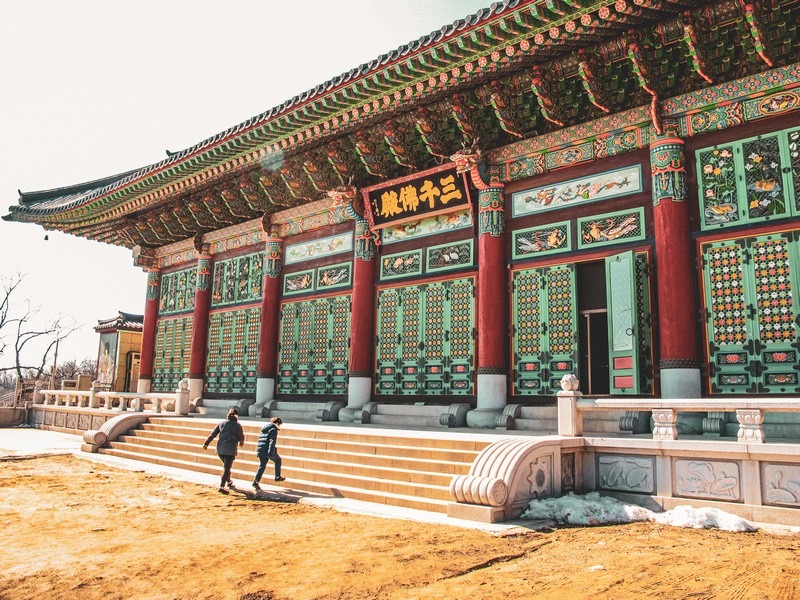
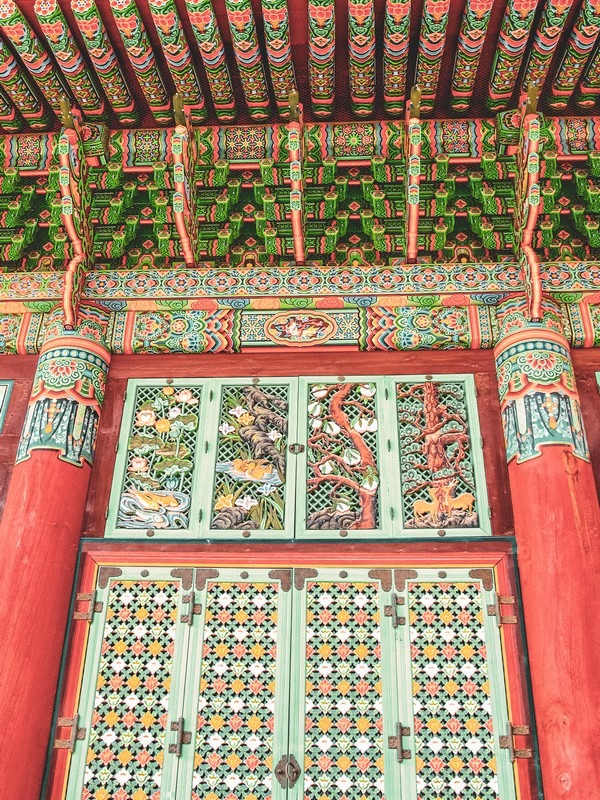
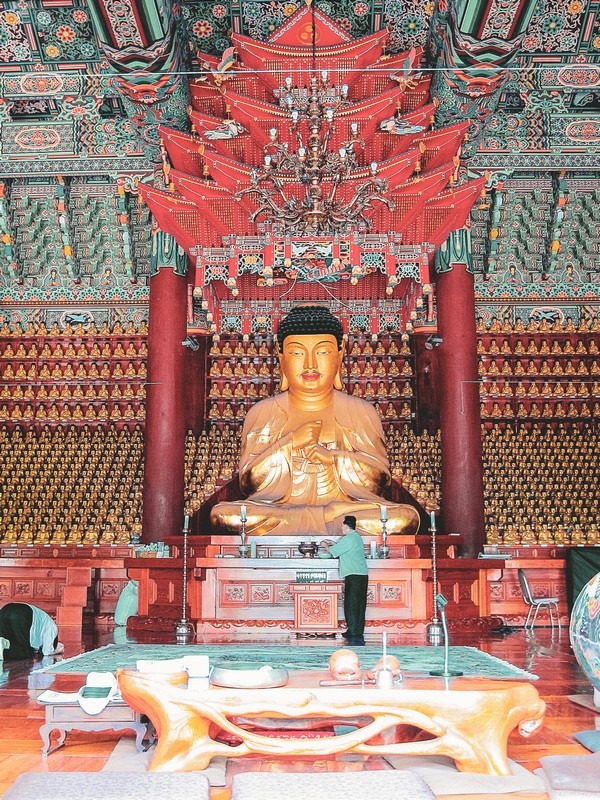
The first building on the left after entering is The 3000 Buddhas Hall and is by far the most impressive in size. It stands about three stories high and it is interesting to note that no nails were used on the building during the original construction or the restoration in 1991. It is the largest wooden building in Korea.
The 16 Arahat Statues
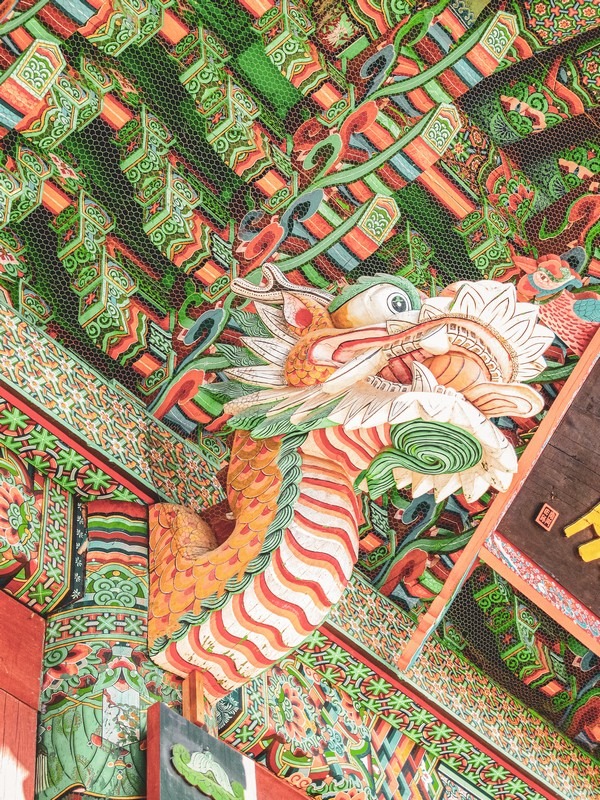
Just inside the front entrance, 16 statues of Arahats, those who have attained enlightenment, line the approach. Their faces are contorted and rather unsettling on first impression. That’s intentional; they represent the extremity of spiritual transformation. Worth pausing to look at each one.
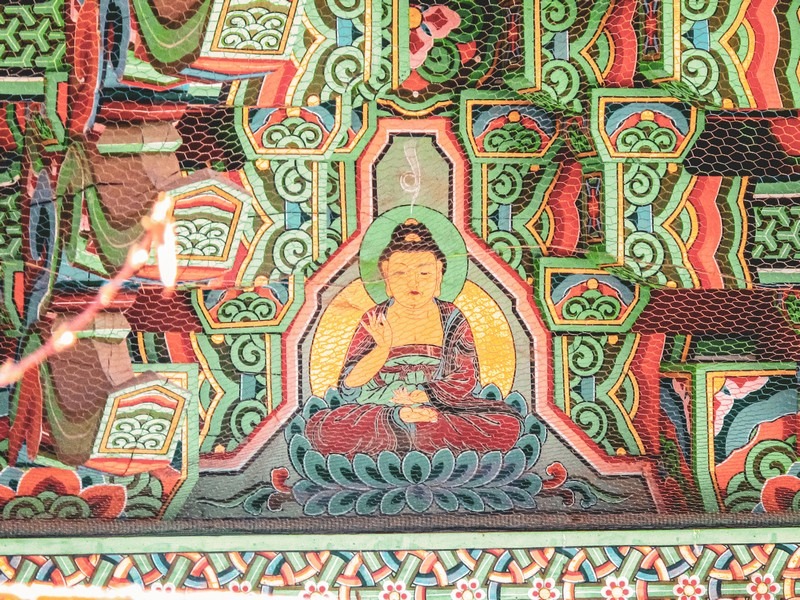
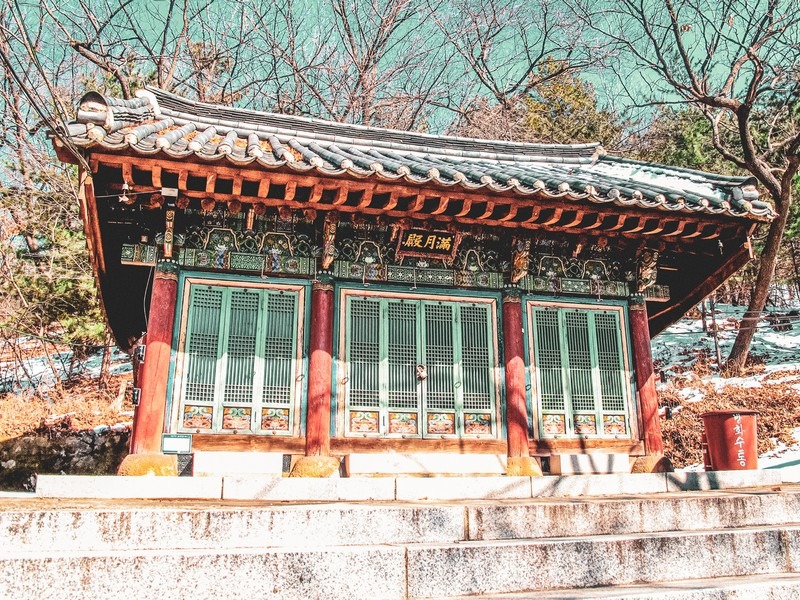
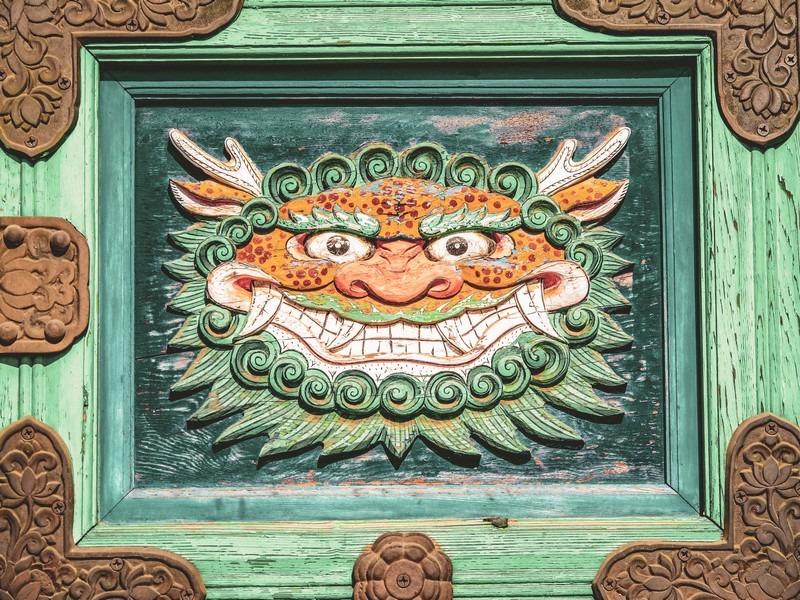
The Mix of Old and New
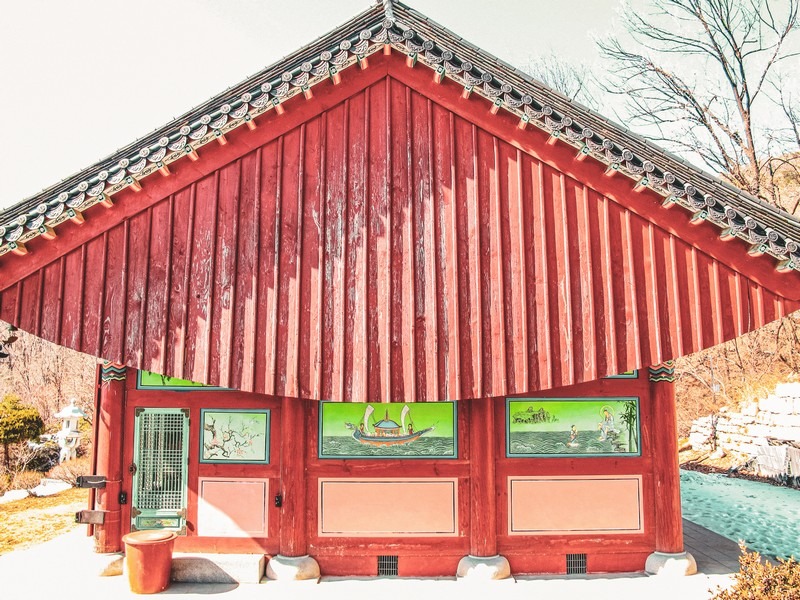
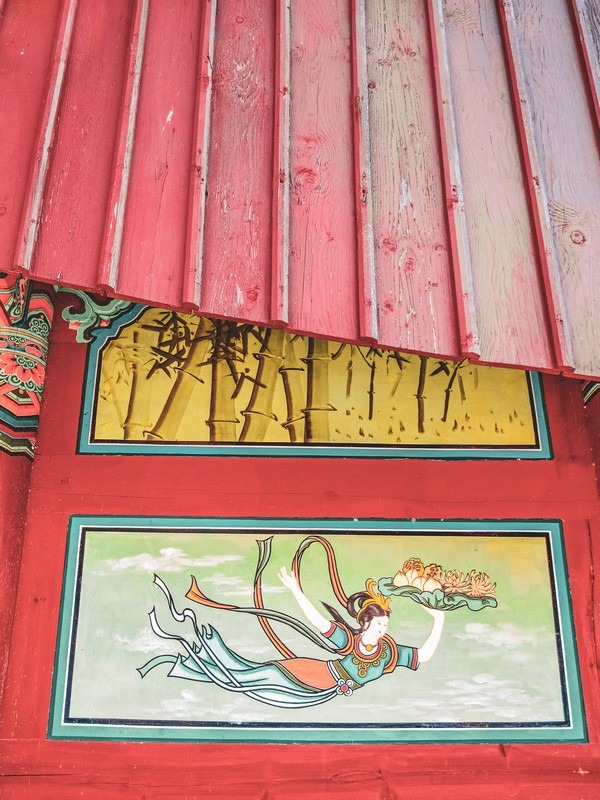
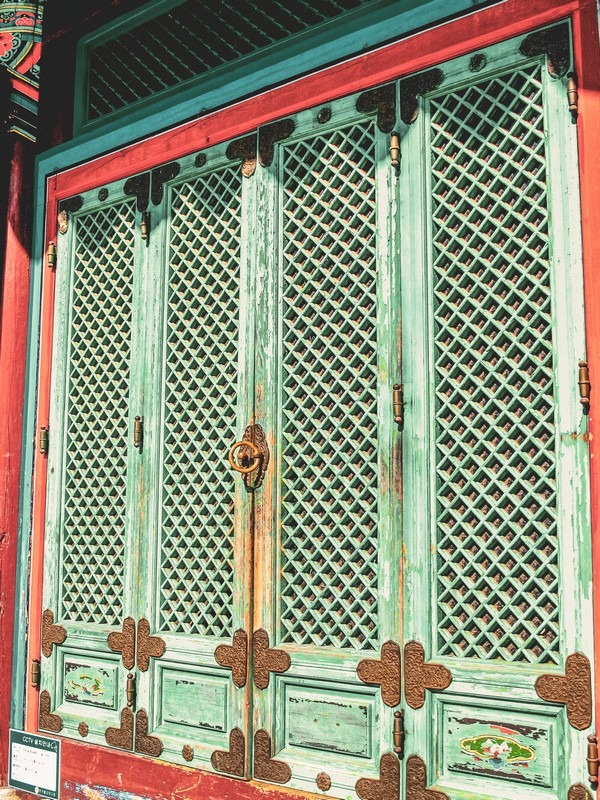
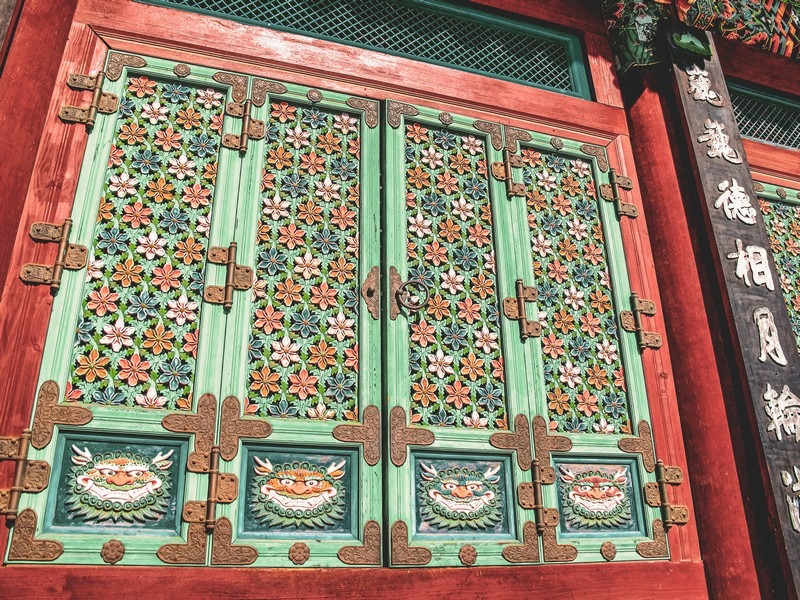
Some buildings at Bongwonsa have been recently painted and look almost new. Others have not been repainted in some time, and carry a different kind of appeal, worn and weathered and quietly beautiful in a way that freshly restored buildings can’t replicate.
In the back of the complex, there is one building where painted glass has replaced the lattice work typically found in Korean Buddhist structures. I had never seen that in a Korean temple before and almost walked past it.
Two Living National Treasures
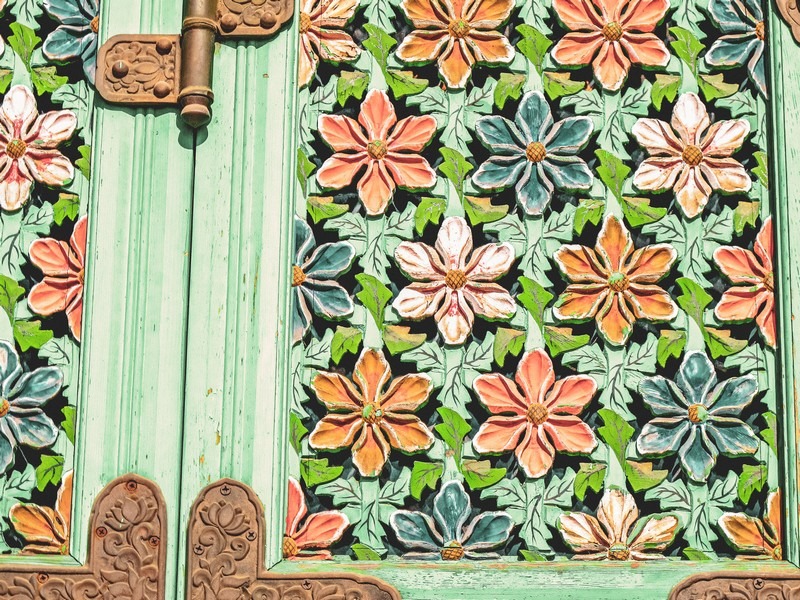
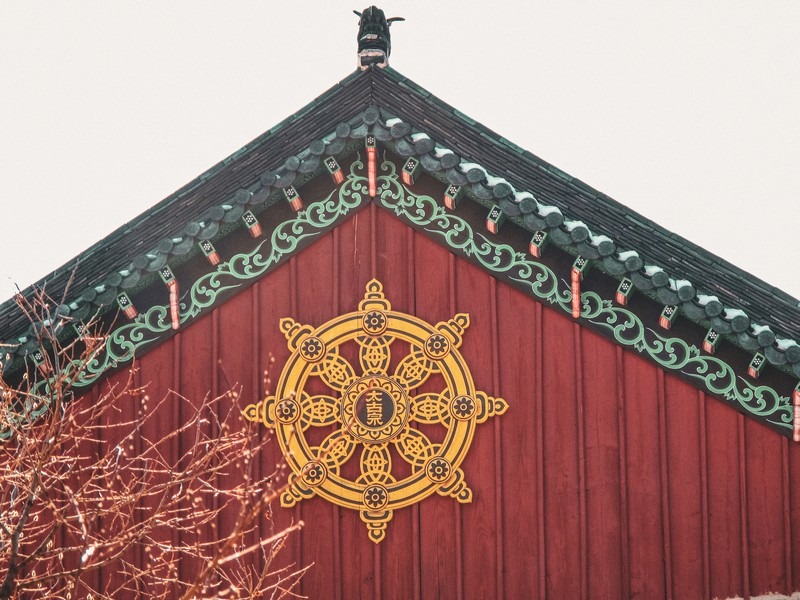
Of the approximately fifty monks currently residing at Bongwonsa, two hold the designation of Living National Treasure, recognized for their mastery of Buddhist chant and traditional temple ornamentation. The Taego Order’s commitment to these ritual arts is what keeps this knowledge alive.
The Yeongsanjae Ritual
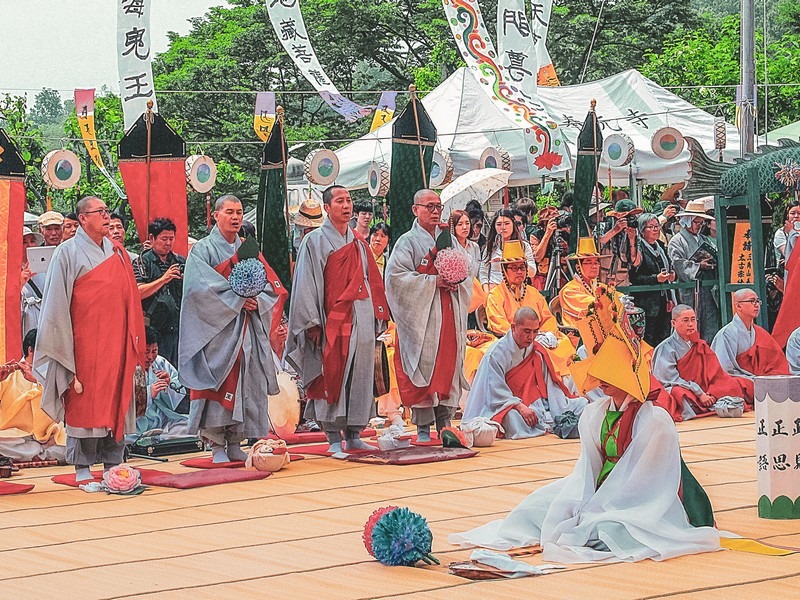
Performed for world peace and national reunification, this ceremony is held on June 6, Korea’s Memorial Day, each year. The ceremony has been passed down since the Goryeo Dynasy (917 – 1392CE) and is Korea Important Intangible Cultural Property No. 50.
The Yeongsanjae is a symbolic reenactment of the Buddha of the Buddha Sakyamuni’s delivery of the Lotus Sutra on Mt. Grdhrakuta 2,600 years ago and is held in hopes of leading the living as well as the deceased to the joy of enlightenment and peace.
The ceremony starts at 10:00 in the morning and goes until 6:00 in the evening and with a cafeteria on the grounds, it is completely possible to stay the whole day enjoying the sites and soaking in the peaceful atmosphere.
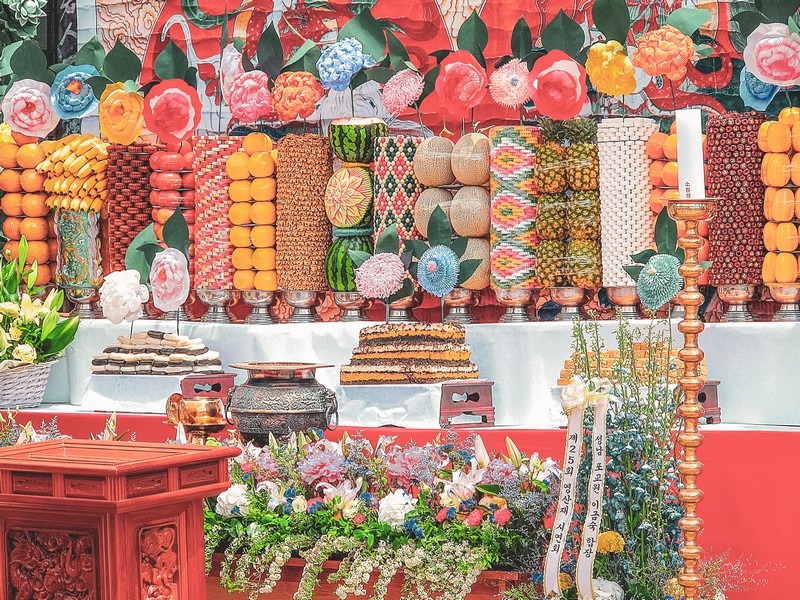
How the ceremony unfolds:
The ceremony starts with Tajong, Siryeon. A huge bell is rung to beseech the Buddha, Bodhisattvas, gods, devas, guardians, and other spirits to come down from the heavens. There is a processional led by Bodhisattva Innowang to lead the spirits onto the temple grounds.
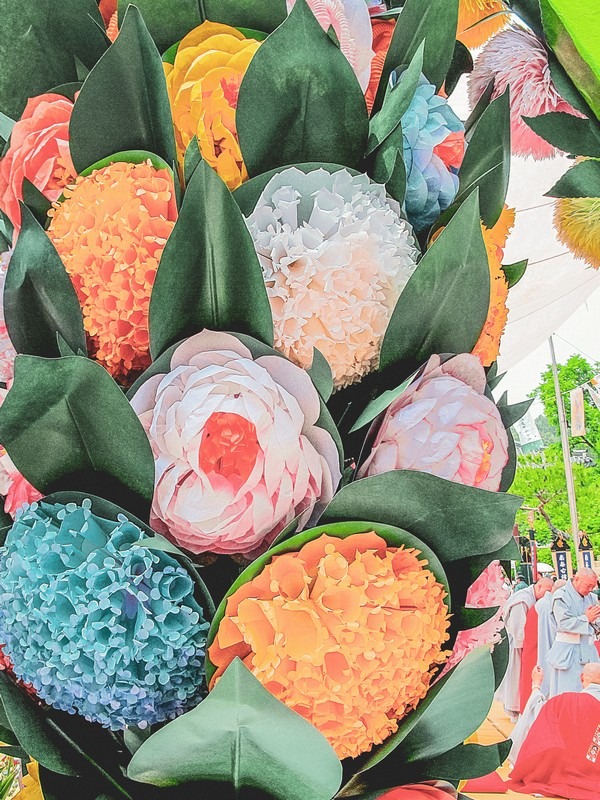
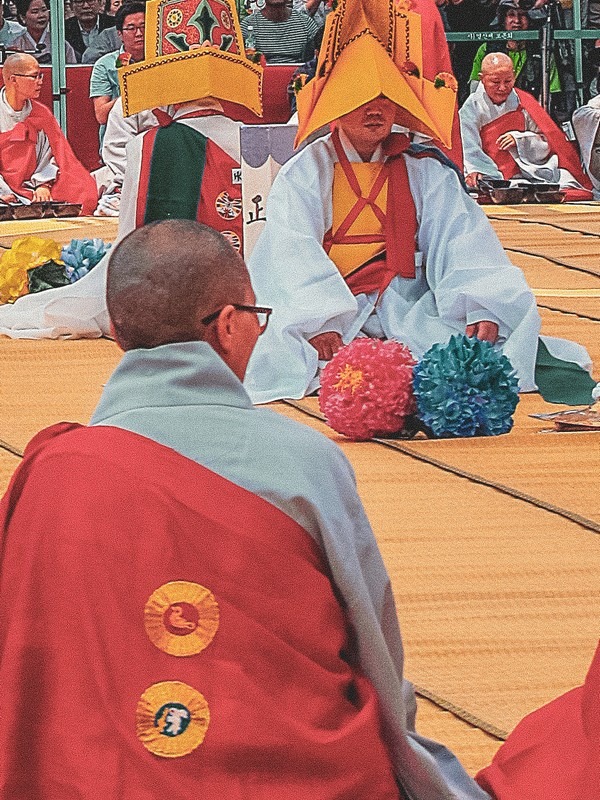
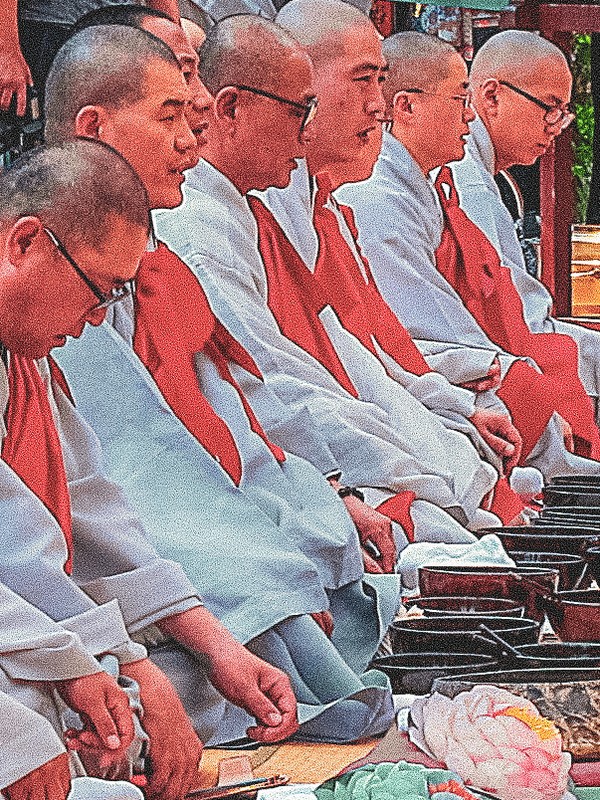
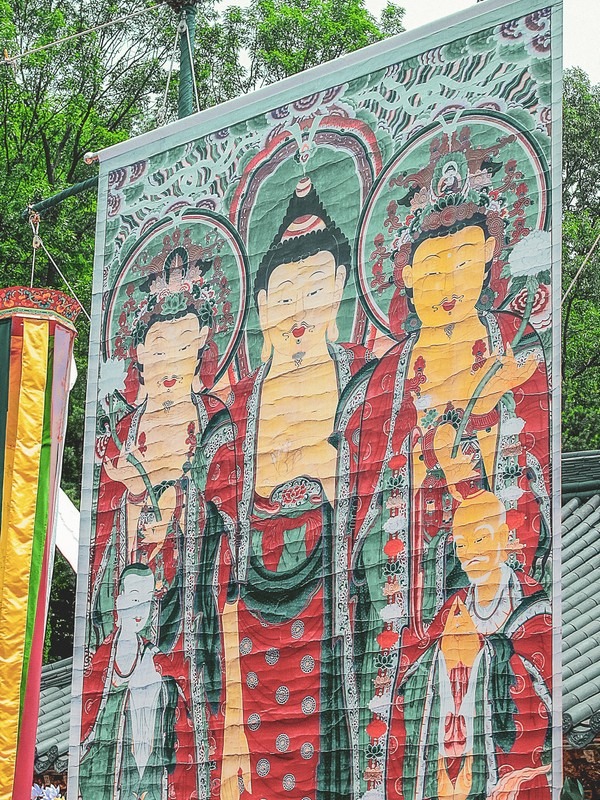
Next is Gwaebul Iun, in which the large Tangka painting with a picture of Budda Sakyamuni is raised. This represents the appearance of the Buddha at the ceremony. Chants to relieve suffering and dances to say thanks are performed.
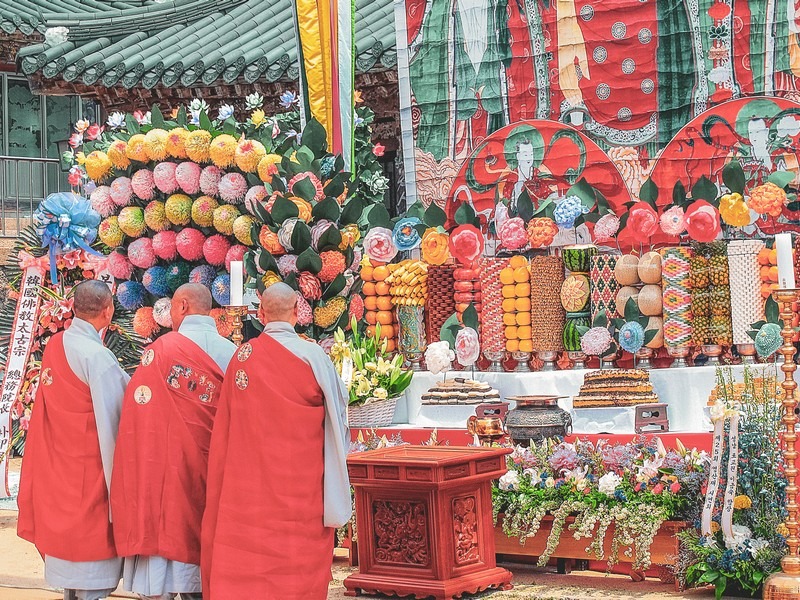
While this is happening there are alters set with food so that those in attendance can have their ancestors’ names written on paper and hung nearby to be prayed for as well.
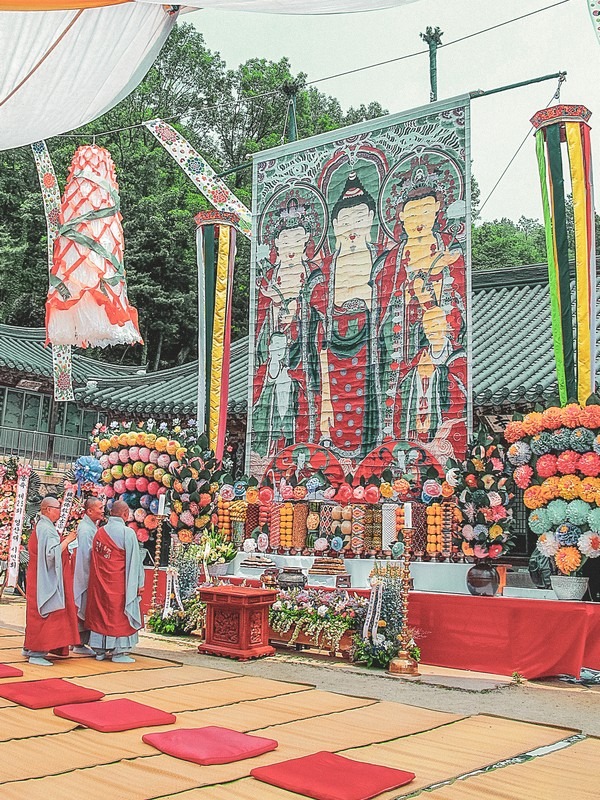
Around noon, the Meal Offering, Sikdang Jakbeop, is performed. The guide I received explains that this is unlike usual meals in that it is accompanied by music and chanting as well as dancing and drumming and is extremely complex. Take note that there are no photographs allowed during this time which makes the crowds dissipate a bit and head to eat their own lunch. Stay and just take it in.
Bongwonsa Temple is worthy of a visit without a ceremony to see, but this ceremony is extremely special and a unique experience if you’re in Seoul in the summer.
There isn’t a ton of information online in English regarding this ceremony, but you can find information in Korean on https://pompae.or.kr/
Nearby
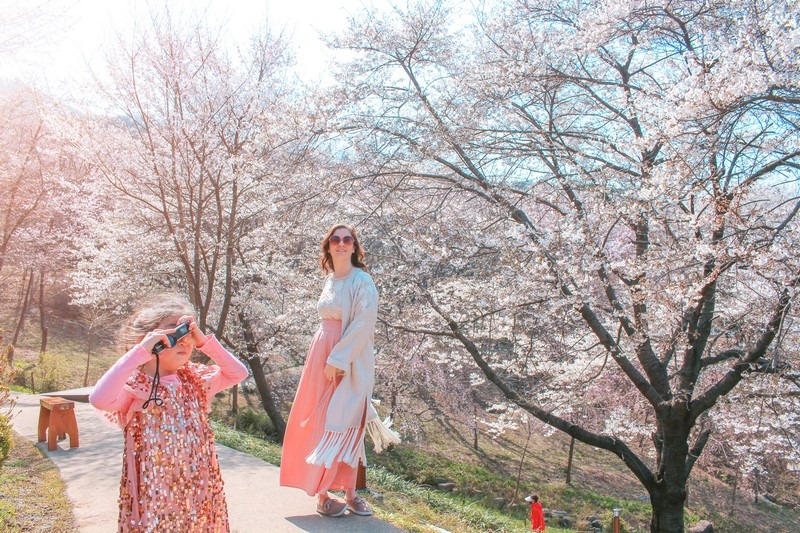
Bongwonsa sits on the slopes of Ansan Mountain, which has more to offer than the temple alone. A valley of cherry blossom trees leads down to a small waterfall, one of the less-known cherry blossom spots in Seoul. A walk in a different direction from the temple takes you toward Seodaemun Prison History Museum, one of the most important sites in Seoul for understanding the period of Japanese colonial rule and the Korean independence movement.
FAQ
What is Bongwonsa Temple?
Bongwonsa (봉원사) is a Buddhist temple in Seodaemun-gu, Seoul, founded in 889 AD by Master Doseon. It belongs to the Taego Order, the second largest order of Korean Buddhism, and is home to the largest wooden building in Korea (the 3000 Buddhas Hall, built without nails), approximately 50 resident monks (two of whom are designated Living National Treasures), and the Yeongsanjae ritual.
What is the Taego Order?
The Taego Order is the second largest Buddhist order in Korea, a traditional Seon (Zen) school that permits ordained priests to marry (nuns must remain celibate). It was formally established in 1954 after a split from the Jogye Order. The Taego Order places particular emphasis on preserving ritual arts including Buddhist dance, music, and temple ornamentation.
What is the Yeongsanjae?
The Yeongsanjae is a Buddhist ritual designated as Korea’s Important Intangible Cultural Property No. 50. Performed at Bongwonsa every June 6, it is a symbolic reenactment of the Buddha Sakyamuni’s delivery of the Lotus Sutra 2,600 years ago. The ceremony runs from 10:00am to 6:00pm and includes bell-ringing, a procession, the raising of a ceremonial Tangka painting, chanting, ritual dance, and a Meal Offering with music and drumming.
Is Bongwonsa Temple free to visit?
Admission is free. Verify locally before visiting, as policies can change.
How is Bongwonsa different from Bongeunsa or Jogyesa?
Bongwonsa is often confused with Bongeunsa Temple (near COEX in Gangnam) due to similar names. They are different temples. Jogyesa is the headquarters of the Jogye Order, the most visited Seoul temple, located in Insadong. Bongwonsa is quieter and much less visited by tourists, and belongs to the separate Taego Order rather than the Jogye Order.
When is the best time to visit Bongwonsa Temple?
Spring for lotus lanterns ahead of Buddha’s Birthday. June 6 specifically if you want to attend the Yeongsanjae ceremony. The temple is worth visiting year-round as the grounds and buildings are interesting in any season.
Bongwonsa has Seoul’s largest wooden building, resident Living National Treasures, a Buddhist order distinction that tells a genuinely interesting story about Korean religious history, and a ceremony once a year that almost no one outside Korea knows about. June 6 is the date.
Did you like this post? Pin It!