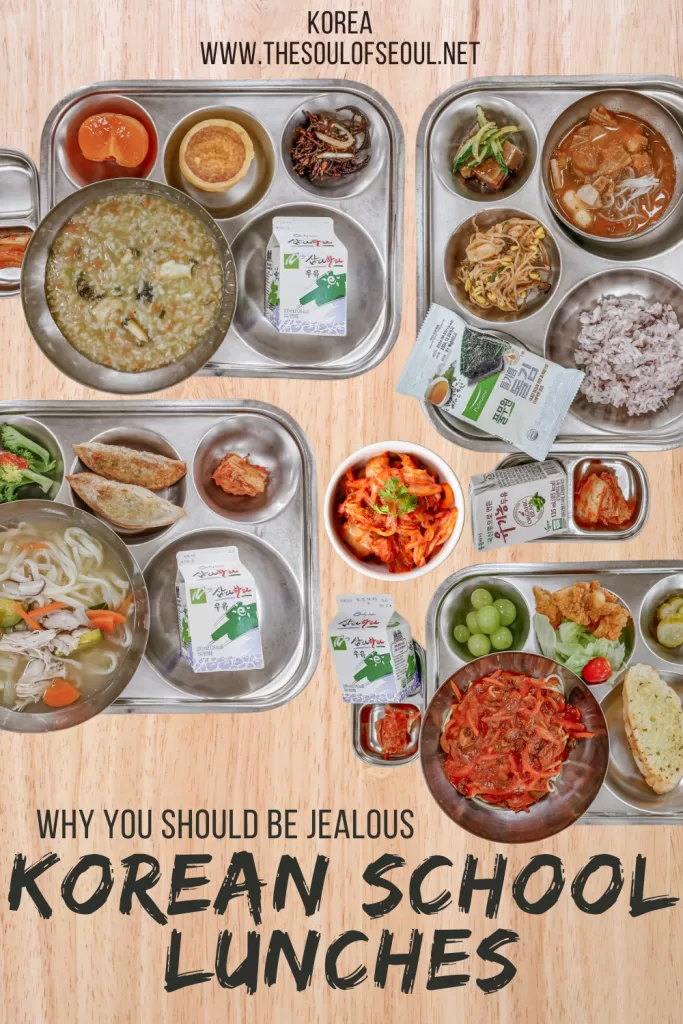
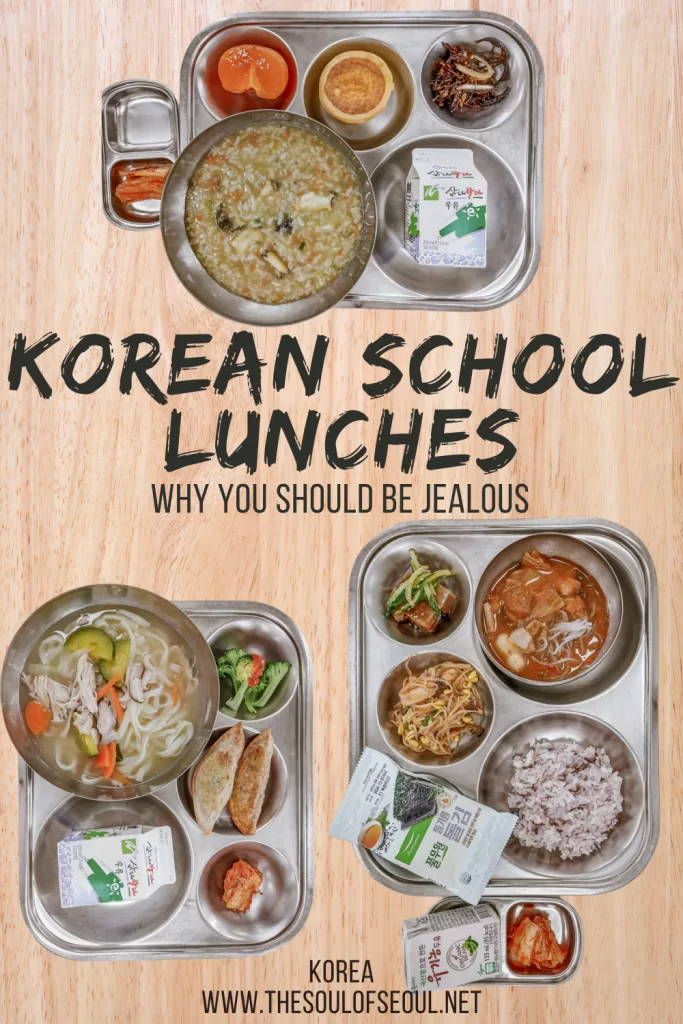
Korean School Lunch: What Students Actually Eat Every Day
Last Updated on October 13, 2026
Growing up in the US, my school lunches were a predictable rotation of peanut butter and jelly sandwiches, greasy fries, and cardboard-like pizza. So when I experienced a Korean school lunch for the first time, working as a teacher at a Korean public school, I was shocked, not just by how good it was, but by how complete it was.
Korean public school lunches are planned by a professional nutritionist, rotate daily with no repeats for weeks at a time, include seasonal ingredients, and are subsidized by the government, meaning they’re either free or very low cost for students. I’ve had some of the best food I’ve eaten in Korea at the public and private schools where I’ve worked. My daughter now attends elementary school and I get daily photo updates of her lunch that make me and my husband hungry… he has contemplated asking if we can get some too.
The teachers eat the same lunch as the students. This surprises most people who ask about it.
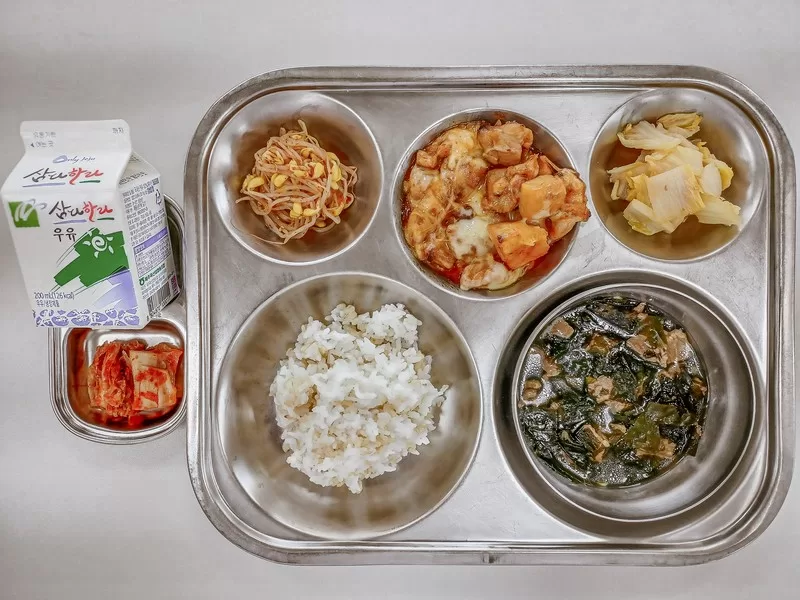
The pictures of my daughter’s lunch make me hungry every day and they’ll make you hungry too:
- The Daily Essentials of a Korean School Lunch
- Variety and Seasonality: Keeping it Interesting
- A Parent’s Perspective on School Lunches
(This post contains affiliate links, which means I receive a certain percentage of a sale if you purchase after clicking at no cost to you. Thank you for your support.)
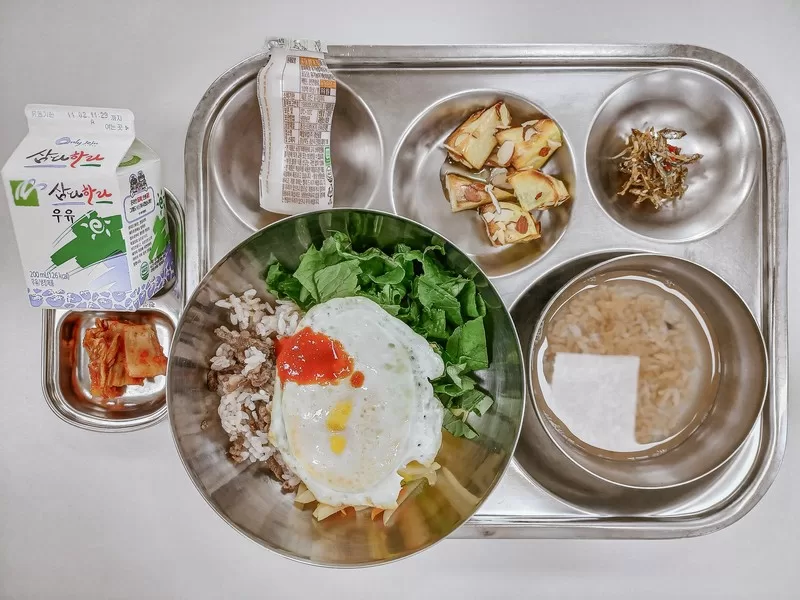
The Daily Essentials of a Korean School Lunch
Korean school lunches are well planned and balanced and typically feature:
- Soup: A warm bowl of soup is a daily staple, ranging from savory seaweed soup (miyeok-guk) to hearty soybean paste stew (doenjang-jjigae), but there are so many other options including nurungji, scorched rice soup, one of my daughter’s favorites.
- Rice: A serving of steamed white or mixed-grain rice complements the other dishes.
- Kimchi: Korea’s iconic fermented vegetable dish is a constant presence, offering a burst of flavor and probiotics.
- Protein Side Dish: From braised pork to grilled mackerel or stir-fried tofu, there’s always a protein.
- Fruit or Vegetable Side: Seasonal fruits like apples or grapes and vegetable dishes like sautéed spinach or pickled radishes provide essential vitamins and variety.
- Milk: Whole milk is often served, either with lunch or as a mid-morning snack, or for my daughter a soy milk since she’s lactose-intolerant.
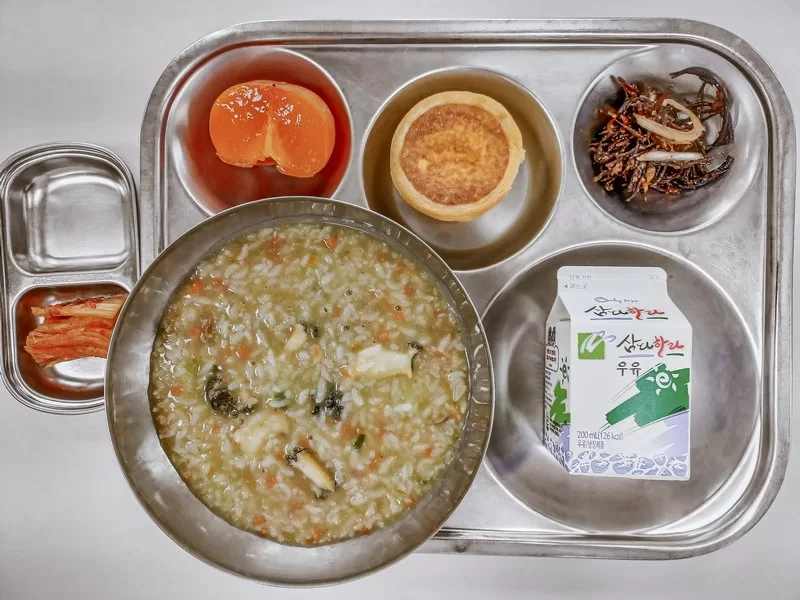
Abalone porridge (전복죽), Egg tart (에그타르트), (톳양피무침), Cabbage kimchi (배추김치), Persimmon (감)
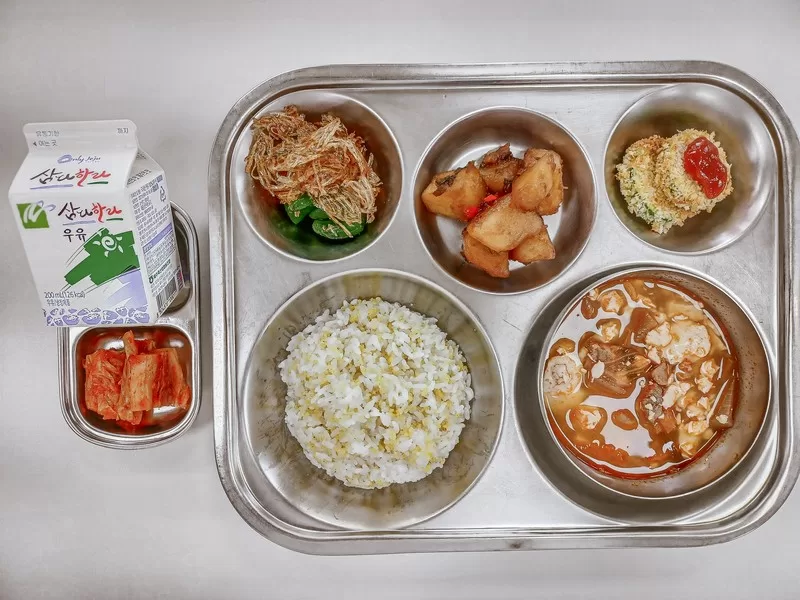
(기장쌀밥), Sundubu jjigae (순두부찌개), Braised potato side dish (감자조림), (뱅어포볶음), Fried zucchini side dish (애호박빵가루튀김), Cabbage kimchi (배우김치)
Korean school lunches are built around the same principles that underpin Korean cuisine broadly: balance, variety, seasonal ingredients, and minimal processing. Each meal is designed by a professional nutritionist and changes completely day to day, there are typically no repeats within a week or even a two-week period.
Language tip: Before you eat, whether you’re sitting with students or fellow teachers, make sure to say jal meokgesseumnida (잘 먹겠습니다). Like saying Bon appetit before diving in, it’s a polite way to say “I will eat well”, or “I will enjoy this meal”.
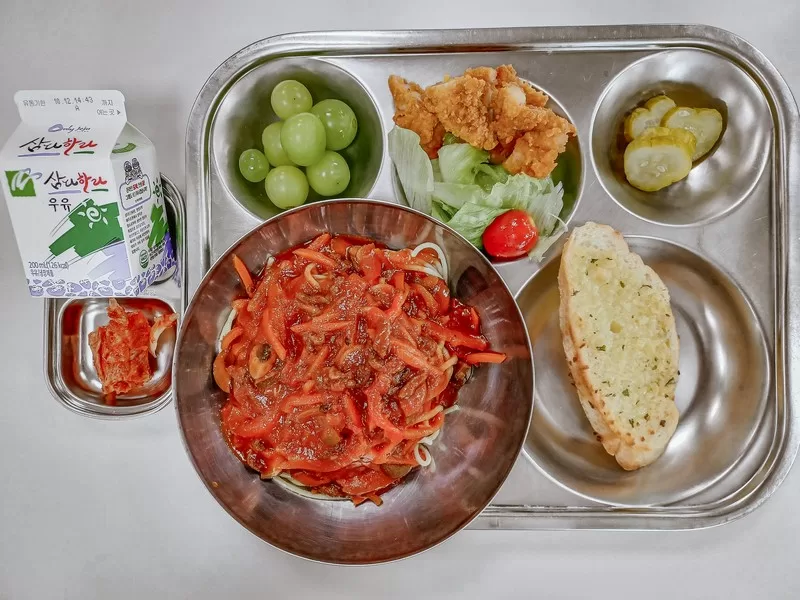
Variety and Seasonality: Keeping it Interesting
While the structure of the meal stays generally consistent, except when they’re serving a western style lunch like above, the menu rotates daily. There are no repeats throughout the week or even for a couple weeks at a time usually.
With a professional nutritionist on staff, the meals are well thought out and consistently delicious. Seasonal ingredients play a significant role in the meal so that everything is fresh as well. Spring may bring dishes with greens like mugwort, while winter features hearty stews and root vegetables.
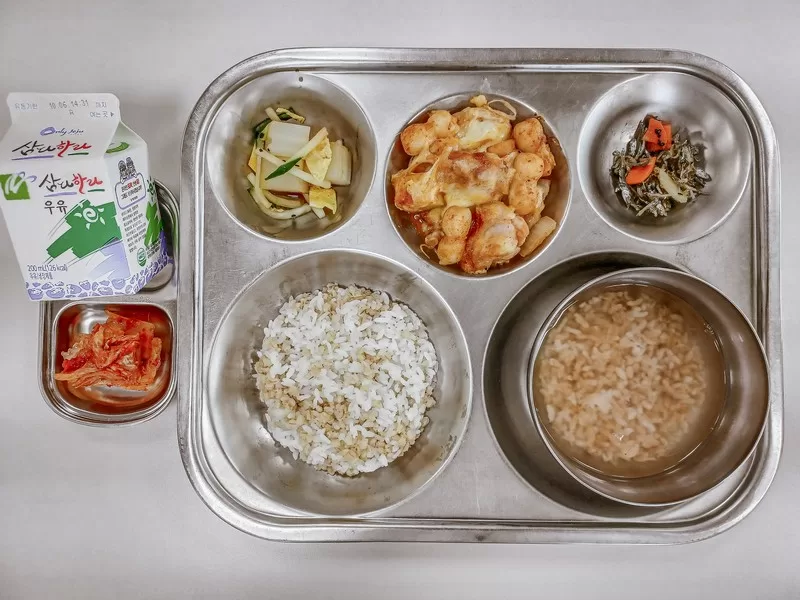
Barley rice (보리쌀밥), Nurungji or scorched rice soup (숭늉), (청포묵무침), Stir-fried garlic and anchovy side dish (마늘멸치볶음), Grilled chicken topped with cheese (치즈불닭구이), Cabbage kimchi (배추김치)
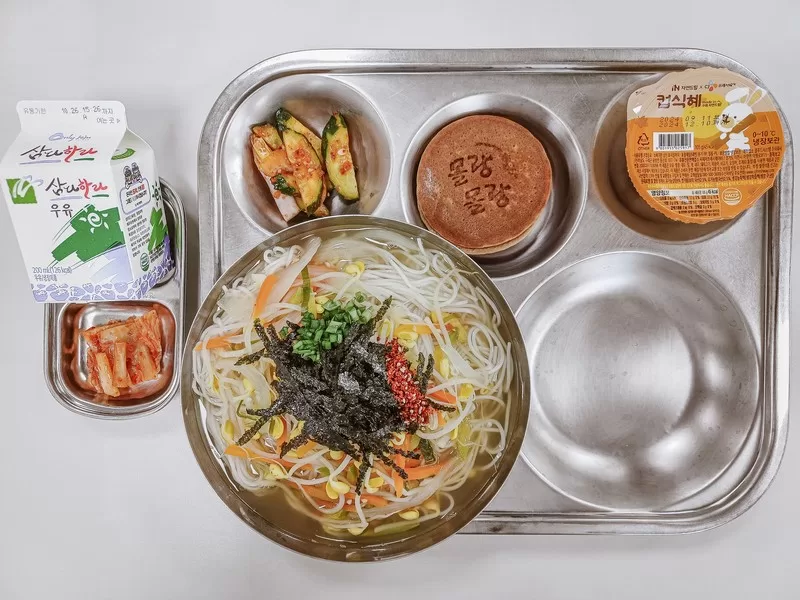
Barley castella cake(보리카스테라), Anchovy noodle soup (멸치국수), Cucumber and onion side dish (오이양파생채), Cabbage kimchi (배추김치), Sikhye a sweet rice drink (식혜)
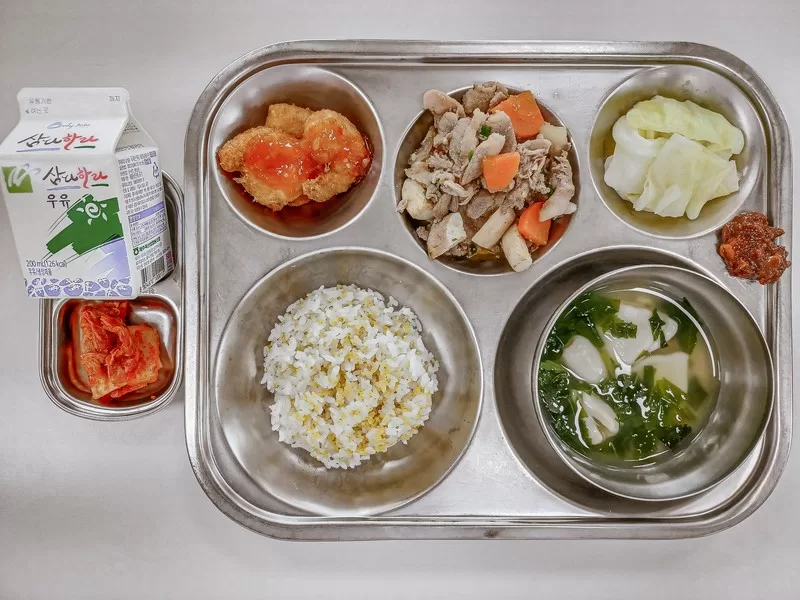
Mallow soup (아욱국), Cabbage with ssamjang sauce (양재추+쌈장), Stir-fried pork with mushrooms and carots (돼지고기새송이볶음), Fried shrimp in a chili sauce (깐쇼새우칠리소스), Cabbage kimchi (배추김치)
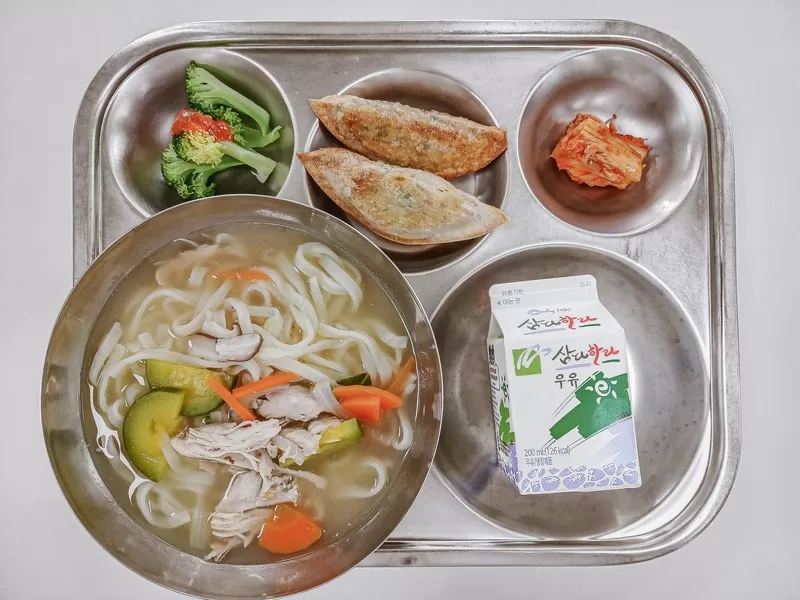
Chicken soup with knife-cut noodles (닭칼국수), Broccoli with vinegar red chili paste (브로콜리초고추장), Fried dumplings (복만두), Cabbage kimchi (배추김치)
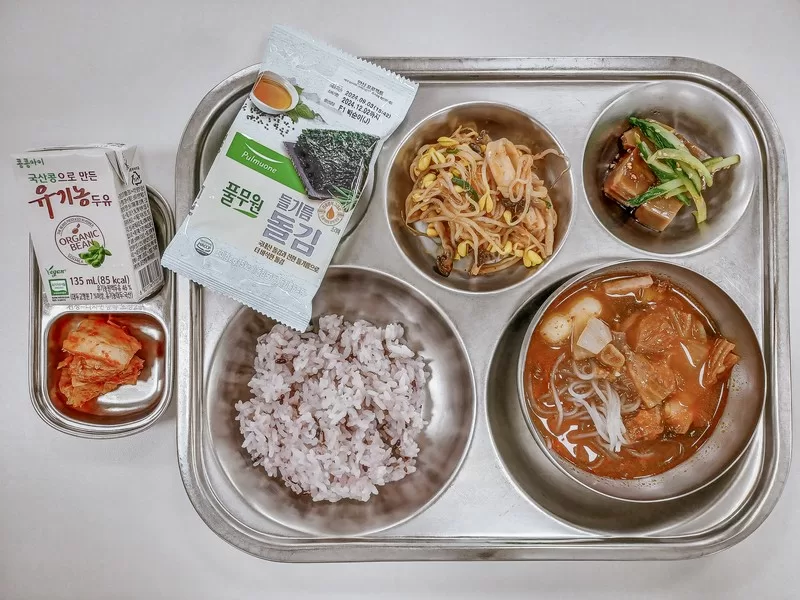
Black rice (검정쌀밥), Beef army stew (쇠고기부대찌개), Steamed squid (오징어찜), Seasoned acorn jelly salad (도토리묵무침), Roasted seaweed (구운김)
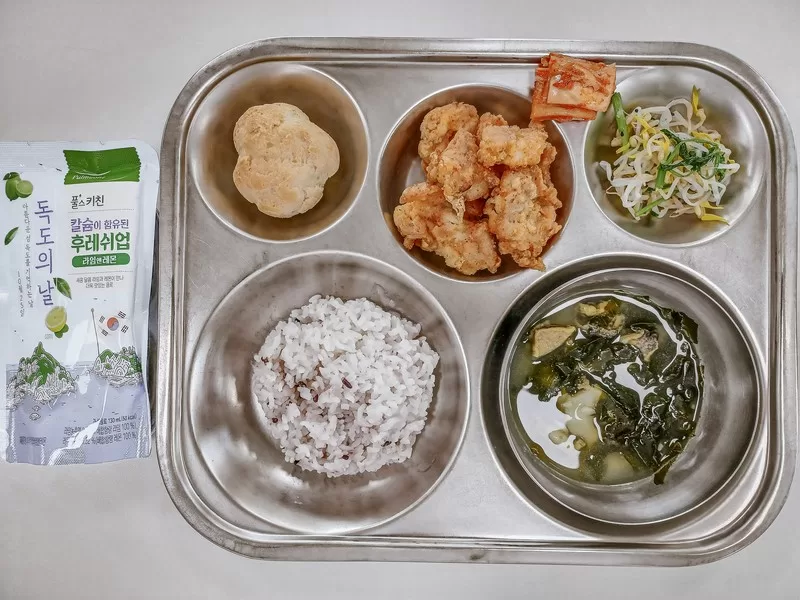
Abalone seaweed soup (전복미역국), Mung bean sprouts with water parsley (숙주미나리무침), Soy sauce chicken (간장치킨), Cream cookie (크림쿠키)
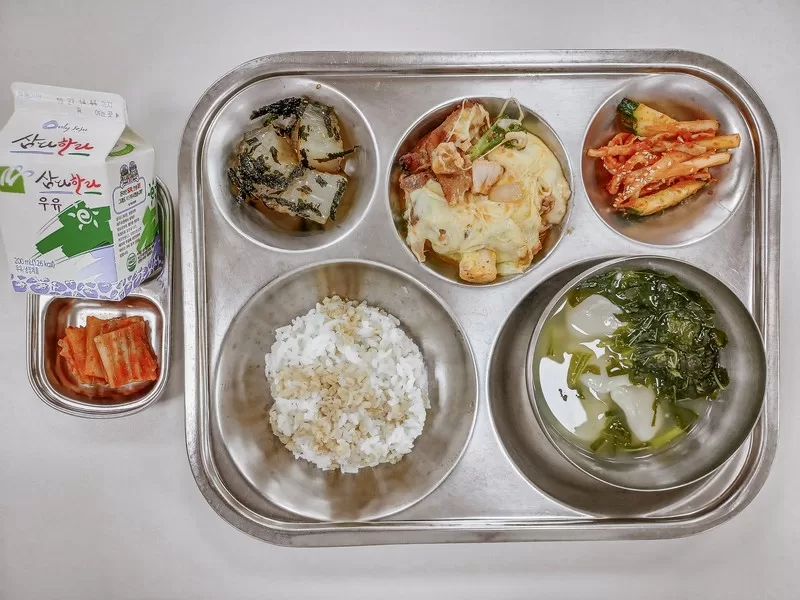
A Parent’s Perspective on School Lunches
Having worked in several Korean schools, I’ve eaten a lot of Korean school lunches myself. Now that my daughter is in elementary school, I get daily photos that continue to make me envious. She comes home talking about what she ate in the way children talk about things they look forward to.
My daughter liked one dish so much, she told the cook who printed out the recipe so we could make it at home!
Schools also invite parents in once a semester to eat lunch with the students and staff. It’s free, and it’s a good chance to see the actual quality of what’s being prepared, meet the lunch staff, taste the food, and understand what your child is eating every day. The standards hold up.
One practical note: The school system accommodates dietary needs where possible. My daughter is lactose-intolerant and receives soy milk as a standard alternative to whole milk, without having to make a special request each day. This kind of accommodation being built into the system is a sign of how seriously the nutritional planning is taken.
FAQ
What do Korean students eat for lunch?
A typical Korean school lunch includes rice (rotating types), a soup that changes daily, kimchi, a protein dish, a seasonal vegetable or fruit side, and milk or an alternative. The menu rotates completely every day with no repeats for weeks at a time. Dishes can range from everyday Korean staples to surprising items like abalone soup or American-style spaghetti.
Is Korean school lunch free?
Korean public school lunches are heavily subsidized by the government and are either free or very low cost for students, depending on the district and income level of the family. This subsidization explains in part why the meals are so comprehensive, they’re designed and funded as a public health investment, not a commercial operation.
Do teachers eat with students in Korean schools?
Yes, teachers typically eat the same school lunch as students, served in the school cafeteria. There is no separate teacher’s menu. This is one of the details that surprises non-Korean educators most when they arrive to teach.
How does the Korean school lunch menu get planned?
A professional nutritionist on staff designs the menu, accounting for nutritional balance, seasonal ingredient availability, variety over time, and student preferences. The nutritionist manages the rotation to ensure no dish repeats within a given period.
Can vegetarian students eat at Korean schools?
Korean school lunches are predominantly meat and seafood-inclusive, reflecting mainstream Korean cuisine. Fully vegetarian or vegan options are not standard and vary significantly by school. Families with vegetarian children should contact the school directly to understand what accommodations are available. The system does handle individual dietary needs in some cases , as with the dairy alternative for my lactose-intolerant daughter, but vegetarian accommodation is less systematically built in.
What is the Korean phrase to say before eating?
Jal meokgesseumnida (잘 먹겠습니다), meaning “I will eat well” or “I will enjoy this meal.” Used before a meal, equivalent to bon appétit. It’s polite and expected in Korean communal eating settings including school lunches.
Korean school lunches make a compelling case for what’s possible when food is treated as part of education and public health rather than a logistical problem to be solved cheaply. My daughter gets abalone soup on a Wednesday. She comes home and tells me about it. I make a note to find a restaurant that serves abalone soup this weekend, because school-level abalone soup in Korea is good. That’s the kind of food culture this system produces.
For more on Korean food culture, the dishes, the history, and where to eat them, the complete guides to kimchi and nurungji go into depth on two foods my daughter encounters at school and loves. And for families thinking about life in Korea with children, the complete guide to things to do in Seoul with kids covers what the city looks like from a family perspective.
Did you like this post? Pin iT!