Tongdosa Temple: The Korean Temple with No Buddha Statue
Last Updated on May 11, 2026
I’ve heard it said that if you’ve seen on temple in Korea, you’ve seen them all and yet I find that so many of them have history and intrigue far more than people realize. If you’ve visited several Korean Buddhist temples, you may think you know what to expect in the main hall, a large gilded Buddha statue, flanked by attendants, facing the entrance perhaps. At Tongdosa Temple (통도사), Korea’s largest monastic complex, the main hall has no Buddha statue at all however. Surprising isn’t it?
Visit and you’ll find a cushion, a window, and beyond the window, a stone altar holding relics of Sakyamuni Buddha himself: a piece of bone, his begging bowl, his robe. The relics are the presence. The statue would be redundant.
This single fact, the temple without a Buddha, is the key to understanding everything else about Tongdosa. But you need to visit and see it in person to truly understand.
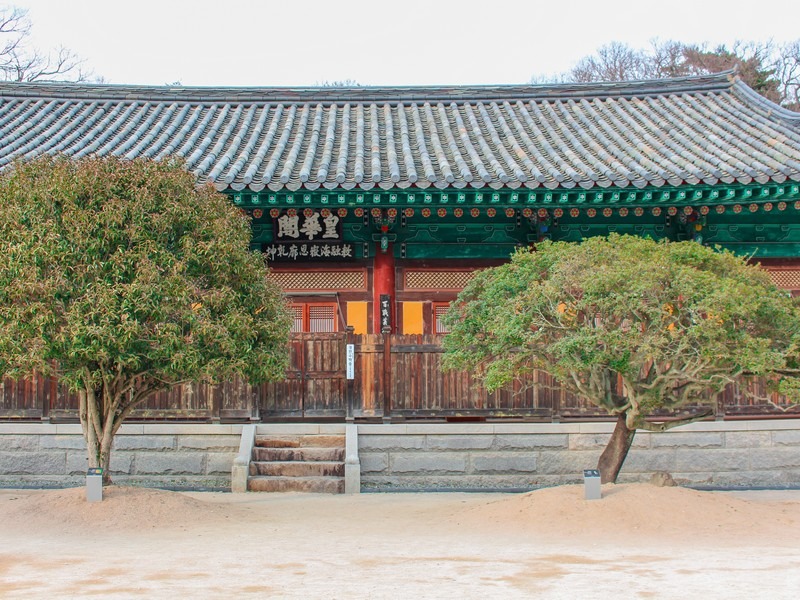
I visited with my family one year when we went to see them in Busan and it is really not to be missed and a great day trip from Busan too.
- How To Get There
- Where The Dragons Lived
- A Journey Through History and Spirituality
- The Three Jewel Temples Explained
- The Modern-Day Temple
- Annual Events at Tongdosa
- FAQ
(This post contains affiliate links, which means I receive a certain percentage of a sale if you purchase after clicking at no cost to you. Thank you for your support.)
How To Get There
Address: 108 Tongdosa-ro, Habuk-myeon, Yangsan-si, Gyeongsangnam-do (경상남도 양산시 하북면 통도사로 108)
Tongdosa is located just a few kilometers north of Busan’s Nopo bus terminal, easy to combine with a Busan trip as a half-day excursion.
By taxi: From Nopo Station, approximately 30 minutes.
By bus: Local bus 12 or 12-1 from Nopo Station, then transfer to maeul bus (small bus) Jisan1.
Join a tour: Want to get more out of your visit? Go with a guide:
- Private Tongdosa Temple Tour including Gourmet Eonyang Style Bulgogi Lunch: Book this tour on Viator.
Where The Dragons Lived
In the early days of Tongdosa’s founding, a legend tells of a time when nine malevolent dragons resided in a vast pond near the site. The great monk Jajang-yulsa, determined to establish a sacred space, attempted to expel these dragons by reciting powerful magic texts. However, the stubborn dragons refused to leave.
Undeterred, Jajang-yulsa took a different approach. He inscribed the Chinese character for fire onto a sheet of paper and cast it into the sky. Simultaneously, he used his long stick to strike the water in the pond. As a result, the water began to boil intensely.
Unable to withstand the searing heat, the dragons panicked. Three of them, in their frantic attempt to escape, flew wildly and crashed into a nearby cliff, which became known as Yonghyeolam, or “dragon blood rock.” Five more dragons fled southwest, finding refuge in a valley that is now called Oryonggok, or “five dragon valley.”
The ninth dragon, overwhelmed by the heat and unable to see, pleaded with Jajang-yulsa for mercy. He vowed that if his life were spared and he could remain in the pond, he would forever protect the temple. Moved by the dragon’s sincere promise, Jajang-yulsa granted his request. Thus, the blind dragon stayed behind as the guardian of Tongdosa.
To this day, Nine Dragons Pond, now known as Guryongji, stands beside the main temple hall, a reminder of the legendary dragons and the enduring spirit of protection that pervades Tongdosa.
A Journey Through History and Spirituality
Tongdosa’s significance is rooted in its ancient history and the relics it houses. Tongdosa was founded in 646 AD by the monk Jajang after his return from Tang Dynasty China, where he had obtained relics of Sakyamuni Buddha: a sari, a begging bowl, a fragment of bone from the skull. These he enshrined in a special reliquary stupa called Geumgang Gyedan, the Diamond Altar, which remains the spiritual focal point of the entire complex.
The presence of these relics is the reason the main hall has no Buddha statue. When the physical remains of the historical Buddha are present in the stupa just outside the window, there is no need for a representation.
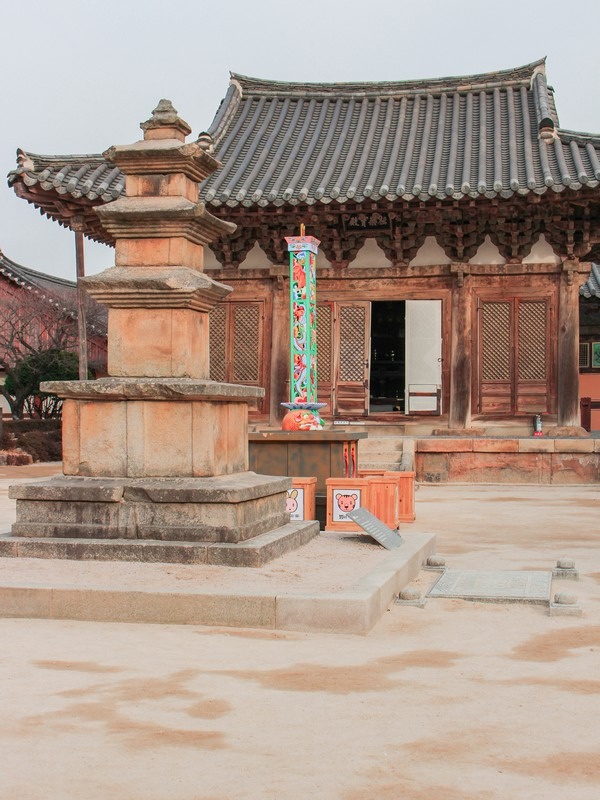
During the Goryeo Dynasty (918-1392), when Buddhism was the state religion, Tongdosa flourished. By the mid-15th century the complex reportedly housed thousands of monks and hundreds of buildings. The temple survived the Japanese invasions of the late 16th century and was meticulously rebuilt in the early 17th century. What stands today largely dates from that reconstruction.
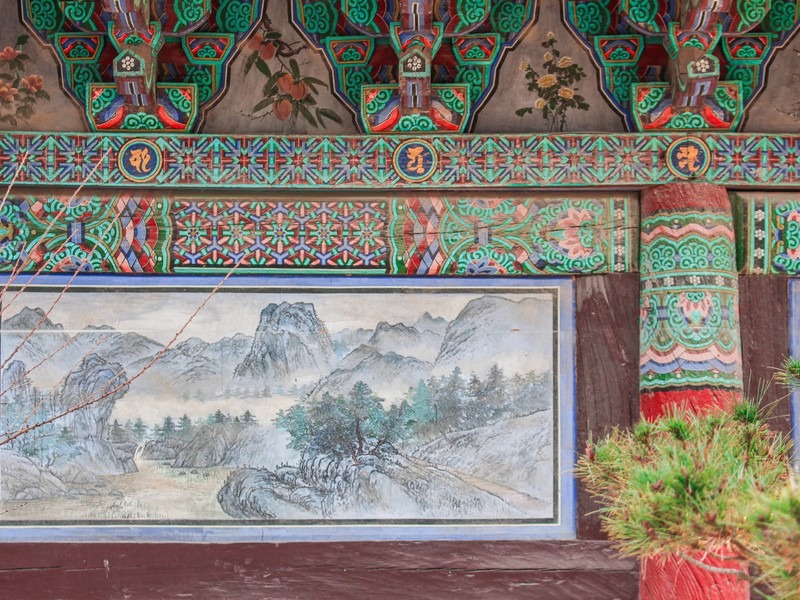
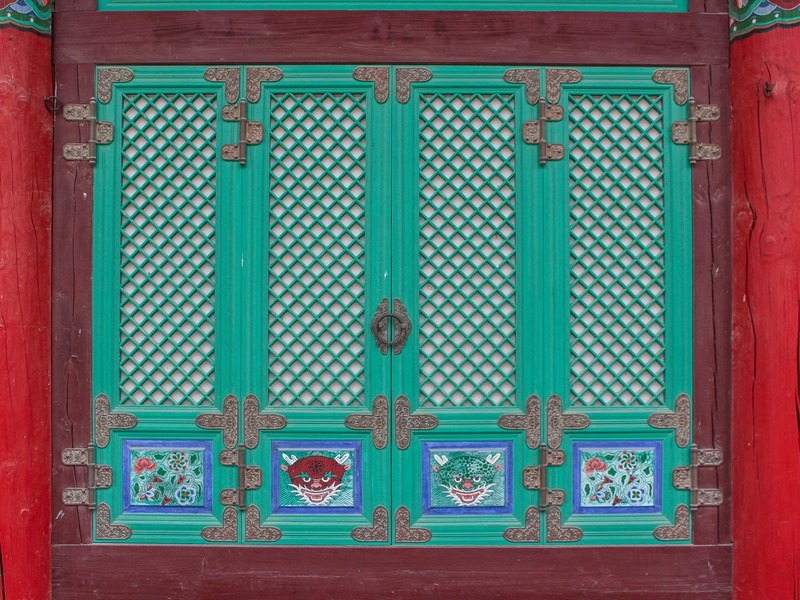
In 2018, Tongdosa was designated a UNESCO World Heritage Site as part of the collective inscription “Sansa, Buddhist Mountain Monasteries of Korea”, alongside six other temples including Haeinsa and Beopjusa. The designation recognizes the Sansa temples as living Buddhist monasteries that have sustained Korean Seon Buddhism through suppression, invasion, and modernization.
The Three Jewel Temples Explained
Tongdosa is one of the Three Jewel Temples of Korea, a designation that sounds ceremonial but carries specific theological meaning.
Buddhism speaks of Three Jewels: the Buddha (the teacher), the Dharma (the teaching), and the Sangha (the monastic community). Each of the three great Korean temples represents one:
Tongdosa represents the Buddha, because it houses the physical relics of Sakyamuni himself. This is why there is no statue: the real thing is here.
Haeinsa represents the Dharma, because it houses the Tripitaka Koreana, the 81,258 wooden printing blocks of Buddhist scripture, the most complete and oldest intact version of the Buddhist canon.
Songgwangsa represents the Sangha, because of the strength and continuity of its monastic community across the centuries.
Together, these three temples form the spiritual foundation of Korean Buddhism.
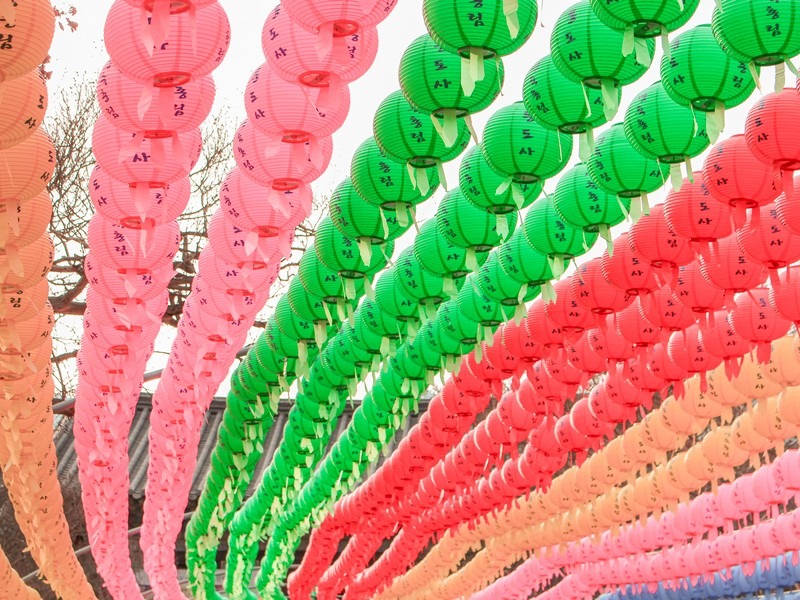
The Modern-Day Temple
Tongdosa temple stands out not only for its spiritual significance but also for its aesthetic and serene layout. You’ll often hear about the aesthetics behind how traditional buildings have been constructed and where they’ve been constructed. Tongdosa Temple runs north to south with a stream that flows from east to west, a unique alignment to the temple.
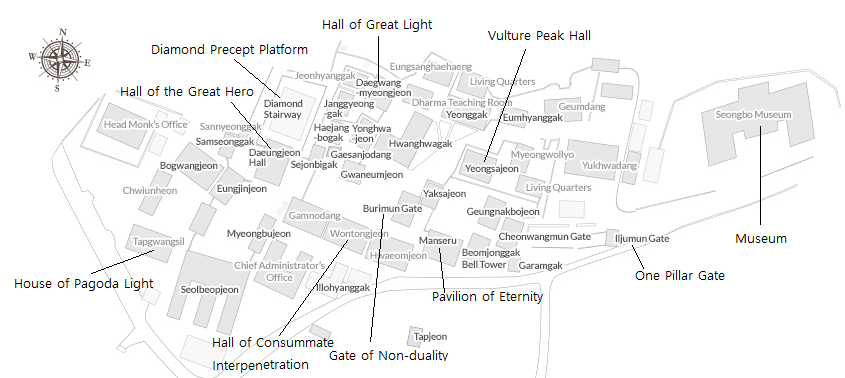
This temple complex, which includes around 500 monks and nuns and 17 hermitages, survived the Japanese invasion of the late 16th century and was meticulously rebuilt in the early 17th century. Today, it is Korea’s largest monastic complex.
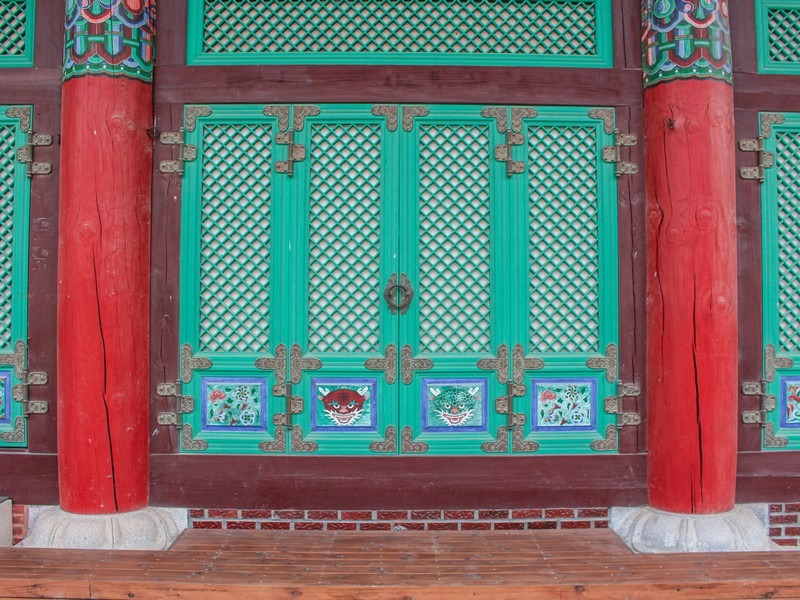
Walk up a trail about a kilometer long, flanked by a forest on one side and a beautiful stream on the other to find the entrance gate to the temple front. Along this path, look for the numerous steles and stone monuments dedicated to distinguished monks.
The modern Tongdosa museum, which showcases ancient and modern Buddhist paintings, adds another layer of cultural richness to the experience. There is an excellent collection of art inside.
Be sure to look for the Three Arch Bridge, Samseongbanwol, meaning three stars and a half moon. It’s also called the One Mind Bridge.
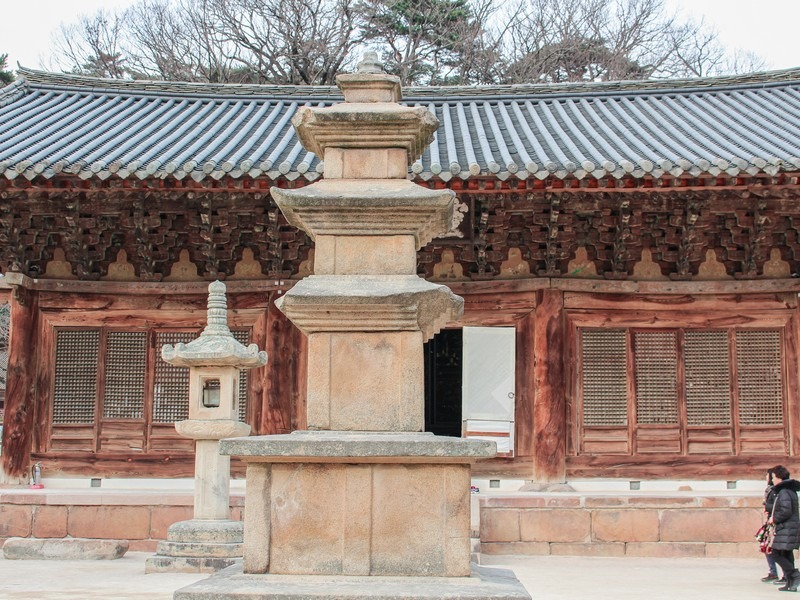
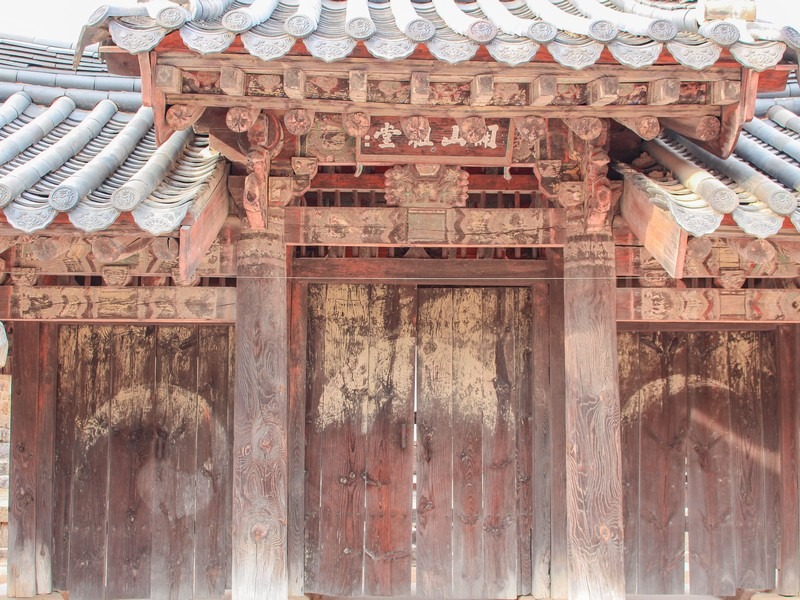
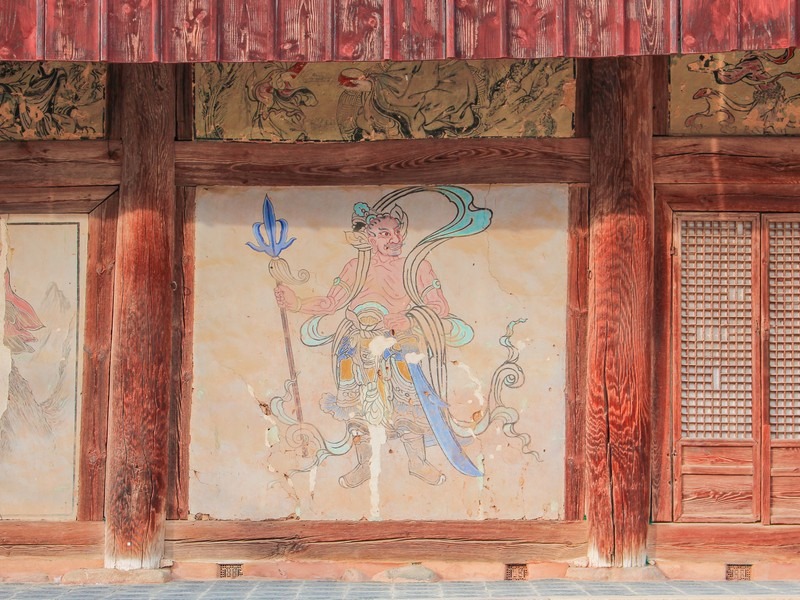
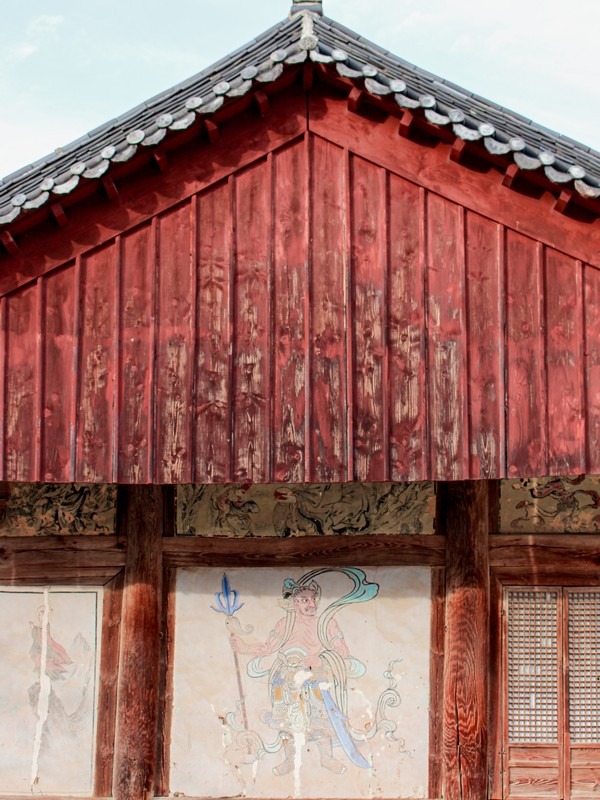
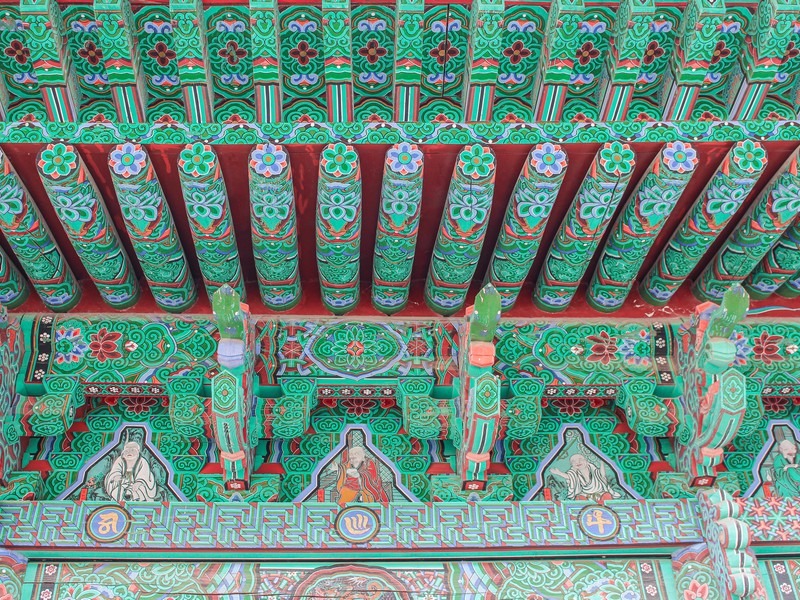
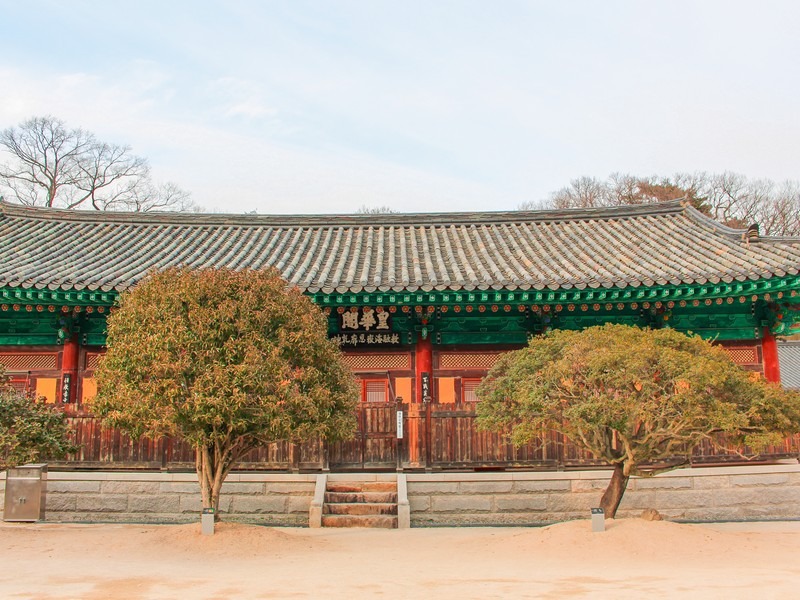
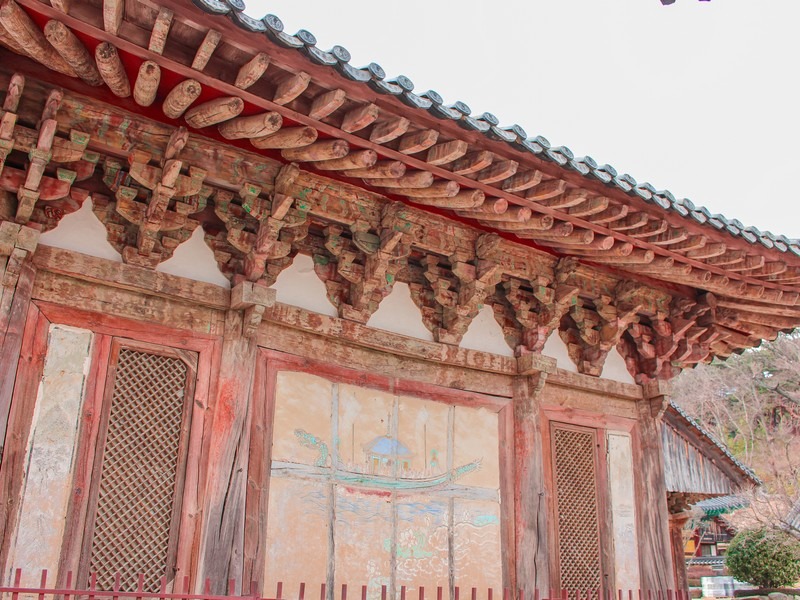
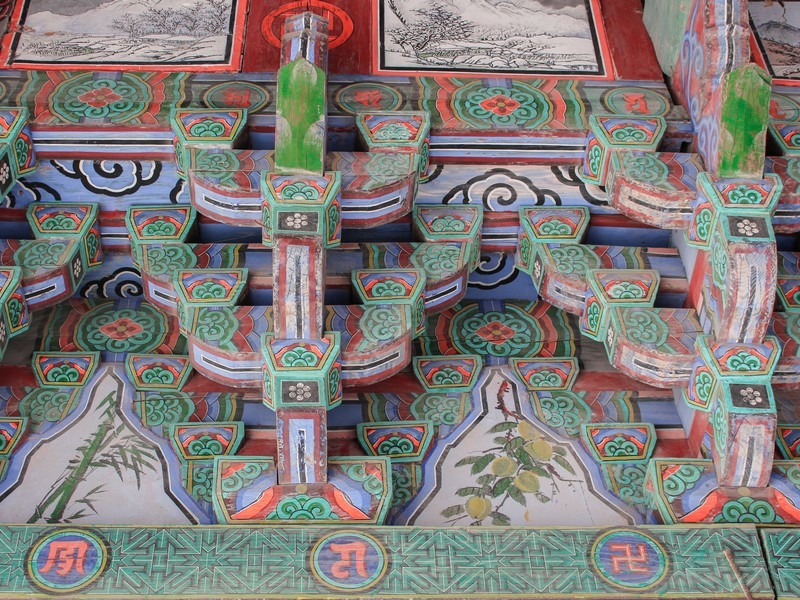
As you pass through the gate of the Four Heavenly Kings into the main temple area, you’ll be greeted by old halls that house stupas containing the sacred relics of Sakyamuni. These buildings, dating back to the early 17th century, have a weathered charm that enhances Tongdosa’s quaint and sacred atmosphere.
Wondering why it’s called the temple with no Buddha? In the main hall there is no Buddha statue like most temples, instead there is just a cushion and a window that looks out over the Geumgang Gyedan, or the Diamond Altar.
Annual Events at Tongdosa
Tongdosa Temple hosts some special annual events. Note that the months mentioned are on the lunar calendar.
- March: Boddhisattva precepts ceremony for lay people.
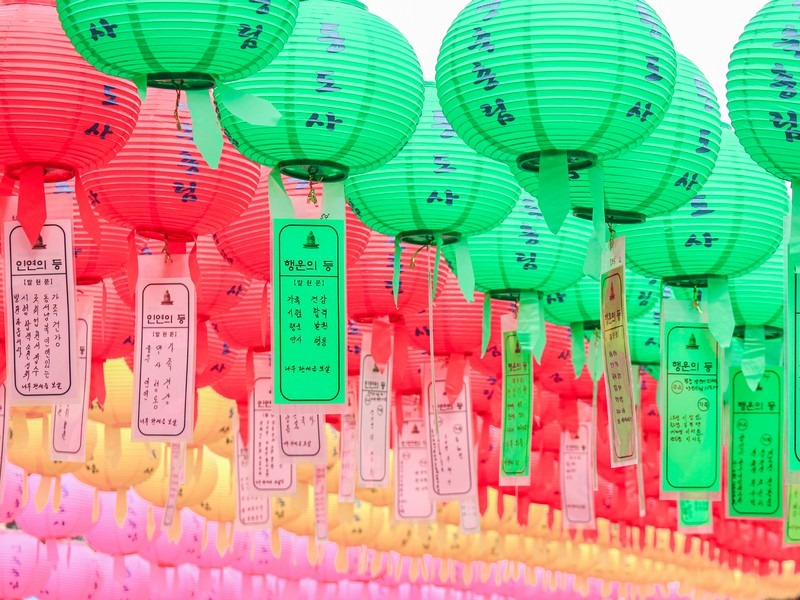
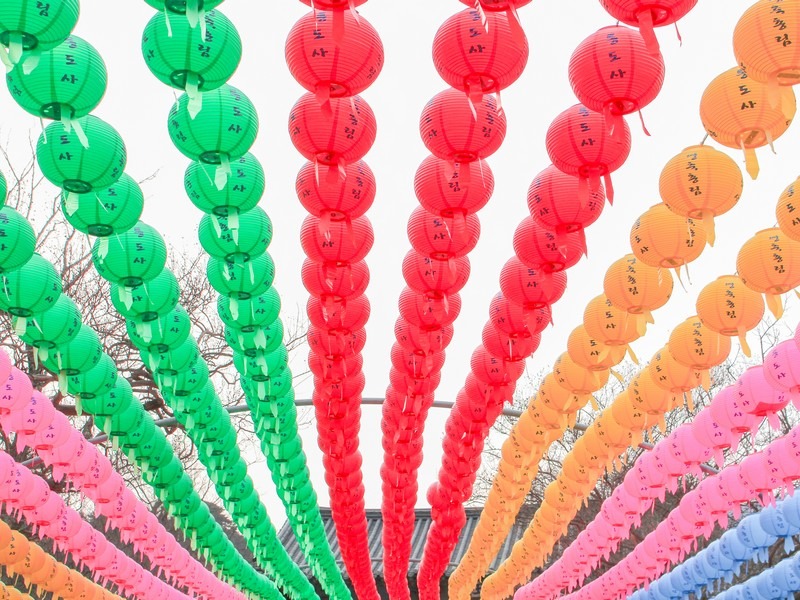
- April: Buddha’s Birthday
- September: Memorial Service to pay homage to the predecessors and to renew one’s determination for practicing Buddhism.
- November: The 53-day Hwaeom Dharma Gathering
Templestay
Templestay at Tongdosa
Two formats are available:
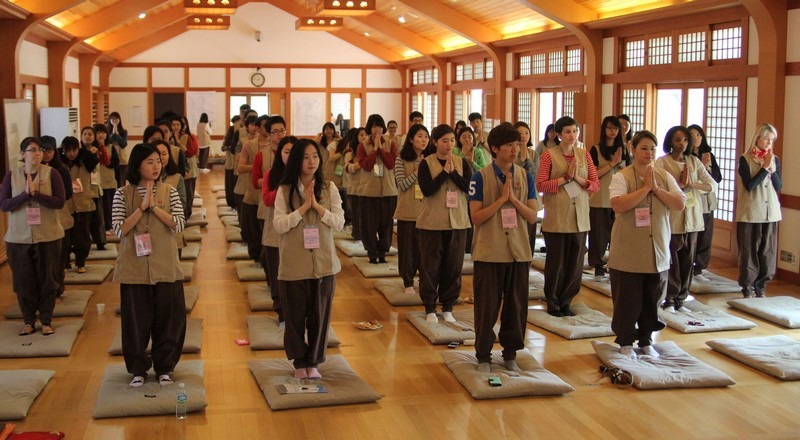
Rest type: Access to a room and the dining hall only. No guided activities — participants manage their own schedule including prayers and meals. Available on days without group events.
Experience type (once or twice monthly): The full program. Reservations announced a month in advance; must be made at least three days ahead; deposit required to confirm. Accommodation is shared and gender-segregated.
The Experience program is remarkable for one specific reason: as the sun sets, participants take the lotus lanterns they’ve made during the day and enter the shrine where the Buddha’s relics and robes are enshrined. They sit in meditation in front of the relic stupa, an experience the Templestay organizers describe as unique to Tongdosa and available only through program participation. Many people join specifically for this.
Before dawn, participants are already seated in the main Dharma Hall for the early morning Buddhist ceremony. This is followed by 108 prostrations at Yeongsanjeon Hall, performed in near-darkness lit only by two candles.
The program concludes at one of Tongdosa’s seventeen hermitages. Book through the official Templestay website.
FAQ
What is Tongdosa Temple?
Tongdosa (통도사) is Korea’s largest monastic complex, founded in 646 AD by the monk Jajang in Yangsan-si, Gyeongsangnam-do. A UNESCO World Heritage Site (2018) and one of the Three Jewel Temples of Korea, it is known as “the temple without a Buddha”, its main hall contains no statue, because the physical relics of Sakyamuni Buddha are enshrined in the adjacent Diamond Altar.
Why does Tongdosa Temple have no Buddha statue?
Monk Jajang brought actual relics of the historical Buddha from Tang Dynasty China in 646, a sari, his begging bowl, and a bone fragment. These relics are enshrined in the Geumgang Gyedan (Diamond Altar) just outside the main hall. Because the Buddha’s physical remains are present, a statue would be secondary. The main hall’s window looks directly onto the altar, the window is the connection.
What are the Three Jewel Temples of Korea?
The Three Jewel Temples correspond to the Three Jewels of Buddhism: Buddha, Dharma, and Sangha. Tongdosa represents the Buddha (it houses Buddha’s relics). Haeinsa represents the Dharma (it houses the Tripitaka Koreana, 81,258 woodblock prints of Buddhist scripture). Songgwangsa represents the Sangha (the monastic community). Together they form the spiritual foundation of Korean Buddhism.
Is Tongdosa Temple a UNESCO World Heritage Site?
Yes. In 2018, Tongdosa was designated as part of the UNESCO World Heritage inscription “Sansa, Buddhist Mountain Monasteries of Korea”, a collective designation for seven temples that represent Korean Seon Buddhism as living centers of faith and practice.
How far is Tongdosa Temple from Busan?
Approximately 30 minutes by taxi from Nopo Station in northern Busan. Local bus connections are also available. It makes an easy half-day trip from the city.
What is the Nine Dragons Pond at Tongdosa?
Guryongji, Nine Dragons Pond, sits beside the main temple hall and commemorates the founding legend: nine dragons lived on the site before Jajang expelled them. A blind dragon that couldn’t escape begged for mercy and pledged to protect the temple forever. Jajang agreed. The pond marks that vow.
Tongdosa has been here for nearly 1,400 years, guarded according to legend by a dragon who traded his sight for sanctuary. The relics of the Buddha are in the altar beyond the window. The main hall needs no statue. Some things don’t need representation, they need only presence.
Did you like this post? Pin IT!