Beopjusa Temple: UNESCO World Heritage Site in Songnisan
Last Updated on October 14, 2026
In Songnisan National Park in Chungcheongbuk-do, a 33-meter golden Buddha watches over the forested mountains from a temple that has stood here for over 1,400 years. Beopjusa (법주사) is one of Korea’s great Buddhist complexes, home to the tallest free-standing Buddha in Korea, the only surviving five-story wooden pagoda in the country, and three national treasures. In 2018, it was designated a UNESCO World Heritage Site as one of the seven Sansa, Buddhist mountain monasteries that have functioned as living centers of Korean Buddhism since the 7th and 9th centuries.
It is also, for reasons no one planned, the temple Bruce Lee originally chose as the setting for a martial arts film.
Learn more about Beopjusa Temple:
- How To Get There
- Basic Info
- The History of Beopjusa Temple
- What To See
- Templestay Program
- Where To Eat
- What To See Nearby
(This post contains affiliate links, which means I receive a certain percentage of a sale if you purchase after clicking at no cost to you. Thank you for your support.)
How To Get There
Address: 405 Beopjusa-ro, Boeun-gun, Chungcheongbuk-do (충청북도 보은군 속리산면 법주사로 405)
By Bus: From Seoul Nambu Bus Terminal (or Central City Bus Terminal / Dong Seoul Bus Terminal), take an intercity bus to Songnisan Bus Terminal. From there, walk or take a short taxi to the temple. The journey from Seoul takes approximately 2-2.5 hours.
On A Tour: To get the most out of a visit, go with a guide who can explain more in depth information about the temple and what you’re seeing. You can visit the Songnisan National Park and Beopjusa Temple on this Viator tour.
Basic Info
Admission: Adults: W5,000; Children: W1,000
Hours: Sunrise – Sunset
The History of Beopjusa Temple
Beopjusa was founded in 553 CE during the 14th year of Silla King Jinheung’s reign, by monk Uisin after he returned from India. He brought sacred relics back with him and buried them inside the five-story wooden pagoda he built here. The temple’s name reflects this founding act: Beopjusa means “the place where Buddha’s teachings reside.”
During the Goryeo Dynasty, the complex reached its peak, home to as many as 3,000 monks. Some facilities from that period survive on the grounds today, including a stone cistern and an iron pot used to serve food and water to the monastic community at scale.
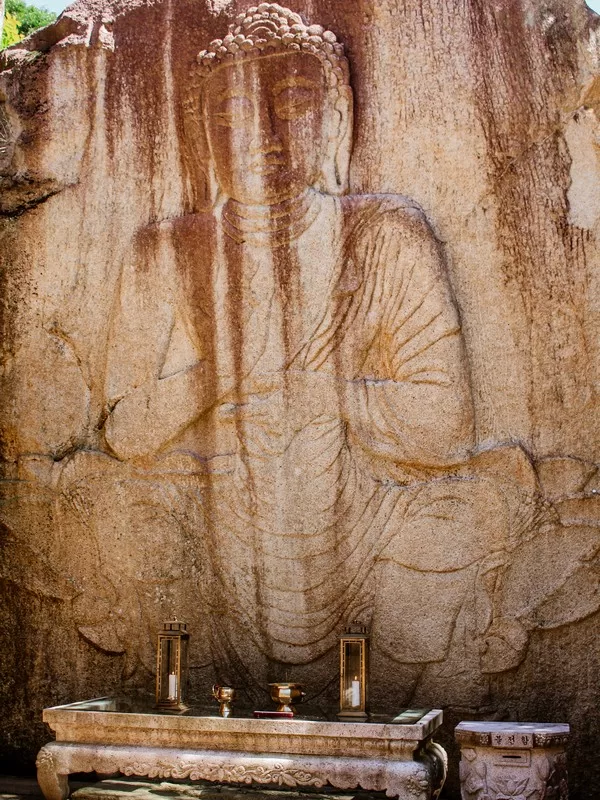
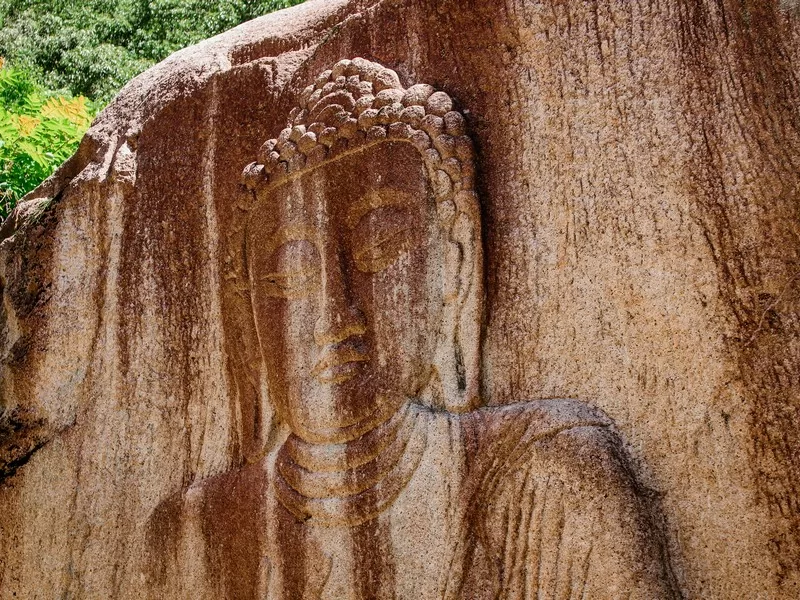
The Japanese invasions of the Imjin War (1592-1598) burned most of the original 60 buildings and 70 hermitages to the ground. The complex was rebuilt in 1624, and several of the structures standing today date from that reconstruction. State-sponsored restorations followed in 1851 under Prime Minister Gwon Don-in, and again in 1906 under King Gojong.
UNESCO Sansa Designation (2018)
Beopjusa is one of seven Sansa, Buddhist mountain monasteries designated as a UNESCO World Heritage Site in 2018 under the collective inscription “Sansa, Buddhist Mountain Monasteries of Korea.”
The other six are Bongjeongsa, Buseoksa, Daeheungsa, Magoksa, Seonamsa, and Tongdosa. All are located in the southern provinces of Korea and represent Korean Seon Buddhism through their architecture, documentation, self-sufficient management traditions, and the integration of meditative practice and doctrinal study. Despite suppression during the Joseon Dynasty and destruction during multiple wars, all seven have survived as living centers of faith.
What To See
The Forest Walk In
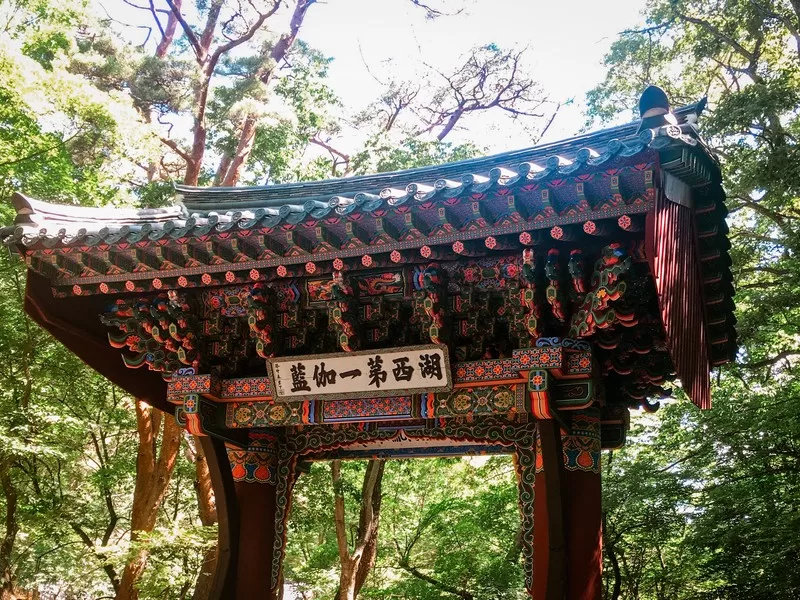
Beopjusa sits inside Songnisan National Park, and reaching the temple requires a 15-minute walk through the forest after purchasing tickets at the entrance booth. It’s not strenuous, but flat and well-maintained. The national park is particularly famous for its autumn foliage, so people spend more time on the walk and in the vicinity of the temple especially in the months of October and November.
Sacheonwangmun — Gate of Four Heavenly Kings
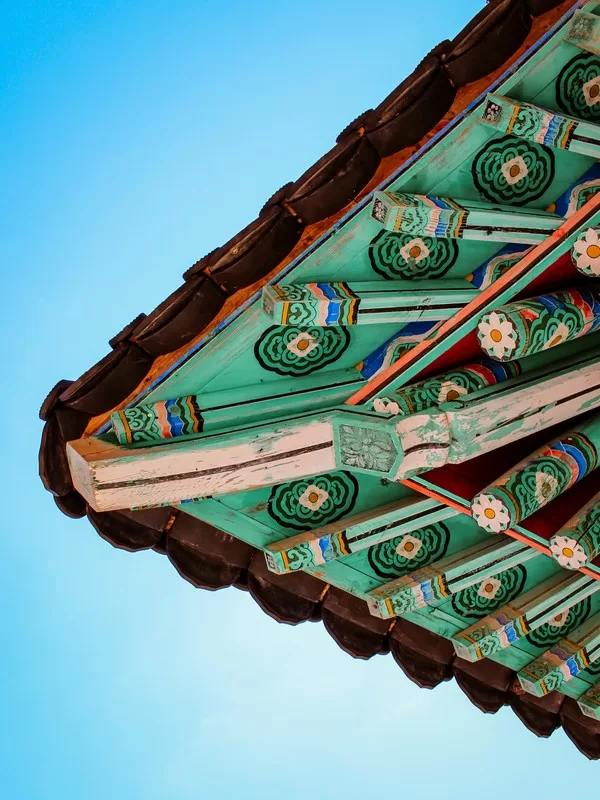
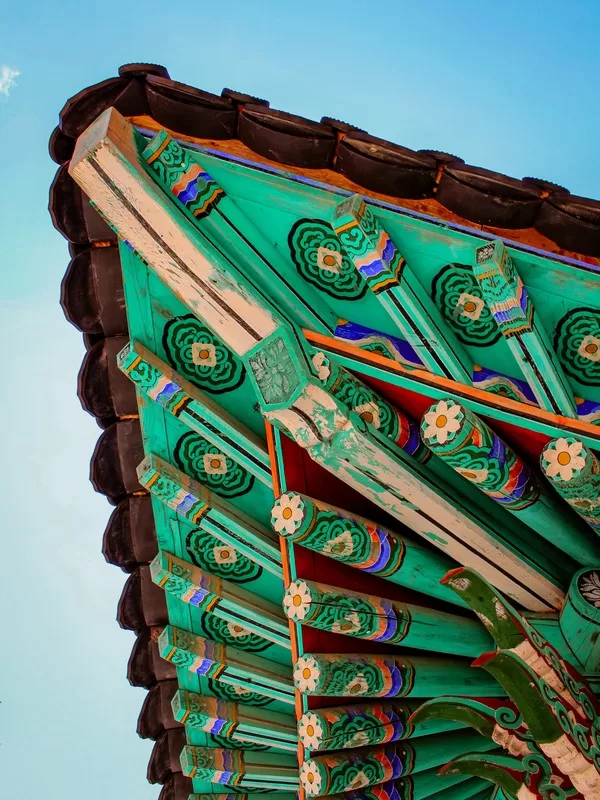
After passing through the diamond gate, the next gate is the Sacheonwangmun, the largest Gate of Four Heavenly Kings in Korea. The four guardian figures inside are distinctive: the King of the East plays a flute with a friendly expression; the King of the South holds a long sword with a fierce scowl; the King of the West holds a dragon in his right hand and the flaming pearl of wisdom in his left; the King of the North holds a stone pagoda in one hand and a funerary banner in the other.
Geumdongmireukdaebul — Golden Maitreya Statue of National Unification
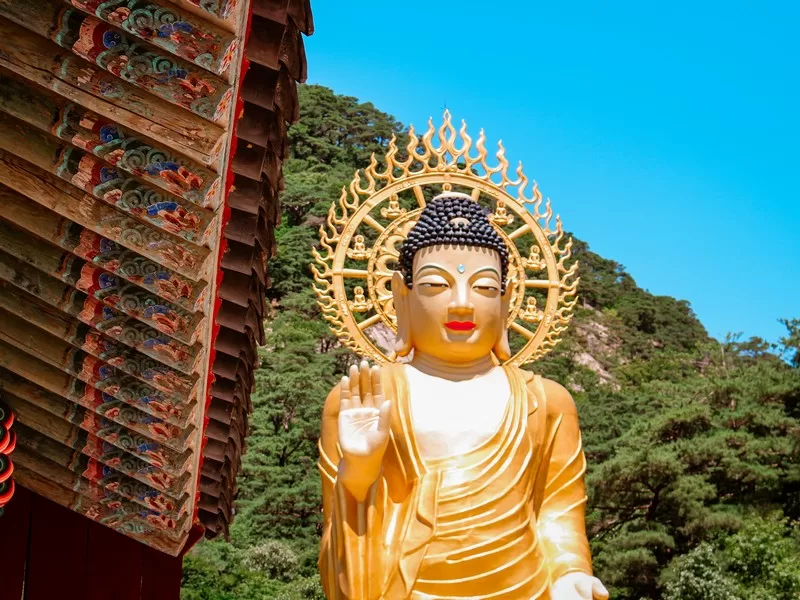
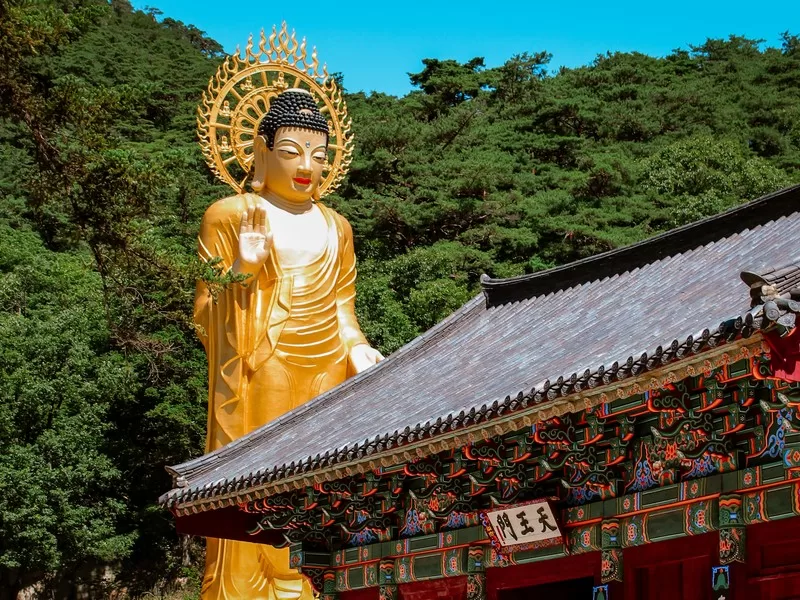
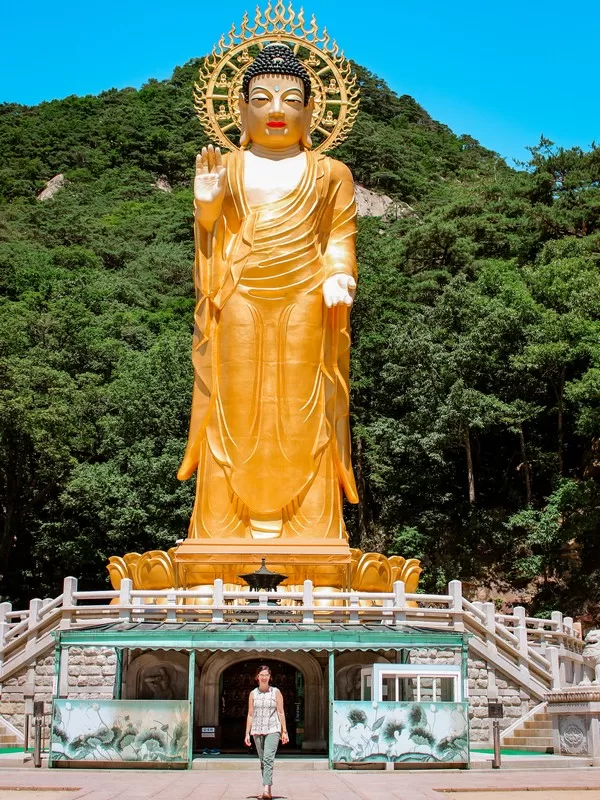
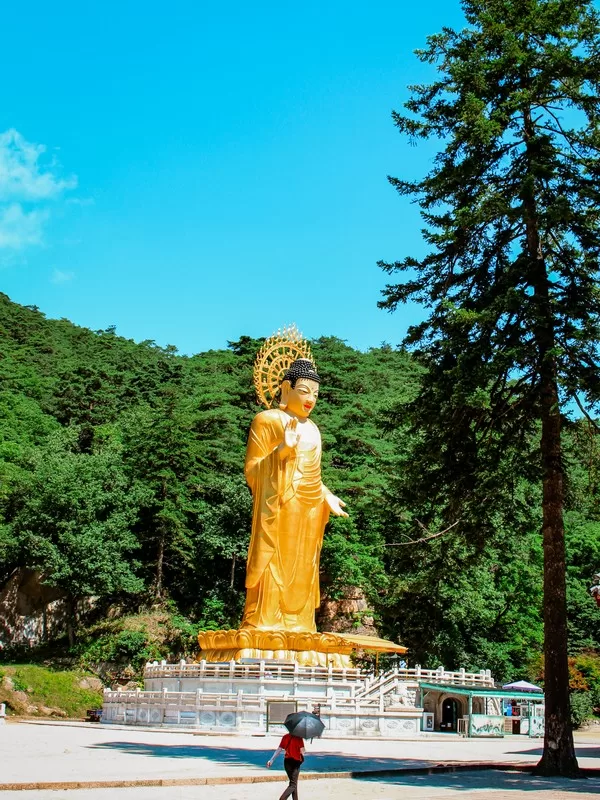
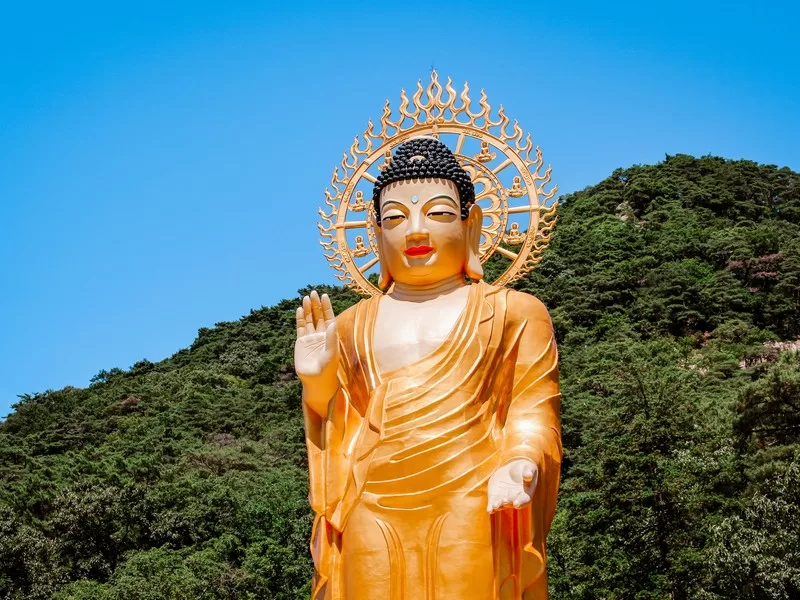
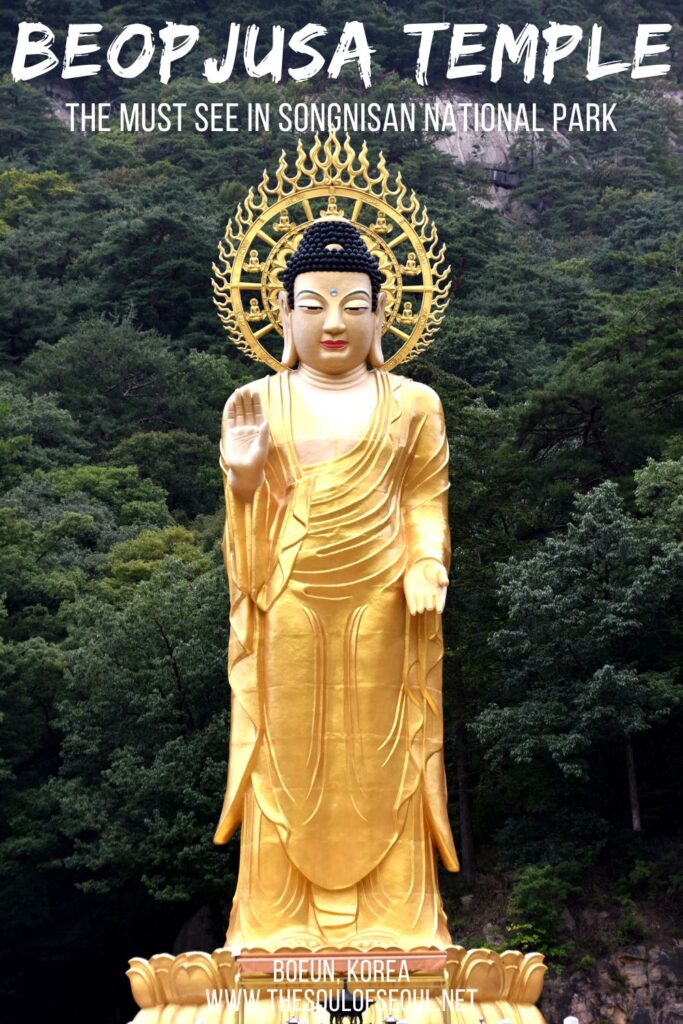
One of the most beautiful aspects of the complex is the towering Golden Maitreya Statue of National Unification. The 33 meter tall, 150 ton bronze statue is “The Future Buddha”. The original statue erected here was a 29-meter cement figure built in 1964. The current bronze statue replaced it in 1988. The statue weighs approximately 160 tons and is covered in gold making it stand out in any season that you choose to visit.
There are 108 steps that lead up to the statue and you can also head into an underground prayer hall just beneath the statue as well.
Palsangjeon — National Treasure No. 55
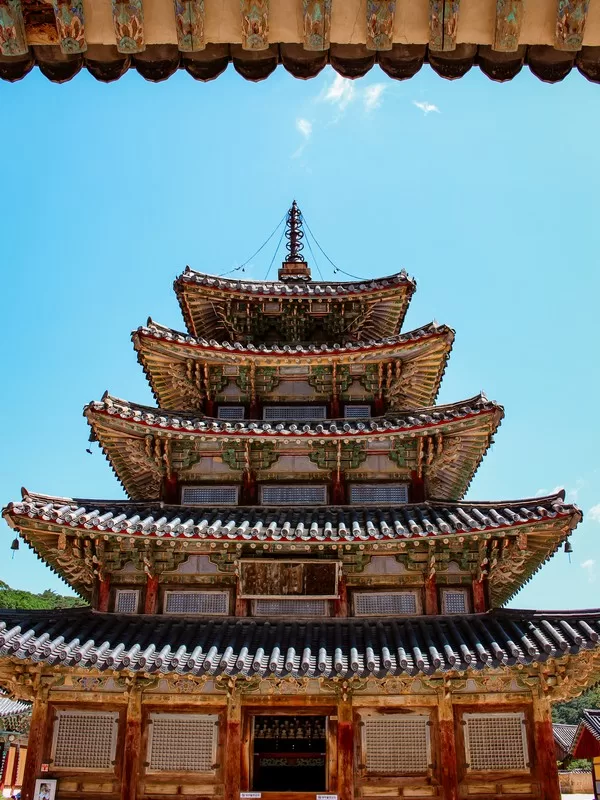
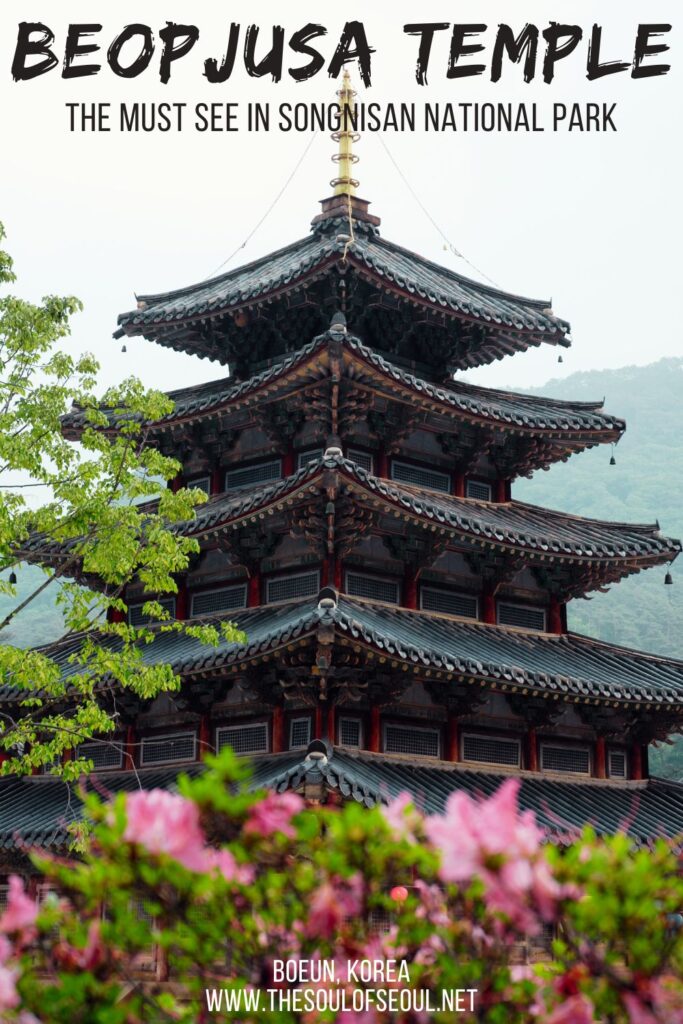
This is the most historically significant structure at Beopjusa and arguably one of the most important buildings in all of Korean Buddhist heritage. Palsangjeon is the only surviving five-story wooden pagoda in Korea that has preserved its original appearance, the only one of its kind. Originally there were two such pagodas in Korea; when the second burned at Ssangbongsa Temple in 1984, Palsangjeon became the sole survivor.
The pagoda takes its name from the eight scenes of the Buddha’s life depicted on the interior walls: the announcement of his conception; his birth and first steps; his witnessing of the four human sufferings; his departure from the palace; his extreme asceticism; his initial enlightenment and rejection of temptation; his full enlightenment and first teaching; his passing into nirvana.
Inside the pagoda are 1,000 white miniature Buddhas and four golden Buddha statues.
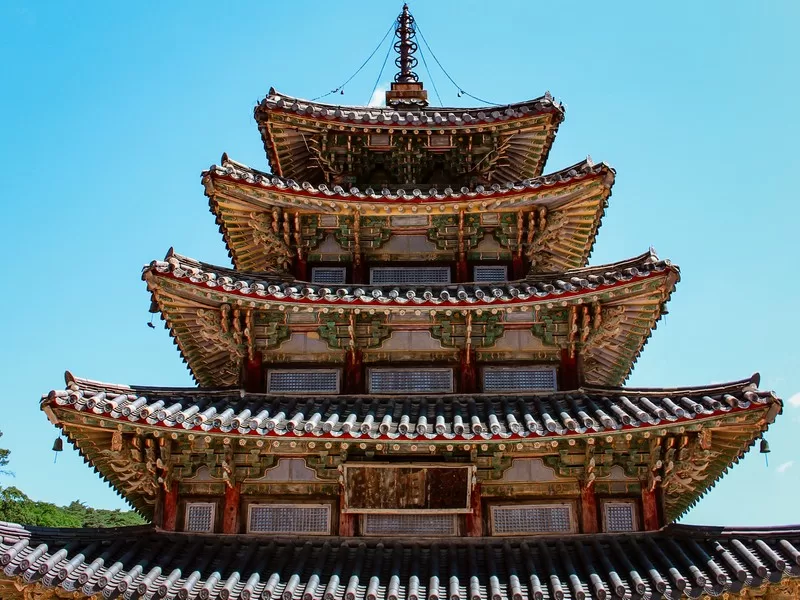
Fun fact: Before Palsangjeon became most famous as a national treasure, it was chosen by Bruce Lee as the central location for his film Game of Death. The concept was that each floor of the five-story pagoda would represent a different martial arts style, with Lee fighting a master of each as he ascended. He died before filming was completed, the screenplay was rewritten, and Beopjusa was removed from the film entirely. The five-story pagoda remained. The connection is now a footnote, but a remarkable one for a 400-year-old wooden structure.
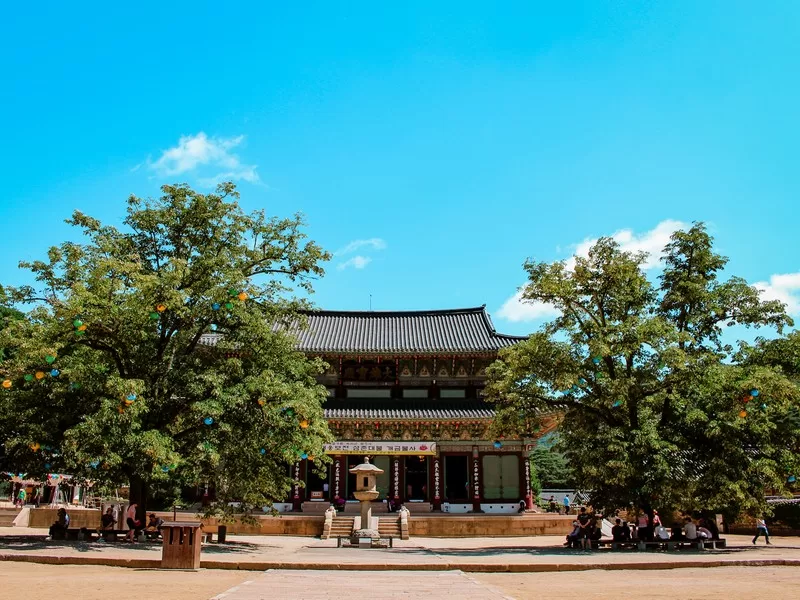
Daeungbojeon — Main Hall (National Treasure No. 915)
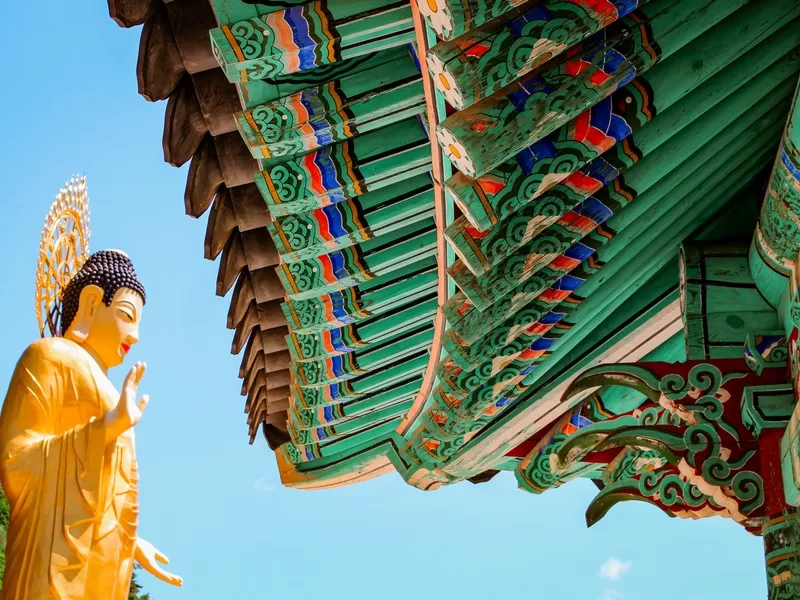
The main hall was built in the typical style of the middle Joseon Dynasty, with seven compartments across the front and four on the sides. The roof is built in the traditional paljak royal style. Inside sits the Samjondaebul, a triad of three clay Buddha statues measuring 5.5 meters high and 3.9 meters wide, the largest clay statues in Korea.
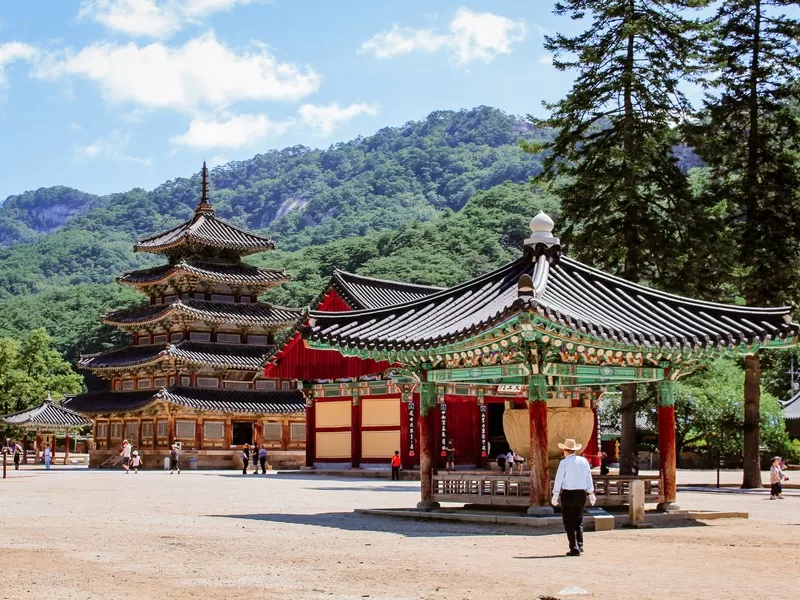
Wontongbojeon — Hall of Avalokitesvara
A smaller hall in front of the main hall to the left, housing a wooden seated golden Buddha statue considered one of the finest examples of late Joseon Buddhist sculpture. The hall’s name means “one who perceives the sounds of suffering in the world.”
Ssangsajaseokdeung — Twin-Lion Stone Lantern (National Treasure No. 5)
A stone lantern built in 720 during the Silla Dynasty, supported by twin lion sculptures. One of the oldest artifacts on the grounds.
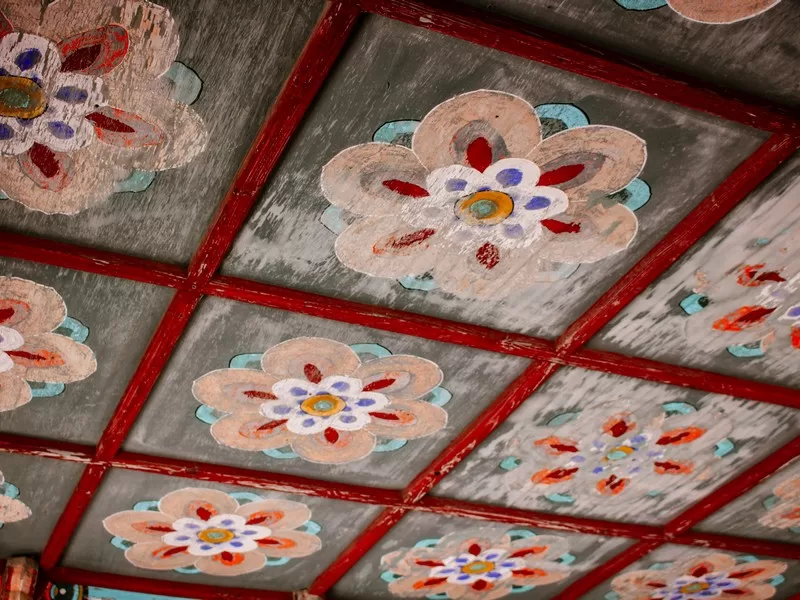
Other Notable Items
Beopjusa’s cultural holdings extend further: the Folding Screen of Celestial Charts (Treasure No. 848) is a large astronomical chart featuring 300 constellations and 3,083 stars, made by scholars from the Joseon Meteorological Administration and considered internationally significant. A stone pot partially buried near Chongji Seon Center is designated Chungcheongbuk-do Tangible Cultural Heritage No. 204 — cultural heritage experts don’t know its purpose, but legend says it stored kimchi.
Templestay Program
In recent years, Beopjusa Temple has started providing a structured templestay program to meet the needs of both modern Buddhists and those interested in Korean Buddhism. A templestay program is a great way to experience and learn more about Buddhist culture in Korea. I highly recommend the experience.
The experience involves staying at the temple, an early morning chant with the monks under the early rising sun, meditation, a tea ceremony and the opportunity to learn how to eat in silence the way the Buddhist monks do.
- Templestay Facilities: For the templestay facilities, there are three traditionally looking buildings that have modern amenities inside. You’ll be sleeping on the floor, but there’s a nice clean bathroom and shower inside. Generally the rooms are set up to sleep either 4 people or 8 people together.
- Cost: For the daily templestay program: W35,000; Overnight templestay program: W70,000
- Reservations: Make a reservation for a Templestay program at Beopjusa Temple on the official TempleStay website.
Where To Eat
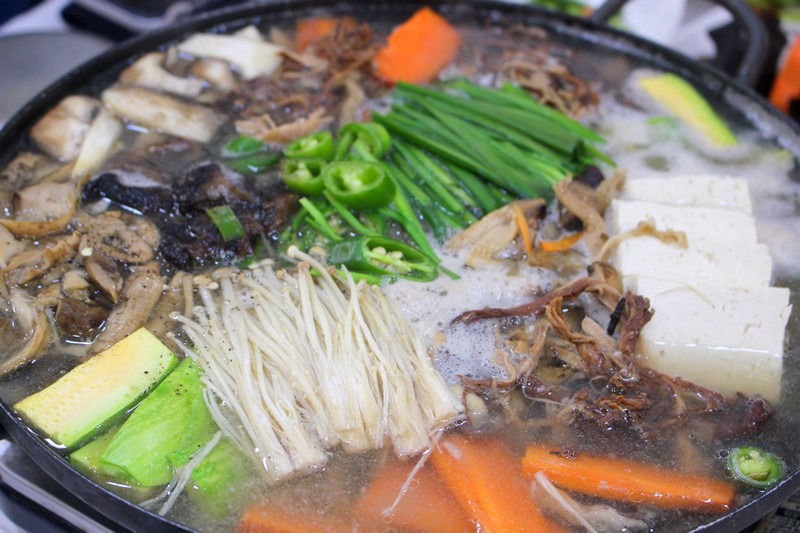
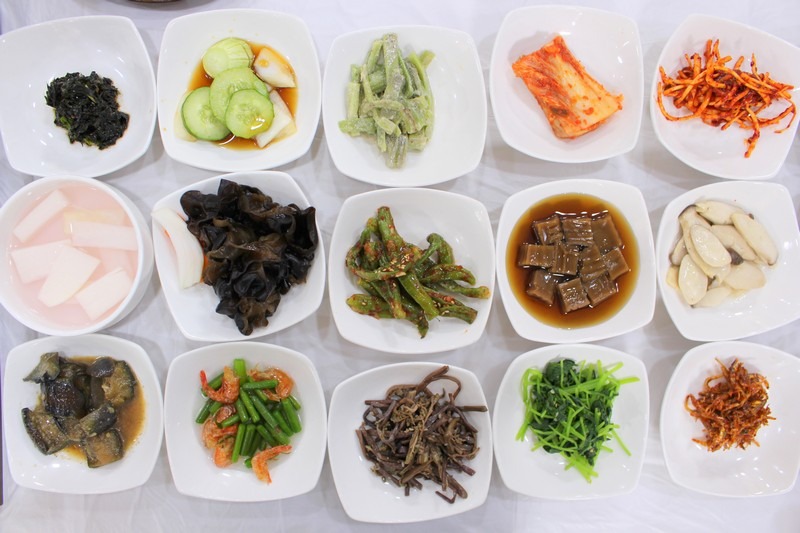
On the way out of temple, stop into 옛고을. This restaurant is just up the road and features an amazing array of side dishes to accompany the star of the show a mushroom stew. Vegetables are grown locally and are delicious.
- Address: 250 Beobjusa-ro, Sokrisan-myeon, Boeun-gun, Chungcheongbuk-do (충북 보은군 속리산면 법주사로 250)
- Hours: Every day: 8:30am ~ 8:00pm
What To See Nearby
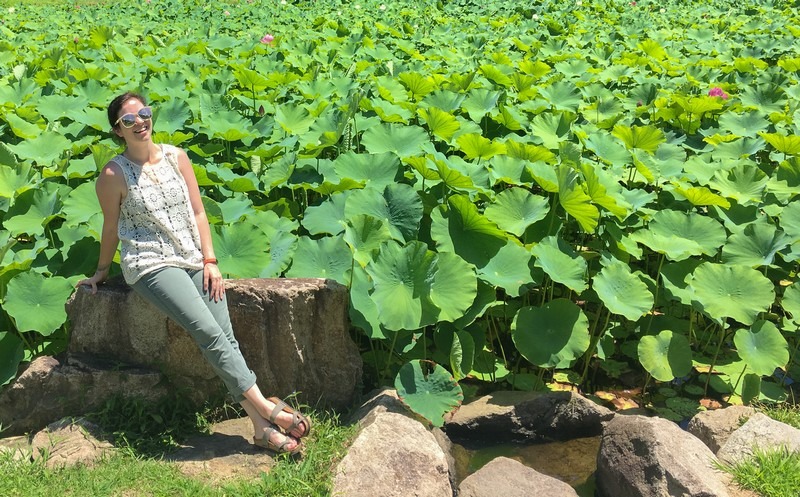
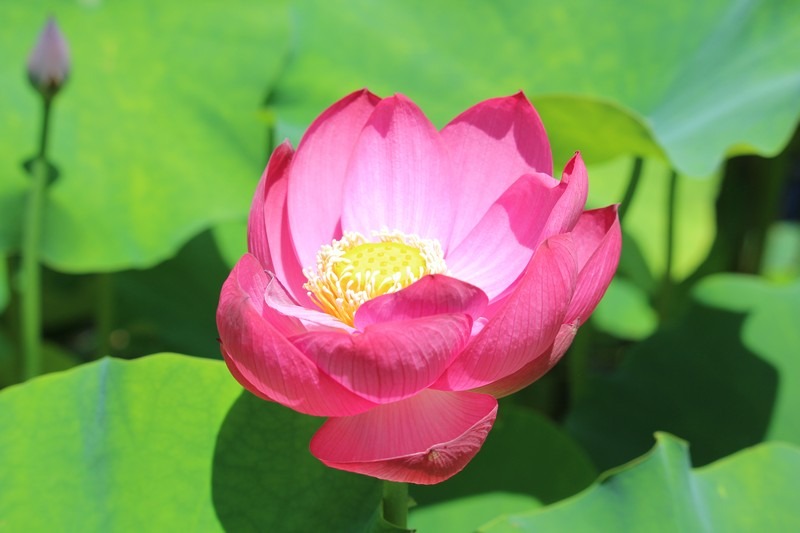
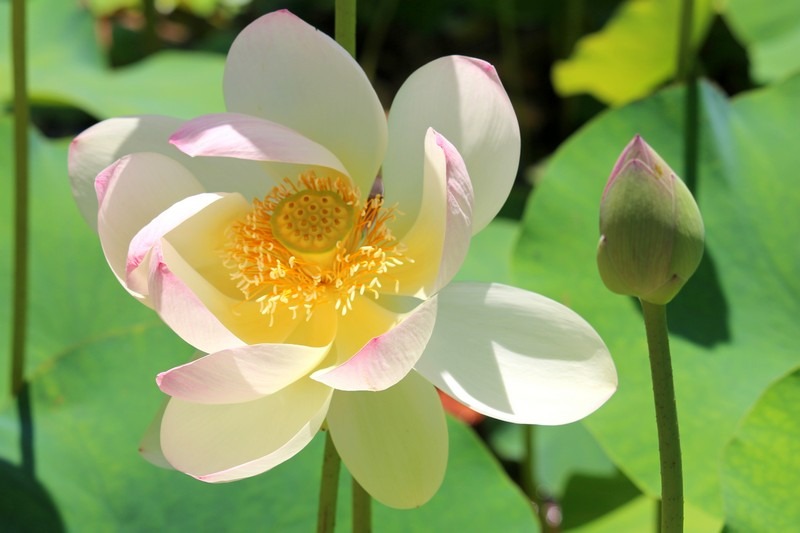
Lotus Blossom Cafe (로터스블라썸): Continue up the road just a couple minutes and you’ll come upon a gorgeously large lotus flower field… or is it pond? A cafe on the southern end is a great spot to get a coffee after lunch and then take a walk into the lotus flower fields. This was actually an impromptu stop that my group and I proposed to the leaders. How could anyone pass a beautiful place like this?
Obviously, this isn’t something you’ll see year round, but only in the summer when the lotus are big and beautiful.
- Address: 9-1 Sangpan-ri, Sokrisan-myeon, Boeun-gun, Chungcheongbuk-do (충청북도 보은군 속리산면 상판리 9-1)
Beopjusa has been here for nearly 1,500 years, through the Silla and Goryeo Dynasties, through the Joseon suppression of Buddhism, through the Imjin War, through the Korean War, through a cement statue and then a bronze one. The wooden pagoda has stood since 1624. The UNESCO designation is recent, but the thing it is recognizing is very old. It is worth the trip from Seoul.
Did you like this post? Pin IT!


One Comment
Chanel
I came here many many years ago (maybe 2010?) for Children’s Day and I was in awe of the large Buddha. It was such a lovely place and I hope to get back one day!