Guinsa Temple: The Towering Buddhist Headquarters in Danyang
Last Updated on October 14, 2026
There are Buddhist temples across Korea, on mountainsides, in city centers, beside the sea, and Guinsa Temple (구인사) in Danyang is unlike any of them. The name means “Temple of Salvation and Kindness,” and the temple lives up to it: this is the headquarters of the Cheontae school of Korean Buddhism, with over 50 buildings rising multiple stories through a narrow mountain valley, capacity for up to 10,000 monks, and three free vegetarian meals every day for anyone who visits, regardless of religion.
If you’re someone who thinks that once you’ve seen one Korean Buddhist temple you’ve seen them all, Guinsa is specifically the temple that disproves that. Want some more I think you’ll love? Read the guide to 24 Beautiful Temples in South Korea before you start traveling.
Plan your trip to Guinsa Temple:
- How To Get To Guinsa Temple
- The History
- Cheontae Buddhism
- What To See At Guinsa Temple
- Eat At Guinsa Temple
- Templestay
- What’s Nearby
- FAQ
(This post contains affiliate links, which means I receive a certain percentage of a sale if you purchase after clicking. These funds go to maintain the site. Thank you for your support.)
How To Get To Guinsa Temple
Address: 132-1 Baekja-ri Yungchoon-myeon Danyang-gun Chungcheongbuk-do (충천북도 단양군 영춘면 백자리 132-1)
By train from Seoul: From Cheongnyangni Station, take the ITX Saemaeul or Mugunghwa train to Danyang Station. The Mugunghwa runs every hour or two and takes approximately 3 hours 15 minutes; the Saemaeul is faster at about 2 hours 45 minutes. Walk straight out of the station to find the bus stop and take the bus headed to Guinsa Temple.
By intercity bus from Seoul: From Seoul Express Terminal, take a bus to Yeongwol Bus Terminal. Exit the terminal and turn left, then turn right at the first street and walk to the first bus stop. From stop 59169, take the bus toward Guinsa, approximately 45 minutes.
By tour: A Klook tour provides transportation from Seoul to Guinsa Temple and other Danyang highlights in one day. Find the information for the Danyang tour on Klook.
Important: Buses drop you at the foot of the mountain. Reaching the full temple complex requires a continuous uphill walk, more hike than stroll. Unlike most Korean temples where the main complex sits at a single elevation, Guinsa rises continuously up the valley. Bring appropriate footwear. The views on the way up justify the effort.
Danyang Itinerary
Planning a full Danyang trip? The Danyang 2-Day Itinerary and Guide has everything you need.
Danyang, Korea: 2-day Itinerary & Guide
$9.00
The History
Guinsa is not ancient by Korean temple standards, it was founded in 1945 by Sangwol Wongak, a monk who had a vision of Avalokitesvara Bodhisattva standing on the ground of the Yeonhwaji valley and understood this as divine direction to establish a temple here. He built a small thatched hut with intertwined arrowroot vines and began practicing.
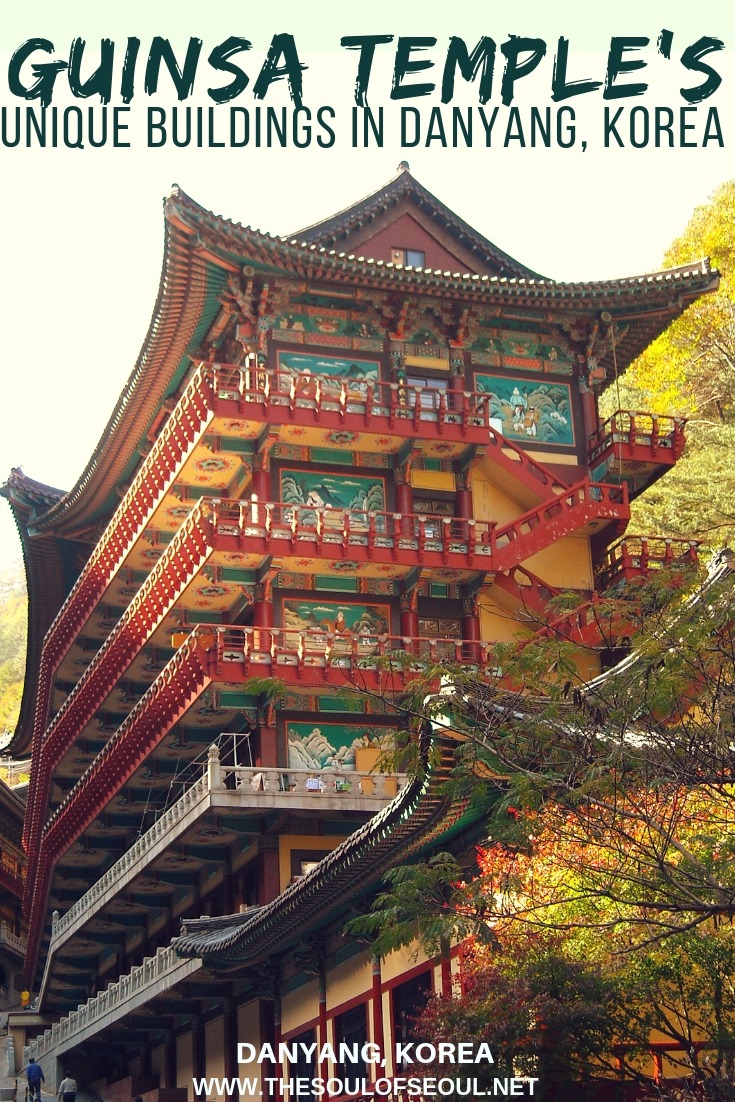
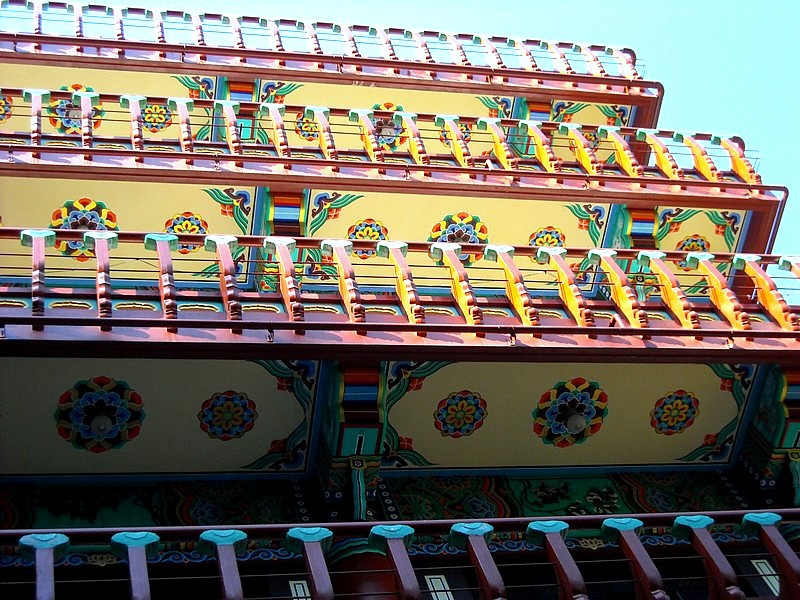
The original buildings were destroyed during the Korean War, and the first reconstruction was completed in 1966. The complex, now incorporating over 50 buildings, is still expanding. The valley location, Yeonhwaji, meaning “Lotus Flower area,” named for the way the surrounding mountains form the shape of a lotus flower, is both beautiful and physically constraining. The narrow gorge is what forced the unusual multi-story architecture that makes Guinsa look unlike anything else in Korean Buddhism.
In 1967, the Cheontae school was formally reestablished at Guinsa and registered with the Korean government. Sangwol Wongak became the First Patriarch of the Cheontae Order. Today the Cheontae Order administers over 140 sub-temples and hermitages across Korea and operates Geumgang University between Nonsan and Daejeon.
Cheontae Buddhism
Cheontae is the Korean branch of China’s Tiantai school, which originated in the Sui Dynasty (594 AD) when Master Zhiyi completed his Three-part Lotus Sutra commentary. The teaching reached Korea during the Silla period, was formally established as a Korean school in 1097 AD by National Master Daegak Guksa, and flourished through the Goryeo Dynasty.
When the Joseon Dynasty imposed its anti-Buddhist Confucian policies in 1424, the Cheontae school was consolidated into the Zen (Seon) school, effectively absorbed and dissolved. Its teachings survived through folk Buddhism and dedicated scholars, but the school as an institution disappeared.
Sangwol Wongak revived it in 1945 after an absence of over 500 years. Cheontae Buddhism now has approximately two million followers in Korea. The school holds the Lotus Sutra in highest esteem, and its philosophy encompasses the idea that all things are simultaneously empty, provisionally real, and both at once, a teaching that suits the valley perfectly, given that the valley’s name itself references the lotus.
What To See At Guinsa Temple
Walking up through Guinsa is the experience. Most Korean temple complexes exist at a single elevation, you arrive, you walk around, you leave. Guinsa rises continuously, with buildings stacked three, four, and six stories tall through a gorge that the complex has filled over decades.
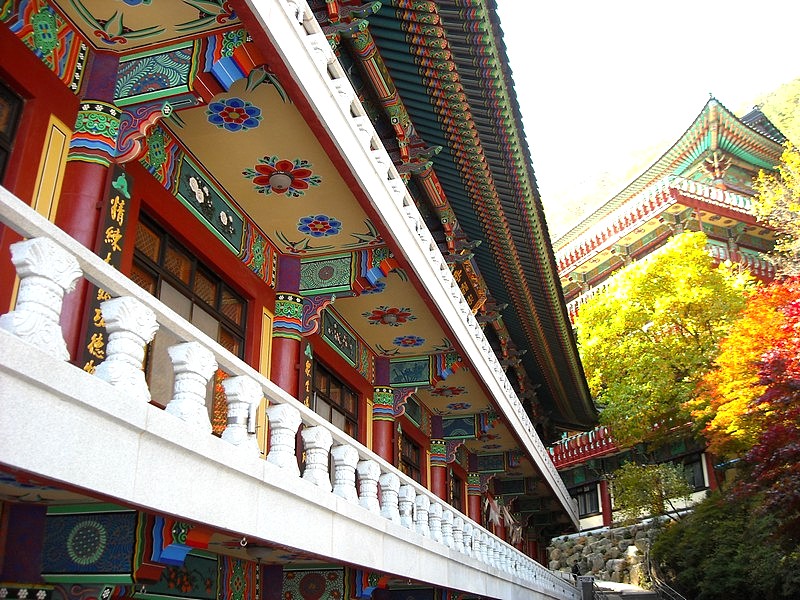
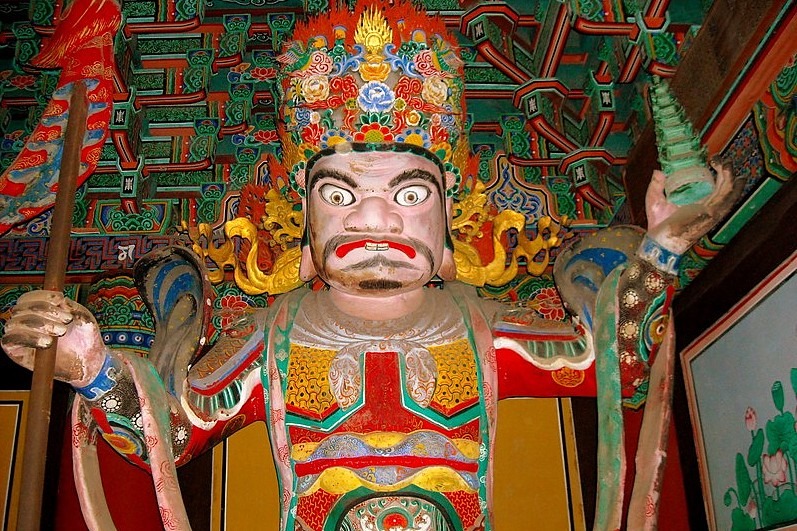
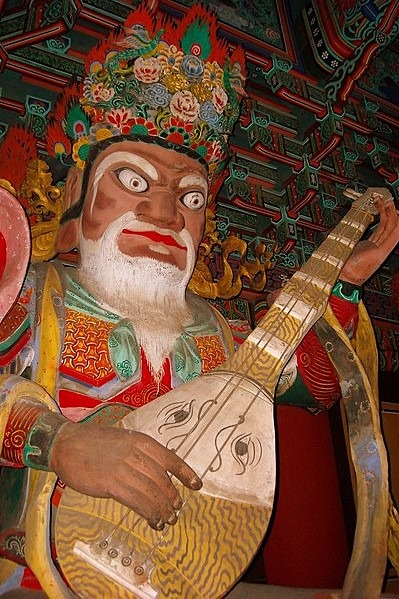
Four Heavenly Kings Gate (Sacheonwangmun)
A two-story stone structure at the start of the complex, housing the four guardian statues. The largest Gate of the Four Heavenly Kings in Korea is at Beopjusa Temple, this one is notable for its scale within the mountain valley setting.
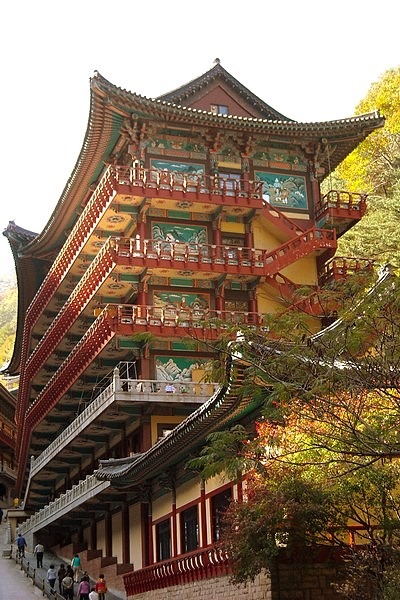
5-Story Dharma Law Hall (Ocheung Daebeoptang)
The largest building of its kind in Korea. Floors 1 and 2 are meditation halls for monks. Floors 3 and 4 contain shrine rooms for devotees wishing to offer prayer. The fifth floor houses the main Dharma Hall, a gilded altar of Shakyamuni Buddha flanked by Avalokitesvara, Bodhisattva of Compassion, on the left, and Mahasthamaprapta, Bodhisattva of Wisdom, on the right. Behind the Buddhas is a unique painted raised wood carving Thangka.
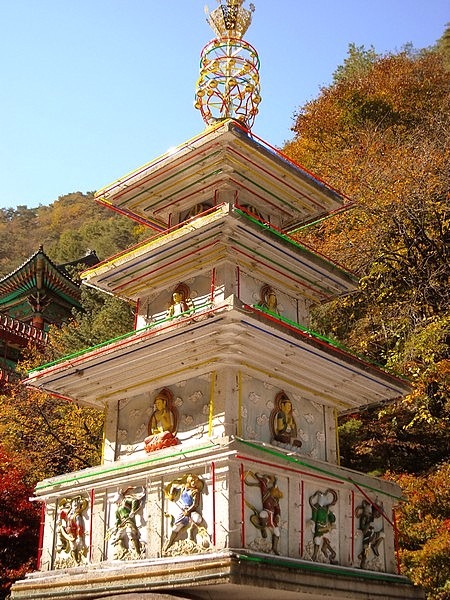
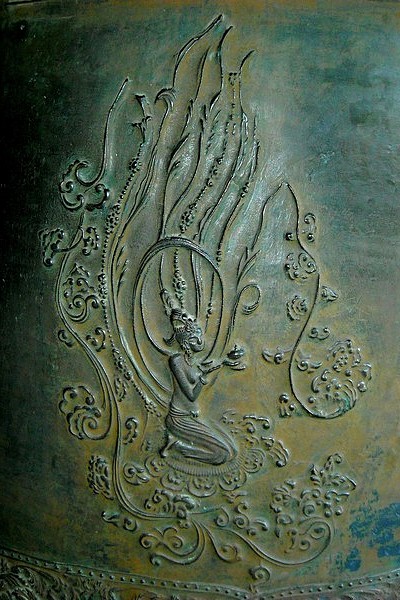
Three Story Stone Pagoda (Samcheung Seoktap)
Located in front of the main sanctuary, this reliquary houses sarira (relics) of the Buddha brought from the Jetavana monastery in India. Three elephants support the base, strong, intelligent animals representing the Buddha’s Dharma.
Great Teacher Hall (Daejosajeon)
Near the top of the valley, a shrine dedicated to Sangwol Wongak. A large statue of the First Patriarch is housed inside. The building represents the culmination of the walk up.
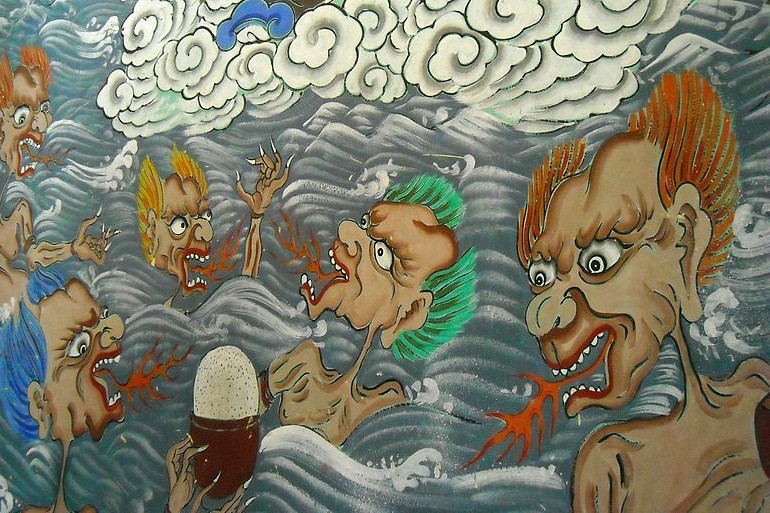
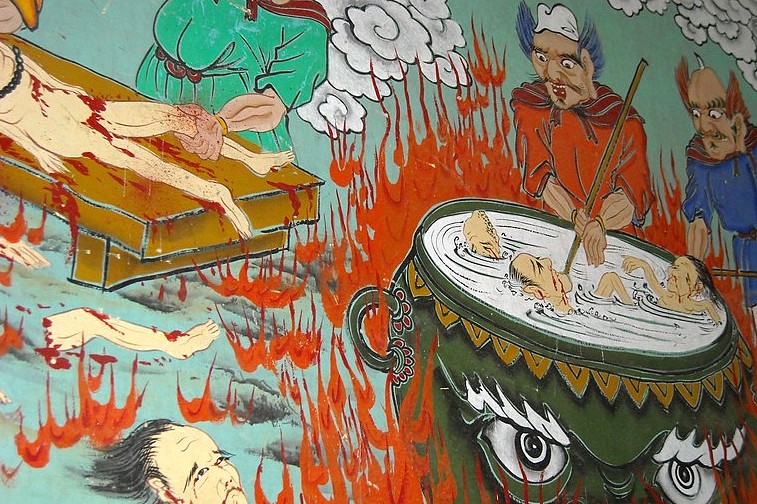
The Paintings
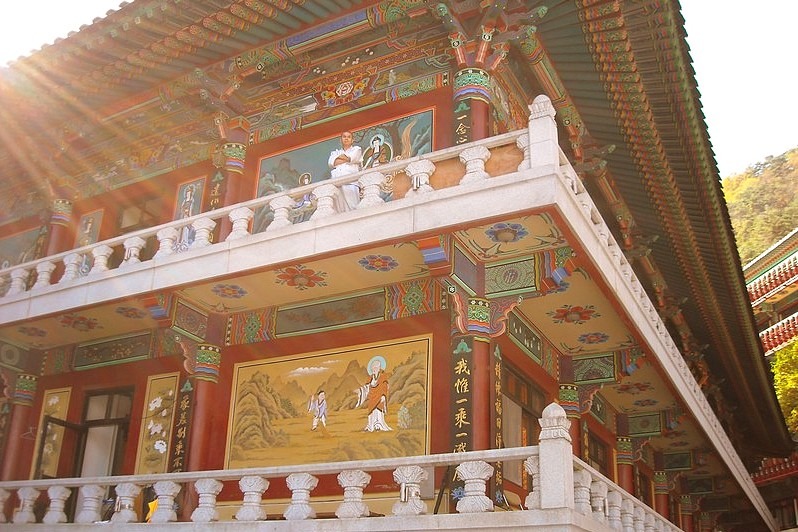
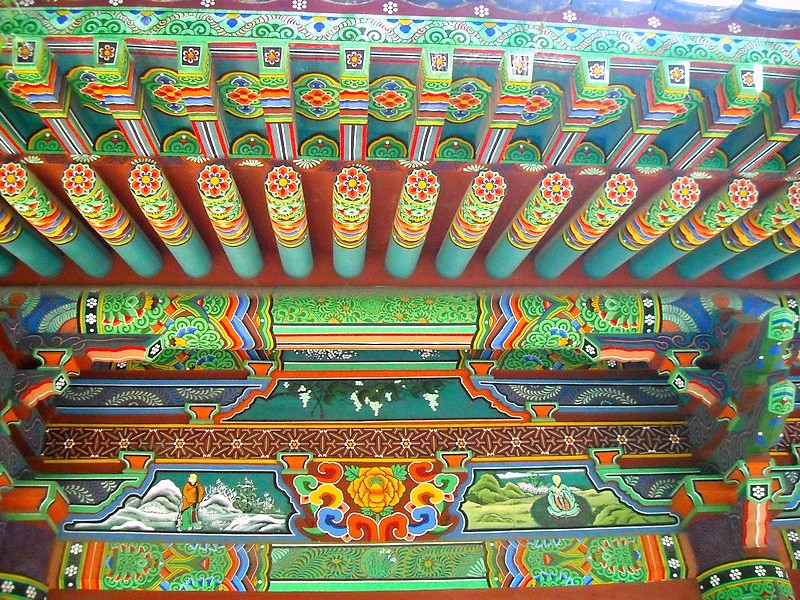
Most Korean Buddhist temples I’ve visited showcase calming visual art, even when the subject matter involves difficult truths, the aesthetic tends toward serenity. Guinsa is different. The paintings here hide nothing. The images of spiritual consequence and the harder dimensions of Buddhist teaching are depicted without softening. Even looking grotesque in places. I found it genuinely arresting. It sets the tone of this temple as one that takes its teaching seriously.
The Scale
Up to 10,000 monks can live at Guinsa at any one time. The kitchen can serve food for twice that number, 20,000, when needed. The temple operates a farm covering over 60,000 pyeong (approximately 0.2 square kilometers) that provides much of the food consumed here. These are not ordinary temple statistics, just so you know.
Eat At Guinsa Temple
Three free vegetarian meals are served daily to all visitors, regardless of race or religion:
- Breakfast: approximately 6:30-7:00am. Lunch: 11:30am-1:30pm. Dinner: 6:30pm.
The meals are simple, rice, kimchi, soup, all prepared in-house from the temple’s own farm. One rule applies: take only what you can finish. Buddhism teaches that everything enjoyed in the present comes from the karma of past actions, and wasting food is understood accordingly.
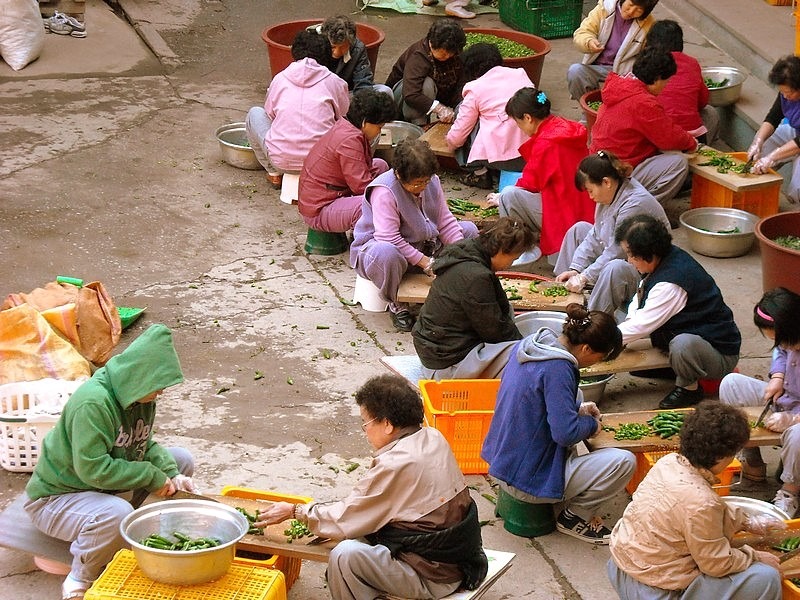
When I visited, it was possible to help with temple upkeep, washing dishes, working in the rice fields, or helping with kimchi preparation, as many of the women there were doing. Information about this in English wasn’t clearly available, but it was easy enough to follow along.
If you miss a meal inside the complex, local restaurants near the parking lot at the foot of the temple serve food for those who’ve worked up an appetite on the hike.
Templestay
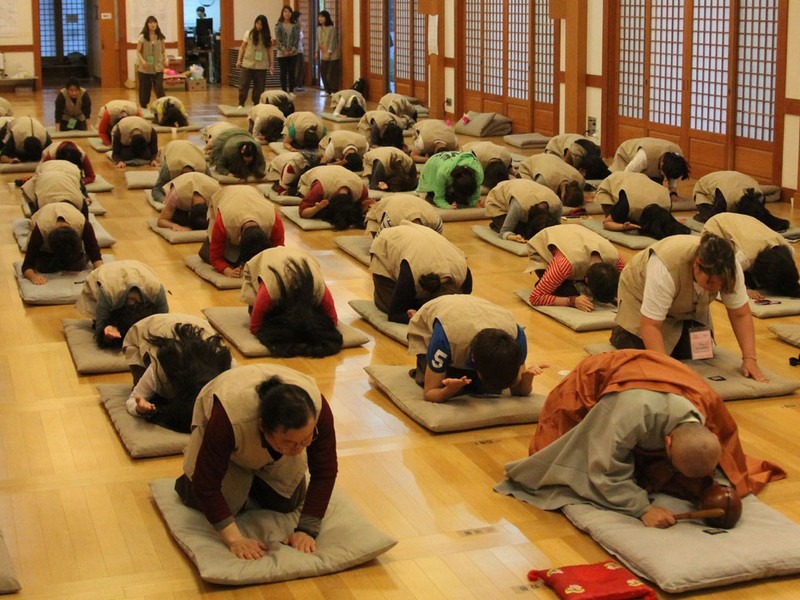
Guinsa offrs a Templestay program if you want to really experience the temple. A 2-day program is held and includes rising at 3:00am for the morning ceremony. Book through the official Templestay website.
What’s Nearby
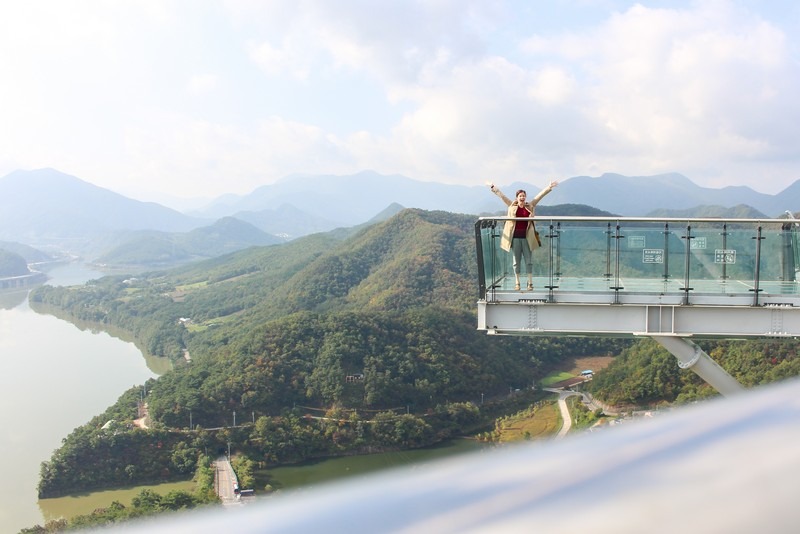
The Danyang area has much more to offer beyond Guinsa. Check out the complete guide to Danyang for a full weekend itinerary. The area is rewarding and makes for a fantastic weekend away.
FAQ
What is Guinsa Temple?
Guinsa (구인사) is the headquarters of the Cheontae Order of Korean Buddhism, located in the Sobaek Mountains near Danyang, Chungcheongbuk-do. Founded in 1945 by Sangwol Wongak in a narrow mountain valley, it has grown from a thatched hut to a complex of 50+ multi-story buildings. It administers over 140 sub-temples and hermitages and has approximately two million followers.
What is Cheontae Buddhism?
Cheontae is a Korean school of Buddhism based on the Lotus Sutra, originally derived from China’s Tiantai tradition. It was established in Korea in 1097 AD, suppressed during the Joseon Dynasty, and revived in 1945 by Sangwol Wongak at Guinsa. Its core teaching holds that all phenomena are simultaneously empty, provisionally real, and both at once.
Is food really free at Guinsa?
Yes. Three vegetarian meals are served free every day for all visitors: breakfast around 6:30-7:00am, lunch 11:30am-1:30pm, and dinner at 6:30pm. The only rule is to take only what you can finish. The food is simple (rice, kimchi, soup) and produced largely from the temple’s own farm.
How many monks live at Guinsa?
Up to 10,000 monks can live at Guinsa at any one time. The kitchen can serve 20,000 people when needed. These numbers are unusual even for major Korean temples, they reflect the scale of the Cheontae Order’s operation.
How do I get to Guinsa Temple from Seoul?
By train to Danyang Station (approximately 2 hours 45 minutes to 3 hours 15 minutes), then bus to Guinsa. By intercity bus from Seoul Express Terminal to Yeongwol, then local bus. Day tours from Seoul are also available through Klook. Once at the temple foot, expect a substantial uphill walk through the valley complex.
Can I stay overnight at Guinsa?
Yes. A Templestay program runs twice a month and includes rising at 3:00am for the morning ceremony. Book through the official Templestay website.
Guinsa started as a thatched hut in a lotus-shaped valley in 1945. Eight decades later it has the largest monastic capacity in Korea, the largest Dharma Law Hall of its kind, a farm feeding thousands, and a visual presence that, once you’ve walked up through those narrow gorge buildings, genuinely stays with you. It earns the word “unique.”
Did you like this post? Pin It!