Sungkyunkwan and Munmyo Shrine: Seoul’s Joseon Royal Academy
Last Updated on October 28, 2026
Sungkyunkwan (성균관) was the highest national academy of the Joseon Dynasty, and Munmyo (문묘) is the Confucian shrine that stands in front of it. Founded in 1398 and tucked just inside the main gate of Sungkyunkwan University in Jongno, it’s free to visit and one of the only places in Seoul where you can walk through a working Confucian shrine and a 600-year-old school in the same hour. It’s a place that you won’t hear about just anywhere which means most days, it’s quiet, calm, and a break surrounded by history that makes it a unique place to visit in Seoul.
It’s not a large site. But it’s a fascinating one once you know what each building was for, and that’s what I want this guide to give you.
- Basic Info
- Munmyo vs Sungkyunkwan: What’s the Difference?
- A Short History of Sungkyunkwan
- What to See at Sungkyunkwan
- Life as a Joseon Scholar at Sungkyunkwan
- Daeseongjeon’s 2026 Restoration
- The 1st Gwageo Examination for Foreign Residents in Korea
- Sungkyunkwan vs Hyanggyo vs Seowon
- Seokjeon Daeje: The Twice-Yearly Rite
- When to Visit Sungkyunkwan
- FAQ
(This post contains affiliate links, which means I receive a certain percentage of a sale if you purchase after clicking at no cost to you. Thank you for your support.)
Basic Info
Address: 31 Sungkyunkwan-ro, Jongno-gu, Seoul (서울시 종로구 성균관로 31)
How to get there:
- From Hyehwa Station (Line 4): Take Exit 4 and walk about 10 minutes. Or take Exit 1 and ride the Sungkyunkwan University shuttle bus (300 won) to the university’s main gate. The historic site is just inside the gate, on the right.
- From Anguk Station (Line 3): Take Exit 6 and catch bus 151, 171, 172 or 272 to the Sungkyunkwan University entrance stop.
- Village buses: Jongno 08 loops between Myeongnyun 3-ga and Hyehwa Station. Jongno 02 runs from the university’s back gate via Anguk Station and Jonggak Station.
Admission: Free
Munmyo vs Sungkyunkwan: What’s the Difference?
People use the two names interchangeably, but they’re two halves of one complex. Munmyo is the shrine. It enshrines the spirit tablets of Confucius and the great Confucian scholars of China and Korea, and it’s where the state held, and the Confucian community still holds, ancestral rites in their honor.
On the flip side, Sungkyunkwan is the school. It was Joseon’s highest institution of learning, where the young men expected to become the country’s officials and leaders studied the Confucian classics. Today, the historic site is run by the Sungkyunkwan Confucian Association (성균관유도회), not by Sungkyunkwan University, even though the university is wrapped around it and traces its founding year to 1398.
Notice the layout when you visit: It follows a principle called jeonmyo huhak (전묘후학), meaning shrine in front, school behind. When you walk in from the street, the ritual space centered on Daeseongjeon Hall comes first, and the teaching space centered on Myeongnyundang Hall sits behind it. The idea is that learning rests on reverence for those who came before.
A Short History of Sungkyunkwan
The roots of Sungkyunkwan go back much further than Joseon Dynasty (1392 – 1910). Korea’s first national academy was the Taehak, founded by Goguryeo in 372. Silla set up its own national academy in 682, and Goryeo established the Gukjagam in 992.
That Goryeo academy in Kaesong, the old capital, was renamed Seonggyungam in 1298 and then Sungkyunkwan in 1308. When the Joseon Dynasty moved the capital to Hanyang (Seoul), King Taejo built a new Sungkyunkwan in 1398 in a neighborhood called Sunggyobang, which is today’s Myeongnyun-dong. That’s a mouthful, but it goes to show a real history and interest in education in Korea.
The original campus had the lecture hall, the shrine and the dormitories. Later kings added the rest which included the library, Jongyeonggak, under King Seongjong, the second examination hall, Bicheondang, under King Hyeonjong, and the shrine to the fathers of Confucius and the sages, Gyeseongsa, under King Sukjong.
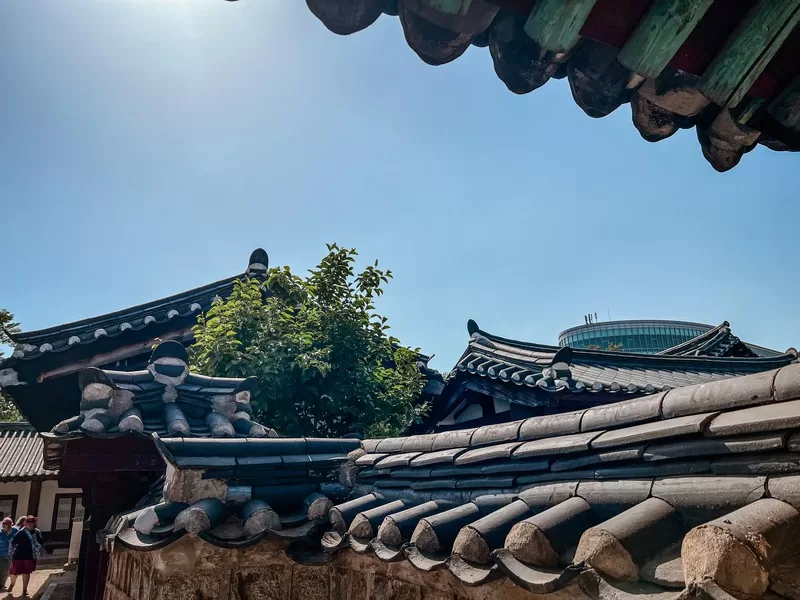
Like many historical sites in Korea, fire and war were hard on the site. The complex was destroyed more than once, most devastatingly during the Japanese invasions of 1592. Daeseongjeon was rebuilt in the early 1600s, and the whole complex was substantially renovated in 1869, which is the version we see today.
In 1895, a royal decree made Sungkyunkwan responsible for the shrine and handed teaching to a new department, opening education to people regardless of class. After Japan annexed Korea in 1910, education at Sungkyunkwan was shut down entirely though and its property was separated from the hyanggyo (local Confucian schools), and it was renamed Gyeonghagwon. Later colonial-era schools on the site were pushed to teach a Japanese imperial version of Confucianism, and even those were closed in 1943.
After liberation, Confucian scholars revived the name. Sungkyunkwan College was officially founded on September 25, 1946, and became Sungkyunkwan University in 1953. Its first president was Kim Chang-suk (심산 김창숙), a Confucian scholar who had resisted Japanese rule and later fought against dictatorship.
Sungkyunkwan Timeline
| Year | What Happened |
|---|---|
| 372 | Goguryeo founds the Taehak, Korea’s first national academy |
| 992 | Goryeo establishes the Gukjagam |
| 1308 | The Goryeo academy is renamed Sungkyunkwan |
| 1398 | King Taejo builds Sungkyunkwan in Hanyang (Seoul) |
| 1592 | Burned during the Japanese invasions |
| Early 1600s | Daeseongjeon rebuilt |
| 1869 | Major renovation of the complex |
| 1895 | Royal decree separates rites from teaching and opens education to all classes |
| 1910 | Education halted under Japanese rule; renamed Gyeonghagwon |
| 1946 | Sungkyunkwan College founded (university from 1953) |
| 2023–2026 | First major restoration of Daeseongjeon in 157 years |
| Aug 24, 2026 | The 39 spirit tablets return to Daeseongjeon |
| Oct 5, 2026 | The 1st Gwageo Examination for Foreign Residents in Korea |
What to See at Sungkyunkwan
Daeseongjeon (대성전)
Daeseongjeon, the “Hall of Great Accomplishment,” is the heart of Munmyo. It holds the spirit tablets of 39 figures: the Five Sages (Confucius among them), the Ten Philosophers of Confucius, the Six Sages of the Song Dynasty, and the Eighteen Sages of Korea, including Seol Chong, Choe Chiwon, Yi Hwang (Toegye) and Yi I (Yulgok).
When I visited in spring, the hall was wrapped in scaffolding and the whole courtyard was closed off for reconstruction, so I didn’t get to see it. That restoration has now been finished, but it’s good to know that the hall itself is not open to the general public, so don’t go expecting that.
Meet a Few of the 39 Enshrined at Daeseongjeon
You can’t go inside Daeseongjeon, but knowing who is in there makes standing outside a lot more interesting. A few of them have stories that would make a good K-drama.
Confucius and Mencius. You probably know Confucius. But Koreans may know Mencius’s mother even better. According to legend, she moved three times until she found a neighborhood that was good for her son’s education, first living near a cemetery, then a market, and finally a school. (Living near a school really does make the most sense doesn’t it?) The saying maengmo samcheon (맹모삼천, “Mencius’s mother moved three times”) is still used in Korea today, often to describe parents who move to a neighborhood like Daechi-dong for the hagwons.
Seol Chong (설총). One of the first two Koreans ever enshrined, Seol Chong was the son of Wonhyo, one of Korea’s most famous Buddhist monks, and a Silla princess. So one of the founding figures of Korean Confucianism was the son of a Buddhist monk. He’s best known for organizing idu, a way of writing Korean using Chinese characters, centuries before Hangul existed.
Choe Chiwon (최치원). Choe Chiwon was sent to Tang China at just 12 years old, and his father reportedly told him that if he didn’t pass the exam within 10 years, he shouldn’t call himself his son. No pressure. He passed the special exam for foreigners at 18. Later, he wrote a proclamation against the rebel Huang Chao that was so powerful, legend says Huang Chao fell off his seat reading it. You’ve also probably been to a place named after him without knowing it: Haeundae in Busan takes its name from his pen name, Haeun, which he’s said to have carved into a rock on Dongbaek Island.
Jeong Mong-ju (정몽주). Come for the history, stay for the irony. Jeong Mong-ju was a Goryeo loyalist who refused to support the founding of Joseon, and he was killed on Seonjukgyo Bridge in Kaesong by men sent by Yi Bang-won, the son of King Taejo (the very king who built Sungkyunkwan in Seoul). Yi Bang-won later became King Taejong and posthumously pardoned and honored him. Today, the man killed for opposing Joseon is enshrined at the heart of Joseon’s national shrine.
Jo Gwang-jo (조광조). A reformer and a favorite of King Jungjong, until his rivals allegedly painted the characters 走肖爲王, which meant “Jo will become king”, on leaves in the palace garden with honey, so insects would eat the letters into them. The leaves were shown to the king. Jo Gwang-jo was exiled and ordered to take poison in 1519. When he was arrested, about 1,000 Sungkyunkwan students marched to Gwanghwamun to petition for him and rushed the palace.
Yi Hwang (이황) and Yi I (이이). The two biggest names in Korean Confucianism, and both are on your money. Yi Hwang is on the W1,000 note, and Yi I is on the W5,000 note. Yi I’s mother, the artist Shin Saimdang, is on the W50,000 note, which makes them the only mother and son both on Korean currency. Yi I placed first in nine different state exams, earning the nickname Gudo Jangwon Gong (구도장원공), “the Man Who Topped Nine Exams.” Yi Hwang, meanwhile, loved plum blossoms so much that his last words were reportedly to water his potted plum tree.
Fun fact: This is the only Munmyo in Korea with japsang, the little guardian figurines that line the roof ridges. You usually only see those on palace buildings.
Dongmu and Seomu (동무·서무)
These long halls flank Daeseongjeon on the east and west and were also used to enshrine Confucian scholars. Together with Daeseongjeon, they make up the ritual core of Munmyo.
Myeongnyundang (명륜당)
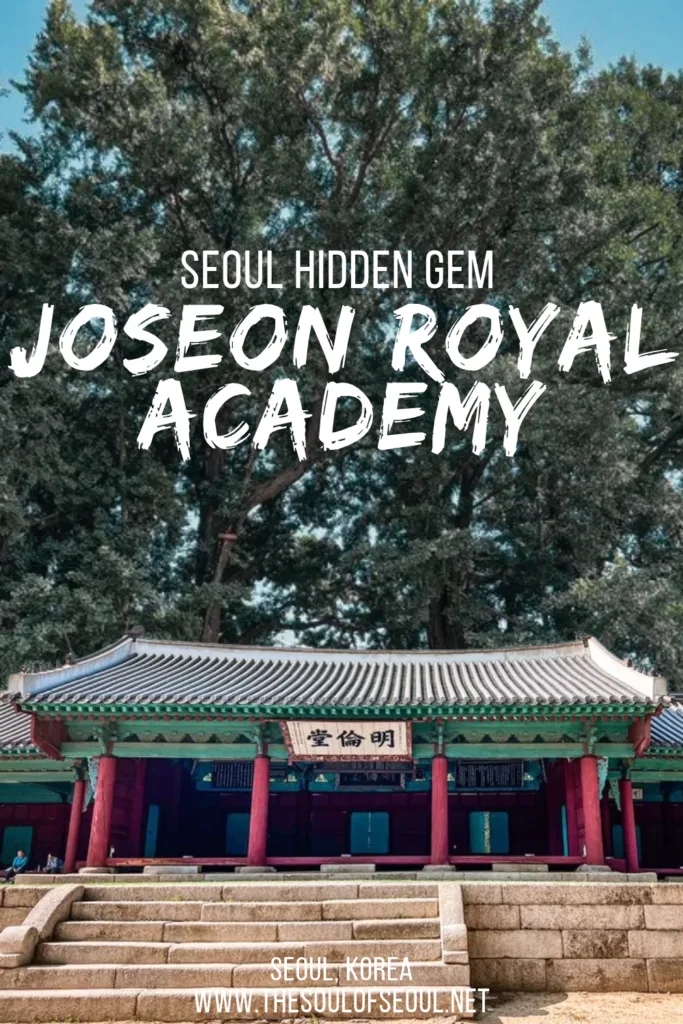
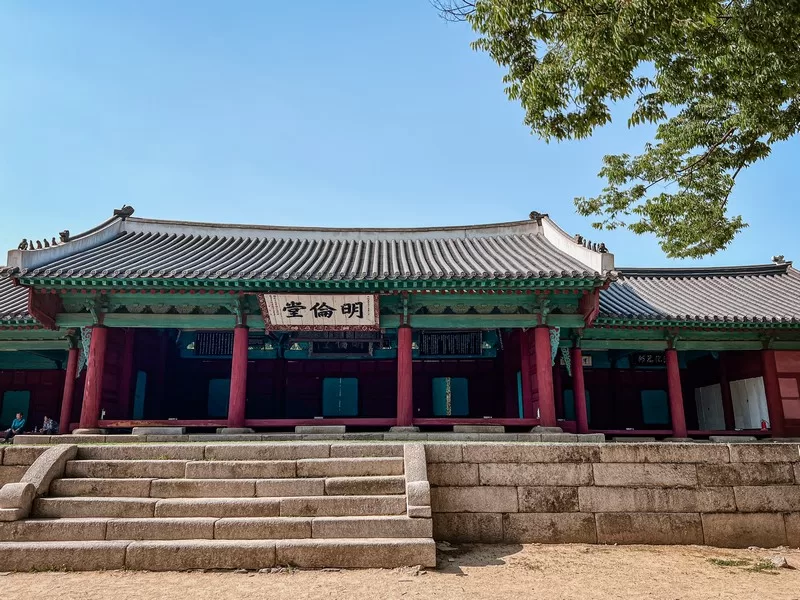
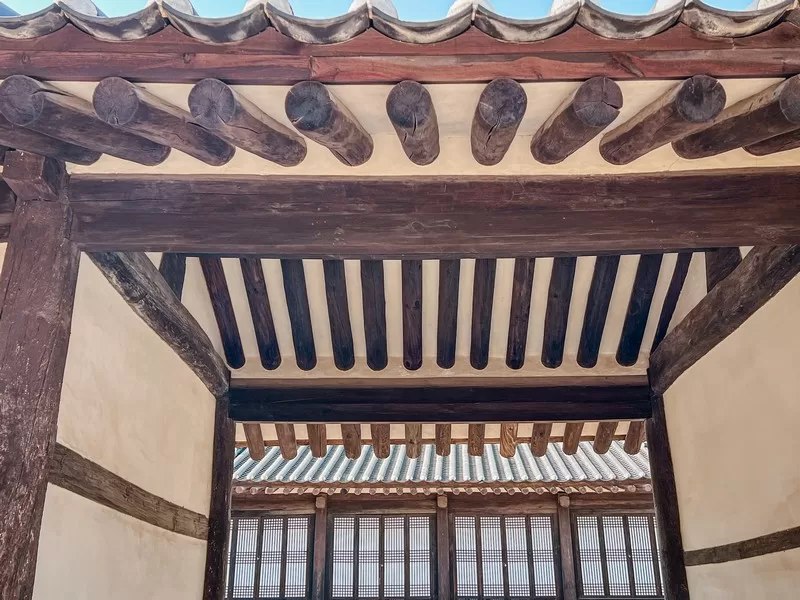
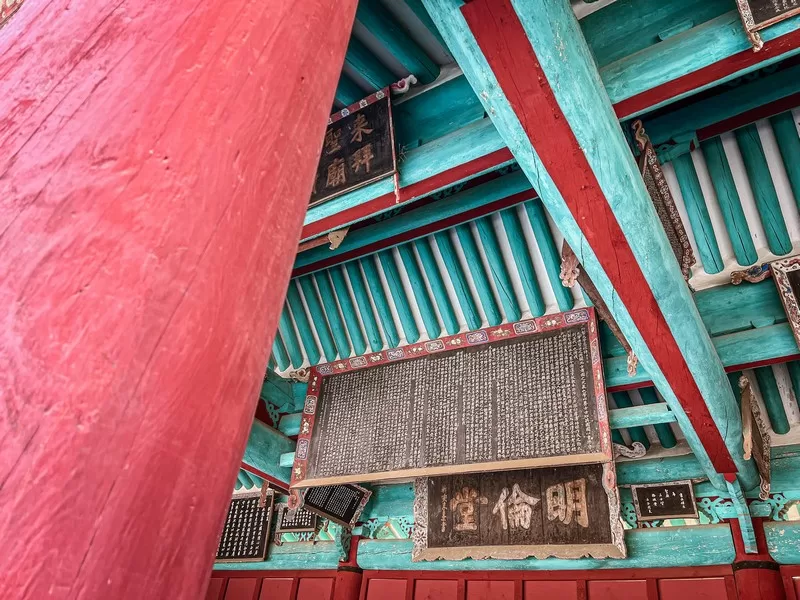
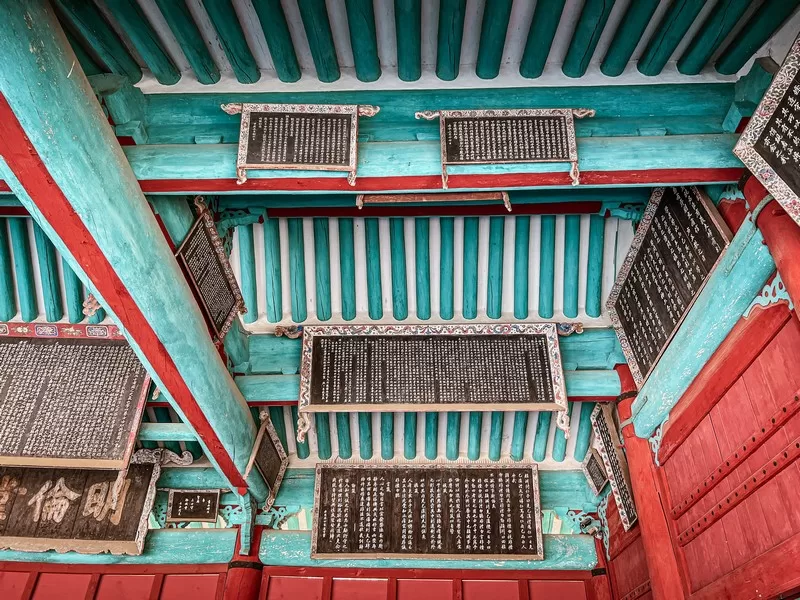
Myeongnyundang, the “Hall of Illuminating Human Relationships,” was the main lecture hall where students were taught the Confucian classics. It’s the building most people picture when they think of Sungkyunkwan. Make sure to look up when you’re there. Guidelines for study are written on boards around the ceiling and walls.
Around 200 students lived and studied at Sungkyunkwan at a time, preparing for the gwageo, the state exam that was the main path into government. They followed a strict daily routine, ate communal meals, and took part in rites at the shrine. They weren’t always obedient, though. Sungkyunkwan’s students were known to protest government decisions, sometimes by leaving the dormitories en masse in a kind of strike called gwondang (권당).
Fun fact: You might recognize it from your wallet, too. Myeongnyundang appears on the front of the W1,000 note, next to the scholar Yi Hwang. If you want to learn more about what appears on money in Korea, make sure to visit the Bank of Korea Money Museum in Myeongdong.
Dongjae and Seojae (동재·서재)
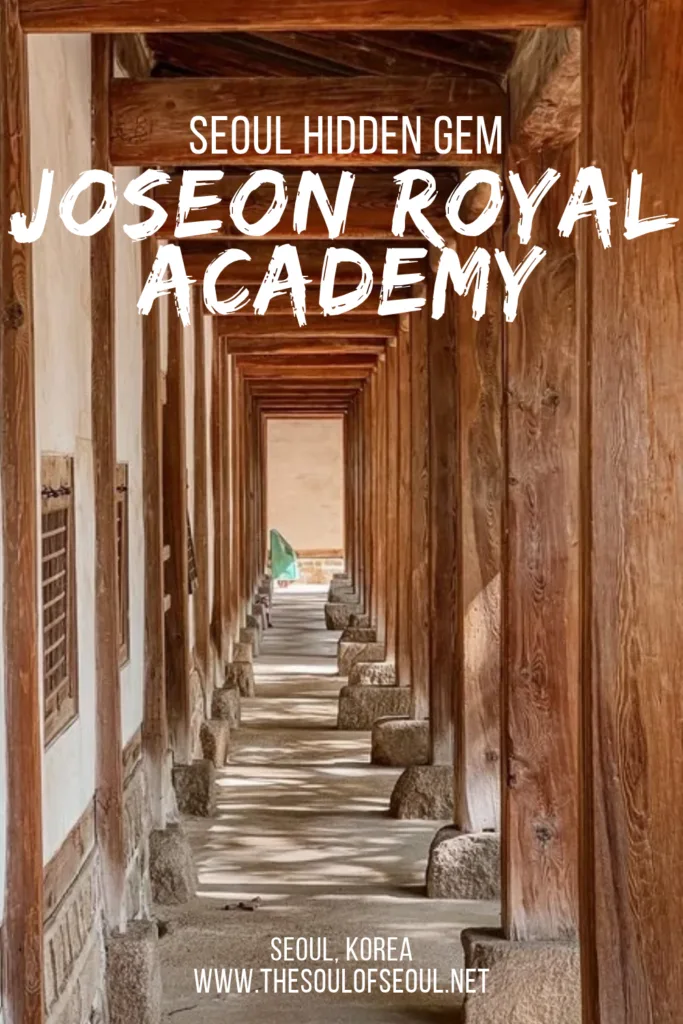
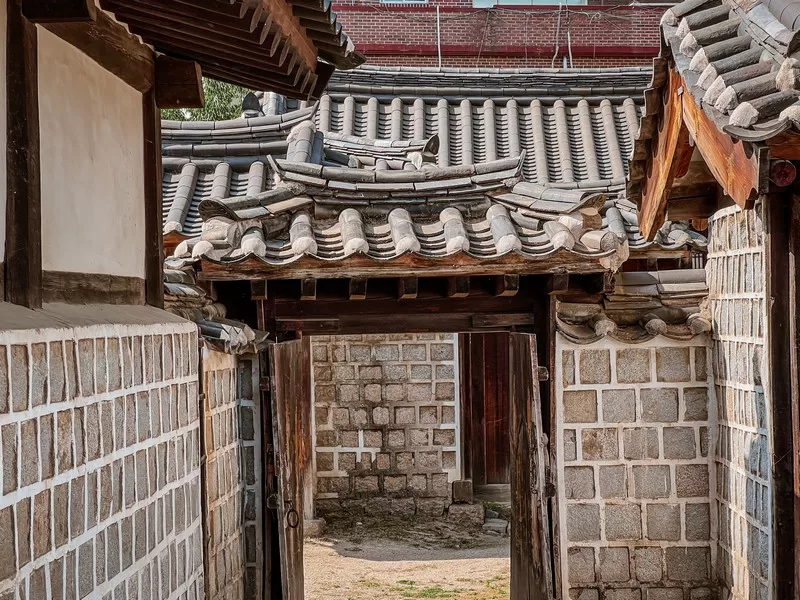
The East and West Dormitories flank Myeongnyundang. Students lived here while they studied for the civil service exam. You might wonder why the dormitory doors face away from the lecture hall. This was a purposeful effort to ensure the space in front of Myeongnyundang stayed quiet. It’s easy to picture a bunch of students in robes and imagine them to be rather subdued and studious but new students went through a kind of hazing called sillaehui (신래희), where upperclassmen played pranks on them. As we all know, students can get quite rowdy at times, can’t they?
Speaking of rowdy, apparently King Yeonsangun hated being lectured by Confucian scholars so much that he burned books, banned the scholars from reading, and turned Sungkyunkwan into a party venue for a time. Of course, he was eventually overthrown in 1506, so it was a short lived scene in the extensive history of the site.
Fun fact: The neighborhood around Sungkyunkwan is called Banchon (반촌) and was home to the people who served the academy. They’re said to be descended from servants donated to the Goryeo-era academy in Kaesong by An Hyang (yes, the same scholar enshrined in Daeseongjeon), and they moved to Seoul with the school. They held the rights to butcher cattle, so beef was reliably available nearby. Banchon was basically Joseon’s version of a college town, and students went there to unwind from exam pressure, a bit like Daehangno today.
Jongyeonggak (존경각)
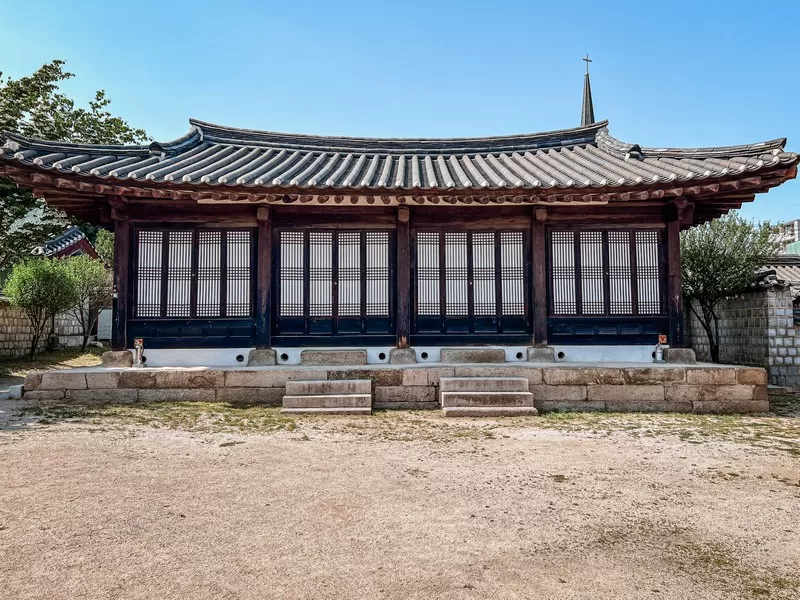
Behind Myeongnyundang is Jongyeonggak, the library, added in the reign of King Seongjong. It held the books the students needed for their studies.
Bicheondang (비천당)
Bicheondang was built under King Hyeonjong as a second examination hall for the gwageo. It also played an important role recently. While Daeseongjeon was being restored, the 39 spirit tablets were temporarily housed here, and the autumn Seokjeon rite was held here too.
Gyeseongsa (계성사)
Added under King Sukjong, this small shrine honors the fathers of Confucius and the other sages. It reflects the Confucian idea that you honor the people who made a great person possible, not only the great person.
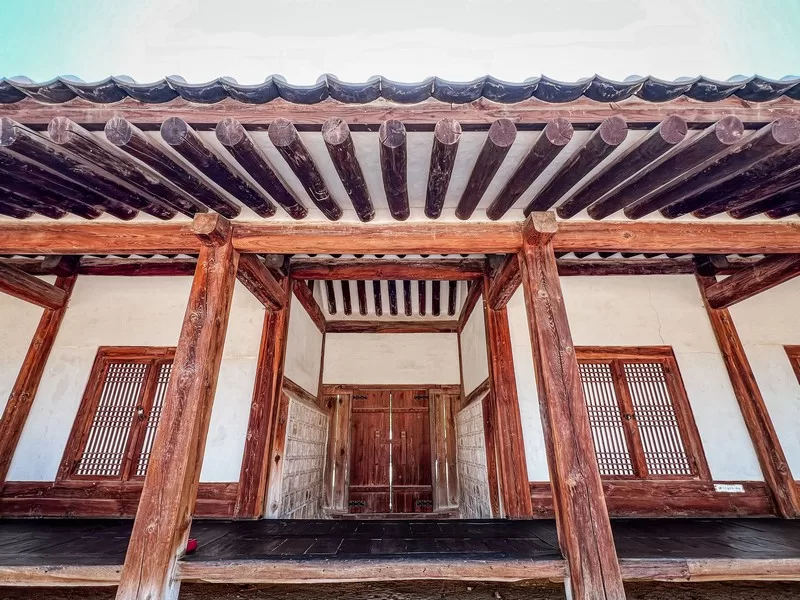
Jinsa Sikdang (진사식당)
This was the students’ dining hall. Sungkyunkwan tracked student attendance by counting how many meals each student ate here. Students signed a register at breakfast and dinner, and each signature earned one attendance point, called a wonjeom (원점). In principle, a student needed 300 points to sit the special exam held only for Sungkyunkwan students. Skip breakfast, miss your shot at a government career. Breakfast is the most important meal of the day after all.
Tangpyeongbi (탕평비)
This stone stele was erected by King Yeongjo, who spent much of his reign trying to rein in the bitter factional fighting at court. He placed it here, where future officials studied, as a reminder that a true gentleman is impartial.
King Yeongjo’s policy of balancing the factions, tangpyeong (탕평), even has a dish named after it. Tangpyeongchae (탕평채) is a salad of mung bean jelly mixed with colorful vegetables and beef, meant to show different elements coming together in harmony. The popular story says it was served at a banquet to celebrate the policy, though food historians point out there’s no record of it from Yeongjo’s time, and it was probably named in the 1800s by people nostalgic for his reign. Either way, it’s delicious, and you can find it at many Korean restaurants.
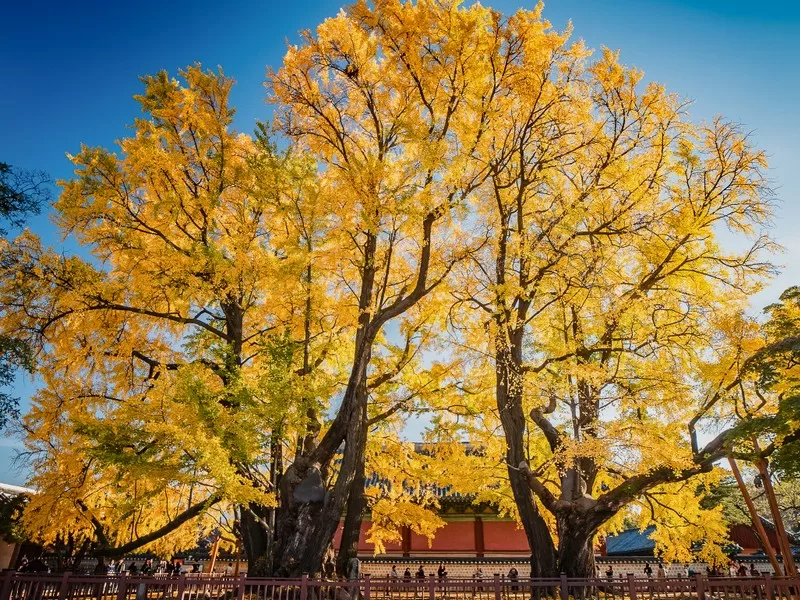
The Ginkgo Trees
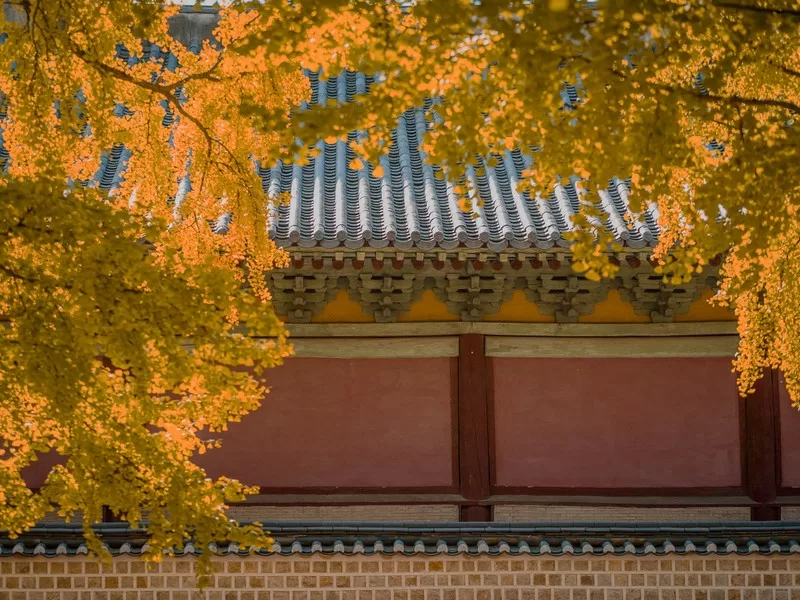
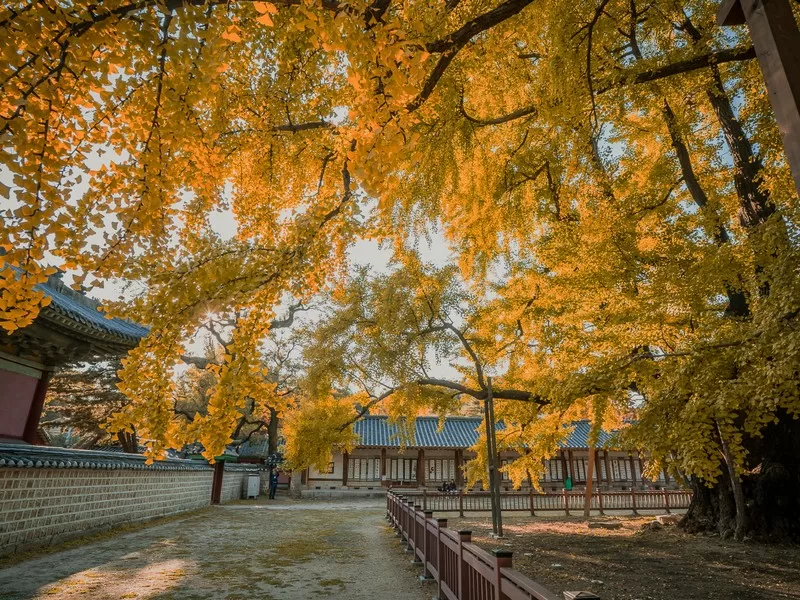
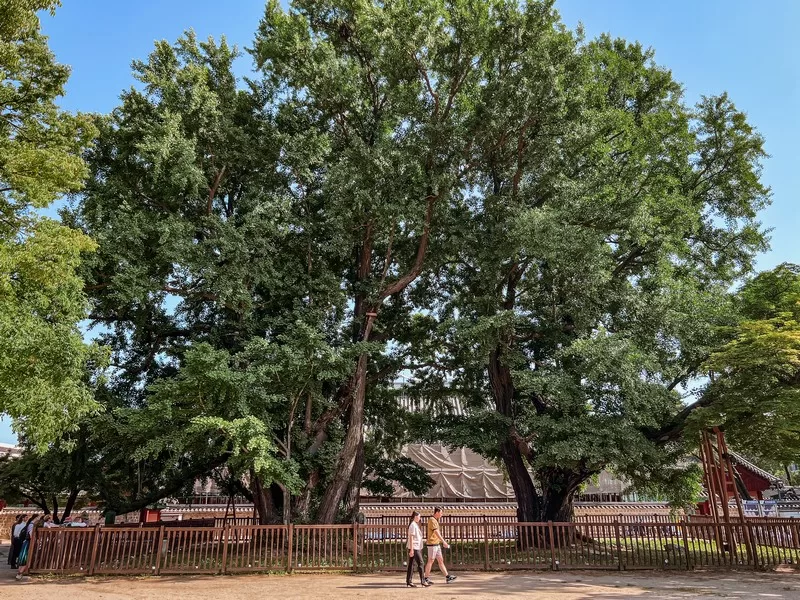
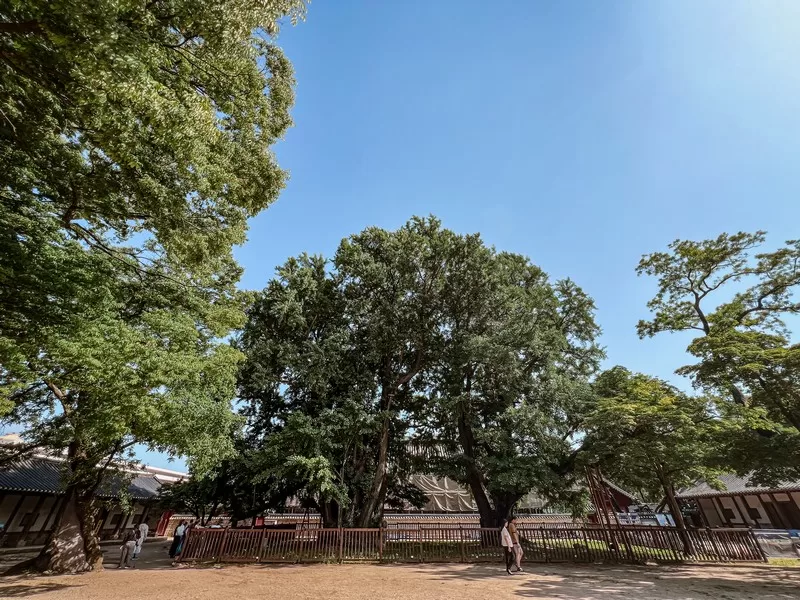
This site may not be all that popular most of the year, but come autumn, it becomes a place that people don’t want to miss. The two enormous ginkgo trees in front of Myeongnyundang turn vibrantly yellow. One of them is designated a Natural Monument, and it’s roughly 500 years old. Records say an official named Yun Tak (1472–1534) planted ginkgo trees at Sungkyunkwan, and there are two more old ginkgo in the Daeseongjeon courtyard.
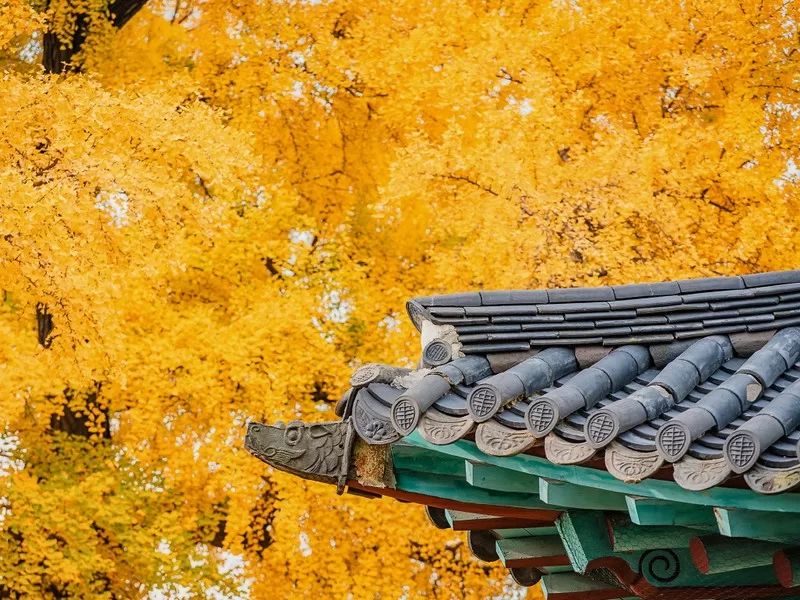
If you’ve ever seen the ginkgo trees up close, you’ll know that some of them, the female ones, can produce some pretty smelly fruit. It certainly doesn’t keep me away, but good to know for visitors, all four of Sungkyunkwan’s old ginkgo trees are male, so you won’t get the infamous stinky ginkgo fruit underfoot. Sungkyunkwan University even took its ginkgo-leaf symbol from the Myeongnyundang tree.
Fun fact: You’ll find ginkgo trees at almost every Confucian school in Korea because Confucius was said to teach beneath a tree at a place called the haengdan (杏壇), and in Korea that tree was understood to be a ginkgo. Many scholars think the original character actually referred to an apricot tree. So it may be a translation issue now, but thanks to it Korea’s Confucian schools are glowing gold every October and November.
Daeseongjeon’s 2026 Restoration
We visited in the spring of 2026 to find Daeseongjeon all covered. Apparently, Daeseongjeon’s roof had been sagging for years. A 2020 inspection found cracking along the roof ridge and drooping eaves, and work began in 2023. The repairs turned up some remarkable things though, which has happened at temples as well. While dismantling the roof, workers found an eave timber made from a single piece of wood 18.8 meters long, the longest of its kind found in Korea. Under the ridge beam, they found an ink inscription dated 1602 that recorded the day the beam was raised and the names of three carpenters who don’t appear in any other record.
They also found old dancheong, the protective painted decoration, hidden above the ceiling. According to the Annals of the Joseon Dynasty, a ceiling was installed in 1704 because bats living in the hall were making a mess of it, so that painting likely predates 1704.
The restoration, the first major one in 157 years, was completed in August 2026. On August 24, Confucian scholars carried the 39 spirit tablets in procession from Bicheondang, through the shrine’s main gate, Sinsammun, and back into Daeseongjeon. The hall is now complete, though it remains closed to the general public.
The 1st Gwageo Examination for Foreign Residents in Korea
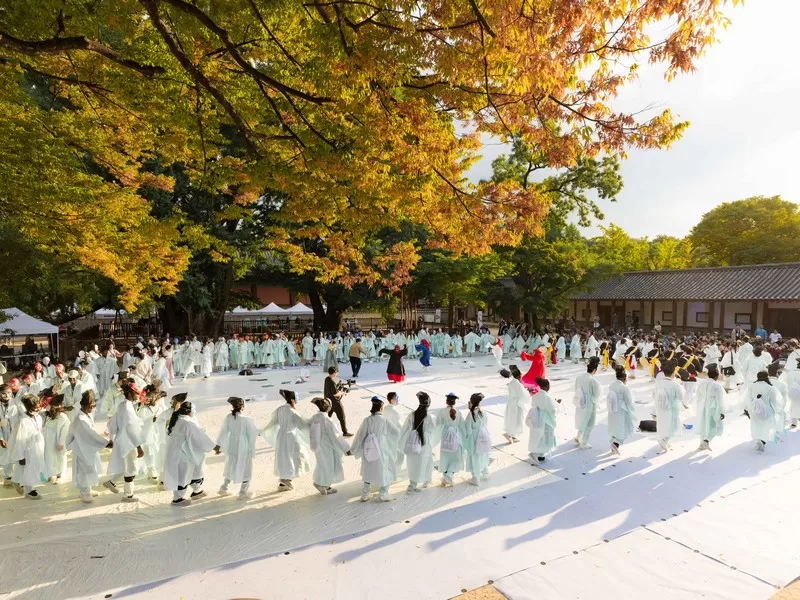
For about 500 years under the Joseon Dynasty, the gwageo (과거) was how the state chose its officials. On October 5, 2026, it was reenacted for foreign residents of Korea for the first time, and it was held at Sungkyunkwan itself, in Myeongnyundang. I’d seen photos of events like this for Koreans before, and my first thought was that it looked so interesting… and maybe a little difficult.
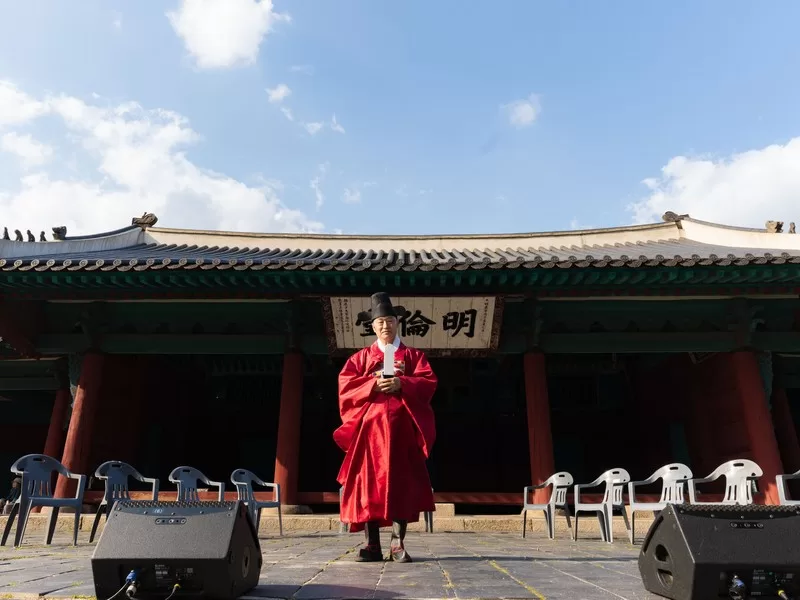
More than 200 foreign residents from 55 countries took part, dressed in yugeon, scholars’ caps, and dopo, scholars’ robes. The first task was a Hangul writing exercise. Participants could write out the event’s slogan in Hangul or answer an essay prompt about the three things about Korea they’d want to introduce to their home country, and why.
Want to learn Korean yourself? There are great online apps and websites to learn Korean or if you’re like me and prefer books, here is a guide to the best books to learn Korean too.
The answers ranged from the obvious things like kimchi, Hangul, or the beautiful Hanbok to things only people who live here would think of, like hiking culture, the senior-junior relationship, eating together, 24-hour convenience stores and Korean variety shows. Thirty-three people shared W12.5 million in prize money. The top prize winner also received the green robe, hat and paper flowers traditionally given to a top scorer, plus a hongpae, the red certificate of passing.
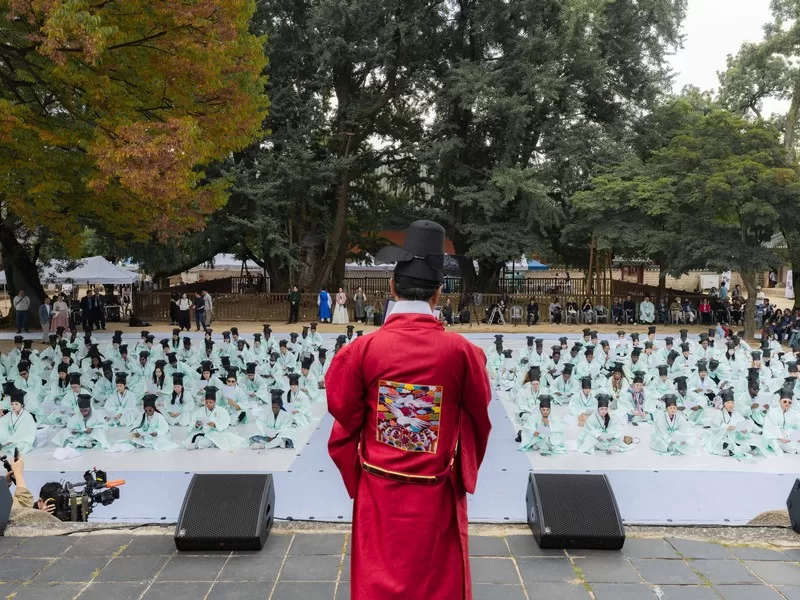
The event was hosted by the Sungkyunkwan Confucian Association to mark its 80th anniversary, as part of a festival for the 2,577th anniversary of Confucius’s birth, with support from the Ministry of Culture, Sports and Tourism.
Sungkyunkwan vs Hyanggyo vs Seowon
If you travel around Korea, you’ll run into Confucian schools everywhere, I’ve visited them in Gyeongju, Jeju, Andong, and so on. If you’re not sure what they are, you could easily think they were just a larger Hanok house. It helps to know how they fit together.
| Sungkyunkwan | Hyanggyo (향교) | Seowon (서원) | |
|---|---|---|---|
| What it was | National academy (the top level) | State-run local schools | Private academies |
| Who ran it | The central government | The state, one per local administrative district | Scholars and local clans |
| Peak numbers | One | About 360 in early Joseon; 234 today | 400+ by the 18th century |
| Who was enshrined | Confucius and the officially recognized sages | Same as Sungkyunkwan | Scholars tied to that academy or clan |
| Rite dates | First jeong day of the 2nd and 8th lunar months | Same day as Sungkyunkwan | A later jeong day, to rank below Seokjeon |
| Where to see one | Seoul | Nearly every county; Jeonju and Gyeongju are well known | Dosan Seowon and Sosu Seowon |
Seowon started in 1542 with Baegundong Seowon, later renamed Sosu Seowon, and spread quickly as scholars retreated from court politics. Over time many became political strongholds, and in the late 1800s the Heungseon Daewongun ordered most of them closed. Today, Sungkyunkwan oversees Korea’s 234 hyanggyo, which still hold rites and run programs like etiquette classes for young people.
Seokjeon Daeje: The Twice-Yearly Rite
Seokjeon Daeje (석전대제) is the grand rite honoring Confucius and the sages. It’s held at Sungkyunkwan and at hyanggyo across the country on the first jeong day of the 2nd and 8th lunar months, which usually lands in spring and early autumn. It was designated a National Intangible Cultural Heritage in 1986 and comes with its own ritual music and dance.
The rite opens with an offering of incense and silk, followed by three rounds of wine offered to the sages, and it closes with a shared drink of ritual wine and the burning of the prayer text. If you think of the charye my family holds at Chuseok, Seokjeon is the national, formal version of that same idea: honoring the people who came before you.
FAQ
Is Sungkyunkwan free to visit?
Yes. Entry to Seoul Munmyo and Sungkyunkwan is free.
Can you go inside Daeseongjeon?
No. Daeseongjeon holds the spirit tablets of Confucius and 38 other sages, and it isn’t open to the general public.
Is Sungkyunkwan part of Sungkyunkwan University?
The historic site sits just inside the university’s main gate, and the university traces its founding to 1398. But today the shrine is operated separately by the Sungkyunkwan Confucian Association.
Do I need to be a student to enter?
No. Anyone can walk in during opening hours.
Who is enshrined at Munmyo?
39 figures: the Five Sages (including Confucius), the Ten Philosophers of Confucius, the Six Sages of the Song Dynasty, and the Eighteen Sages of Korea, such as Choe Chiwon, Yi Hwang and Yi I.
What is the difference between Munmyo and Jongmyo?
Munmyo honors Confucius and Confucian scholars. Jongmyo honors the kings and queens of the Joseon Dynasty.
Why are there ginkgo trees at Confucian schools?
They symbolize the place where Confucius was said to teach, the haengdan. In Korea, that tree was understood to be a ginkgo.
What is on the 1,000 won note?
The front shows the scholar Yi Hwang and Myeongnyundang, Sungkyunkwan’s lecture hall.
When is Seokjeon Daeje held?
On the first jeong day of the 2nd and 8th lunar months, so in spring and early autumn.
Did you like this post? Pin iT!