Sanbangsan: A Temple Hike and Grotto on Jeju Island
Last Updated on October 13, 2026
This mountain was the peak of Mt. Halla before it was broken off and thrown to this spot on the southwest coast of Jeju Island, at least that’s one of the legends surrounding Sanbangsan (산방산) and the grotto inside it. The folklore really makes this stop.
If you’re building a Jeju Island itinerary, Sanbangsan is one of the most rewarding and manageable stops on the island. The mountain has grown more popular in recent years thanks to nearby fields of flowers in bloom in the right seasons, and the temple complex at its base is beautiful. Here’s everything you need to know to plan your visit.
Skip around, get the info and plan your trip now!
- How To Get To Jeju
- How To Get To Sanbangsan
- The Legends Of Sanbangsan
- Bomunsa Temple
- The Climb To Sanbanggulsa Grotto
- Nearby
- FAQ
(This page contains affiliate links. That means if you click on them and purchase something, I will get a percentage of the transaction at no cost to you. Thanks for the support!)
How To Get To Jeju
Take A Flight: Fly into Jeju International Airport from Gimpo or Incheon Airport on mainland Korea. Check out Skyscanner.com for the best rates on domestic flights, which run frequently throughout the day.
On a Tour: Best Jeju Day Tour: UNESCO & Essential Highlights: This day tour includes stops at Hyupae Beach, Hallim Park, O’Sulloc Green Tea Fields, Mt. Sanbang and the Cheonjeyeon Waterfall. Book the Best Jeju Day Tour on Klook.
How To Get To Sanbangsan
Jeju Island is not straightforward to navigate without a car. Buses exist but run infrequently and the island’s attractions are spread across a large area. If you plan to see more than a few sites, renting a car is worth it. Here is a guide to renting a car in Jeju. If you don’t want to go directly with a local shop, check out Klook which offers a great deal on rental cars.
Address: 218-10 Sanbang-ro, Andeok-myeon Seogwipo-si, Jeju (제주특별자치도 서귀포시 안덕면 산방로 218-10)
By bus: From Seogwipo Intercity Bus Terminal, take Bus 702 for 22 stops. The ride takes approximately 70 minutes. Get off at the Sanbangsan bus stop — the golden Yaksayeorae-bul (Medicine Buddha) statue is visible on the mountainside from the stop, which confirms you’ve arrived at the right place.
Airport transfer: If you’re not renting a car, book a direct transfer to Jeju City or the Seogwipo area before arriving.

The Legends Of Sanbangsan
The origin story begins with a hunter at the peak of Halla Mountain, Korea’s tallest. While shooting arrows at a white deer, the hunter missed and struck the Halla spirit from behind. Furious and in pain, the spirit ripped the mountain’s peak off and threw it at the hunter. It landed on the coast and killed him. He was then reborn as the female spirit of the new mountain formed from that thrown peak. Unlike every other mountain on the island, Sanbangsan has no crater at its summit, which the legend explains.
The more romantic of the two legends centers on the goddess Sanbandeok, the beautiful daughter of Sanbangsan. She fell in love with a mortal named Goseong. A jealous village official, wanting Sanbandeok for himself, banished Goseong and seized his possessions. Overcome with grief, the goddess retreated to the cave on the mountainside and turned to stone, mourning the loss of Goseong to this day.
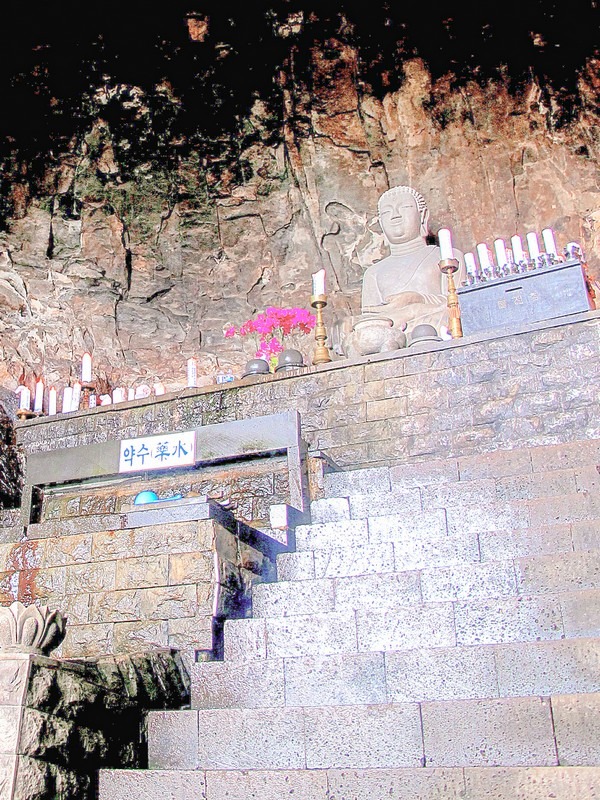
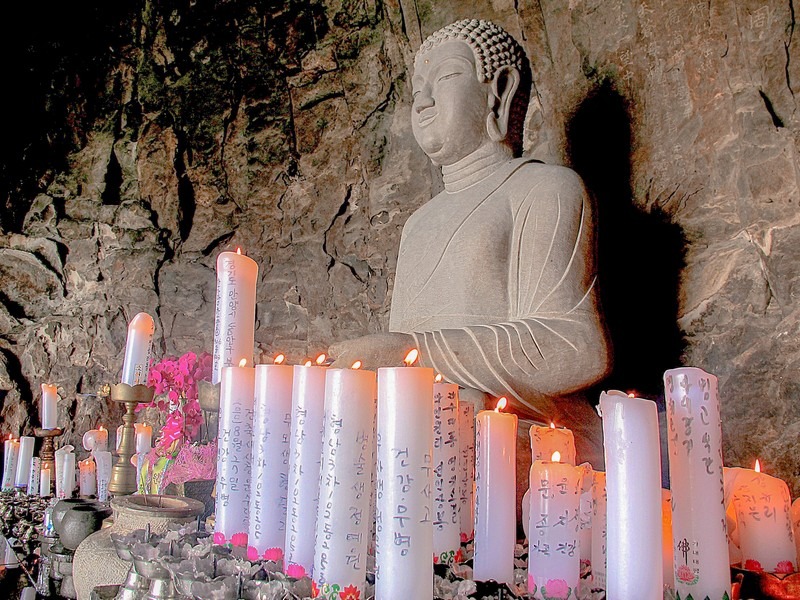
The water that drips steadily from the ceiling of the cave into a pool below is said to be the goddess’s tears. Visitors are welcome to drink the water and say a prayer for the good health of their family, something the goddess had always wished for.
Bomunsa Temple
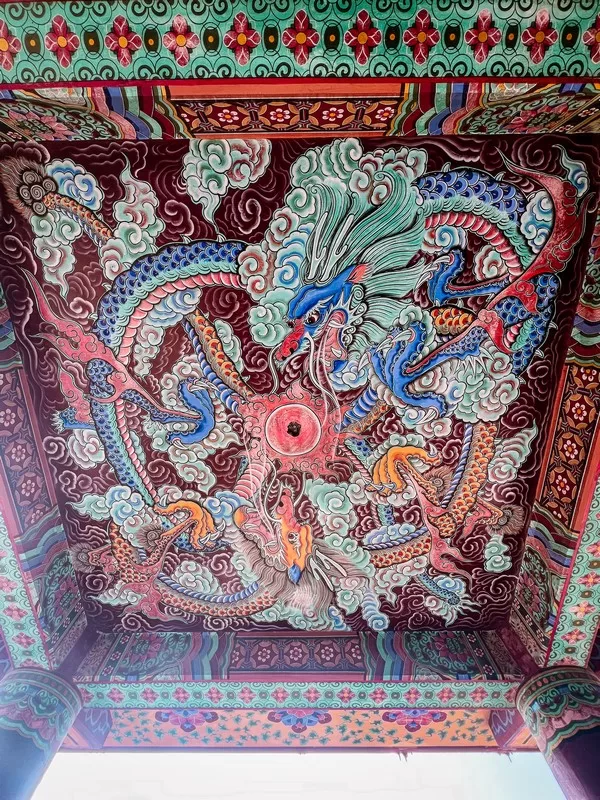
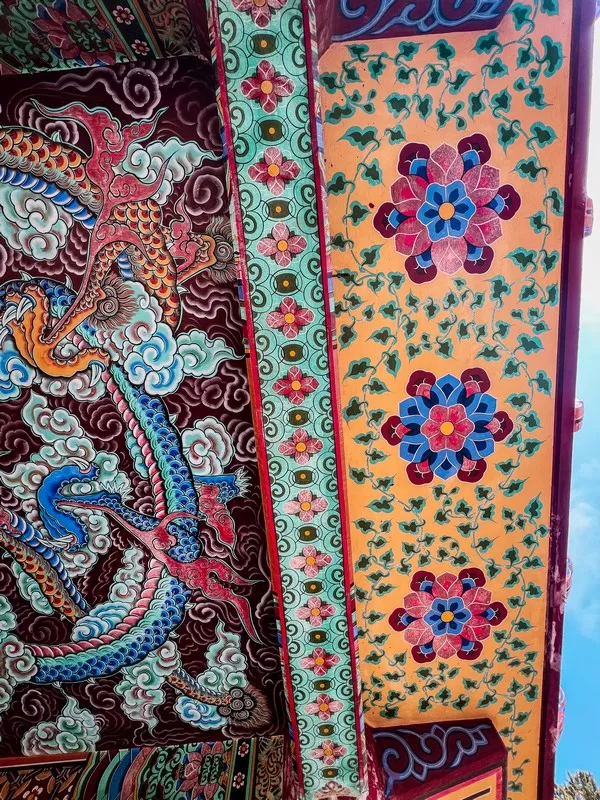
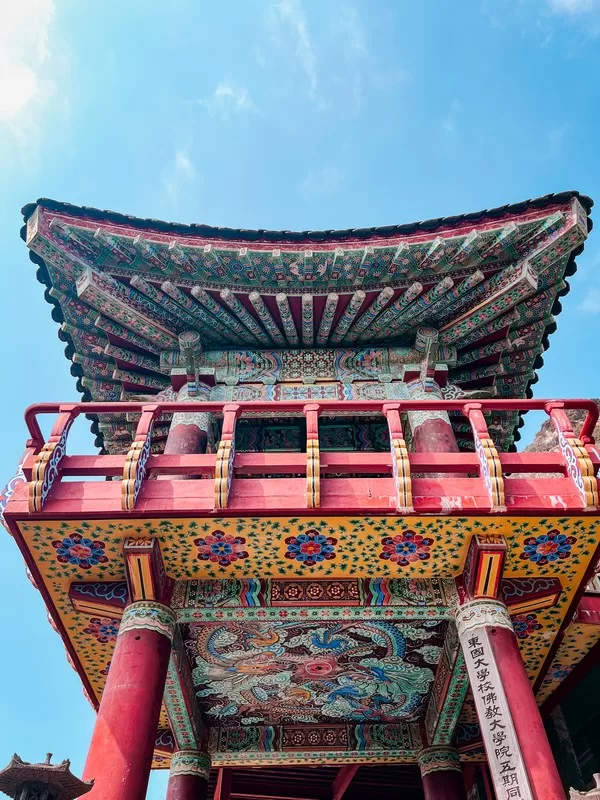
At the base of Sanbangsan sits Bomunsa Temple (산방산 보문사), the full temple complex that now encompasses the grounds you’ll walk through on your way to the grotto above. The temple was founded in 1954 by the First Great Abbot Dae Hyun, and has expanded significantly over the decades, most recently with the Jin Yeo Gallery Meditation Center, completed in 2024.
What you’ll see as you move through the complex:
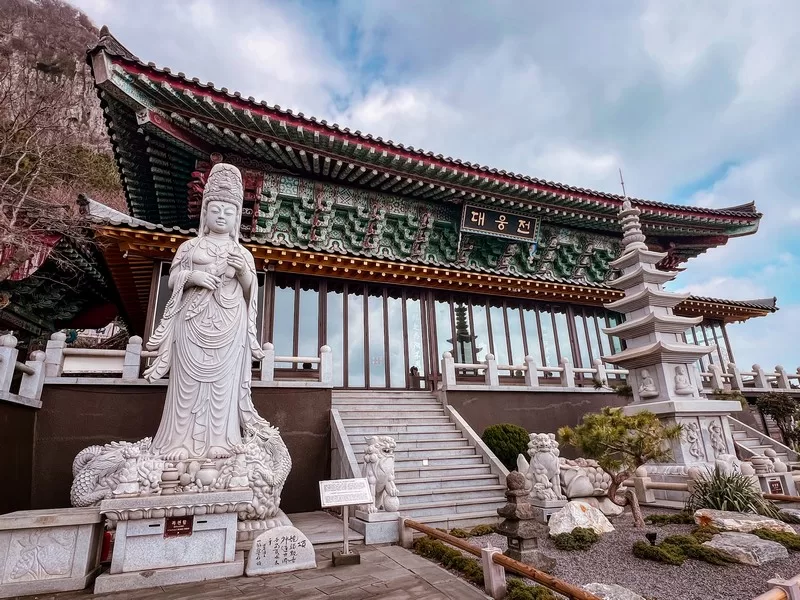
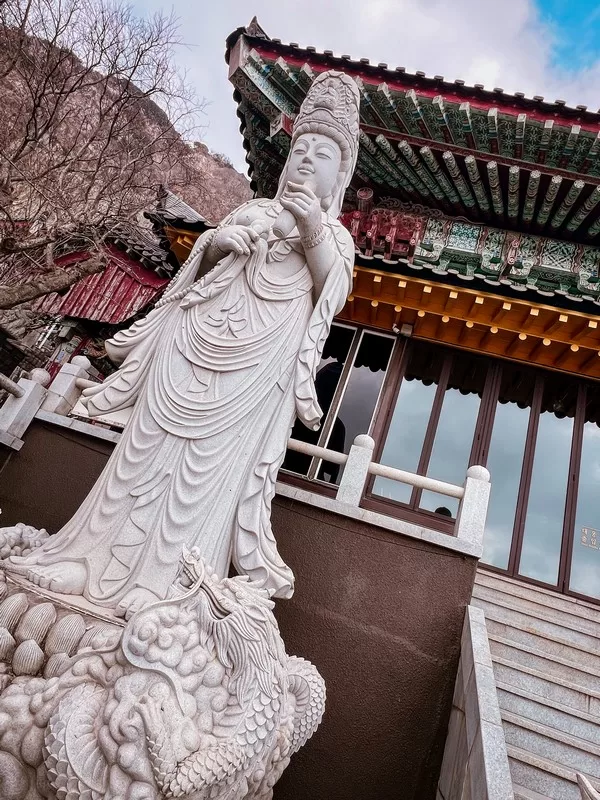
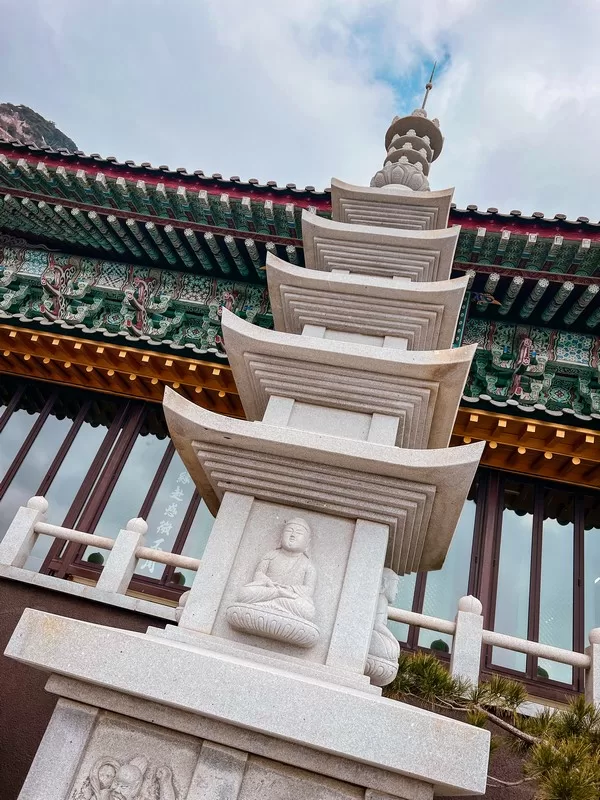
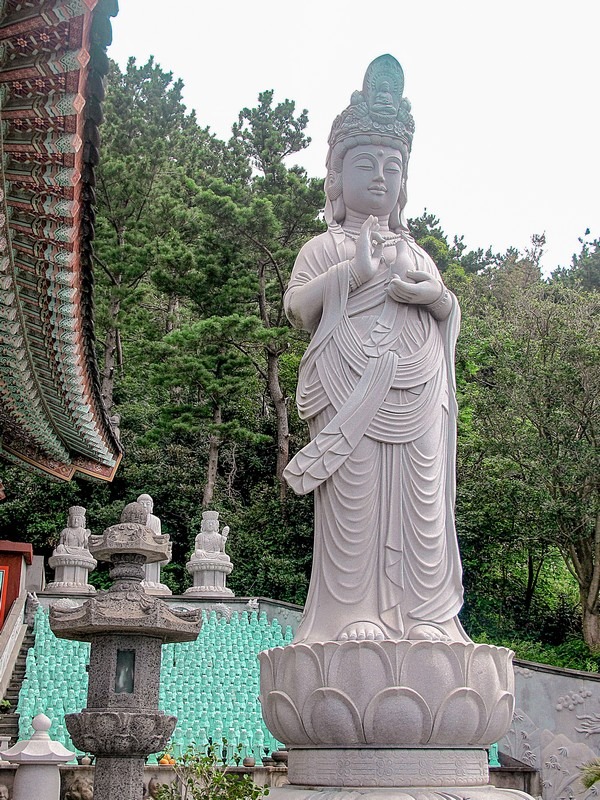
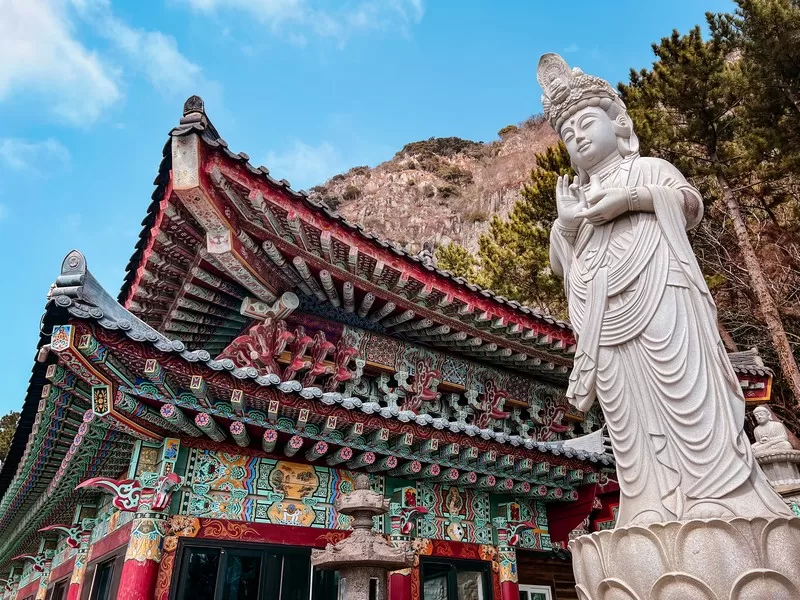
Gwanseeum-bosal statue: The first thing greeting you inside the courtyard is a stone statue of Gwanseeum-bosal, the Bodhisattva of Compassion.
Five-story stone pagoda: A stone pagoda with a dharma wheel at its base inscribed with the Eightfold Path.
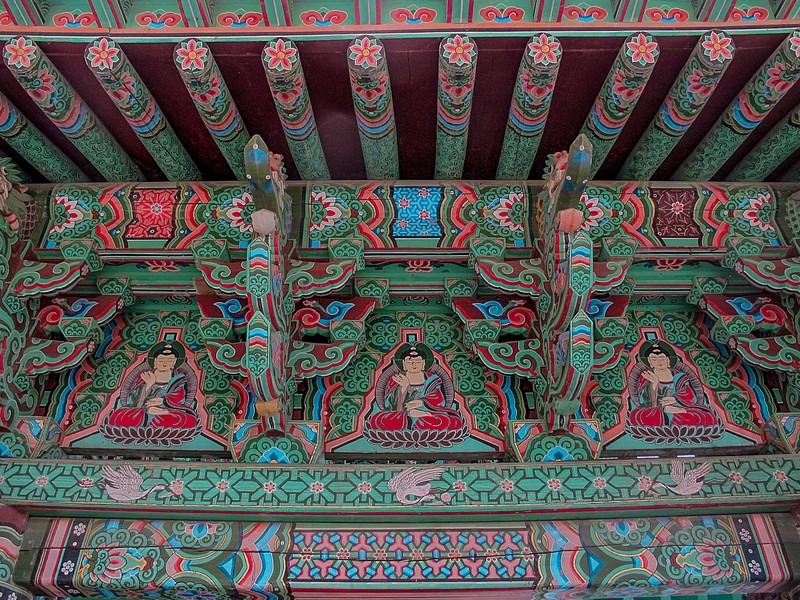
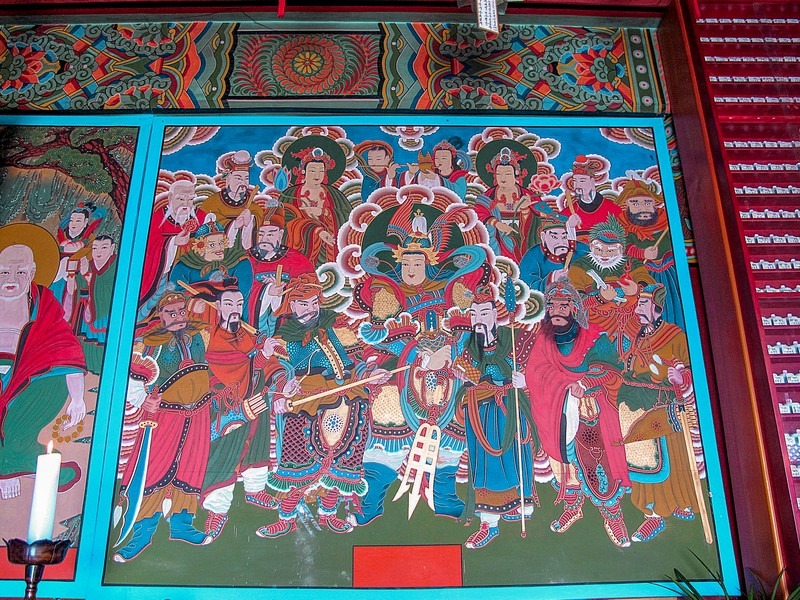
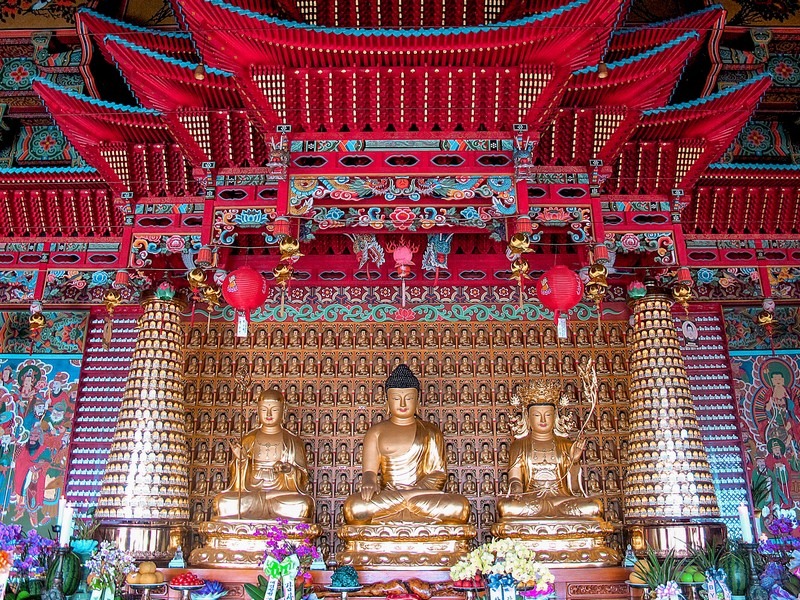
Daeung-jeon Hall: The main hall, centered by Seokgamoni-bul (the Historical Buddha), flanked by Jijang-bosal (the Bodhisattva of the Afterlife) and Gwanseeum-bosal. Hundreds of smaller white Buddha statues line the altar. To the far left of the altar, a black Gamno-do (Sweet Dew Mural), a traditional Korean Buddhist mural for the dead.
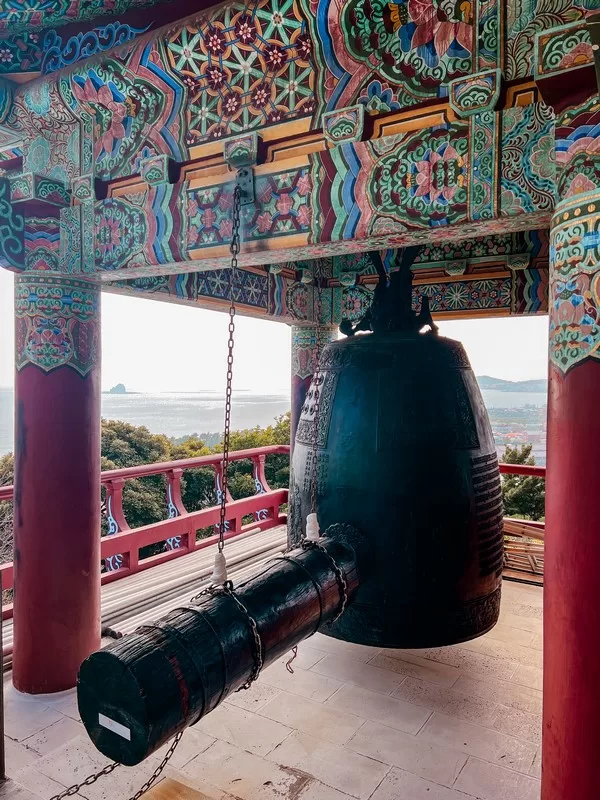
Jong-ru (Bell Pavilion): To the right of the main hall, alongside a line of stone Nahan statues (the Historical Disciples of the Buddha). The views of the South Sea from this area are excellent. You can ring the bell yourself to make a wish here if you like.
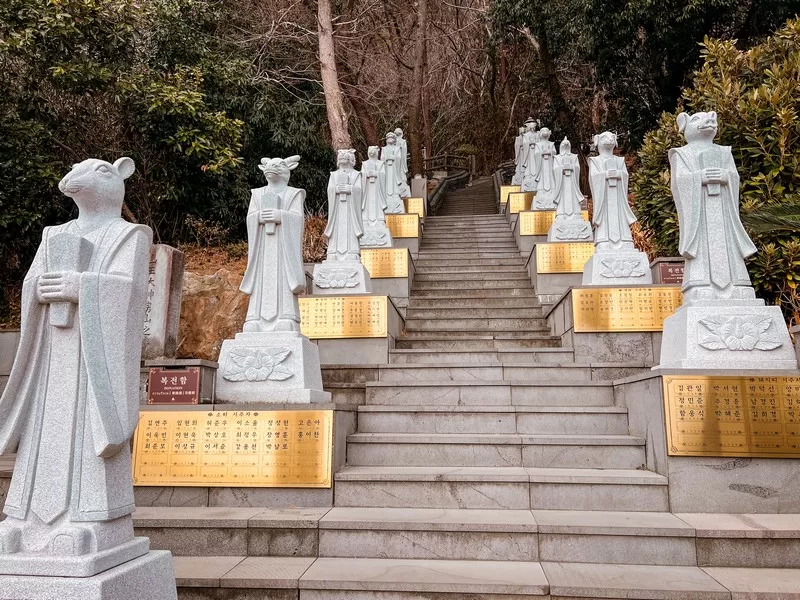
Path of Wish Fulfillment: A path with 12 Jisin stone statues (the 12 Chinese zodiac deities), reconstructed and expanded in 2020. The temple holds that walking this path with sincere intent can help fulfill a strong wish.
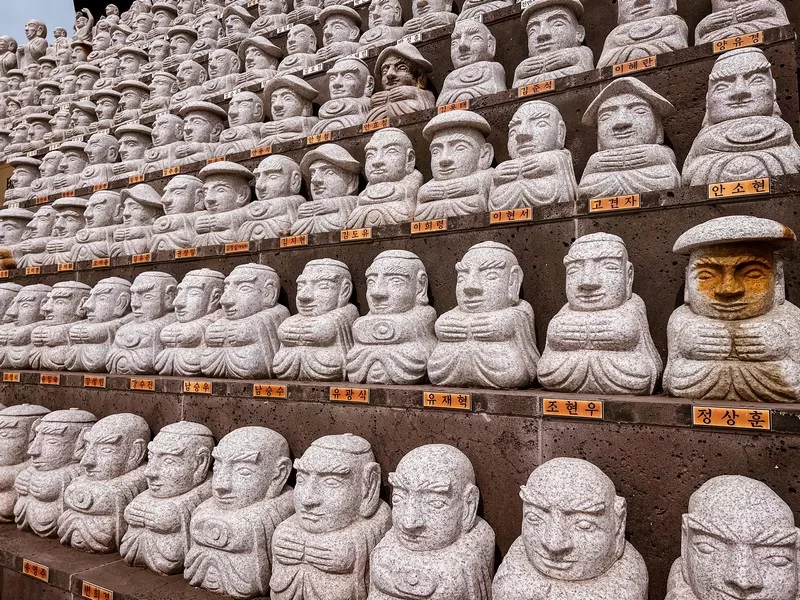
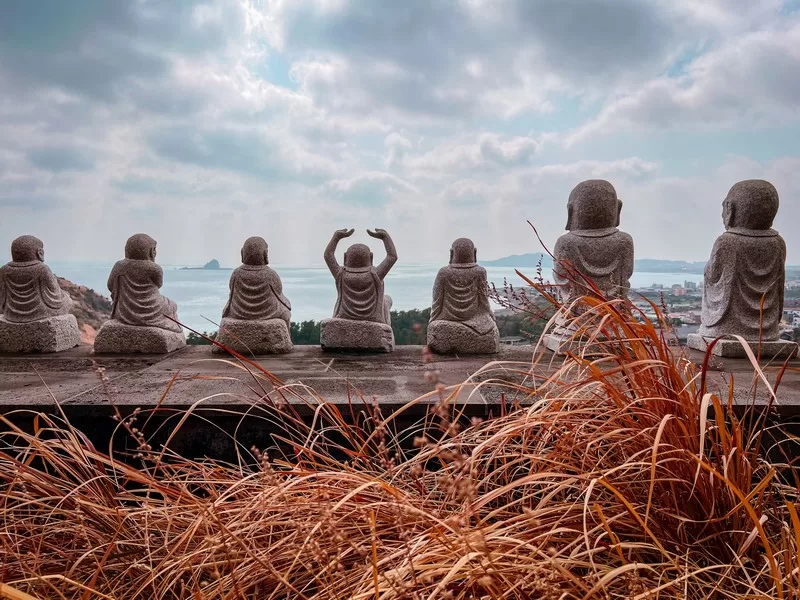
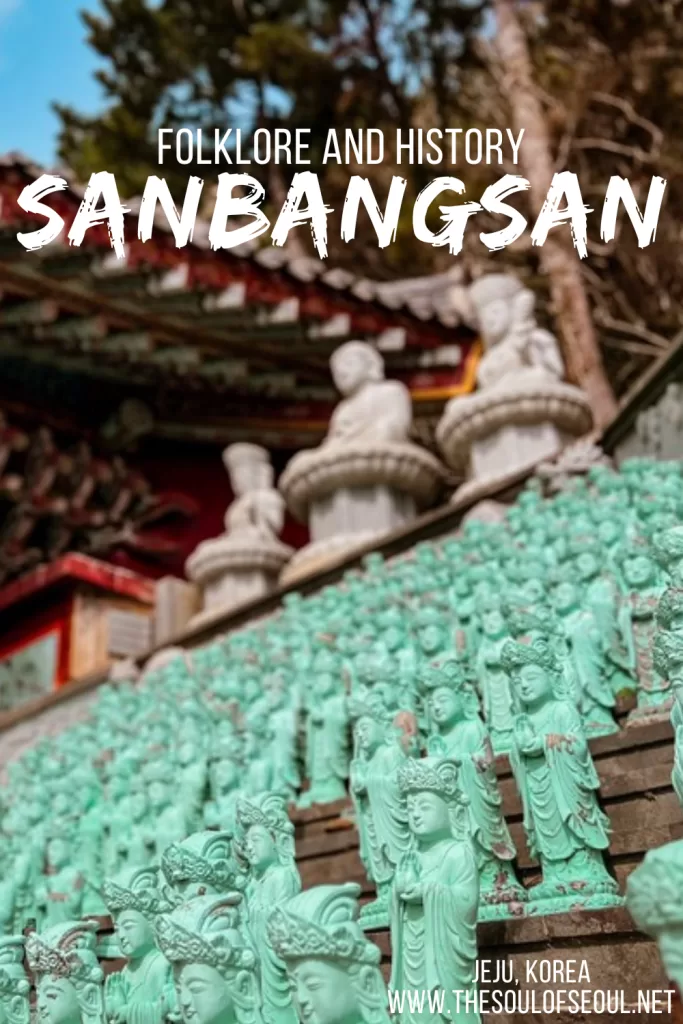
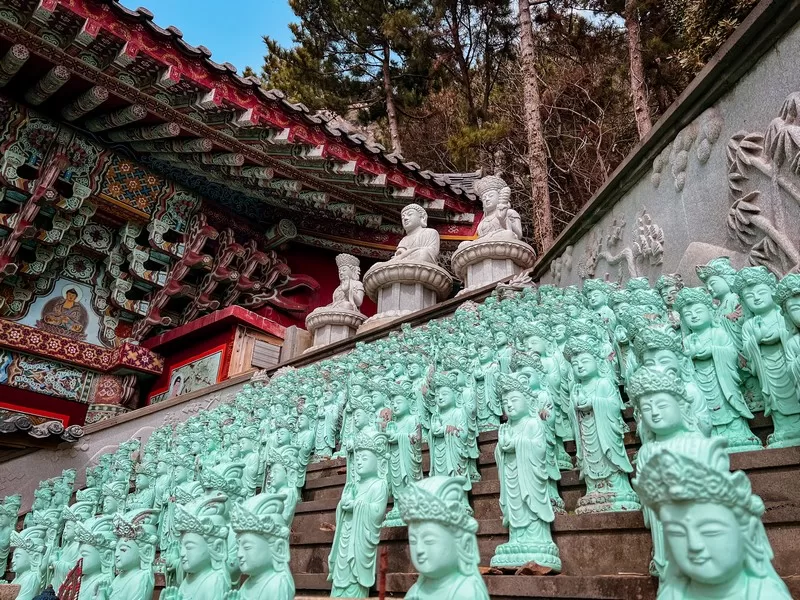
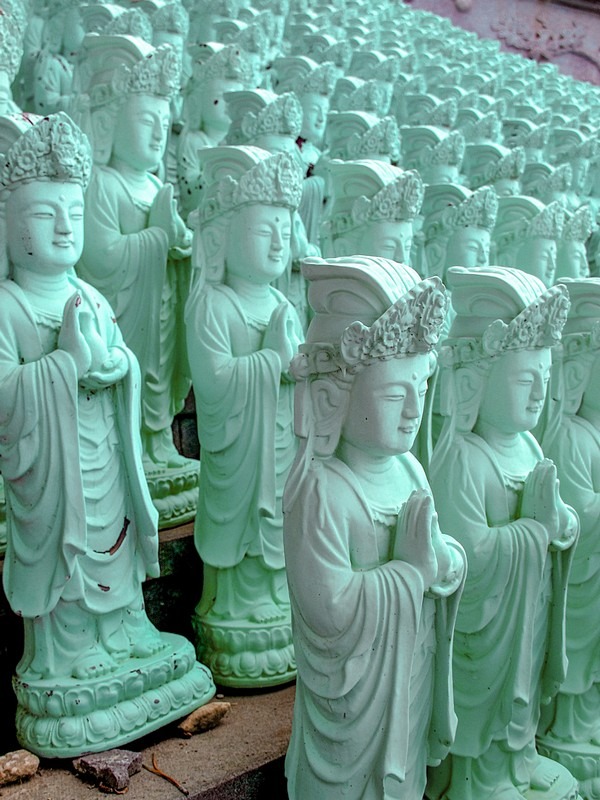
500 Arahat statues: Enshrined in 2013 after 1,000 days of dedicated prayer. This wasn’t here the first time I visited and made a wonderful surprise on a recent trip.
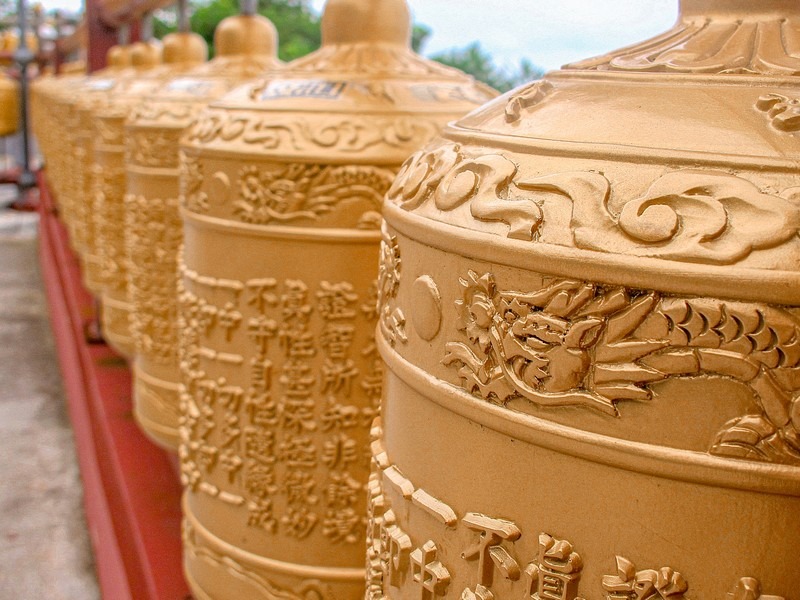
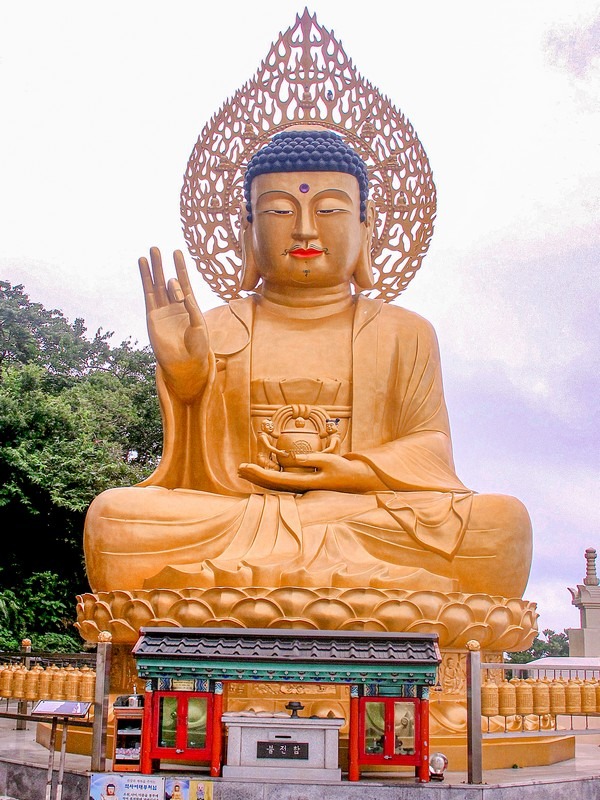
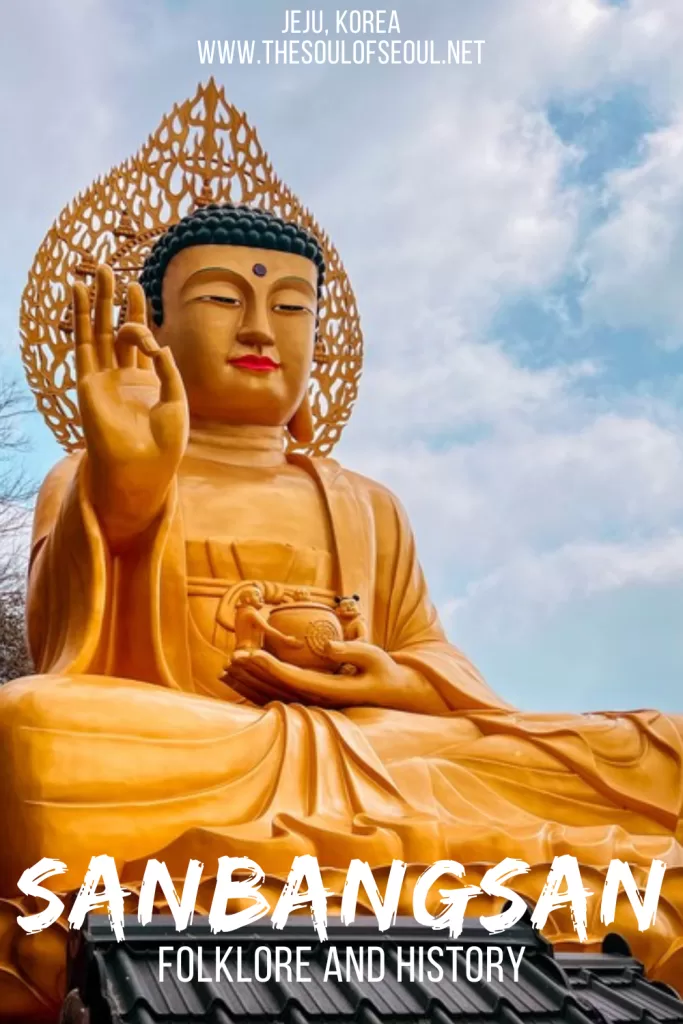
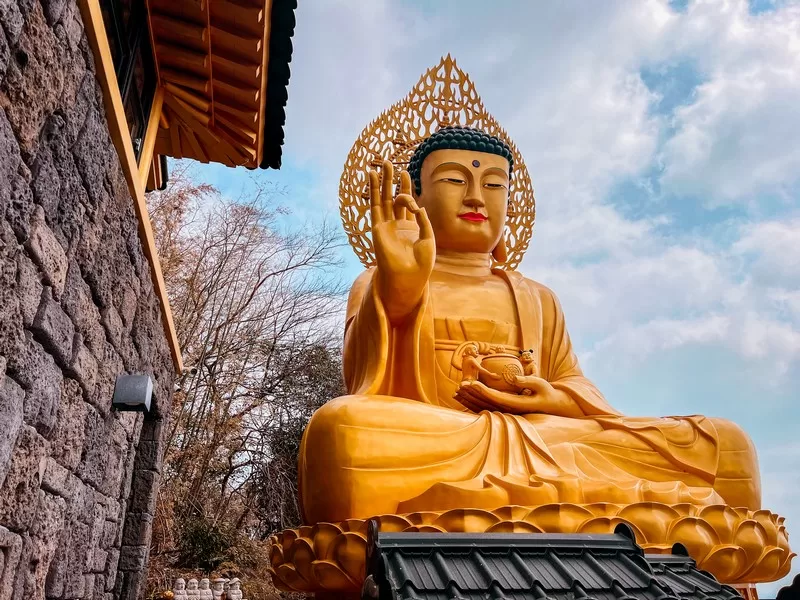
Yaksayeorae-bul (Medicine Buddha): The golden statue installed in 2010, visible from the bus stop and from the road below. The statue faces the Daeung-jeon Hall and looks out toward visitors approaching from below. According to temple records, seven colored rainbows appeared during the installation ceremony. It’s striking.
The Climb to Sanbanggulsa Grotto
The 395 meter high Sanbang mountain was formed by volcanic activity some 700,000 to 800,000 years ago and is actually a large body of lava. The name of the mountain can be translated to mean ‘a cave inside a mountain’ which makes sense because the sides of the rock are spotted with numerous caves and cavities produced by the weather over the years.
The path from Bomunsa Temple up to the grotto takes approximately 20 minutes. It’s steep. In summer, it’s a hot and sweaty climb, bring water. There are altars and rest spots spaced along the path, which give you both cultural interest and legitimate excuses to stop and breathe.
The cave at the top is Sanbanggulsa Grotto (산방굴사). Inside, a seated Buddha statue is enshrined alongside the story of the goddess Sanbandeok. The water dripping from the cave ceiling into the pool below is the one detail visitors remember most, drink it, say a prayer for your family’s health, and take a moment in the cave before the descent.
The views from this height, beaches, islands, the coastline of the South Sea stretching west, are exceptional. The entire visit from base to grotto and back runs roughly two hours at a relaxed pace.
Nearby
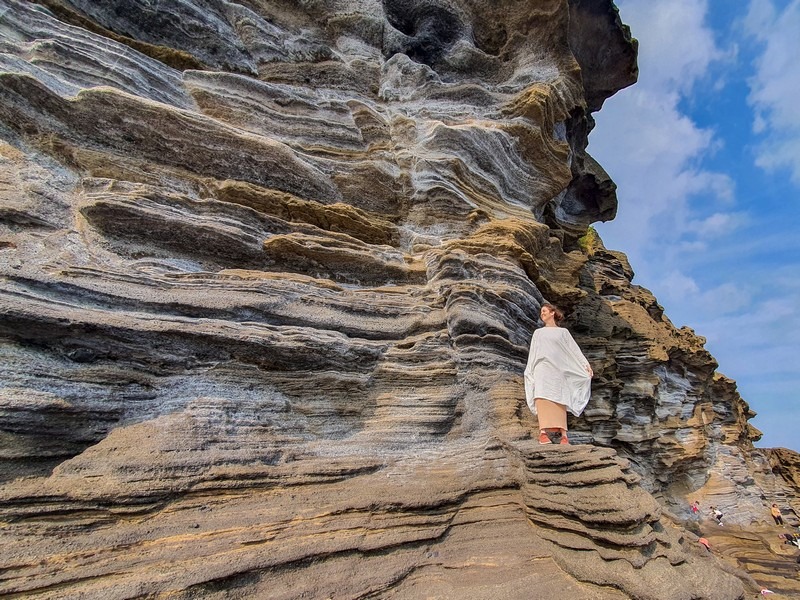
Yongmeori Beach: A short distance away, with coastal views and an easy walk along dramatic rock formations. The Hamel Monument is at Yongmeori, commemorating Hendrick Hamel, the Dutch sailor who was shipwrecked near here in 1653 and became one of the first Westerners to document life in Korea. Stop for ice cream if the cafes are open. Find out more in the guide to Yongmeori.
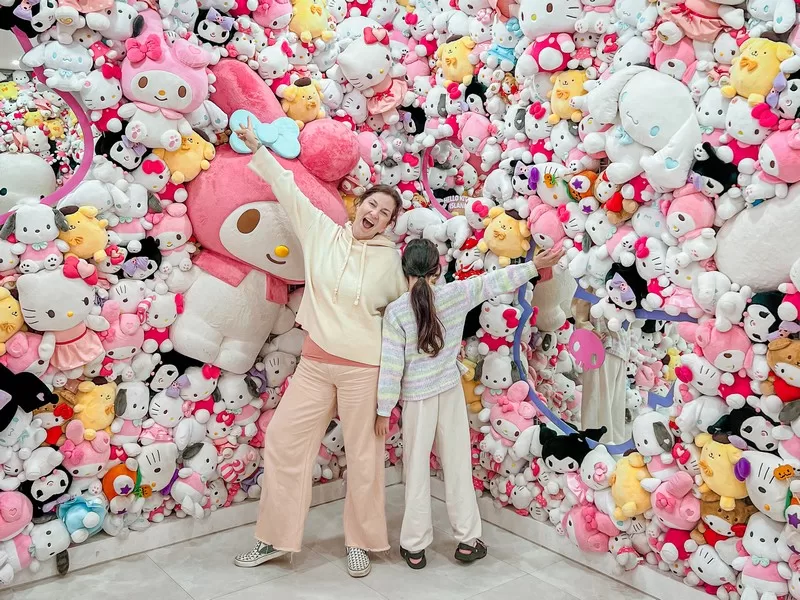
Hello Kitty Island: For all of the Hello Kitty and Sanrio character photo ops, Hello Kitty Island is a fun stop. If for nothing else, head into the gift shop to get the Jeju-exclusive Sanrio products. Find out more in the Hello Kitty Island article.
FAQ
What is Sanbangsan?
Sanbangsan (산방산) is a 395-meter volcanic dome in the southwest of Jeju Island, formed approximately 700,000 to 800,000 years ago. Unlike other mountains on the island, it has no crater. The name translates to “a cave inside a mountain.” The cave, Sanbanggulsa Grotto, is the main attraction, reached via a 20-minute climb through Bomunsa Temple grounds.
What is Bomunsa Temple?
Bomunsa Temple (보문사) is the Buddhist temple complex at the base of Sanbangsan, founded in 1954 and expanded significantly over the decades. It contains the Daeung-jeon Hall, the golden Medicine Buddha statue (installed 2010), the Samseong-gak shaman shrine, the Path of Wish Fulfillment, and several significant statues and murals. You pass through the entire complex on the way to the grotto above.
What is Sanbanggulsa Grotto?
Sanbanggulsa Grotto (산방굴사) is the cave temple partway up Sanbangsan, accessible via the 20-minute trail through Bomunsa Temple. Inside, a Buddha statue is enshrined alongside a natural spring, water dripping from the cave ceiling into a pool, said to be the tears of the goddess Sanbandeok. Visitors drink the water and pray for their family’s health.
How long does the visit take?
Roughly two hours total at a relaxed pace, time at Bomunsa Temple, the 20-minute climb, time at the grotto, and the return descent. Allow more time if visiting adjacent sites like Yongmeori Beach.
Is the climb difficult?
The 20-minute climb to the grotto is steep and exposed. In summer it gets hot quickly. Comfortable shoes and water are necessary. The path is paved but inclined, manageable for most visitors, though less suitable for young children in carriers or anyone with significant mobility limitations.
Sanbangsan offers history, mythology, Buddhist culture, coastal views, and a cave with a good story, all within two hours. It’s one of the most scenic spots on Jeju Island that is easy to get to for visitors.
Did you like this post? Pin It!