Jangeo: What Is Korean Eel and How To Eat It
Last Updated on October 13, 2026
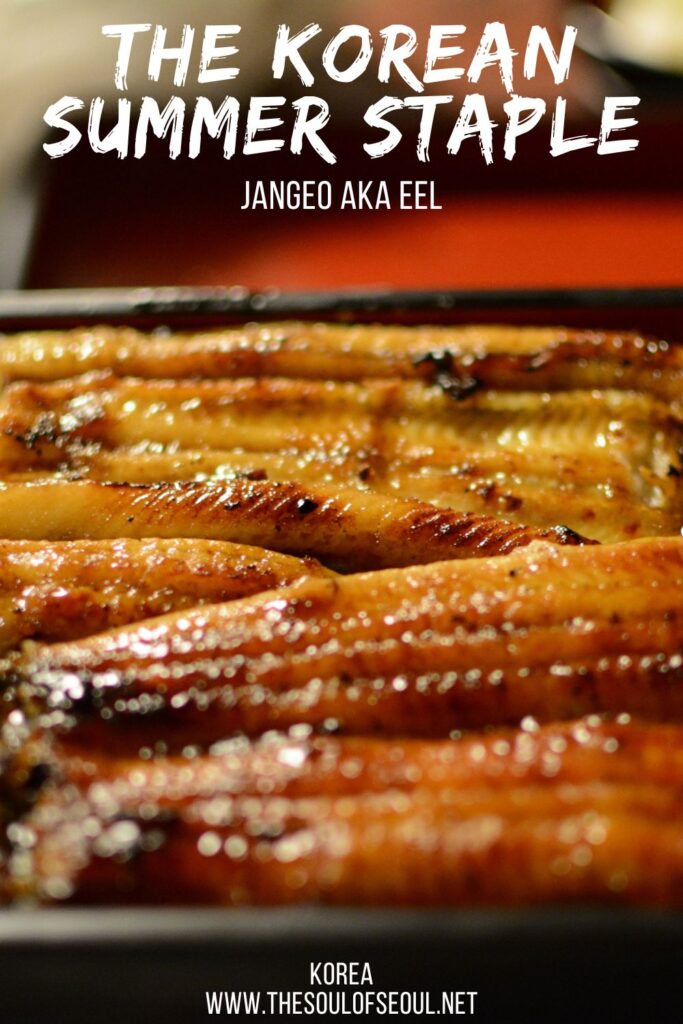
Jangeo (장어), or eel, is one of the top three dishes to eat in Korea on the hottest of days in the summer, but it’s just as good any other day of the year as well. While you should definitely eat jangeo this summer in Korea, whenever you go, make sure you try this healthy and delicious Korean meal. I never tried eel until I lived in South Korea, but I can thankfully say it is now one of my favorite meals. If you’ve never eaten jangeo, now is the time to try it.
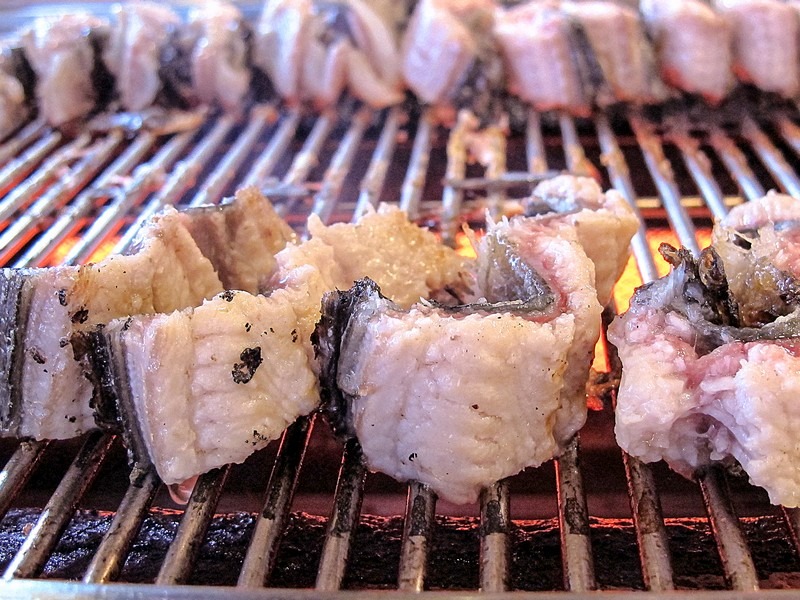
From how to eat it to what to eat it with, here’s what to know about Korean jangeo:
- Boknal: Why Jangeo Is a Summer Ritual
- Eel Vocabulary To Know
- What To Expect at an Eel Grill
- What To Drink With Jangeo
- Is Eel Healthy?
(This post contains affiliate links, which means I receive a certain percentage of a sale if you purchase after clicking at no cost to you. Thank you for your support.)
Boknal: Why Jangeo Is a Summer Ritual
In Korea, the three hottest days of the year, Boknal (복날), are specifically marked on the lunar calendar: Chobok (초복), Jungbok (중복), and Malbok (말복). On these days, Koreans eat foods believed to restore the energy that the heat draws out of the body. The logic is simple: the summer heat weakens you, so you eat the most fortifying foods available to compensate.
The Boknal foods include samgyetang (ginseng chicken soup) and jangeo. These dishes have a stamina and energy-boosting reputation rooted in centuries of traditional belief. Jangeo’s place on this list comes from the eel’s remarkable physical endurance, more on that in the health section below.
Outside of Boknal, jangeo is eaten year-round and is excellent in every season. But summer in Korea, and specifically these three hottest days, is when you’ll find the whole country ordering eel.
Eel Vocabulary to Know in Korea
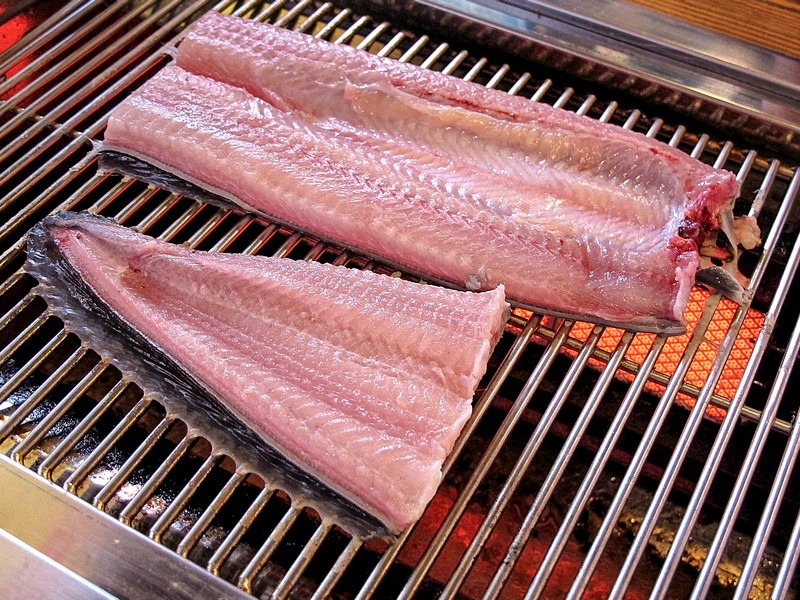
Pungcheon Jangeo: Pung means wind and cheon means river in Korean so puncheon indicates the windy area around the mouth of the Incheongang River where the freshwater meets the sea and this is where pungcheon jangeo is usually caught.
Baem Jangeo: These eel live in freshwater for 5 to 12 years and travel to the ocean to spawn eggs between August and October. Once they get out to the deep ocean, t hey lay their eggs and their lives end. Baby eels then embark on a journey to the river. When they reach the river, they’re then called silbaem jangeo and are caught to be used for farming.
What makes eel farming unusual: spawning happens thousands of meters below sea level, and it’s still not fully understood what baby eels eat in the deep ocean. This makes artificially spawning eels extremely difficult. The only way to farm jangeo is to catch the silbaem jangeo as they flow back into rivers from the ocean. This supply limitation contributes to why eel is a premium-priced dish.
What To Expect at an Eel Grill
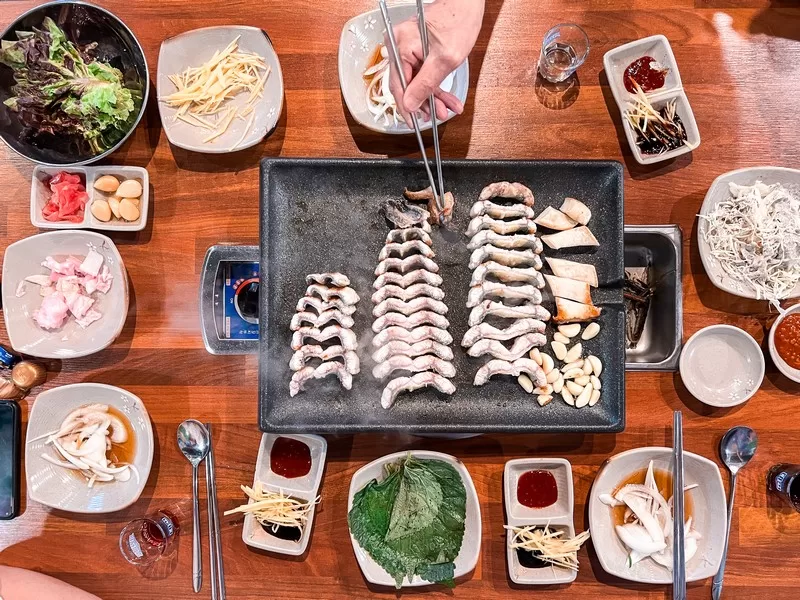
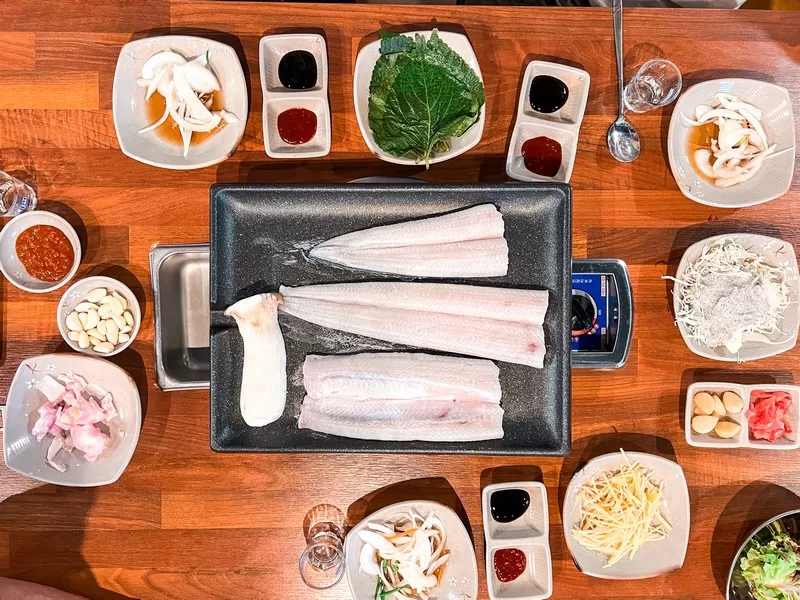
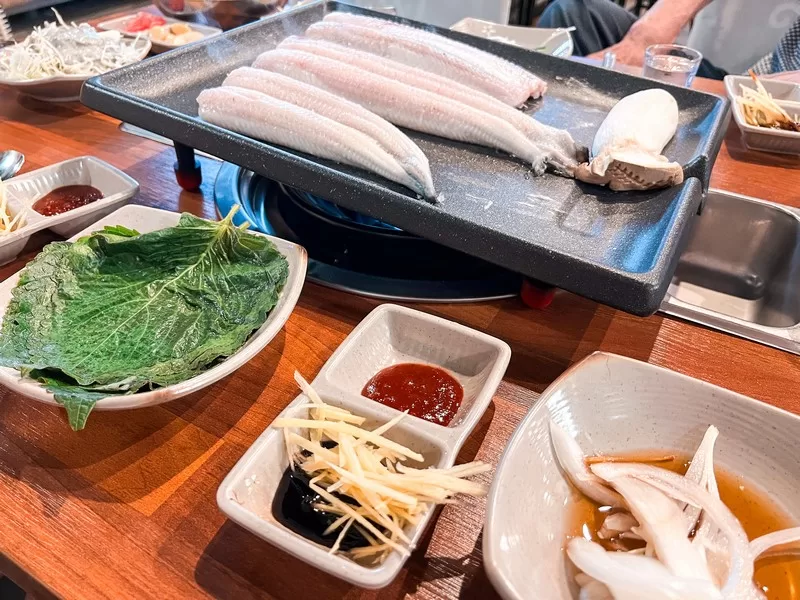
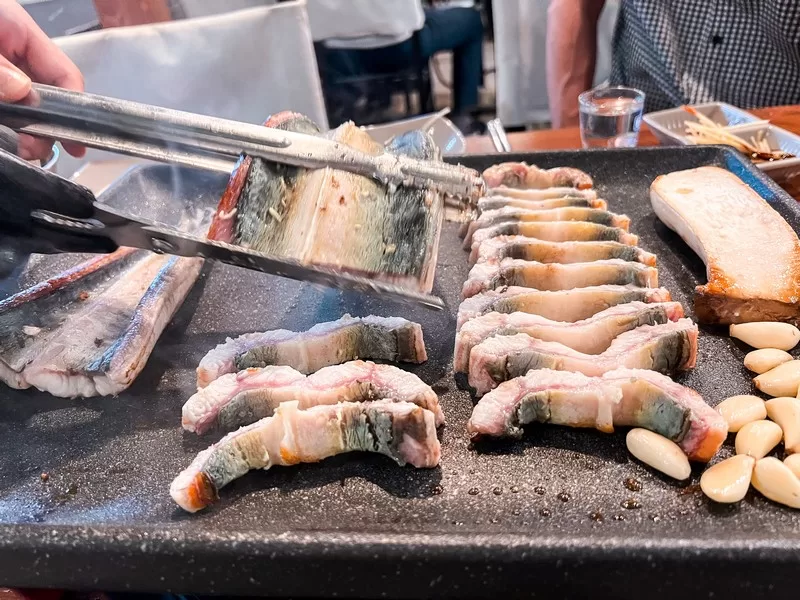
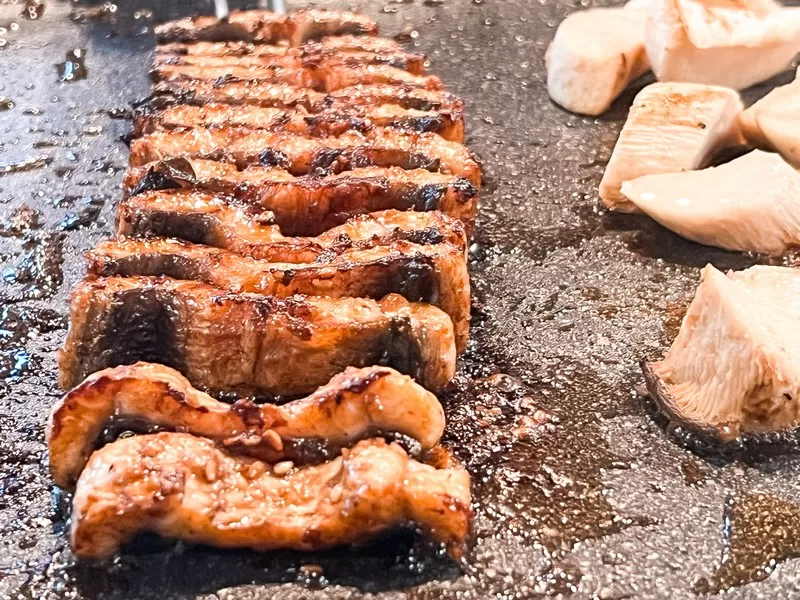
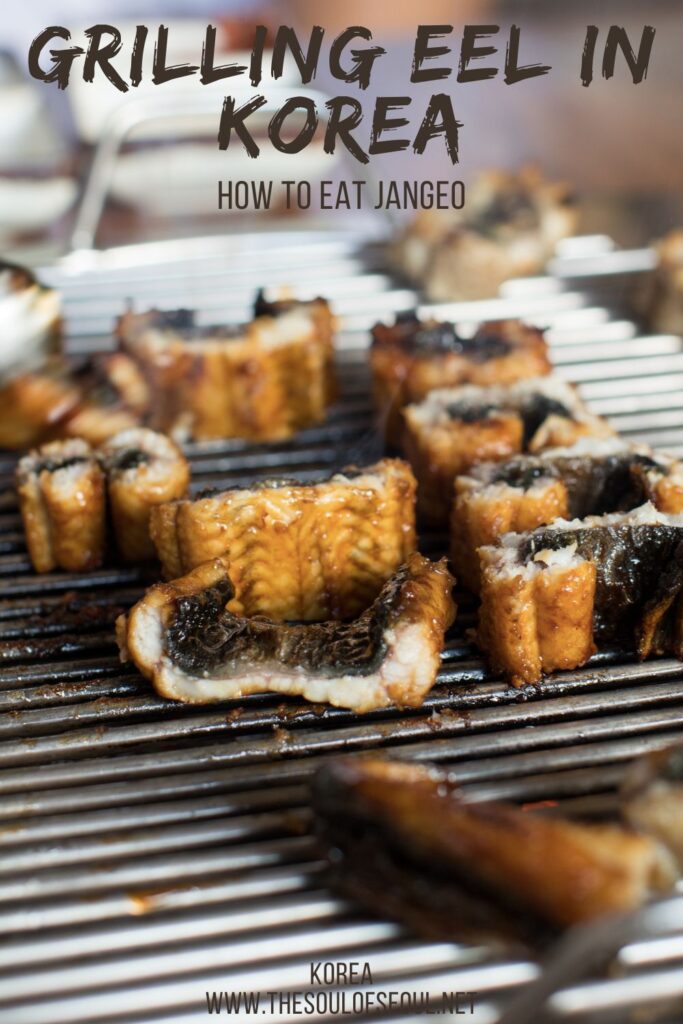
In Seoul, jangeo-gui (장어구이 / grilled eel) is most commonly served after the eel has been de-boned, sliced open down the center, and marinated in a mixture of sesame oil, sesame seeds, soy sauce, and sugar. It arrives at the table and is grilled on the central grill, cooking in the marinade until the exterior caramelizes.
The alternative, and my preference, is the unseasoned version, where just a dash of salt is added while the eel grills. The eel’s natural flavor comes through more clearly without the marinade. Both versions are worth trying; the marinade is savory and rich, the salted version is cleaner and more direct.
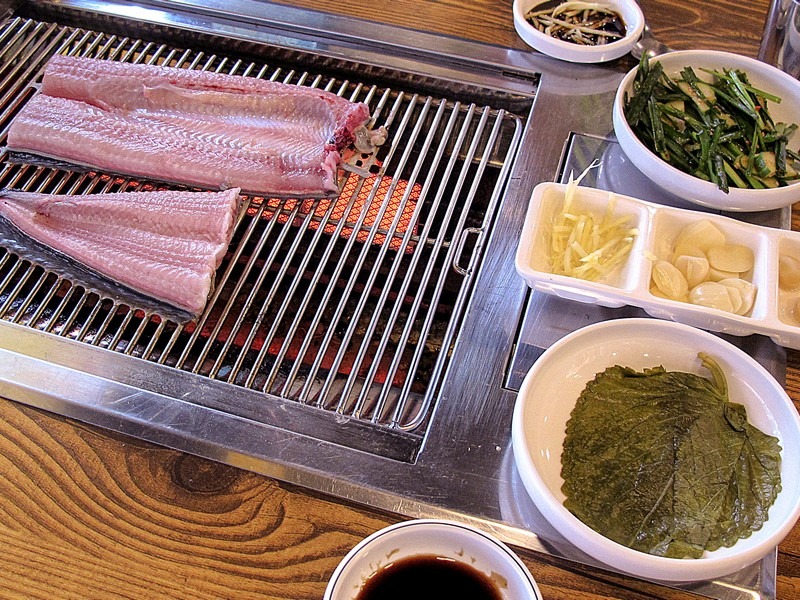
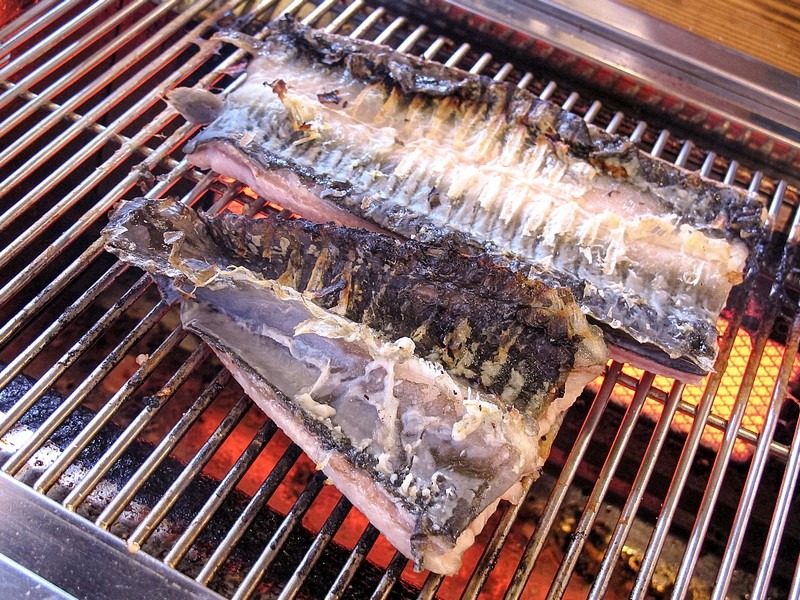
If you’re visiting a coastal town rather than Seoul, some restaurants serve eel fresh, still alive when preparation begins. These restaurants are noisy with a specific sound: nails being hammered through the eel’s head so the cook can hold it in place and slice it open down the center. This is not subtle preparation. The grill at the table is more lively too, as the eel pieces continue moving for some time after being placed on the heat. If that sounds alarming, it’s better to be prepared than surprised.
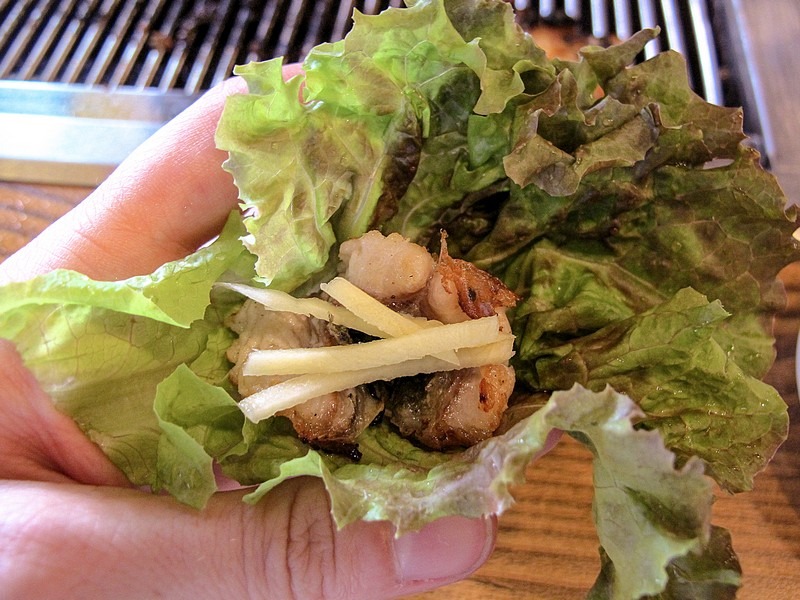
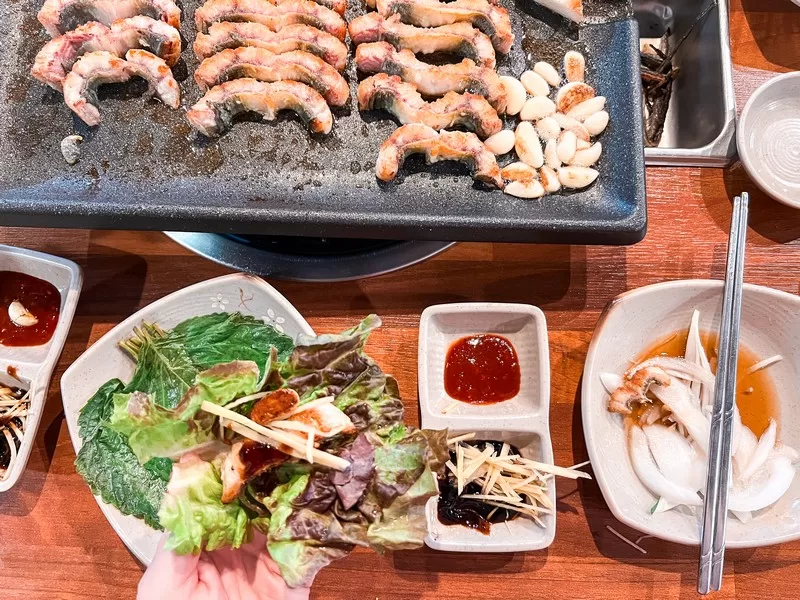
The table is set with lettuce leaves for wrapping the cooked eel and ginger to place on top before eating with a dip of soy sauce. Other banchan (side dishes) arrive as they typically do at a Korean meal. Rice can be ordered separately. The eel itself is the meal, don’t overload the lettuce wrap with sides. With just salt, a slice of ginger, and a dip in soy sauce, the jangeo is exactly what it should be.
Price expectation: approximately ₩25,000-₩50,000 per serving depending on the restaurant and eel type.
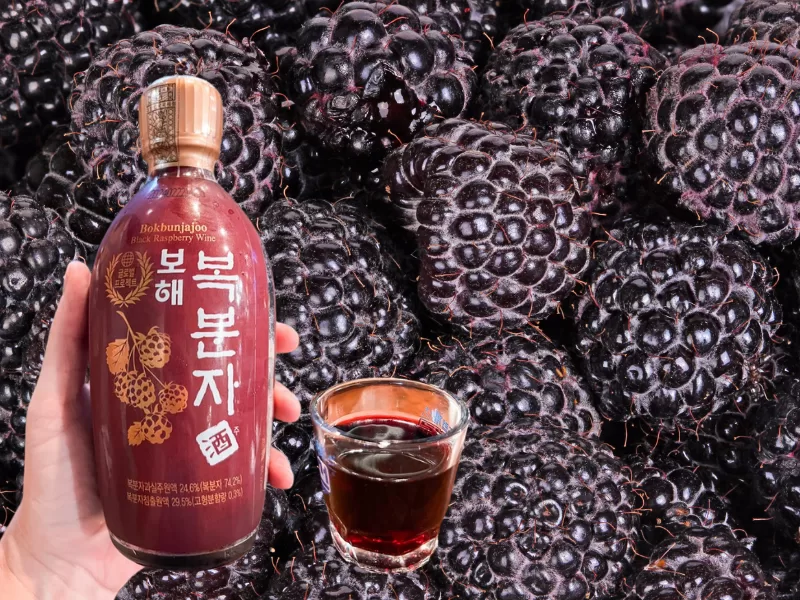
What To Drink With Eel In Korea
Bokbunja (복분자) is the traditional pairing — a Korean black raspberry wine with an ABV between 13-15%, served ice cold at around 1-2°C (35°F). The sweetness of the wine cuts through the richness of the eel, and the two work together particularly well with the sesame and ginger on the table. It’s a combination with genuine cultural logic behind it: bokbunja season and eel season overlap in summer, and both carry stamina and aphrodisiac reputations in Korean culture.
I had this combination for the first time at an eel dinner with my father-in-law, and the pairing was immediately obvious in the way the best pairings are. For the full story on bokbunja, read the complete bokbunja guide.
Serve the bokbunja straight, not mixed. The older Korean men at the table will insist on this, and they’re right.
Is Eel Healthy?
Jangeo is considered one of Korea’s top health foods, particularly for energy and stamina. The folk belief in its fortifying properties comes from the eel’s own biology: eels swim for thousands of miles without eating, displaying physical endurance that is genuinely unusual in the animal world. Korean traditional thinking holds that consuming eel transfers something of that endurance to the person eating it.
The modern nutritional picture supports the general direction of that belief. Eel is rich in vitamins A and E, stimulates blood circulation, and is associated with anti-aging properties. It is most popular with men in Korea for its aphrodisiac and stamina-boosting reputation, though everyone eats it, including the women and children at the table.
Jangeo is one of those foods that most visitors to Korea never encounter because they’re not specifically looking for it. Now you’re looking. On the hottest day of your summer in Korea, when the Boknal heat is at its peak, find an eel restaurant and order it with bokbunja. That’s exactly the right context for it.
Did you like this post? Pin It!

4 Comments
Pangsaulin
Please recommend a good inexpensive restaurant
Hallie
Eel restaurants are all around the same price give or take a couple bucks. There are numerous restaurants for eel in the city so if I were you, I’d ask someone at your hotel for a place nearby if you’re a tourist or ask someone you work with if you are living here for a time. Then you can find one in whichever area you are rather than possibly traveling across the city to wherever I tell you. Hope that helps.
Kang Ju-won (강주원)
Oh, I just had this today!
Rosh
Reblogged this on Rose of Sharon Healing and commented:
A very popular food in Korea….eel. Here’s a very informative post on eel in Korea from Soul of Seoul.