Korean Chopsticks: Why They’re Metal, How To Use Them and Proper Etiquette
Last Updated on August 24, 2026
One of the first things travelers notice when they sit down to eat in Korea is that their chopsticks are metal, not the wooden or bamboo ones they’re used to at Asian restaurants back home. It’s a small thing but it can, maybe will is better, change the experience thanks to the weight, the grip, and the feel against your fingers. Using metal chopsticks is an altogether different skill from wooden ones, and it takes some practice, possibly a lot of practice to get used to them. If your time in Korea is short, you might never really get used to them.
Korean chopsticks (jeotgarak, 젓가락) are flat, typically stainless-steel utensils, and Korea is the only major East Asian location with metal chopsticks as the default. The history of metal chopsticks in Korea runs from royal court dining and a much-repeated poison-detection legend to a post-war government policy. Get ready for your deep dive into the chopsticks you’ll find in Korea, the history, how to use them, and the interesting details that might make them the perfect souvenir to take home too.
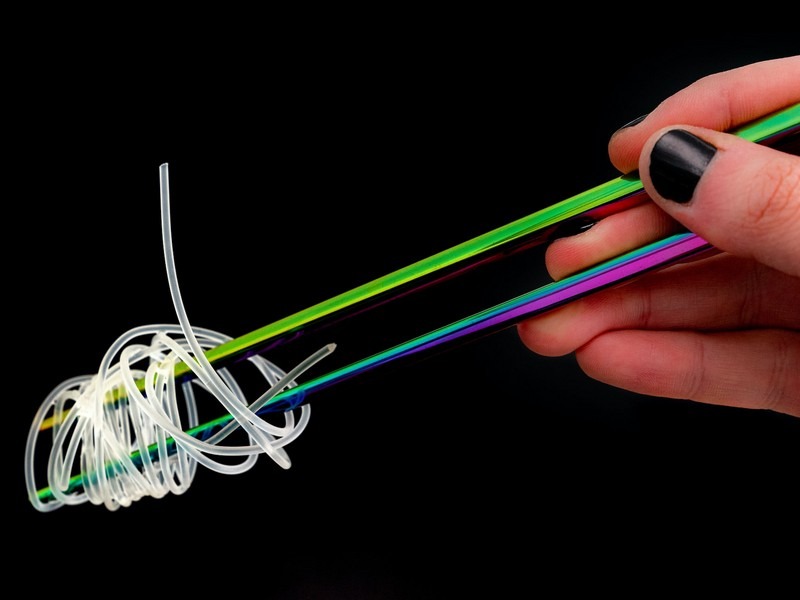
Learn everything about the Korean metal chopsticks:
- How do you say chopsticks in Korean?
- The History of Korean Chopsticks
- What Do Korean Chopsticks Look Like
- Korean vs. Japanese vs. Chinese Chopsticks
- Proper Etiquette When Using Korean Chopsticks
- How To Use Korean Chopsticks: Step by Step
- Three Ways To Get Better
- 5 Reasons To Love Korean Chopsticks
- FAQ
(This post contains affiliate links, which means I receive a certain percentage of a sale if you purchase after clicking at no cost to you. Thank you for your support.)
How do you say chopsticks in Korean?
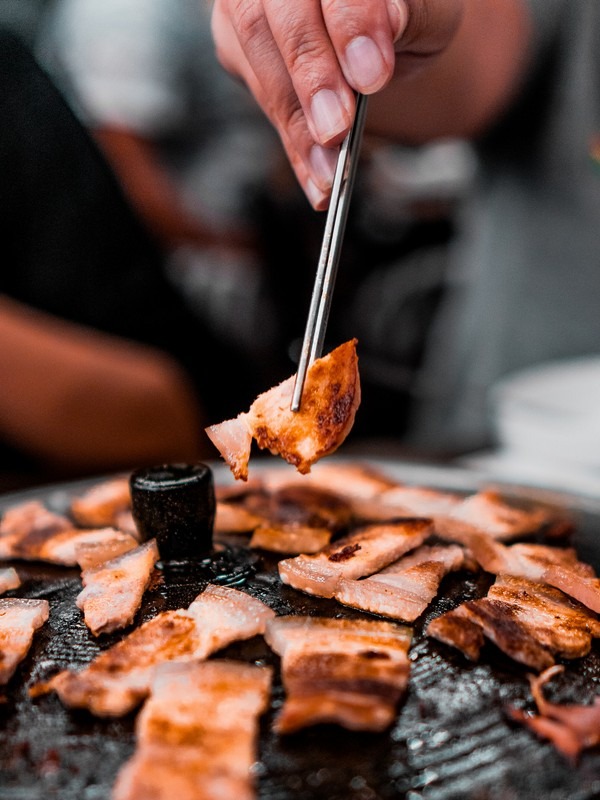
Chopsticks: jeotgarak (젓가락)
Since we’re at the table, let’s go over a few more Korean vocabulary words that you should know.
Spoon: sukgarak (숟가락)
Spoon and chopsticks set: sujeo (수저)
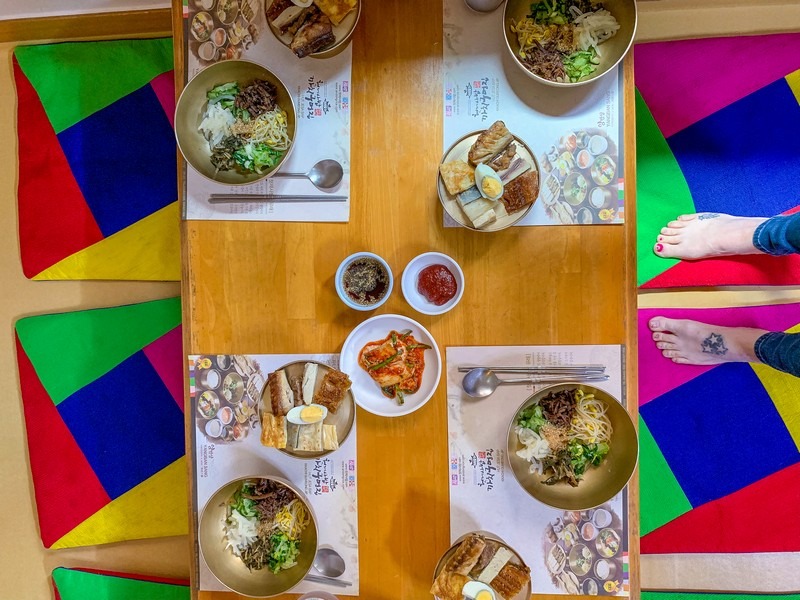
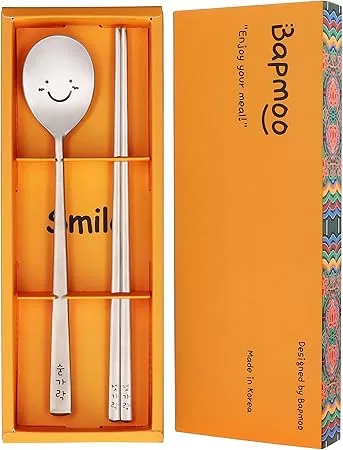
Korean cutlery always comes as a set. In a Korean restaurant, your chopsticks and spoon will arrive together if not already on the table. At the table, you can usually find them stored in a box with a lid on the table or in a drawer under the table, and the combination is referred to as sujeo.
The History of Korean Chopsticks
The tradition of eating with chopsticks originated in China and spread from there to Japan and Korea in 500AD. In Korea, metal spoon-and-chopstick sets appear in the archaeological record as early as the Baekje Kingdom, under King Muryeong (r. 501–523 CE), silver and bronze chopsticks were found among roughly 5,000 artifacts in his intact royal tomb in Gyeongju, discovered by accident in 1971. His tomb is just one of the reasons many people around the world plan trips to Gyeongju when they visit Korea.
Here’s where the popular version of the story and what historians think diverge though. The common explanation, the one you’ll find repeated on nearly every article about Korean chopsticks, is that silver chopsticks were used specifically to detect arsenic in the king’s food, since silver was believed to discolor on contact with certain poisons. This was the first story I ever heard when talking about chopsticks. It’s a great story, and royal court intrigue in Korea was real: rival families did attempt to poison each other, and some households employed official food tasters for this very reason. Get into Korean dramas and you’ll see this play out again and again.
But historians are skeptical that poison detection was actually the main reason metal tableware caught on. The most obvious problem with the theory: if fear of poisoning were really driving the choice, why would royalty, who had the most to lose, settle for silver instead of gold? Some scholars researching the Muryeong tomb chopsticks have even suggested a portion of that set may have been made in China rather than Baekje itself, which complicates the idea of a distinctly Korean poison-detection tradition from the very start.
A more likely, though much less dramatic and intriguing, explanation is a bit more practical. Simply, metal tableware was a marker of social status from the Baekje Kingdom onward, and it may also help that silver and brass have a mild bactericidal effect, though there’s no strong evidence that was the intended purpose either, since porcelain (which has no such properties) remained standard for upper-class Goryeo dining in summer, with metal reserved for winter. Status and seasonal custom, not sterilization or poison paranoia, seem to be much better and more likely explanations.
Over time, metal chopsticks trickled down from royalty to the general population. Brass became the standard everyday metal by the Joseon Dynasty for the middle class and a nicer silver set might be kept for special occasions, while the poorest households still used wood and earthenware. This pattern is similar to how other symbols of Korean aristocratic culture, like the Korean dojang (name stamp), became widespread.
In the 1960s, as Korean heavy industry developed after the devastation of the Korean War, stainless steel spoons, chopsticks, and rice bowls became the standard because they were cheap and easy to clean. The government also actively encouraged the switch away from wooden or bamboo chopsticks, to support the recovering Korean steel industry and to allow the country’s forests, devastated by the war, to grow back. A policy choice became a cultural norm, and stainless steel remains the default today.
What Do Korean Chopsticks Look Like?
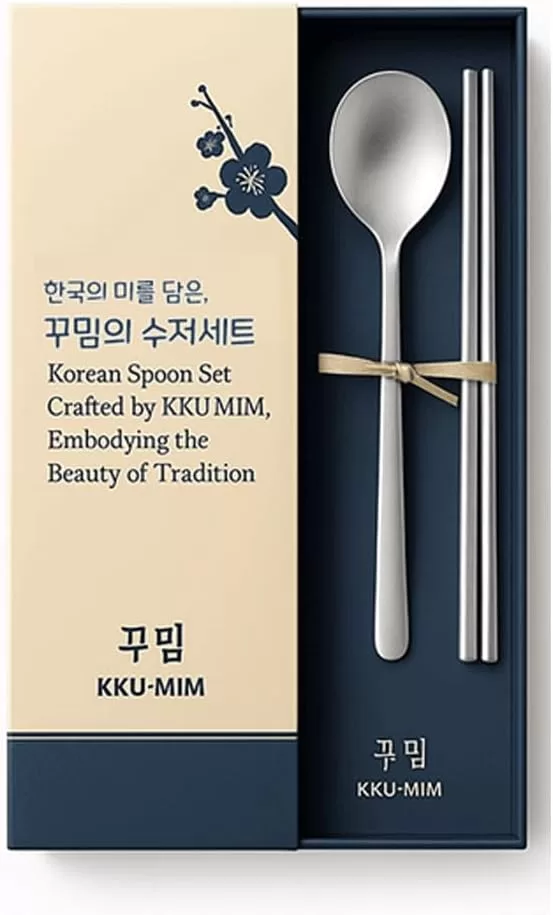
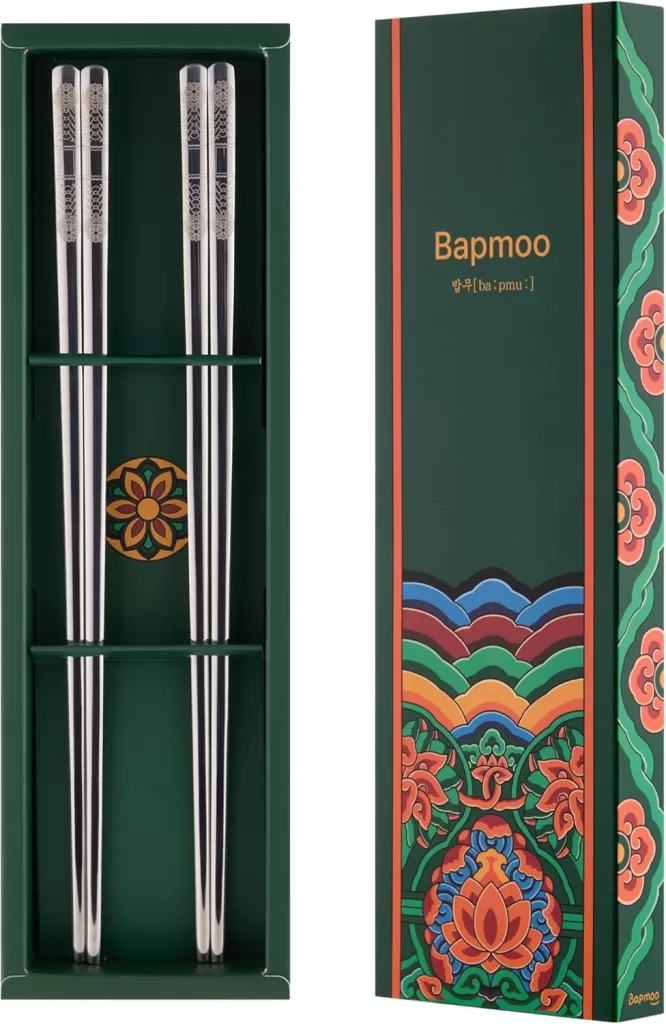
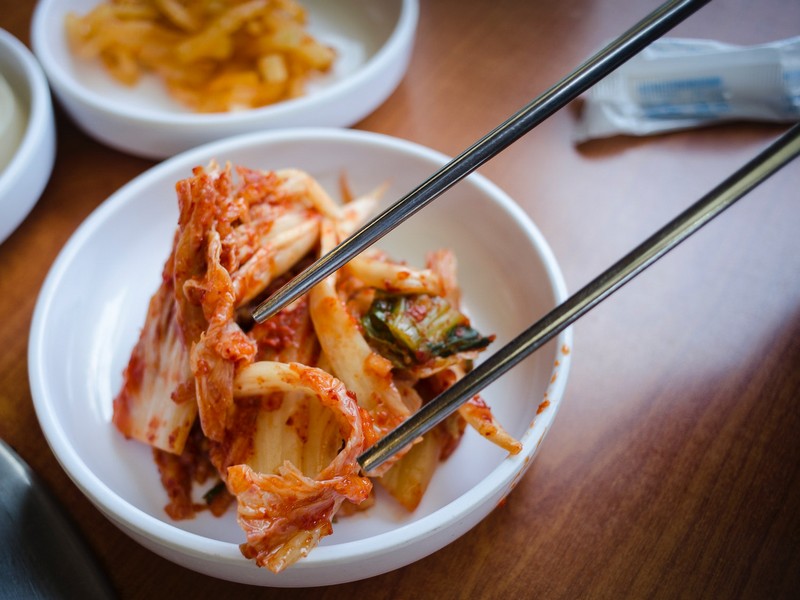
Korean chopsticks are flat and smooth, slightly tapered toward the food end, and notably heavier than wooden chopsticks. If you pick up a pair expecting the lightness of bamboo, the weight will catch you off guard.
Today, virtually all Korean restaurant and household chopsticks are stainless steel. Silver chopsticks exist but are rare and historical rather than standard. You may also encounter rounder, more tubular metal chopsticks sold as “Korean” but these are closer to Japanese in shape. Traditional Korean chopsticks are flat.
Korean vs. Japanese vs. Chinese Chopsticks
A lot of people who first arrive in Korea don’t only notice that the chopsticks are metal, but they also notice that they’re a different length than they’re used to. Here’s how the three main East Asian chopstick traditions actually compare:
| Korea | Japan | China | |
|---|---|---|---|
| Material | Metal, stainless steel today, silver/bronze historically | Wood or bamboo; ivory or jade historically for the wealthy | Wood, bamboo, or melamine |
| Length | ~23–25 cm (9–10 in) | Shortest of the three | Longest of the three |
| Tip shape | Flat, blunt | Pointed | Blunt |
| Why | Communal dining plus a royal/court metal tradition and post-war steel policy | Not shared across a table; pointed tips help de-bone fish | Long enough to reach shared dishes or a hot pot without burning your hand |
Japan has the shortest chopsticks partly because dishes generally aren’t shared, so there’s no need to reach across the table. Historically, Japanese chopsticks even came in different lengths for men and women, and pointed tips made sense for a cuisine built around fish and bones.
China has the longest chopsticks, and they’re blunt rather than pointed. Length matters more there because dishes are shared and chopsticks are also used for cooking, being long keeps your hand safely away from a hot wok or pot.
Korean chopsticks land in the middle: longer than Japanese chopsticks, shorter than Chinese ones, generally 9 to 10 inches (about 23–25 cm). Kids usually start with shorter chopsticks, often the loop-handled training kind, to get used to the grip before moving to half sized ones and then full-length ones later.
Proper Etiquette When Using Korean Chopsticks
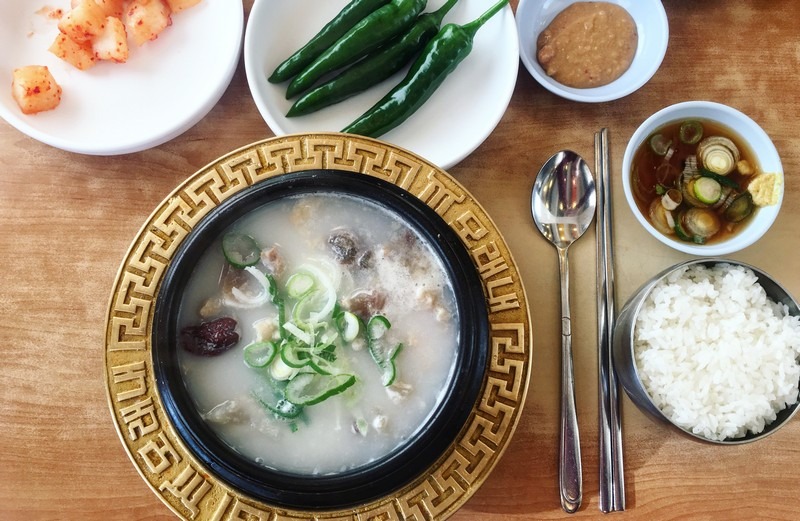
You’ll find chopsticks and spoons gracing the tables of Korean households and restaurants in sets that are called ‘sujeo’ (수저). It’s always good to be aware of proper table manners and eating etiquette when you travel abroad so you don’t make any cultural faux pas. When it comes to Korean chopsticks, there are some specific things to know.
- Eat everything you touch. Since sharing culture is big at the Korean table, it’s important to take what you touch. Take food from the shared plate, place it on your plate or in your bowl and then eat it. If you don’t want to eat something but did touch it, you should still move it to your plate if you’ve touched it with your chopsticks.
- Do not stick your chopsticks straight into your rice so they’re standing up out of the bowl. When stuck straight into the bowl, they can resemble incense that is traditionally burned during funerals or ancestral rights. There are a number of Korean superstitions about chopsticks and this is an important one.
- Don’t lay your chopsticks across the top of your bowl. Lay them down on the table or on the chopsticks stand.
- Do not stab or prick the food on the table. Chopsticks are for picking up, not piercing. Stabbing food is considered impolite and is also a sign you’re struggling, which is fine, but there are better ways to ask for help.
- The chopsticks and spoon should be placed on the right side of the dish. When placing your cutlery, the sujeo (spoon and chopstick set) belongs on the right side of the bowl. Chopsticks are placed to the right of the spoon.
How to use chopsticks step by step
The flat smooth shape of Korean metal chopsticks can make them a bit difficult to grip and use at first when you’re not used to them, but they can ultimately offer a stronger grip. Korean chopsticks require greater muscle control but you can learn to use them adeptly over time, just be prepared for some practice. I suggest getting a bowl of corn, peas, or something similar to practice on.
I’ll be honest, even after two decades here, metal chopsticks can still get the better of me. Getting fish cleanly off the bone at the table is still a small battle every time, one with my husband thankfully takes over most of the time, and separating individual perilla leaves out of a stack of banchan is its own particular skill I have not fully mastered. If you struggle with those two specific things, you are in very good company. Just keep trying.
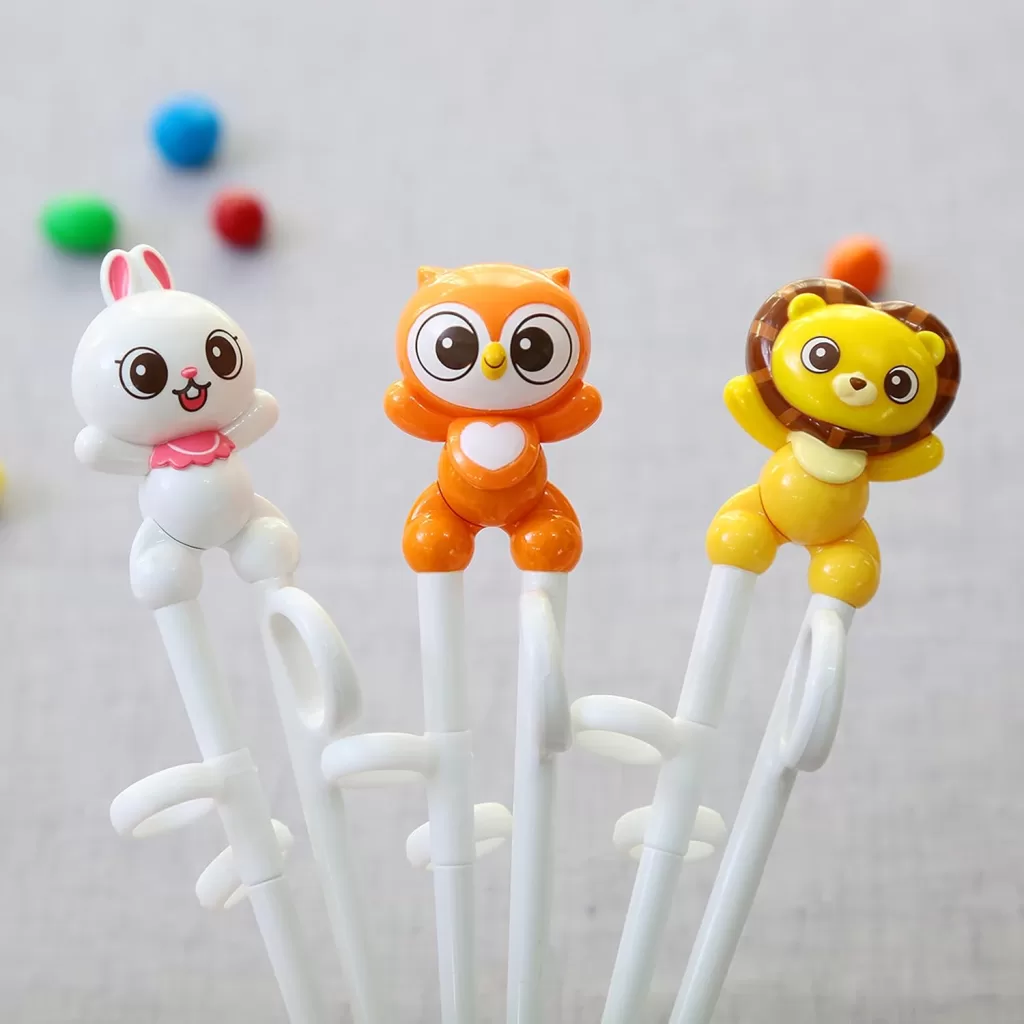
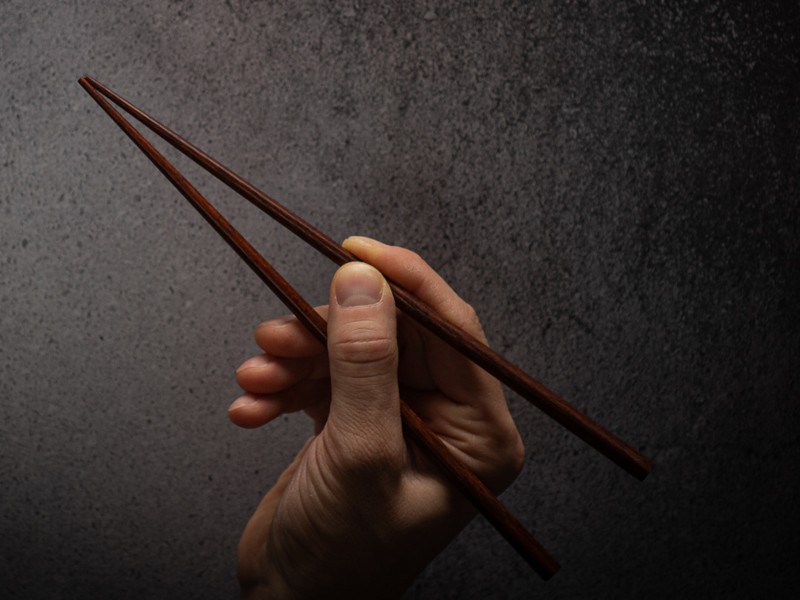
Step 1: Place the back end, not the food end, of the first chopstick in that web between the thumb and pointer finger. The front end of the chopstick then rests on the ring finger (and your pinky underneath it). This chopstick shouldn’t move when you’re using chopsticks, FYI.
Step 2: The second chopstick is held similar to pencil. Your thumb, index finger, and middle finger hold this chopstick and this is the one that moves up and down when you’re getting food and eating.
Step 3: Once both are in your hands this way, you should practice touching the two food touching ends of the chopsticks to each other. Remember, just the top chopstick actually moves to meet the bottom chopstick.
Grip position matters: Don’t hold the chopsticks close to the food end. About two-thirds of the way from the food end toward the back end is where you want your fingers, this gives you the leverage and dexterity to control the tips precisely. Holding too close to the food end is also, incidentally, a cultural superstition: an old Korean belief holds that the closer to the tip you hold your chopsticks, the longer you’ll remain unmarried.
Not every Korean kid picks this up on the timeline you’d expect, either. My daughter started with the loop-handled training chopsticks like most kids here, but her elementary school also keeps a few forks on hand for children, and she quietly opted for a fork over actual chopsticks for years, through most of elementary school, well past when most of her Korean classmates had switched over. It wasn’t until her sixth-grade teacher gently asked if there was a particular reason she wasn’t using chopsticks that something clicked, and she made the switch for good. Now she reaches for chopsticks over a fork every time.
Three Ways To Get Better
Using chopsticks adeptly takes some practice and plenty of people end up getting into bad habits with their chopsticks too when not practiced properly. When I first arrived in Korea, I didn’t know how to use chopsticks and the woman who ran our local dinner stop would bring me out a dish of beans, corn, or something else that was small to practice on before my food was ready. I’ve had my chopsticks skills complimented on and even beat my Korean husband in chopsticks races so I like to think I’m pretty good now. Here are three things you can do to get better at using chopsticks.
- Bowl transfer. Fill one bowl with small items, peas, corn, beans. Move them one by one into a second bowl, or directly into your mouth. Do it as fast as you can. At family reunions, this becomes a race. It’s more competitive than it sounds.
- Daily use. Use chopsticks for everything you eat at home, not just Asian food. The more often you use them, the faster muscle memory develops. Keep a spoon nearby, Koreans use both, and treat chopsticks as your default utensil.
- Color sorting. Get pom-pom balls or Lego bricks in different colors. Sort them by color using only chopsticks. The larger items build different muscle control from small peas and beans, and timing yourself gives you a measurable goal to improve against.
5 reasons to love Korean chopsticks
1 Korean chopsticks are eco-friendly. Being made out of metal instead of wood or bamboo makes them extra durable, anti-corrosive, and reusable.
- Just an FYI, it is recommended to discard bamboo chopsticks after three to six months of use.
2 An old Korean superstition says that the closer to the tip you hold a pair of chopsticks, the longer you will remain unmarried.
3 Korean chopsticks are easier to clean. Being made from stainless steel and featuring a sleek design, cleaning is super easy and metal chopsticks are dishwasher safe.
4 After the Korean War, the government actively encouraged people to use more reusable metal chopsticks instead of any wooden ones to support the Korean steel industry and let the ravaged Korean forests regrow.
5 Some people say eating with chopsticks slows them down. I’ve seen my husband polish off a meal in 15 minutes with chopsticks though so this might just be for the slow eaters. But, eating more slowly is healthier.
FAQ
Why are Korean chopsticks metal?
Metal spoon-and-chopstick sets go back to the Baekje Kingdom, and metal tableware was a marker of social status. The popular explanation you’ll see repeated everywhere is that silver chopsticks were used to detect poison in royal food, but historians are skeptical this was the real driving factor. After the Korean War, government policy pushed the country toward stainless steel specifically, both to support the steel industry and let war-ravaged forests regrow. Metal became the cultural standard from there.
Is it true that silver chopsticks can detect poison?
It’s a popular legend, and not entirely baseless, silver can discolor on contact with certain compounds, and royal court intrigue in Korea was real enough that food tasters existed. But historians are skeptical it was the primary reason metal tableware became standard, partly because royalty facing real poisoning risk would arguably have used gold rather than silver if detection were truly the goal. Status, custom, and Korea’s spoon-and-chopstick dining habit are better-supported explanations for why metal caught on.
How do you use Korean chopsticks?
Hold the first chopstick stationary in the web between your thumb and index finger, resting on your ring finger. Hold the second like a pencil between your thumb, index, and middle fingers, this one moves. Position both about two-thirds up from the food end, not close to the tips. Practice by picking up small items like corn or peas before using them at a restaurant.
What is the etiquette for Korean chopsticks?
The five main rules: eat everything you touch from shared dishes; never stand chopsticks upright in a rice bowl (it resembles funeral incense); don’t lay them across the top of your bowl; don’t stab or spear food; place them to the right of the spoon on the right side of your dish.
Are Korean chopsticks hard to use?
Harder than wooden chopsticks at first, because the flat metal surface is smoother and heavier. The grip requires specific muscle control that develops with practice. Most people reach functional competence within a few weeks of regular use, though even fluent users can still find specific foods, like fish on the bone or individual perilla leaves, genuinely tricky.
How long are Korean chopsticks?
Standard Korean chopsticks are approximately 23 to 25 centimeters (9 to 10 inches) long, longer than Japanese chopsticks, shorter than Chinese ones. The length reflects Korean communal dining culture, where reaching across a shared table is expected.
Do Koreans eat rice with chopsticks or a spoon?
The spoon. In Korean dining, the spoon (sukgarak) is used for rice and soup, while chopsticks (jeotgarak) are for side dishes and everything else. The two are used together as a set, called sujeo, throughout the meal, not as a choice between one or the other.
What is sujeo?
Sujeo (수저) is the Korean word for the chopstick and spoon set. In Korean restaurants and homes, chopsticks and a spoon always come together, a spoon is used for rice and soups, chopsticks for everything else.
Can I bring Korean chopsticks home as a souvenir?
Korean chopsticks look like a small detail and turn out to be a thread that runs through Korean royal history, wartime reconstruction, and everyday table manners simultaneously. Once you know the story, you’ll think about it every time you pick them up. They are a great souvenir to take home from Korea.
Did you like this post? Pin IT!