Dwaeji Ggupdaegi: Korean Grilled Pig Skin and Why It’s Worth Trying
Last Updated on October 13, 2026
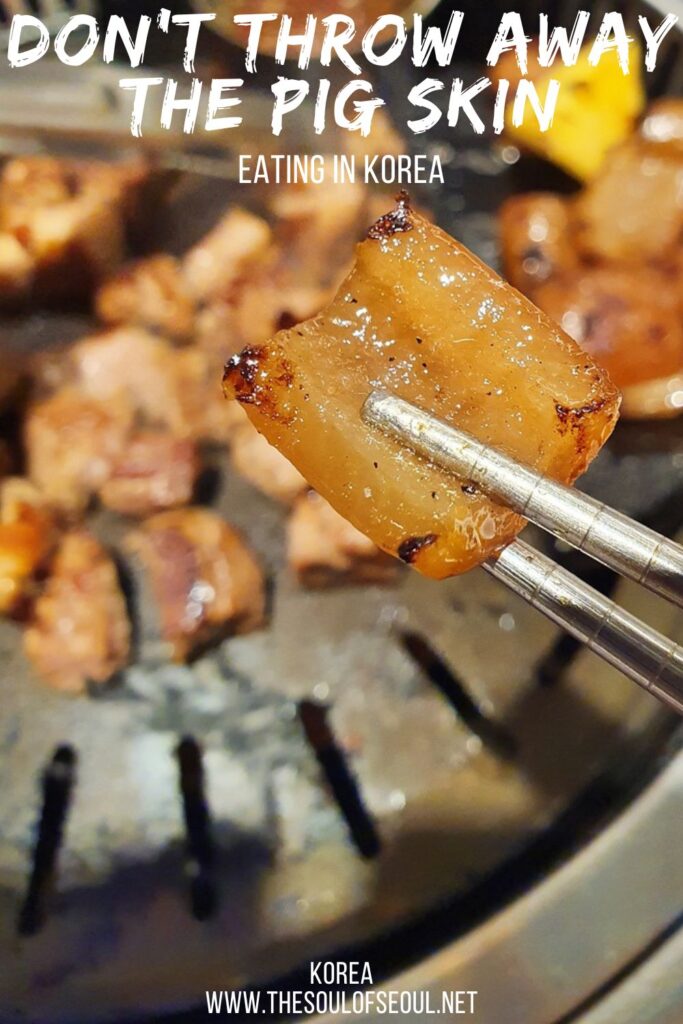
No part of the pig should be thrown away! The Mapo district of Seoul is known for its pig skin restaurants and now I understand why there are so many here. There’s hardly a night out for pork on the grill that doesn’t end with some chewy, but also crackled at the beginning if done just right, pig skin, or dwaeji ggupdaegi (돼지 껍데기).
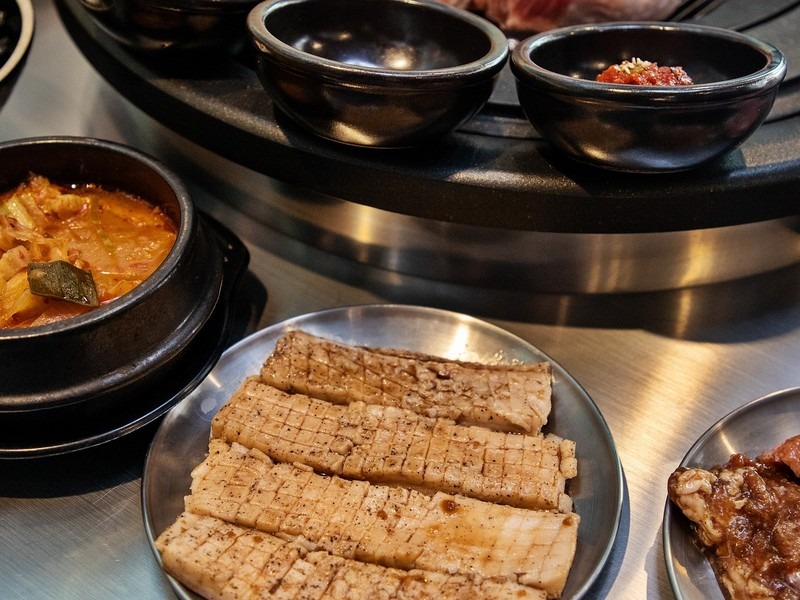
Don’t be surprised if you’re out and a friend orders some pig skin for your Korean BBQ night out:
- What Is Dwaeji Ggupdaegi?
- How To Grill Korean Pig Skin
- How To Eat It
- Dwaeji Ggupdaegi and the Korean Pork Family
- Is Pig Skin Healthy?
(This post contains affiliate links, which means I receive a certain percentage of a sale if you purchase after clicking at no cost to you. Thank you for your support.)
What Is Dwaeji Ggupdaegi?
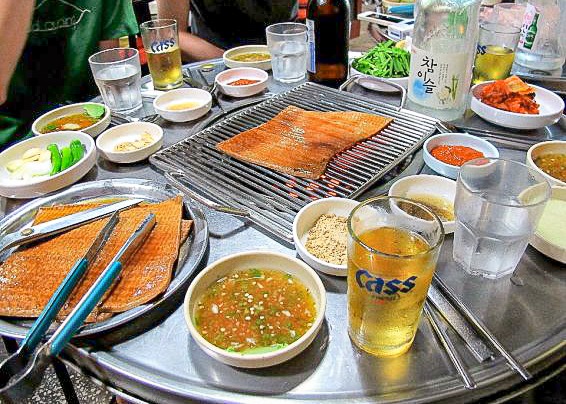
Dwaeji ggupdaegi is Korean grilled pig skin. In the name, dwaeji (돼지) means pig and ggupdaegi (껍데기) means shell, cover, or skin. On a pork restaurant menu, it often appears simply as ggupdaegi, if you’re in a pork-focused restaurant, the safe assumption is that it’s pig skin being served and not the skin of another animal.
The dish is widespread at late-night pork restaurants and Korean BBQ spots, particularly in Seoul’s Mapo district where pig skin restaurants cluster. It’s a common addition to the pork grill spread, ordered alongside samgyeopsal or jokbal as the meal extends into a later round.
When I was first introduced to dwaeji ggupdaegi, I wasn’t quite sure how I felt about it, especially since the nipples were still visible protruding from the skin. I was told it was good for my complexion, as most foods in Korea are introduced, the health benefit comes first. Health claims or not, the texture and taste had me more worried. Worried I should not have been. The meat was scrumptious.
How To Grill Korean Pig Skin
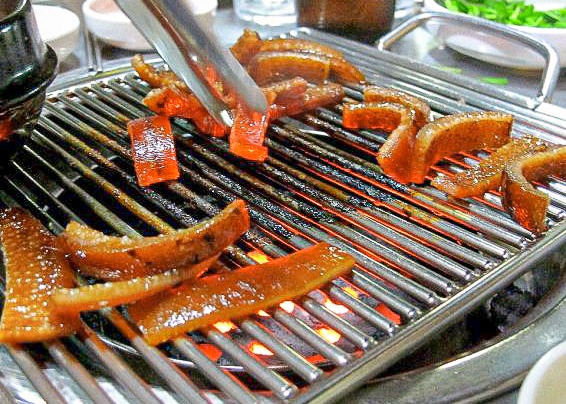
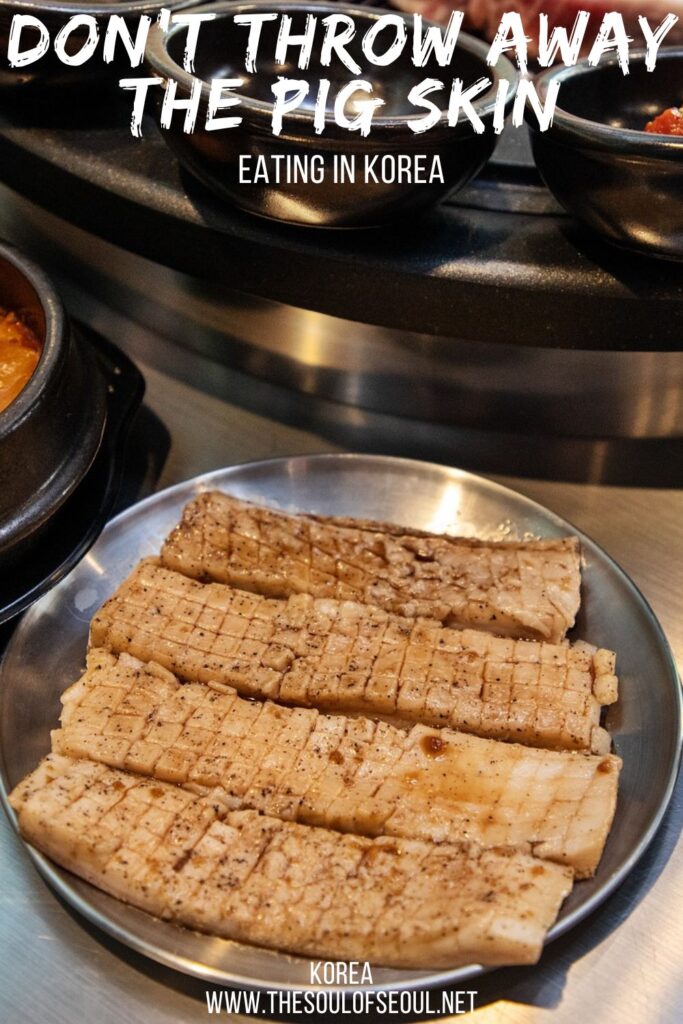
Dwaeji ggupdaegi comes to the table in square sections and goes directly onto the grill. The sequence matters:
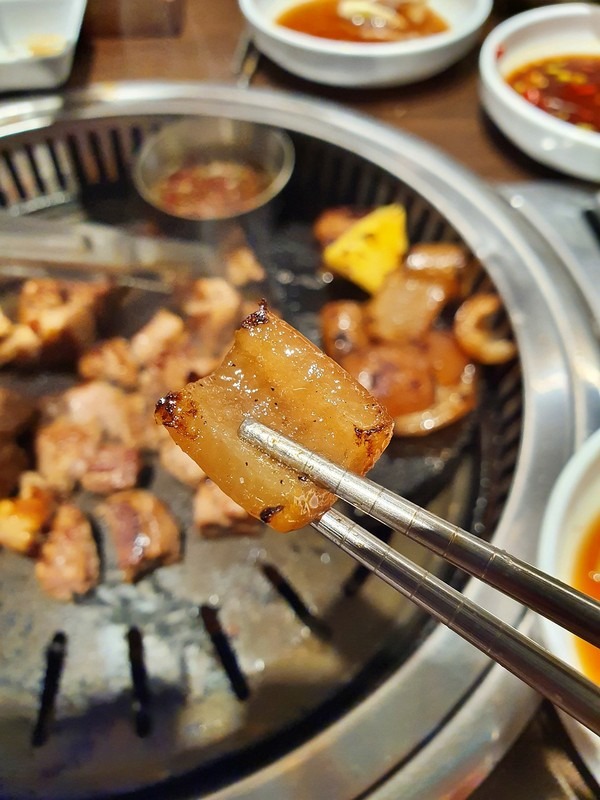
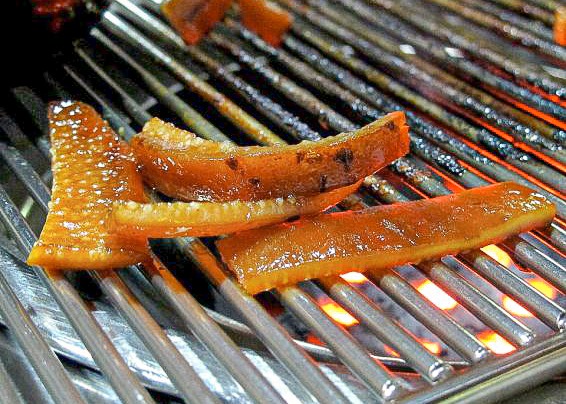
As it heats, the skin begins to curl. When the edges have curled up and toward the center, flip it over and press it flat to ensure even cooking on both sides. After that first cook, slice it into smaller pieces using the scissors provided and let it continue grilling.
At this point, two camps emerge. Some people eat the skin when it’s still soft and chewy, the texture at this stage is somewhere between tender and elastic, with good fat flavor. This diner prefers to wait a bit longer until the surface crackles, bubbles, and turns golden. The crackled version has a textural contrast between the crisp outer surface and the soft interior that’s significantly more satisfying.
How To Eat It
Dwaeji ggupdaegi is typically served with the standard Korean grilled pork accompaniments:
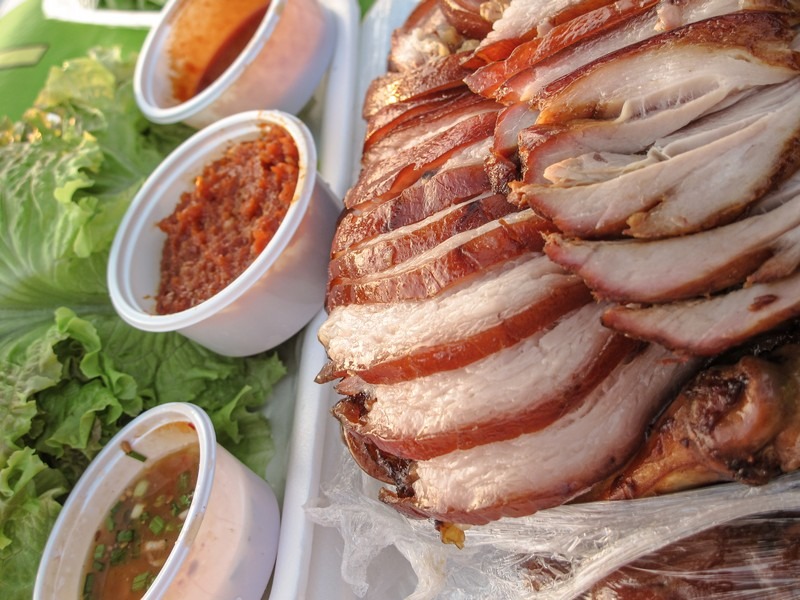
- Ssamjang (쌈장): The essential dipping sauce for Korean grilled meat — fermented bean paste and gochujang combined with sesame oil, garlic, and sugar. Dip a piece of grilled skin, eat with a lettuce wrap if available.
- Saeujeot (새우젓): Fermented salted shrimp — a saltier, more intense dipping option. Often served alongside jokbal and bossam as well. Works particularly well with the fattier pieces of pig skin.
If the restaurant provides lettuce, use it to wrap a piece of grilled skin with a bit of sauce. The contrast between the hot, crackled skin and the cool, crisp lettuce is one of the better textural combinations in Korean pork eating.
Dwaeji Ggupdaegi and the Korean Pork Family
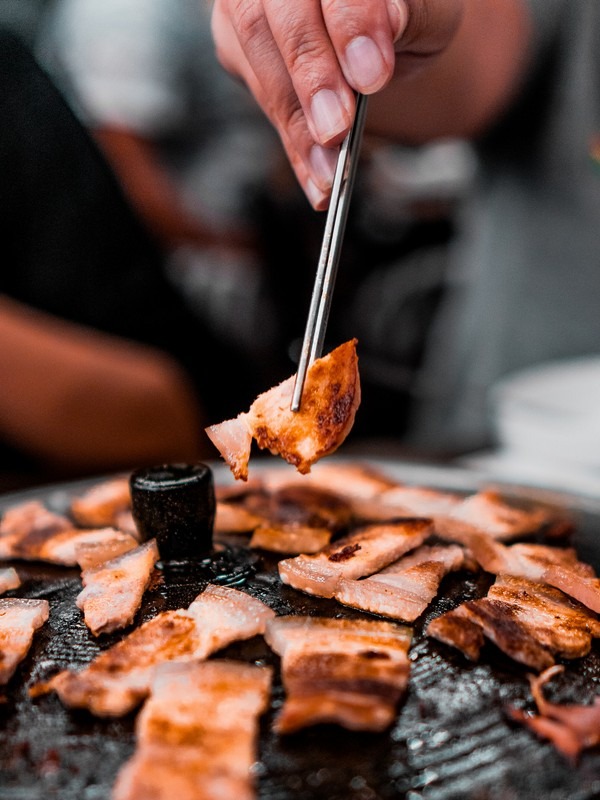
Dwaeji ggupdaegi sits in the same family of dishes as jokbal (braised pig’s trotters) and samgyeopsal (pork belly). All three appear on pork-focused restaurant menus, often together. The connection is the nose-to-tail approach Korean pork cooking takes, each cut used for the specific preparation that suits it best, with nothing left behind. For more on jokbal, read the complete jokbal guide.
Pig skin specifically is the collagen-richest part of the pig, which is why it has a different texture from belly or trotter meat and why it behaves differently on the grill. The skin’s fat renders as it cooks, which is what creates the crackle.
Is Pig Skin Healthy?
More so than the dish’s reputation suggests. The collagen content in pig skin is significant, collagen is associated with slowing cellular aging, which is the basis of the Korean claim that it’s good for the complexion. This isn’t entirely folk belief; collagen’s role in skin elasticity is supported by genuine nutrition research.
Additionally, pig skin is a meaningful source of vitamin B12, protein, and fat. The balance of macronutrients and the collagen content make it more nutritionally interesting than standard processed snack foods at a similar indulgence level. It’s not a health food, but it’s not as nutritionally empty as its appearance might suggest.
The Mapo district’s concentration of pig skin restaurants exists for a reason. Once you’ve had dwaeji ggupdaegi grilled properly, crisp, bubbly, eaten with ssamjang, the logic becomes obvious. It’s not a menu item to be shunned.
Did you like this post? Pin IT!


3 Comments
Tom Sobieski
need a recipe
Lucifer Luceafar Luceafarul
Reblogged this on BBQ Cast Iron Recipes.
johncpicardi
Send me some of that pig skin! Yum!