Why Koreans Say Have You Eaten Instead of How Are You
Last Updated on April 29, 2026
When learning Korean, one of the first of many verbs to be learned is muk-da (먹다), or “to eat”. Considering people eat constantly throughout the day every day, of course this is a good verb to use and once you learn it, you’ll hear it spoken everywhere! But the verb may not be used the way you expect.
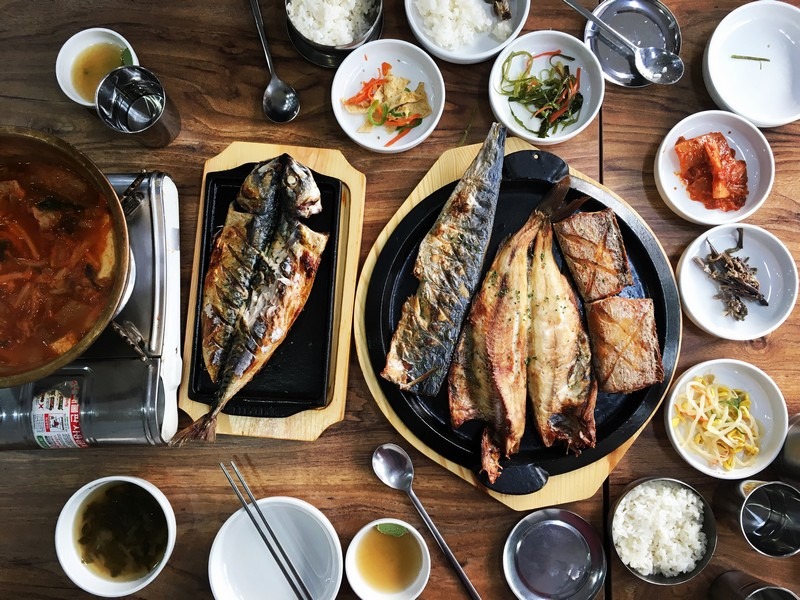
Recently in a conversation with four Korean women, the topic of etiquette and manners came up. We were discussing differences from the west compared to Korea. I brought up how endearing, although strange at first, it was that Koreans consistently ask if I’ve eaten and if I respond that I haven’t, inevitably food shows up. From co-workers to friends and acquaintances to bosses and so on, over the years this has happened numerous times. I just couldn’t get over how nice Koreans were to care so much about my daily eating habits.
In the States, a mother may ask a child coming home from school if they’re hungry or a friend will ask a friend if they’ve eaten because they want to eat so they’re hoping the answer is no, but it’s never the greeting question. In Korea however, it is. “Hello, have you eaten?” “Hello, did you eat breakfast?” “Hi, did you eat dinner?” you’ll often here.
Come to find out I was completely misreading the situation.
Why do Koreans ask if you’ve eaten?
- Korean Eating Phrases Quick Reference
- Is It a Habit or Etiquette?
- Are Koreans Really Asking?
- Where Did the Custom Come From?
- How To Use Eating Phrases in Korean
- The Mealtime Phrases Worth Knowing
- How To Learn Korean
- FAQ
(This post contains affiliate links, which means I receive a certain percentage of a sale if you purchase after clicking at no cost to you.)
Korean Eating Phrases Quick Reference
| Phrase | Korean | Romanization | When to use |
|---|---|---|---|
| Have you eaten? (informal) | 밥 먹었어요? | Bap meogeoseoyo? | Friends, colleagues, casual settings |
| Have you eaten? (formal/polite) | 식사하셨어요? | Siksa hasyeosseoyo? | Seniors, bosses, formal situations |
| Yes, I’ve eaten (informal) | 네, 먹었어요 | Nae, meogeoseoyo | Response to informal version |
| Yes, I’ve eaten (formal) | 네, 했어요 | Nae, haesseoyo | Response to formal version |
| I will eat well (before a meal) | 잘 먹겠습니다 | Jal meokgesseumnida | Said before eating, to the host or group |
| I ate well (after a meal) | 잘 먹었습니다 | Jal meogeosseumnida | Said after eating, as indirect thanks |
Is It a Habit or Etiquette?
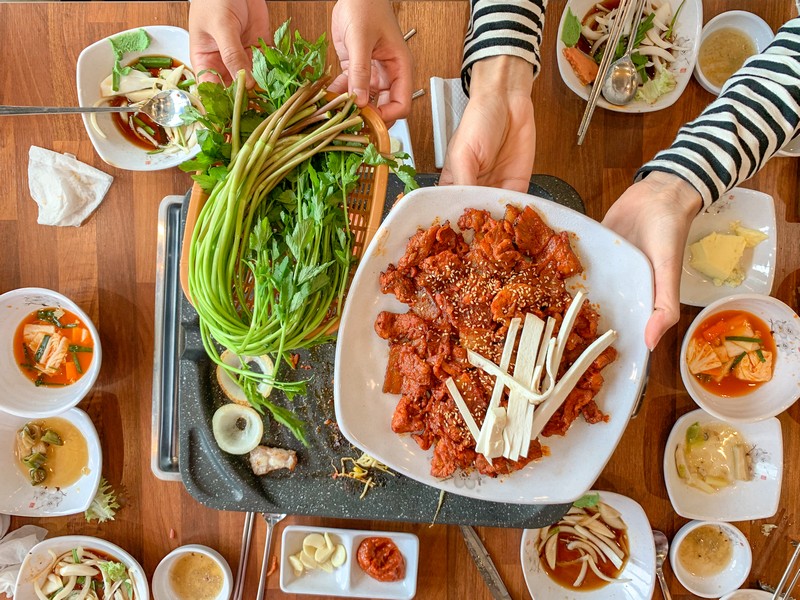
The Korean women I was teaching then began to discuss how they saw this as a habit and not manners. They called it a habit, something done without thinking, not a conscious act of care. It’s closer, they explained, to asking “how are you?” in English, where the expected response is “fine,” regardless of whether you actually are.
Honestly, I did learn long ago to just acquiesce and respond with, “yes” because it was a lot easier than getting into a whole conversation about why I hadn’t eaten something before I came to work. In a sense I had figured out that just saying, “yes” aka “I’m fine” was the common rule before this conversation.
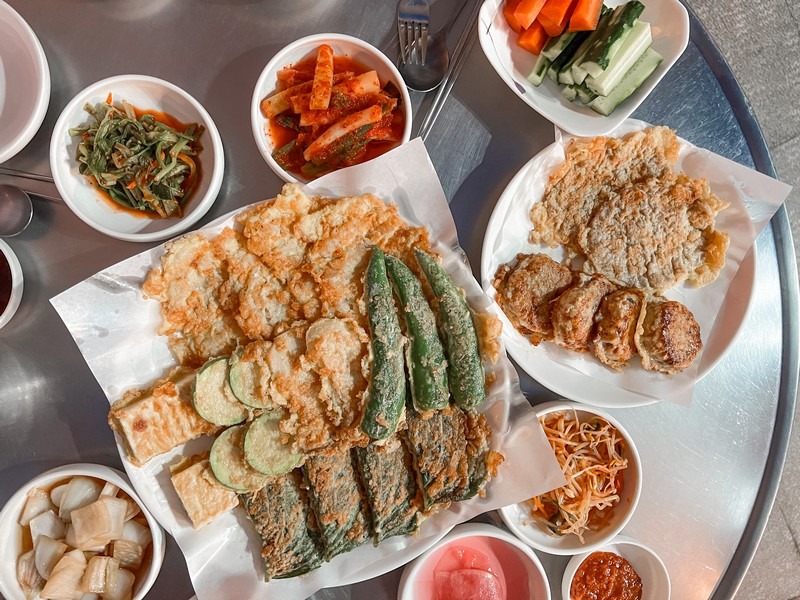
Sometimes, if I was hungry and a Korean coworker, friend or other would ask though, I’d still say, “no” and see what food would come my way. I’d sometimes still reply with the negative because it was true and still for some reason the question of whether I’ve eaten or not is just so strange at times, like when I’ve just come in for an interview for a job. Why would a possible future manager care if I’ve eaten after all and aren’t there more pertinent questions to ask?

When the ladies were talking though, I remembered back to all of the confused and surprised faces that I had come across when I replied with “no”. My Korean conversation partners were obviously expecting me to say, “yes, I’ve eaten” and move on but I threw them a curve ball and said, “no”.
It was like replying with, “Oh, I’m terrible. I just failed a test and then got side swiped by a car in the parking lot and now I’m late for this meeting…” and so on and so on to an acquaintance who was just being polite in asking how you were as you sat in a lobby together.
Are Koreans Really Asking?
Probably not, most of the time. When a boss, teacher, or acquaintance asks whether you’ve eaten, they are generally asking out of habit and the expected response is yes. My husband puts it more precisely: around an actual meal time, friends might be genuinely asking, in which case context matters for your response. Outside of that, treat it like “how are you?” and move on.
Practical tip: iIf you say “no” and you’re not actually hungry, follow it up immediately with something like “but I’m fine”, this prevents an awkward scramble to find you food.
The job interview version of this still gets me. A prospective manager asking whether I’d eaten before we’d exchanged more than a few words. The answer that felt true in the moment, “no, I hadn’t had time”, was the conversational equivalent of answering “how are you?” with a detailed account of everything that had gone wrong that morning. The expected answer was yes.
Where Did the Custom Come From?
After the Korean War, in the 1960s and 1970s, food was genuinely scarce. Asking how someone was doing meant asking whether they had eaten, because not eating was a real possibility, not a figure of speech. The question carried actual weight.
Food became considerably more abundant, but the question persisted. It carried forward as a way of asking after someone’s well-being, even as the literal meaning faded from necessity. This explains why the Korean women I spoke with felt it was a habit rather than an intentional courtesy, for them, it has been part of the language so long that it no longer requires thinking about.
The parallel to English is exact: “How are you?” is not a genuine inquiry into your state of health. “Have you eaten?” is not a genuine inquiry into your nutritional status, unless it’s noon and you’re standing next to a restaurant.
How To Use Eating Phrases in Korean
The basic question: 밥 먹었어요? (Bap meogeoseoyo?) — “Did you eat?” The appropriate response if things are fine: 네, 먹었어요 (Nae, meogeoseoyo) — “Yes, I ate.”
The polite/formal version: 식사하셨어요? (Siksa hasyeosseoyo?) — “Have you eaten?” The appropriate response: 네, 했어요 (Nae, haesseoyo) — “Yes, I have.”
Use the formal version with people senior to you, bosses, teachers, elders, and the informal version with friends and peers.
The Mealtime Phrases Worth Knowing
These two phrases are among the most practically useful Korean phrases for anyone eating with Korean people, which in Korea is fairly constant.
잘 먹겠습니다 (Jal meokgesseumnida): Literally, “I will eat well.” Said before a meal, to the person who prepared the food, to the person who is paying, or to the table generally. It acknowledges the meal and the effort behind it before it starts.
잘 먹었습니다 (Jal meogeosseumnida): Literally, “I ate well.” Said after a meal in place of, or alongside, thank you. It’s directed at whoever made the food or is paying the bill. The indirect meaning is: the meal was good and I’m grateful for it.
These phrases appear at Korean restaurants, family tables, company dinners, and anywhere food is shared. Learning them is one of the fastest ways to be immediately welcome at a Korean table.
How To Learn Korean
Learning Korean can take some time. While learning to read Hangeul can take all of one hour, learning the customs and meaning behind words can definitely take more time.
- Check out the best Korean classes online to find a course that is good for you.
- Look into the best books to learn Korean from textbooks to slang and verb conjugation.

Are you trying to learn Korean? Check out 90 Day Korean for some awesome free articles as well as online lessons and courses, too! They know what they’re doing and can definitely help you get on the right track with your Korean skills.
Check out some of these other posts on learning Korean, humorous phrases that crack me up every time I say them, which is often because I like saying them, and laughing out loud.
- Learning Korean With Noisy Salesmen: Is that guy trying to buy my boogers? You’ll see.
- Conversations With Koreans: Wait, we aren’t friends?
- Conversations With Koreans: When Maybe Doesn’t Mean Maybe Anymore
- Conversations With Koreans: Where are you from?
- Learning Korean Can Be Laugh Out Loud, Pt. 1
- Learning Korean Can Be Laugh Out Loud, Pt. 2
FAQ
Why do Koreans ask if you have eaten?
It’s a greeting habit rooted in the post-Korean War era, when food scarcity made “have you eaten?” a genuine measure of someone’s well-being. The literal meaning has faded, but the phrase persists, similar to “how are you?” in English, where nobody expects a detailed answer.
What does 밥 먹었어요 mean?
Bap meogeoseoyo (밥 먹었어요?) means “Did you eat?” or “Have you eaten?”, the informal version of the standard Korean greeting/check-in. Bap (밥) means rice or meal; meokda (먹다) means to eat.
How do I respond when a Korean asks if I’ve eaten?
In most contexts, say yes (네 / Nae) and move on, it functions like “how are you?” If it’s actually mealtime and you haven’t eaten, you can say no, but add that you’re fine (괜찮아요 / Gwaenchanayo) to avoid prompting an immediate food search.
What is jal meokgesseumnida?
잘 먹겠습니다 (Jal meokgesseumnida) is said before a meal, “I will eat well.” It’s addressed to the host or the person paying as an acknowledgment of the meal about to be shared.
What is jal meogeosseumnida?
잘 먹었습니다 (Jal meogeosseumnida) is said after a meal, “I ate well.” It functions as a thank you to whoever made or paid for the food, expressed indirectly through appreciation for the meal itself.
Learning Korean takes time. Reading Hangeul can be managed in an hour; understanding what words actually mean in context, like why “have you eaten?” is a greeting, takes considerably longer. That gap is where most of the interesting things live.
Did you like this post? Pin It!


One Comment
emler rose
thank you for explaining! I’m learning Korean right now so this helped a lot! 🙂