Sindo, Sido and Modo Islands: Island Hopping Near Seoul in Incheon
Last Updated on April 12, 2026
Modo (모도), Sindo (신도), and Sido (시도), always grouped because they sit right next to each other, connected by small bridges, are called the Three Brother Islands. Ten minutes by ferry from Yeongjong Island, they are close enough to Seoul that a day trip is practical, and yet quiet enough to make you feel significantly further away than you are.
These are not Muuido. They’re smaller, calmer, and less visited. If Hanagae Beach on Muuido is crowded and you want the island experience without the weekend traffic, Sindo, Sido, and Modo are the answer. There are two main things to see: Sugi Beach on Sido Island (a K-drama filming location with good tidal flats and a memorable sunset) and the Baemikkumi Sculpture Park on Modo Island (80+ works donated to the island by the sculptor who made them). Both are worth the trip. A full day covers everything.
For the broader Incheon island picture, read the complete Incheon island hopping guide. For the main Incheon destination guide, read the complete Incheon guide.
All you know can be found right here:
- How To Get To The Islands
- How To Get Around The Islands
- What To Know About Food!
- Sindo Island (신도)
- Sido Island (시도)
- Modo Island (모도)
- FAQ
(This post contains affiliate links, which means I receive a certain percentage of a sale if you purchase after clicking at no cost to you. Thank you for your support.)
How To Get To The Islands
Head to Sammok Ferry Terminal (삼목여객터미널) on Yeongjong Island, the same island as Incheon International Airport. If you’re coming from Seoul, the most direct route is the AREX Airport Railroad to Incheon Airport, then a taxi or bus to Sammok Terminal on the island’s northern coast.
Address: 63 Yeongjong haeanbuk-ro 847beon-gil, Jung-gu, Incheon (인천 중구 영종해안북로847번길 63 삼목여객터미널)
Ferry ticket: Adults approximately ₩2,000; Children ₩1,500; Cars ₩10,000. Other fees apply for larger vehicles, verify current pricing at the terminal.
Important: Buy a round-trip ticket when you arrive. This secures your return spot without committing to a specific departure time, you can take any available ferry back that day or the next if you’re staying overnight. Ferries are weather-dependent and can cancel in wind or rain, so check conditions before heading out.
The crossing takes about 10 minutes. The ferry operators move people on and off quickly. If you’re bringing a car, don’t get out and wander. Stay ready.
While you’re on Yeongjong Island, the area around Incheon Airport has its own beaches, cafes, and parks worth exploring. Read the guide to things to do near Incheon Airport for options if the ferries are cancelled.
How To Get Around The Islands
By car: The easiest option. Parking is available at the main sites. Roads are narrow, take them slowly and enjoy the scenery rather than rushing.
By bicycle: Many visitors without cars bring their own or rent at the port. A standard bike route circles the coast of all three islands with a few branching streets inland. You can’t really get lost, it’s a small loop.
By scooter: The most popular option for those without a car. Immediately after exiting the ferry on Sindo Island, there’s a rental shop. Even if you drove over, you can park in the ferry parking lot (free) and rent a scooter from there.
- Rental rates: 1-2 person scooter: approximately ₩15,000 for one hour, ₩25,000 for two hours, ₩30,000 for three hours. Family scooter (golf cart style, 3-4 people): approximately ₩30,000 for one hour, ₩50,000 for two hours, ₩60,000 for three hours.
If you don’t have a car and don’t rent a scooter or bike, walking the islands is technically possible but you’ll miss things. The distances between sights are manageable by vehicle, not comfortable on foot.
What To Know About Food!
There is only one market on the islands and it’s open one day a week. When we visited on that day, it was not open. This is the most important practical information in this article.
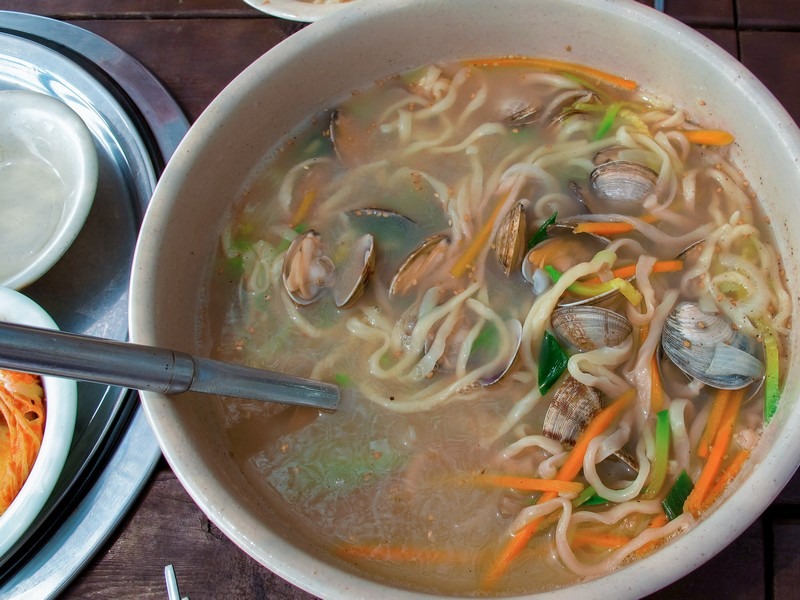
The majority of visitors are expected to bring their own food. There are restaurants serving kalguksu (knife-cut noodle soup) and shellfish, and the Baemikkumi Cafe on Modo Island serves seaweed rice bowls. But if you have dietary preferences, allergies to shellfish, or want anything beyond noodle soup and whatever the pension happens to have on hand, bring it with you. Most people staying overnight bring a box of food and drinks regardless.
Pensions will typically provide charcoal and equipment for grilling, plus side dishes, rice, and soup, but expect to supply your own meat, especially in high season.
Sindo Island (신도)
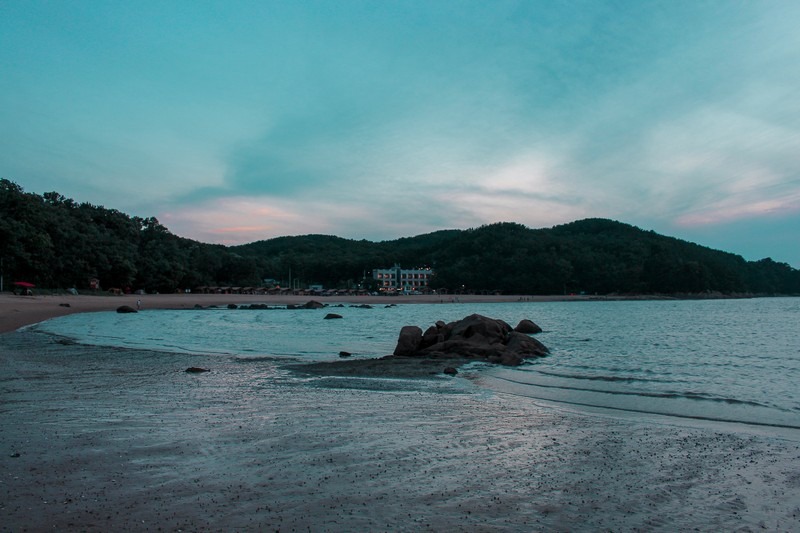
This is first in the list because this is the first island you’ll come to because this is where the ferry port is. This is also the larger of the islands and is a lot of beautiful lush green rice paddies during the summer.
The islanders here are mainly farmers and fishermen with just a handful of restaurants, cafes, and pensions to choose from. We took a drive around this island but only stopped to check out a few pavilions and green views.
Sido Island (시도)
Sido is the middle island and where most visitors spend the most time. The main attraction is Sugi Beach on the northern end, a filming location for the Korean drama Full House (2004), one of the classic romantic dramas that helped launch the Korean Wave internationally, as well as for Sad Love Song.
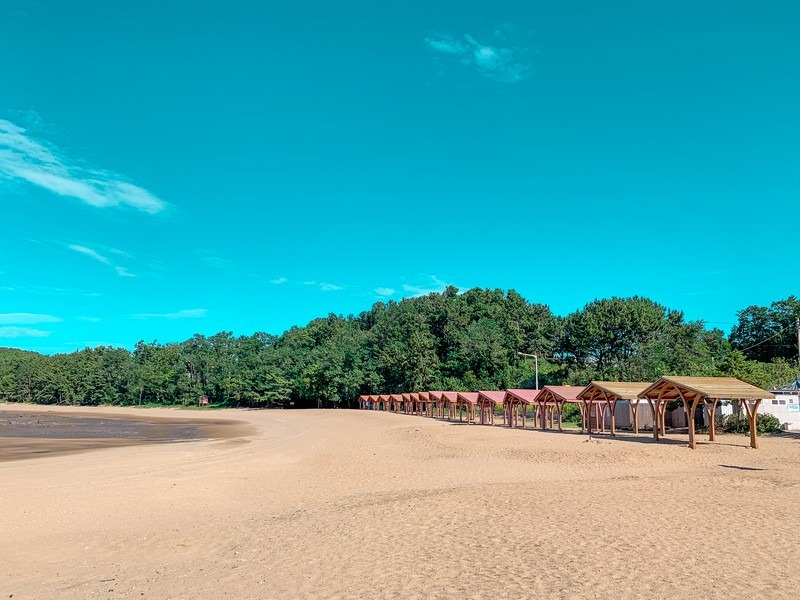
The beach has wooden shade huts, a restaurant and cafe run by the Poolside Pension, a convenience store, public bathrooms, and showers. It has everything you need for a full beach day without bringing much beyond food.
Sugi Beach (수기해수욕장)
Shade huts: The wooden huts fill up quickly when day-trippers arrive. There are signs saying people with tents shouldn’t use the huts, though this rule is informally enforced. Arrive early if the huts matter to you.
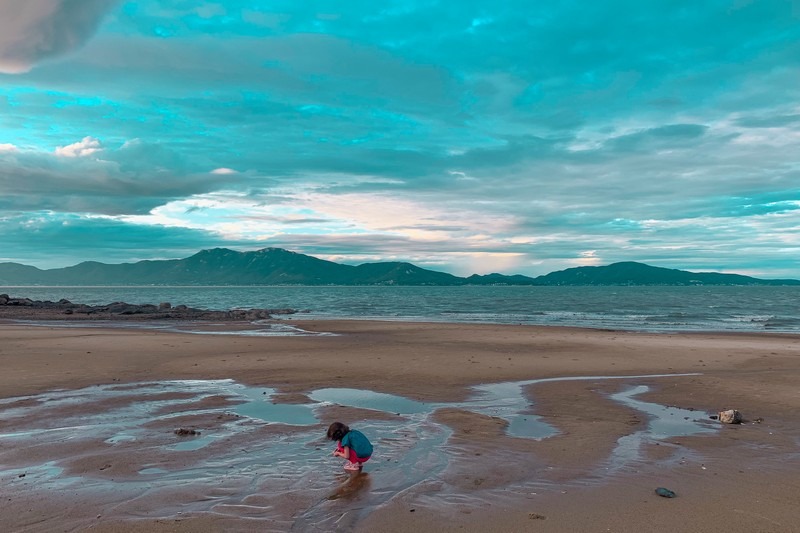
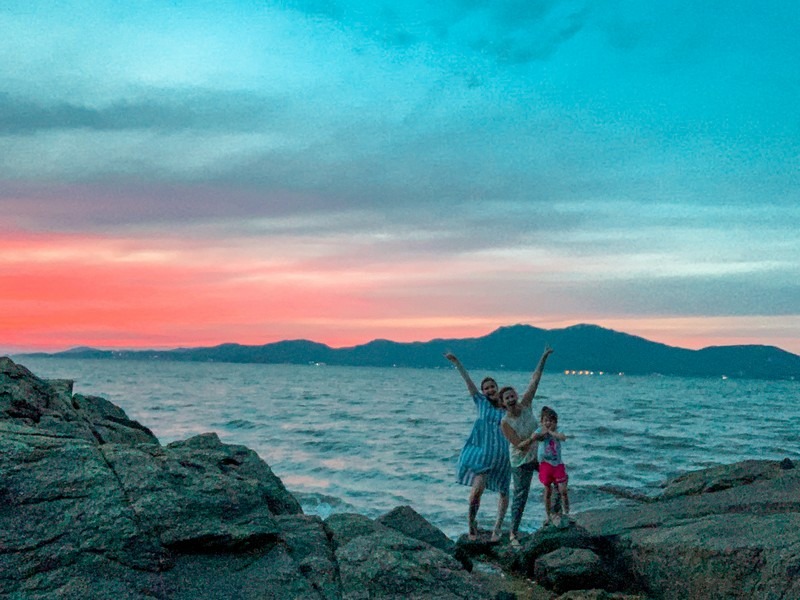
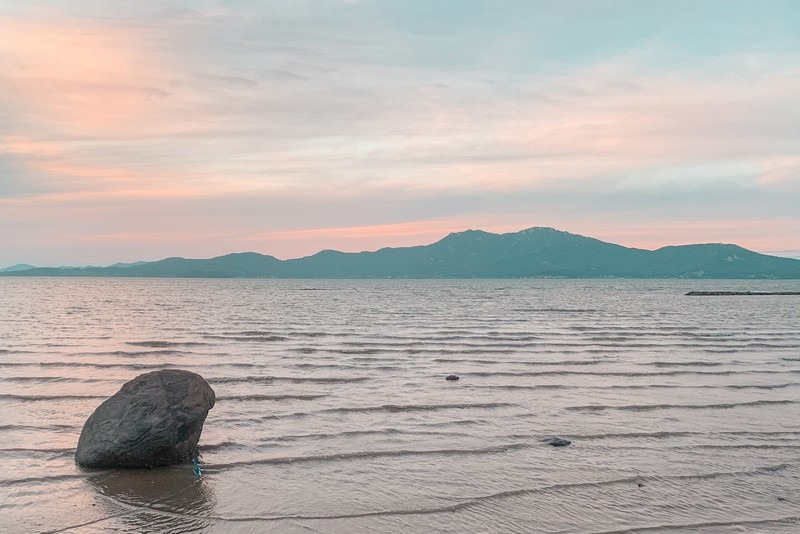
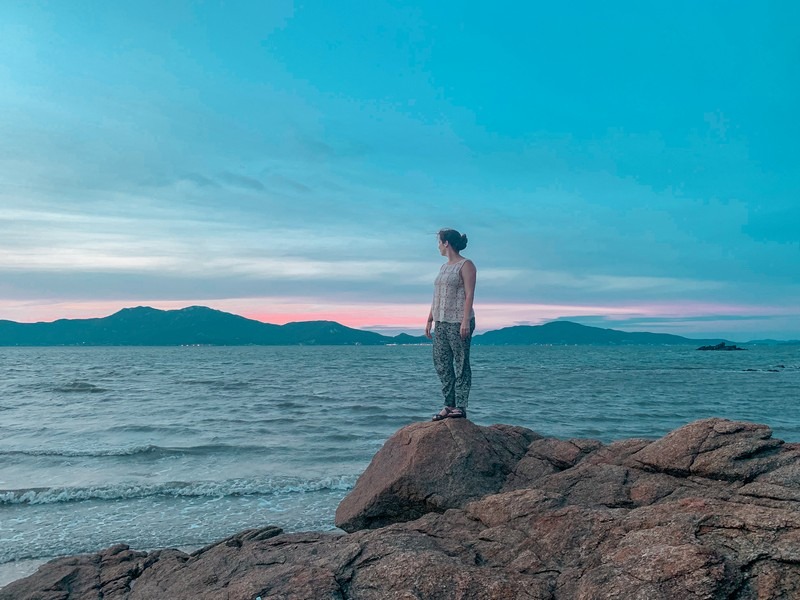
The sunset tip nobody tells you: Walk all the way to the eastern end of the beach to where the rocks meet the sand. From there, with Ganghwado Island visible in the distance, the sunset is spectacular. Nobody else made that walk the evening we went. We had the view entirely to ourselves.
On the western end of the beach, there’s a wooden boardwalk entrance that leads up through forest to an observatory, a good option if you want something to do between tides without leaving the beach area.
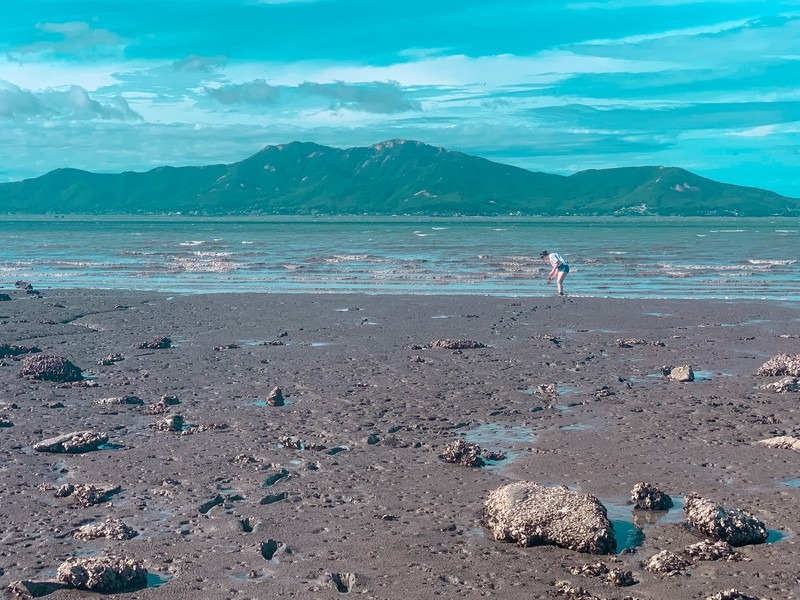
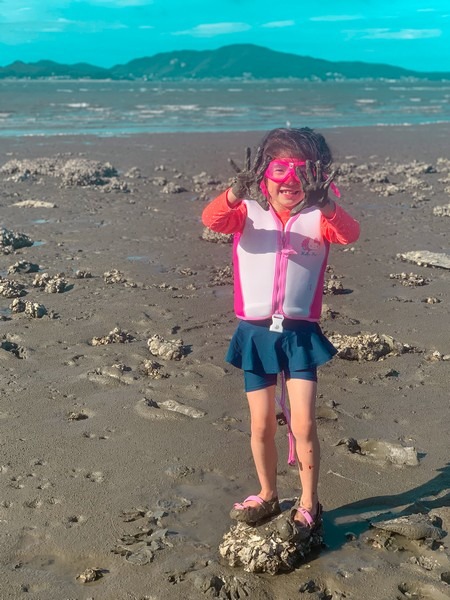
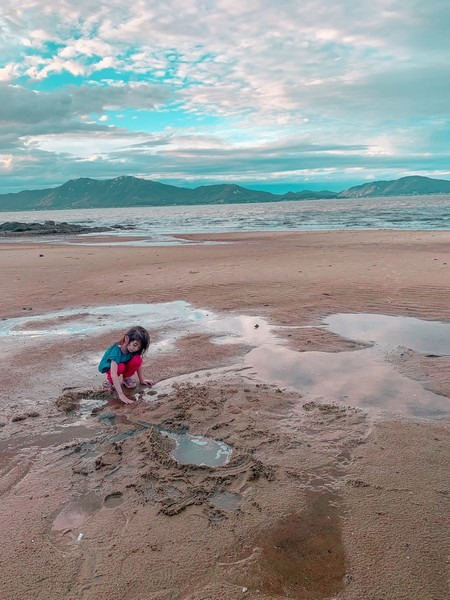
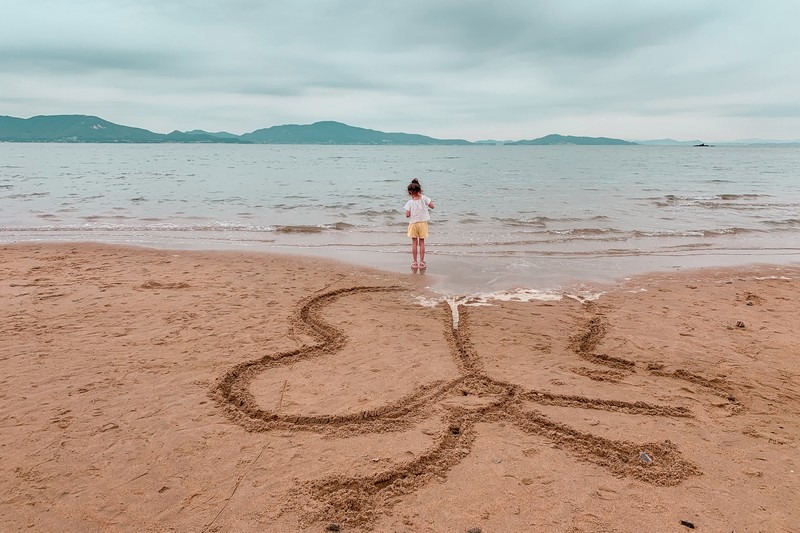
Tide timing: Like most beaches on Korea’s west coast, the water recedes significantly by midday. Arrive in the morning while the tide is in for swimming. When the water goes out, the tidal flats open up for digging, people collect conch, crabs, and clams. Our daughter got stuck in the mud and was briefly convinced she might stay there forever, so keep that in mind if you have young children in tow. The mud can be quite deep in spots.
- Address: Sido-ri, Bukdo-myeon, Ongjin-gun, Incheon (인천 옹진군 북도면 시도리)
Modo Island (모도)
Modo is the smallest and westernmost of the three islands. Most people pass through on their way between Sindo and Sido, but don’t skip it, it has the most interesting single thing on all three islands.
A note on the name: In 1929, a traveler named Kim Hae Gim spotted the island and called it Ttiseom, named for the ttipul grass covering it, which islanders used to make thatched roofs. Over time the name shifted to Modo, the Hanja reading of Ttiseom. The name Baemikkumi comes from the local dialect: islanders say the island’s shape resembles the bilge hole of a ship (the baemit), and kkumi means hole. So, the island shaped like a ship’s bilge hole, covered in grass for thatched roofs.
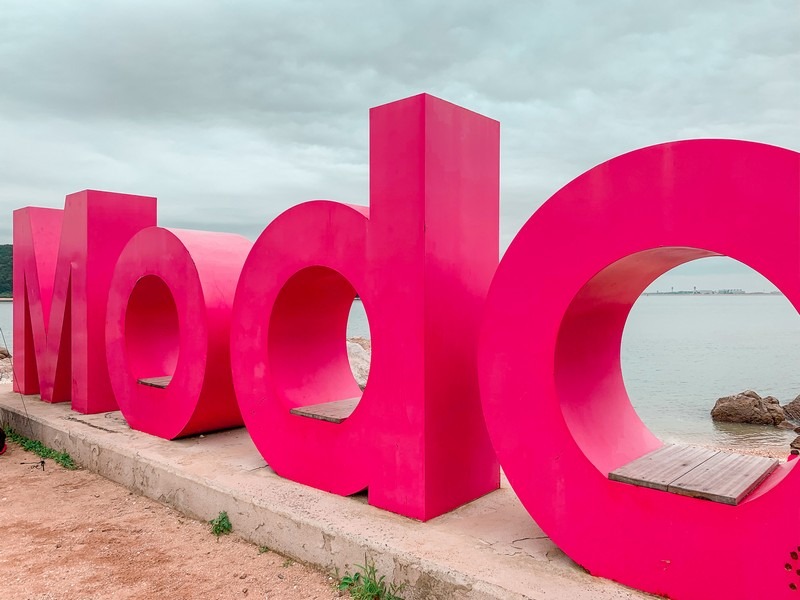
The photo-op sign: Before reaching the sculpture park, there’s a sign at a fork in the road that makes for a good photo. Turn left at the fork when headed toward the beach. The road is one lane and parking around the sign is very limited, slow down before committing to the turn so you can see what’s around the bend.
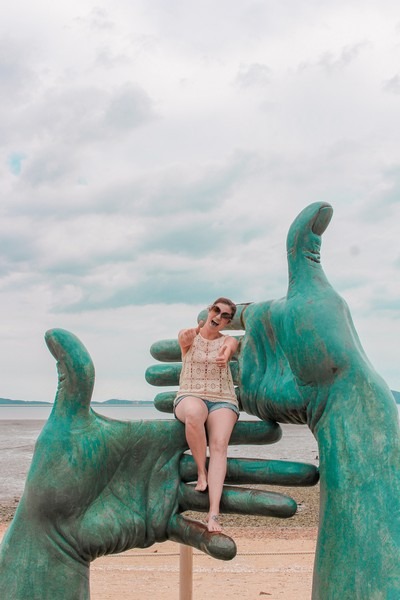
Baemikkumi Beach & Sculpture Park (배미꾸미조각공원)
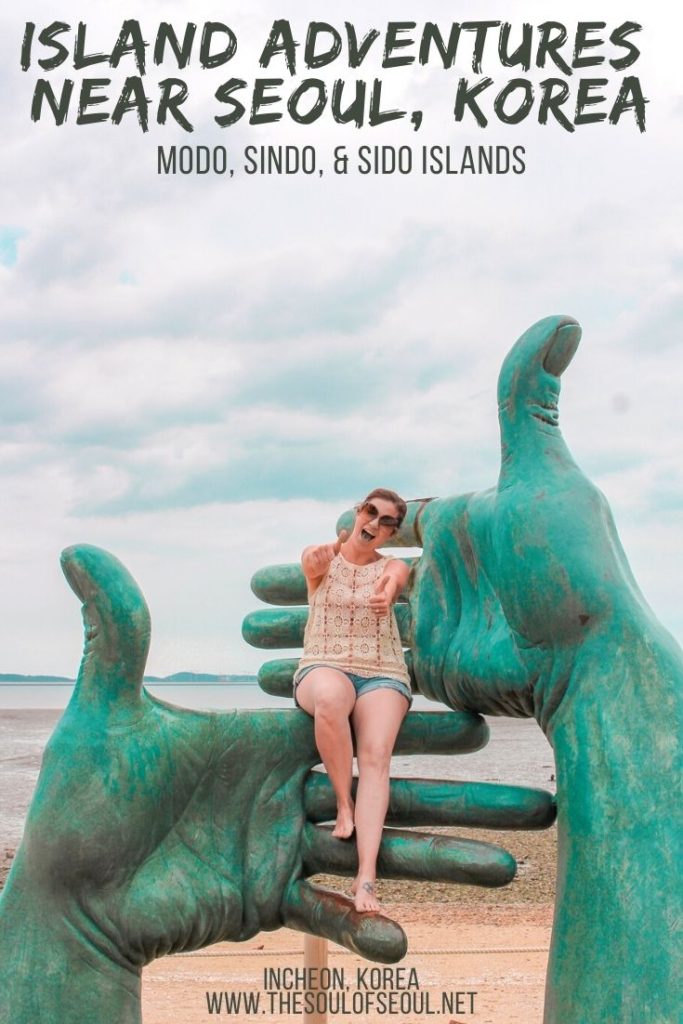
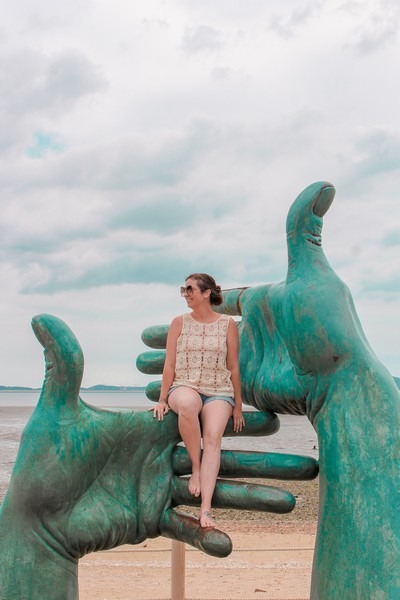
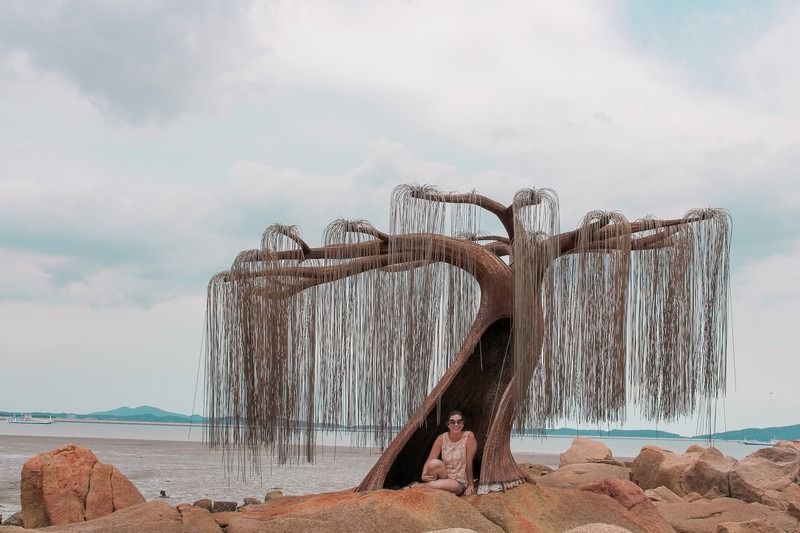
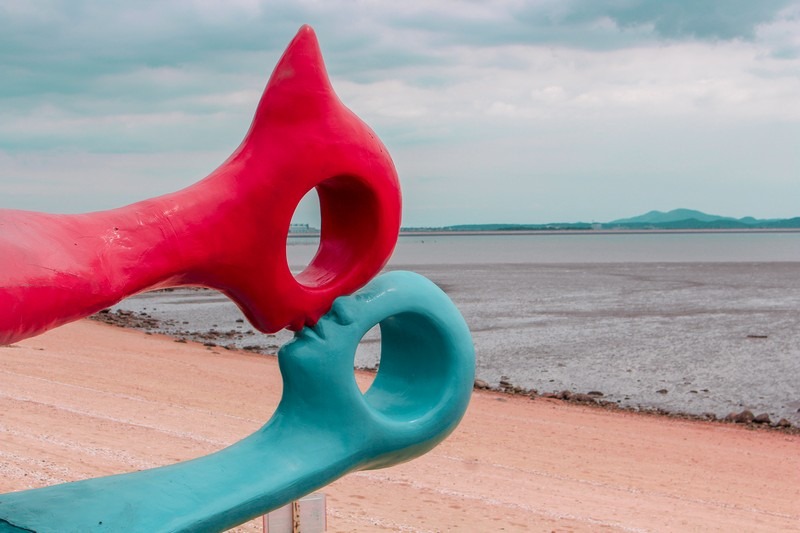
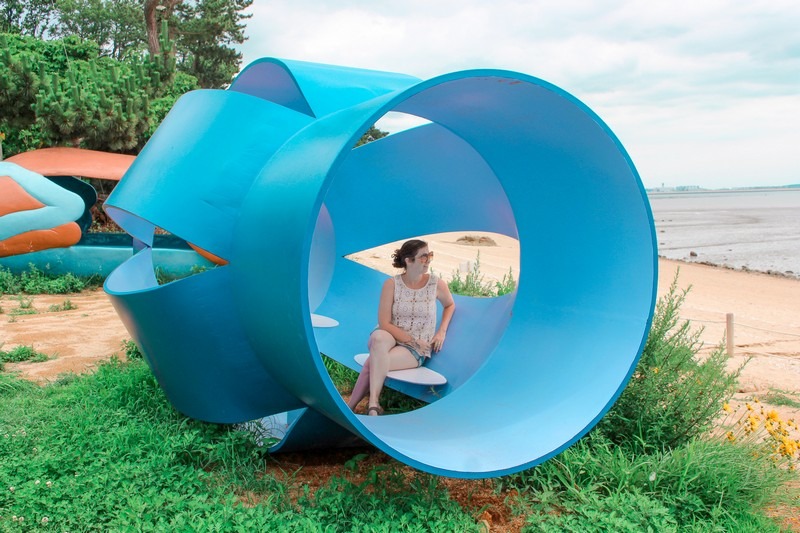
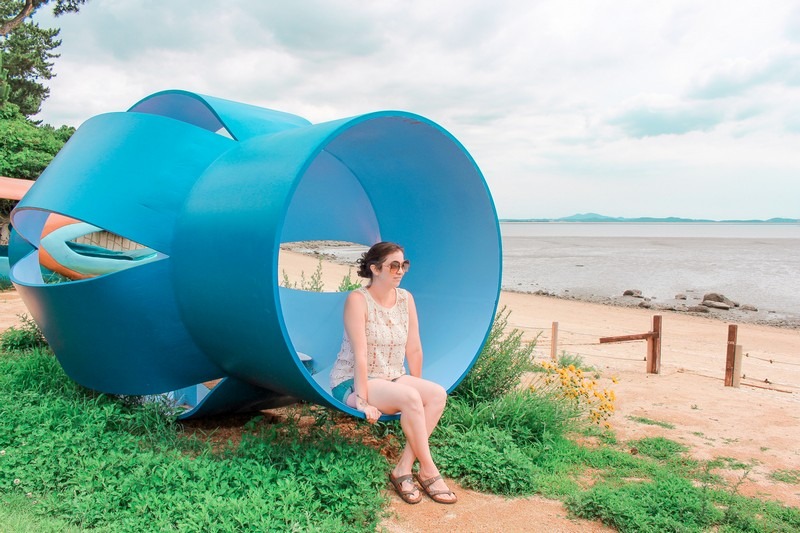
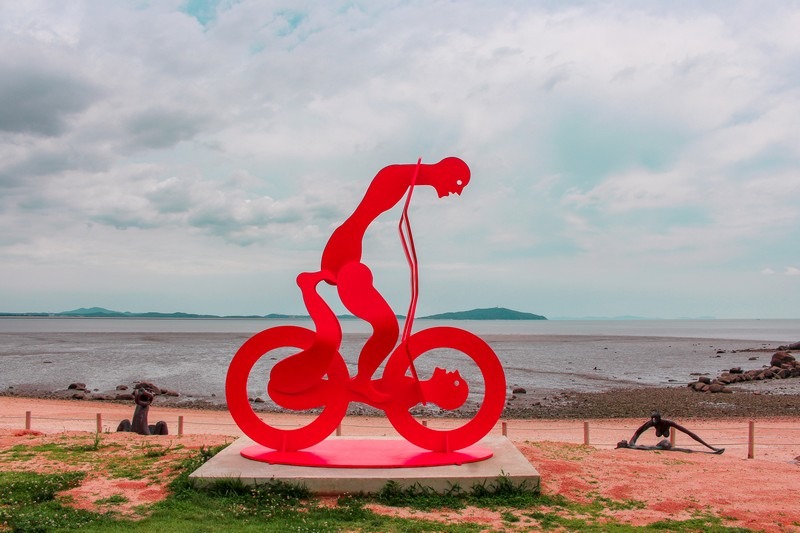
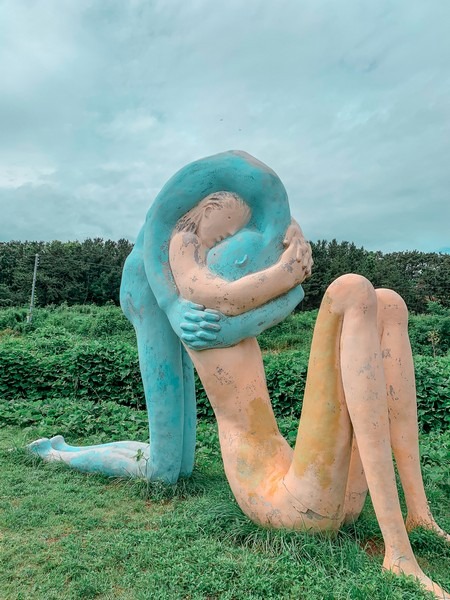
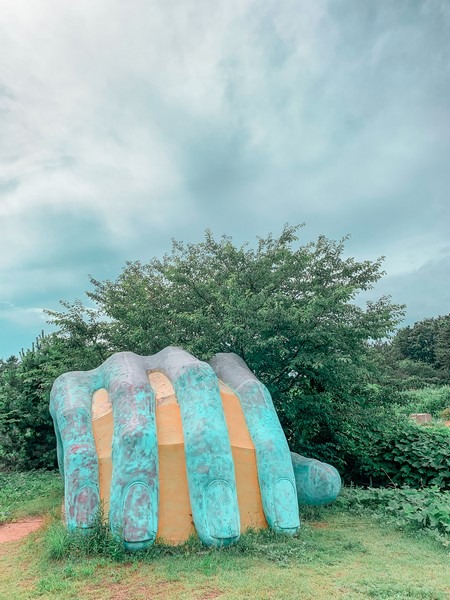
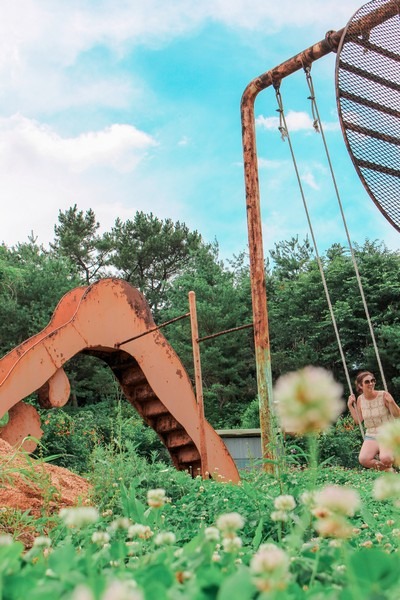
More than 80 works by sculptor Lee Il Ho, set on the beach and in the grounds of his home and cafe. The artist donated all of these works to the island specifically to promote tourism here. The sculptures came to wider attention through Kim Ki Duk’s film Time. They range from beautiful to intriguing to a few that are more graphic than they need to be, standard for Korean outdoor sculpture parks, which tend to include some works that surprise visitors unfamiliar with the genre.
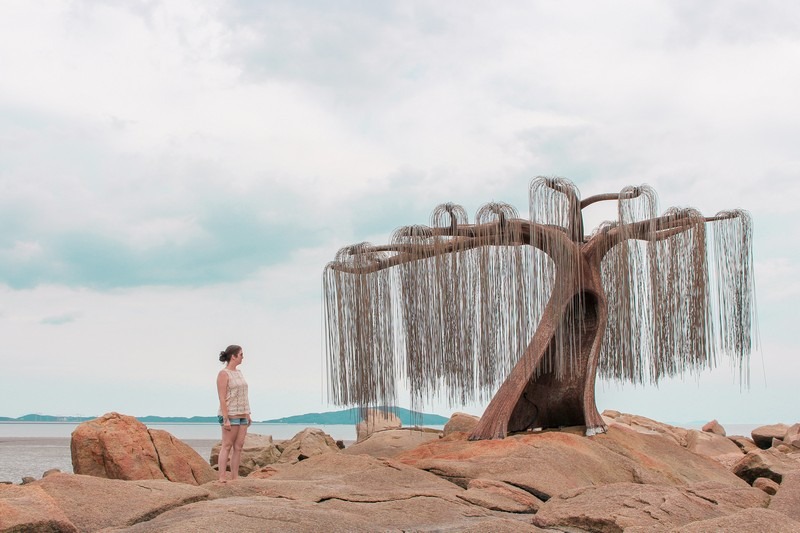
The willow tree installation on the rocks is what originally drew us to these islands. If you love finding art in natural settings, this is exactly that kind of place.
- Address: 41 Modo-ro 140 beong-gil, Bukdo-myeon, Ongjin-gun, Incheon (인천광역시 옹진군 북도면 모도로140번길 41)
- Admission: approximately ₩2,000 to walk the sculptures; ₩4,000 to park. Verify current pricing on arrival.
Baemikkumi Cafe
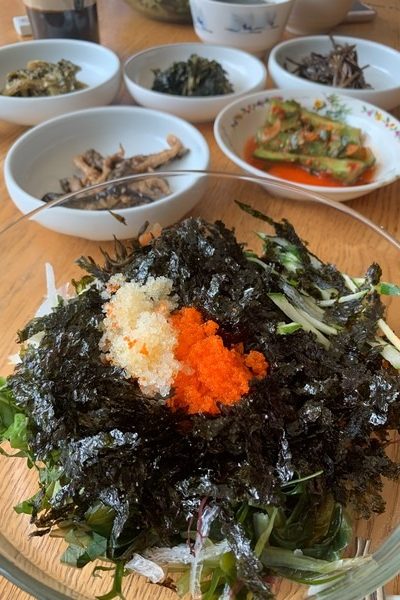
When you visit the sculpture park, you’ll notice there are two buildings on the premises. One is an older home/cafe and the other is a pension that the local family there runs. We ate lunch there and the seaweed rice bowls were great. It was nice to have something to eat other than kalguksu since we didn’t bring any other food to the islands with us. Oops!
Sindo, Sido, and Modo make for a beautiful collection of islands to slow down. The point isn’t to rush through the sculpture park and the beach, it’s to sit at the eastern end of Sugi Beach until the sun goes down behind Ganghwado, eat seaweed rice at the artist’s cafe, and take the last ferry back feeling like you’ve actually been somewhere. There are really only two things to see. Two things done properly is enough.
For more islands to explore around Incheon, read the complete Incheon island hopping guide. For everything else to do in Incheon, read the complete Incheon guide.
Did you like this post? Pin it!