Korean Chinese Food: Jjajangmyeon, Jjamppong and What To Order
Last Updated on April 24, 2026
My favorite thing about ordering Chinese food in Korea from the start was that it was brought on plates and bowls which the delivery drivers came back to pick it up after you finished. You might not fly to Korea planning to eat Chinese food, but maybe you should. It wasn’t the first food I set out to eat here, but it has become a comforting staple.
Born from Chinese immigrant communities and adapted for Korean tastes, Korean Chinese food has given us some delicious dishes like jjajangmyeon (짜장면), jjamppong (짬뽕), and tangsuyuk (탕수육). Get the backstory about the rituals, roots, and delicious dishes you won’t find anywhere else.
Find out what makes Korean Chinese food unique, why you should try it, and what you need to order:
- Korean Chinese Food Quick Reference
- How Korean Chinese Food Got Its Start
- How Korean Chinese Food Differs From Traditional Chinese Cuisine
- The 6 Most Popular Korean Chinese Dishes
(This post contains affiliate links, which means I receive a certain percentage of a sale if you purchase after clicking at no cost to you. Thank you for your support.)
Korean Chinese Food Quick Reference
| Dish | What it is | Heat | Best for |
|---|---|---|---|
| Jjajangmyeon (짜장면) | Noodles in black bean sauce with pork and vegetables | None | Comfort food classic; Black Day; moving day |
| Jjamppong (짬뽕) | Spicy seafood noodle soup | Medium-hot | Spice lovers |
| Tangsuyuk (탕수육) | Sweet-and-sour pork, crispy double-fried | None | Sharing; the dipper vs pourer feud |
| Jjamjjamyeon (짬짜면) | Half jjajangmyeon + half jjamppong | Mixed | Can’t decide |
| Bokkeumbap (볶음밥) | Fried rice with jjajang sauce on the side | None | Kids; noodle-averse visitors |
| Lamb Skewers (양꼬치) | Cumin-chili lamb on rotating grills | Mild | Beer pairing; separate restaurant |

How Korean Chinese Food Got Its Start
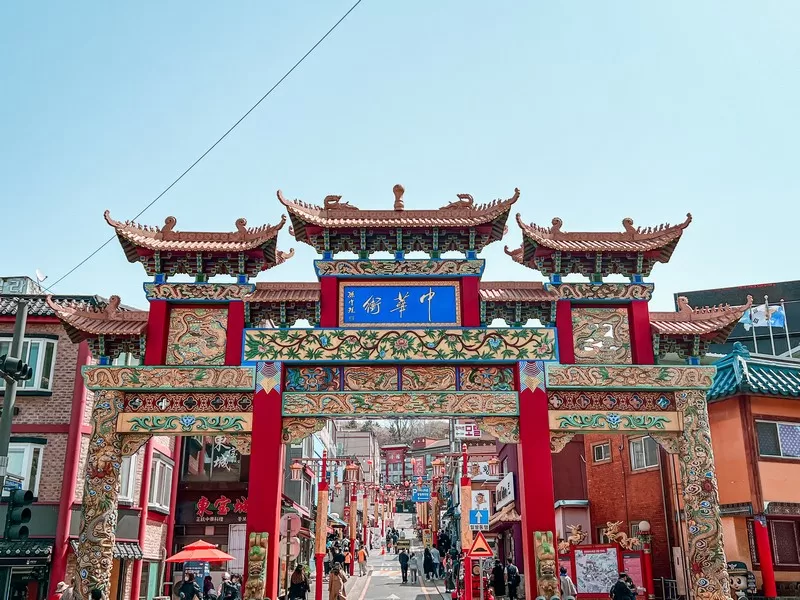
Chinese immigrants arrived and settled in Korean port cities from the late 1800s, especially in areas like Incheon, and opened eateries that gradually localized flavors for Korean palates. Roughly 90% of the earliest Chinese migrants were from Shandong, which shaped the flavor profiles.
American? Don’t come expecting American-style Chinese food. While some spots have opened up in recent years that do cater to the American palate, Korean Chinese food is very different.
By the mid-20th century these dishes had spread nationwide. By the 1950s there were more than 100 Chinese restaurants, or junggukjip (중국집), around Korea. Jjajangmyeon went from a “special treat” in the 1960s to an everyday comfort food by the 1990s, and delivery culture made it a weeknight staple.
Fun Fact: The restaurant Gonghwachun, established 1905-1908, in Incheon Chinatown is often cited as the first to serve jjajangmyeon in Korea. The original restaurant building is now home to the Jjajangmyeon Museum.
How Korean Chinese Food Differs From Traditional Chinese Cuisine
There are key differences for anyone that loves China Chinese food. Even American-Chinese food has its own distinct character, taste, and style. For Korean Chinese food, here are some of the key differences you’ll notice if you’re a foodie:
- Chunjang vs. Tianmianjiang: Korean chunjang (춘장) is based on the Chinese fermented sauce tianmianjiang, but became darker over time with caramel coloring to match local tastes and aesthetics.
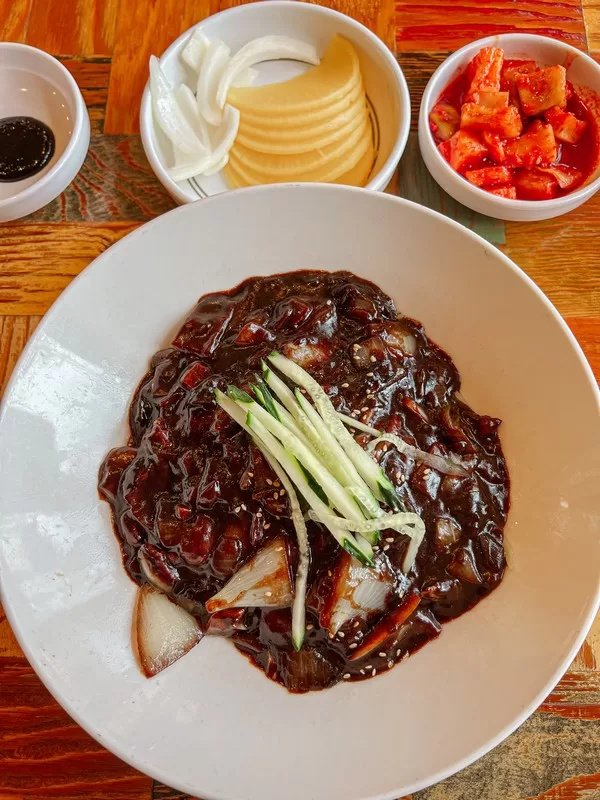
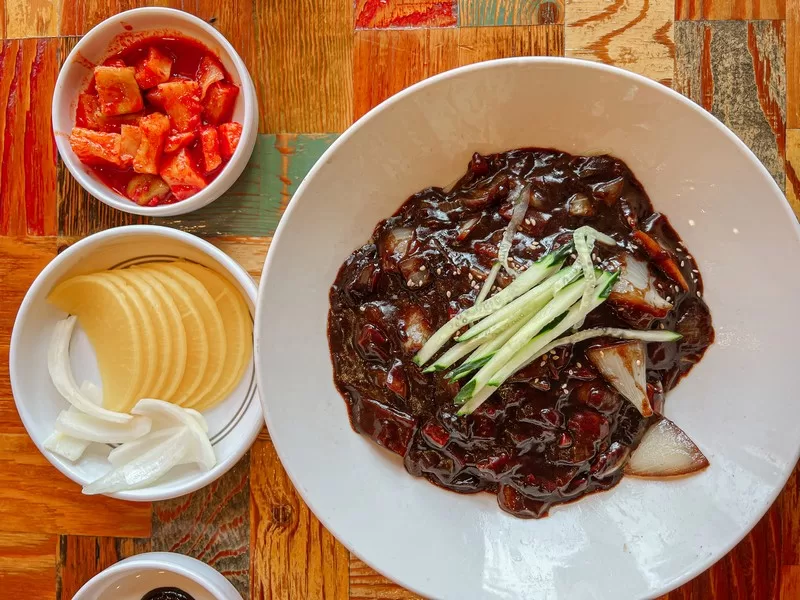
- Pre-meal Ritual: In Korea, you’ll often receive a dish of raw onion, yellow pickled radish called danmuji (단무지), and black-bean paste. To enjoy, add white vinegar to the onions, let them sit briefly, and then dip in the paste. While Korean food often has a number of side dishes that grace the table, Korean Chinese tables keep it simple with just this… and maybe some kimchi.
- Hand Pulled Noodles: Many of the best shops use chewy hand-pulled wheat noodles for both jjajangmyeon and jjamppong, making for the iconic texture enjoyed in Korea.
The 6 Most Popular Korean Chinese Dishes
Jjajangmyeon (짜장면)
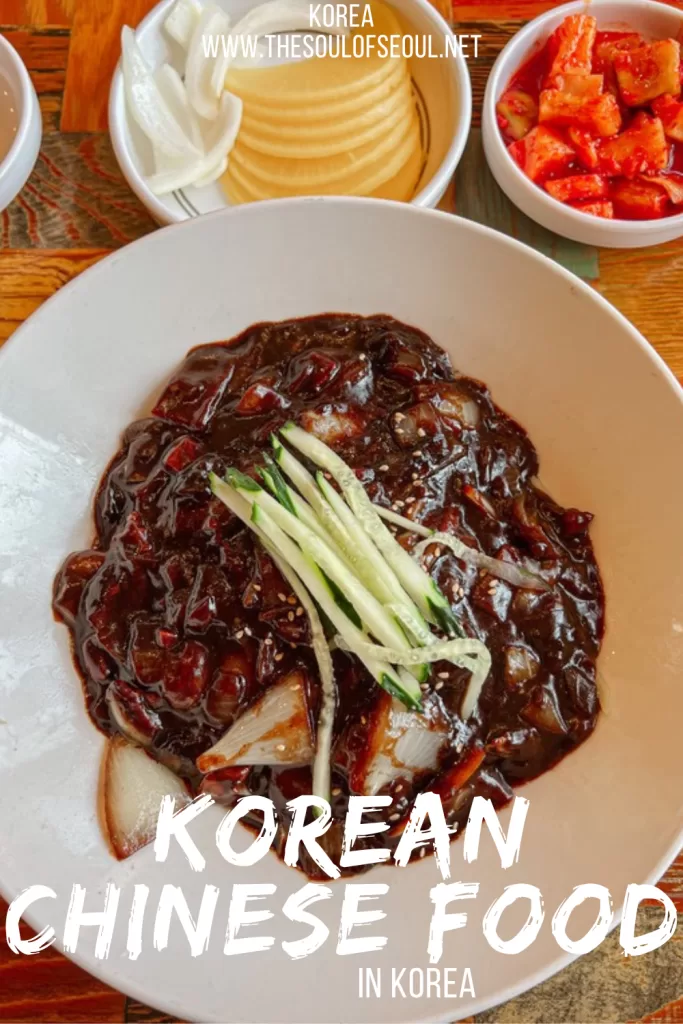
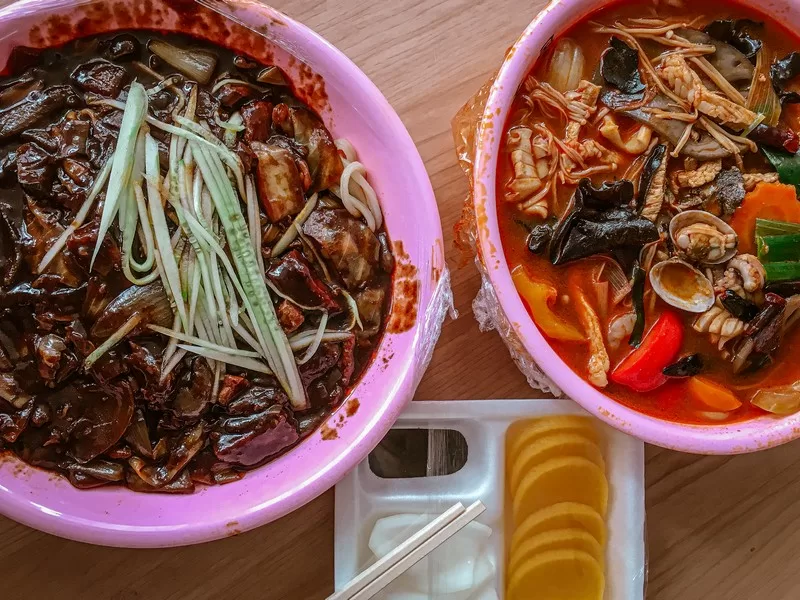
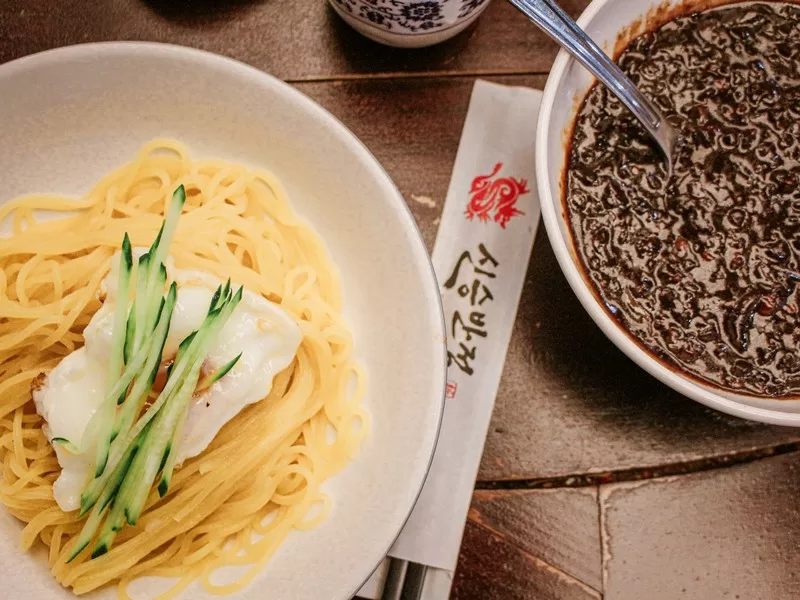
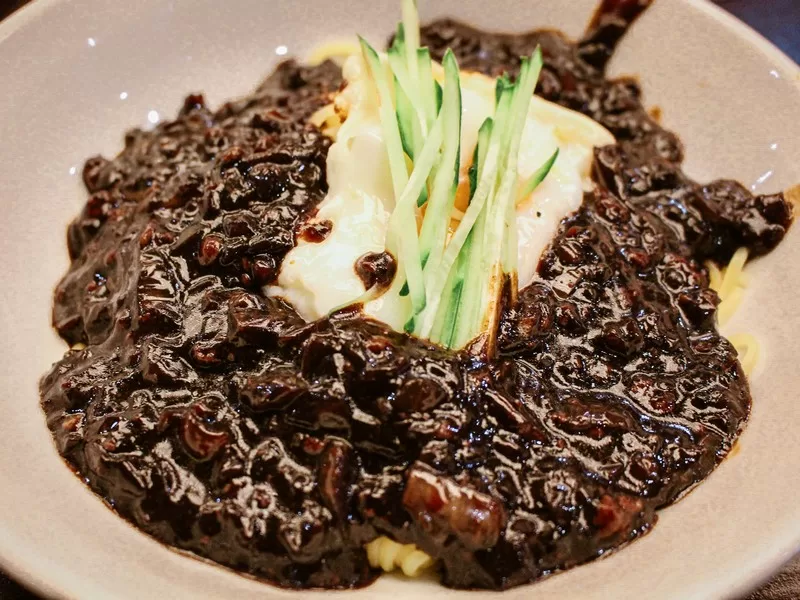
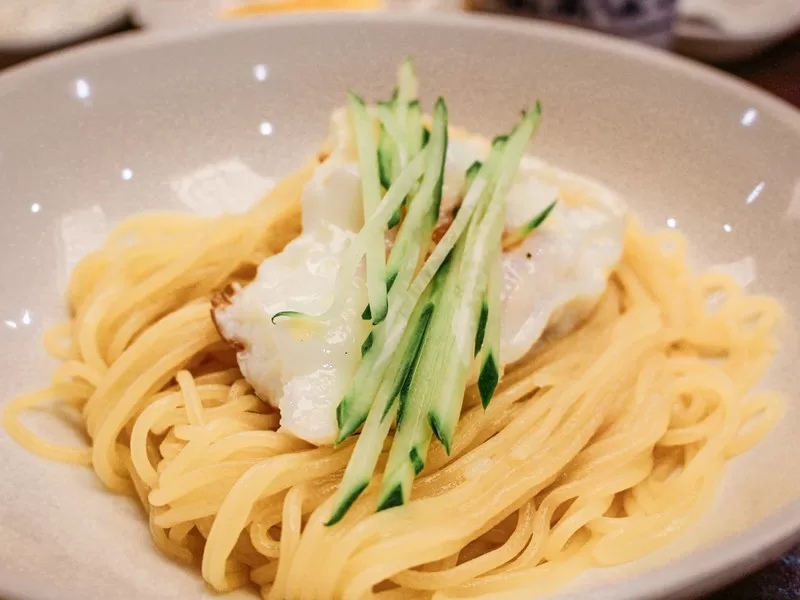
Thick wheat noodles served with a glossy black chunjang sauce made with diced pork, onion, zucchini, and sometimes potato or mushroom. The dish is often topped with julienned cucumber or a few peas. It’s full of umami and will burst with a flavor you may not expect.
Personally, I never have the urge to go out and find jjajangmyeon like my husband or daughter, but as soon as I have that first bite, I remember how inviting it is. It’s a dish that can definitely grow on you.
Fun Fact: Black Day on April 14 is the tongue-in-cheek “singles’ day” of Korea and people console themselves by eating a bowl of jjajangmyeon on this unofficial Korean holiday.
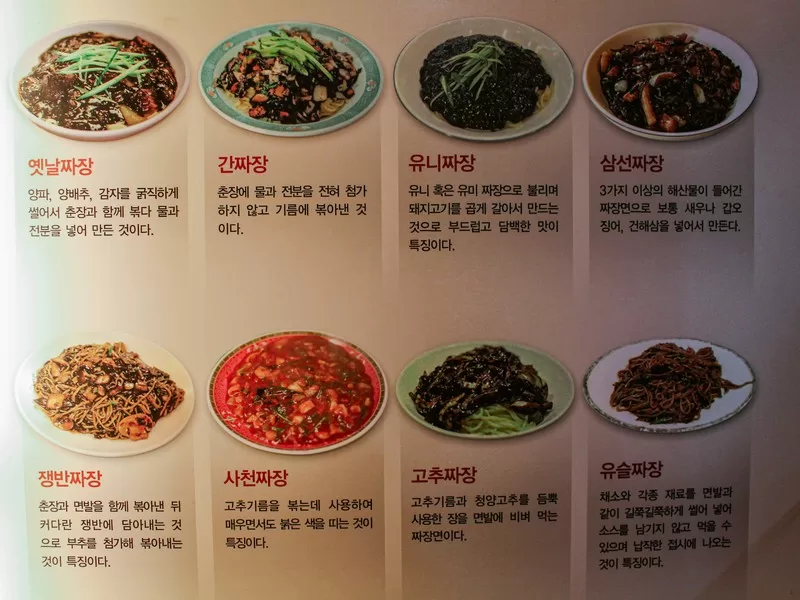
Way back there were only two varieties of the dish available in Korea: jjajangmyeon and ganjjajang, a dish with the pork and vegetables stir-fried in oil to create a crispier texture and then served in a sauce on the side instead of on the noodles.
Now, there are a number of variations you might see including: yuni-jjajang (the black bean sauce is made with minced meat), yuseul-jjajang (the black bean sauce is made with julienned meat and vegetables, samseon-jjajang (a black bean sauce made with seafood), and Sacheon-jjajang (a spicier version made Sichuan-style). You can learn all about these at that Jjajangmyeon Museum I mentioned above.
Fun Fact: Jjajangmyeon is often enjoyed on “moving day” in Korea because it’s an easy and popular delivery food that comes and then the dishes are taken away so there’s less cleanup.
Jjamppong (짬뽕)
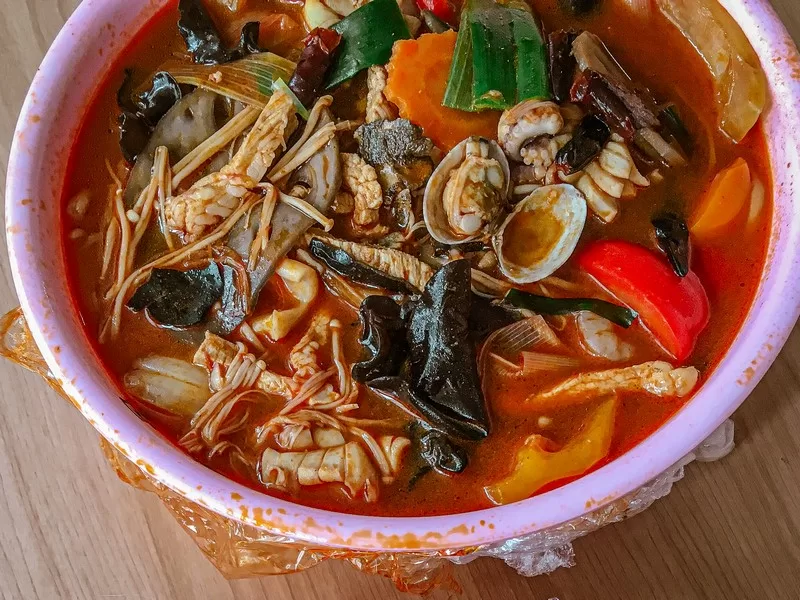
Jjamppong is a bright-red, chili-fragrant seafood noodle soup with mussels or clams, shrimp, squid, cabbage, scallions, and sometimes a touch of pork in a savory broth made with chili powder, or gochugaru. Historically linked to Shandong chǎomǎmiàn and Japan’s chanpon, Korea amped up the heat. This is my husband’s favorite.
Fun Fact: That “jj” represents a tense consonant in Korean, somewhere between a crisp j and ch sound, pronounced in one quick burst. It’s not just stylistic, it’s practical for pronunciation and helps distinguish it from a softer single j.
Tangsuyuk (탕수육)
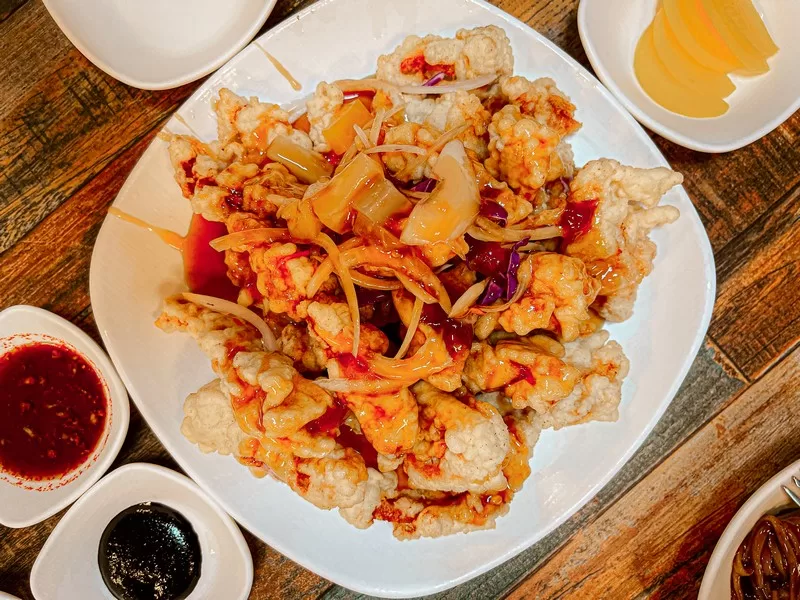
Korean sweet-and-sour pork where strips of meat get a double-fry in starch batter for ultra-crunch. The golden, translucent sauce is sweet and tart, made with sugar, vinegar, and soy sauce. On top, you’ll often find wood ear mushrooms, onion, bell pepper, and maybe some cucumber and pineapple. This is a dish usually served to share whereas the others above are served as a single serving.
Quick Tip: Make sure to ask around before you go and add the sauce to the dish. There is always a friendly feud between the pourers (부먹) and the dippers (찍먹). Ask around first! I’m a dipper just so you know.
Jjamjjamyeon (짬짜면)
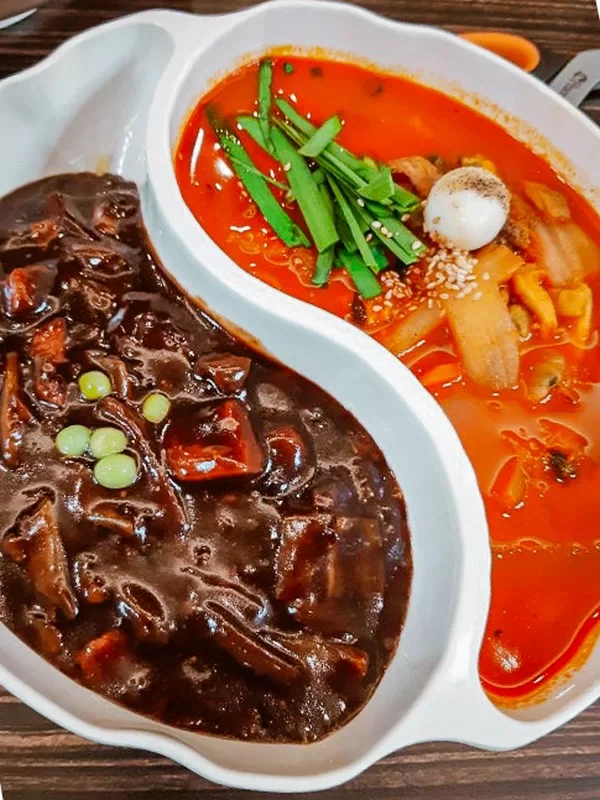
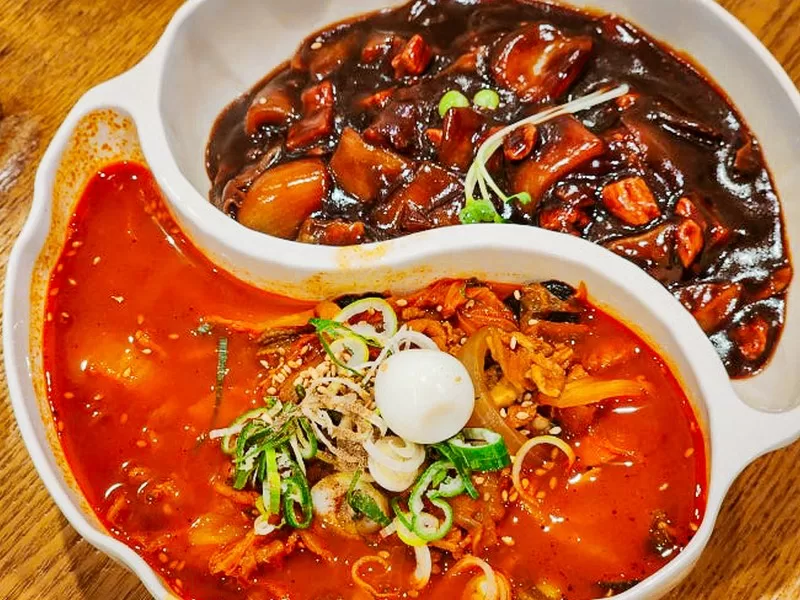
Can’t decide which of the above two dishes you want to try? It’s a common issue for Koreans too, so restaurants started providing an option to get the best of both worlds: one bowl, split. You can get half jjajangmyeon and half jjamppong. These days, you can also get half jjajangmyeon and half tangsuyuk, half jjamppong and half tangsuyuk, and a variety of other combinations.
Fun Fact: Want to find Chinese restaurants in Seoul? They’re all over, but Yeonhui-dong near Hongdae was heavily populated by Chinese immigrants years back so there are a lot of great restaurants to choose from there. We used to live there and can say for sure, they are good! Another popular area is Hwayang-dong.
Bokkeumbap (볶음밥)
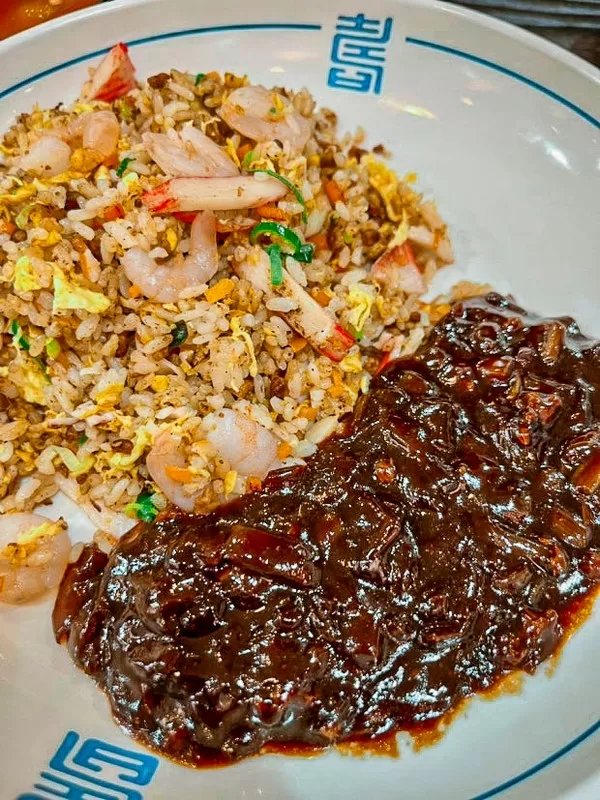
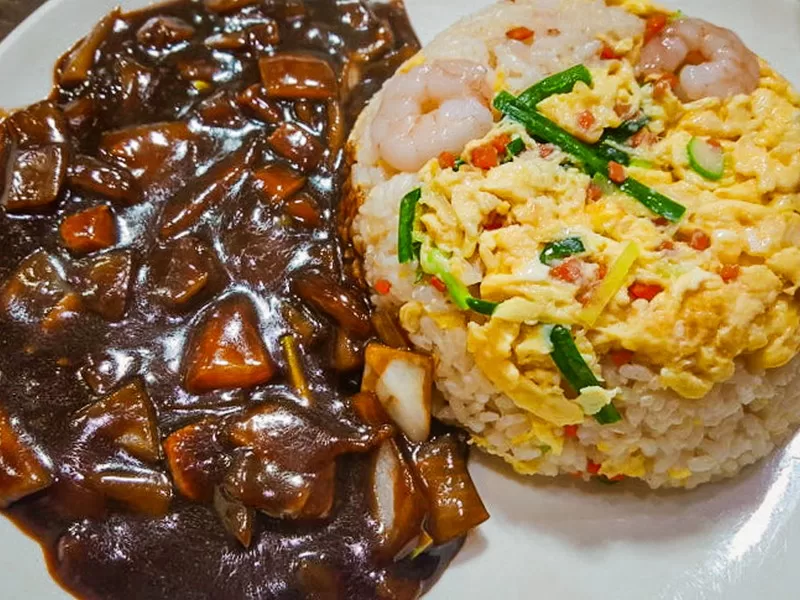
Not feeling noodles? Instead of going for the “myeon” dishes above, there’s also a rice version. When our daughter was younger, we started with this one to introduce her to Korean Chinese food. An eggy fried rice dish is served with a side of the black jjajang sauce. Drizzle, dip, or smother the rice in the delicious sauce. This is a good option should you have someone in the group who isn’t sure what jjajangmyeon is but wants to try.
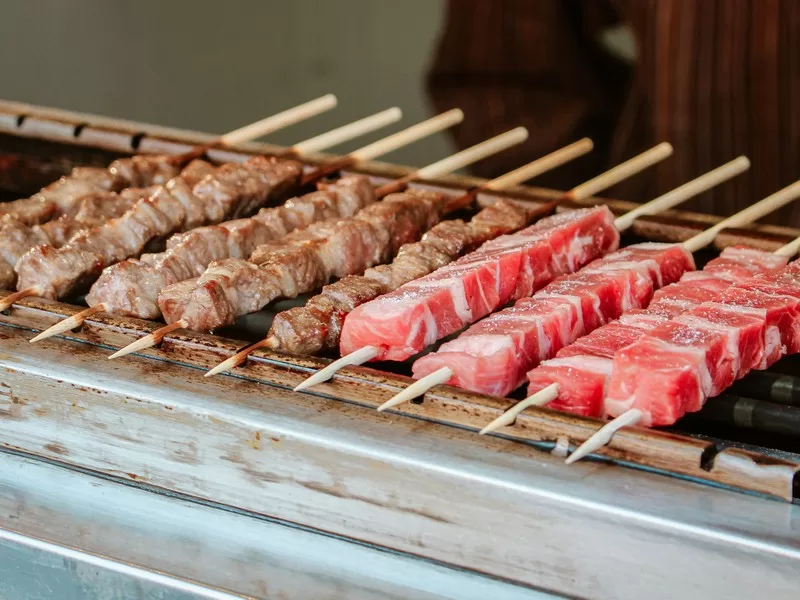
Lamb Skewers (양꼬치)
Cumin-chili dusted lamb on rotating grills; dip in seasoning and pair with cold beer. Honestly, I didn’t even realize this was Chinese the first few times I had it. The restaurants that serve this, much like Korean restaurants, serve this and just about only this. That is to say, you’re not eating this and jjajangmyeon.
The tables at a lamb skewer restaurant are made special so that the skewers are perfectly cooked. You don’t even have to do the cooking, the skewer holder moves back and forth over the heat. It’s brilliant and the popularity of lamb skewers helped make lamb more common in Korea, thankfully.
Korean Chinese food is more than fusion, it’s a story of migration, adaptation, and everyday comfort. Don’t wait for Black Day, slurp down the jjajangmyeon, jjamppong, or share tangsuyuk with your friends in Incheon’s Chinatown.
Did you like this post? Pin iT!