Tot Seaweed in Korea: How To Eat It and Why It’s Healthy
Last Updated on April 24, 2026
When most people think of Korean seaweed, gim (김) or dried sheets of laver, or miyeok (미역) which is used in Korean birthday soup, usually comes to mind. But, there’s another sea vegetable that has been part of the Korean diet for centuries: tot (톶). We’ve been eating more and more living in Jeju, so I did a deep dive into this kind of seaweed, how to cook it, and what to make with it.
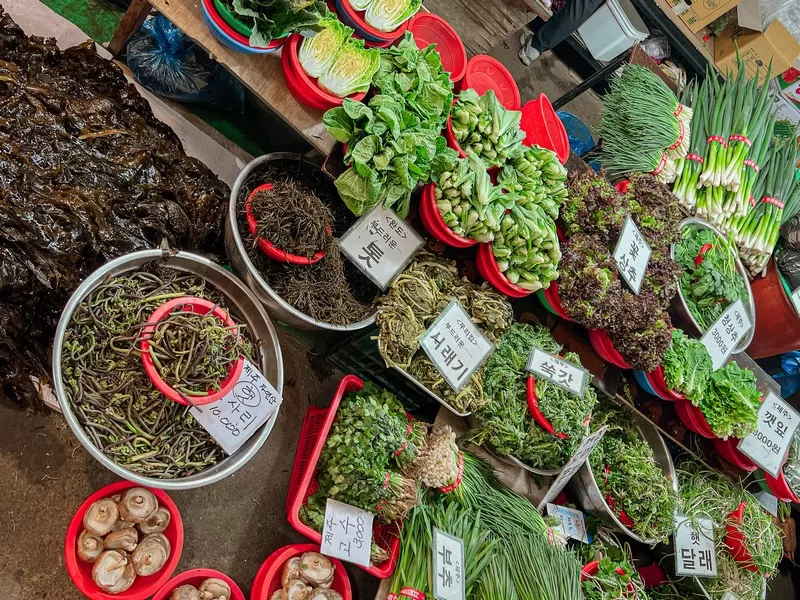
If you’ve spent time along Korea’s southern coast or browsed a local market in Jeju, you may have seen bundles of wiry, dark brown seaweed piled high. That’s tot, and while it doesn’t look like much at first glance, it’s a nutrient-dense, versatile ingredient with a crispy, springy bite. I love it, so when it’s plentiful in the spring, we figured out how to cook it.
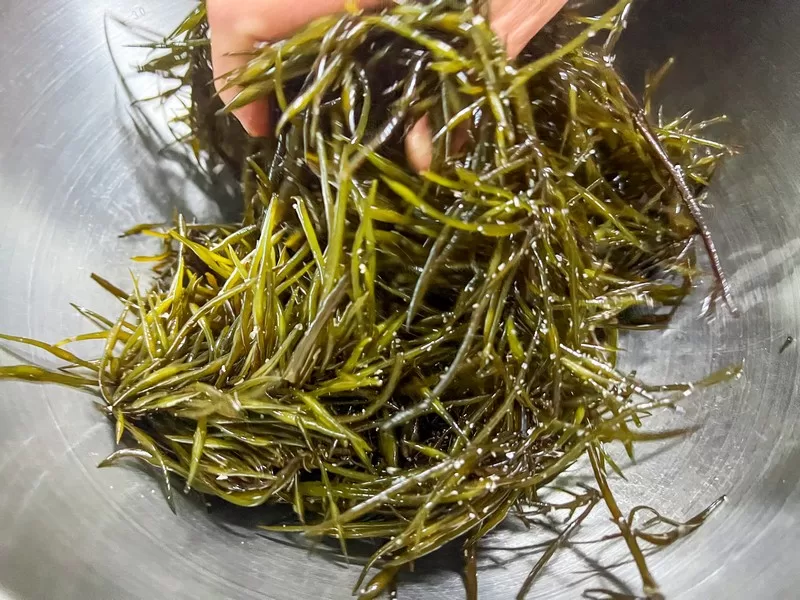
From Jeju to your bowl, a guide to tot seaweed. Here’s what to know:
- What Is Tot?
- What Does Tot Taste Like?
- How Koreans Eat Tot
- Two Tot Recipes To Try
- Health Benefits
- Where To Try Tot in Korea
- FAQ
(This post contains affiliate links, which means I receive a certain percentage of a sale if you purchase after clicking at no cost to you. Thank you for your support.)
What Is Tot?
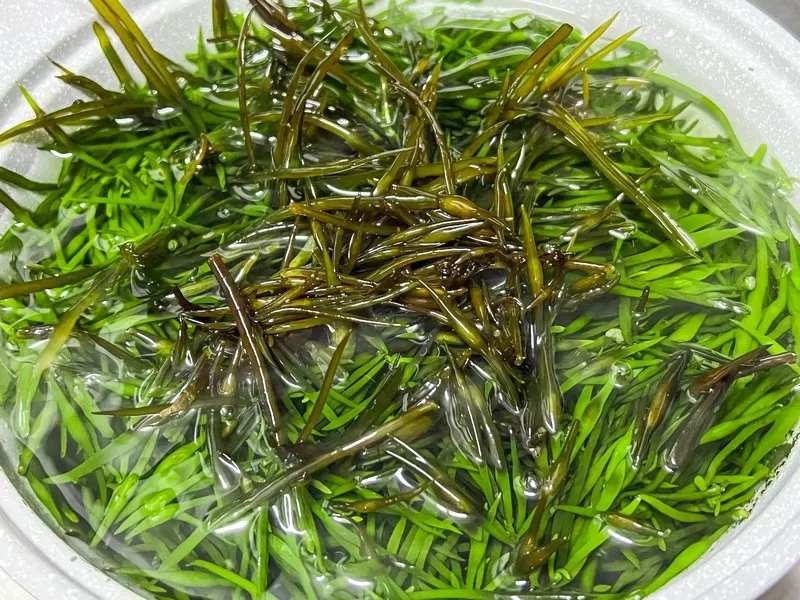
Tot is a brown algae that grows on rocky coastlines in Korea, Japan (where it’s called hijiki), and China. Its scientific name is Sargassum fusiforme, and it has a vine-like structure with hollow, finger-like spikes that give it a distinctive look.
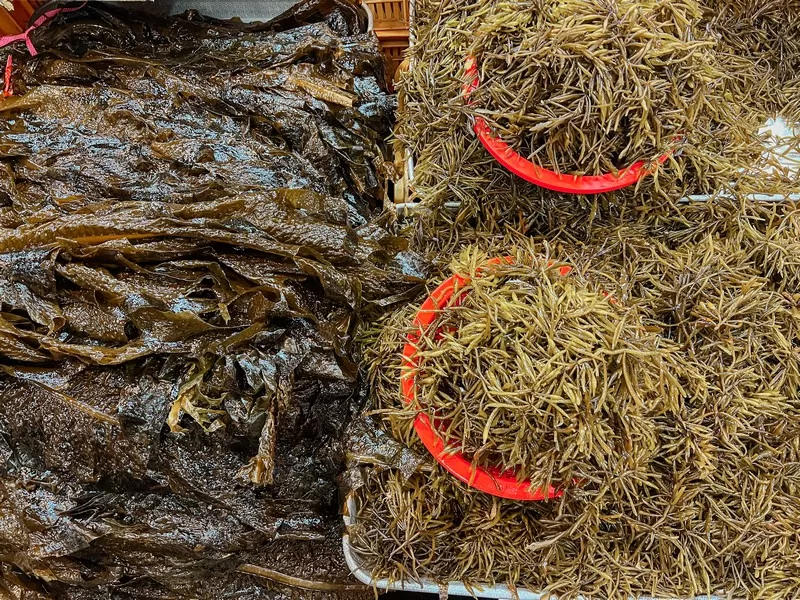
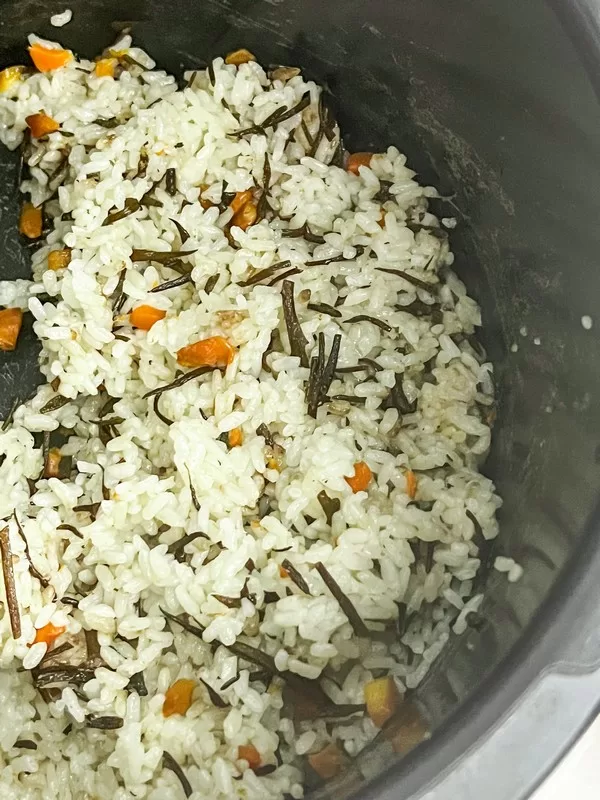
Freshly harvested tot is naturally brown-green, but once it’s boiled and dried, the standard preparation, it turns black and shrinks, resembling dried tea leaves. If you’re served rice in the spring in Jeju and think it has tea leaves in it, it’s probably tot.
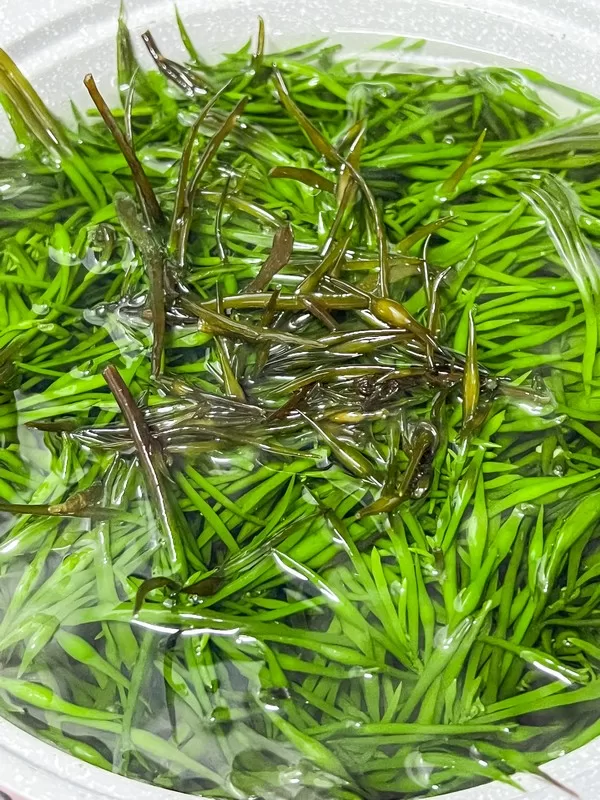
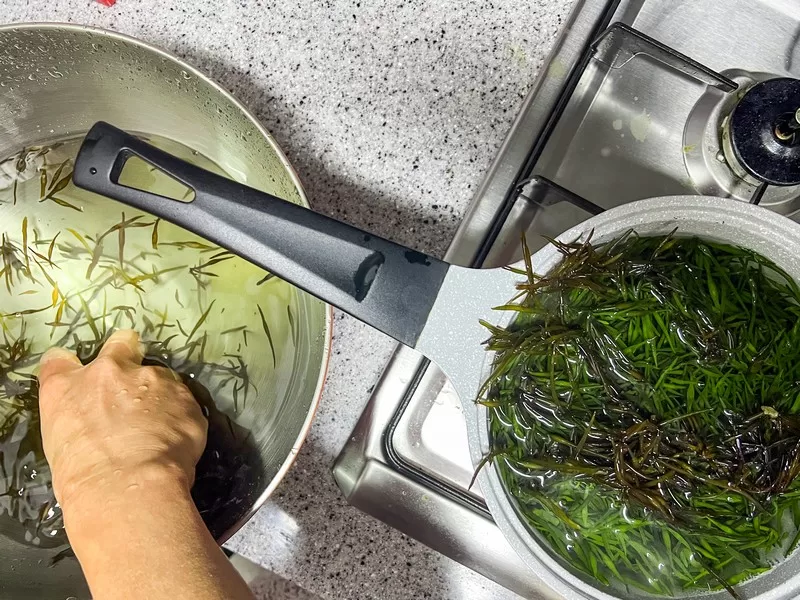
Before eating, dried tot is rehydrated in water, expanding again into its chewy, tangle-like form.
What Does Tot Taste Like?
The flavor of tot is mild and subtly oceanic, a gentle brininess rather than a strong fishy taste. The texture is the more dominant characteristic: chewy, slightly springy, with a satisfying bite that softens somewhat when blanched. It absorbs the flavors of whatever it’s paired with, sesame, soy, garlic, doenjang, which makes it a versatile base for Korean banchan preparations.
How Koreans Eat Tot
In Korea, tot is most often served as banchan, or a side dish, mixed with other ingredients for flavor and texture. Some common preparations include:
- Tot muchim (톳무침): Tot is mixed with onion, red pepper powder, onion, sesame oil, sesame seeds, vinegar, plum extract, sugar, and minced garlic for this Jeju Island specialty.
- Tot dubu muchim (톳두부무침): Tot is tossed with mashed tofu, creating a light and savory meal.
- Tot kongnamul doenjang muchim (톳콩나물된장무침): Tot is mixed with soybean sprouts and seasoned with doenjang, fermented soybean paste.
- Tot namul muchim (톳나물무침): A simply satisfying side dish with tofu, tot, garlic, sesame oil, fish sauce, and sesame seeds.
- Tot-bap (톳밥): Rice is cooked with fresh tot. The seaweed infuses the grains with a salty, slightly “oceanic” aroma and tuns the rice a light brown.
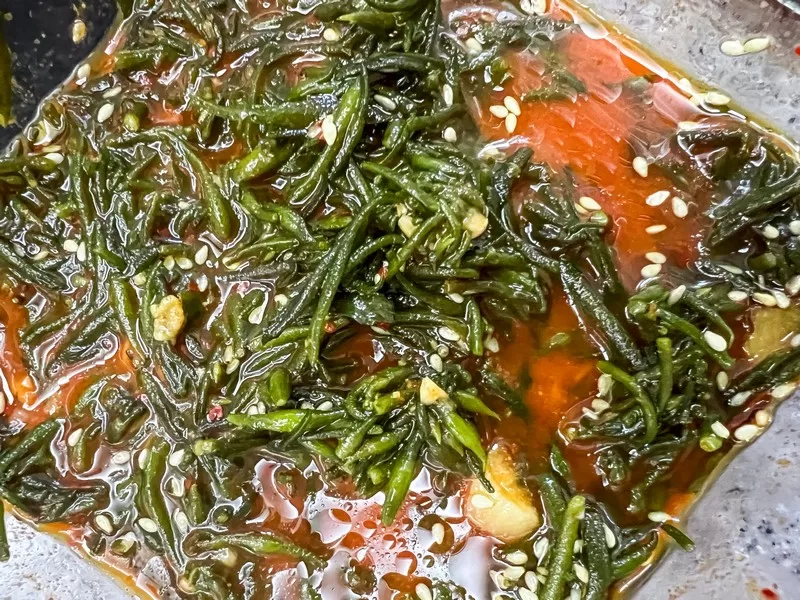
Because of its chewy texture, tot is often paired with soft or contrasting ingredients like tofu or pork. It can be braised, tossed into salads, or mixed into rice for added nutrition.
Fun Fact: You’ll notice there are a lot of “muchims” on the list above. Muchim means to coat or toss in a sauce so all of those recipes have tot as the main vegetable coated in a delicious sauce.
Two Tot Recipes To Try
Tot Muchim (톳무침)
Ingredients
- 300g Tot
- 20g Onion
- 15g Green Pepper
- 15g Red Pepper
- 3 Tbs Soybean Paste
- 1 Tbs Vinegar
- 1 Tbs Chopped Green Onion
- 1 Tbs Sesame Salt
Directions
- Blanche the seaweed in boiling water and then rinse it with water after removing from the pot.
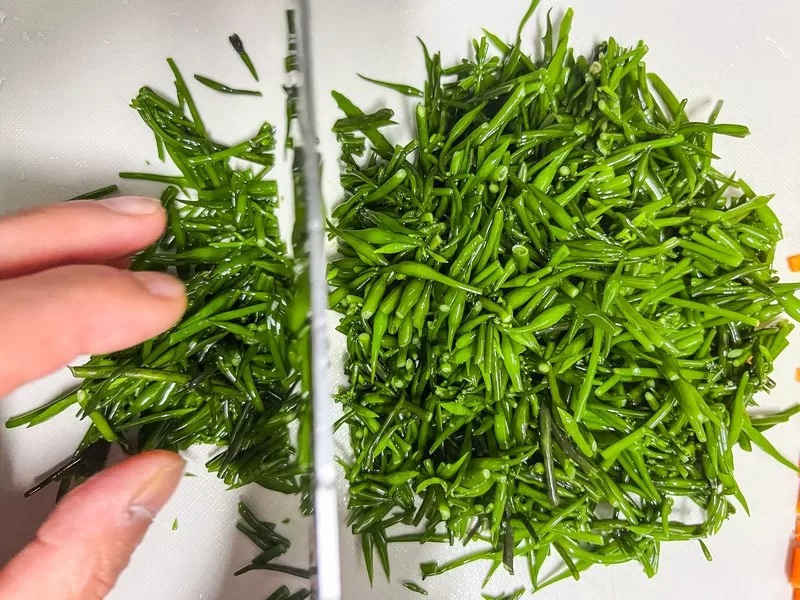
- Slice the onion thinly and chop the green onion finely.
- Add the seasoning ingredients and chopped onions to the tot and mix with your hand.
Tot namul muchim (톳나물무침)
Ingredients
- 200g Tot
- 1/2 block Tofu
- 1/2 Tbs Minced Garlic
- 1 Tbs Sesame Oil
- 1 Tbs Fish Sauce
- 1/2 Spoon Sesame Seeds
Directions
- Blanche the seaweed in boiling water and then rinse it with water after removing from the pot.
- Prepare the tofu by removing excess moisture with a cotton cloth and then break the tofu block into bite-sized pieces.
- In a large bowl, add the tot, drained tofu, and seasonings. Adjust the seasonings to suit your taste. Mix with your hand.
Health Benefits
Like many sea vegetables, tot is packed with vitamins and minerals. It’s a good source of:
- Dietary fiber for digestion
- Calcium and magnesium for bone health
- Iron for circulation
- Iodine for thyroid function
- Vitamin K for blood and bone health
The arsenic note: Hijiki (the Japanese name for tot) has come under scrutiny because studies show it can contain trace amounts of inorganic arsenic. Agencies in Canada, the U.K., and the U.S. have advised caution, while Japan and Korea still consume it as a part of traditional diets.
The general recommendation? Enjoy tot in moderation like most foods. For most people, occasional servings as part of a balanced diet pose no significant risk. People who are pregnant, or who eat large quantities of seaweed regularly, may want to discuss with a doctor.
Where To Try Tot in Korea
If you’re traveling in Korea, you’ll often find tot served as a side dish at traditional restaurants, especially in Jeju Island, where it’s hand-harvested in spring. You can also buy it dried in markets or packaged in supermarkets.
Try it as part of a tot muchim salad or order tot-bap for a truly Korean home-style experience. Its chewy, slightly salty taste might surprise you.
Where To Buy Tot Outside Korea
Dried tot is available internationally under the Japanese name hijiki at most Asian grocery stores and online. On Amazon, search for “dried hijiki“, several Japanese and Korean brands are available. The Korean and Japanese products use the same underlying seaweed; the preparation and seasoning suggestions may differ slightly by brand.
FAQ
What is tot seaweed?
Tot (톳) is a brown algae harvested along the rocky coastlines of Korea, Japan, and China. It’s known internationally as hijiki. Freshly harvested tot is brown-green; once boiled and dried, it turns black and shrinks to a tea-leaf appearance. It’s rehydrated before cooking and used in Korean banchan dishes, rice, and salads.
Is tot the same as hijiki?
Yes. Tot is the Korean name for Sargassum fusiforme; hijiki is the Japanese name for the same seaweed. Both refer to the identical plant. The preparation methods differ slightly by cuisine.
Is tot safe to eat?
In moderation, yes. Studies have shown tot/hijiki can contain trace amounts of inorganic arsenic. Food agencies in Canada, the UK, and the US have advised eating it only occasionally. Japan and Korea continue to include it in traditional diets. Enjoy it as part of varied, balanced eating rather than as a daily staple.
What does tot taste like?
Mild and subtly oceanic with a gentle brininess. The texture is chewy, slightly springy, which is the more prominent quality. It absorbs other flavors well, which is why it works well with doenjang, sesame, and garlic.
Where can I buy tot outside Korea?
At Asian grocery stores under the Japanese name “hijiki,” or online on Amazon. Search “dried hijiki” for multiple Korean and Japanese brand options.
When is tot season in Korea?
Spring. March through May is the peak harvest period along the southern coast and in Jeju. This is when you’ll find the freshest tot dishes on Jeju restaurant menus.
Tot seaweed may not be as famous as gim or miyeok, but it’s a staple that reflects the deep relationship Koreans have with the sea. Next time you’re in Jeju or browsing a Korean grocery store, don’t skip the strange-looking black strands in the corner.
Did you like this post? Pin IT!


2 Comments
Nigel
I just came across your website by chance while searching for info on Yangyang – it’s brilliant, and so comprehensive, it must have taken a serious amount of time and work to put together! I live in Korea and this is so useful for finding interesting things to do, and to refer friends to who will be visiting from overseas – I’ve just done that, by the way.
Hallie Bradley
Thanks so much Nigel for sharing with your friends and leaving a comment. It’s great to hear you’ve found the information useful. I hope you get out to see more of beautiful Korea. ^^