Sammilsa Temple: What To Find in the Hidden Mountain Hermitage Above Jinhae
Last Updated on May 3, 2026
You might think Jinhae is just a cherry blossom town. And yes, in the spring it puts on one of the most spectacular floral displays in all of Korea. But nearby above the city in the slopes of Jangboksan Mountain, there’s a quiet little temple that has nothing to do with petals or festivals but it’s worth taking a detour for.
Whenever I travel in Korea, I always look up what temples are in the area. Often they sit on nearby mountains with great views and that’s how I found Sammilsa (삼밀사). Not only were the views what pulled me in, but the faces of 500 stone statues beckoned as soon as I saw a photo. This Buddhist temple in Jinhae makes for a great addition to any trip in the area. Get ready to find out why.
For more beautiful temples in Korea, check out this list of 24 stunning Buddhist temples to find in South Korea.
Get ready to discover Sammilsa, a small but deeply atmospheric Buddhist hermitage hidden above Jinhae with stone statues, sea views, and centuries of quiet history.
- Basic Info
- How To Get There
- Walking Through The Cypress Forest
- The Gate: Your First Welcome
- The Stone Statues
- Who Are The Nahan? (A Little Context Goes A Long Way)
- A Brief History
- The View
(This post contains affiliate links, which means I receive a certain percentage of a sale if you purchase after clicking at no cost to you. Thank you for your support.)
Basic Info
- Address: 56-42 Jangboksan-gil, Jinhae-gu, Changwon-si, Gyeongsangnam-do (경남 창원시 진해구 장복산길 56-42)
- Hours: Temples don’t usually have set hours, but recommend to visit after sunrise and leave before sunset.
- Admission: Free
- Parking: Available on site
- Note: This is an active temple. Keep voices low and be mindful of anyone practicing or meditating.
How To Get There
Sammilsa is located on the lower slopes of Jangboksan Mountain in Jinhae (진해구), part of Changwon City. To get there from the downtown area, you’ll want to take a car or taxi which takes less than 10 minutes. There is a bus but that takes over an hour depending where you are.
Walking Through The Cypress Forest
You can drive right up to the temple, there is a small parking lot there, however, walking through the forest to get to the entrance is really recommended if you can manage it.
Both sides of the road leading up to the temple are lined with cypress trees (편백나무), their tall, straight trunks creating a natural corridor that feels like the world is gently narrowing into something more still. The air smells different up here. Cooler. Greener. It’s not a long walk, but a very pleasant preparation to the temple.
In spring the forest floor is dappled and bright. In autumn the mountain slopes burn with color. In winter, the bare trunks stand like quiet sentinels and the whole path takes on a kind of meditative calm. There’s no bad season to make this walk.
Wear comfortable shoes. The path up through the forest is easy but slightly uneven in places.
The Gate: Your First Welcome
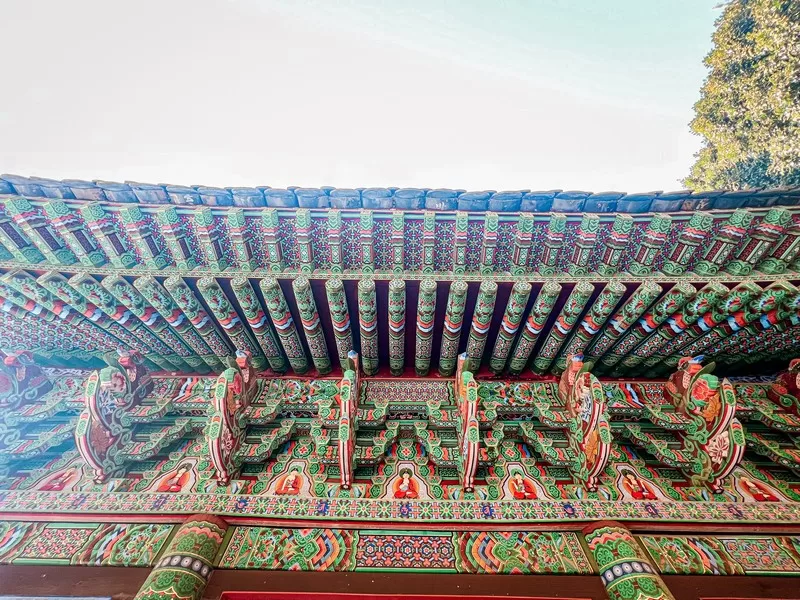
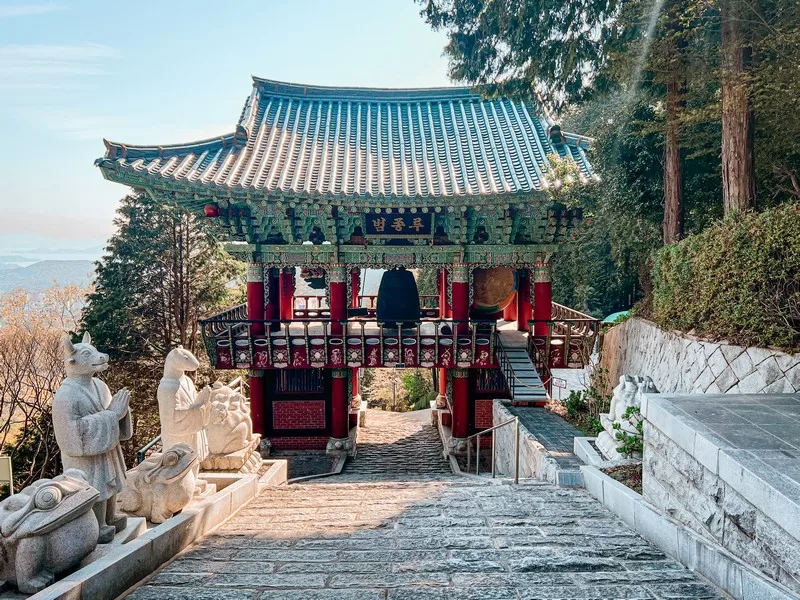
The entrance to Sammilsa is marked by a two-story wooden gate that serves a dual purpose. The lower level is the Cheonwangmun (천왕문), or Heavenly Kings Gate, and the upper floor functions as the Beomjongnaru (범종루), a bell tower. Look up as you pass through and you’ll spot two Hangeul plaques: one reading “Jangboksan Sammilsa” (장복산 삼밀사) above, and “Cheonwangmun” (천왕문) below.
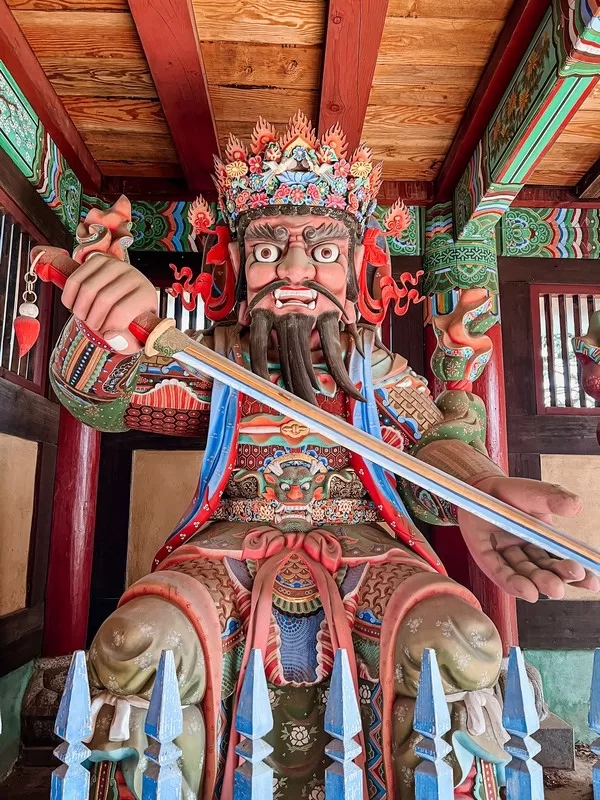
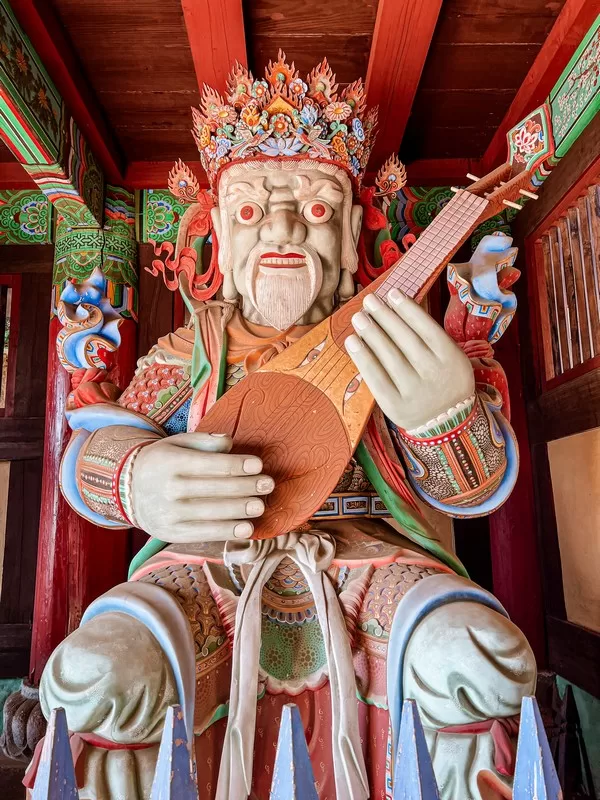
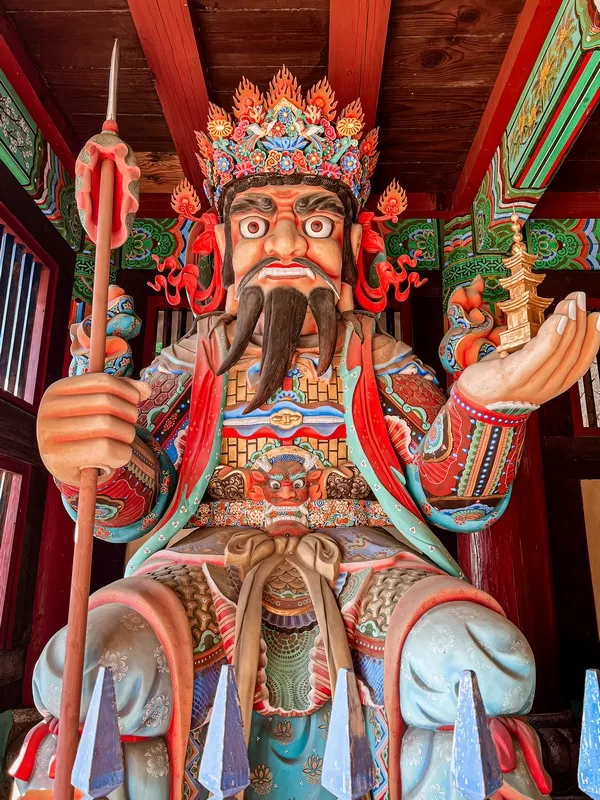
Step inside and you’ll immediately come face to face with the Four Heavenly Kings (사천왕상), one on each side as you enter. I always stop to take in these rather imposing figures at temple gates. These four guardian deities are a common feature in Korean Buddhist temples, each responsible for protecting one of the four cardinal directions around Mount Sumeru (수미산), the sacred mountain at the center of the Buddhist universe:
- East: Jijigukcheonwang (동지국천왕)
- West: Seogwangmokcheonwang (서광목천왕)
- South: Namjeungjangcheonwang (남증장천왕)
- North: Bukdamuncheonwang (북다문천왕)
Fierce expressions, dramatic armor, and bold colors are all meant to ward off negative energy before you enter the sacred space beyond. Don’t be intimidated though. Think of them as the temple’s very enthusiastic security team. If you visit with good intentions they won’t hold you back.
The Stone Statues
Once you pass through the gate and move deeper into the grounds, the stone statues begin. On the right side of the path, you’ll find the 12 Zodiac Guardian Statues (석조 12지신상), each one representing an animal from the Korean (and broader East Asian) zodiac.
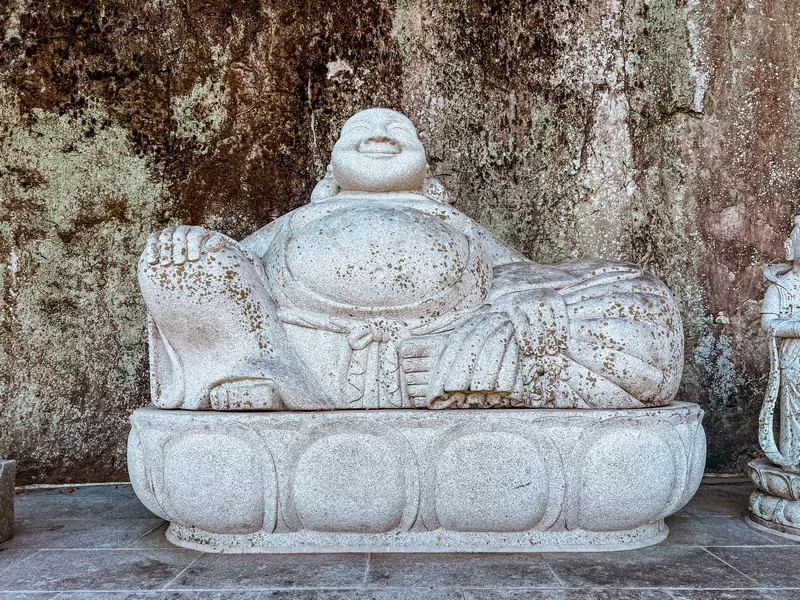
Facing them from across the path is a large stone figure of Podaenosnim (포대화상), the beloved “Cloth Bag Monk,” known for his grinning face, enormous belly, and sack full of gifts. Rubbing his belly is said to bring good luck. Naturally, I obliged.
Who Are The Nahan? (A Little Context Goes A Long Way)
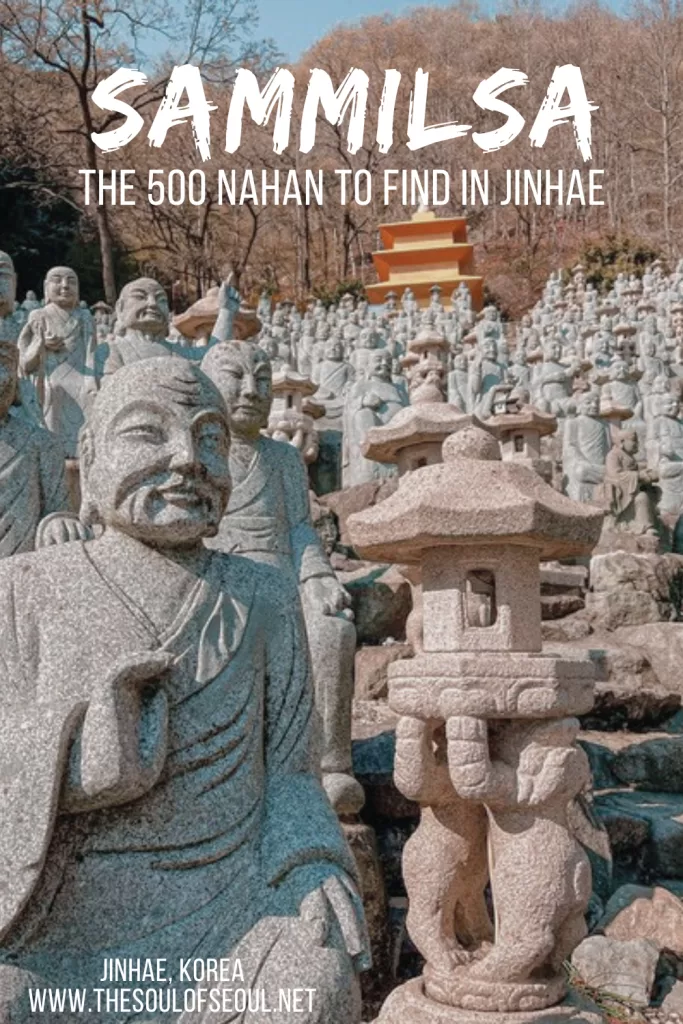
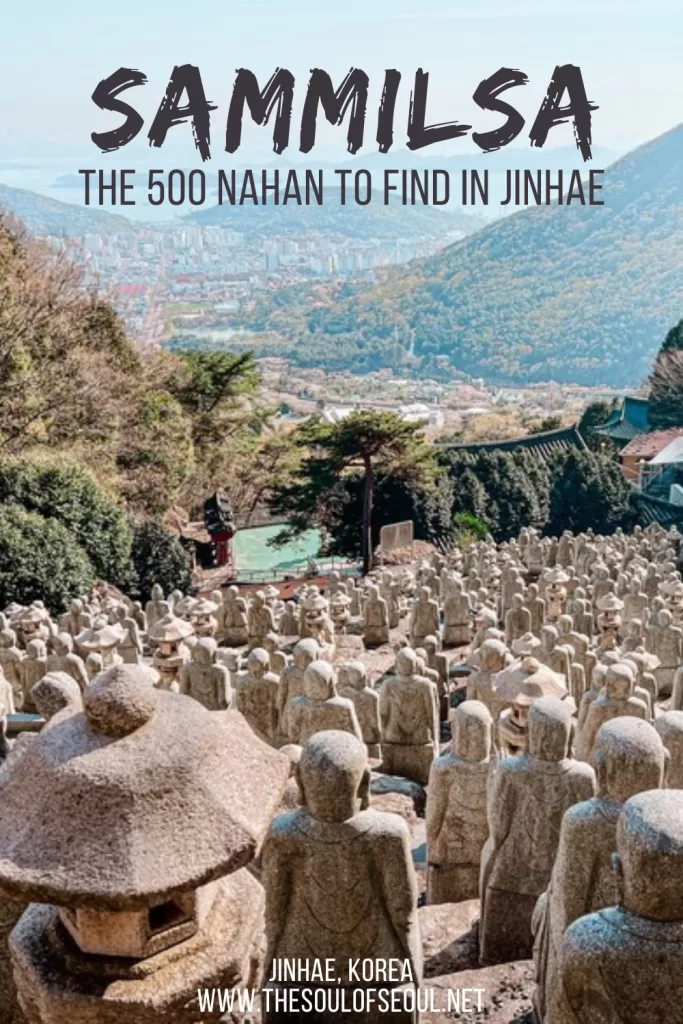
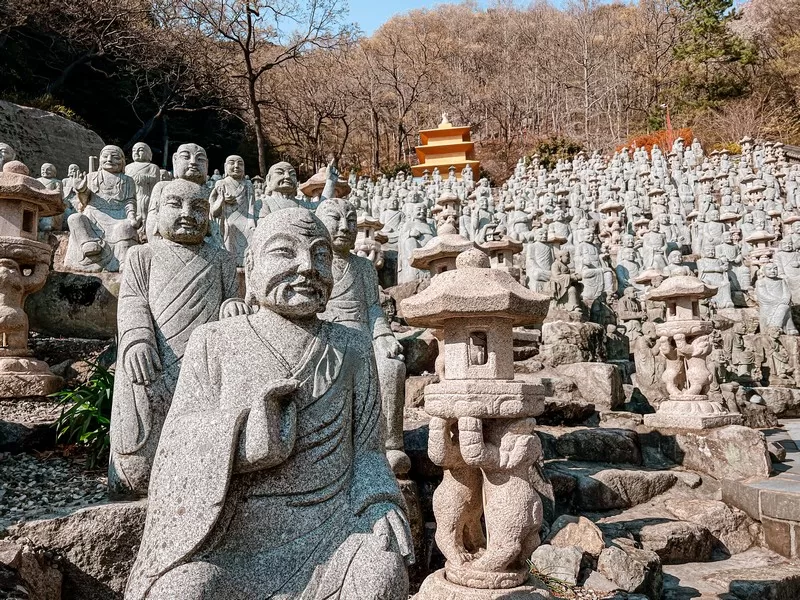
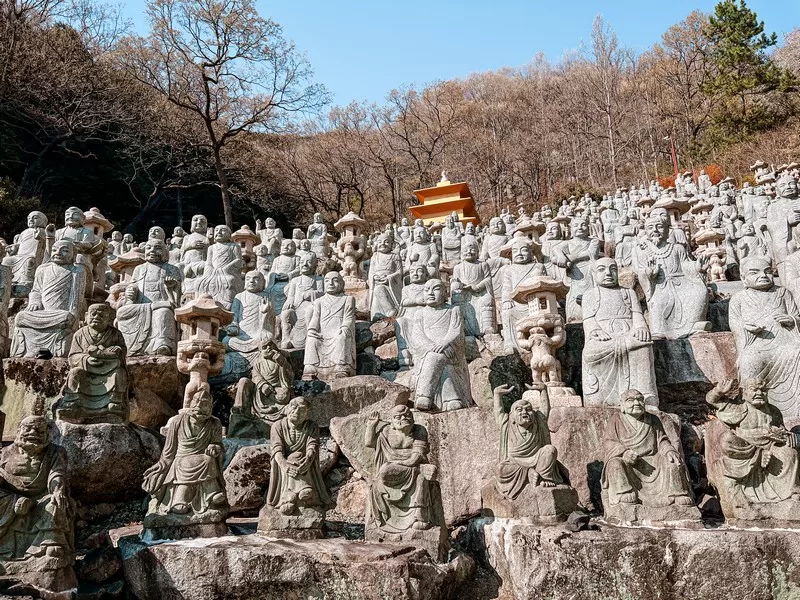
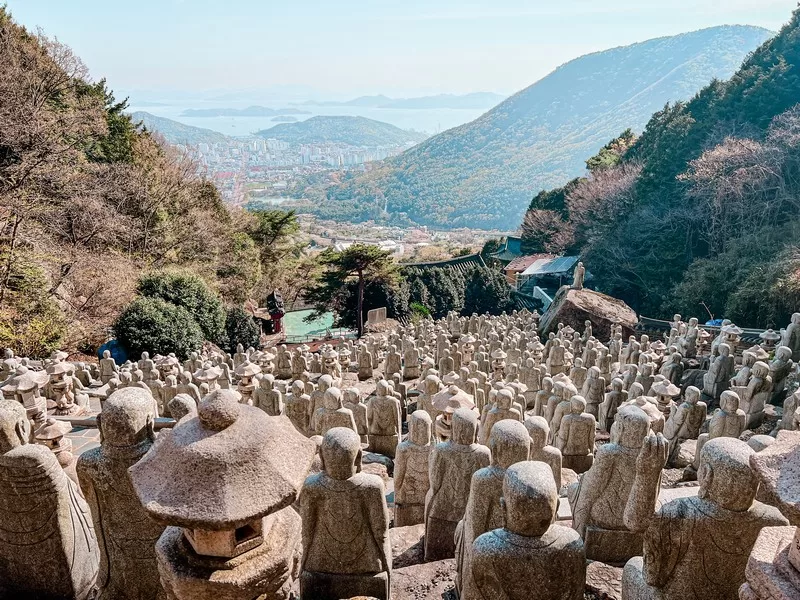
The most extraordinary feature of the temple, however, is saved for last. At the very back of the grounds, there are 500 stone Nahan statues (오백나한상), each one unique, each one weathered and watchful. The effect is quietly overwhelming.
If you’re new to Korean Buddhism, “Nahan” (나한) is the Korean term for Arhat, derived from the Sanskrit word “arhan.” These are figures who have reached the highest level of Buddhist enlightenment, transcending the cycle of death and rebirth. They’re considered supremely virtuous, and unlike Bodhisattvas, they were historically real people, disciples of the Buddha who achieved awakening during their lifetime.
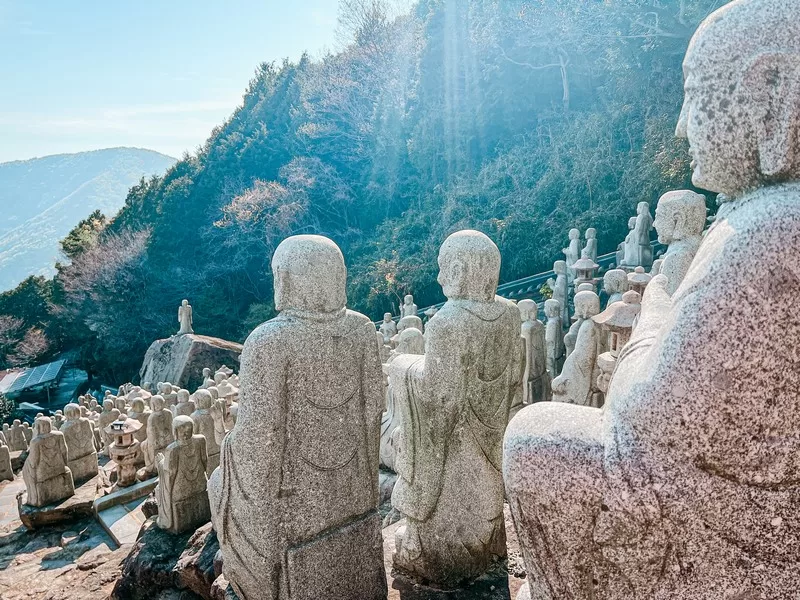
The tradition of the 500 Nahan (오백나한) refers to 500 enlightened monks who gathered after the Buddha’s death to preserve his teachings. You’ll find groupings of Nahan statues at temples across Korea, but something about the setting here at Sammilsa, perched on a mountainside with the sea visible in the distance, makes them feel especially present.
The different size, poses, and faces make them feel more real, like you could sit beside them and blend right in. Some look serene, some amused, some almost playful. When you first come upon them, they’re all staring down at you. Walk up to the top and turn around and now you’re looking out at the world with them.
A Brief History
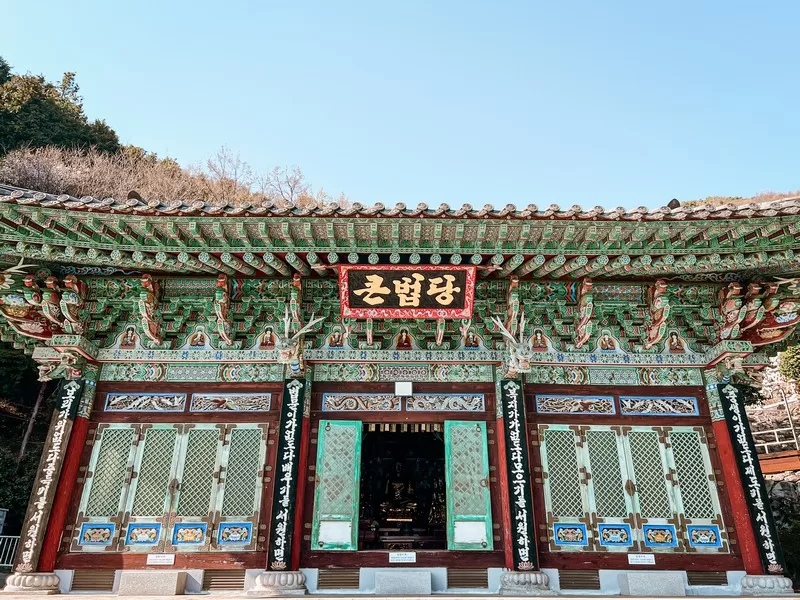
According to the temple’s own signboard, Sammilsa has roots going back to the Joseon Dynasty. It was originally founded in 1779 (the third year of King Jeongjo’s reign) under the name Mangwolam (망월암) by a monk named Dongho. Over time, the temple fell into ruin.
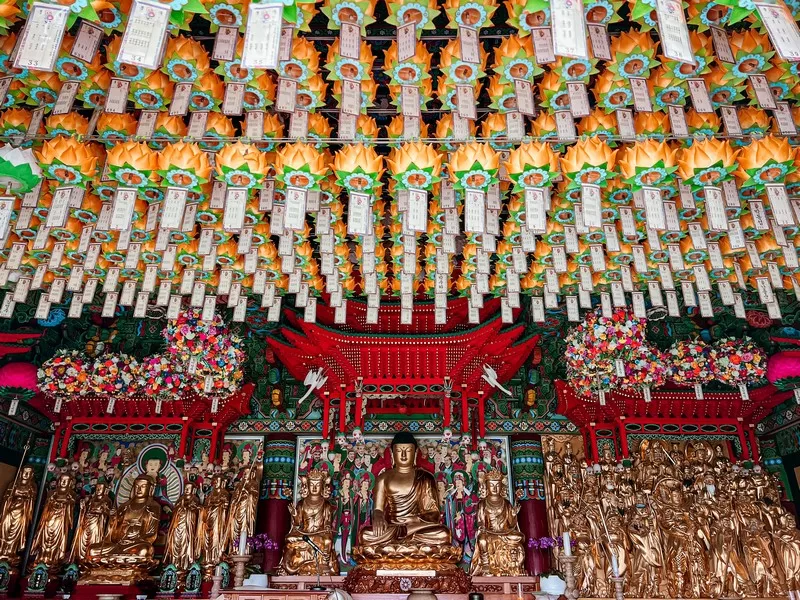
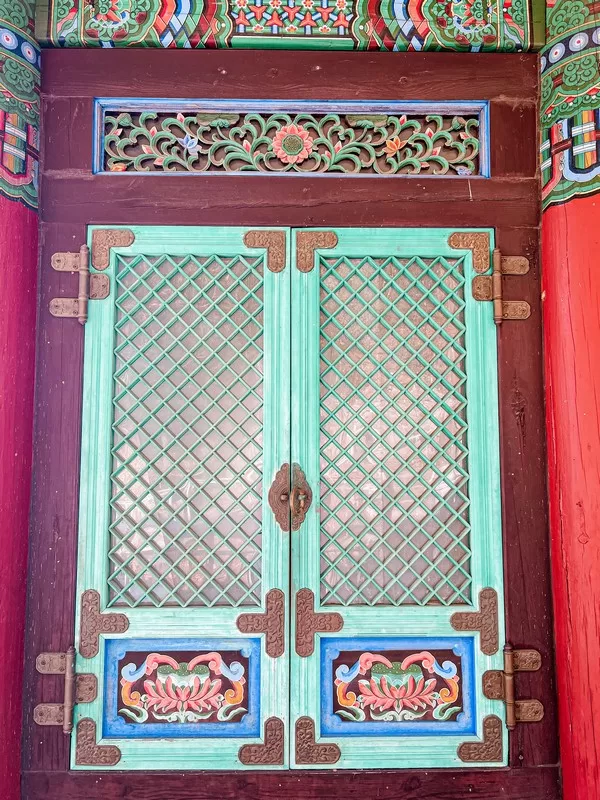
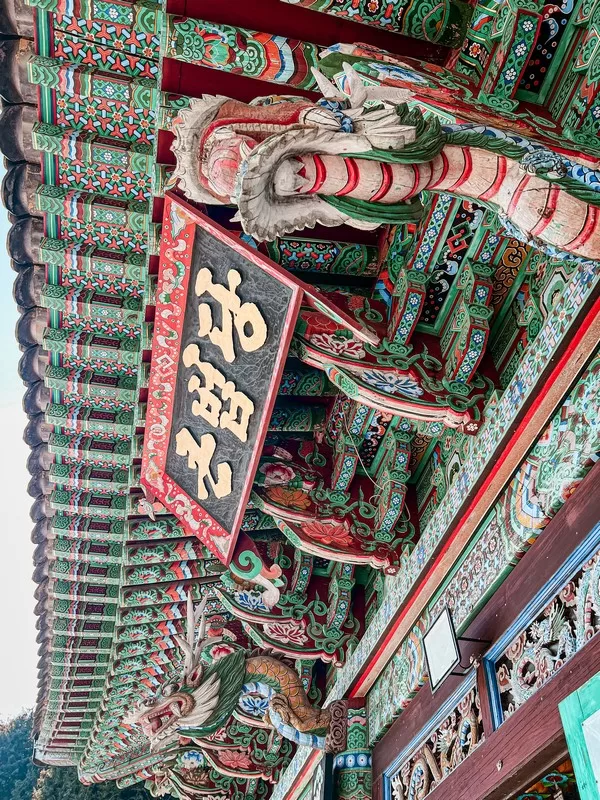
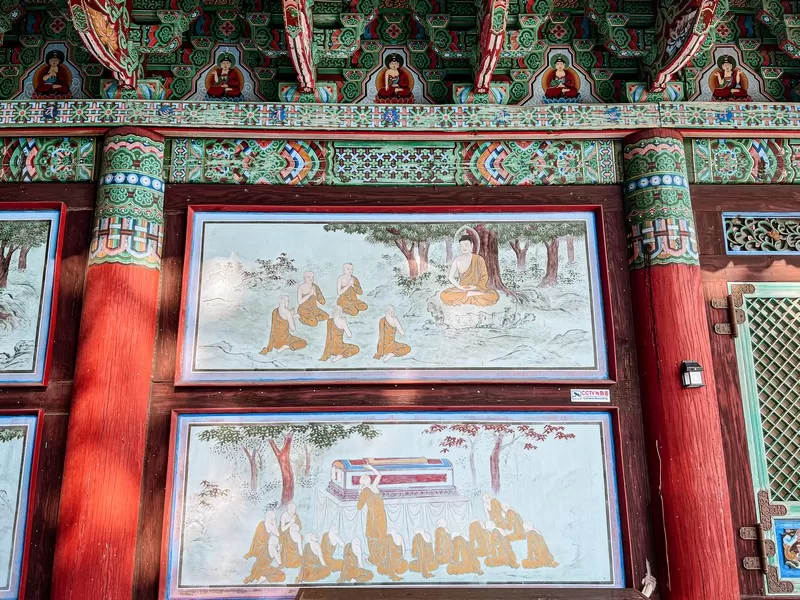
In 1982, a monk restored the site and renamed it Sammilsa, which it remains today. Most of the current structures and statues were built during this modern restoration period, which is part of why everything looks so well-preserved.
The View
Sammilsa sits on the slope of Jangboksan at an angle that opens directly toward the water. On a clear day, you can see Jinhae Bay stretching out below. The temple’s own signboard describes it poetically, saying the temple “embraces the sea in front of Jinhae in its chest.”
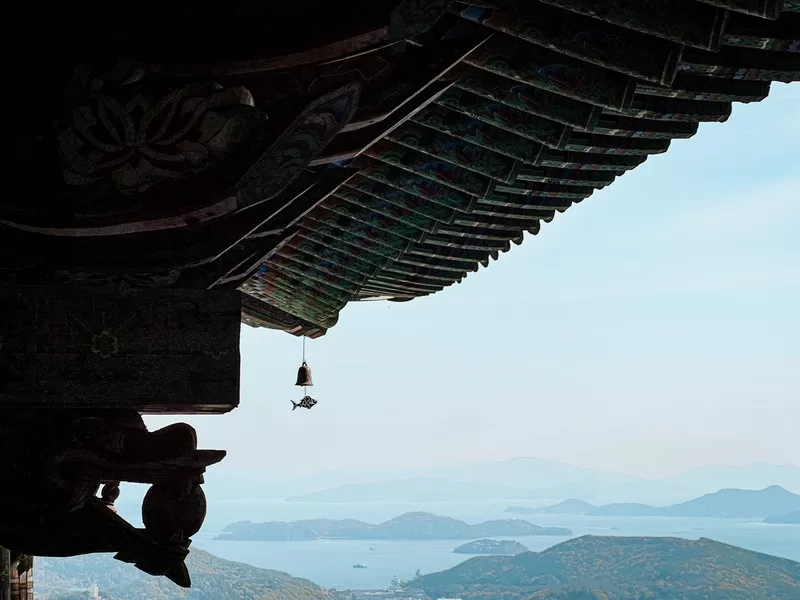
I stood there for a while, longer than I planned, just taking it in. There’s something about the combination of 500 stone figures, mountain air, and a wide open sea view that makes it very hard to leave in a hurry.
Sammilsa won’t appear on every Jinhae itinerary, and honestly, that’s part of what makes it special. A lot of people dash down to the city in the spring and dash right out again, but this is one detour that I recommend adding while you’re there to take in more of Jinhae, from a completely different vantage point.
Did you like this post? PIN IT!