Naejangsan National Park: Korea’s Most Famous Fall Foliage Destination
Last Updated on August 25, 2026
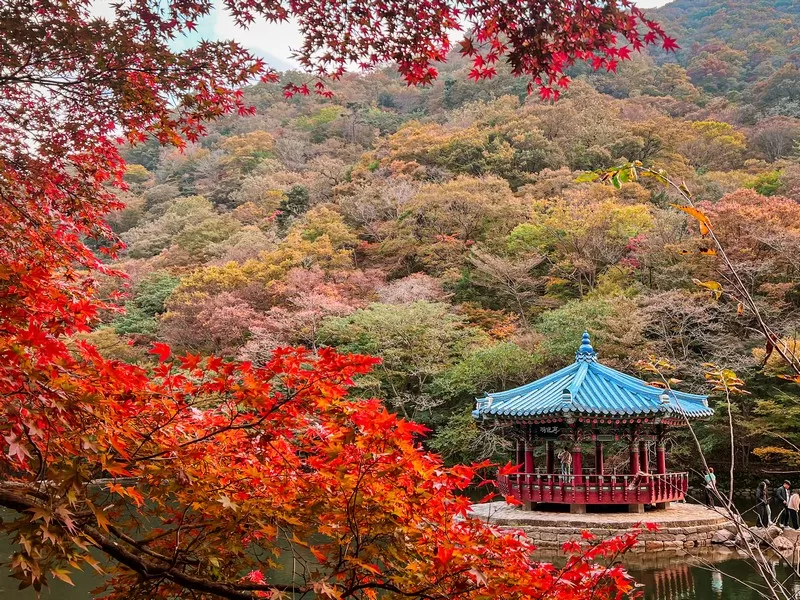
Fall foliage in Korea with those vibrant reds, warm oranges, and dazzling yellows is a sight and when it comes to getting out to see it and there is one spot in Korea that Koreans flock to year after year. Naejangsan National Park (내장산국립공원) is where Korea truly shows off her colors. Every November in Korea, this mountain in Jeongeup, Jeollabuk-do, turns into a living painting of red maples, golden ginkgoes, and deep orange oaks.
There are some great hiking trails in Naejangsan, but it also has one of the most family-friendly trails in Korea as well. It’s a perfect spot to be immersed in fall foliage without strenuous hiking (unless you want that!). From cable car rides to picturesque pavilions, this is where you want to go in Korea this fall for fall foliage fun.
Get ready to explore Naejangsan National Park and experience Korea’s most famous maple forest:
- Basic Info
- How To Get There
- The Best Time To Visit Naejangsan for Fall Foliage
- What To See In Naejangsan
(This post contains affiliate links, which means I receive a certain percentage of a sale if you purchase after clicking at no cost to you. Thank you for your support.)
Basic Info
Address: 328 Naejanghoban-ro, Jeongeup-si, Jeollabuk-do (전북특별자치도 정읍시 내장호반로 328)
Admission: Free
Best Time To Visit: Mid-October to mid-November for the autumn foliage
How To Get There
There are a number of ways to reach Naejangsan National Park. Choose what’s right for you:
Join a Tour: If you want to have the easiest and most efficient trip without worrying about transportation, join a tour. This is also a great option if you’re going solo. There are some great options for Naejangsan.
- Departing from Seoul or Busan – Naejangsan National Park Autumn Maple Day Tour: Sign up to join this tour with Klook, with kkday, or with Creatrip.
By KTX: Take the KTX to Jeongeup Station. From Seoul this takes about 1.5 hours. From there, you can take local bus # 171 to Naejangsan Bus Terminal, which is at the entrance to the park, in about 30 minutes.
By Intercity Bus: Intercity buses will get you right to Naejangsan Bus Terminal from Seoul in about 3 hours.
The Best Time To Visit Naejangsan for Fall Foliage
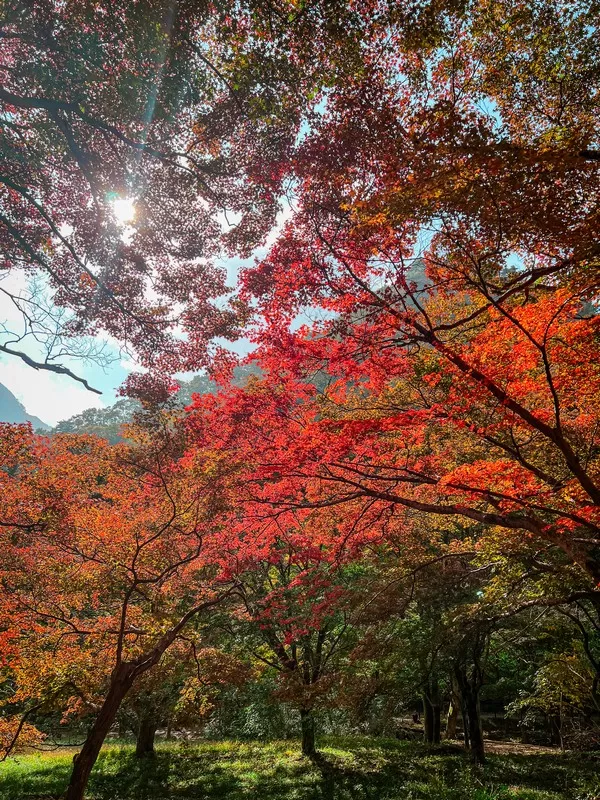
- Peak Season: The first week of November
- Color-change begins: Mid-October
- Last leaves fall: Mid-November
During this period, Naejangsan sees nearly 100,000 visitors per day, so plan an early start. You’ll also find food stalls, souvenir vendors, and local specialties like pajeon and makgeolli around the entrance and temple areas.
Tips for Visiting Naejangsan During Peak Season
- Go early: Crowds will really start arriving by 10:00am during peak foliage times. Get there as early as you can.
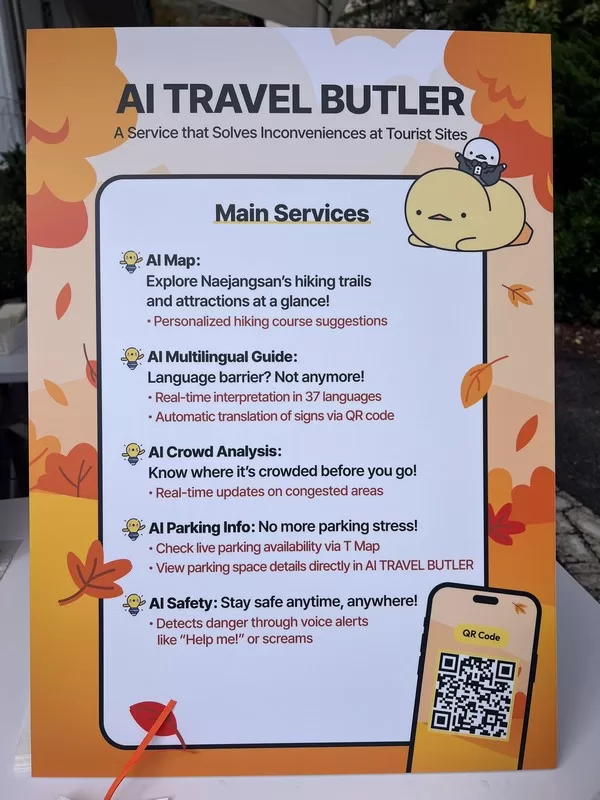
- Use Travel Butler: Naejangsan is a testing ground for a new AI service that keeps up to date with crowds, letting you know where there is more or less space. We used this when deciding when to head to the cable car and it worked fabulously. You can find QR codes at various places to use Travel Butler in the park. It offers multilingual guides, recommended routes, congested areas.
- Dress in layers: Mornings and shady areas are chilly, but if you’re moving up those steps and it’s sunny, it is quite warm. You’ll want to be able to remove and add on those layers throughout your visit.
What To See In Naejangsan
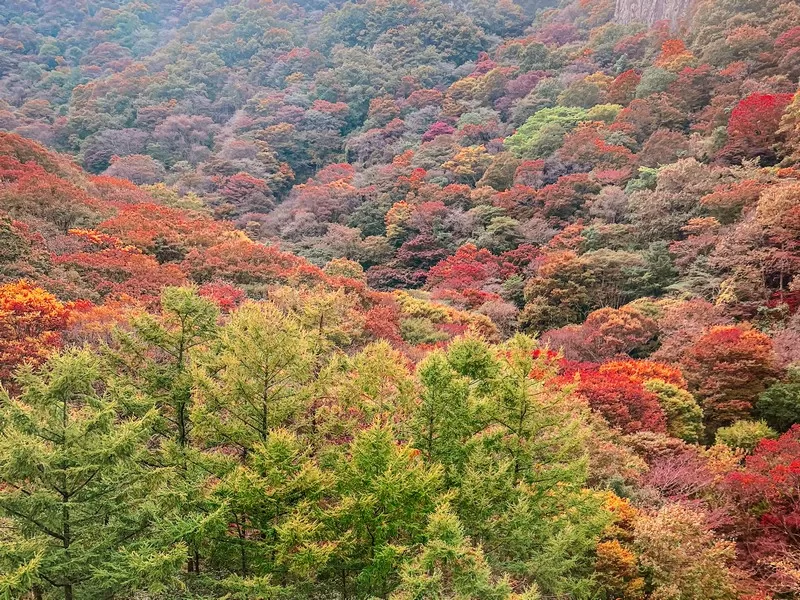
Standing under a canopy of blazing red and gold, you understand why Naejangsan has been famous for 500 years. The name itself means “something hidden inside the mountain,” and it truly feels like there’s magic tucked away in every corner.
We took an easy loop trail that introduced us to temples, foliage, and a family-friendly trail. In total this route takes about 1.5 hours and that was with our slower pace and a sit down to eat. Here’s what you’ll see.
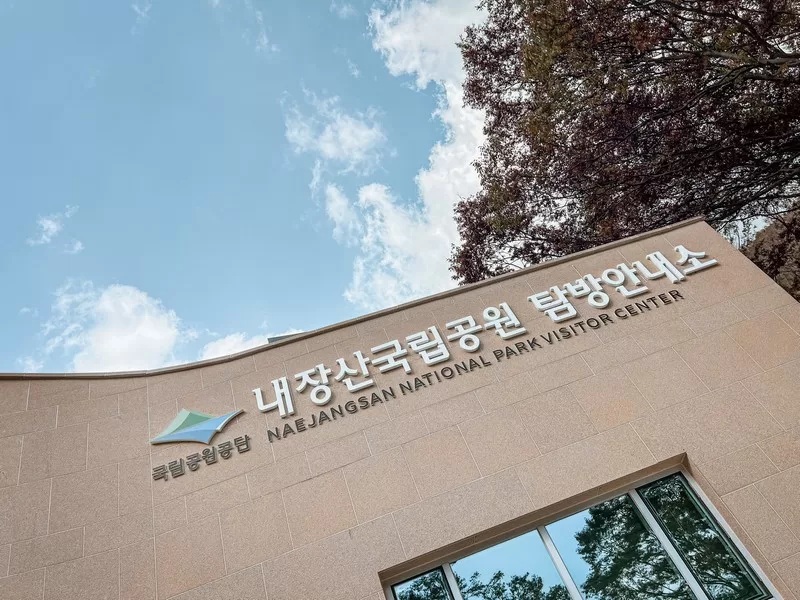
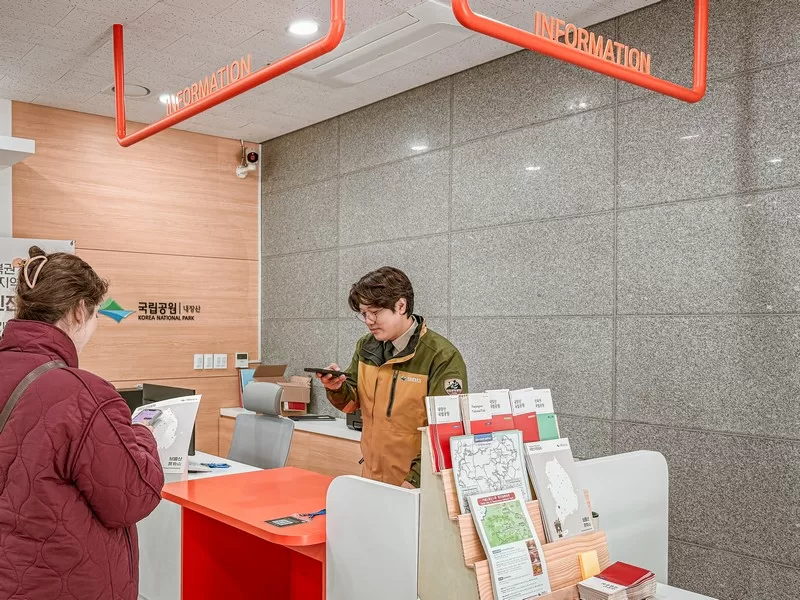
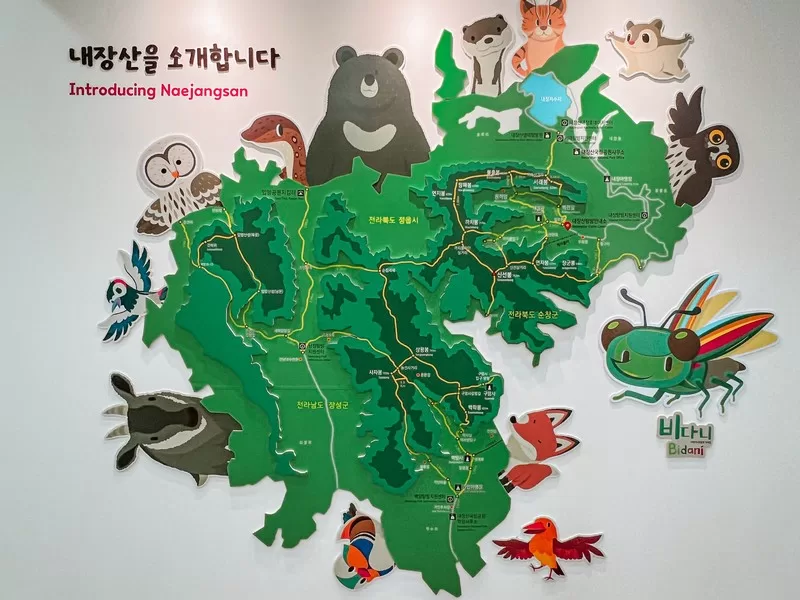
Naejangsan National Park Visitor Center (내장산국립공원 탐방안내소)
Make your first stop be at the visitor center. I never skip visitor centers personally. Not only do they have fantastic information, but you can find out if there are special promotions and events going on as well. If you have kids, they’ll like this spot too as there’s a little exhibition on the different animals and bugs they should have their eyes peeled for while they’re out and about.
Tip: This is also a good spot to go to the bathroom before you really get started on your trek, though there are some at the temples as well just so you know.
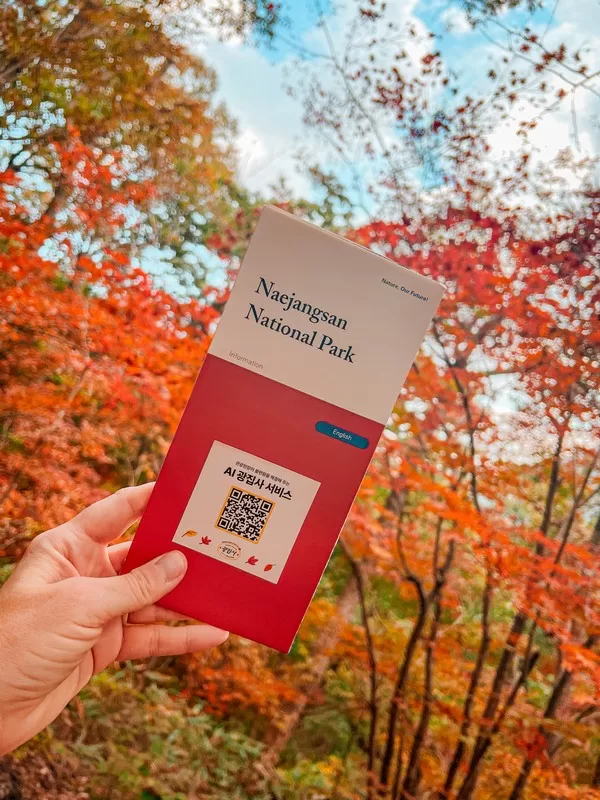
AI Travel Butler
I was excited to test out this new service that the Korean Tourism Organization is testing out in Naejangsan from now until April, 2026. If it goes well, they aim to release it in parks and tourism sites around the country.
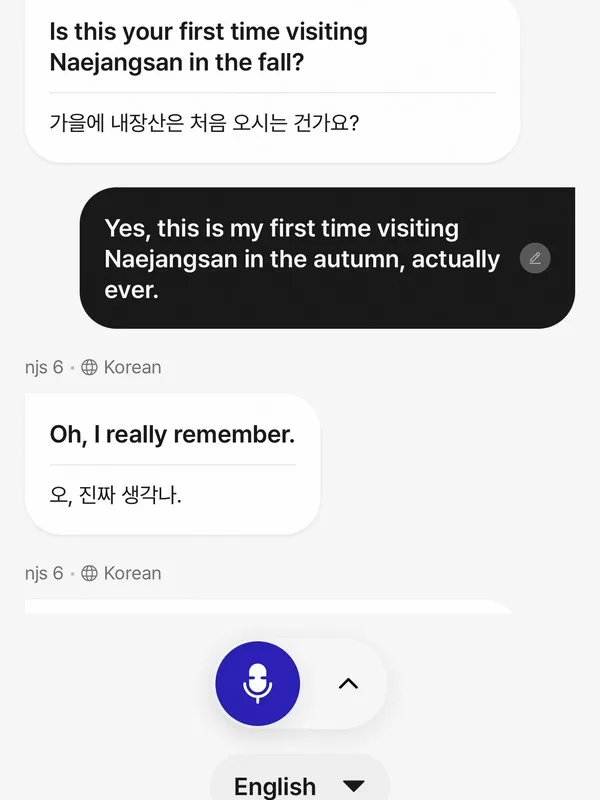
What is AI Travel Butler? It is a multilingual guide service. Among the things it can do, when you arrive, if you scan the QR code, you’ll be directed to add some information about yourself so it can recommend the best route for you to take in the park. It also lets you know congestion levels in real-time. This was how we were able to use the cable car without waiting for 1+ hours.
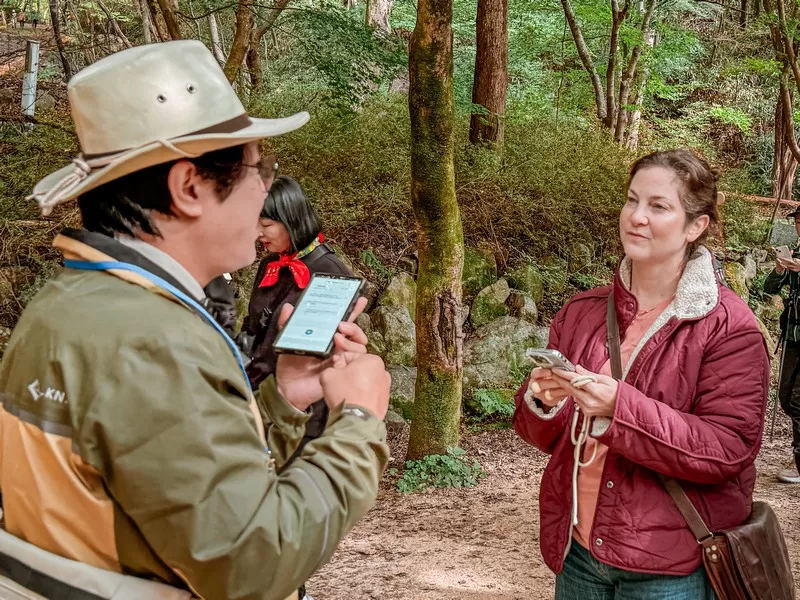
Docent interpretation & Information desk translation services: If you don’t speak Korean, this will be your favorite part of AI Travel Butler. The Information Desk staff are currently utilizing this to speak with guests in a number of languages. We were using English, but while we were there, some other guests came that spoke French and used it as well. It’s quick and easy and allows for more in depth information.
This also allowed us to join the Korean docent program. Often parks offer a ton of different programs in Korean, but only one or two in other languages if at all. This allows foreigners to join the local docent tours and programs because it translates into multiple languages in real-time.
Iljumun Gate (일주문)
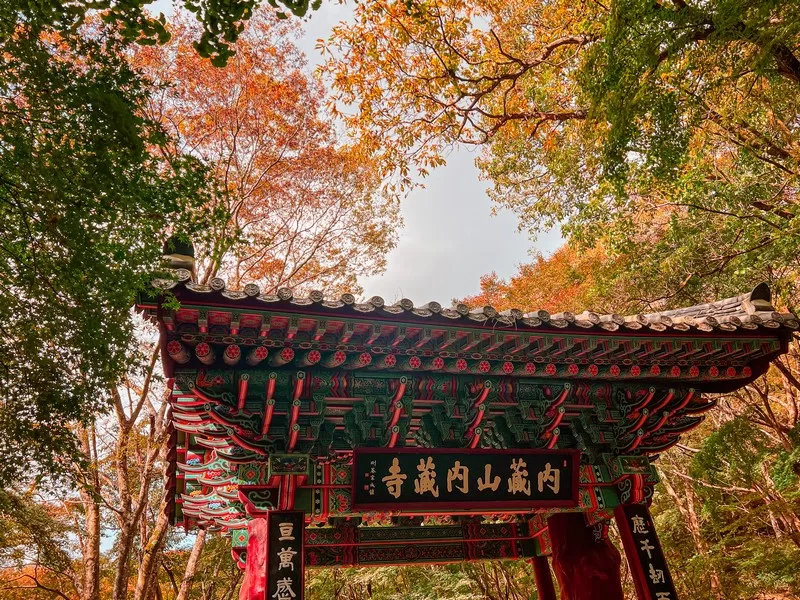
The real start of the maple tree beauty and trek into the forest starts here at Iljumun Gate. From this gate that was rebuilt in 1973, there is a 1-kilometer maple-lined path that leads to the main grounds of Naejangsa Temple.
Maple Tunnel
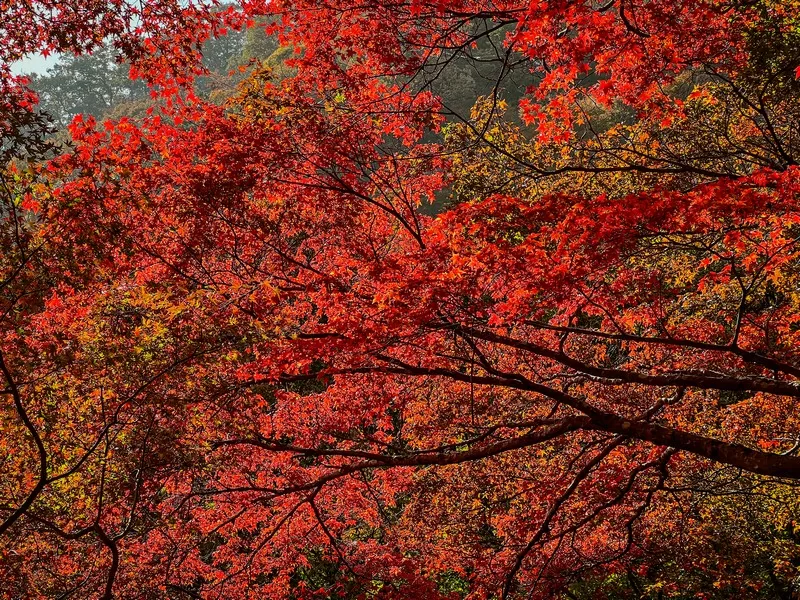
One of THE spots that everyone wants to visit in Naejangsa in the fall is the Maple Tunnel. This 1-kilometer long path has 108 maple trees planted on either side of the past.
If you understand the importance of the number 108 in Buddhism, then you’ll understand why this number of trees has been planted. Here, the 108 represents the emotions, worries, and concerns that a person has and as we walk along the path, it is hoped that we leave with a lighter heart.
Naejangsa Temple (내장사)
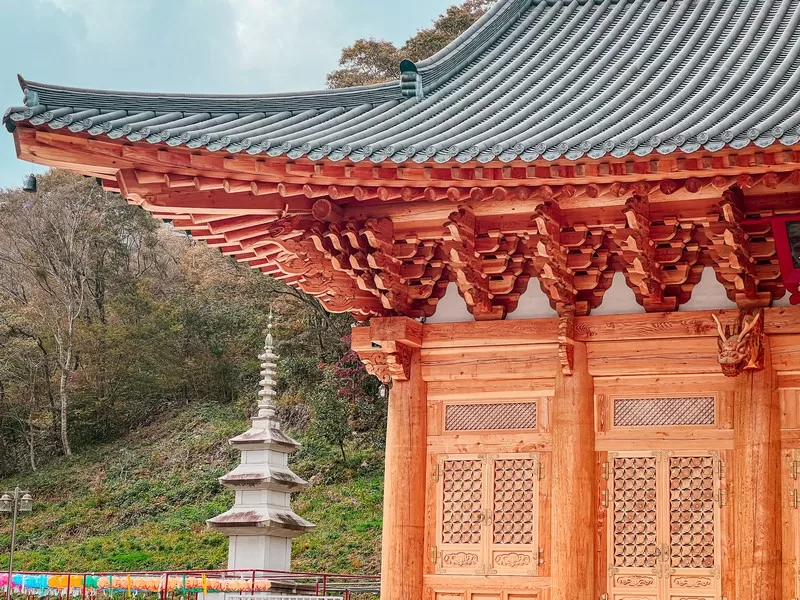
Naejangsa, meaning “storing Inside”, Temple is believed to have been first established in 636 CE during the Baekje Kingdom by monk Yeongeun-josa. Originally called Yeongeunsa Temple, it was renamed Naejangsa in 1557 after being rebuilt by monk Huimuk.
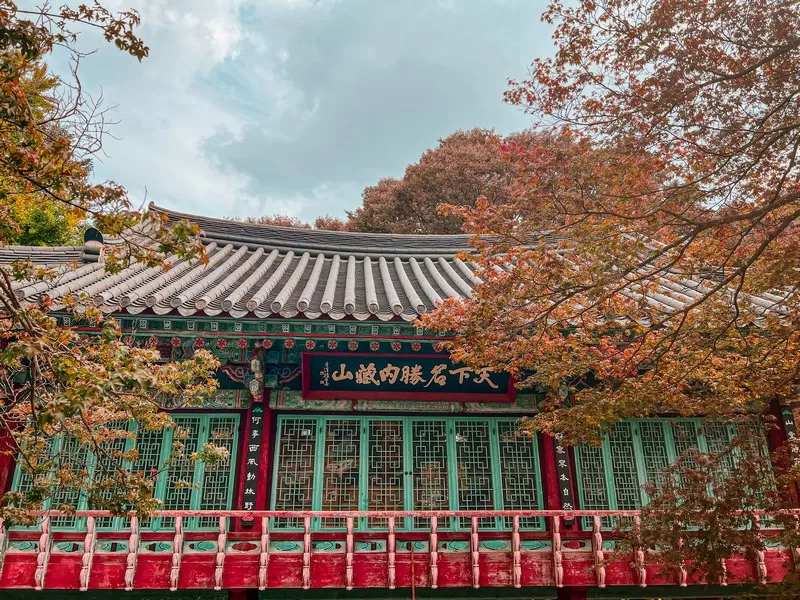
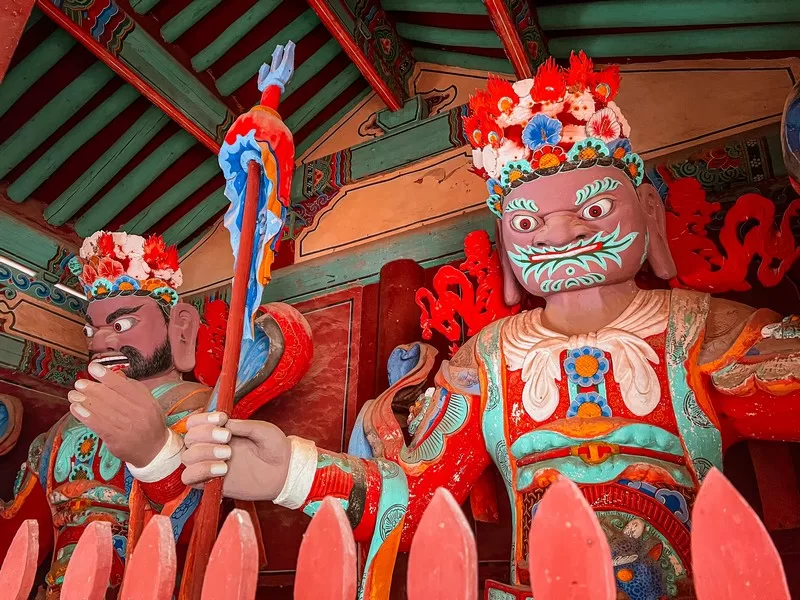
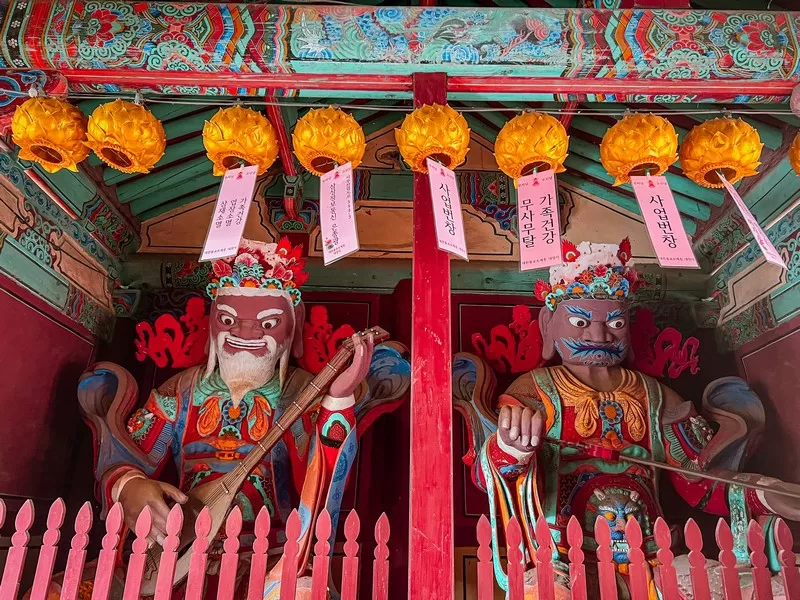
We arrive through Jeonghye-ru Pavilion, walking up the steps to admire Daeung-jeon Hall, the main hall that was rebuilt after a fire. There are some fantastic dragon carvings. Get closer to take a look. There is also a three-story stone pagoda as well as a number of other halls you are welcomed to enter.
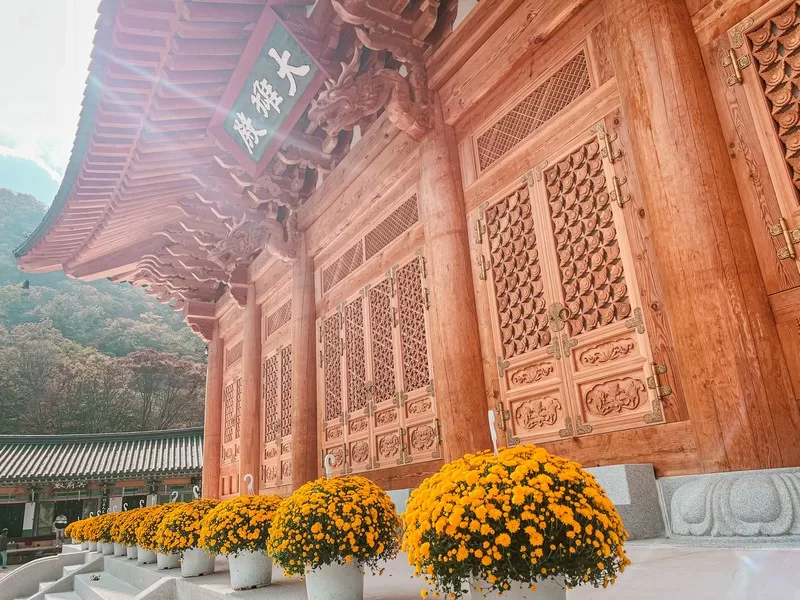
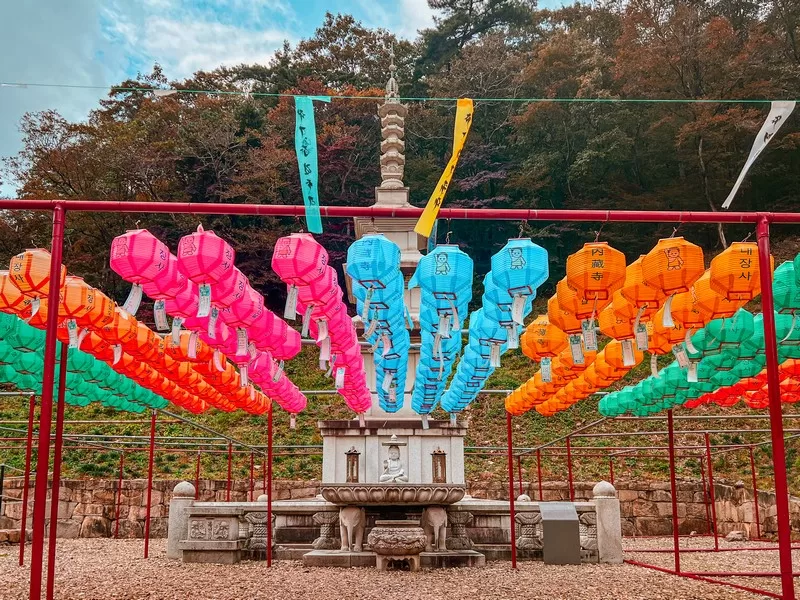
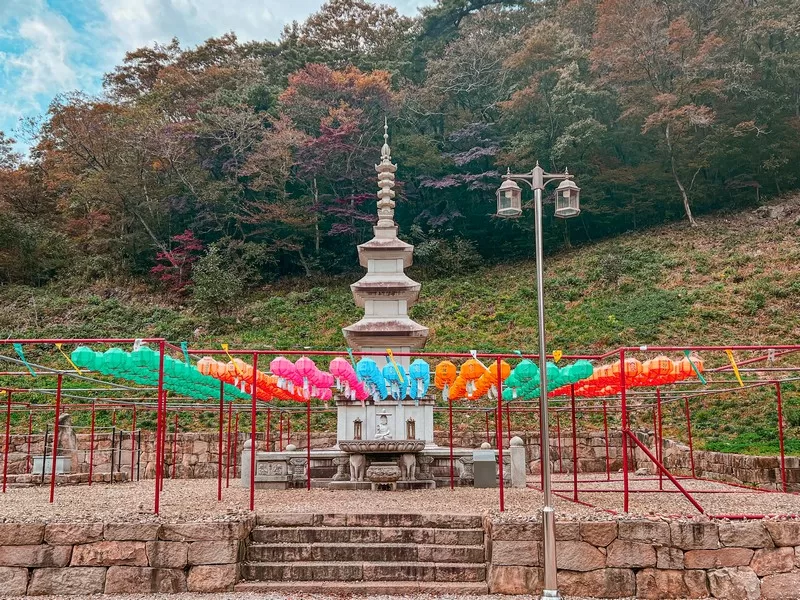
Historically, the site once hosted around 50 temple buildings, but they were destroyed multiple times during foreign invasions and the Korean War. Most of what stands today has been reconstructed in modern times, though that doesn’t take away from the experience of visiting.
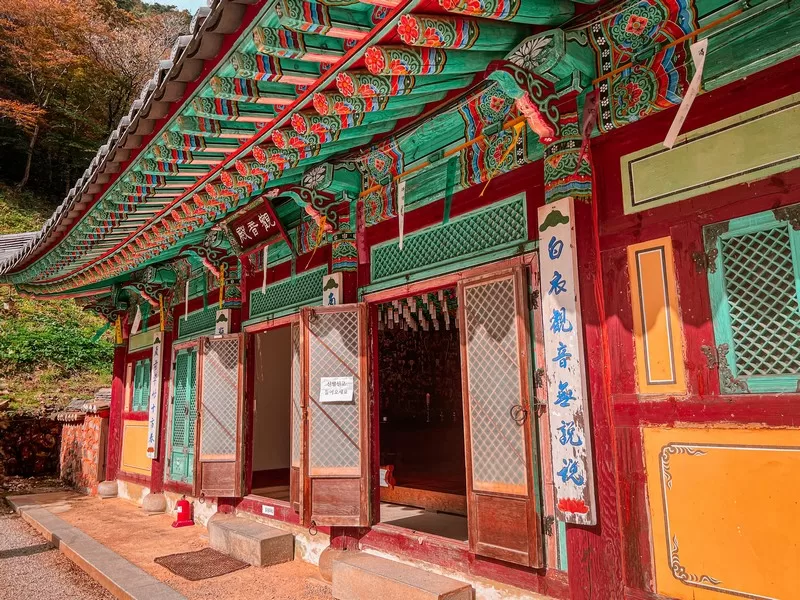
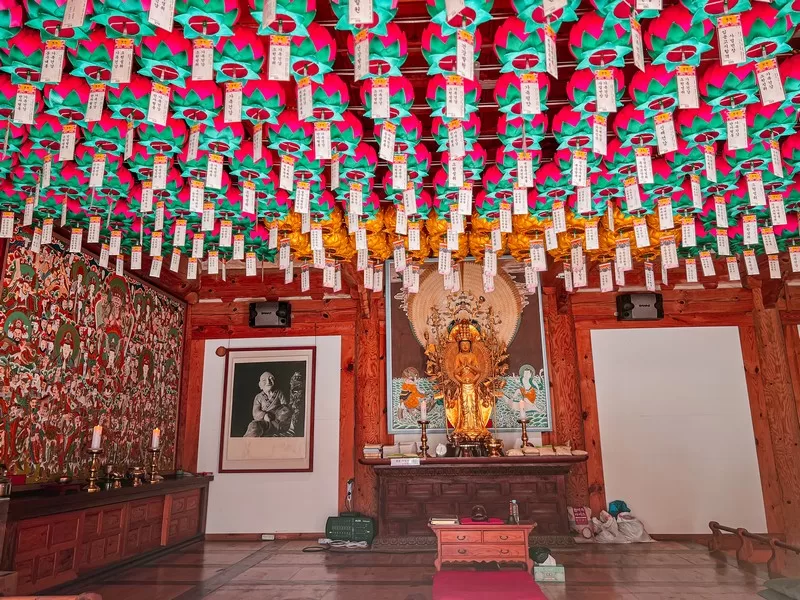
Despite its turbulent past, Naejangsa remains as one of the emblematic temples of the Jeollabuk-do province, alongside Geumsansa Temple. The temple setting is gorgeous, especially in the autumn as it’s surrounded by vivid red and gold leaves.
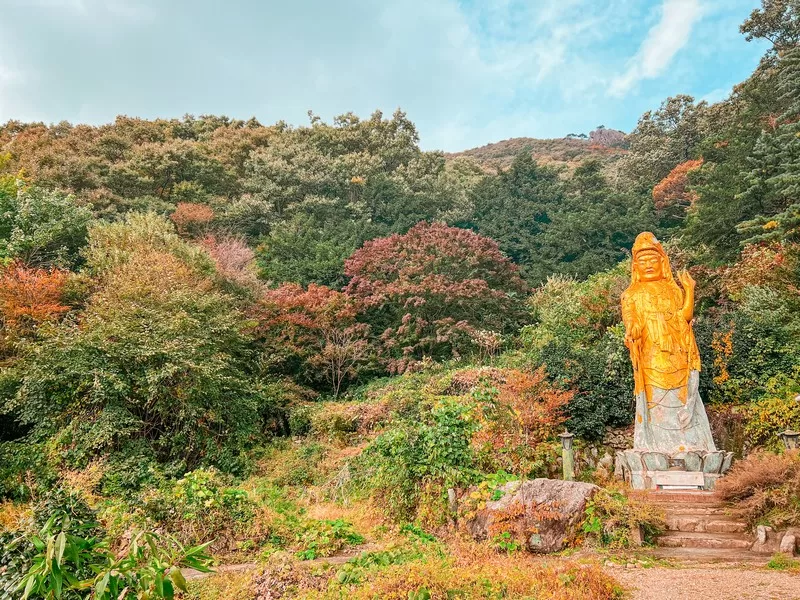
Hike to Wonjeokam Hermitage (원적암)
From Naejangsan Temple on the trail to Wonjeokam Hermitage, it’s mostly flat and shaded, making it easy for families and beginners. We stopped at a little local spot to eat on this trail. The sign said they’ve been there for years.
They have ramen and other Korean-hiking must-eats, jeon and makgeolli too of course. Here it is much quieter than the restaurants and stalls at the beginning of the path. Lighter food, but better ambiance.
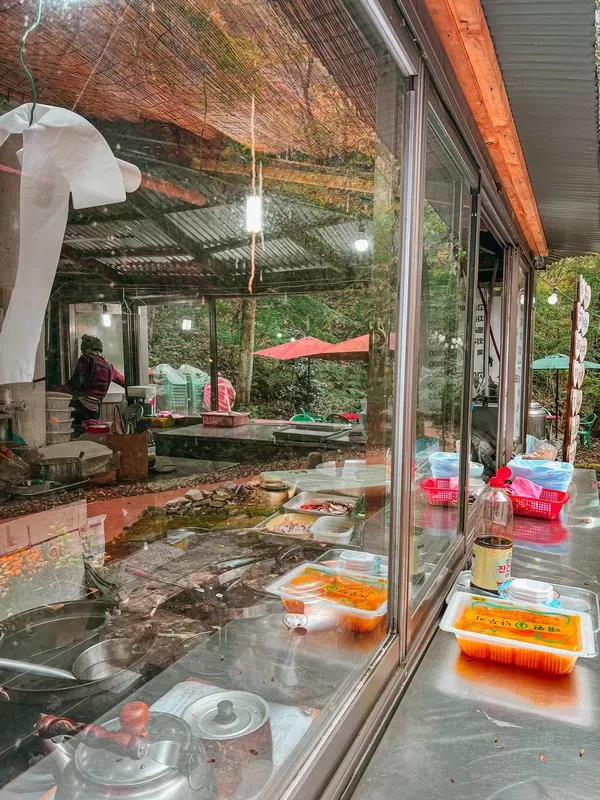
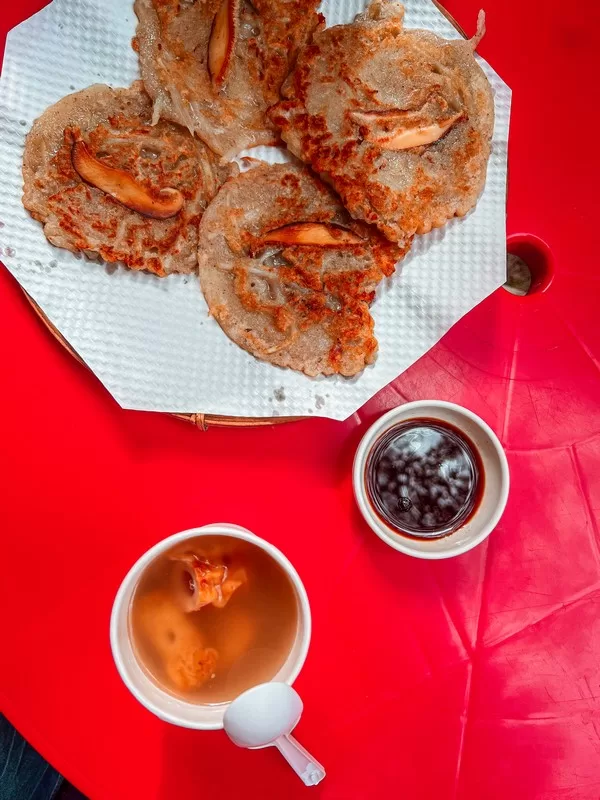
Just before reaching the hermitage there is a steep staircase that heads up. A lot of families and groups with older members stopped here and turned back to walk the way they came having had enough of the trail. If you decide to push ahead, just know, this staircase is only about 10 minutes and then you’re on the upper trail and it’s flat from there on out again.
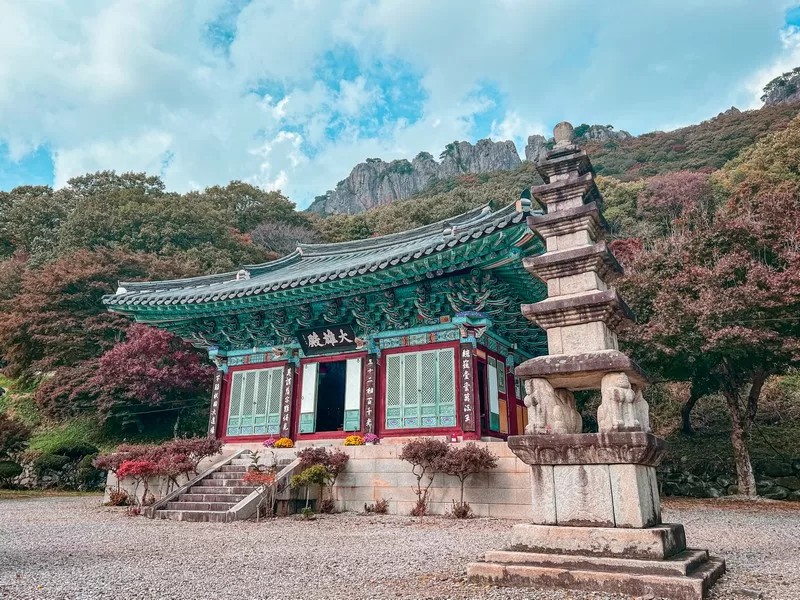
At the top you are welcomed by Wonjeokam Hermitage. It’s very small. Founded by a Buddhist monk Jeogam in 1086, originally there was a large 7-bay main prayer hall here. It was destroyed by fire though, and was only rebuilt in 1961 as the tiny structure we can see today.
Byeongnyeonam Hermitage Loop (벽련암)
From Wonjeokam, we looped back toward Byeongnyeonam Hermitage. There was a spot you could go up to Bulchulbong peak if you wanted, but we were taking a leisurely foliage wander so we kept our pace beneath the rustling leaves. We were a bit early for the peak foliage unfortunately, but there is a giant ginkgo tree here that will be gorgeously yellow in a couple of weeks.
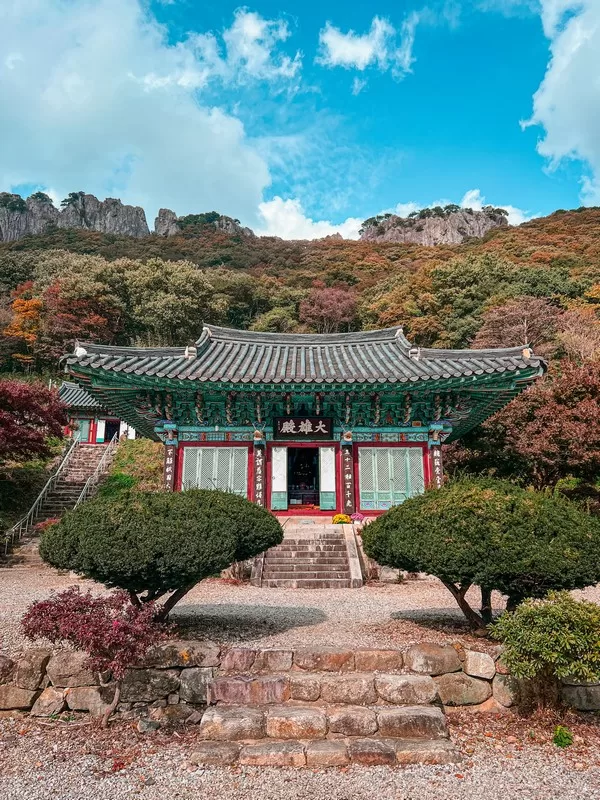
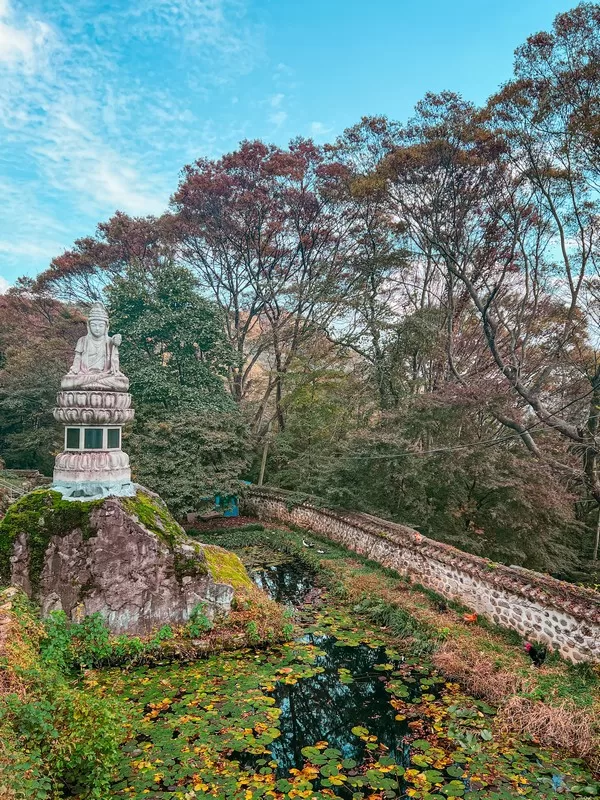
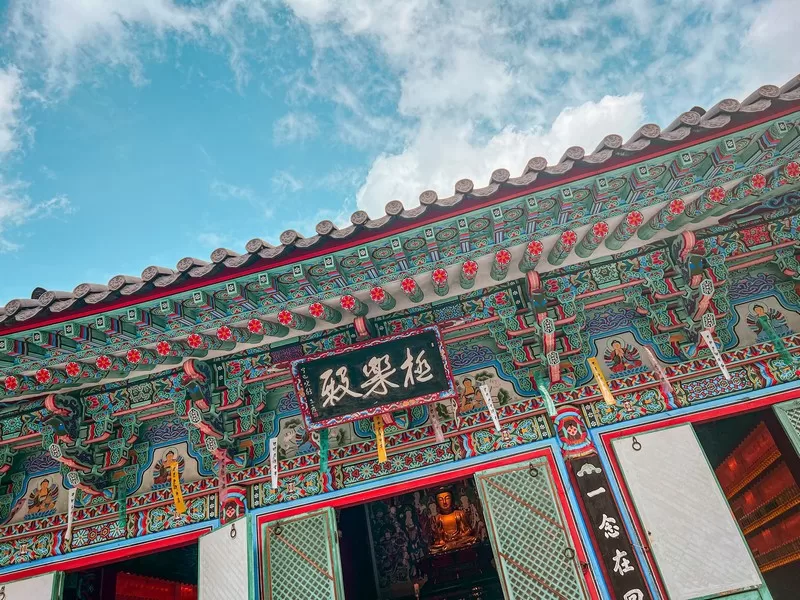
Byeongnyeonam Hermitage was the original Naejangsa Temple, however when Yeongeunam Hermitage was renamed to Naejangsa Temple, these temple grounds were renamed as well. Founded by Master Hwanhae in 660, the main hall, Geungnakbojeon Hall, and temple dormitory were rebuilt in 1925 by Master Baek Hak-myeong after it was destroyed by fire.
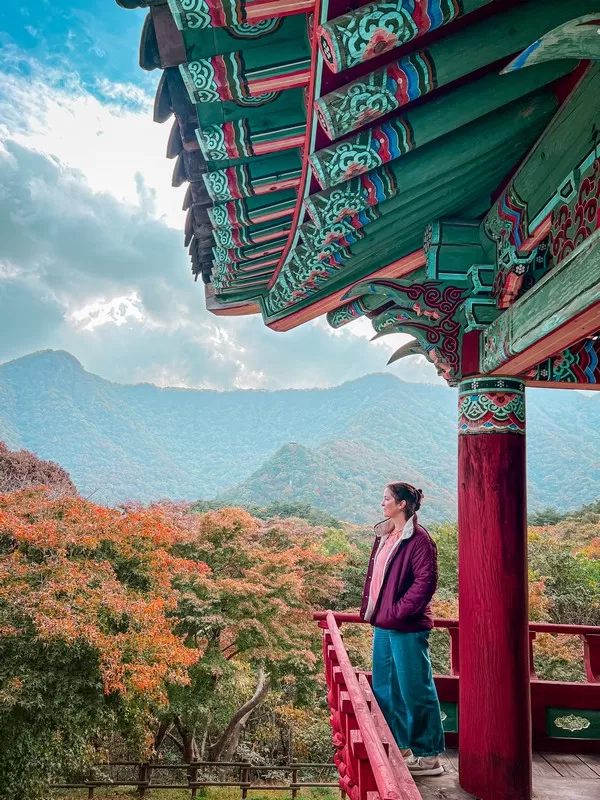
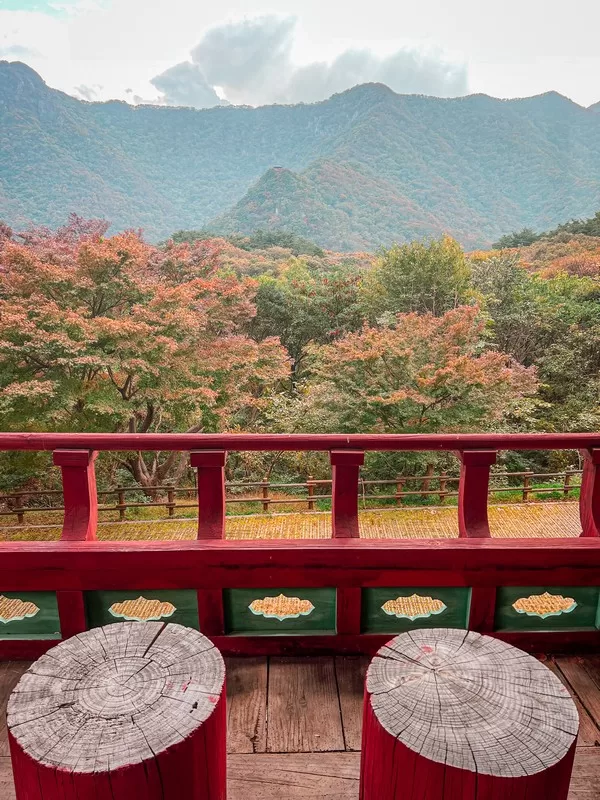
According to a local legend, Buddhist monk Huimuk threw stones down from the summit of Seoraebong Peak, and his best disciple, Buddhist monk Huicheon caught them and built the foundation of the hermitage with them.
Tip: There is a beautiful pavilion here where you can sit and take in the mountain views. Right after this, the trail is all downhill back to the beginning so take this spot in before you descend.
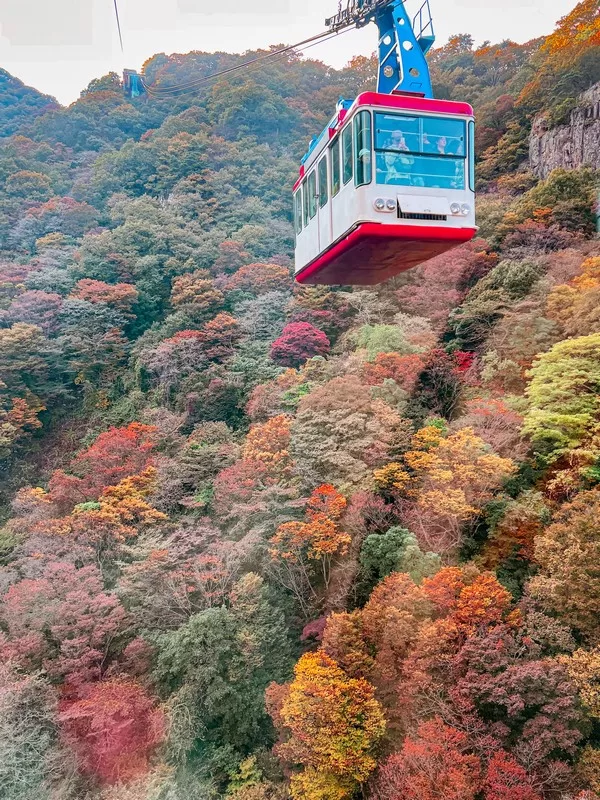
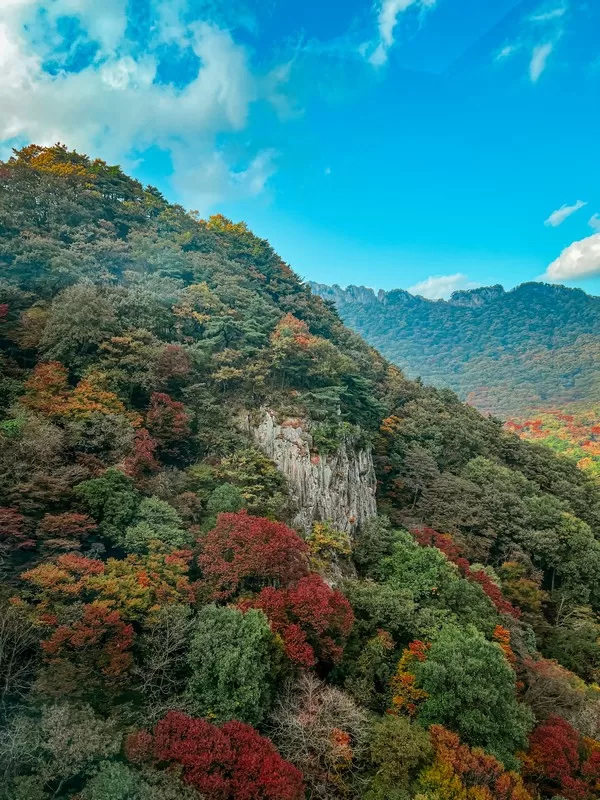
Naejangsan Cable Car (내장산 케이블카)
The cable car in Naejangsan can be taken either at the beginning or the end of the loop. It’s easily accessible with a parking lot right at the entrance. It provides a stunning ride out over the trees and once at the top, you can take a walk 300 meters to the Yeonjabong Peak observatory.
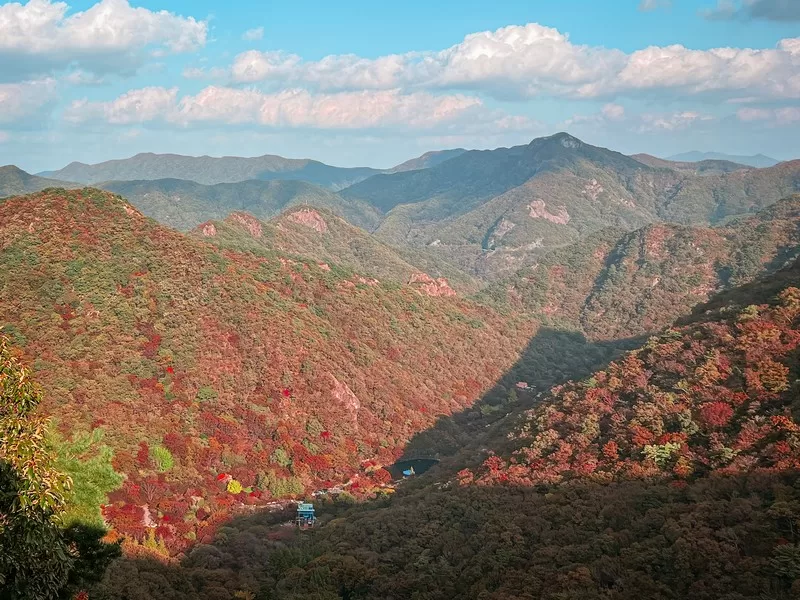
Alternatively, you can take a seat on the roof of the cable car station to take in the views with a drink and snack from the shop.
- Address: 936 Naejangsan-ro, Jeongeup-si, Jeollabuk-do (전북특별자치도 정읍시 내장산로 1179-11)
- Hour: 9:00am ~ 5:30pm
- Admission: Adult roundtrip: W11,000; Children roundtrip: W7,000
Tip: Check the Travel Butler site for congestion levels at the cable car. When we arrived, it said it was busy and would be a 1+ hour wait so we opted to bypass it for the trail. When we came back around again and checked, it said “ample space” so we headed over and it was a quick 15 minutes in the line to get on the next car up.
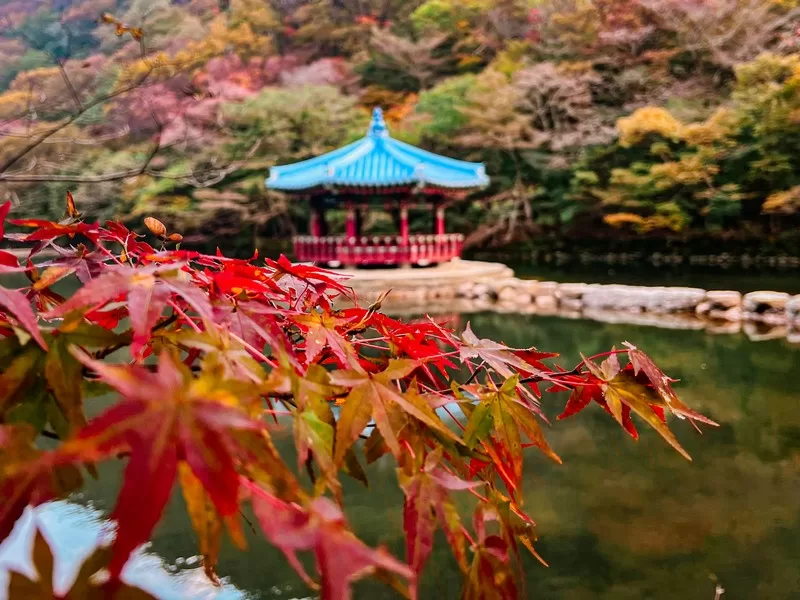
Uhwajeong Pavilion (우화정)
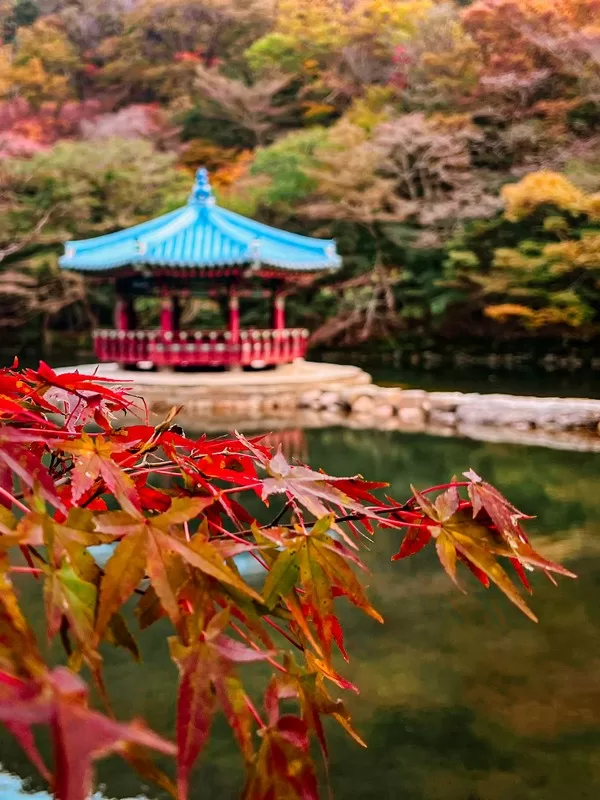
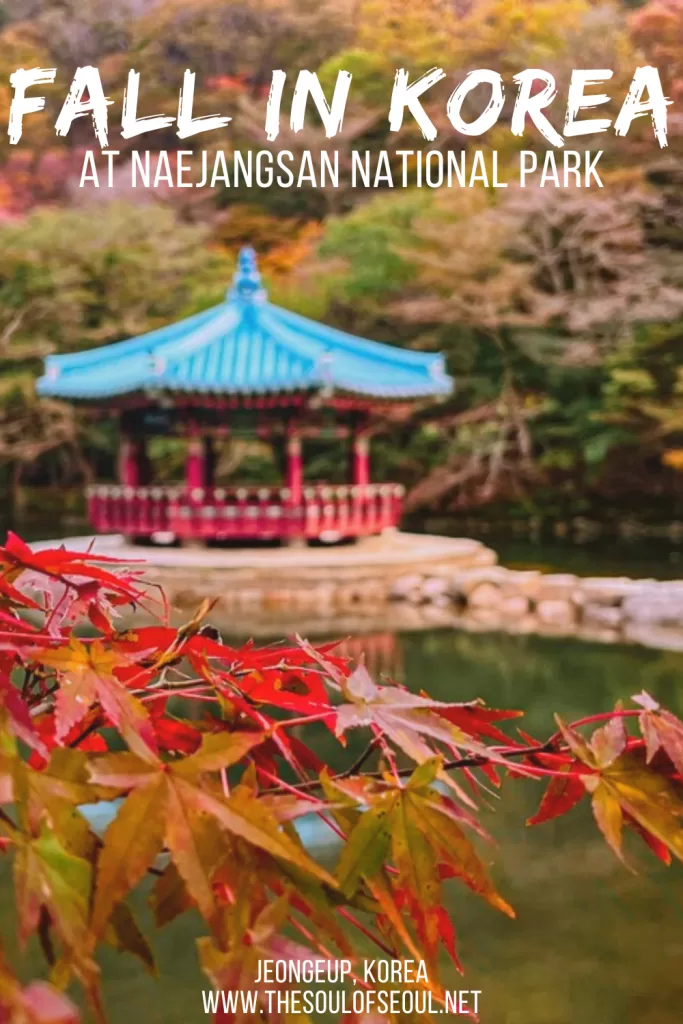
One of the most iconic photo spots in Naejangsan National Forest is the Uhwajeong Pavilion which is actually before the cable car or trail. You can get here without much difficulty at all in fact. Take your time when you visit, as everyone wants a photo. It’s a beautiful spot to sit and rest after you’ve done the trail.
- Address: 936 Naejangsan-ro, Jeongeup-si, Jeollabuk-do (전북특별자치도 정읍시 내장산로 1179-11)
Naejangsan National Park is one of the most popular places to see fall foliage in Korea for locals. They flock here each year to see a maple tree forest so beautiful, you have to see it to believe it. Want to travel like a local? Go here. It’s a must visit.
Did you like this post? Pin iT!

One Comment
Haley McKittrick
Thanks!