Korean Ghosts: A Guide To the Scariest Creatures in Korean Folklore
Last Updated on April 28, 2026
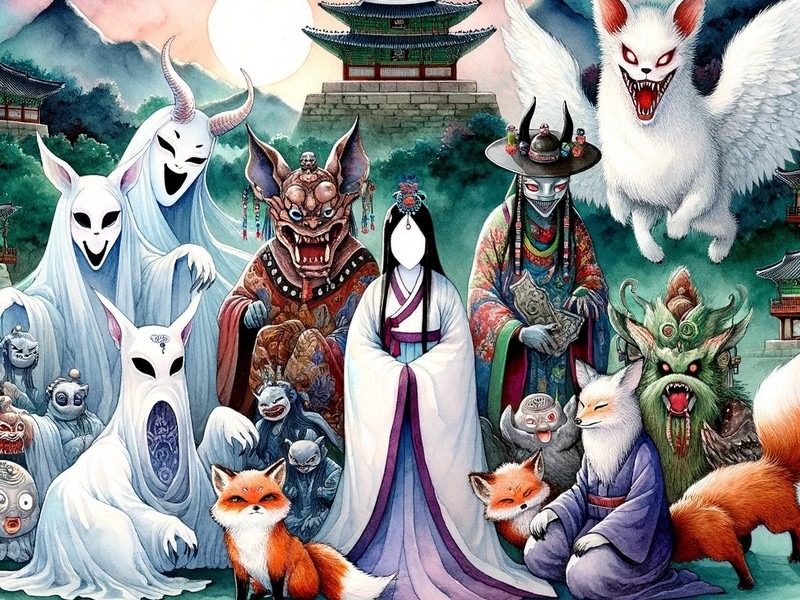
Whether you’re interested in reading some spooky tales before Halloween this year, or just interested in Korean folklore and mythology, there are some truly creepy and scary creatures you should learn about.
From the vengeful spirits of the gwishin, who wander the earth unfulfilled, to the cunning dokkaebi, who navigate the moral compass of right and wrong with mischief, they are just the beginning to the lore you can explore in Korean history and culture. Korean mythology is fascinating… you’ll see.
Find out about the creatures that will freak you out in Korea:
- The Creatures at a Glance
- What To Know About Korean Supernatural Creatures
- Gwishin (귀신)
- Dokkaebi (도깨비)
- Gumiho (구미호)
- Jeoseung Saja (저승사자)
- Yeomna (염라)
- FAQ
*Images in this article were generated using AI.
(This post contains affiliate links, which means I receive a certain percentage of a sale if you purchase after clicking at no cost to you. Thank you for your support.)
The Creatures at a Glance
| Creature | Korean | Type | What they want |
|---|---|---|---|
| Gwishin | 귀신 | Ghost | To finish unfinished business |
| Dokkaebi | 도깨비 | Goblin-demon | Mischief, games, stealing from the rich |
| Gumiho | 구미호 | Nine-tailed fox | To become human (via your liver) |
| Jeoseung Saja | 저승사자 | Grim reaper | To escort the dead, sometimes for a bribe |
| Yeomna | 염라 | Underworld king | To judge dead souls |
What To Know About Korean Supernatural Creatures
When you begin to delve into the world of Korean folklore and myths, you’ll find that there is a fascinating number of creatures, gods, and spirits that you can learn about. Korean lore is an interesting amalgamation of cultural elements and beliefs including Buddhism, Taoism, Shamanism, and Confucianism which makes it super interesting but can also be cause for confusion as you try to figure out how the stories are connected… and they’re not always as they come from various regions of Korea at various times in history.
There are three categories of supernatural and mythological creatures in Korea:
- Mindam (민담): Folklore
- Shinhwa (신화): Myths
- Jeonseol (전설): Legends
Most of the scary creatures and ghosts fall into the myths and folklore categories; “shin” even refers to spirits, ghosts, and monsters.
For the full framework of Korean mythology including the foundation myth, read the complete guide to National Foundation Day and Korean mythology.
Gwishin (귀신) — Ghosts
The most well-known Korean creatures of myth are the gwishin (귀신), or Korean ghosts or spirits that have business to take care of. They have not fulfilled their purpose on earth and thus they are left to roam the earth and are considered quite vengeful. There are a number of different kinds of Korean ghosts you should be aware of.
There are several distinct types:
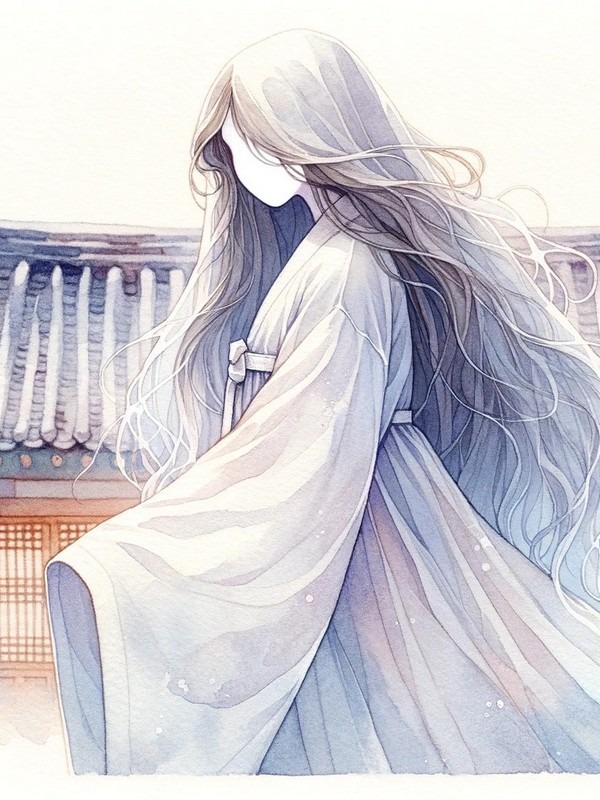
- Cheonyo Gwishin (처녀귀신) — The Virgin Ghost
- The most commonly depicted Korean ghost: the spirit of a young woman who died unmarried and thus could not fulfill the role expected of her. She appears in white mourning clothes with her long hair loose and unbound, the way a married woman would have tied it back. Many scholars argue this tale was used during the Joseon period to pressure young women into early marriage by making the alternative frightening.
- Chonggak / Mongdal Gwishin (총각귀신 / 몽달귀신) — The Bachelor Ghost
- The male equivalent of the cheonyo gwishin. A man who died unmarried wanders as a mongdal gwishin, denied both the jesa (ancestral memorial rites) that married men would receive and the social dignity of a complete life. Considered particularly volatile, said to cause illness in the living.
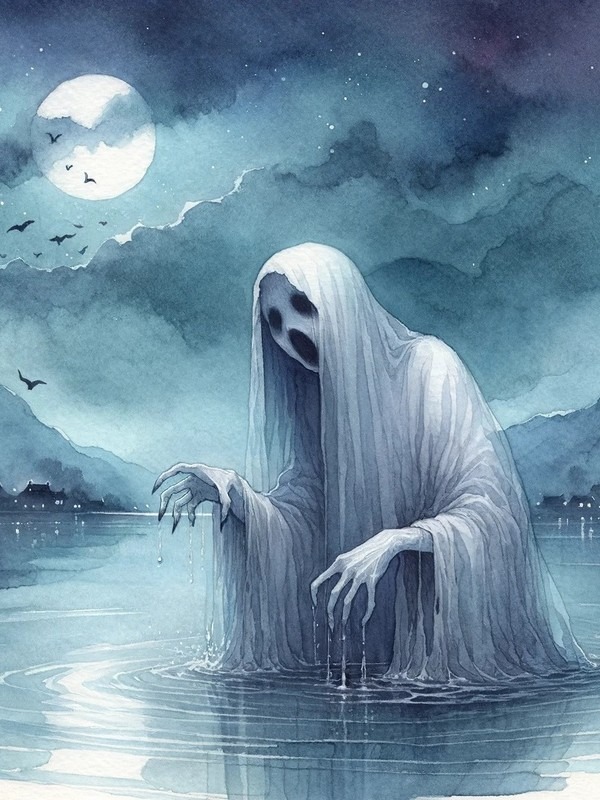
- Mul Gwishin (물귀신) — The Water Ghost
- The spirit of someone who drowned, whose body was never recovered, or who was murdered and disposed of in water. Mul (물) means water, which makes this one easy to remember. The mul gwishin is known to grab at the living and pull them underwater in search of a companion.
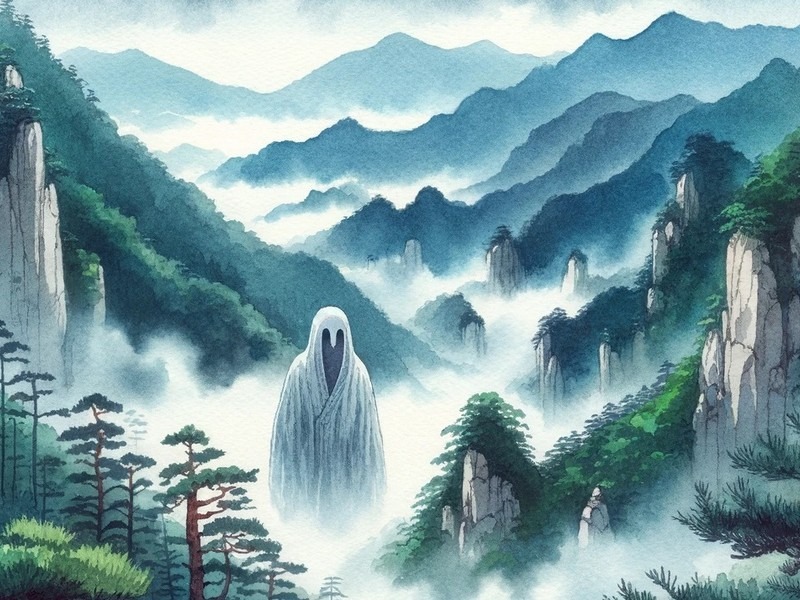
- Dalgyal Gwishin (달걀귀신) — The Egg Ghost
- A ghost with no discernible facial features, no eyes, nose, or mouth, that roams mountains and stalks hikers. Looking directly at a dalgyal gwishin is said to be instantly fatal. These spirits exist because they have no descendants to perform jesa for them, and without those rites, they gradually lose their humanity and personality entirely.
- Konggong Gwishin (콩콩귀신) — The Handstand Ghost
- One of the most visually disorienting Korean ghosts: the konggong gwishin moves entirely upside-down, in a handstand posture. In more extreme descriptions, the ghost carries its own severed head while bouncing along in this position. Unlike many gwishin, the konggong gwishin does not appear to have a specific grievance, the horror is primarily in the encounter itself.
- Sangsagwi (상사귀) — The Stalker Ghost
- The ghost of someone who died with an unrequited love they were never able to confess. In death, the sangsagwi fixates entirely on the person they loved in life, obsessively attempting to get their attention, haunting them, and troubling anyone who approaches the object of the ghost’s affection. Appeasing a sangsagwi requires the living person to perform jesa for the ghost, there is no other known method of resolution.
- Agwi (아귀) — The Hungry Ghost
- From Buddhist tradition, the agwi represents the spiritual consequence of excessive greed and selfishness in life. The agwi has a belly the size of a mountain but a throat the width of a needle’s eye, eternally hungry, eternally unable to eat. Any food or water attempted turns to fire before it reaches the throat. Buddhist monks, after completing their meals, traditionally pour the washing water outside to offer to the agwi, as this specific water can be received where nothing else can.
- Mujaegwi (무자귀) — The Descendant-less Ghost
- A ghost who died without children or family to perform jesa (ancestral memorial rites) on their behalf. With no one to remember them, the mujaegwi exists in a state of increasing isolation and bitterness, denied even the comfort that the ritual remembrance of ancestors provides in Korean culture. Men who died as bachelors also fall into this category. These ghosts are considered prone to causing trouble precisely because their fundamental social need, to be mourned and remembered, can never be met.
Korean Gwishin Movies & Dramas | Korean Ghost Movies & Dramas
- Woman’s Wail (Yeogokseong) (여곡성): One of the most famous Korean horror films of all time, this Korean movie is about a virgin ghost. (Note: The original was made in 1986, but there was a remake.)
- Sell Your Haunted House (대박부동산): This Korean drama is about an exorcist real estate agent who performs exorcisms on homes with ghosts.
- Dear Friend (령): This Korean horror movie is about water ghosts that are out for a group of high schoolers after the girls used a traditional Korean oujia board to conduct a séance and visited a spring in a forest.
Dokkaebi (도깨비) — Goblin-demon
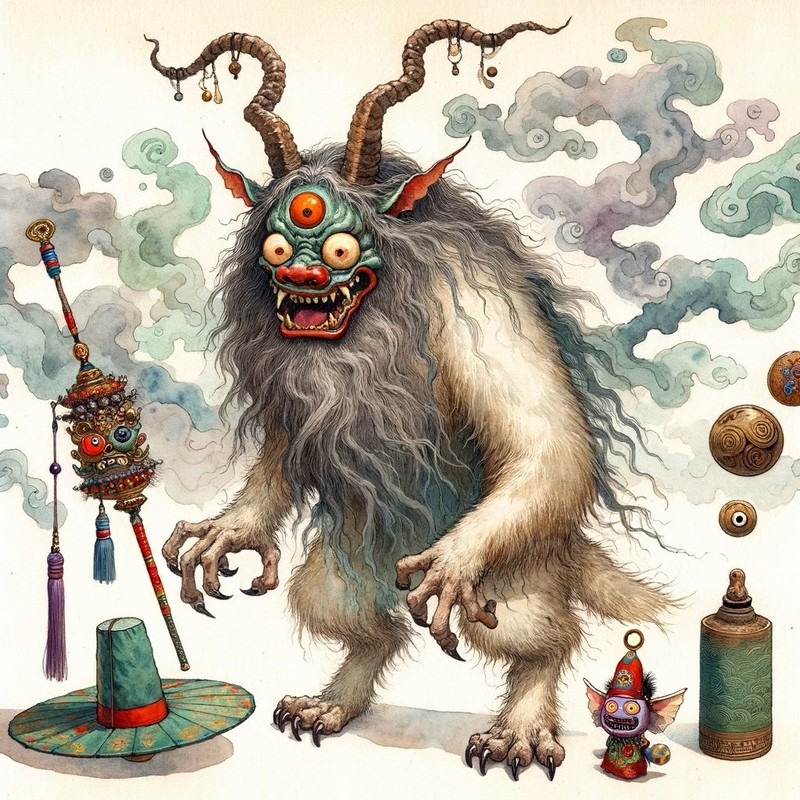
Another well-known creature from Korean mythology is the dokkaebi (도깨비) which look like demons with horns, fangs, and distorted faces possibly featuring just a single eye. They usually come with a few enchanted objects like a gamtu (감투), a hat which grants them invisibility, and a bangmangi (방망이), a club that lets them summon any object they want.
They are mischievous and fond of playing games and while they are considered demons or goblins, they are also quite similar to Robin Hood as they like to steal from the rich and give to the poor, or those they deem worthy. They also have the reputation for enchanting women which would result in demi-god children with supernatural abilities. Traditionally, communities would even worship their dokkaebi.
Korean Dokkaebi Movies & Dramas | Korean Goblin Movies & Dramas
- Goblin (Doggaebi) (도깨비): Goblin richly weaves elements of traditional Korean folklore into its narrative. Goblin not only focuses on folklore but also delves into philosophical themes such as love, destiny, death, and the human condition.
Gumiho (구미호) — Nine-tailed Fox
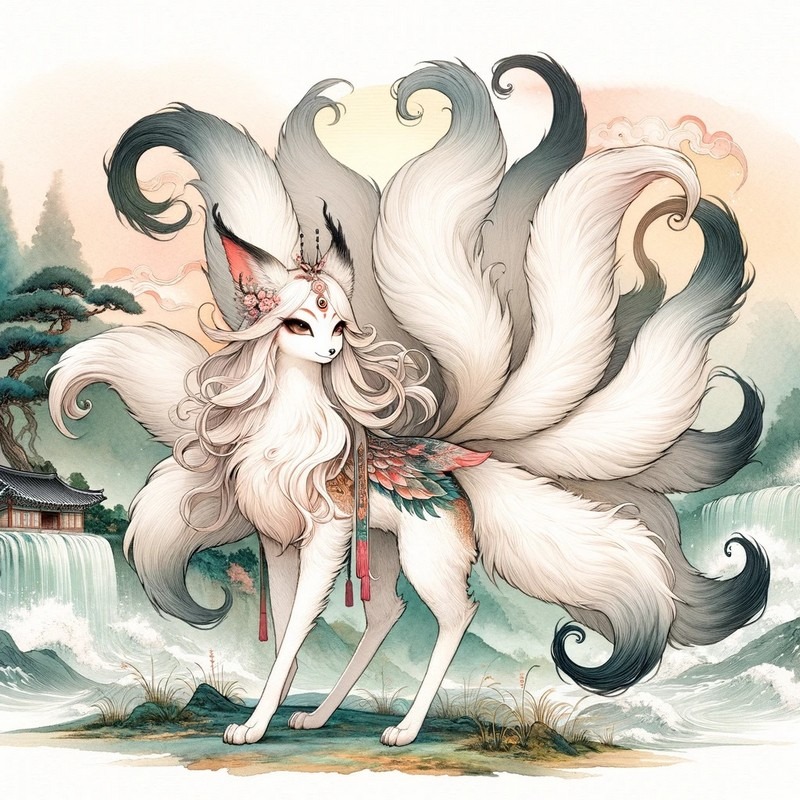
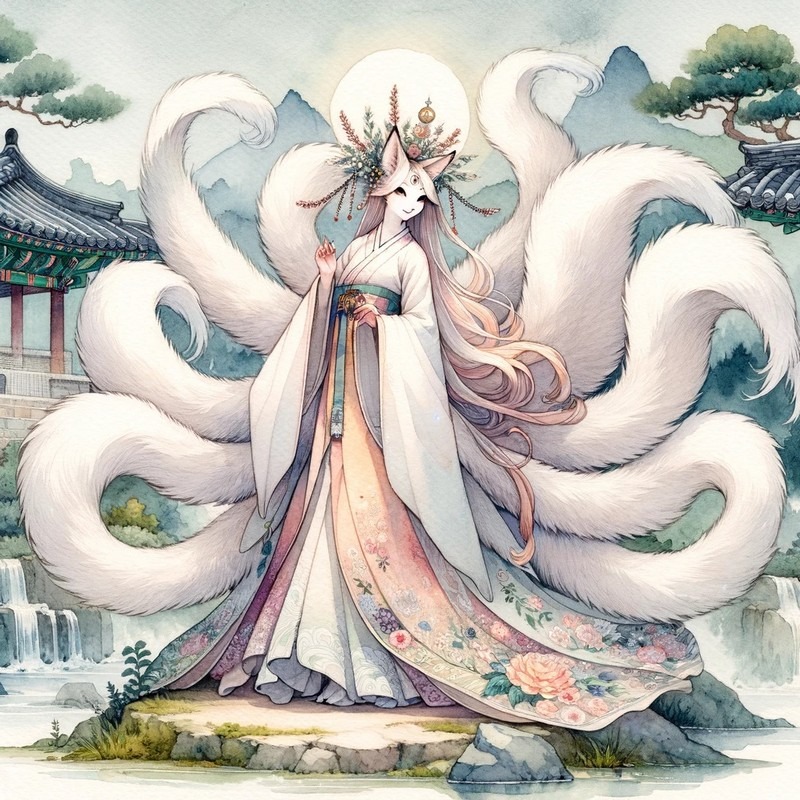
Often featured in Korean dramas and stories, this nine-tailed fox creature has been apart of Korean folklore since the Three Kingdoms period (57BC – 668AD). Gumiho is said to be born when a fox lives for a thousand years at which point it gains the ability to shape-shift, often taking the form of a beautiful young woman who use a magical marble to bewitch people to take possession of their spirit.
Gumiho likes to seduce men and then eat their hearts, or livers, depending on which story you read. The tale says that she so wanted to become human, but in order to do so, must eat the human organs for 100 days in a row.
Korean Gumiho Movies & Dramas | Korean Nine-Tailed Fox Movies & Dramas
- Tale of the Nine-Tailed (Gumiho Dyeon) (구미호뎐): This fantasy drama blends Korean mythology with a contemporary setting, creating a story that spans both ancient and modern times. It reveals a tale filled with romance, mystery, and adventure.
- My Girlfriend is a Gumiho (내 여자친구는 구미호): An actor unwillingly releases Gumiho from a centuries-old prison.
Jeoseung Saja (저승사자) — The Grim Reaper
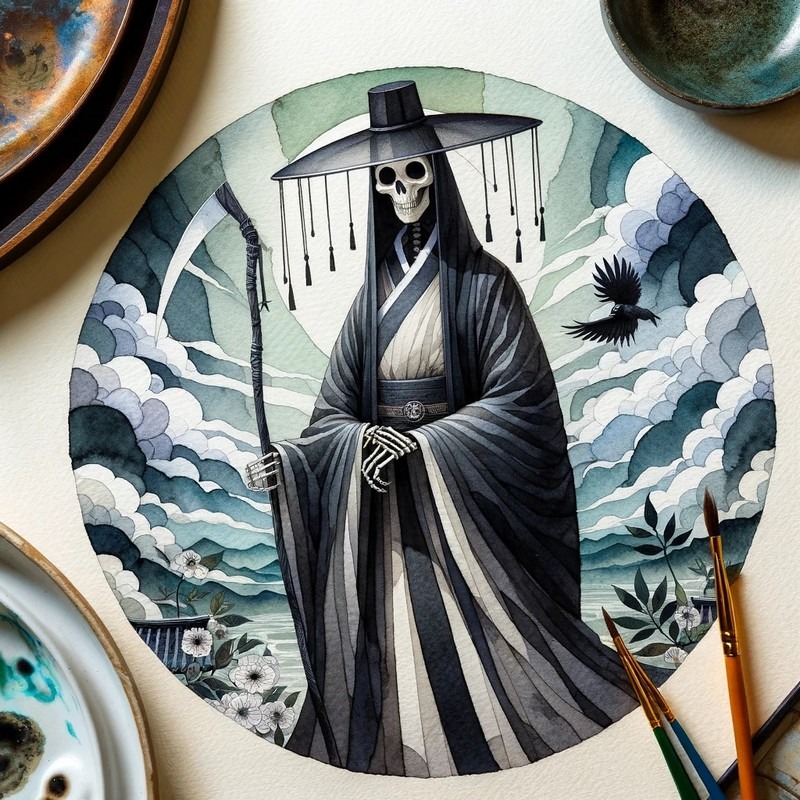
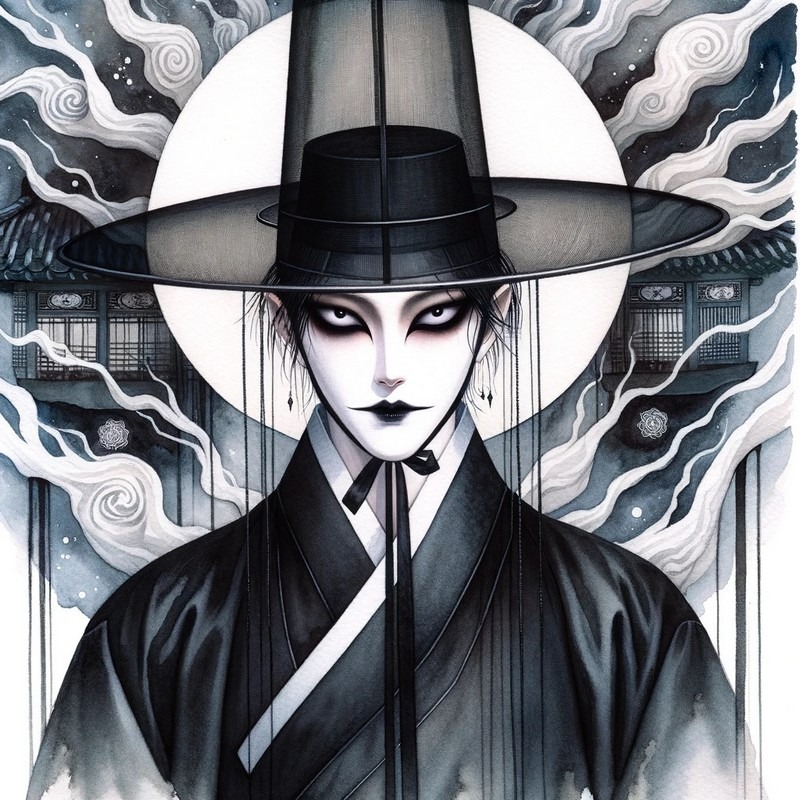
The Korean version of the grim reaper, they escort souls to the afterlife. Resembling humans, the jeoseung saja represent death so they are usually quite pale, tall, and have sharp eyes with black lips and wear black hats and Hanboks.
They aren’t exactly like the grim reaper of the west though as they can be sympathetic and will sometimes help souls resolve their unfinished business and may even take bribes in exchange for letting someone live longer.
It is said that once a jeoseung saja calls your name three times, you die and your soul is transported to the underworld. However, the jeoseung saja can be tricked and the wrong soul may be taken.
Korean Jeoseung Saja Movies & Dramas | Korean Grim Reaper Movies & Dramas
- Along with the Gods 1: The Two Worlds (신과 함께1: 죄와 벌): A Korean fantasy epic that was massively successful in Korea, the film presents an imaginative view of the afterlife.
- Along with the Gods 2: The Last 49 Days (신과 함께2: 인과 연): This sequel delves deeper into the complexities of human life, death, and the connections between them. The film skillfully intertwines the grim reapers’ past with the present story, creating a richly layered drama.
Yeomna (염라) — The Underworld King
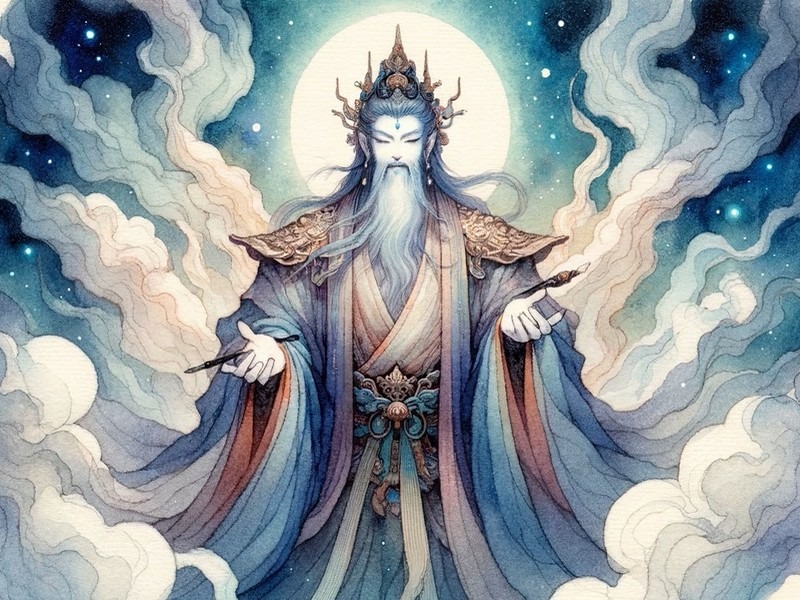
The ruler of the Korean underworld, Yeomna has supreme authority over the judgment of dead souls. He evaluates a person’s sins and determines their fate after death, dispatching jeoseung saja where needed. If the jeoseung saja are the officers, Yeomna is the judge. He appears throughout Korean Buddhist and shamanistic traditions.
FAQ
What is a Korean ghost called?
The general term for a Korean ghost or spirit is gwishin (귀신). There are many specific types of gwishin based on how the person died and what business they left unfinished, including water ghosts (mul gwishin), virgin ghosts (cheonyo gwishin), bachelor ghosts (mongdal gwishin), and egg ghosts (dalgyal gwishin).
What is the difference between dokkaebi and gwishin?
Gwishin are the spirits of dead humans with unfinished business, they are sad, vengeful, and tied to the manner of their death. Dokkaebi are a different category entirely, supernatural goblin-demons not born from death but existing as independent mischievous spirits. They are playful and morally ambiguous rather than tragic.
What is gumiho?
Gumiho (구미호) is a nine-tailed fox from Korean folklore, a fox that lives for one thousand years and gains the ability to shape-shift into a beautiful woman. Its goal is to become fully human by eating human livers or hearts for 100 consecutive days. The gumiho is simultaneously a monster, a tragic figure, and a common subject in Korean dramas.
Who is Yeomna?
Yeomna (염라) is the ruler of the Korean underworld and the supreme judge of the dead. He evaluates the sins of deceased souls and determines their fate, dispatching the jeoseung saja (grim reapers) to collect the dead.
What is a jeoseung saja?
The jeoseung saja (저승사자) are Korea’s grim reapers, pale, black-clad figures who escort souls to the afterlife. Unlike the Western grim reaper, they can be sympathetic, bribable, and occasionally fallible, taking the wrong soul by mistake.
What is the agwi?
Agwi (아귀) is a Buddhist hungry ghost, the spirit of someone who was excessively greedy or stingy in life. The agwi has a huge belly but a throat too narrow to eat or drink, and is in permanent agonizing hunger. The term also gives us the Korean word agwi-da-tum (아귀다툼), meaning a fierce scramble over food.
Korean mythology is fascinating. Each creature carries a logic either social, moral, Buddhist, Confucian, that makes the supernatural world feel connected to the human one. That’s what makes it genuinely interesting rather than just creepy.
Did you like this post? Pin IT!


2 Comments
Kathi
Great article, thank you!
Cláudia Rodrigues
Really liked the article. Thank you.