12 Korean Drinking Games: A Guide to the Fun and Frolic
Last Updated on October 12, 2026
In Korea, socializing is an art form. When Koreans go out together, whether it’s with colleagues after work, university friends catching up, or a group of new acquaintances getting to know each other, the evening usually follows a kind of unspoken structure. There are rounds, there are rituals, and there are games. Lots of games.
Korean drinking games aren’t just about the alcohol. They’re about laughter, the competition, the teasing, and the sense of connection taht comes from sitting around a table and playing together. If you’ve spent any time in Korea’s noraebang alleys or pojangmacha tent bars, just one stop on a Korean-style night out, you’ve probably seen these games in action. If you have’nt yet, you will.
This guide covers 12 of the most popular Korean drinking games, how to play them, why they work, and what they reveal about the way Koreans socialize. Whether you’re preparing for a night out in Seoul or just curious about Korean culture, these are worth knowing.
- A Few Things To Know About Korean Drinking Culture
- Best Korean Drinking Games
- What To Eat While You Play: Korean Anju
- Where To Play in Seoul
- FAQ
(This post contains affiliate links, which means I receive a certain percentage of a sale if you purchase after clicking at no cost to you. Thank you for your support.)
A Few Things To Know About Korean Drinking Culture
Before diving into the games, a few cultural notes that will help you understand why these games exist and how they fit into a Korean night out.
Koreans rarely drink without eating. Most bars and pojangmacha (street tent bars) serve anju, food specifically designed to accompany drinking. Think crispy Korean fried chicken, steamed silkworm larvae, spicy rice cakes, or dried squid. The food is as much a part of the evenings as the drinks.
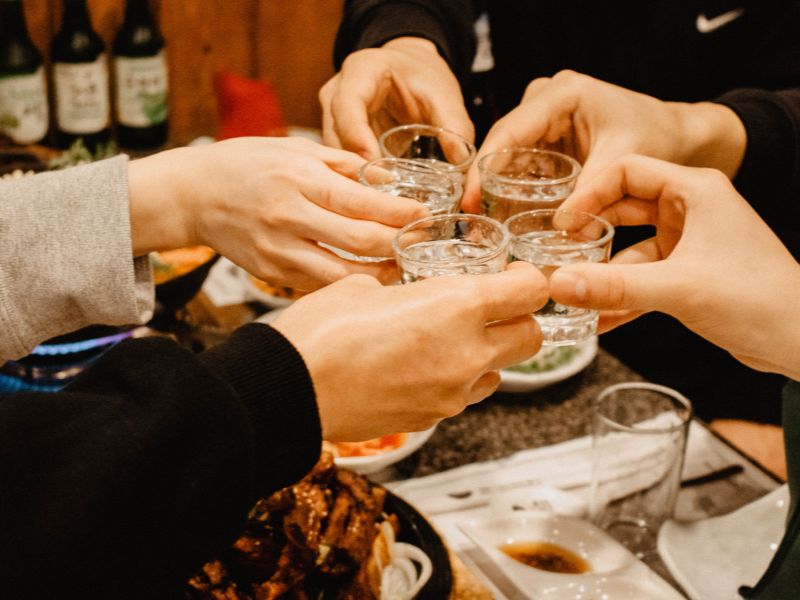
There’s an etiquette to pouring. You don’t pour your own drink in Korea, you pour for others and they pour for you. Holding your glass with two hands when someone pours for you is a sign of respect, especially toward someone older.
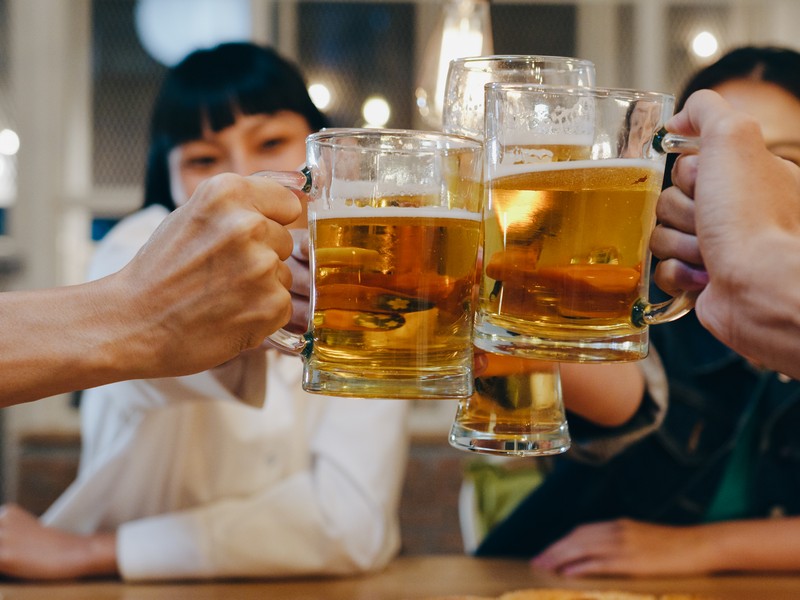
Soju is the drink of choice for most of these games, though beer is common too, and a mix of the two, called somaek, is arguably the most popular option of all.
The Black Knight (흑기사). If someone at the table can’t drink their penalty, another player can volunteer to drink it for them by declaring they’re the 흑기사, the Black Knight. It’s a gesture of solidarity that’s both playful and genuinely kind.
Preparation and hangover cures exist widely and are popular. There are options for before you go out, while you’re out, and for the next day.
Best Korean Drinking Games
For most of these games, you’ll be playing with soju, beer, or somaek. The games that specifically require a soju bottle are noted below.
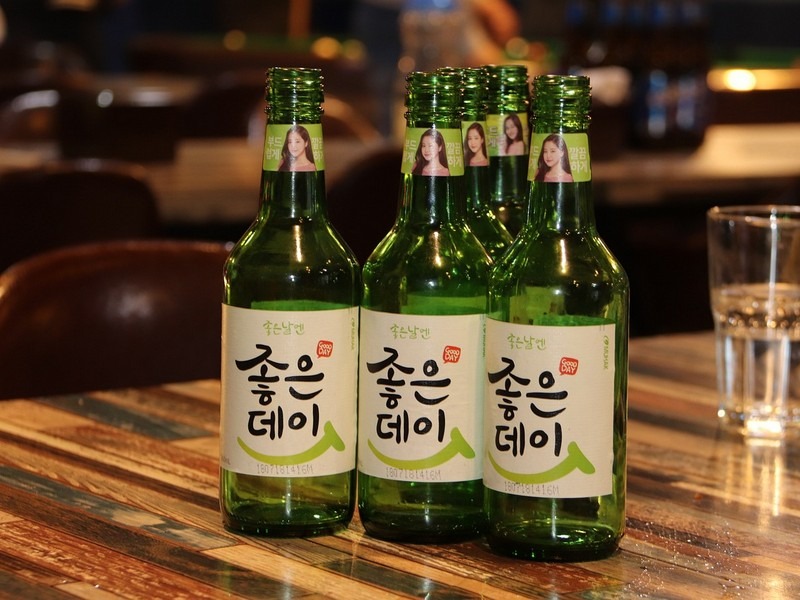
The Bottle Cap (병뚜껑 게임)
The classic opener and usually the first game of the night. This one requires a bottle of soju and works best as a way to kick things off before moving into the other games.
- Open a bottle of soju and immediately stuff a small piece of tissue into the lid, you’ll find out why in the next game.
- Twist the little metal “tail” on the lid into a tight spiral, being careful not to twist it completely off.
- Take turns flicking this twisted tail around the circle of friends making it tighter and tighter. You want to flick it as hard as you can to try and knock it off cleanly.
- If you successfully flick it off, the players sitting on either side of you take a sip.
This game is easy to grasp and a favorite among locals. It’s a great way to break the ice and get everyone in the party spirit.
Up and Down (업다운)
A high/low guessing game that flows naturally out of the Bottle Cap game, in fact, it uses the same bottle cap.
- Whoever won the Bottle Cap game, or the person of the winner’s choosing, gets to be the leader for this game. That person now removes the tissue from inside the cap and checks out the number printed inside. It’s a number between 1 to 100.
- Going around in a circle, everyone takes turns guessing the number in the cap and the leader says “high” or “low” until the number is guessed correctly.
- The person who guesses correctly gets to choose who takes a sip, usually the players on either side of them.
This game tests your intuition and creates a satisfying slow build of tension as the guesses get closer and closer.
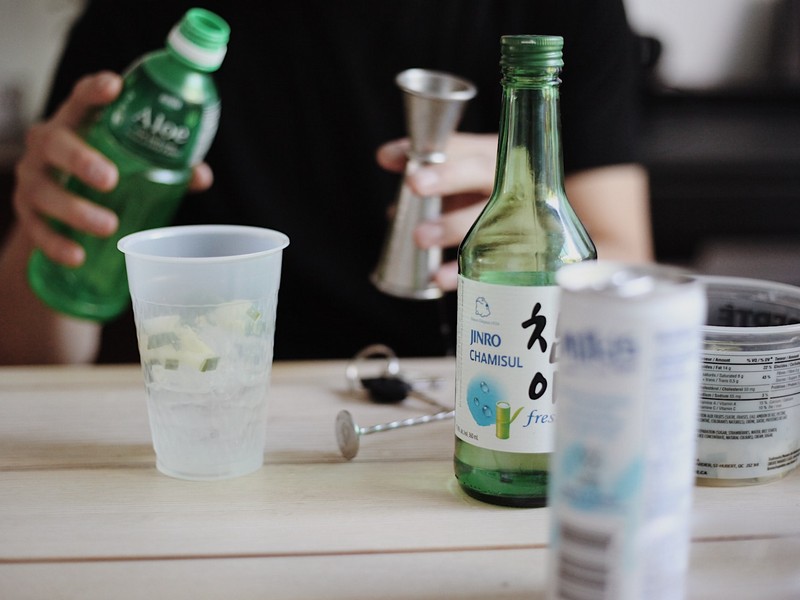
Titanic/The submarine (타이타닉/잠수함)
Less about the movie and more about physics, this is a simple game of nerve, strategy and the power of gravity.
- Fill a glass halfway with beer.
- Carefully put an empty soju glass in the beer so that it is floating.
- Taking turns, each player pours a small amount of their drink into the floating soju glass.
- How much you pour is your choice, but be smart and strategic about it.
- Whoever sinks the glass has to drink the whole glass of somaek (soju + maekju (beer)). It’s not a small amount, which keeps everyone suitably cautious.
3-6-9 (삼육구)
A number game that sounds simple until it isn’t. The group counts out loud from one, going around the circle, but any number containing a 3, 6, or 9 is replaced with a clap. One digit containing 3, 6, or 9 gets one clap. Two digits get two claps (so 36, for example, gets two claps).
Anyone who says a number they shouldn’t, misses their clap, or claps when they shouldn’t takes a sip and the count starts again from one.
It sounds easy at number 3. It becomes considerably less easy around number 63.

Tap
Essentially a version of Simon played around a table. Once the rhythm clicks, it becomes genuinely fast-paced and the mistakes start coming quickly.
- Each player needs their own drink for this one.
- The first player starts by tapping their glass once, which passes the turn on to the player to the right.
- The next person must then decide if they want to tap their glass once, twice, or three times.
- One tap passes the game to the right, two taps pass it to the person on the left, and three taps skips the person to the right and goes to the person next to them.
- Whoever loses track of the direction or misses their turn takes a sip. The pace tends to speed up as the game goes on, which is precisely the point.
Baskin Robbins 31 (베스킨라빈스 31)
Nothing to do with ice cream, but just as enjoyable. This is a counting game with a simple goal, don’t be stuck saying the number 31.
- This game is played in a clockwise fashion.
- You simply count up to 31 in a circle. Each person can say between 1 and 3 numbers at a time.
- The person stuck with the number 31 loses and takes a forfeit sip.
- You can continue the game by eliminating players until you have an ultimate winner.
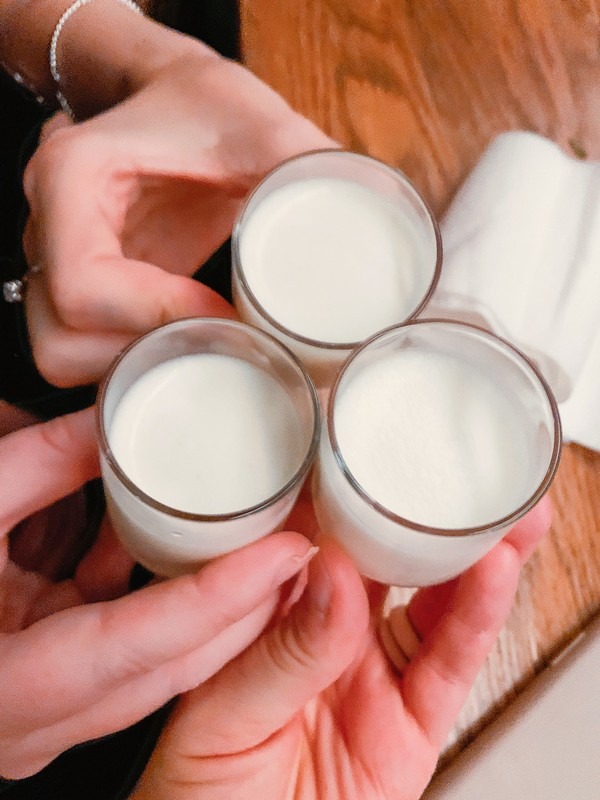
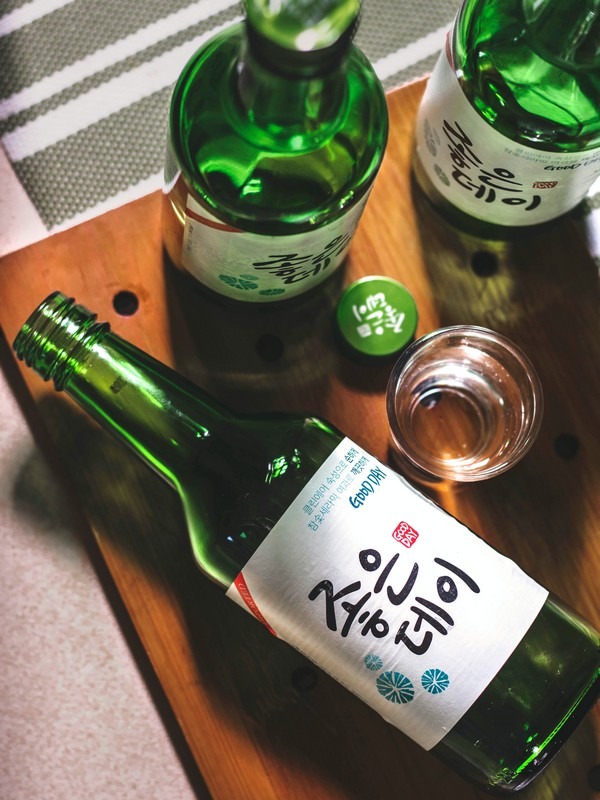
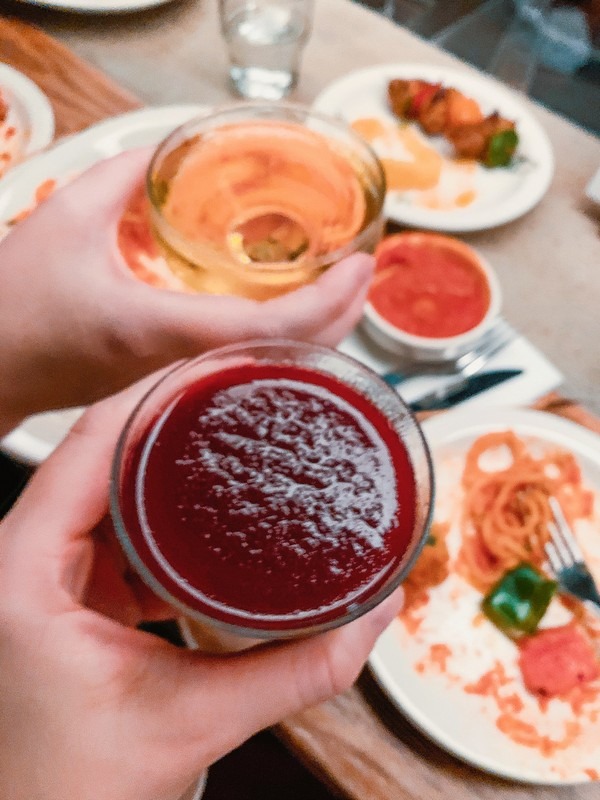
007
Feeling a bit like a secret agent? The 007 game is fast-paced and a thrilling addition and sure to generate a lot of noise. The game moves fast and the reactions become funnier as the evening progresses.
- In Korean, the numbers 0, 0, and 7 are pronounced “kong” (0), “kong” (0), and “chil” (7).
- In this game, you point at people (including yourself) with your hands like a gun.
- The first person starts off aiming at someone (or themselves) while saying, “KONG.”
- This action passes it to the person they pointed to, and they, in turn, point to someone else, saying, “KONG.”
- That person then chooses someone to aim at, saying, “CHIL!”
- The person they point to must quickly say, “BANG!” while the people on either side of them put their hands up in surrender.
- Anyone who hesitates, says the wrong word, or misses their cue takes a sip.
Rabbit (토끼)
Now, let’s embrace our inner rabbits with the Rabbit game, sometimes called the Bunny game. This game requires a commitment to the bit, and the bit is that everyone is a rabbit. You need at least 4 people to play this game.
- In this game, the starting person holds a fake carrot as if they were a little rabbit eating the carrot, saying in a cute voice, “tokki, tokki” (rabbit, rabbit).
- The people on either side must respond in their cutest rabbit voice, saying, “danggeun (당근), danggeun (당근)” (carrot, carrot).
- The “rabbit” then passes the fake carrot to one of those people/rabbits, and the process continues with that person switching from changing carrot to rabbit and the person next to them starts chanting carrot.
- If you mess up your cute rabbit exchange, you take a sip. This game can get really confusing really quickly.
Nunchi Game (눈치게임)
Nunchi (눈치) is a Korean concept that describes the ability to read a room, to sense what others are thinking or feeling without being told. It’s considered an important social skill in Korean culture, and this game tests it directly.
- Everyone begins shouting out numbers starting from 1 and going in order until the final person has said a number.
- The point of the game is not to be the last person to shout out a number and not to shout out a number at the same time as someone else.
- It doesn’t matter who shouts out. There is no order but two people can’t shout out at the same time. If two (or more) people say the same number at the same time, they must take a sip and the game starts again.
- If you get all the way to the end without people shouting at the same time and everyone saying different numbers, well then you all take a sip because you’ve successfully completed the game!
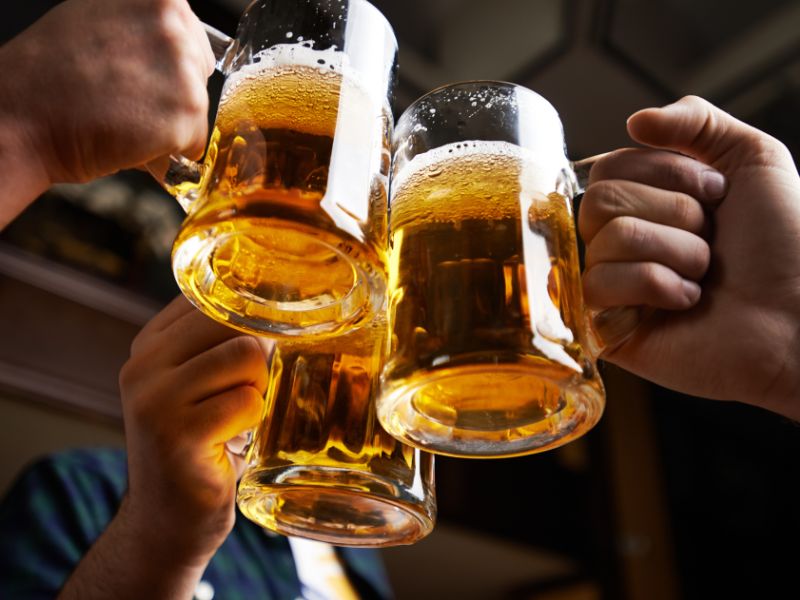
Hunminjeongeum (훈민정음게임)
Named after the document King Sejong created to introduce the Korean alphabet to the public in 1443, this game is a favorite among Korean language learners and a genuinely fun way to practice vocabulary. It’s a game that rewards vocabulary, quick thinking, and the confidence to shout things out, which is a good combination.
- One person calls out two random Korean consonants, like ㄱ ㅅ, and then puts their hand in the center of the group with their thumb up.
- When someone comes up with a word that contains those two consonants like 고수, 감사, that person grabs the thumb with their own thumb up and says the word.
- This continues until someone messes up or there’s a last person who hasn’t participated yet. The final person or the person who made an error has to take a sip.
Image Game (이미지 게임)
Sometimes called the Chopsticks (이미지 게임/젓가락) when played with chopsticks instead of fingers for pointing, this is kind of a reverse game of “Never Have I Ever”, instead of admitting what you’ve done, the group votes on who they think has done something.
- The first player makes a statement like “Had the highest math scores”, “Would be most likely to cry at a sad movie,” “Has forgotten someone’s name immediately after being introduced.”
- Everyone at the table points to the person they think best fits the description. Whether true or not, the person that gets the most votes takes a sip and then makes the next statement.
- Statements can be funny, revealing, or entirely harmless. The tone of the game usually follows the tone of the group.
The Name Game
How many names do you know? This game will test your naming knowledge. It’s a simple, fast, and reliable way to discover whether anyone at the table has a surprisingly extensive knowledge of Korean celebrities.
- The first player says a celebrity’s name. If you’re in Korea, try naming as many idols and actors as you can perhaps.
- The next person must then say another celebrity name that starts with the last letter of the previous celebrity’s name.
- The game continues around the circle until someone can’t think of a name and they must take a sip.
- Feel free to add rules each round like they must be Korean sports players or Hollywood actors.
What To Eat While You Play: Korean Anju

In Korea, a night out and good food are inseparably. Anju (안주), food designed specifically to be eaten alongside drinks, is served at virtually every bar, pojangmacha, and restaurant private room where these games are played. Ordering something to share is the norm, not the exception.
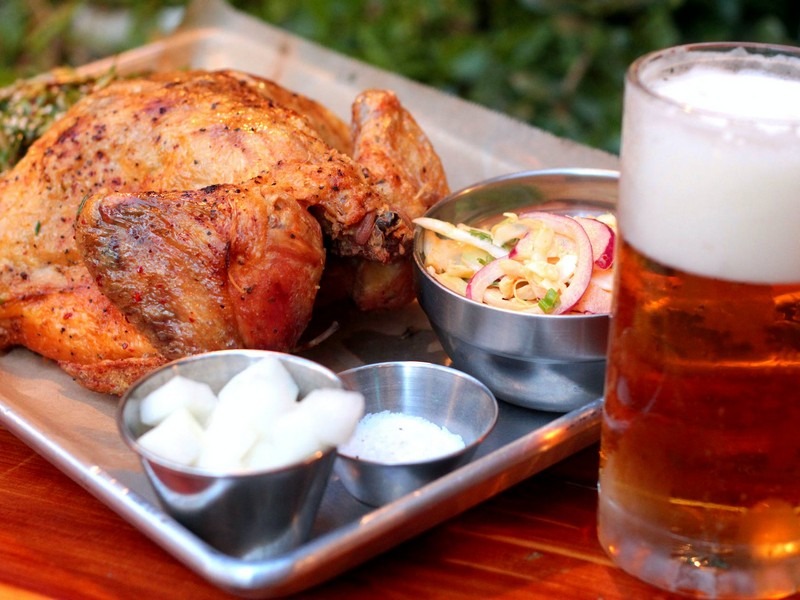
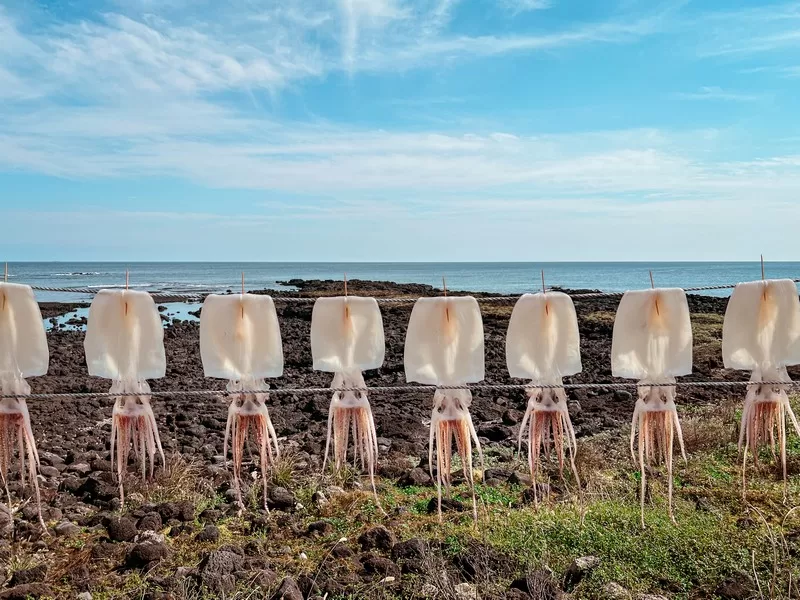
A few classics worth knowing:
Chimaek (치맥): Fried chicken and beer, one of Korea’s most beloved combinations. The crunch of the chicken against the cold beer is deeply satisfying and keeps the table happy through a long evening of games.
Dried squid (오징어): Chewy, salty, and ideal for snacking between rounds. You’ll see it on almost every anju menu.
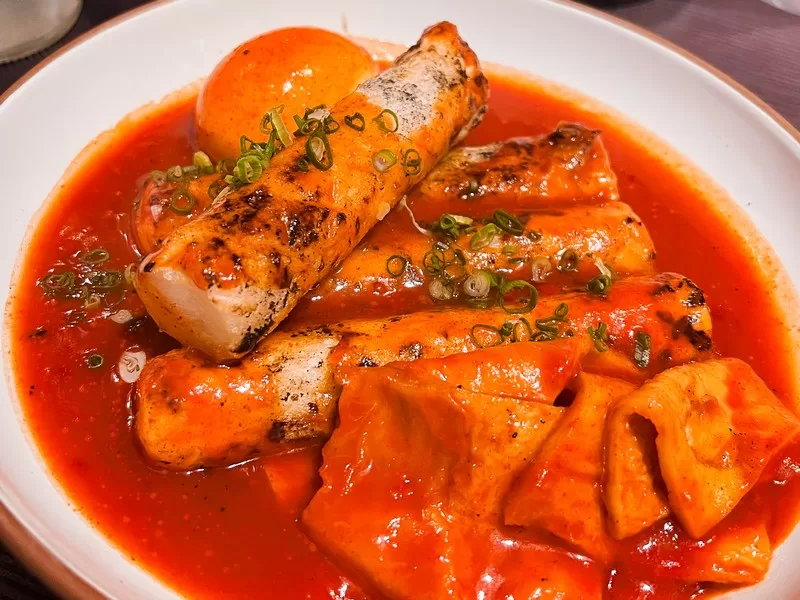
Tteokbokki (떡볶이): Spicy rice cakes that provide a good flavor contrast to the sweetness of soju. If you like heat, this is the move.
Gyeran-mari (계란말이): A soft rolled omelette, mild and easy to eat through a long evening. A good option if the spice is getting to be too much.
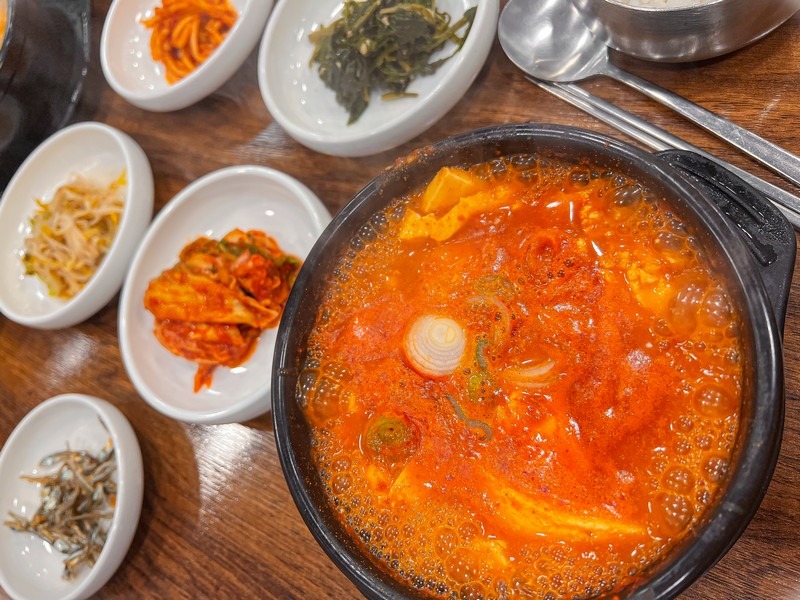
Sundubu jjigae (순두부찌개): Soft tofu stew, bubbling and warm. Ordering a jiggae for the table is a very common way to ancho a drinking session in something hearty and filling.
Samgyeopsal (삼겹살): Grilled pork belly cooked at the table, wrapped in perilla leaves with garlic and gochujang. One of the most social eating experiences in Korea and a natural companion to a long round of games.
Where To Play in Seoul
If you’re visiting Seoul and want to experience these games in the right setting, a few areas stand out.
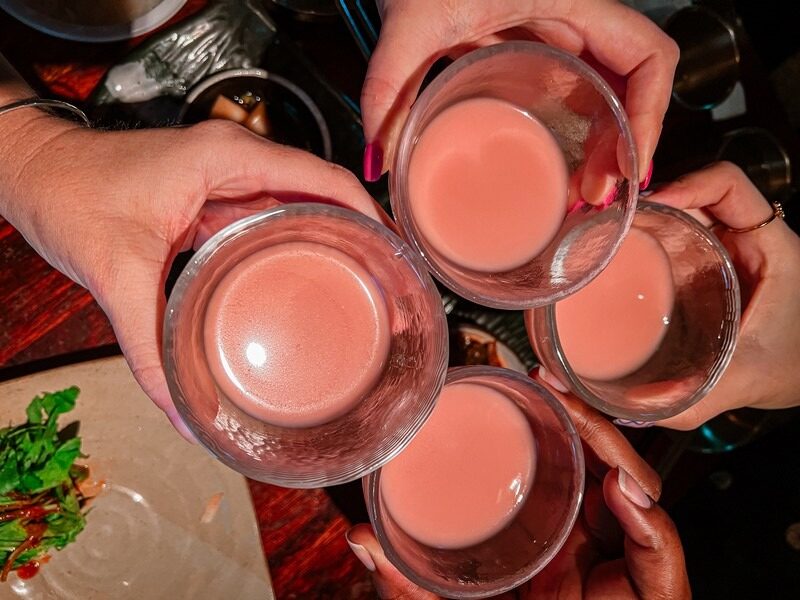
Hongdae is the most energetic neighborhood for a night out. Full of bars, pojangmacha, and venues that fill up with university students and young locals from early evening, the streets around Hongik University Station are the place to start.
Itaewon has the most internationally friendly bar scene and is particularly welcoming to visitors who don’t speak Korean. Many bars here have English menus and staff who are used to explaining how the games work.
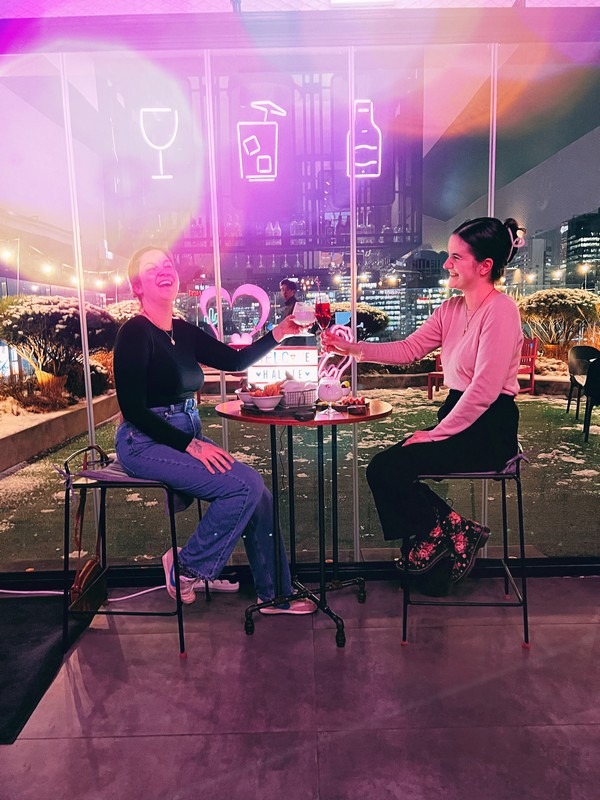

Insadong and Ikseon-dong offer a more traditional atmosphere with makgeolli bars and traditional pojangmacha that feel a step removed from the more commercial nightlife areas. Ikseon-dong has an especially vibrant nightlife.
If you’d rather have someone take care of the planning, there are guided Seoul bar experiences that cover the best spots and take the navigation stress out of the evening. They teach the games mentioned and create an enjoyable atmosphere.
Korean Drinking Games Night (non-drinkers are also welcome): Have a fun night out in Hongdae with experienced guides who keep the fun going and getting everyone into the games. Join on Viator to be apart of the group.
FAQ
What is the drinking age in South Korea?
The legal drinking age in South Korea is 20 in Korean age, which is 19 in international age.
How do I say “cheers” in Korean?
The most common way to say “cheers” in Korean is geonbae (건배). If you’re in a bar with groups of workers or teams from something, you’ll also often here weehayeo (위하여), which roughly translates to “for the sake of” or “here’s to”.
What do Koreans drink during drinking games?
Soju is the most common choice because it’s affordable, widely available, and comes in small bottles that make rounds easy to manage. Beer is also popular, and somaek (a mix of soju and beer, usually around 3:7 ratio) is arguably the most common choice for a full evening out.
What is the most popular Korean drinking game?
The Bottle Cap game (병뚜껑 게임) and 3-6-9 (삼육구) are the most universally known, which you’ll encounter in pojangmacha, private dining rooms, and bars across the country. Among younger Koreans, Baskin Robbins 31 and the Image Game are also extremely common.
Is it okay not to drink during Korean drinking games?
Absolutely. The Black Knight (흑기사) system exists for exactly this reason. Anyone at the table can volunteer to take a penalty drink on behalf of someone who doesn’t want to or can’t drink more. Korean drinking culture values the social participation and togetherness far more than how much any individual drinks.
These are just some of the Korean drinking games you’re likely to encounter during a night out in South Korea. The rules matter less than the spirit behind them, the laughter, the shared silliness, and the way a table of people playing a game together tends to become a little less strangers and a little more like friends.
Did you like this post? Pin IT!