Dakgalbi: What It Is, Where to Eat It, and Why You’ll Love It
Last Updated on March 25, 2026
Did you know one of Korea’s most beloved dishes was born out of post-war poverty? Dakgalbi (닭갈비), a fiery, saucy stir-fried chicken dish cooked right at your table, started as a budget meal for soldiers and students in the 1960s and became a national obsession.
Whether you track it down in its hometown of Chuncheon, discover it on a side street in Hongdae, or stumble across a sizzling cast-iron pan in Myeongdong, dakgalbi has a way of becoming the meal you talk about long after you’ve left.
Here’s everything you need to know, the story behind it, what to expect at the table, where the festival is, and the best spots to eat it in Seoul.
Dakgalbi is one of those dishes that will have you coming back for more and more. It’s delicious and definitely something you must eat in Korea:
- What Is Dakgalbi?
- The Origins of Chuncheon Dakgalbi
- The Chuncheon Makguksu & Dakgalbi Festival
- Where To Eat Dakgalbi In Chuncheon
- Where To Eat Dakgalbi In Seoul
(This post contains affiliate links, which means I receive a certain percentage of a sale if you purchase after clicking at no cost to you. Thank you for your support.)
What Is Dakgalbi?
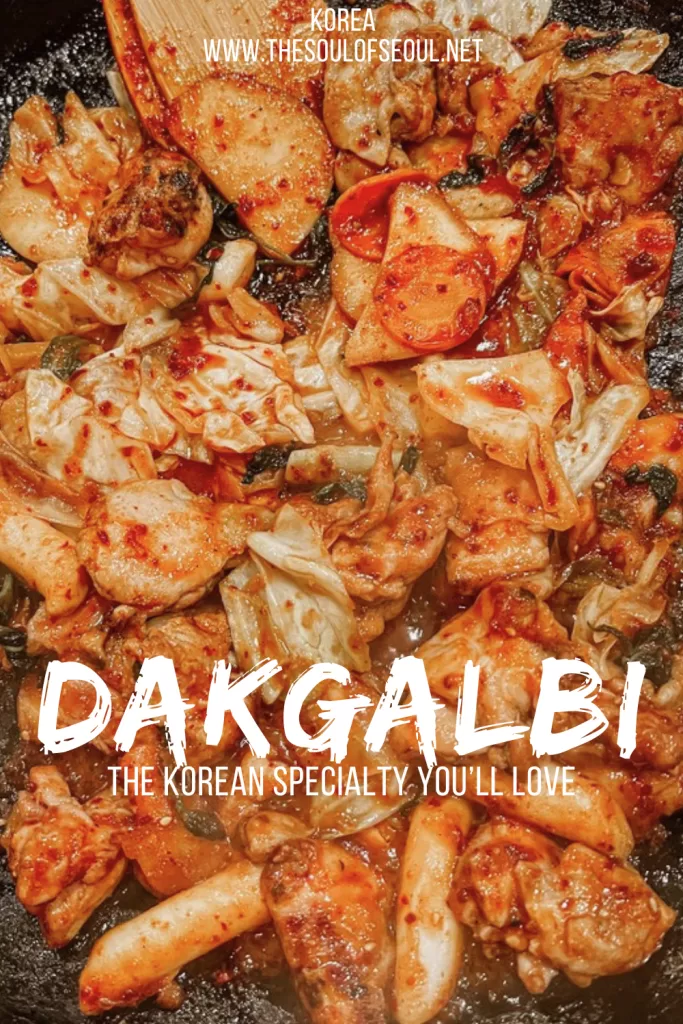
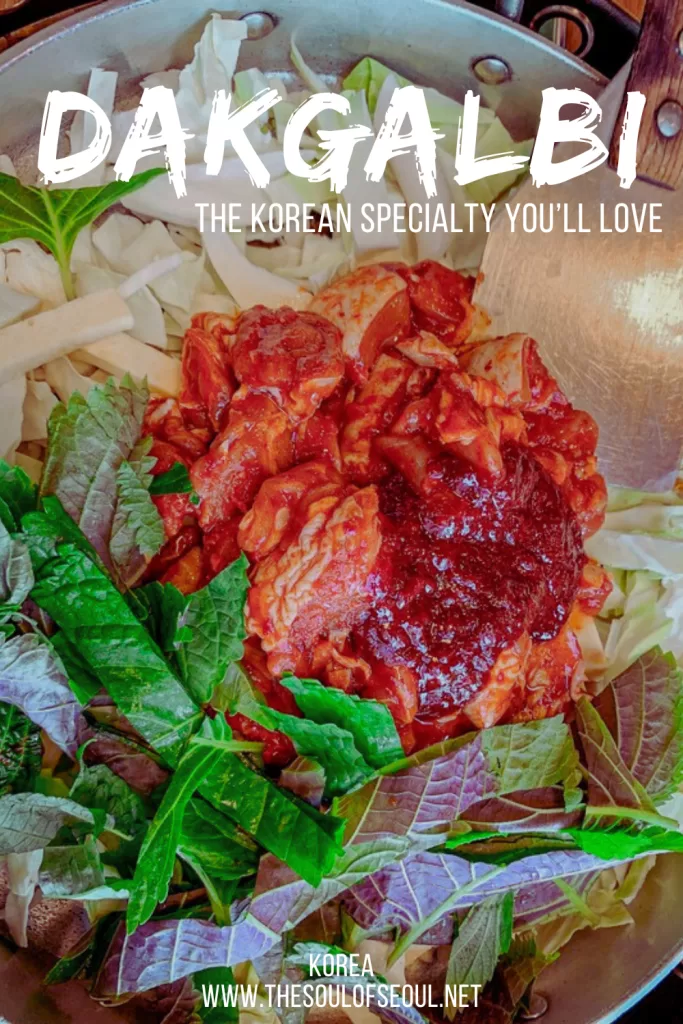
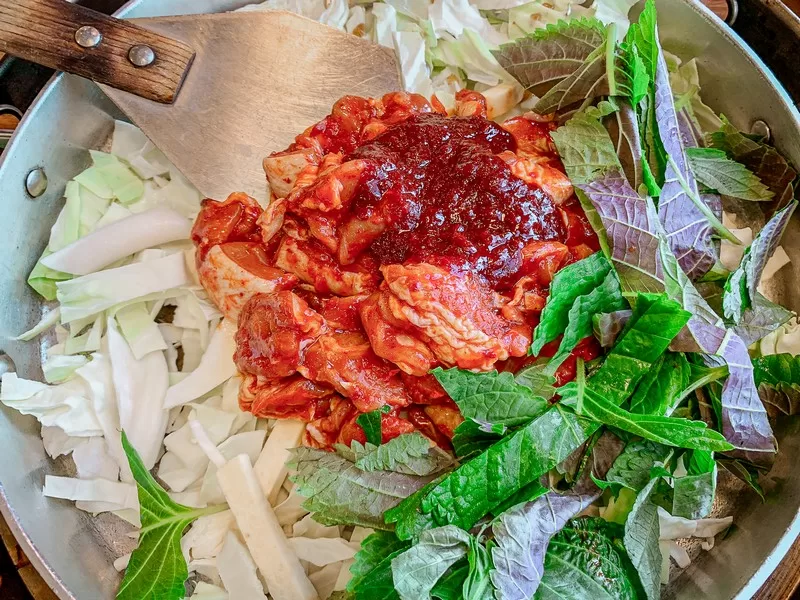
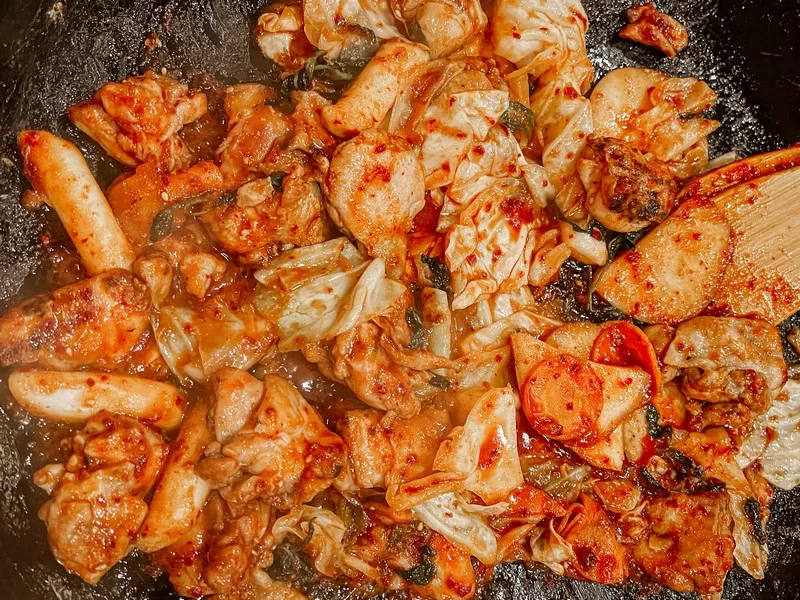
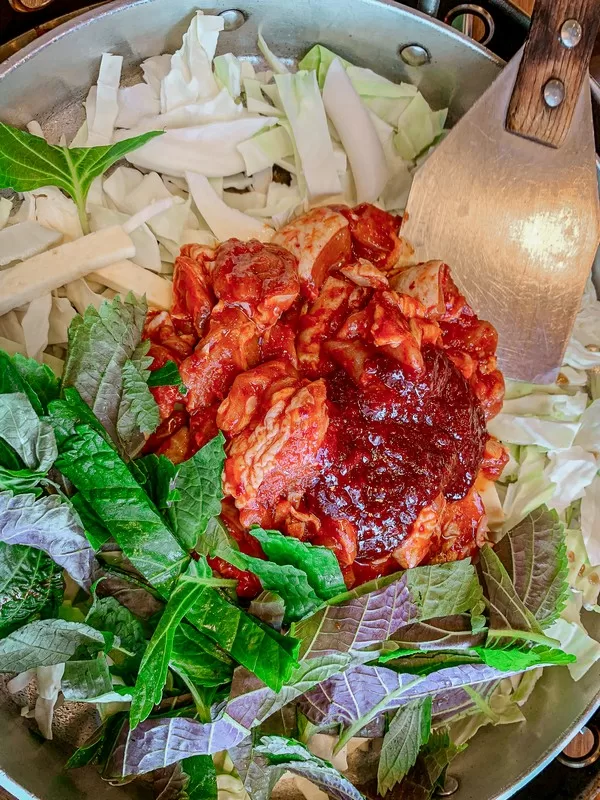
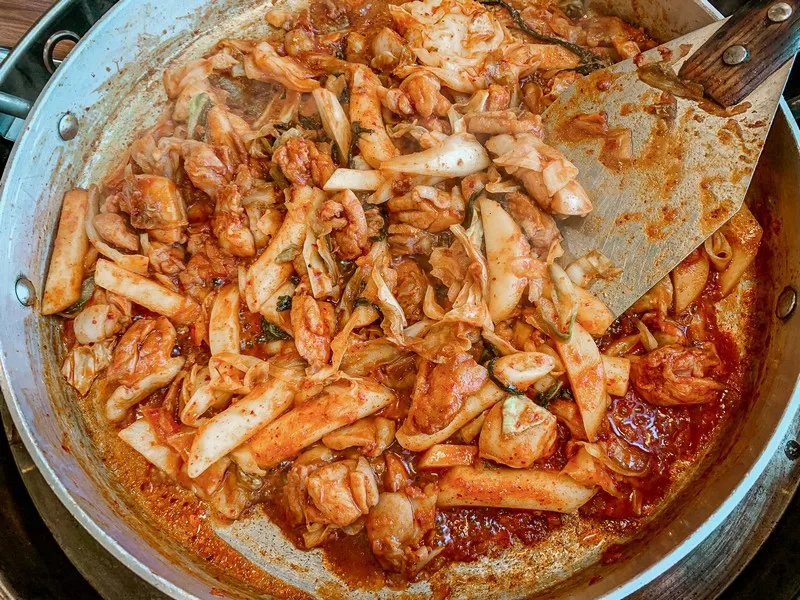
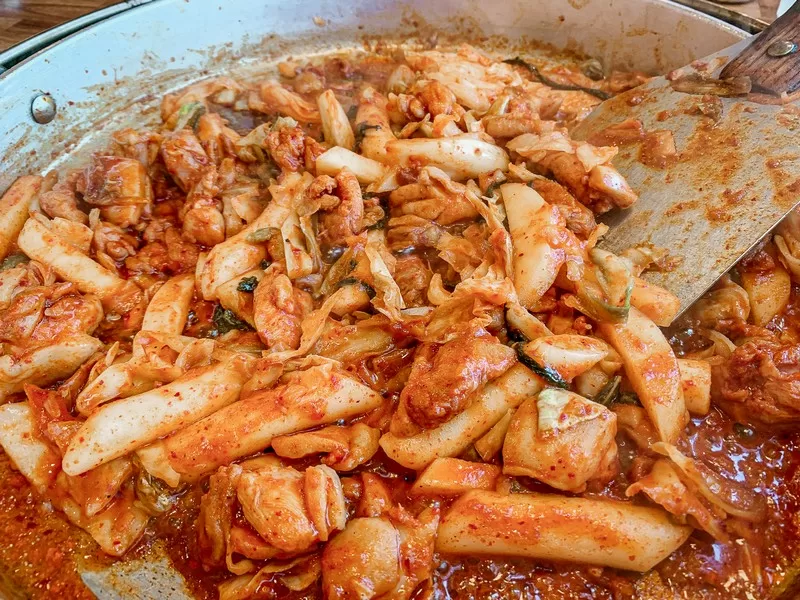
Dakgalbi (닭갈비) is a spicy stir-fried chicken dish served in a large, shallow cast-iron pan at the center of your table. Marinated chunks of chicken arrive already sitting in a red sauce alongside chewy tteok (rice cakes), sweet potato, cabbage, and perilla leaves. The pan goes on the heat and within minutes, your table smells delectable.
Don’t be confused: While the word “galbi” means ribs, and usually refers to Korea’s famous braised or grilled short ribs, dakgalbi doesn’t contain chicken ribs. Dakgalbi earned the name in the post-war years when chicken was being used as a substitute for the pork ribs most people couldn’t afford and the nickname stuck.
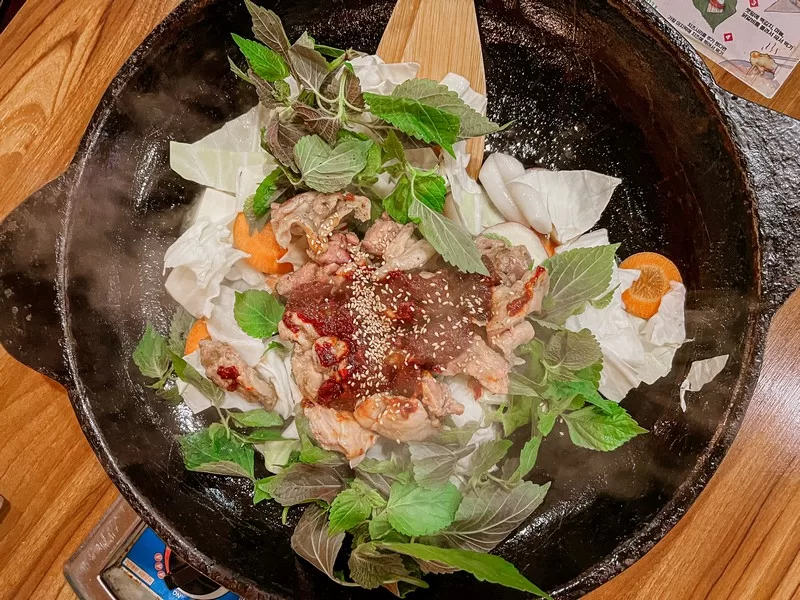
The sauce is the soul of this dish and contains gochujang (a fermented chili paste), gochugaru (chili flakes), soy sauce, garlic, ginger, and a touch of sweetness all come together into something that is savory, warming, and a bit spicy but not punishingly so. The cabbage and tteok absorb the sauce beautifully as everything cooks down.
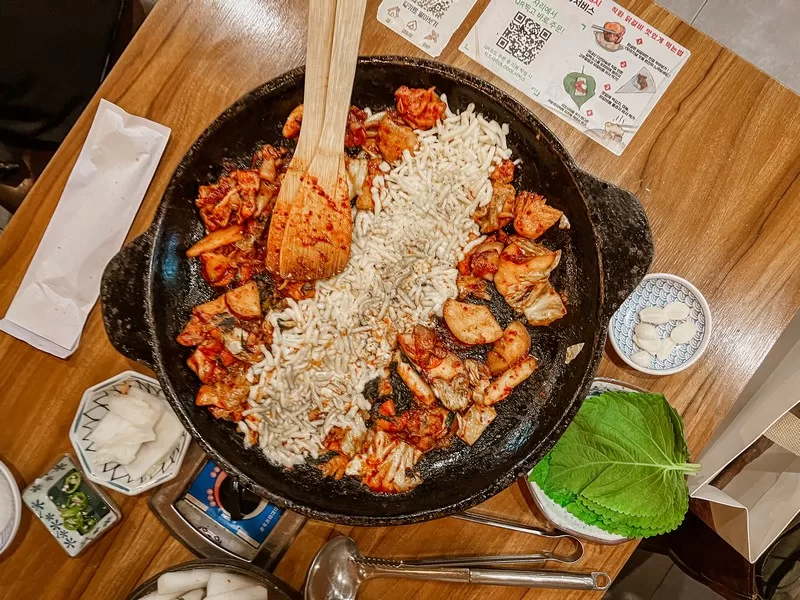
Don’t ask for rice straight away! Rice comes at the end. While it may be tempting to stave off some of that spicy taste with bites of rice in between, rice is supposed to come at the end. After you’ve worked through most of the pan, call staff over and they add rice directly to whatever’s left, stirring it into a golden, crispy, sauce-coated fried rice that makes sure nothing goes to waste. It’s honestly one of the best parts of the meal.
Variations to know:
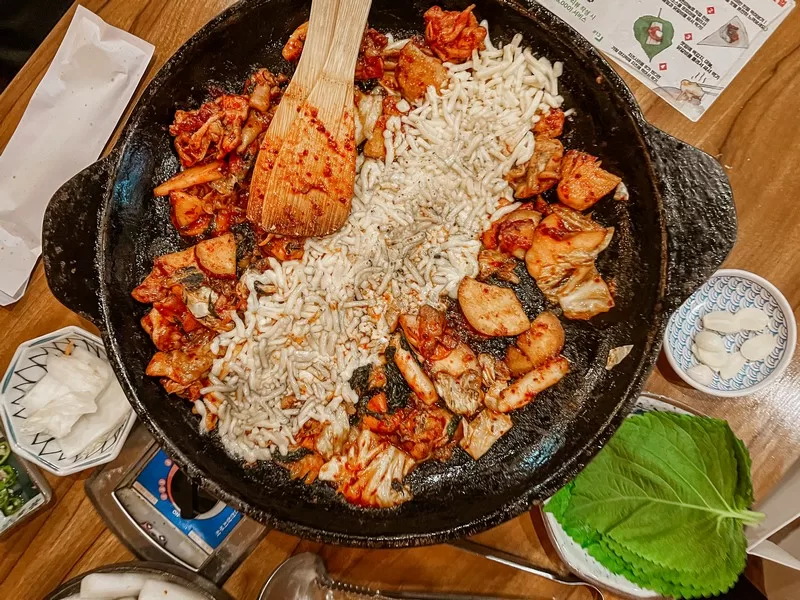
- Cheese dakgalbi (치즈닭갈비): Gooey melted cheese takes the dish to the next level. This is the most popular version right now by a wide margin. Pull the chicken through a pool of molten cheese in the middle of the pan for a delicious bite.
- Sutbuldakgalbi (숯불닭갈비): A chargrilled version with a smokier flavor profile.
- Bone-in vs boneless: Bone-in is cheaper though most people go for boneless for the ease.
The Origins of Chuncheon Dakgalbi
Chuncheon, a lakeside city about an hour east of Seoul, was devastated by the Korean War. By the time the fighting ended in 1953, the city was rebuilding from almost nothing. Chicken farming became a lifeline for local families as chickens were affordable to raise and accessible to sell.
By the 1960s, a spicy stir-fried chicken dish was making the rounds as anju, food meant to pair with alcohol, at low-cost eating spots around the city. It was generous, filling, and cheap enough that soldiers and university students could eat well without spending much. Locals started calling it seomin galbi (서민갈비), meaning “commoners’ galbi,” a nickname that became more prideful than embarrassing.
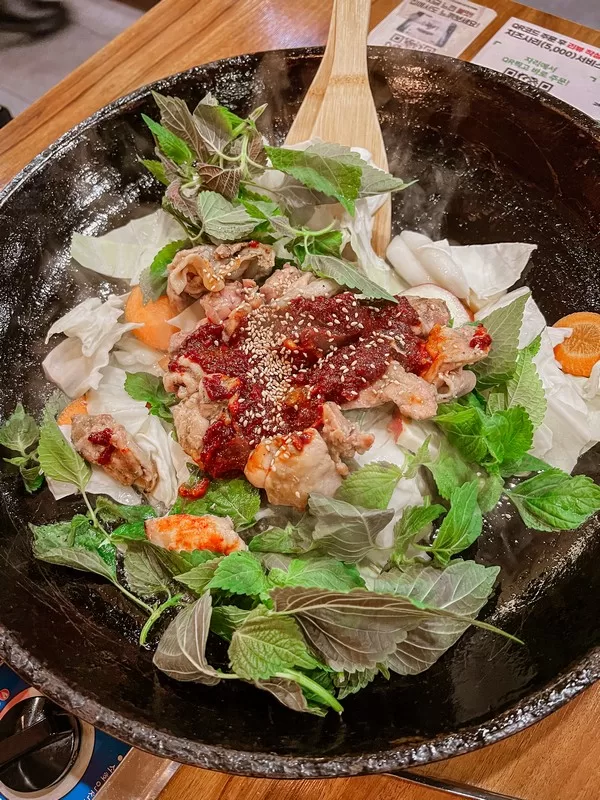
Through the 1970s dakgalbi spread beyond Chuncheon and into the rest of Korea, carried by those students and soldiers who’d eaten it by the panful and couldn’t forget it. Today, Chuncheon is so synonymous with dakgalbi that the full name Chuncheon dakgalbi (춘천닭갈비) is used to signal authenticity.
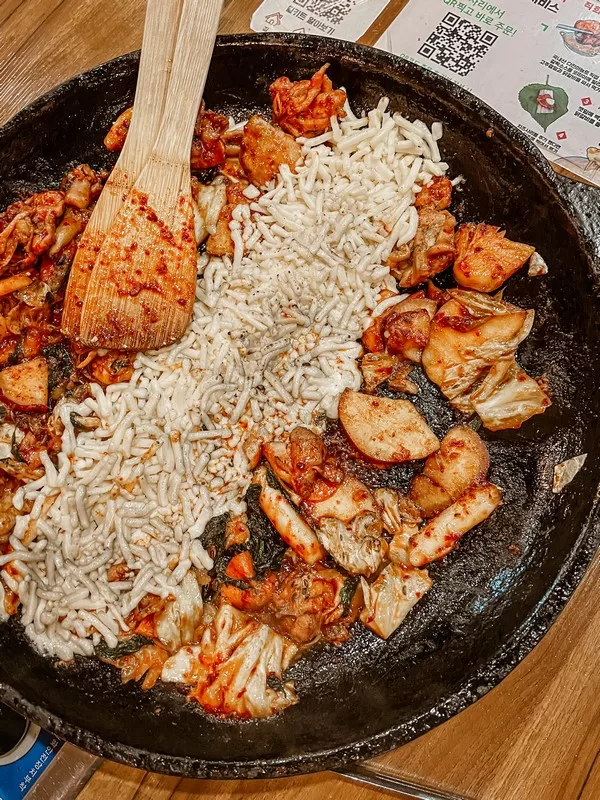
The Chuncheon Makguksu & Dakgalbi Festival
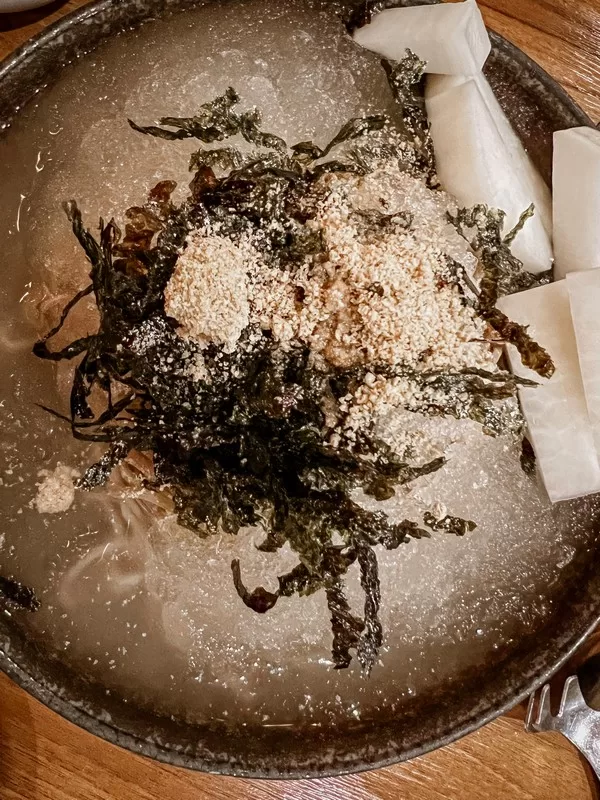
Every October, Chuncheon hosts a festival dedicated to its two great culinary exports: dakgalbi and makguksu. Makguksu is a cold buckwheat noodle dish served in a chilled, tangy kimchi broth, the yin to dakgalbi’s yang. Where dakgalbi is hot, spicy, and rich, makguksu is cool, refreshing, and light. Eaten together, they make an unexpectedly perfect pair.
The festival fills with booths, cooking demonstrations, and more dakgalbi than you’ll know what to do with. It’s a genuinely local event, not heavily tourist-facing, which makes it feel all the more special to be there.
- Festival Address: 245 Sports town-gil, Chuncheon-si, Gangwon-do (강원특별자치도 춘천시 중도동)
- Join a tour: Book a tour on kkday to head out to this fun festival and some nearby flower and foliage spots for a full day out of Seoul.
Where To Eat Dakgalbi in Chuncheon
You won’t have to search hard to find dakgalbi in Chuncheon. Head to Myeongdong in Chuncheon (not the famous shopping street in Seoul but Chuncheon’s own neighborhood of the same name), and you’ll find a 150-meter alley lined with nothing but dakgalbi restaurant after dakgalbi restaurant. The smell hits you before you even turn the corner.
Chuncheon Myeongdong Dakgalbi Street (춘천 명동 닭갈비 골목)
- Address: 9-1 Geumgang-ro 62beon-gil, Chuncheon-si, Gangwon-do (강원특별자치도 춘천시 금강로62번길 9-1)
- Getting there without a car: The ITX Cheongchun train from Seoul Yongsan or Cheongnyangni station gets you to Chuncheon in about an hour. Once there, a taxi tour is the easiest way to cover the city properly. Book a Chuncheon taxi tour so you can get hit dakgalbi alley, see the lake, and not worry about navigation.
Where To Eat Dakgalbi In Seoul
Can’t make it to Chuncheon? The good news is dakgalbi has made its way to every corner of Korea, including Seoul and some of the Seoul spots are genuinely excellent.
Shin Migyeong Hongdae Dakgalbi (신미경홍대닭갈비): When we lived in the Hongdae area, this was our go-to spot for a delicious meal of dakgalbi. Reliable, friendly, and consistently good.
- Address: 31-10 Wausan-ro 21-gil, Mapo-gu, Seoul (서울 마포구 와우산로21길 31-10)
- Hours: Every day: 11:00am ~ 10:40pm
Ryu Mok Min (류몽민): We ate here recently and if you want a fun fire show with your meal, this is the spot to go. Get the cheese dakgalbi and just see what happens. It’s a little dramatic, but completely worth it.
- Address: 11 Hakdong-ro 25-gil, Gangnam-gu, Seoul (서울 강남구 학동로25길 11)
- Hours: Every day: 11:30am ~ 10:00pm
The Greatest Chuncheon Dakgalbi (최강달인 춘천닭갈비): If you’re shopping in Myeongdong (the Seoul one) and want to have a bite, this is the spot for you. Good food, central, and easy to find.
- Address: 23-3 Myeongdong 4-gil, Jung-gu, Seoul (서울 중구 명동4길 23-3)
- Hours: Every day: 11:00am ~ 12:00am
Yoogane (유가네닭갈비): The chain option. Maybe not as special as a family-run spot, but consistently solid. If you’re somewhere unfamiliar and craving dakgalbi, just search Yoogane on your favorite Korean GPS app and there will certainly be one nearby.
Dakgalbi is one of those dishes that earns its reputation every single time. The story behind it, a struggling city turning chicken into something extraordinary, makes it taste even better once you know it. Go to Chuncheon if you can. But even if you can’t, find a pan of it somewhere in Seoul and sit down for the full experience, rice at the end included.
Did you like this post? Pin IT!