Seoul Fortress Wall: A Guide To The 8 Gates and Best Walking Routes
Last Updated on October 12, 2026
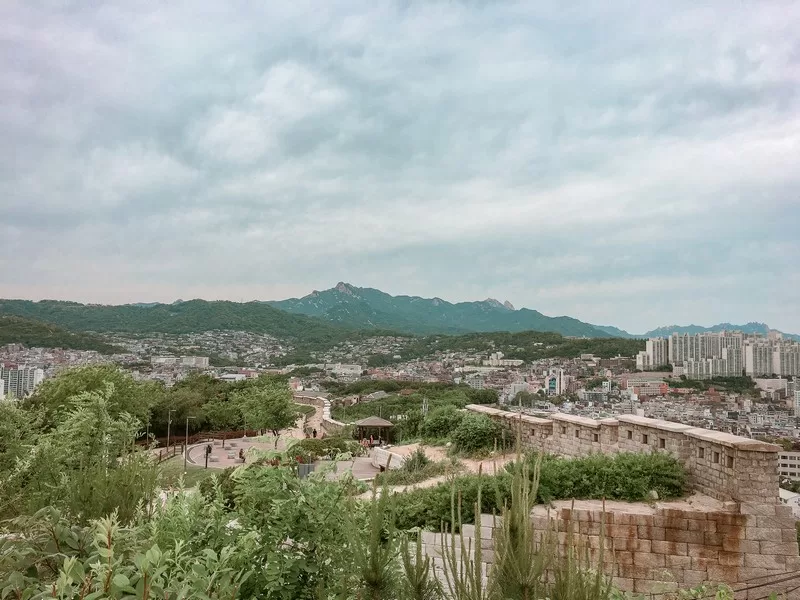
The Seoul Fortress Wall runs 18.6 kilometers around the center of the city, sitting high on the mountains of Bugaksan, Naksan, Namsan, and Inwangsan, and dropping low through neighborhoods like Dongdaemun. Most tourists don’t directly seek it out but encounter it while wandering, and then wish they’d planned around it from the start.
Initially built in 1396 in just 98 days by more than 197,000 people, the wall passes through or near eight historic gates, most of which are free to enter. Walking even a section of it gives you a perspective on Seoul that no palace or museum can match, the city spread out below, the wall stretching ahead over mountain ridgelines.
This guide covers everything you need: the history of each gate, what remains of it today, directions to reach it, and the full six-section trail breakdown for anyone who wants to walk the wall properly.
Learn more about the Seoul Fortress Wall:
- A Brief History of the Seoul Fortress Wall
- Practical Info: Getting There, Gear, and What To Know
- The 8 Gates
- Map of the Seoul Fortress Wall
- Recommended Courses
- FAQ
(This page contains affiliate links. That means if you click on them and purchase something, I will get a percentage of the transaction at no cost to you. Thanks for the support!)
A Brief History of the Seoul Fortress Wall
The construction divided the wall into 97 sections, with people from different prefectures each assigned responsibility for a specific section. The sections built on mountains were formed with stone; sections on lower ground were originally earthen, though in 1402 these were also rebuilt in stone. The wall stood essentially intact for 300 years before major reconstruction in 1704 to rebuild sections that had collapsed over time.
During the Japanese colonial period, Japanese overseers deliberately dismantled several gates, Donuimun and Souimun were destroyed, while Gwanghuimun and Hyehwamun were damaged. Restoration was purposefully neglected until after Korean independence was restored. By 2014, approximately 70% of the wall, 12.8 kilometers, had been restored or reconstructed, and Sukjeongmun, Gwanghuimun, and Hyehwamun had been rebuilt.
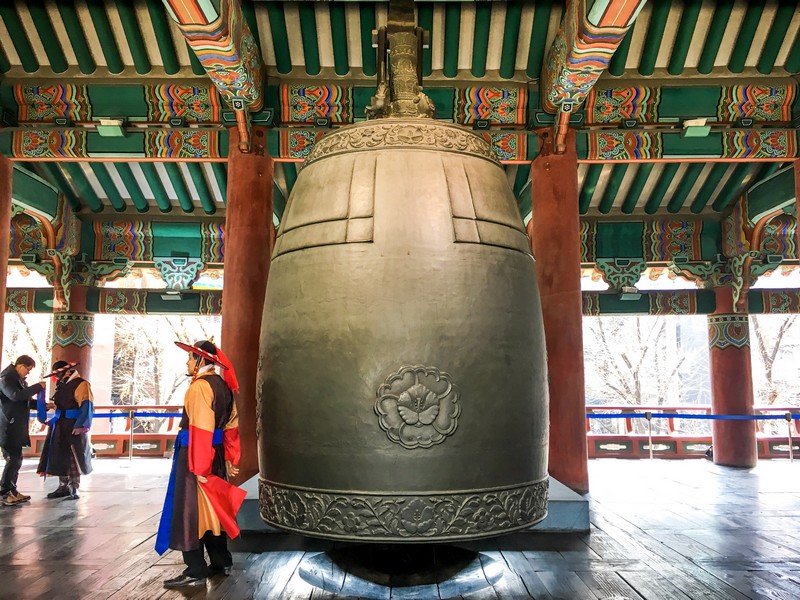
Along the wall stood four main gates and four auxiliary gates, opened and closed each day to regulate movement in and out of the city. Each morning, the Bosingak Belfry bell was rung 33 times to announce the gates opening; each evening, 28 rings announced their closing.
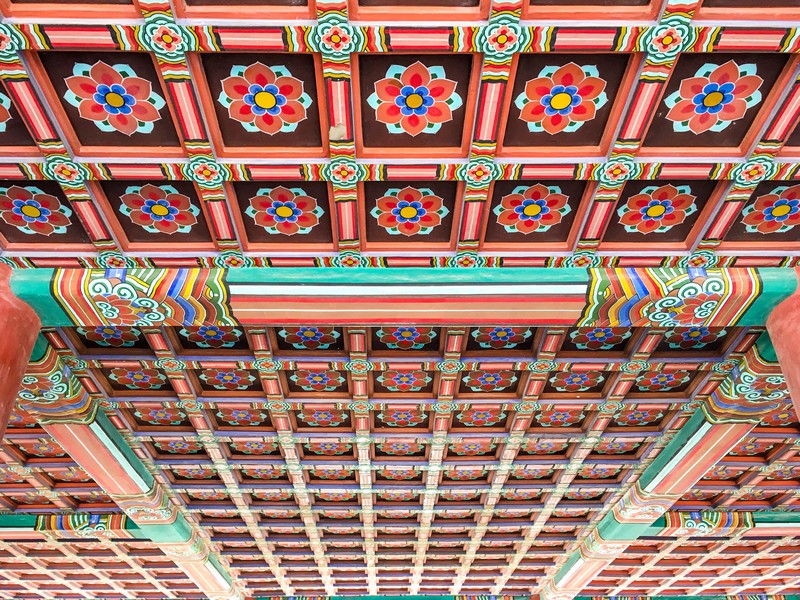
You can still visit the Bosingak Belfry today at Jonggak Station, Exit 4. The bell ringing ceremony runs daily except Mondays from 11:00am to 12:20pm, and visitors can climb to the second floor to see the massive bell in person and ring it themselves. This is actually a super unique experience to have in downtown Seoul that few tourists and even locals know about. Find out how to ring the Bosingak bell yourself.
Practical Info: Getting There, Gear, and What To Know
Getting there: The Seoul Fortress Wall circles the center of the city and you’re never far from a subway station. The most practical approach is to choose a specific section and start at the nearest station, directions for each gate are listed below.
Admission: Walking the wall itself is free.
Hiking gear rental: If you don’t want to pack hiking boots from home, the Seoul Hiking Tourism Center (도심등산관광센터) rents hiking boots and clothing for the major mountains the wall passes through. There is just a small fee but it’s very budget-friendly and saves significant luggage space.
- Reserve: The Seoul Hiking Center has partnered with Klook to facilitate easy reservations for tourists coming to Korea.
- Bugaksan: Book on Klook for Bugaksan here.
- Gwanaksan: Book on Klook for Gwanksan here.
- Bukhansan: Book on Klook for Bukhansan here.
What to bring: Good walking shoes are essential for the mountain sections. The Baegak Mountain Trail in particular has steep rocky terrain. Water, sun protection in summer, and layers in cooler months. No booking required for any section of the wall.
Best season: Spring and autumn are the most popular, cherry blossoms along lower sections in spring, foliage along the mountain sections in autumn. The wall can be walked in any season; summer brings humidity and winter brings ice on mountain sections.
The Gates of the Seoul Fortress Wall
Here are the gates along the Seoul Fortress Wall and the information on what you can find at each site today whether it’s been rebuilt or not.
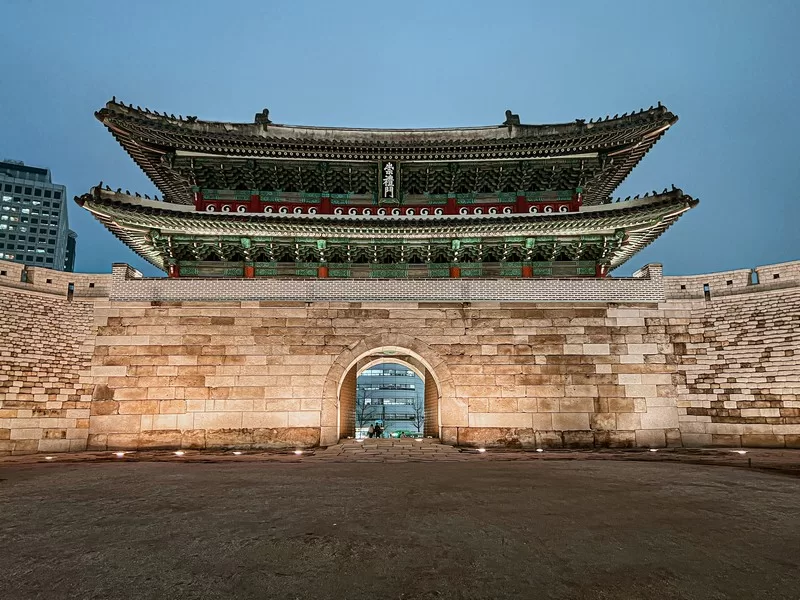
Sungnyemun Gate (숭례문) — Namdaemun
The South Main Gate and arguably the most famous landmark in Seoul. Originally built in 1395 and rebuilt in 1448 and 1479, it was most recently devastated by an arson attack in 2008 by a Korean citizen protesting government land policies. A five-year restoration project completed in 2013 rebuilt the gate closer to its original form than it had been in centuries.
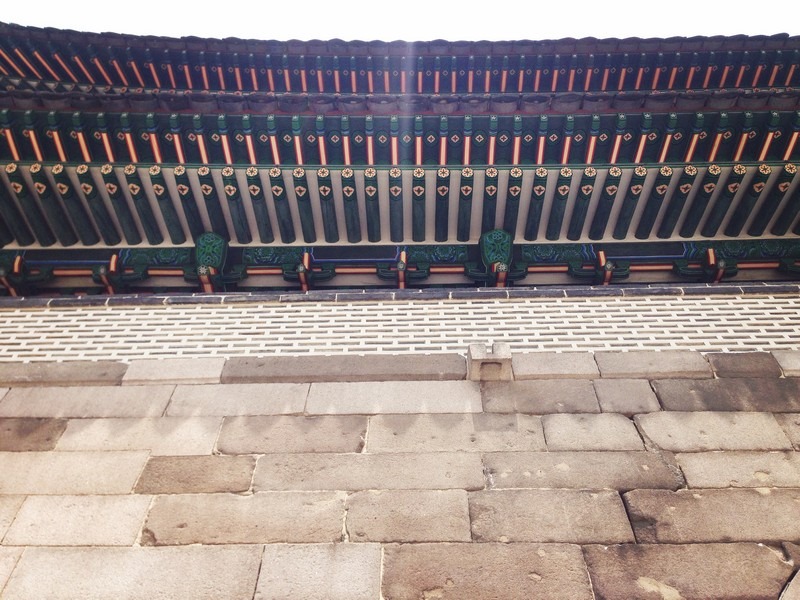
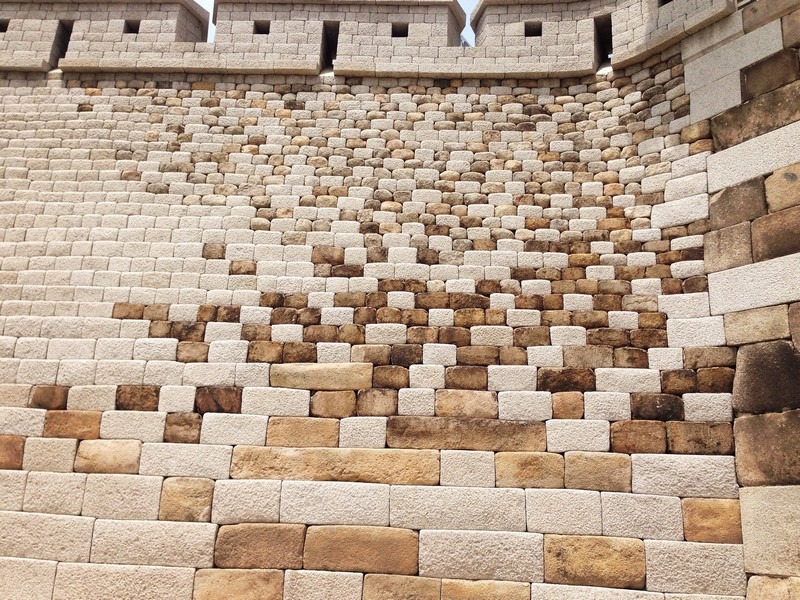
Translated as “Exalted Ceremonies Gate,” Sungnyemun served as the location where the King would greet and send off envoys to China. Its position as the southernmost gate also gave it elemental significance, the gate represents fire. During droughts, the south gate was closed while Sukjeongmun (the north gate, representing water) was left open in hopes of bringing rain. The south gate remained closed until the rain came.
During the Japanese colonial period, streetcar tracks were laid through the gate, ending its traditional functions, and the public was barred from approaching it for a period. Today a small park surrounds it and it’s one of the most accessible gates in the city, easily photographed from the street.
- Address: 40 Sejongdae-ro, Jung-gu, Seoul (서울 중구 세종대로 40)
- Directions: Walk straight out of Seoul Subway station exit 4 and you’ll find the gate just up the block.
- Hours: Tuesday – Sunday: 9:00am ~ 6:00pm
- Admission: Free
Souimun Gate (소의문)
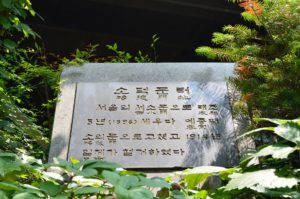
Translated as “Promotion of Justice Gate” and also known as Seosomun, Souimun was the southwest auxiliary gate. It was demolished during the Japanese colonial period in 1914 and was never restored. Only a stone tablet now marks where the gate once stood.
Of all the eight gates, this is the one that never recovered from the colonial era, a stark reminder of how much was deliberately destroyed during that period.
Donuimun Gate (돈의문)
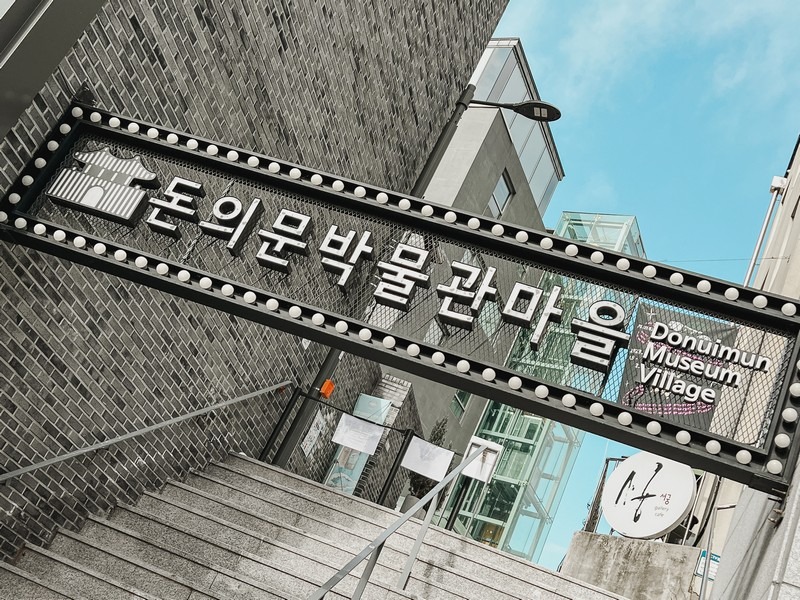
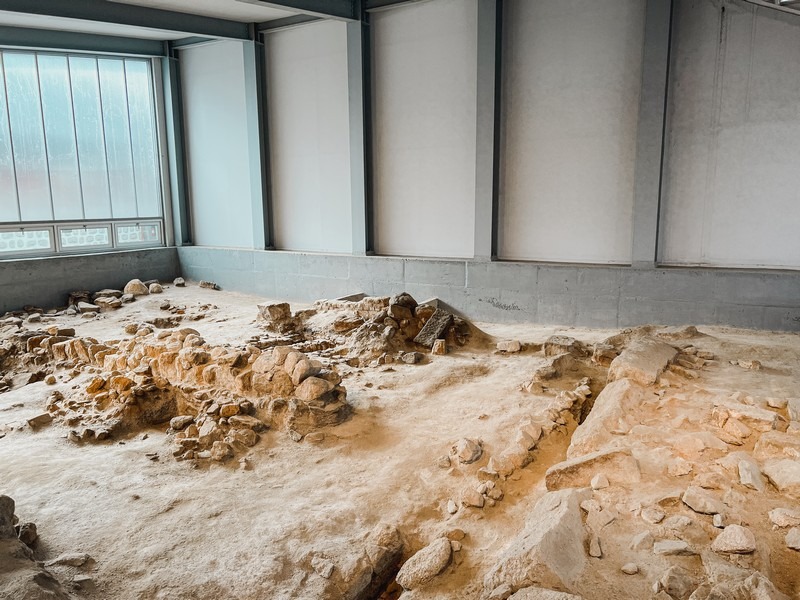
The West Main Gate, translated as “Loyalty Gate,” was one of the busiest entrances into the city. Like Souimun, it was demolished during the Japanese Occupation when a streetcar line was installed and the gate dismantled and its stones sold off. A public art installation called “Invisible Gate” currently occupies the space where the gate once stood.
The Seoul Itinerary Pack – 15 Seoul Itineraries
$25.00
Changuimun Gate (창의문)
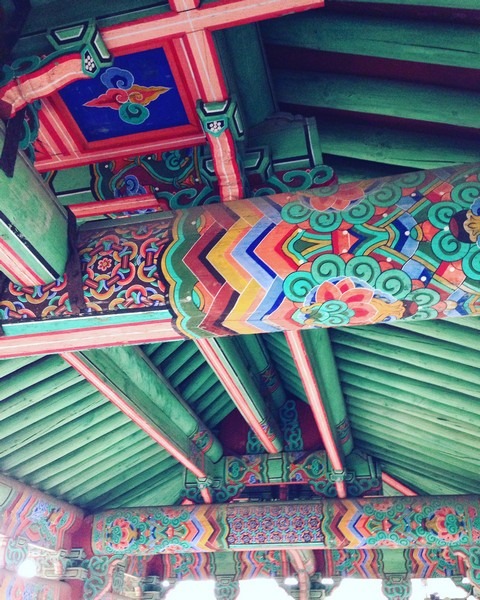
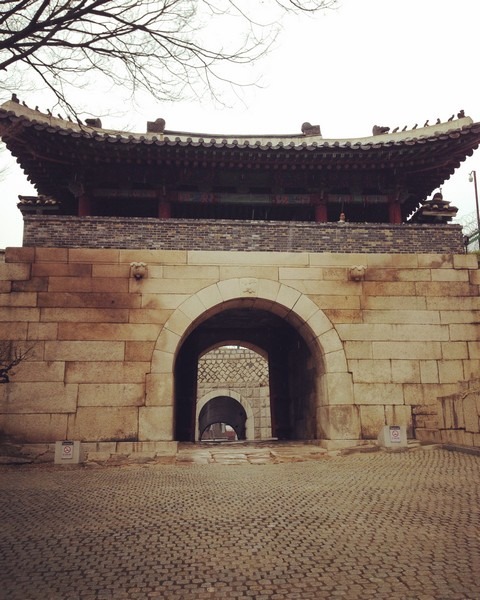
The northwest auxiliary gate, sitting between Inwangsan and Naksan mountains. Translated as “Showing The Correct Thing Gate,” Changuimun is the only auxiliary gate to have survived to the present day with its tower intact, the oldest surviving gatehouse among the small gates. The original tower was destroyed in 1592 but was reconstructed in 1741.
For a period, Sukjeongmun Gate fell out of use entirely and Changuimun effectively became the north gate through which all traffic passed. A detail worth pausing at: look up into the rafters of the gate tower and you’ll find a wooden chicken. The explanation is practical by the standards of the era, chickens are the natural enemy of the centipede, and the chicken was placed there to ward off the evil spirits associated with centipedes.
If you are walking along the wall and want to come down from here, you can easily hop on a bus on the main road just down from the gate that will take you to the west of Gyeongbokgung Palace where there are numerous restaurants, cafes and Tongin Market if you’re hungry after your hike.
- Address: 118 Changuimun-ro, Jongno-gu, Seoul (서울 종로구 창의문로 118)
- Directions: Gyeongbokgung Station, exit 3. Walk straight 146m to the second bus stop. Take Bus No. 1020, 7022 or 7212 and get off at Jahamun Pass.Yoon Dongju Literary Hall Bus Stop (5 bus stops). Changuimun Gate will be on the right up the short walkway.
- Hours: Open all year round every day, 24 hours a day
- Admission: Free
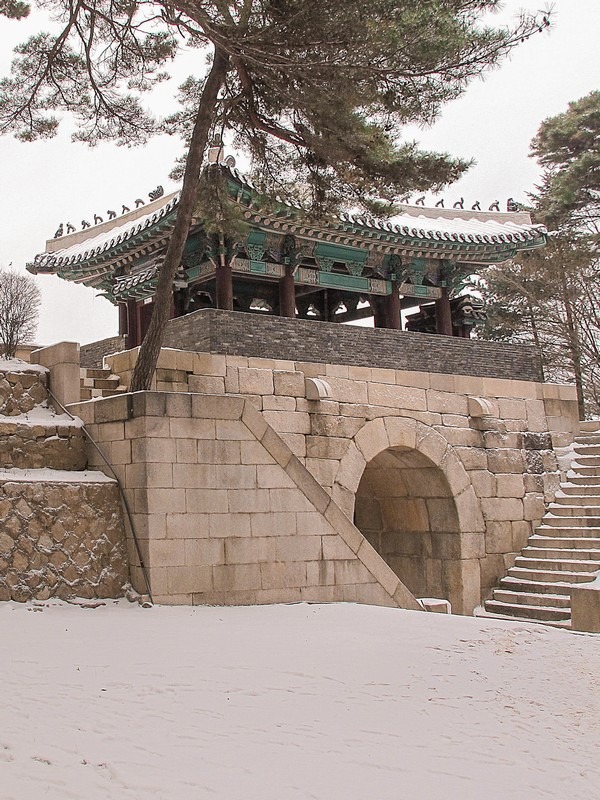
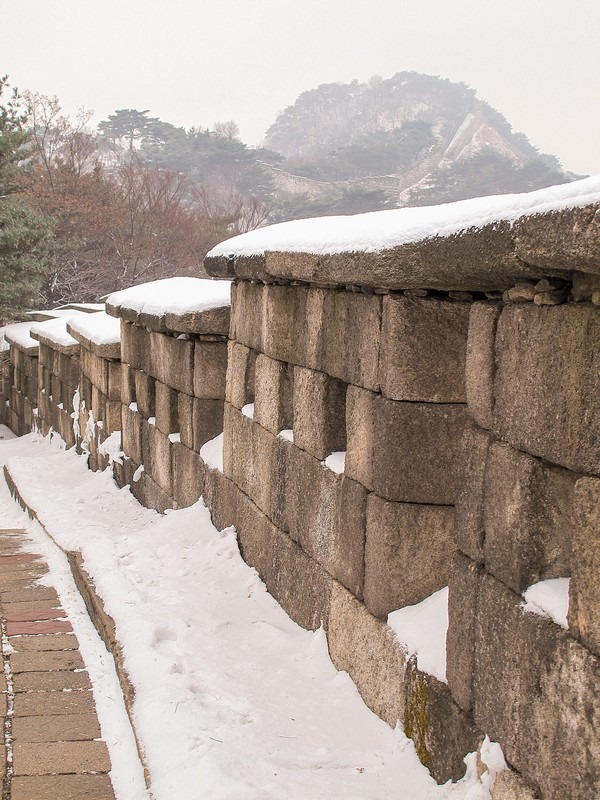
Sukjeongmun Gate (숙정문)
The northernmost gate, translated as “Rule Solemnly Gate,” and the only gate that still has both sides connected to intact sections of the fortress wall. It sits on the mountain directly behind Gyeongbokgung Palace and near the former Blue House (Cheongwadae), the former presidential residence.
Due to its position behind the palace, Sukjeongmun was rarely used in the Joseon Dynasty, reserved for formal occasions and, like Sungnyemun, for droughts: as the northernmost gate representing water, it would be left open during dry periods. Folklore added another dimension, some scholars recorded that women who visited the gate three times before the first full moon could avoid the year’s misfortune; others maintained that an open gate would cause women within the fortress to “succumb to lustful feelings” and it should be kept permanently shut. It is currently left open.
A more recent reason the gate was inaccessible: following an assassination attempt on President Park Chung-hee in 1968, public access to this entire mountain section was restricted for 38 years. The wall here wasn’t reopened to visitors until 2006.
- Hours: 9:00am ~ 4:00pm
- Admission: Free
Hyehwamun Gate (혜화문)
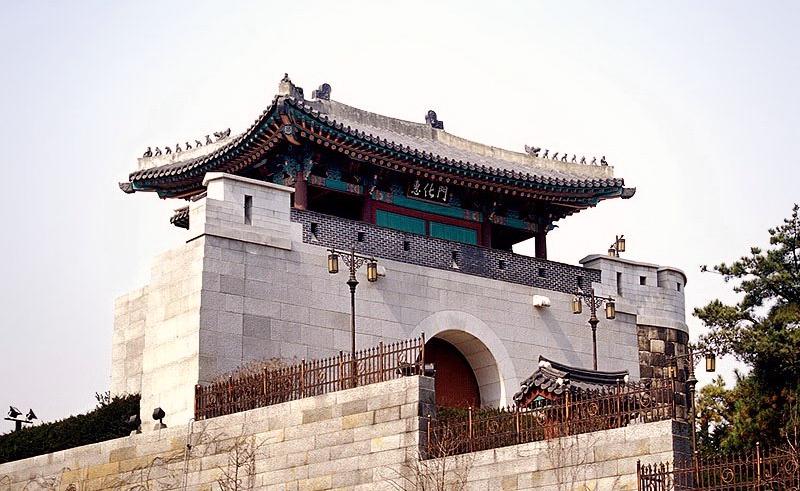
Originally called Dongbukmun and translated as “Distribution of Wisdom Gate,” this northeastern auxiliary gate was built in 1396 and renamed in 1511. It was entirely destroyed in 1928 and sat unrestored for decades before being rebuilt in 1994, though the rebuilt gate stands slightly further north than its original position.
The gate sits east of Changgyeonggung Palace and just north of the Hyehwa neighborhood. From here it’s an easy walk up to the Ihwa Mural Village, a hillside residential neighborhood with colorful murals along its narrow streets, worth adding to this section of the walk.
- Address: 307 Changgyeonggung-ro, Jongno-gu, Seoul (서울 종로구 창경궁로 307)
- Directions: Hyehwa Station, exit 4. Cross the street and walk straight for 300m
- Hours: 9:00am ~ 6:00pm
- Admission: Free
Heunginjimun Gate (흥인지문) — Dongdaemun
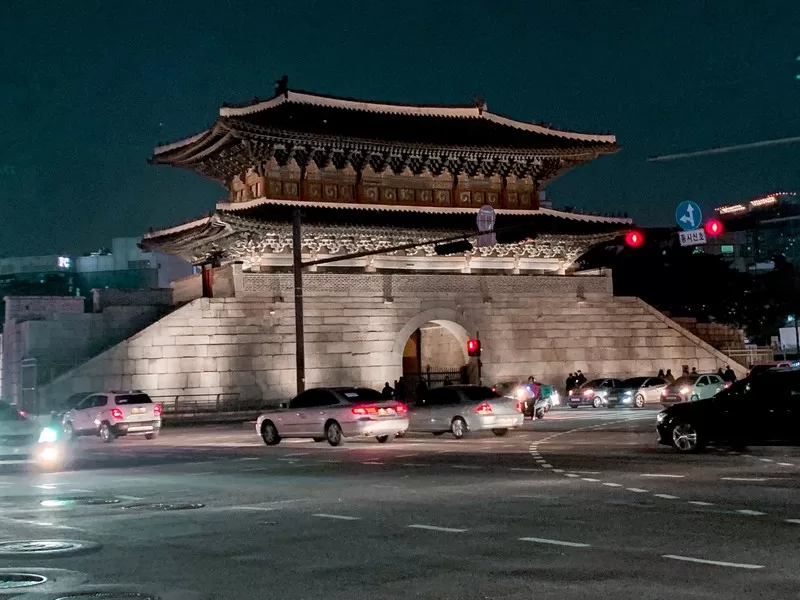
The East Main Gate and National Treasure No. 1. Translated as “Rising Benevolence Gate,” Heunginjimun is the only gate among the eight with an Ongseong, a curved exterior protective wall that wraps around the outside of the gate. The reason is pragmatic: unlike the other main gates, which were built on higher ground with natural defensive advantages, this gate sits on the lowest-lying section of the entire wall and needed additional fortification. The current structure was rebuilt in 1896.
The gate sits in the heart of a neighborhood filled with markets and shopping. The Dongdaemun Design Plaza (DDP) is immediately adjacent, the Heunginjimun Gate Trail ends nearby. Read the complete DDP guide for what to see and do in the surrounding area.
- Address: 288 Jong-ro, Jongno-gu, Seoul (서울 종로구 종로 288)
- Directions: Dongdaemun station, exit 6 or 7 will put you right where the gate is.
- Days/Hours: Open all year round every day, 24 hours a day
- Admission: Free
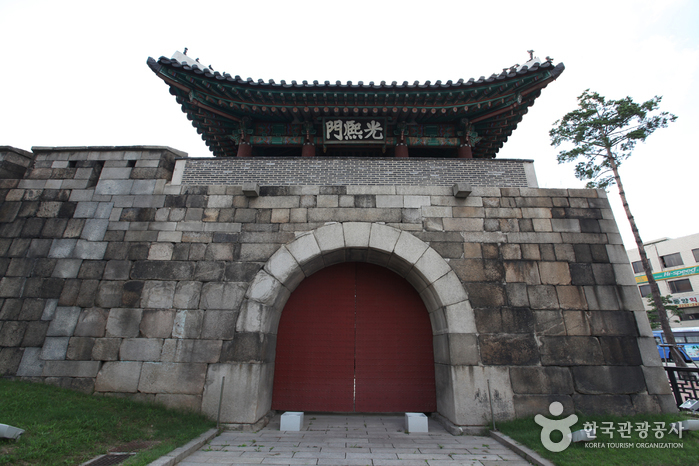
Gwanghuimun Gate (광희문)
The southeast auxiliary gate, translated as “Bright Light Gate” but historically known as Sigumun, the corpse gate. All funeral processions leaving Seoul passed through this gate, carrying bodies to burial grounds outside the wall. The wall in this sense wasn’t just a fortification, it was the physical boundary between the world of the living inside and the dead outside. Kings and commoners alike were carried through this gate on their final journey.
The gate was destroyed during the Imjin War (1592-1598), rebuilt in 1711, destroyed again during the Korean War, left in disrepair, and finally rebuilt in 1975. Its history mirrors the turbulence of the city around it.
- Address: 2-ga, Gwanghui-dong, Jung-gu, Seoul (서울 중구 광희동2가)
- Directions: Dongdaemun History & Culture Park Station (Seoul Subway Line 2 or 4), Exit 2. After exiting from the station, walk 76 m to cross the road. Cross the two roads looking at CU Sindang branch in front. Continue walking straight for 16m.
- Admission: Free
Map of the Seoul Fortress Wall
Recommended Courses
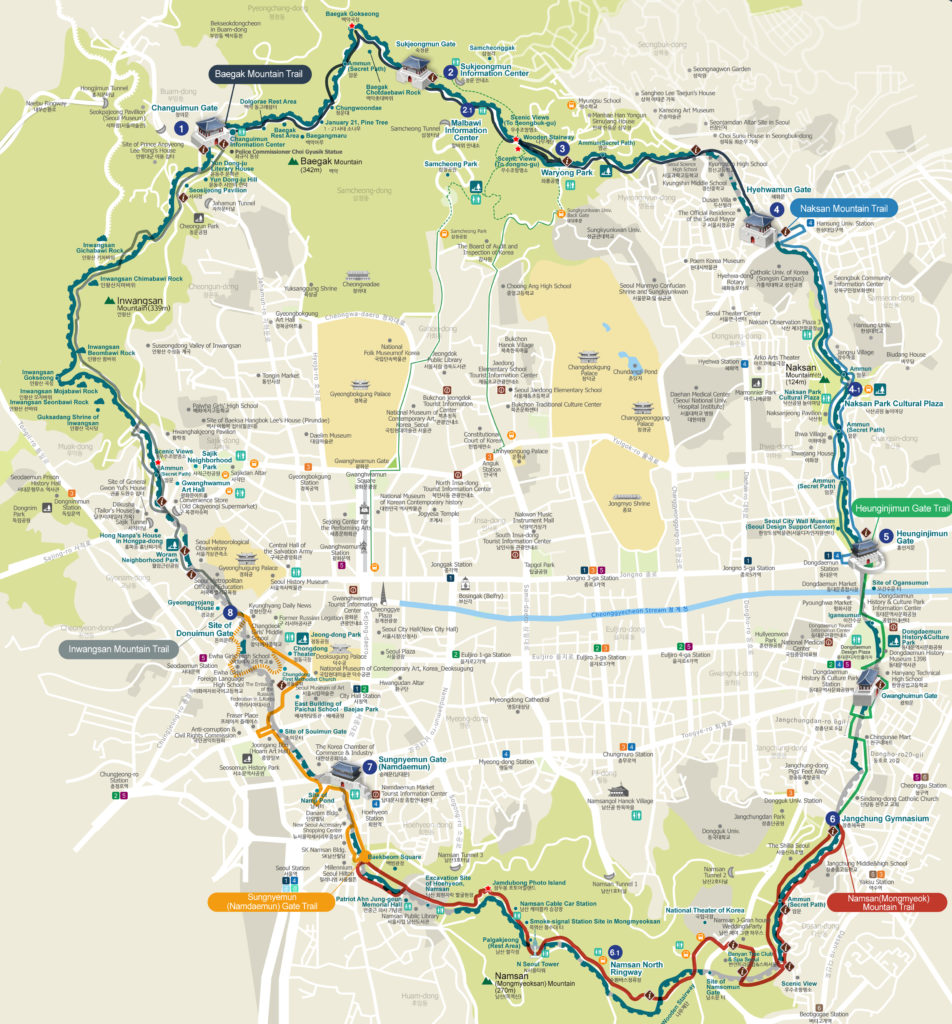
The Seoul City Government has divided the complete walk into six manageable sections. The full route covers 18.6km and most people do it across two to three days rather than in one continuous effort.
Section 1 — Namsan Mountain Trail
- Section: Jangchung Gymnasium ~ Baekbeom Square
- Distance: 4.2km
- Duration: About 3 hours
- Opening hours: Namsan – 24 hours
- Tip: Visitors are advised to check the event schedule of Namsangol Hanok Village, many interesting events are held there.
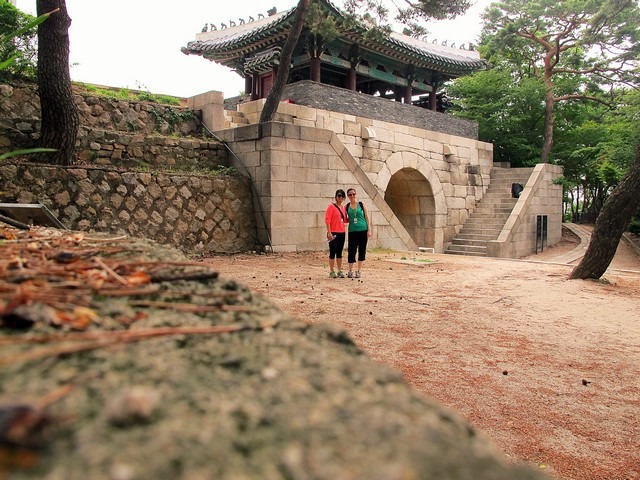
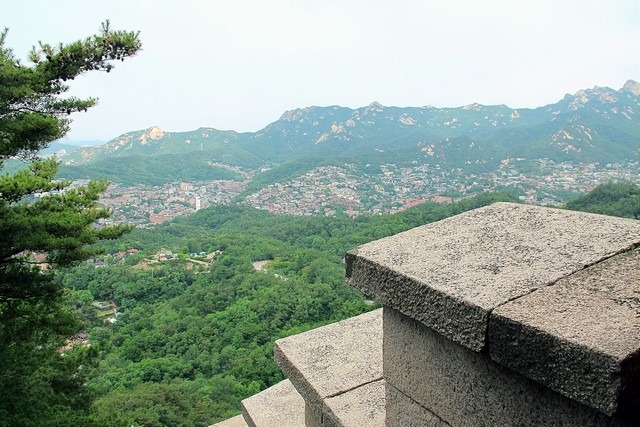
This walking trail runs from the backstreets of Janchung Gymnasium to Namsan Park. In early Joseon, a national shrine and beacon platform were built near and at the top of Namsan (Mongmyeoksan, 270m). As Namsan was the center of the administrative district in Seoul, there is a stone marker inscribed with “the Central Point of Seoul” on the summit.
In the 1920’s, most the wall in the area were demolished to build the Joseon Shinto Shrine by the Japanese; but due to the preservation and restoration projects conducted since the 1970s and the Namsan recovering project carried out in the mid-1990s, most of the wall sections around Namsan have been restored to their original appearance.
Section 2 — Sungnyemun Gate Trail
- Section: Baekbeom Square ~ Site of Donuimun Gate
- Distance: 1.8km
- Duration: About 1 hour
The Sungnyemun Gate Trail starts at Baekbeom Square, passes Sungnyemun and continues as far as the Site of Donuimun. Sungnyemun was the main entrance into the capital and, being in the south wall, was the closest to the Hangang River, and thus most of the people and goods going to the capital passed through this gate.
The first streetcar lines went into service in the capital in 1899, rendering the original function of Sungnyemun obsolete, and the wall sections on each side of Sungnyemun were removed in 1907 to improve the traffic flow. Thereafter, more of the wall was demolished when new buildings were constructed in the area of the gate, making it difficult to find any traces of the old wall.
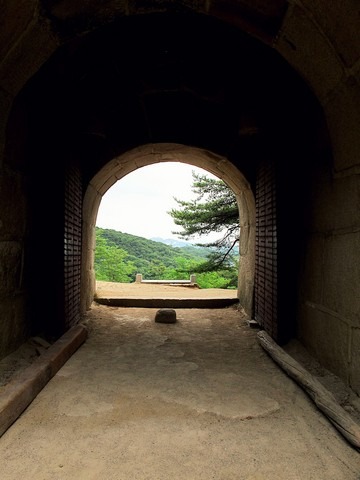
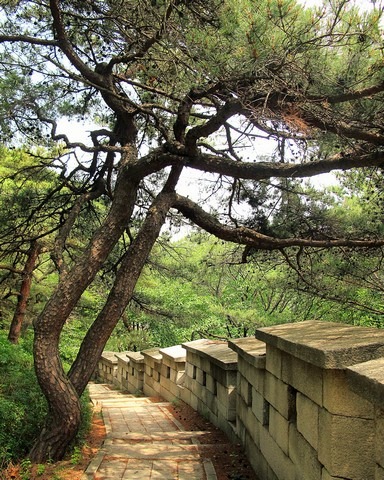
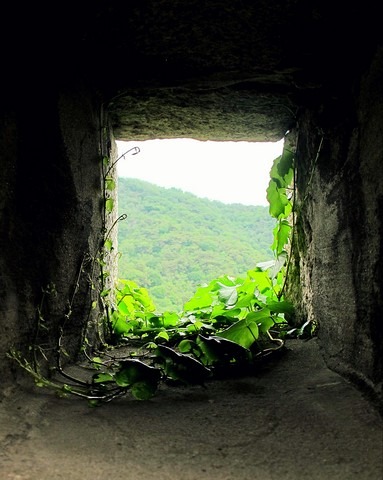
Only two sites remain in this section were such remnants can be recovered. The lower part of the original wall remains along the alley that runs from the Korea Chamber Of Commerce & Industry to the Olive Tower, and the base of a fifty-meter wall section at Changdeok Girls’ Middle School comes from the old wall as well.
Section 3 — Inwangsan Mountain Trail
- Section: Site of Donuimun Gate ~ Changuimun Gate
- Distance: 4.0km
- Duration: About 2 hours 30 minutes
- Notice: As Inwangsan Mountain has many rocky sections, visitors take extra care, especially in winter.
This walking course runs from site of Donuimun to the Yoon Dong Ju Hill, via Inwangsan (339m), which is situated to the right of Seoul’s four inner mountains. Inwangsan is also known as a rocky mountain characterized by unusual rock formations including Chimabawi (Rock of women’s skirt), Seonbawi (Rock of meditating monk), and Gichabawi (Rock of train).
The name “Inwang” is a Buddhist term, and it is said that a Korean Buddhist monk named Muhak (1327~1405) once declared that if Inwangsan ever became one of the country’s principal mountains, Buddhism would flourish here. Access to the mountain was prohibited after a unit of the North Korean Special Forces infiltrated Seoul on 21 January 1968, and it was not reopened to the public until 1993.
Section 4 — Baegak Mountain Trail
- Section: Changuimun Gate ~ Hyehwamun Gate
- Distance: 4.7km
- Duration: About 3 hours
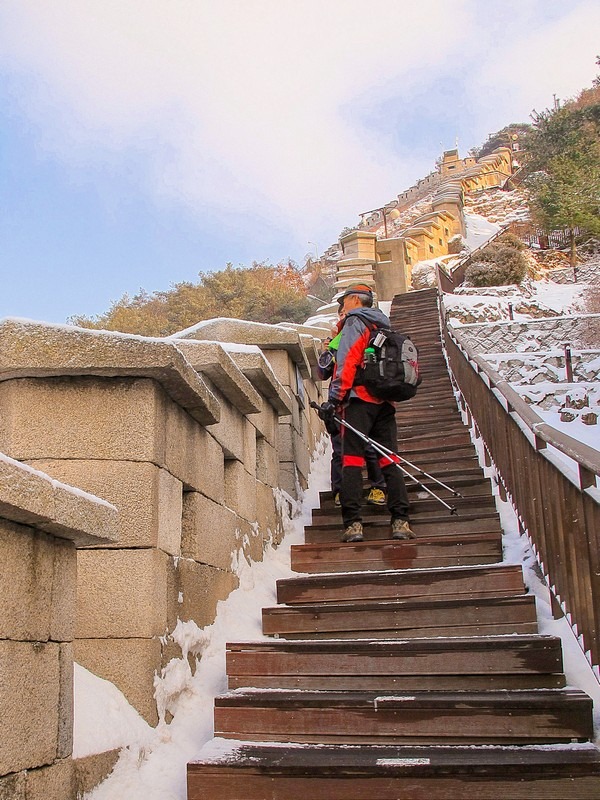
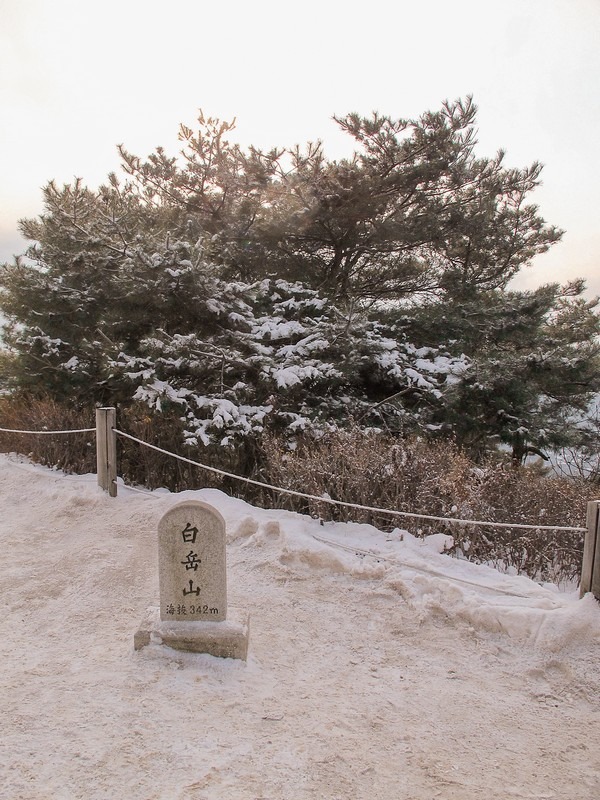
The Baegak Trail runs from Changuimun to Hyehwamun, and crosses Baegak (Bugaksan, 342m), which was the main mountain of Seoul’s four inner mountains in old Seoul according to geomantic theory and the highest one among them. After a unit of North Korean Special Forces infiltrated Seoul in 1968, public access to this area was limited for about forty years. It was finally reopened to the public in 2007.
Section 5 — Naksan Mountain Trail
- Section: Hyehwamun Gate ~ Heunginjimun Gate
- Distance: 2.1km
- Duration: About 1 hour
This hiking trail runs from Hyehwamun to Heunginjimun, passing via Naksan (124m), the lowest mountain of Seoul’s four inner mountains. Naksan is also known as Naktasan (“Camel Mountain”) or Tarak, due to its resemblance to a camel’s humps. This course is relatively easy due to its gentle slope. Alert visitors will notice the different shapes of the stones depending on the time of construction of the wall, as they walk along the path behind the Catholic Univ. of Korea.
Section 6 — Heunginjimun Gate Trail
- Section: Heunginjimun Gate ~ Jangchung Gymnasium
- Distance: 1.8km
- Duration: About 1 hour
The stretch of wall around Heunginjimun is on the lowest ground of the entire wall. Thus, Ogansumun and Igansumun water gates (The water gates consisted of five arched and two arched gates) were built here to drain water from the city into the streams outside the wall.
After liberation, the streets in the area were widened and new homes were built. All this construction activity caused most of the main wall structure to be removed during the past century, but now Igansumun water gate is being rebuilt on its original site, and the foundation remnants of Hadogam have been moved inside Dongdaemun History & Culture Park for public display. People who wish to visit this part of Hanyangdoseong may also stop in Dongdaemun Design Plaza.
FAQ
Is the Seoul Fortress Wall free to visit?
Yes, walking the wall and visiting the gates is free. There are no entry fees for the wall trail itself or for most of the gates. Some attractions along the route, such as palaces near the wall, charge separate entry fees.
How long does the Seoul Fortress Wall take to walk?
The full 18.6km route is typically done over two to three days rather than all at once. Individual sections range from 1 to 3 hours. The easiest single section for first-timers is the Naksan Mountain Trail (2.1km, about 1 hour), which gives a genuine experience of the wall without demanding a long hike.
Can I walk the entire Seoul Fortress Wall in one day?
Technically possible but not recommended, the total route covers 18.6km with significant elevation on the mountain sections. Most walkers split it across two days at minimum, choosing sections based on their fitness level and interests.
Which section is best for a first-time visitor?
The Naksan Mountain Trail (Section 5, Hyehwamun to Heunginjimun, 2.1km) is the gentlest and easiest to access. The Namsan Mountain Trail (Section 1, 4.2km) offers the most panoramic views and is the most popular with visitors. The Baegak Mountain Trail (Section 4, 4.7km) is the most dramatic and historically weighted but requires the most fitness.
Do I need to book in advance?
No. The wall is open to all visitors without reservation. You can start any section at any time during operating hours (some mountain sections have restricted hours).
What should I wear and bring?
Proper walking shoes are essential, particularly for the Baegak and Inwangsan mountain sections which involve rocky terrain. Water, snacks, layers for cooler weather, and sun protection in summer. If you don’t want to bring hiking boots from home, the Seoul Hiking Tourism Center rents hiking boots and clothing for a small fee.
What’s the best season to walk the Seoul Fortress Wall?
Spring (March to May) for cherry blossoms on the lower sections. Autumn (September to November) for foliage on the mountain sections. Both seasons are busy. Summer is humid and winter can ice over mountain sections, take extra care on the Inwangsan and Baegak trails in cold weather.
Can I walk the wall at night?
The lower urban sections (Sungnyemun Gate Trail and parts of Heunginjimun Gate Trail) and some other sections are open 24 hours. The mountain sections have restricted hours, typically 9:00am to 4:00pm or 6:00pm depending on the section. The Namsan section is open 24 hours. Check specific section hours before planning a night walk.
The Seoul Fortress Wall rewards walking at your own pace more than almost any other experience in the city. Take a single section or plan a multi-day route. Either way, the wall gives you Seoul in a way that looking up at it from the street never quite does.
Did you like this post? Pin It!
3 Comments
M Putte
Hi Hallie,
Very happy to have found this useful page/website!
I was wondering if you could suggest which part of the City Wall to walk in July. I’m tossing up between the Baegak Trail (i love the idea of all the stairs) but am wondering if the Naksan Trail (combined with Ihwa Mural village) might not be a better option in the heat in July.
Does it make a difference which way you walk the Baegak trail or is it just as tough both ways?
Thanks Carole for the tip about the app too.
Hallie Bradley
I like doing the Baegak Trail from east to west so the hike is more mountain trails up and stairs down. But my Korean friends like the stairs up and mountain trail down so I guess it’s up to preference. But July can be mighty hot and humid and the good thing about the Naksan Trail is that you can stop off in the mural village and go to a cafe to cool off and get a drink and then get right back on the wall to continue down as well. Maybe wait until you arrive and see how the weather is.
Carole Williams
Hi Hallie! I was just in Seoul for a week. Before I went, I read your whole site and I relied on your excellent advice. My favorite part was my gate-viewing and walking along the fortress trail. I saw all the gates and walked approx 80% of the trail? Now that I am reviewing your advice, I see I will have to return if/when they rebuild Donuimun. If anyone goes, they should get the Seoul City Wall app. The Map/Course showed me where I was once I was on the trail (it is a blank page when you’re in California! This made me think the app didn’t work). I am not a traveller, but a Tmoney card and the Naver Map app made exploring Seoul so easy; I enjoyed my trip very much. Thank you!